Trace and Build a Castle Worksheet for Preschoolers
Tracing the geometric shapes that form a castle, like triangles for turrets and rectangles for towers, gives children ages 3-5 practice with straight-line shape tracing while also introducing the idea that complex structures are made by combining simple shapes. This spatial reasoning, seeing how basic shapes stack and combine into something bigger, supports both early geometry understanding and imaginative building play.
Part of the pack
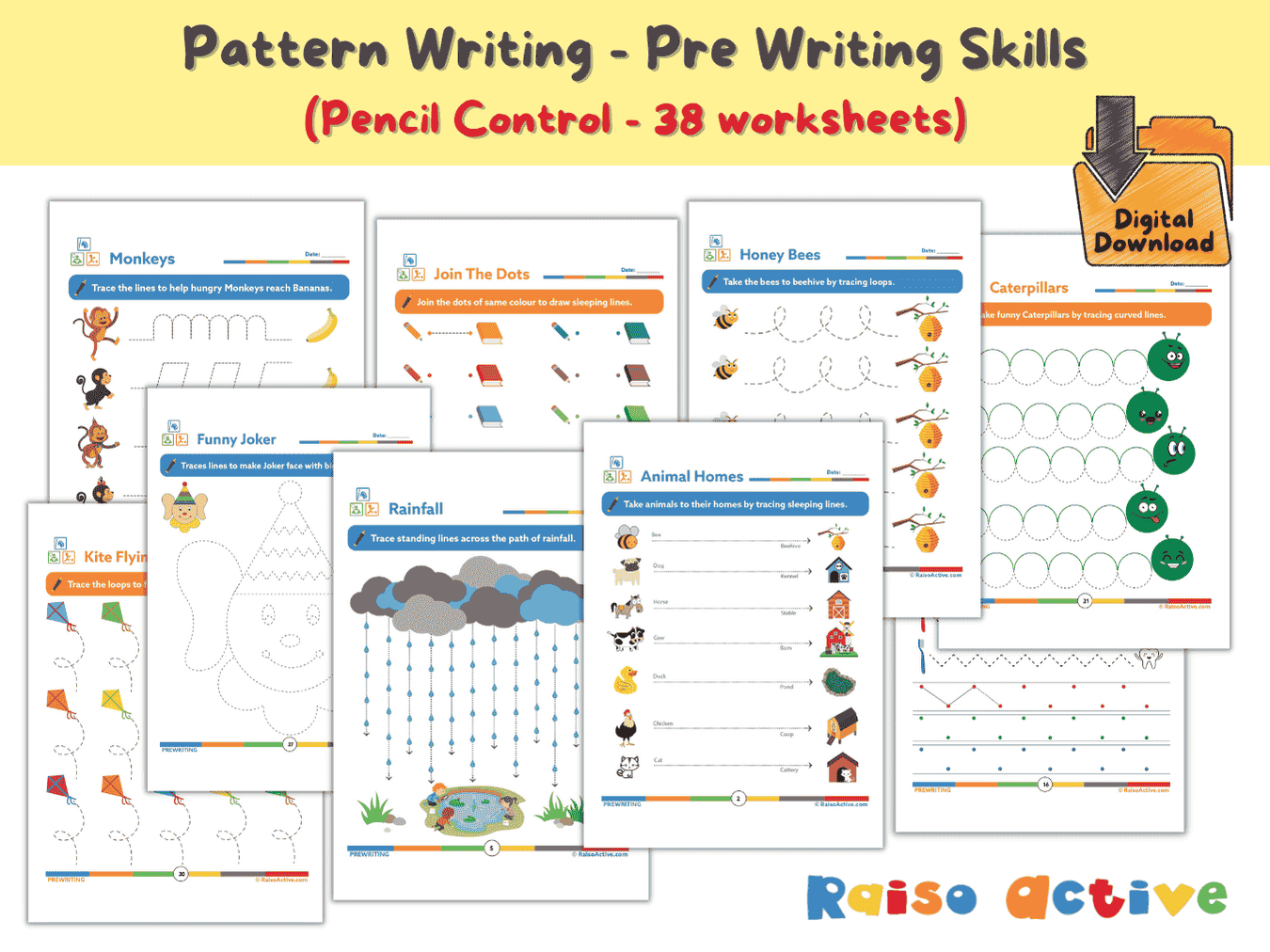
Pattern Writing Pre-writing Skills Activity Book for 3-4 Year Olds
This is page 21 of the pack. Ages 3-4 · PreschoolAges 3-4 · NurseryAges 3-4
Made for your child
A whole activity pack made with their name
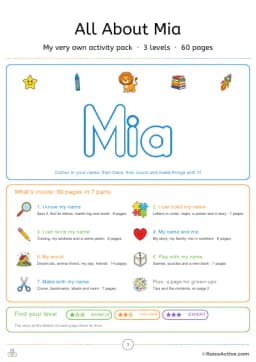
60 pages to spot, build, trace and write their own name, plus pages about their favourites, feelings and family. See a free preview with their name.
Make an All About Me packFree preview · free for members
Or start free: a name tracing sheet with their nameCurriculum
- Pre-Writing > Shape Tracing
How to use this worksheet
Point out the different shapes that make up the castle before your child starts tracing, naming each one, like triangle roof or rectangle tower. Guide them to trace one shape completely before moving to the next, rather than jumping between shapes. Encourage them to notice how the shapes connect to form the full castle as they go. Once every shape is traced, let your child color the castle, perhaps imagining who might live inside.
Materials needed
- Pencil
- Crayons
Extension activities
- 1Build a castle using blocks, noting which block shapes work best for towers versus walls.
- 2Go on a shape hunt around the house looking for triangles, rectangles, and squares like the ones in the castle.
- 3Build a sandcastle outside or in a sensory bin, talking about its shapes as you go.
- 4Make a paper castle craft using cardboard tubes for towers and construction paper for roofs and flags.
- 5Act out a simple pretend story about a knight, princess, or dragon living in the traced castle.

Written by
Hemsweta Jain · Teacher Cheena
MBA and Early Childhood Educator, teaching since 2014 · Founder of RaisoActive, Mumbai
Every RaisoActive worksheet is designed and checked by the founder before publishing.
Published · Last reviewed
More from Pattern Writing Pre-writing Skills Activity Book for 3-4 Year Olds

Trace the Curved Lines: Give Balloons to the Girls! Worksheet
Ages 3-5 · Preschool–Pre-KAges 3-5 · Nursery–ReceptionAges 3-5 · Nursery–LKGAges 3-5
This worksheet has children ages 3-5 trace curved balloon strings, practicing the rounded, flowing pencil motion needed later for letters like c, o, and s. Curved lines demand a different wrist and finger movement than straight lines, since the hand has to continuously adjust direction rather than pushing in one line, which makes this an important complement to straight-line tracing practice.

Pattern Writing Pre-writing Skills Activity Book for 3-4 Year Olds - Page 11
Ages 3-4 · PreschoolAges 3-4 · NurseryAges 3-4
This page from the pre-writing patterns activity book strengthens hand and finger muscles for 3-4 year olds through repeated stroke motions, building the physical stamina and grip strength a child needs before sustained handwriting becomes comfortable. Repeating the same basic movement many times across a row also builds muscle memory, so the motion starts to feel automatic rather than something the child has to consciously plan each time.
Animal Food Matching Worksheet for Preschoolers
Ages 3-5 · Preschool–Pre-KAges 3-5 · Nursery–ReceptionAges 3-5 · Nursery–LKGAges 3-5
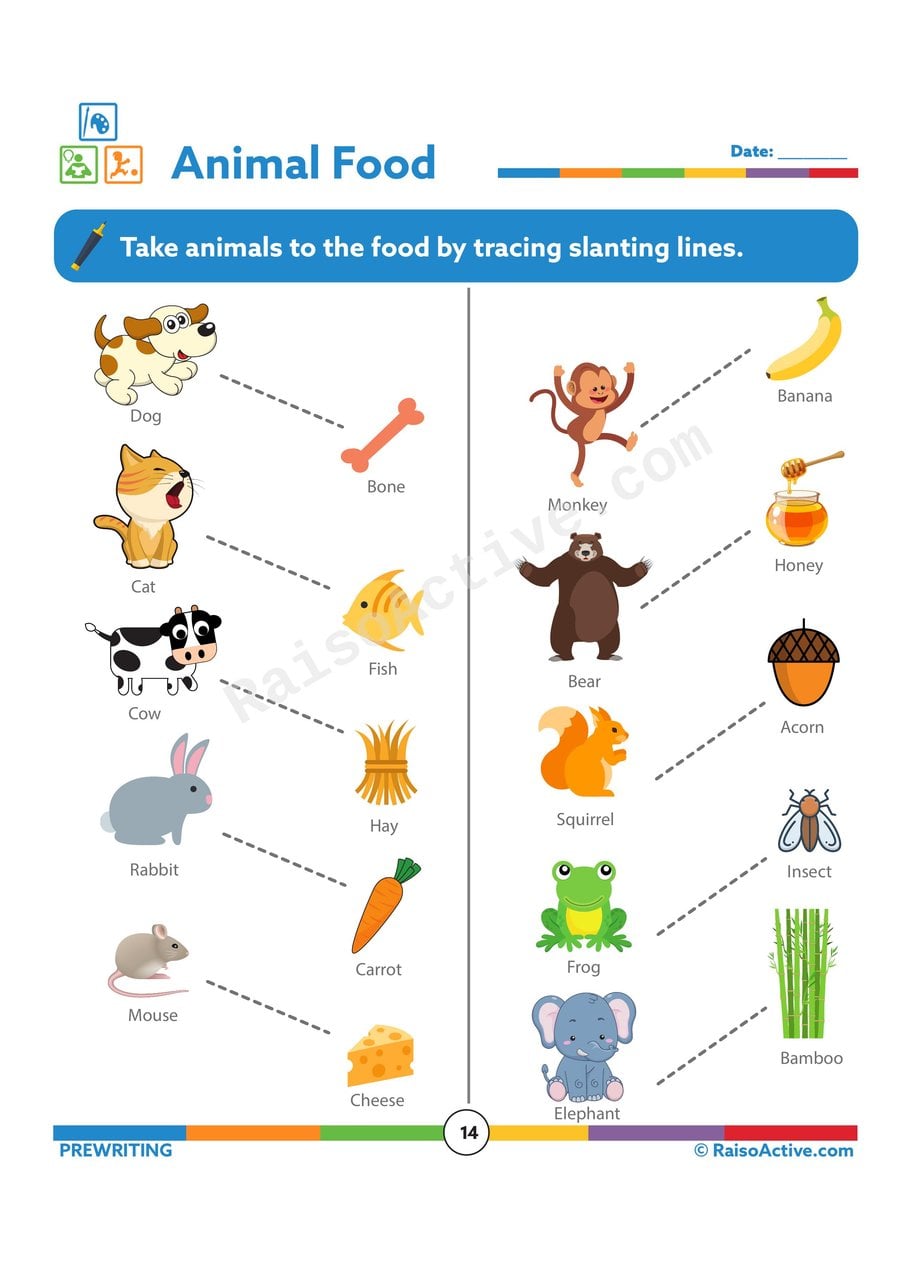
Tracing a line from each animal to the food it eats helps children ages 3-5 build pencil control while learning an early biology concept: that different animals eat different things based on what they are. Connecting a rabbit to a carrot or a bird to a worm also builds simple reasoning skills, since children start to notice why a particular pairing makes sense rather than memorizing it by rote.

Fine Motor Skills Activities: Parent's Guide for Pre-Writing
Ages 3-5 · Preschool–Pre-KAges 3-5 · Nursery–ReceptionAges 3-5 · Nursery–LKGAges 3-5
This parent's guide explains that fine motor skills, the small, precise movements of the hands and fingers, need deliberate strengthening before a child can comfortably hold and control a pencil for handwriting. It outlines that skills like a strong pincer grip, wrist stability, and hand strength typically develop through everyday activities like squeezing, pinching, and tearing before they ever translate into neat pencil strokes.

Smile with Smiley Face! A Fun Tracing Worksheet for Preschoolers
Ages 3-5 · Preschool–Pre-KAges 3-5 · Nursery–ReceptionAges 3-5 · Nursery–LKGAges 3-5
Tracing a smiling mouth teaches children ages 3-5 the upward curved stroke used in letters like u and later cursive forms, while also tying that curve to something personally meaningful, a smile. Because the shape mirrors an expression children make and recognize every day, this worksheet connects fine motor practice to social-emotional awareness about what a smile looks like and means.

Trace the Mixed Lines Worksheet: Help the Animals Find Their Babies!
Ages 3-5 · Preschool–Pre-KAges 3-5 · Nursery–ReceptionAges 3-5 · Nursery–LKGAges 3-5
This worksheet combines straight, curved, and zigzag lines on a single page, asking children ages 3-5 to trace whichever type of path connects each animal to its baby. Mixing line types in one activity is more demanding than a single-line-type worksheet because the hand has to switch motion patterns line by line, which builds flexibility in pencil control alongside early vocabulary about animal families, like cow and calf or cat and kitten.
Animal Homes Tracing Worksheet for Preschoolers
Ages 3-5 · Preschool–Pre-KAges 3-5 · Nursery–ReceptionAges 3-5 · Nursery–LKGAges 3-5
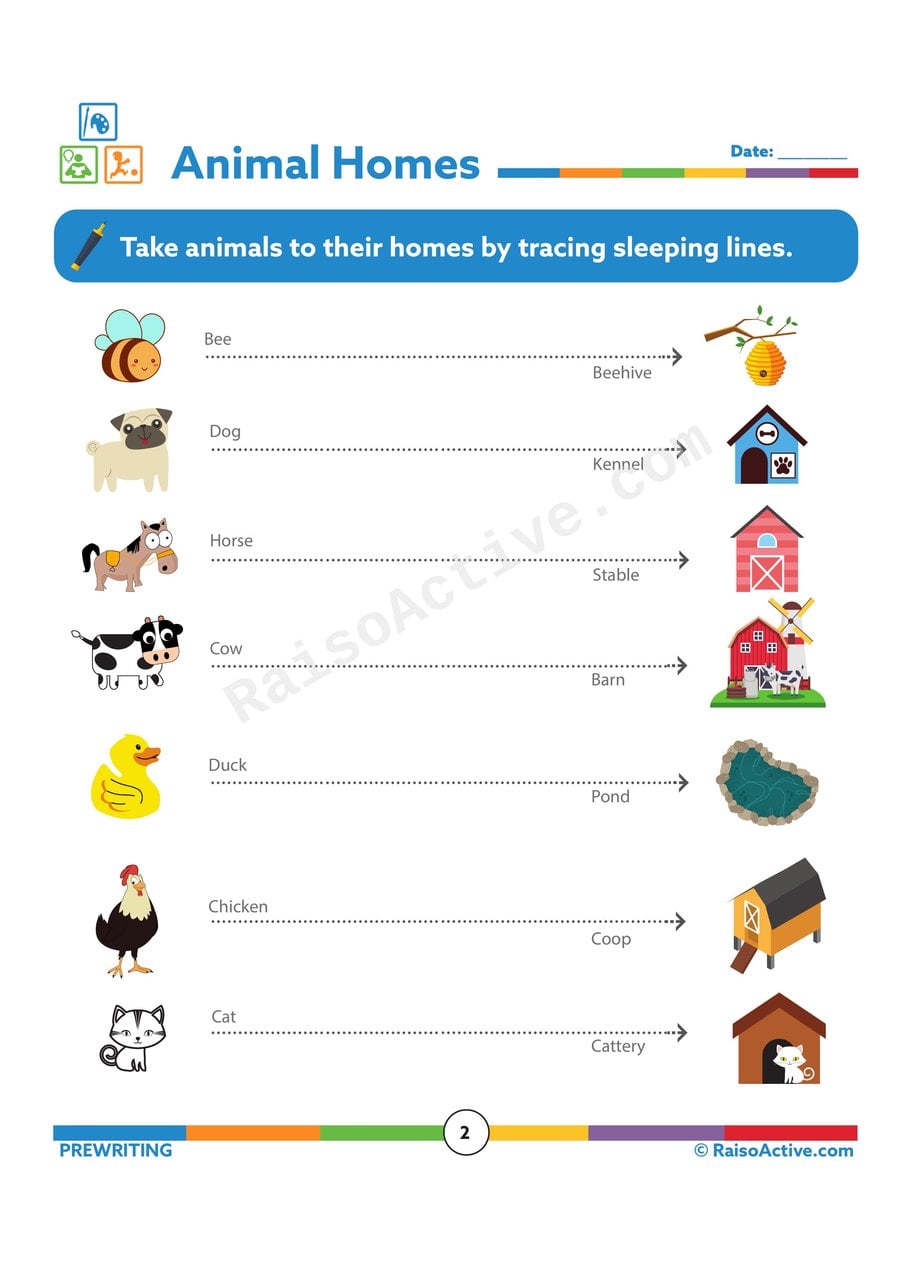
Tracing a line from each animal to its home helps children ages 3-5 build pencil control while also introducing an early science concept: that different animals live in different kinds of homes, like a bird's nest or a dog's kennel. Saying the animal and its home aloud while tracing connects the physical tracing motion to new vocabulary, reinforcing both skills at once.

Fly Airplanes Tracing Worksheet for Preschoolers
Ages 3-5 · Preschool–Pre-KAges 3-5 · Nursery–ReceptionAges 3-5 · Nursery–LKGAges 3-5
Unlike letter tracing, this worksheet has children follow long, curving flight-path lines from a globe down to the ground, which builds sustained hand-eye coordination and the ability to keep a pencil moving smoothly over a longer distance than a single letter requires. For 3-5 year olds, this kind of extended line tracing is an important bridge between short scribbles and the longer, controlled strokes needed for writing full letters and words.
Related worksheets

Gingerbread Man Coloring Worksheet for Preschoolers
Ages 3-5 · Preschool–Pre-KAges 3-5 · Nursery–ReceptionAges 3-5 · Nursery–LKGAges 3-5
This gingerbread man worksheet gives children ages 3-5 practice coloring within a simple, familiar outline while also adding their own decorative details like buttons and a bow, encouraging creative choices within a structured shape. Deciding where to place each decoration also builds early spatial awareness, since buttons and a bow need to be positioned in specific spots on the body.
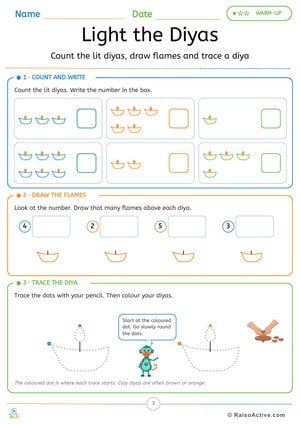
Diwali Diya Counting, Flame Drawing and Tracing Worksheet
Ages 4-6 · Pre-K–KindergartenAges 4-6 · Reception–Year 1Ages 4-6 · LKG–UKGAges 4-6
Children count groups of up to six lit diyas and write the number, then draw the matching number of flames above each lamp. They finish by tracing the dotted outline of a diya with a steady pencil.
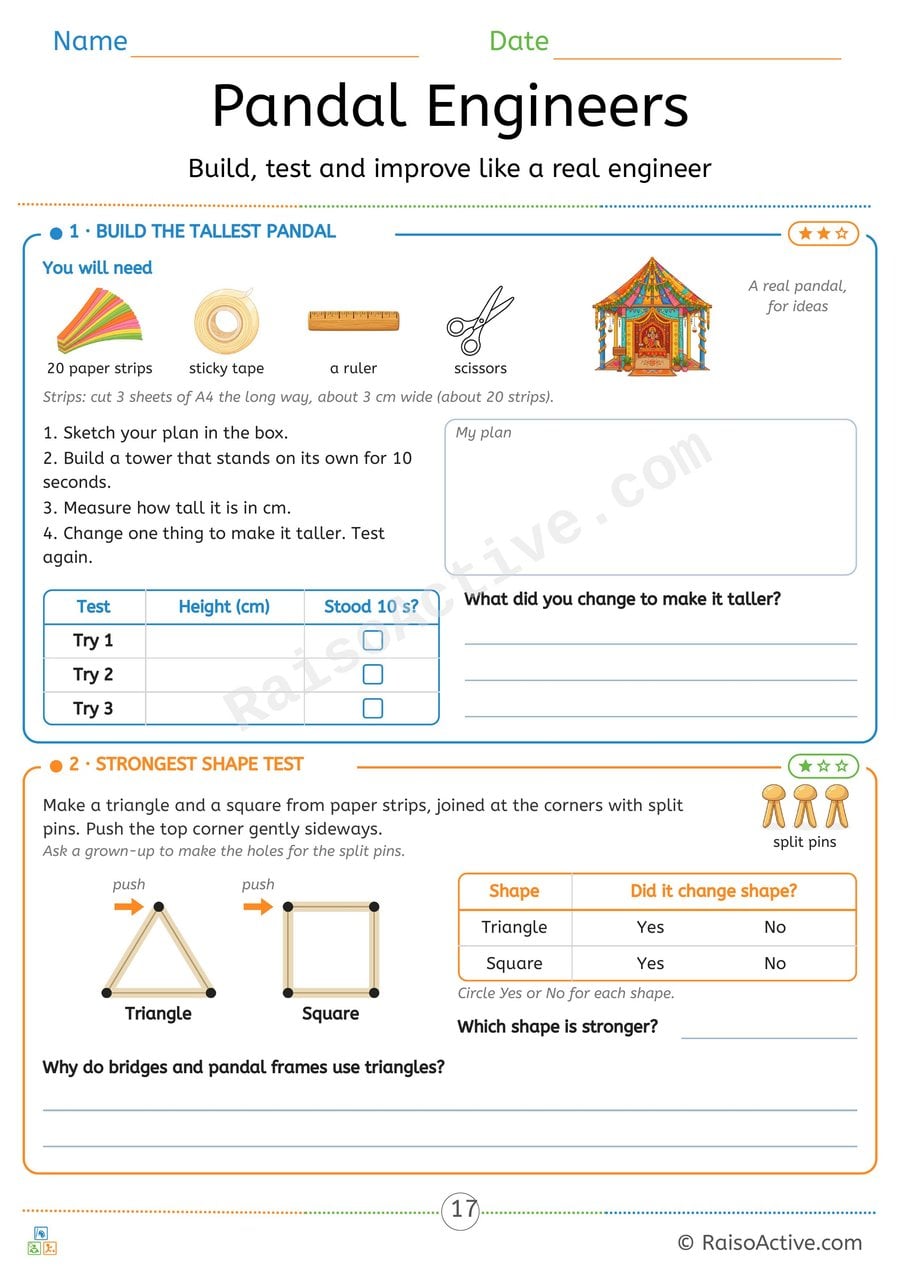
Pandal Engineers: Navratri Paper Tower and Strong Shapes STEM Challenge
Ages 7-11 · Grade 2–Grade 3Ages 7-11 · Year 3–Year 4Ages 7-11 · Class 2–Class 3Ages 7-11
Children plan, build, measure and improve a paper-strip tower, record three tries in a table, and test a triangle and a square made with split pins to find out why bridges and pandal frames use triangles.

Shape Pattern Fun: Complete the Pattern Worksheet for Preschoolers
Ages 3-5 · Preschool–Pre-KAges 3-5 · Nursery–ReceptionAges 3-5 · Nursery–LKGAges 3-5
This worksheet introduces children ages 3-5 to pattern recognition using shapes, asking them to notice a repeating sequence and supply the missing piece. Continuing a pattern requires children to detect a rule and predict what comes next, an early form of the logical reasoning that later supports algebra and sequencing skills. Cutting and pasting the correct shape also reinforces shape recognition and fine motor precision.

Spooky Fun: Complete the Halloween Sketches Worksheet
Ages 3-5 · Preschool–Pre-KAges 3-5 · Nursery–ReceptionAges 3-5 · Nursery–LKGAges 3-5
This worksheet has children ages 3-5 complete partially drawn Halloween sketches by tracing or extending existing lines, building visual perception and fine motor control as they figure out what shape a sketch is meant to become. Coloring the completed pictures afterward adds a creative finishing step that rewards the careful tracing work.

The Hungry Ant: Feed the Ant by Cutting and Pasting Fruits Worksheet
Ages 4-6 · Pre-K–KindergartenAges 4-6 · Reception–Year 1Ages 4-6 · LKG–UKGAges 4-6
Children ages 4-6 practice sequencing and vocabulary by associating specific fruits with each day of the week as they feed a hungry ant. Following a fixed weekly order while matching new vocabulary (fruit names) to each day builds both memory sequencing and category-association skills useful across early literacy and science tasks.

Easter Maze Adventure: Help the Bunny Find the Carrot!
Ages 3-5 · Preschool–Pre-KAges 3-5 · Nursery–ReceptionAges 3-5 · Nursery–LKGAges 3-5
Tracing a path from the bunny to the carrot builds fine motor control and pencil steadiness in children ages 3-5, since staying within the maze's narrow lines requires more precision than open coloring. Navigating around dead ends also develops early problem-solving and planning skills, as children learn to look ahead and backtrack when a path doesn't work out. This kind of visual-spatial puzzle strengthens the ability to plan a route mentally before committing it to paper, a skill that supports later map-reading and logical thinking.

Spider Web Connect-the-Dots Worksheet for Preschoolers
Ages 3-5 · Preschool–Pre-KAges 3-5 · Nursery–ReceptionAges 3-5 · Nursery–LKGAges 3-5
This connect-the-dots worksheet has children ages 3-5 count in sequence from one number to the next while drawing curved lines, building both number-order recognition and the pencil control needed for pre-writing curves and loops. Revealing a spider web at the end gives the counting practice a satisfying, visual payoff that keeps young children motivated through the whole sequence.
Guides for this topic

Pre-Writing Strokes in Order: From Standing Lines to Loops (With Printable Patterns)
The developmental order of pre-writing strokes, from vertical lines to loops, and why practicing them in sequence makes letter formation much easier to learn.

Portfolio Assessment with Young Children: A Comprehensive Guide to Meaningful Documentation
Learn how portfolio assessment captures your child's growth through meaningful documentation. Practical tips, templates, and age-appropriate strategies for ages 1-8.
What Makes a Good Worksheet vs. a Poor One: A Parent's Guide to Quality Educational Materials
Learn what separates high-quality educational worksheets from poor busy work. Discover design principles, red flags, and how to evaluate free worksheets online for your child aged 1-8.
Reviews
Every worksheet for ages 3–5, no watermark
Members download the full library of 1,000+ worksheets and every activity pack without watermarks or daily limits. One year costs ₹999 in India or $20 elsewhere.
See membership plansOr download any worksheet free with a watermark (5 a day).