What Makes a Good Worksheet vs. a Poor One: A Parent's Guide to Quality Educational Materials
Author
RaisoActive - Kids Activities and Fun Learning
Published
Updated
Reading Time
18 min read

- A good worksheet has a clear purpose, clean design, age-appropriate difficulty, and builds one specific skill — not a jumble of tasks
- Poor worksheets are often cluttered, overly text-heavy, developmentally mismatched, or designed to keep children busy rather than learning
- Every worksheet your child uses should answer the question: what skill is this building, and is my child ready for it?
- Red flags include tiny print, unclear instructions, and no visual engagement — signs the worksheet was created without a child in mind
- With a few simple evaluation questions, you can quickly sort the quality resources from the time-fillers in your collection
Not All Worksheets Are Created Equal
Open any free printable website and you will find thousands of worksheets available for children. Some are beautifully designed with clear goals and child-friendly layouts. Others are walls of text printed in tiny fonts, confusing instructions, and activities that seem designed to fill time rather than build anything meaningful. As a parent or teacher, being able to tell the difference is one of the most valuable skills you can develop.
This is not about being overly critical or spending hours researching every activity you give your child. It is about building a simple, reliable instinct — a mental checklist you can run through in thirty seconds that tells you whether a worksheet is worth your child's time and energy. Because time spent on a poor worksheet is not neutral. It can create frustration, erode confidence, or simply waste precious learning moments that could have been spent on something genuinely enriching.
In this guide, we will walk through exactly what separates a high-quality worksheet from poor busy work: the design principles that matter, the skill-alignment questions to ask, the red flags to spot immediately, and how to evaluate the free materials you find online. We will also share how RaisoActive thinks about worksheet design so you know what to expect from our resources.
Want thoughtfully designed worksheets for your child?
Join the RaisoActive newsletter for weekly age-appropriate printables, expert tips, and resources for parents of children ages 1-8 — all designed with learning goals in mind.
The First Question to Ask: What Skill Is This Building?
Every high-quality worksheet starts with a clear answer to one question: what specific skill is this activity practising? A good worksheet builds exactly one core skill — letter formation, number recognition, cutting along curves, phonemic awareness, colour sorting, or pattern completion. It does not try to do five things at once, and it does not ask children to do tasks that are unrelated to the stated purpose.
Poor worksheets often fail this test immediately. They are vague — a colouring page that asks a child to colour a scene, match some pictures, answer two written questions, and draw a line from A to B — with no coherent skill focus holding it together. The child may complete the page, but what have they practised? The answer is unclear. When a worksheet lacks a clear skill focus, it is usually designed to fill a page or meet a quota, not to teach.
Before you print or assign any worksheet, read the title or description and ask yourself: if I had to explain to another parent what skill this builds, could I do it in one sentence? 'This worksheet practises forming the lowercase letter b.' 'This activity builds left-to-right tracking, which prepares for reading.' If you cannot give that one-sentence answer, the worksheet likely does not have one.
A quality worksheet builds one clearly defined skill. If you cannot name that skill in a sentence, the worksheet probably lacks genuine learning purpose.
This is not about being rigid or excluding creative worksheets — a well-designed colouring activity can build fine motor control and colour recognition simultaneously. The point is that a skilled educator or designer made conscious choices about what the child will practise. That intentionality shows in the final product.
Design Principles That Signal Quality
The visual design of a worksheet is not merely aesthetic — it is functional. Good design reduces cognitive load, guides the child's eye naturally, and makes the task feel inviting rather than overwhelming. When you look at a worksheet from a child's perspective, several design elements immediately signal whether real care went into its creation.
White space is one of the strongest indicators of worksheet quality. A good worksheet uses generous margins and breathing room between elements. A poor worksheet crams as much content as possible onto a single page, leaving the child's eye with nowhere to rest. For young children whose visual processing is still maturing, a cluttered page is not just unattractive — it is genuinely harder to work with.
Font size and legibility matter enormously for young learners. Tracing lines and letter guides should be large and bold. Instructions, if they exist, should be in a large, clean font — or better yet, communicated through pictures rather than words for children under 5. A worksheet that requires a child to squint at tiny text or navigate a dense paragraph of instructions before starting the activity has already created an unnecessary obstacle.
Visuals that support the task are a hallmark of quality design. A worksheet on the letter 'M' might feature mangoes, a monkey, and a moon — familiar, cheerful images that reinforce the phonics concept and make the page engaging. Poor worksheets either use visuals randomly (unrelated clipart scattered across the page) or skip them entirely, leaving a barren, joyless layout that communicates nothing beyond the bare task.
- Generous white space — the page does not feel crowded or overwhelming
- Large, clear print and tracing lines appropriate for small hands
- Visuals that directly relate to and support the learning task
- Instructions that a child can understand without reading (ideally picture-based for under 5s)
- A layout that guides the eye naturally from top to bottom or left to right
- Consistent, clean styling — not a mishmash of fonts, clipart styles, and border patterns
Age-Appropriate Difficulty: The Goldilocks Principle
A worksheet that is too easy is not a good worksheet — it is a waste of time. A worksheet that is too hard is not a challenging worksheet — it is a source of frustration and anxiety. A truly well-designed worksheet lives in what psychologists call the 'zone of proximal development': just beyond what a child can do independently, requiring a small stretch of effort that leads to genuine learning and a satisfying sense of accomplishment.
One of the most common errors in free worksheet design is mismatched difficulty. A worksheet labelled 'for 3-year-olds' may require fine motor control that most 3-year-olds simply do not yet have. A worksheet labelled 'Kindergarten' might include conceptual tasks that presuppose academic knowledge many kindergarteners have not yet been taught. Age labels on worksheets are frequently aspirational rather than accurate.
The practical test for appropriate difficulty is this: can your child complete about 80% of the worksheet with minimal help, and does the remaining 20% require a small, manageable stretch? If they breeze through the whole thing in thirty seconds, it is too easy. If they cannot start without your help on every item, it is too hard. The ideal worksheet produces a child who is focused, occasionally asks for help on one item, and finishes with a sense of pride.
The right difficulty level produces focus, mild effort, and a sense of achievement — not instant boredom or prolonged frustration.
If your child consistently finds worksheets either too easy or too hard, the problem is rarely the child. It is almost always the worksheet selection. Adjust accordingly without making the child feel responsible for the mismatch.
Red Flags: Signs of a Poor Worksheet
Once you know what to look for, identifying poor-quality worksheets becomes quite quick. Certain features reliably signal that a worksheet was created with convenience or content volume in mind rather than genuine educational quality. Here are the most common red flags to watch for when evaluating worksheets online or in workbooks.
Walls of text for young children are an immediate red flag. Pre-readers and early readers cannot access dense written instructions. If a worksheet designed for 4- and 5-year-olds contains several lines of text before the activity begins, the designer has not thought about who the actual end user is. Good worksheets for young children use pictures, arrows, and simple visual prompts instead.
No clear purpose or multiple competing purposes signal a worksheet built to fill a page quota. If you see a page that asks a child to colour a picture, trace the alphabet, answer two comprehension questions, and complete a dot-to-dot — all unrelated — the designer was prioritising content volume over learning coherence. Each of those four tasks deserved its own focused worksheet.
Developmentally inappropriate tasks are another common problem. Writing full sentences, adding multi-digit numbers, or reading paragraphs of text on a worksheet labelled for 'early learners' suggests the creator has not consulted developmental milestones. Similarly, tasks that require very fine motor control — tiny dotted lines to trace, small spaces to write in — on worksheets for toddlers and young preschoolers show a mismatch with physical development.
- Dense paragraphs of written instructions for children who cannot yet read
- Multiple unrelated tasks crammed onto a single page with no coherent skill focus
- Tracing lines or writing spaces that are too small for young hands to manage
- Clipart and fonts that clearly come from different sources, giving a rushed, inconsistent feel
- No clear indication of what age or developmental stage the worksheet targets
- Tasks that require conceptual knowledge the worksheet has not taught or explained
How to Evaluate Free Worksheets You Find Online
The internet offers an enormous volume of free worksheets, and the quality varies wildly. Some free resources are genuinely excellent — created by trained educators and designers who put real thought into each page. Others are automatically generated or thrown together quickly to drive traffic, with little regard for whether they actually help children learn. Knowing how to quickly evaluate what you find saves you time and protects your child from poor learning experiences.
Start by checking who created the resource. Worksheets created by practising teachers, early childhood specialists, or educational designers who clearly state their background carry more credibility than anonymous uploads. Look for an 'About' page, an author bio, or references to educational frameworks. A creator who can explain the developmental rationale for their design choices is far more trustworthy than one who simply offers volume.
Next, preview the actual worksheet before printing. Do not rely on the thumbnail image. Open the full PDF and ask yourself the quality questions: Is there adequate white space? Are the instructions visually clear? Does the skill make sense for the stated age? Would my child find this inviting or off-putting? One minute of preview evaluation can save you twenty minutes of a frustrated learning session.
Finally, test one before committing to a whole set. Many worksheets are sold or offered in large bundles. Do not assume that because one worksheet in the bundle is excellent, all forty are. Evaluate a representative sample — ideally one from the beginning, middle, and end of the set — before deciding whether the whole resource is worth your child's time.
of free printable worksheets available online are not aligned with any developmental framework or curriculum standard, according to a review of popular printable resource sites — making parental evaluation skills more important than ever.
Source: Early Childhood Education Review, 2023
How to Evaluate Any Worksheet in 60 Seconds
Name the skill
Read the title and look at the activity. Can you state in one sentence what specific skill this worksheet practises? If not, it likely lacks a clear learning purpose and should be skipped or replaced.
Check the design at a glance
Look at the page without reading anything. Is there generous white space? Do the visuals relate to the task? Does the layout feel calm and inviting, or crowded and chaotic? Your first impression closely mirrors what a child will experience.
Read the instructions through your child's eyes
Can your child understand what to do without you explaining everything? For children under 5, instructions should be picture-based or extremely simple. If you need to spend two minutes explaining what to do before the activity starts, the instructions have failed.
Check the difficulty level
Mentally walk through the worksheet as if you were your child. Are the tasks within reach with a small stretch of effort? Is the physical demand (tracing line size, writing space) appropriate for your child's current fine motor stage?
Look for visual engagement
Are there cheerful, age-appropriate illustrations that connect to the task? A worksheet for young children that has no visual appeal is a missed opportunity. Engagement matters — a child who is attracted to the page will do better work.
Consider the length
Is the worksheet sized for your child's attention span? For 3-year-olds, a single-task page is plenty. For 5-6 year olds, a page with two to three related activities is appropriate. A four-page worksheet packet for a four-year-old is almost certainly too much.
Trust your instinct
After running through the above checks, ask yourself honestly: do I feel good about giving this to my child? Your parental instinct about what will serve your child is valuable. If something feels off — the tone, the complexity, the aesthetics — trust that and choose something else.
- +One clear skill focus stated or easily identified
- +Generous white space and uncluttered layout
- +Large, bold tracing lines and writing spaces
- +Age-appropriate difficulty with a manageable challenge
- +Visuals that directly support the learning task
- +Picture-based or simple instructions for young children
- +Consistent, professional visual style
- +Completion time matched to child's attention span
- +Builds a skill that connects to developmental milestones
- +Child can initiate independently with minimal prompting
- -Vague purpose or multiple competing unrelated tasks
- -Crowded, cluttered page with no breathing room
- -Tiny lines and writing spaces too small for young hands
- -Mismatched difficulty — too easy or far too hard
- -Random clipart unrelated to the learning task
- -Dense written instructions children cannot access
- -Inconsistent fonts, styles, and sourced clipart
- -Too long for age group — requires sustained focus beyond capacity
- -Tasks that require knowledge not yet taught
- -Child needs adult guidance on every single item
When Worksheets Should — and Should Not — Be Used
Even the highest-quality worksheet is only appropriate in the right context. Understanding when to reach for a worksheet and when to put it away is just as important as choosing a well-designed one. Worksheets are consolidation tools — they work best when a child has already experienced a concept through hands-on play, discussion, or sensory exploration, and now needs focused practice to strengthen that understanding.
A worksheet is a good choice when your child has played with physical shapes and now needs practice identifying them on paper. It is appropriate when a child has been forming letters in sand or play dough and is ready to practise on a page. It makes sense as a quiet independent activity after an energetic hands-on session, or as a familiar routine that provides structure during the day. In these contexts, a worksheet serves a genuine purpose.
Worksheets are not appropriate as a replacement for hands-on experience. They should not be the first — or the only — way a child encounters a new concept. They are not suitable for children who are tired, hungry, unwell, or emotionally unsettled. And they are not the right tool for children who simply have not yet reached the developmental stage the worksheet requires — no amount of repetition will force readiness that has not yet arrived.
Worksheets are consolidation tools, not introduction tools. Use them after hands-on learning has planted the seed — not before.
In Indian homes and classrooms, there is sometimes pressure to use worksheets as the primary or first form of instruction. This reverses the natural learning sequence. Concrete, multi-sensory experience comes first; paper-based practice comes second. This order is not optional — it reflects how young brains actually build understanding.
How RaisoActive Approaches Worksheet Design
At RaisoActive, every worksheet begins with a developmental question, not a design question. Before a single line is drawn or a font is chosen, we ask: what specific skill does a child at this stage need to practise, and what is the most engaging, child-appropriate way to provide that practice? The visual design, the difficulty level, and the length all flow from that answer.
Our worksheets are built around Indian children aged 1-8, which means they include familiar visual references — animals children commonly see, foods they eat at home, festivals they celebrate, and environments they recognise — without excluding the global context that is equally part of modern Indian childhood. A letter-tracing worksheet featuring a mango and a moon alongside an apple and a sun is both locally resonant and broadly accessible.
We design for small hands. Tracing lines are wide. Writing spaces are generous. Activities require the kind of fine motor control that is actually expected at the stated age, not the control a child will have two years later. And we always review worksheets through the lens of the question every parent should ask: would a child approach this willingly, complete it with a manageable effort, and finish feeling capable?
- Sit with your child for the first worksheet in any new set — not to do it for them, but to observe how they approach it and identify whether the difficulty is right
- Read instructions aloud and discuss the task before the child begins, so they can focus fully on the activity rather than decoding instructions
- Offer the worksheet as an invitation, not an assignment — 'Would you like to do this activity?' produces better engagement than 'Now it is worksheet time'
- Have the right tools ready: a sharp pencil or crayon of the right size for their grip, an eraser if needed, and a flat, well-lit surface
- Acknowledge the process, not just the product: 'I noticed how carefully you traced that line' is more powerful than 'Well done, you finished it'
- Keep a small portfolio of completed worksheets — children love looking back at earlier work and seeing their own progress over time
Children are three times more likely to retain new skills when paper-based practice follows multi-sensory, play-based introduction — compared to worksheets introduced without prior hands-on experience.
Source: Early Childhood Research Quarterly, 2022
Get Quality Worksheets Delivered Every Week
Subscribe to the RaisoActive newsletter for beautifully designed, developmentally appropriate worksheets, activity ideas, and expert guidance for parents and teachers of children ages 1-8. No busy work — only resources worth your child's time.
Frequently Asked Questions
How do I know if a worksheet is the right level for my child?
Are paid worksheets always better than free ones?
My child wants to do worksheets all day. Should I be concerned?
What should I do if my child refuses to do worksheets?
How many worksheets should I give my child per day or week?
Is it a red flag if a worksheet has no colour?
Free worksheets for this topic
Browse all worksheets
Clothing Pattern Match Worksheet for Preschoolers
Ages 3-5 · Preschool–Pre-KAges 3-5 · Nursery–ReceptionAges 3-5 · Nursery–LKGAges 3-5
This worksheet has children ages 3-5 study repeating patterns on clothing items — stripes, polka dots, or checks — and match each item to its identical twin, building visual discrimination and early pattern-sequencing skills. Distinguishing between similar-looking patterns also sharpens attention to detail, a skill that later supports letter and word recognition.

Pumpkin Lines Dice Game: Halloween Pre-Writing Worksheet
Ages 4-8 · Pre-K–Grade 2Ages 4-8 · Reception–Year 3Ages 4-8 · LKG–Class 2Ages 4-8
Children practise wavy, zigzag and looped pre-writing lines while playing a simple dice game.
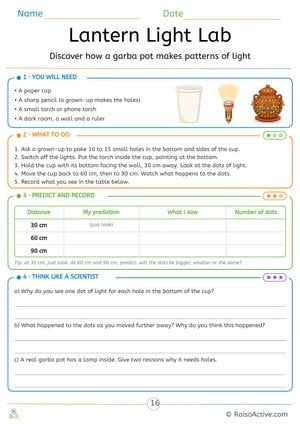
Lantern Light Lab: Navratri Garba Pot Light Experiment
Ages 7-11 · Grade 2–Grade 3Ages 7-11 · Year 3–Year 4Ages 7-11 · Class 2–Class 3Ages 7-11
Children make holes in a paper cup, shine a torch through it and see one spot of light for each hole. They predict and record what happens as they move further from the wall, and explain the results and why a real garba pot needs holes.
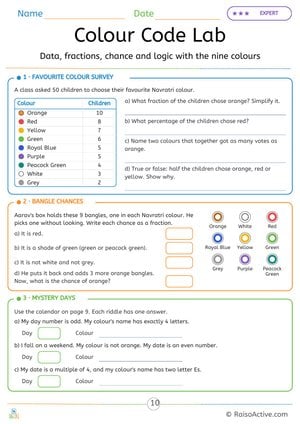
Colour Code Lab: Navratri Fractions, Percentages and Probability
Ages 7-11 · Grade 2–Grade 3Ages 7-11 · Year 3–Year 4Ages 7-11 · Class 2–Class 3Ages 7-11
Children read a survey of 50 children's favourite Navratri colours and write fractions and percentages, write the chance of picking each kind of bangle as a fraction, and solve three riddles using the colour calendar on page 9.

Written by
Hemsweta Jain · Teacher Cheena
MBA and Early Childhood Educator, teaching since 2014 · Founder of RaisoActive, Mumbai
Published · Last reviewed
Related Resources
Printable Resources(10)
View all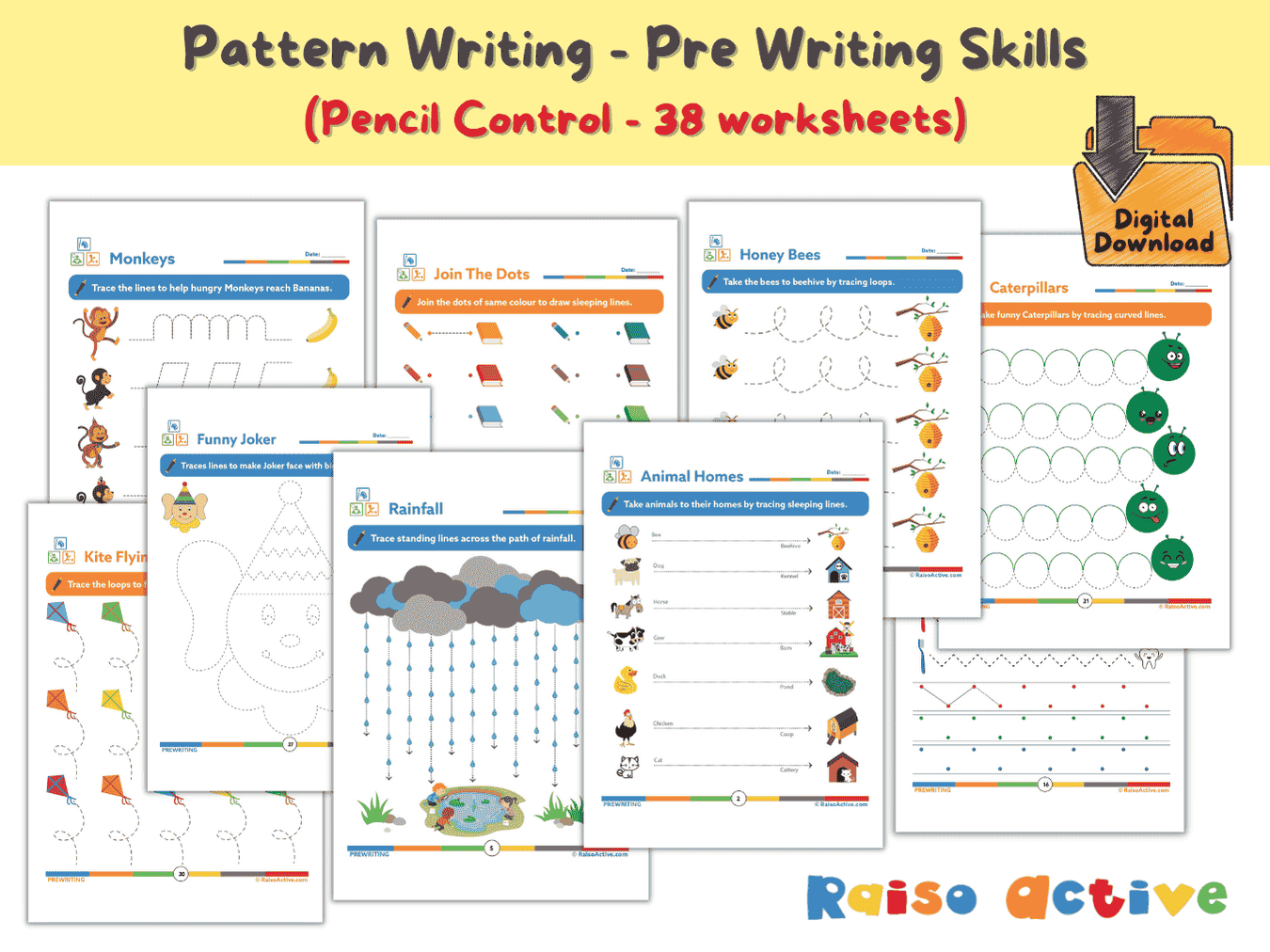

Pattern Writing Pre-writing Skills Activity Book for 3-4 Year Olds
Ages 3-4 · PreschoolAges 3-4 · NurseryAges 3-4 · 44 pages
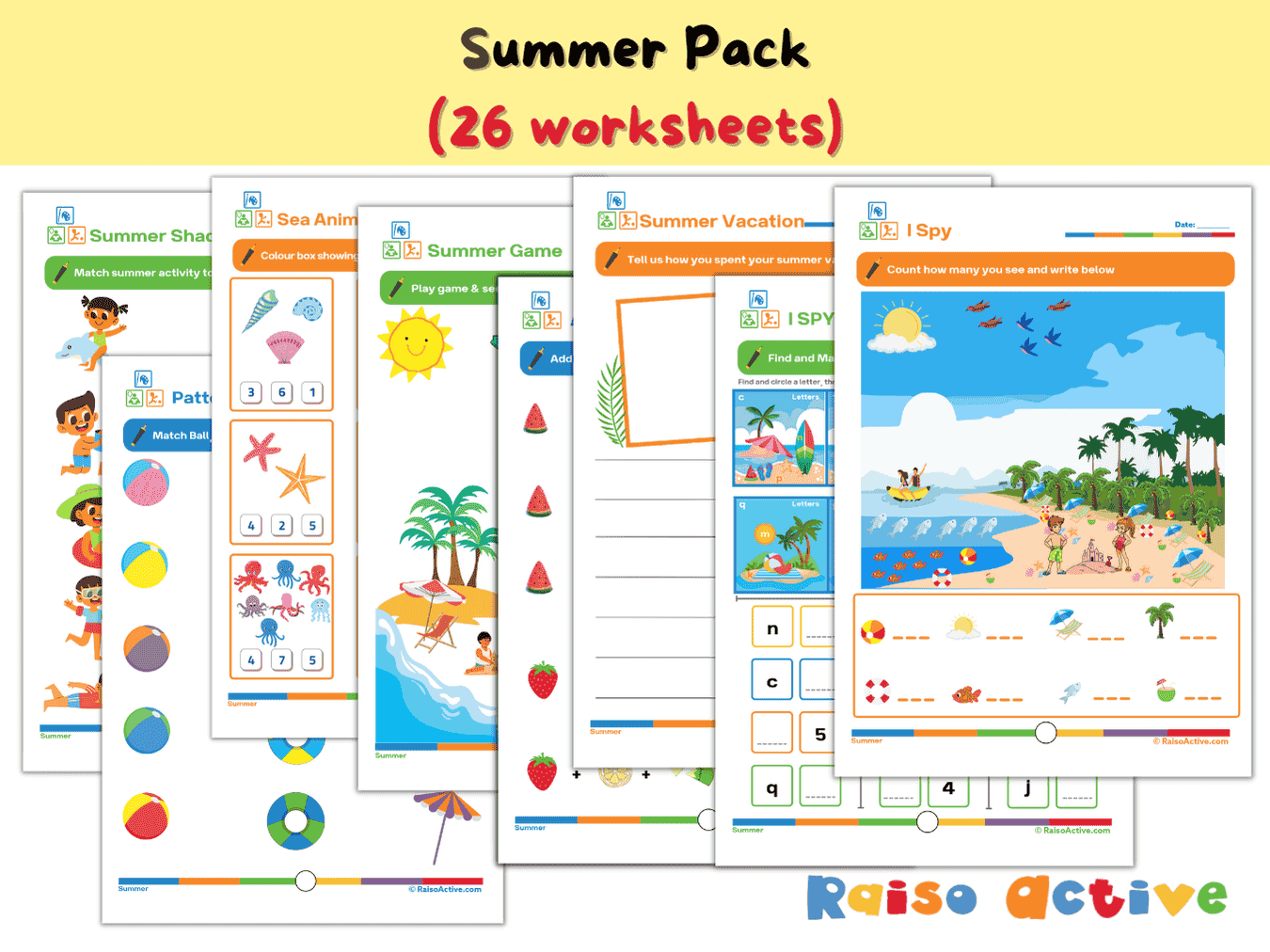

Summer Activity Pack: Math, Literacy, Puzzles & More for Preschool & Kindergarten
Ages 3-7 · Preschool–Grade 1Ages 3-7 · Nursery–Year 2Ages 3-7 · Nursery–Class 1Ages 3-7 · 26 pages
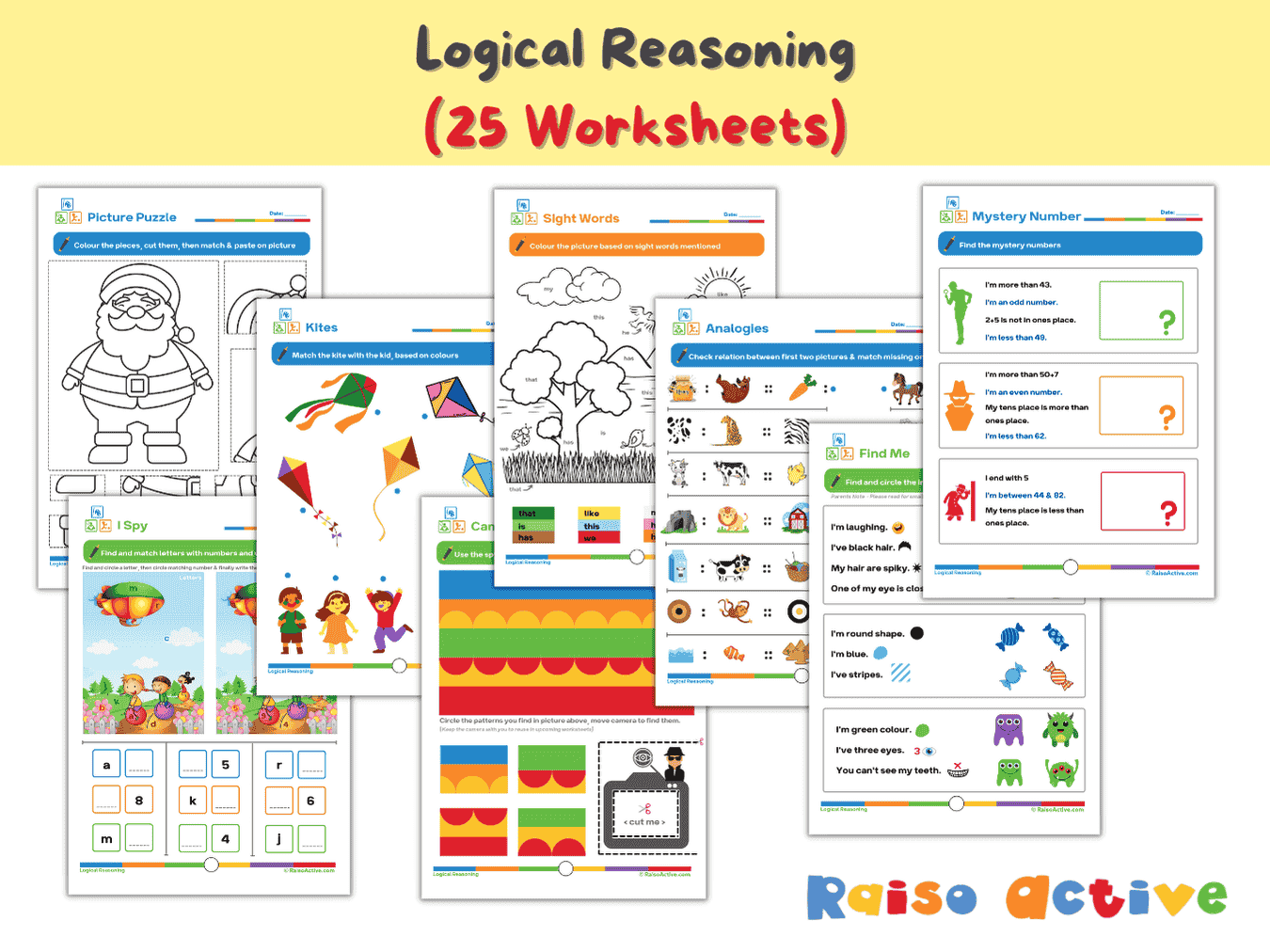

Logical Reasoning Activity Book for Preschool & Kindergarten | Patterns, Puzzles & Analogies
Ages 4-7 · Pre-K–Grade 1Ages 4-7 · Reception–Year 2Ages 4-7 · LKG–Class 1Ages 4-7 · 26 pages
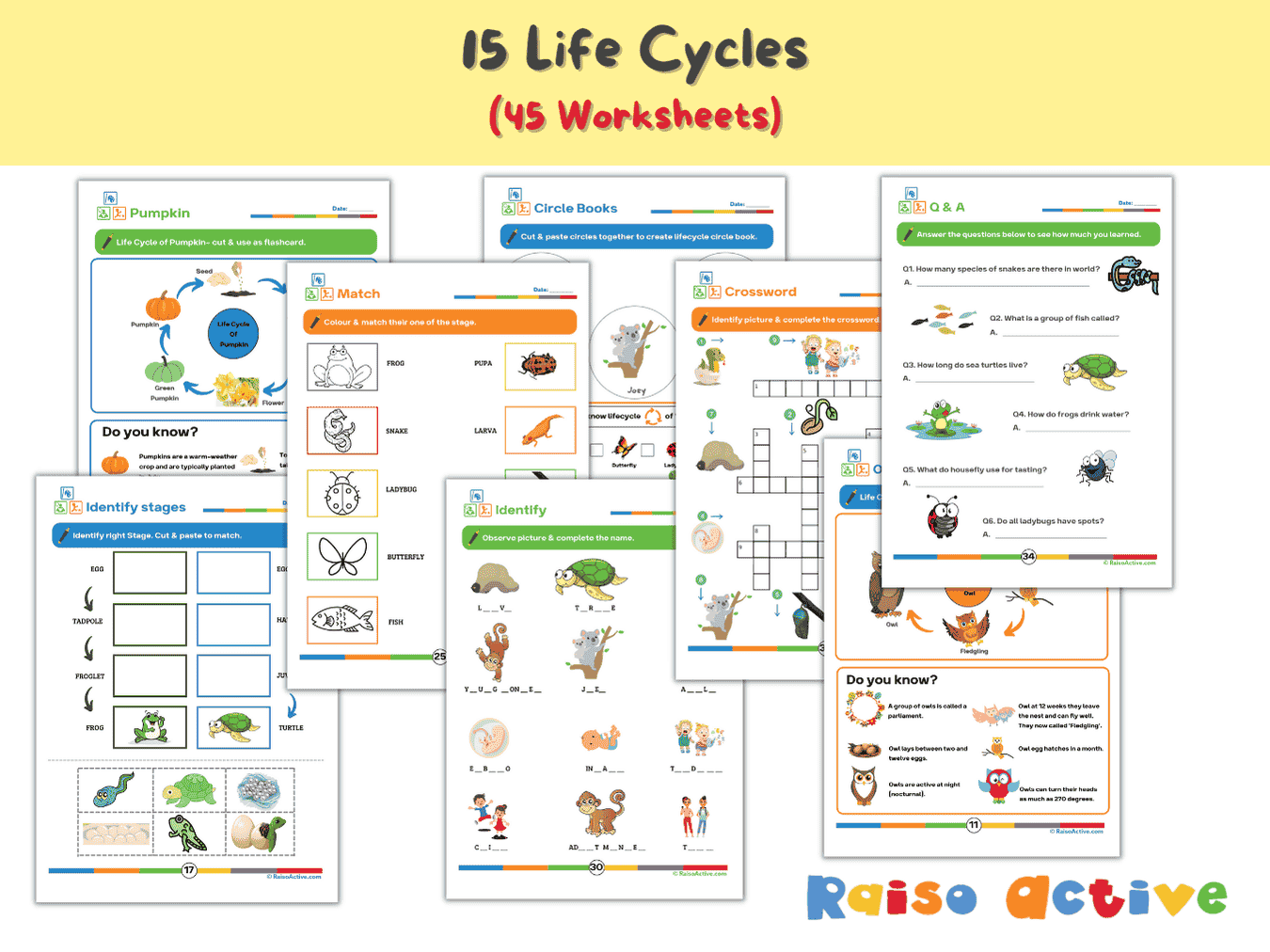

Lifecycles Activity Book & Flashcards for Preschool & Early Elementary
Ages 3-8 · Preschool–Grade 2Ages 3-8 · Nursery–Year 3Ages 3-8 · Nursery–Class 2Ages 3-8 · 46 pages
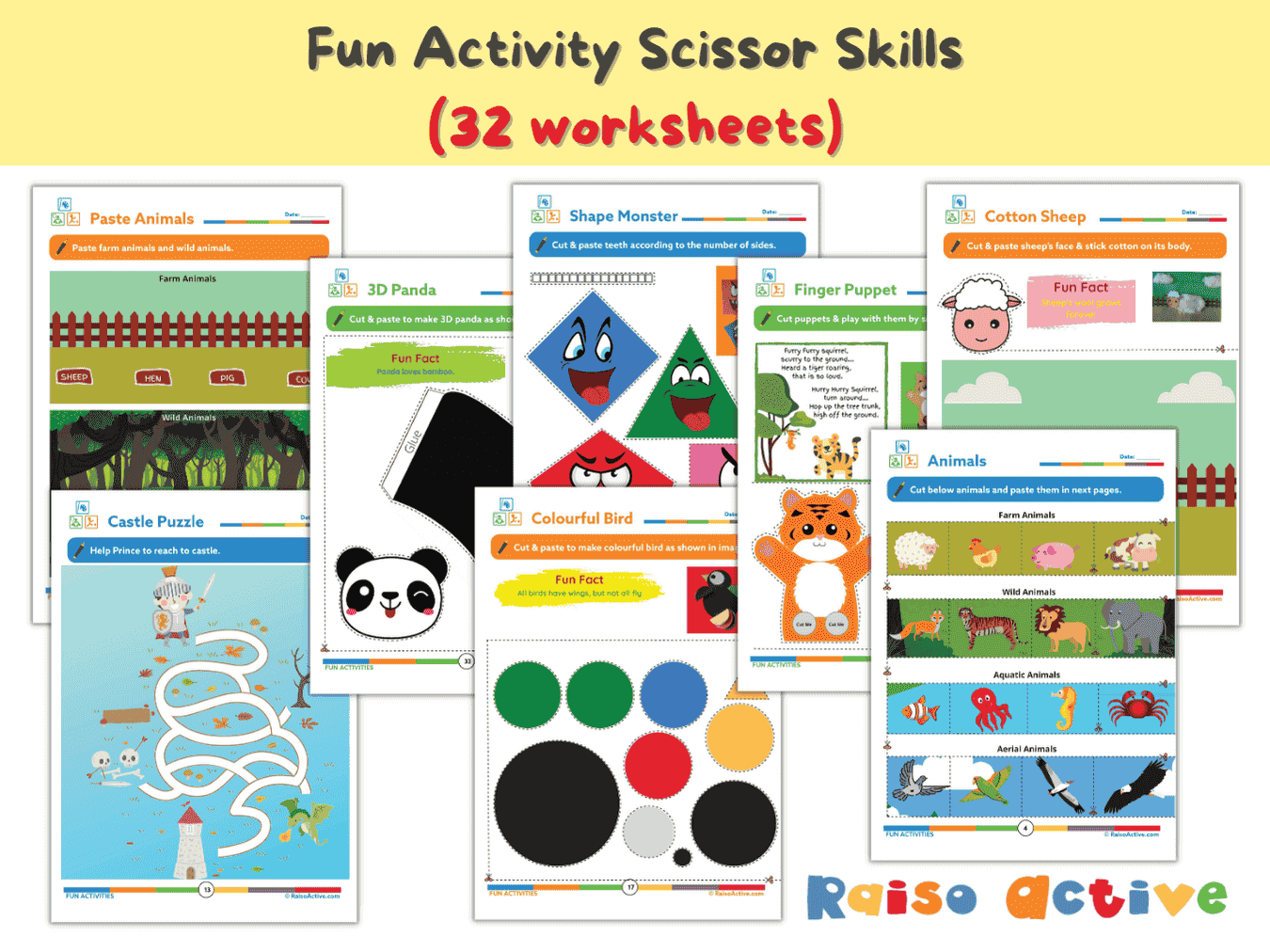
Preschool Scissor Skills Activity Book: Fine Motor & Craft Fun for Ages 3-6
Ages 3-6 · Preschool–KindergartenAges 3-6 · Nursery–Year 1Ages 3-6 · Nursery–UKGAges 3-6 · 35 pages
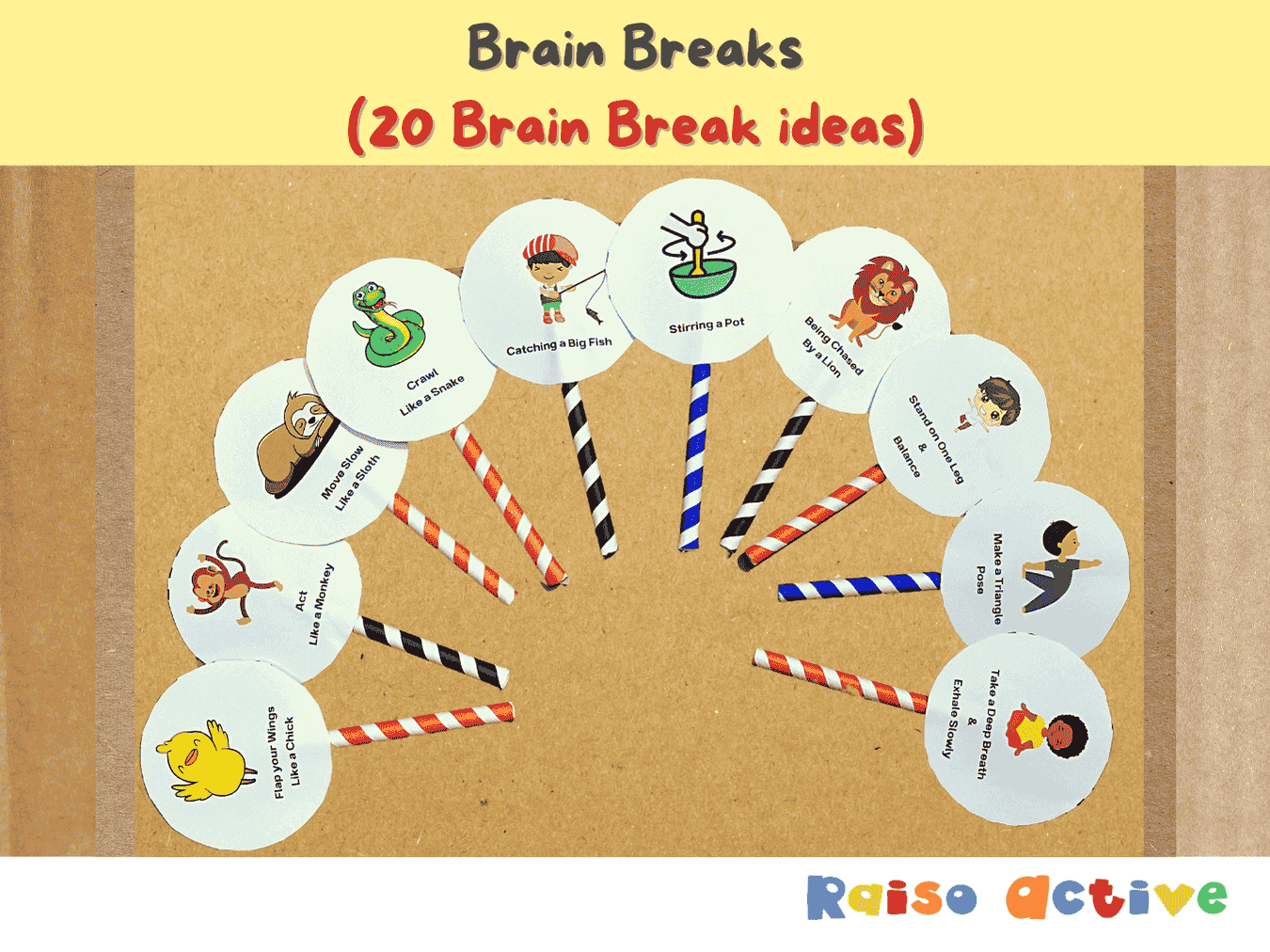
Gross Motor Movement & Imaginative Play Flashcards for Toddlers & Preschoolers
Ages 2-5 · Preschool–Pre-KAges 2-5 · Nursery–ReceptionAges 2-5 · Nursery–LKGAges 2-5 · 5 pages
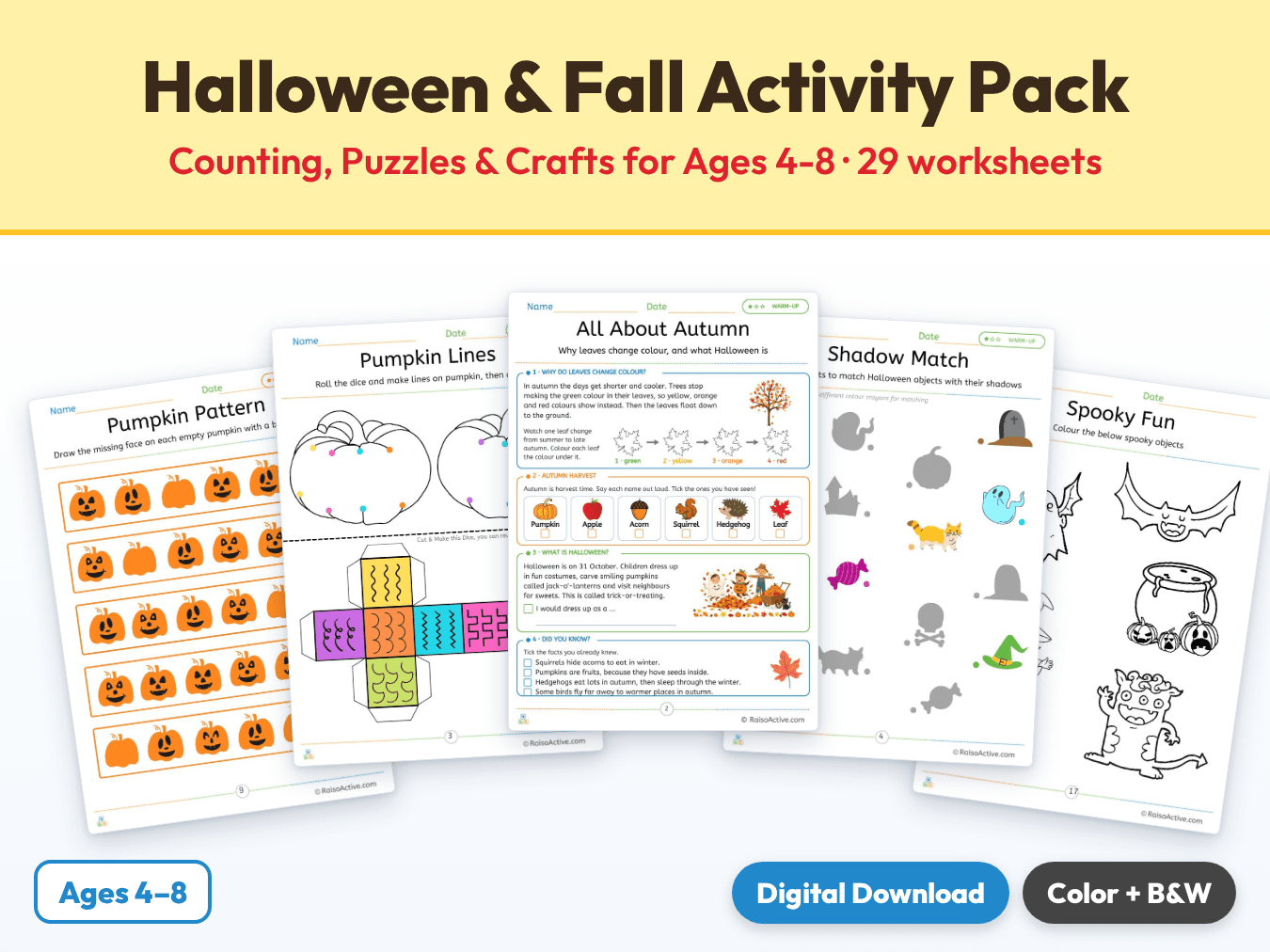
Halloween & Fall Activity Pack: Counting, Puzzles & Crafts for Ages 4-8
Ages 4-8 · Pre-K–Grade 2Ages 4-8 · Reception–Year 3Ages 4-8 · LKG–Class 2Ages 4-8 · 30 pages
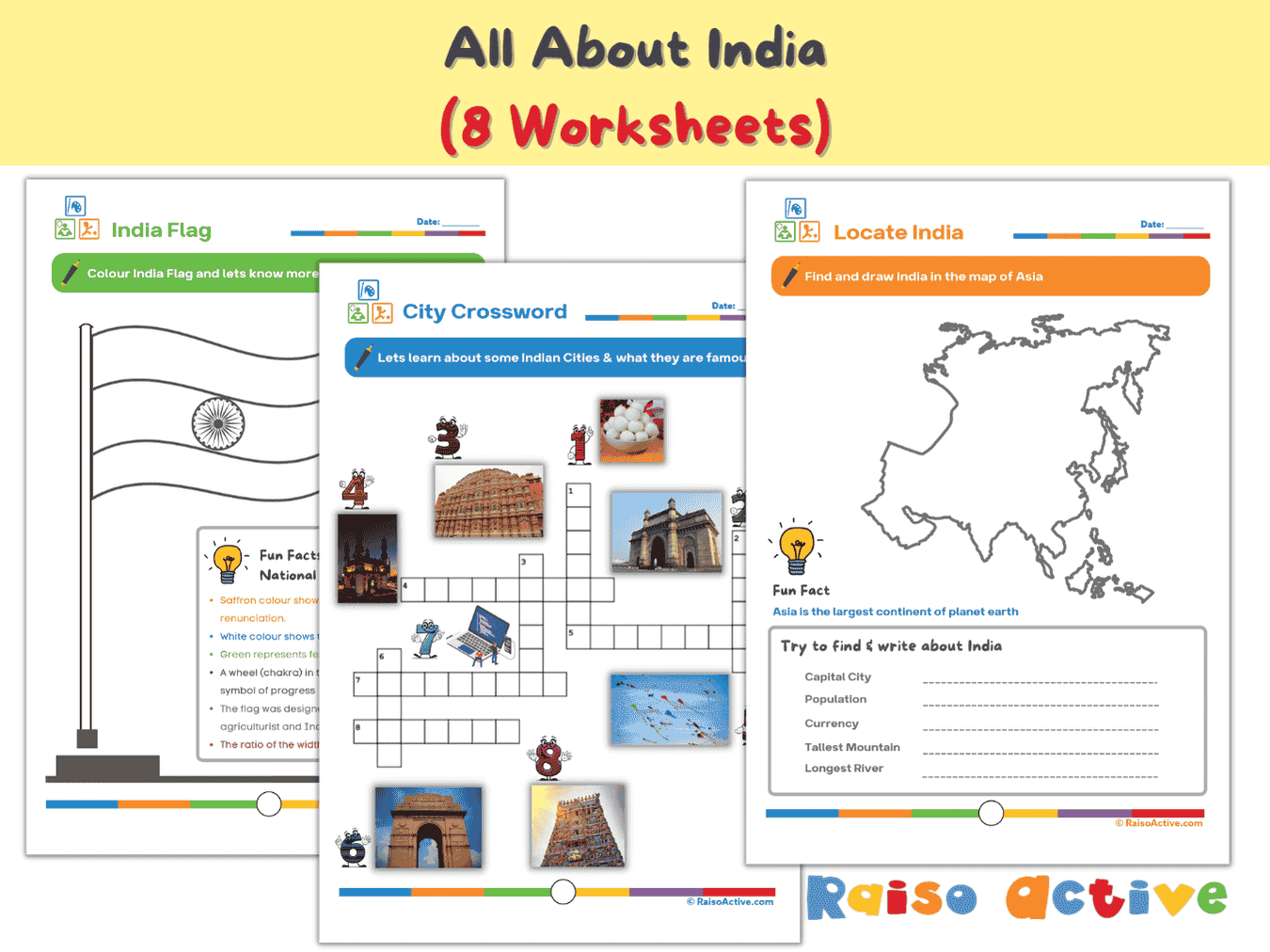
India Activity Book for Kids: Explore Geography, Culture & Symbols (Ages 5-8)
Ages 5-8 · Kindergarten–Grade 2Ages 5-8 · Year 1–Year 3Ages 5-8 · UKG–Class 2Ages 5-8 · 8 pages
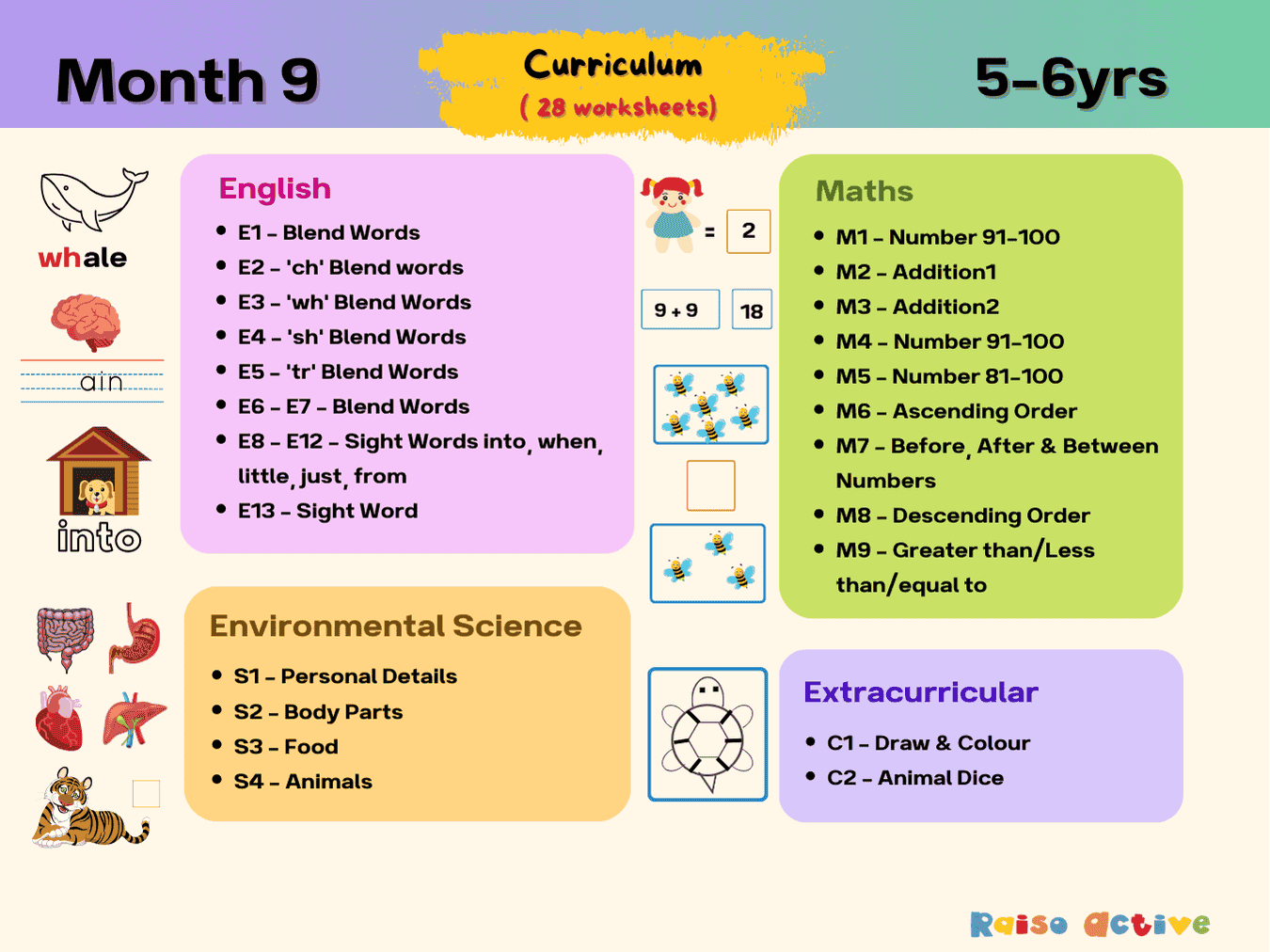
Month 9: Early Learning English Math Science | Ages 5-6
Ages 5-6 · KindergartenAges 5-6 · Year 1Ages 5-6 · UKGAges 5-6 · 31 pages
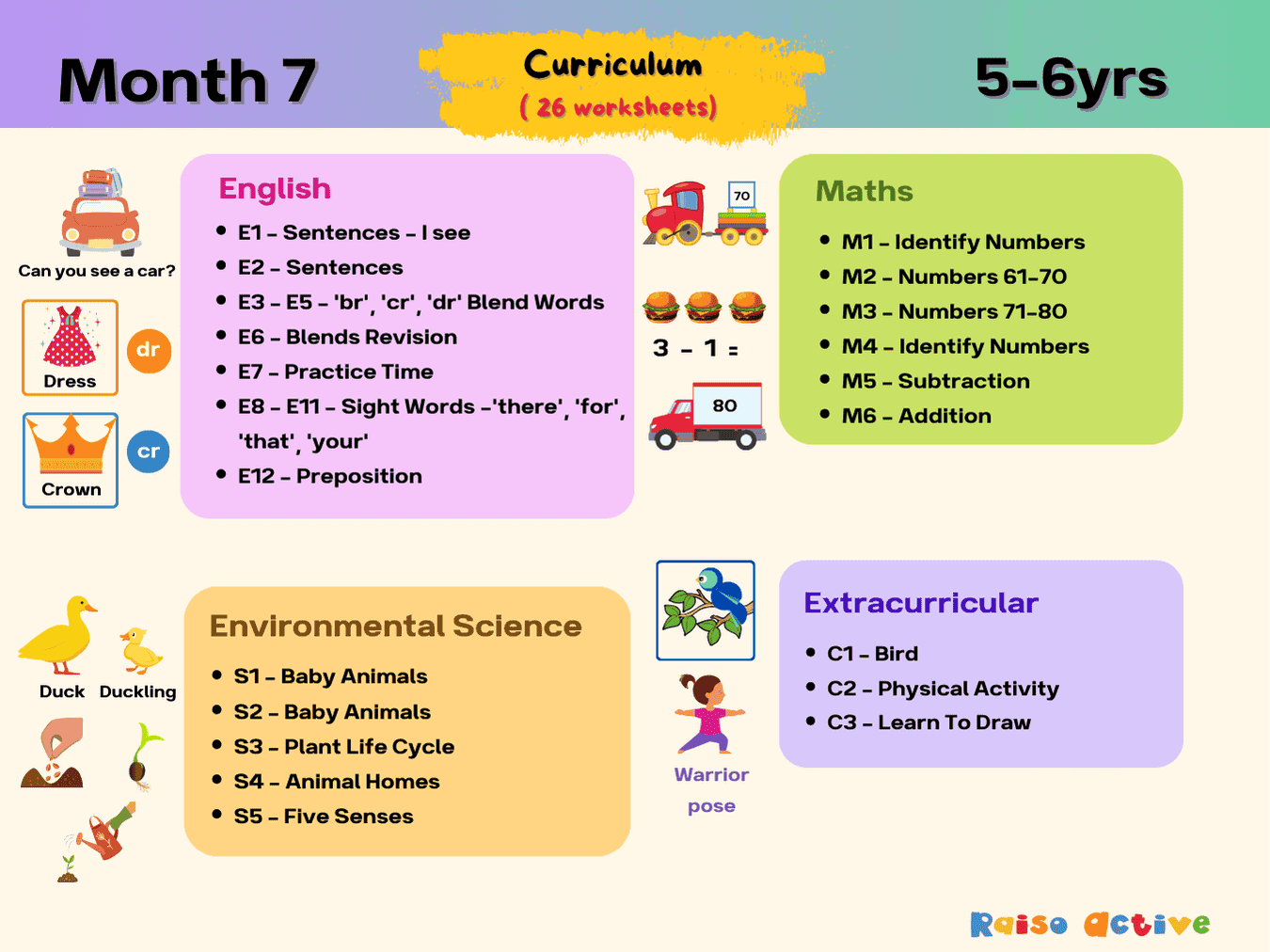
Month 7: Holistic Kindergarten Curriculum | Ages 5-6
Ages 5-6 · KindergartenAges 5-6 · Year 1Ages 5-6 · UKGAges 5-6 · 29 pages