Free printable worksheets · United Kingdom
Reception Counting Worksheets (Ages 4–5)
Reception counting worksheets are practice sheets for children aged 4–5 in Reception in the UK. Counting is matching a spoken number word to each object in a group, one at a time, to find out how many there are in total. The sheets on this page cover one-to-one correspondence, counting a set of objects accurately, matching a numeral to a quantity and comparing more and less.
Reception is the year phonics teaching properly begins, usually with Phase 2 of Letters and Sounds or an equivalent scheme, so a child starts blending sounds such as s, a, t and p into short words within weeks. Number work stays within ten, built through subitising and comparing rather than counting alone. At four to five, counting reaches twenty and gains a new skill: taking a requested number of objects from a larger pile and stopping at exactly the right point. Worksheets should ask the child to count out seven counters from a bowl of fifteen, count a group of up to twenty pictures, and compare two groups to say how many more one has than the other. Skip counting and counting past twenty are next.
698+ worksheets · free PDF download · print on A4 or Letter
Reception Counting Worksheets to print
Browse all worksheets for ages 4–5
Comparing Numbers: Apples, Soccer Balls, and More! - Math Worksheet
This worksheet teaches children to compare two quantities using the symbols greater than (>), less than (<), and equal to (=) by counting groups of everyday objects like apples and soccer balls. For four- and five-year-olds, learning to read and use comparison symbols is an early step toward understanding mathematical relationships beyond simple counting.

Read and Match: Sight Word Sentences Worksheet for Early Readers
Children ages 4-5 practice reading simple sight-word sentences and matching them to the picture that shows their meaning, building early reading comprehension by connecting printed words directly to what they represent. This bridges the gap between recognizing individual sight words and understanding a full sentence's meaning.
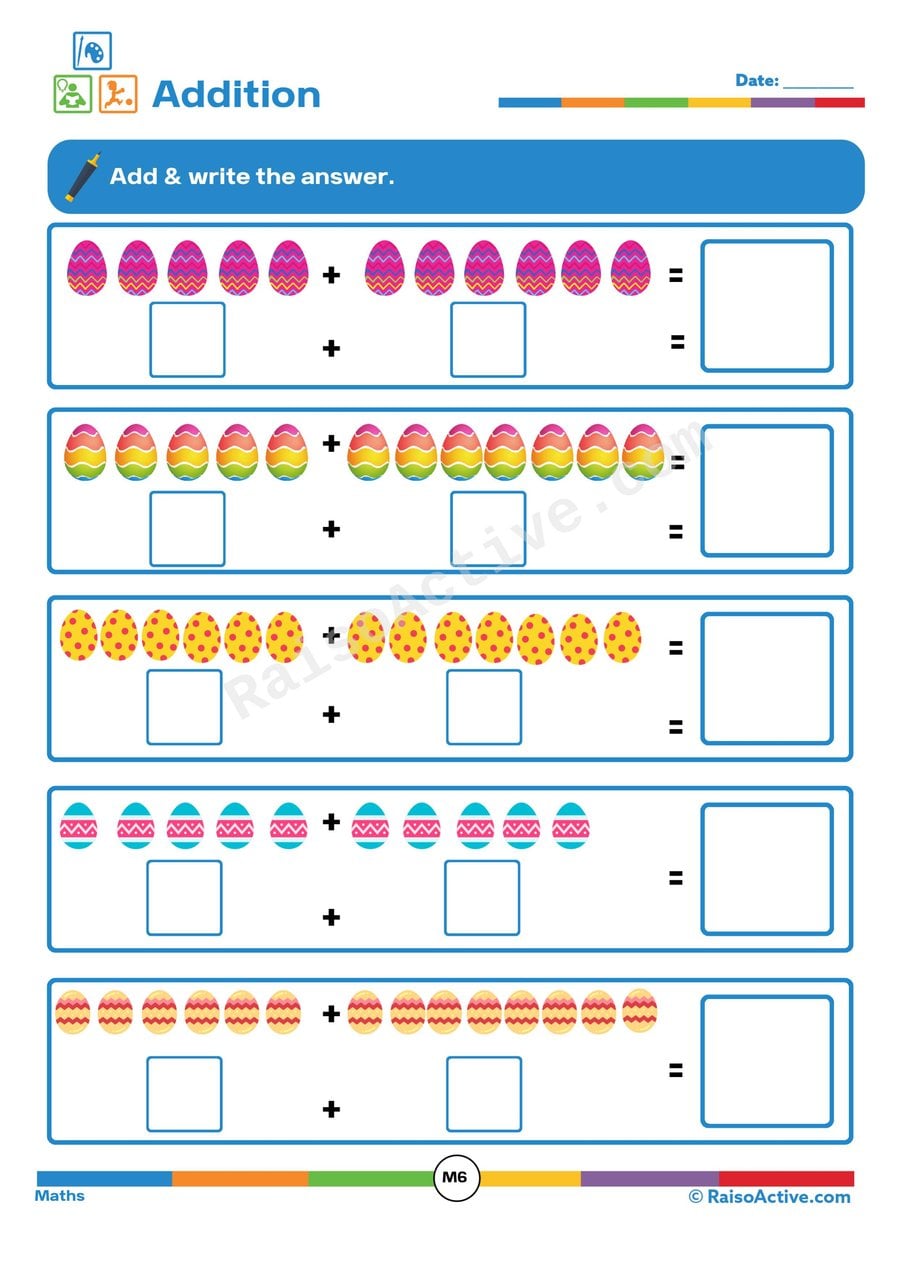
Easter Egg Addition Worksheet for Preschoolers
Counting groups of Easter eggs and combining them builds early addition sense for children ages 4-5, showing that putting two smaller groups together creates one larger total. Because the eggs are grouped visually rather than shown as bare numerals, children practice one-to-one counting alongside the abstract addition symbol, connecting the concrete and written forms of the same idea.
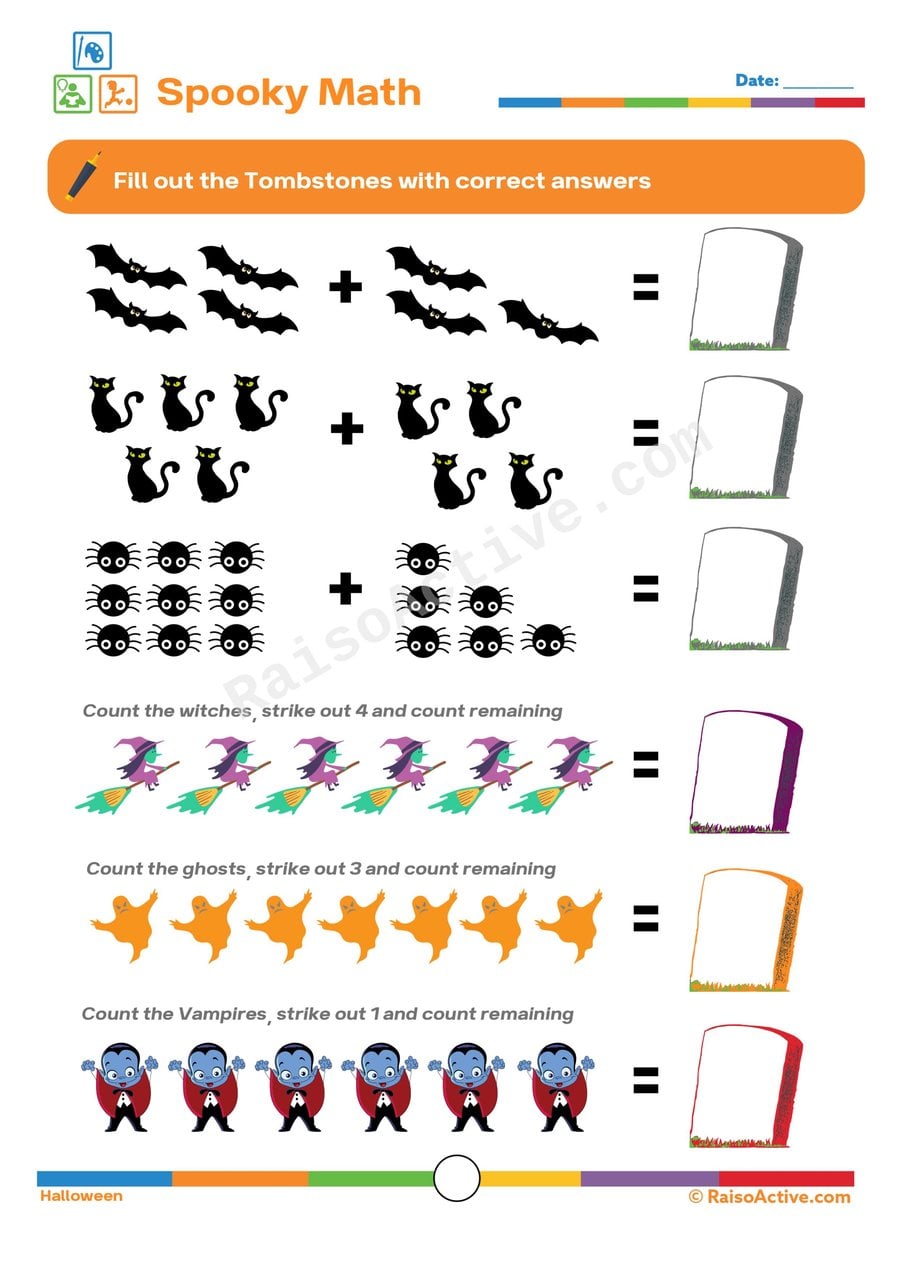
Spooky Math Worksheet: Halloween Counting Fun!
This Halloween math worksheet has children ages 4-5 count grouped pictures and then solve simple addition and subtraction problems, moving from concrete counting toward the more abstract skill of combining or taking away quantities. Writing each answer inside a tombstone shape keeps the seasonal theme playful while practicing genuine early arithmetic.

Phonics Fun: Identify and Match Letters Worksheet
Matching a picture to the letter that starts its name requires children ages 4-5 to isolate the very first sound in a spoken word, a phonics skill called initial sound identification that directly predicts later reading success. This worksheet turns that listening skill into a visual matching task, asking children to connect what they hear to a printed letter rather than just naming pictures aloud. Building this sound-to-letter link is one of the clearest early indicators that a child is ready to start sounding out simple words.

Measuring Objects with Paper Clips Worksheet for Preschoolers
This worksheet introduces children ages 4-5 to non-standard measurement by having them line up paper clips end-to-end to find the length of different objects, building an early understanding that length can be measured and compared using a repeated unit. This hands-on approach lays the groundwork for using rulers and standard units later on.

Number Sequence Worksheet: What Comes Before, After, and In Between!
Identifying numbers that come before, after, or in between a given number builds flexible number sequencing skills for children ages 4-5, going beyond simple forward counting to strengthen their overall sense of number order.

Earlier and Later Time Worksheet: Telling Time Practice
Comparing clock times to determine which is earlier or later is an early step toward telling time for children ages 4-5, requiring them to read a clock face and reason about the order of events across a day. This worksheet builds that skill in two directions: first identifying a time earlier than a given reference point, then identifying a time later than a different clock shown. Practicing both directions helps children understand that 'earlier' and 'later' are relative concepts depending on what they're being compared to, not fixed labels attached to specific times.
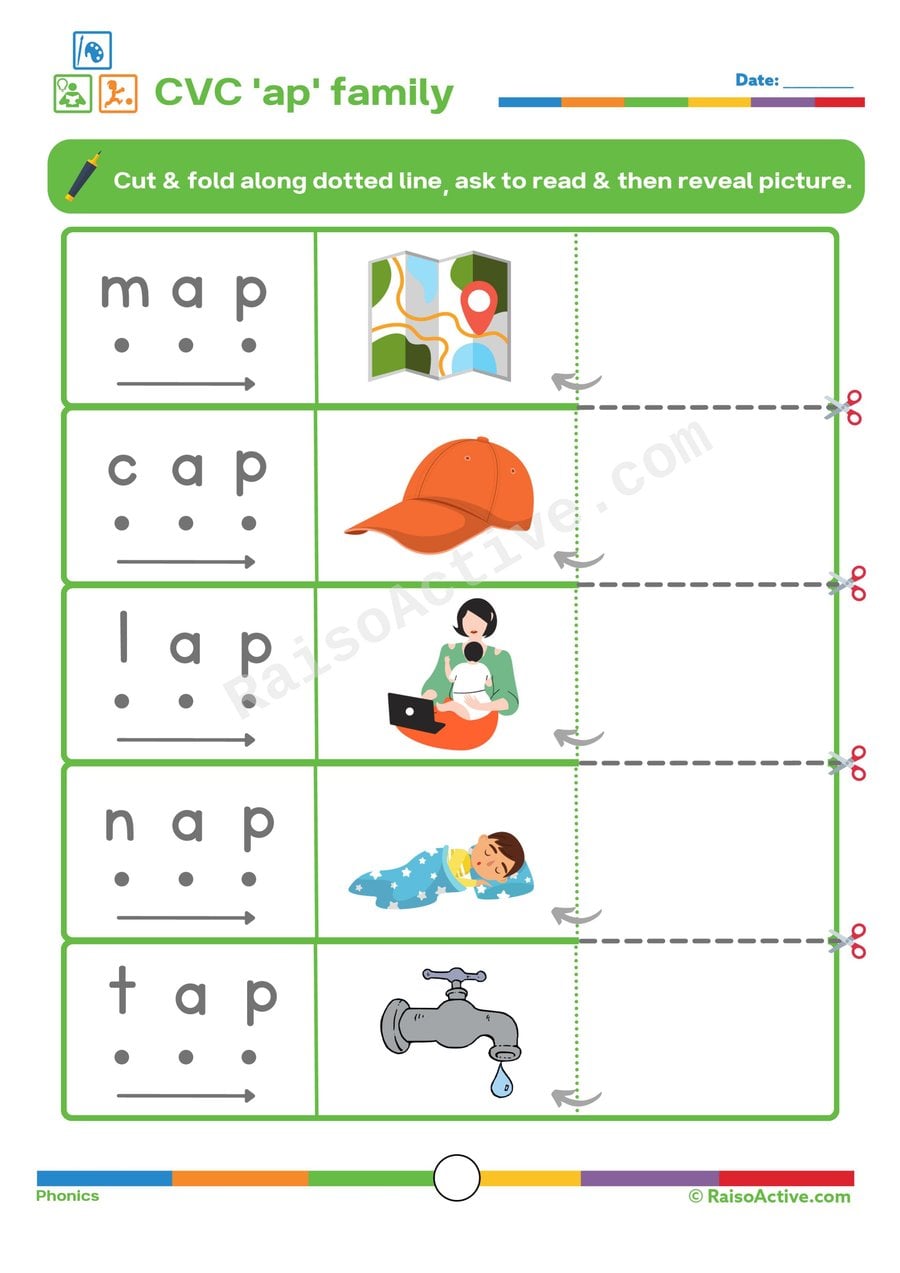
CVC Word Family 'ap' Worksheet: Read, Cut, and Match!
Working through the 'ap' word family (cap, map, nap) helps children ages 4-5 practice both decoding and matching in one activity, reinforcing that a small set of letter patterns can unlock many different words. Cutting apart the word and picture cards adds a fine motor and organizational challenge, requiring children to keep track of pieces while still focusing on reading accuracy. This combination of literacy and hands-on manipulation suits the shorter attention spans typical of this age group.

Summer Addition Worksheet for Preschoolers: Counting and Adding Fun!
Adding two small groups of summer-themed pictures — ice creams, beach balls, sunglasses — gives a 4-5 year old a concrete, countable version of addition before they ever see the plus sign written abstractly. Counting each group separately and then counting the combined total builds the core idea that addition means 'put together and count again', which underlies every later addition strategy.
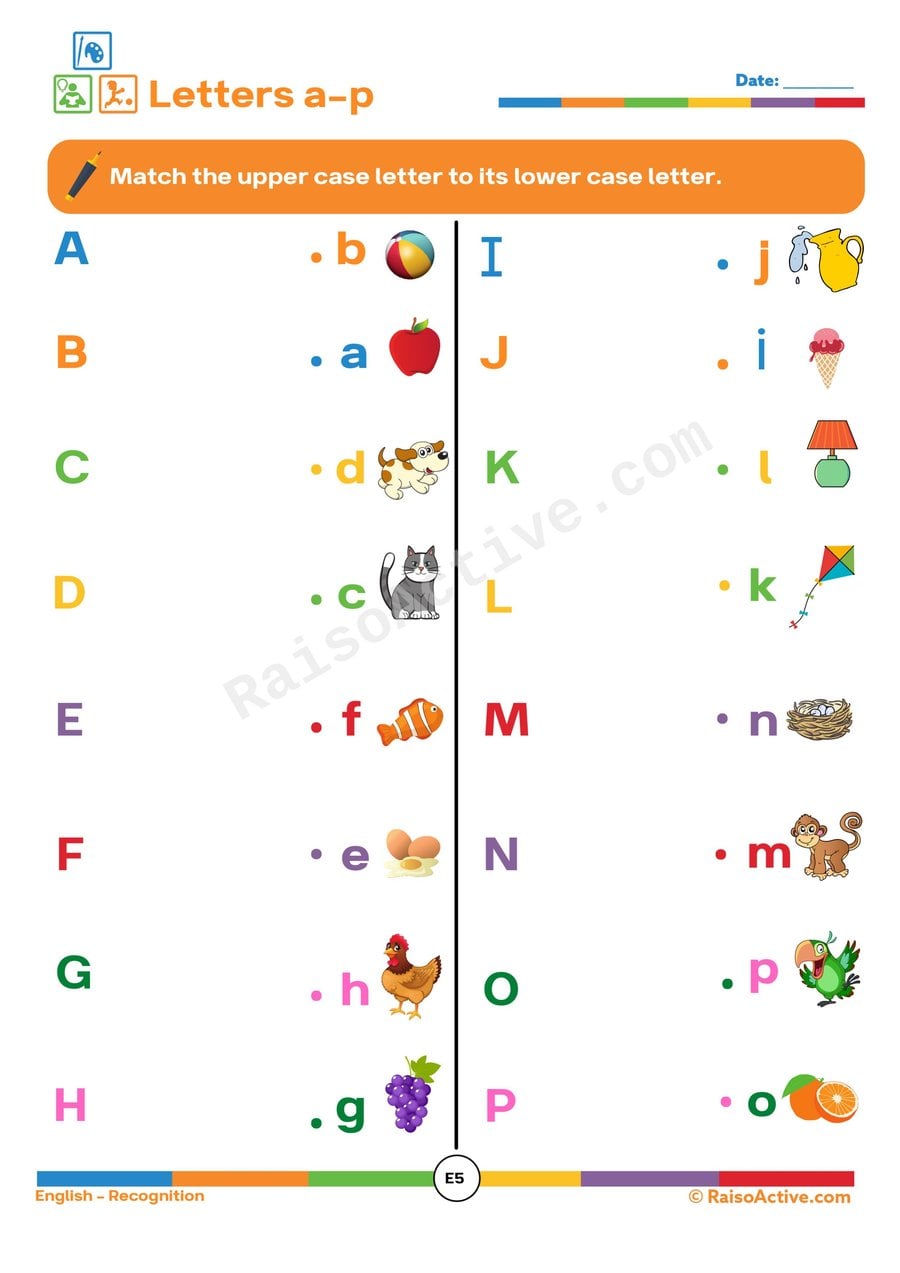
Match the Uppercase Letters: A-P Worksheet
This worksheet strengthens your child's visual discrimination skills by focusing on uppercase letters from A to P. Children aged 4-5 years develop crucial pre-reading abilities as they learn to identify and pair identical letter forms. Mastering this matching task builds a strong foundation for future letter recognition and early literacy success.
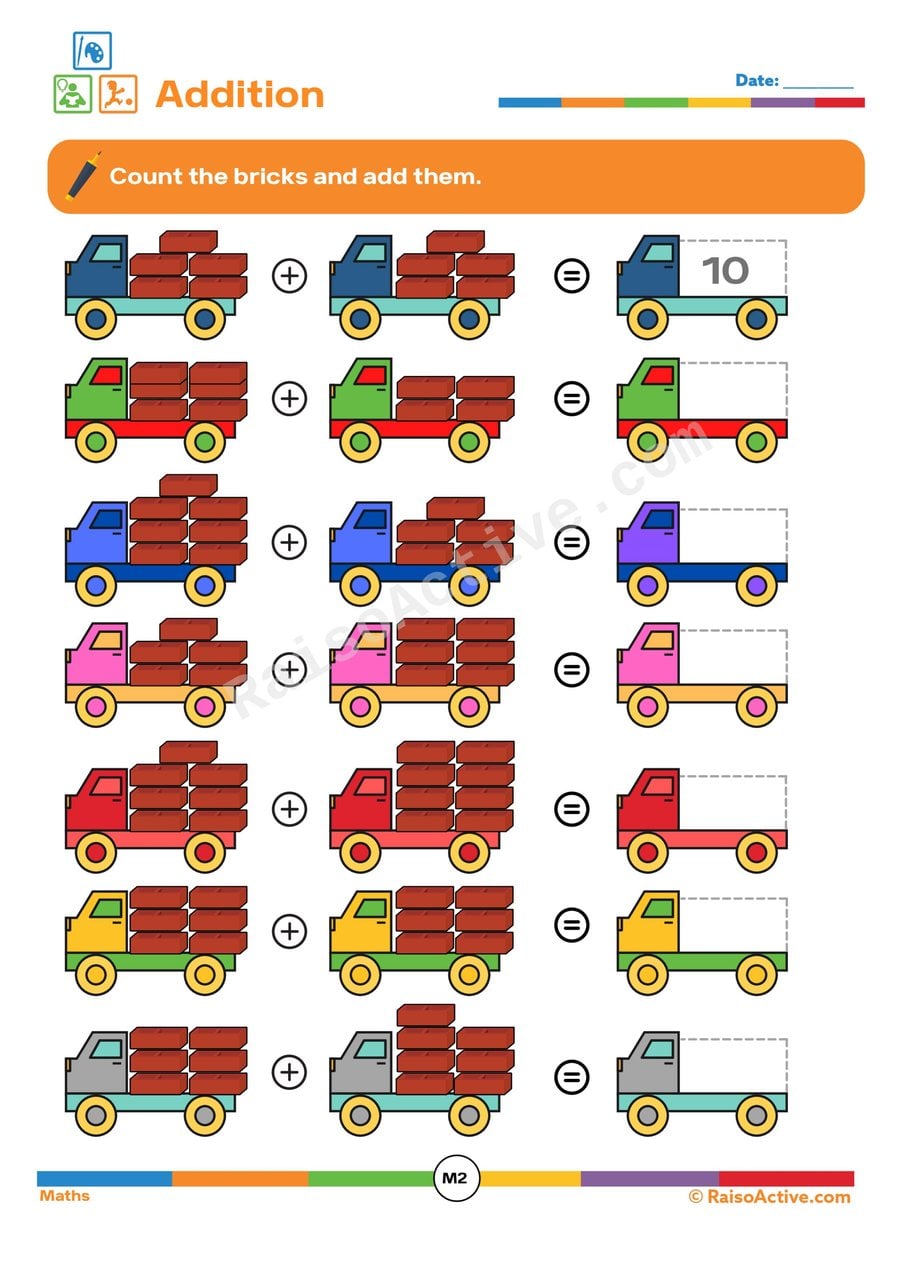
Truckload Addition Worksheet for Preschoolers
Counting bricks loaded on two trucks and adding the totals together teaches children ages 4-5 basic addition through a playful, visual context that makes the abstract idea of combining quantities easier to grasp. This truck theme also keeps counting practice engaging for children who love vehicles, building both number sense and sustained attention.

Diwali Addition Worksheet for Kids: Counting and Adding Objects!
Children ages 4-5 practice addition by counting two separate sets of Diwali-themed objects, then combining the totals and writing the sum. Seeing objects grouped together concretely helps children understand what 'adding' actually means before relying on memorized number facts. This festive theme also connects the math skill to a real cultural celebration, giving the abstract addition work a meaningful, relatable context.
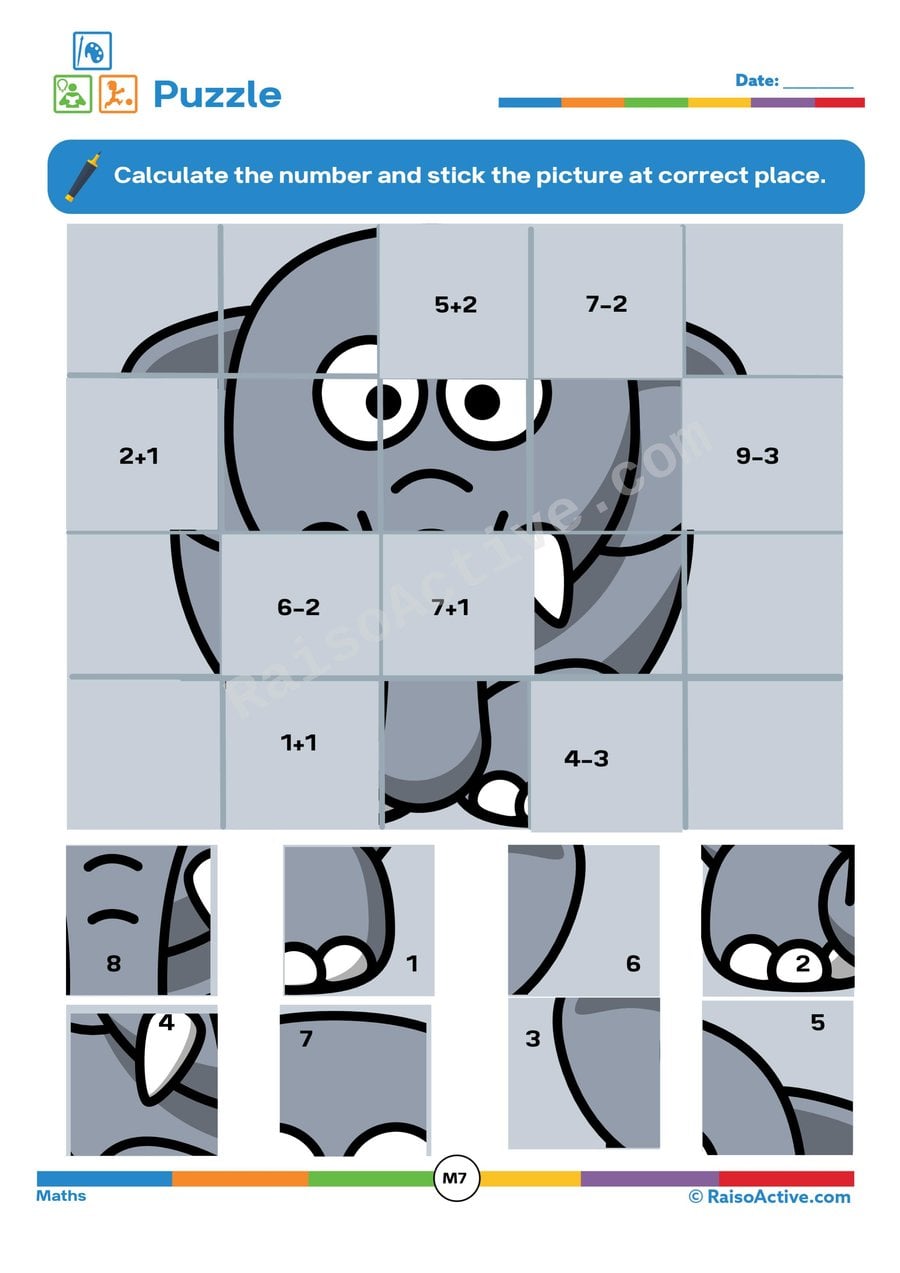
Elephant Puzzle: Math Worksheet for Preschoolers
Children ages 4-5 practice solving simple addition problems and then use those answers to solve a picture puzzle, matching each answer to the correct puzzle piece to complete an elephant. This turns basic addition fact practice into a satisfying hands-on challenge with a visual reward at the end.

Phonic Sounds Worksheet: Circle the Picture That Starts with the Alphabet Sound!
This worksheet reinforces beginning-sound recognition for children ages 4-5 by presenting a letter at the start of each row and asking them to find the one picture among several that begins with that same sound. Because each row contains multiple pictures, children must test several beginning sounds against the target letter before settling on the correct one, which builds more precise listening skills than simpler one-picture matching tasks. This process also strengthens the letter-sound mapping that underlies early decoding.
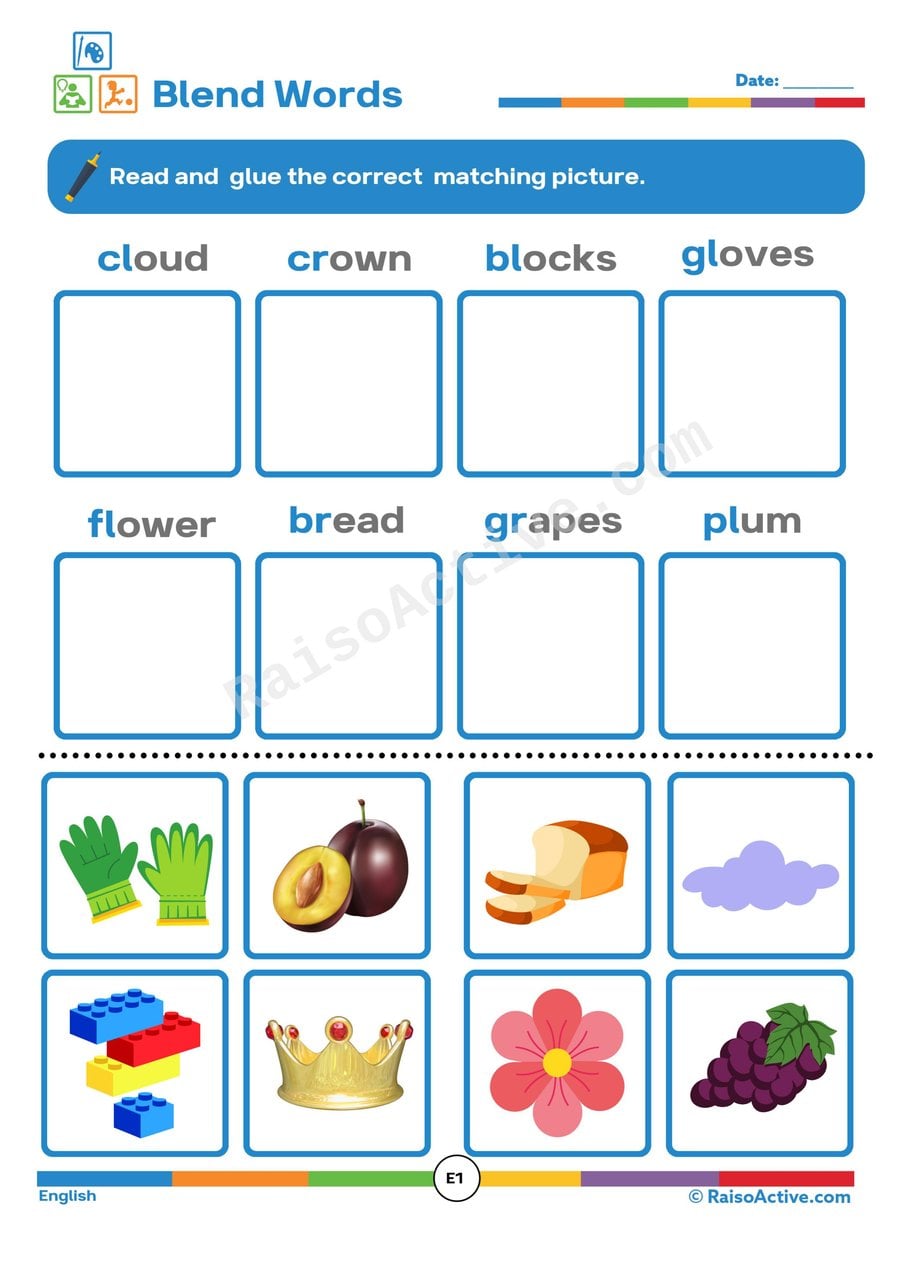
Blend Words Matching Worksheet for Preschoolers
Children ages 4-5 practice reading consonant blend words — words that start with two consonant sounds blended together, like 'bl' or 'st' — and connecting them to the correct picture through a cut-and-paste matching activity. Blends are a step up in difficulty from single beginning sounds, since children must hear and produce two consonant sounds smoothly together, an important milestone on the way to more advanced phonics.

Comparing Objects: A Fun Counting Worksheet for Preschoolers!
This worksheet has 4-5 year olds count two groups of objects and then compare the totals using the greater-than, less-than, and equal-to symbols — an early but genuine step into formal math notation that goes beyond simple counting into representing a comparison symbolically. Because your child has to count accurately before comparing, this worksheet also reinforces that math symbols stand for real relationships between quantities, not arbitrary marks to memorize.
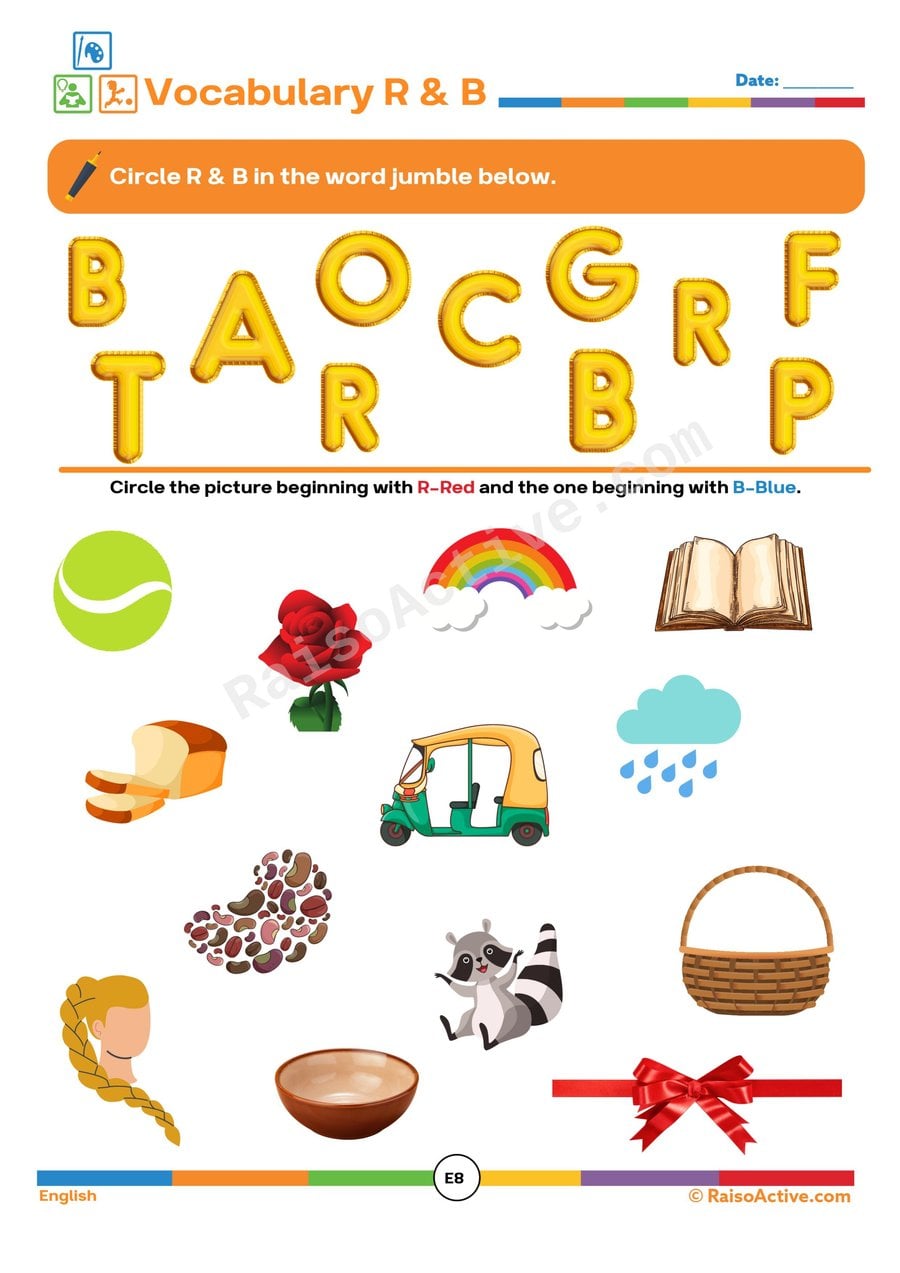
R & B Word Jumble Worksheet for Preschoolers
Circling the letters R and B within a jumbled group of letters sharpens visual discrimination for children ages 4-5, training their eyes to spot a specific letter shape among similar-looking distractions. Pairing this with picture identification for words that start with R and B reinforces beginning-sound recognition, connecting the visual letter search to actual spoken sounds.

CVC 'ag' Family Matching Worksheet: Read, Color, and Match!
This worksheet builds on word-family recognition by focusing on the 'ag' ending (bag, tag, rag, wag), giving children ages 4-5 more repetition with the analogy-based reading strategy where a shared spelling chunk unlocks several words at once. Reading, coloring, and matching the same set of words in different ways reinforces both visual word recognition and vocabulary, since your child sees, hears, and interacts with each word multiple times in one sitting. This kind of layered repetition is exactly what helps a word family truly stick in memory rather than being a one-time exercise.

Phonics Fun: Circle the Beginning Sound Worksheet for Preschoolers
This worksheet builds phonemic awareness by asking children to listen for a picture's beginning sound and circle the letter that matches it, a core early-reading skill that connects spoken sounds to written letters. For ages 4-5, this kind of sound-to-letter matching is one of the clearest predictors of later reading success, since it requires isolating individual sounds within a spoken word.

Long Vowel 'A' Worksheet: Complete the Words and Match!
This worksheet has children ages 4-5 complete long 'a' words by filling in missing letters and then matching each finished word to its picture. Combining spelling and matching in one activity reinforces the long 'a' sound from two directions at once — producing the correct letters and recognizing the completed word — which builds a more durable understanding than either skill alone.

CVCC Word Matching Worksheet: Read, Colour, and Match!
This worksheet builds on basic CVC reading by introducing CVCC words — words ending in two consonants, like 'lamp' or 'nest' — for children ages 4-5 to read, color, and match to pictures. Ending consonant blends require children to hold onto and pronounce two closing sounds without dropping one, refining the precision of their blending skills beyond simple three-letter words.

Long Vowel 'a' Matching Worksheet for Preschoolers
This matching worksheet gives children ages 4-5 focused practice recognizing the long 'a' sound by connecting pictures to their correctly spelled words, without the added complexity of writing or searching. Because matching removes the writing demand, it's a gentler entry point into long vowel recognition for children who are still building spelling confidence, letting them focus purely on hearing and identifying the sound. This kind of low-pressure, high-repetition matching helps establish the long 'a' sound firmly before your child moves on to writing or spelling it independently.

Number Names Matching Worksheet for Preschoolers
This worksheet layers two skills for children ages 4-5: unscrambling the letters of a number-name word and then matching that word to its correct numeral. Unscrambling requires children to recognize familiar letter sequences, an early word-recognition skill, while matching reinforces that written number words correspond to specific quantities. Together these tasks push number-word literacy a step further than simple copying or tracing.
What Reception counting worksheets cover
At four to five, counting reaches twenty and gains a new skill: taking a requested number of objects from a larger pile and stopping at exactly the right point. Worksheets should ask the child to count out seven counters from a bowl of fifteen, count a group of up to twenty pictures, and compare two groups to say how many more one has than the other. Skip counting and counting past twenty are next.
- Count out a requested number of objects from a larger pile
- Count a group of up to twenty scattered pictures
- Say how many more one group has than another
- Count on by one or two from a small starting number
How to use these worksheets at home or in class
A short daily sound-matching or blending sheet paired with one number activity, around ten minutes total, mirrors the classroom rhythm. Say each sound clearly before your child traces or writes it, and keep the pace playful rather than test-like.
Start with the sheet that matches what your child can already do, then move one step up. Keep finished sheets in a folder: Reception teachers often ask for evidence of practice, and children like seeing their own progress.
Is your child ready for Reception counting work?
A child moving into this stage typically holds a pencil with a developing grip, recognises several letters by sound rather than only by shape, and can count a small group of objects one at a time without skipping any.
Frequently asked questions
Why does my four-year-old struggle to count out exactly seven objects from a big pile?
Counting out a specific number means stopping counting on purpose, which is harder than counting everything in front of you and needs the child to hold the target number in mind the whole time. Have the child move each object to a second pile while counting, which makes stopping obvious once the target number is reached. This skill usually lags a little behind simply counting a fixed group and catches up with a few weeks of practice.
What should a Reception child be able to do in counting?
At four to five, counting reaches twenty and gains a new skill: taking a requested number of objects from a larger pile and stopping at exactly the right point. Worksheets should ask the child to count out seven counters from a bowl of fifteen, count a group of up to twenty pictures, and compare two groups to say how many more one has than the other. Skip counting and counting past twenty are next. A child moving into this stage typically holds a pencil with a developing grip, recognises several letters by sound rather than only by shape, and can count a small group of objects one at a time without skipping any.
Do these worksheets follow the Reception curriculum?
The sheets cover one-to-one correspondence, counting a set of objects accurately, matching a numeral to a quantity and comparing more and less, which sit inside the EYFS Early Learning Goals; Letters and Sounds Phase 2–3 outcomes for Reception. Pre-K / Kindergarten (US), LKG (India) use the same skills at this age, so the sheets also fit families following those programmes.
Are these Reception counting worksheets free?
Yes. Each worksheet downloads free as a watermarked PDF once you create an account, with a limit of five a day. An annual membership ($20) removes the watermark and the limit for the whole library of over 1,000 worksheets and every printable pack.

Written by
Hemsweta Jain · Teacher Cheena
MBA and Early Childhood Educator, teaching since 2014 · Founder of RaisoActive, Mumbai
Written and reviewed by Hemsweta Jain (Teacher Cheena), who designs every RaisoActive worksheet.
Last reviewed
Printable packs for ages 4–5
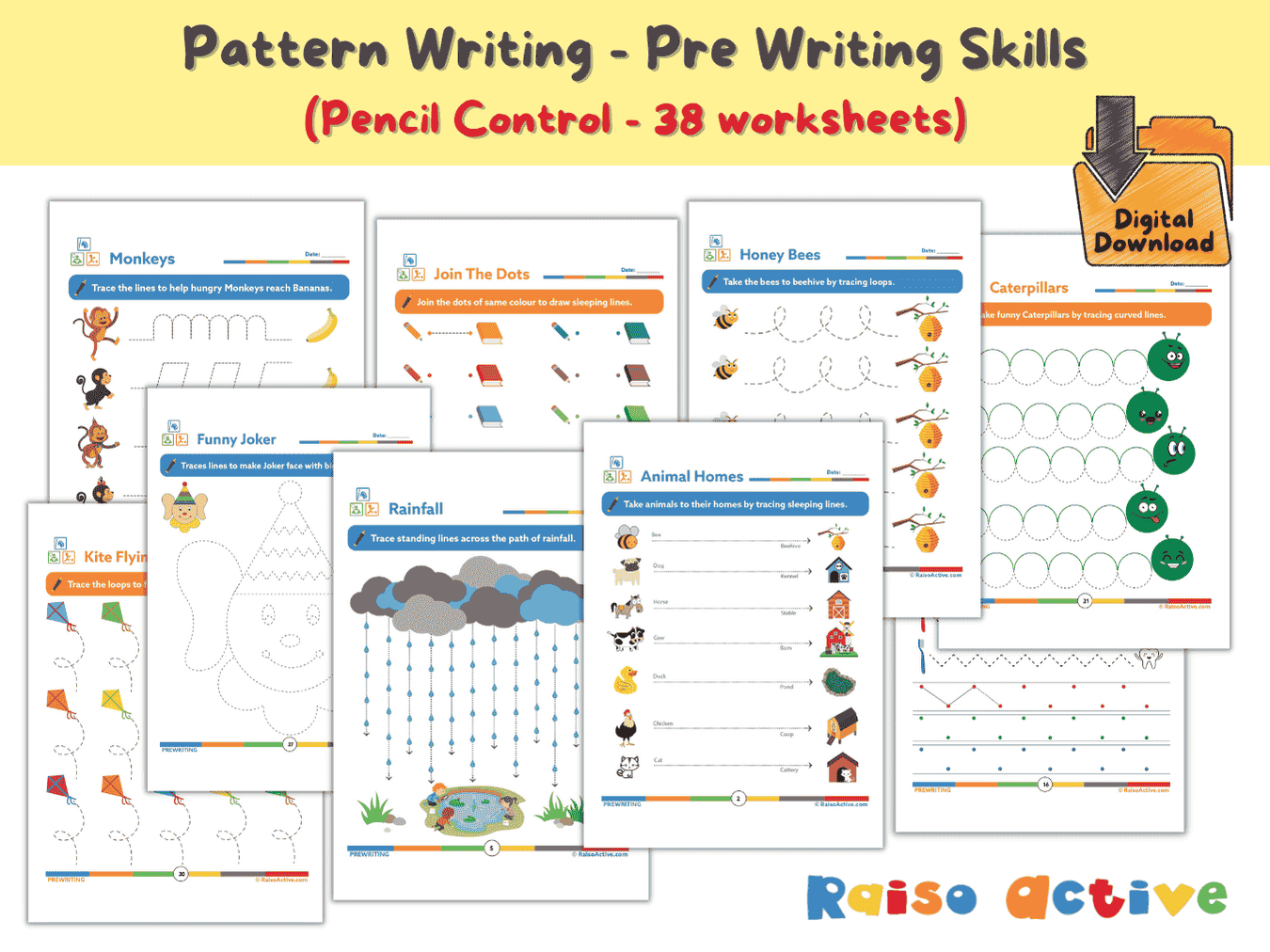
Pattern Writing Pre-writing Skills Activity Book for 3-4 Year Olds
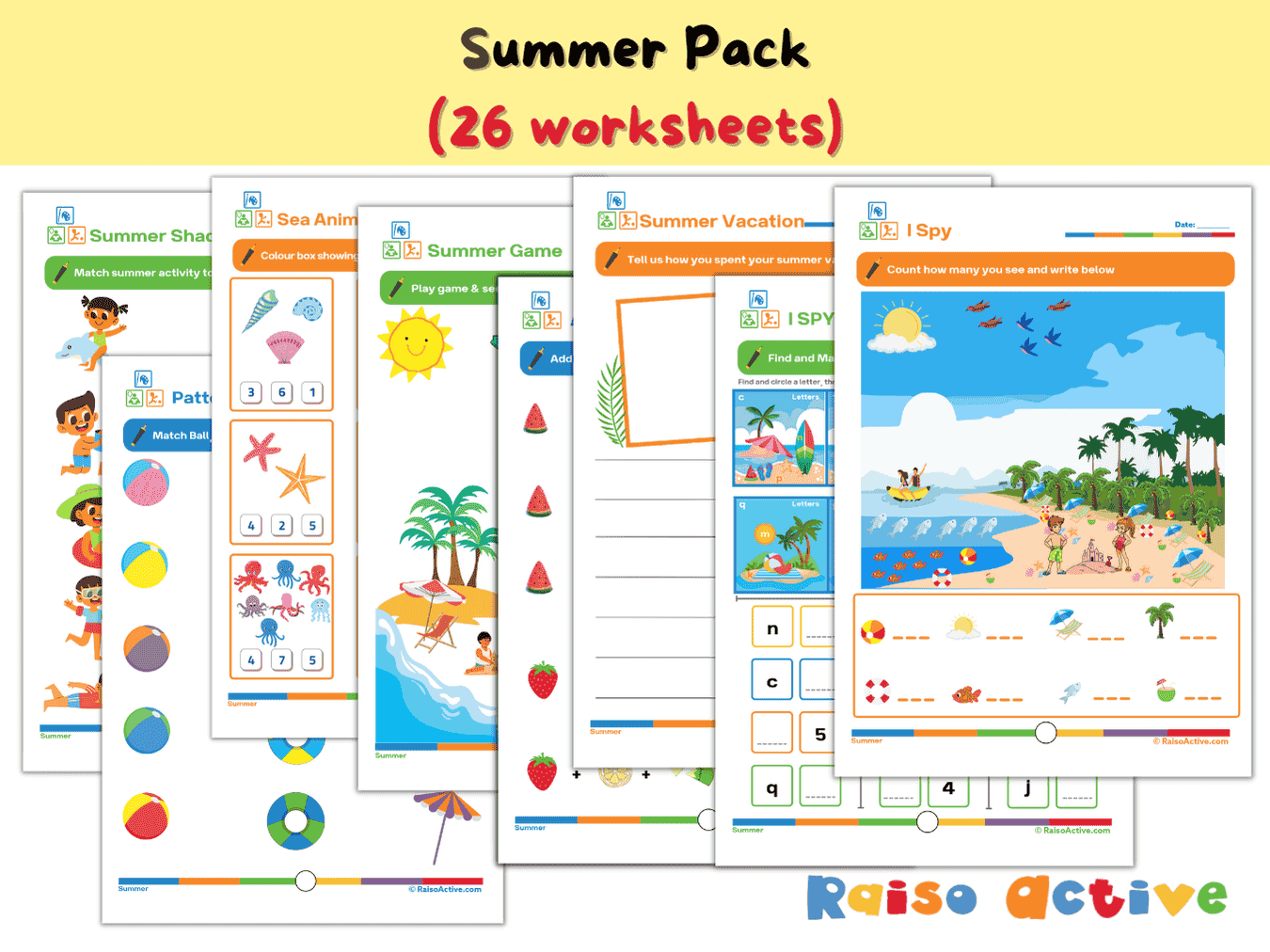
Summer Activity Pack: Math, Literacy, Puzzles & More for Preschool & Kindergarten
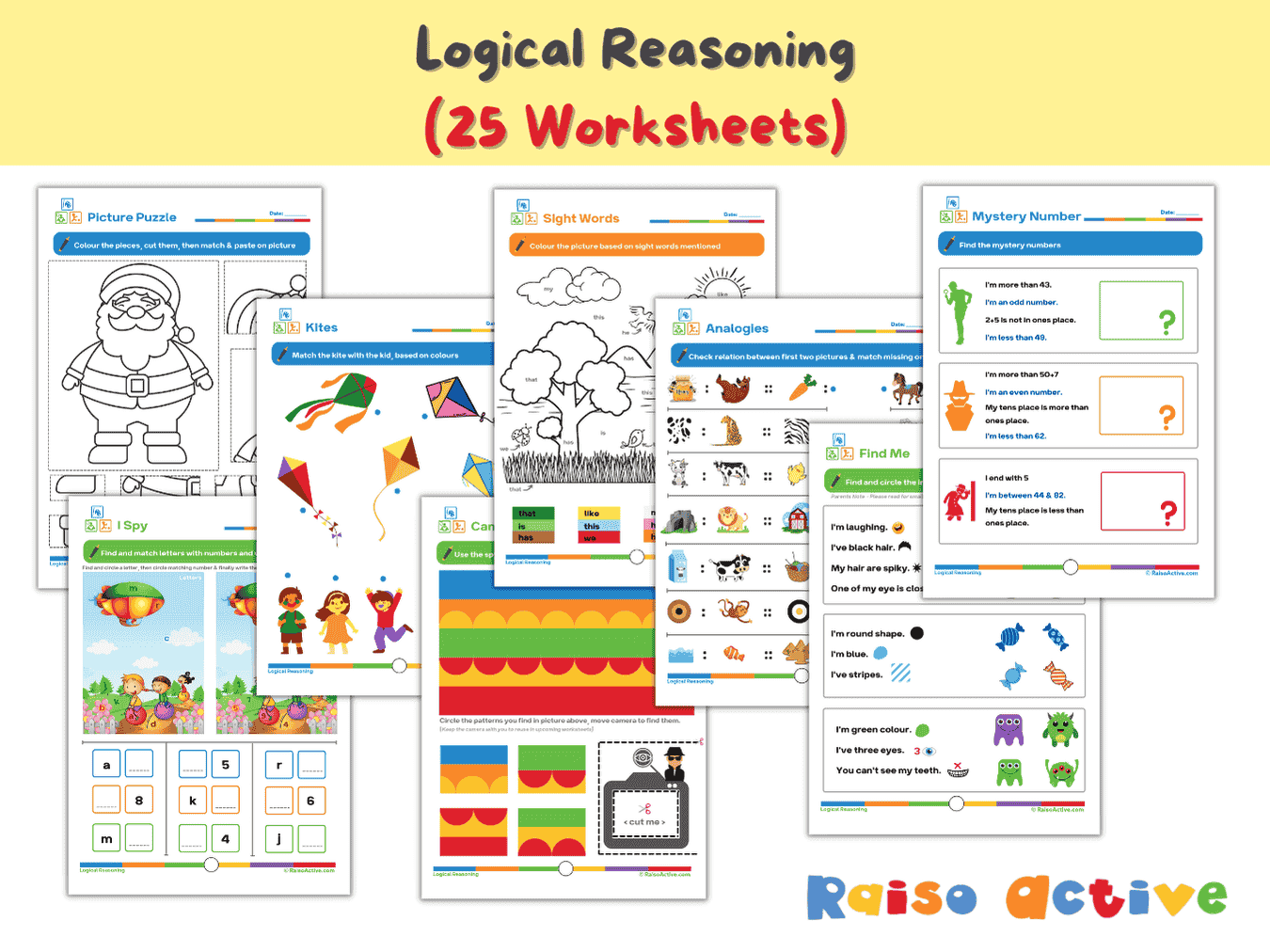
Logical Reasoning Activity Book for Preschool & Kindergarten | Patterns, Puzzles & Analogies
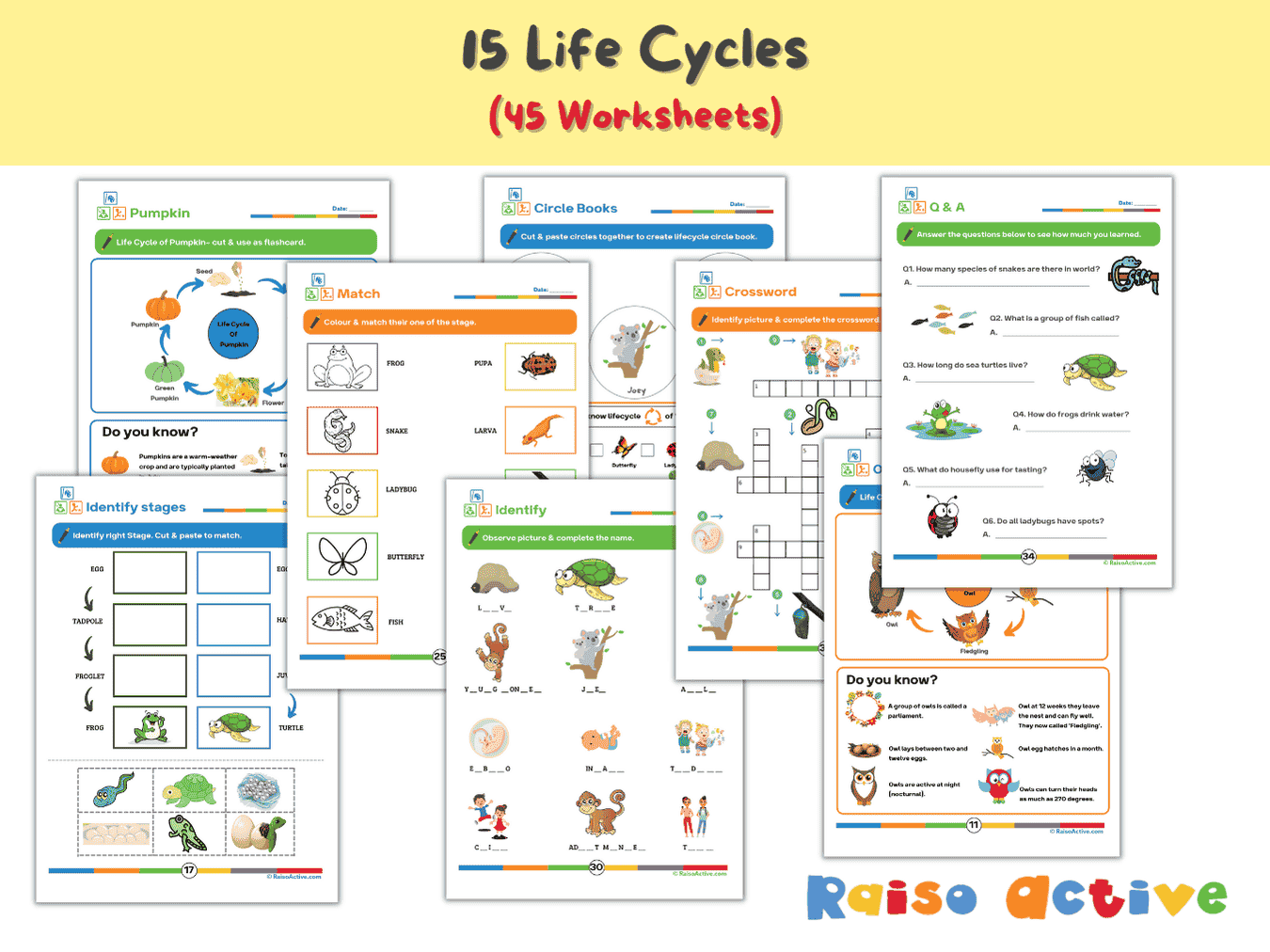
Lifecycles Activity Book & Flashcards for Preschool & Early Elementary
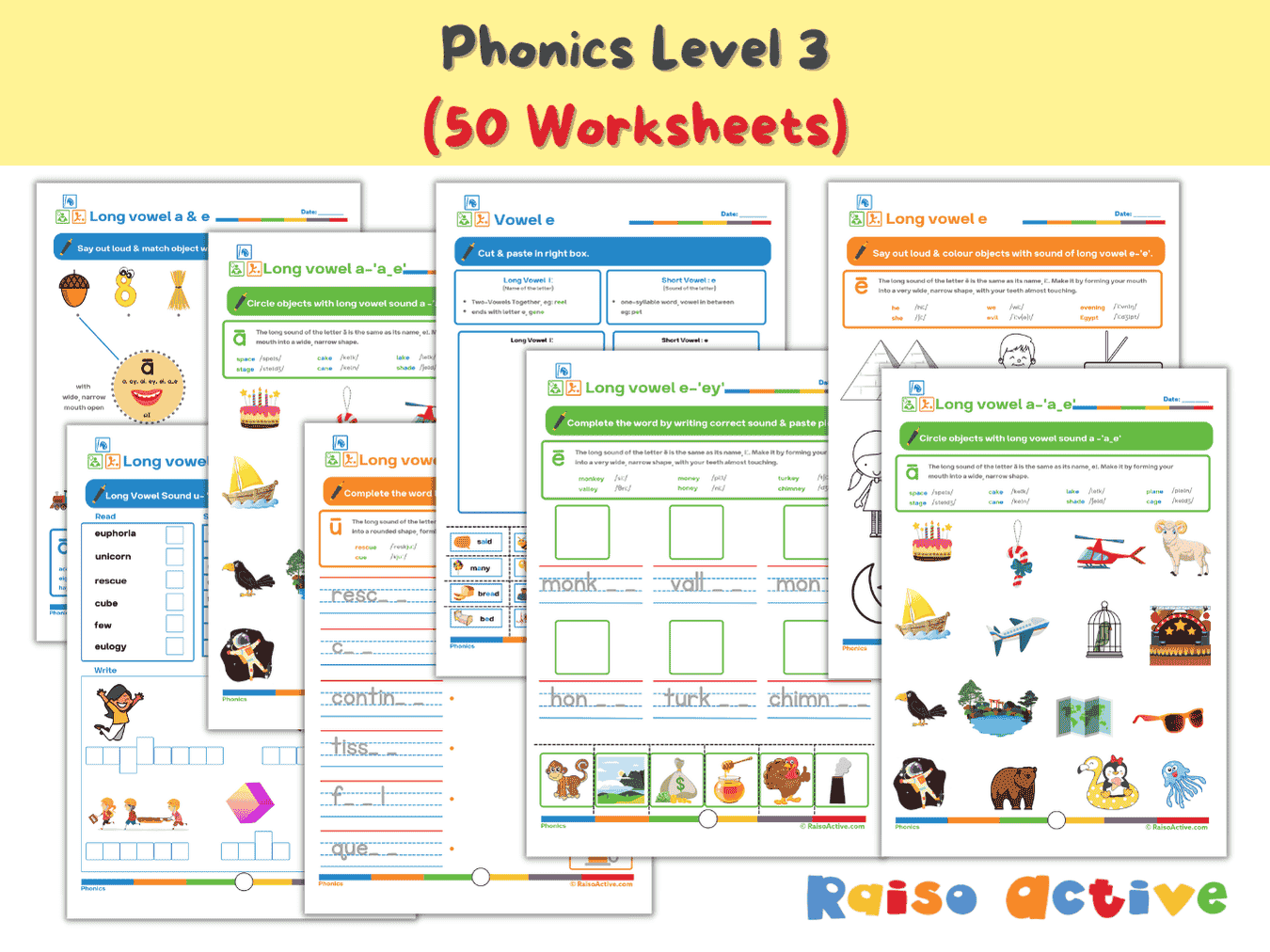
Phonics Level 3 Long Vowels Activity Book for Kindergarten & 1st Grade
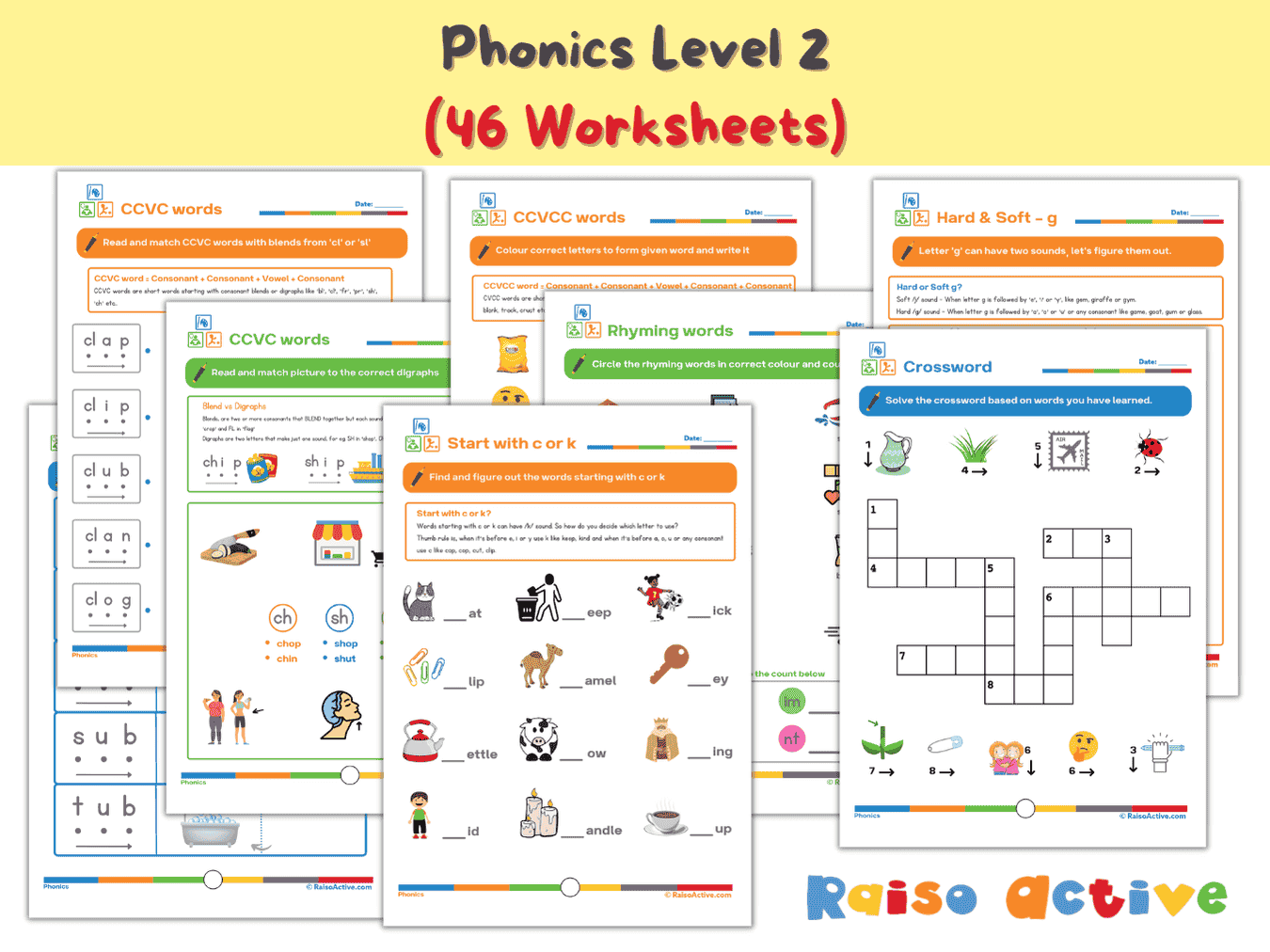
Phonics Level 2 Worksheets: CVC, CCVC, CVCC Word Families & Blends for Early Readers (Ages 4-7)
Guides for parents and teachers
See all guides →Number Formation Rhymes 0–9 and How to Fix Reversals
Original number formation rhymes for 0–9, the correct stroke order for each digit, why 3, 5 and 7 get reversed most often, and multisensory fixes that work.
Christmas and Winter Activities That Combine Fun and Learning: Creating Magical Educational Experiences
Discover Christmas and winter activities that combine festive fun with real learning. Crafts, counting, literacy, and printable worksheets for ages 2 to 8 — perfect for home and school.
Age-Appropriate Halloween Learning Activities: Balancing Spooks and Skills for Young Learners
Discover fun, age-appropriate Halloween learning activities for young children. Spooky crafts, counting games, literacy ideas, and printable worksheets for ages 2 to 8.
The Power of Music: How Musical Activities Accelerate Learning Development in Young Children
Discover how musical activities accelerate brain development, phonics, maths, and emotional regulation in children ages 1–8. Practical tips for Indian homes and classrooms.
What's the Best Alternative to ABCmouse? A Complete Parent's Guide to Free and Affordable Educational Apps
ABCmouse runs ~Rs 4,000-5,000/year with US spellings and curriculum. Compare free & affordable Indian-friendly apps like Khan Academy Kids and DIKSHA.
Is Khan Academy Kids Really Free? A Parent's Complete Guide to Costs, Features, and Hidden Fees
Confirmed: Khan Academy Kids has zero subscription fees, ads, or paywalls. See what's included, age-by-age tips, and offline use for Indian families.
Canonical: https://raisoactive.com/worksheets/reception-counting