Free printable worksheets · United Kingdom
EYFS Counting Worksheets (Ages 3–5)
EYFS counting worksheets are practice sheets for children aged 3–5 in Early Years Foundation Stage in the UK. Counting is matching a spoken number word to each object in a group, one at a time, to find out how many there are in total. The sheets on this page cover one-to-one correspondence, counting a set of objects accurately, matching a numeral to a quantity and comparing more and less.
The Early Years Foundation Stage spans Nursery and Reception and treats a worksheet as a small supplement to play rather than the main event. Mark making, matching and sorting dominate the Nursery year; Reception adds letter formation, sound matching and counting to ten as phonics teaching begins in earnest. Three-year-olds recite numbers to ten and touch-count up to five objects reliably, though counting six or more objects often breaks down or repeats a number. A worksheet should ask the child to count a small group and circle how many there are, count out loud while pointing to a row of pictures, and compare two small groups to say which has more. Counting a scattered, unordered group, and going beyond ten, are still shaky at this age.
698+ worksheets · free PDF download · print on A4 or Letter
EYFS Counting Worksheets to print
Browse all worksheets for ages 3–5
Clothing Pattern Match Worksheet for Preschoolers
This worksheet has children ages 3-5 study repeating patterns on clothing items — stripes, polka dots, or checks — and match each item to its identical twin, building visual discrimination and early pattern-sequencing skills. Distinguishing between similar-looking patterns also sharpens attention to detail, a skill that later supports letter and word recognition.

Match the Letter: N, O, P Worksheet for Preschoolers
Drawing a line from an uppercase letter to a picture that starts with the same sound reinforces letter-sound correspondence for children ages 3-5, connecting the shape of N, O, and P to their spoken sounds.

Weather Worksheet: Circle the Correct Weather Word!
This worksheet strengthens children's early reading skills by having them match weather pictures — like sun, rain, or wind — to the correct written word, building sight recognition of common weather vocabulary for ages 3-5. Circling the matching word rather than just naming the picture aloud pushes children to connect spoken language with printed text, an essential pre-reading skill. Because weather words appear frequently in books and daily conversation, this practice has immediate real-world payoff.

Up and Down Worksheet: Counting and Writing Practice for Preschoolers
Children ages 3-5 combine spatial reasoning with counting practice by counting steps or elements going up and down, then writing the totals. Understanding 'up' and 'down' as directional concepts supports later skills like reading graphs, climbing stairs safely, and following spatial instructions. Writing the counted numbers afterward reinforces number formation alongside the counting itself.

Before and After Worksheet for Kids: Sequencing Activities
This worksheet helps children ages 3-5 practice sequencing by identifying which picture logically comes before and which comes after a given event. Understanding cause-and-effect order is an early comprehension skill that supports retelling stories and understanding daily routines. Combining a tick-the-answer section with a cut-and-paste section gives repeated practice with the same concept in two different formats.

Read and Match: Fun Reading Worksheet for Preschoolers
Reading a simple sentence and matching it to its corresponding picture builds early reading comprehension for children ages 3-5, teaching them that written words carry meaning that connects to real images and ideas.

Big and Small Fish Counting Worksheet for Preschoolers
This worksheet helps children aged 3-5 develop crucial early numeracy by practicing one-to-one correspondence as they count specific groups of fish. Children will also strengthen their observation skills by distinguishing between 'big' and 'small' fish, a foundational step in understanding comparative sizes and classification. This combination builds both number sense and pre-mathematical reasoning.

Halloween Match: Find and Color the Identical Objects!
This visual discrimination worksheet asks children ages 3-5 to scan a row of similar-looking Halloween objects and identify the two that are truly identical, sharpening their attention to small details like size, shading, and shape. Coloring the matched pair afterward gives a satisfying finishing step while reinforcing which items they correctly identified.
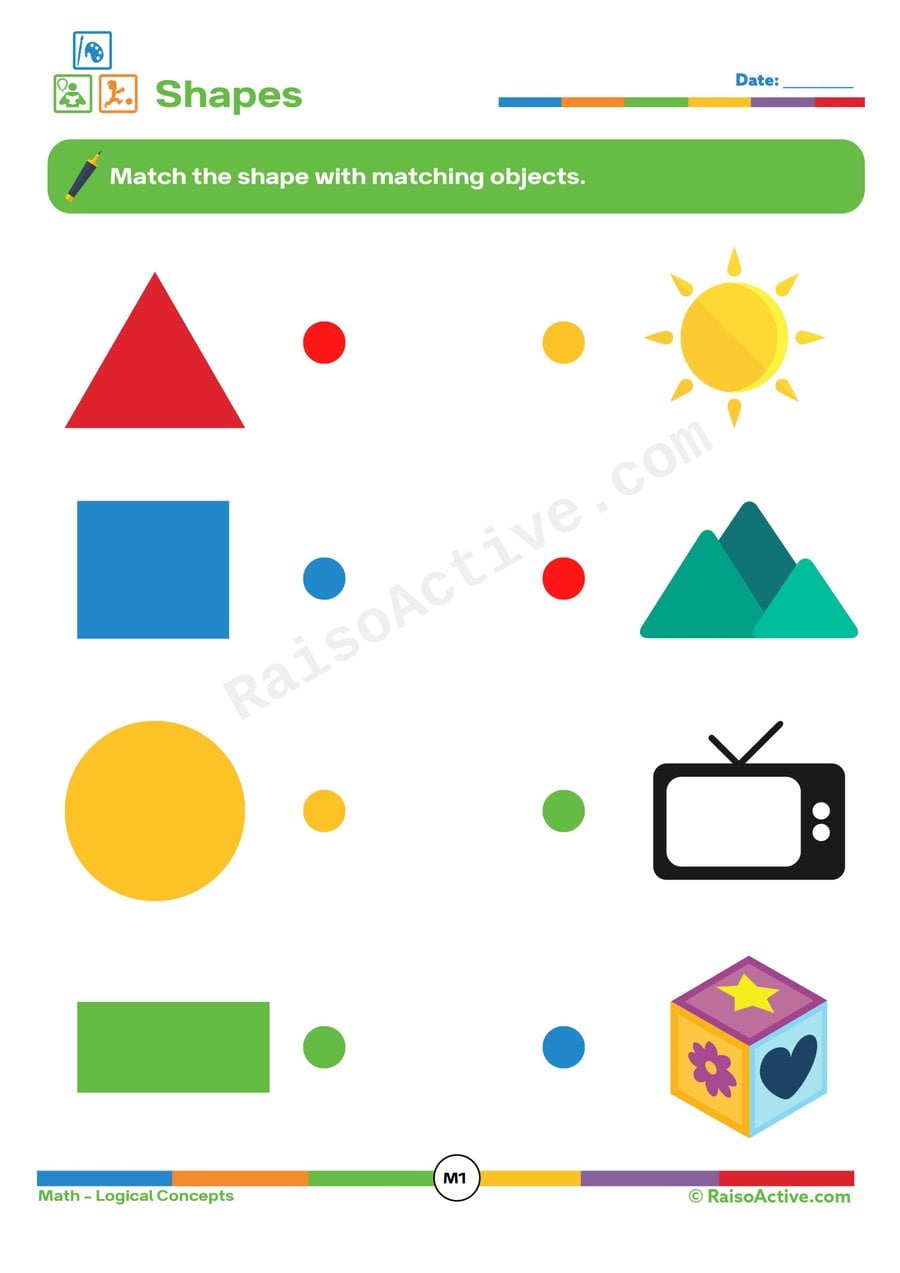
Shape Matching Worksheet for Preschoolers
This worksheet helps children ages 3-5 practice recognizing basic geometric shapes by connecting each shape outline to the everyday object it resembles. Pairing an abstract shape with a concrete object supports the transition from recognizing shapes in isolation to spotting them out in the real world. Drawing a connecting line between the matched pairs also builds hand-eye coordination and pencil control.

Match the Baby Animals Worksheet for Preschoolers
Connecting adult animals to their babies builds specific vocabulary for children ages 3-5, like puppy, kitten, and fawn, while training visual comparison skills as they look for matching features between each pair. This activity also introduces the early biology concept that offspring, though smaller and sometimes differently colored, belong to the same animal family as their parent.

Read and Circle: 'br' Blend Words Worksheet for Preschoolers
This worksheet trains children to hear and recognize the 'br' consonant blend at the start of words like 'bread' or 'brush,' building on single-letter phonics toward the more complex blended sounds that make up much of early reading vocabulary. For ages three to five, matching a read word to its picture also reinforces that written letters correspond to real, specific meanings rather than abstract symbols.
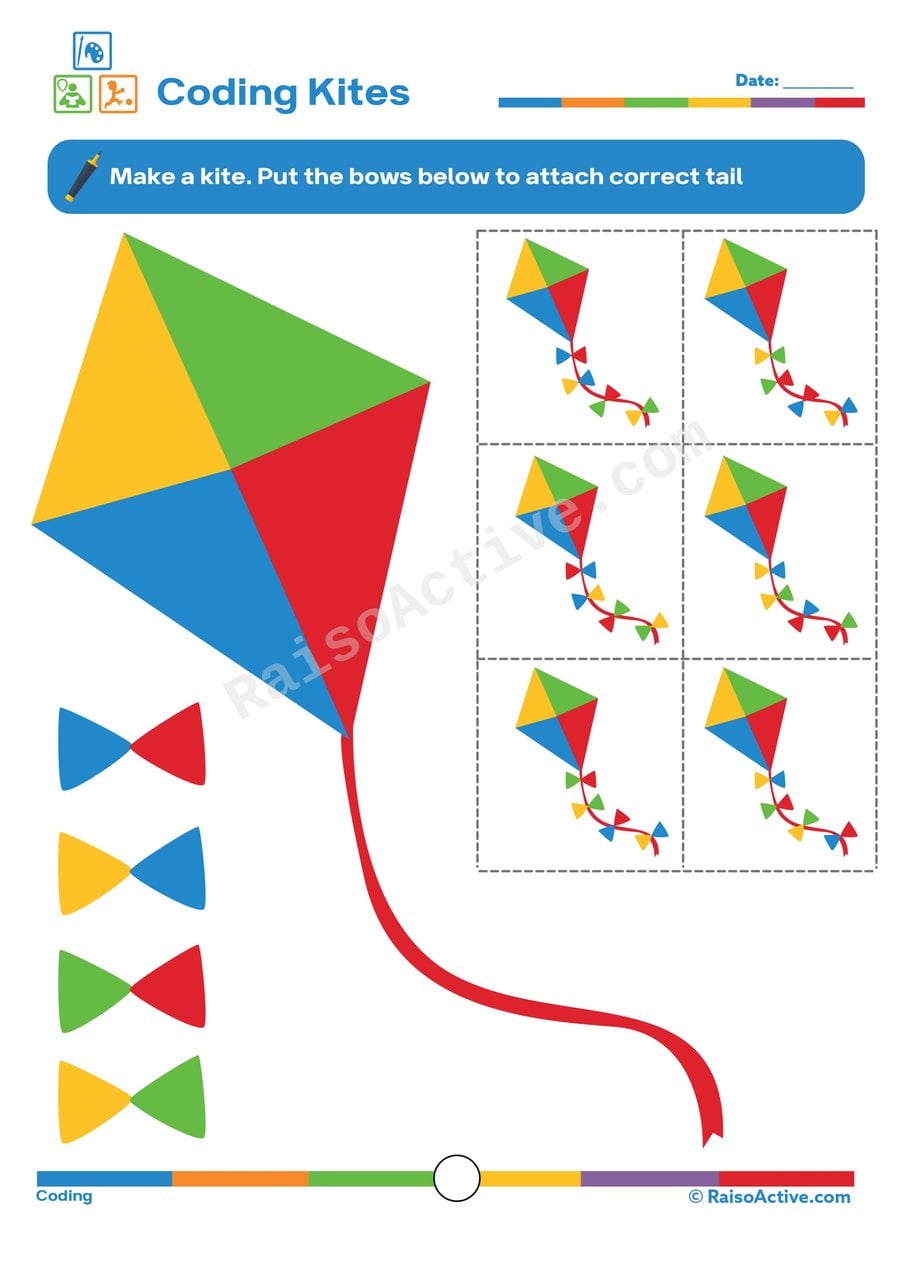
Coding Kites Worksheet: Match the Bows!
This activity sharpens visual observation in children ages 3-5 as they compare color sequences on each kite to a set of loose bows and find the exact match. Careful, systematic comparison — checking each color in order rather than glancing quickly — builds an attention-to-detail habit that transfers directly to early reading and number work.

Classroom Objects Worksheet: Circle the Classroom Items!
This worksheet builds vocabulary and visual discrimination in children ages 3-5 by asking them to scan a mixed set of pictures and identify only the ones that belong in a classroom. Sorting relevant from irrelevant items in this way strengthens categorization skills and attention to detail, since children must compare each picture against their own knowledge of what a classroom contains. It also reinforces school-readiness vocabulary like 'desk,' 'crayons,' and 'books.'
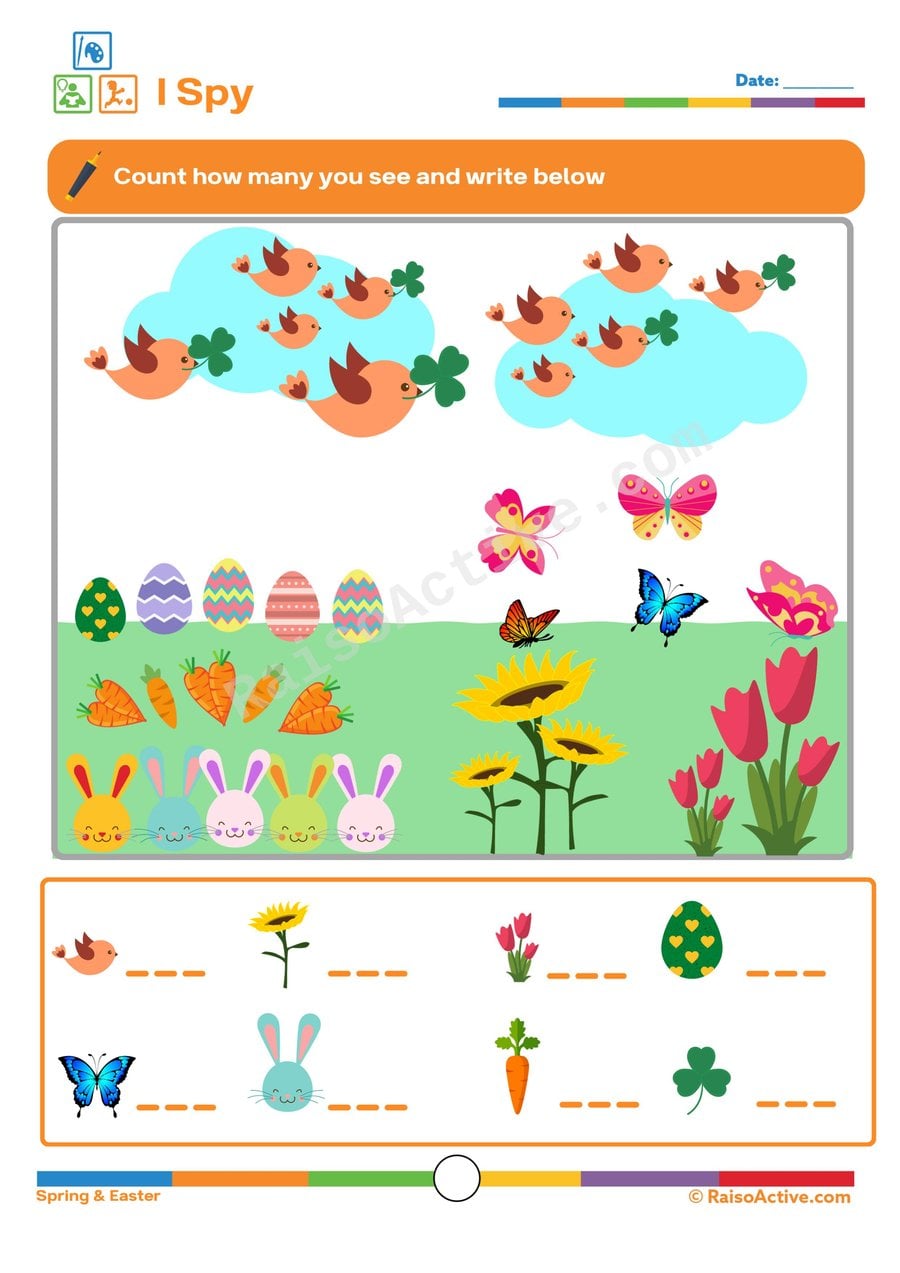
I Spy Spring Worksheet: Count and Write!
Spotting and tallying spring-themed pictures, like flowers, bees, or raindrops, gives children ages 3-5 practice with one-to-one counting and then translating that count into a written numeral. Because the items are scattered across the page rather than lined up neatly, children also build visual scanning skills as they search each section carefully before counting. Writing the final number afterward connects the physical act of counting to abstract number symbols, a key early numeracy milestone.

Sunlight Worksheet: Learn About the Sun and Seasons!
This worksheet introduces children ages 3-5 to the idea that the sun's warmth and position change across the year, giving rise to the four seasons. By matching descriptions to pictures and completing sentences about the sun's daily movement, children build early scientific observation skills and the vocabulary needed to describe weather and time of day.
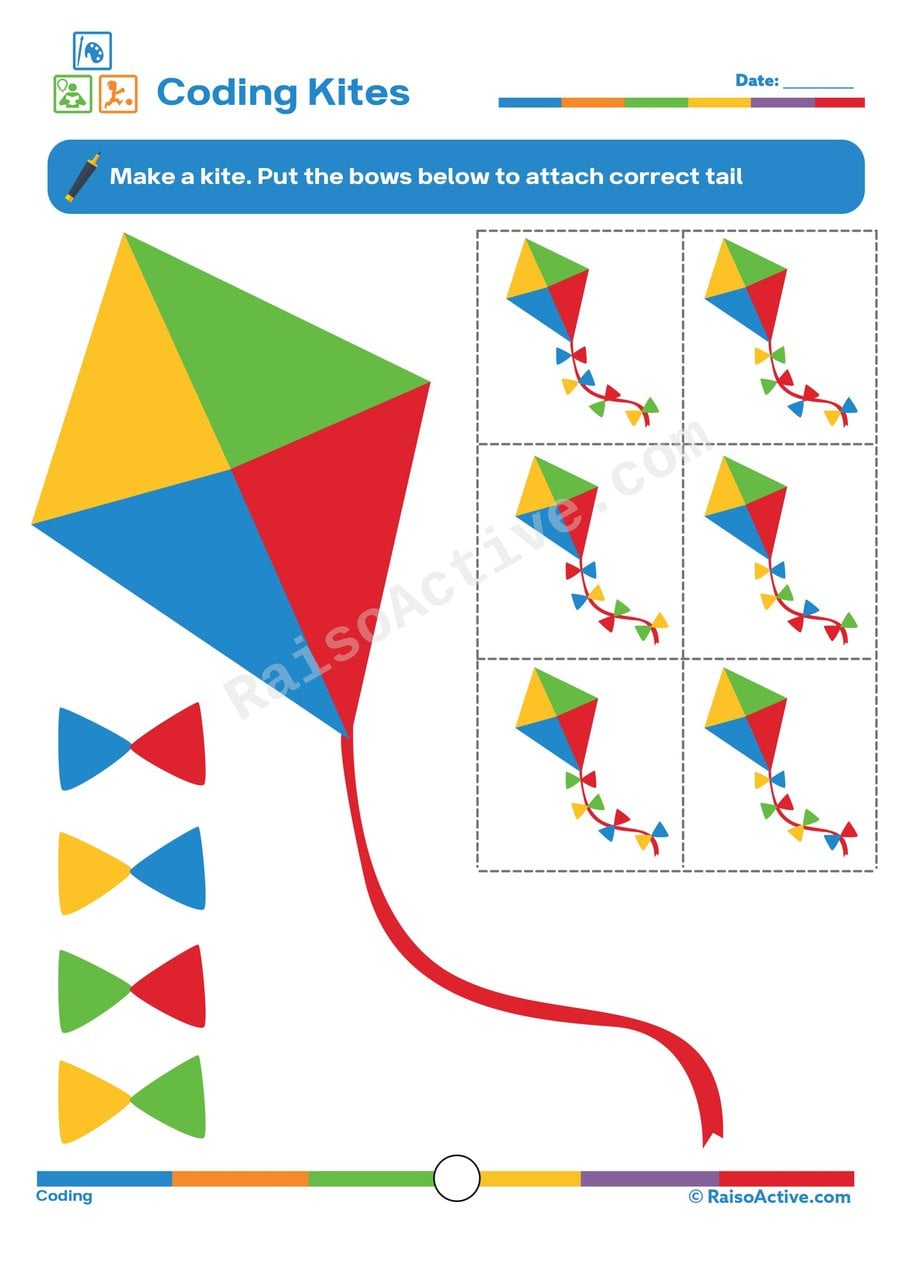
Coding Kites Worksheet: Match the Bows!
By matching each colorful bow to the kite sharing its color pattern, children ages 3-5 practice visual pattern recognition — an early form of the same logical sequencing used in beginner coding concepts. Cutting, matching, and gluing the correct bow also reinforces color-word vocabulary and precise hand-eye coordination.

Doctor's Tools: Circle the Items! - Worksheet for Kids
This worksheet builds visual discrimination and category knowledge by asking children to identify which pictured items belong to a doctor's toolkit, like a stethoscope or thermometer, versus items that don't. For ages 3-5, sorting objects by their real-world function is an early classification skill, and the community-helper theme also builds vocabulary around health and care.

Animal Sounds Worksheet: Circle the Correct Sound!
This worksheet strengthens vocabulary and reading readiness for children ages 3-5 by asking them to match each animal picture to the word describing the sound it makes, such as 'moo' for a cow or 'quack' for a duck. Connecting a familiar sound to its written word form is an early step toward reading, since it links spoken vocabulary your child already knows to print they are just beginning to recognize.
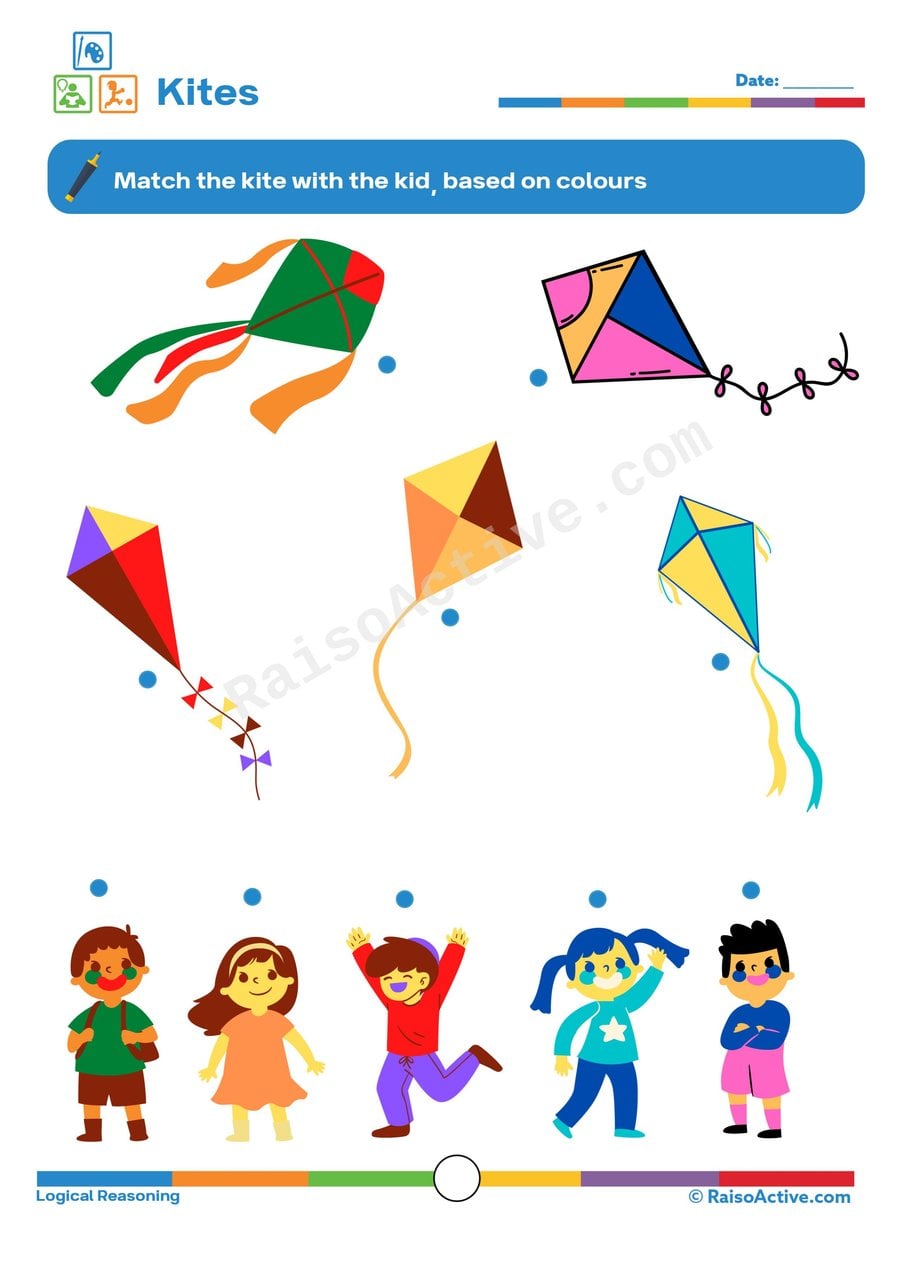
Kite Color Matching Worksheet for Preschoolers
This color-matching worksheet asks children ages 3-5 to connect each kite to the child flying a matching-colored kite, reinforcing color recognition and visual discrimination as they scan multiple color options across the page. Because children must compare several colors at once rather than matching a single pair, the task demands more sustained visual attention than a simple two-item match. Practicing color vocabulary in a playful, seasonal context also keeps repetition from feeling like rote drilling.
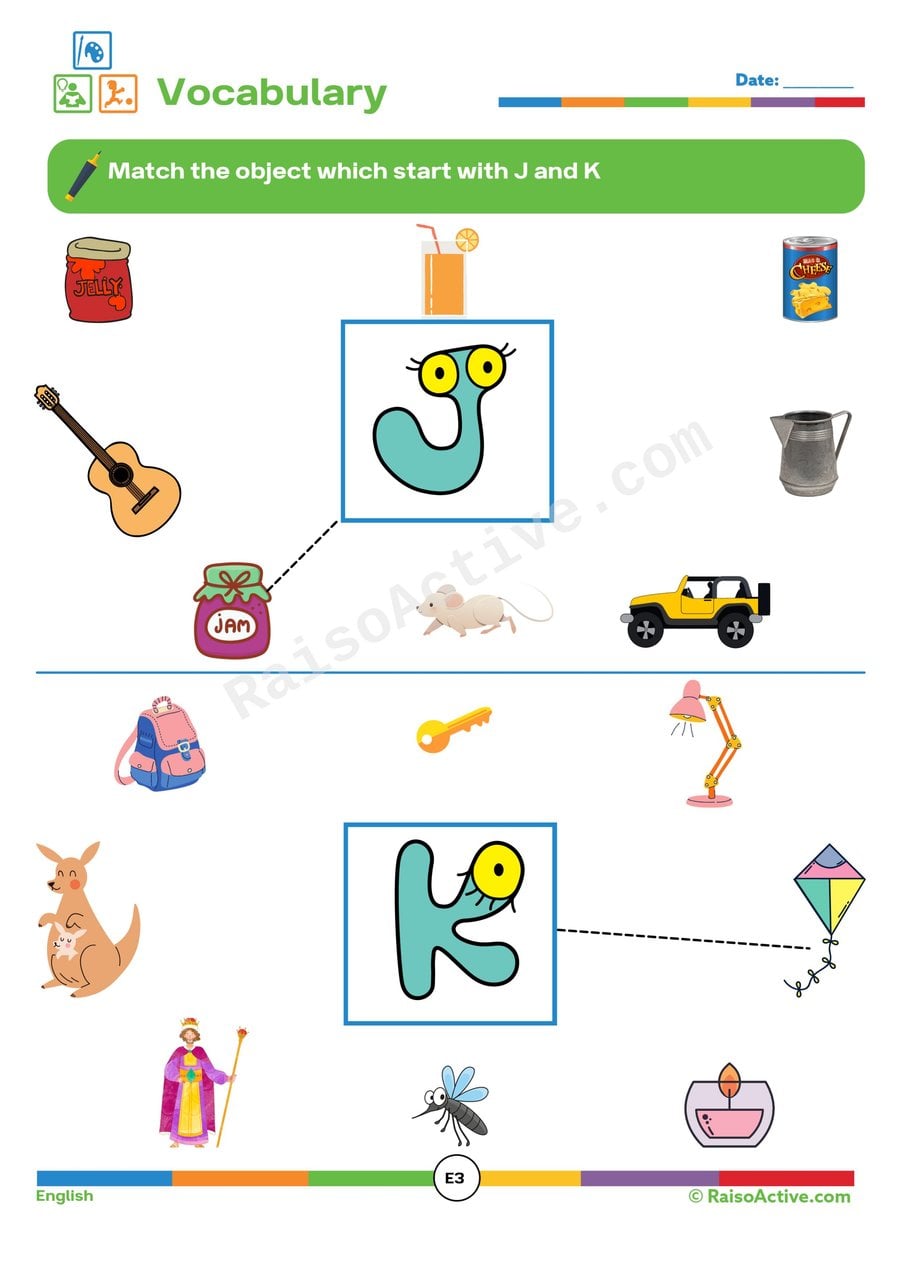
J and K Vocabulary Worksheet: Match the Objects!
This worksheet gives children ages 3-5 focused practice with the letters J and K, two consonants that don't come up as often in early vocabulary as letters like S or B, so dedicated practice like this helps round out full alphabet familiarity. Matching pictures to their correct beginning letter reinforces the sound-symbol connection while also building vocabulary for objects that start with these less common letters, like jars, jellyfish, kites, or kangaroos. This kind of targeted practice on less-frequent letters helps prevent gaps in alphabet knowledge that can otherwise show up later during reading.

Weather Words Worksheet for Preschoolers: Match & Learn!
This worksheet helps children ages 3-5 build weather-related vocabulary by matching pictures like clouds, rain, or sunshine to their correct written words. Weather is something children experience daily, so connecting familiar sights to new vocabulary words gives this matching task an unusually strong real-world anchor that helps the words stick.

Emotions Worksheet: Count, Color, and Identify Feelings!
Identifying emotions from facial expressions and then counting and coloring them builds emotional literacy, the ability to name feelings like happy, sad, or surprised, alongside basic counting practice, giving children a vocabulary for something they experience daily but may not yet know how to describe. For ages three to five, naming emotions explicitly is an important early step in self-regulation and empathy.
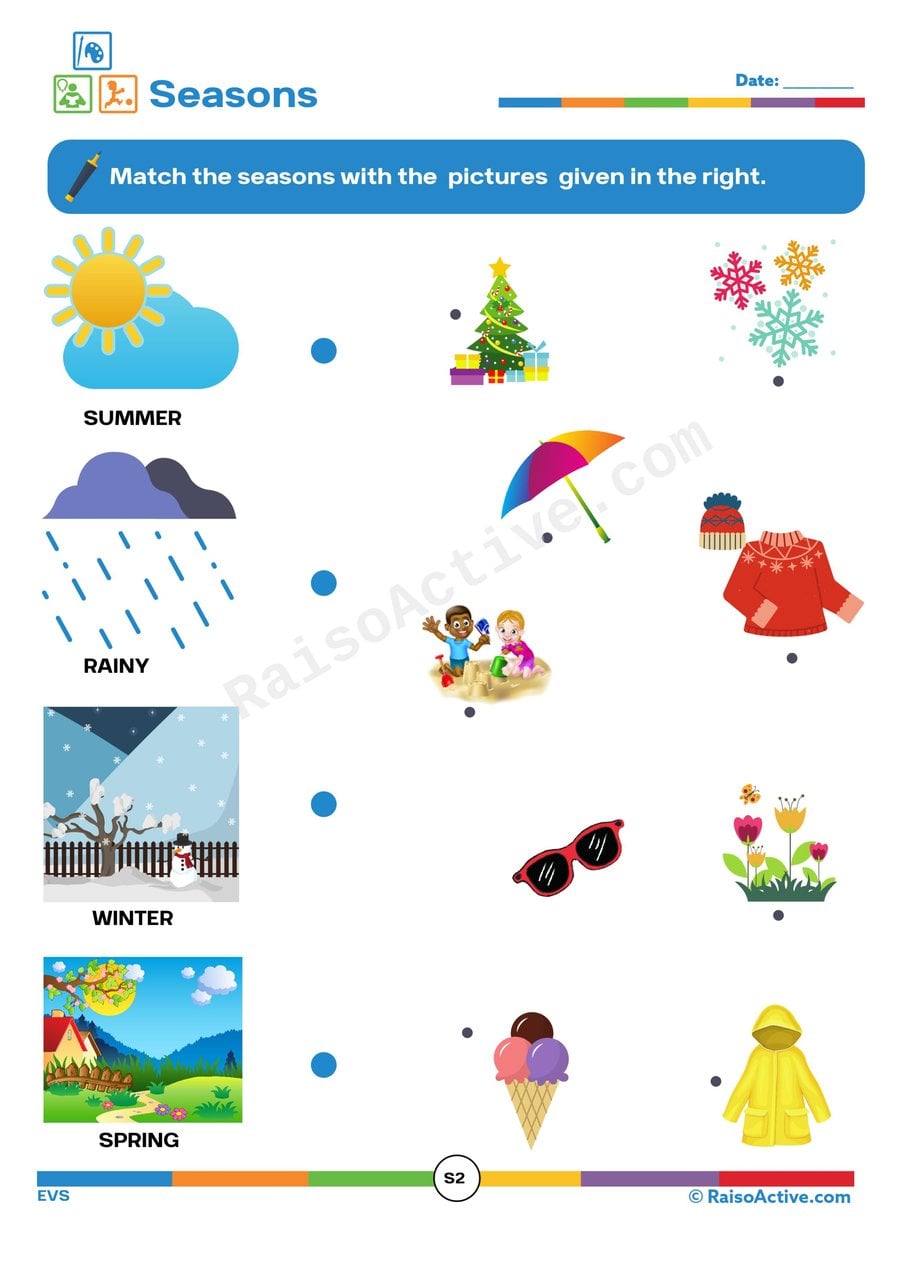
Seasons Matching Worksheet for Preschoolers
This matching worksheet helps children ages 3-5 connect the names of the four seasons — summer, rainy, winter, spring — to their corresponding visual scenes, reinforcing both seasonal vocabulary and the observational skills needed to identify a season from its weather and imagery. Because seasons cycle throughout the year, understanding them early gives children a framework for talking about time, weather, and change that they'll keep building on in future grades. Drawing a connecting line between the word and image also strengthens the link between written vocabulary and visual meaning.
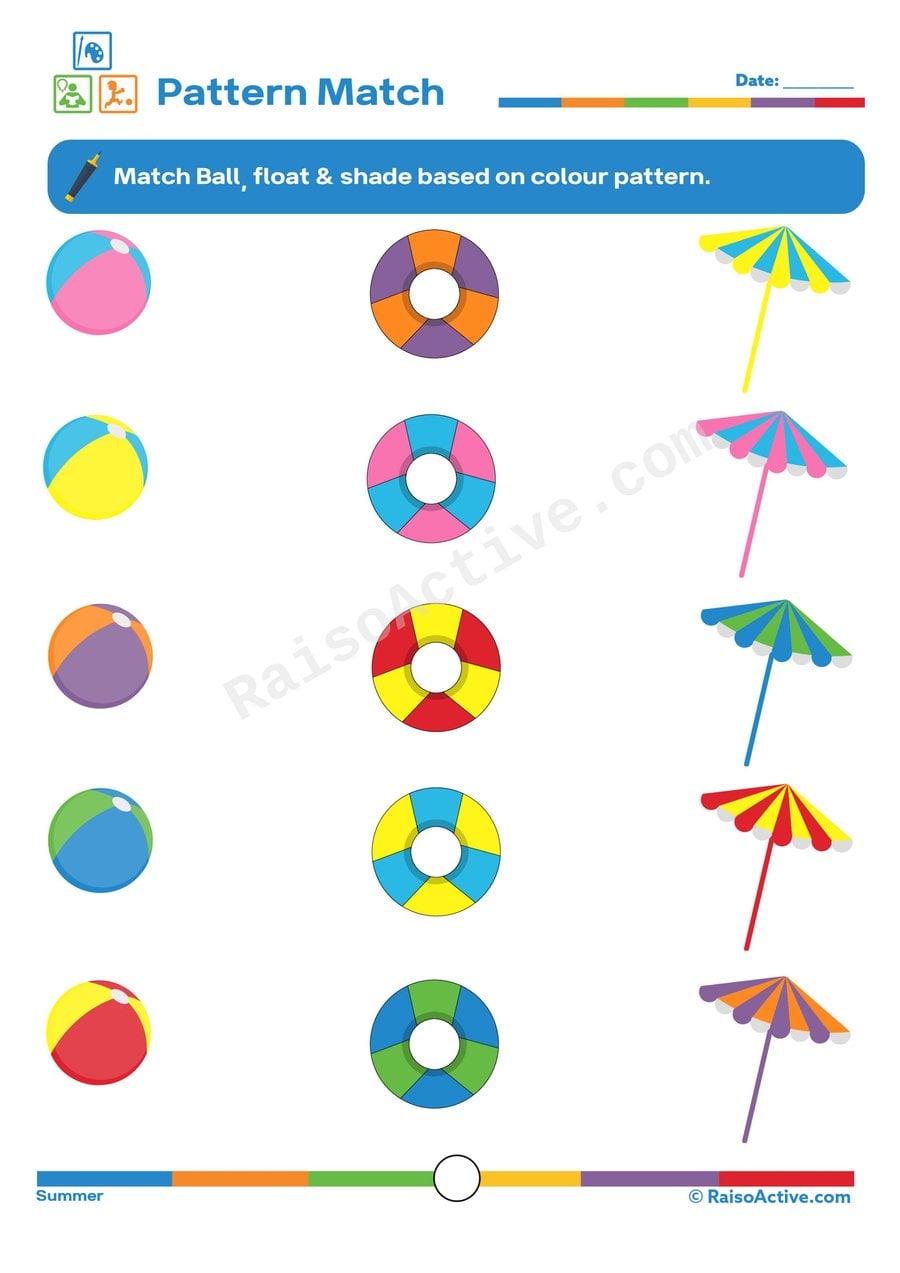
Summer Pattern Match Worksheet for Preschoolers
This worksheet asks children ages 3-5 to study the color pattern on a beach ball, pool float, and sun umbrella and match each item to its correctly patterned counterpart, building early pattern recognition, a foundational skill for later math concepts like sequencing and algebraic thinking. Because the match depends on noticing the order and repetition of colors rather than just matching a single color, children must compare details carefully rather than glance quickly. This strengthens visual attention alongside the pattern skill itself.
What EYFS counting worksheets cover
Three-year-olds recite numbers to ten and touch-count up to five objects reliably, though counting six or more objects often breaks down or repeats a number. A worksheet should ask the child to count a small group and circle how many there are, count out loud while pointing to a row of pictures, and compare two small groups to say which has more. Counting a scattered, unordered group, and going beyond ten, are still shaky at this age.
- Touch-count up to five objects, saying one number per object
- Recite numbers to ten from memory, in order
- Circle the number that matches a small counted group
- Say which of two small groups has more
How to use these worksheets at home or in class
Five to ten minutes at a table, with an adult alongside to talk through the sheet, is enough at any point in this stage. Use a worksheet to echo something already met through play that week rather than to introduce a brand new idea.
Start with the sheet that matches what your child can already do, then move one step up. Keep finished sheets in a folder: EYFS teachers often ask for evidence of practice, and children like seeing their own progress.
Is your child ready for EYFS counting work?
Look for a child who can make deliberate marks with a crayon, sit briefly at a table, follow a one-step spoken instruction and show curiosity about letters or numbers seen around the house or classroom.
- Count out a requested number of objects from a larger pile
- Count a group of up to twenty scattered pictures
- Say how many more one group has than another
Frequently asked questions
My three-year-old can count to ten but loses track counting five toys. Why?
Because reciting numbers in order and touch-counting objects use different parts of counting, and the second is harder: it needs the child to keep track of which objects are already counted, especially if they can be moved. Practice sliding each object aside as it is counted, or lining objects up in a row rather than leaving them scattered, which removes the tracking problem. Reciting to ten usually comes before reliable counting of five loose objects.
What should a EYFS child be able to do in counting?
Three-year-olds recite numbers to ten and touch-count up to five objects reliably, though counting six or more objects often breaks down or repeats a number. A worksheet should ask the child to count a small group and circle how many there are, count out loud while pointing to a row of pictures, and compare two small groups to say which has more. Counting a scattered, unordered group, and going beyond ten, are still shaky at this age. Look for a child who can make deliberate marks with a crayon, sit briefly at a table, follow a one-step spoken instruction and show curiosity about letters or numbers seen around the house or classroom.
Do these worksheets follow the EYFS curriculum?
The sheets cover one-to-one correspondence, counting a set of objects accurately, matching a numeral to a quantity and comparing more and less, which sit inside the EYFS Early Learning Goals (Statutory Framework) outcomes for EYFS. Preschool and Pre-K (US), Nursery and LKG (India) use the same skills at this age, so the sheets also fit families following those programmes.
Are these EYFS counting worksheets free?
Yes. Each worksheet downloads free as a watermarked PDF once you create an account, with a limit of five a day. An annual membership ($20) removes the watermark and the limit for the whole library of over 1,000 worksheets and every printable pack.

Written by
Hemsweta Jain · Teacher Cheena
MBA and Early Childhood Educator, teaching since 2014 · Founder of RaisoActive, Mumbai
Written and reviewed by Hemsweta Jain (Teacher Cheena), who designs every RaisoActive worksheet.
Last reviewed
Printable packs for ages 3–5
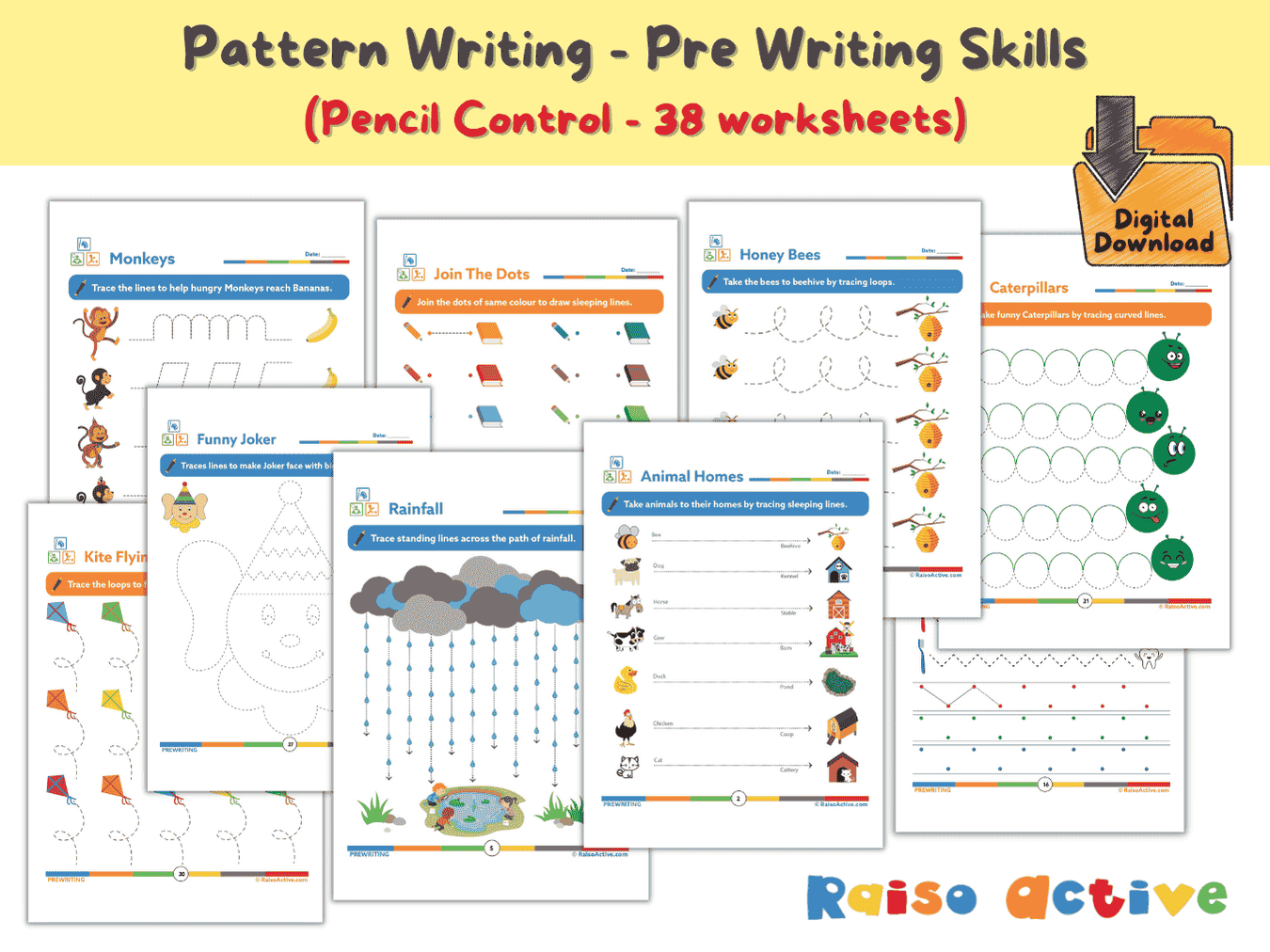
Pattern Writing Pre-writing Skills Activity Book for 3-4 Year Olds
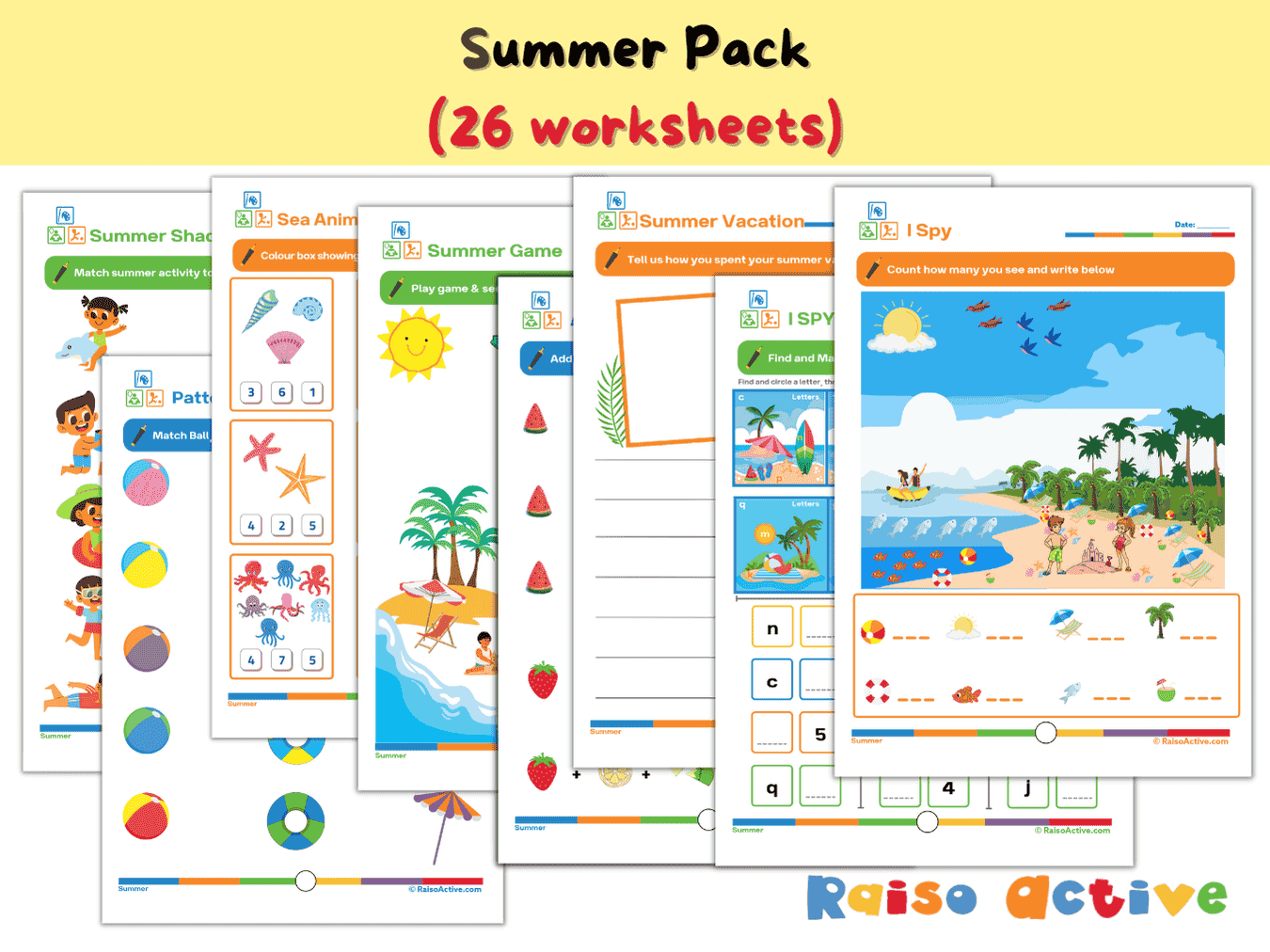
Summer Activity Pack: Math, Literacy, Puzzles & More for Preschool & Kindergarten
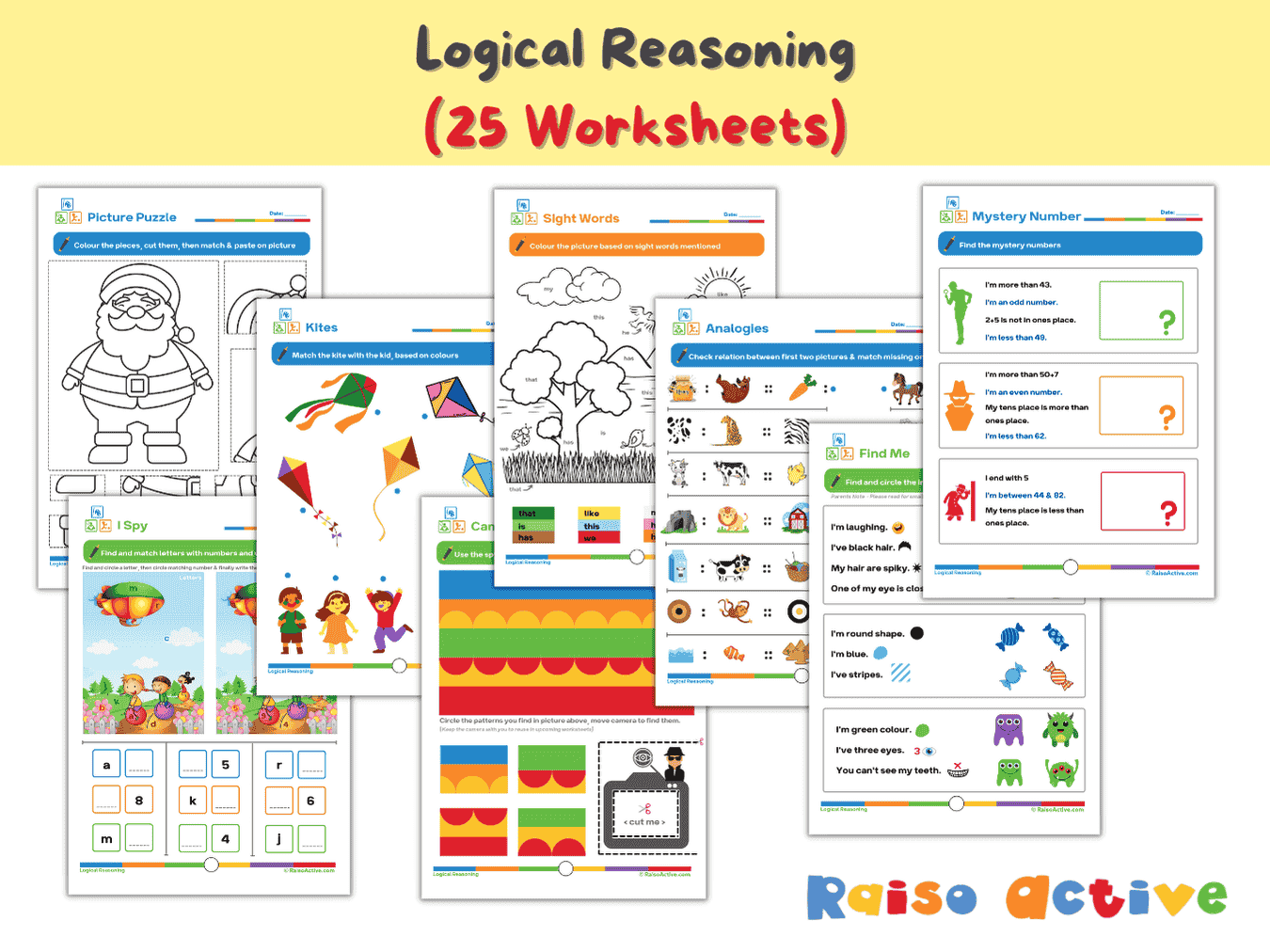
Logical Reasoning Activity Book for Preschool & Kindergarten | Patterns, Puzzles & Analogies
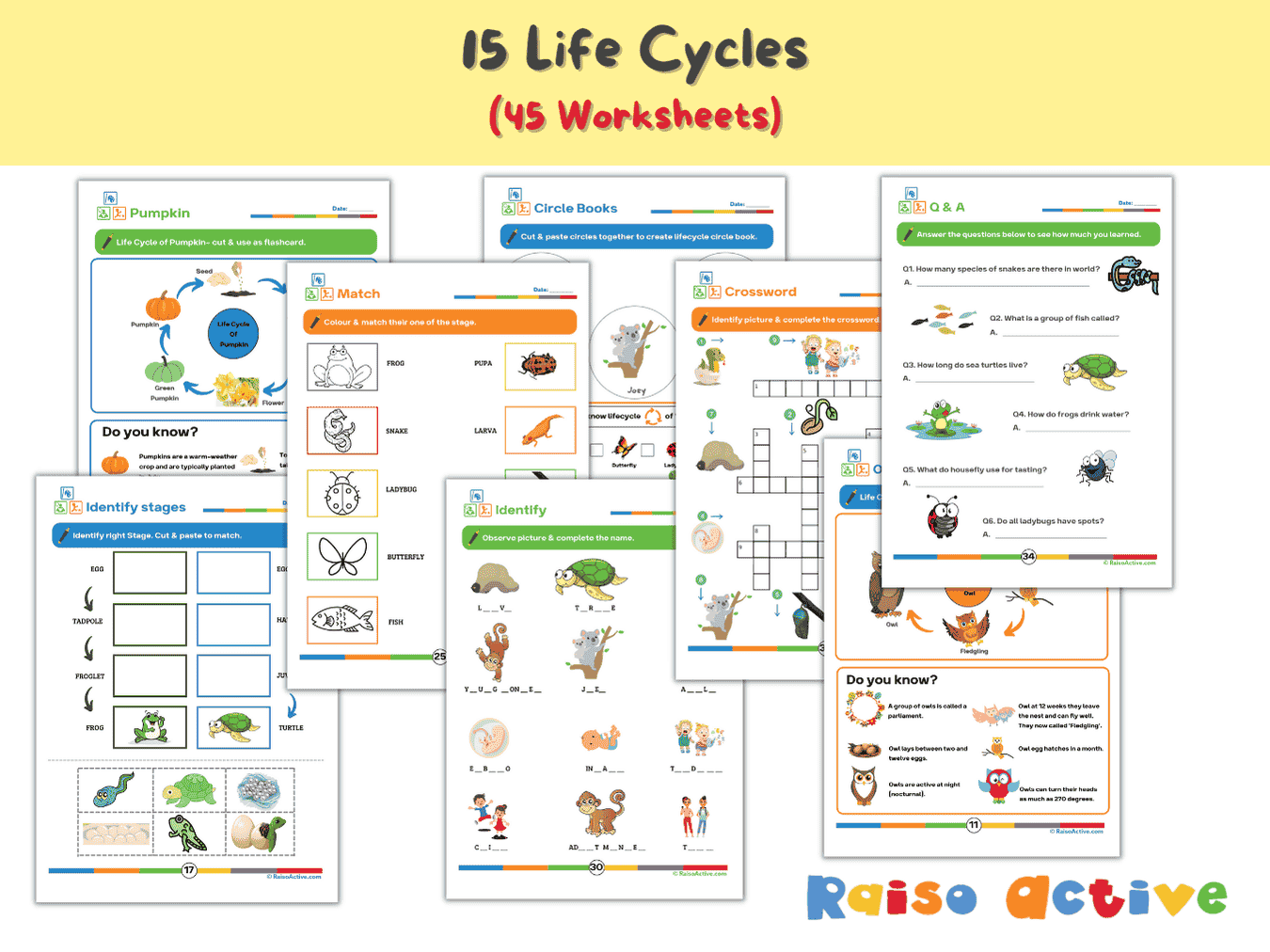
Lifecycles Activity Book & Flashcards for Preschool & Early Elementary
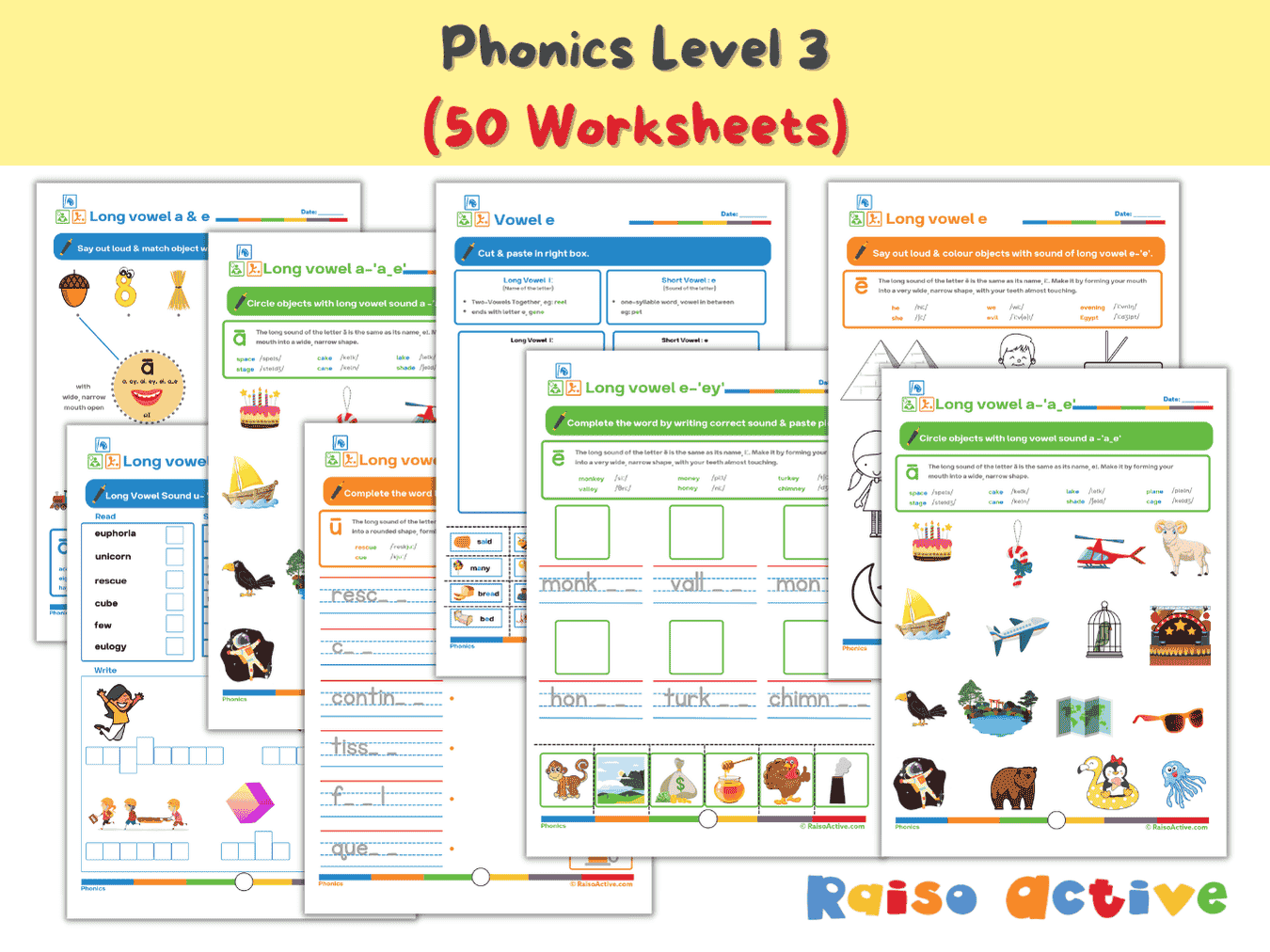
Phonics Level 3 Long Vowels Activity Book for Kindergarten & 1st Grade
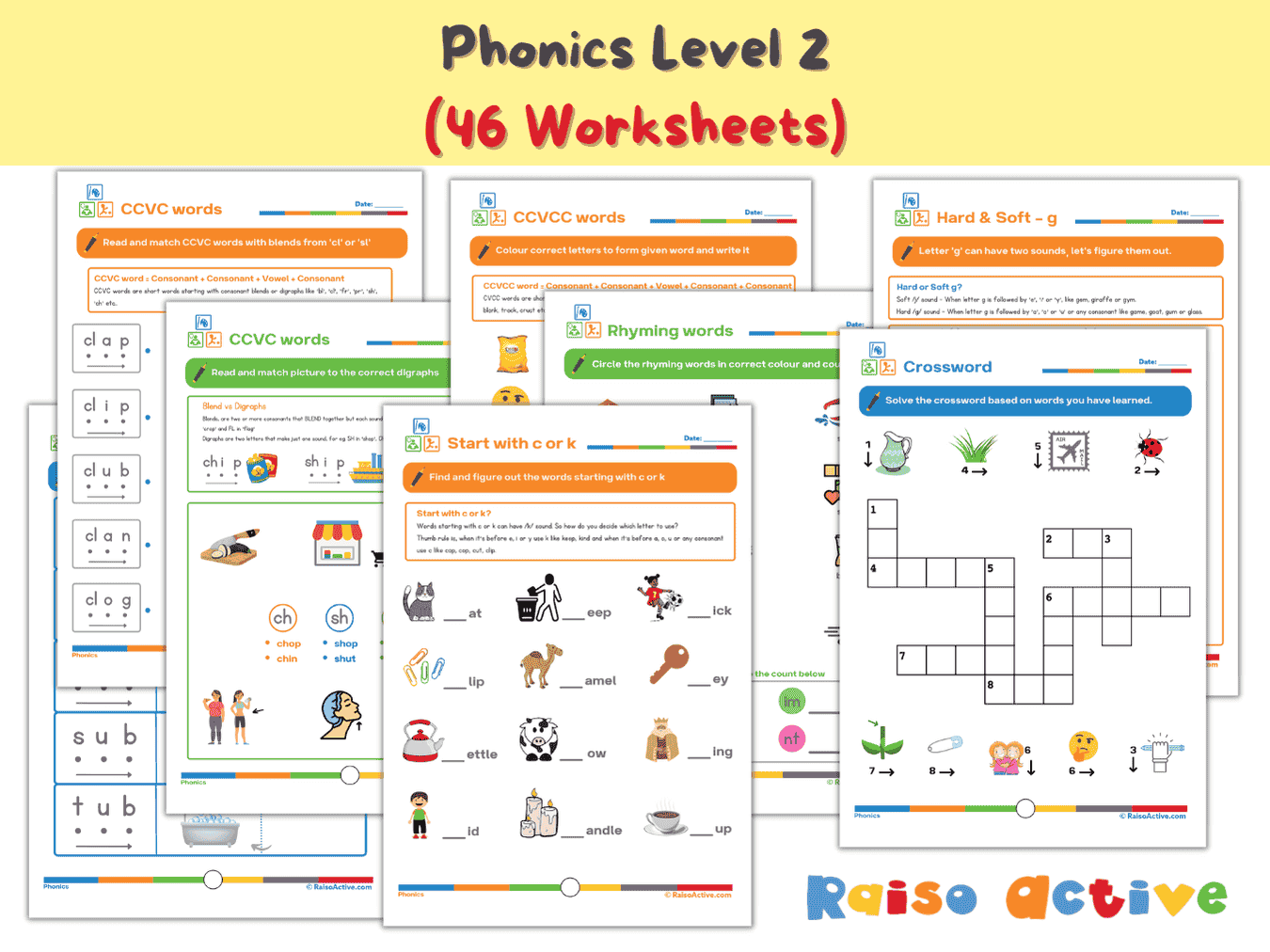
Phonics Level 2 Worksheets: CVC, CCVC, CVCC Word Families & Blends for Early Readers (Ages 4-7)
Guides for parents and teachers
See all guides →Number Formation Rhymes 0–9 and How to Fix Reversals
Original number formation rhymes for 0–9, the correct stroke order for each digit, why 3, 5 and 7 get reversed most often, and multisensory fixes that work.
Christmas and Winter Activities That Combine Fun and Learning: Creating Magical Educational Experiences
Discover Christmas and winter activities that combine festive fun with real learning. Crafts, counting, literacy, and printable worksheets for ages 2 to 8 — perfect for home and school.
Age-Appropriate Halloween Learning Activities: Balancing Spooks and Skills for Young Learners
Discover fun, age-appropriate Halloween learning activities for young children. Spooky crafts, counting games, literacy ideas, and printable worksheets for ages 2 to 8.
The Power of Music: How Musical Activities Accelerate Learning Development in Young Children
Discover how musical activities accelerate brain development, phonics, maths, and emotional regulation in children ages 1–8. Practical tips for Indian homes and classrooms.
What's the Best Alternative to ABCmouse? A Complete Parent's Guide to Free and Affordable Educational Apps
ABCmouse runs ~Rs 4,000-5,000/year with US spellings and curriculum. Compare free & affordable Indian-friendly apps like Khan Academy Kids and DIKSHA.
Is Khan Academy Kids Really Free? A Parent's Complete Guide to Costs, Features, and Hidden Fees
Confirmed: Khan Academy Kids has zero subscription fees, ads, or paywalls. See what's included, age-by-age tips, and offline use for Indian families.