Free printable worksheets · United Kingdom
Year 1 Counting Worksheets (Ages 5–6)
Year 1 counting worksheets are practice sheets for children aged 5–6 in Year 1 in the UK. Counting is matching a spoken number word to each object in a group, one at a time, to find out how many there are in total. The sheets on this page cover one-to-one correspondence, counting a set of objects accurately, matching a numeral to a quantity and comparing more and less.
Year 1 opens the National Curriculum proper: daily phonics moves through Phases 3 to 5, written number sentences replace counted objects, and the phonics screening check in June asks each child to read forty words, some of them invented, to confirm they can decode reliably. Five-year-olds count to 100, usually fluently to 30 or so and with some hesitation near the decade boundaries after that, and count by tens as a shortcut for counting large groups. Worksheets should ask for the number that comes before, after or between two given numbers, counting objects arranged in groups of ten, and comparing two two-digit numbers to say which is greater. Skip counting by twos and fives is often starting but not yet secure.
699+ worksheets · free PDF download · print on A4 or Letter
Year 1 Counting Worksheets to print
Browse all worksheets for ages 5–6
Let's Solve Word Problems! - Addition Worksheet for Kids
This word problem worksheet moves children ages 4-6 beyond bare number addition into applied math, asking them to read a short story-style problem, count the objects described, and add the quantities together. Translating words into numbers and then into an equation is a key early step toward algebraic thinking, since it requires children to identify what's being asked before they can solve it. Counting the pictured objects first also keeps the addition grounded in something concrete rather than abstract digits alone.

Noun, Pronoun, or Adjective? Match the Words! Worksheet for Kids
This worksheet introduces children ages 4-6 to three foundational parts of speech — nouns, pronouns, and adjectives — by asking them to sort individual words into the correct grammatical category. Learning to tell these word types apart early gives children a vocabulary for talking about language itself, which supports both reading comprehension and their own sentence writing later on. Matching words to pictures also keeps an abstract grammar concept grounded in something concrete and visual.

Pronoun Power: Matching Worksheet for Young Learners
Matching sentences and words to their correct pronoun type helps children see that pronouns like 'he,' 'her,' or 'mine' stand in for specific nouns, a concept that makes both their speech and their reading noticeably smoother once it clicks. For ages four to six, sorting pronouns by type also builds early grammatical categorization, a skill they'll rely on throughout their reading and writing years.

Numeracy Match: Counting and Number Recognition Worksheet
Children ages 4-6 strengthen number recognition by matching written numerals to their corresponding word names or quantities, reinforcing that numbers can be represented in more than one way. This kind of numeral-to-word matching deepens number sense beyond simple counting, helping children see the relationship between symbol, word, and quantity. Coloring in their birth date personalizes the practice and connects it to something meaningful in their own life.

Skip Counting Adventure: Help Community Helpers! A Fun Math Worksheet
Filling in missing numbers while skip counting by 5s and 10s builds a foundation for multiplication and faster counting for children ages 4-6, using a community helpers theme to make the abstract number pattern feel purposeful.
Plant Parts Worksheet for Preschoolers
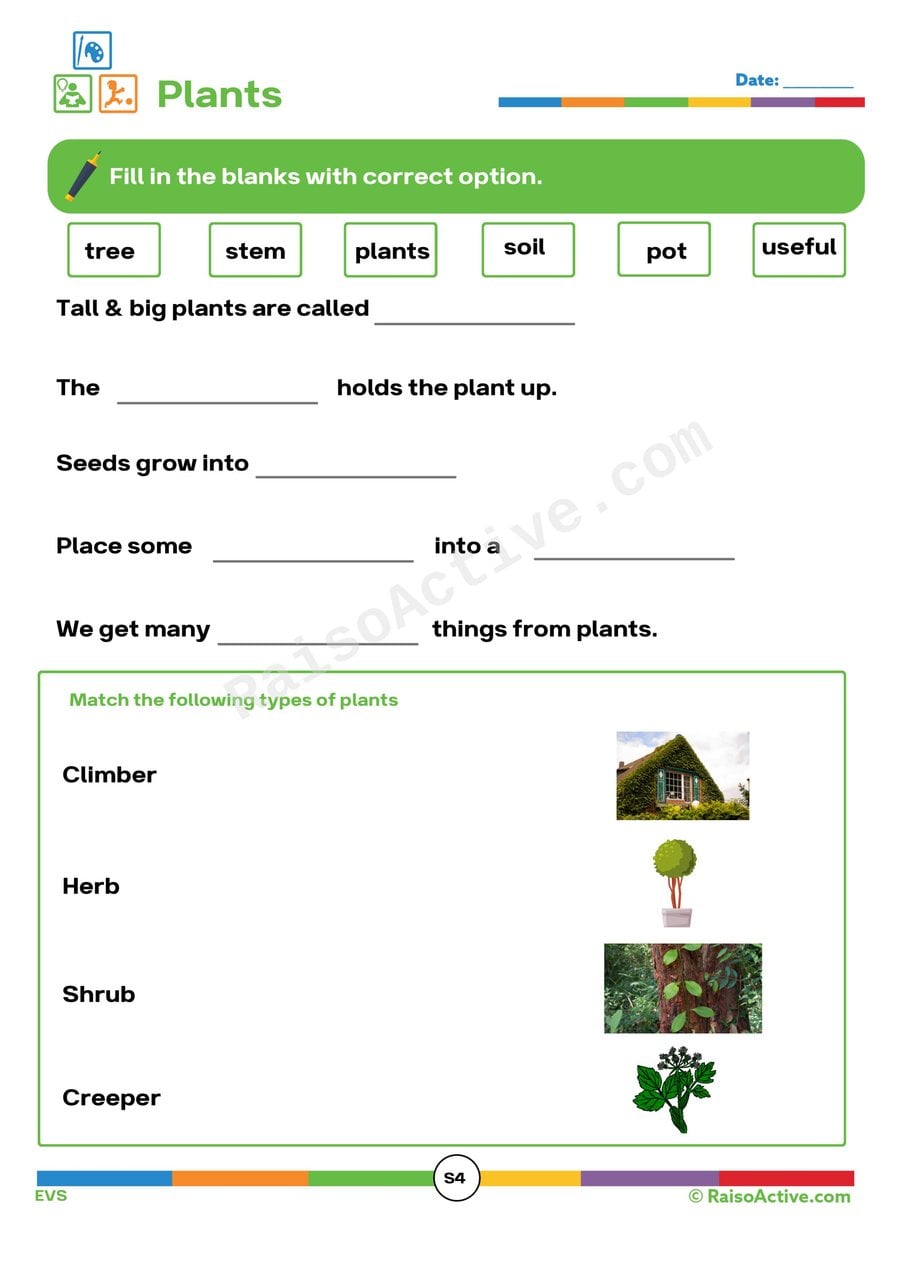
This worksheet introduces 4-6 year olds to plant anatomy — roots, stem, leaves, and flower — and asks them to connect each part's name to its function, while a separate matching section links different plant types to their pictures. Learning that plants have parts with specific jobs (roots drink water, leaves make food from sunlight) is an early building block of life science, and naming these parts gives your child vocabulary they'll keep reusing throughout school science lessons.

Read and Match: Fun Sentences and Pictures Worksheet for Kids!
Reading simple sentences and matching them to the correct picture helps children ages 4-6 practice decoding text and checking their understanding against a visual clue, an important step in building true reading comprehension rather than picture-guessing. Coloring the pictures afterward adds a rewarding finishing touch that keeps young readers engaged through the whole page.

Rolling Addition Worksheet for Preschoolers: Dice Game Fun!
Rolling two dice and adding the results teaches children ages 4-6 the core idea of addition as combining two quantities into one total, rather than just memorizing number facts. The physical act of rolling builds excitement around math while requiring them to recognize dice pips or numerals, transfer them to paper, and calculate a sum, connecting concrete play to abstract arithmetic.

Word Problems Worksheet: Practice Subtraction with Fun Pictures!
This subtraction word problem worksheet gives children ages 4-6 practice translating a short story into a math equation, using pictures of objects being taken away to make the abstract idea of subtraction concrete. Reading, counting, and subtracting in sequence builds the same problem-solving pathway children will rely on for more advanced word problems later in school. Visual supports, like crossed-out or removed objects in the pictures, help children see subtraction as an action rather than just a symbol.
I Spy Halloween Worksheet: Count and Write!
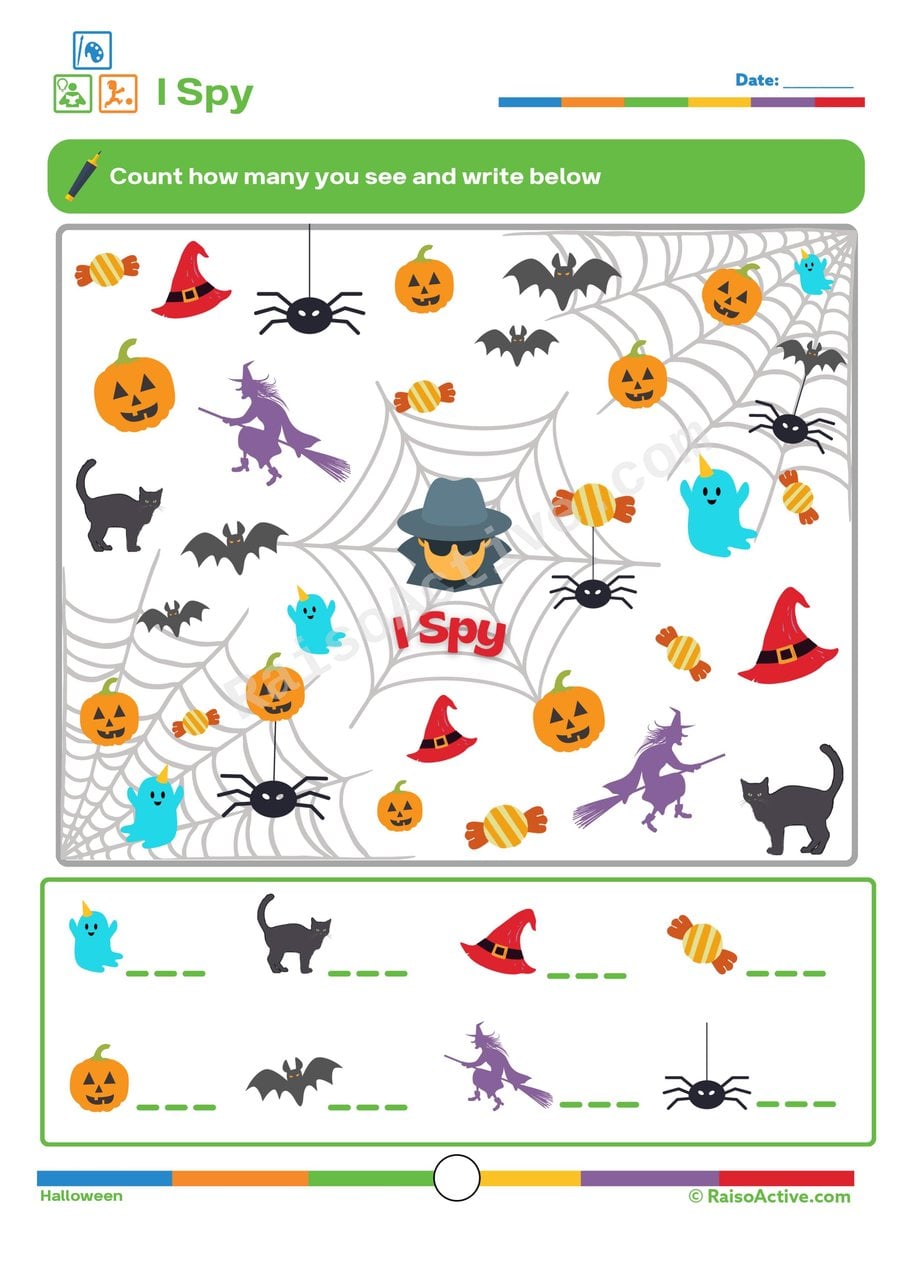
This 'I Spy' worksheet has children ages 4-6 scan a busy Halloween scene to count how many of each specific object appear, then write the total as a numeral, combining visual search skills with number-writing practice. Because several object types are mixed together in one picture, children must also stay organized and avoid recounting the same object twice.

Long Vowel Sounds: Matching Objects to Sounds - A & E Worksheet
This worksheet asks children ages 4-6 to listen for and match objects whose names contain the long 'a' sound, as in 'cake,' or the long 'e' sound, as in 'bee,' sharpening their ability to distinguish between vowel sounds that look and sound similar to a beginning reader. Practicing long vowels alongside short vowels builds the fuller phonics picture children need to decode a wider range of words as their reading vocabulary grows.
Circle the 'cl' and 'sl' Blends Worksheet
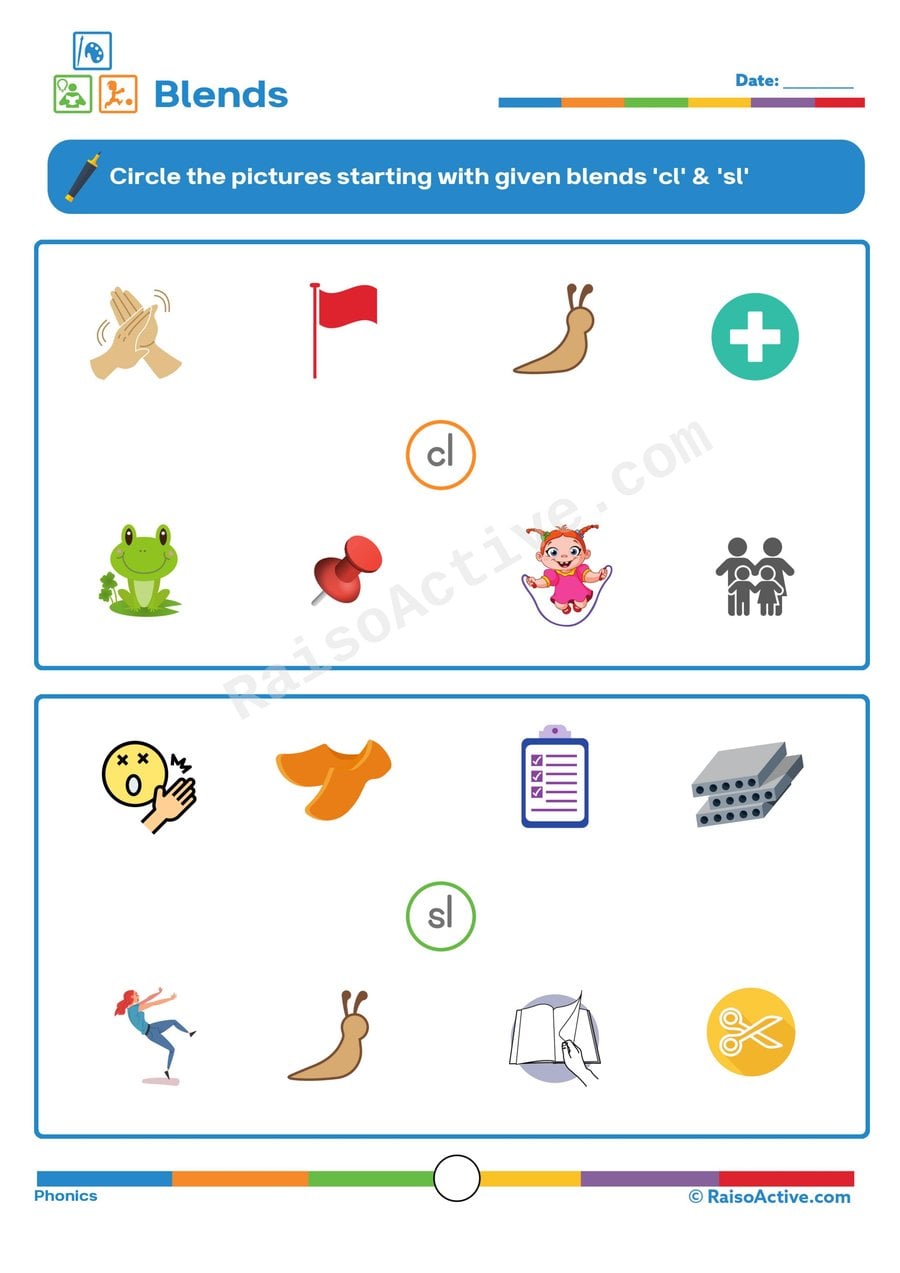
This worksheet trains children ages 4-6 to recognize the 'cl' and 'sl' consonant blends at the start of words, an auditory discrimination skill that lays groundwork for blending sounds when reading. Because 'cl' and 'sl' sound similar, distinguishing them requires careful listening to the very first consonant in the blend, sharpening phonemic precision beyond simple beginning-sound identification. This kind of blend practice is a direct precursor to decoding longer, more complex words.

Blend Words Matching Worksheet: Read and Circle the Picture!
This worksheet gives children ages 4-6 further practice reading consonant blend words and connecting them to their matching picture, this time by circling rather than cutting and pasting, which keeps the focus purely on reading and visual scanning. Repeated blend practice across different formats — matching, circling, and later independent writing — helps these two-consonant sounds become automatic rather than something a child has to sound out every time.
Addition Worksheet: Find and Write Equations!
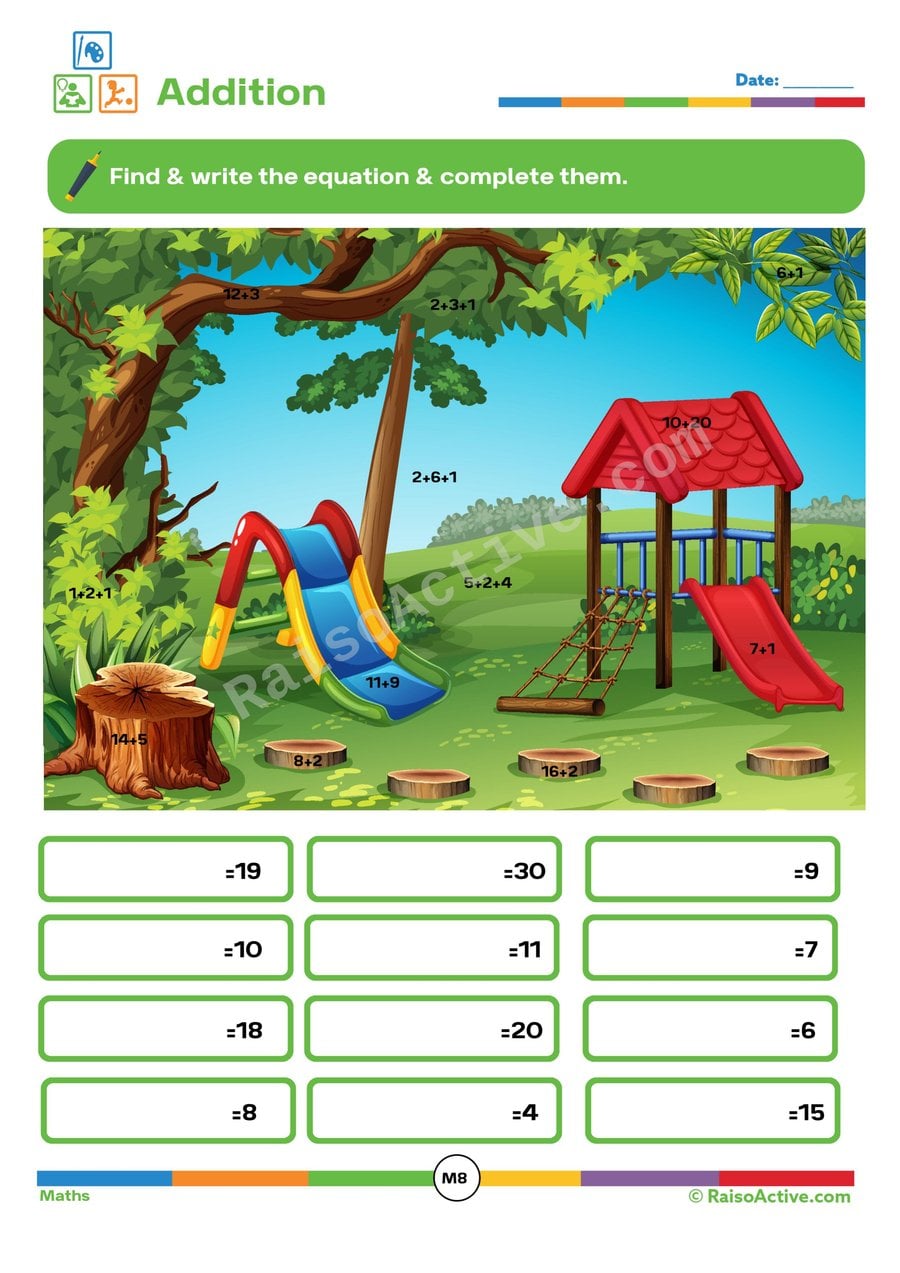
Writing an addition equation from a picture — rather than solving one that's already written — asks children ages 4-6 to translate a visual quantity into mathematical symbols, a more demanding skill than simply computing a given sum. This worksheet has children count grouped objects, represent what they see as a written equation, and then solve it, connecting concrete counting to abstract number sentences. Practicing this translation step is exactly what builds true number sense, rather than just memorized addition facts.

J and K Consonant Sounds Matching Worksheet for Preschoolers
The letters J and K are frequently mixed up by children ages 4-6 because both are less common consonants that don't appear in as many early words as letters like S or T, so this worksheet gives them focused, repeated practice distinguishing the two sounds. Matching each letter to a picture that starts with its sound builds the letter-sound association needed before a child can spell or read J and K words confidently. This kind of targeted practice on less-frequent letters fills a gap that broader phonics worksheets often skip over.
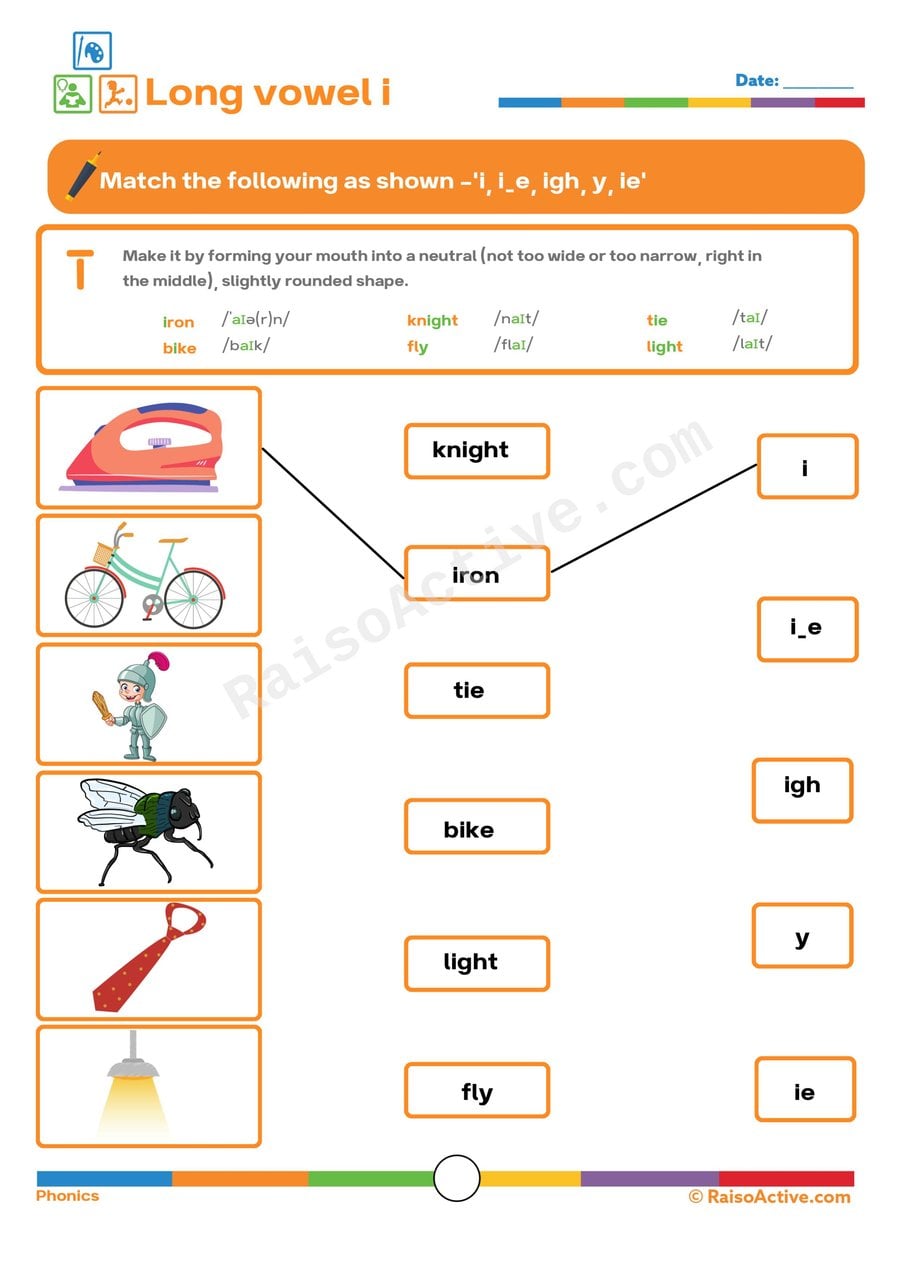
Long Vowel 'i' Matching Worksheet for Kids
This worksheet challenges children ages 4-6 to match pictures with words that share the long 'i' sound but use different spelling patterns, such as 'ie' in 'pie' or a silent 'e' in 'kite,' building awareness that one vowel sound can take multiple written forms. This flexible understanding of spelling patterns is an important step beyond basic phonics, preparing children for the many irregular spellings they'll encounter as readers.
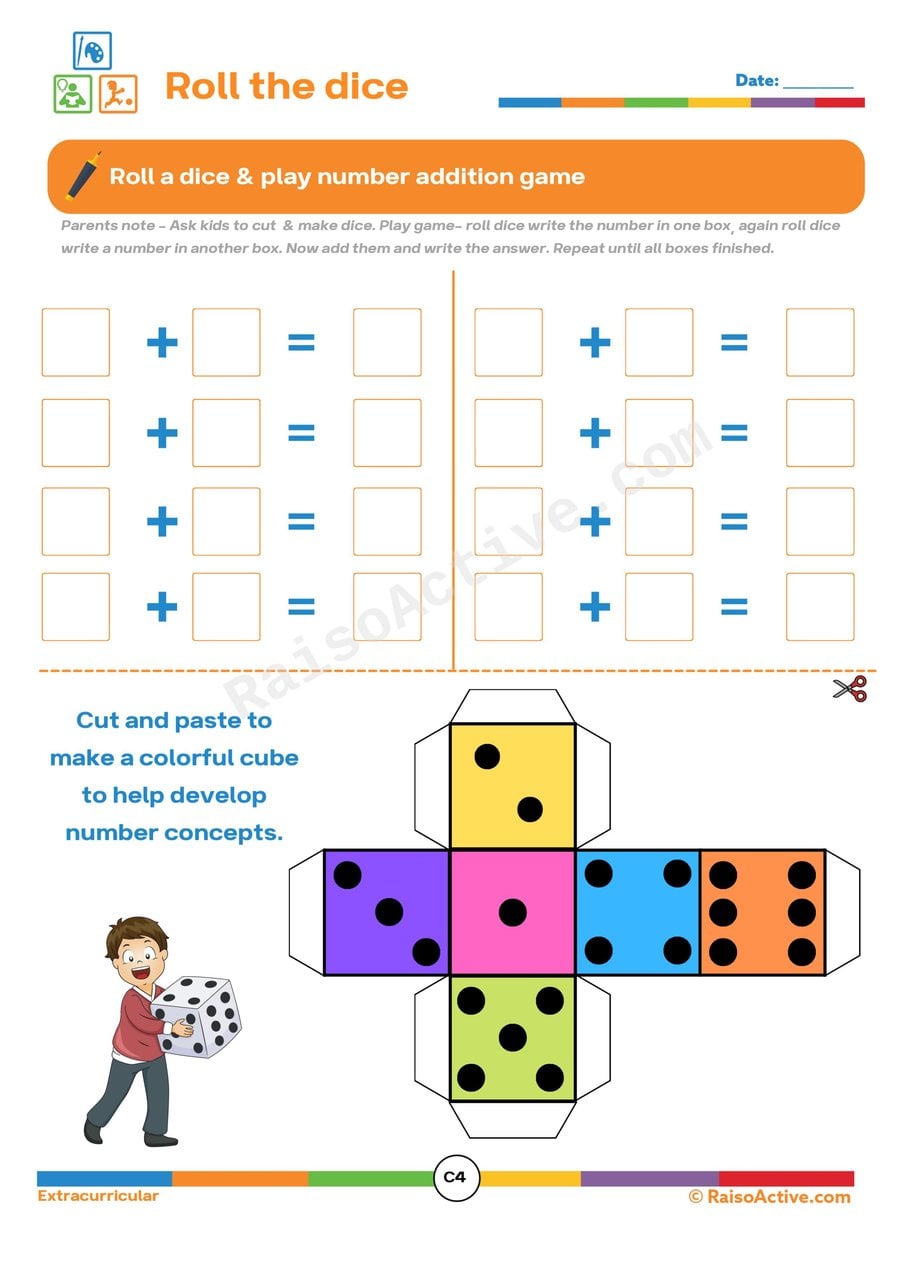
Roll the Dice Addition Worksheet for Kids
This dice-based addition worksheet gives children ages 4-6 hands-on practice combining two quantities into a sum, using a physical dice roll to make the abstract idea of addition concrete and random. Rolling, recording, and adding numbers repeatedly builds fluency with numbers 1-6 and reinforces that addition means 'putting together.' The repeated-roll format also builds working memory as children hold two numbers in mind to combine them.
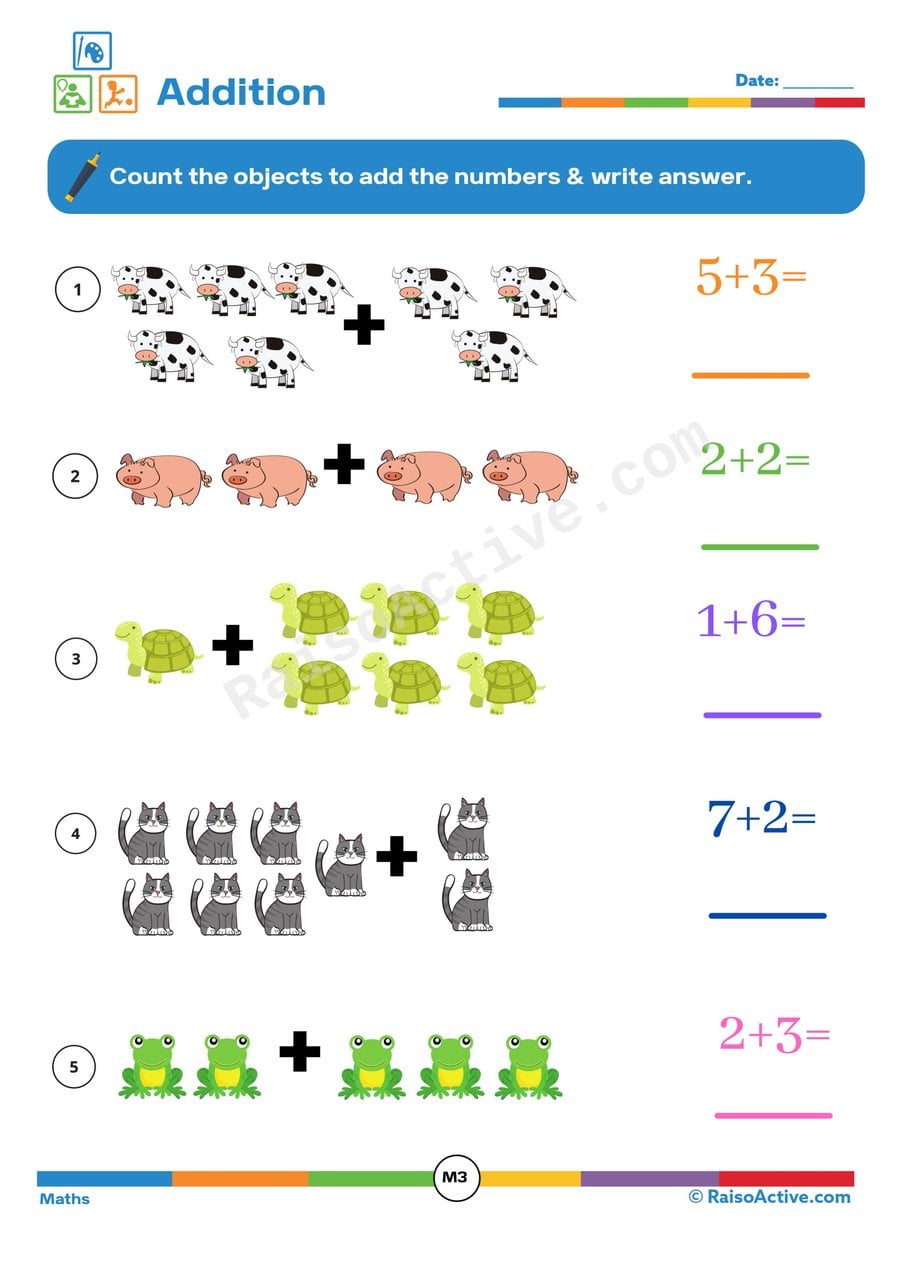
Addition Worksheet: Count and Add Objects!
Counting two groups of pictured objects and writing their combined total introduces children ages 4-6 to addition as a concrete, visual process before they work with numbers alone. Because the objects are drawn out rather than represented only by digits, children can physically point and count to verify their answer, building confidence in early math reasoning. Repeated practice with this picture-based format helps children internalize what a plus sign means before they're expected to solve equations without visual support.

Internal Organs Worksheet: Find and Match the Body Parts!
Finding organ names hidden in a word search and then cutting and pasting the organs onto the correct spot on a body diagram teaches children ages 4-6 the names and general locations of internal organs, like the heart, lungs, and stomach, introducing basic human biology. Searching the word grid builds visual scanning and word recognition, while the cut-and-paste placement step reinforces spatial understanding of where each organ sits inside the body. Combining a word search with a hands-on placement task gives this worksheet both a literacy and a science learning goal.
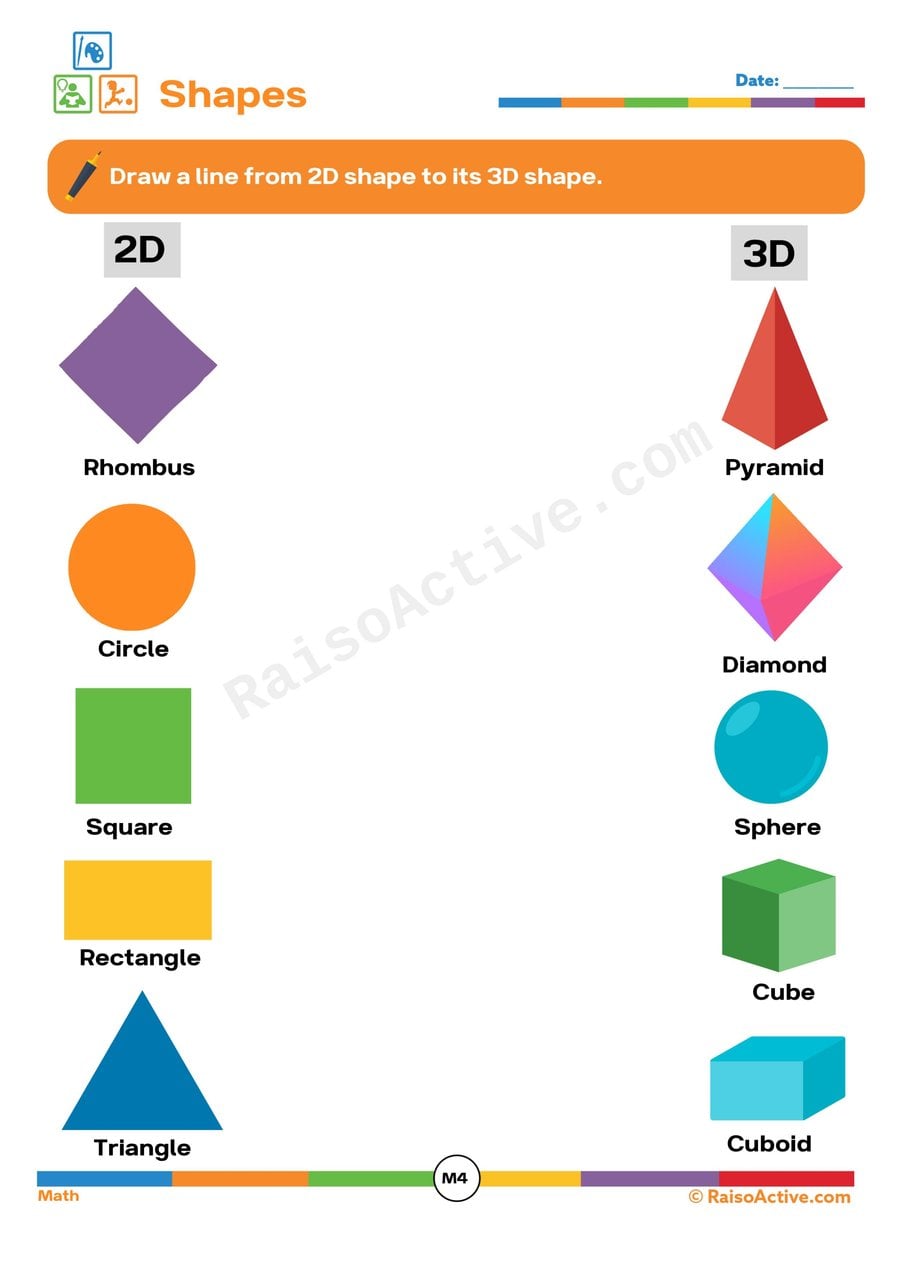
Shape Match: 2D to 3D Shapes Worksheet
This worksheet introduces 4-6 year olds to the relationship between flat 2D shapes and solid 3D shapes — connecting a circle to a sphere, a square to a cube — which is an important spatial reasoning leap, since a 3D shape's flat 'face' is what actually corresponds to its related 2D shape. Making this connection explicit helps children understand that the shapes they've been learning aren't just flat pictures but also describe the surfaces of real, solid objects around them.

Read and Match: Sentence Reading Worksheet for Early Learners
This worksheet has 4-6 year olds read a full sentence aloud and then identify which picture actually matches its meaning by coloring the circle beside it, building reading comprehension in a format that requires understanding the whole sentence rather than picking out a single keyword. Because more than one picture on the page may share surface similarities, your child has to genuinely process what the sentence says, which is a stronger comprehension check than simple word-picture matching.

Addition Worksheet: Adding Numbers with Fun Pictures!
This worksheet gives children ages 4-6 practice with simple addition by having them combine two groups of pictured objects and write the resulting total, reinforcing the core idea that addition means putting groups together to find 'how many in all.' Working from pictures rather than numbers alone helps bridge concrete counting to the more abstract number sentences children will encounter as their math skills progress.

Adjective Adventure: Matching Sentences Worksheet for Kids
This worksheet teaches 4-6 year olds that adjectives are the words that describe nouns, asking them to fill in a missing adjective in a sentence and then physically mark the noun and adjective separately by underlining and circling. That separation step — telling apart which word names a thing and which word describes it — is a genuinely useful grammar distinction that most children haven't consciously noticed before, even though they use adjectives constantly in speech.
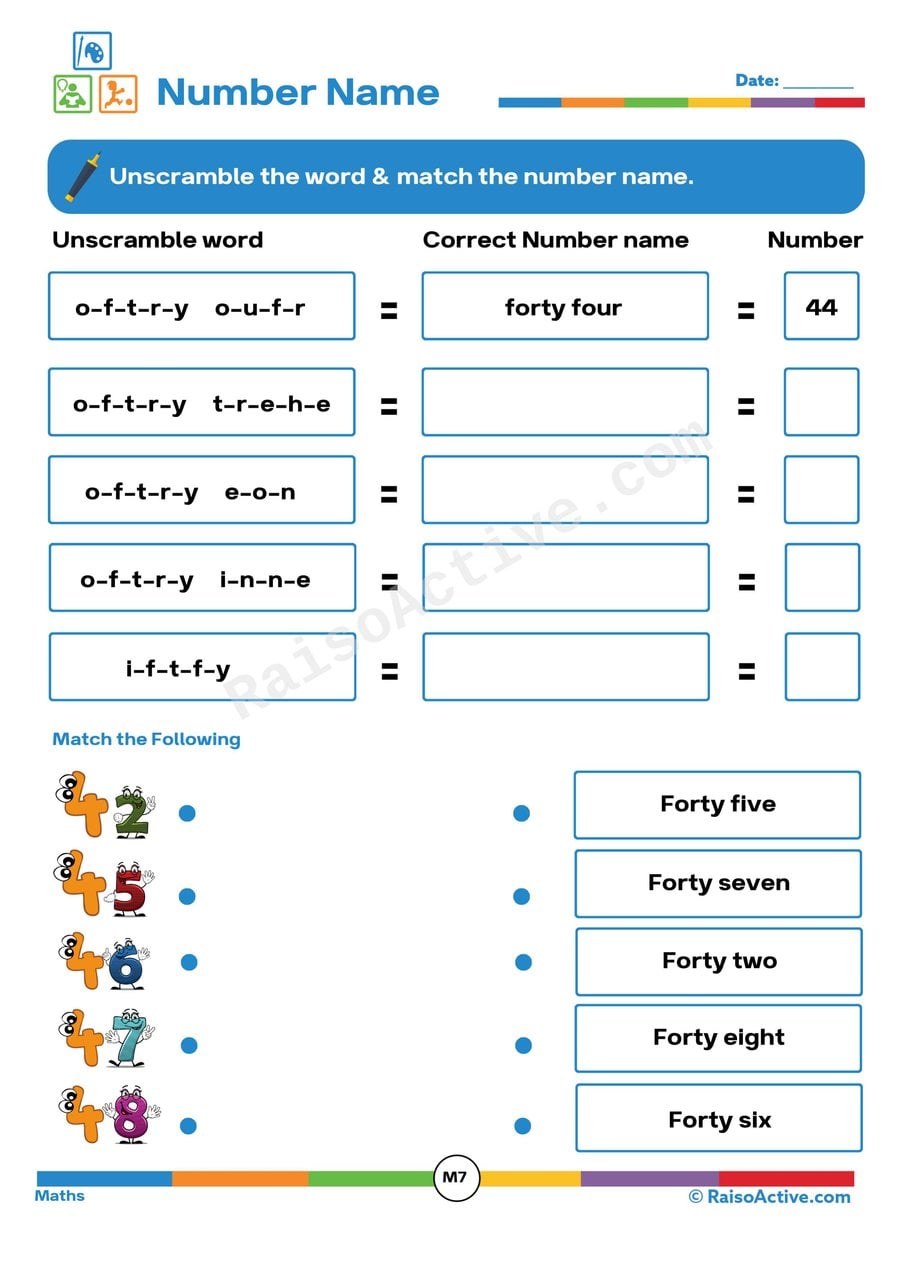
Number Name Matching Worksheet for Preschoolers
This worksheet connects three related number skills at once: unscrambling a jumbled word to spell a number name correctly, writing that number name out, and then matching it to its numeral — a layered task that builds both early spelling and number recognition together. Because number-name spelling (like 'seven' or 'eight') doesn't always follow simple sound-out rules, this worksheet gives 4-6 year olds valuable repeated exposure to sight-word-style number vocabulary.
What Year 1 counting worksheets cover
Five-year-olds count to 100, usually fluently to 30 or so and with some hesitation near the decade boundaries after that, and count by tens as a shortcut for counting large groups. Worksheets should ask for the number that comes before, after or between two given numbers, counting objects arranged in groups of ten, and comparing two two-digit numbers to say which is greater. Skip counting by twos and fives is often starting but not yet secure.
- Count aloud to 100, with the decades as the tricky part
- Count objects grouped in tens rather than one at a time
- Say the number that comes before, after or between two numbers
- Compare two two-digit numbers and say which is greater
How to use these worksheets at home or in class
A decodable passage or word list most days, plus a short number bonds sheet, keeps pace with a Year 1 classroom. Fifteen minutes is a reasonable ceiling, and reading the passage twice in one sitting builds the fluency the screening check rewards.
Start with the sheet that matches what your child can already do, then move one step up. Keep finished sheets in a folder: Year 1 teachers often ask for evidence of practice, and children like seeing their own progress.
Is your child ready for Year 1 counting work?
Entering this stage, a child should blend most Phase 3 sounds into words, write a few letters correctly formed, count reliably to twenty, and sit through a short table task without needing constant redirection.
Frequently asked questions
Where do most five-year-olds get stuck counting to 100?
At the decade boundaries, going from 29 to 30, 39 to 40 and so on, because the pattern of adding one to the ones digit breaks and a new word has to be recalled instead. A hundred chart the child can see while counting helps, since the pattern down each column becomes visible. Practice counting from a few different starting points near a decade boundary, such as 27 to 33, rather than always starting over from one.
What should a Year 1 child be able to do in counting?
Five-year-olds count to 100, usually fluently to 30 or so and with some hesitation near the decade boundaries after that, and count by tens as a shortcut for counting large groups. Worksheets should ask for the number that comes before, after or between two given numbers, counting objects arranged in groups of ten, and comparing two two-digit numbers to say which is greater. Skip counting by twos and fives is often starting but not yet secure. Entering this stage, a child should blend most Phase 3 sounds into words, write a few letters correctly formed, count reliably to twenty, and sit through a short table task without needing constant redirection.
Do these worksheets follow the Year 1 curriculum?
The sheets cover one-to-one correspondence, counting a set of objects accurately, matching a numeral to a quantity and comparing more and less, which sit inside the National Curriculum KS1 (Year 1); Letters and Sounds Phase 3–5 outcomes for Year 1. Kindergarten / 1st Grade (US), UKG (India) use the same skills at this age, so the sheets also fit families following those programmes.
Are these Year 1 counting worksheets free?
Yes. Each worksheet downloads free as a watermarked PDF once you create an account, with a limit of five a day. An annual membership ($20) removes the watermark and the limit for the whole library of over 1,000 worksheets and every printable pack.

Written by
Hemsweta Jain · Teacher Cheena
MBA and Early Childhood Educator, teaching since 2014 · Founder of RaisoActive, Mumbai
Written and reviewed by Hemsweta Jain (Teacher Cheena), who designs every RaisoActive worksheet.
Last reviewed
Printable packs for ages 5–6
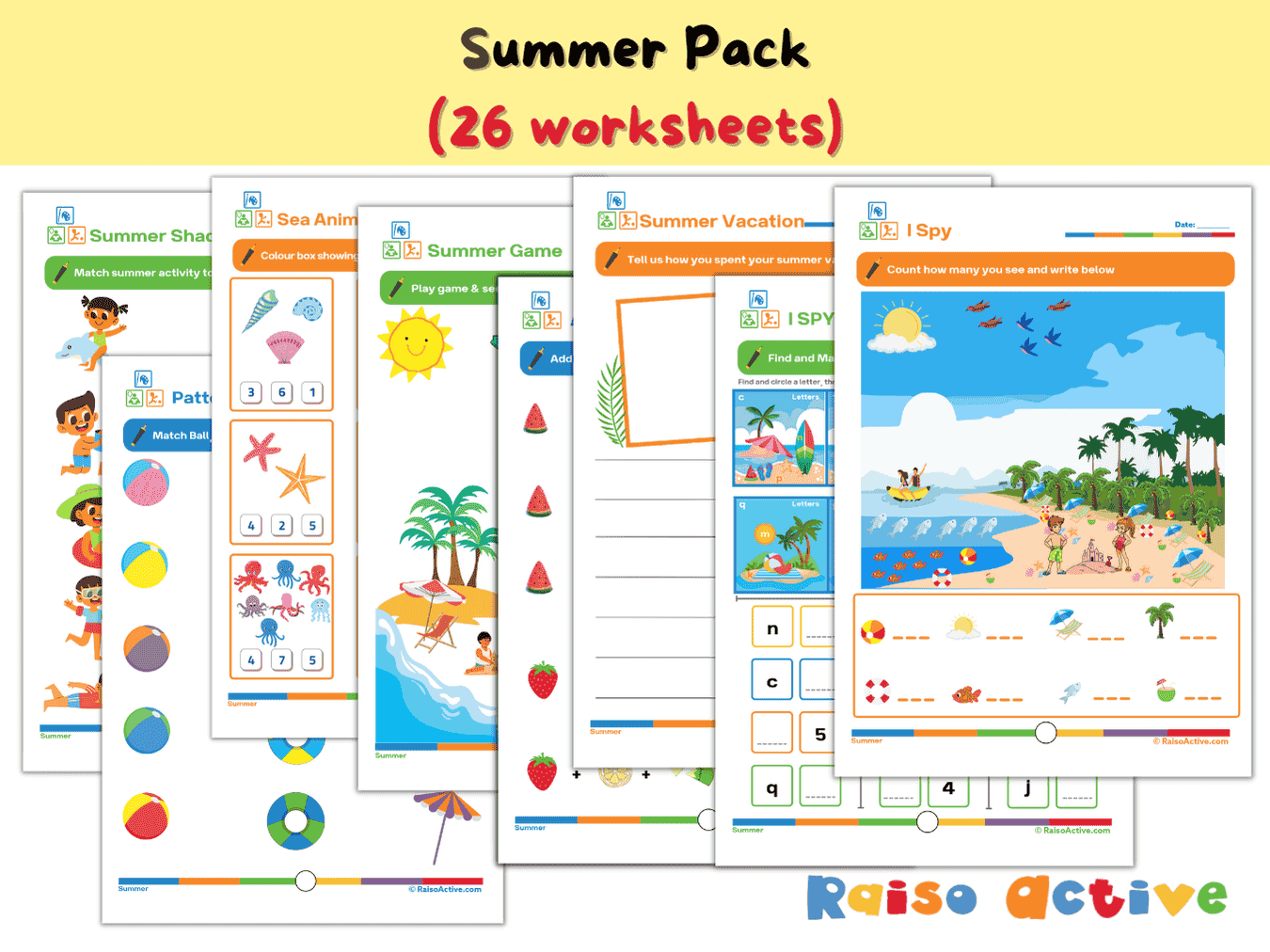
Summer Activity Pack: Math, Literacy, Puzzles & More for Preschool & Kindergarten
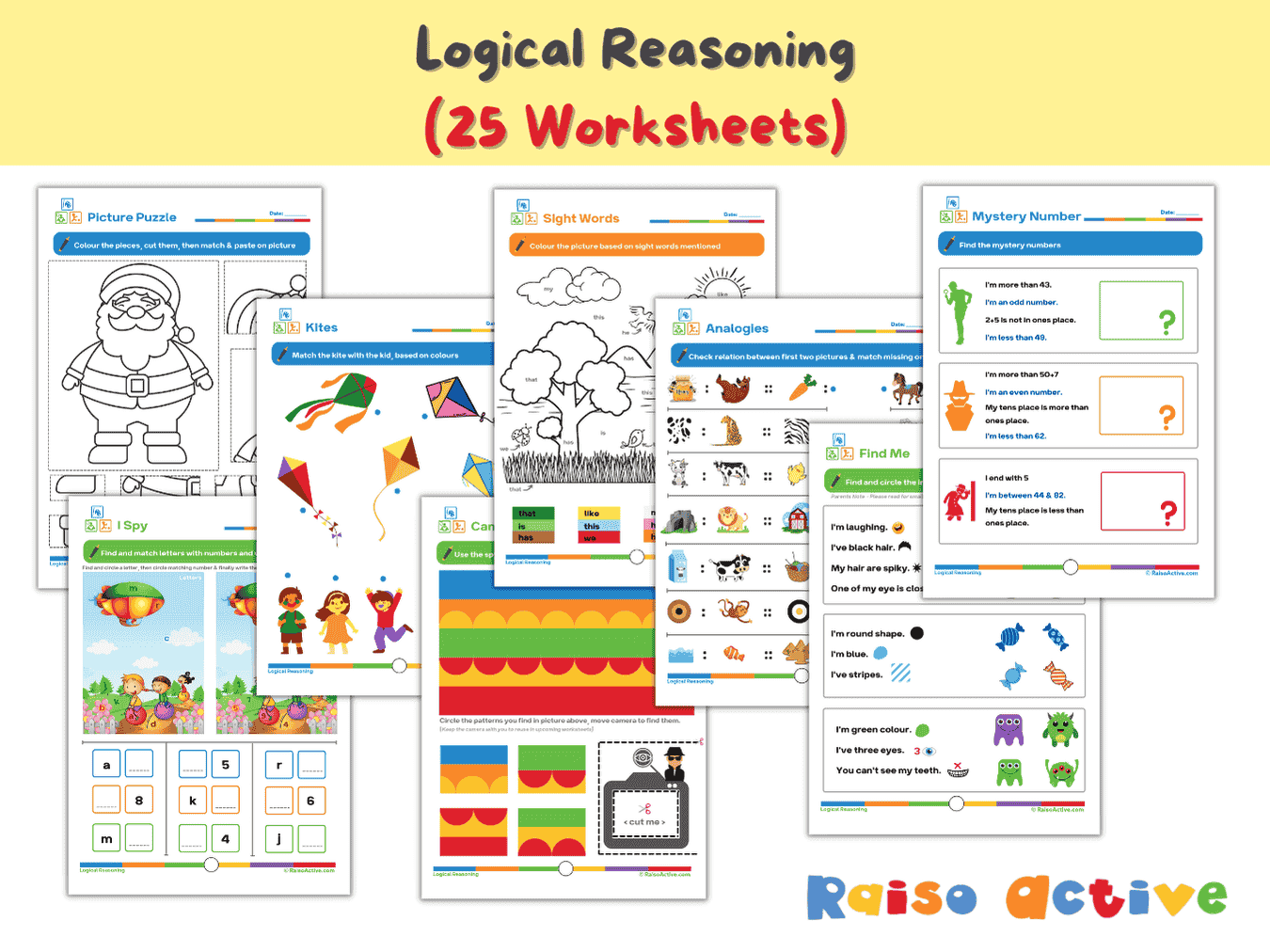
Logical Reasoning Activity Book for Preschool & Kindergarten | Patterns, Puzzles & Analogies
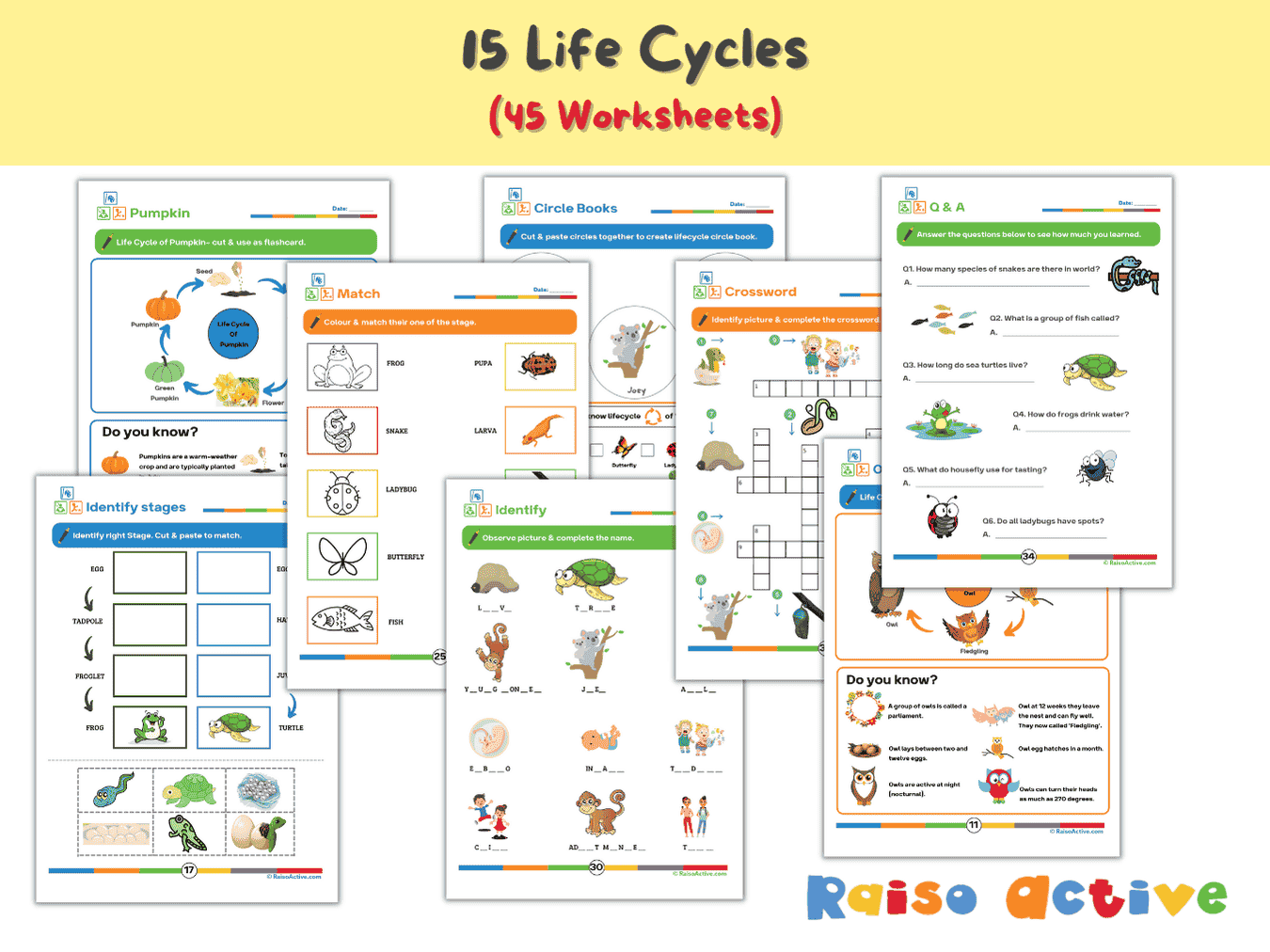
Lifecycles Activity Book & Flashcards for Preschool & Early Elementary
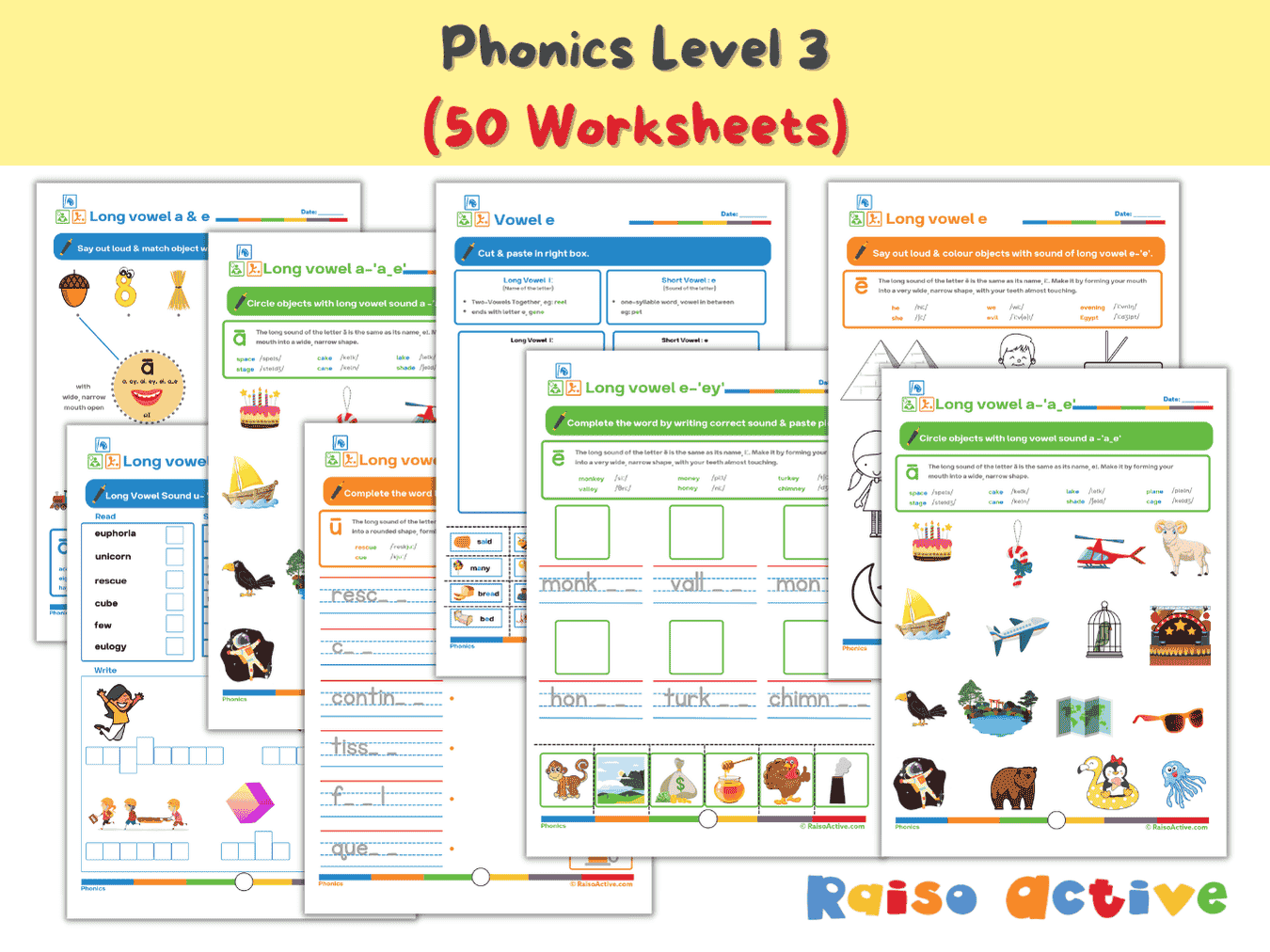
Phonics Level 3 Long Vowels Activity Book for Kindergarten & 1st Grade
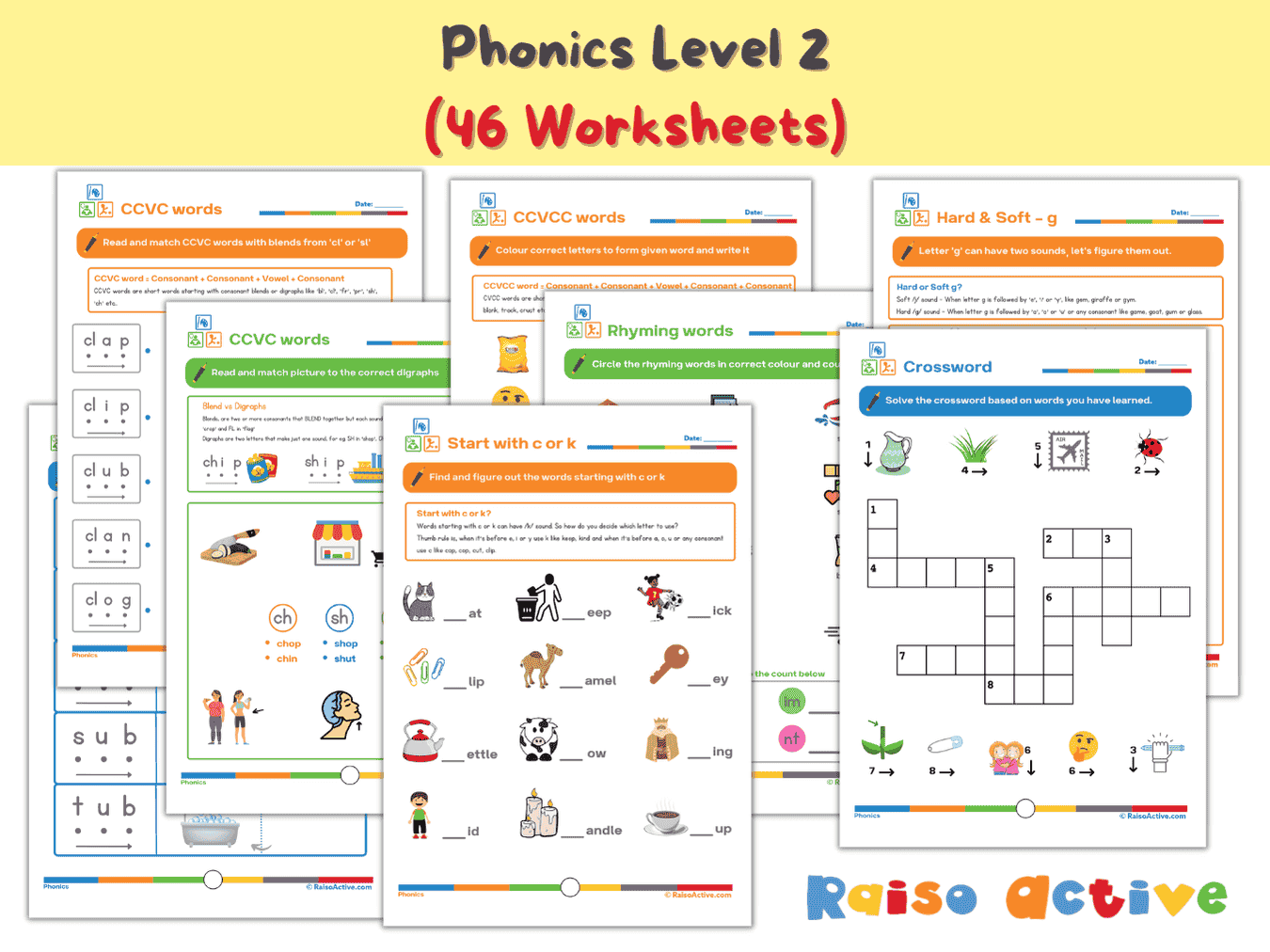
Phonics Level 2 Worksheets: CVC, CCVC, CVCC Word Families & Blends for Early Readers (Ages 4-7)
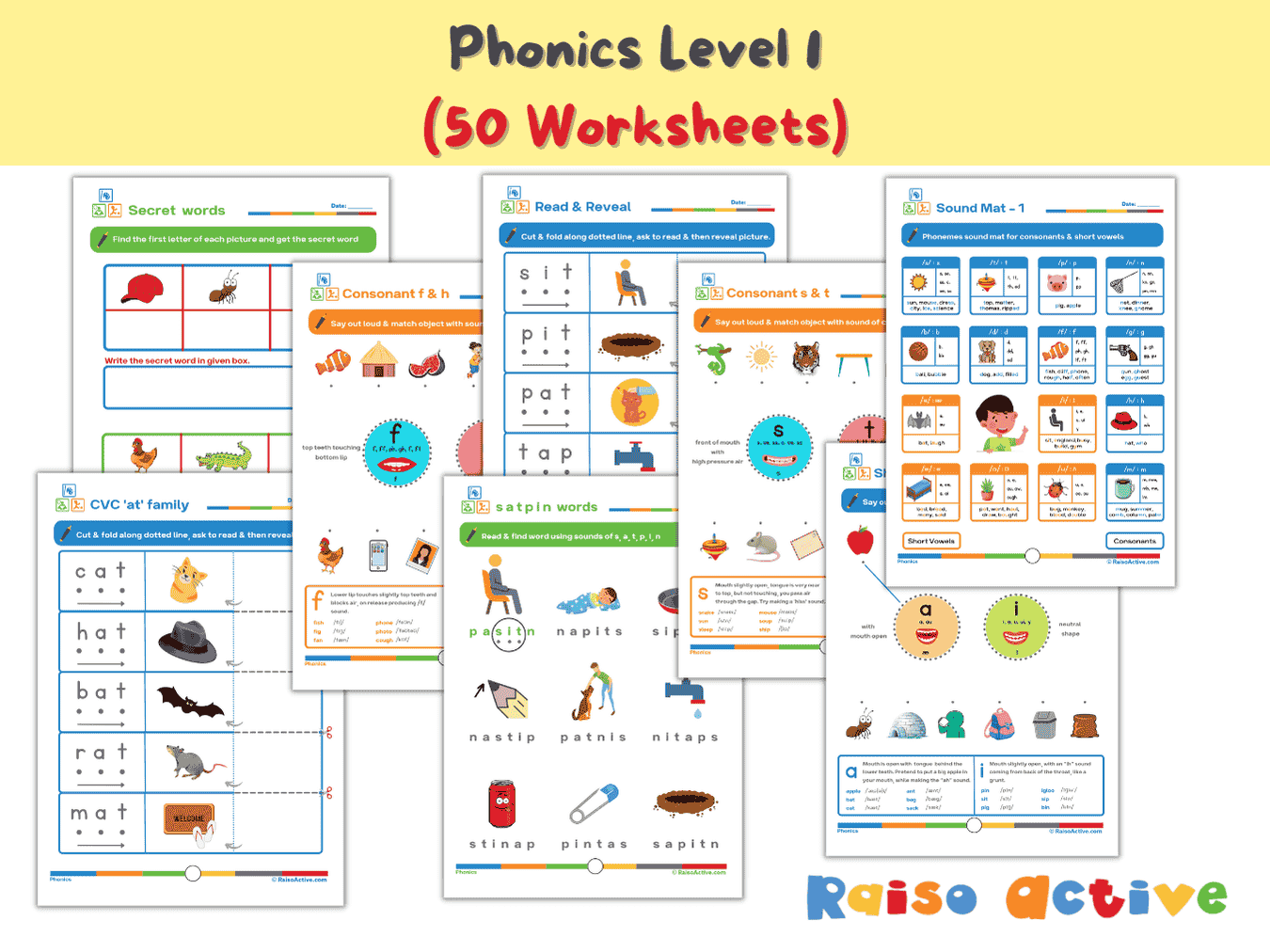
Phonics Level 1 Activity Book: Letter Sounds, Blending & CVC Words for Preschool & Kindergarten
Guides for parents and teachers
See all guides →Number Formation Rhymes 0–9 and How to Fix Reversals
Original number formation rhymes for 0–9, the correct stroke order for each digit, why 3, 5 and 7 get reversed most often, and multisensory fixes that work.
Christmas and Winter Activities That Combine Fun and Learning: Creating Magical Educational Experiences
Discover Christmas and winter activities that combine festive fun with real learning. Crafts, counting, literacy, and printable worksheets for ages 2 to 8 — perfect for home and school.
Age-Appropriate Halloween Learning Activities: Balancing Spooks and Skills for Young Learners
Discover fun, age-appropriate Halloween learning activities for young children. Spooky crafts, counting games, literacy ideas, and printable worksheets for ages 2 to 8.
The Power of Music: How Musical Activities Accelerate Learning Development in Young Children
Discover how musical activities accelerate brain development, phonics, maths, and emotional regulation in children ages 1–8. Practical tips for Indian homes and classrooms.
What's the Best Alternative to ABCmouse? A Complete Parent's Guide to Free and Affordable Educational Apps
ABCmouse runs ~Rs 4,000-5,000/year with US spellings and curriculum. Compare free & affordable Indian-friendly apps like Khan Academy Kids and DIKSHA.
Is Khan Academy Kids Really Free? A Parent's Complete Guide to Costs, Features, and Hidden Fees
Confirmed: Khan Academy Kids has zero subscription fees, ads, or paywalls. See what's included, age-by-age tips, and offline use for Indian families.
Canonical: https://raisoactive.com/worksheets/year-1-counting