Free printable worksheets · United Kingdom
Reception Connect the Dots Worksheets (Ages 4–5)
Reception connect the dots worksheets are practice sheets for children aged 4–5 in Reception in the UK. Connect the dots is joining a series of numbered or lettered dots in order with a pencil line to reveal a hidden picture. The sheets on this page cover counting or sequencing in order, fine motor control drawing straight segments and letter or number recognition when dots are labeled.
Reception is the year phonics teaching properly begins, usually with Phase 2 of Letters and Sounds or an equivalent scheme, so a child starts blending sounds such as s, a, t and p into short words within weeks. Number work stays within ten, built through subitising and comparing rather than counting alone. Four-year-olds move from 1 to 10 to 1 to 20, with dots placed closer and the picture less obvious from the outline. The skill being tested is finding the next numeral among nearby distractors and keeping the count going, ideally without starting again from 1. Alphabet dot-to-dots in capitals appear once letter order is secure. A crayon is still fine; the finished picture should be coloured. Fifty dots is too many.
378+ worksheets · free PDF download · print on A4 or Letter
Reception Connect the Dots Worksheets to print
Browse all worksheets for ages 4–5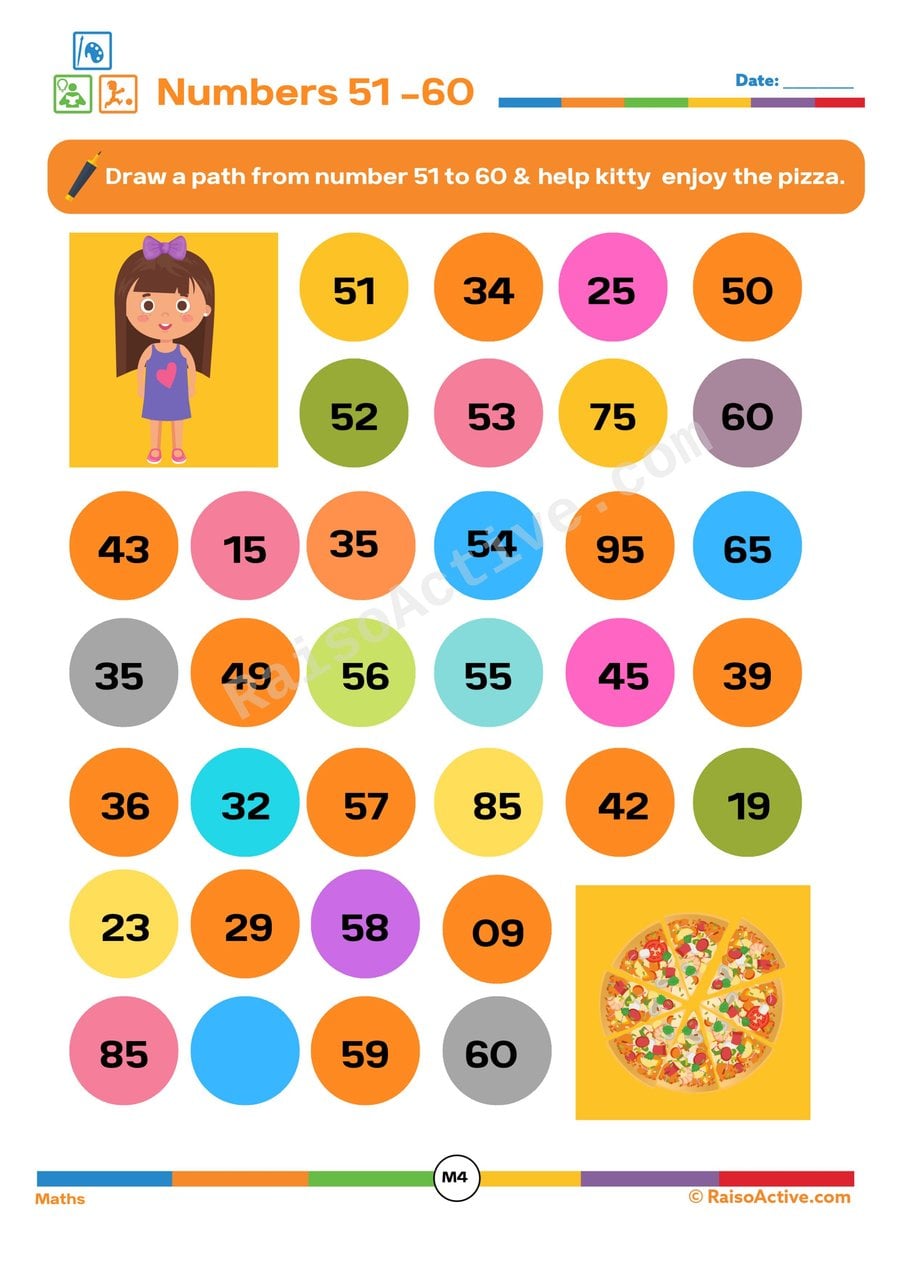
Pizza Path: Numbers 51-60 Worksheet for Kids
Connecting the dots from 51 to 60 in order pushes children ages 4-5 beyond the more familiar 1-20 range, helping them recognize two-digit numbers and understand that counting sequences continue predictably into higher decades. This dot-to-dot format turns number recognition into a rewarding visual payoff, since a hidden pizza picture only appears once every number is found and connected correctly. It's a motivating way to practice number order without it feeling like repetitive drilling.

Connect the Dots: Mushroom House Worksheet for Kids (Numbers 26-50)
Extending number sequencing into the 26-50 range pushes children ages 4-6 past the more familiar 1-20 span while reinforcing the fine motor control needed to draw controlled connecting lines that reveal a mushroom house picture.

Connect the Dots: Help the Prince Find the Princess! Numbers 1-25 Worksheet
Locating dots in order from 1 to 25 and drawing a steady connecting line combines number recognition and sequencing with the pencil control children ages 3-5 need for handwriting readiness.

Connect the Dots: Ganesha Face Worksheet for Kids
This worksheet strengthens number sequencing from 1 to 30 and fine motor pencil control in children ages 3-5 as they connect dots to reveal a Ganesha face. Following a long numeric sequence builds number order fluency beyond simple counting, while the resulting picture rewards sustained focus with a satisfying reveal.

Connect the Dots: Hidden Shape Worksheet for Kids
Children ages 3-5 practice counting in sequence and fine motor line control as they connect numbered dots in order to reveal a hidden shape, combining numeracy with hand-eye coordination in one satisfying activity. The surprise of a shape emerging only once every dot is connected correctly also motivates children to stay careful and accurate rather than rushing through the numbers.

Unicorn Dot-to-Dot Worksheet: Connect the Numbers!
Connecting fifty numbered dots in sequence gives children serious practice with number order and one-to-one counting while also demanding steady pencil control to draw a continuous line from point to point. The reveal of a unicorn picture at the end provides a built-in reward that keeps motivation high through a task that requires more sustained focus than a typical preschool counting page.

Dot-to-Dot Snail Worksheet: Counting Numbers 1-30!
This dot-to-dot worksheet challenges children ages 3-5 to count and connect numbers from 1 to 30 in sequence, extending their number-order knowledge well past the more common 1-10 range while also building fine motor control as they draw connecting lines. Successfully completing a longer sequence like this gives children a real sense of accomplishment tied directly to numeracy.
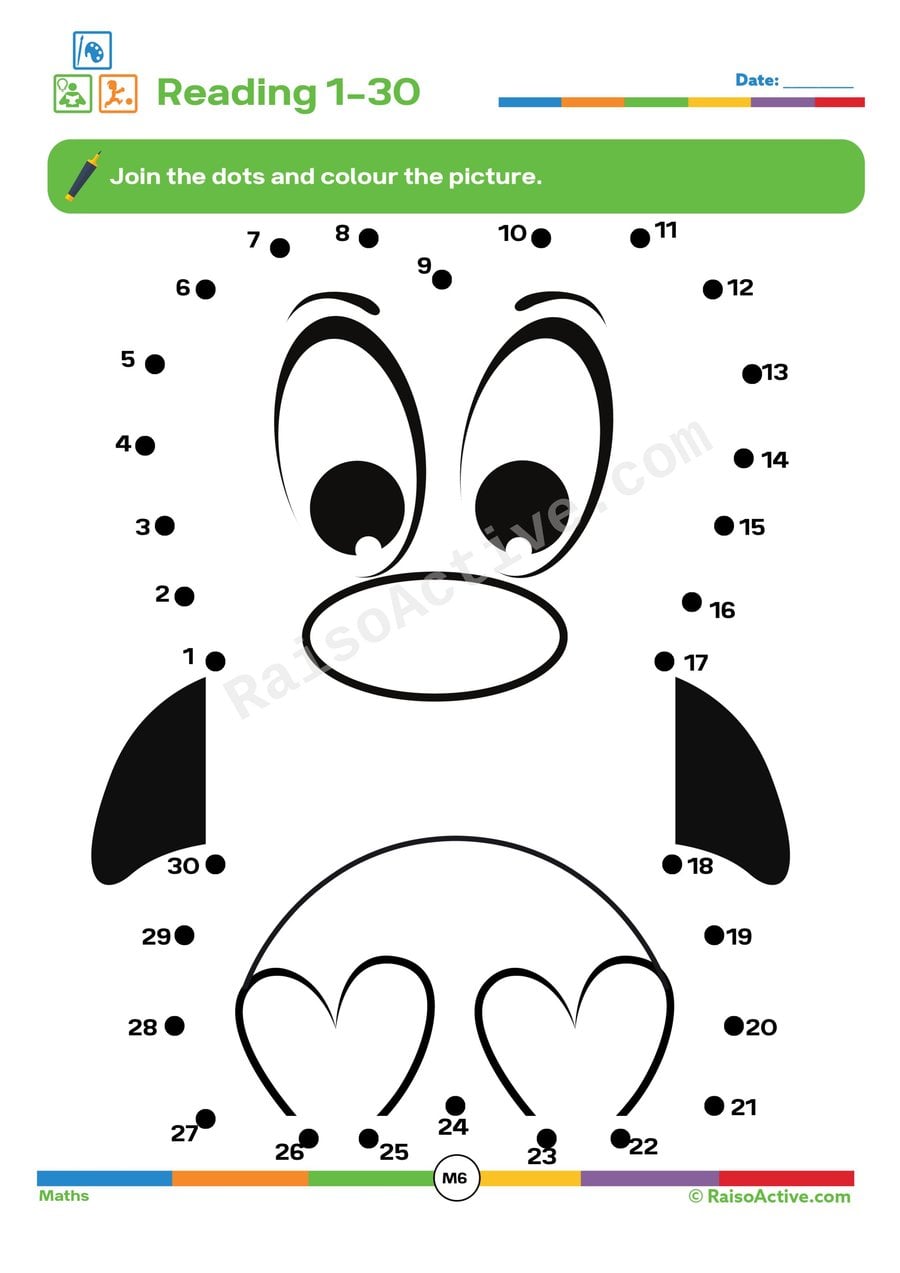
Connect the Dots Penguin Worksheet for Kids
Connecting numbered dots in order to reveal a penguin picture helps children ages 3-5 practice counting in sequence while building the fine motor control needed to draw a steady connecting line. The surprise of watching a recognizable picture emerge gives extra motivation to count carefully all the way to the end.

Learn India's National Symbols: A Dot-to-Dot Worksheet
Connecting numbered dots to reveal each national symbol builds fine motor control and number-sequence recognition in children ages 3-5, since they must find and connect dots in the correct numerical order to form a recognizable picture. As each symbol emerges from the dots, children also gain early familiarity with important national imagery and its name.

Number Writing Worksheet 0-10: Trace, Count, and Write!
This worksheet combines three numeracy skills in one sitting: recognizing printed numerals 0 through 10, forming them correctly through tracing, and matching a quantity of objects to its written number. For 4-5 year-olds, connecting the abstract symbol '7' to seven actual objects is the key leap between rote counting and true number sense.

Skip Counting by 10 Worksheet: Fill in the Blanks!
This worksheet builds skip counting fluency by 10s, a foundational skill that helps children recognize number patterns and prepares them for place value concepts and faster counting strategies later on. For ages 4-5, seeing numbers grouped in tens on signs reinforces both sequencing and the visual structure of our base-ten number system.

Number Tracing Worksheet: Trace and Count the Number 20!
This worksheet has children ages 4-5 trace the number 20, a milestone number that marks the top of the common preschool counting range, and then count and color a full set of twenty pentagons. Reaching and confidently counting to 20 shows that a child has built solid one-to-one correspondence across an extended set, a skill they'll rely on heavily once they begin adding and subtracting in early math. Counting pentagons instead of simpler shapes also gives a light introduction to five-sided shapes.

Descending Order Fruits Worksheet for Preschoolers
Arranging fruits labeled with numbers from largest to smallest builds descending order recognition for children ages 4-5, reinforcing number comparison skills that complement the more commonly practiced ascending order.
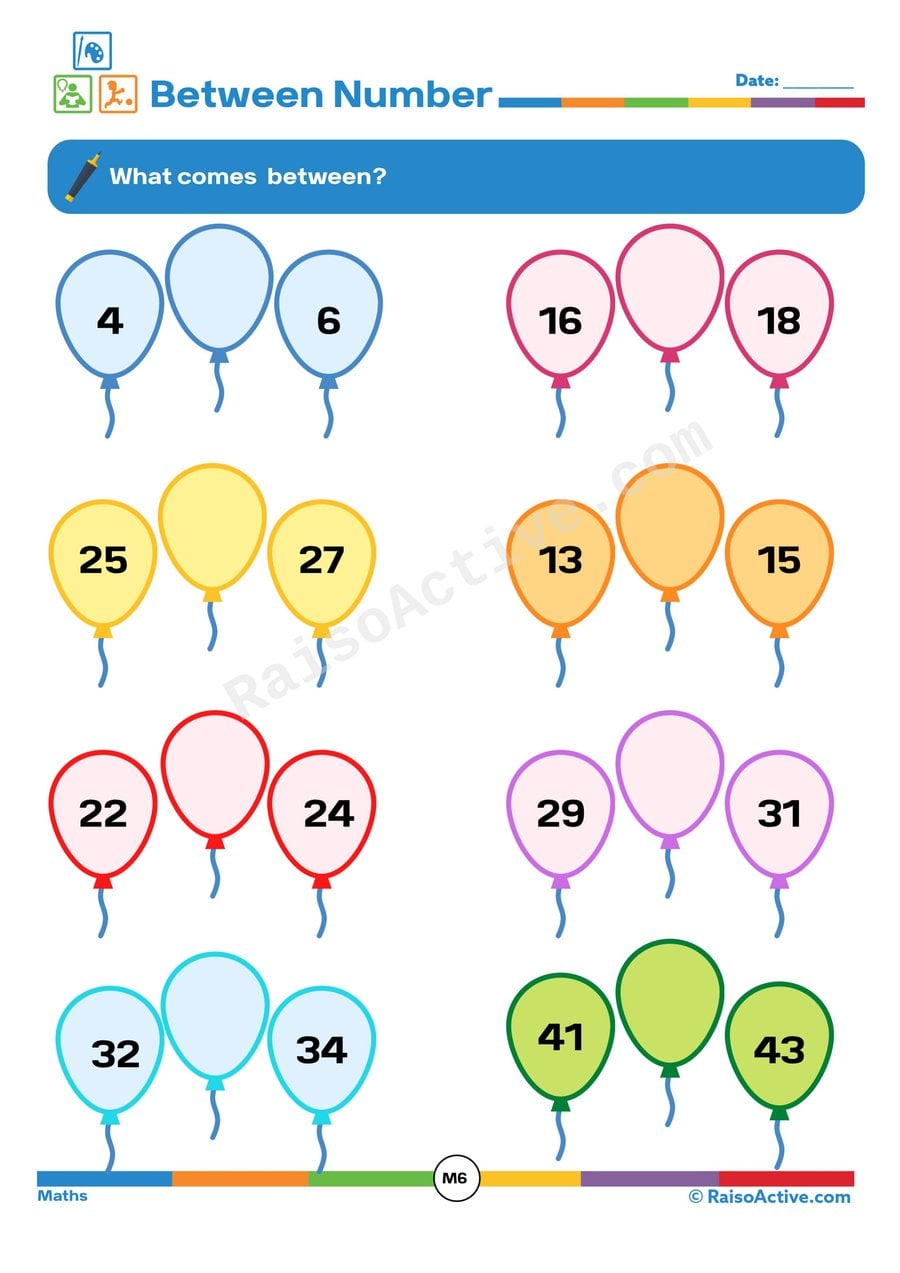
What Comes Between? Number Worksheet for Kids
This worksheet targets a specific numeracy skill, finding the number that falls between two given numbers, which requires children to hold two values in mind and mentally place a third between them. For ages 4-5, this 'in-between' reasoning is more demanding than simply counting forward and strengthens the mental number line that underlies later subtraction and comparison skills.
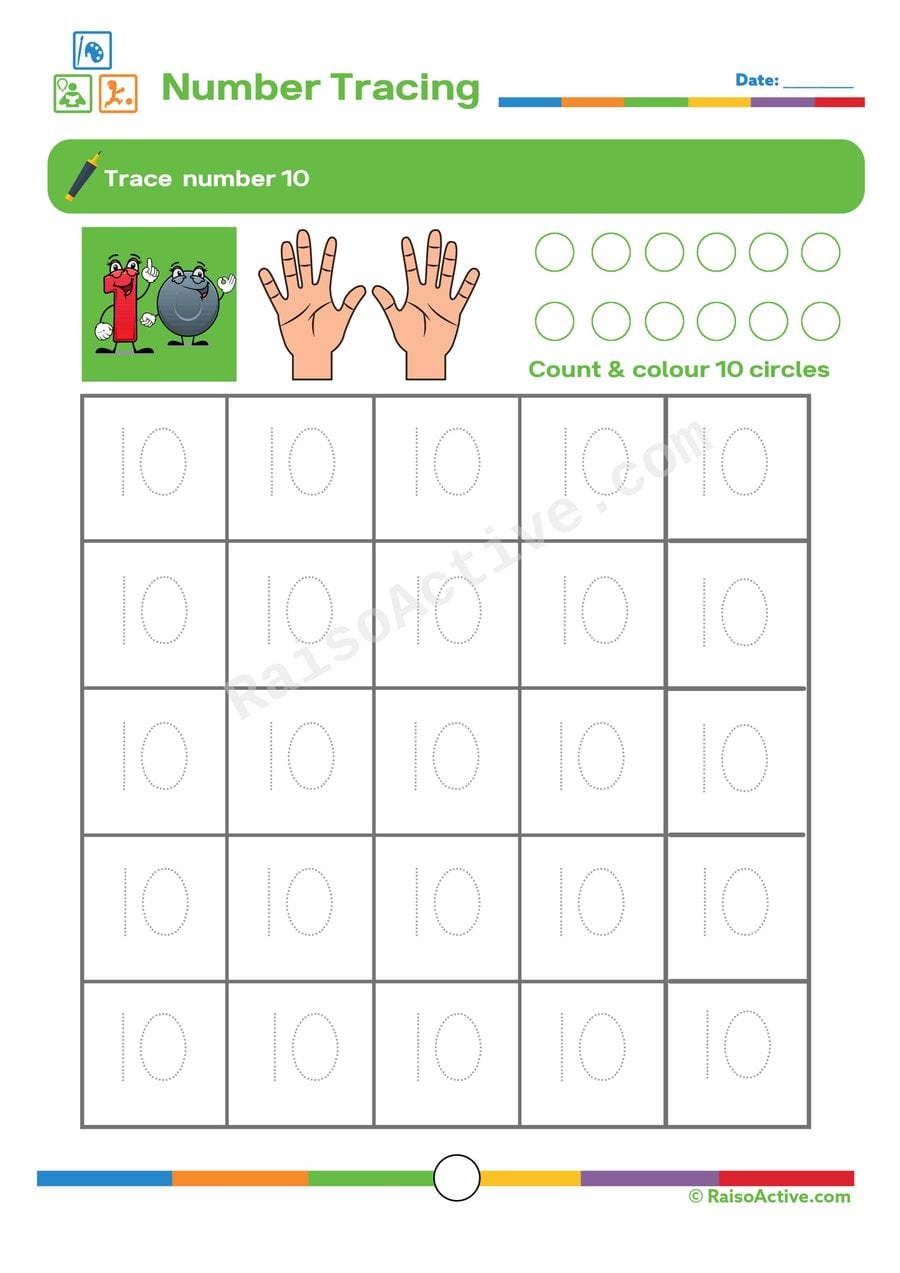
Trace and Count to 10! Number Tracing Worksheet
This worksheet has children ages 4-5 trace the number 10, their first two-digit number in a structured sequence, and then count and color a full set of ten circles, reinforcing that 10 represents a complete group of two fives or one full set of fingers on both hands. Practicing 10 also marks an important transition point, since children who can confidently count, write, and represent 10 are ready to begin extending their counting into the teens. This combination of tracing and counting to a meaningful benchmark number builds solid number sense.

Number Sequence Worksheet: What Comes Before, After, and In Between!
Identifying numbers that come before, after, or in between a given number builds flexible number sequencing skills for children ages 4-5, going beyond simple forward counting to strengthen their overall sense of number order.

Earlier and Later Time Worksheet: Telling Time Practice
Comparing clock times to determine which is earlier or later is an early step toward telling time for children ages 4-5, requiring them to read a clock face and reason about the order of events across a day. This worksheet builds that skill in two directions: first identifying a time earlier than a given reference point, then identifying a time later than a different clock shown. Practicing both directions helps children understand that 'earlier' and 'later' are relative concepts depending on what they're being compared to, not fixed labels attached to specific times.

Diwali Addition Worksheet for Kids: Counting and Adding Objects!
Children ages 4-5 practice addition by counting two separate sets of Diwali-themed objects, then combining the totals and writing the sum. Seeing objects grouped together concretely helps children understand what 'adding' actually means before relying on memorized number facts. This festive theme also connects the math skill to a real cultural celebration, giving the abstract addition work a meaningful, relatable context.

Writing Number 6 Worksheet: Trace, Color, and Count!
This worksheet builds number 6 recognition for 4-5 year olds through tracing, coloring, and counting practice, connecting the written numeral to an actual quantity of objects your child counts aloud. Bringing formation, counting, and independent writing together in one page reinforces that '6' isn't just a shape to copy but represents a specific, countable amount, which is the real foundation of number sense.
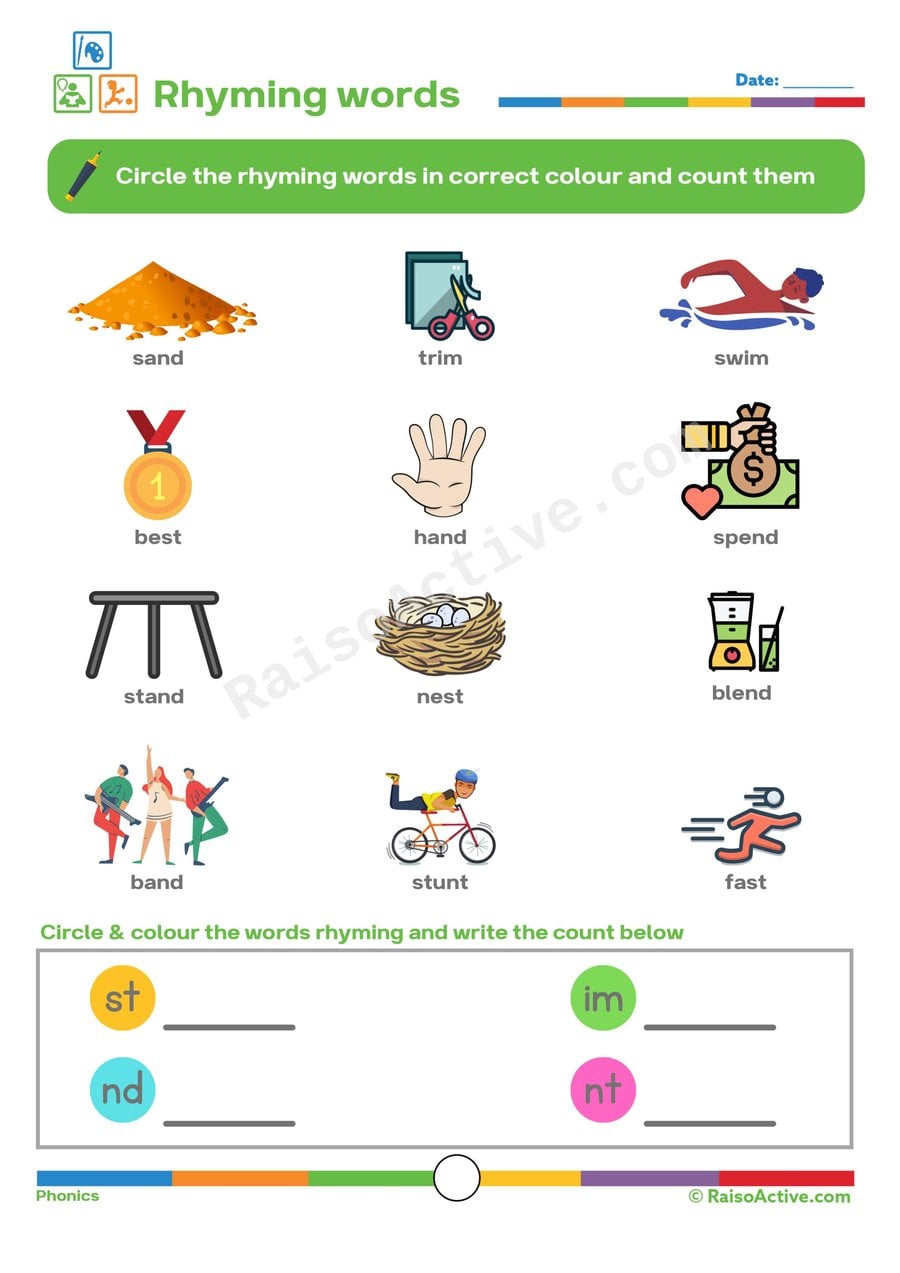
Rhyming Words Worksheet: Find and Count!
Rhyming awareness is one of the earliest and most predictive phonological awareness skills for children ages 4-5, since recognizing that two words share an ending sound pattern lays the groundwork for later word-family and spelling instruction. This worksheet has children identify rhyming pairs by color-coding them and then count the total number of pairs they found, adding a light counting and math element on top of the core phonics task. Combining rhyme detection with counting keeps the activity varied while reinforcing that rhyming pairs come in twos, a small but meaningful numeracy connection.

I Spy Letters and Numbers Worksheet: Find, Match, and Write!
This worksheet blends letter and number recognition for children ages 4-5, asking them to spot a hidden letter within a picture, find its matching number, and then write both symbols down, combining visual search with early literacy and numeracy in a single activity. Working with letters and numbers side by side reinforces that both are symbols that carry specific meaning and can be found, matched, and recorded.
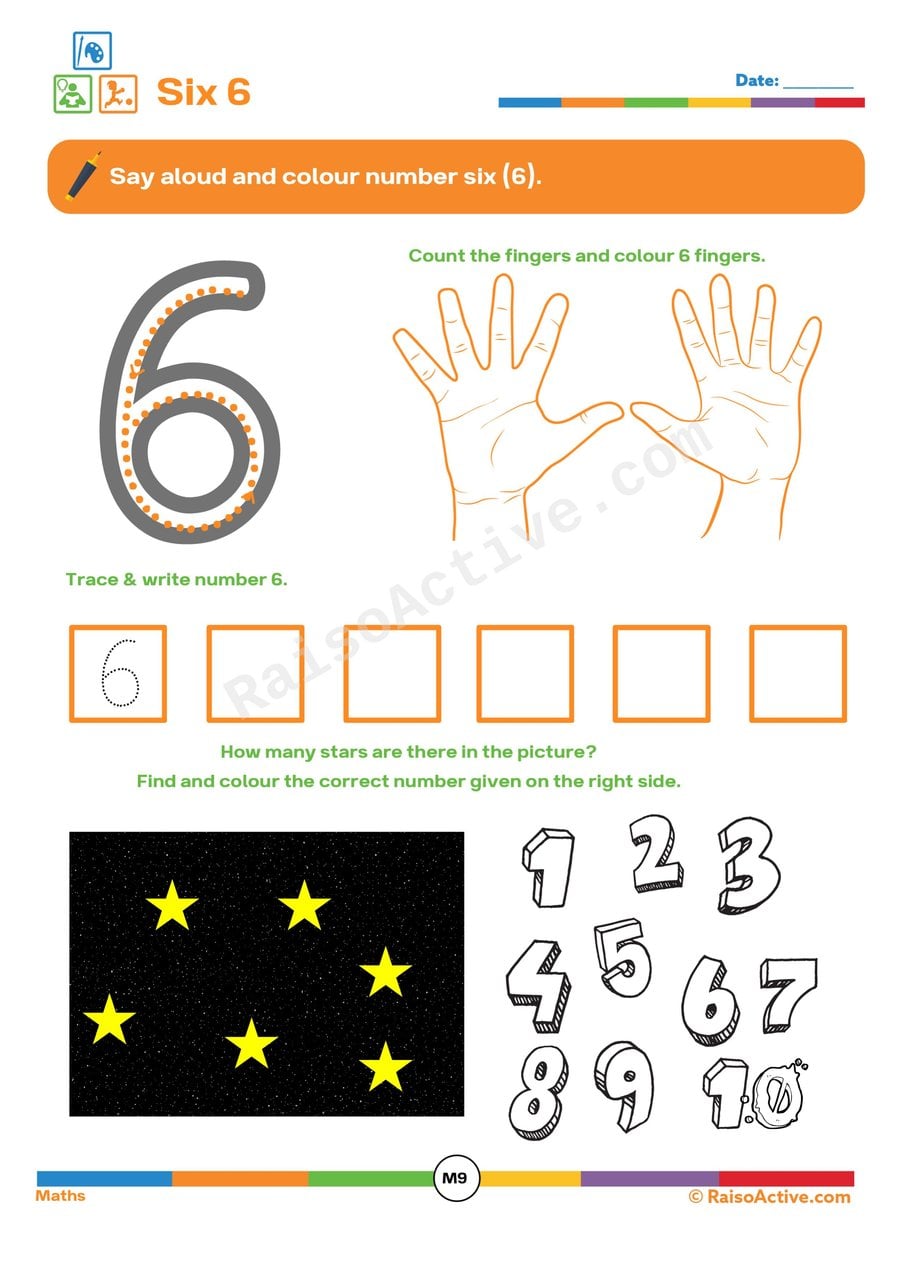
Number Six (6) Worksheet: Trace, Write, and Count!
Children ages 4-5 practice tracing and independently writing the number six while reinforcing the quantity it represents by counting a group of stars. Moving from guided tracing to independent writing, then to counting practice, builds both the motor skill and the number sense needed for early math confidence.

Subtraction Fun: Counting Fingers Worksheet for Kids
Children ages 4-5 use their own fingers as a built-in counting tool to practice subtraction, connecting an abstract number sentence to something they can physically see and touch. This bridges the gap between counting objects and solving take-away problems with numbers alone.
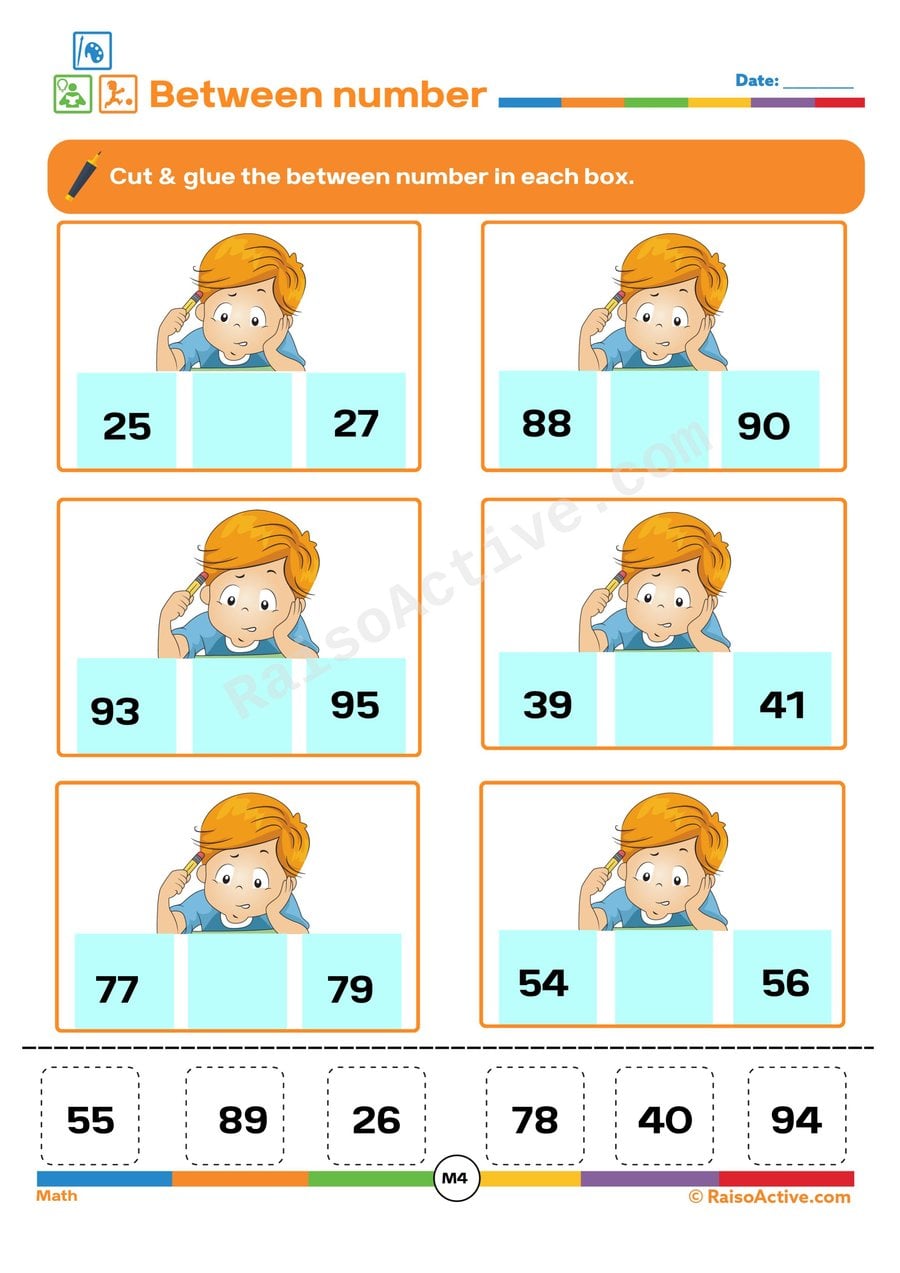
Find the Missing Number Worksheet for Kids
Children ages 4-5 strengthen number recognition and sequencing by figuring out which number is missing from a short sequence, then physically cutting and pasting the correct number into place. The cut-and-paste format adds a search-and-select step on top of the math, since children must locate the right numeral among several choices before placing it, reinforcing both number recognition and careful visual scanning.
What Reception connect the dots worksheets cover
Four-year-olds move from 1 to 10 to 1 to 20, with dots placed closer and the picture less obvious from the outline. The skill being tested is finding the next numeral among nearby distractors and keeping the count going, ideally without starting again from 1. Alphabet dot-to-dots in capitals appear once letter order is secure. A crayon is still fine; the finished picture should be coloured. Fifty dots is too many.
- Connect dots 1 to 10 without skipping a number
- Try a 1 to 20 picture with widely spaced dots
- Follow capital letters A to Z around a picture
- Find the next number among nearby distractor dots
- Count on from a dot in the middle instead of restarting at 1
How to use these worksheets at home or in class
A short daily sound-matching or blending sheet paired with one number activity, around ten minutes total, mirrors the classroom rhythm. Say each sound clearly before your child traces or writes it, and keep the pace playful rather than test-like.
Start with the sheet that matches what your child can already do, then move one step up. Keep finished sheets in a folder: Reception teachers often ask for evidence of practice, and children like seeing their own progress.
Is your child ready for Reception connect the dots work?
A child moving into this stage typically holds a pencil with a developing grip, recognises several letters by sound rather than only by shape, and can count a small group of objects one at a time without skipping any.
Frequently asked questions
Should a four-year-old use number or letter dot-to-dots?
Numbers first, from 1 to 10 and then to 20, because counting order is usually more secure than alphabet order at this age. Add capital-letter versions once the child can say the alphabet slowly and point to each letter. The number version shows where counting breaks down past 10; the letter version tests whether the child knows the order or only the song. Alternate the two.
What should a Reception child be able to do in connect the dots?
Four-year-olds move from 1 to 10 to 1 to 20, with dots placed closer and the picture less obvious from the outline. The skill being tested is finding the next numeral among nearby distractors and keeping the count going, ideally without starting again from 1. Alphabet dot-to-dots in capitals appear once letter order is secure. A crayon is still fine; the finished picture should be coloured. Fifty dots is too many. A child moving into this stage typically holds a pencil with a developing grip, recognises several letters by sound rather than only by shape, and can count a small group of objects one at a time without skipping any.
Do these worksheets follow the Reception curriculum?
The sheets cover counting or sequencing in order, fine motor control drawing straight segments, letter or number recognition when dots are labeled and completing a picture from a sequence, which sit inside the EYFS Early Learning Goals; Letters and Sounds Phase 2–3 outcomes for Reception. Pre-K / Kindergarten (US), LKG (India) use the same skills at this age, so the sheets also fit families following those programmes.
Are these Reception connect the dots worksheets free?
Yes. Each worksheet downloads free as a watermarked PDF once you create an account, with a limit of five a day. An annual membership ($20) removes the watermark and the limit for the whole library of over 1,000 worksheets and every printable pack.

Written by
Hemsweta Jain · Teacher Cheena
MBA and Early Childhood Educator, teaching since 2014 · Founder of RaisoActive, Mumbai
Written and reviewed by Hemsweta Jain (Teacher Cheena), who designs every RaisoActive worksheet.
Last reviewed
Printable packs for ages 4–5
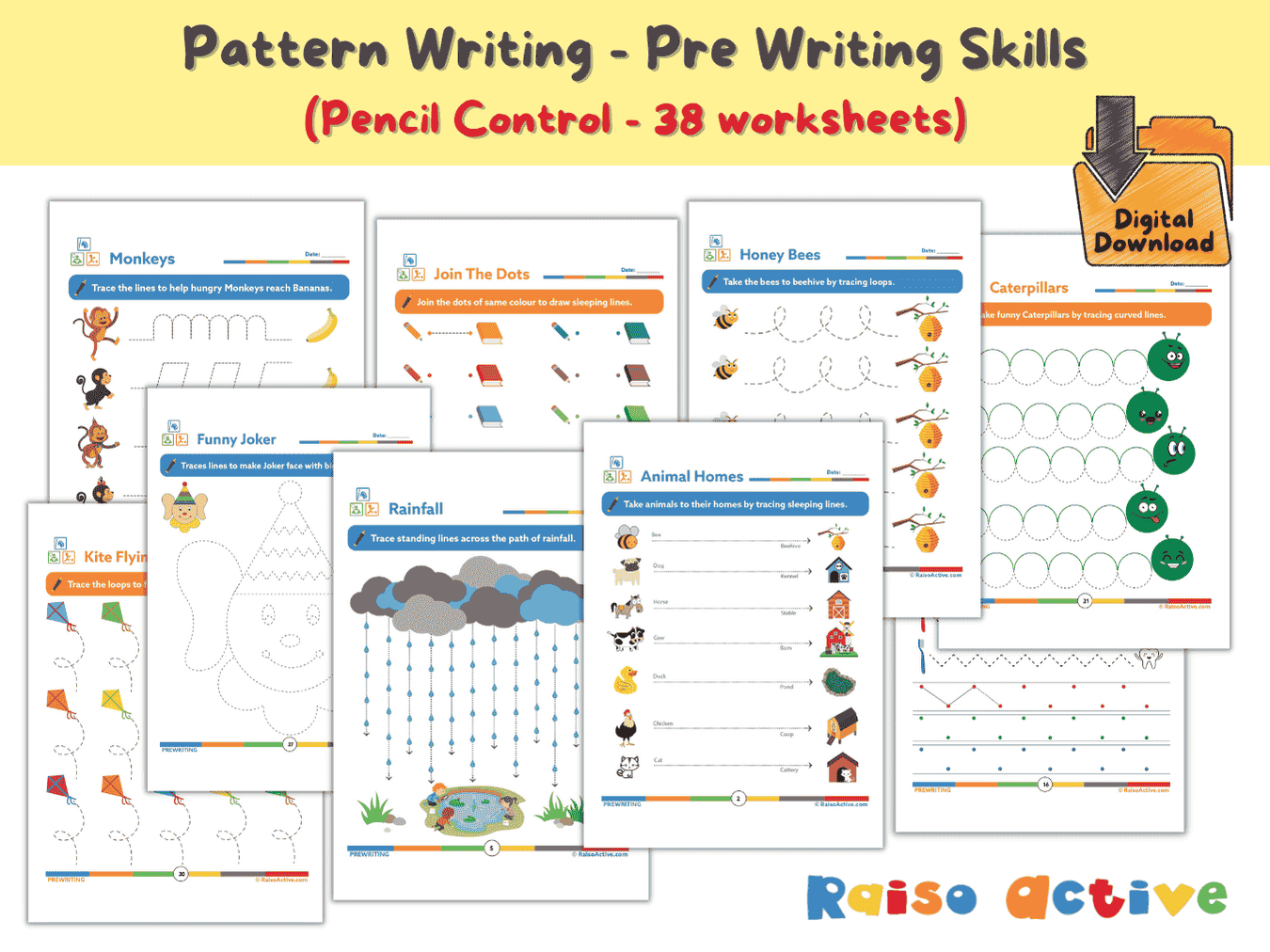
Pattern Writing Pre-writing Skills Activity Book for 3-4 Year Olds
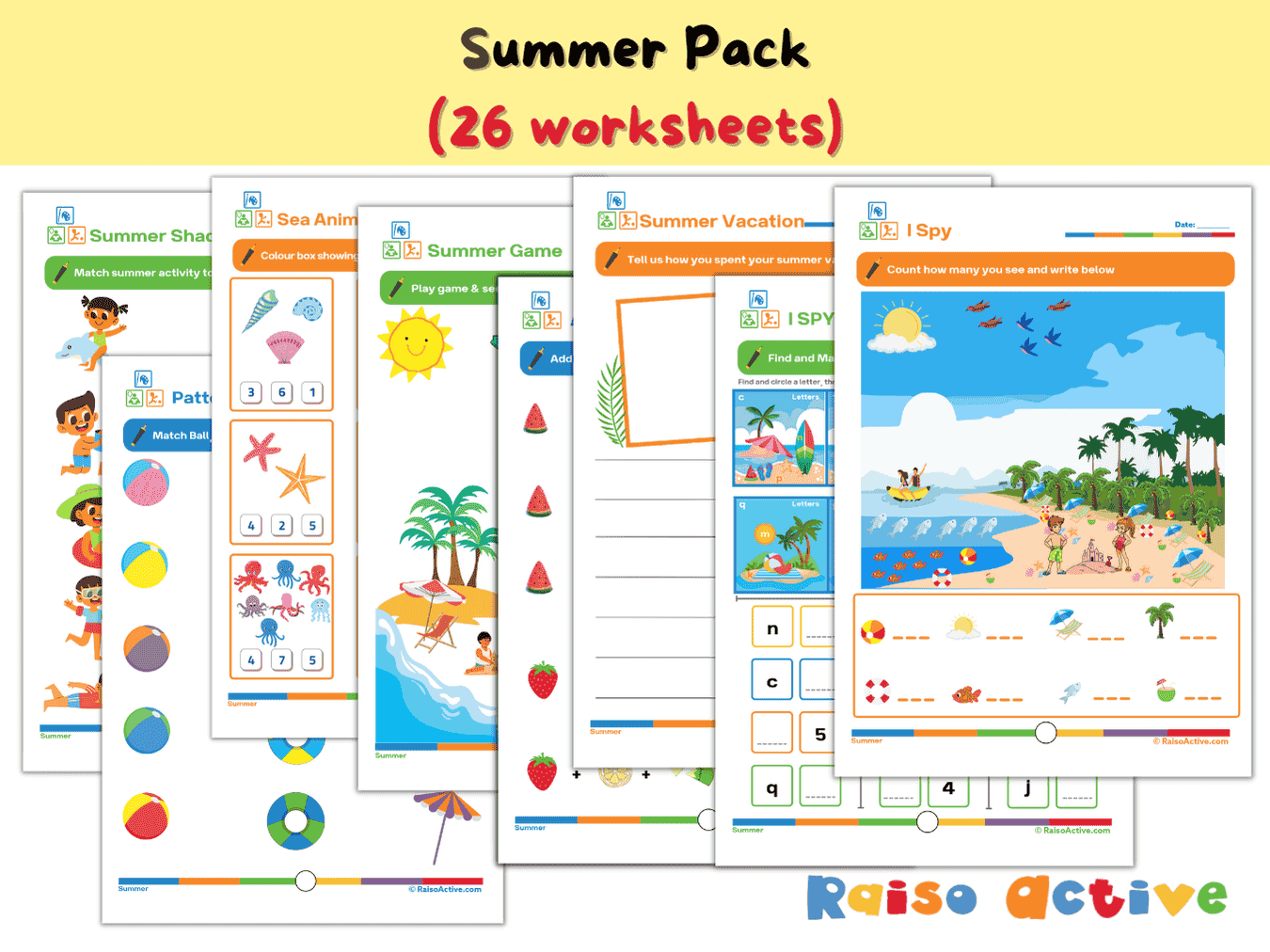
Summer Activity Pack: Math, Literacy, Puzzles & More for Preschool & Kindergarten
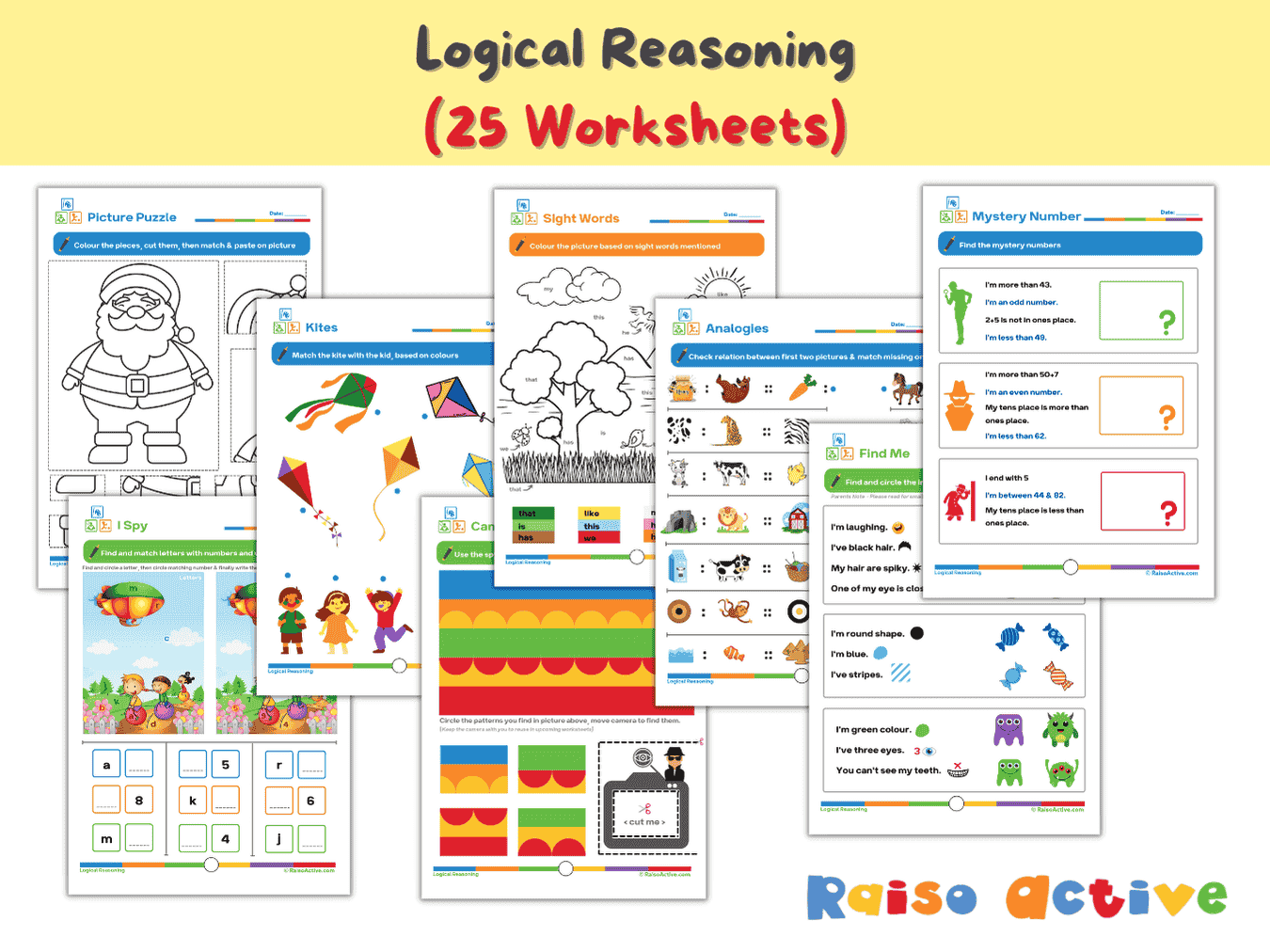
Logical Reasoning Activity Book for Preschool & Kindergarten | Patterns, Puzzles & Analogies
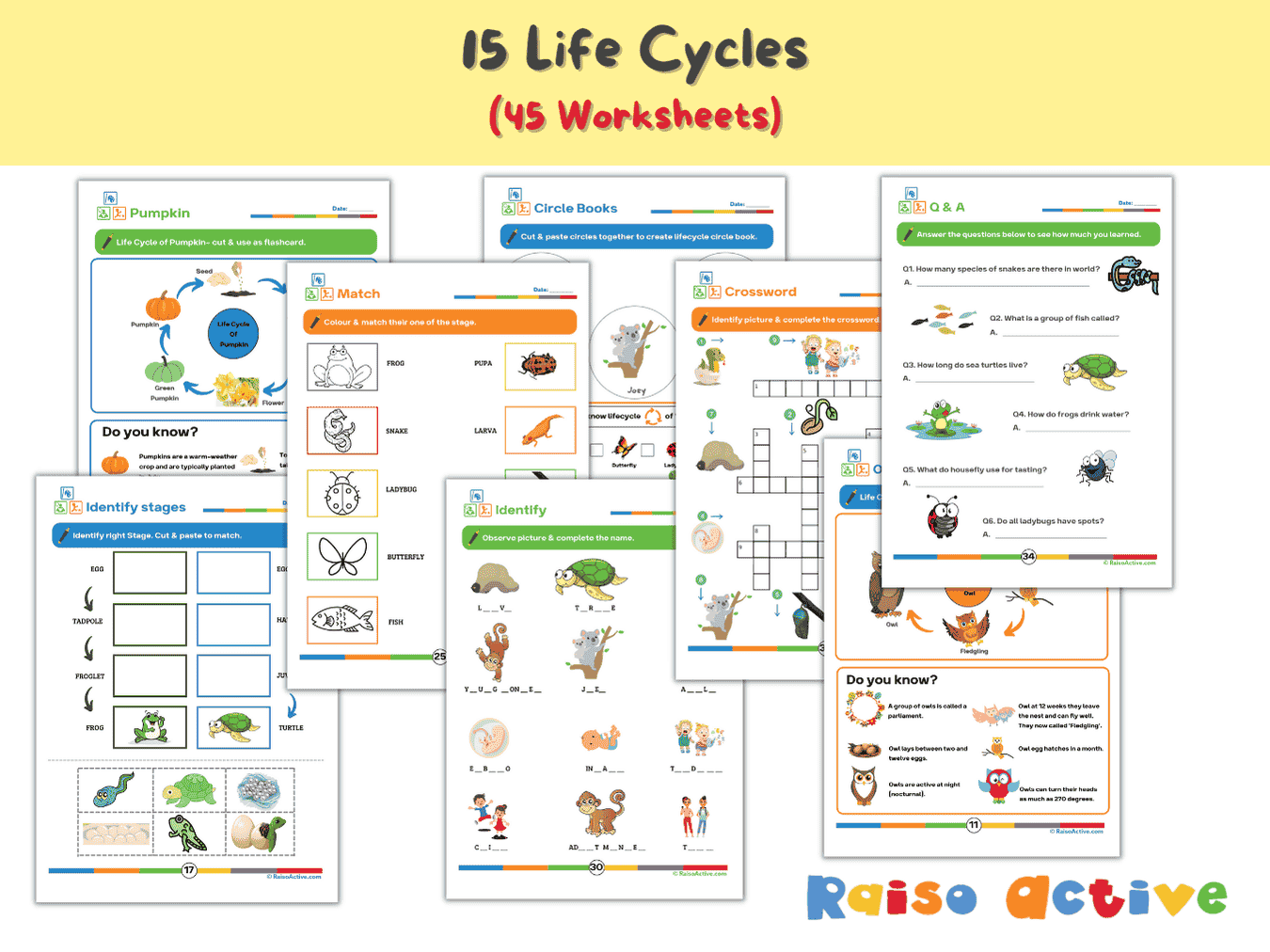
Lifecycles Activity Book & Flashcards for Preschool & Early Elementary
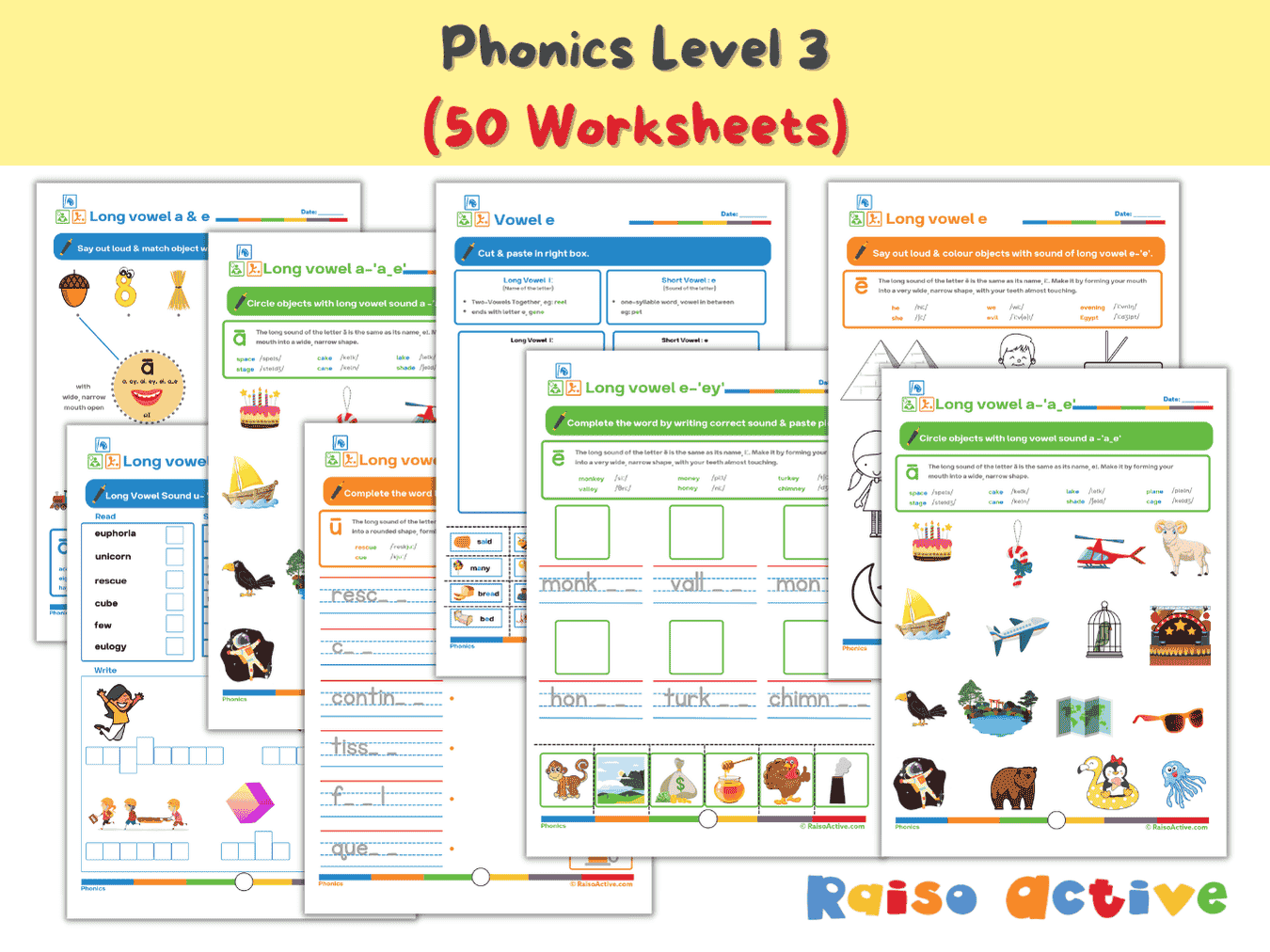
Phonics Level 3 Long Vowels Activity Book for Kindergarten & 1st Grade
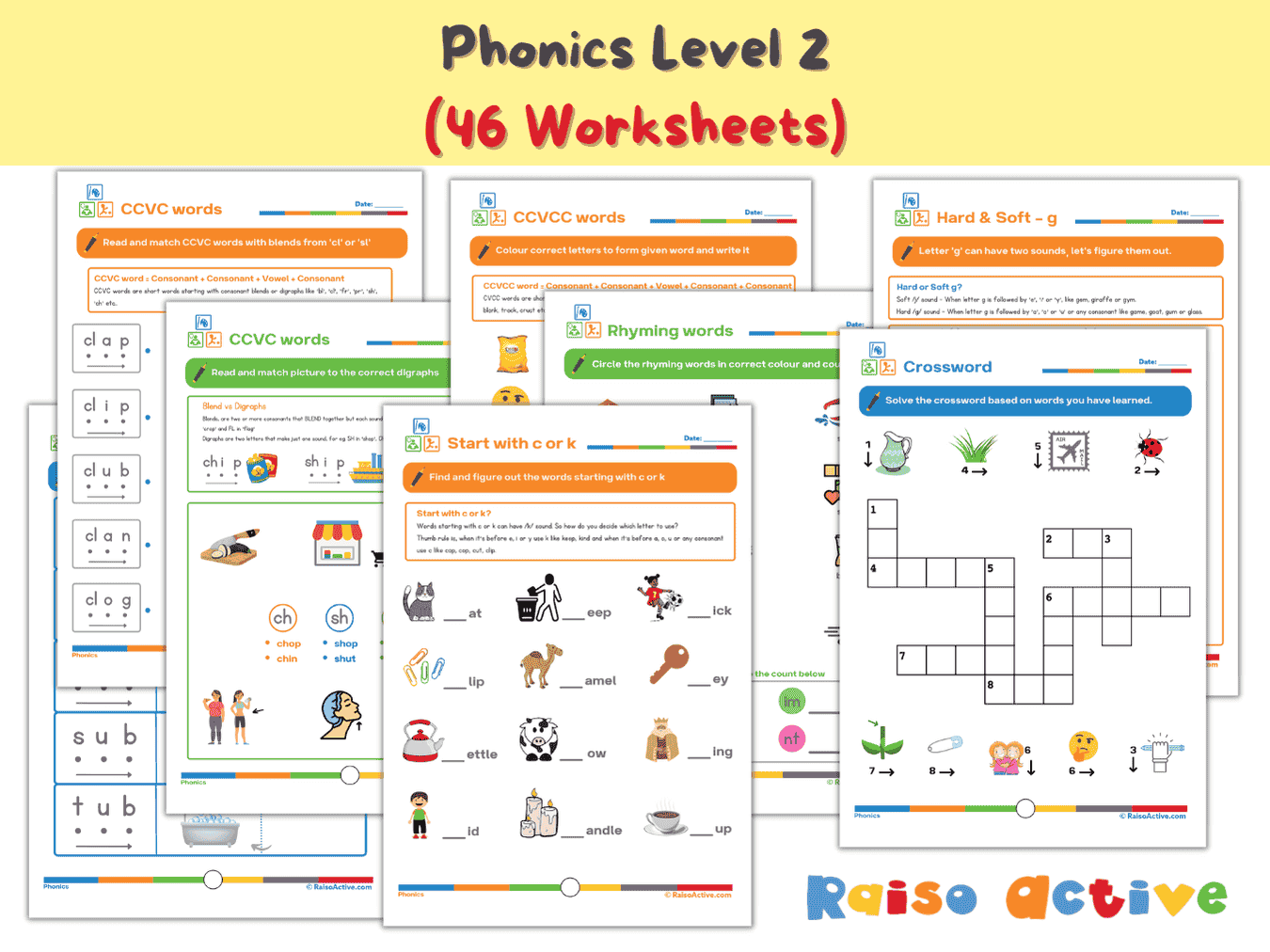
Phonics Level 2 Worksheets: CVC, CCVC, CVCC Word Families & Blends for Early Readers (Ages 4-7)
Guides for parents and teachers
See all guides →Number Formation Rhymes 0–9 and How to Fix Reversals
Original number formation rhymes for 0–9, the correct stroke order for each digit, why 3, 5 and 7 get reversed most often, and multisensory fixes that work.
Christmas and Winter Activities That Combine Fun and Learning: Creating Magical Educational Experiences
Discover Christmas and winter activities that combine festive fun with real learning. Crafts, counting, literacy, and printable worksheets for ages 2 to 8 — perfect for home and school.
Age-Appropriate Halloween Learning Activities: Balancing Spooks and Skills for Young Learners
Discover fun, age-appropriate Halloween learning activities for young children. Spooky crafts, counting games, literacy ideas, and printable worksheets for ages 2 to 8.
The Power of Music: How Musical Activities Accelerate Learning Development in Young Children
Discover how musical activities accelerate brain development, phonics, maths, and emotional regulation in children ages 1–8. Practical tips for Indian homes and classrooms.
What's the Best Alternative to ABCmouse? A Complete Parent's Guide to Free and Affordable Educational Apps
ABCmouse runs ~Rs 4,000-5,000/year with US spellings and curriculum. Compare free & affordable Indian-friendly apps like Khan Academy Kids and DIKSHA.
Is Khan Academy Kids Really Free? A Parent's Complete Guide to Costs, Features, and Hidden Fees
Confirmed: Khan Academy Kids has zero subscription fees, ads, or paywalls. See what's included, age-by-age tips, and offline use for Indian families.
Canonical: https://raisoactive.com/worksheets/reception-connect-the-dots