
Connect the Dots: Mushroom House Worksheet for Kids (Numbers 26-50)
Extending number sequencing into the 26-50 range pushes children ages 4-6 past the more familiar 1-20 span while reinforcing the fine motor control needed to draw controlled connecting lines that reveal a mushroom house picture.
Part of the pack
Month 11: Learning & Development | Ages Up to 4Curriculum
How to use this worksheet
Have your child locate dot 26 to begin, then guide them to find each following number in order, drawing a line to connect the dots as they count aloud. Continue steadily through the sequence up to 50, pausing to check they haven't skipped a number if the picture starts to look unclear. Once complete, let your child color the mushroom house with crayons or colored pencils.
Materials needed
- Pencil
- Crayons or colored pencils
Extension activities
- •Count the dots by tens together (30, 40, 50) to notice the pattern within the sequence.
- •Have your child draw their own version of a mushroom house.
- •Practice writing the numbers 26-50 on scrap paper for extra number-formation practice.
- •Use the finished picture as a jumping-off point for a story about who lives there.
- •Compare this worksheet's range to a 1-25 dot-to-dot and talk about what comes after 25.
Tips for parents and teachers
Numbers in the 30s and 40s are often mixed up, like 34 and 43, so double-check those transitions with your child. Let them practice the visual search of locating the next number themselves, stepping in only when frustration builds.

Written by
Hemsweta Jain · Teacher Cheena
MBA and Early Childhood Educator, teaching since 2014 · Founder of RaisoActive, Mumbai
Every RaisoActive worksheet is designed and checked by the founder before publishing.
Published · Last reviewed
Related worksheets

Spider Web Connect-the-Dots Worksheet for Preschoolers
This connect-the-dots worksheet has children ages 3-5 count in sequence from one number to the next while drawing curved lines, building both number-order recognition and the pencil control needed for pre-writing curves and loops. Revealing a spider web at the end gives the counting practice a satisfying, visual payoff that keeps young children motivated through the whole sequence.
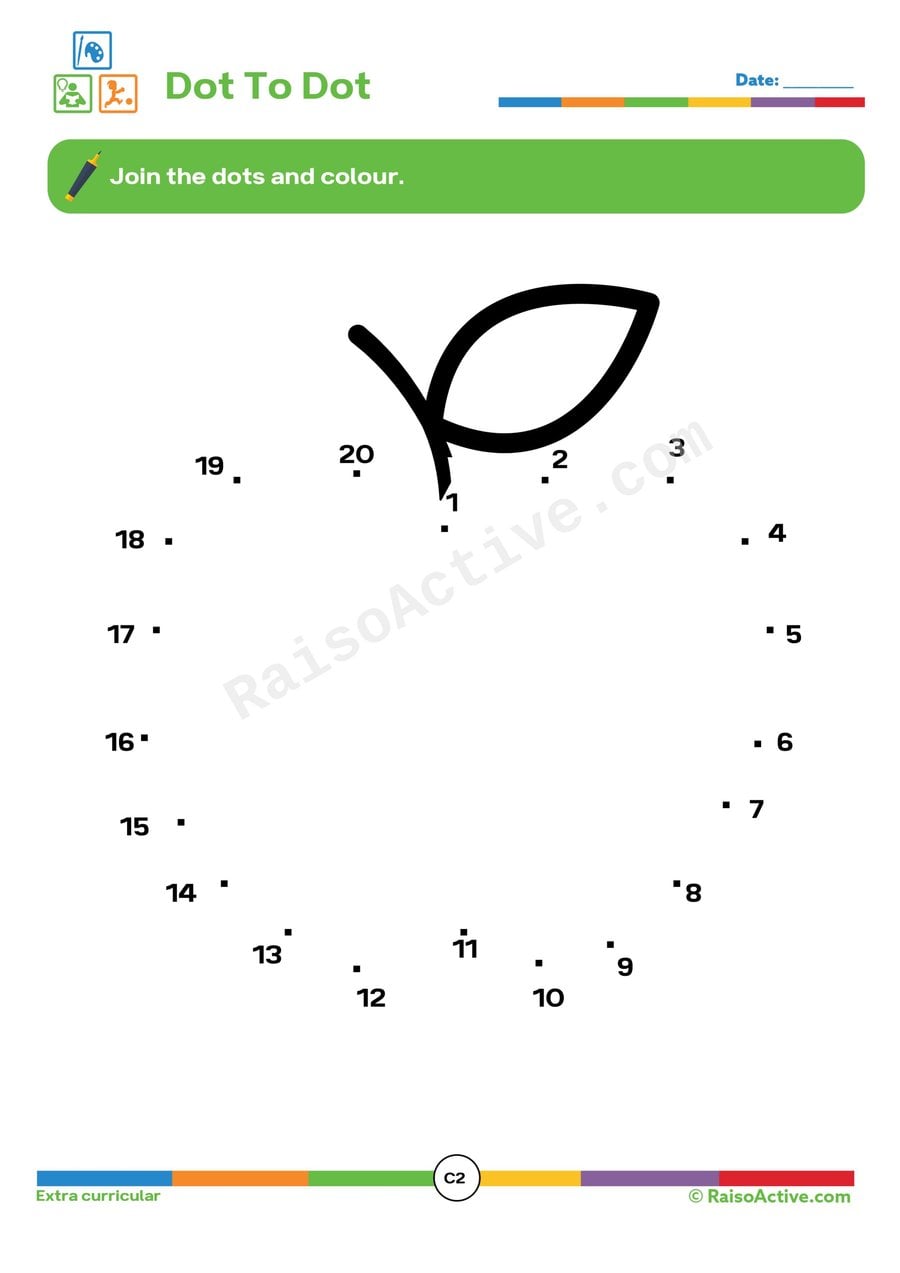
Apple Dot-to-Dot Worksheet for Preschoolers
This dot-to-dot worksheet strengthens number sequencing and fine motor control for children ages 3-5 as they connect numbered dots in order to reveal the shape of an apple. Because each new line depends on finding the next correct number, this activity reinforces counting sequence while also training the pencil control and hand-eye coordination needed for careful, controlled drawing.

Dot-to-Dot Snail Worksheet: Counting Numbers 1-30!
This dot-to-dot worksheet challenges children ages 3-5 to count and connect numbers from 1 to 30 in sequence, extending their number-order knowledge well past the more common 1-10 range while also building fine motor control as they draw connecting lines. Successfully completing a longer sequence like this gives children a real sense of accomplishment tied directly to numeracy.
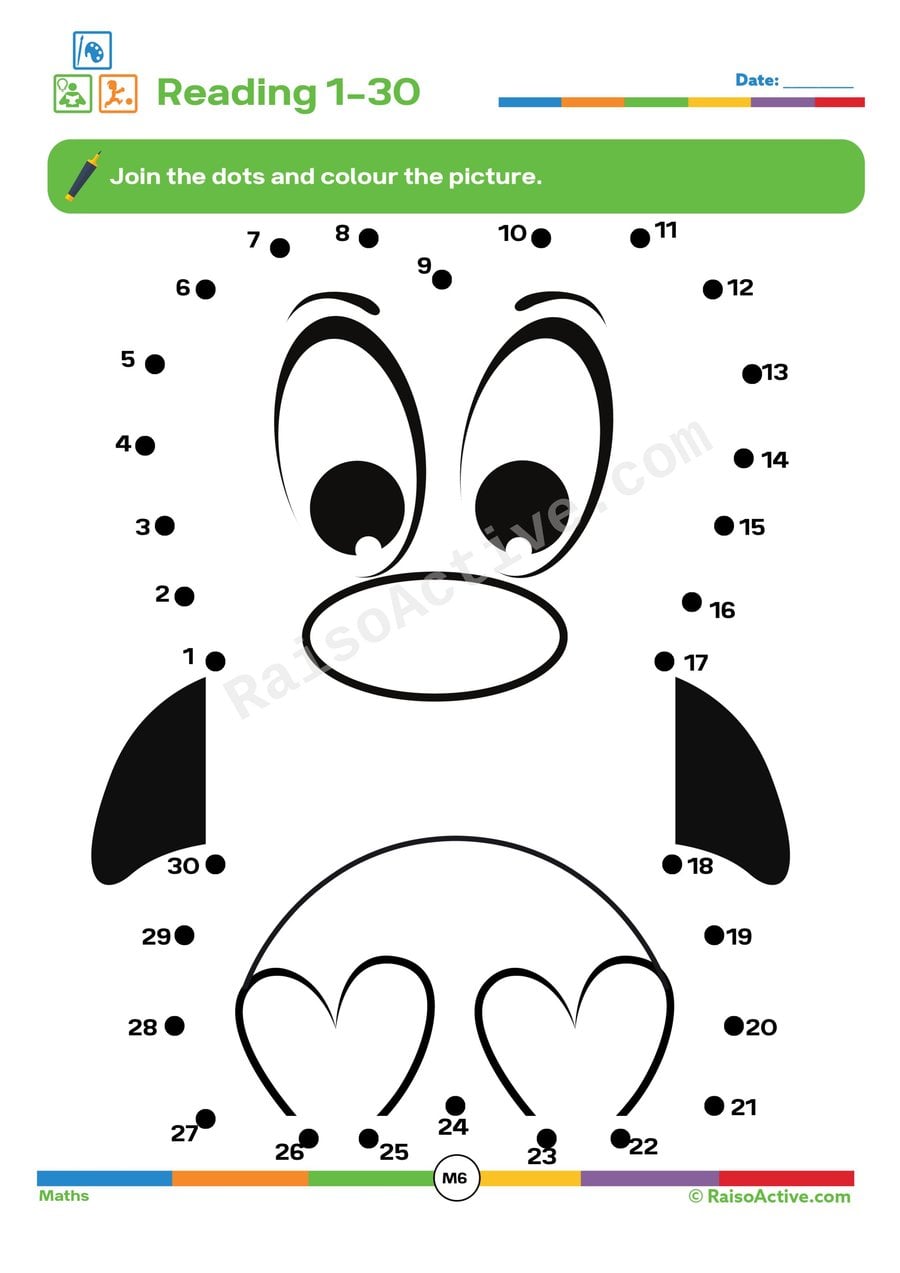
Connect the Dots Penguin Worksheet for Kids
Connecting numbered dots in order to reveal a penguin picture helps children ages 3-5 practice counting in sequence while building the fine motor control needed to draw a steady connecting line. The surprise of watching a recognizable picture emerge gives extra motivation to count carefully all the way to the end.
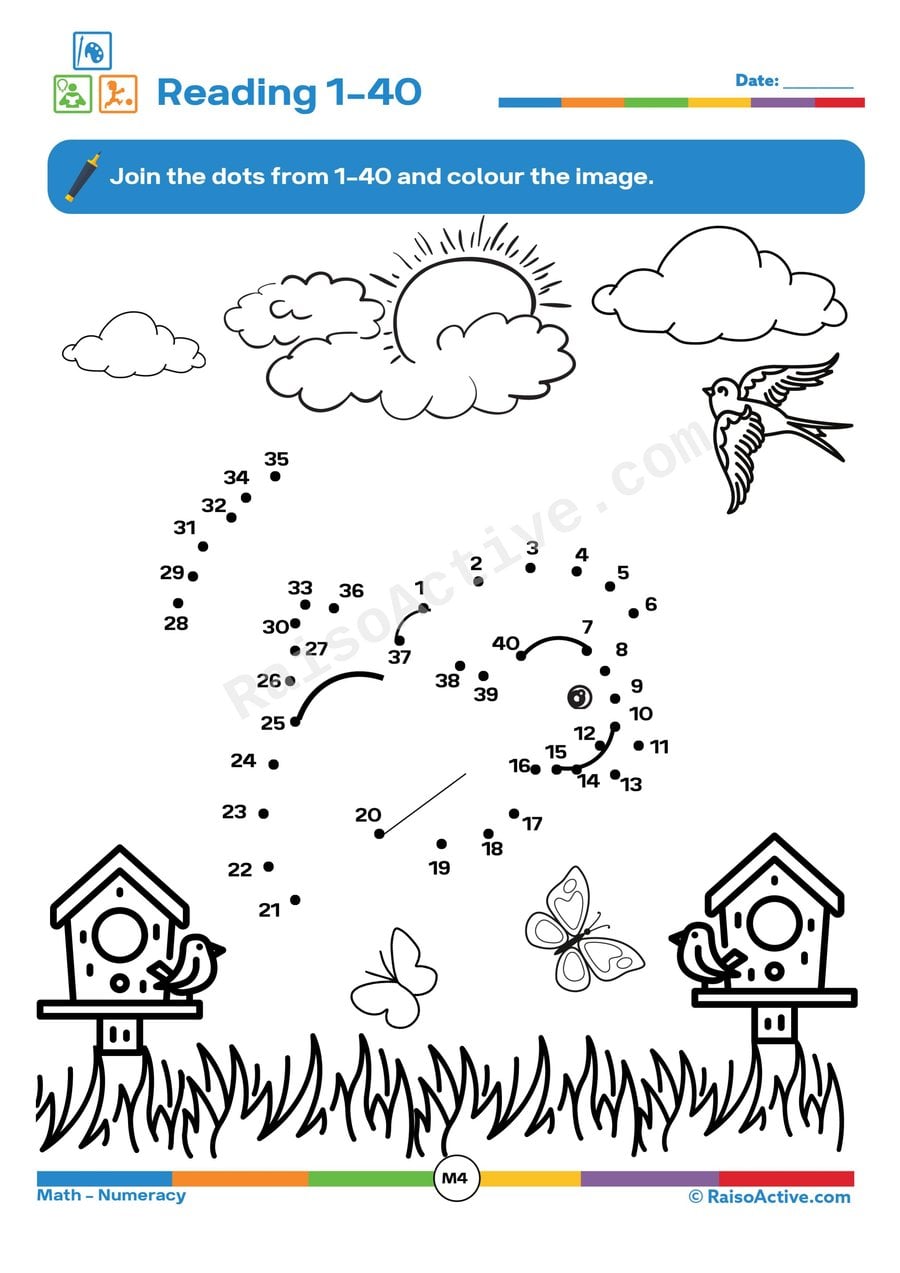
Connect the Dots: Sunny Day Picture Worksheet
Connecting the dots from 1 to 40 gives 3-5 year olds real practice with number sequencing well beyond the basic 1-10 range most preschool materials cover, while the physical act of drawing a line from dot to dot builds the same pencil control needed for handwriting. Because the picture only appears once every number has been found and connected in order, it also rewards sustained attention — your child has to keep track of where they are in the sequence across a fairly long worksheet, which is a real stretch at this age.

Trace the Numbers 1-9 Worksheet for Preschoolers
Tracing the numerals 1 through 9 gives children ages 3-5 repeated, guided practice with the specific pencil strokes each number requires, building the fine motor control and muscle memory needed for independent number writing. Because tracing follows a fixed, correct path, it also reinforces accurate numeral recognition, helping children tell visually similar digits apart.
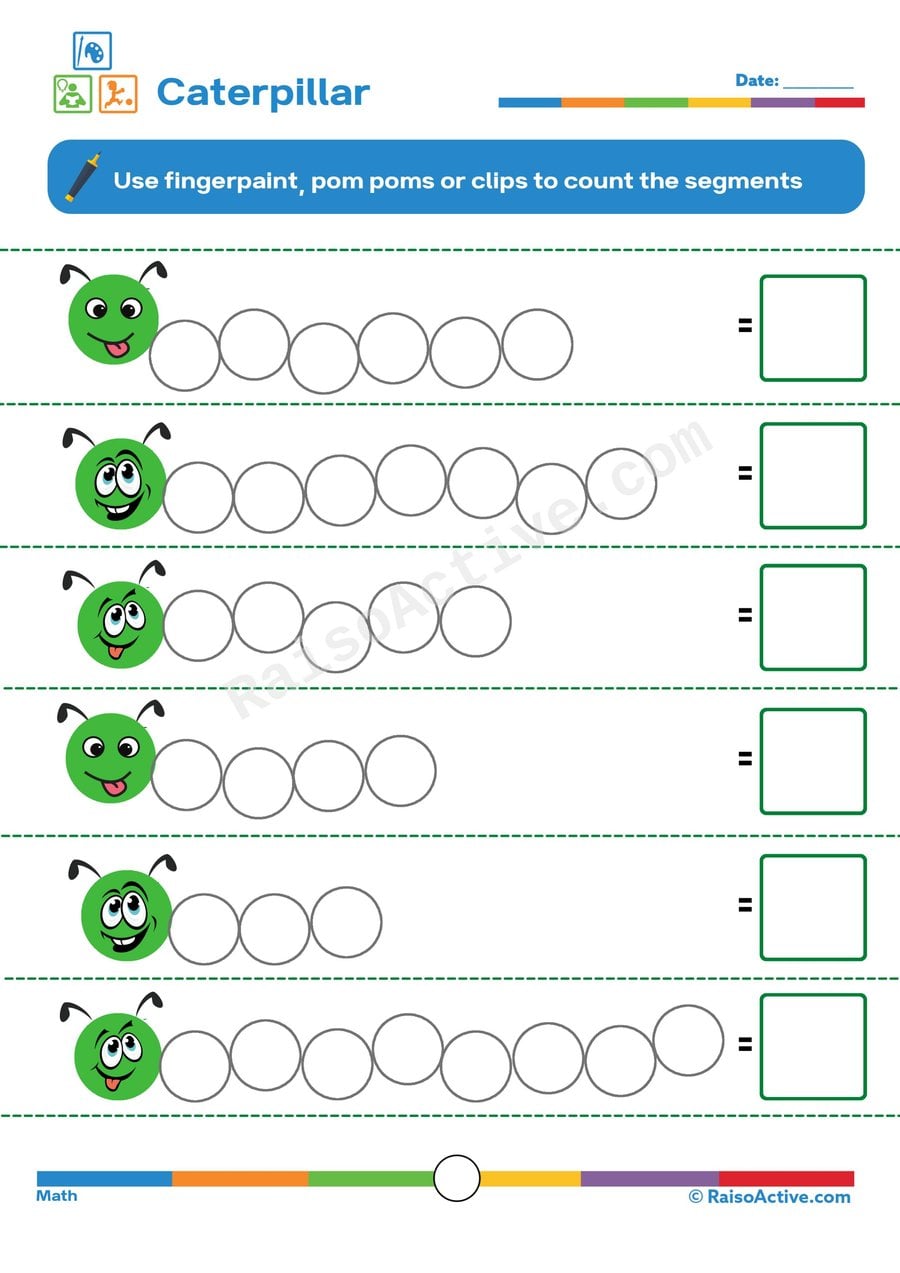
Caterpillar Counting Worksheet for Preschoolers
Counting the segments of each caterpillar teaches children ages 3-5 one-to-one correspondence — touching or marking each segment exactly once while saying a number — which is the core skill underlying accurate counting. Writing the final total in a box also connects the physical act of counting to its written numeral, reinforcing early number-writing practice.
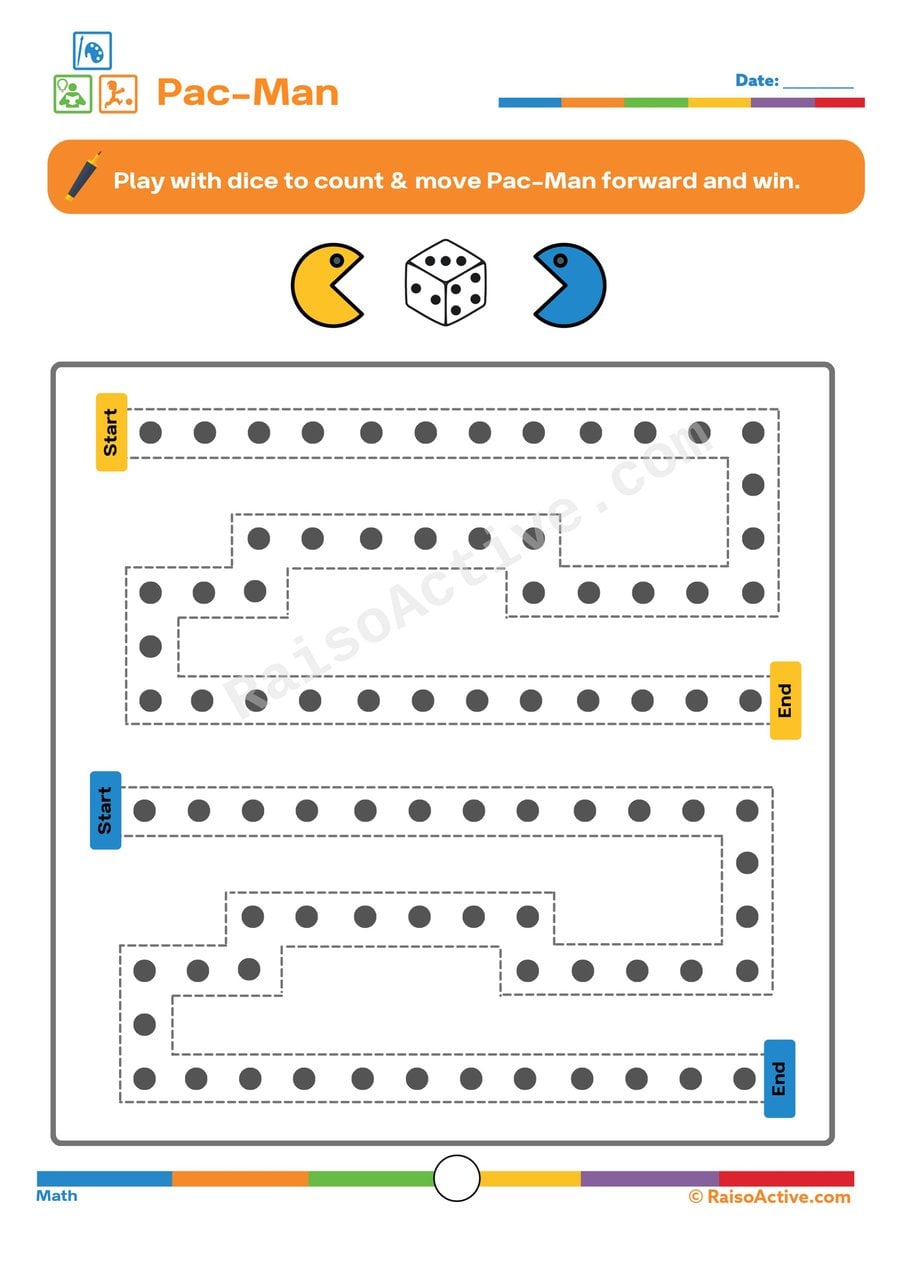
Pac-Man Maze Worksheet: Count and Move!
This dice-counting maze gives children ages 3-5 repeated practice matching a rolled number to the correct number of moves, reinforcing accurate counting under a bit of playful pressure. Tracking Pac-Man's current position after each roll also builds short-term spatial memory, since children must remember where they left off before moving again.
Guides for this topic
Number Formation Rhymes 0–9 and How to Fix Reversals
Original number formation rhymes for 0–9, the correct stroke order for each digit, why 3, 5 and 7 get reversed most often, and multisensory fixes that work.
Christmas and Winter Activities That Combine Fun and Learning: Creating Magical Educational Experiences
Discover Christmas and winter activities that combine festive fun with real learning. Crafts, counting, literacy, and printable worksheets for ages 2 to 8 — perfect for home and school.
Age-Appropriate Halloween Learning Activities: Balancing Spooks and Skills for Young Learners
Discover fun, age-appropriate Halloween learning activities for young children. Spooky crafts, counting games, literacy ideas, and printable worksheets for ages 2 to 8.
Reviews
Every worksheet for ages 4–6, no watermark
Members download the full library of 1,000+ worksheets and every activity pack without watermarks or daily limits. One year costs ₹1,000 in India or $20 elsewhere.
See membership plansOr download any worksheet free with a watermark (5 a day).