Free printable worksheets · US · UK · India
Connect the Dots Worksheets (Ages 3–7)
Connect the dots worksheets, also called dot-to-dot or join the dots, are printable pictures for children aged 3 to 7 that the child completes by drawing lines between numbered or lettered points in sequence. They practice number order to 10, 20 or beyond, skip counting, alphabet order, pencil control and straight-line drawing, and end with a picture to color.
A dot-to-dot is a number line disguised as a drawing. The child has to find "what comes after 6" many times over, and a wrong answer shows up immediately as a line in the wrong place. That instant feedback is why Preschool and Kindergarten teachers in the US, Nursery and Reception teachers in the UK, and Nursery to UKG teachers in India use dot-to-dots to consolidate counting. At three the dots run 1 to 5 in a near-circle with big numerals; at four and five they reach 10 and 20 and the picture is less obvious; at six and seven, in 1st Grade, Year 2 and Class 1, dot-to-dots count to 50 or 100, skip count by 2s, 5s and 10s, or follow the alphabet from A to Z. Every sheet leaves room for the finished picture to be colored.
437+ worksheets · free PDF download · print on A4 or Letter
Connect the Dots Worksheets to print
Browse all worksheets for ages 3–7
Connect the Dots: Mushroom House Worksheet for Kids (Numbers 26-50)
Extending number sequencing into the 26-50 range pushes children ages 4-6 past the more familiar 1-20 span while reinforcing the fine motor control needed to draw controlled connecting lines that reveal a mushroom house picture.
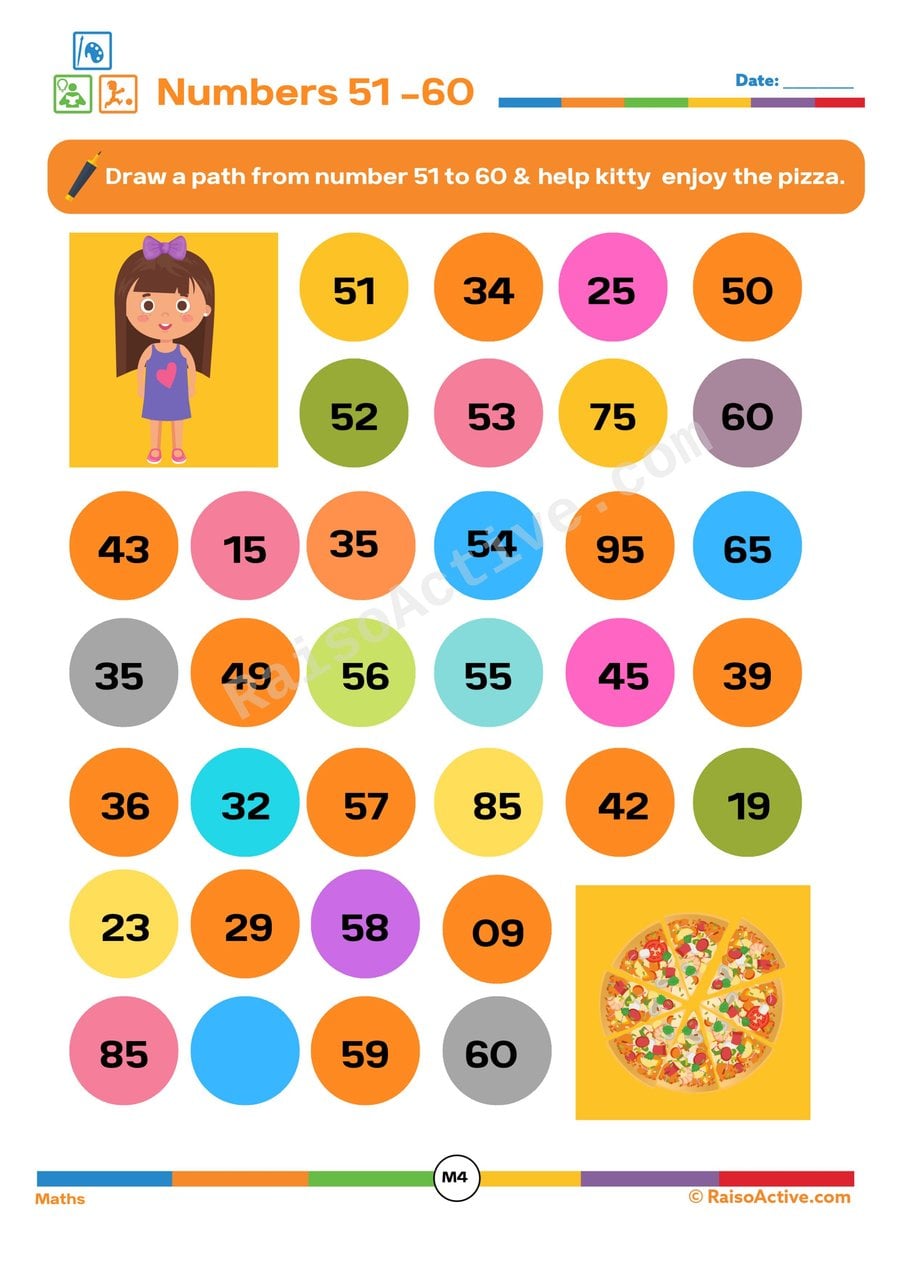
Pizza Path: Numbers 51-60 Worksheet for Kids
Connecting the dots from 51 to 60 in order pushes children ages 4-5 beyond the more familiar 1-20 range, helping them recognize two-digit numbers and understand that counting sequences continue predictably into higher decades. This dot-to-dot format turns number recognition into a rewarding visual payoff, since a hidden pizza picture only appears once every number is found and connected correctly. It's a motivating way to practice number order without it feeling like repetitive drilling.

Dot-to-Dot Snail Worksheet: Counting Numbers 1-30!
This dot-to-dot worksheet challenges children ages 3-5 to count and connect numbers from 1 to 30 in sequence, extending their number-order knowledge well past the more common 1-10 range while also building fine motor control as they draw connecting lines. Successfully completing a longer sequence like this gives children a real sense of accomplishment tied directly to numeracy.

Unicorn Dot-to-Dot Worksheet: Connect the Numbers!
Connecting fifty numbered dots in sequence gives children serious practice with number order and one-to-one counting while also demanding steady pencil control to draw a continuous line from point to point. The reveal of a unicorn picture at the end provides a built-in reward that keeps motivation high through a task that requires more sustained focus than a typical preschool counting page.

Learn India's National Symbols: A Dot-to-Dot Worksheet
Connecting numbered dots to reveal each national symbol builds fine motor control and number-sequence recognition in children ages 3-5, since they must find and connect dots in the correct numerical order to form a recognizable picture. As each symbol emerges from the dots, children also gain early familiarity with important national imagery and its name.

Connect the Dots: Ganesha Face Worksheet for Kids
This worksheet strengthens number sequencing from 1 to 30 and fine motor pencil control in children ages 3-5 as they connect dots to reveal a Ganesha face. Following a long numeric sequence builds number order fluency beyond simple counting, while the resulting picture rewards sustained focus with a satisfying reveal.
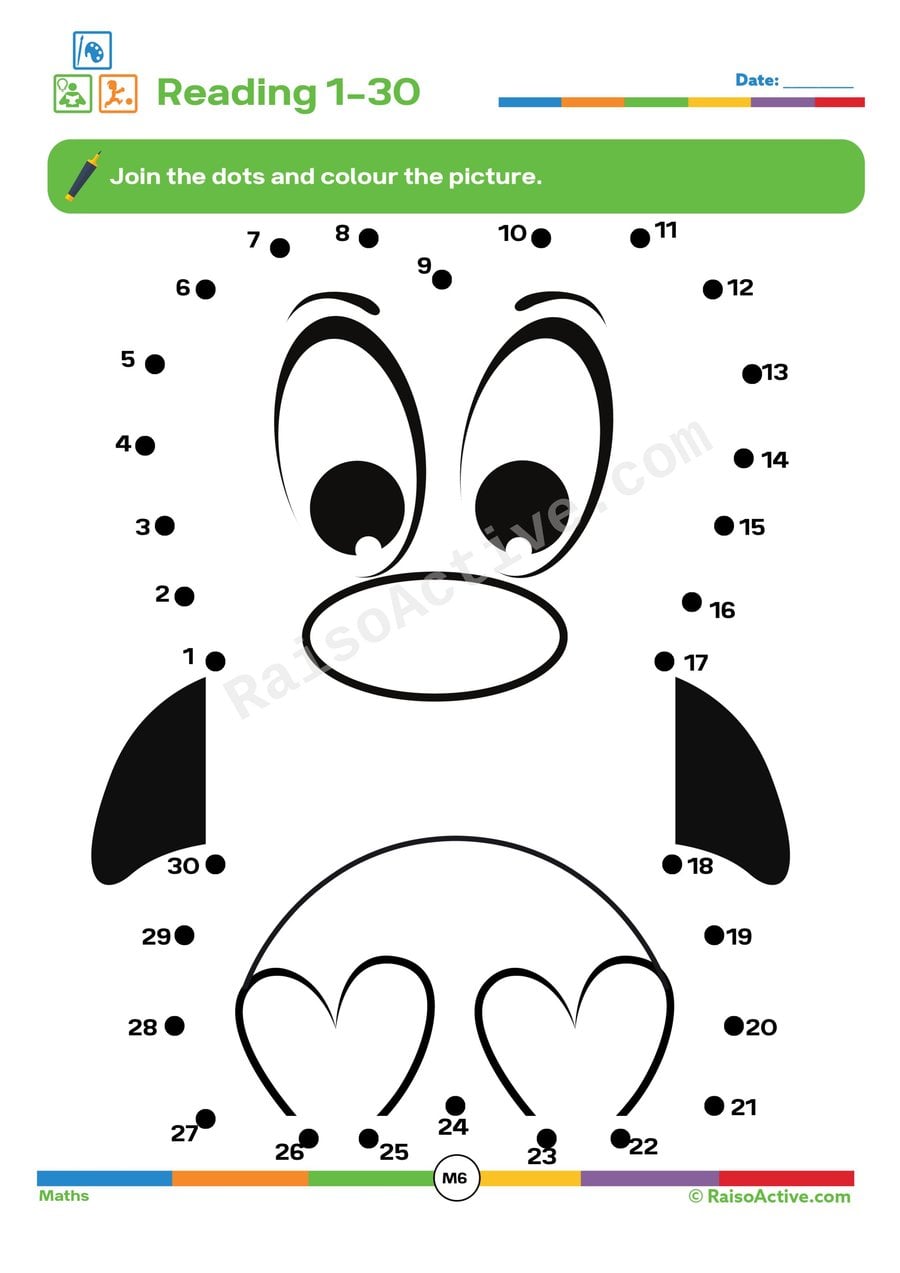
Connect the Dots Penguin Worksheet for Kids
Connecting numbered dots in order to reveal a penguin picture helps children ages 3-5 practice counting in sequence while building the fine motor control needed to draw a steady connecting line. The surprise of watching a recognizable picture emerge gives extra motivation to count carefully all the way to the end.

Connect the Dots: Help the Prince Find the Princess! Numbers 1-25 Worksheet
Locating dots in order from 1 to 25 and drawing a steady connecting line combines number recognition and sequencing with the pencil control children ages 3-5 need for handwriting readiness.

Connect the Dots: Hidden Shape Worksheet for Kids
Children ages 3-5 practice counting in sequence and fine motor line control as they connect numbered dots in order to reveal a hidden shape, combining numeracy with hand-eye coordination in one satisfying activity. The surprise of a shape emerging only once every dot is connected correctly also motivates children to stay careful and accurate rather than rushing through the numbers.

Which is Faster? Duration Worksheet for Preschoolers
Comparing which of two vehicles or activities would take less time introduces children to the concept of duration, how long something takes, without requiring them to read a clock yet, making it an accessible first step toward understanding time as a measurable quantity. For ages four to six, reasoning about speed and duration together also builds early scientific thinking about cause and effect.

Sheep's Barnyard Adventure: A Fun Counting and Movement Worksheet
This board-game-style worksheet helps children ages 4-6 practice counting and number recognition by rolling a die and moving a sheep piece along a numbered path, following simple instructions at each stop. Turning counting practice into a game with chance and movement keeps children engaged far longer than a static worksheet, while still reinforcing accurate counting and number sequence recognition along the path.
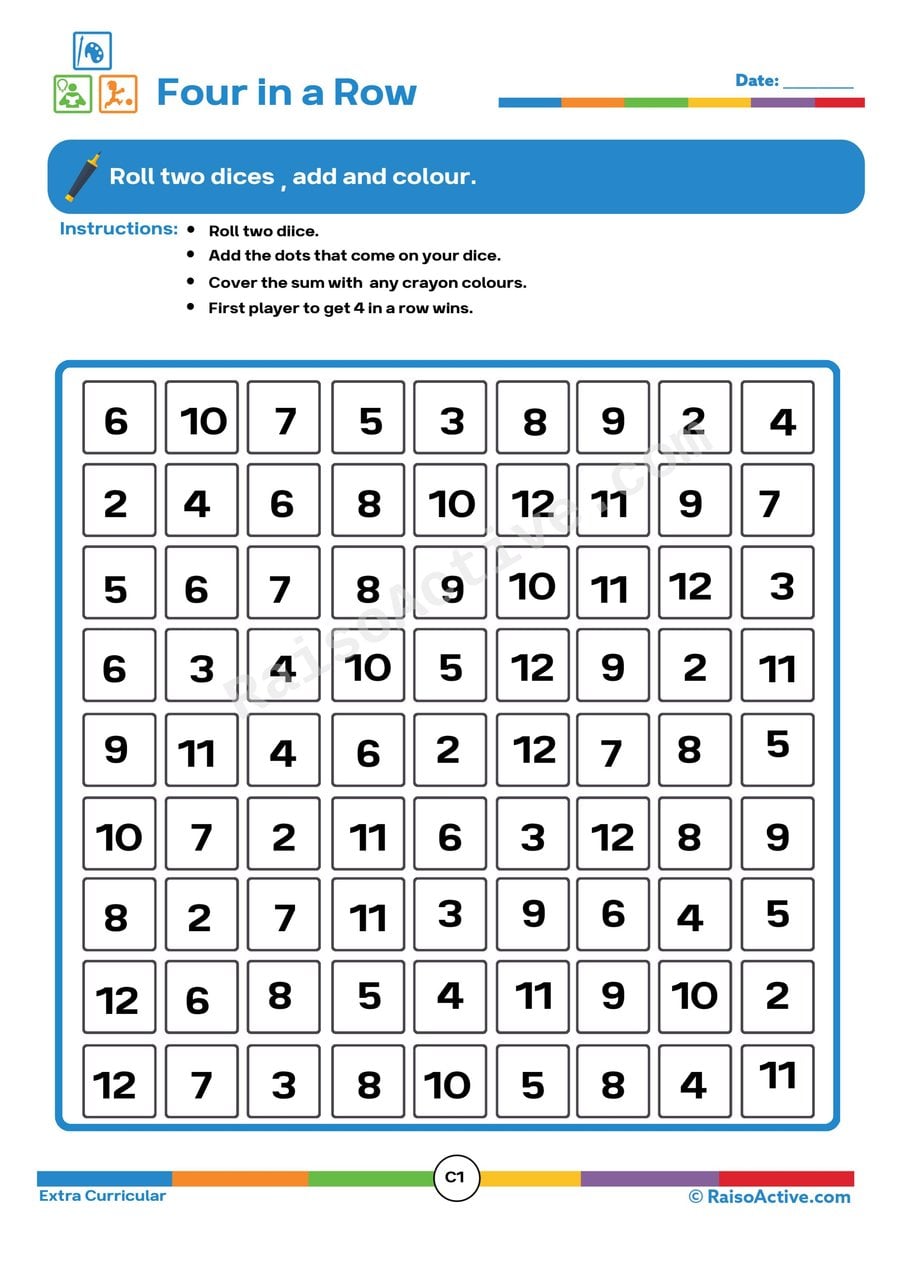
Four in a Row: Dice Game Worksheet for Kids
Rolling two dice and adding the results together gives children ages 4-6 repeated, low-pressure practice with basic addition facts, since each turn presents a new combination to solve. Coloring the matching sum on a game grid turns arithmetic into an active, motivating game rather than a worksheet of isolated problems, and working toward four squares in a row adds a strategic element as children start to notice which sums appear more often. This game format also builds number recognition, since children must locate their calculated sum among many printed numbers on the grid.

Number Names Worksheet: Matching and Writing Numbers
This worksheet strengthens the connection between a written number name and its numeral for 4-6 year olds — first by circling the numeral that matches a given name, then by writing the number name out themselves, which adds a spelling and handwriting layer on top of simple recognition. Because number-name spelling doesn't always follow easy sound-out rules, this repeated practice with both reading and writing the words builds genuine sight-word familiarity with number vocabulary.
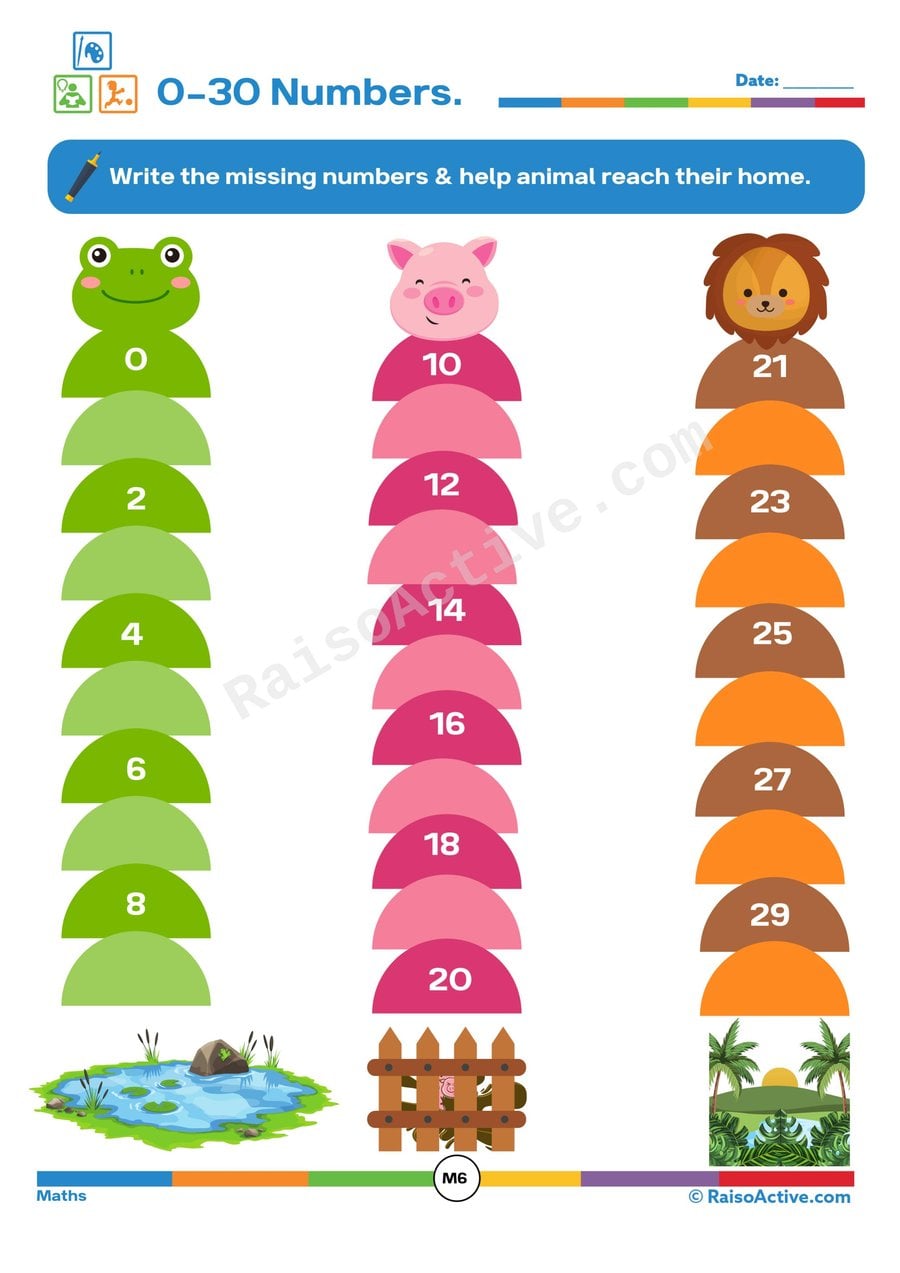
Number Fun: Missing Numbers Worksheet for Kids!
Filling in missing numbers from a sequence up to 30 helps children ages 4-6 strengthen number recognition and counting-on, the skill of continuing a sequence without starting over from one each time. Completing the animal path adds a motivating storyline that encourages children to work through the full sequence.

Ascending Order Trucks Worksheet for Preschoolers
Children ages 4-6 practice arranging numbers in ascending order, from smallest to largest, using a playful truck-themed sequencing task. Understanding ascending order requires comparing multiple numbers at once and deciding their correct relative position, a more advanced skill than simple counting forward. This kind of number ordering builds critical number sense that supports later skills like comparing quantities and reading number lines.

Mystery Numbers Worksheet: Find the Hidden Numbers!
This 'Mystery Numbers' worksheet challenges children ages 4-6 to use logical reasoning and clue-reading to identify a hidden number, moving them beyond simple counting into deductive thinking. Each clue narrows down the possibilities, so children practice holding multiple pieces of information in mind at once, an early step toward number sense and problem-solving. It also reinforces number recognition as they check candidate numbers against every clue before settling on an answer.
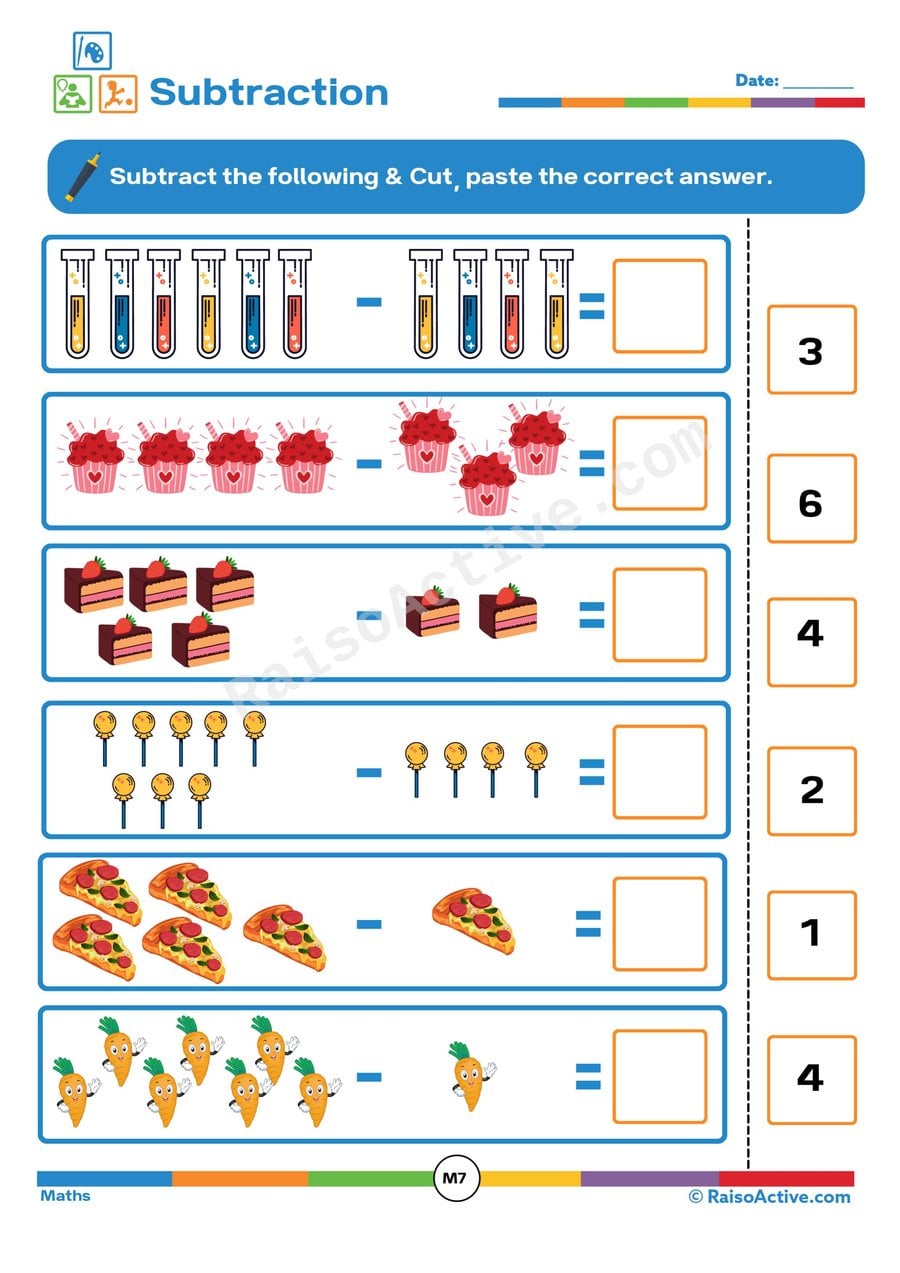
Subtraction Fun: Cut and Paste the Answers!
This worksheet grounds subtraction in something concrete for children ages 4-6 by having them count visual object groups, subtract, and then physically select and paste the correct numeral answer from a set of choices. Counting objects before subtracting keeps the math anchored in real quantities rather than abstract numerals alone, which is exactly the kind of support young learners need before they're ready for purely symbolic subtraction. The cut-and-paste answer selection also adds a layer of verification, since your child has to search through several numeral options to find the one that truly matches their calculated answer.

Cut and Paste Number Matching Worksheet: Numbers 31-40
Matching number words like thirty-one through forty to their correct numerals teaches children ages 4-6 to recognize larger two-digit numbers by both their written word form and their numeral form, extending number recognition well beyond the more familiar numbers under twenty. Cutting and pasting the matching numeral also reinforces careful visual comparison, since numbers in this range can look similar to one another.

3D Shapes Worksheet: Explore Faces, Vertices, and Edges!
This worksheet pushes children ages 4-6 beyond simply naming 3D shapes into analyzing their structural properties — counting faces, vertices, and edges — while also connecting those properties to how each shape moves (rolling, sliding, or stacking). Understanding that a shape's number of flat surfaces and corners directly determines its physical behavior is an early but genuine geometric reasoning skill.

Subtraction Worksheet: Find the Row with Matching Answers!
This worksheet pushes subtraction practice a step further for children ages 4-6 by having them solve several subtraction problems and then compare the answers across different rows to find matches, adding a layer of number-sense reasoning on top of basic calculation. Recognizing that two different subtraction problems can produce the same answer helps children understand that numbers can be reached in more than one way, which is an important early step toward flexible mathematical thinking. This kind of comparison task also builds attention to detail, since a child has to solve every problem accurately before the matching rows can be found.

Ascending Order Worksheet: Heart-Filled Number Fun!
Using a set of numbered hearts, this worksheet asks children ages 4-6 to compare several numbers at once and arrange them from smallest to largest, building number comparison and ordering skills that go beyond simple counting. Understanding relative size - knowing that 7 is bigger than 3 without needing to count up from one each time - is an important step toward more advanced number sense and mental math.
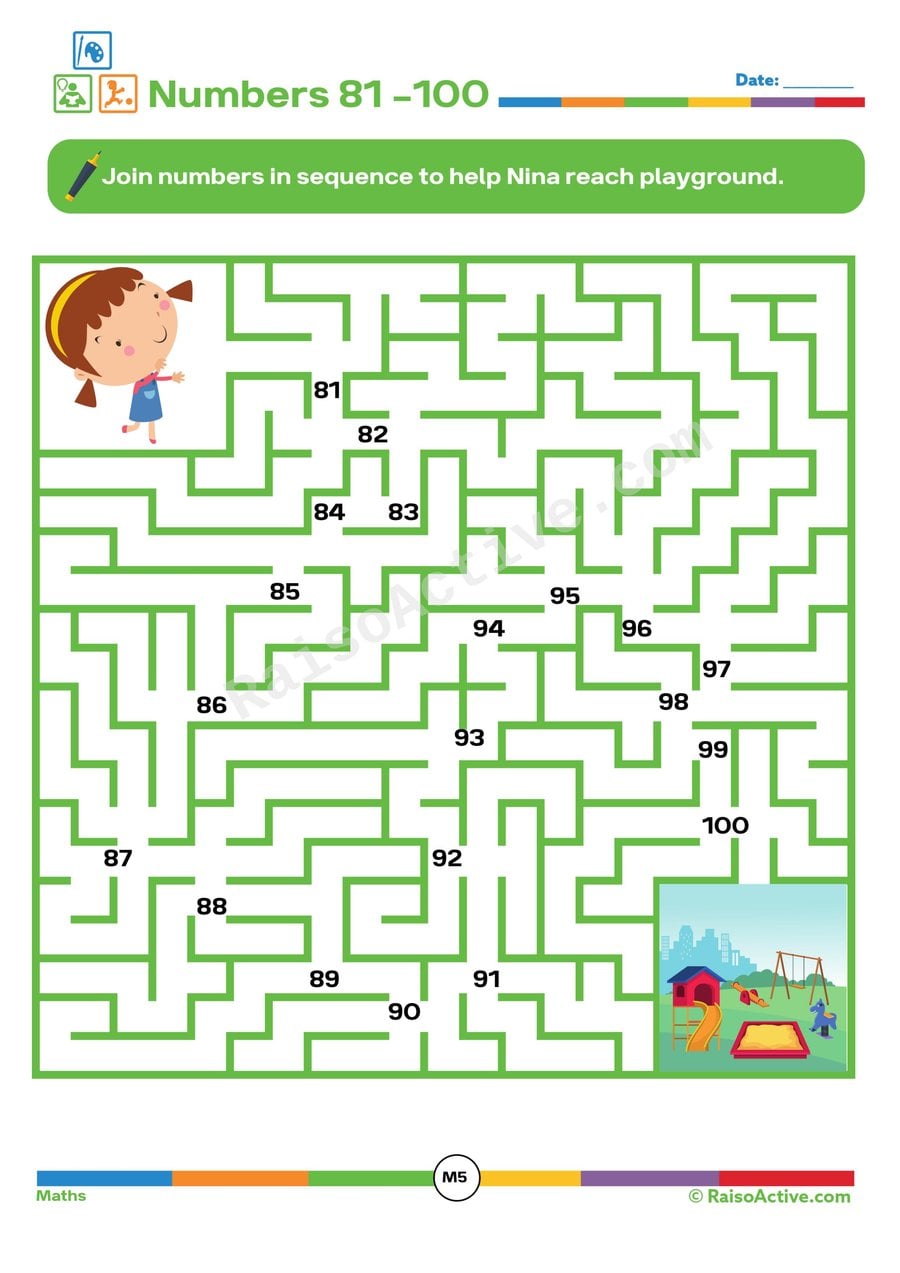
Nina's Playground Maze: Numbers 81-100 Worksheet
This maze-style worksheet asks children ages 4-6 to trace a path by joining numbers in sequence from 81 to 100, combining number recognition and counting fluency with the fine motor demands of following a winding path. Because children must find the next correct number among several nearby options rather than simply reciting a memorized sequence, the activity sharpens visual scanning alongside numeracy. Successfully completing a 20-number sequence like this also builds stamina and confidence for handling longer counting ranges without losing track.

Subtraction Fun: Count and Subtract with Cute Animals!
Counting a group of animal pictures and then crossing out or removing a specified number teaches children ages 4-6 the concept of subtraction as taking away from a starting quantity, which is easier to grasp visually than through numbers alone. Writing the remaining total after the take-away step reinforces that subtraction results in a smaller, specific number, connecting the physical act of removing objects to a written numeral. Using cute animal pictures as the countable objects keeps a potentially tricky math concept approachable and fun.

Bee's Number Sequence Adventure: Coloring Numbers 0-50!
Children ages 4-6 practice counting and recognizing numbers from 0 to 50 in sequence by coloring each number in order to help a bee find its way to the hive, extending number recognition well beyond the smaller ranges typically practiced at this age. Following a long numerical sequence builds persistence and reinforces counting patterns like the teens, twenties, and thirties.
What connect the dots worksheets teach
Beyond number order, dot-to-dots train the child to scan a page for a specific numeral among distractors, to draw a controlled straight line from one point to another, and to keep a sequence in mind while the hand is busy. Alphabet versions do the same for letter order, which supports dictionary skills and phonics charts later. The reveal at the end gives a reason to keep going and a picture to color, turning one sheet into two activities.
- Ages 2–3: two or three large dots to join, then 1–5 around a simple outline
- Ages 3–4: 1–10, large dots, obvious outlines (apple, fish, house)
- Ages 4–5: 1–20, capital letters A–Z, pictures with more detail
- Ages 5–6: 1–30 and 1–50, lowercase a–z, counting by 10s
- Ages 6–7: 1–100, skip counting by 2s and 5s, counting backwards
Difficulty and how to move up
Difficulty in a dot-to-dot comes from three things: how far the numbers go, how close together the dots are, and how much of the picture is guessable from the outline. Move up one factor at a time. A child confident with 1 to 10 in a simple outline can try 1 to 20 in the same outline before tackling a denser picture. Skip counting and alphabet versions should wait until the plain number version at that range is easy.
How to use these worksheets at home
Ask the child to say each number aloud as they reach it, so counting and looking are linked. Younger children can use a crayon; a pencil is fine from five. Praise straight lines rather than speed. When the picture is done, coloring it adds fine motor practice and turns the sheet into something to keep. For a child who skips numbers, cover the page with a card and reveal a few dots at a time.
Frequently asked questions
What skills do connect the dots worksheets develop?
Dot-to-dots develop number recognition and number sequence (knowing which numeral comes next), visual scanning, hand-eye coordination and pencil control through drawing straight lines between points. Alphabet versions teach letter order, and skip-counting versions teach counting by 2s, 5s and 10s. The finished picture also provides a coloring task, which adds further fine motor practice.
What age are dot to dot worksheets for?
Dot-to-dot worksheets suit children from about 3, when they can recognize numerals 1 to 5 and draw a line between two points, up to 7 or 8, when sheets reach 100 or use skip counting. Three-year-olds need large, well-spaced dots and a short sequence; five-year-olds manage 1 to 20; six- and seven-year-olds enjoy dense pictures with 50 to 100 dots or counting by 2s and 5s.
What should a 4 year old be able to count to?
By age 4, in Pre-K, Reception or LKG, most children can count aloud to 10 or beyond, recognize numerals 1 to 10, and count a small group of objects accurately. A dot-to-dot from 1 to 10 is a good check of this. By 5, in Kindergarten, Year 1 or UKG, counting to 20 and reading numerals to 20 is the usual expectation, and by 6 to 7 children count to 100 and by 2s, 5s and 10s.
Are alphabet dot to dots useful?
Yes. Alphabet dot-to-dots practice letter order, which children need for alphabet charts, dictionaries and organizing information later, and they give a reason to recognize each letter quickly rather than reciting the alphabet song. Capital letter versions come first, around age 4, and lowercase versions around 5, when telling b, d, p and q apart becomes a useful check.
How do I make connect the dots harder?
Raise the count (1 to 50, then 1 to 100), switch to skip counting by 2s, 5s or 10s, count backwards from 20, or use lowercase letters instead of capitals. Pictures with dots close together and outlines that are not obvious until the end also raise the challenge. For a 7-year-old, dot-to-dots that alternate numbers and letters (1, A, 2, B) are a further step.

Written by
Hemsweta Jain · Teacher Cheena
MBA and Early Childhood Educator, teaching since 2014 · Founder of RaisoActive, Mumbai
Written and reviewed by Hemsweta Jain (Teacher Cheena), who designs every RaisoActive worksheet.
Last reviewed
Printable packs for ages 3–7
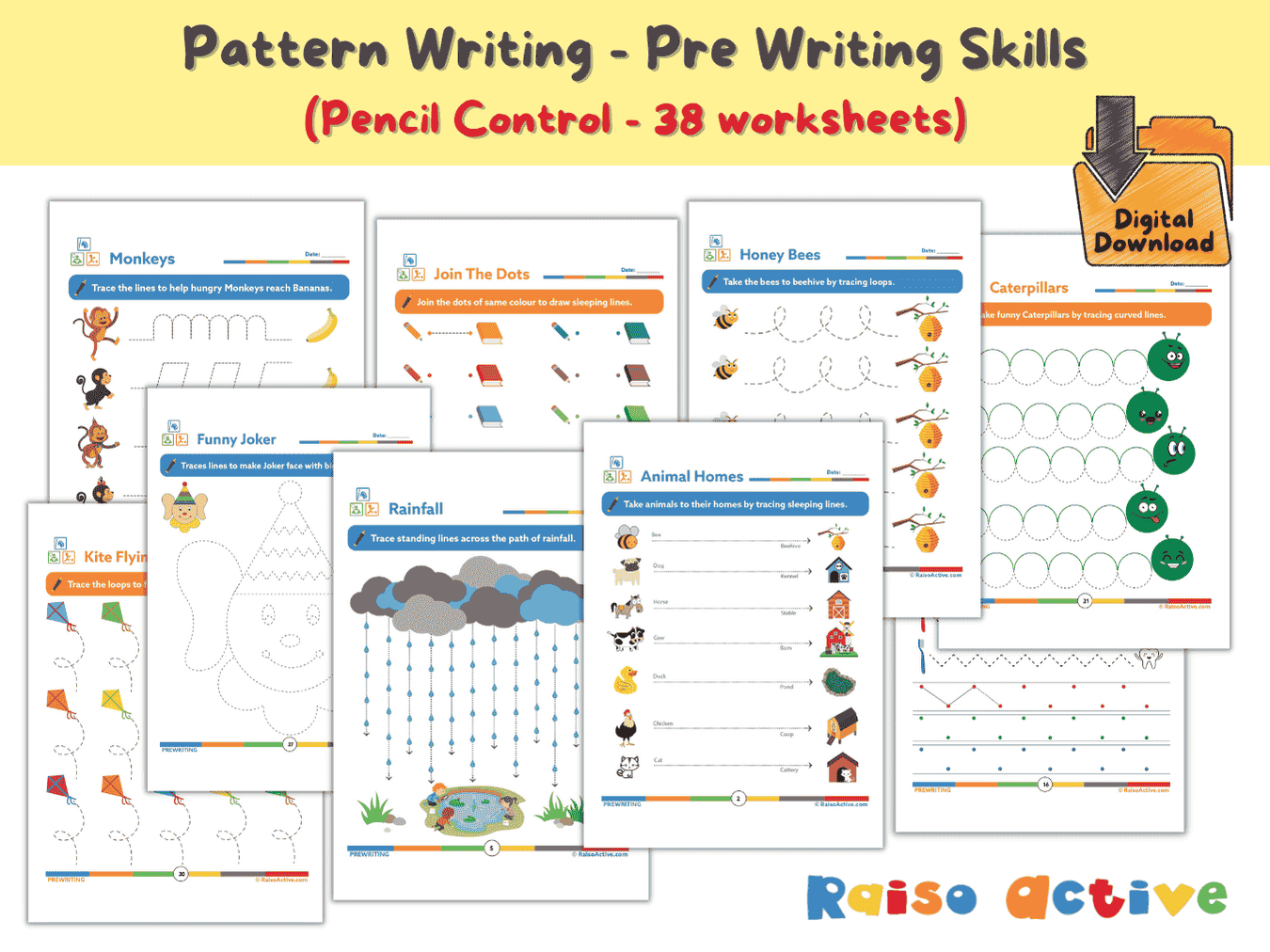
Pattern Writing Pre-writing Skills Activity Book for 3-4 Year Olds
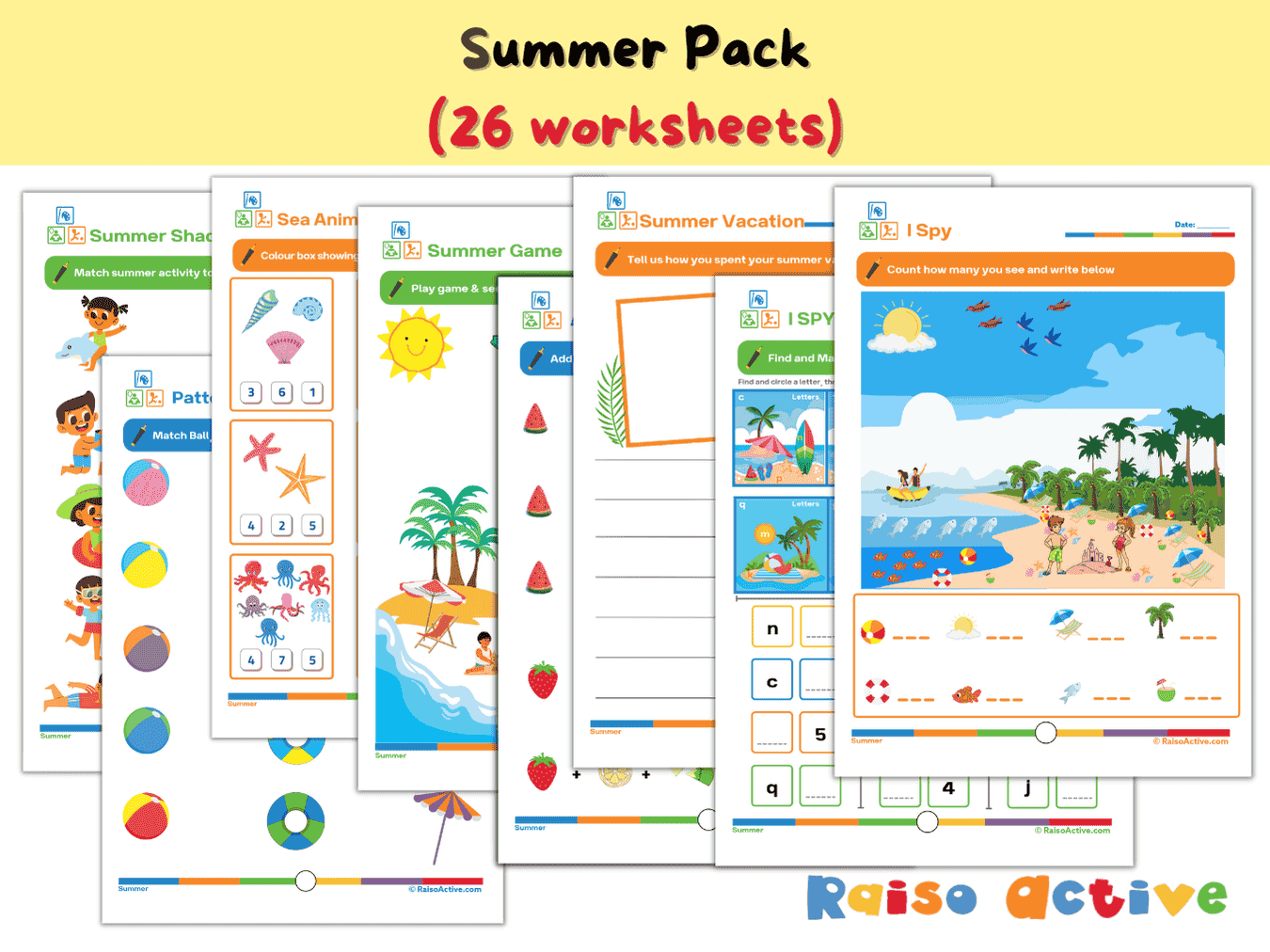
Summer Activity Pack: Math, Literacy, Puzzles & More for Preschool & Kindergarten
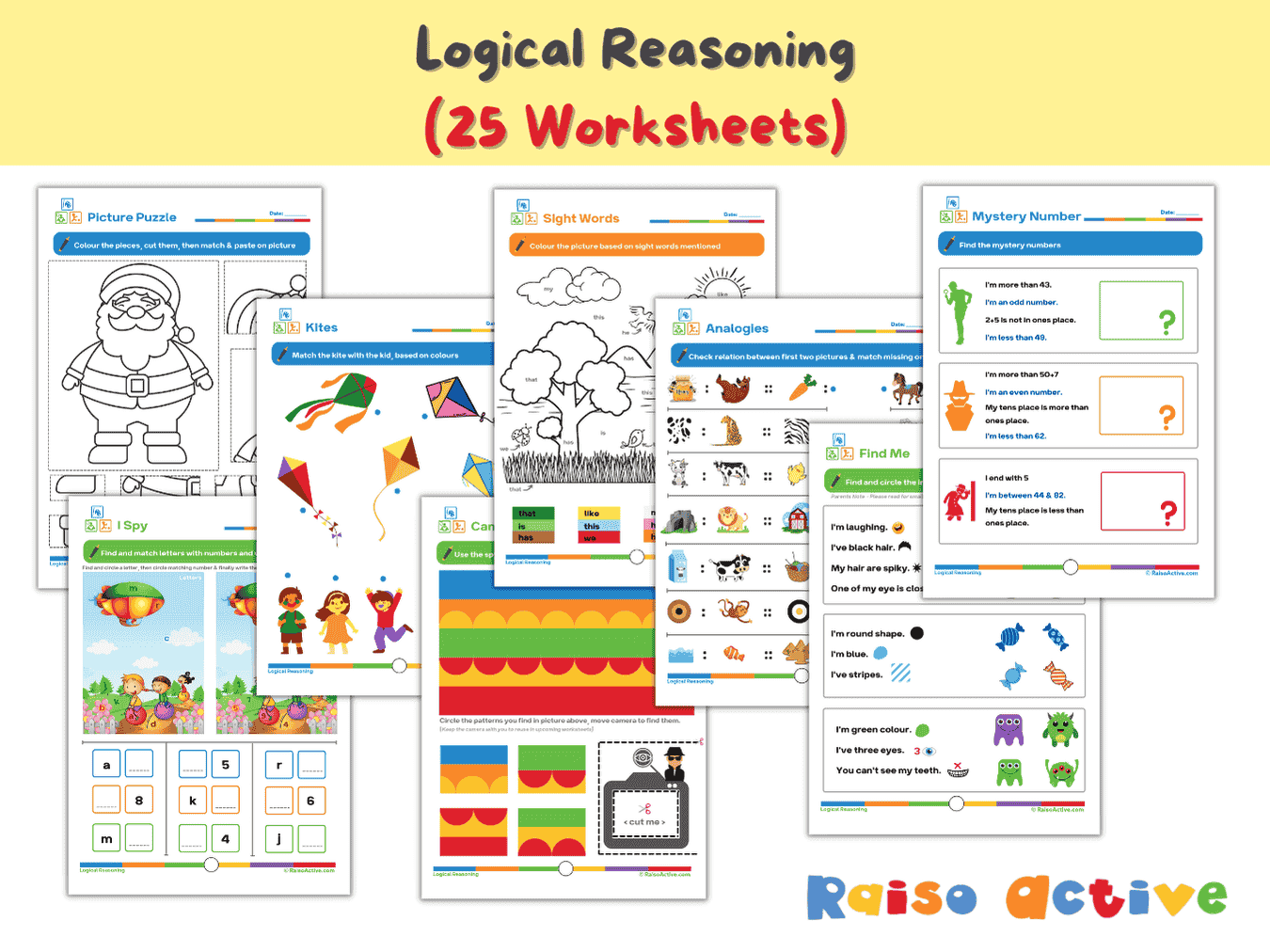
Logical Reasoning Activity Book for Preschool & Kindergarten | Patterns, Puzzles & Analogies
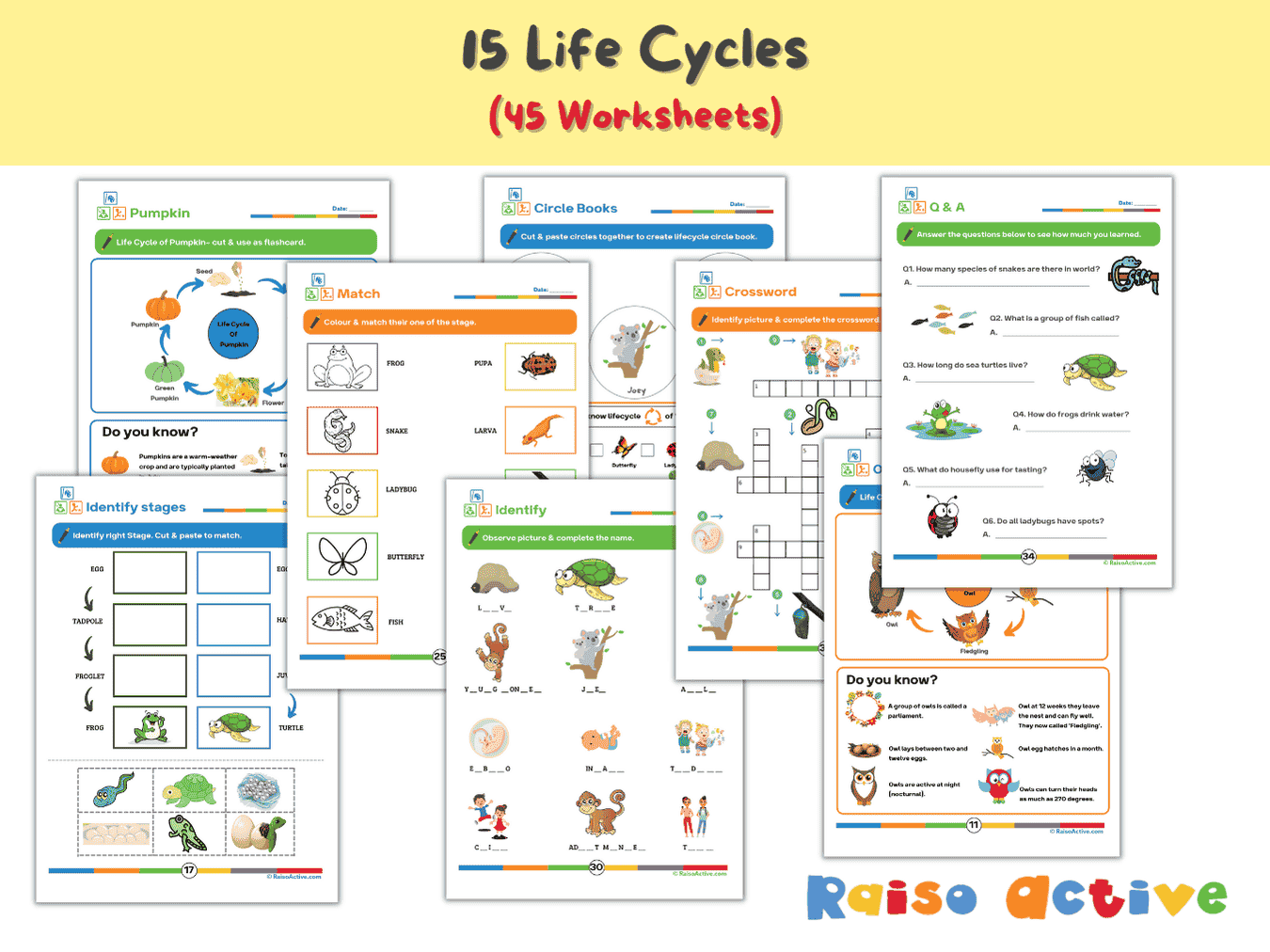
Lifecycles Activity Book & Flashcards for Preschool & Early Elementary
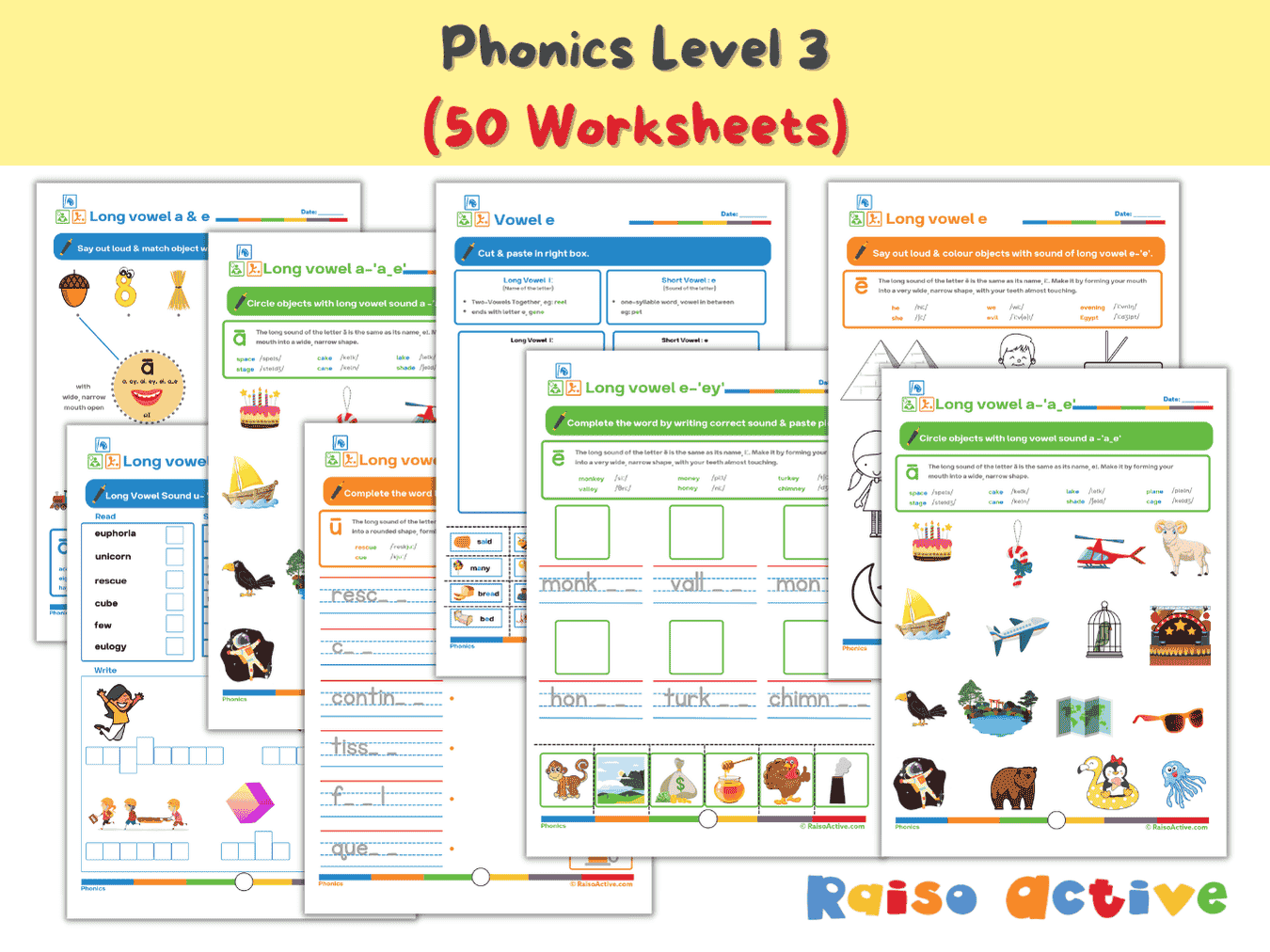
Phonics Level 3 Long Vowels Activity Book for Kindergarten & 1st Grade
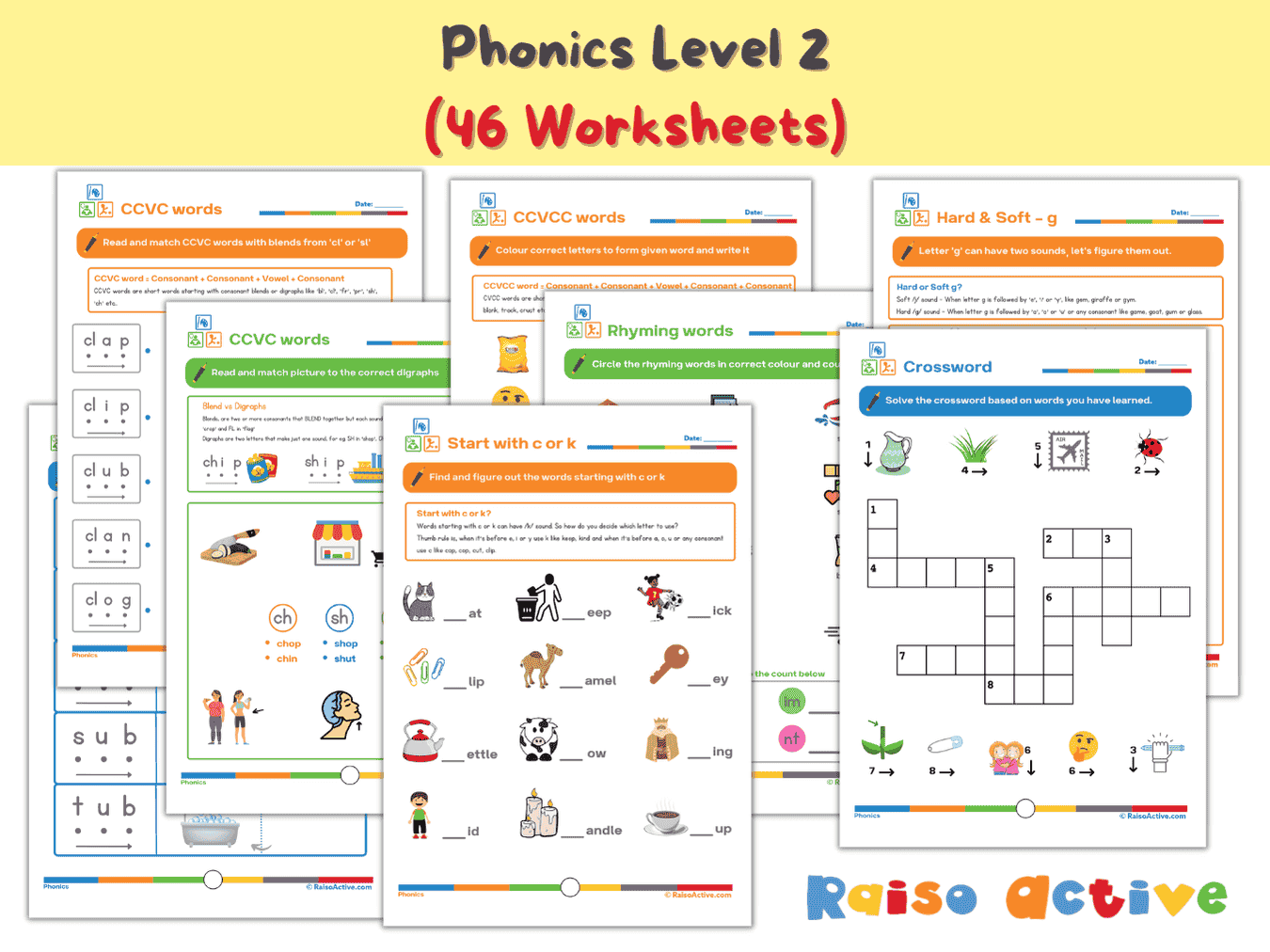
Phonics Level 2 Worksheets: CVC, CCVC, CVCC Word Families & Blends for Early Readers (Ages 4-7)
Guides for parents and teachers
See all guides →Number Formation Rhymes 0–9 and How to Fix Reversals
Original number formation rhymes for 0–9, the correct stroke order for each digit, why 3, 5 and 7 get reversed most often, and multisensory fixes that work.
Pre-Writing Strokes in Order: From Standing Lines to Loops (With Printable Patterns)
The developmental order of pre-writing strokes, from vertical lines to loops, and why practicing them in sequence makes letter formation much easier to learn.
Kindergarten Readiness Checklist: 25 Skills to Practice Before the First Day
A kindergarten readiness checklist of 25 literacy, math, motor, self-regulation and self-help skills, with an 8-week summer plan and notes on when not to worry.
Best Worksheets for 3-Year-Olds: What Works and What to Avoid
What works on worksheets for 3-year-olds: short sessions, crayons, tracing lines, matching, cutting, a free weekly plan, and signs one is too advanced.
What Should a 4-Year-Old Know Before LKG? A Readiness Checklist
A calm, teacher-written LKG readiness checklist for 4-year-olds: language, pattern writing, numbers to 10, self-help and social skills, plus a 6-week plan.
Resources for Children with Multiple Disabilities: A Comprehensive Guide for Families
Discover essential resources for children with multiple disabilities. Therapies, inclusive learning, assistive technology, and printable activities for ages 1-8.
Canonical: https://raisoactive.com/worksheets/connect-the-dots