Free printable worksheets · United States
1st Grade Connect the Dots Worksheets (Ages 6–7)
1st Grade connect the dots worksheets are practice sheets for children aged 6–7 in First Grade in the US. Connect the dots is joining a series of numbered or lettered dots in order with a pencil line to reveal a hidden picture. The sheets on this page cover counting or sequencing in order, fine motor control drawing straight segments and letter or number recognition when dots are labeled.
First grade pushes reading toward fluency and math toward larger numbers: consonant digraphs, long vowels and silent e appear in decodable passages, while place value work extends to 120 and addition and subtraction move from within 10 to within 20. By six, a dot-to-dot runs to 100, skip counts by 2s and 5s, counts backwards from 50, or alternates numbers and letters (1, A, 2, B). The dots are close together and the picture is deliberately hard to guess, so the child has to trust the count rather than the outline. Starting from a number in the middle of the sequence, such as 37, tests counting on. These are review sheets now, not first practice.
162+ worksheets · free PDF download · print on A4 or Letter
1st Grade Connect the Dots Worksheets to print
Browse all worksheets for ages 6–7
Connect the Dots: Mushroom House Worksheet for Kids (Numbers 26-50)
Extending number sequencing into the 26-50 range pushes children ages 4-6 past the more familiar 1-20 span while reinforcing the fine motor control needed to draw controlled connecting lines that reveal a mushroom house picture.
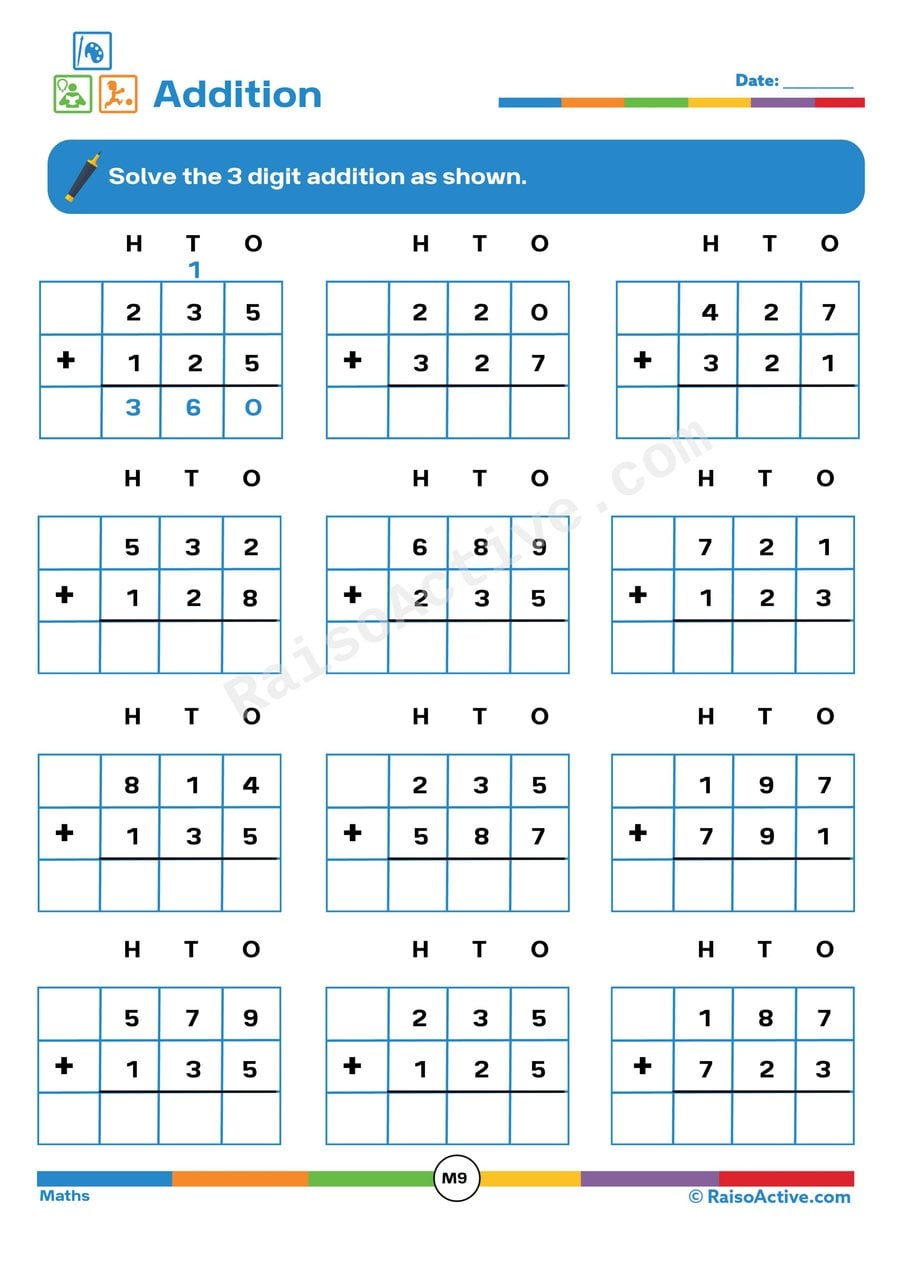
3-Digit Addition Worksheet for Kids
Adding two three-digit numbers requires children to work through the ones, tens, and hundreds columns in order and understand how a sum in one column can carry over into the next, a significant step up from single-digit addition. For ages six to eight, mastering this column-based process builds the procedural fluency needed for all future multi-digit arithmetic.
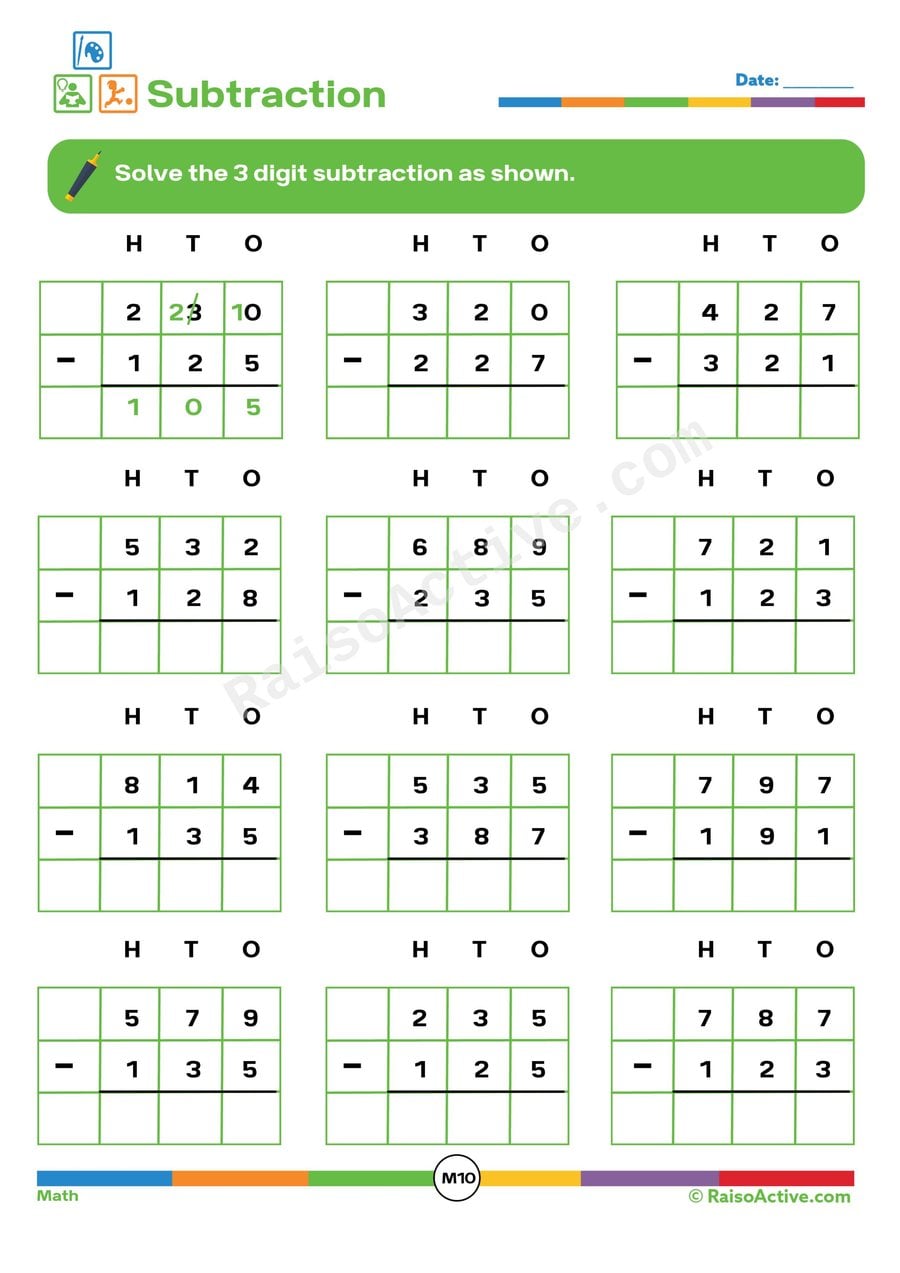
3-Digit Subtraction Worksheet for Kids
Subtracting three-digit numbers introduces children to borrowing, or regrouping, across place value columns, a more demanding skill than simple subtraction since it requires understanding that a ten can be 'broken' into ones when a column doesn't have enough to subtract from. For ages five to seven, this worksheet builds the procedural foundation for confident multi-digit subtraction going forward.
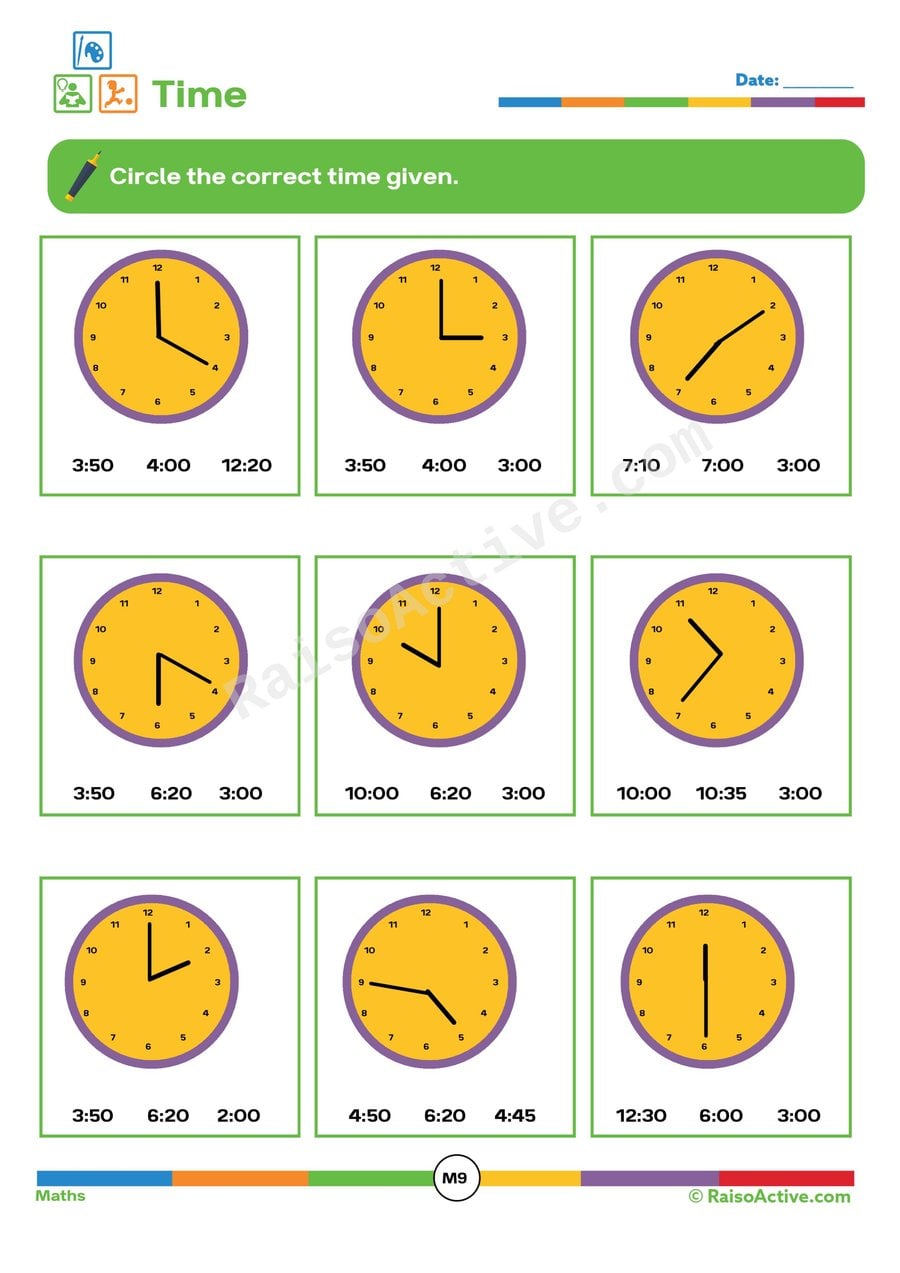
Time Telling Worksheet: Circle the Correct Time!
Reading an analog clock face and choosing the matching time from three written options builds clock-reading fluency for children ages 5-7, requiring them to interpret both the hour and minute hands together rather than guessing from a single hand.
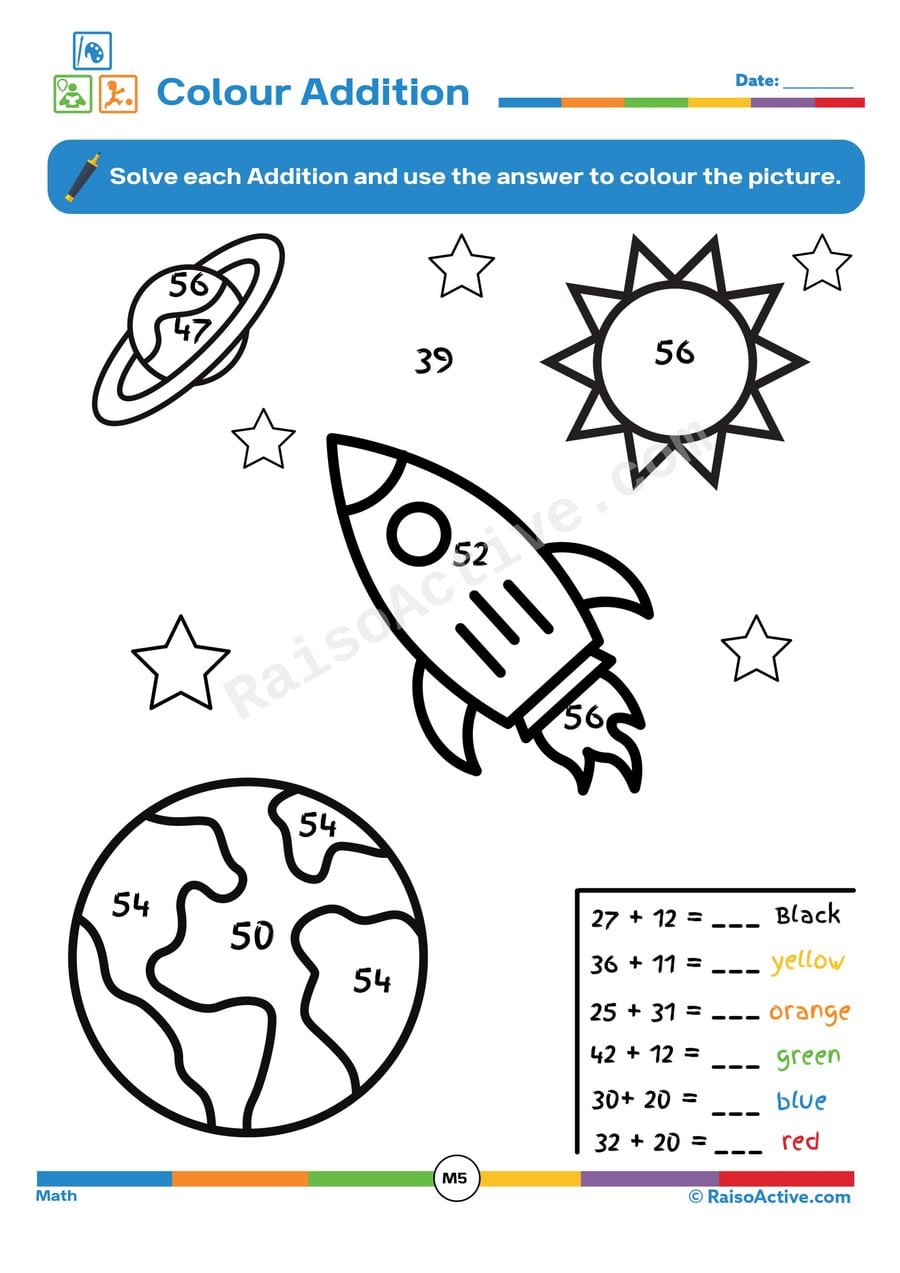
Color Addition Worksheet: Space Adventure!
This worksheet builds addition fluency by having children solve simple equations and then use each answer to determine which color to use in a corresponding section of a space-themed picture. For five- to seven-year-olds, this color-by-number format adds motivation to solve each problem accurately, since a wrong answer means the wrong color goes in the wrong spot and the final picture won't come together correctly.
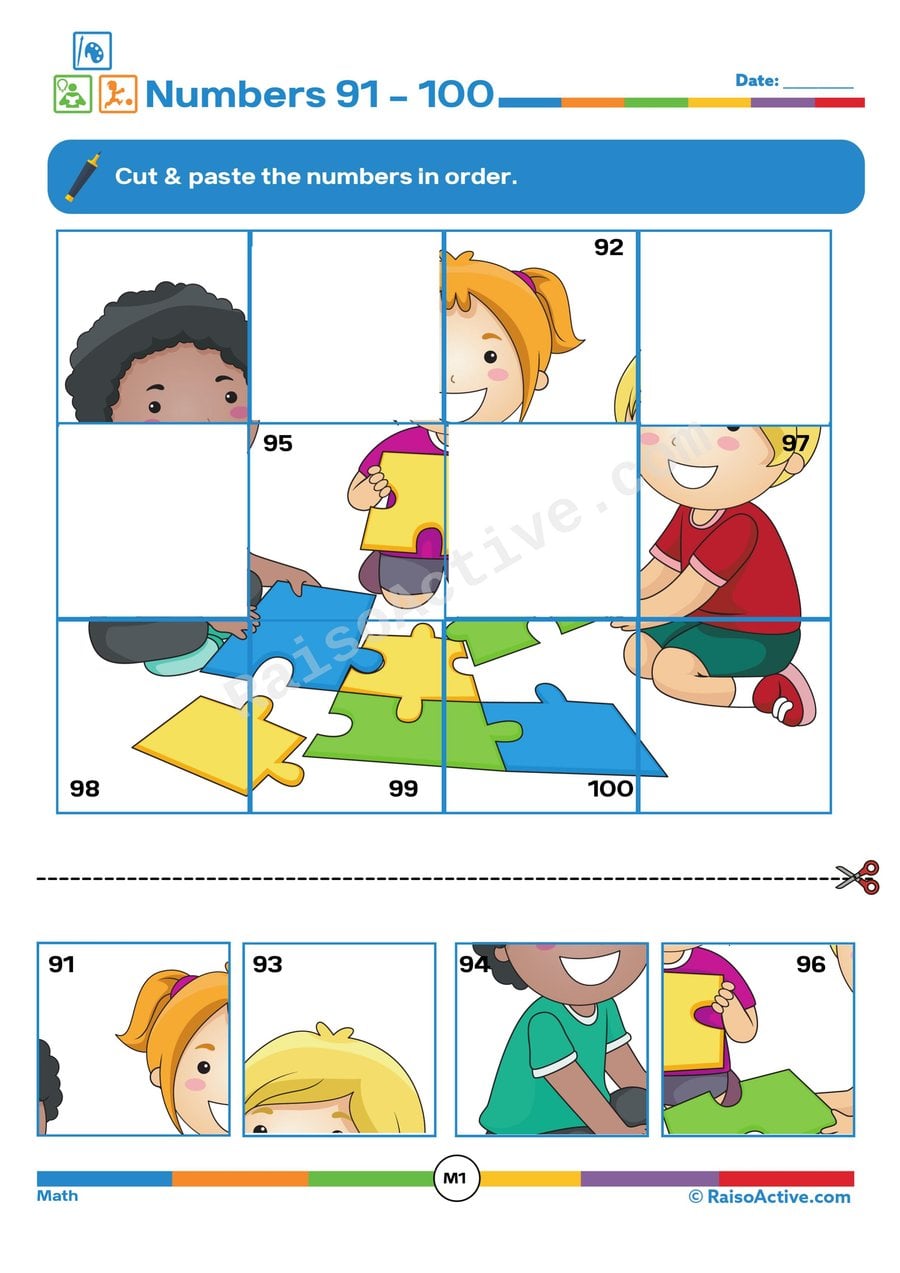
Numbers 91-100 Cut and Paste Worksheet
Working with the numbers 91 through 100 pushes children ages 4-6 into two-digit number recognition territory where patterns matter more than memorization, since recognizing that '9' stays constant while the second digit counts up helps children understand place value intuitively. Cutting apart number puzzle pieces and reassembling them in the correct order also demands careful sequencing and attention, since even one misplaced piece throws off the whole sequence. This hands-on, puzzle-based approach to number ordering makes practicing a fairly abstract skill much more concrete and engaging.

Ascending Order Fun: A Printable Worksheet for Numbers!
Arranging numbers from smallest to largest teaches children ages 4-6 to compare quantities and understand relative magnitude, a skill that underlies later work with number lines, place value, and basic operations. It also reinforces number recognition, since children must correctly identify each numeral before they can decide where it belongs in the sequence.

Missing Numbers Worksheet: Before, After, and Between!
This worksheet strengthens number sequencing by asking children to figure out which number comes before, after, or between two given numbers, rather than simply counting from one in order. For four- to six-year-olds, working with numbers 'out of context' like this builds a flexible mental number line, an essential foundation for later addition, subtraction, and skip counting.
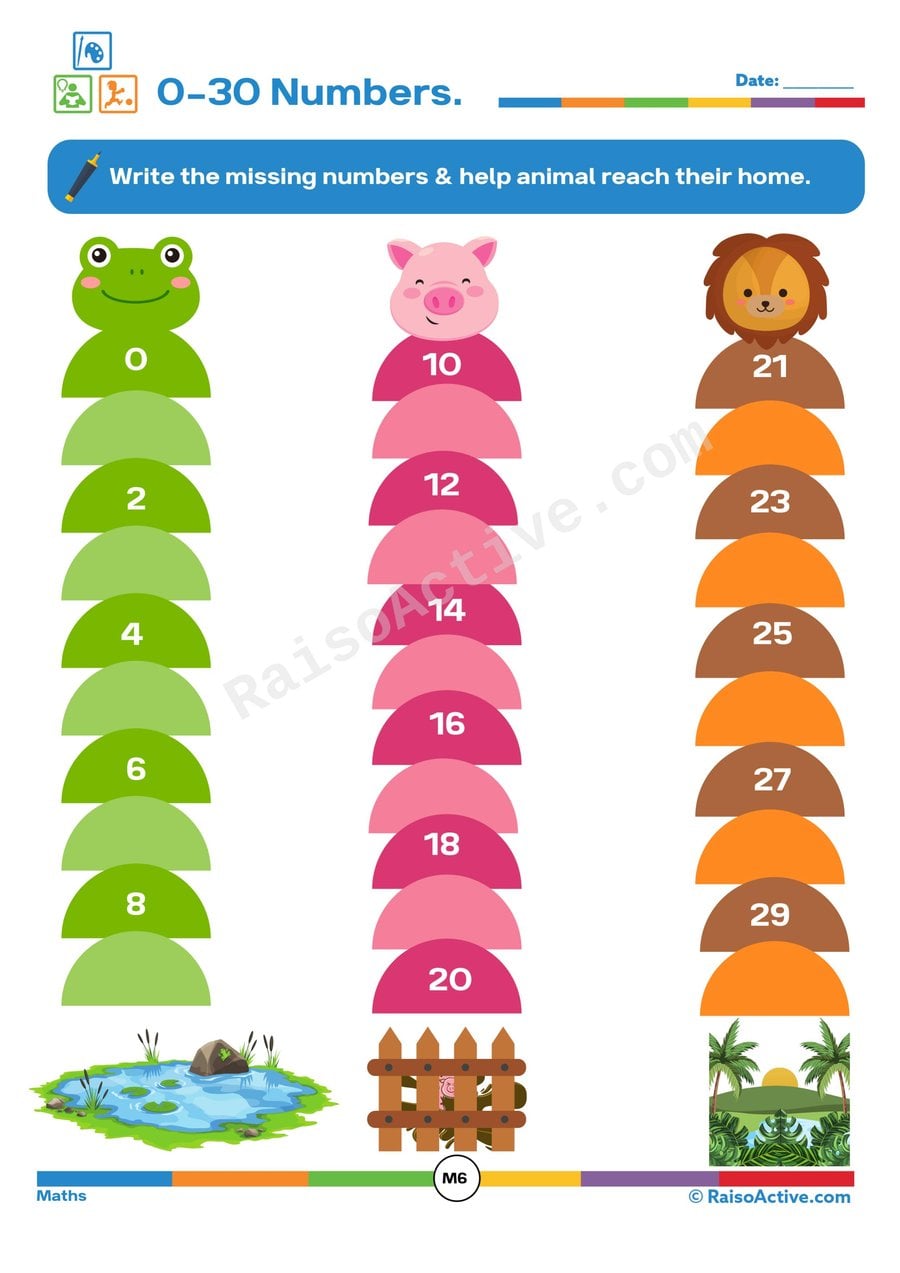
Number Fun: Missing Numbers Worksheet for Kids!
Filling in missing numbers from a sequence up to 30 helps children ages 4-6 strengthen number recognition and counting-on, the skill of continuing a sequence without starting over from one each time. Completing the animal path adds a motivating storyline that encourages children to work through the full sequence.
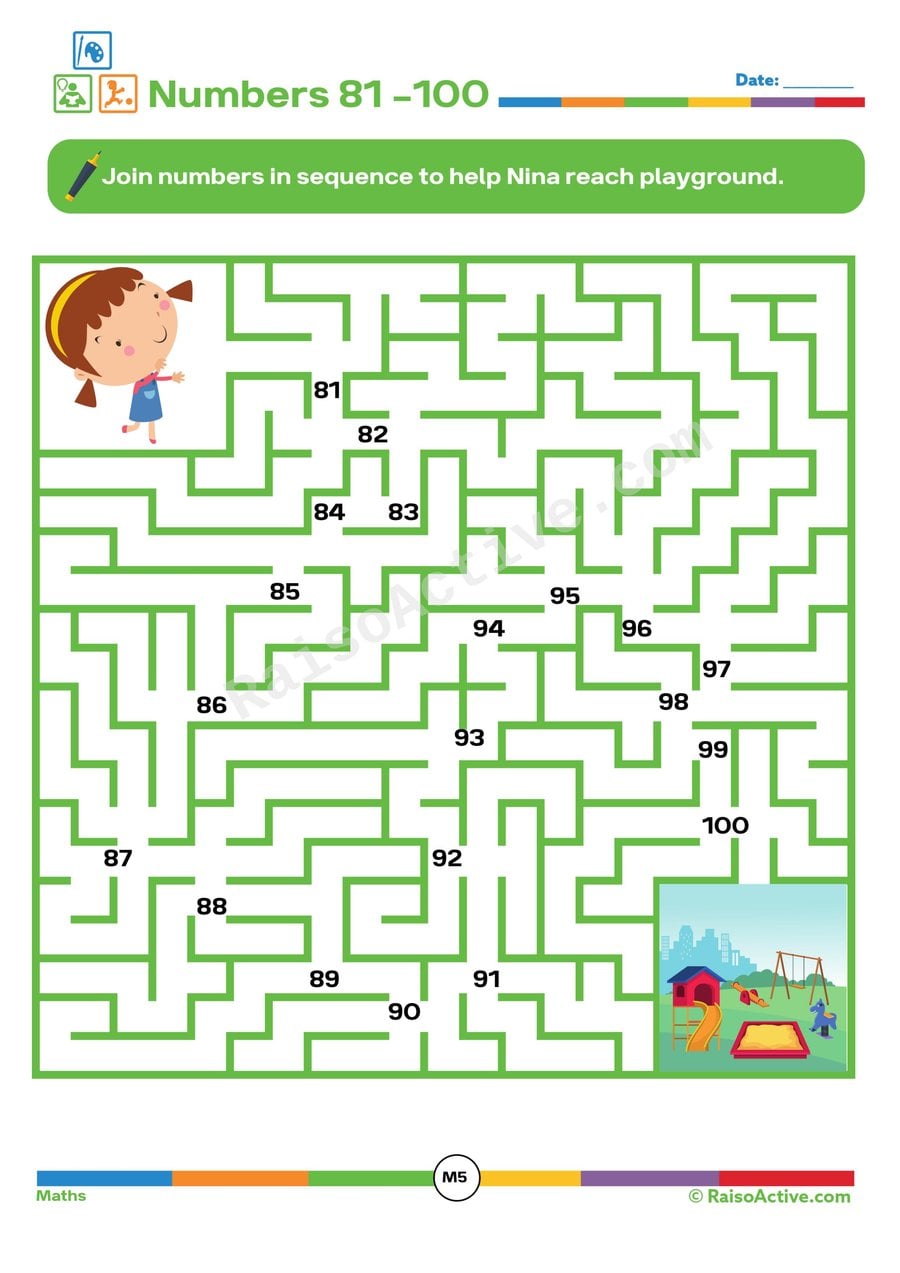
Nina's Playground Maze: Numbers 81-100 Worksheet
This maze-style worksheet asks children ages 4-6 to trace a path by joining numbers in sequence from 81 to 100, combining number recognition and counting fluency with the fine motor demands of following a winding path. Because children must find the next correct number among several nearby options rather than simply reciting a memorized sequence, the activity sharpens visual scanning alongside numeracy. Successfully completing a 20-number sequence like this also builds stamina and confidence for handling longer counting ranges without losing track.

Rolling Addition Worksheet for Preschoolers: Dice Game Fun!
Rolling two dice and adding the results teaches children ages 4-6 the core idea of addition as combining two quantities into one total, rather than just memorizing number facts. The physical act of rolling builds excitement around math while requiring them to recognize dice pips or numerals, transfer them to paper, and calculate a sum, connecting concrete play to abstract arithmetic.
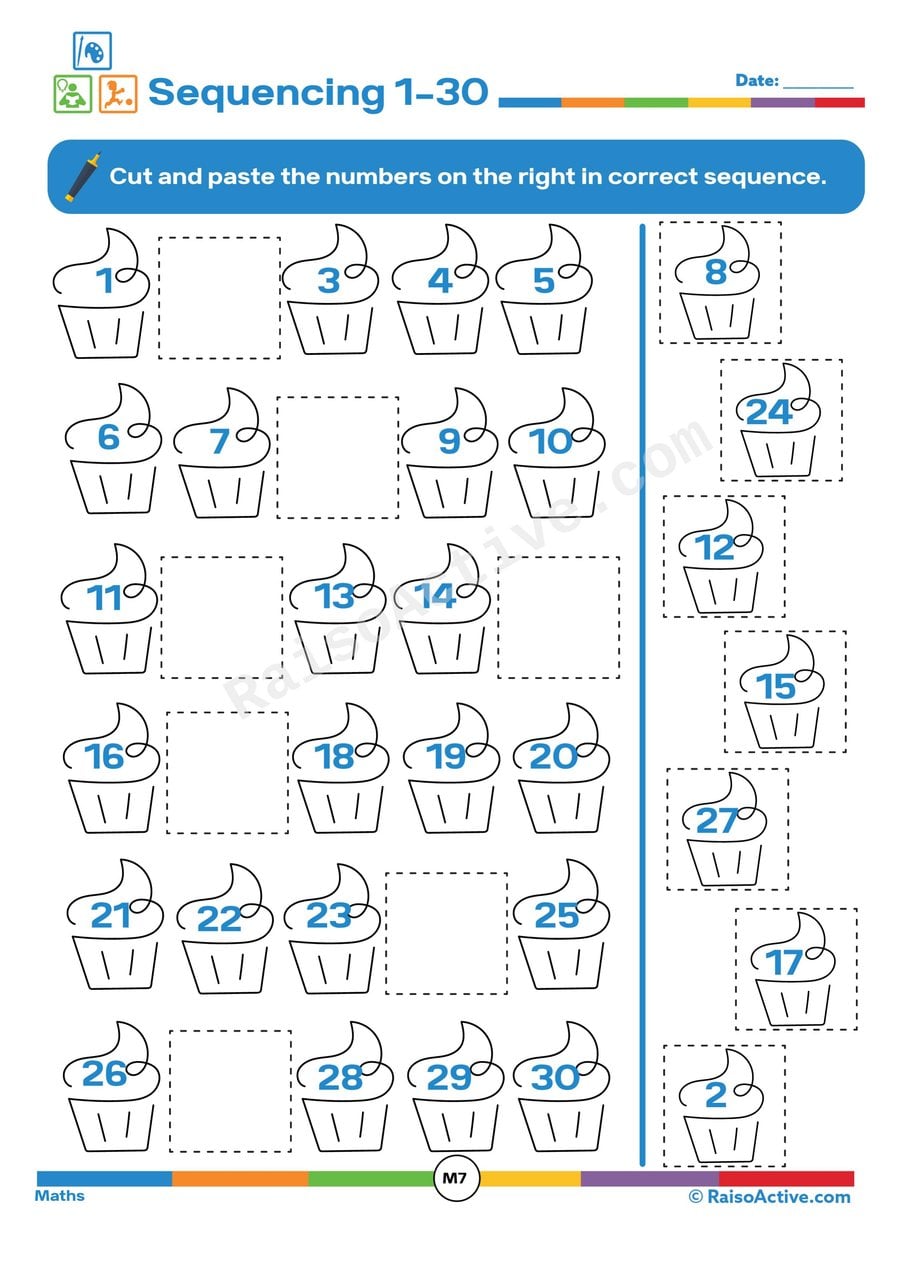
Cupcake Number Sequencing Worksheet 1-30
Children ages 4-6 practice number sequencing from 1 to 30 by cutting out numeral pieces and pasting them onto cupcakes in ascending order, reinforcing both number recognition and the logic of 'what comes next' in the counting sequence. This bridges the gap between counting by rote and truly understanding number order, an essential step before children can skip-count or do simple addition.

Number Names Worksheet: Addition Practice for Kids
This worksheet combines addition practice with number-word writing for children ages 4-6, asking them to solve simple addition problems and then spell out the answer using its written name rather than a numeral. Requiring the answer in word form pushes children beyond calculation into applying number vocabulary correctly, reinforcing that 'seven' and '7' represent the same value. This dual task builds both math fluency and early spelling skills together.
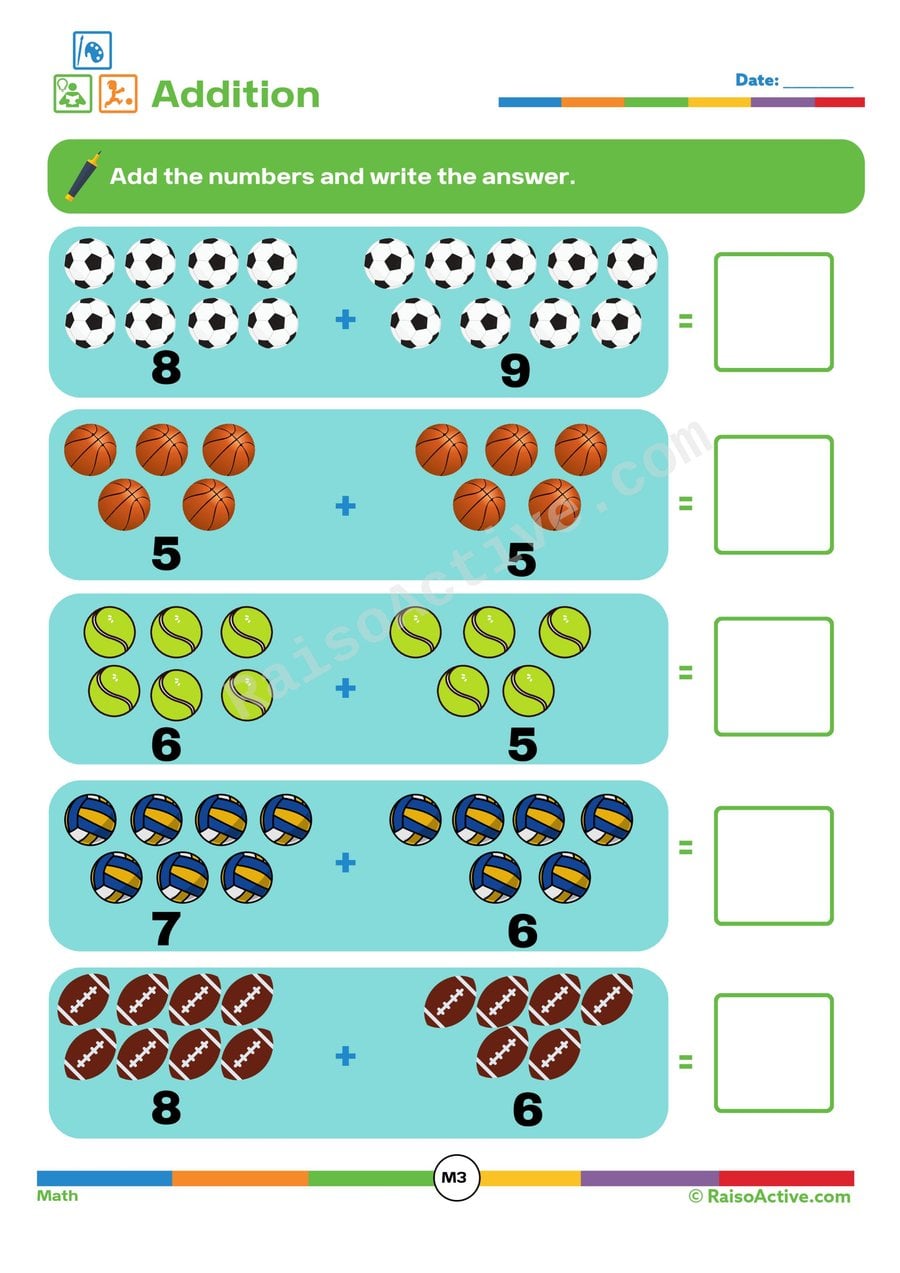
Sports Addition Worksheet for Kids
Featuring sports-themed pictures like balls, bats, and trophies, this worksheet gives children ages 4-6 engaging practice with simple addition, counting two separate sets of objects and combining them into a single total. Using a familiar, high-interest theme like sports can help maintain focus during repetitive counting practice, while still building the same foundational addition skills as any other worksheet.

Trace and Write Numbers 11-15: Counting and Writing Worksheet
This worksheet helps children ages 4-6 practice tracing and writing the number words from eleven to fifteen, moving beyond single-digit numbers into the trickier teen range where number names don't always follow an obvious pattern. Matching the number of dots on dice to the correct written number name also reinforces that these longer number words still represent a specific countable quantity.

Before and After Numbers Worksheet for Preschoolers
This number sequencing worksheet asks children ages 4-6 to identify the numbers that come immediately before and after a given number, strengthening their mental number line and reinforcing the concept that numbers exist in a fixed, ordered sequence. This before-and-after reasoning is more demanding than simple counting because it requires children to move both forward and backward from a starting point. Building this flexible number sense supports later addition and subtraction, which both rely on moving confidently along a mental number line.

Subtraction Fun: Count and Subtract with Cute Animals!
Counting a group of animal pictures and then crossing out or removing a specified number teaches children ages 4-6 the concept of subtraction as taking away from a starting quantity, which is easier to grasp visually than through numbers alone. Writing the remaining total after the take-away step reinforces that subtraction results in a smaller, specific number, connecting the physical act of removing objects to a written numeral. Using cute animal pictures as the countable objects keeps a potentially tricky math concept approachable and fun.

Before and After: Counting and Sequencing Worksheet
Spinning a wheel to find the number that follows a given number, then writing it in the 'after' column, builds number sequencing skills for children ages 4-6 while the matching step connects the abstract number to a picture representation.
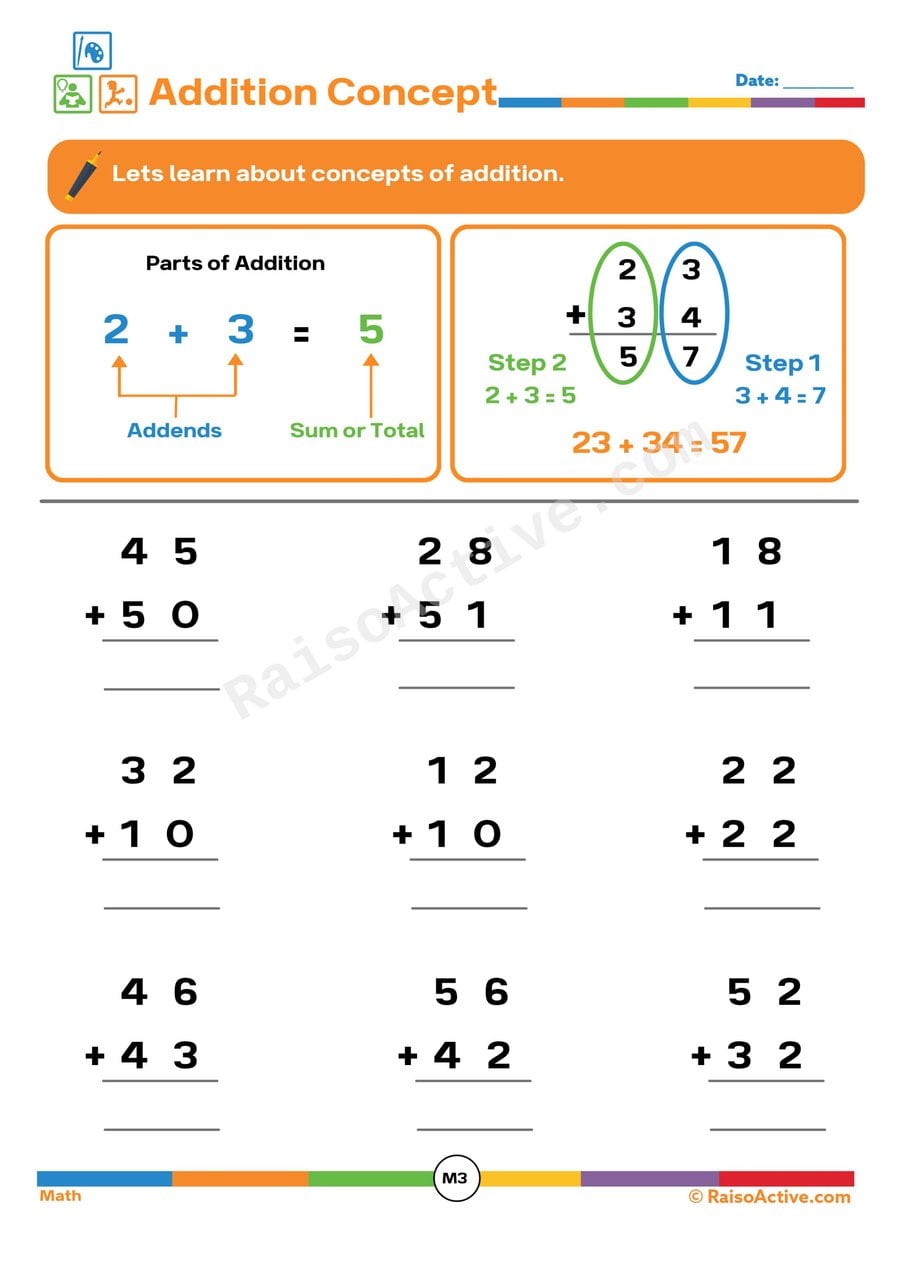
Addition Concepts Worksheet for Preschoolers
Preschoolers ages 4-6 build early number sense by visually combining two small groups into one total, the concrete foundation every later addition fact depends on. Seeing objects physically joined together, rather than just numbers on a page, helps children grasp that addition means 'putting together' before they ever memorize a sum.

Number Path: Help the Boy Reach His House! (Numbers 41-50)
This maze worksheet takes 4-6 year olds into two-digit number territory, asking them to recognize and sequence numbers 41 through 50 in order to trace a path — a step up in difficulty from single-digit counting since two-digit numbers are easy to reverse or confuse (41 versus 14). Tracing the connecting line also keeps pencil control and hand-eye coordination in play alongside the number work, and the payoff of guiding the boy home gives the counting task a clear, motivating goal.
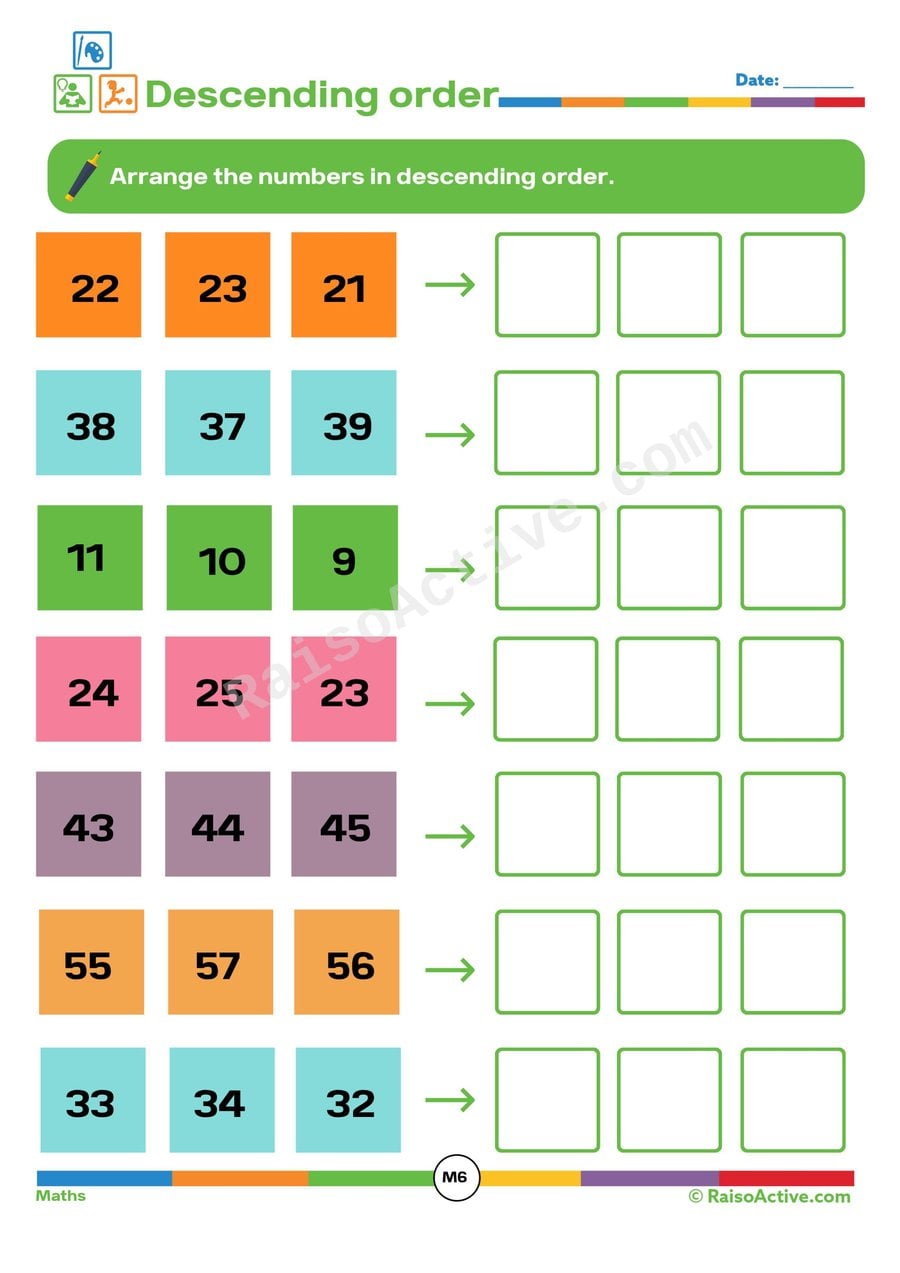
Descending Order Worksheet: Numbers 1-100
Arranging numbers from largest to smallest requires children to compare multiple quantities at once and hold a mental number line firmly enough to reverse their usual forward-counting habit, making this noticeably more challenging than ascending order practice. For ages four to six working with numbers up to 100, this builds flexible number sense that supports later skills like rounding and estimating.

Beehive Number Fun: Missing Numbers 0-30 Worksheet
Filling in missing numbers along a beehive path gives 4-6 year olds practice with the full 0-30 number sequence, a meaningful stretch beyond the more common 1-10 or 1-20 ranges seen in earlier counting worksheets. Because the missing numbers are scattered rather than all at the end, your child has to actually understand what number comes next at multiple points in the sequence, rather than simply continuing a count from a known starting point.
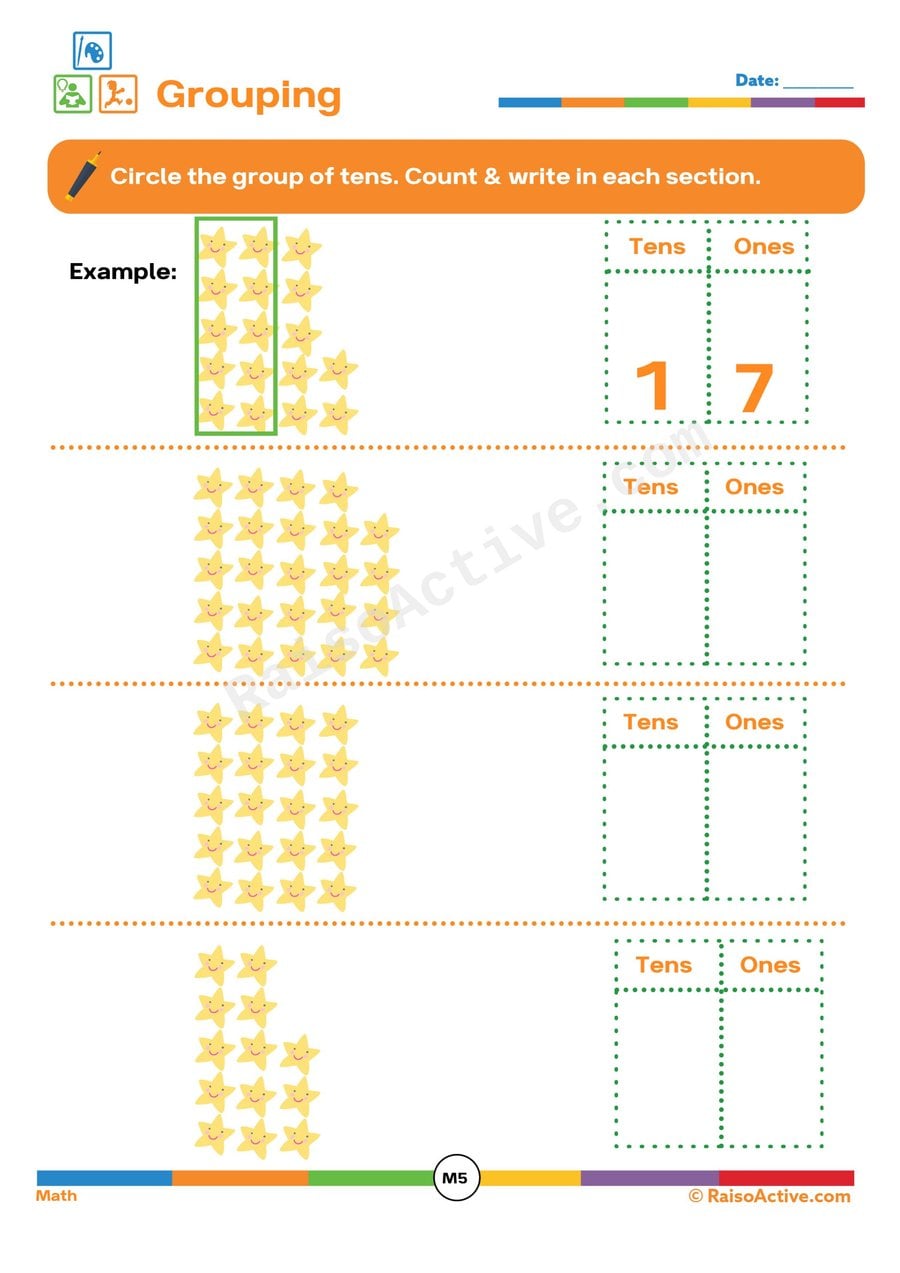
Grouping Stars: Tens and Ones Worksheet for Kids
Circling groups of ten stars and counting the leftover ones teaches children ages 4-6 to see a two-digit number as tens plus ones, reinforcing place value in a visual, hands-on way. This grouping practice builds a stronger number sense than memorizing numerals alone, since children physically organize quantities before writing them down.

Subtraction Worksheet: Find the Row with Matching Answers!
This worksheet pushes subtraction practice a step further for children ages 4-6 by having them solve several subtraction problems and then compare the answers across different rows to find matches, adding a layer of number-sense reasoning on top of basic calculation. Recognizing that two different subtraction problems can produce the same answer helps children understand that numbers can be reached in more than one way, which is an important early step toward flexible mathematical thinking. This kind of comparison task also builds attention to detail, since a child has to solve every problem accurately before the matching rows can be found.
What 1st Grade connect the dots worksheets cover
By six, a dot-to-dot runs to 100, skip counts by 2s and 5s, counts backwards from 50, or alternates numbers and letters (1, A, 2, B). The dots are close together and the picture is deliberately hard to guess, so the child has to trust the count rather than the outline. Starting from a number in the middle of the sequence, such as 37, tests counting on. These are review sheets now, not first practice.
- Finish a 1 to 100 dot-to-dot in one sitting
- Skip count by 2s or 5s to reveal the picture
- Count backwards from 50 through the dots
- Alternate numbers and letters (1, A, 2, B) to find the route
- Start from a number in the middle, such as 37
How to use these worksheets at home or in class
Fifteen to twenty minutes on most school days, split between a decodable passage with questions and a math page, matches what many first grade teachers assign. Keep base-ten blocks or bundled straws nearby so place value stays physical before it becomes purely written.
Start with the sheet that matches what your child can already do, then move one step up. Keep finished sheets in a folder: 1st Grade teachers often ask for evidence of practice, and children like seeing their own progress.
Is your child ready for 1st Grade connect the dots work?
A child ready for this stage decodes CVC words automatically, writes a simple sentence with a capital letter and end punctuation, adds and subtracts fluently within 10, and counts and writes numerals confidently to 20.
Frequently asked questions
How do skip-counting dot-to-dots help with math?
They rehearse the sequences that become the 2, 5 and 10 times tables. To join 10 to 15 in a count-by-5s picture, the child has to know that 15 comes next while 12 and 14 sit nearby as distractors, and a wrong line makes the gap visible at once. Do the 2s first, then 5s, then 10s, and keep a hundred chart beside the page the first few times.
What should a 1st Grade child be able to do in connect the dots?
By six, a dot-to-dot runs to 100, skip counts by 2s and 5s, counts backwards from 50, or alternates numbers and letters (1, A, 2, B). The dots are close together and the picture is deliberately hard to guess, so the child has to trust the count rather than the outline. Starting from a number in the middle of the sequence, such as 37, tests counting on. These are review sheets now, not first practice. A child ready for this stage decodes CVC words automatically, writes a simple sentence with a capital letter and end punctuation, adds and subtracts fluently within 10, and counts and writes numerals confidently to 20.
Do these worksheets follow the 1st Grade curriculum?
The sheets cover counting or sequencing in order, fine motor control drawing straight segments, letter or number recognition when dots are labeled and completing a picture from a sequence, which sit inside the Common Core Grade 1 (1.OA, 1.NBT, RF.1.3) outcomes for 1st Grade. Year 1 / Year 2 (UK), Class 1 (India) use the same skills at this age, so the sheets also fit families following those programmes.
Are these 1st Grade connect the dots worksheets free?
Yes. Each worksheet downloads free as a watermarked PDF once you create an account, with a limit of five a day. An annual membership ($20) removes the watermark and the limit for the whole library of over 1,000 worksheets and every printable pack.

Written by
Hemsweta Jain · Teacher Cheena
MBA and Early Childhood Educator, teaching since 2014 · Founder of RaisoActive, Mumbai
Written and reviewed by Hemsweta Jain (Teacher Cheena), who designs every RaisoActive worksheet.
Last reviewed
Printable packs for ages 6–7
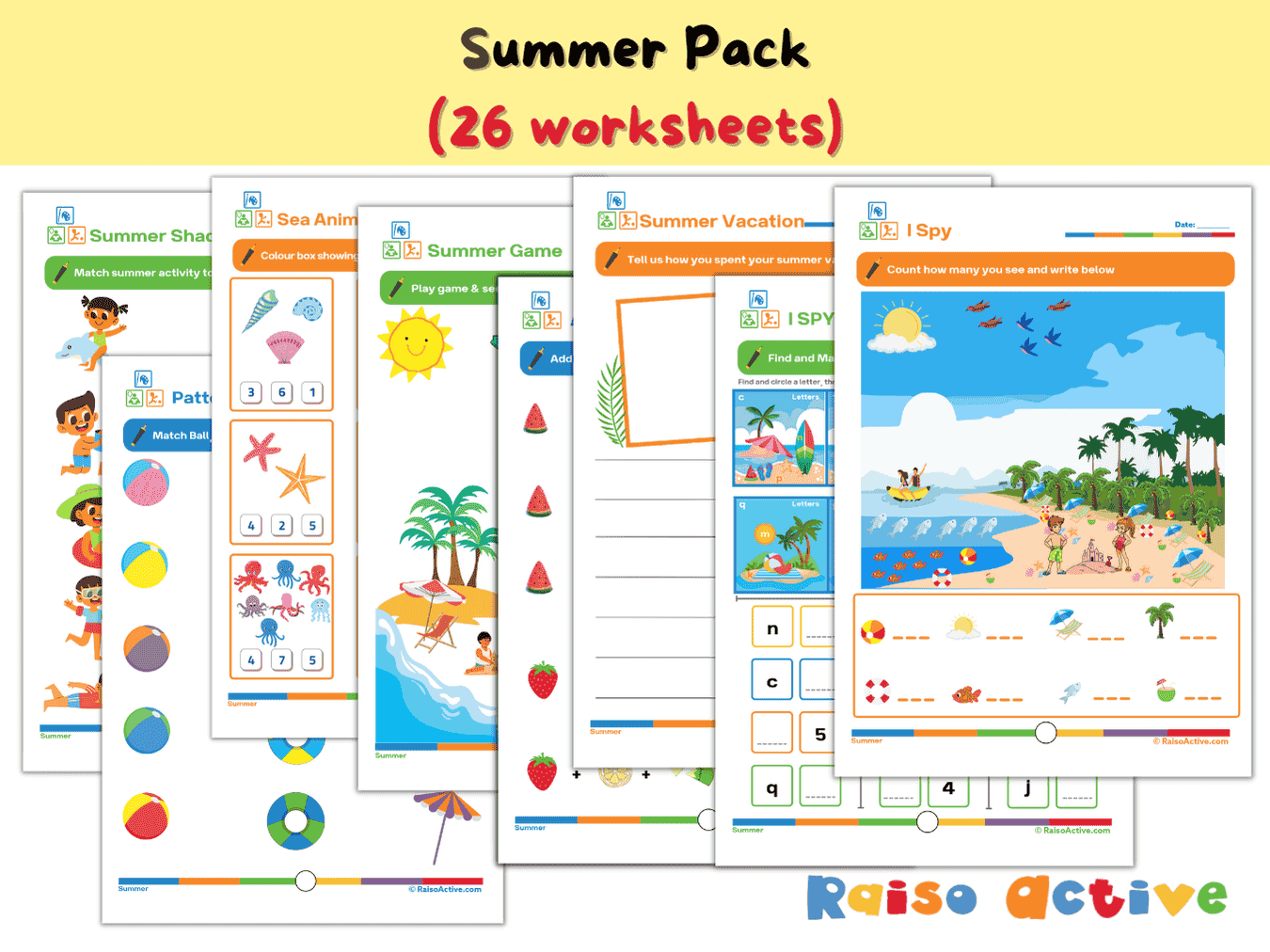
Summer Activity Pack: Math, Literacy, Puzzles & More for Preschool & Kindergarten
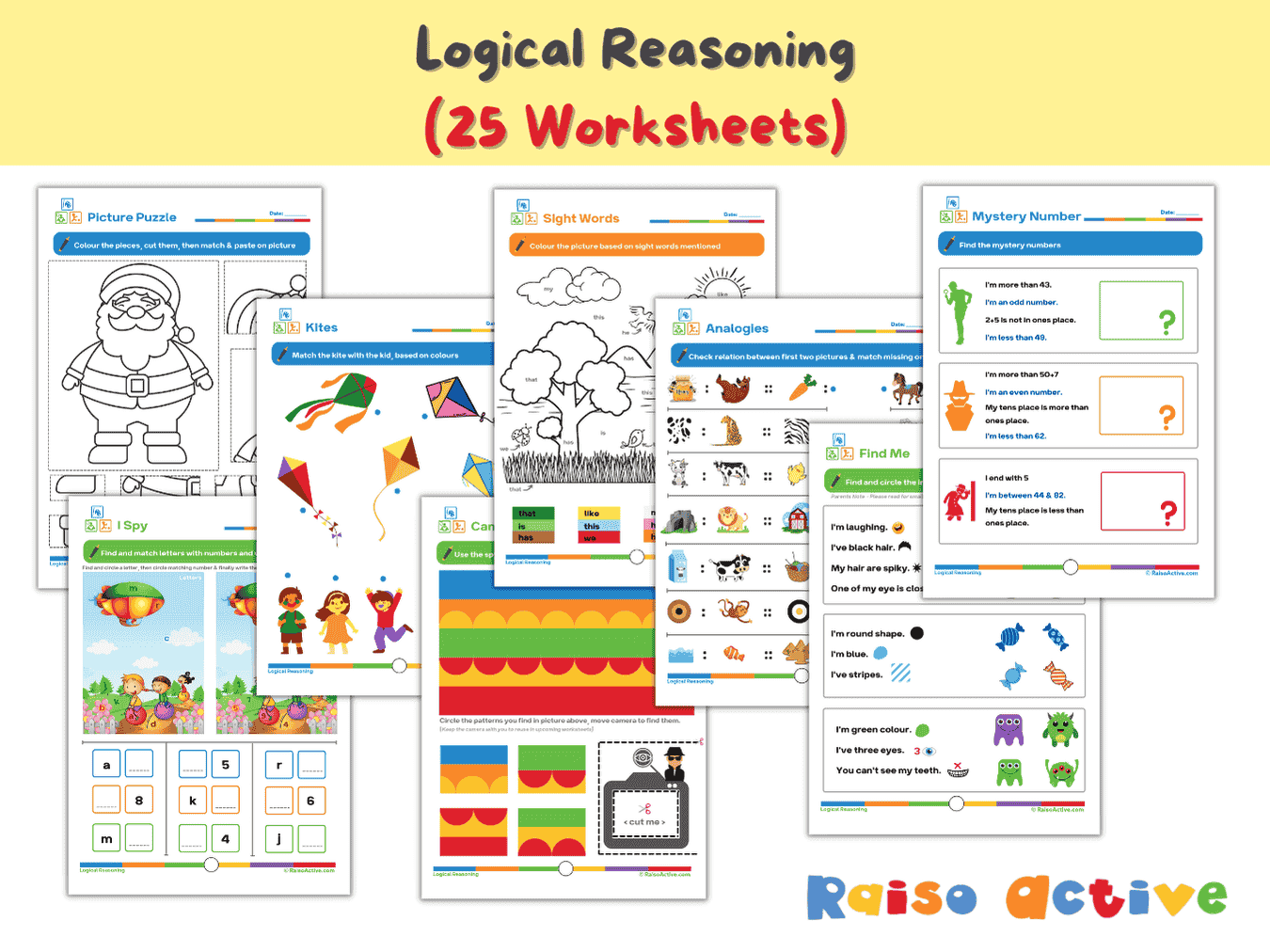
Logical Reasoning Activity Book for Preschool & Kindergarten | Patterns, Puzzles & Analogies
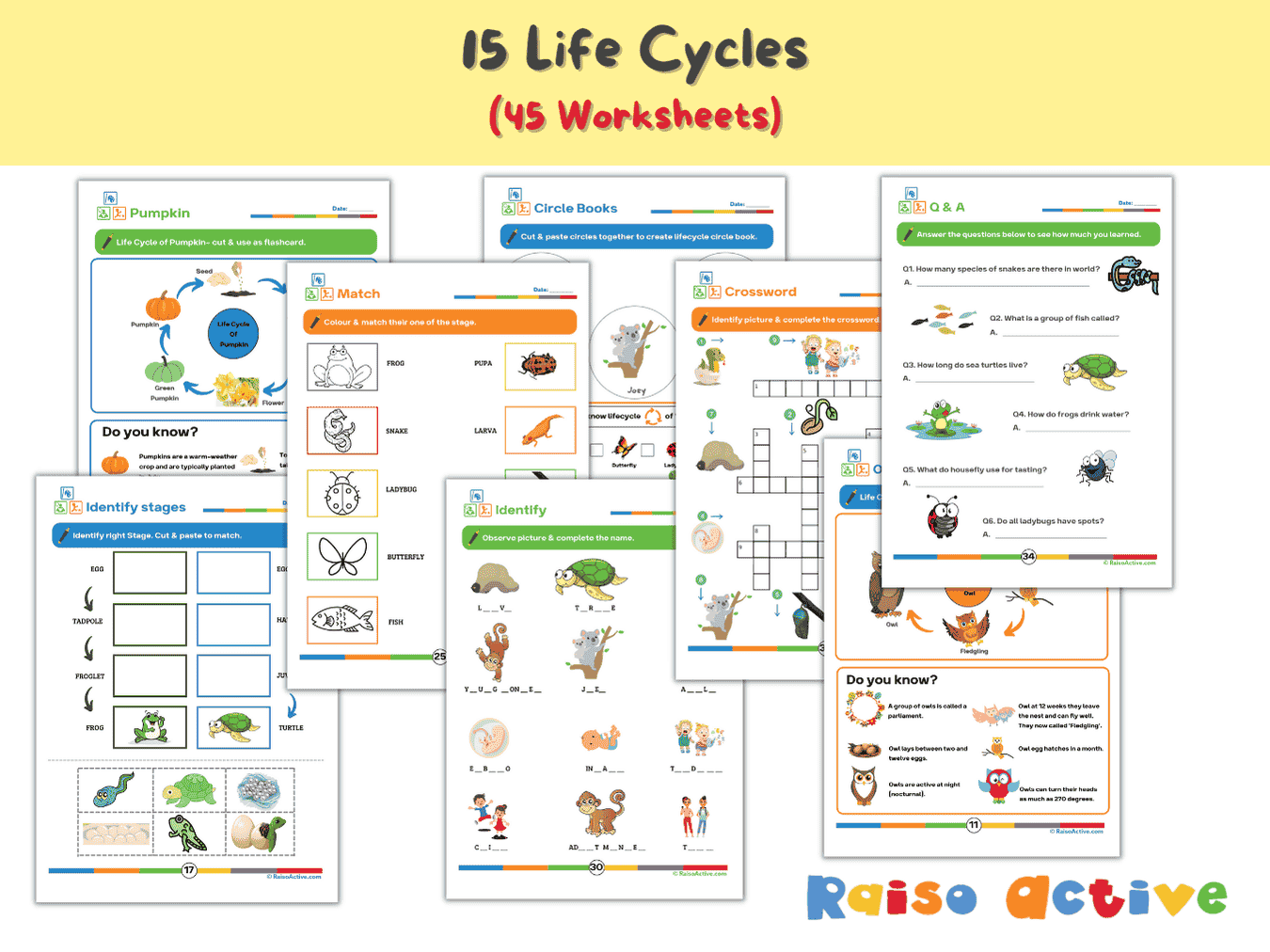
Lifecycles Activity Book & Flashcards for Preschool & Early Elementary
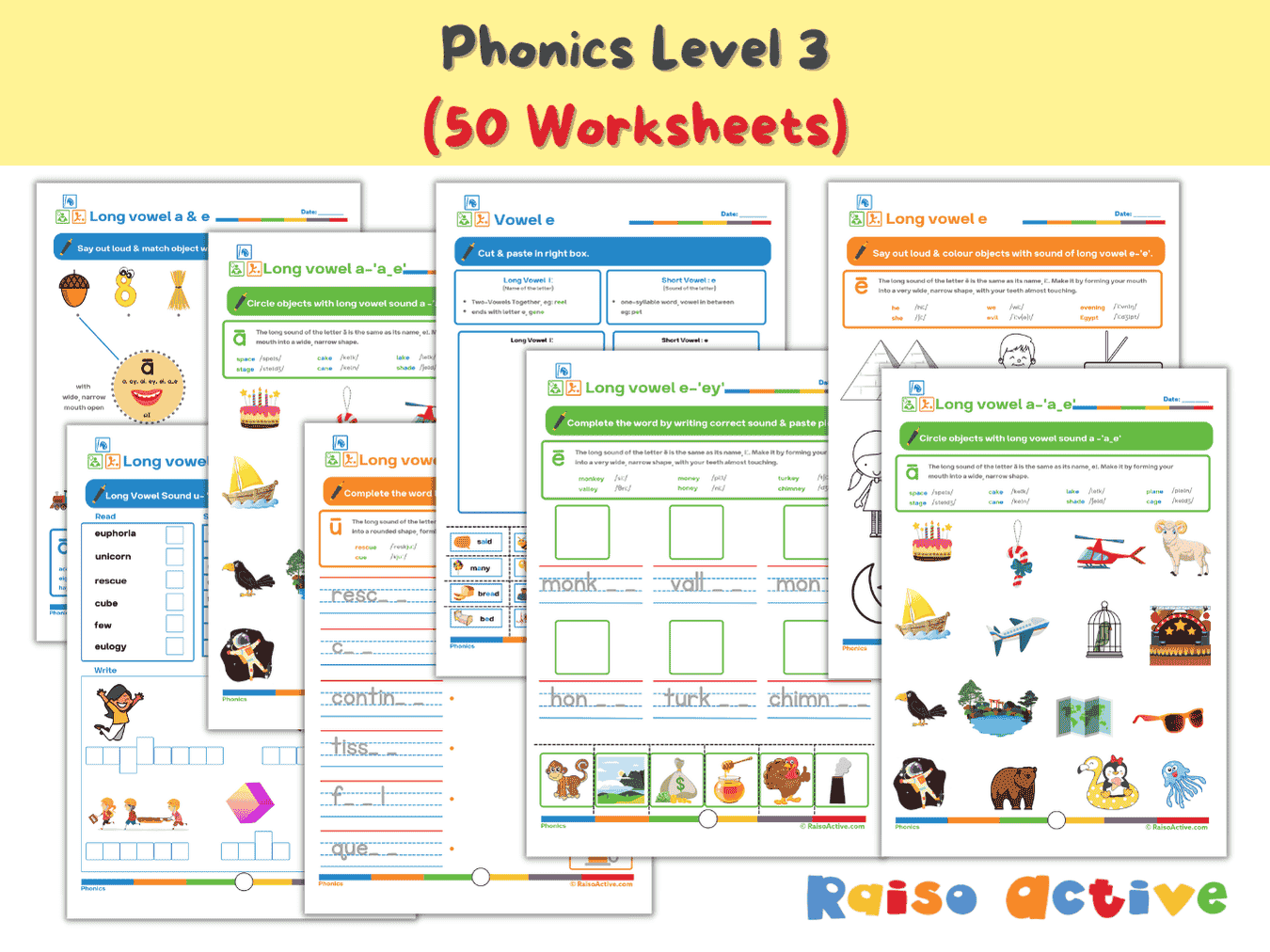
Phonics Level 3 Long Vowels Activity Book for Kindergarten & 1st Grade
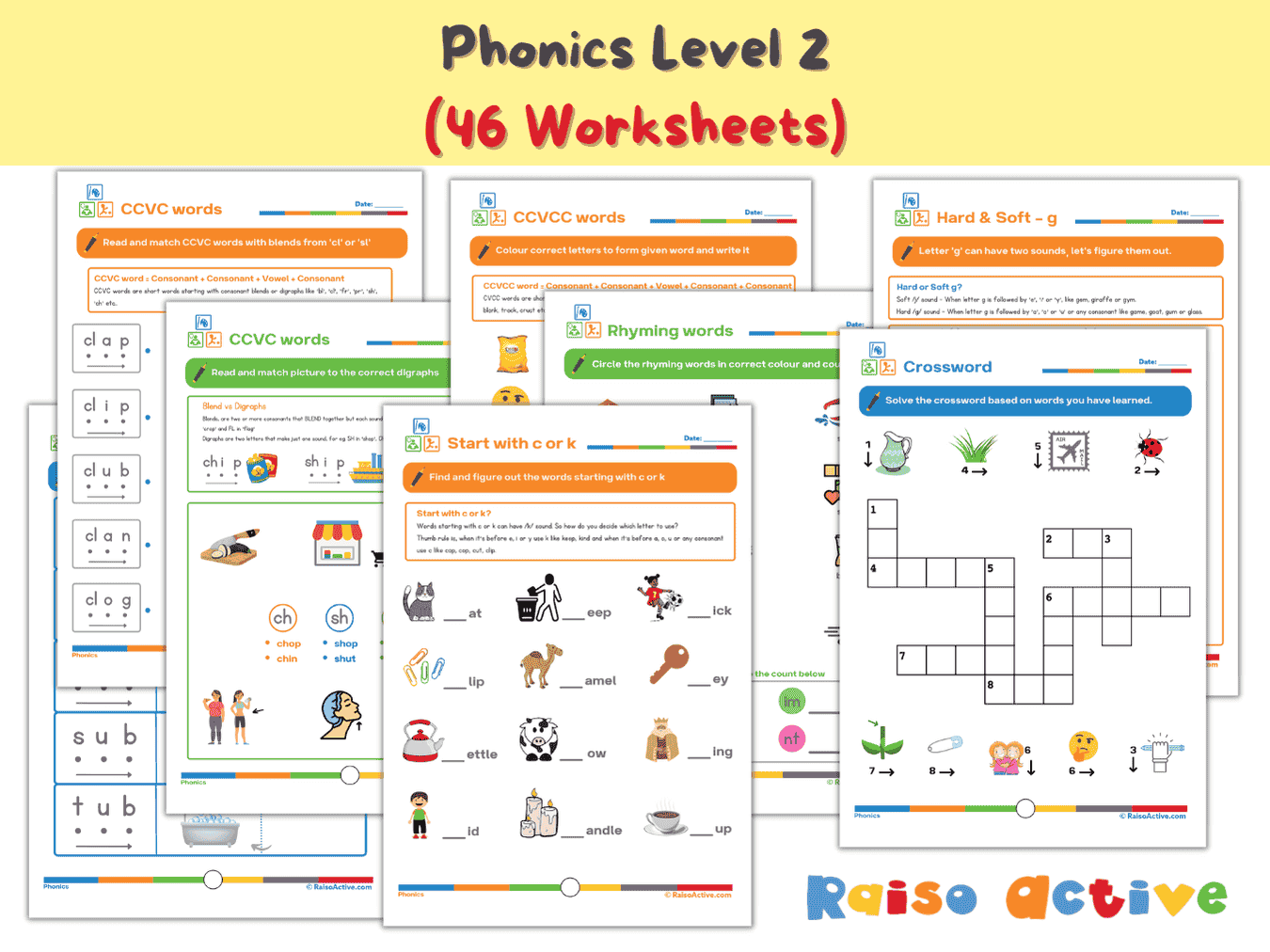
Phonics Level 2 Worksheets: CVC, CCVC, CVCC Word Families & Blends for Early Readers (Ages 4-7)
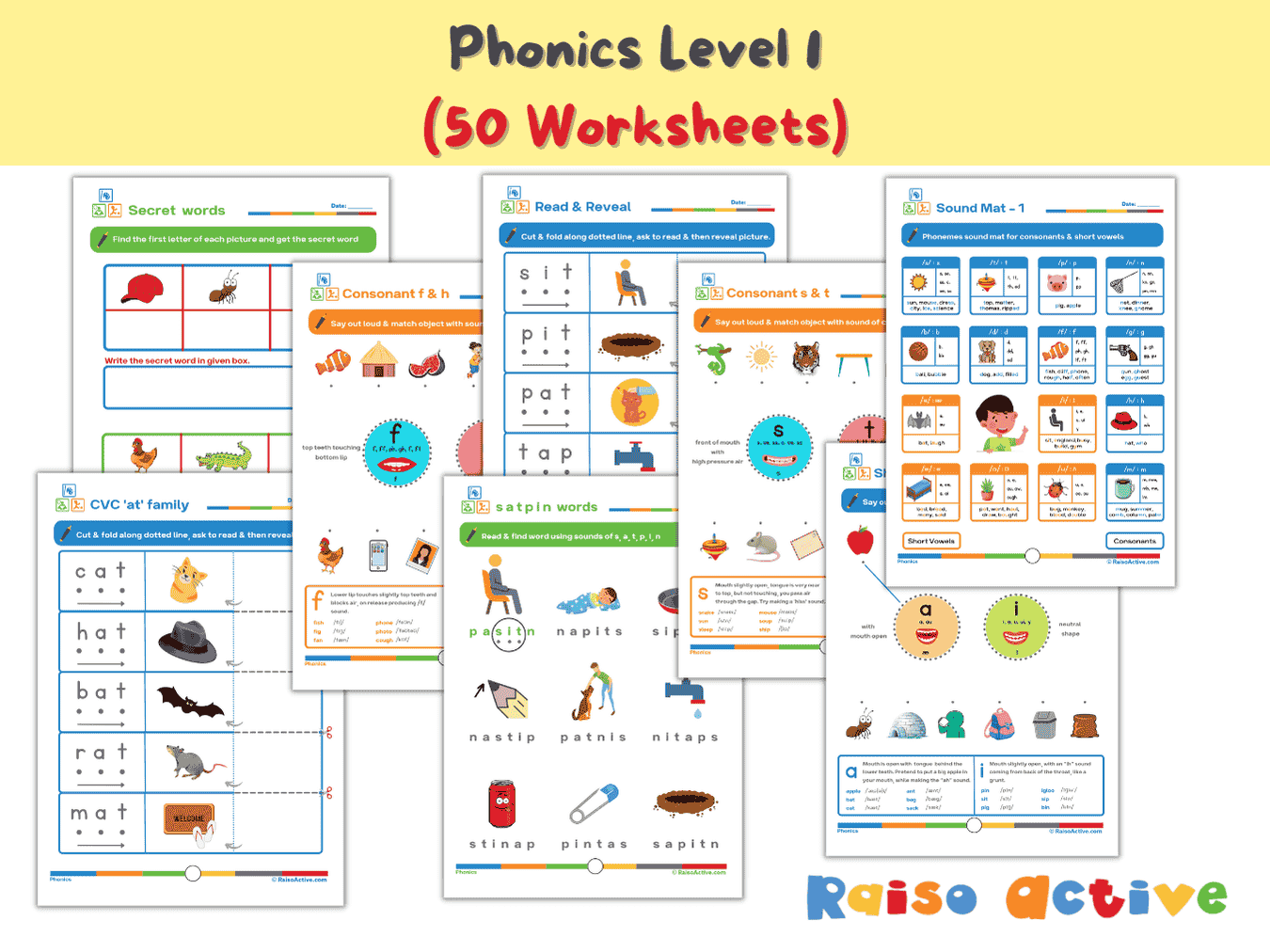
Phonics Level 1 Activity Book: Letter Sounds, Blending & CVC Words for Preschool & Kindergarten
Guides for parents and teachers
See all guides →Number Formation Rhymes 0–9 and How to Fix Reversals
Original number formation rhymes for 0–9, the correct stroke order for each digit, why 3, 5 and 7 get reversed most often, and multisensory fixes that work.
Christmas and Winter Activities That Combine Fun and Learning: Creating Magical Educational Experiences
Discover Christmas and winter activities that combine festive fun with real learning. Crafts, counting, literacy, and printable worksheets for ages 2 to 8 — perfect for home and school.
Age-Appropriate Halloween Learning Activities: Balancing Spooks and Skills for Young Learners
Discover fun, age-appropriate Halloween learning activities for young children. Spooky crafts, counting games, literacy ideas, and printable worksheets for ages 2 to 8.
The Power of Music: How Musical Activities Accelerate Learning Development in Young Children
Discover how musical activities accelerate brain development, phonics, maths, and emotional regulation in children ages 1–8. Practical tips for Indian homes and classrooms.
What's the Best Alternative to ABCmouse? A Complete Parent's Guide to Free and Affordable Educational Apps
ABCmouse runs ~Rs 4,000-5,000/year with US spellings and curriculum. Compare free & affordable Indian-friendly apps like Khan Academy Kids and DIKSHA.
Is Khan Academy Kids Really Free? A Parent's Complete Guide to Costs, Features, and Hidden Fees
Confirmed: Khan Academy Kids has zero subscription fees, ads, or paywalls. See what's included, age-by-age tips, and offline use for Indian families.
Canonical: https://raisoactive.com/worksheets/first-grade-connect-the-dots