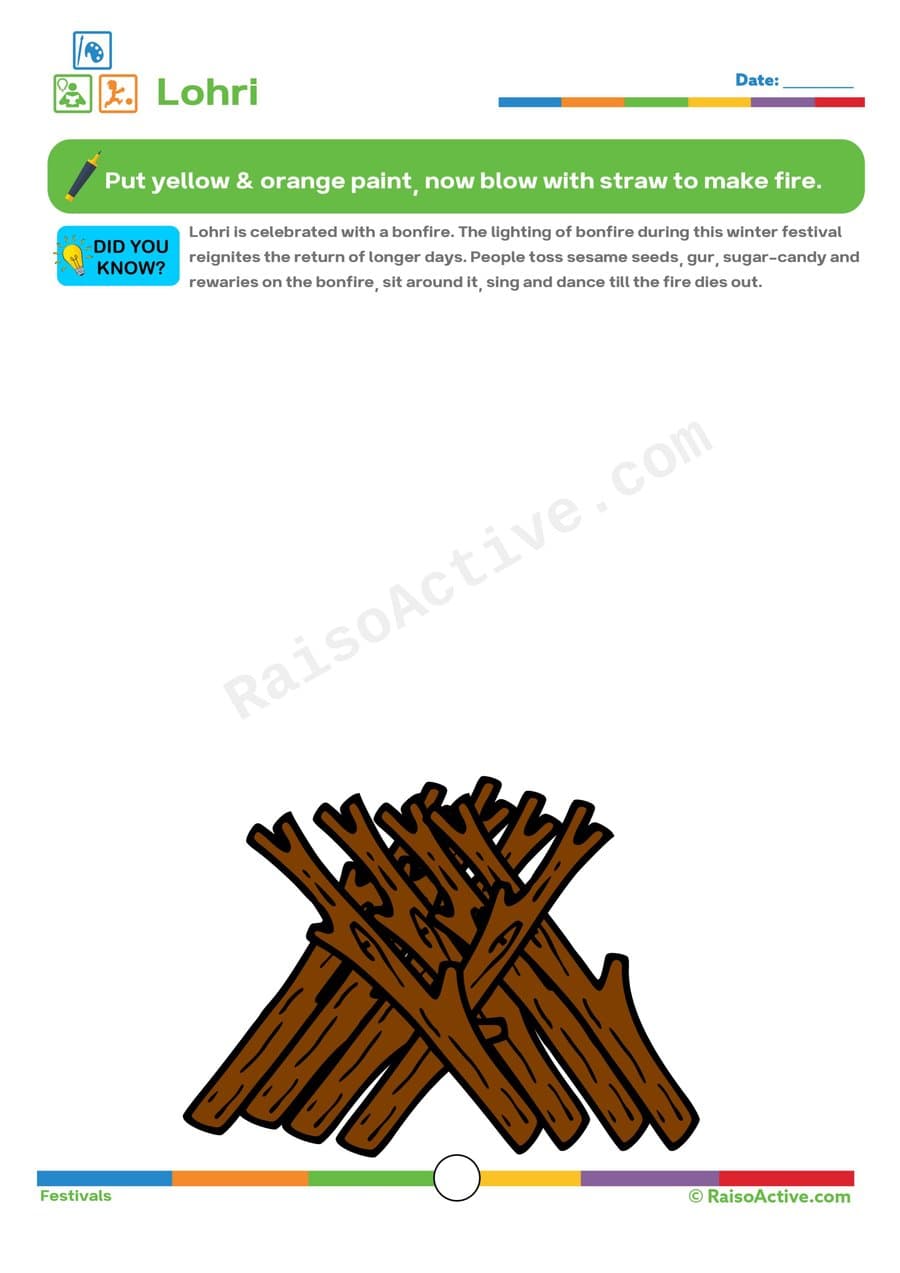
Lohri Bonfire Craft: Color and Blow!
This worksheet combines coloring practice with a simple sensory science activity, helping children ages 3-5 learn about the Lohri festival bonfire tradition while exploring how blowing air can create the illusion of flickering flames. The hands-on painting and blowing step introduces an early, playful science concept about air movement.
Curriculum
How to use this worksheet
Have your child color the bonfire picture first using crayons or colored pencils. Next, help them add small amounts of yellow and orange paint near the top of the fire shape. Give your child a straw and show them how to gently blow the wet paint outward to create flame-like streaks, supervising closely during this step. Let the painted flames dry before admiring the finished bonfire scene together.
Materials needed
- Crayons or colored pencils
- Yellow and orange paint
- Straw
Extension activities
- •Discuss the Lohri festival and its traditions, including why families gather around a bonfire.
- •Create a bonfire scene using other materials, like construction paper flames and cotton for smoke.
- •Practice blowing through a straw onto plain paint to create abstract art before trying the flame effect.
- •Sing or listen to a traditional Lohri song together.
- •Talk about fire safety and why real bonfires need adult supervision.
Tips for parents and teachers
Encourage children to be creative with their coloring and blowing techniques, since the paint-blowing effect will look different every time. Help them understand the concept of making fire safely, distinguishing this craft activity from real flames. Supervise the blowing step closely, both to avoid inhaling paint and to help direct the straw for the best flame effect.

Written by
Hemsweta Jain · Teacher Cheena
MBA and Early Childhood Educator, teaching since 2014 · Founder of RaisoActive, Mumbai
Every RaisoActive worksheet is designed and checked by the founder before publishing.
Published · Last reviewed
Related worksheets

Stick Man Emotions Worksheet: Happy, Sad, Angry, and Surprised!
Children ages 4-6 practice reading facial expressions on this worksheet, matching stick-figure faces to their correct emotion labels by noticing details like mouth shape and eyebrow position. This strengthens emotional literacy — the ability to name and recognize feelings in others — which supports empathy and smoother social interactions as children move into more group play and classroom settings.
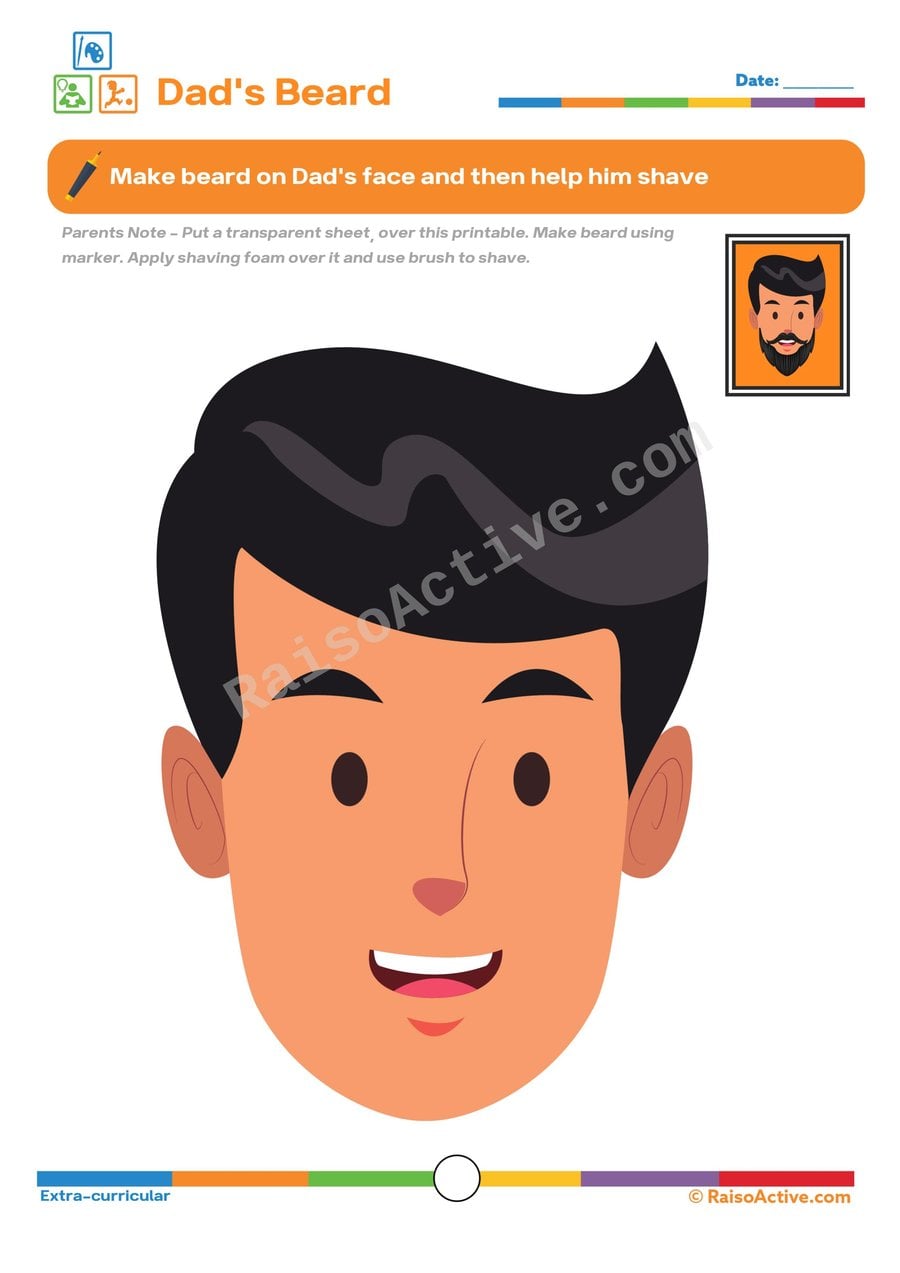
Dad's Beard: A Fun Shaving Activity for Kids!
This playful pretend-shaving activity builds fine motor control and bilateral coordination in children ages 3-5, as they draw a beard with a marker and then 'shave' it away using foam and a brush in careful, controlled strokes. It also introduces a simple science idea — that shaving foam can be applied and removed in layers — while giving children a hands-on, sensory way to imitate an everyday grown-up routine.

Coloring Worksheet: Identify and Color the Symbols!
This worksheet introduces children ages 3-5 to national symbols by having them color each one and then match or write its name from a list of options. Beyond fine motor coloring practice, naming each symbol builds early cultural knowledge and category-matching skills, since children must connect a picture to the correct word rather than color at random.

Learn India's National Symbols: A Dot-to-Dot Worksheet
Connecting numbered dots to reveal each national symbol builds fine motor control and number-sequence recognition in children ages 3-5, since they must find and connect dots in the correct numerical order to form a recognizable picture. As each symbol emerges from the dots, children also gain early familiarity with important national imagery and its name.
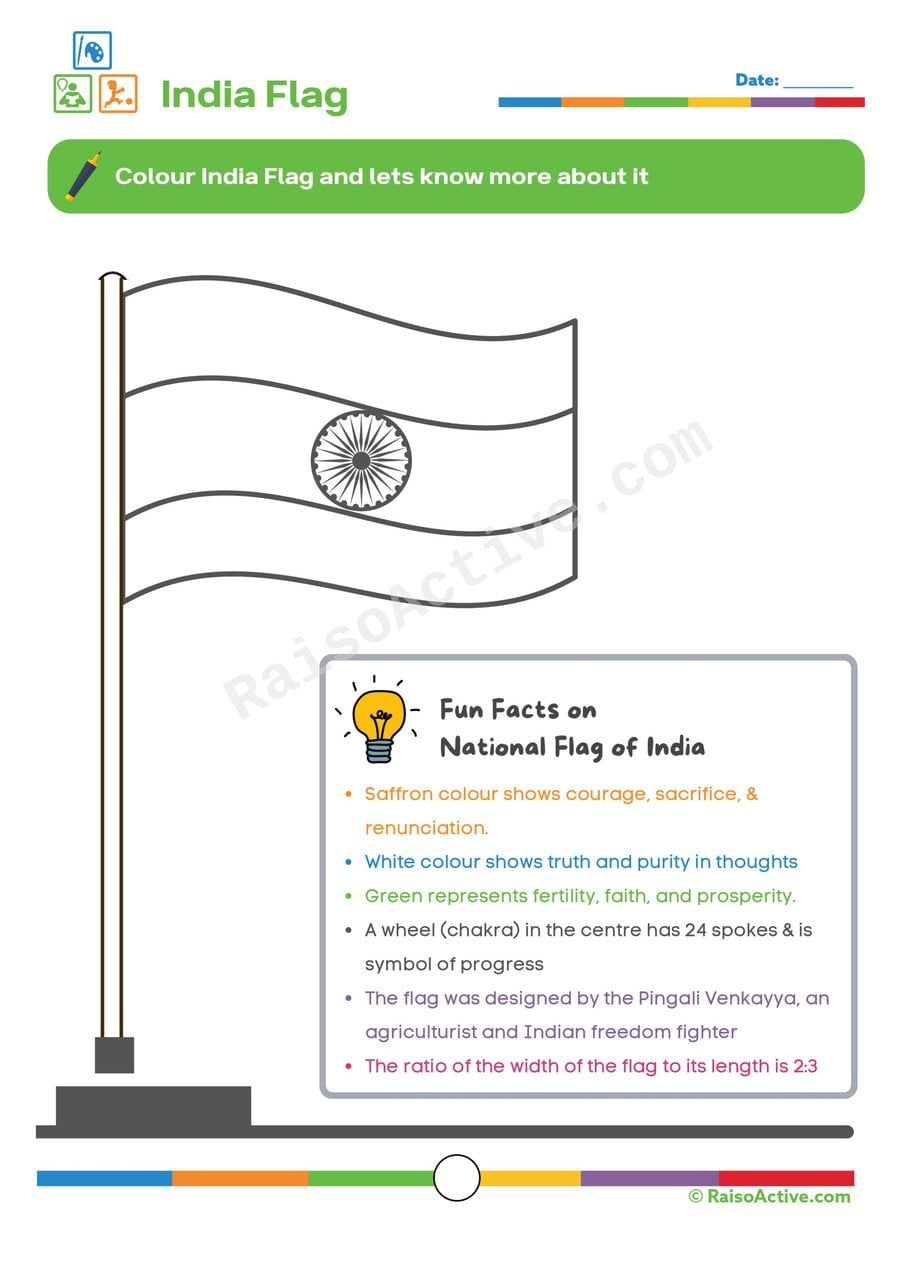
Color the India Flag Worksheet for Preschoolers
This worksheet teaches children ages 3-5 the three colors and layout of the Indian national flag, saffron, white, and green with the navy wheel, while practicing careful, section-by-section coloring. Reading a few simple facts about the flag alongside the coloring also introduces the idea that national symbols carry meaning, an early building block for civic and cultural awareness.
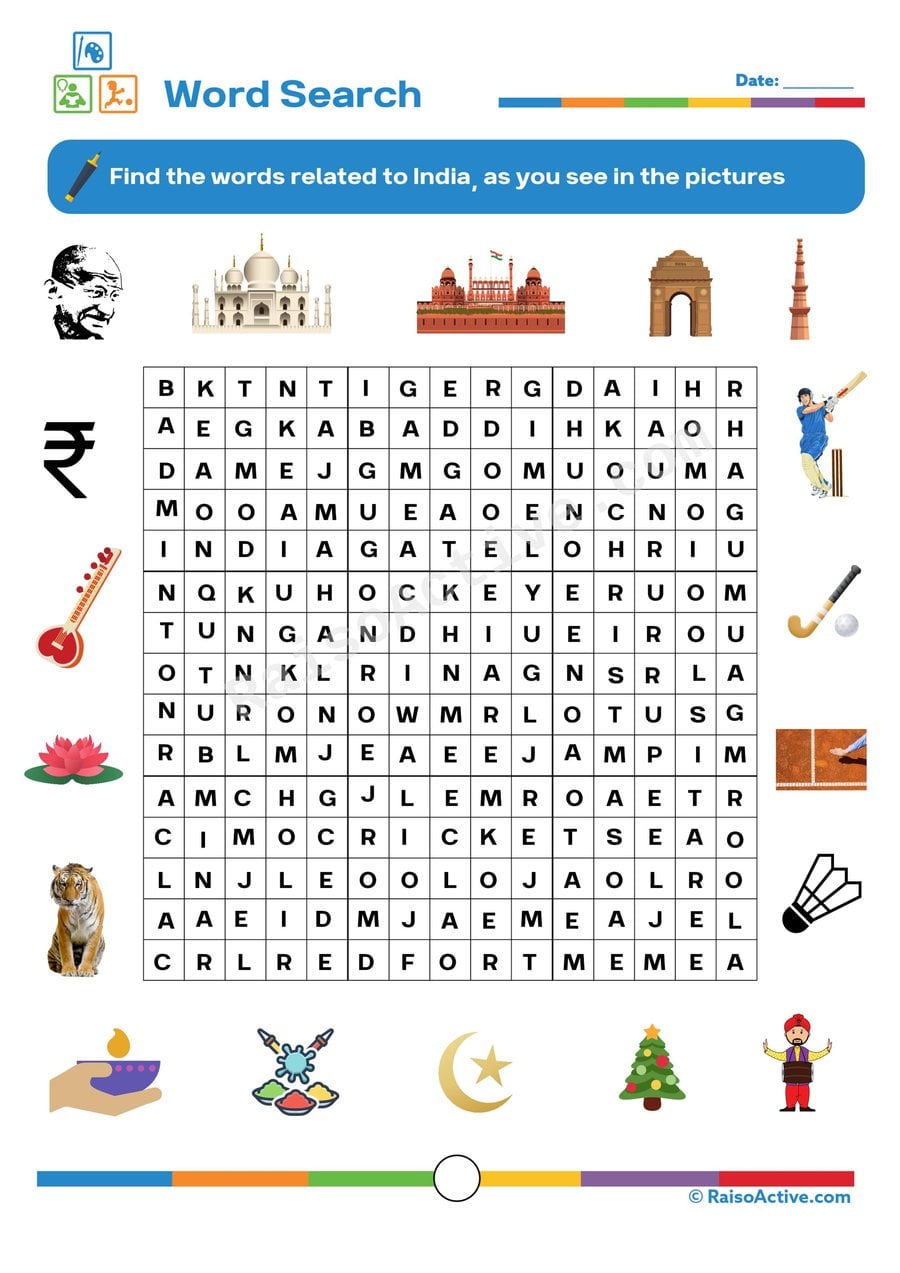
India Word Search Worksheet for Kids
Searching a letter grid for words connected to India, such as festival names, foods, or landmarks, builds visual scanning and word-recognition skills in children ages 4-7 while introducing vocabulary tied to Indian culture and geography. Because the target words vary in length and may run in different directions through the grid, children also practice sustained visual attention and letter-sequence tracking, both important pre-reading skills. This worksheet pairs literacy practice with cultural and social studies exposure in a single activity.

Happy Easter Coloring Card Worksheet for Preschoolers
Coloring the Easter egg and bunny images on this fold-into-a-card worksheet gives children ages 3-5 practice with controlled crayon strokes and color choice, while the act of turning their artwork into a card for someone else introduces an early sense of purpose and gift-giving. Because the finished piece becomes a keepsake rather than just a worksheet, children also build pride and motivation to complete their coloring carefully. This blends fine motor practice with a first taste of creating something meaningful for another person.

Spider Count Worksheet: Finger Painting Fun for Halloween!
Dabbing fingertips or Q-tips in paint to create the exact number of spiders shown on each web gives children ages 3-5 hands-on practice with one-to-one counting while also strengthening the small hand muscles needed for pencil control later on. Because each web has a target number, children must count as they paint rather than just decorating freely, which reinforces number recognition in a playful, low-pressure way. The messy, sensory nature of finger painting also supports focus and engagement at an age when seated paper-and-pencil tasks can be hard to sustain.
Guides for this topic
Fostering Creativity in Structured Learning: The Perfect Balance for Young Minds
Learn how to blend creativity with structured learning for children ages 1-8. Practical strategies, activities, and printable worksheets for parents and teachers.
Bridging Two Worlds: A Complete Guide to Teaching Heritage Languages Alongside English
A practical guide to raising bilingual children who speak both their heritage language and English with confidence. Research-backed strategies, activities, and tips for Indian families.
Empowering Multilingual Learners: Essential Resources and Strategies for Bilingual and Multilingual Children
Discover research-backed strategies, activities, and free printable resources to support bilingual and multilingual children ages 1-8. Practical tips for Indian families raising confident multilingual learners.
Reviews
Every worksheet for ages 3–5, no watermark
Members download the full library of 1,000+ worksheets and every activity pack without watermarks or daily limits. One year costs ₹1,000 in India or $20 elsewhere.
See membership plansOr download any worksheet free with a watermark (5 a day).