Free printable worksheets · India
UKG Connect the Dots Worksheets (Ages 5–6)
UKG connect the dots worksheets are practice sheets for children aged 5–6 in Upper Kindergarten (Senior KG) in India. Connect the dots is joining a series of numbered or lettered dots in order with a pencil line to reveal a hidden picture. The sheets on this page cover counting or sequencing in order, fine motor control drawing straight segments and letter or number recognition when dots are labeled.
Upper Kindergarten shifts from recognising symbols to using them: children blend letter sounds into words, write short sentences, and solve small addition and subtraction sums instead of only counting objects. Numbers extend to fifty, and the plus and minus signs appear on the page for the first time. Five-year-olds count to 30 and then 50 through a picture, join lowercase letters a to z, count by 10s to 100, and count backwards from 20. Dots are denser and the outline is hidden until the end, so scanning has to be systematic. A pencil replaces the crayon and lines should be reasonably straight. A wrong line shows exactly which number the child is unsure of, which makes these sheets a useful check as well as practice.
379+ worksheets · free PDF download · print on A4 or Letter
UKG Connect the Dots Worksheets to print
Browse all worksheets for ages 5–6
Connect the Dots: Mushroom House Worksheet for Kids (Numbers 26-50)
Extending number sequencing into the 26-50 range pushes children ages 4-6 past the more familiar 1-20 span while reinforcing the fine motor control needed to draw controlled connecting lines that reveal a mushroom house picture.
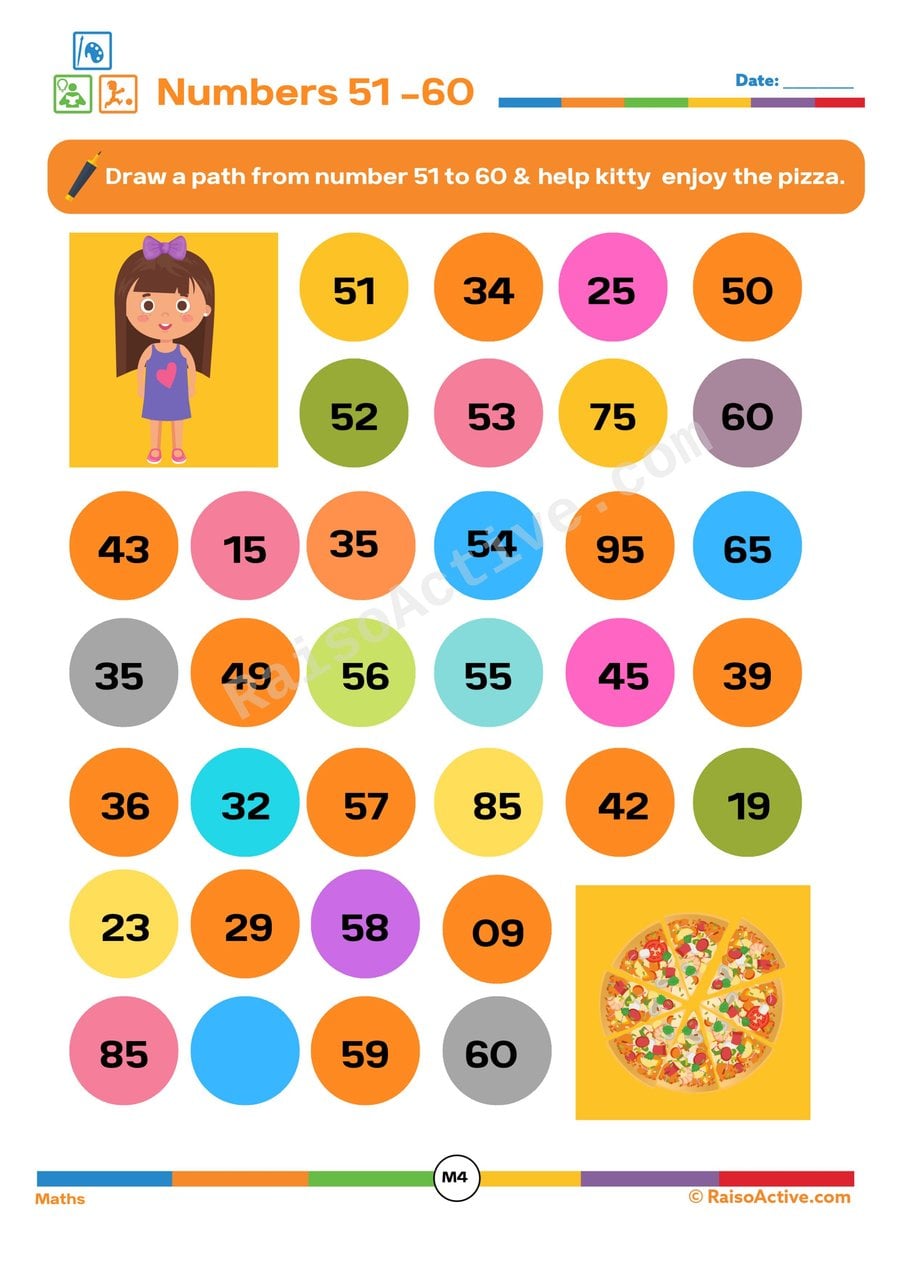
Pizza Path: Numbers 51-60 Worksheet for Kids
Connecting the dots from 51 to 60 in order pushes children ages 4-5 beyond the more familiar 1-20 range, helping them recognize two-digit numbers and understand that counting sequences continue predictably into higher decades. This dot-to-dot format turns number recognition into a rewarding visual payoff, since a hidden pizza picture only appears once every number is found and connected correctly. It's a motivating way to practice number order without it feeling like repetitive drilling.

Connect the Dots: Hidden Shape Worksheet for Kids
Children ages 3-5 practice counting in sequence and fine motor line control as they connect numbered dots in order to reveal a hidden shape, combining numeracy with hand-eye coordination in one satisfying activity. The surprise of a shape emerging only once every dot is connected correctly also motivates children to stay careful and accurate rather than rushing through the numbers.
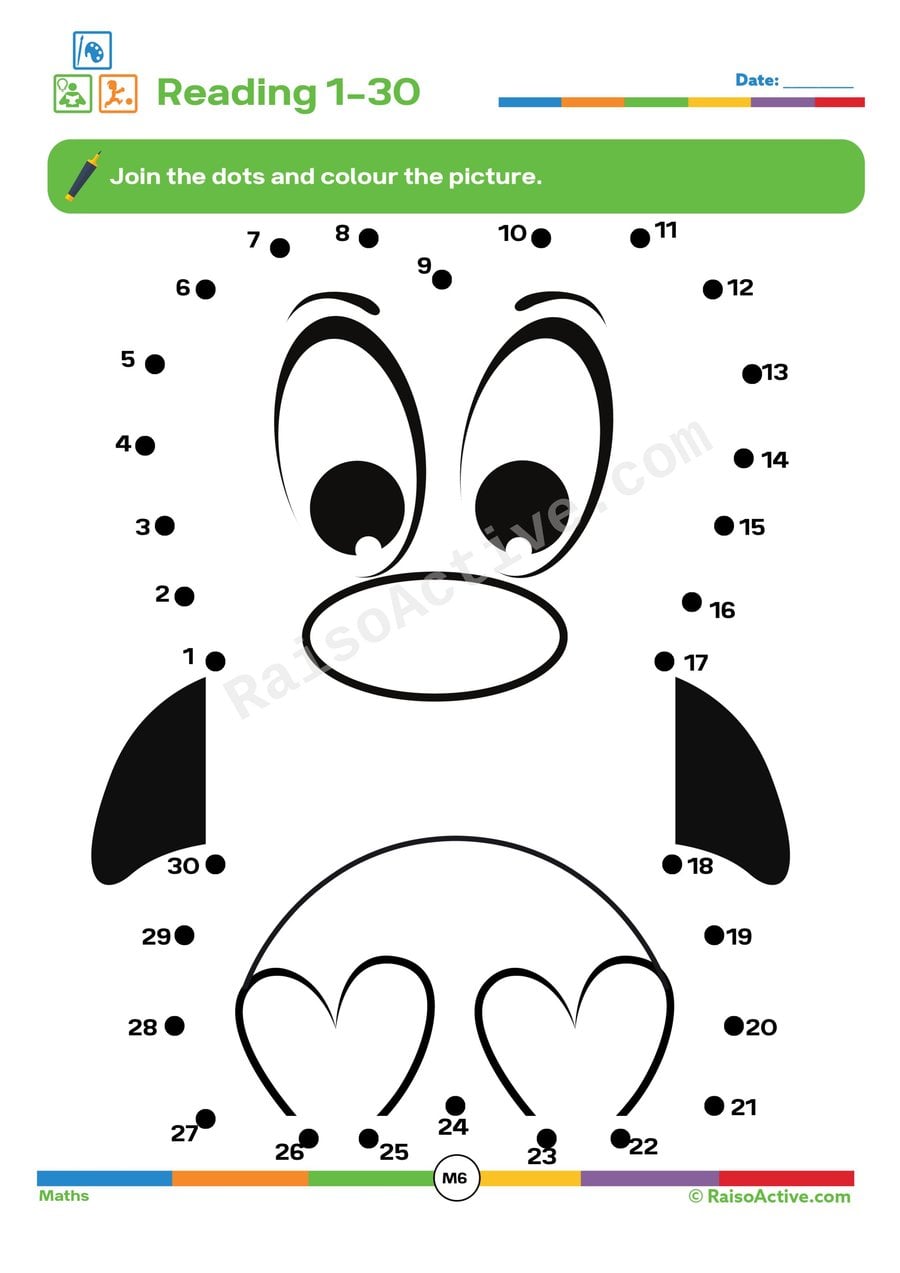
Connect the Dots Penguin Worksheet for Kids
Connecting numbered dots in order to reveal a penguin picture helps children ages 3-5 practice counting in sequence while building the fine motor control needed to draw a steady connecting line. The surprise of watching a recognizable picture emerge gives extra motivation to count carefully all the way to the end.

Learn India's National Symbols: A Dot-to-Dot Worksheet
Connecting numbered dots to reveal each national symbol builds fine motor control and number-sequence recognition in children ages 3-5, since they must find and connect dots in the correct numerical order to form a recognizable picture. As each symbol emerges from the dots, children also gain early familiarity with important national imagery and its name.

Dot-to-Dot Snail Worksheet: Counting Numbers 1-30!
This dot-to-dot worksheet challenges children ages 3-5 to count and connect numbers from 1 to 30 in sequence, extending their number-order knowledge well past the more common 1-10 range while also building fine motor control as they draw connecting lines. Successfully completing a longer sequence like this gives children a real sense of accomplishment tied directly to numeracy.

Connect the Dots: Ganesha Face Worksheet for Kids
This worksheet strengthens number sequencing from 1 to 30 and fine motor pencil control in children ages 3-5 as they connect dots to reveal a Ganesha face. Following a long numeric sequence builds number order fluency beyond simple counting, while the resulting picture rewards sustained focus with a satisfying reveal.

Connect the Dots: Help the Prince Find the Princess! Numbers 1-25 Worksheet
Locating dots in order from 1 to 25 and drawing a steady connecting line combines number recognition and sequencing with the pencil control children ages 3-5 need for handwriting readiness.

Unicorn Dot-to-Dot Worksheet: Connect the Numbers!
Connecting fifty numbered dots in sequence gives children serious practice with number order and one-to-one counting while also demanding steady pencil control to draw a continuous line from point to point. The reveal of a unicorn picture at the end provides a built-in reward that keeps motivation high through a task that requires more sustained focus than a typical preschool counting page.

Tens and Ones Worksheet: Practice Place Value with Fun Elephants!
This worksheet has children break two-digit numbers into their tens and ones parts, then apply that understanding to simple addition and subtraction, a natural next step once place value clicks. For ages four to six, using the playful elephant images keeps a fairly abstract math concept approachable while still building the numerical foundation they'll rely on for years of arithmetic to come.

Subtraction Worksheet: Count and Subtract for Preschoolers
This worksheet introduces children ages 4-6 to subtraction by having them count a group of objects, take away the indicated amount, and write the resulting difference. Grounding subtraction in physical counting rather than abstract number facts helps children build real number sense, understanding subtraction as 'taking away' rather than just memorizing symbols and answers.
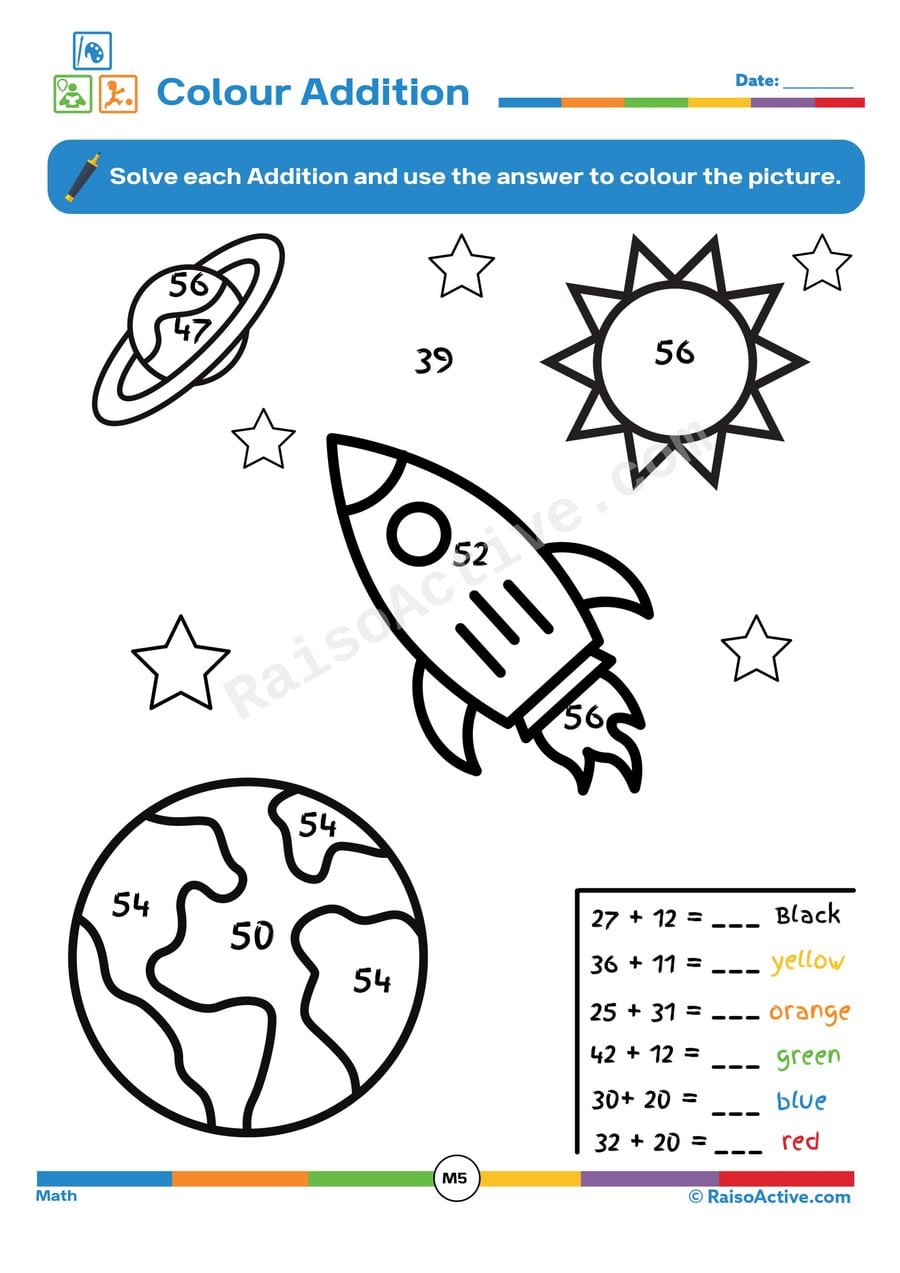
Color Addition Worksheet: Space Adventure!
This worksheet builds addition fluency by having children solve simple equations and then use each answer to determine which color to use in a corresponding section of a space-themed picture. For five- to seven-year-olds, this color-by-number format adds motivation to solve each problem accurately, since a wrong answer means the wrong color goes in the wrong spot and the final picture won't come together correctly.

Dinosaur's Missing Numbers Worksheet: Cut and Paste Fun!
Children ages 4-6 practice number recognition and sequencing in a playful dinosaur theme, identifying which numbers are missing from a sequence and pasting them into the correct spots on a row of eggs. The dinosaur and egg imagery adds motivation and narrative context to what's otherwise a straightforward but important numeracy task — recognizing numerals and understanding their fixed order.
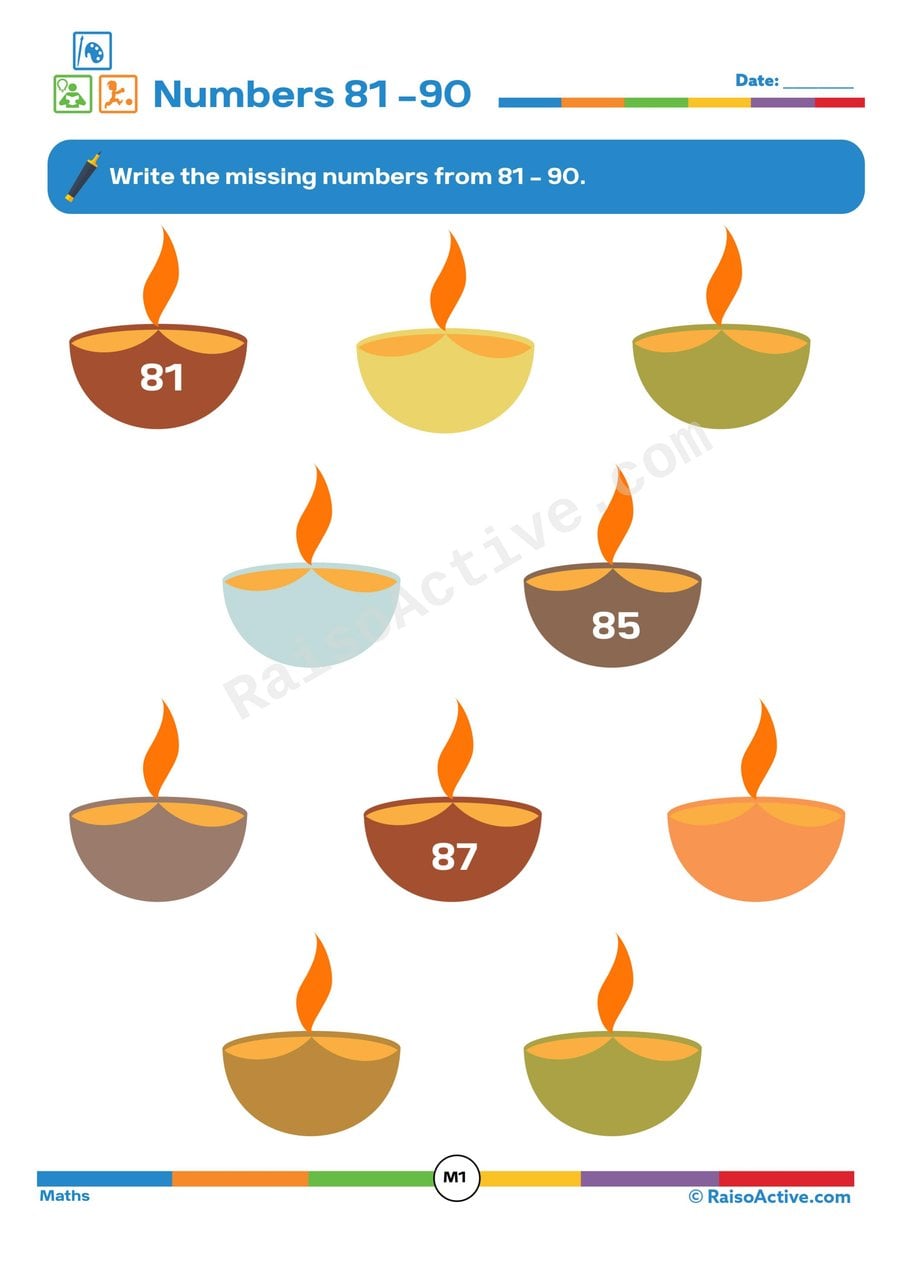
Missing Numbers: Diwali Diyas Worksheet for Kids
Children ages 4-6 practice number sequencing within the 81 to 90 range by identifying and writing missing numbers on a set of Diwali-themed diyas. Working with numbers in the 80s pushes children beyond the more familiar 1-20 range, reinforcing that the same counting pattern continues predictably into higher numbers. This festive theme also connects math practice to a meaningful cultural celebration, making the abstract number work feel relevant.

Comparing Numbers Worksheet: Greater Than, Less Than, and Equal To!
Children ages 4-6 learn to compare two numbers and choose the correct symbol — greater than, less than, or equal to — building an essential foundation for later work with inequalities and algebra. Comparing quantities and representing the relationship symbolically is a more abstract skill than simple counting, so this worksheet stretches children just past straightforward number recognition into true numerical reasoning.

Apples to Basket: Sorting Math Worksheet for Preschoolers
This worksheet combines basic addition and subtraction practice with sorting skills as children ages 4-6 solve a math problem written on each apple, then decide which basket it belongs in based on whether the answer is more or less than a target number. Categorizing numbers by size after calculating them adds a layer of number-sense reasoning beyond simply finding the right answer.

Sheep's Barnyard Adventure: A Fun Counting and Movement Worksheet
This board-game-style worksheet helps children ages 4-6 practice counting and number recognition by rolling a die and moving a sheep piece along a numbered path, following simple instructions at each stop. Turning counting practice into a game with chance and movement keeps children engaged far longer than a static worksheet, while still reinforcing accurate counting and number sequence recognition along the path.

Trace and Write Numbers 11-15: Counting and Writing Worksheet
This worksheet helps children ages 4-6 practice tracing and writing the number words from eleven to fifteen, moving beyond single-digit numbers into the trickier teen range where number names don't always follow an obvious pattern. Matching the number of dots on dice to the correct written number name also reinforces that these longer number words still represent a specific countable quantity.

Before and After Numbers Worksheet for Preschoolers
This number sequencing worksheet asks children ages 4-6 to identify the numbers that come immediately before and after a given number, strengthening their mental number line and reinforcing the concept that numbers exist in a fixed, ordered sequence. This before-and-after reasoning is more demanding than simple counting because it requires children to move both forward and backward from a starting point. Building this flexible number sense supports later addition and subtraction, which both rely on moving confidently along a mental number line.
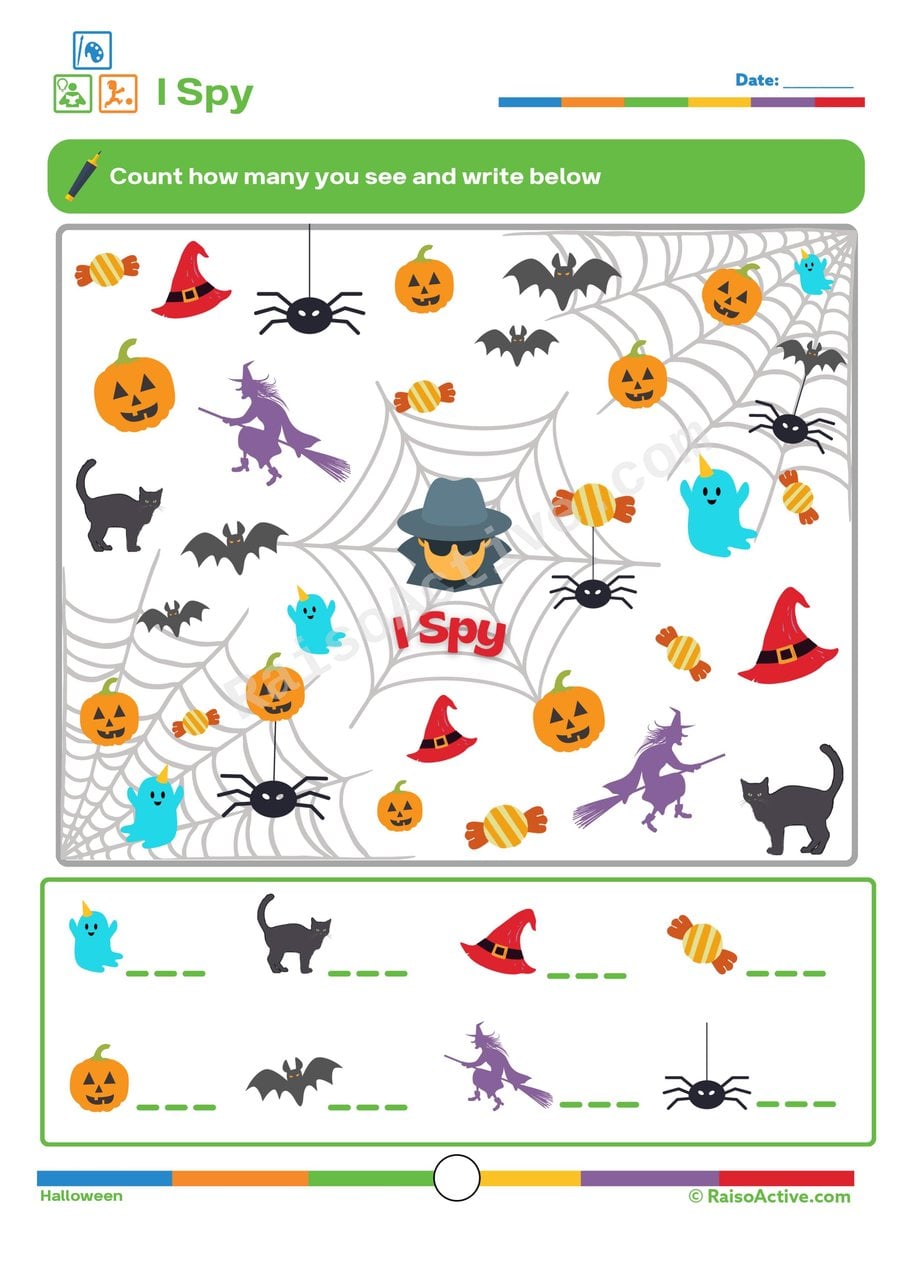
I Spy Halloween Worksheet: Count and Write!
This 'I Spy' worksheet has children ages 4-6 scan a busy Halloween scene to count how many of each specific object appear, then write the total as a numeral, combining visual search skills with number-writing practice. Because several object types are mixed together in one picture, children must also stay organized and avoid recounting the same object twice.

Tens and Ones Worksheet: Counting Fruits and Matching Numbers!
Counting groups of fruit and organizing them into tens and ones builds early place value understanding for children ages 4-6, a foundational concept for reading and writing two-digit numbers correctly.

Tens and Ones Worksheet: Matching and Counting Fun!
Understanding that a two-digit number is made up of groups of ten plus some extra ones is one of the most important early place value concepts for children ages 4-6, forming the foundation for all later multi-digit addition and subtraction. This worksheet combines an equation-matching task with an object-counting task, giving children practice with basic addition facts alongside the specific skill of grouping objects into tens and counting remaining ones. Seeing the same numerical ideas presented in two different formats on one page helps reinforce that place value isn't just an abstract rule but a way of organizing real quantities.

Word Problems Worksheet: Solving for Addition and Subtraction
This worksheet builds the ability to translate real-world scenarios into number sentences, teaching children ages 4-6 to spot clue words like 'gave away' or 'found more' that signal whether to add or subtract. It also practices reading comprehension applied to math, a key step as children move from rote counting toward applied reasoning.

Subtraction Fun: Candy and Treats Worksheet for Kids!
This worksheet gives children ages 4-6 concrete practice with subtraction by counting pictured candies and treats, then taking away a stated amount to find the difference. Using a visually appealing, countable context like candy makes the abstract idea of 'taking away' easier to grasp than numbers alone, helping children build the one-to-one counting and comparison skills that subtraction depends on.
What UKG connect the dots worksheets cover
Five-year-olds count to 30 and then 50 through a picture, join lowercase letters a to z, count by 10s to 100, and count backwards from 20. Dots are denser and the outline is hidden until the end, so scanning has to be systematic. A pencil replaces the crayon and lines should be reasonably straight. A wrong line shows exactly which number the child is unsure of, which makes these sheets a useful check as well as practice.
- Complete a 1 to 30 picture, then one to 50
- Join lowercase letters a to z in order
- Count by 10s to 100 through the dots
- Connect dots that count backwards from 20 to 1
- Draw straight pencil lines between dots instead of crayon
How to use these worksheets at home or in class
Two short sheets a day, roughly fifteen to twenty minutes altogether, keeps a five-year-old moving without overload. Alternate an English page with a maths page so neither subject stalls, and let your child attempt the first few items before stepping in.
Start with the sheet that matches what your child can already do, then move one step up. Keep finished sheets in a folder: UKG teachers often ask for evidence of practice, and children like seeing their own progress.
Is your child ready for UKG connect the dots work?
Before this stage a child should write most capital letters from memory, know the sound each letter makes, count objects accurately to twenty, and sit through a full worksheet without needing a break halfway through.
Frequently asked questions
What does a dot-to-dot show me about my five-year-old's counting?
It shows where the sequence breaks. A line drawn from 29 to 20 instead of 30 means the tens boundary is not secure; a jump from 13 to 15 means the teens need work; a hesitation at 40 or 50 points to the same thing further up. Lowercase alphabet versions reveal b, d, p and q confusions in the same way. Treat the sheet as a check and fix the gap it exposes with counting practice.
What should a UKG child be able to do in connect the dots?
Five-year-olds count to 30 and then 50 through a picture, join lowercase letters a to z, count by 10s to 100, and count backwards from 20. Dots are denser and the outline is hidden until the end, so scanning has to be systematic. A pencil replaces the crayon and lines should be reasonably straight. A wrong line shows exactly which number the child is unsure of, which makes these sheets a useful check as well as practice. Before this stage a child should write most capital letters from memory, know the sound each letter makes, count objects accurately to twenty, and sit through a full worksheet without needing a break halfway through.
Do these worksheets follow the UKG curriculum?
The sheets cover counting or sequencing in order, fine motor control drawing straight segments, letter or number recognition when dots are labeled and completing a picture from a sequence, which sit inside the NEP 2020 Foundational Stage (NCF-FS 2022) outcomes for UKG. Kindergarten (US), Reception / Year 1 (UK) use the same skills at this age, so the sheets also fit families following those programmes.
Are the UKG connect the dots worksheets free to download?
Yes. Every sheet on this page can be downloaded free as a watermarked PDF after creating an account, up to five downloads a day. The annual membership (₹1000) removes the watermark and the daily limit across the full library of more than 1,000 worksheets and all activity packs.

Written by
Hemsweta Jain · Teacher Cheena
MBA and Early Childhood Educator, teaching since 2014 · Founder of RaisoActive, Mumbai
Written and reviewed by Hemsweta Jain (Teacher Cheena), who designs every RaisoActive worksheet.
Last reviewed
Printable packs for ages 5–6
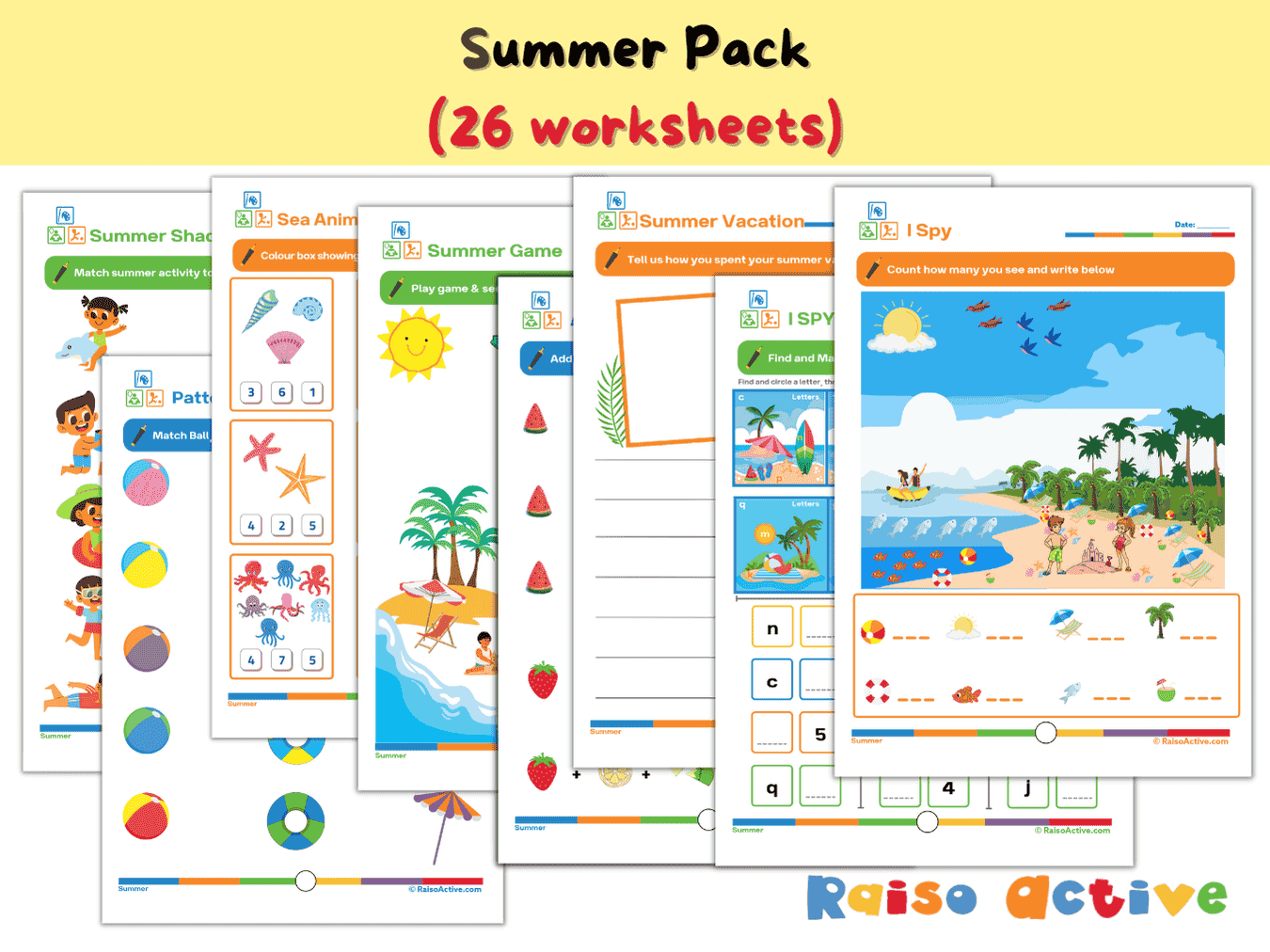
Summer Activity Pack: Math, Literacy, Puzzles & More for Preschool & Kindergarten
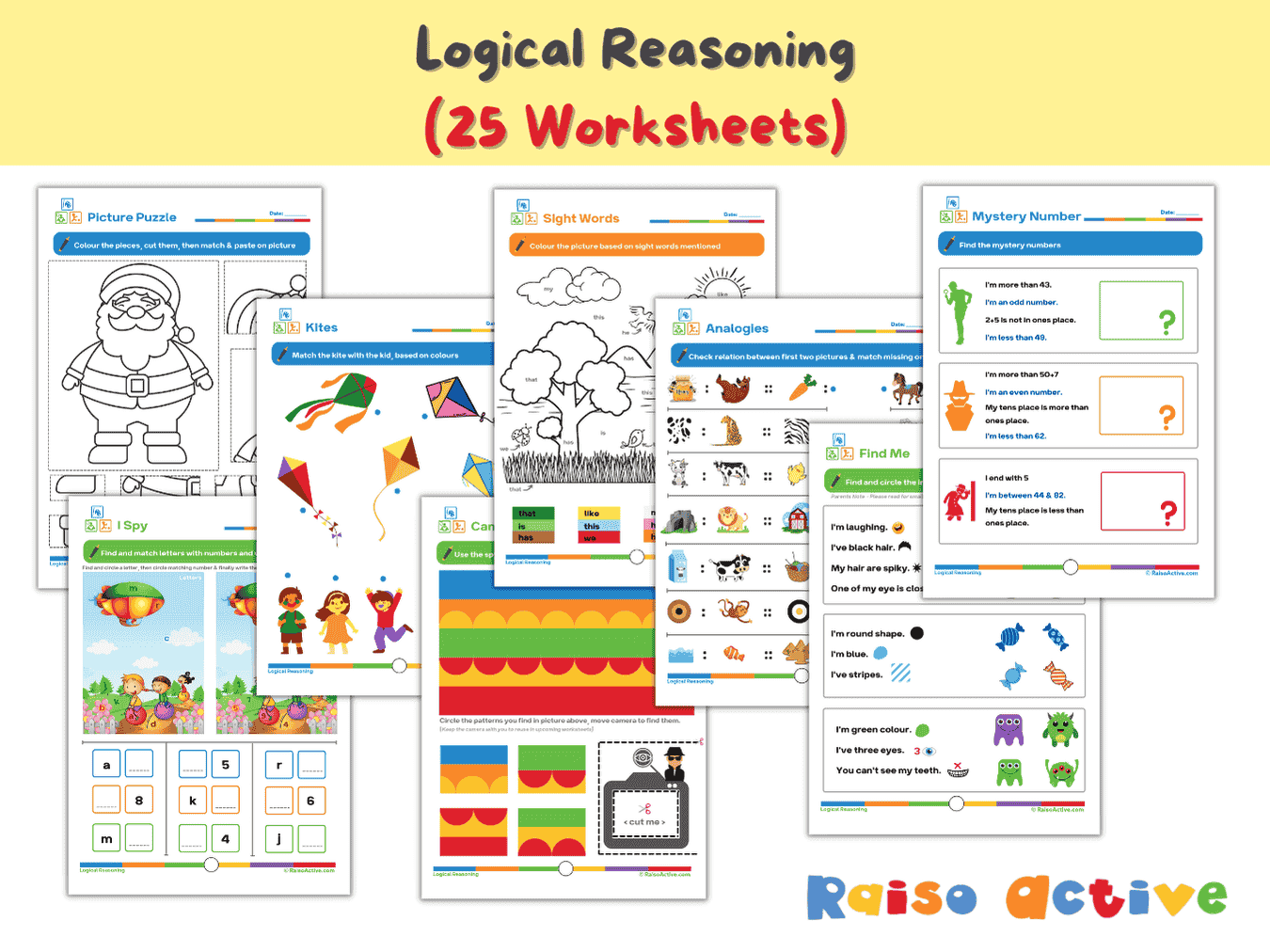
Logical Reasoning Activity Book for Preschool & Kindergarten | Patterns, Puzzles & Analogies
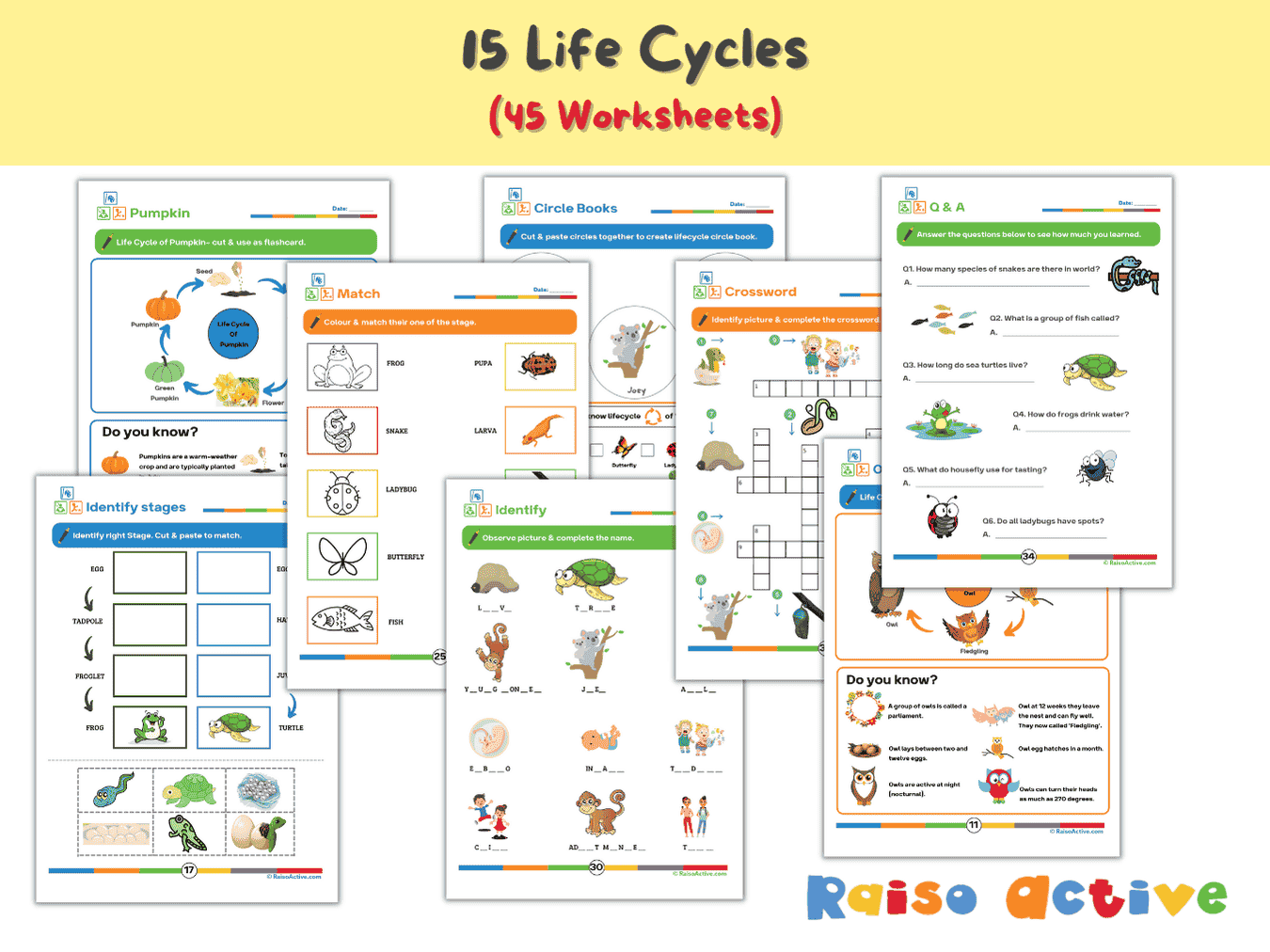
Lifecycles Activity Book & Flashcards for Preschool & Early Elementary
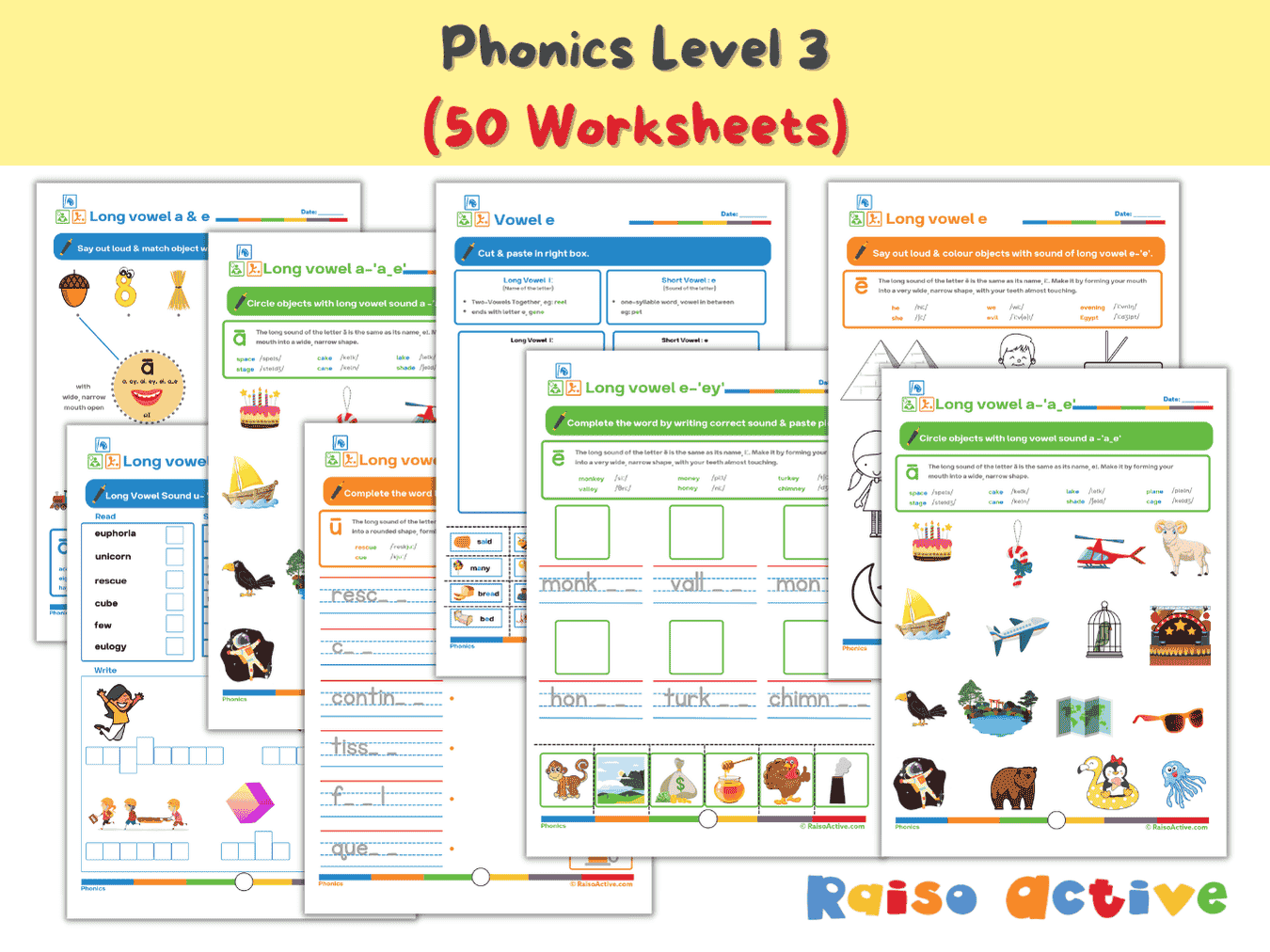
Phonics Level 3 Long Vowels Activity Book for Kindergarten & 1st Grade
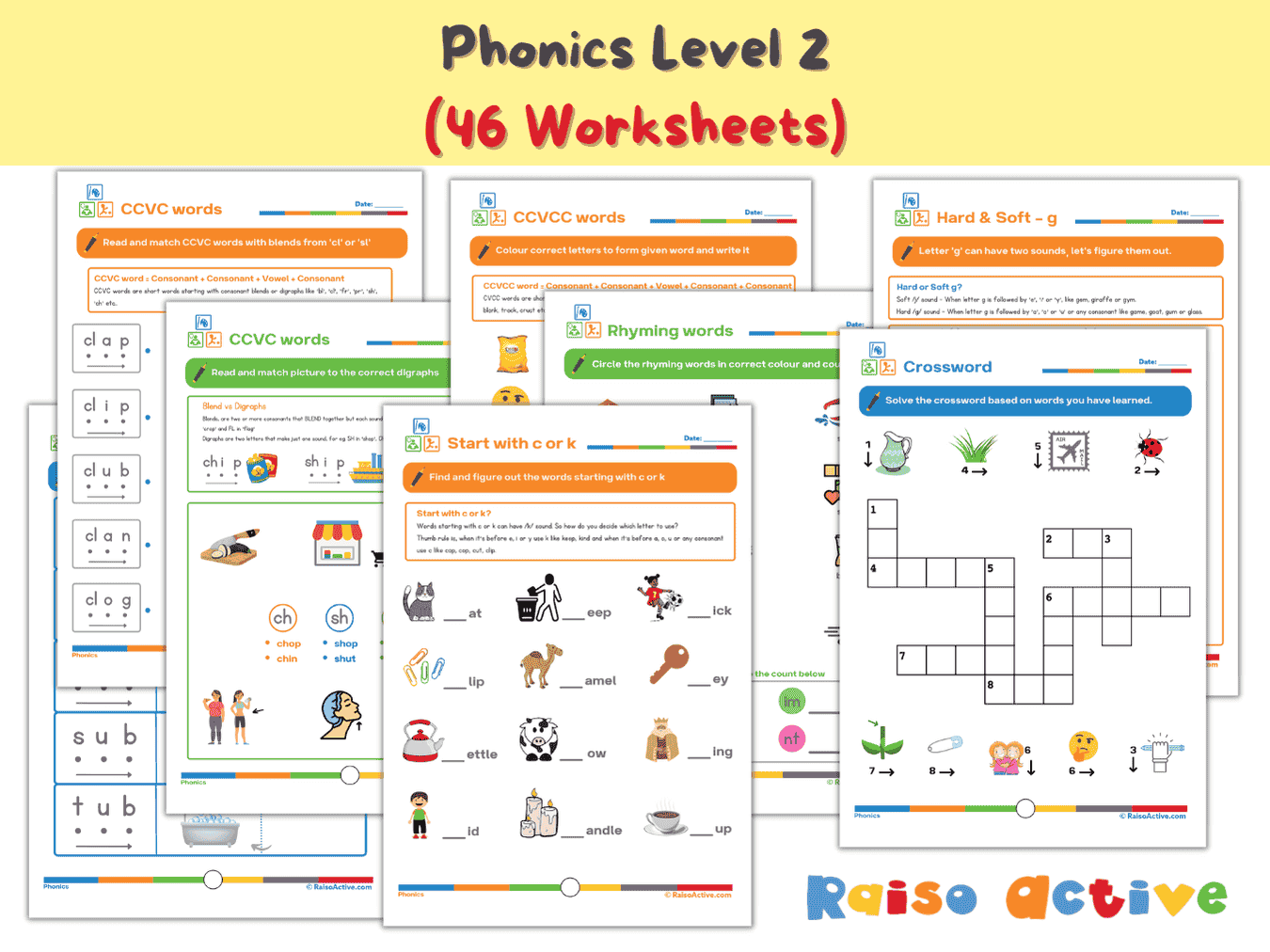
Phonics Level 2 Worksheets: CVC, CCVC, CVCC Word Families & Blends for Early Readers (Ages 4-7)
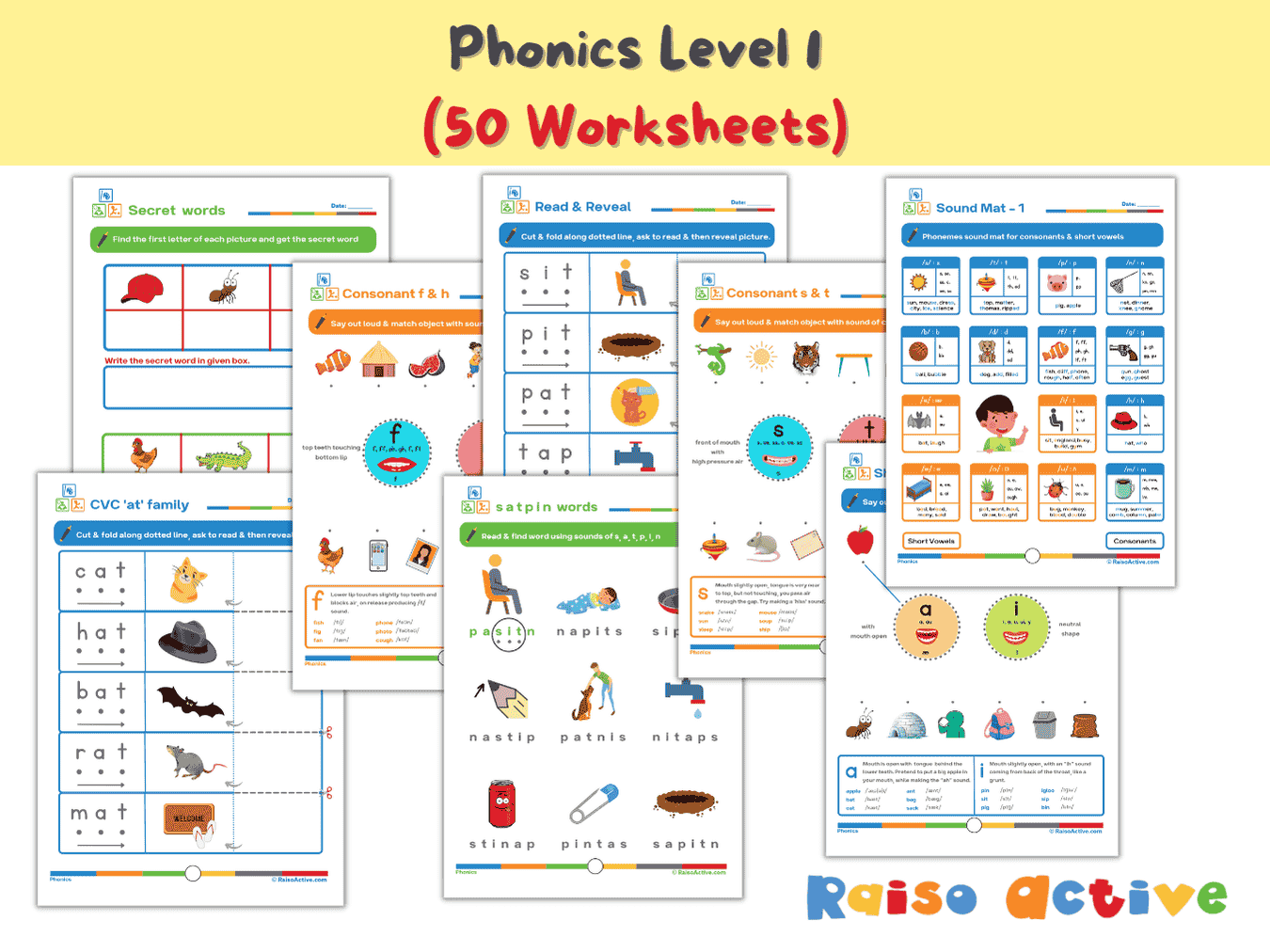
Phonics Level 1 Activity Book: Letter Sounds, Blending & CVC Words for Preschool & Kindergarten
Guides for parents and teachers
See all guides →Number Formation Rhymes 0–9 and How to Fix Reversals
Original number formation rhymes for 0–9, the correct stroke order for each digit, why 3, 5 and 7 get reversed most often, and multisensory fixes that work.
Christmas and Winter Activities That Combine Fun and Learning: Creating Magical Educational Experiences
Discover Christmas and winter activities that combine festive fun with real learning. Crafts, counting, literacy, and printable worksheets for ages 2 to 8 — perfect for home and school.
Age-Appropriate Halloween Learning Activities: Balancing Spooks and Skills for Young Learners
Discover fun, age-appropriate Halloween learning activities for young children. Spooky crafts, counting games, literacy ideas, and printable worksheets for ages 2 to 8.
The Power of Music: How Musical Activities Accelerate Learning Development in Young Children
Discover how musical activities accelerate brain development, phonics, maths, and emotional regulation in children ages 1–8. Practical tips for Indian homes and classrooms.
What's the Best Alternative to ABCmouse? A Complete Parent's Guide to Free and Affordable Educational Apps
ABCmouse runs ~Rs 4,000-5,000/year with US spellings and curriculum. Compare free & affordable Indian-friendly apps like Khan Academy Kids and DIKSHA.
Is Khan Academy Kids Really Free? A Parent's Complete Guide to Costs, Features, and Hidden Fees
Confirmed: Khan Academy Kids has zero subscription fees, ads, or paywalls. See what's included, age-by-age tips, and offline use for Indian families.
Canonical: https://raisoactive.com/worksheets/ukg-connect-the-dots