Free printable worksheets · US · UK · India
Grade 1 / Class 1 Connect the Dots Worksheets (Ages 6–7)
Grade 1 / Class 1 connect the dots worksheets are practice sheets for children aged 6–7. Connect the dots is joining a series of numbered or lettered dots in order with a pencil line to reveal a hidden picture. The sheets on this page cover counting or sequencing in order, fine motor control drawing straight segments and letter or number recognition when dots are labeled.
Grade 1, known as Class 1 in India and Year 2 in the UK, is where a child works through a full page independently: place value with tens and ones, addition and subtraction within 20, and short reading passages followed by comprehension questions replace picture-supported counting sheets. By six, a dot-to-dot runs to 100, skip counts by 2s and 5s, counts backwards from 50, or alternates numbers and letters (1, A, 2, B). The dots are close together and the picture is deliberately hard to guess, so the child has to trust the count rather than the outline. Starting from a number in the middle of the sequence, such as 37, tests counting on. These are review sheets now, not first practice.
162+ worksheets · free PDF download · print on A4 or Letter
Grade 1 / Class 1 Connect the Dots Worksheets to print
Browse all worksheets for ages 6–7
Connect the Dots: Mushroom House Worksheet for Kids (Numbers 26-50)
Extending number sequencing into the 26-50 range pushes children ages 4-6 past the more familiar 1-20 span while reinforcing the fine motor control needed to draw controlled connecting lines that reveal a mushroom house picture.
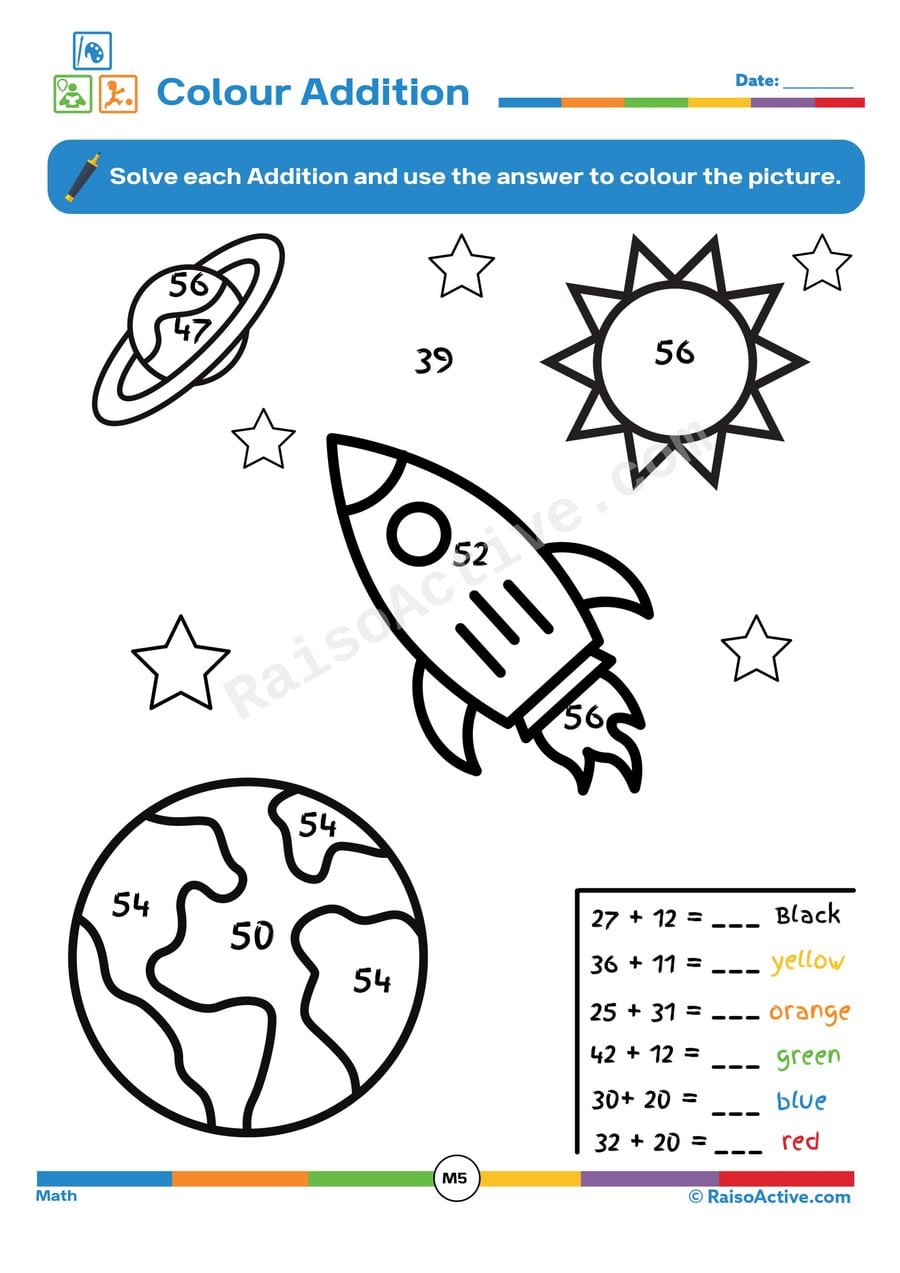
Color Addition Worksheet: Space Adventure!
This worksheet builds addition fluency by having children solve simple equations and then use each answer to determine which color to use in a corresponding section of a space-themed picture. For five- to seven-year-olds, this color-by-number format adds motivation to solve each problem accurately, since a wrong answer means the wrong color goes in the wrong spot and the final picture won't come together correctly.
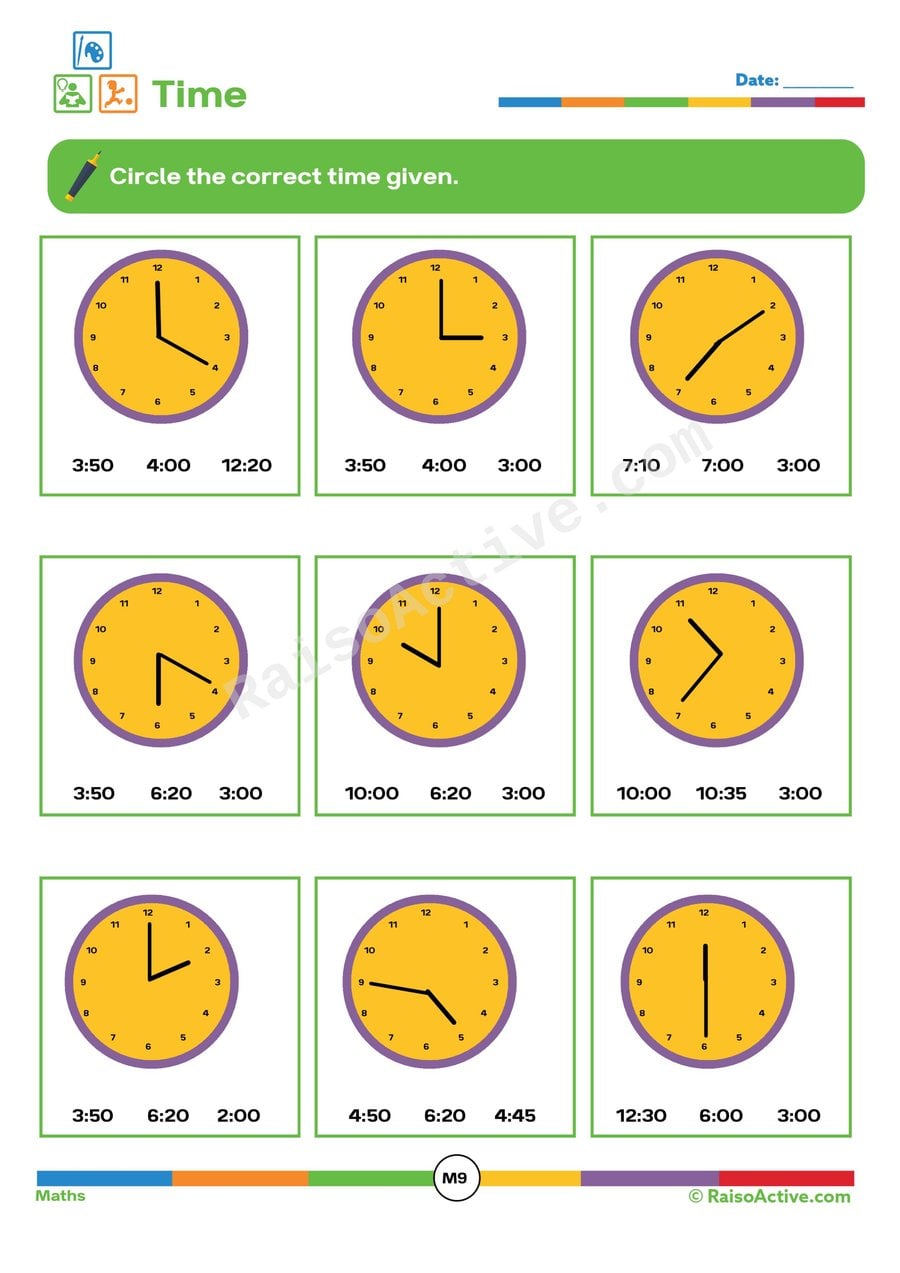
Time Telling Worksheet: Circle the Correct Time!
Reading an analog clock face and choosing the matching time from three written options builds clock-reading fluency for children ages 5-7, requiring them to interpret both the hour and minute hands together rather than guessing from a single hand.
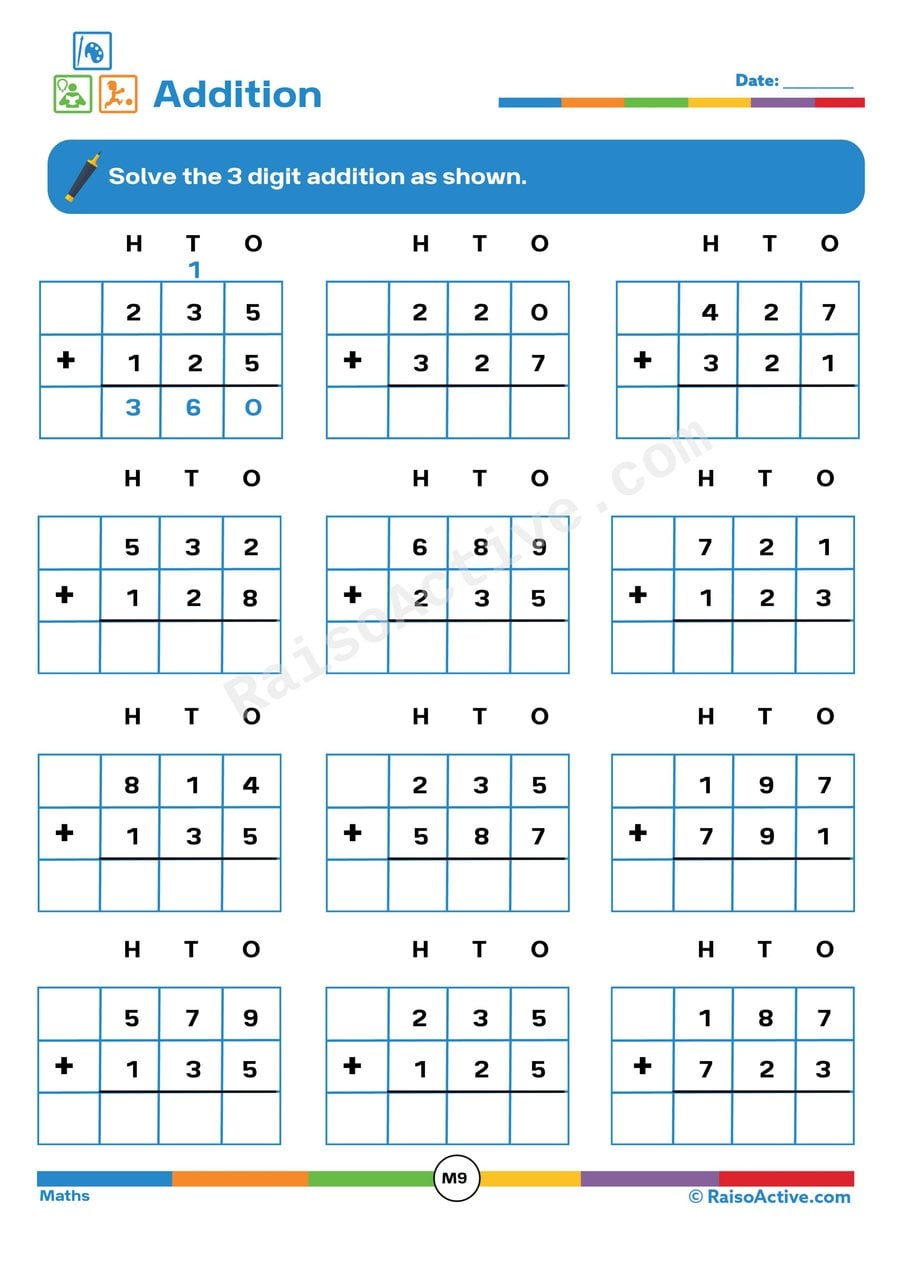
3-Digit Addition Worksheet for Kids
Adding two three-digit numbers requires children to work through the ones, tens, and hundreds columns in order and understand how a sum in one column can carry over into the next, a significant step up from single-digit addition. For ages six to eight, mastering this column-based process builds the procedural fluency needed for all future multi-digit arithmetic.
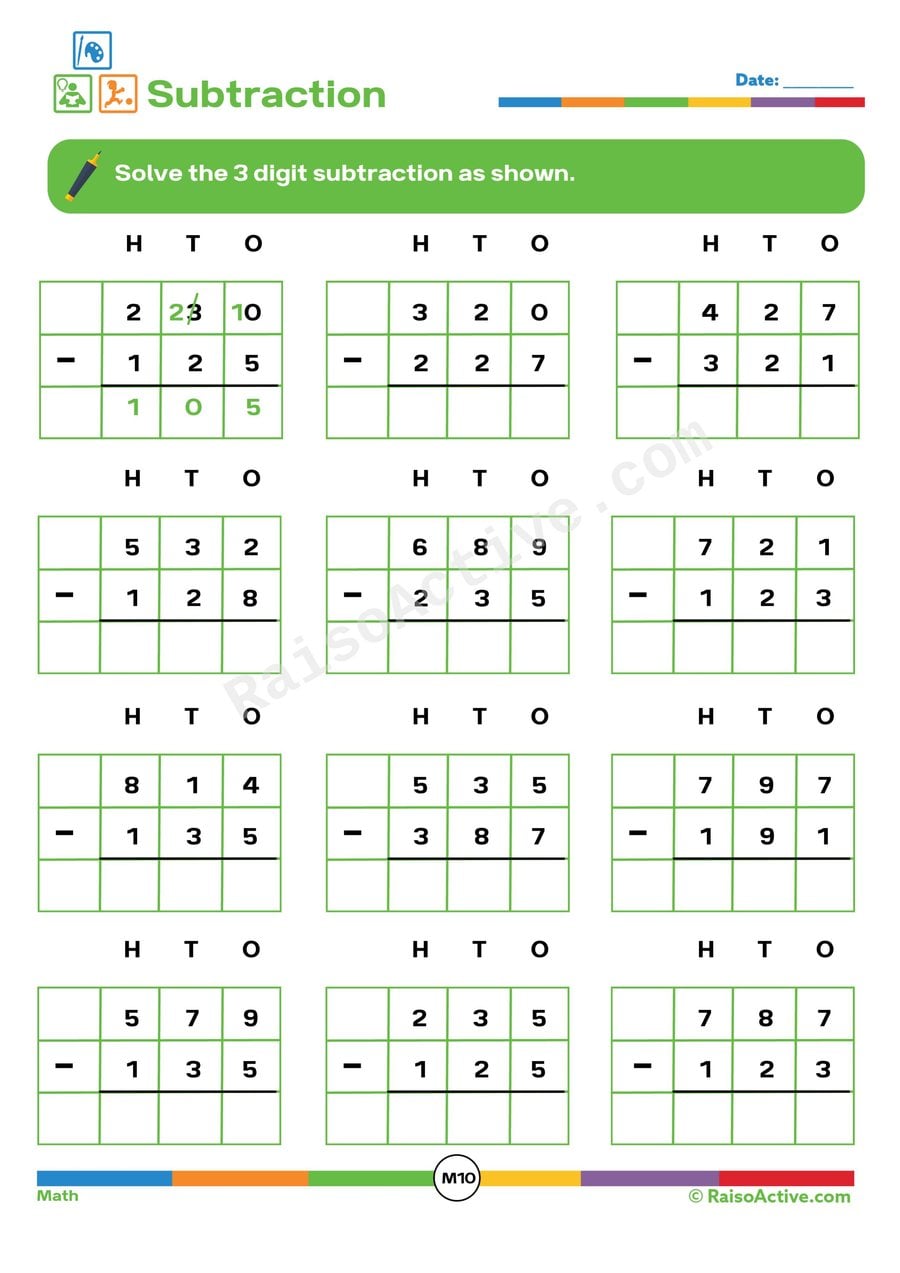
3-Digit Subtraction Worksheet for Kids
Subtracting three-digit numbers introduces children to borrowing, or regrouping, across place value columns, a more demanding skill than simple subtraction since it requires understanding that a ten can be 'broken' into ones when a column doesn't have enough to subtract from. For ages five to seven, this worksheet builds the procedural foundation for confident multi-digit subtraction going forward.

Tens and Ones Worksheet: Matching and Counting Fun!
Understanding that a two-digit number is made up of groups of ten plus some extra ones is one of the most important early place value concepts for children ages 4-6, forming the foundation for all later multi-digit addition and subtraction. This worksheet combines an equation-matching task with an object-counting task, giving children practice with basic addition facts alongside the specific skill of grouping objects into tens and counting remaining ones. Seeing the same numerical ideas presented in two different formats on one page helps reinforce that place value isn't just an abstract rule but a way of organizing real quantities.
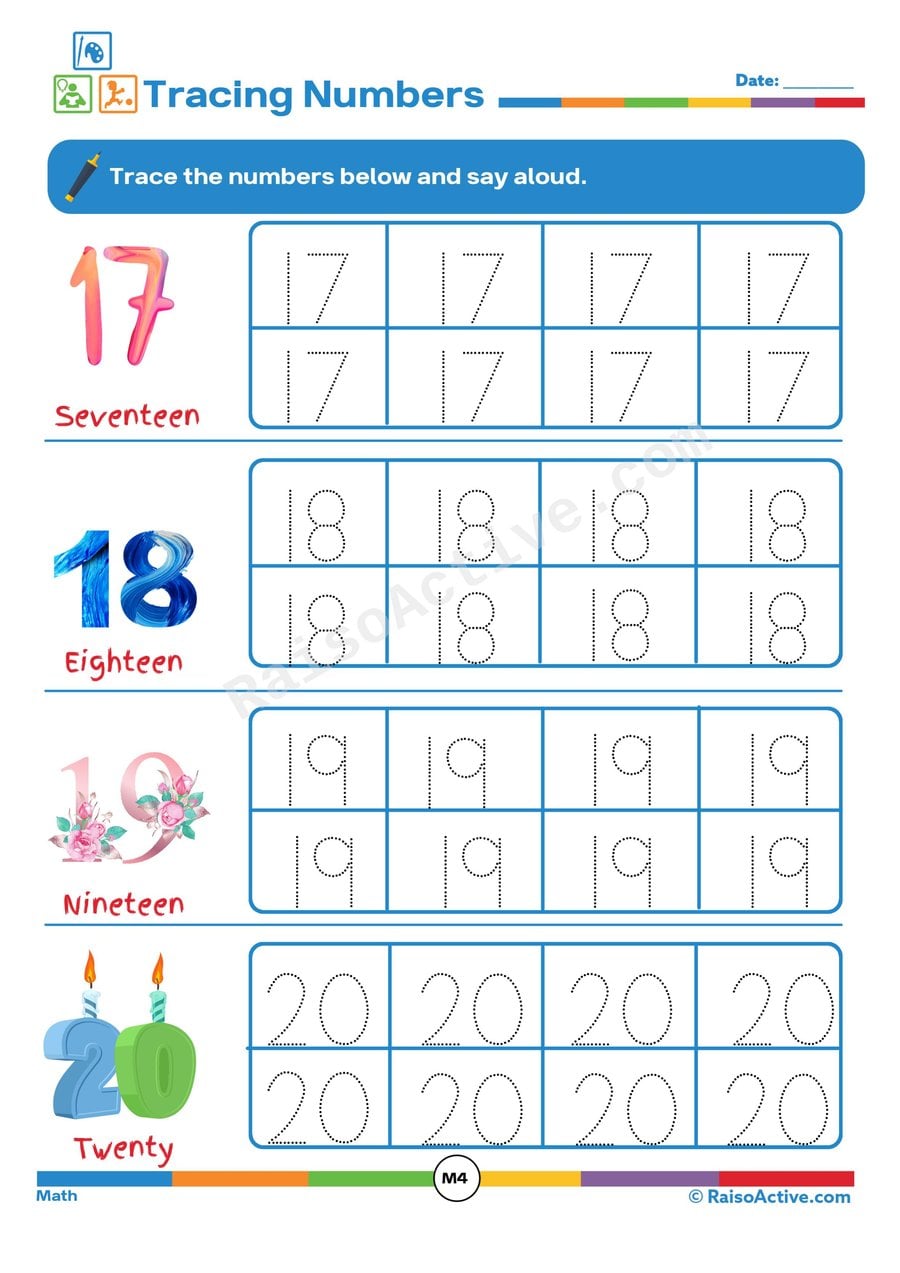
Trace and Learn Numbers 17-20 Worksheet
This tracing worksheet helps children ages 4-6 build number-writing fluency and number-name recognition for 17 through 20, a range that's often trickier than smaller numbers because it involves two-digit sequencing and less familiar number words like 'seventeen' and 'nineteen'. Tracing the dotted numerals builds the fine motor control and muscle memory needed for independent number writing, while saying each number aloud reinforces the link between the written numeral and its spoken name. This range also sets up the transition into the twenties and beyond.

Trace and Color the Fruits: Number Matching Worksheet
This worksheet links three number skills together for 4-6 year olds: tracing dotted numerals for handwriting practice, counting a row of fruit for quantity, and then checking that the fruit count actually matches the traced number — a self-checking loop that reinforces number-to-quantity correspondence rather than treating tracing and counting as separate tasks. That verification step (does the fruit count really match?) pushes your child to count carefully rather than just glance and guess.

Which is Faster? Duration Worksheet for Preschoolers
Comparing which of two vehicles or activities would take less time introduces children to the concept of duration, how long something takes, without requiring them to read a clock yet, making it an accessible first step toward understanding time as a measurable quantity. For ages four to six, reasoning about speed and duration together also builds early scientific thinking about cause and effect.

Before and After Numbers Worksheet for Preschoolers
Children ages 4-6 strengthen their understanding of number order by identifying which number comes immediately before and after a given number, a skill that builds number line reasoning beyond simple counting. Completing the cherry and lolly counting sections adds a real quantity-based check to the abstract number sequencing work. Together, these tasks deepen number sense and prepare children for addition and subtraction, which depend on knowing neighboring numbers.

Beehive Number Fun: Missing Numbers 0-30 Worksheet
Filling in missing numbers along a beehive path gives 4-6 year olds practice with the full 0-30 number sequence, a meaningful stretch beyond the more common 1-10 or 1-20 ranges seen in earlier counting worksheets. Because the missing numbers are scattered rather than all at the end, your child has to actually understand what number comes next at multiple points in the sequence, rather than simply continuing a count from a known starting point.

Numeracy Match: Counting and Number Recognition Worksheet
Children ages 4-6 strengthen number recognition by matching written numerals to their corresponding word names or quantities, reinforcing that numbers can be represented in more than one way. This kind of numeral-to-word matching deepens number sense beyond simple counting, helping children see the relationship between symbol, word, and quantity. Coloring in their birth date personalizes the practice and connects it to something meaningful in their own life.

Subtraction Adventure: A Fun Math Worksheet for Kids!
This worksheet gives children ages 4-6 varied practice with basic subtraction by solving simple equations across several different boxes, each with its own themed instruction to follow, like circling remaining items. Mixing subtraction problems with small follow-up tasks keeps the page engaging while reinforcing that subtraction means finding what's left after some amount is taken away.

Descending Order Worksheet for Kids: Numbers 63-100
Arranging numbers from largest to smallest asks children ages 4-6 to apply their counting knowledge in reverse, which is a genuinely different mental skill from counting forward and helps solidify a flexible, deep understanding of number order rather than rote recitation. Working within the 63 to 100 range also pushes children to compare two-digit numbers directly, deciding which of two numbers is bigger based on both digits rather than just the first one. This kind of descending practice complements ascending counting practice and rounds out a child's overall number sense.
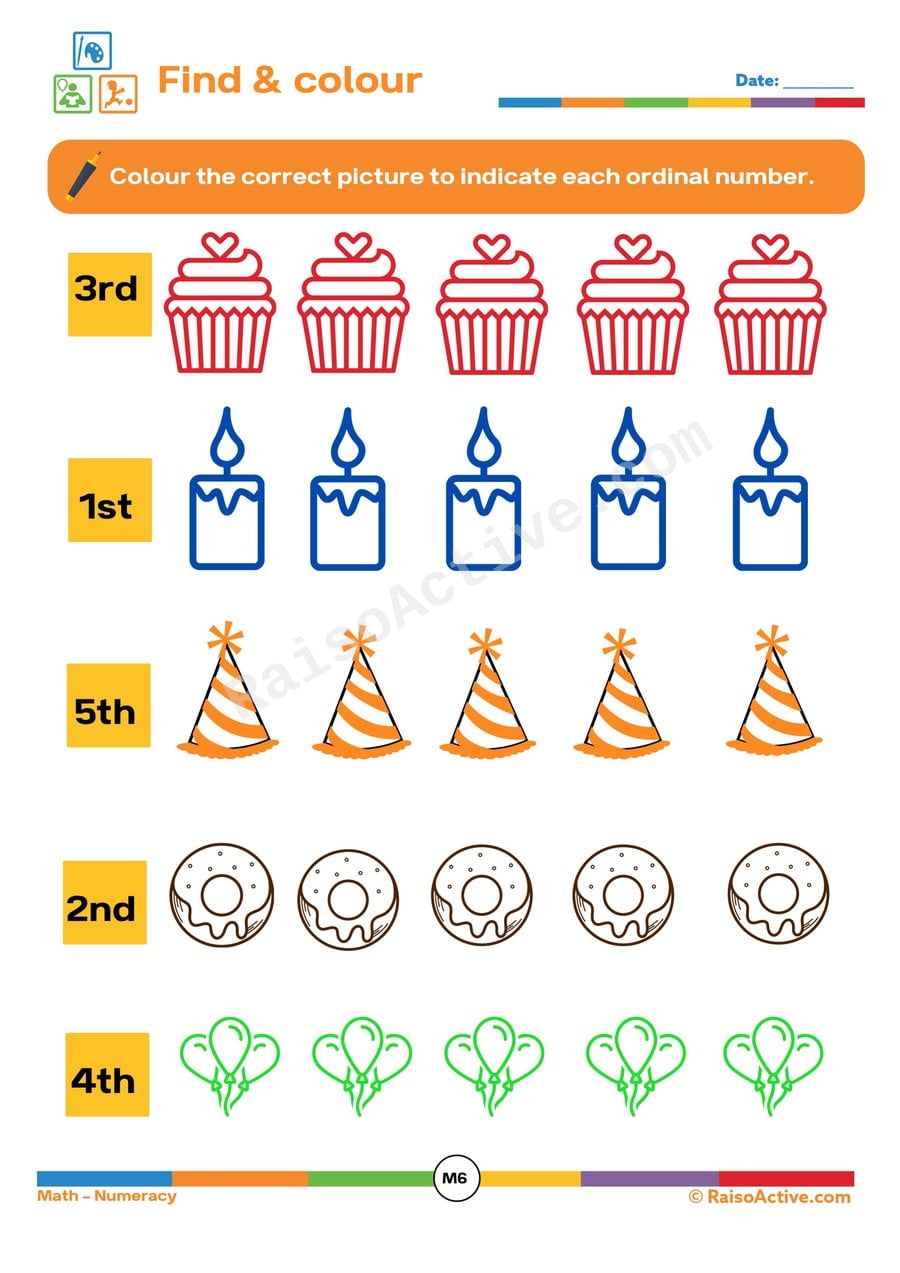
Find and Color Ordinal Numbers Worksheet
Finding and coloring items based on their ordinal position, like the third balloon or the first star, teaches children ages 4-6 a different kind of counting than they may be used to. Ordinal numbers describe position in a sequence, first, second, third, rather than quantity, and this distinction is a genuinely tricky concept that takes deliberate practice to master, forming an important foundation for later math concepts like sequencing steps.
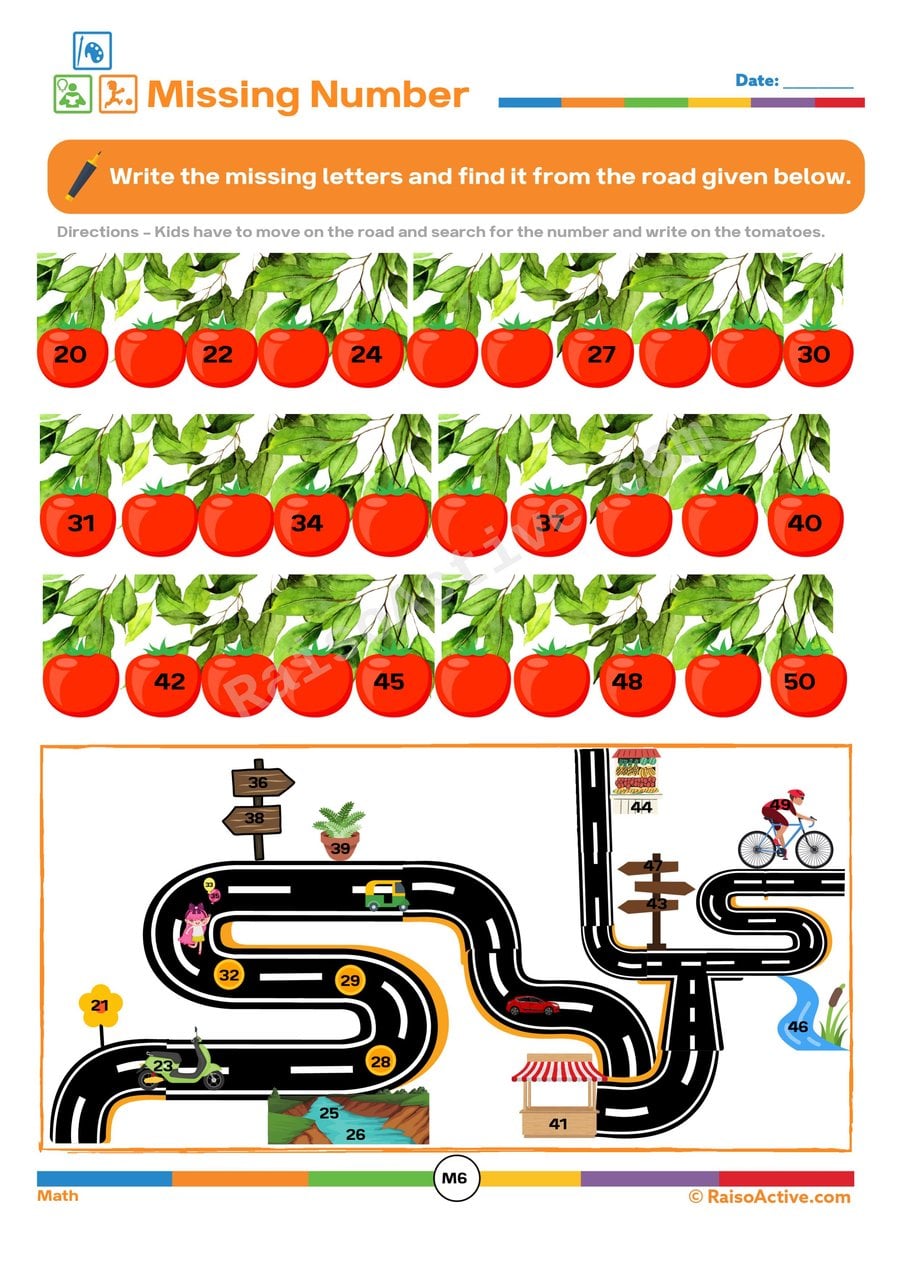
Missing Number Road Trip Worksheet for Kids
Children ages 4-6 practice number sequencing by identifying which numbers are missing from a road of tomatoes, a skill that requires understanding what comes before and after a given number in counting order. This strengthens number recognition and prepares children to count confidently without needing to start from one every time.

Crossword Math Worksheet: Fill in the Missing Numbers!
This crossword-style worksheet has 4-6 year olds solve a series of subtraction equations to fill in missing numbers, then cross-check their answers by matching them across and down within the grid — a built-in accuracy check that regular subtraction worksheets don't offer. Because an answer has to be correct in both directions to complete the crossword properly, this format naturally encourages your child to double-check their subtraction rather than move on after a single attempt.

Number Names Worksheet: Writing and Matching Numbers 51-60!
Writing out number names like 'fifty-one' or 'fifty-eight' next to their numerals helps children ages 4-6 connect the spoken word for a number to both its written word form and its digit form, a three-way link that strengthens overall number sense in the 51-60 range. This worksheet also revisits missing-number sequencing and color-coding, giving repeated exposure to the same number range through several different tasks. Building fluency with two-digit number names prepares children for reading numbers in books, on clocks, and in everyday life.
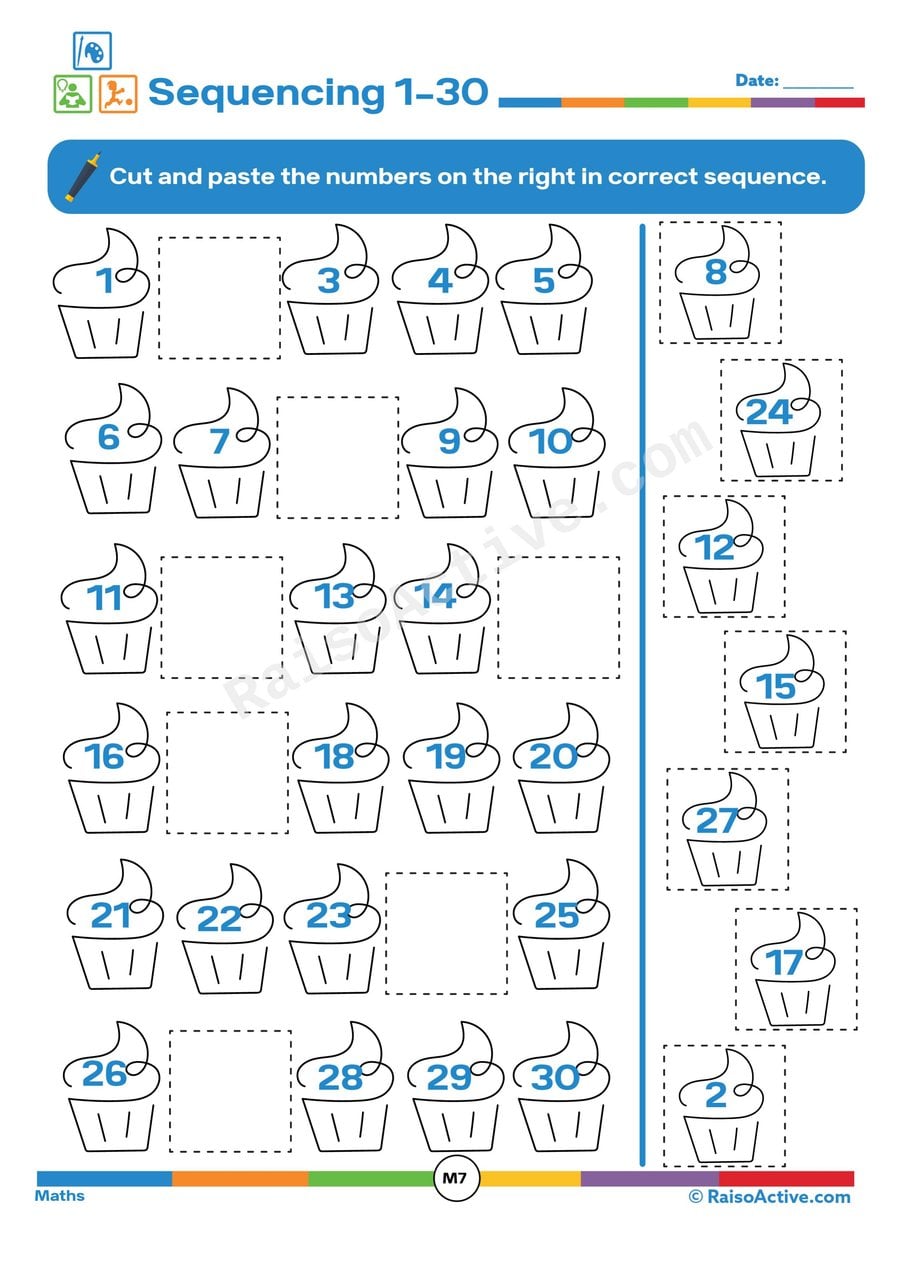
Cupcake Number Sequencing Worksheet 1-30
Children ages 4-6 practice number sequencing from 1 to 30 by cutting out numeral pieces and pasting them onto cupcakes in ascending order, reinforcing both number recognition and the logic of 'what comes next' in the counting sequence. This bridges the gap between counting by rote and truly understanding number order, an essential step before children can skip-count or do simple addition.

Alligator Comparison Worksheet: Greater Than, Less Than, and Equal To!
This worksheet teaches children ages 4-6 to compare two numbers using the 'hungry alligator' mnemonic, where the alligator's mouth always opens toward the larger number. Understanding greater than, less than, and equal to is an essential building block for later place value, ordering, and basic algebra concepts.

Addition Worksheet: Adding Numbers with Fun Pictures!
This worksheet gives children ages 4-6 practice with simple addition by having them combine two groups of pictured objects and write the resulting total, reinforcing the core idea that addition means putting groups together to find 'how many in all.' Working from pictures rather than numbers alone helps bridge concrete counting to the more abstract number sentences children will encounter as their math skills progress.

Nature Color by Number Worksheet: Addition and Subtraction Fun!
This worksheet combines addition and subtraction practice with a color-by-number format, requiring children to solve simple math problems and then use a color key to reveal a nature-themed picture. For ages 4-6, embedding math practice within a creative, rewarding coloring activity keeps motivation high through problems that might otherwise feel repetitive on their own.
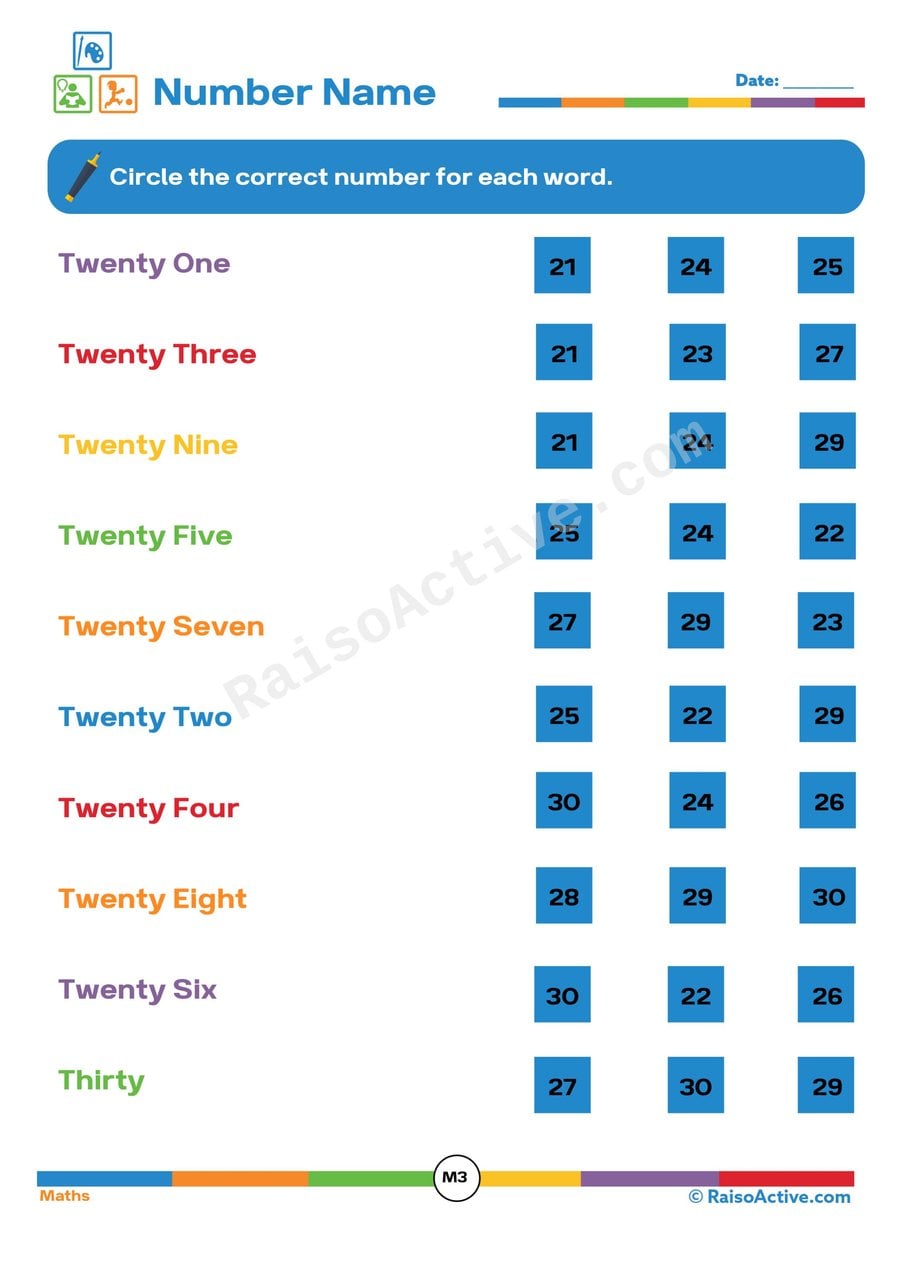
Number Names Matching Worksheet for Kids
This worksheet helps children ages 4-6 connect written number words, like 'five' or 'nine,' to their numeral form by reading each word and circling the matching digit. Recognizing number names in text is a skill separate from counting objects, and it becomes important as soon as children start encountering numbers written out in books, signs, or math word problems.
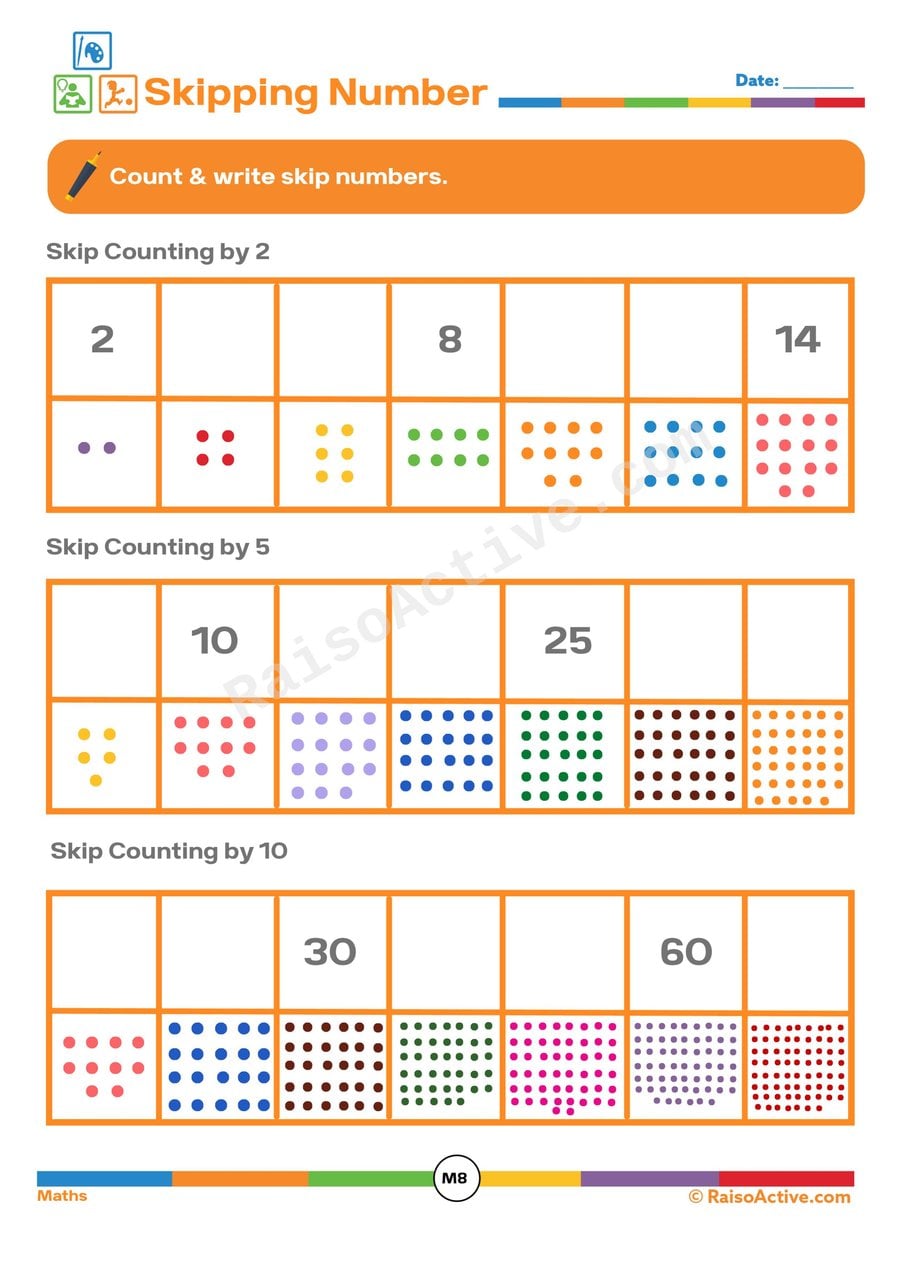
Skip Counting Adventure: Counting by 2, 5, and 10!
Children ages 4-6 practice skip counting by 2s, 5s, and 10s, recognizing the repeating number patterns that let them count large groups faster than counting one by one. Skip counting is an early stepping stone toward multiplication and a genuinely useful shortcut children can apply well beyond this worksheet.
What Grade 1 / Class 1 connect the dots worksheets cover
By six, a dot-to-dot runs to 100, skip counts by 2s and 5s, counts backwards from 50, or alternates numbers and letters (1, A, 2, B). The dots are close together and the picture is deliberately hard to guess, so the child has to trust the count rather than the outline. Starting from a number in the middle of the sequence, such as 37, tests counting on. These are review sheets now, not first practice.
- Finish a 1 to 100 dot-to-dot in one sitting
- Skip count by 2s or 5s to reveal the picture
- Count backwards from 50 through the dots
- Alternate numbers and letters (1, A, 2, B) to find the route
- Start from a number in the middle, such as 37
How to use these worksheets at home or in class
About twenty minutes a day, split between one math page and one reading page on alternating days, matches what most first grade teachers assign as homework. Have your child read every instruction aloud before starting, since that doubles as reading practice.
Start with the sheet that matches what your child can already do, then move one step up. Keep finished sheets in a folder: Grade 1 / Class 1 teachers often ask for evidence of practice, and children like seeing their own progress.
Is your child ready for Grade 1 / Class 1 connect the dots work?
A child ready for this stage reads and writes numerals fluently to 20, blends simple words into sentences, follows a written instruction without help, and can explain out loud how they solved a problem rather than only stating the answer.
Frequently asked questions
How do skip-counting dot-to-dots help with math?
They rehearse the sequences that become the 2, 5 and 10 times tables. To join 10 to 15 in a count-by-5s picture, the child has to know that 15 comes next while 12 and 14 sit nearby as distractors, and a wrong line makes the gap visible at once. Do the 2s first, then 5s, then 10s, and keep a hundred chart beside the page the first few times.
What should a Grade 1 / Class 1 child be able to do in connect the dots?
By six, a dot-to-dot runs to 100, skip counts by 2s and 5s, counts backwards from 50, or alternates numbers and letters (1, A, 2, B). The dots are close together and the picture is deliberately hard to guess, so the child has to trust the count rather than the outline. Starting from a number in the middle of the sequence, such as 37, tests counting on. These are review sheets now, not first practice. A child ready for this stage reads and writes numerals fluently to 20, blends simple words into sentences, follows a written instruction without help, and can explain out loud how they solved a problem rather than only stating the answer.
Do these worksheets follow the Grade 1 / Class 1 curriculum?
The sheets cover counting or sequencing in order, fine motor control drawing straight segments, letter or number recognition when dots are labeled and completing a picture from a sequence, which sit inside the Common Core Grade 1 (1.OA, 1.NBT, RF.1.3); NEP 2020 Foundational Stage Class 1; National Curriculum KS1 (Year 2) outcomes for Grade 1 / Class 1. Class 1 (India), Year 2 (UK) use the same skills at this age, so the sheets also fit families following those programmes.
Are these Grade 1 / Class 1 connect the dots worksheets free?
Yes. Each worksheet downloads free as a watermarked PDF once you create an account, with a limit of five a day. An annual membership ($20) removes the watermark and the limit for the whole library of over 1,000 worksheets and every printable pack.

Written by
Hemsweta Jain · Teacher Cheena
MBA and Early Childhood Educator, teaching since 2014 · Founder of RaisoActive, Mumbai
Written and reviewed by Hemsweta Jain (Teacher Cheena), who designs every RaisoActive worksheet.
Last reviewed
Printable packs for ages 6–7
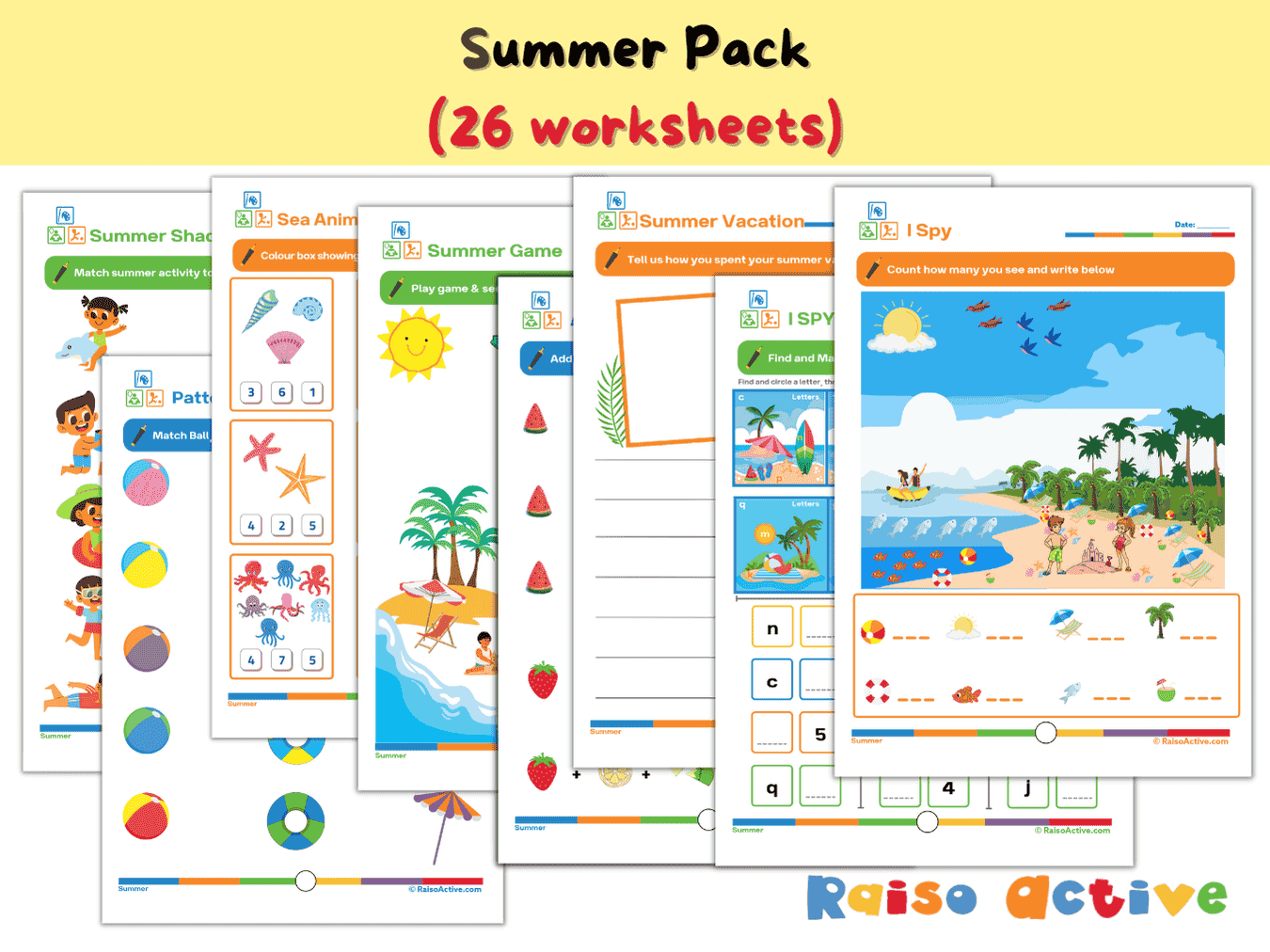
Summer Activity Pack: Math, Literacy, Puzzles & More for Preschool & Kindergarten
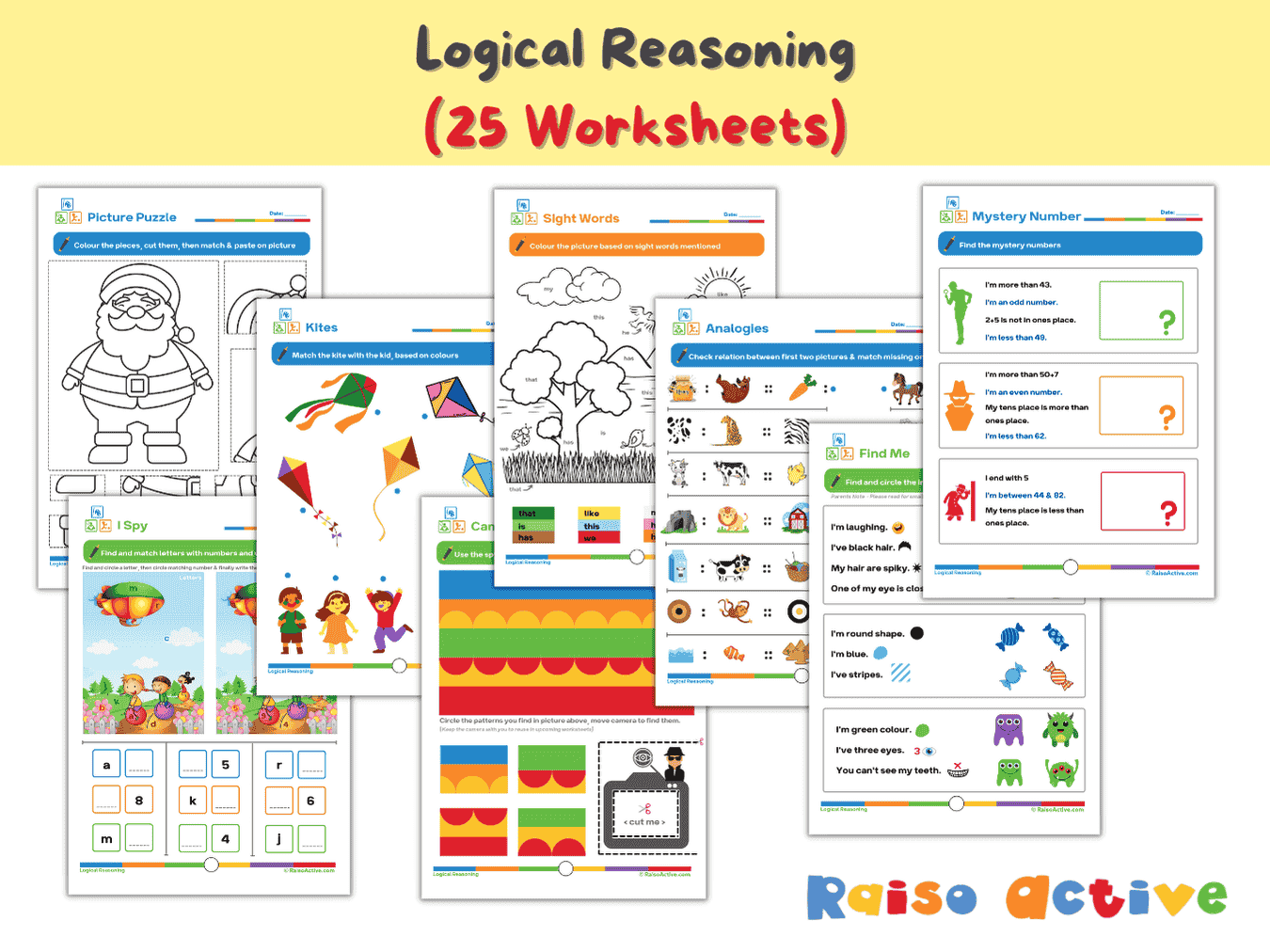
Logical Reasoning Activity Book for Preschool & Kindergarten | Patterns, Puzzles & Analogies
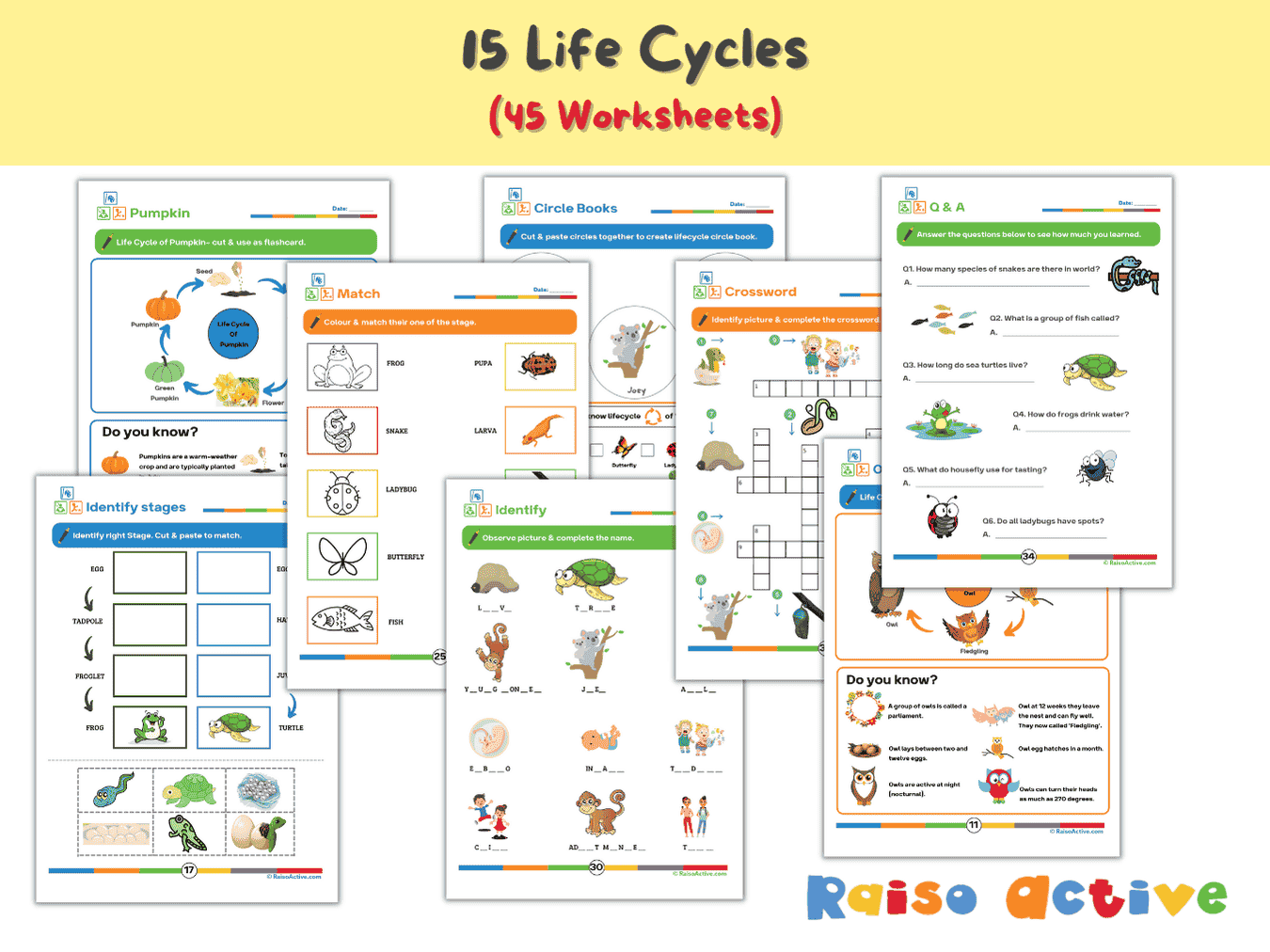
Lifecycles Activity Book & Flashcards for Preschool & Early Elementary
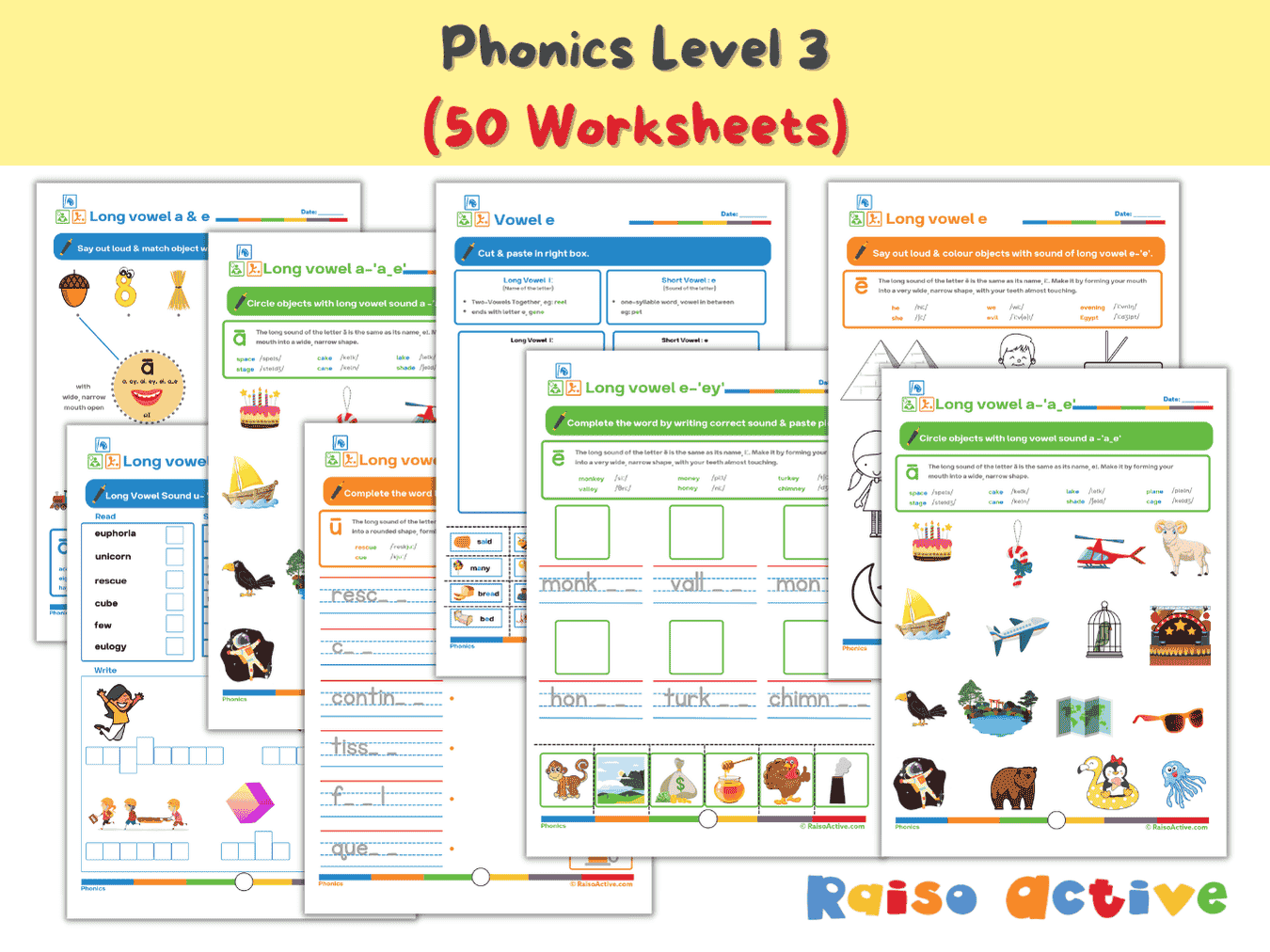
Phonics Level 3 Long Vowels Activity Book for Kindergarten & 1st Grade
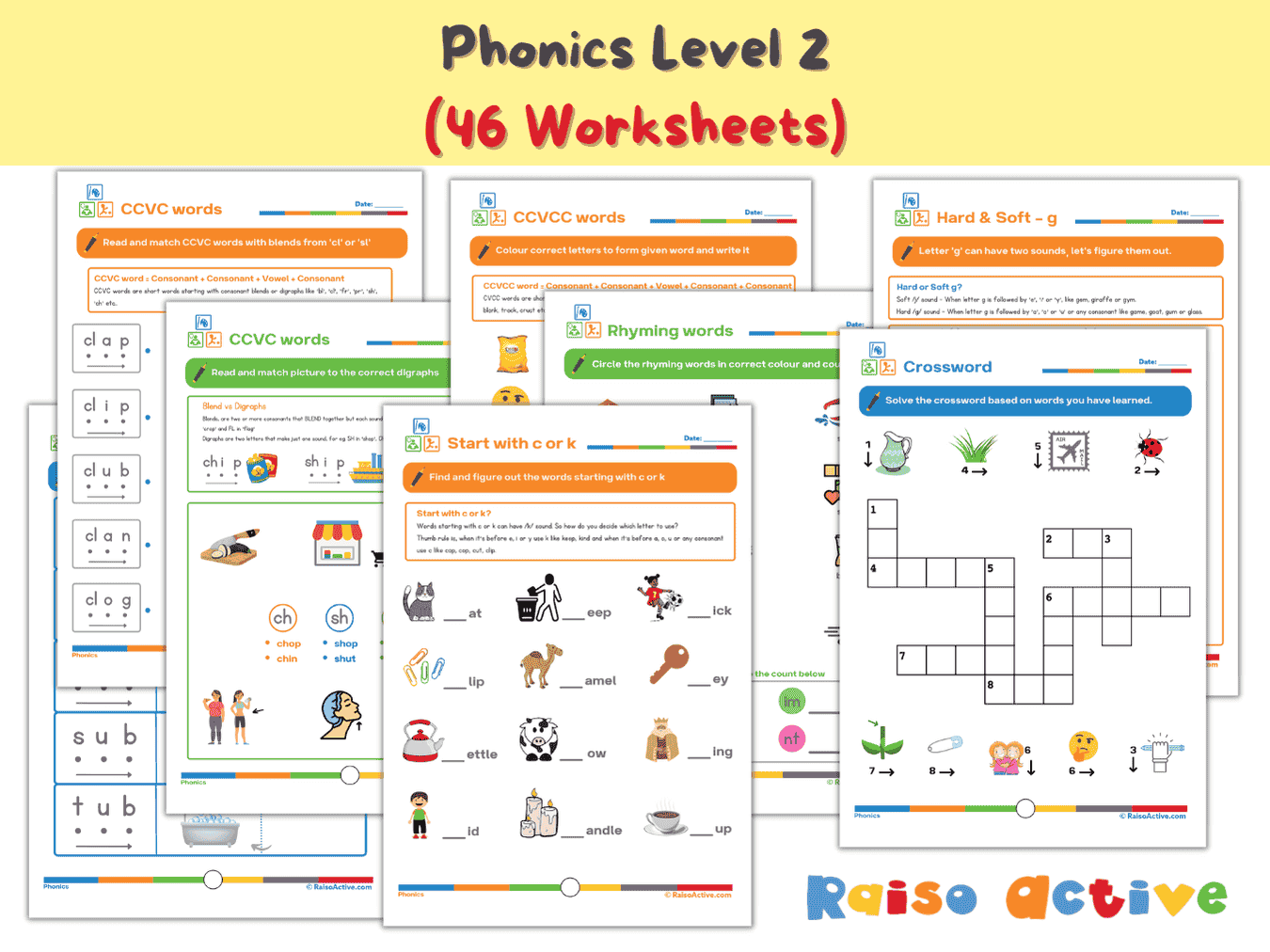
Phonics Level 2 Worksheets: CVC, CCVC, CVCC Word Families & Blends for Early Readers (Ages 4-7)
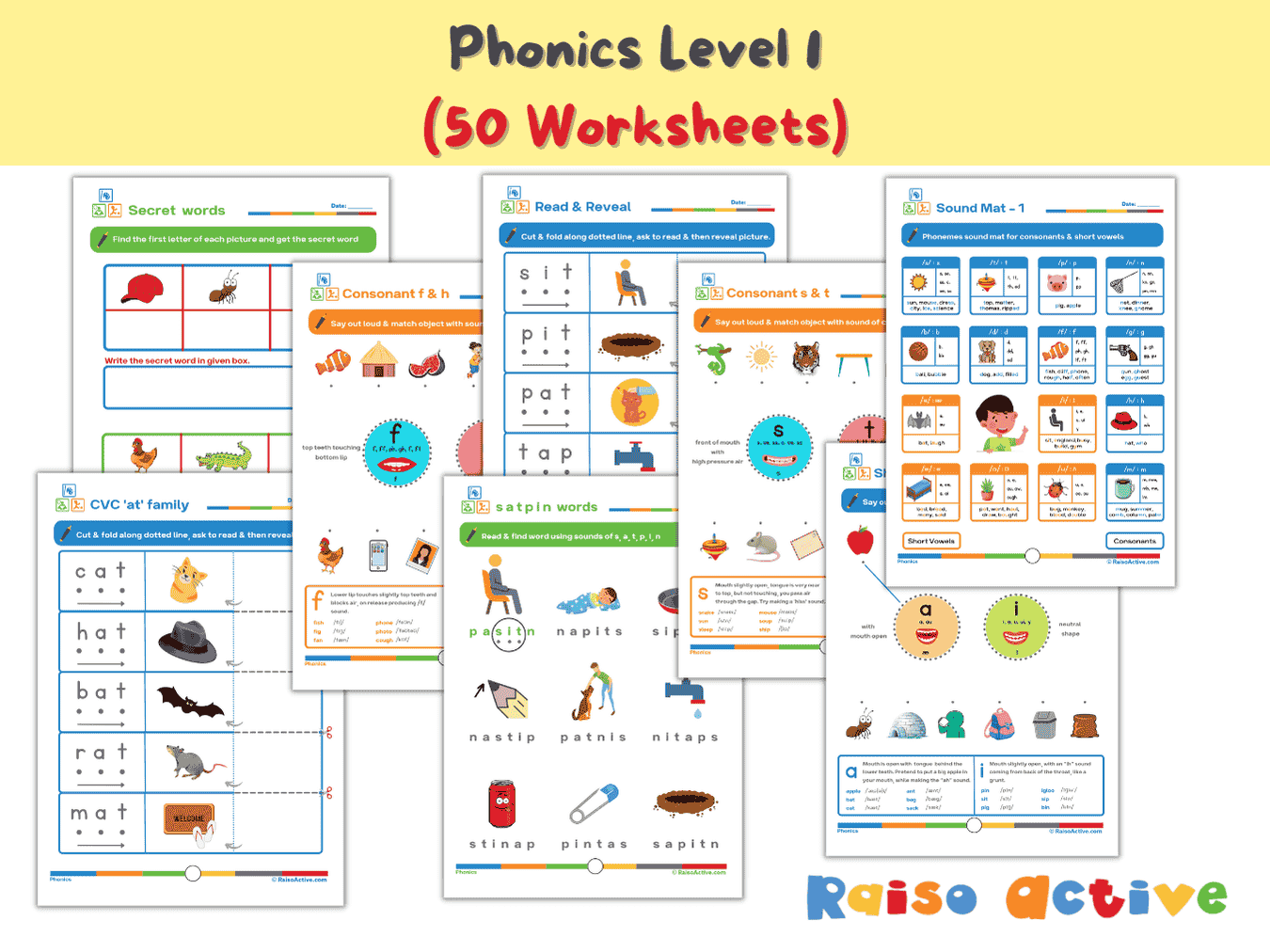
Phonics Level 1 Activity Book: Letter Sounds, Blending & CVC Words for Preschool & Kindergarten
Guides for parents and teachers
See all guides →Number Formation Rhymes 0–9 and How to Fix Reversals
Original number formation rhymes for 0–9, the correct stroke order for each digit, why 3, 5 and 7 get reversed most often, and multisensory fixes that work.
Christmas and Winter Activities That Combine Fun and Learning: Creating Magical Educational Experiences
Discover Christmas and winter activities that combine festive fun with real learning. Crafts, counting, literacy, and printable worksheets for ages 2 to 8 — perfect for home and school.
Age-Appropriate Halloween Learning Activities: Balancing Spooks and Skills for Young Learners
Discover fun, age-appropriate Halloween learning activities for young children. Spooky crafts, counting games, literacy ideas, and printable worksheets for ages 2 to 8.
The Power of Music: How Musical Activities Accelerate Learning Development in Young Children
Discover how musical activities accelerate brain development, phonics, maths, and emotional regulation in children ages 1–8. Practical tips for Indian homes and classrooms.
What's the Best Alternative to ABCmouse? A Complete Parent's Guide to Free and Affordable Educational Apps
ABCmouse runs ~Rs 4,000-5,000/year with US spellings and curriculum. Compare free & affordable Indian-friendly apps like Khan Academy Kids and DIKSHA.
Is Khan Academy Kids Really Free? A Parent's Complete Guide to Costs, Features, and Hidden Fees
Confirmed: Khan Academy Kids has zero subscription fees, ads, or paywalls. See what's included, age-by-age tips, and offline use for Indian families.
Canonical: https://raisoactive.com/worksheets/grade-1-connect-the-dots