Free printable worksheets · US · UK · India
Grade 1 / Class 1 Tracing Worksheets (Ages 6–7)
Grade 1 / Class 1 tracing worksheets are practice sheets for children aged 6–7 in Grade 1 in the US and Class 1 in India. Tracing means guiding a pencil or crayon along a printed dotted or outlined path to practice control and the movements handwriting depends on. The sheets on this page cover standing and sleeping lines, curves and zigzags and pencil grip and control.
Grade 1, known as Class 1 in India and Year 2 in the UK, is where a child works through a full page independently: place value with tens and ones, addition and subtraction within 20, and short reading passages followed by comprehension questions replace picture-supported counting sheets. By six to seven most children no longer need dots for everyday letters, so tracing at this age is a targeted fix rather than daily practice: a letter that keeps reversing, a join between two cursive letters, or a longer word whose spacing keeps drifting. A worksheet should isolate that one problem, show it traced several times, and end with the same word or join copied from memory. Whole-alphabet tracing sheets are review, not new learning.
115+ worksheets · free PDF download · print on A4 or Letter
Grade 1 / Class 1 Tracing Worksheets to print
Browse all worksheets for ages 6–7
Punctuation Adventure: End Punctuation Worksheet for Kids
Children ages 5-7 practice choosing between periods, question marks, and exclamation points based on the meaning and tone of a sentence, a skill that connects punctuation directly to how a sentence should sound when read aloud. This builds the foundation for expressive, correctly punctuated writing later in school.
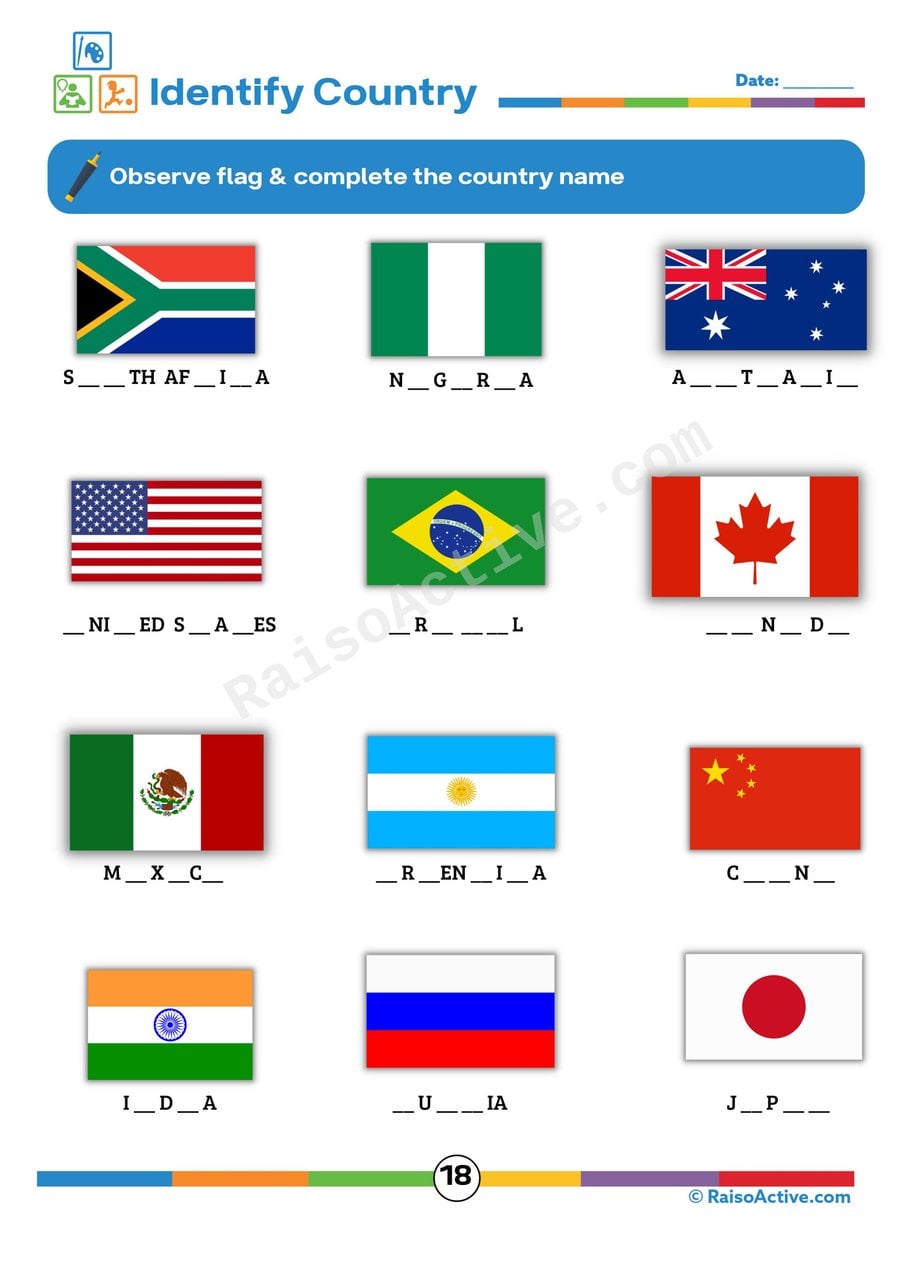
Identify the Country: Flag Matching Worksheet
Filling in the missing letters of each country's name while studying its flag gives children ages 4-7 practice with letter-sound correspondence and spelling patterns, since they must sound out the word and recall which letters are already provided as clues. It also builds early geography knowledge, helping children connect a visual symbol (the flag) to a country's name for the first time. This dual practice of decoding and world knowledge lays groundwork for both literacy and social studies skills.

Sun Safety Worksheet for Kids: Learn About Staying Safe in the Sun!
This worksheet has children ages 4-7 answer questions about sun safety, such as why sunscreen and hats matter, building early health literacy alongside writing practice as they put their understanding into their own words. Because the questions ask children to reason about why certain sun-safety habits matter rather than just label a picture, this worksheet develops early explanatory thinking, a step up from simple factual recall. Practicing writing full answers, even short ones, also builds sentence-forming skills appropriate for this age range.

Number Names Worksheet: Writing and Matching Numbers 51-60!
Writing out number names like 'fifty-one' or 'fifty-eight' next to their numerals helps children ages 4-6 connect the spoken word for a number to both its written word form and its digit form, a three-way link that strengthens overall number sense in the 51-60 range. This worksheet also revisits missing-number sequencing and color-coding, giving repeated exposure to the same number range through several different tasks. Building fluency with two-digit number names prepares children for reading numbers in books, on clocks, and in everyday life.

Christmas Pattern Worksheet: Circle the Next Picture!
This seasonal worksheet gives children ages 4-6 practice identifying a repeating pattern using Christmas-themed pictures and predicting which picture logically comes next. Pattern prediction requires children to notice a repeating rule and apply it forward, a skill that underlies later math concepts like skip counting and multiplication tables. The festive imagery adds seasonal excitement that can make repeated pattern practice feel like a holiday game.

Long Vowel i-'ie' Worksheet: Complete the Words & Paste Pictures!
This worksheet introduces yet another spelling of the long 'i' sound — the 'ie' pattern found in words like 'tie' and 'pie' — giving children ages 4-6 practice completing words with missing letters before matching and pasting the correct picture. Filling in missing letters for a specific spelling pattern requires more active recall than simply reading a finished word, since your child has to remember exactly which letters create the long 'i' sound in this particular pattern. Rounding out practice across silent-e, 'igh,' and now 'ie' spellings helps children see that English represents the same sound in several different ways.
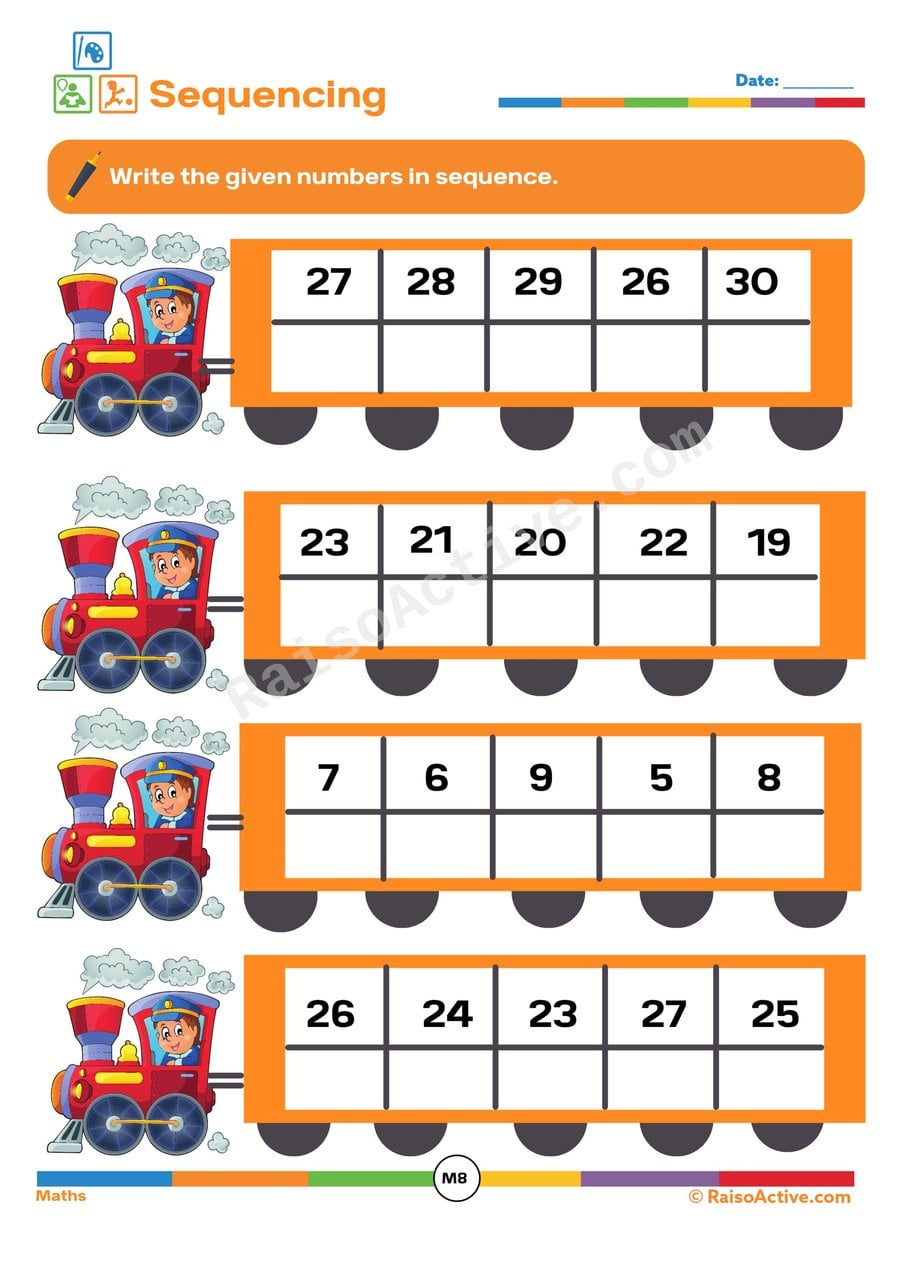
Number Sequencing Train Worksheet for Kids
This train-themed sequencing worksheet challenges children ages 4-6 to fill in missing numbers scattered throughout a sequence, requiring them to recognize number order well enough to identify a gap anywhere in the run rather than only counting forward from the start. This deeper sequencing skill supports later math concepts like skip counting, addition, and number lines. Writing the missing numbers by hand, rather than just saying them aloud, also reinforces number formation alongside number order.

Hopscotch Numbers 1-50 Worksheet: Fill in the Missing Numbers!
This hopscotch-themed worksheet gives children ages 4-6 practice filling in missing numbers within the 1-50 range, extending their number sequencing beyond the more commonly rehearsed 1-20 range and building familiarity with two-digit number patterns like the '20s' or '30s.' Framing the numbers as a hopscotch grid connects the paper activity to a familiar physical game, helping children mentally picture themselves counting forward as they move up the grid. This kind of extended-range practice is an important bridge toward comfortable counting to 100.

Sentence Detective: Simple, Compound, or Complex Sentences Worksheet for Kids
This worksheet introduces children to three different sentence structures, simple, compound, and complex, teaching them to notice how conjunctions and clause combinations change a sentence's complexity, a more advanced grammar concept appropriate for ages four to six who are already reading independently. Recognizing these structures also improves reading fluency, since children start to anticipate pauses and connections within longer sentences.

Capitalization Worksheet: Practice Writing Sentences Correctly!
This worksheet teaches children ages 4-6 the rule that sentences begin with a capital letter, along with an introduction to capitalizing proper nouns like names and places. Rewriting sentences correctly, rather than just circling errors, gives children active practice applying the capitalization rule themselves, which builds the habit more effectively than passive correction exercises.

A or An Worksheet: Fill in the Blanks with Beginning Sounds!
This worksheet teaches children ages 4-6 the grammar rule for choosing between the articles 'a' and 'an,' based on whether the following word starts with a consonant or vowel sound. Applying this rule correctly requires listening carefully to a word's beginning sound rather than just its spelling, which sharpens phonemic awareness alongside grammar knowledge.

Long Vowel 'ai' Worksheet: Circle and Write the Words!
The long 'ai' spelling pattern, found in words like 'rain' and 'snail,' is one of the first alternative spellings children ages 4-6 encounter for the long 'a' sound, since they've likely already learned the more common silent-e pattern like in 'cake.' This worksheet has children identify pictures containing the 'ai' sound and then write the matching word, building recognition of this specific spelling choice among the several ways English can represent the same long vowel sound. Understanding that one sound can be spelled multiple ways is a key insight for becoming a flexible, confident reader.

Beehive Number Fun: Missing Numbers 0-30 Worksheet
Filling in missing numbers along a beehive path gives 4-6 year olds practice with the full 0-30 number sequence, a meaningful stretch beyond the more common 1-10 or 1-20 ranges seen in earlier counting worksheets. Because the missing numbers are scattered rather than all at the end, your child has to actually understand what number comes next at multiple points in the sequence, rather than simply continuing a count from a known starting point.

Simple Sentences Worksheet: Rewriting Sentences for Early Readers
Children ages 4-6 practice sentence construction by rearranging scrambled words into a grammatically correct, meaningful sentence, building an understanding of proper word order in English. This hands-on rearranging task teaches children to recognize where a sentence's subject, action, and details belong, a skill they'll use in all future writing.

My Summer Vacation Worksheet: Write and Draw About Your Fun!
This worksheet has children ages 4-6 write about their own summer vacation and draw a picture to match, practicing personal narrative writing, one of the earliest and most motivating forms of writing since it draws on a child's real memories rather than an assigned topic. Because children are describing something they actually experienced, this task builds both sentence-forming skills and the confidence that comes from writing about a subject they already know well. Pairing the writing with a drawing also lets children who aren't yet strong writers still fully express their ideas.

Possessive Pronouns Worksheet for Kids: Fill in the Blanks!
Possessive pronouns like 'his,' 'her,' and 'their' are used constantly in everyday speech, but choosing the right one requires children ages 4-6 to track who is speaking and who owns the object being discussed — a genuinely tricky grammar concept at this age. This fill-in-the-blank worksheet gives focused, sentence-level practice choosing the correct possessive pronoun from a set of options, reinforcing the connection between a pronoun and the person or thing it refers to. Mastering this concept supports clearer, more grammatically accurate speech and writing as children move into more complex sentence construction.

First Letter Fun: Identify and Write! A Fun Vocabulary Worksheet for Kids
This worksheet extends beginning-sound practice for children ages 4-6 slightly further than earlier versions, asking them to independently identify an object's name and write its first letter with less visual support. Isolating and writing initial sounds accurately is a strong predictor of later spelling and reading success, since it requires children to translate an auditory skill into a written one. Repeating this process across multiple pictures builds both vocabulary and growing independence in phonics reasoning.
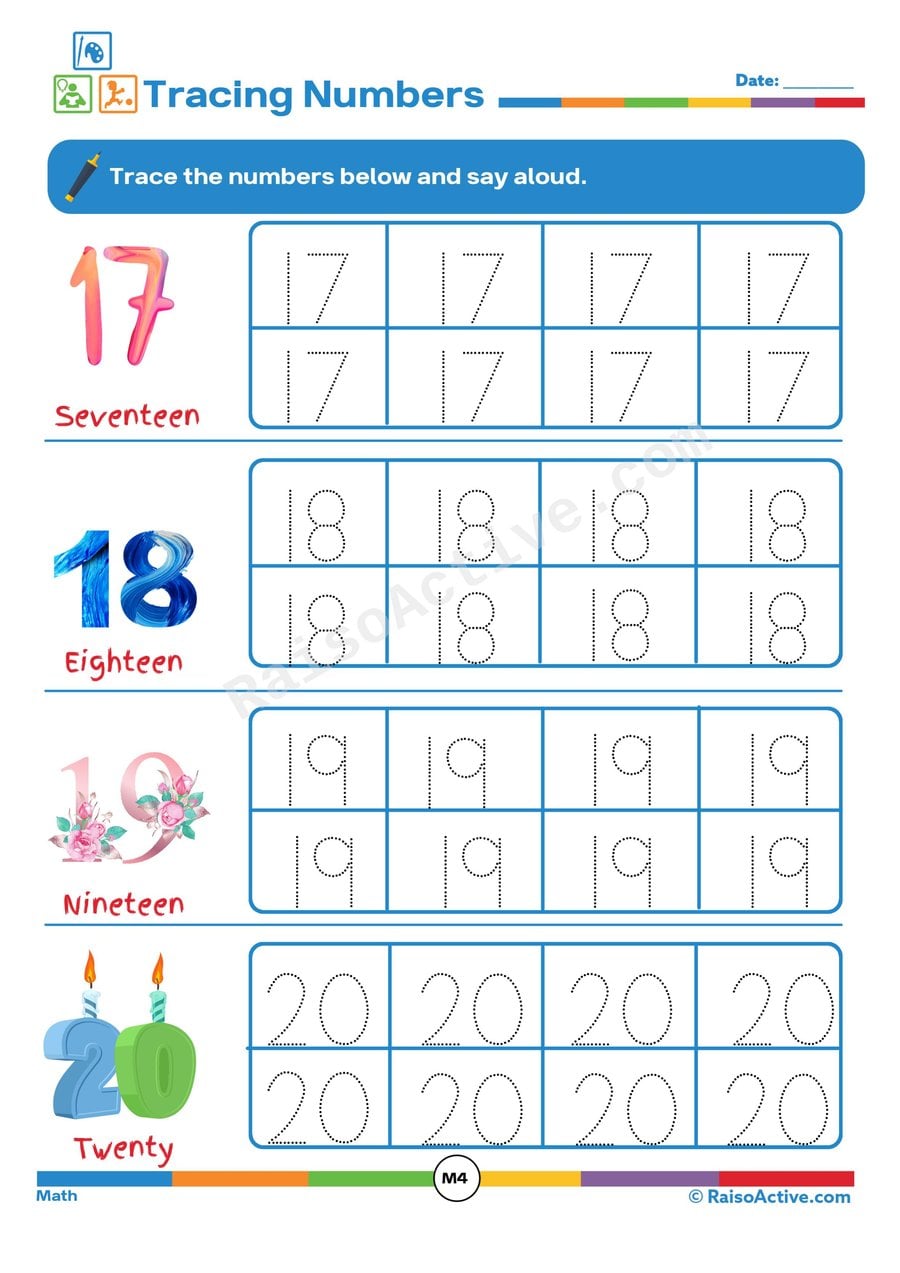
Trace and Learn Numbers 17-20 Worksheet
This tracing worksheet helps children ages 4-6 build number-writing fluency and number-name recognition for 17 through 20, a range that's often trickier than smaller numbers because it involves two-digit sequencing and less familiar number words like 'seventeen' and 'nineteen'. Tracing the dotted numerals builds the fine motor control and muscle memory needed for independent number writing, while saying each number aloud reinforces the link between the written numeral and its spoken name. This range also sets up the transition into the twenties and beyond.
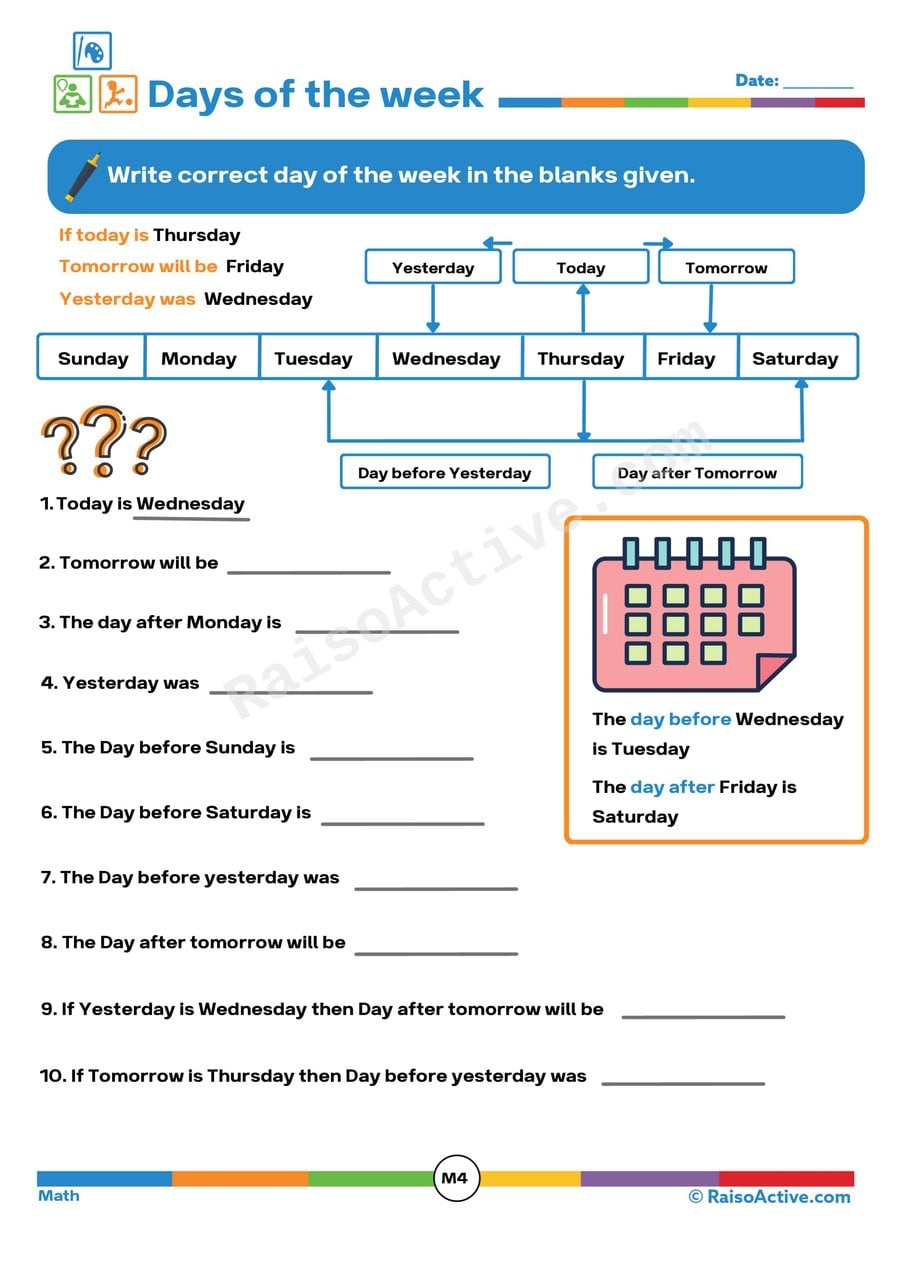
Days of the Week Worksheet: Learn the Days!
Learning the days of the week in order gives children a framework for understanding time, routines, and scheduling that they'll use for the rest of their lives, from knowing when school happens to planning a weekend. For ages four to six, practicing the correct sequence, Monday through Sunday, also builds the same kind of ordered-list memory skill used for the alphabet and counting.
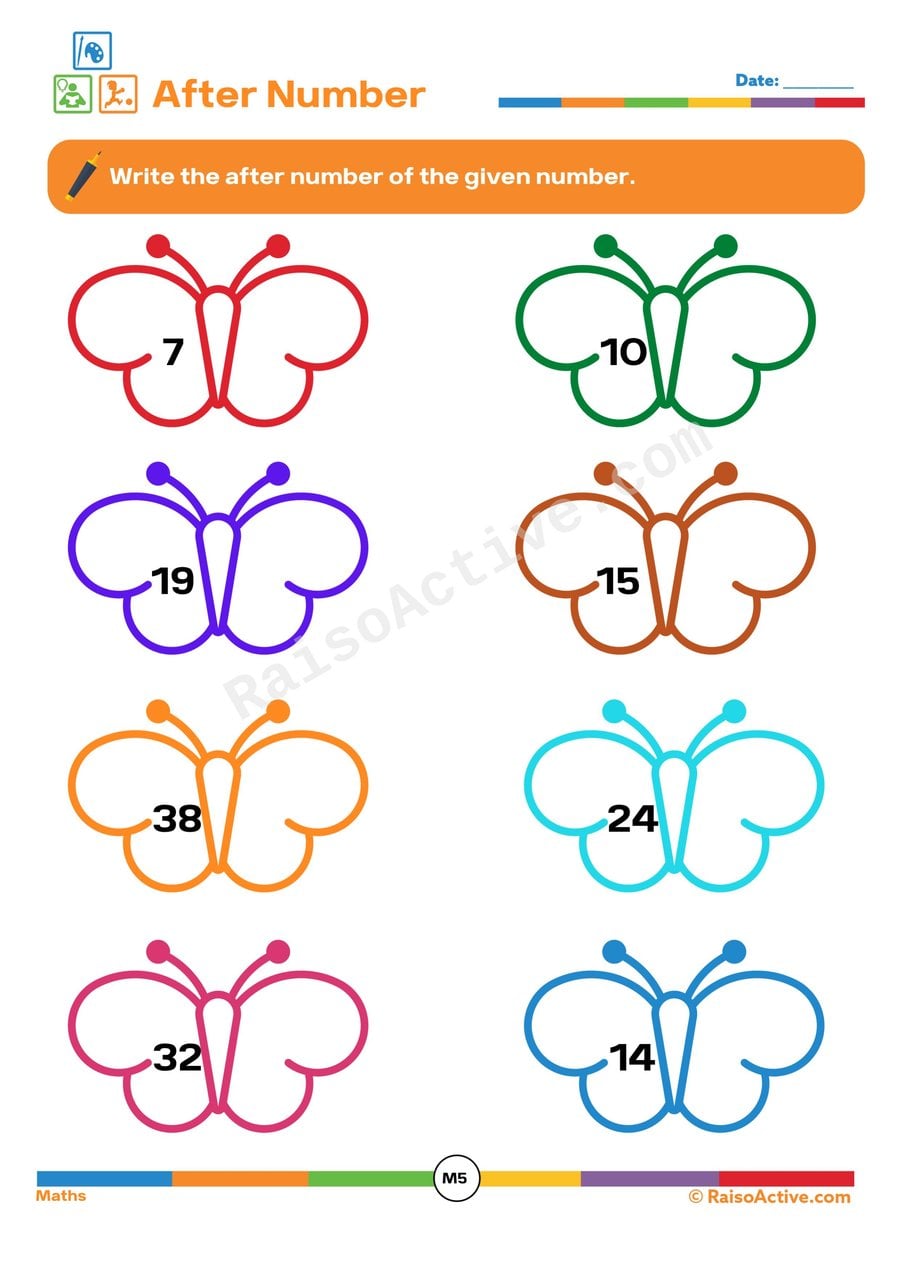
After Number Worksheet: Butterfly Fun!
This worksheet targets a specific early-numeracy milestone: understanding that every number has a number that comes immediately after it in sequence. For ages 4-6, practicing 'what comes next' strengthens the mental number line children rely on for later addition, since knowing that 7 comes after 6 is the foundation of counting on.

CCVCC Word Worksheet: Color and Write!
This worksheet challenges children ages 4-6 to identify and write CCVCC words — words with a consonant blend at both the beginning and the end, like 'stomp' or 'crisp' — by coloring the correct letters and writing the complete word. As one of the more complex CVC-family word patterns, CCVCC words require children to blend and hold onto sounds at both ends of the word, a genuine stretch beyond basic three- and four-letter words.

Present Tense Worksheet: Fill in the Blanks and Identify Sentences!
This worksheet gives children ages 4-6 focused practice with present tense verbs, both producing them correctly in fill-in-the-blank sentences and recognizing them when identifying whether a given sentence is written in the present tense. Distinguishing tense is an important grammar milestone that helps children communicate clearly about what is happening right now versus what already happened, a distinction they're actively sorting out in their own speech at this age.
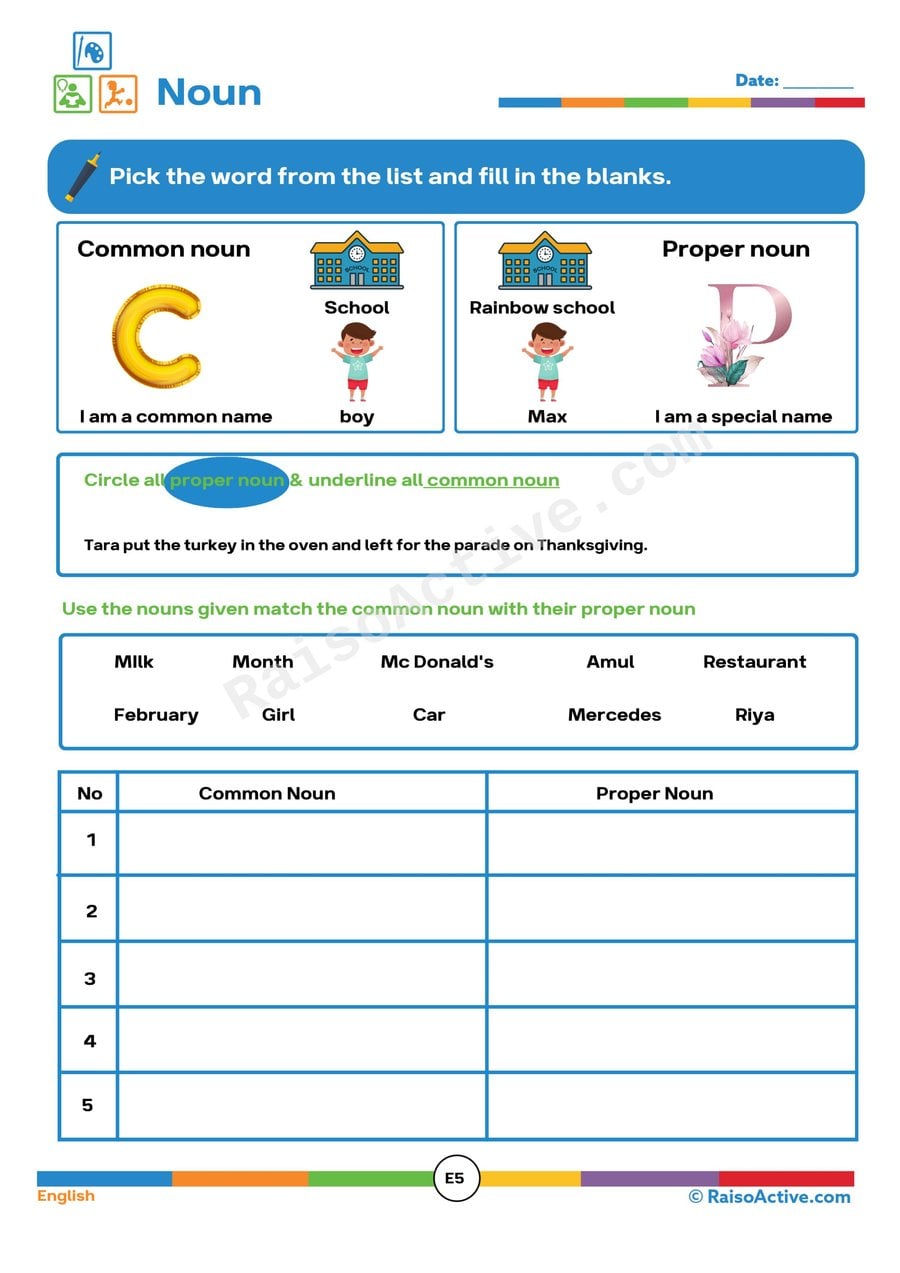
Common and Proper Nouns Worksheet for Kids
This worksheet introduces children ages 4-6 to the grammar concept of common nouns (general words like city or dog) versus proper nouns (specific names like Mumbai or Rex), building an early foundation for capitalization rules and sentence structure. Learning to tell the two apart also sharpens attention to detail, since proper nouns are marked by capital letters that common nouns don't use.

Time Telling Worksheet: Write the Time on the Clocks!
Reading the position of the hour and minute hands on an analog clock and writing the matching time builds clock-reading fluency for children ages 4-6, a more advanced step than simply recognizing a given time, since it requires producing the answer independently.
What Grade 1 / Class 1 tracing worksheets cover
By six to seven most children no longer need dots for everyday letters, so tracing at this age is a targeted fix rather than daily practice: a letter that keeps reversing, a join between two cursive letters, or a longer word whose spacing keeps drifting. A worksheet should isolate that one problem, show it traced several times, and end with the same word or join copied from memory. Whole-alphabet tracing sheets are review, not new learning.
- Retrace a letter, such as b or d, that still reverses
- Trace a cursive join between two letters several times
- Trace a longer word to fix uneven spacing
- Copy the traced word from memory with no dots
How to use these worksheets at home or in class
About twenty minutes a day, split between one math page and one reading page on alternating days, matches what most first grade teachers assign as homework. Have your child read every instruction aloud before starting, since that doubles as reading practice.
Start with the sheet that matches what your child can already do, then move one step up. Keep finished sheets in a folder: Grade 1 / Class 1 teachers often ask for evidence of practice, and children like seeing their own progress.
Is your child ready for Grade 1 / Class 1 tracing work?
A child ready for this stage reads and writes numerals fluently to 20, blends simple words into sentences, follows a written instruction without help, and can explain out loud how they solved a problem rather than only stating the answer.
Frequently asked questions
My six-year-old writes most letters fine. Why is tracing still on the worksheet list?
Because a handful of letters or joins are usually still shaky even when most writing looks fluent, and tracing is the fastest way to fix one at a time. Look for the specific letter that reverses, slants the wrong way, or is formed from the bottom up, and trace just that letter a dozen times across a page rather than the whole alphabet. Once it is correct three sessions running, drop it and move to the next weak spot.
What should a Grade 1 / Class 1 child be able to do in tracing?
By six to seven most children no longer need dots for everyday letters, so tracing at this age is a targeted fix rather than daily practice: a letter that keeps reversing, a join between two cursive letters, or a longer word whose spacing keeps drifting. A worksheet should isolate that one problem, show it traced several times, and end with the same word or join copied from memory. Whole-alphabet tracing sheets are review, not new learning. A child ready for this stage reads and writes numerals fluently to 20, blends simple words into sentences, follows a written instruction without help, and can explain out loud how they solved a problem rather than only stating the answer.
Do these worksheets follow the Grade 1 / Class 1 curriculum?
The sheets cover standing and sleeping lines, curves and zigzags, pencil grip and control and stroke starting points and direction, which sit inside the Common Core Grade 1 (1.OA, 1.NBT, RF.1.3); NEP 2020 Foundational Stage Class 1; National Curriculum KS1 (Year 2) outcomes for Grade 1 / Class 1. Class 1 (India), Year 2 (UK) use the same skills at this age, so the sheets also fit families following those programmes.
Are these Grade 1 / Class 1 tracing worksheets free?
Yes. Each worksheet downloads free as a watermarked PDF once you create an account, with a limit of five a day. An annual membership ($20) removes the watermark and the limit for the whole library of over 1,000 worksheets and every printable pack.

Written by
Hemsweta Jain · Teacher Cheena
MBA and Early Childhood Educator, teaching since 2014 · Founder of RaisoActive, Mumbai
Written and reviewed by Hemsweta Jain (Teacher Cheena), who designs every RaisoActive worksheet.
Last reviewed
Printable packs for ages 6–7
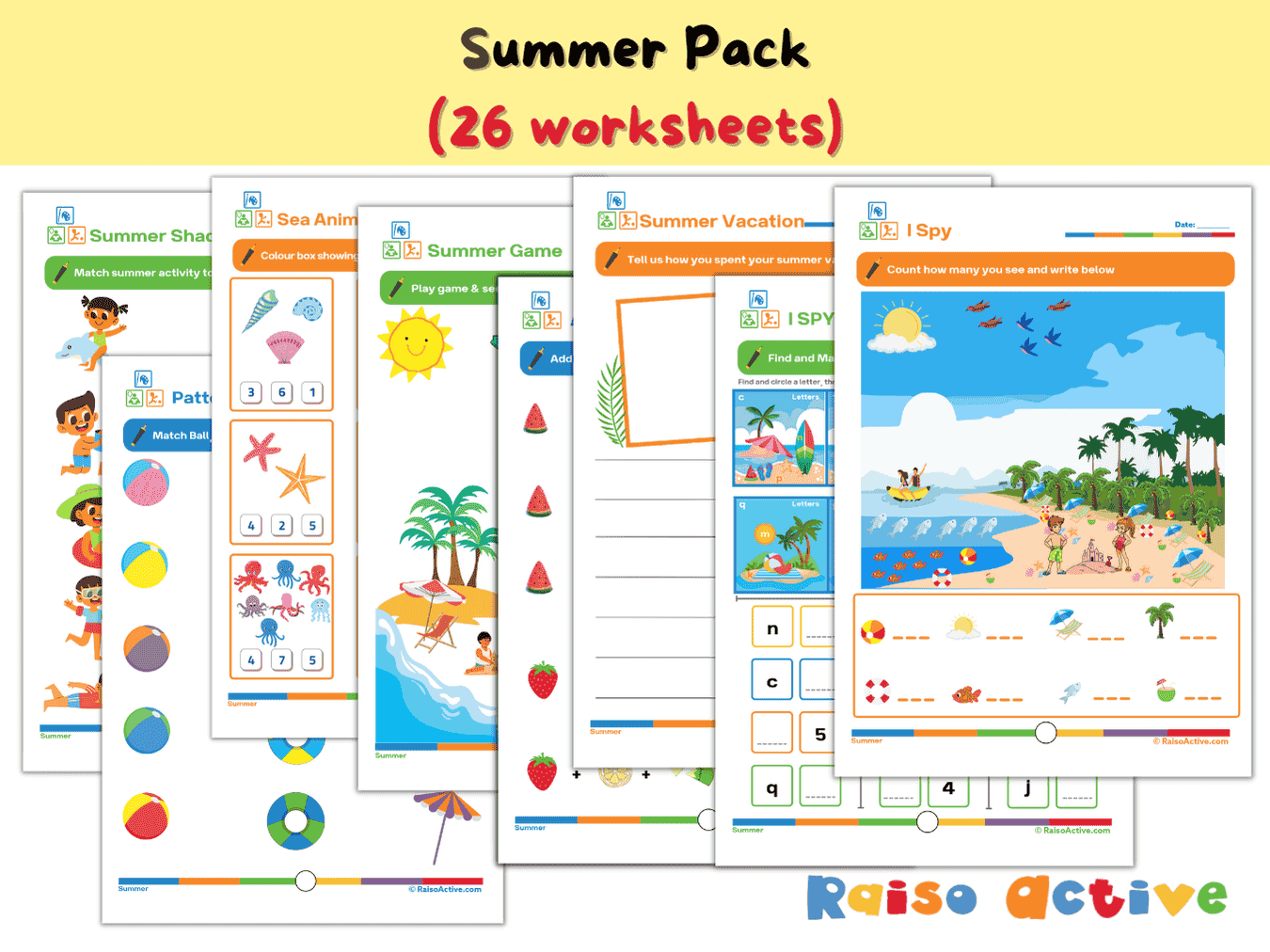
Summer Activity Pack: Math, Literacy, Puzzles & More for Preschool & Kindergarten
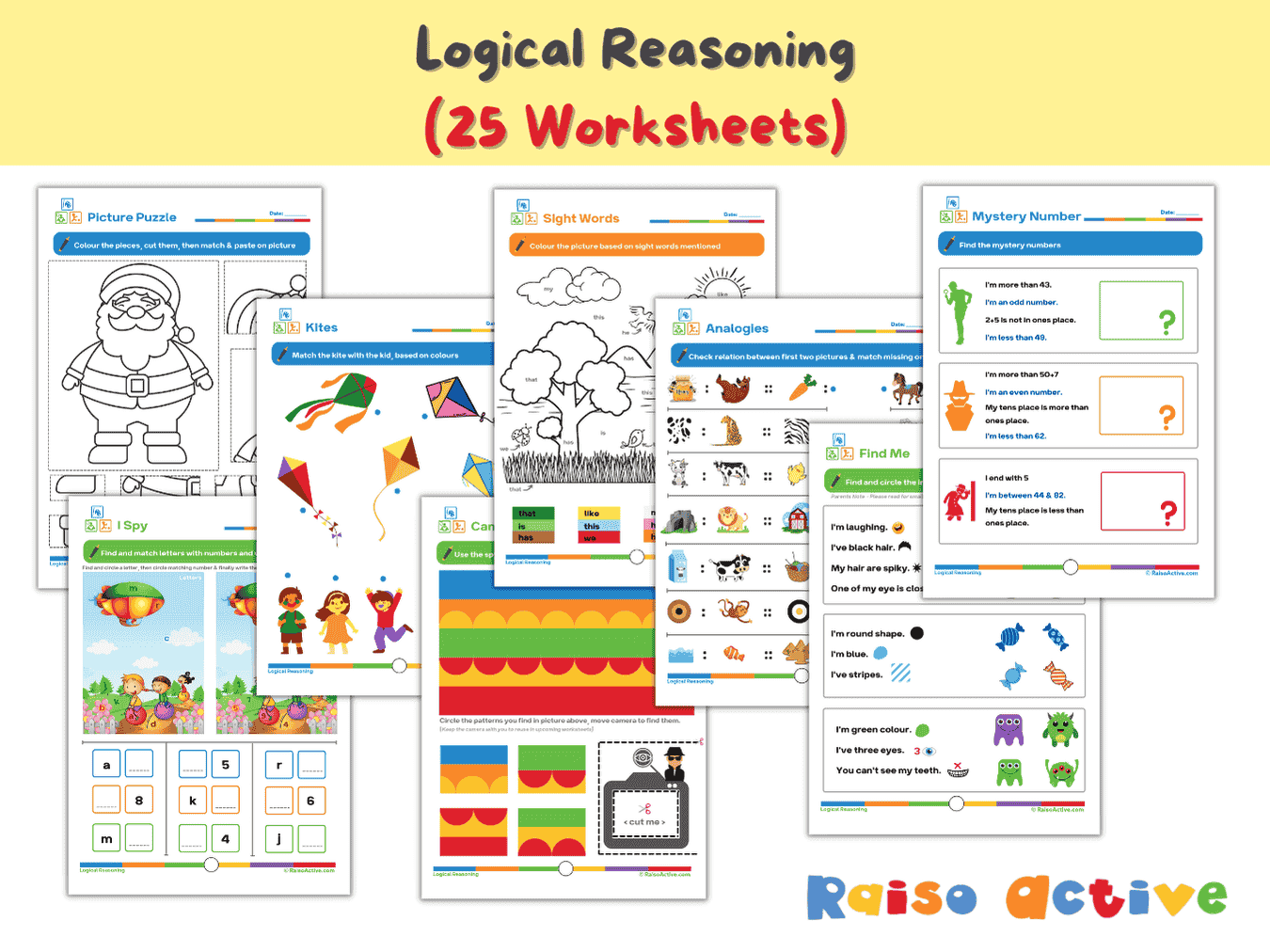
Logical Reasoning Activity Book for Preschool & Kindergarten | Patterns, Puzzles & Analogies
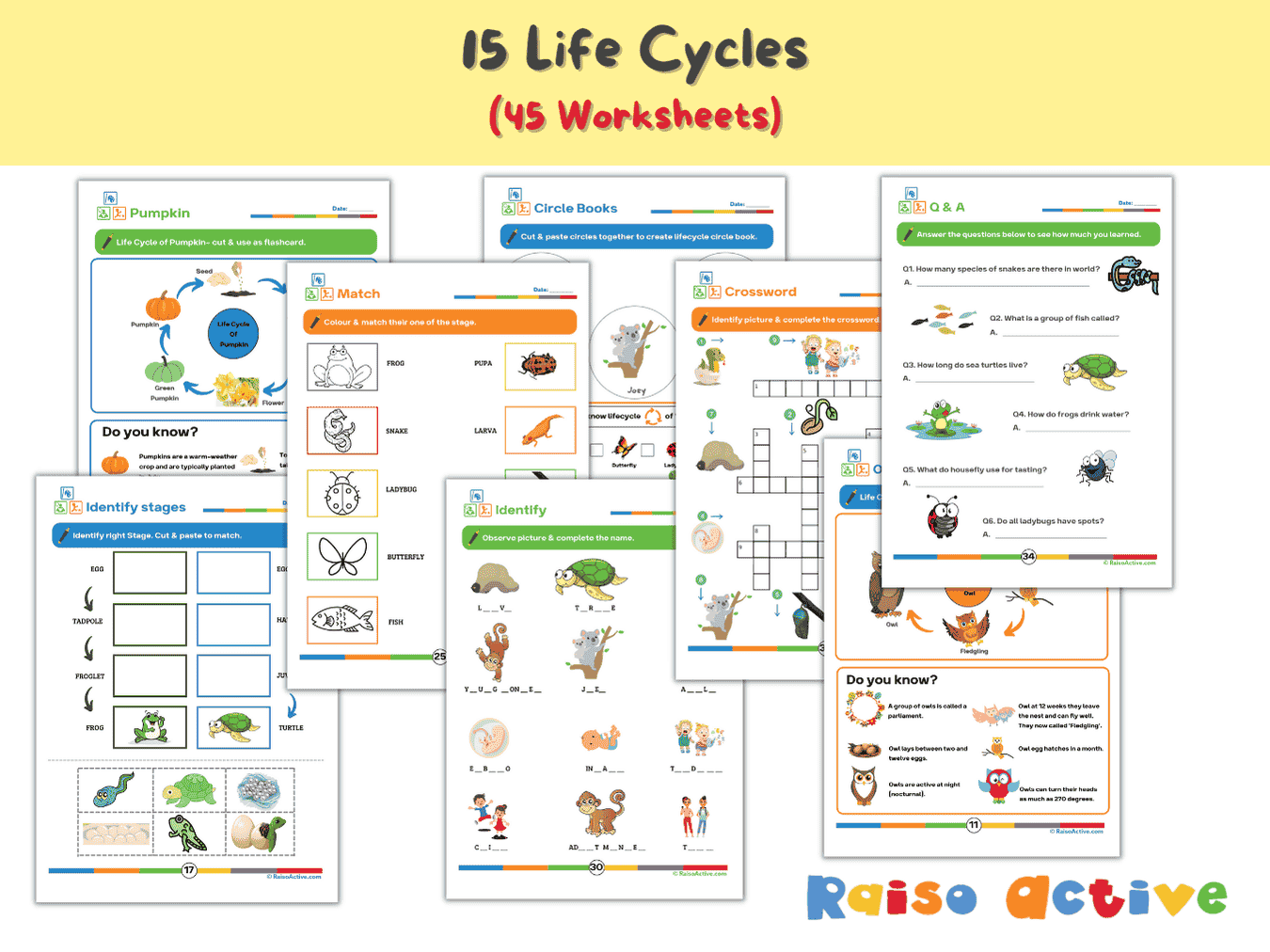
Lifecycles Activity Book & Flashcards for Preschool & Early Elementary
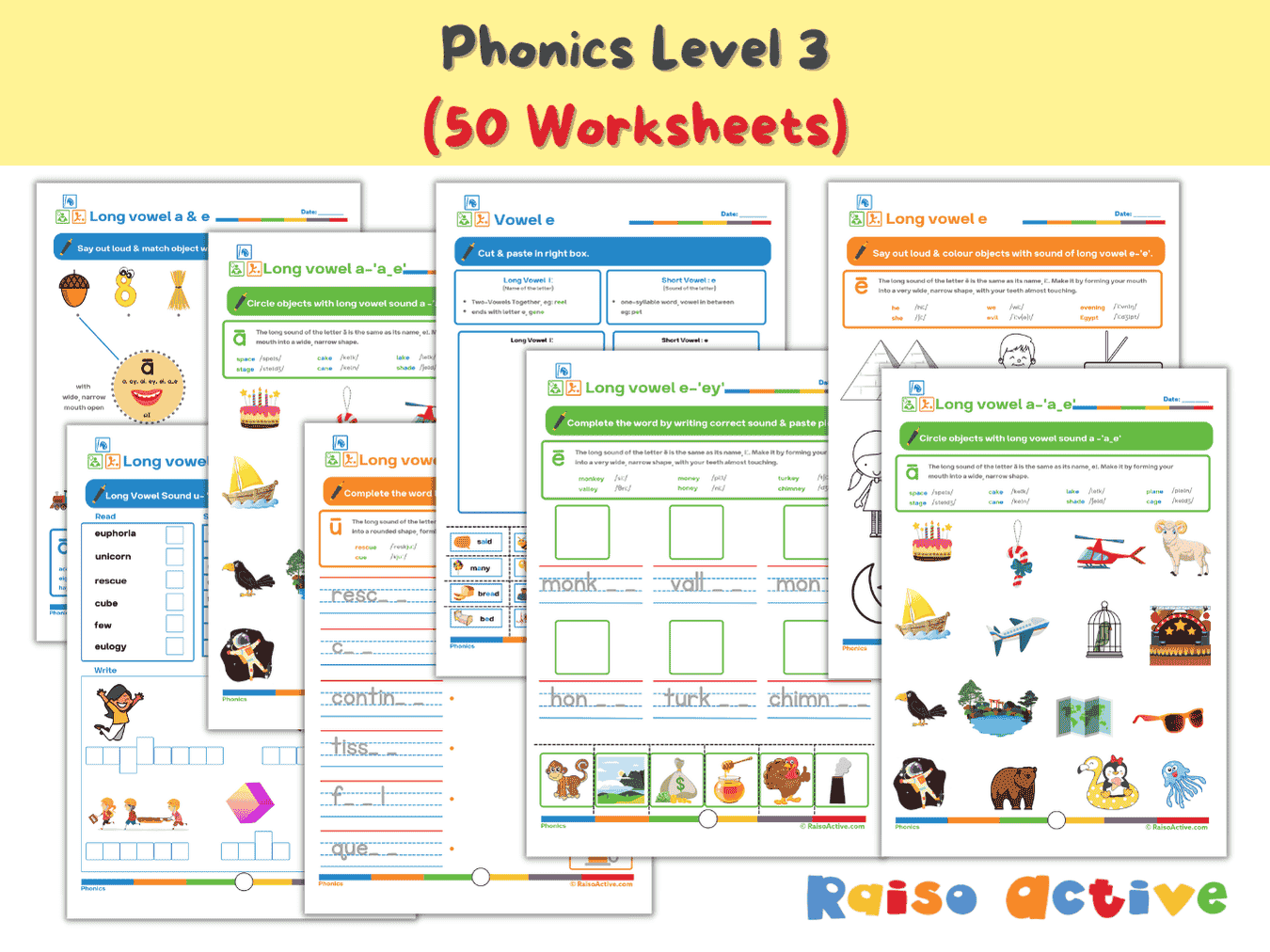
Phonics Level 3 Long Vowels Activity Book for Kindergarten & 1st Grade
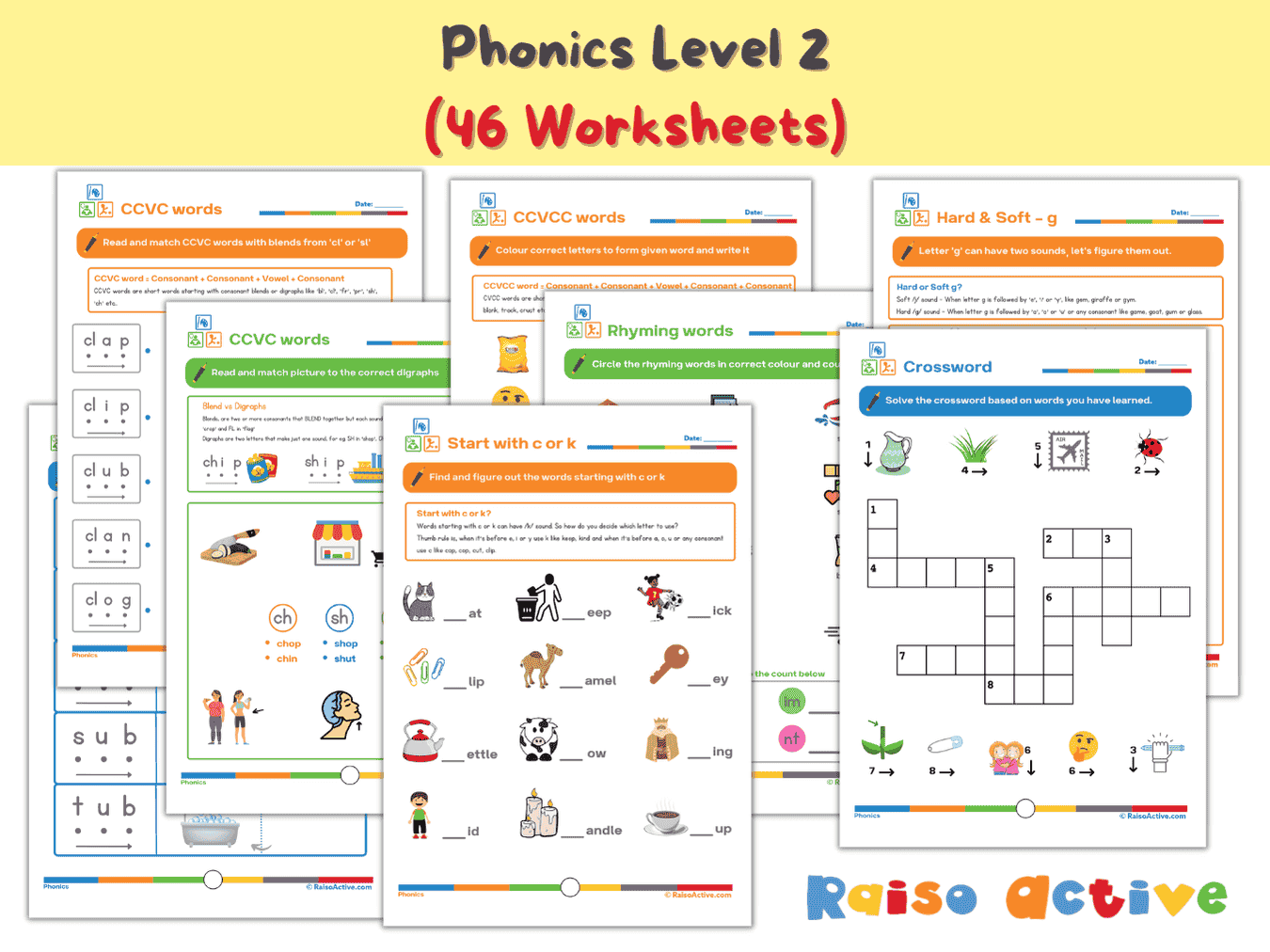
Phonics Level 2 Worksheets: CVC, CCVC, CVCC Word Families & Blends for Early Readers (Ages 4-7)
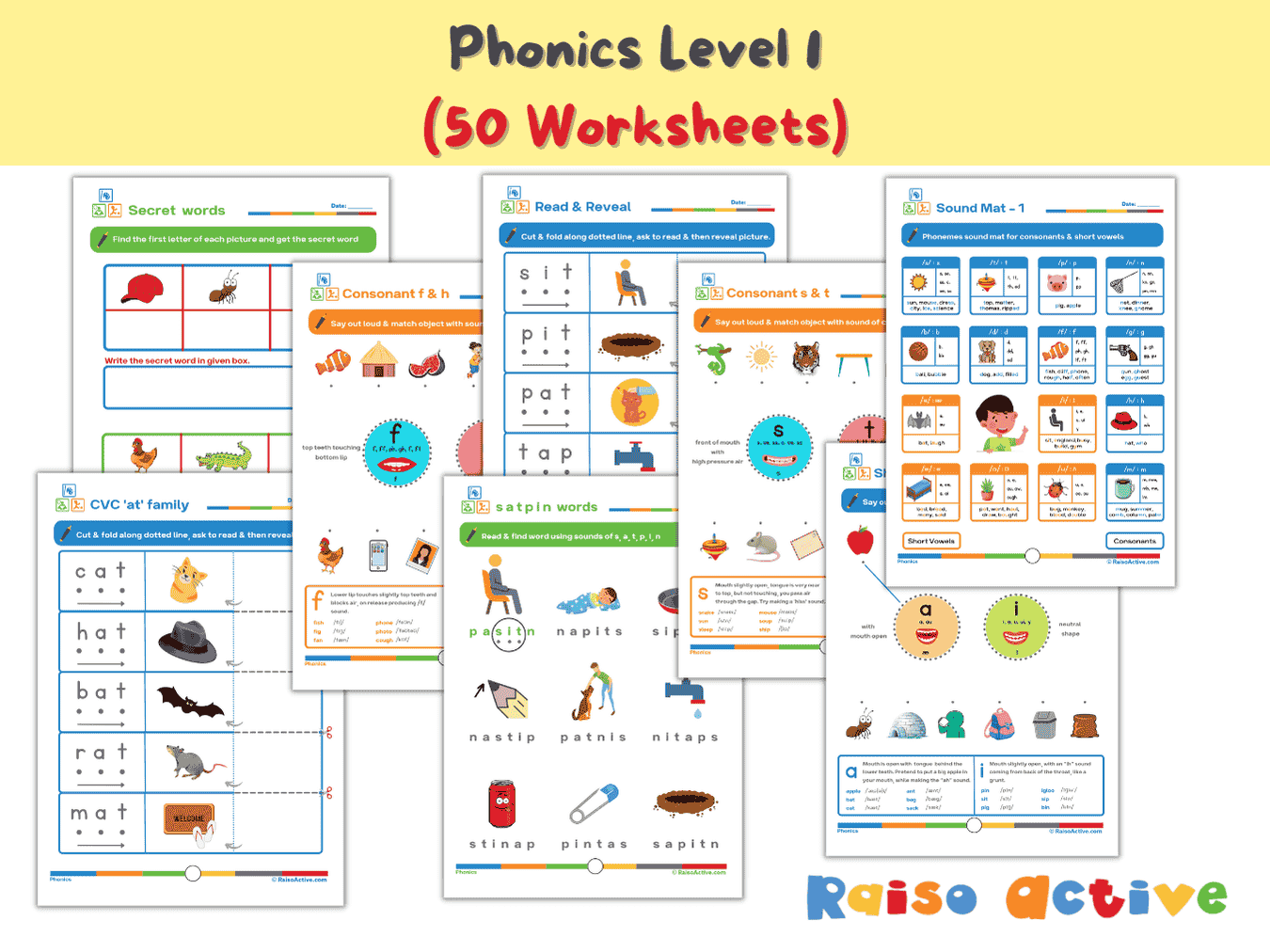
Phonics Level 1 Activity Book: Letter Sounds, Blending & CVC Words for Preschool & Kindergarten
Guides for parents and teachers
See all guides →Number Formation Rhymes 0–9 and How to Fix Reversals
Original number formation rhymes for 0–9, the correct stroke order for each digit, why 3, 5 and 7 get reversed most often, and multisensory fixes that work.
Pre-Writing Strokes in Order: From Standing Lines to Loops (With Printable Patterns)
The developmental order of pre-writing strokes, from vertical lines to loops, and why practicing them in sequence makes letter formation much easier to learn.
Kindergarten Readiness Checklist: 25 Skills to Practice Before the First Day
A kindergarten readiness checklist of 25 literacy, math, motor, self-regulation and self-help skills, with an 8-week summer plan and notes on when not to worry.
Best Worksheets for 3-Year-Olds: What Works and What to Avoid
What works on worksheets for 3-year-olds: short sessions, crayons, tracing lines, matching, cutting, a free weekly plan, and signs one is too advanced.
Reception Year Explained: EYFS Learning and How to Help at Home
A teacher's plain-English guide to the Reception Year: the seven areas of learning, Early Learning Goals, Phase 2/3 phonics, the RBA and home routines.
What Should a 4-Year-Old Know Before LKG? A Readiness Checklist
A calm, teacher-written LKG readiness checklist for 4-year-olds: language, pattern writing, numbers to 10, self-help and social skills, plus a 6-week plan.
Canonical: https://raisoactive.com/worksheets/grade-1-tracing