Free printable worksheets · US · UK · India
Grade 1 / Class 1 Alphabet Worksheets (Ages 6–7)
Grade 1 / Class 1 alphabet worksheets are practice sheets for children aged 6–7 in Grade 1 in the US and Class 1 in India. Alphabet worksheets build recognition of the 26 letters, their names and order, and the difference between uppercase and lowercase forms. The sheets on this page cover letter recognition A–Z, letter names versus letter sounds, sequencing letters in order and matching uppercase to lowercase.
Grade 1, known as Class 1 in India and Year 2 in the UK, is where a child works through a full page independently: place value with tens and ones, addition and subtraction within 20, and short reading passages followed by comprehension questions replace picture-supported counting sheets. By six to seven, alphabet knowledge is assumed rather than taught directly, and worksheets use it as a tool: alphabetizing a list of words that share a first letter, so the second or third letter decides the order, using a dictionary-style guide word, or writing the alphabet from memory in under a minute. Where the school introduces cursive, a cursive alphabet reference is traced and copied alongside the print forms already known.
235+ worksheets · free PDF download · print on A4 or Letter
Grade 1 / Class 1 Alphabet Worksheets to print
Browse all worksheets for ages 6–7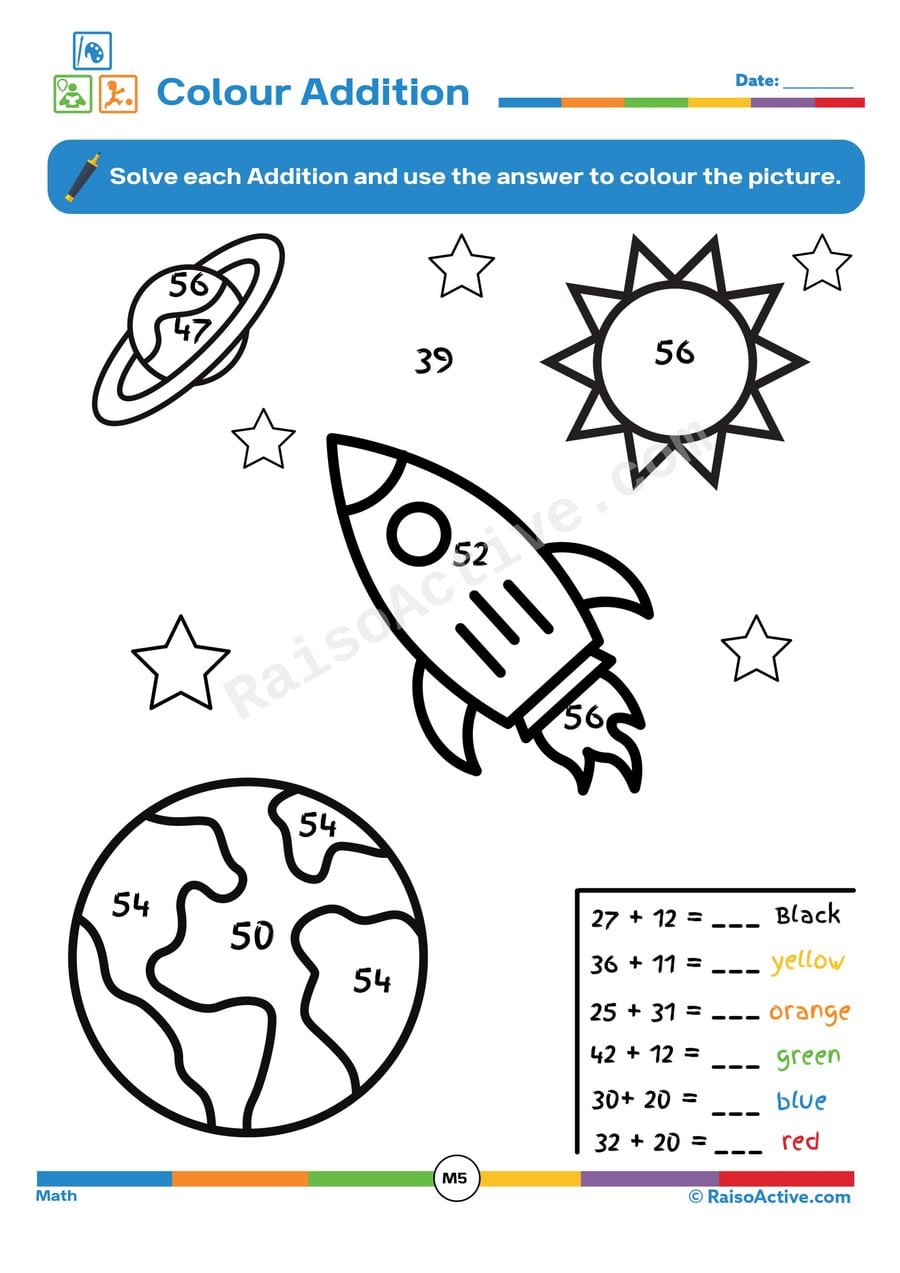
Color Addition Worksheet: Space Adventure!
This worksheet builds addition fluency by having children solve simple equations and then use each answer to determine which color to use in a corresponding section of a space-themed picture. For five- to seven-year-olds, this color-by-number format adds motivation to solve each problem accurately, since a wrong answer means the wrong color goes in the wrong spot and the final picture won't come together correctly.

Punctuation Adventure: End Punctuation Worksheet for Kids
Children ages 5-7 practice choosing between periods, question marks, and exclamation points based on the meaning and tone of a sentence, a skill that connects punctuation directly to how a sentence should sound when read aloud. This builds the foundation for expressive, correctly punctuated writing later in school.

Sun Safety Worksheet for Kids: Learn About Staying Safe in the Sun!
This worksheet has children ages 4-7 answer questions about sun safety, such as why sunscreen and hats matter, building early health literacy alongside writing practice as they put their understanding into their own words. Because the questions ask children to reason about why certain sun-safety habits matter rather than just label a picture, this worksheet develops early explanatory thinking, a step up from simple factual recall. Practicing writing full answers, even short ones, also builds sentence-forming skills appropriate for this age range.
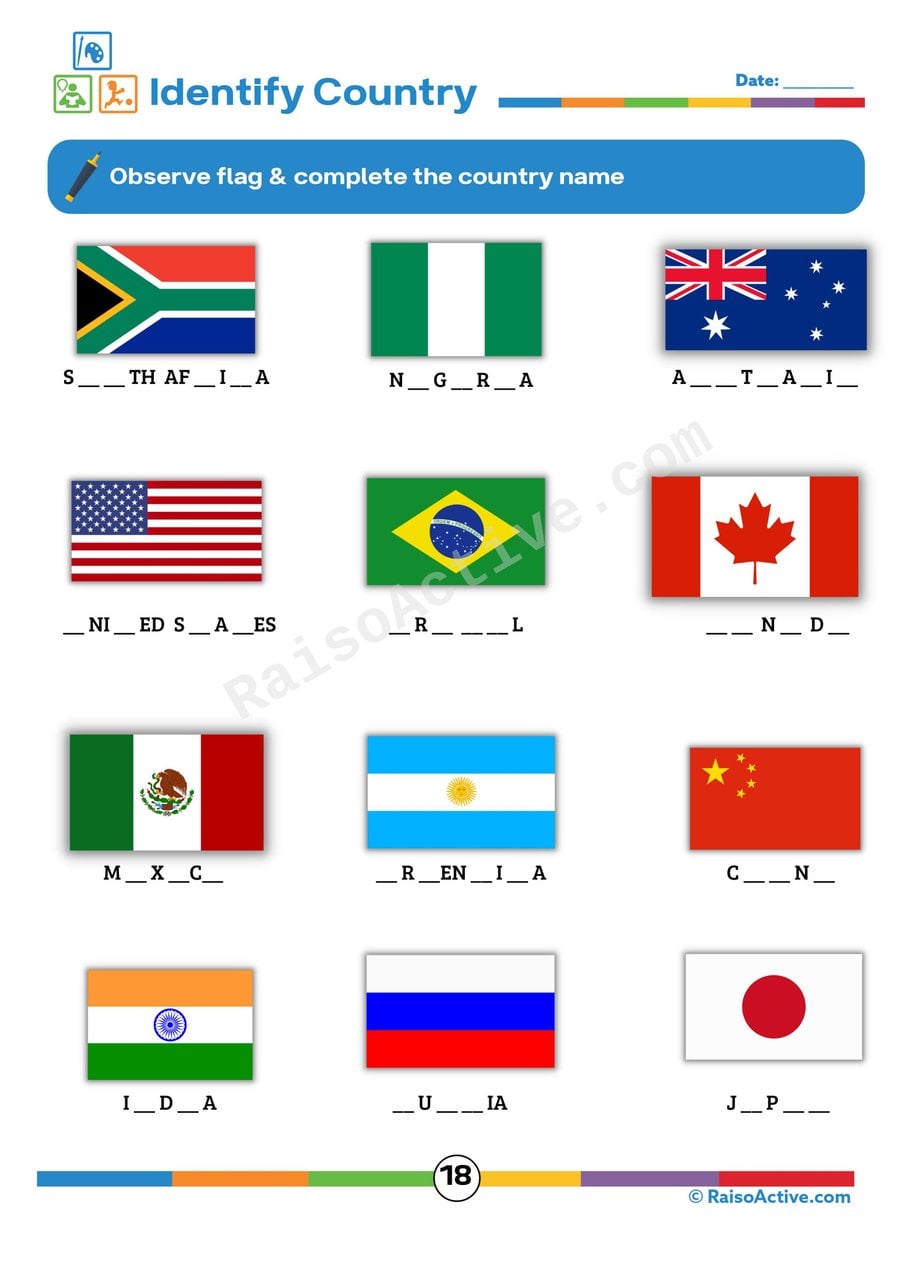
Identify the Country: Flag Matching Worksheet
Filling in the missing letters of each country's name while studying its flag gives children ages 4-7 practice with letter-sound correspondence and spelling patterns, since they must sound out the word and recall which letters are already provided as clues. It also builds early geography knowledge, helping children connect a visual symbol (the flag) to a country's name for the first time. This dual practice of decoding and world knowledge lays groundwork for both literacy and social studies skills.

Sentence Matching Worksheet: Read and Match the Sentences!
Reading a short sentence and pasting it beneath its matching picture builds reading comprehension for children ages 4-6, requiring them to understand the full meaning of a sentence rather than recognizing isolated words. This task also reinforces fine motor precision as children position and glue a small strip of text accurately within a defined space.
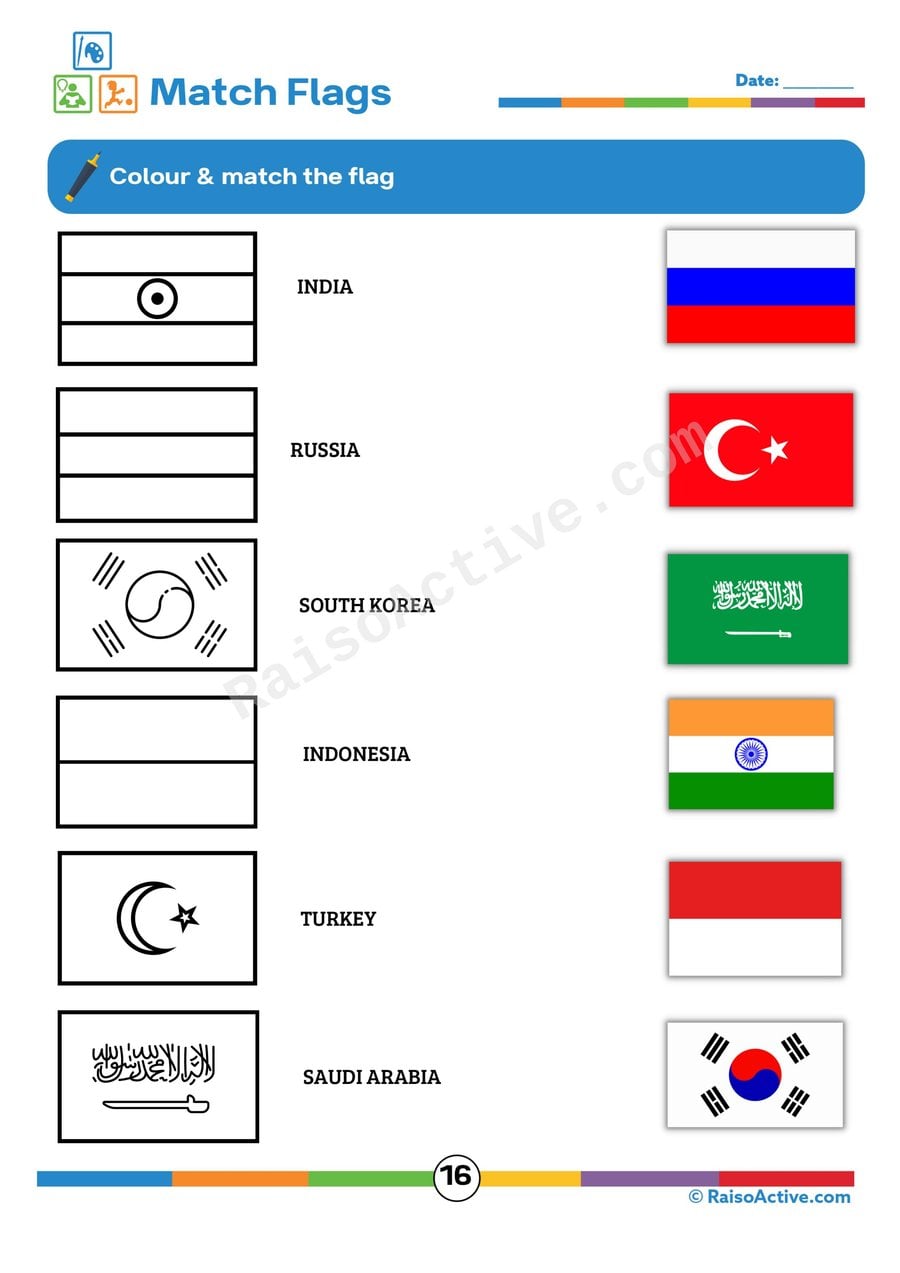
Match the Flags Worksheet for Kids
Children ages 4-6 build flag recognition by matching a set of country flags to their correct names, continuing to strengthen geography vocabulary and visual discrimination through this final flag-focused worksheet. Working with flags is an especially effective way to build visual memory in young children, since each one is a distinct, colorful pattern they can learn to recognize quickly.

Pronoun Power: Fill-in-the-Blanks Worksheet for Kids
Children ages 4-6 practice using indefinite pronouns like 'someone', 'anything', or 'everybody' correctly within sentences, an early grammar skill that helps their spoken and written language sound more natural and precise. Filling in blanks with the right pronoun requires reading comprehension, since children must understand the sentence's meaning to choose correctly. The coloring step adds a quick visual check that reinforces the correct answer.

Shape Properties Worksheet: Identify and Match Shapes!
This worksheet moves beyond simply naming 3D shapes to analyzing their properties — counting faces, edges, and vertices — which builds the early geometric reasoning children need before formal geometry lessons. For four- to six-year-olds, learning that a cube has 6 faces while a sphere has none introduces the idea that shapes can be described by measurable features, not just their overall look.

Solar System Number Matching Worksheet for Preschoolers
This worksheet combines number-word recognition with a color-by-key coloring task for children ages 4-6, asking them to match number names written on planets to their corresponding numerals before coloring each planet according to a color code. Matching written number words in a space-themed context adds novelty that keeps repeated number-word practice fresh, while the color-key step reinforces careful, sequential following of visual instructions. Together, these two tasks combine literacy and numeracy practice in one engaging page.

Body Parts Worksheet: Identify and Paste the Correct Organ!
Reading a clue about a body part's function and finding the matching organ builds science vocabulary and reading comprehension for children ages 4-6, linking what a body part does to its correct name.
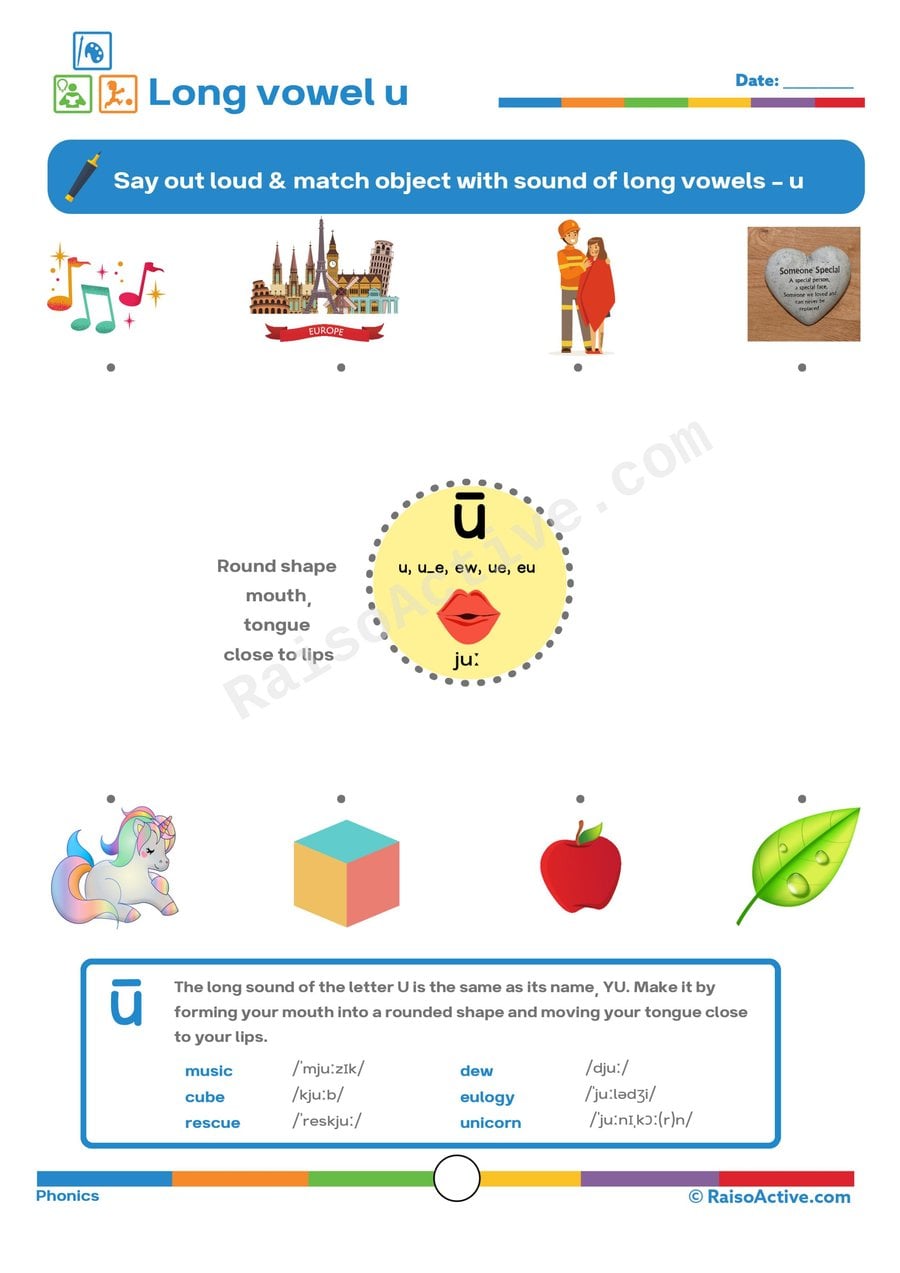
Long Vowel U Worksheet: Say the Sound and Match!
This matching worksheet gives children ages 4-6 focused practice hearing and identifying the long 'u' sound (as in 'cube' and 'mule') inside real words, then connecting that sound to its written form. Matching pictures to words strengthens the sound-symbol link that underlies fluent reading, while distinguishing long 'u' from other vowel sounds sharpens phonemic awareness — a strong predictor of later reading success.

Before, After, and Between Numbers Worksheet for Preschoolers
This worksheet has children ages 4-6 practice identifying which number comes before, after, or between given numbers, writing their answers into the provided spaces. Understanding number sequence and relative position is a core building block of number sense, laying the groundwork for later skills like addition, subtraction, and estimating quantities.
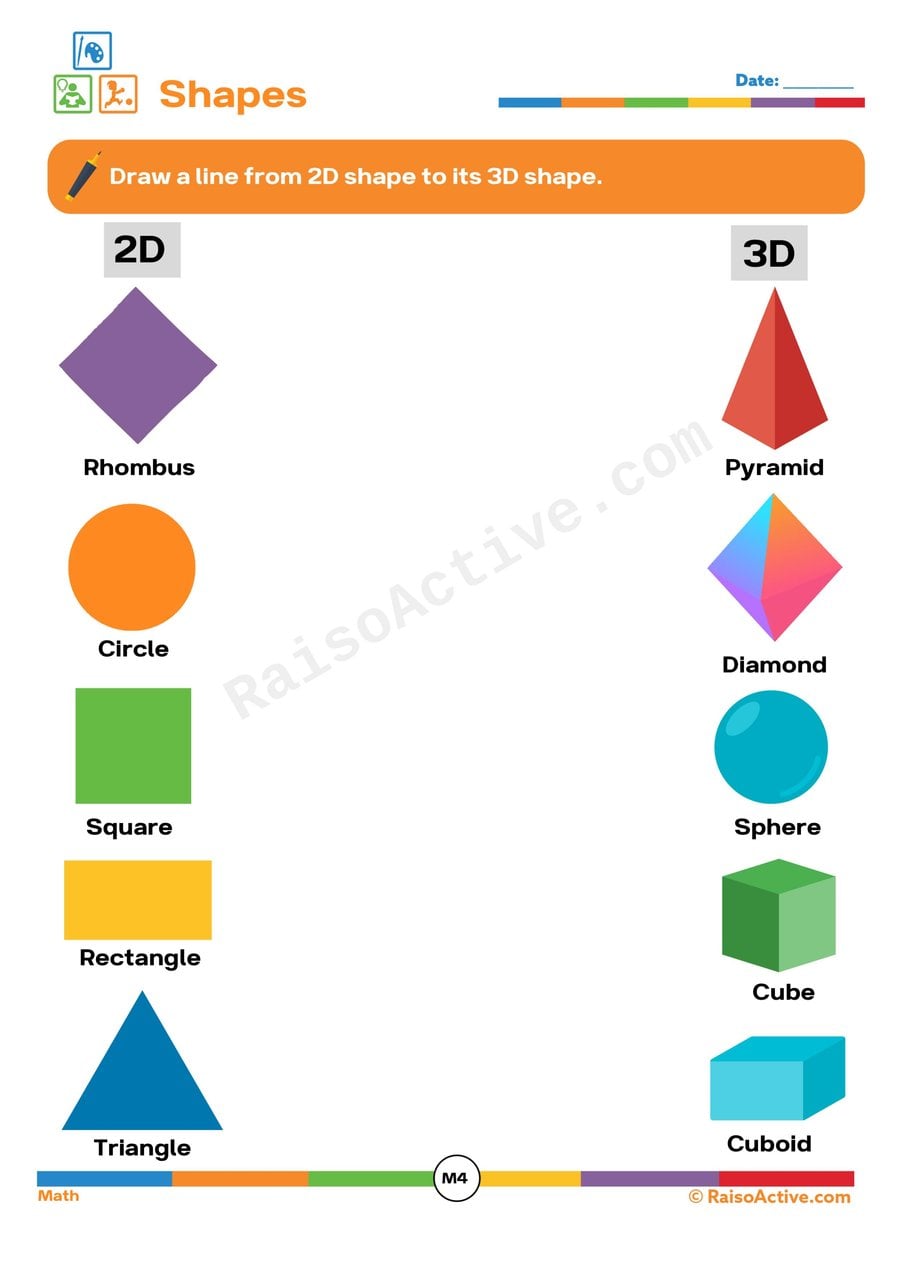
Shape Match: 2D to 3D Shapes Worksheet
This worksheet introduces 4-6 year olds to the relationship between flat 2D shapes and solid 3D shapes — connecting a circle to a sphere, a square to a cube — which is an important spatial reasoning leap, since a 3D shape's flat 'face' is what actually corresponds to its related 2D shape. Making this connection explicit helps children understand that the shapes they've been learning aren't just flat pictures but also describe the surfaces of real, solid objects around them.
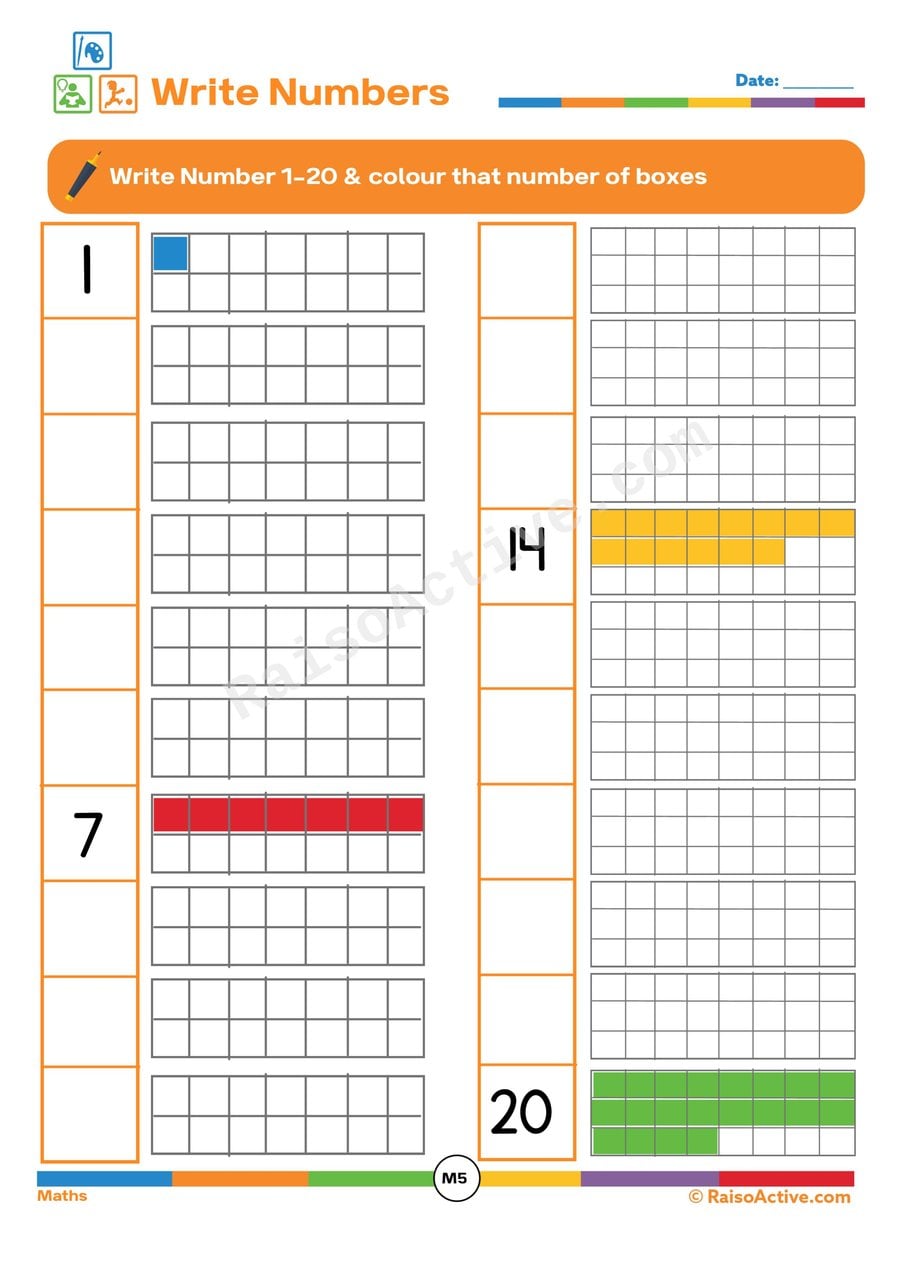
Write and Color Numbers 1-20 Worksheet
Children ages 4-6 practice writing numbers from 1 to 20 in sequence while reinforcing quantity recognition by coloring the matching number of boxes for each number, connecting the written numeral to the amount it represents. Extending number writing practice up through 20 supports children moving beyond single digits into the teens and twenties, a range many children find confusing.
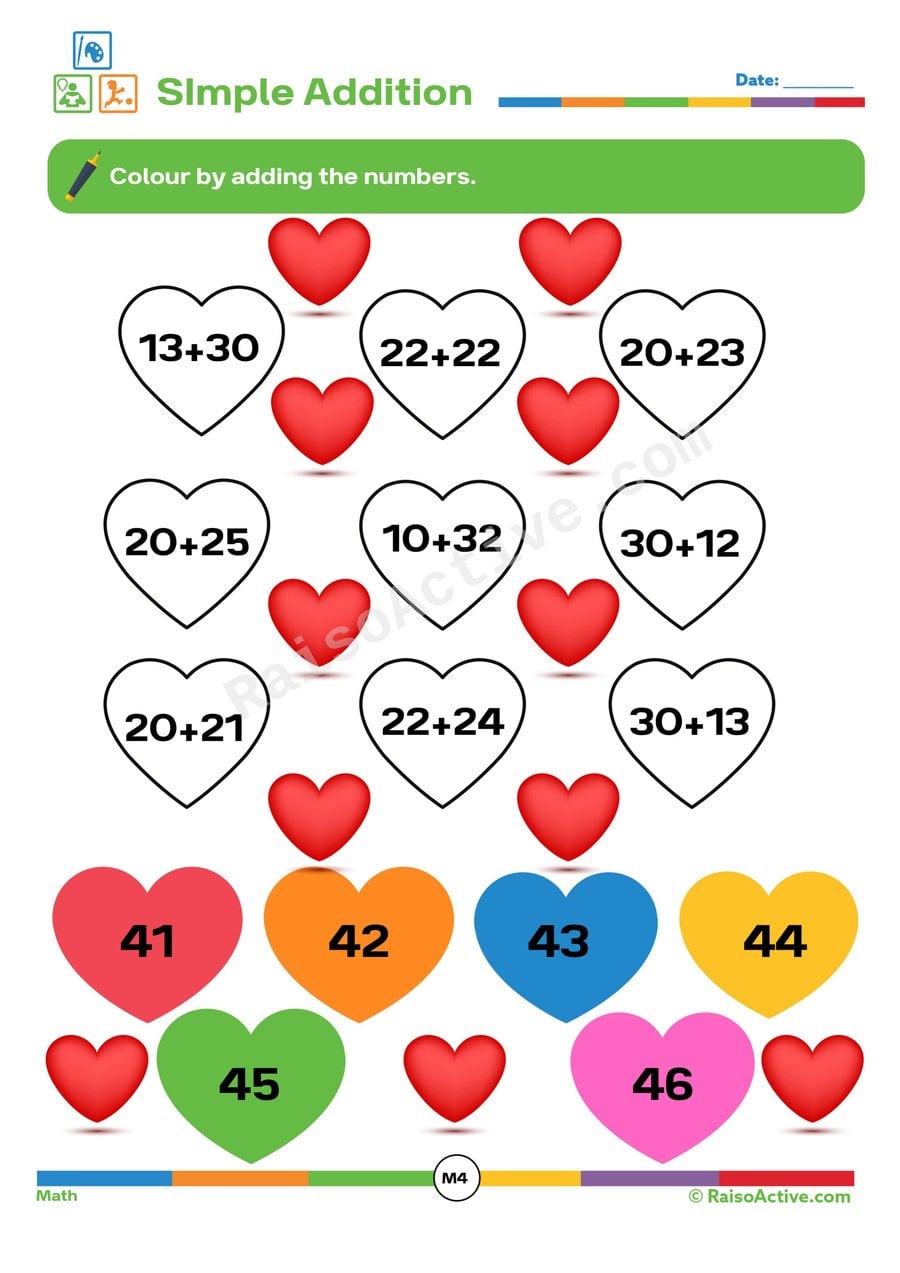
Simple Addition Worksheet: Color by Sums!
Children ages 4-6 practice quick single-digit addition facts while also following a color key, combining early math fluency with visual attention to detail. Solving each problem before coloring gives an immediate, satisfying way to check their own accuracy as the picture comes together.

Blend Words Worksheet: Practice Blending Sounds with Pictures!
This worksheet has children ages 4-6 practice blending two consonant sounds together at the start of a word by looking at a picture, saying the word, and writing in the missing blend to complete it. Unlike simply reading a finished blend word, this fill-in-the-blank format requires your child to actively recall which two letters combine to make the sound they hear, a more demanding skill than recognition alone. Strengthening blend spelling this way builds the foundation needed for more complex multisyllable words later in reading development.
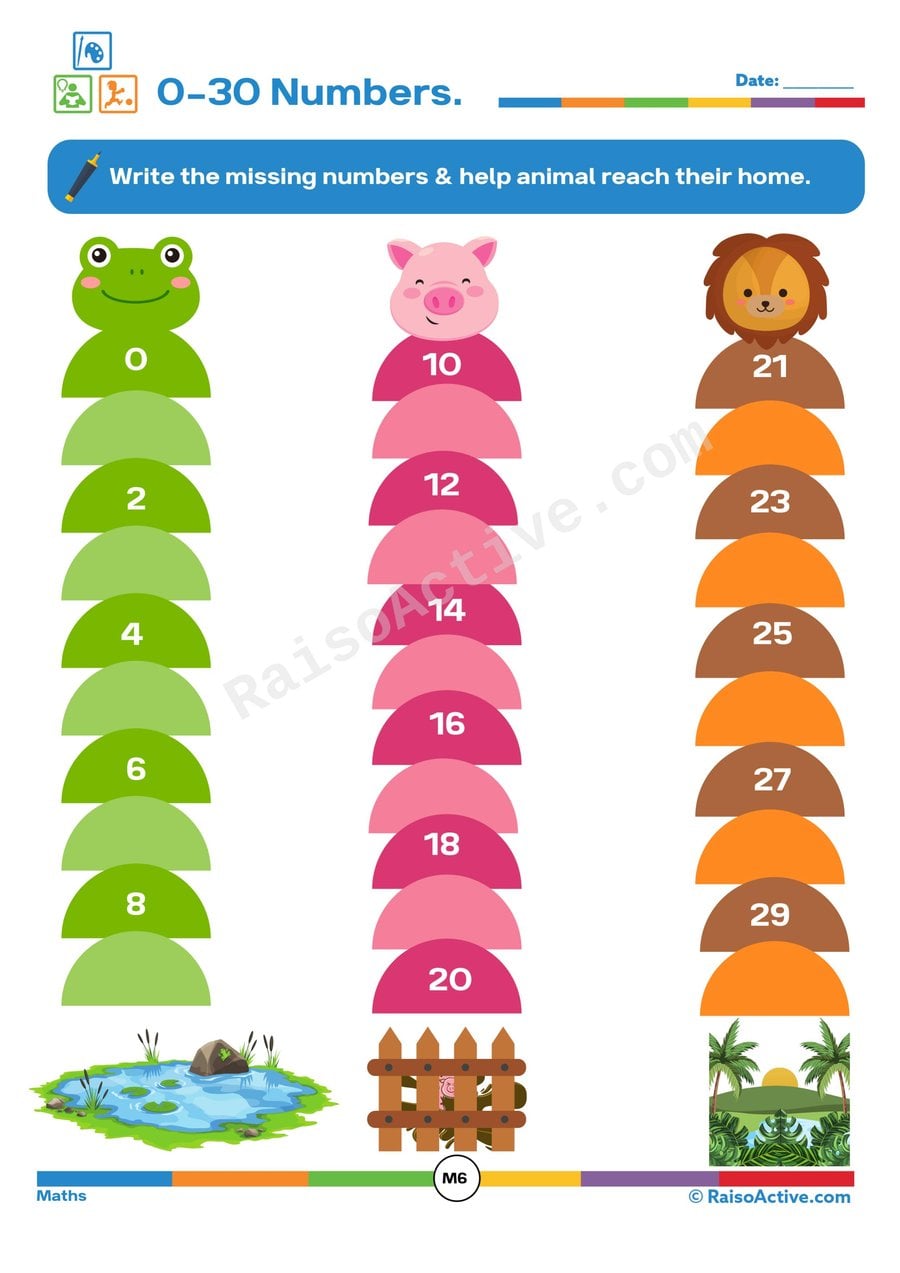
Number Fun: Missing Numbers Worksheet for Kids!
Filling in missing numbers from a sequence up to 30 helps children ages 4-6 strengthen number recognition and counting-on, the skill of continuing a sequence without starting over from one each time. Completing the animal path adds a motivating storyline that encourages children to work through the full sequence.

Before Number Worksheet: Practice Number Sequencing!
Practicing 'what comes before' a given number strengthens number sequencing for children ages 4-6, requiring them to think backward through the counting sequence rather than only forward, which is how most early counting practice happens. This backward thinking builds flexibility with numbers that supports later subtraction and number-line reasoning.
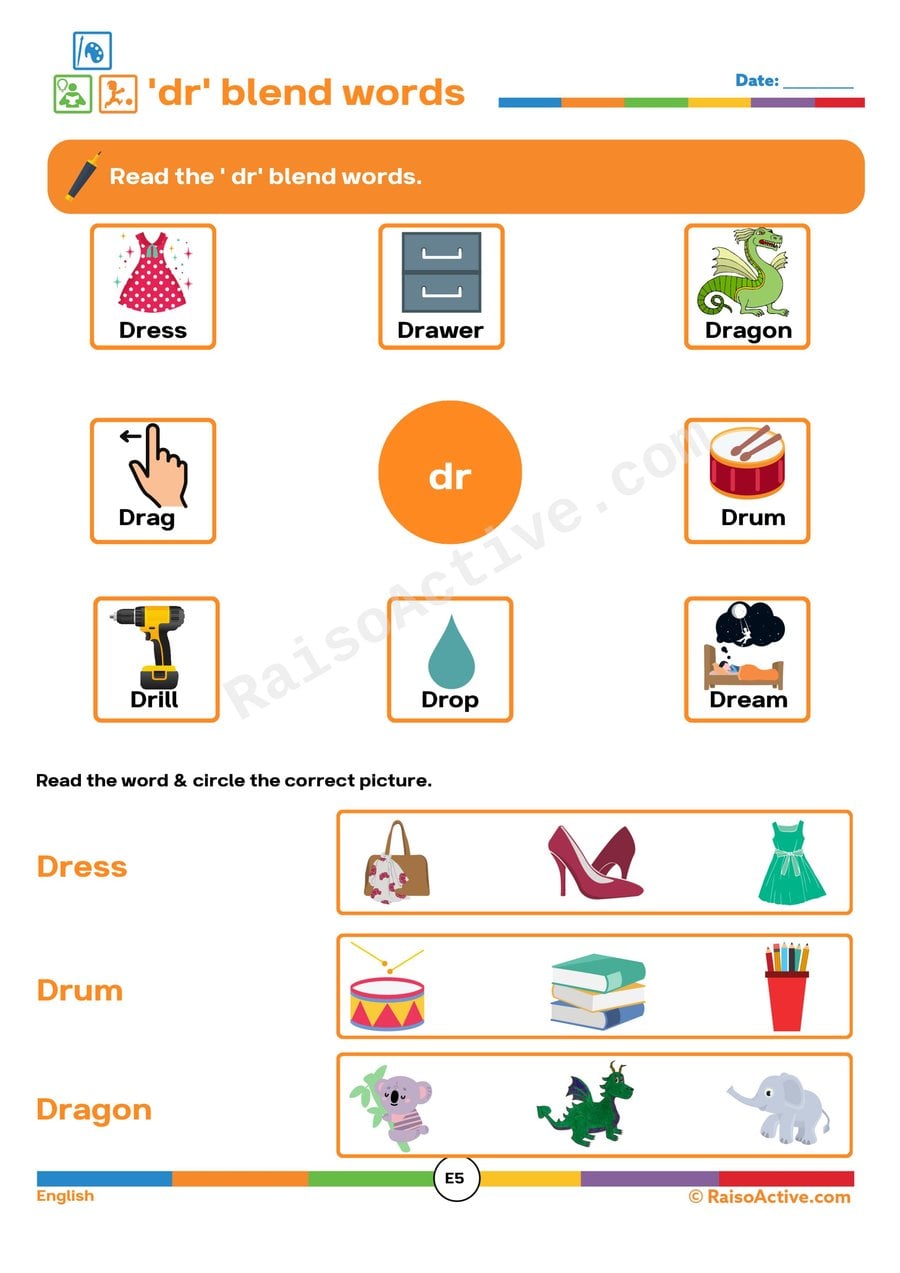
Dr Blend Words Worksheet: Read and Match!
This worksheet focuses on the 'dr' blend, as in 'drum' or 'dress,' asking children to read the word first and then find its matching picture, which reverses the more common picture-first phonics approach and pushes children to truly decode the word rather than guess from an image. For ages four to six, reading the word independently before checking against a picture builds real decoding confidence.

Blend Words Worksheet: See the Pictures and Write the Correct Blend!
Children ages 4-6 practice identifying missing consonant blends by looking at a picture, saying the word aloud, and writing the correct blend to complete it. This task requires children to isolate the blended sound at the beginning of a word and match it to its written letter combination, a more advanced phonics skill than single-letter sounds. Successfully completing each word strengthens both spelling accuracy and reading fluency with blended sounds.

Time Telling Worksheet: Write the Time on the Clocks!
Reading the position of the hour and minute hands on an analog clock and writing the matching time builds clock-reading fluency for children ages 4-6, a more advanced step than simply recognizing a given time, since it requires producing the answer independently.

Short Vowel Fun: Complete the Words Worksheet for Kids
This worksheet has children ages 4-6 fill in missing short vowels to complete words based on pictures, then locate and color those same words within a grid, layering active spelling recall with visual word-search practice. Completing a word by choosing the correct short vowel requires your child to distinguish between five different vowel sounds — a, e, i, o, and u — which is a more demanding discrimination task than working with just one or two vowels at a time. Following that with a word search reinforces the completed spelling by having your child recognize and locate the exact same word again.

Punctuation Practice Worksheet for Early Learners
Children ages 4-6 learn to distinguish between statements and questions by deciding whether each sentence needs a period or a question mark, an early step in understanding how punctuation changes meaning and tone. Recognizing the difference between a question and a statement also supports reading fluency, since readers naturally use rising or falling intonation depending on the punctuation at the end of a sentence.

S and T Sounds Worksheet: Matching Sounds to Objects
This matching worksheet helps children ages 4-6 build beginning-sound awareness for the letters 's' and 't' by listening to each sound and connecting it to the correct object. Distinguishing between these two common consonant sounds strengthens the foundational skill of linking a spoken sound to its written letter, which is essential before children can spell or decode independently. Matching by sound, rather than by sight alone, keeps the focus on auditory phonics rather than memorized shapes.
What Grade 1 / Class 1 alphabet worksheets cover
By six to seven, alphabet knowledge is assumed rather than taught directly, and worksheets use it as a tool: alphabetizing a list of words that share a first letter, so the second or third letter decides the order, using a dictionary-style guide word, or writing the alphabet from memory in under a minute. Where the school introduces cursive, a cursive alphabet reference is traced and copied alongside the print forms already known.
- Alphabetize a list of words sharing the same first letter
- Use a guide word to find where a word belongs
- Write the full alphabet from memory quickly and correctly
- Trace and copy a cursive alphabet where the school teaches it
How to use these worksheets at home or in class
About twenty minutes a day, split between one math page and one reading page on alternating days, matches what most first grade teachers assign as homework. Have your child read every instruction aloud before starting, since that doubles as reading practice.
Start with the sheet that matches what your child can already do, then move one step up. Keep finished sheets in a folder: Grade 1 / Class 1 teachers often ask for evidence of practice, and children like seeing their own progress.
Is your child ready for Grade 1 / Class 1 alphabet work?
A child ready for this stage reads and writes numerals fluently to 20, blends simple words into sentences, follows a written instruction without help, and can explain out loud how they solved a problem rather than only stating the answer.
Frequently asked questions
Why is my six-year-old still asked to write the alphabet if they already know it?
Because knowing the letters and writing all 26 quickly, in order, from memory are different targets, and the second one is what a dictionary, an index or a filing task will actually demand. Speed and accuracy together are the point of the exercise now, not recognition. If letters are missed or written out of order under time pressure, the alphabet is not as automatic as it looks in everyday reading and writing.
What should a Grade 1 / Class 1 child be able to do in alphabet?
By six to seven, alphabet knowledge is assumed rather than taught directly, and worksheets use it as a tool: alphabetizing a list of words that share a first letter, so the second or third letter decides the order, using a dictionary-style guide word, or writing the alphabet from memory in under a minute. Where the school introduces cursive, a cursive alphabet reference is traced and copied alongside the print forms already known. A child ready for this stage reads and writes numerals fluently to 20, blends simple words into sentences, follows a written instruction without help, and can explain out loud how they solved a problem rather than only stating the answer.
Do these worksheets follow the Grade 1 / Class 1 curriculum?
The sheets cover letter recognition A–Z, letter names versus letter sounds, sequencing letters in order and matching uppercase to lowercase, which sit inside the Common Core Grade 1 (1.OA, 1.NBT, RF.1.3); NEP 2020 Foundational Stage Class 1; National Curriculum KS1 (Year 2) outcomes for Grade 1 / Class 1. Class 1 (India), Year 2 (UK) use the same skills at this age, so the sheets also fit families following those programmes.
Are these Grade 1 / Class 1 alphabet worksheets free?
Yes. Each worksheet downloads free as a watermarked PDF once you create an account, with a limit of five a day. An annual membership ($20) removes the watermark and the limit for the whole library of over 1,000 worksheets and every printable pack.

Written by
Hemsweta Jain · Teacher Cheena
MBA and Early Childhood Educator, teaching since 2014 · Founder of RaisoActive, Mumbai
Written and reviewed by Hemsweta Jain (Teacher Cheena), who designs every RaisoActive worksheet.
Last reviewed
Printable packs for ages 6–7
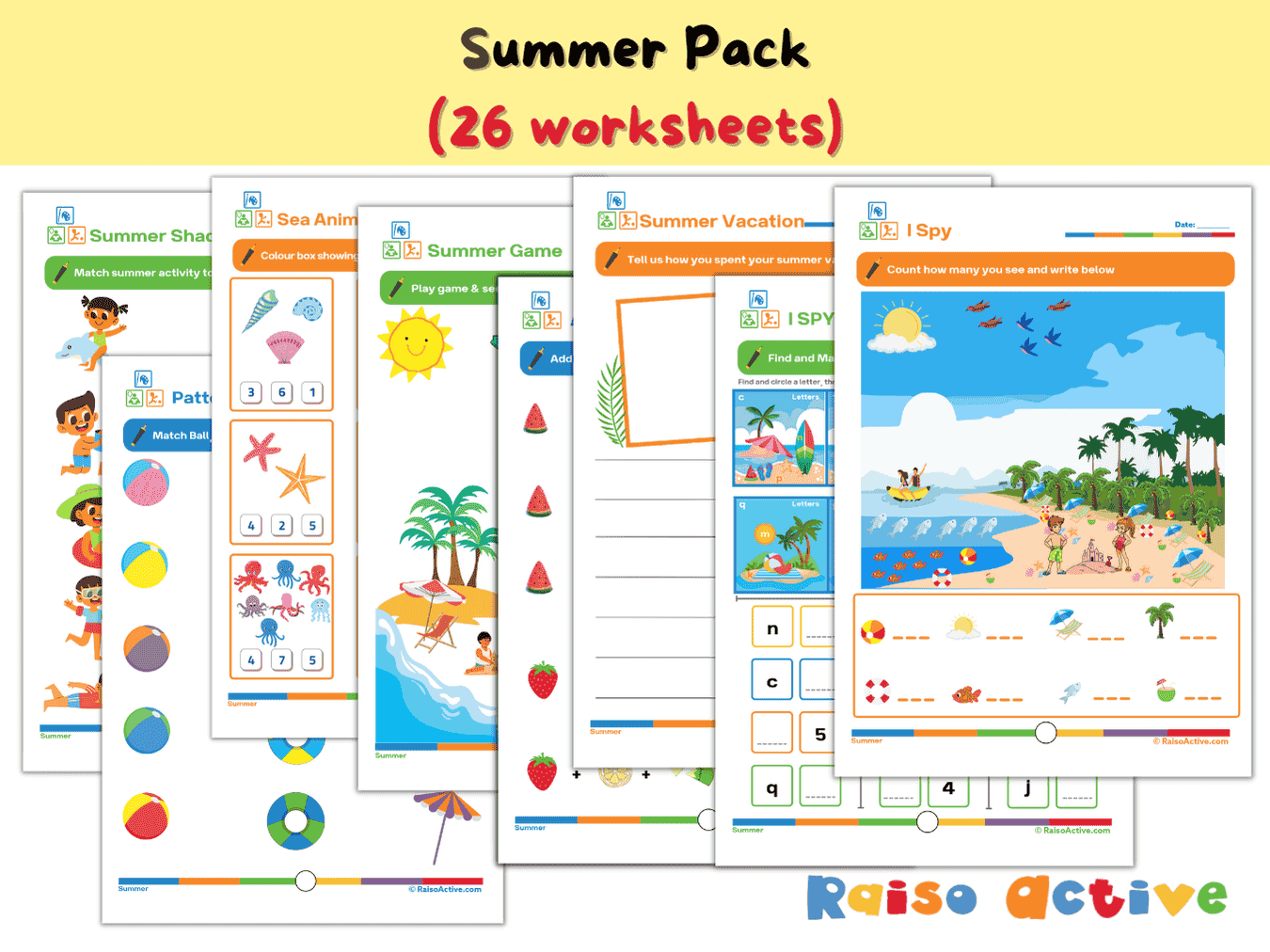
Summer Activity Pack: Math, Literacy, Puzzles & More for Preschool & Kindergarten
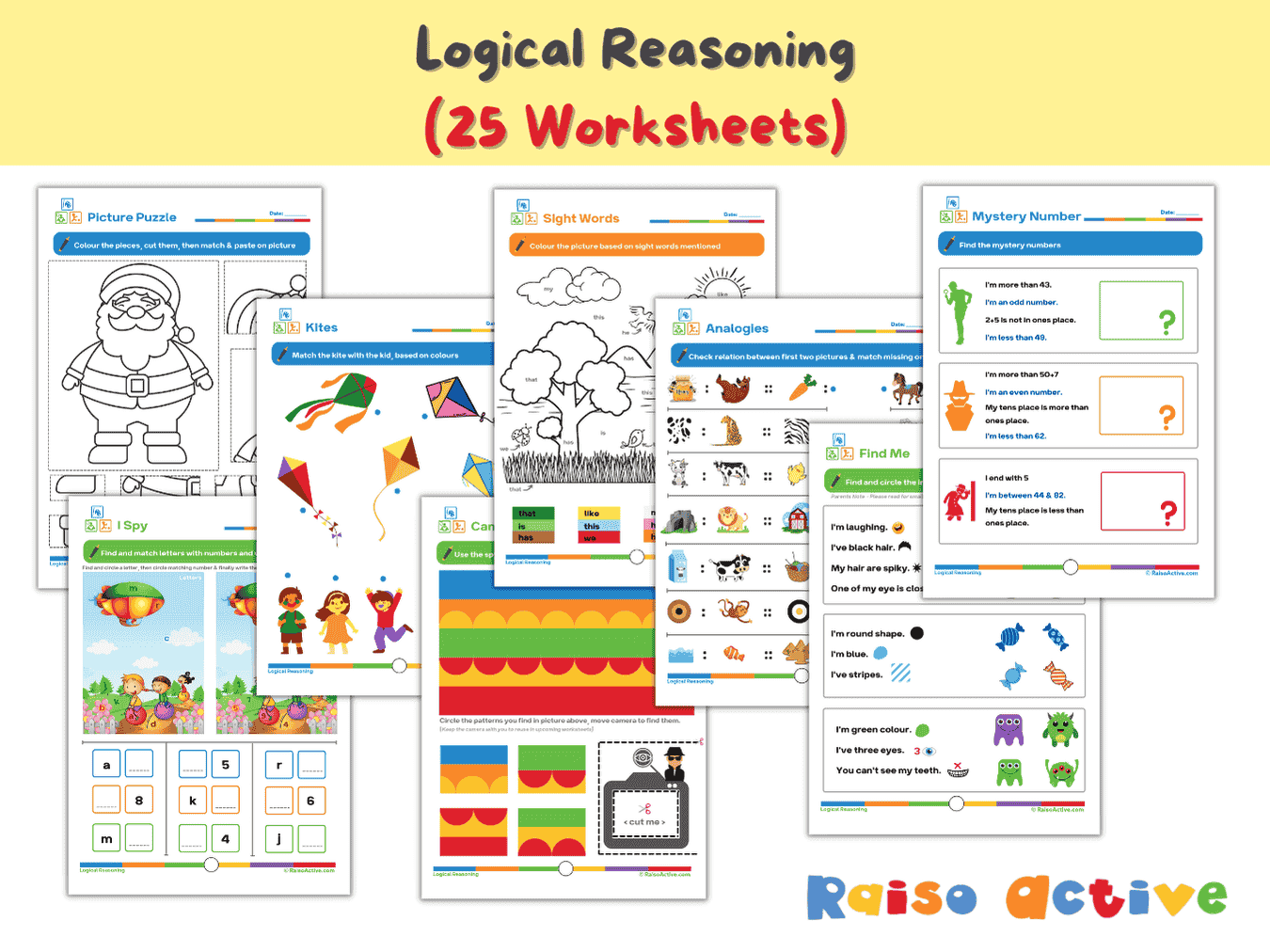
Logical Reasoning Activity Book for Preschool & Kindergarten | Patterns, Puzzles & Analogies
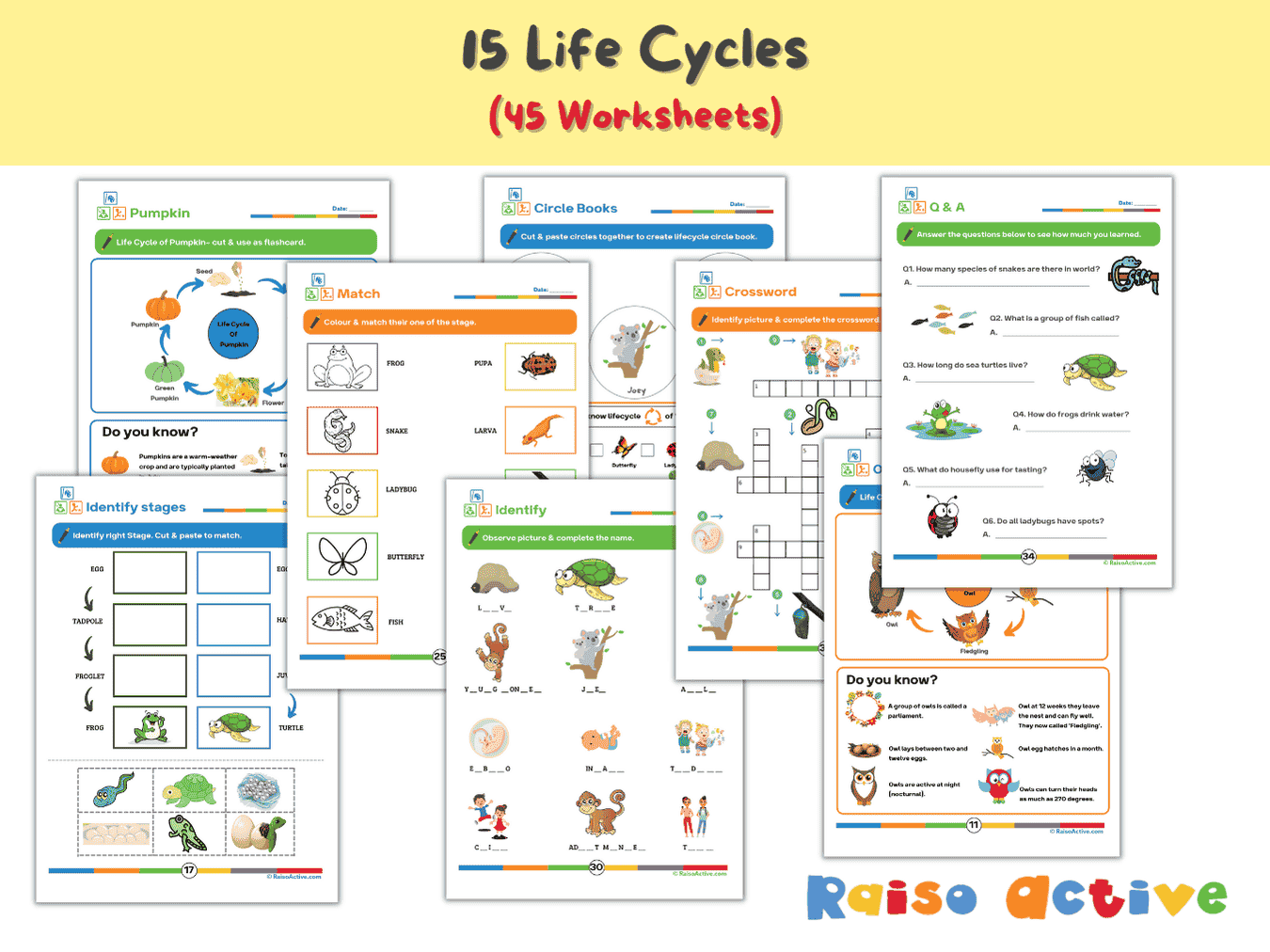
Lifecycles Activity Book & Flashcards for Preschool & Early Elementary
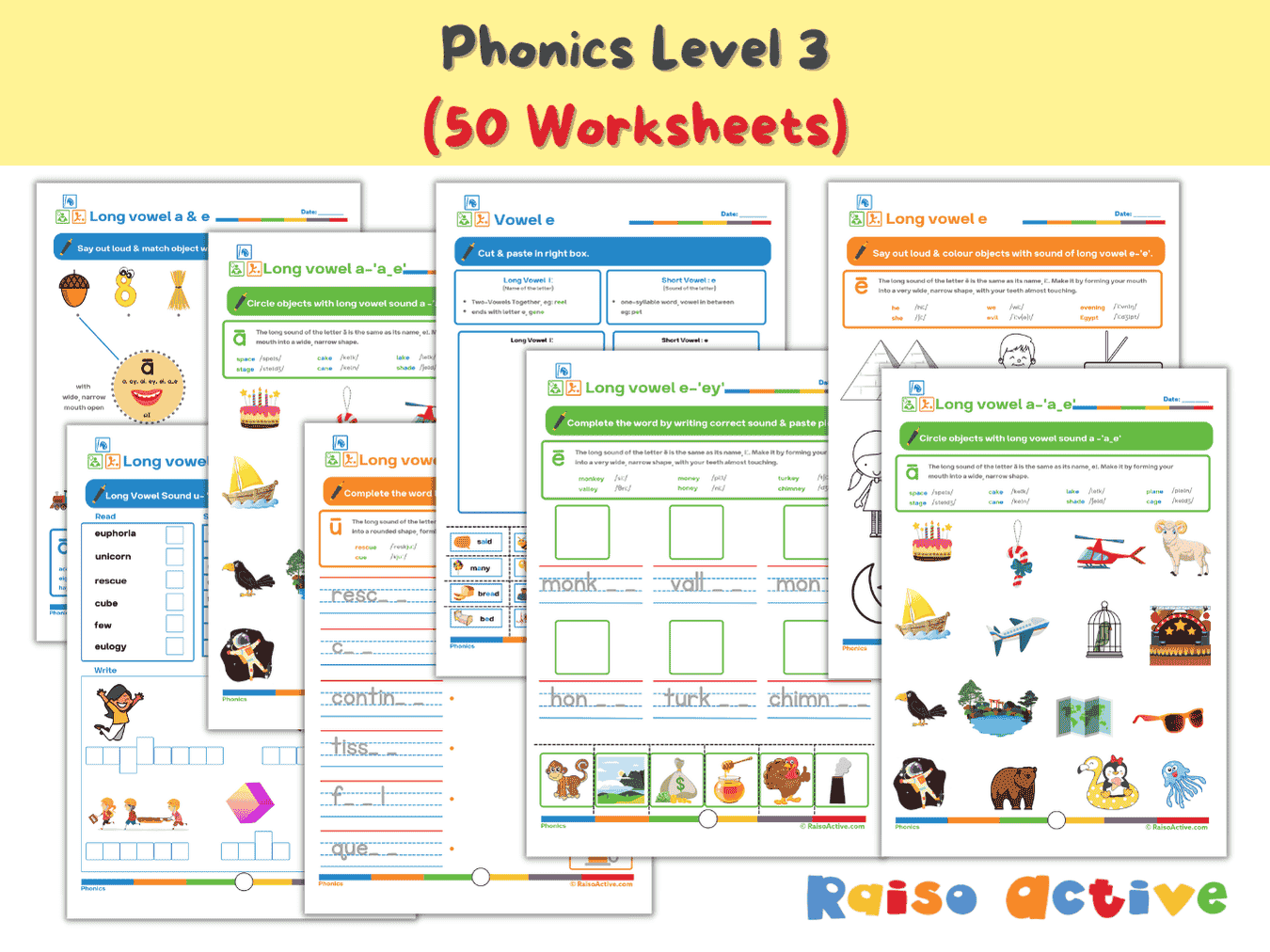
Phonics Level 3 Long Vowels Activity Book for Kindergarten & 1st Grade
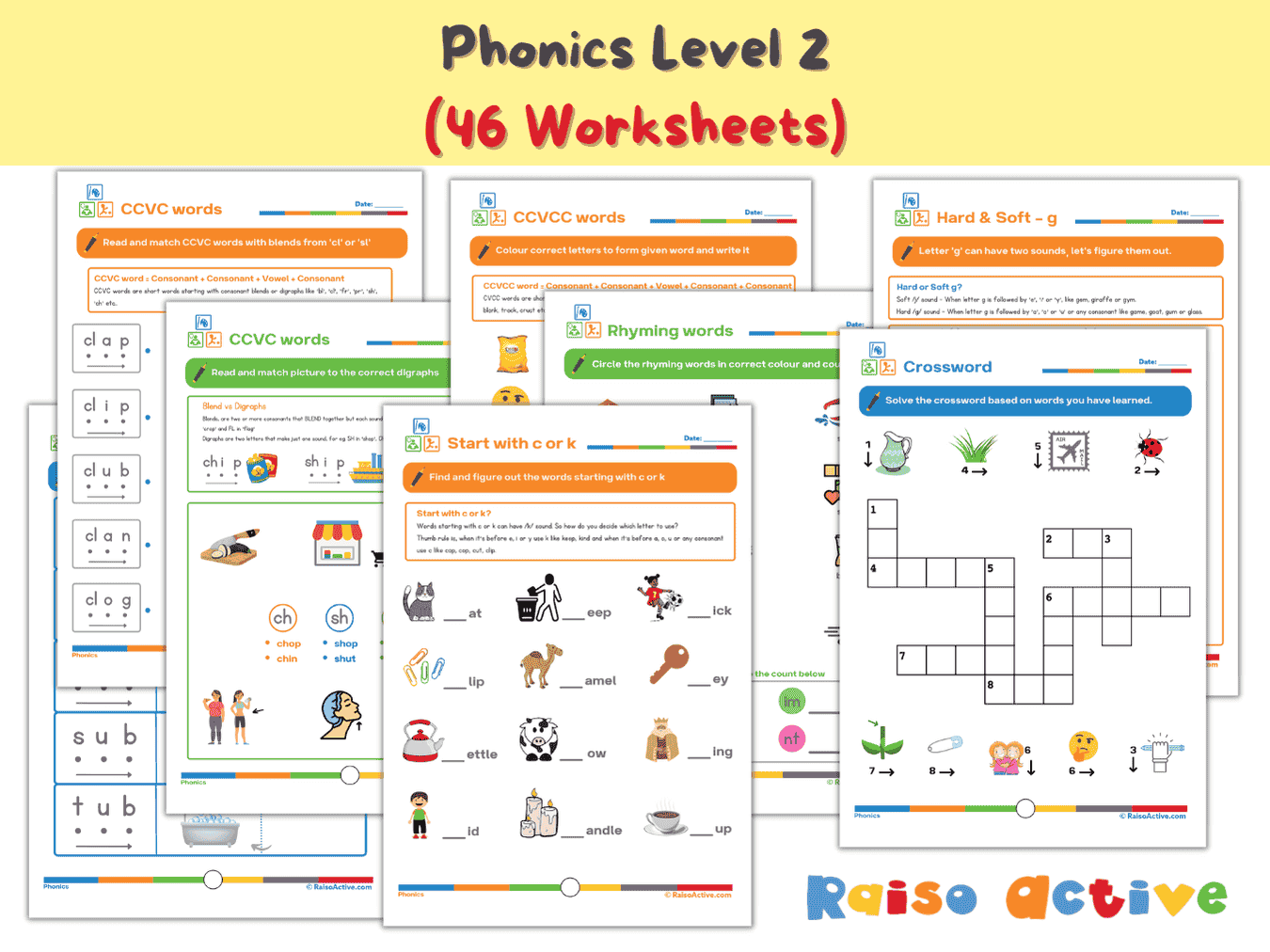
Phonics Level 2 Worksheets: CVC, CCVC, CVCC Word Families & Blends for Early Readers (Ages 4-7)
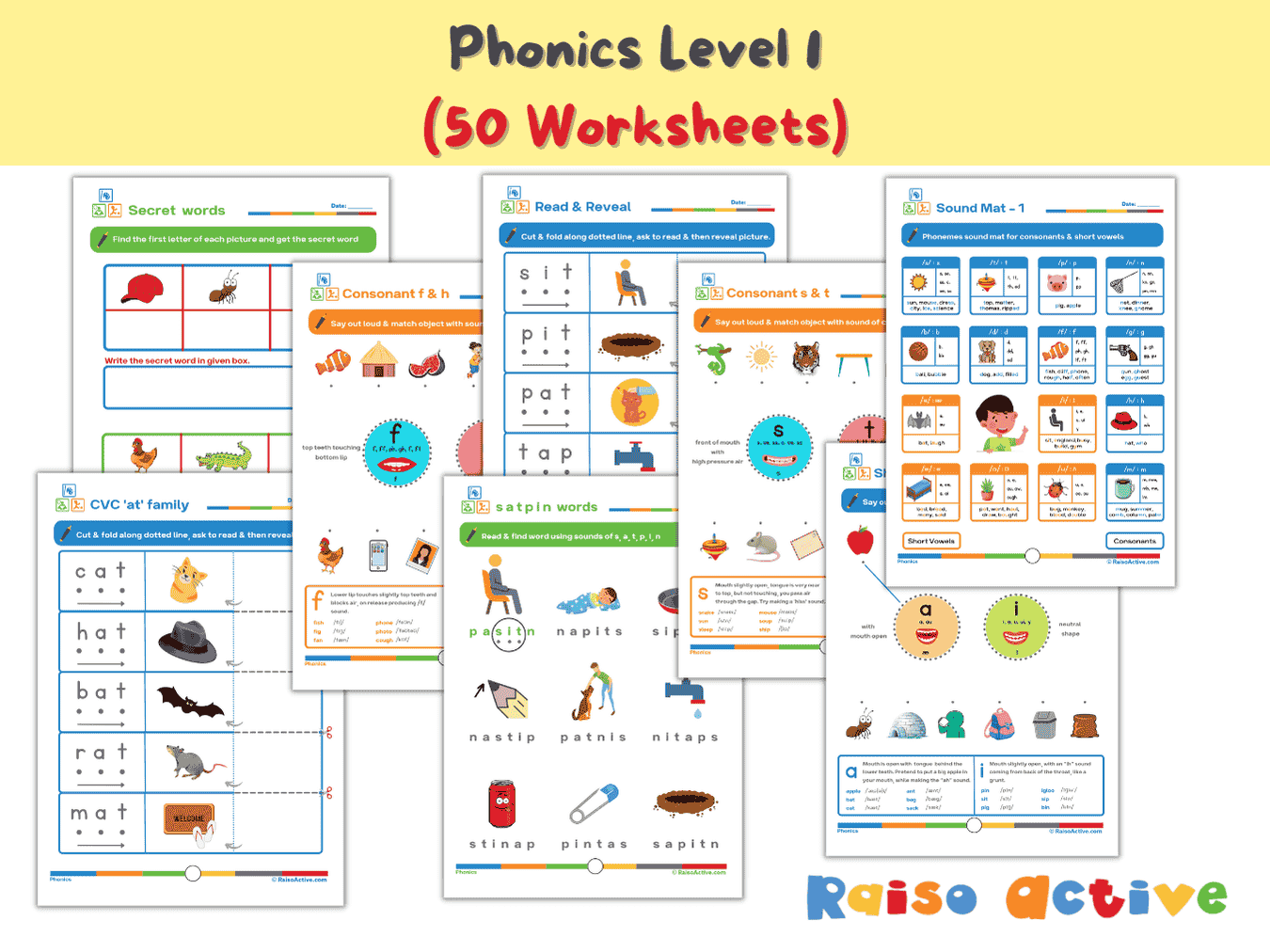
Phonics Level 1 Activity Book: Letter Sounds, Blending & CVC Words for Preschool & Kindergarten
Guides for parents and teachers
See all guides →Kindergarten Readiness Checklist: 25 Skills to Practice Before the First Day
A kindergarten readiness checklist of 25 literacy, math, motor, self-regulation and self-help skills, with an 8-week summer plan and notes on when not to worry.
Phase 2 Phonics at Home: Sound Order, Blending Games, Worksheets
Phase 2 phonics at home: the five sound sets in order, oral blending, tricky words, a two-week routine, common mistakes, and free worksheets.
Reception Year Explained: EYFS Learning and How to Help at Home
A teacher's plain-English guide to the Reception Year: the seven areas of learning, Early Learning Goals, Phase 2/3 phonics, the RBA and home routines.
What Should a 4-Year-Old Know Before LKG? A Readiness Checklist
A calm, teacher-written LKG readiness checklist for 4-year-olds: language, pattern writing, numbers to 10, self-help and social skills, plus a 6-week plan.
Bridging Two Worlds: A Complete Guide to Teaching Heritage Languages Alongside English
A practical guide to raising bilingual children who speak both their heritage language and English with confidence. Research-backed strategies, activities, and tips for Indian families.
How to Help Your Child with Letter Reversals: A Complete Guide for Parents and Teachers
Letter reversals are normal until age 7-8. Learn the best multisensory strategies, anchor letter tricks, and activities to help children write b, d, p, and q correctly.
Canonical: https://raisoactive.com/worksheets/grade-1-alphabet