Free printable worksheets · United Kingdom
Reception Maths Worksheets (Ages 4–5)
Reception maths worksheets are practice sheets for children aged 4–5 in Reception in the UK. Maths covers number sense, counting, the four basic operations, shapes, measurement and patterns, taught through objects before abstract symbols. The sheets on this page cover number sense and counting, addition and subtraction, shapes and measurement and patterns and comparison.
Reception is the year phonics teaching properly begins, usually with Phase 2 of Letters and Sounds or an equivalent scheme, so a child starts blending sounds such as s, a, t and p into short words within weeks. Number work stays within ten, built through subitising and comparing rather than counting alone. At four to five, counting stretches to 20 and numerals 0 to 10 are written, not just recognised. The set should include counting out a given number of objects, comparing two groups and circling the one with more, ordering numerals, continuing ABB and ABC patterns, naming a rectangle and hexagon alongside the basic shapes, and first addition within 5 with pictures. Position words such as above and beside belong here too. Number-only sums are not needed yet.
586+ worksheets · free PDF download · print on A4 or Letter
Reception Maths Worksheets to print
Browse all worksheets for ages 4–5
Subtraction Fun: Cross Out and Count the Cupcakes!
This worksheet introduces subtraction to 4-5 year olds through a very concrete take-away model: your child crosses out one cupcake from a group and counts what remains, which makes the abstract idea of 'subtracting' visible and immediate rather than something happening only inside a number sentence. Because the crossing-out step comes before the counting step, this worksheet keeps the connection between the physical action and the resulting number crystal clear.
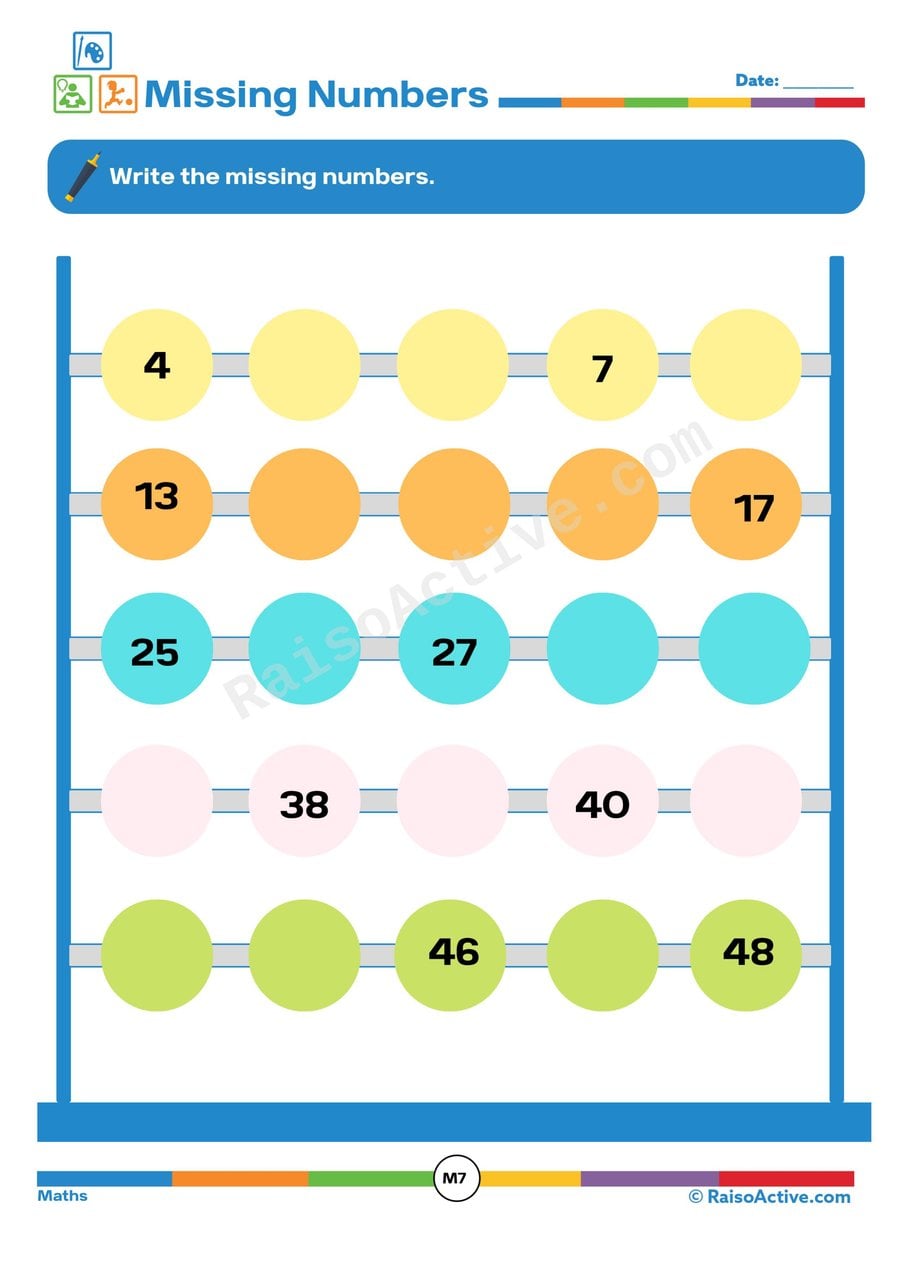
Missing Numbers Worksheet for Preschoolers
Children ages 4-5 strengthen number sequencing by identifying which numbers are missing from a given sequence and filling in the gaps. This task requires understanding the pattern of counting forward by one, rather than simply reciting memorized numbers, which builds a deeper sense of how numbers relate to each other. Successfully finding each missing number also reinforces number formation as children write the answer themselves.
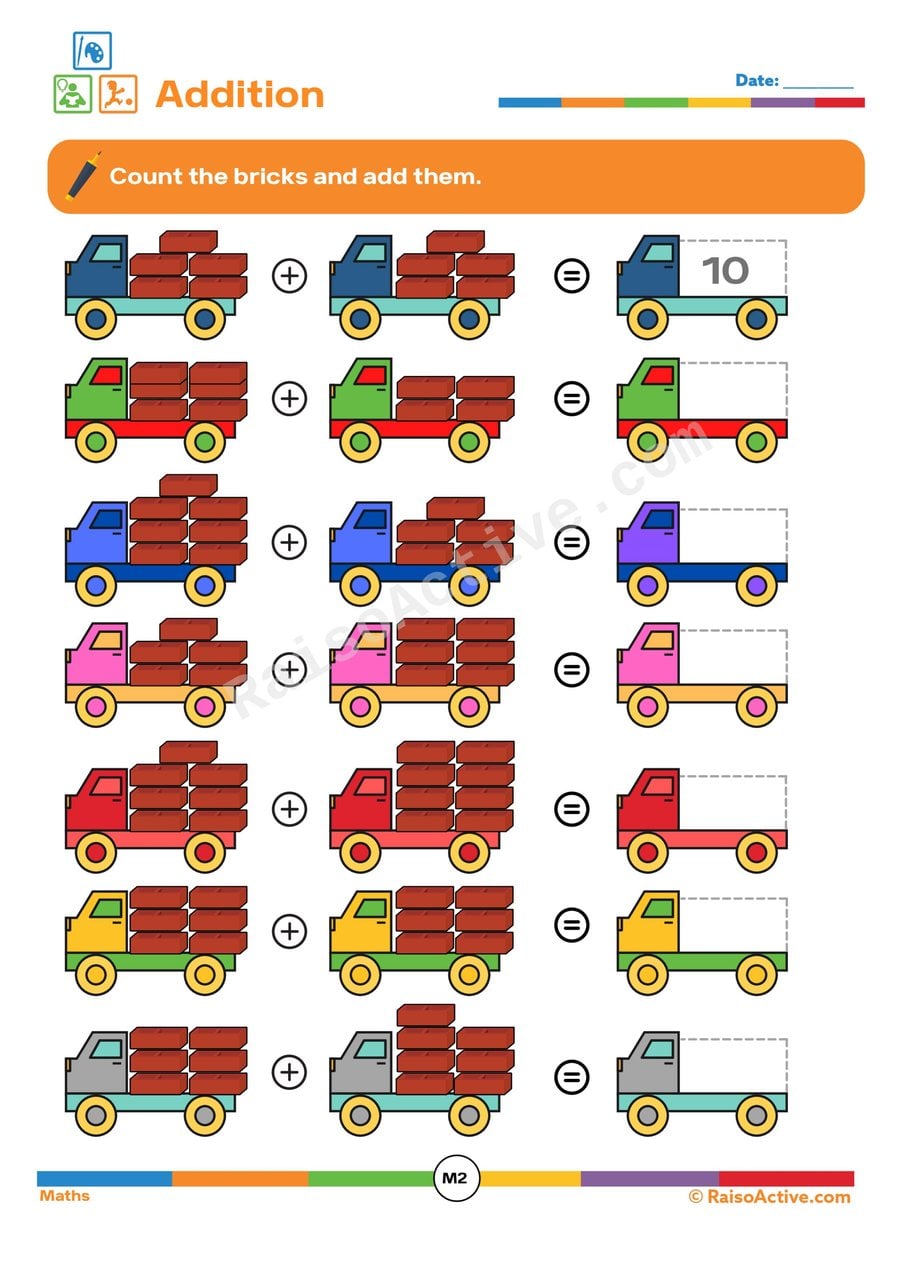
Truckload Addition Worksheet for Preschoolers
Counting bricks loaded on two trucks and adding the totals together teaches children ages 4-5 basic addition through a playful, visual context that makes the abstract idea of combining quantities easier to grasp. This truck theme also keeps counting practice engaging for children who love vehicles, building both number sense and sustained attention.

Counting Fun: Circle the Correct Number Worksheet
This worksheet builds one-to-one correspondence in children ages 4-5 as they count a group of objects and then match that count to the correct written numeral among several choices. Choosing from multiple numeral options, rather than just writing a number, also sharpens numeral recognition since similar-looking numbers can be easy to confuse.
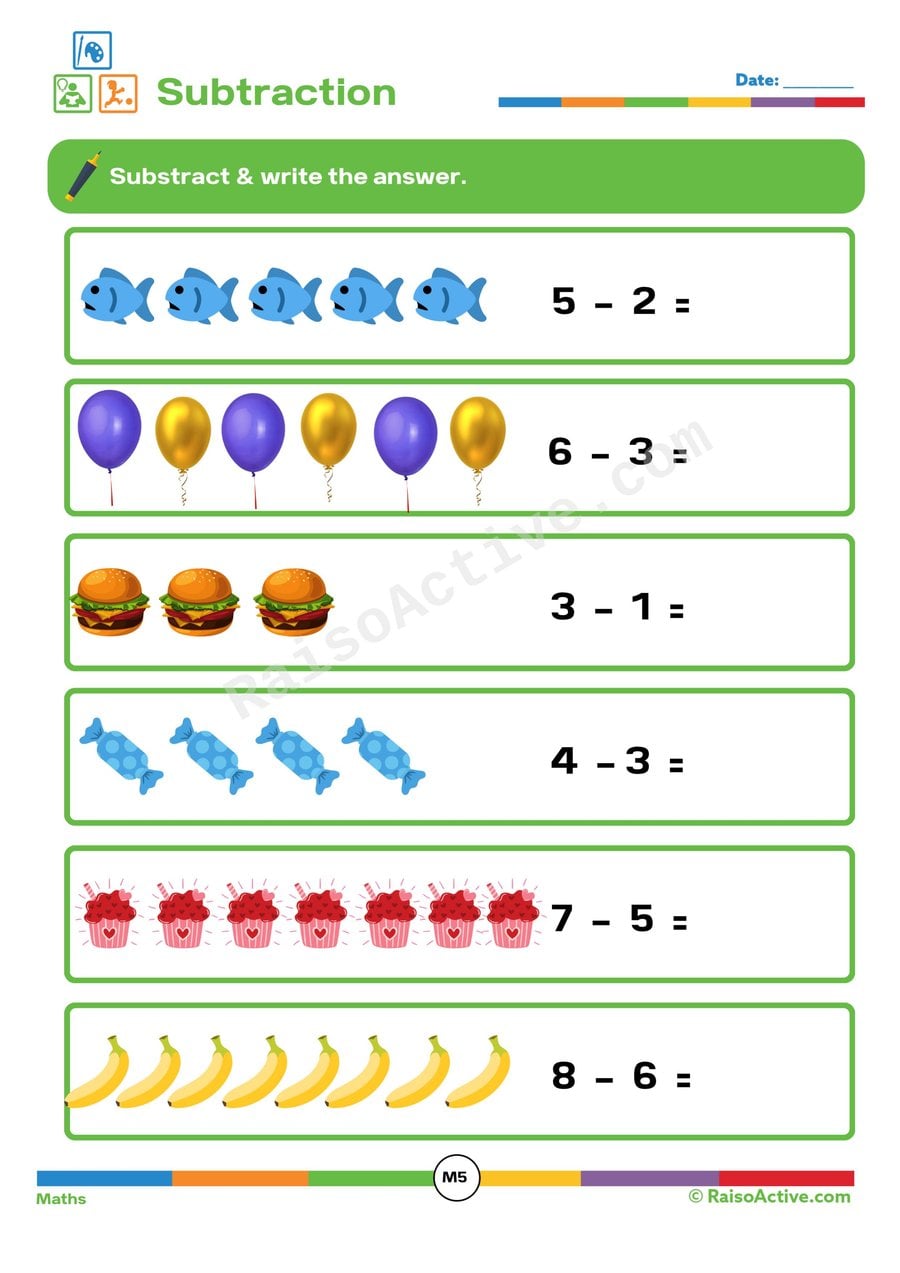
Subtraction Worksheet: Count and Subtract!
This worksheet gives children ages 4-5 hands-on practice with subtraction as 'taking away' from a visible group, helping them understand that a number decreases when items are removed rather than treating subtraction as an abstract symbol on paper. Counting the starting group and then physically crossing out or covering objects before writing the difference builds the concrete number sense that later supports mental subtraction.

Diwali Addition Worksheet for Kids: Counting and Adding Objects!
Children ages 4-5 practice addition by counting two separate sets of Diwali-themed objects, then combining the totals and writing the sum. Seeing objects grouped together concretely helps children understand what 'adding' actually means before relying on memorized number facts. This festive theme also connects the math skill to a real cultural celebration, giving the abstract addition work a meaningful, relatable context.

Subject and Predicate Sorting Worksheet for Preschoolers
This worksheet introduces children ages 4-5 to a basic building block of sentence grammar, teaching them that every sentence has a subject — who or what it's about — and a predicate — what that subject does or is. Sorting sentence fragments into these two categories helps children start to notice sentence structure, which supports both reading comprehension and their own sentence writing later on. This early grammar awareness lays groundwork for more formal sentence study in kindergarten and beyond.
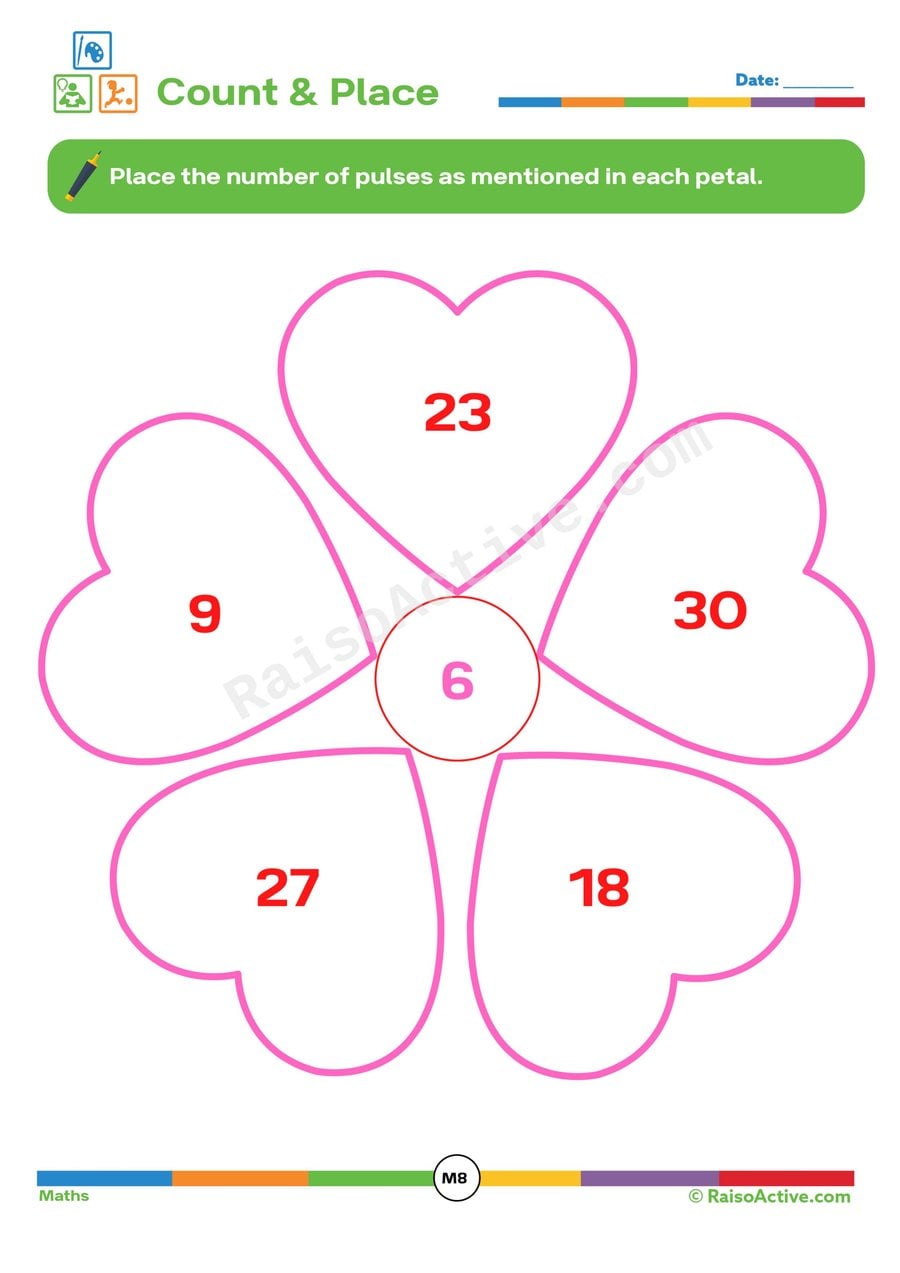
Count and Place: Heart Petals Worksheet
Counting the marks in each heart-shaped petal and writing the matching number builds one-to-one correspondence for children ages 4-5, ensuring they touch or point to each mark exactly once as they count. This petal-by-petal counting also strengthens number formation practice as children write each total by hand.
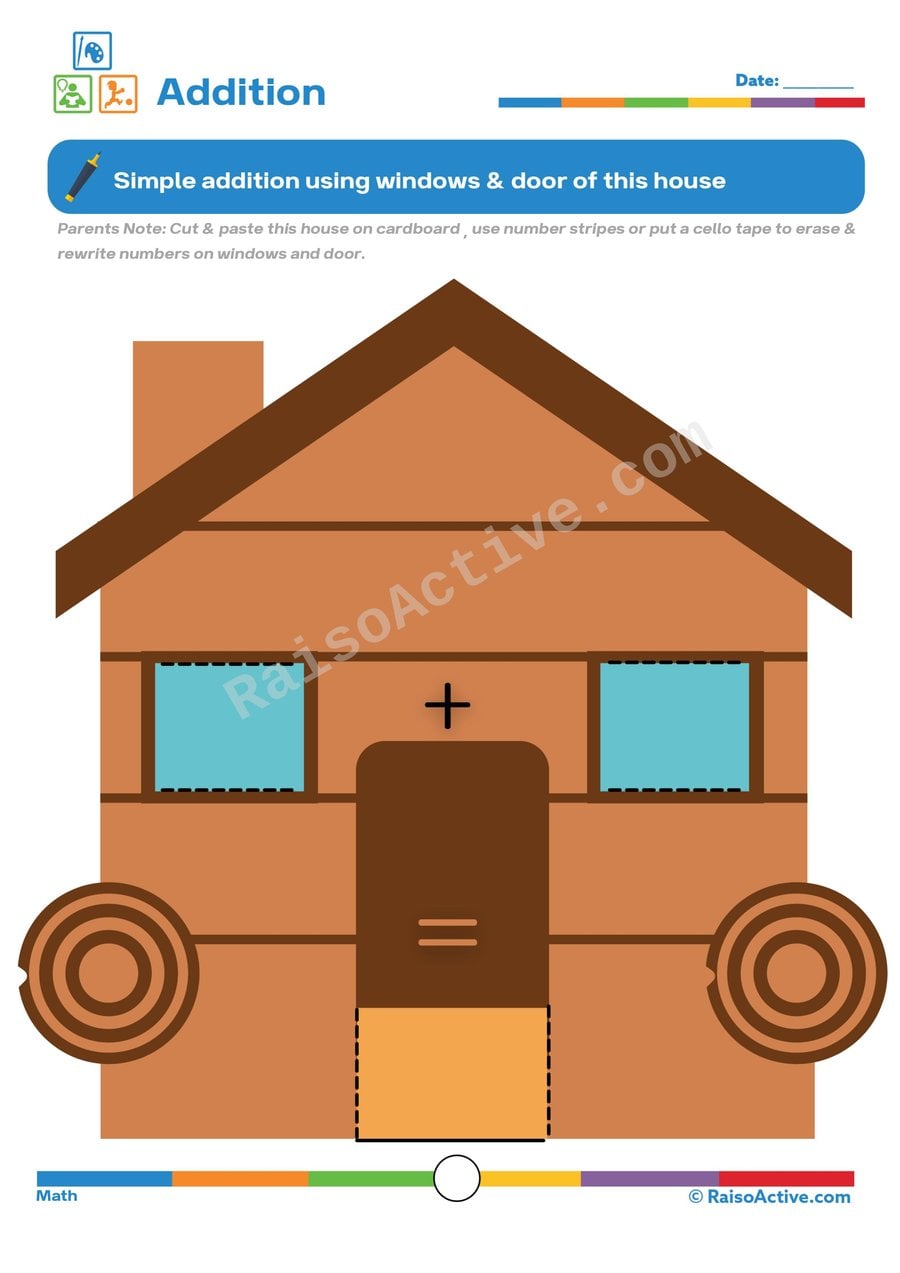
Addition House Worksheet for Preschoolers
This hands-on craft turns simple addition into a reusable game, as children ages 4-5 build a paper house with numbered windows and a door that can be changed with tape or number stripes. Physically swapping numbers to create new addition problems (like 2 windows + 1 door) helps children grasp that addition means combining separate groups into one total, rather than just memorizing facts.
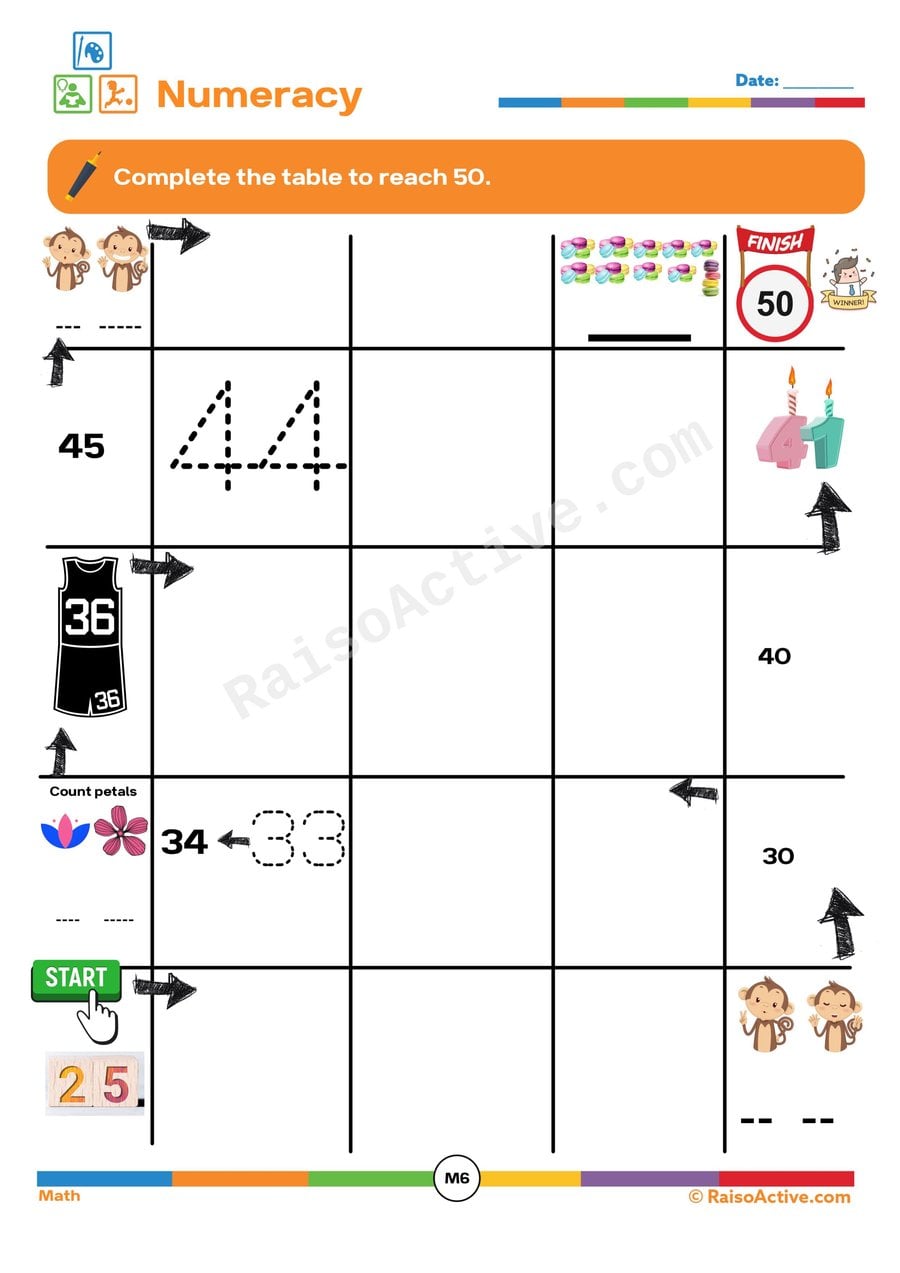
Reach 50! A Fun Numeracy Worksheet for Kids
Filling in a number sequence toward a target like 50 gives children ages 4-5 practice with number order and pattern continuation over a longer stretch than they might attempt in casual counting, building stamina alongside numeracy. Starting partway through the sequence, at 25, also asks children to pick up counting from a non-zero starting point, which is a slightly more advanced skill than counting from one every time. Successfully completing the full path to 50 gives children a strong, visible sense of accomplishment tied to a meaningful numerical milestone.

Measuring Objects with Paper Clips Worksheet for Preschoolers
This worksheet introduces children ages 4-5 to non-standard measurement by having them line up paper clips end-to-end to find the length of different objects, building an early understanding that length can be measured and compared using a repeated unit. This hands-on approach lays the groundwork for using rulers and standard units later on.

Subtraction Fun: Counting Fingers Worksheet for Kids
Children ages 4-5 use their own fingers as a built-in counting tool to practice subtraction, connecting an abstract number sentence to something they can physically see and touch. This bridges the gap between counting objects and solving take-away problems with numbers alone.

Subtraction Worksheet: Counting and Subtracting for Preschoolers
This worksheet introduces children ages 4-5 to the concept of subtraction as 'taking away' by having them count a group of objects, cross out the number indicated, and write how many remain. Building this concrete, visual understanding of subtraction before introducing abstract number sentences helps children grasp what the minus sign actually means rather than just memorizing a procedure.

Comparing Objects: A Fun Counting Worksheet for Preschoolers!
This worksheet has 4-5 year olds count two groups of objects and then compare the totals using the greater-than, less-than, and equal-to symbols — an early but genuine step into formal math notation that goes beyond simple counting into representing a comparison symbolically. Because your child has to count accurately before comparing, this worksheet also reinforces that math symbols stand for real relationships between quantities, not arbitrary marks to memorize.

Number Sequence Worksheet: What Comes Before, After, and In Between!
Identifying numbers that come before, after, or in between a given number builds flexible number sequencing skills for children ages 4-5, going beyond simple forward counting to strengthen their overall sense of number order.

Subtraction Worksheet: Count and Subtract for Preschoolers
Counting a group of pictured objects and then subtracting a stated number introduces children ages 4-5 to the concept that a quantity can decrease, building on their counting skills to form an early foundation for subtraction. Working from a visual group of objects, rather than abstract numbers alone, lets children physically cross out or count away items, which matches how young children naturally understand 'taking away.' This concrete, visual approach to subtraction sets up a much smoother transition to number-only subtraction problems later.

Summer Addition Worksheet for Preschoolers: Counting and Adding Fun!
Adding two small groups of summer-themed pictures — ice creams, beach balls, sunglasses — gives a 4-5 year old a concrete, countable version of addition before they ever see the plus sign written abstractly. Counting each group separately and then counting the combined total builds the core idea that addition means 'put together and count again', which underlies every later addition strategy.

Before and After Numbers Worksheet: Counting Bananas!
Figuring out which number comes immediately before and after a given number strengthens children ages 4-5's understanding of number order and the counting sequence, a concept that's more abstract than simply counting objects one by one. Coloring a matching number of bananas for each answer adds a concrete, visual check, letting children confirm their number sense by physically representing the quantity. This worksheet bridges rote number-sequence memorization with real quantity understanding.
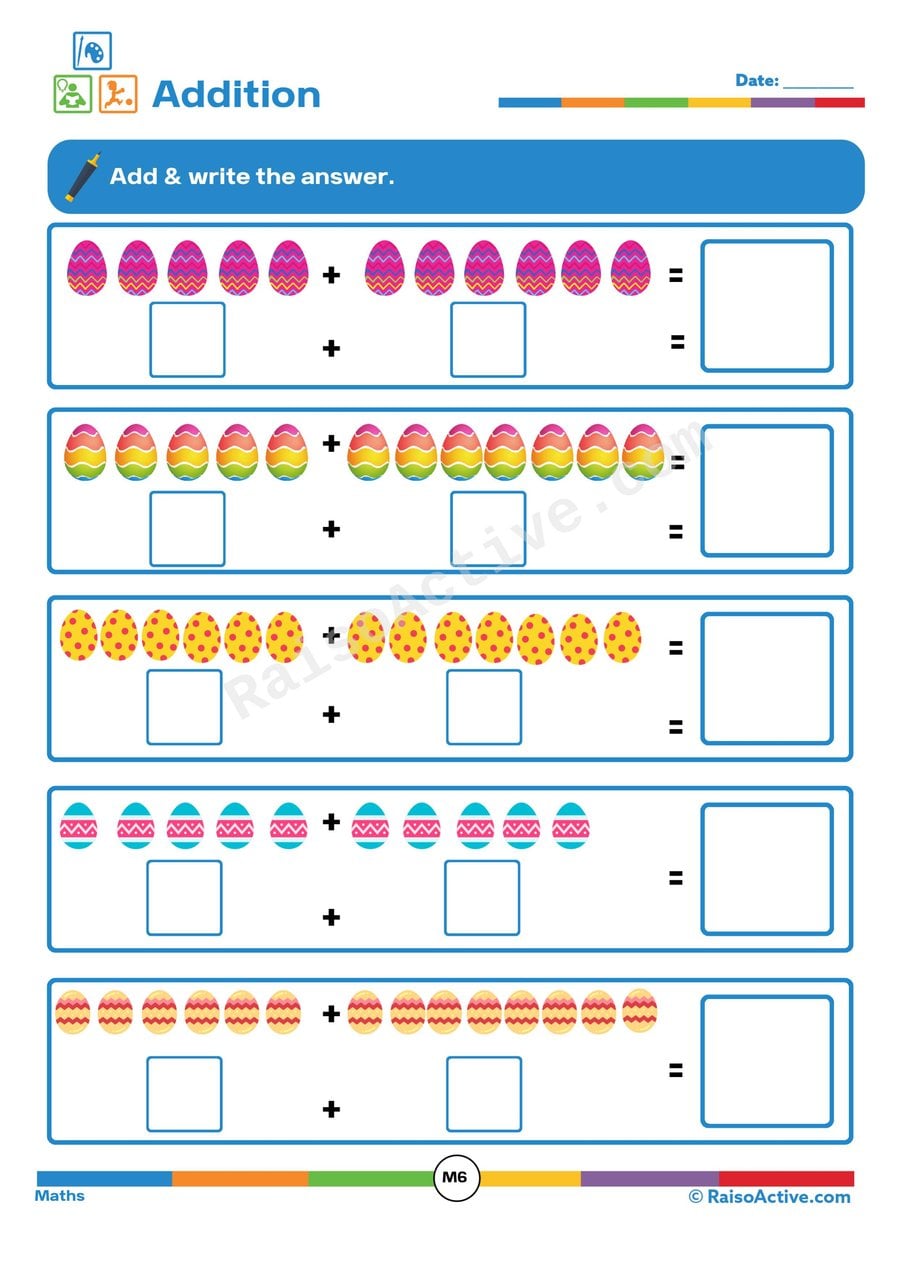
Easter Egg Addition Worksheet for Preschoolers
Counting groups of Easter eggs and combining them builds early addition sense for children ages 4-5, showing that putting two smaller groups together creates one larger total. Because the eggs are grouped visually rather than shown as bare numerals, children practice one-to-one counting alongside the abstract addition symbol, connecting the concrete and written forms of the same idea.
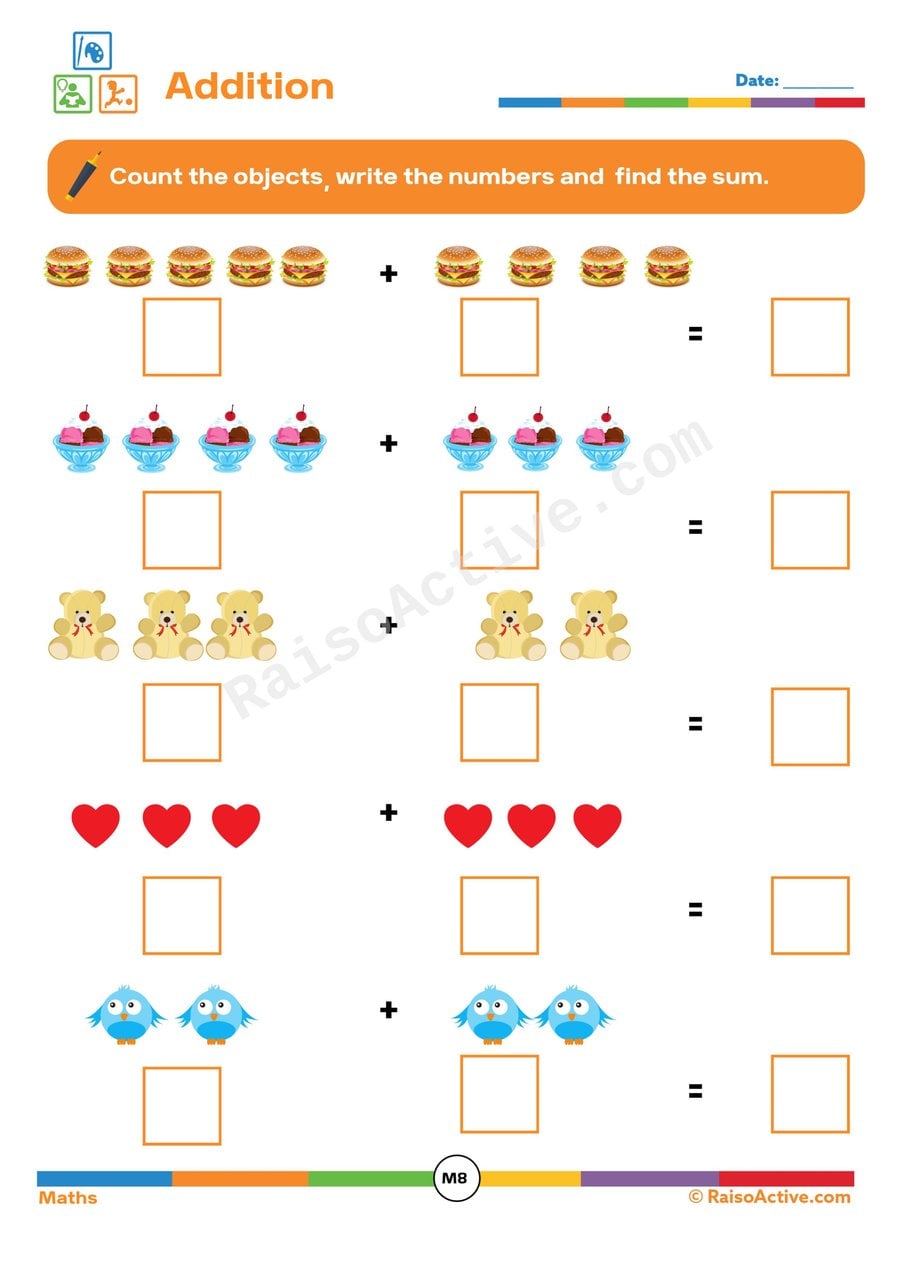
Addition Worksheet: Count and Add!
Counting two separate groups of objects and writing the sum teaches children ages 4-5 the basic concept of addition as combining quantities, an essential foundation for all later arithmetic. Writing the number for each group before adding also reinforces accurate one-to-one counting, since an error there would carry through to the final sum.

Vowel Sorting Fun: Identify and Sort Vowels Worksheet
Circling vowels within a word and sorting letters into 'vowels' and 'consonants' columns builds foundational phonics knowledge for children ages 4-5, an essential distinction for later decoding and spelling.

Skip Counting by 10 Worksheet: Fill in the Blanks!
This worksheet builds skip counting fluency by 10s, a foundational skill that helps children recognize number patterns and prepares them for place value concepts and faster counting strategies later on. For ages 4-5, seeing numbers grouped in tens on signs reinforces both sequencing and the visual structure of our base-ten number system.

Before, After, and Between Numbers Worksheet for Preschoolers
This worksheet extends basic number sequencing for children ages 4-5 by adding the concept of 'between,' which requires holding two numbers in mind at once and figuring out what falls in the middle — a more demanding mental task than simple before-and-after questions. Along with number fill-ins, the worksheet includes a picture identification task and a simple drawing exercise, giving children practice applying ordinal thinking ('comes after') beyond pure numerals. Together these tasks build the flexible number sense children need before tackling addition and subtraction.

Balance Worksheet: Counting and Matching for Preschoolers
This worksheet introduces the concept of balance and equality by asking children to fill in a missing number so that both sides of a scale match, an early, concrete version of the idea behind an equal sign in later math. For ages four to five, reasoning about what number makes two sides 'balance' builds number sense and problem-solving skills beyond simple counting.
What Reception maths worksheets cover
At four to five, counting stretches to 20 and numerals 0 to 10 are written, not just recognised. The set should include counting out a given number of objects, comparing two groups and circling the one with more, ordering numerals, continuing ABB and ABC patterns, naming a rectangle and hexagon alongside the basic shapes, and first addition within 5 with pictures. Position words such as above and beside belong here too. Number-only sums are not needed yet.
- Count out 10 objects from a pile and write the numeral
- Compare two groups and circle the one with more
- Write numerals 0 to 10 in order
- Continue an ABB or ABC pattern
- Add two groups of pictures within 5 and say the total
How to use these worksheets at home or in class
A short daily sound-matching or blending sheet paired with one number activity, around ten minutes total, mirrors the classroom rhythm. Say each sound clearly before your child traces or writes it, and keep the pace playful rather than test-like.
Start with the sheet that matches what your child can already do, then move one step up. Keep finished sheets in a folder: Reception teachers often ask for evidence of practice, and children like seeing their own progress.
Is your child ready for Reception maths work?
A child moving into this stage typically holds a pencil with a developing grip, recognises several letters by sound rather than only by shape, and can count a small group of objects one at a time without skipping any.
Frequently asked questions
Is my four-year-old ready for addition?
Ready when the child can count out a requested number of objects from a bigger pile and stop at the right point, and can recognise the numerals to 10. Then begin with pictures: three fish and two fish, count them all, say five. Reading a written 3 + 2 is not required, and recounting from one each time is normal at four. Counting on from the first group comes later.
What should a Reception child be able to do in maths?
At four to five, counting stretches to 20 and numerals 0 to 10 are written, not just recognised. The set should include counting out a given number of objects, comparing two groups and circling the one with more, ordering numerals, continuing ABB and ABC patterns, naming a rectangle and hexagon alongside the basic shapes, and first addition within 5 with pictures. Position words such as above and beside belong here too. Number-only sums are not needed yet. A child moving into this stage typically holds a pencil with a developing grip, recognises several letters by sound rather than only by shape, and can count a small group of objects one at a time without skipping any.
Do these worksheets follow the Reception curriculum?
The sheets cover number sense and counting, addition and subtraction, shapes and measurement and patterns and comparison, which sit inside the EYFS Early Learning Goals; Letters and Sounds Phase 2–3 outcomes for Reception. Pre-K / Kindergarten (US), LKG (India) use the same skills at this age, so the sheets also fit families following those programmes.
Are these Reception maths worksheets free?
Yes. Each worksheet downloads free as a watermarked PDF once you create an account, with a limit of five a day. An annual membership ($20) removes the watermark and the limit for the whole library of over 1,000 worksheets and every printable pack.

Written by
Hemsweta Jain · Teacher Cheena
MBA and Early Childhood Educator, teaching since 2014 · Founder of RaisoActive, Mumbai
Written and reviewed by Hemsweta Jain (Teacher Cheena), who designs every RaisoActive worksheet.
Last reviewed
Printable packs for ages 4–5
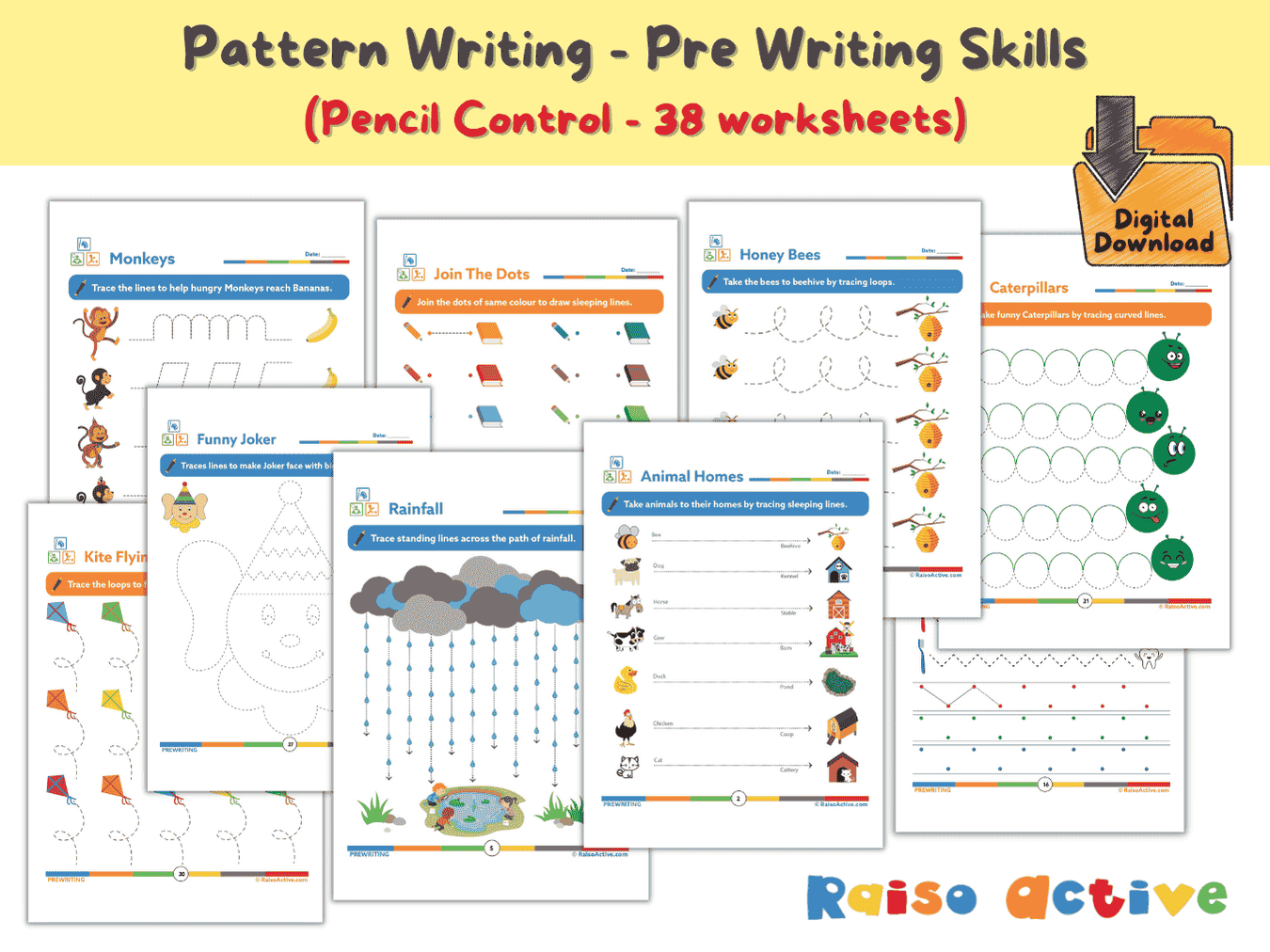
Pattern Writing Pre-writing Skills Activity Book for 3-4 Year Olds
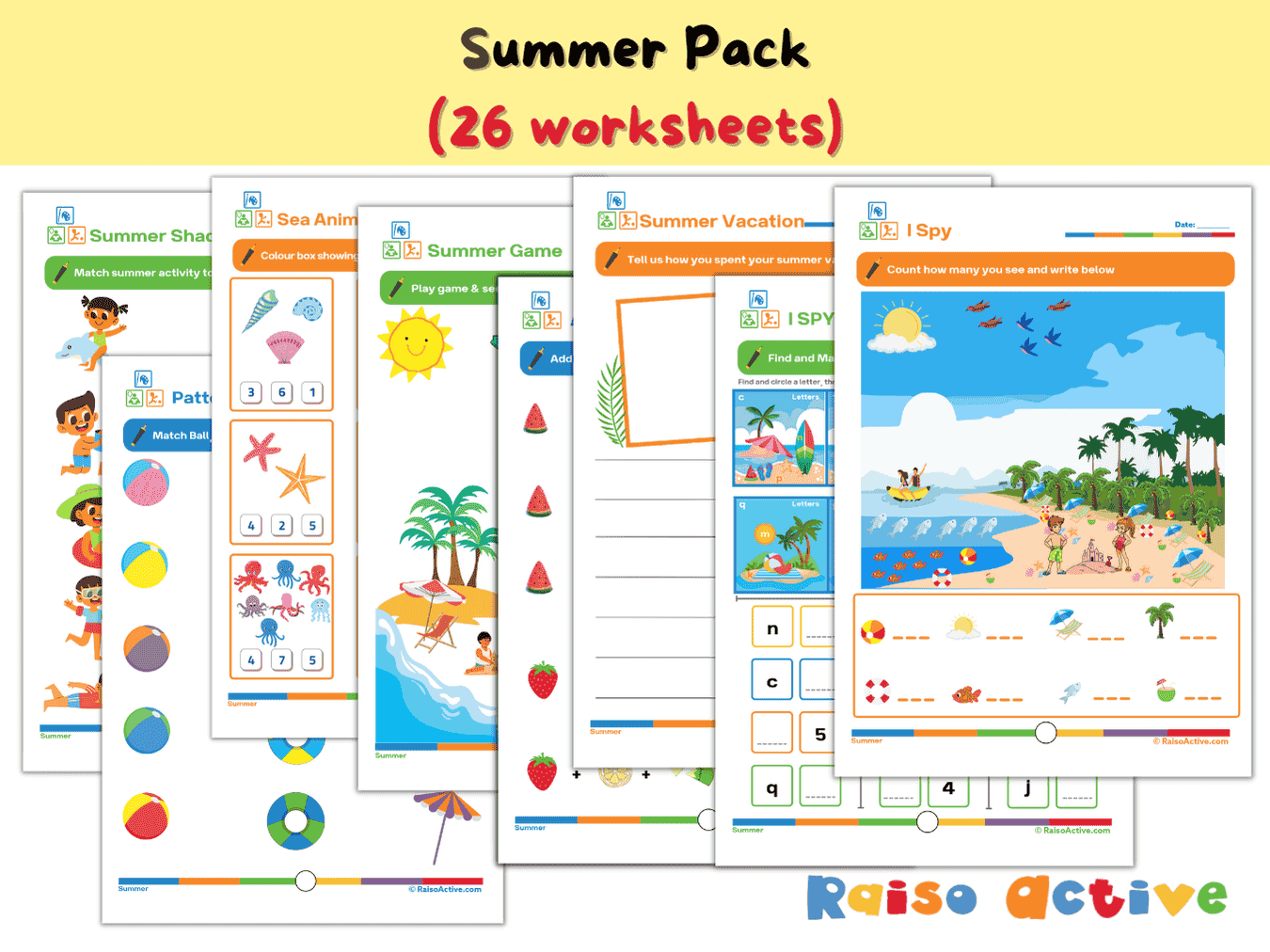
Summer Activity Pack: Math, Literacy, Puzzles & More for Preschool & Kindergarten
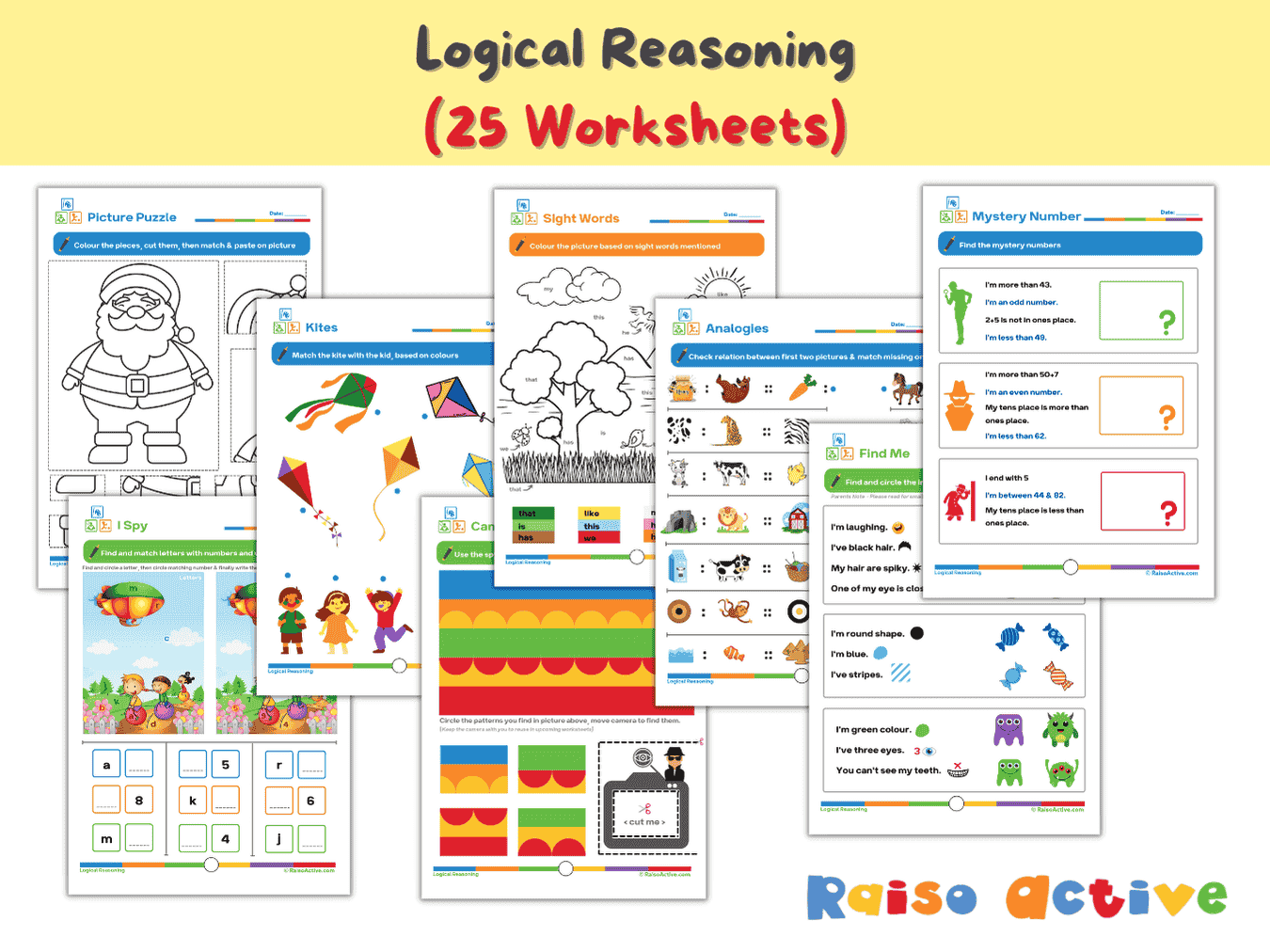
Logical Reasoning Activity Book for Preschool & Kindergarten | Patterns, Puzzles & Analogies
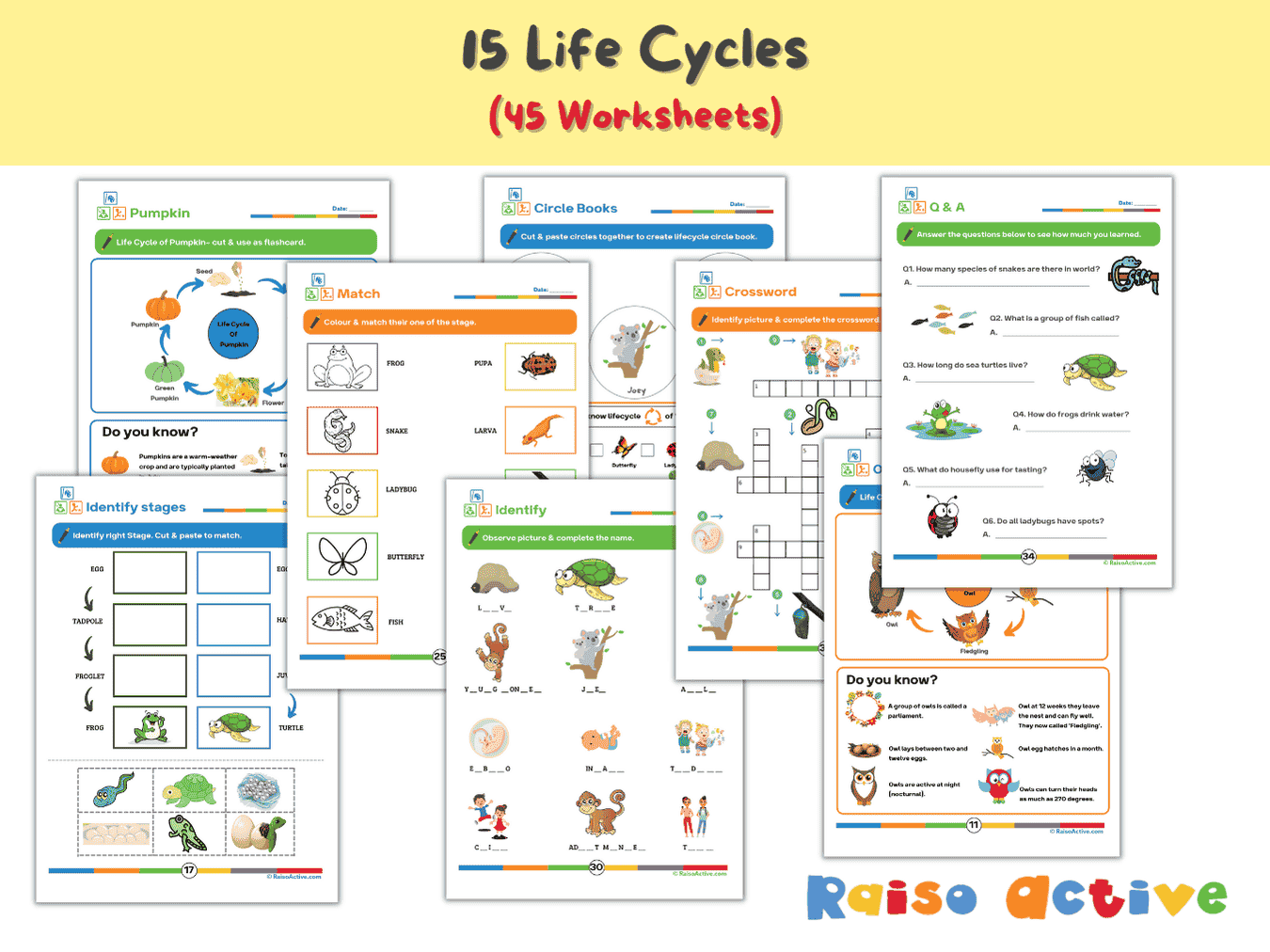
Lifecycles Activity Book & Flashcards for Preschool & Early Elementary
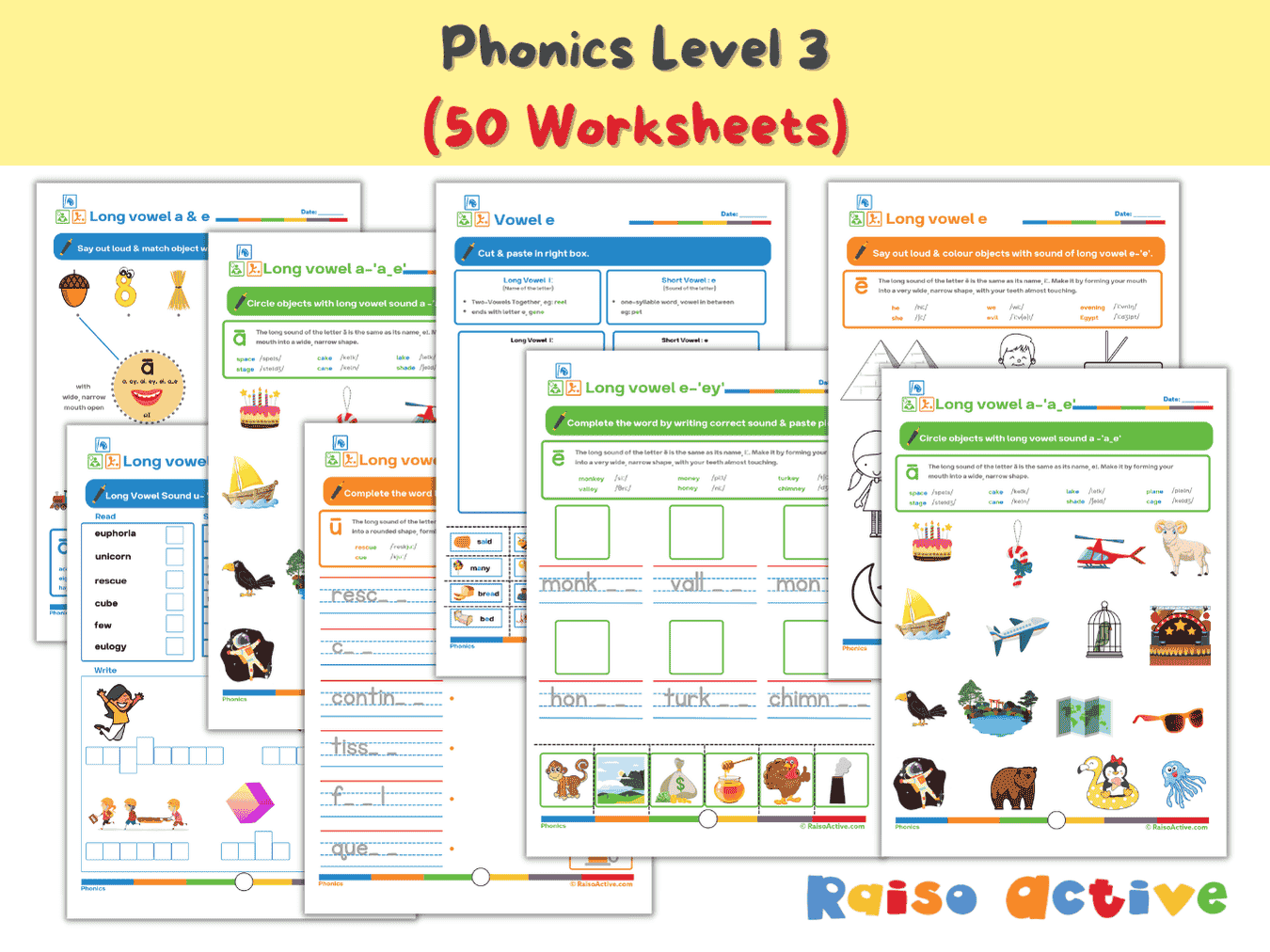
Phonics Level 3 Long Vowels Activity Book for Kindergarten & 1st Grade
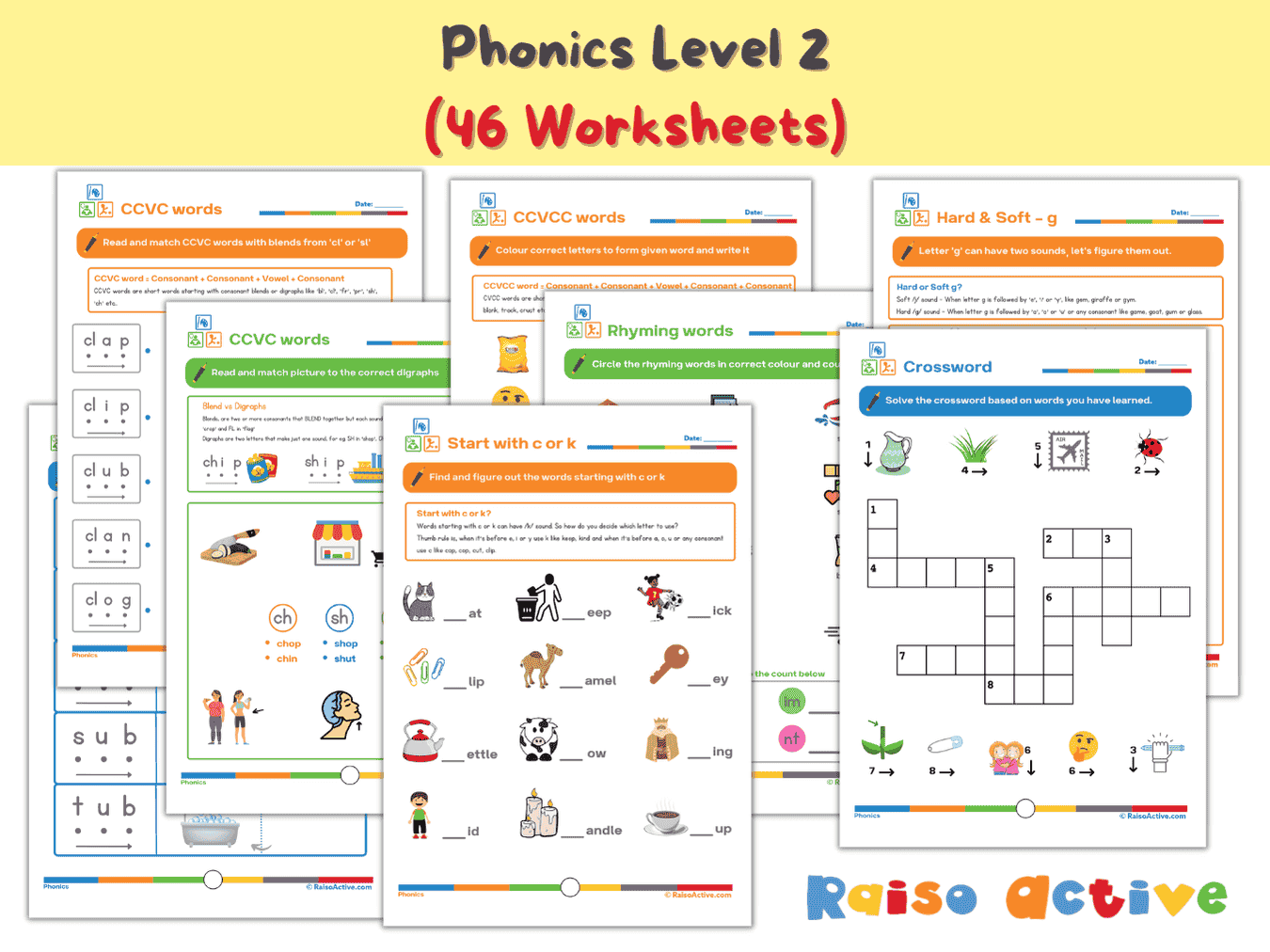
Phonics Level 2 Worksheets: CVC, CCVC, CVCC Word Families & Blends for Early Readers (Ages 4-7)
Guides for parents and teachers
See all guides →Number Formation Rhymes 0–9 and How to Fix Reversals
Original number formation rhymes for 0–9, the correct stroke order for each digit, why 3, 5 and 7 get reversed most often, and multisensory fixes that work.
UKG Syllabus Explained: English, Maths and EVS Month by Month
What UKG classes typically cover in English, maths and EVS, month by month, aligned to NEP 2020, with ways to support at home and signs your child is behind.
Christmas and Winter Activities That Combine Fun and Learning: Creating Magical Educational Experiences
Discover Christmas and winter activities that combine festive fun with real learning. Crafts, counting, literacy, and printable worksheets for ages 2 to 8 — perfect for home and school.
Age-Appropriate Halloween Learning Activities: Balancing Spooks and Skills for Young Learners
Discover fun, age-appropriate Halloween learning activities for young children. Spooky crafts, counting games, literacy ideas, and printable worksheets for ages 2 to 8.
The Power of Music: How Musical Activities Accelerate Learning Development in Young Children
Discover how musical activities accelerate brain development, phonics, maths, and emotional regulation in children ages 1–8. Practical tips for Indian homes and classrooms.
Is Khan Academy Kids Really Free? A Parent's Complete Guide to Costs, Features, and Hidden Fees
Confirmed: Khan Academy Kids has zero subscription fees, ads, or paywalls. See what's included, age-by-age tips, and offline use for Indian families.
Canonical: https://raisoactive.com/worksheets/reception-math