Diwali Sequencing Worksheet for Kids
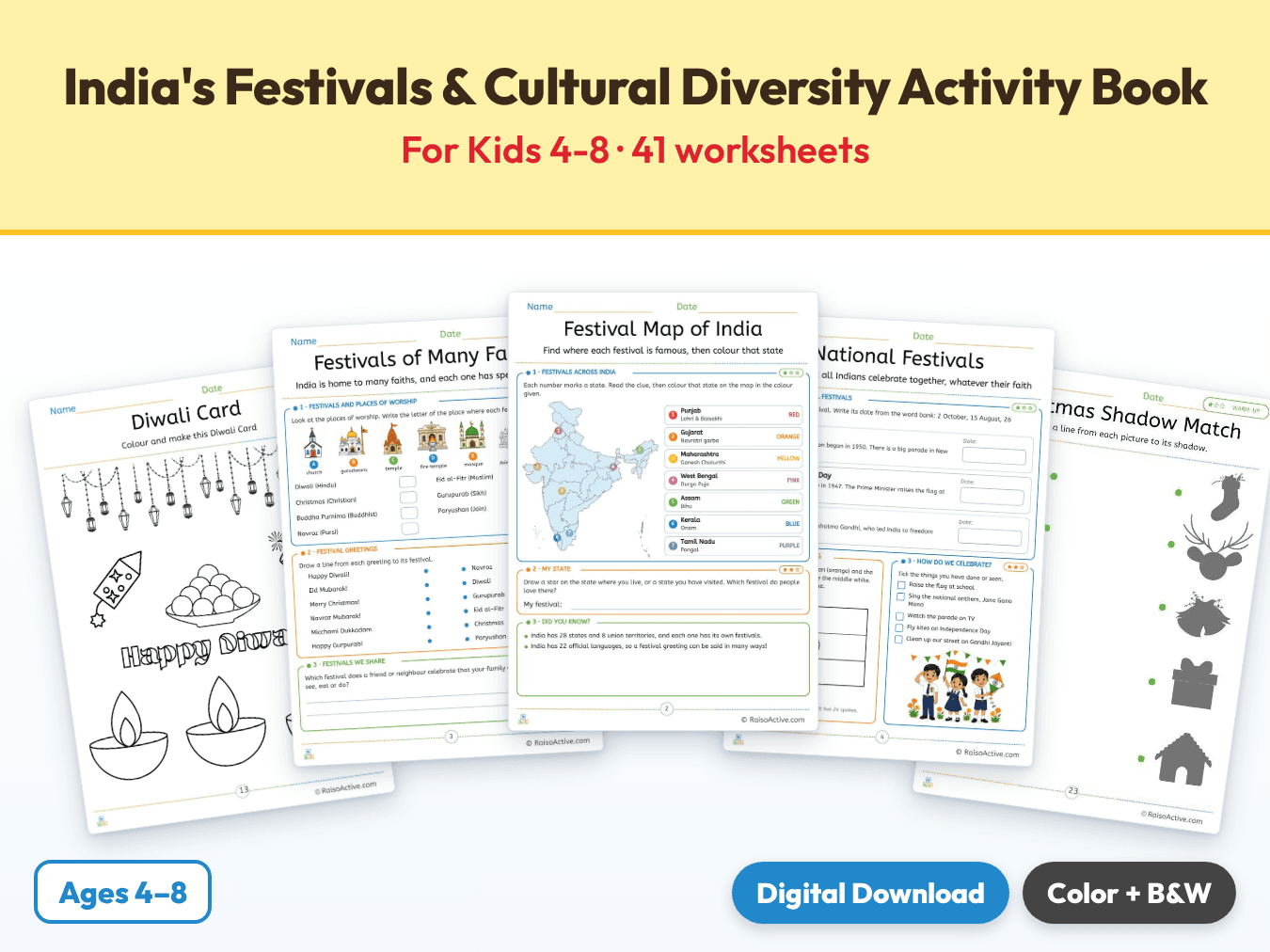
Children learn that Diwali, the Festival of Lights, marks Lord Ram's return to Ayodhya, and put four pictures of the story in the right order.
Part of the pack
India's Festivals & Cultural Diversity Activity Book for Kids 4-8
This is page 12 of the pack. Ages 4-8 · Pre-K–Grade 2Ages 4-8 · Reception–Year 3Ages 4-8 · LKG–Class 2Ages 4-8
Curriculum
- Culture & Festivals > Diwali Activities
How to use this worksheet
Read the fact and tell the story together. Cut out the four pictures and paste them in boxes 1 to 4, following the arrows.
Materials needed
- Scissors
- Glue
Extension activities
- 1Retell the story using the pictures
- 2Draw what happened after Lord Ram came home

Written by
Hemsweta Jain · Teacher Cheena
MBA and Early Childhood Educator, teaching since 2014 · Founder of RaisoActive, Mumbai
Every RaisoActive worksheet is designed and checked by the founder before publishing.
Published · Last reviewed
More from India's Festivals & Cultural Diversity Activity Book for Kids 4-8
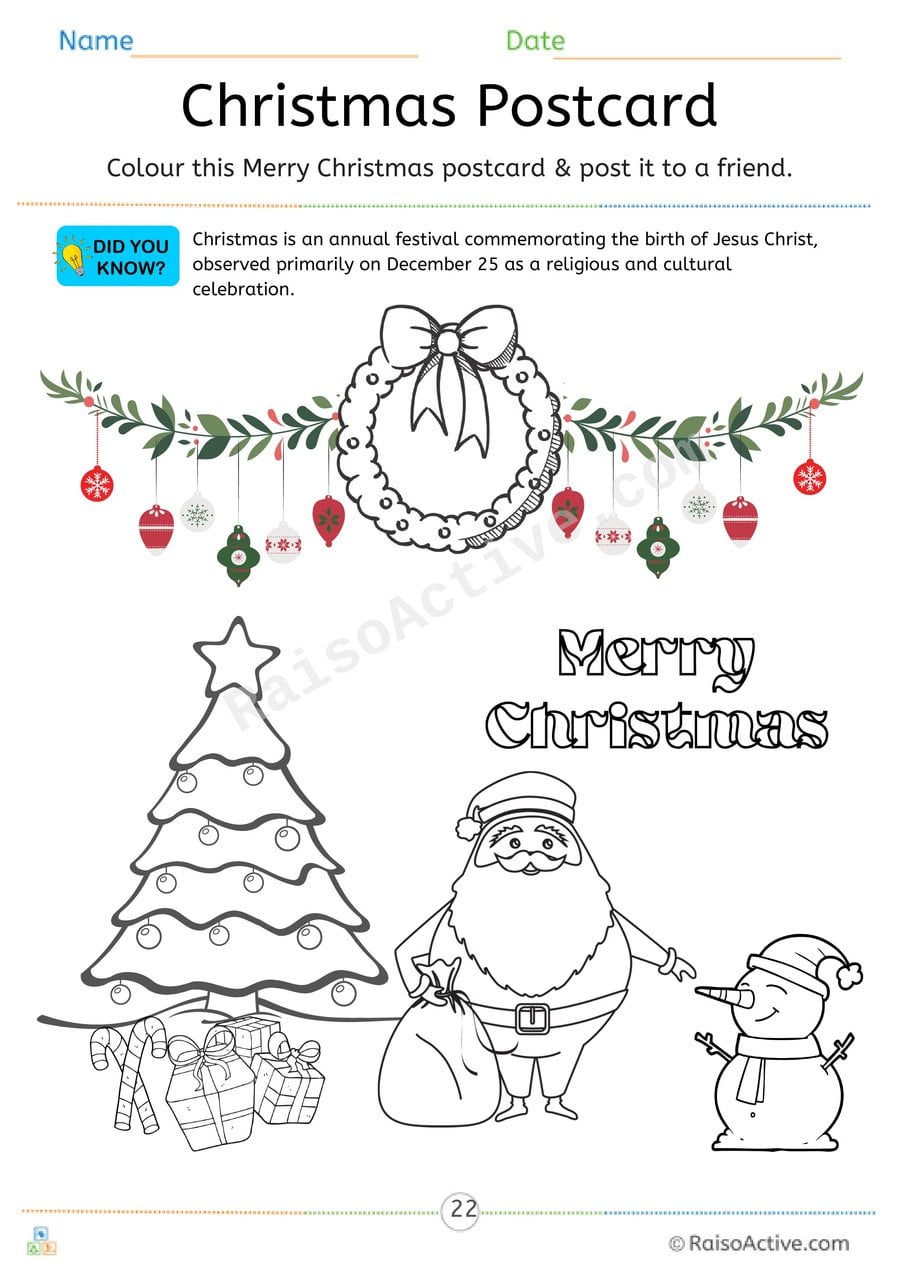
Merry Christmas Coloring Worksheet for Kids
Ages 4-8 · Pre-K–Grade 2Ages 4-8 · Reception–Year 3Ages 4-8 · LKG–Class 2Ages 4-8
Children learn that Christmas is celebrated on 25 December around the world and colour a postcard with Santa, a tree, a snowman and a wreath.

Navaratri Dance Count: A Fun Counting Worksheet for Kids!
Ages 4-8 · Pre-K–Grade 2Ages 4-8 · Reception–Year 3Ages 4-8 · LKG–Class 2Ages 4-8
Children learn that Navratri honours Goddess Durga and that people dance garba and dandiya for nine nights, then count matching dance poses.

Akash Kandil Craft: Make a Paper Lantern for Diwali
Ages 4-8 · Pre-K–Grade 2Ages 4-8 · Reception–Year 3Ages 4-8 · LKG–Class 2Ages 4-8
Children learn that families in Maharashtra and Goa hang an akash kandil sky lantern at Diwali, and that many festivals have their own special light.

Festival Fun Crossword Puzzle Worksheet for Kids
Ages 4-8 · Pre-K–Grade 2Ages 4-8 · Reception–Year 3Ages 4-8 · LKG–Class 2Ages 4-8
Children use picture clues and a word bank to fill a crossword with ten festivals, including Diwali, Eid, Christmas, Pongal, Lohri and Navratri.

Festivals of Many Faiths: Places of Worship and Greetings
Ages 4-8 · Pre-K–Grade 2Ages 4-8 · Reception–Year 3Ages 4-8 · LKG–Class 2Ages 4-8
Children learn that India is home to many faiths, each with its own festivals, places of worship and festival greetings.
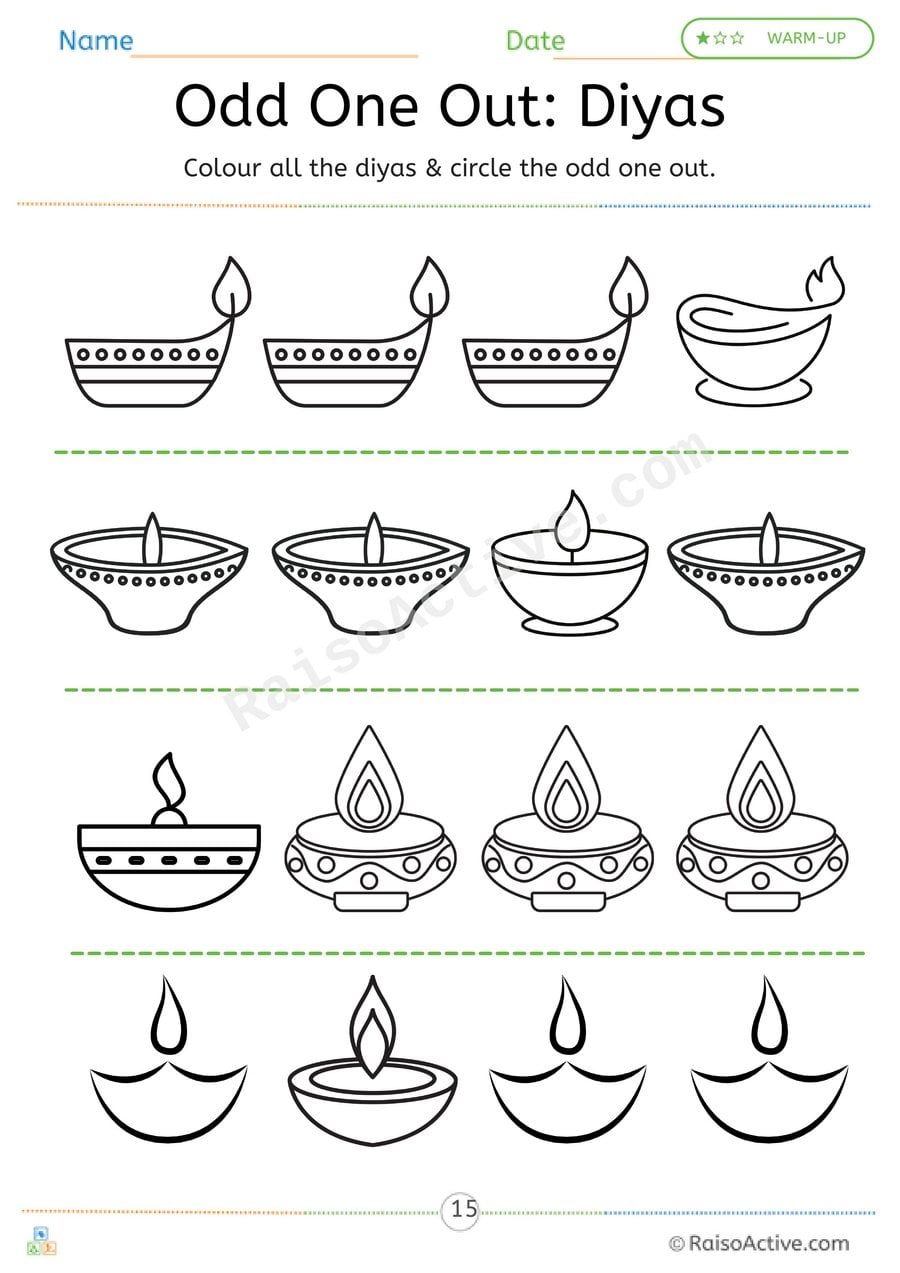
Diya Odd One Out Worksheet for Kids
Ages 4-8 · Pre-K–Grade 2Ages 4-8 · Reception–Year 3Ages 4-8 · LKG–Class 2Ages 4-8
Children look closely at rows of diyas and find the one that is different in each row, building attention and visual discrimination.

Makar Sankranti Story: Fill-in-the-Blanks Worksheet for Kids
Ages 4-8 · Pre-K–Grade 2Ages 4-8 · Reception–Year 3Ages 4-8 · LKG–Class 2Ages 4-8
Children read a short story about friends flying kites on Makar Sankranti, look closely at the picture and fill in the blanks from the word bank.

India's Festivals Activity Book Answer Key (Part 2)
Ages 4-8 · Pre-K–Grade 2Ages 4-8 · Reception–Year 3Ages 4-8 · LKG–Class 2Ages 4-8
Grown-ups can check children's answers quickly for the second part of the book.
Related worksheets
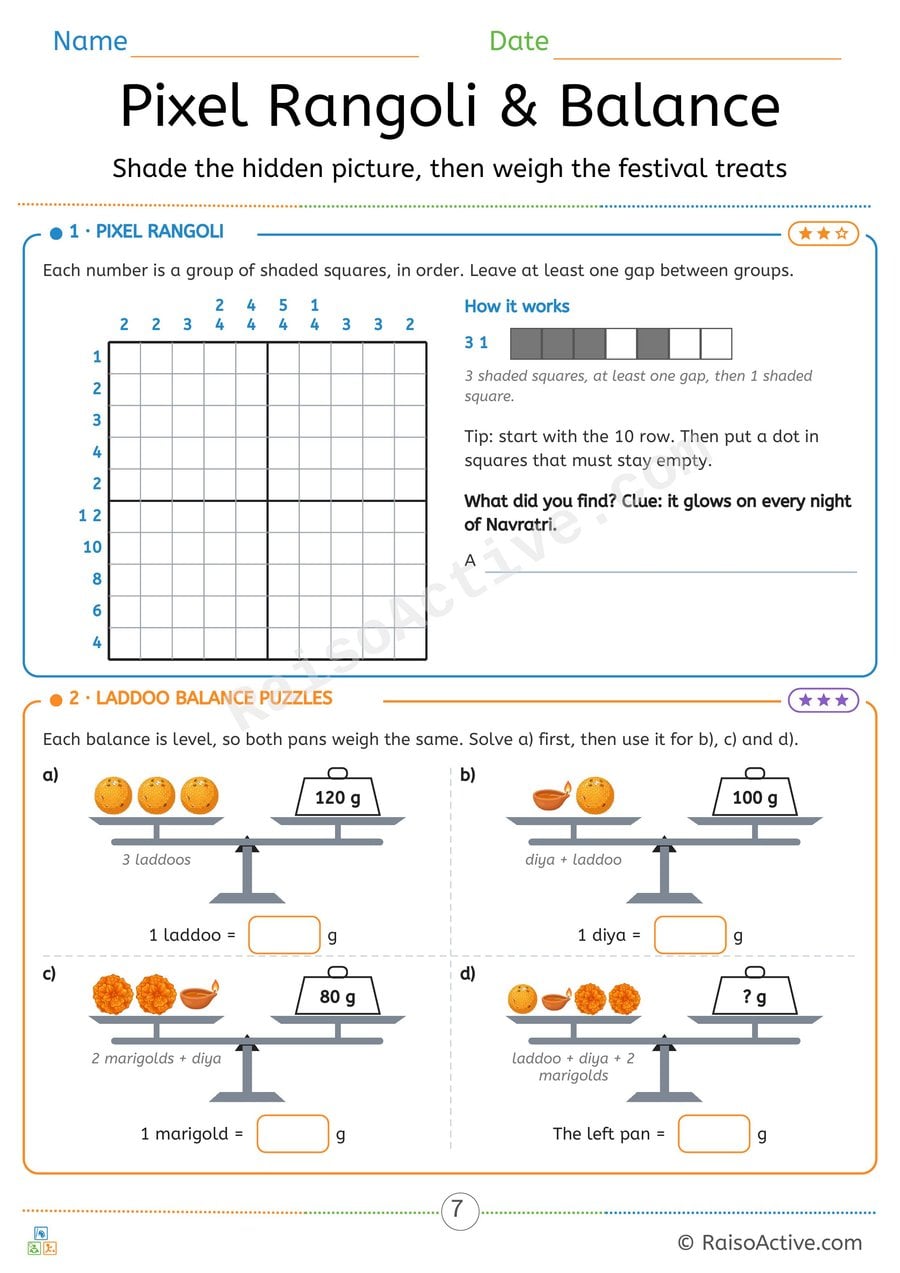
Pixel Rangoli and Laddoo Balance Puzzles for Navratri
Ages 7-11 · Grade 2–Grade 3Ages 7-11 · Year 3–Year 4Ages 7-11 · Class 2–Class 3Ages 7-11
Children use row and column clues to shade a 10 x 10 grid and reveal a hidden festival picture, then solve four balance puzzles in grams, using each answer to work out the next: a first step into algebra.
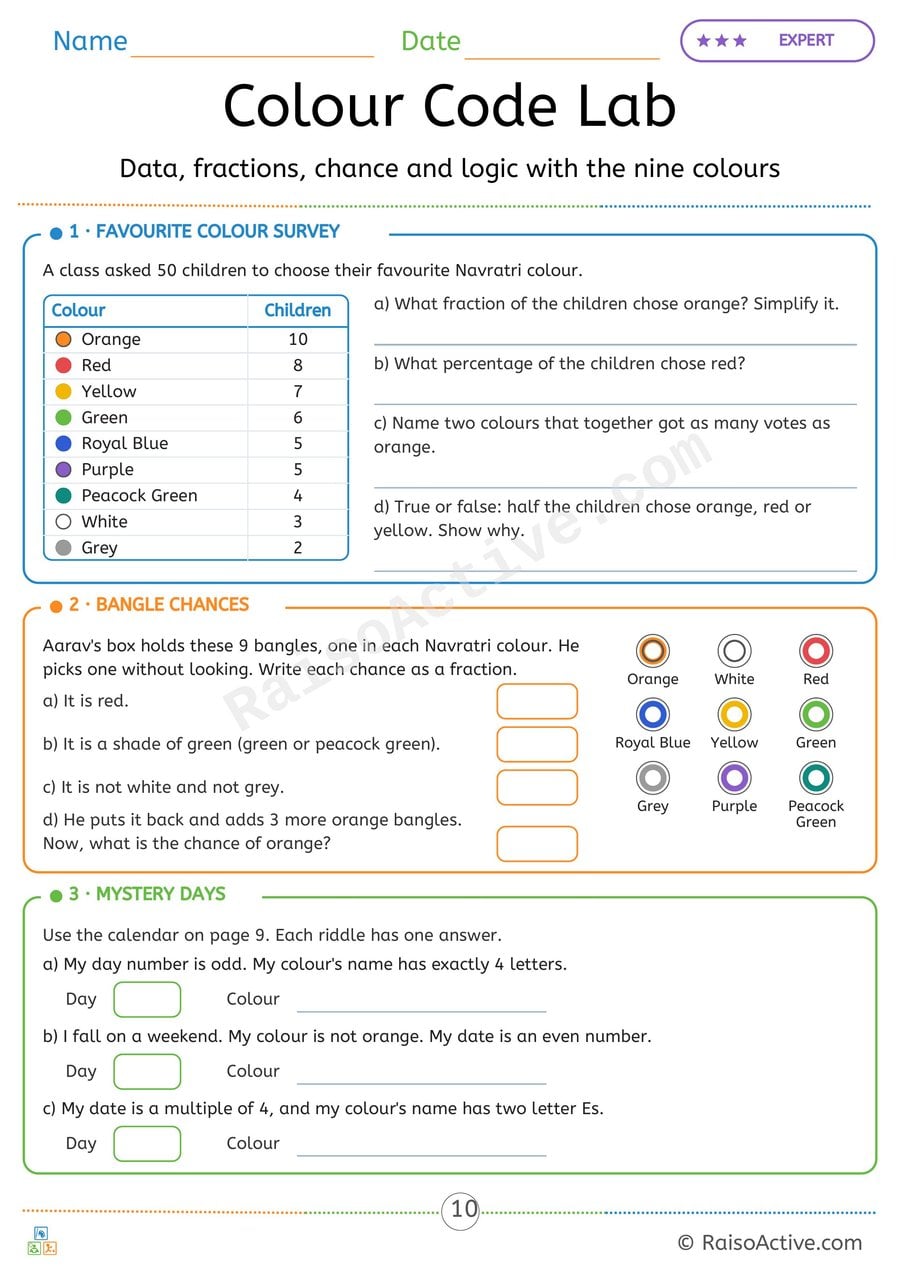
Colour Code Lab: Navratri Fractions, Percentages and Probability
Ages 7-11 · Grade 2–Grade 3Ages 7-11 · Year 3–Year 4Ages 7-11 · Class 2–Class 3Ages 7-11
Children read a survey of 50 children's favourite Navratri colours and write fractions and percentages, write the chance of picking each kind of bangle as a fraction, and solve three riddles using the colour calendar on page 9.
Navratri Festival Quest Certificate of Achievement
Ages 7-11 · Grade 2–Grade 3Ages 7-11 · Year 3–Year 4Ages 7-11 · Class 2–Class 3Ages 7-11
Children celebrate finishing the Navratri Festival Quest pack and record which levels they completed.
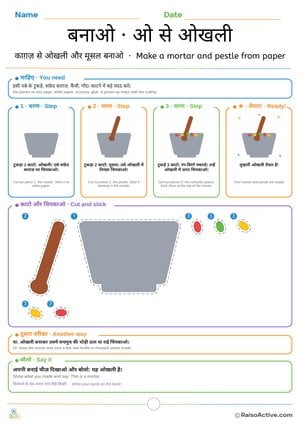
Make a Paper Mortar and Pestle: Hindi Letter ओ (o) Cut and Stick Craft | बनाओ · ओ से ओखली
Ages 4-7 · Pre-K–Grade 1Ages 4-7 · Reception–Year 2Ages 4-7 · LKG–Class 1Ages 4-7
Children cut out the numbered pieces and stick them in order to make a mortar and pestle with colourful spices, then show it and say a full sentence about it. It links the letter ओ with a real picture word, ओखली, and practises scissor control and following steps.
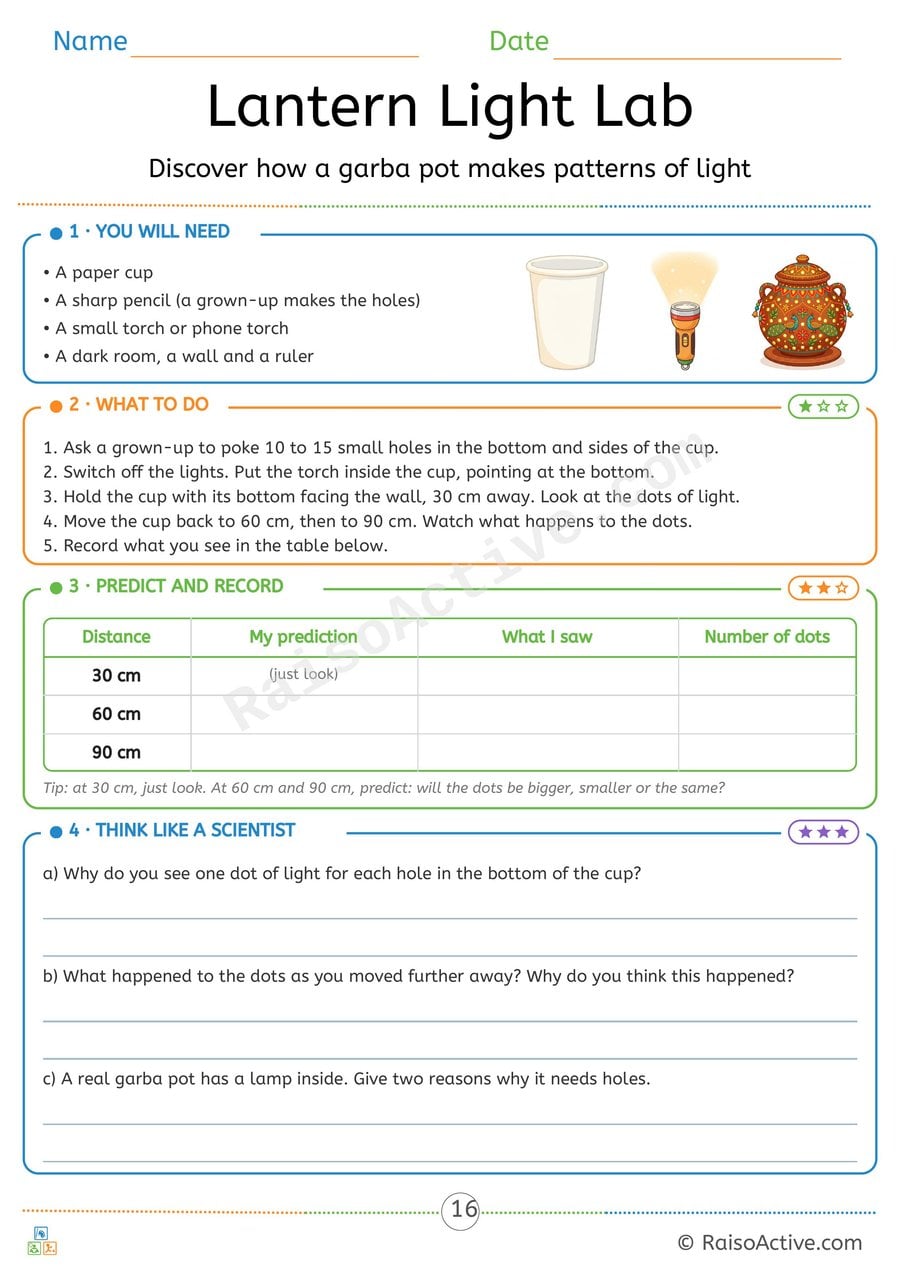
Lantern Light Lab: Navratri Garba Pot Light Experiment
Ages 7-11 · Grade 2–Grade 3Ages 7-11 · Year 3–Year 4Ages 7-11 · Class 2–Class 3Ages 7-11
Children make holes in a paper cup, shine a torch through it and see one spot of light for each hole. They predict and record what happens as they move further from the wall, and explain the results and why a real garba pot needs holes.

Golu Doll Fun: Navratri Golu Counting and Sharing Worksheet
Ages 4-6 · Pre-K–KindergartenAges 4-6 · Reception–Year 1Ages 4-6 · LKG–UKGAges 4-6
Children learn that a golu is a display of dolls on steps set up for Navratri. They count the dolls on each step and find the total, then share cups of sundal among friends and count what is left over.
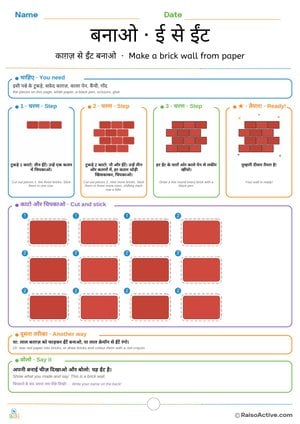
Make a Paper Brick Wall: Hindi Letter ई Craft | बनाओ · ई से ईंट
Ages 3-7 · Preschool–Grade 1Ages 3-7 · Nursery–Year 2Ages 3-7 · Nursery–Class 1Ages 3-7
Children cut out the pieces, put them together following three step pictures and make a paper brick wall. Saying the word ईंट as they make it links the sound ई to something they built themselves.
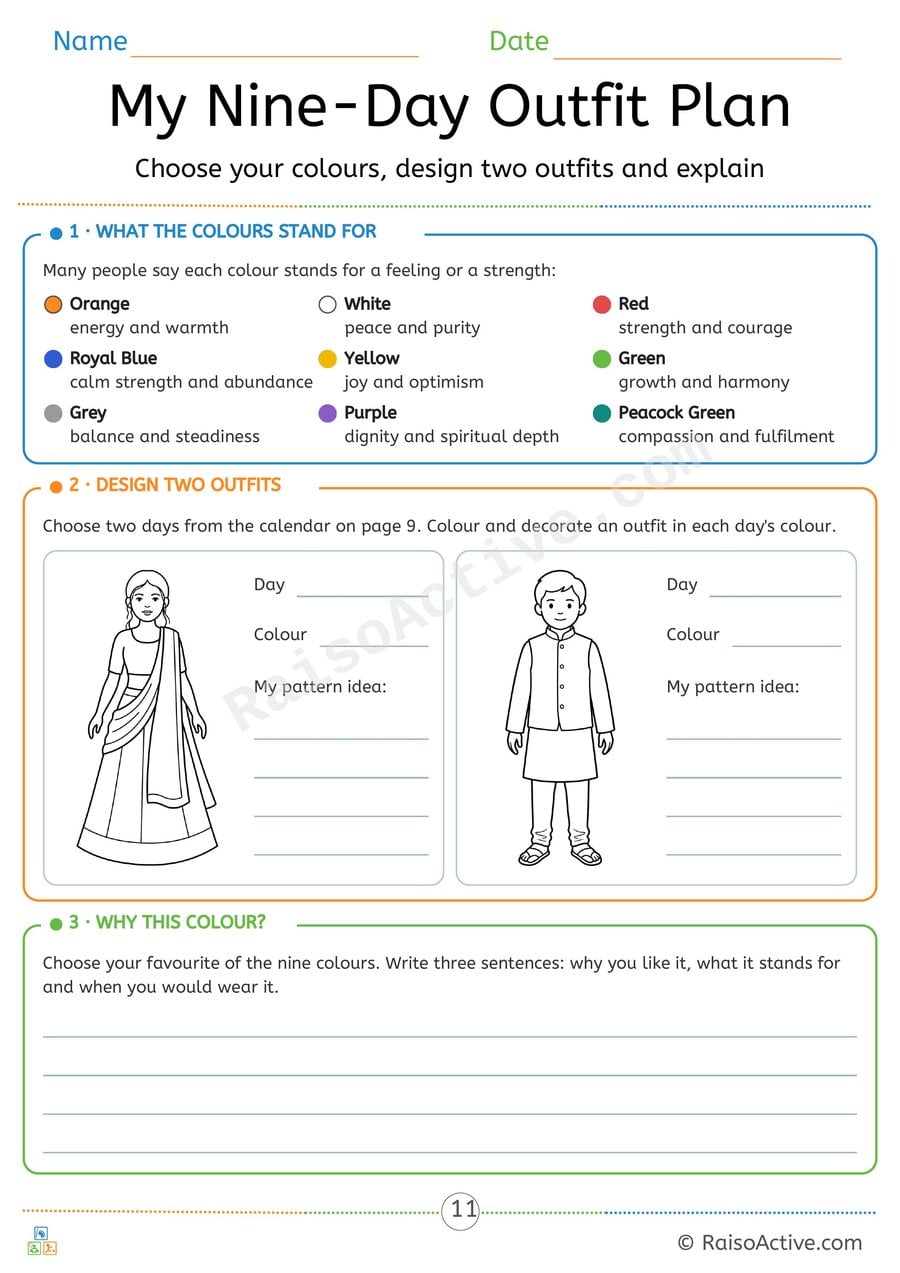
My Nine-Day Outfit Plan: Navratri Colours Design and Writing
Ages 7-11 · Grade 2–Grade 3Ages 7-11 · Year 3–Year 4Ages 7-11 · Class 2–Class 3Ages 7-11
Children read what each of the nine colours is often said to stand for, choose two days from the calendar, colour and pattern a lehenga-style outfit and a kurta outfit in those colours, and write three sentences explaining their favourite colour.
Guides for this topic

Coding Activities for Preschoolers: Building Tomorrow's Thinkers Today
Discover 15+ unplugged and screen-based coding activities for preschoolers that build sequencing, logic, and problem-solving skills through play. NEP 2020 aligned.

Celebrating Diversity: How to Incorporate Cultural Awareness in Learning Activities for Young Children
Practical cultural awareness activities for young children aged 2-8. Explore Indian festivals, world cultures, food, music, and crafts to teach diversity and inclusion.
Christmas and Winter Activities That Combine Fun and Learning: Creating Magical Educational Experiences
Discover Christmas and winter activities that combine festive fun with real learning. Crafts, counting, literacy, and printable worksheets for ages 2 to 8 — perfect for home and school.
Reviews
Every worksheet for ages 4–8, no watermark
Members download the full library of 1,000+ worksheets and every activity pack without watermarks or daily limits. One year costs ₹999 in India or $20 elsewhere.
See membership plansOr download any worksheet free with a watermark (5 a day).