
Diwali Rocket Craft: Cut and Paste Worksheet for Kids
This Diwali-themed rocket craft has children ages 3-5 cut out several rocket parts and assemble them in the correct order, building scissor control and an early understanding of how individual pieces combine into a whole structure. Because rockets are traditionally associated with Diwali fireworks and celebrations, the craft also connects a fine motor activity to real festival traditions your child may have observed.
Curriculum
How to use this worksheet
Help your child cut out each piece of the rocket, the body, fins, and nose cone, along the printed lines. Lay the pieces out in the order they'll be assembled so your child can see how they fit together before gluing. Glue the body first, then attach the fins to the sides and the nose cone to the top, checking the reference image if provided. Once the glue has dried, stand the finished rocket up to display.
Materials needed
- Scissors
- Glue
- Crayons or Markers (optional)
Extension activities
- •Color the finished rocket with bright Diwali colors like gold, red, and orange.
- •Create a background scene for the rocket showing a night sky with stars.
- •Talk about real fireworks and rockets seen during Diwali celebrations.
- •Make a small paper lantern (diya) craft to display alongside the rocket.
- •Count how many pieces were used to build the rocket.
Tips for parents and teachers
Encourage the child to take their time and be careful while cutting, especially around narrower parts like the fins. Offer assistance as needed and praise their efforts throughout the multi-step assembly. Use the craft as an opening to talk about what Diwali celebrates and why lights and fireworks are part of the tradition.

Written by
Hemsweta Jain · Teacher Cheena
MBA and Early Childhood Educator, teaching since 2014 · Founder of RaisoActive, Mumbai
Every RaisoActive worksheet is designed and checked by the founder before publishing.
Published · Last reviewed
Related worksheets

Stick Man Emotions Worksheet: Happy, Sad, Angry, and Surprised!
Children ages 4-6 practice reading facial expressions on this worksheet, matching stick-figure faces to their correct emotion labels by noticing details like mouth shape and eyebrow position. This strengthens emotional literacy — the ability to name and recognize feelings in others — which supports empathy and smoother social interactions as children move into more group play and classroom settings.
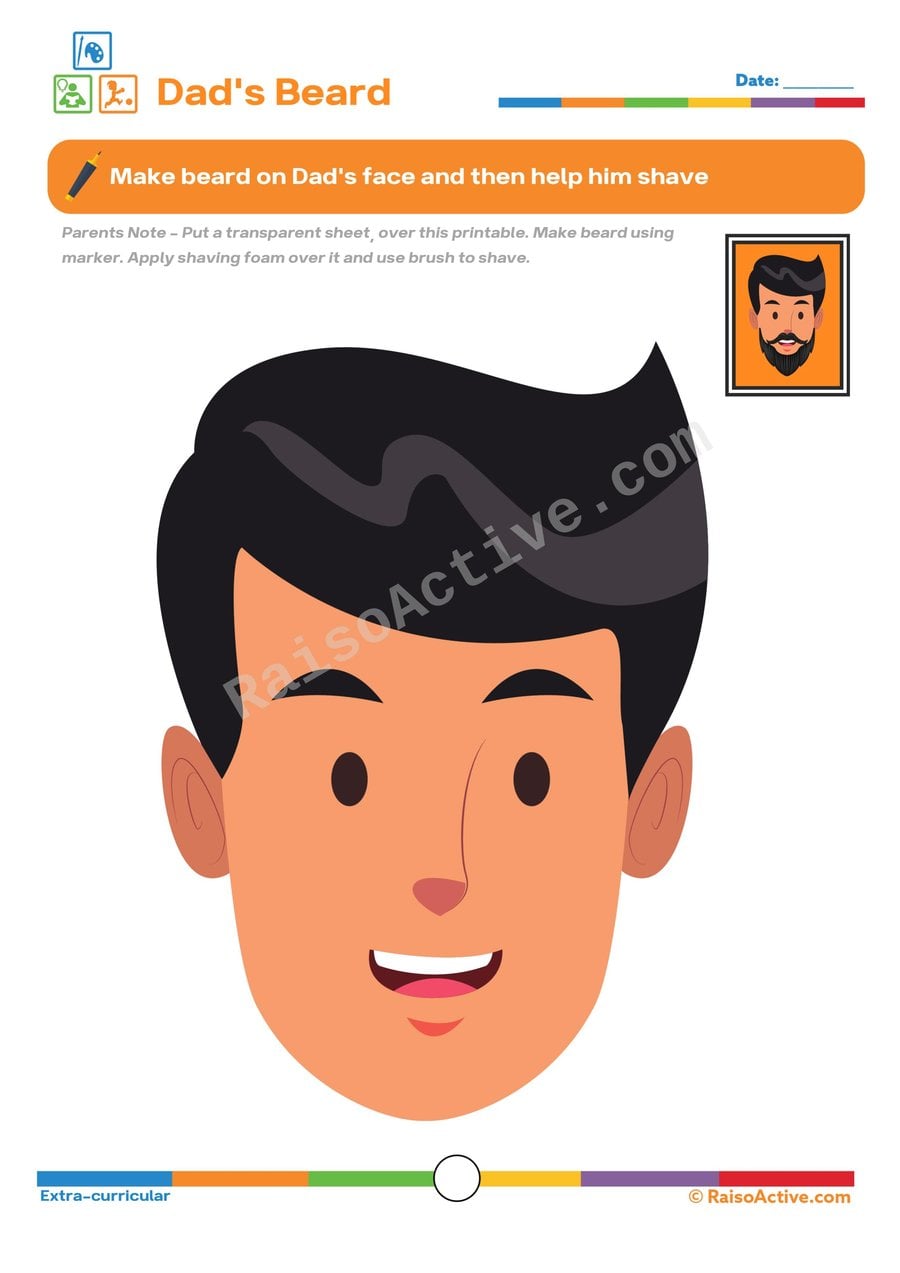
Dad's Beard: A Fun Shaving Activity for Kids!
This playful pretend-shaving activity builds fine motor control and bilateral coordination in children ages 3-5, as they draw a beard with a marker and then 'shave' it away using foam and a brush in careful, controlled strokes. It also introduces a simple science idea — that shaving foam can be applied and removed in layers — while giving children a hands-on, sensory way to imitate an everyday grown-up routine.
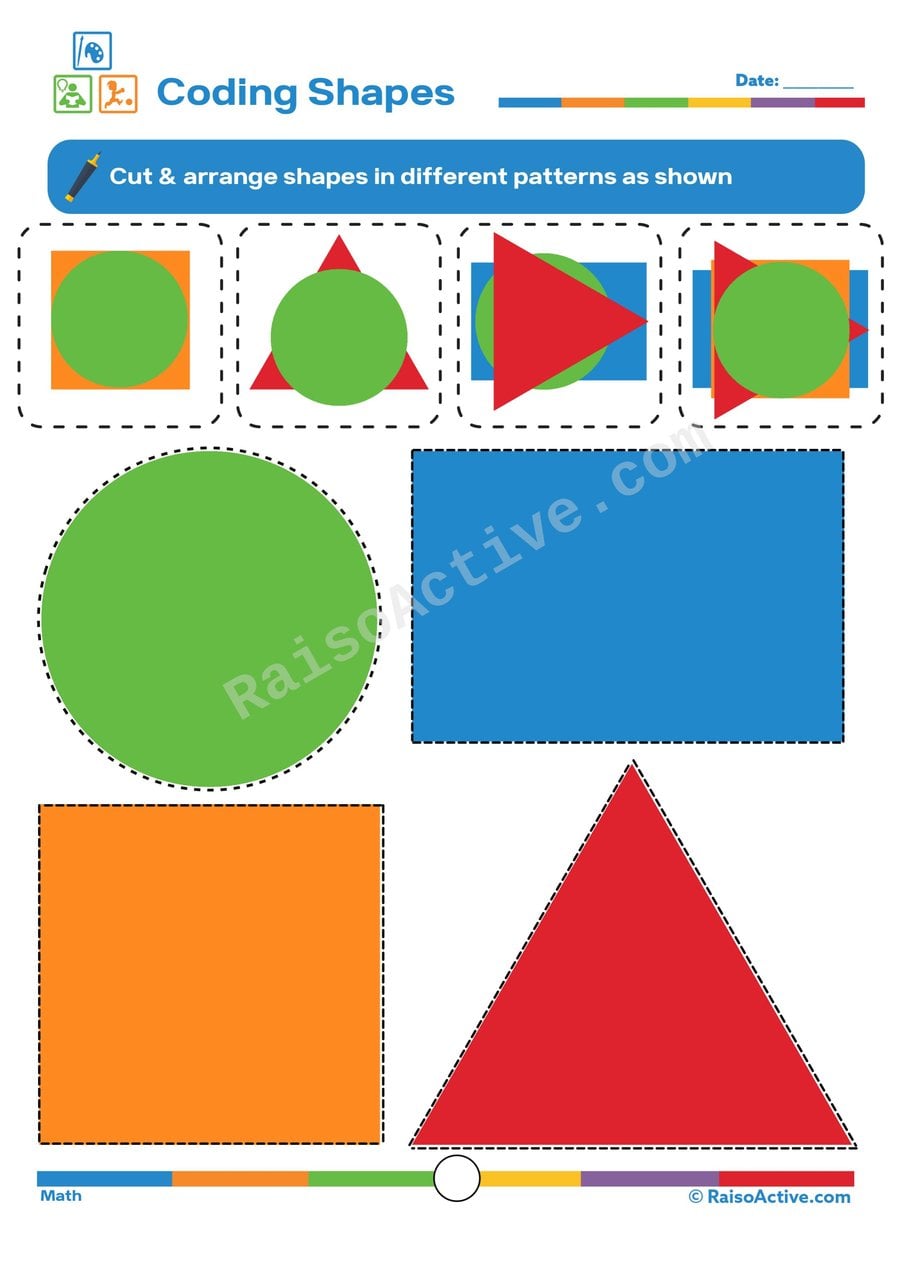
Coding Shapes Worksheet: Cut and Arrange Shapes!
This cut-and-paste worksheet has children ages 3-5 recreate example shape sequences by cutting out individual pieces and arranging them to match, combining shape recognition with the ordered, step-by-step thinking used in early coding and pattern logic. The physical act of cutting and precisely placing each piece also strengthens fine motor control and spatial planning.
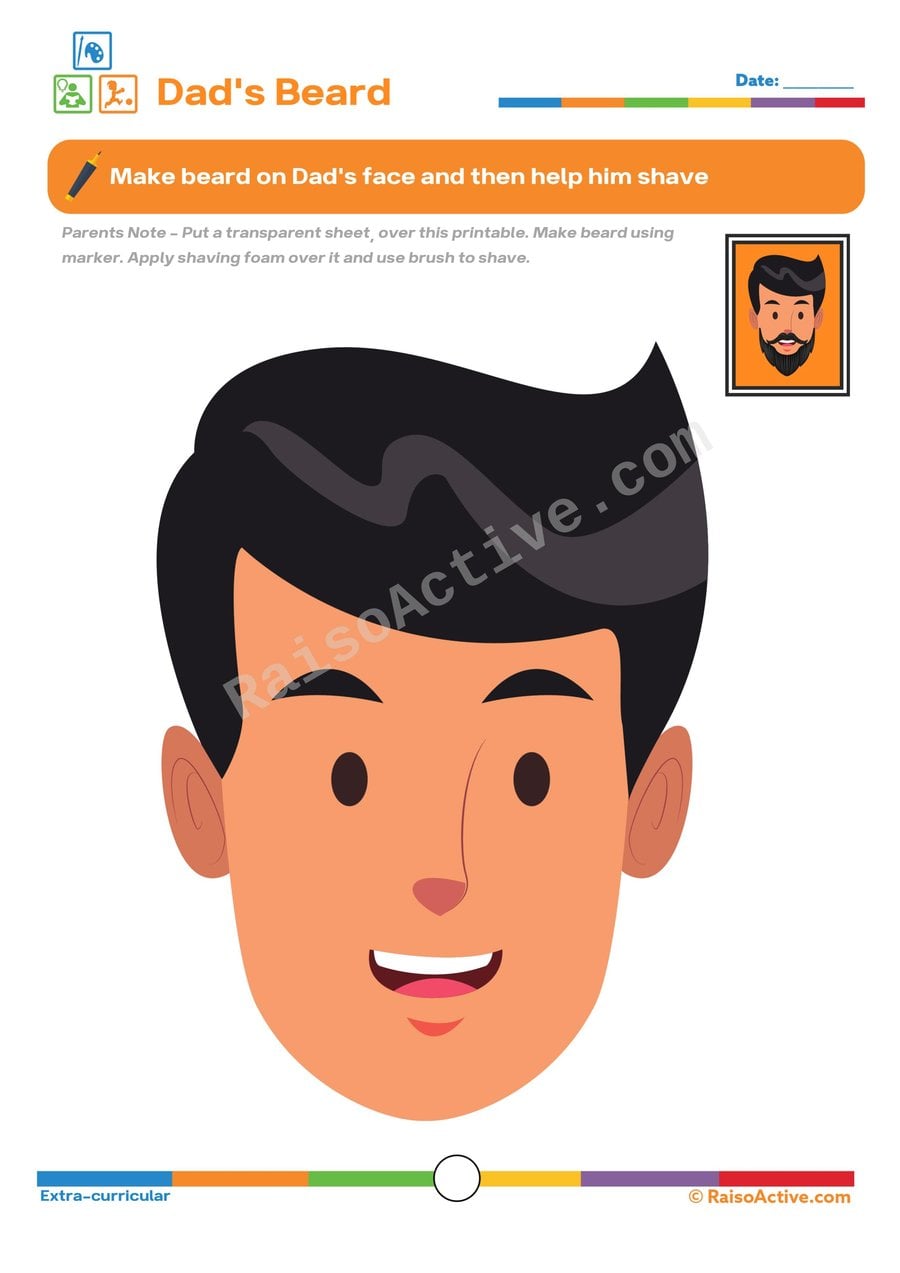
Dad's Beard: A Fun Shaving Activity for Kids!
This sensory pretend-shaving activity builds fine motor precision and hand control in children ages 3-5, as they draw a beard with a marker and then carefully brush away shaving foam in controlled strokes. Beyond motor skills, it gives children a playful, low-stakes way to imitate a grown-up grooming routine they've likely observed at home.

Coding Shapes Worksheet for Preschoolers: Cut and Paste Patterns
This cut-and-paste activity has children ages 3-5 recreate shape sequences shown in sample boxes, combining shape recognition with the same ordered, step-by-step thinking used in beginner coding concepts. Cutting out individual shapes and arranging them in the correct sequence also builds fine motor precision and spatial planning.

Coloring Worksheet: Identify and Color the Symbols!
This worksheet introduces children ages 3-5 to national symbols by having them color each one and then match or write its name from a list of options. Beyond fine motor coloring practice, naming each symbol builds early cultural knowledge and category-matching skills, since children must connect a picture to the correct word rather than color at random.

Learn India's National Symbols: A Dot-to-Dot Worksheet
Connecting numbered dots to reveal each national symbol builds fine motor control and number-sequence recognition in children ages 3-5, since they must find and connect dots in the correct numerical order to form a recognizable picture. As each symbol emerges from the dots, children also gain early familiarity with important national imagery and its name.
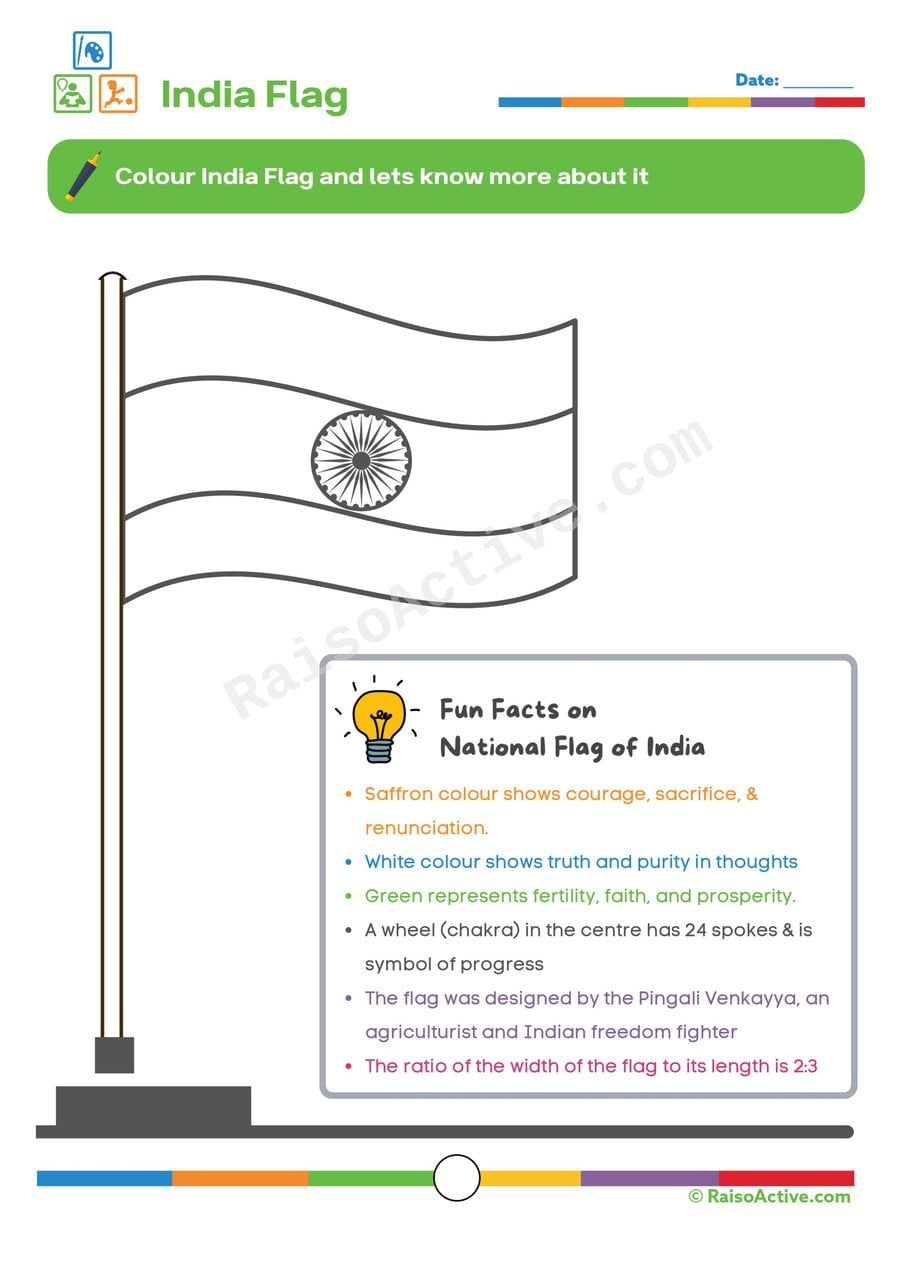
Color the India Flag Worksheet for Preschoolers
This worksheet teaches children ages 3-5 the three colors and layout of the Indian national flag, saffron, white, and green with the navy wheel, while practicing careful, section-by-section coloring. Reading a few simple facts about the flag alongside the coloring also introduces the idea that national symbols carry meaning, an early building block for civic and cultural awareness.
Guides for this topic
Bridging Two Worlds: A Complete Guide to Teaching Heritage Languages Alongside English
A practical guide to raising bilingual children who speak both their heritage language and English with confidence. Research-backed strategies, activities, and tips for Indian families.
Empowering Multilingual Learners: Essential Resources and Strategies for Bilingual and Multilingual Children
Discover research-backed strategies, activities, and free printable resources to support bilingual and multilingual children ages 1-8. Practical tips for Indian families raising confident multilingual learners.
Celebrating Diversity: How to Incorporate Cultural Awareness in Learning Activities for Young Children
Practical cultural awareness activities for young children aged 2-8. Explore Indian festivals, world cultures, food, music, and crafts to teach diversity and inclusion.
Reviews
Every worksheet for ages 3–5, no watermark
Members download the full library of 1,000+ worksheets and every activity pack without watermarks or daily limits. One year costs ₹1,000 in India or $20 elsewhere.
See membership plansOr download any worksheet free with a watermark (5 a day).