3-Letter Word Fun: Identify and Write! (Ages 3-5)
This worksheet asks children ages 3-5 to identify the beginning sound of a picture and use it to write a complete 3-letter word, moving them from single-letter sounds toward blending sounds into whole words — a key early step in phonics. The final task of writing five known 3-letter words independently also checks how much of this blending skill has transferred beyond the guided examples.
Part of the pack
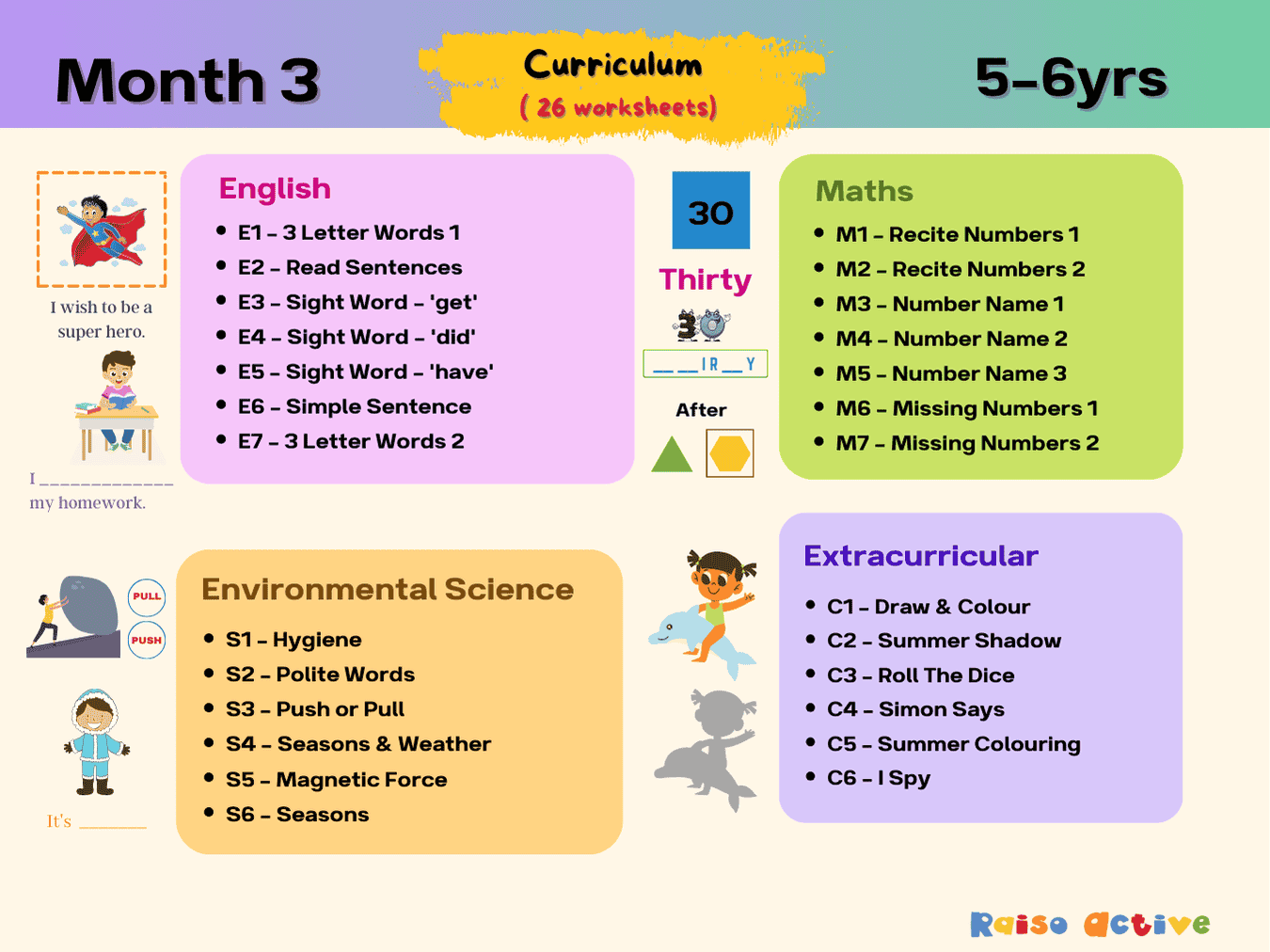
Month 3: Learning & Development | Ages 5-6
This is page 4 of the pack. Ages 5-6 · KindergartenAges 5-6 · Year 1Ages 5-6 · UKGAges 5-6
Made for your child
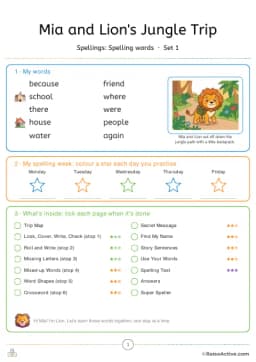
Spelling practice, made for your child
Their own spelling words turned into a pack: trace or look-cover-write-check, roll and write, a secret picture code, a word search, a crossword and a test, with their name in it.
Make a spelling packFree preview · free for members
Or start free: a word search with sight wordsCurriculum
- Phonics - CVC Words > CVC Words
How to use this worksheet
Look at each picture together and say its name slowly, stretching out the sounds — 'c-a-t.' Ask your child to identify the first letter of the word and write it in the blank, then help them complete the rest of the word using the picture as a guide. Repeat for each pictured word on the page. Finish by asking your child to think of five 3-letter words they already know and write them independently on the lines provided.
Materials needed
- Pencil
- Crayons
Extension activities
- 1Build 3-letter words using magnetic letters or letter tiles, sounding out each one as you build it.
- 2Play a rhyming game where you change just the first letter of a 3-letter word to make a new one, like cat to hat to mat.
- 3Write 3-letter words in chalk on the sidewalk and have your child hop from letter to letter while sounding them out.
- 4Draw a picture for each of the five independent words your child wrote.
- 5Read a simple picture book together and pause to point out any 3-letter words you spot on the page.

Written by
Hemsweta Jain · Teacher Cheena
MBA and Early Childhood Educator, teaching since 2014 · Founder of RaisoActive, Mumbai
Every RaisoActive worksheet is designed and checked by the founder before publishing.
Published · Last reviewed
Related worksheets
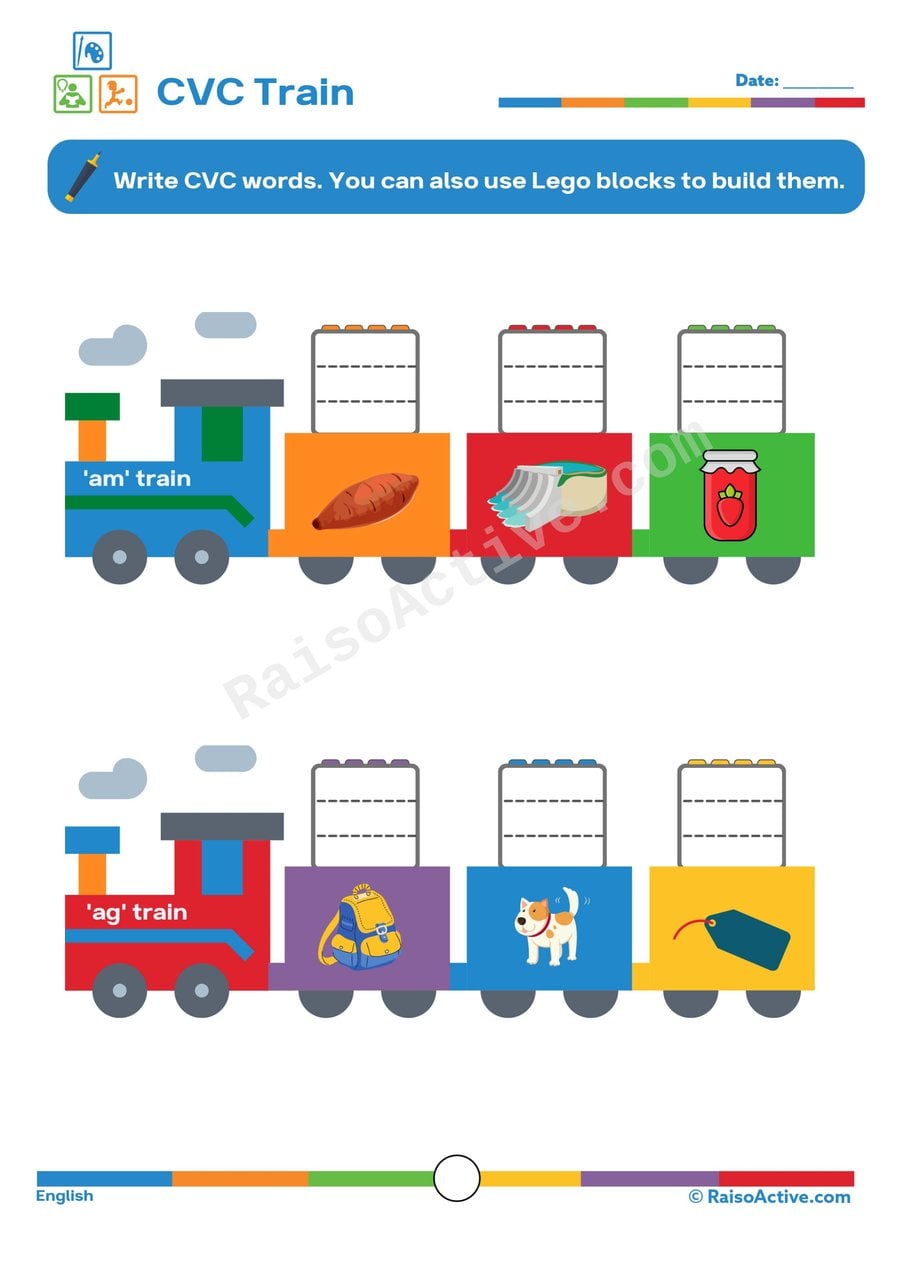
CVC Train Worksheet: Write and Build CVC Words!
Ages 4-6 · Pre-K–KindergartenAges 4-6 · Reception–Year 1Ages 4-6 · LKG–UKGAges 4-6
This worksheet gives children ages 4-6 focused practice blending letter sounds into consonant-vowel-consonant words, using train-car pictures as clues for words like 'dog,' 'hen,' or 'cup.' Because children both write the word and can optionally build it with Lego blocks, this worksheet reinforces the same phonics skill through two different physical actions — handwriting and hands-on construction — which helps the spelling patterns stick.
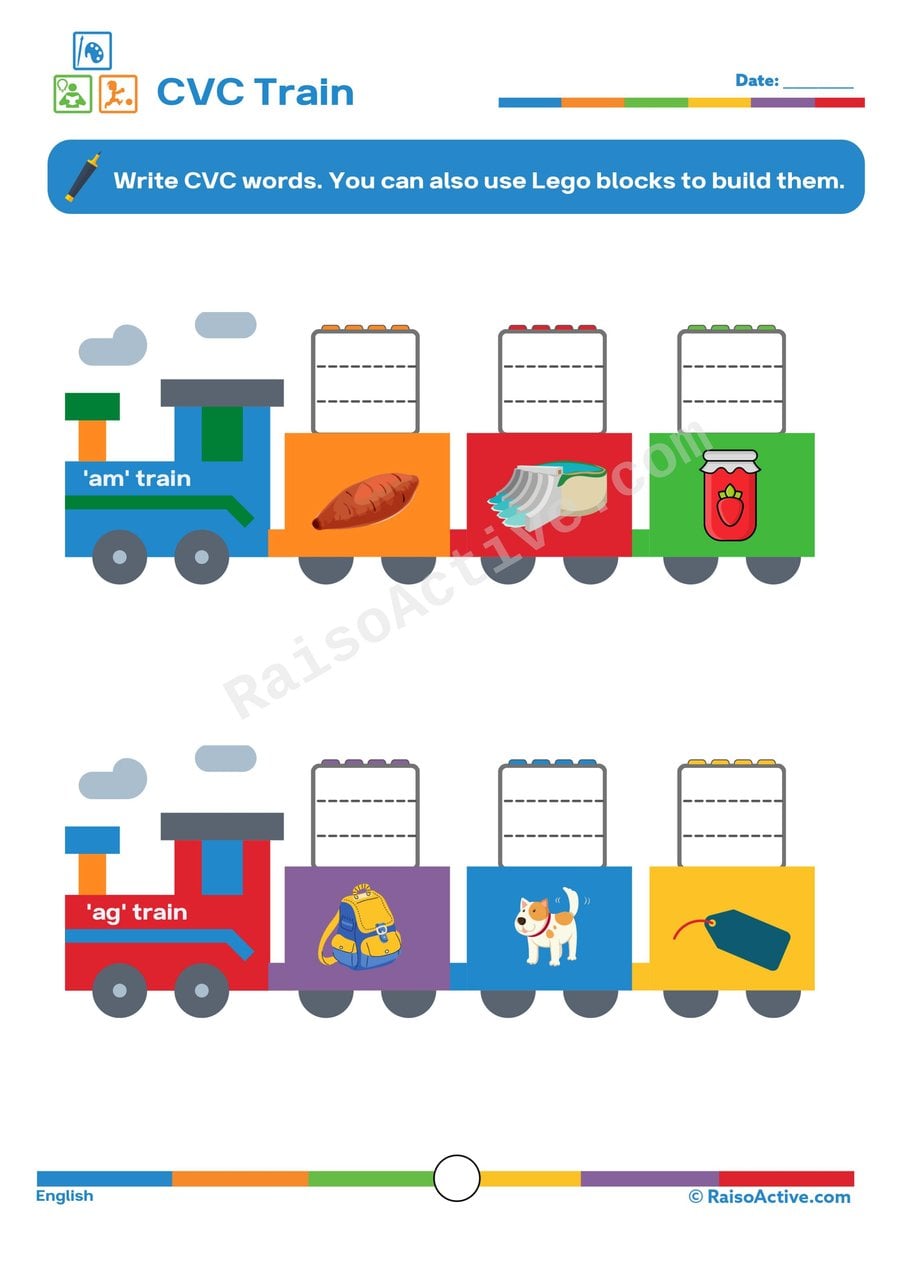
CVC Train Worksheet: Write CVC Words!
Ages 4-6 · Pre-K–KindergartenAges 4-6 · Reception–Year 1Ages 4-6 · LKG–UKGAges 4-6
Writing consonant-vowel-consonant words like 'cat,' 'sun,' or 'pig' under matching pictures gives children ages 4-6 direct practice with letter-sound blending, a core phonics skill that underpins independent reading. Because each train car pairs a picture clue with a blank space, children also practice translating a spoken word they can sound out into its correctly spelled written form.

Cut and Paste the Word: Fun Reading Worksheet for Kids!
Ages 4-5 · Pre-KAges 4-5 · ReceptionAges 4-5 · LKGAges 4-5
This cut-and-paste decoding activity has children ages 4-5 sound out simple CVC (consonant-vowel-consonant) words like 'cat' or 'sun' and match the missing picture to complete each word, directly practicing the phonics blending skills that underpin early reading fluency. Because the word is partly built from letters already on the page, children must connect individual letter sounds to a whole word rather than just recognizing a picture in isolation. This bridges the gap between knowing individual letter sounds and reading complete three-letter words independently.

Zen the Hen CVC Word Worksheet for Early Readers
Ages 3-5 · Preschool–Pre-KAges 3-5 · Nursery–ReceptionAges 3-5 · Nursery–LKGAges 3-5
This worksheet uses a short story about 'Zen the Hen' to give children ages 3-5 practice reading and completing CVC (consonant-vowel-consonant) words, one of the earliest and most important word patterns in learning to read. Filling in missing CVC words within a story context, rather than in isolation, helps children see how decoding skills apply to real reading, building both phonics and comprehension together.
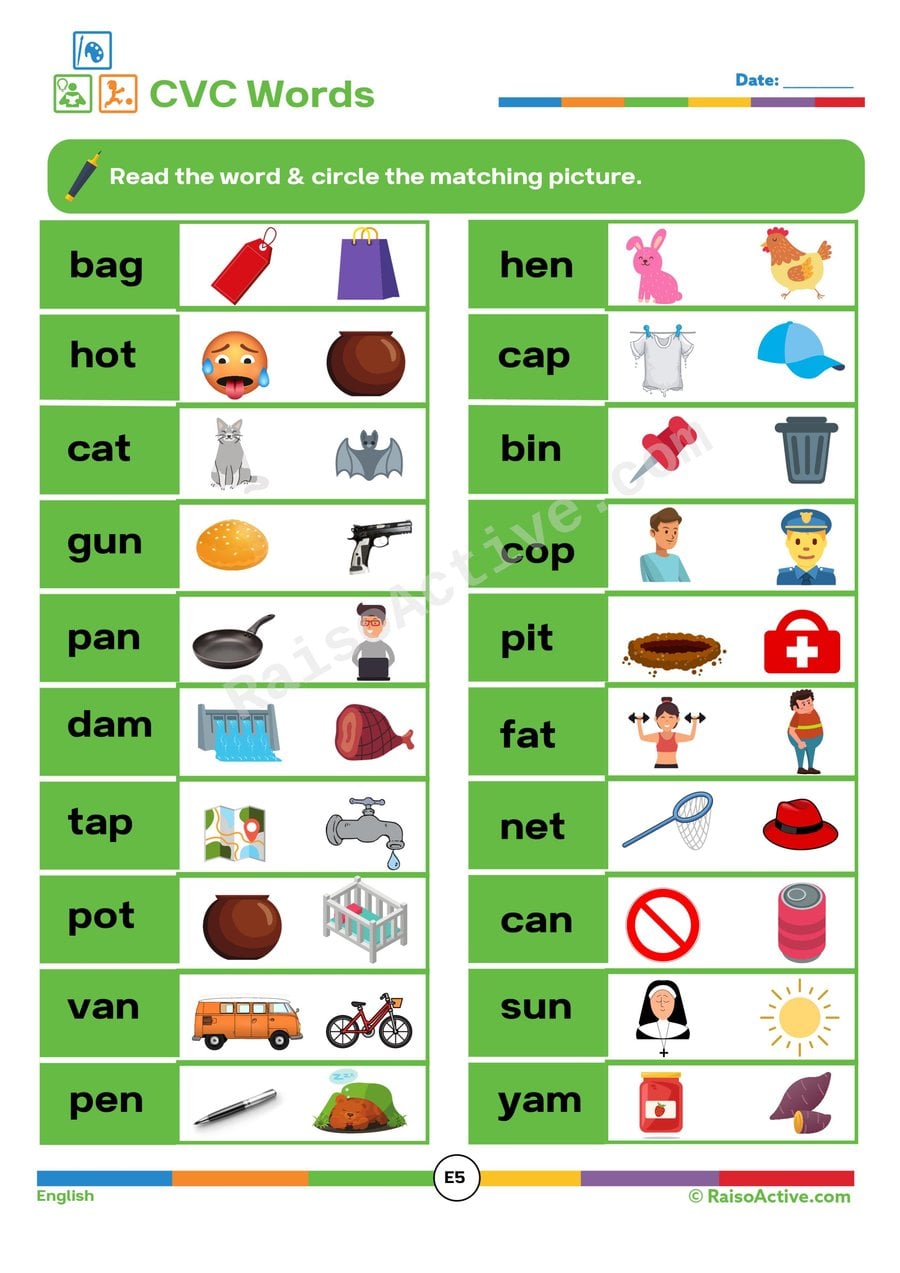
CVC Word Matching Worksheet: Read and Circle!
Ages 4-6 · Pre-K–KindergartenAges 4-6 · Reception–Year 1Ages 4-6 · LKG–UKGAges 4-6
Sounding out each consonant-vowel-consonant word letter by letter strengthens decoding, and matching that word to its picture connects decoding to meaning — an essential step for children ages 4-6 becoming independent readers.

Read & Reveal: CVC Word Fun Worksheet for Preschoolers
Ages 3-5 · Preschool–Pre-KAges 3-5 · Nursery–ReceptionAges 3-5 · Nursery–LKGAges 3-5
Reading CVC words is the first real decoding milestone for children ages 3-5, and this 'Read & Reveal' worksheet turns that practice into a mini mystery. Children sound out each three-letter word, then lift the flap to see if their guess matches the hidden picture, which builds phonemic blending and self-checking skills at the same time. The reveal mechanic also keeps motivation high during repetitive phonics drills, which matters a great deal for a wiggly preschool attention span.

Read & Reveal: CVC Word Fun Worksheet for Preschoolers
Ages 3-5 · Preschool–Pre-KAges 3-5 · Nursery–ReceptionAges 3-5 · Nursery–LKGAges 3-5
This fold-and-reveal worksheet gives children ages 3-5 practice sounding out simple CVC (consonant-vowel-consonant) words like 'cat' or 'sun' before folding the paper to check their answer against a hidden picture. The reveal mechanic turns decoding into a self-checking game, giving children immediate, motivating feedback on whether they blended the sounds correctly. This kind of independent verification builds reading confidence because children discover the right answer themselves rather than being told.

Dussehra and First Letters: Vidyarambham Tracing and Letter Hunt
Ages 4-6 · Pre-K–KindergartenAges 4-6 · Reception–Year 1Ages 4-6 · LKG–UKGAges 4-6
Children learn about Vidyarambham, when little children write their first letters in rice on Vijayadashami, and about Dussehra, when Rama won against Ravana. They trace letters, sort things we use to learn, count to 10 and match letters to beginning sounds.
Guides for this topic

How to Teach CVC Blending: A Step-by-Step Method That Works in Two Weeks
A step-by-step method for teaching CVC blending, covering continuous sounds, word families, common errors, and a 14-day plan that most children finish reading CVC words.
Phase 2 Phonics at Home: Sound Order, Blending Games, Worksheets
Phase 2 phonics at home: the five sound sets in order, oral blending, tricky words, a two-week routine, common mistakes, and free worksheets.

Reception Year Explained: EYFS Learning and How to Help at Home
A teacher's plain-English guide to the Reception Year: the seven areas of learning, Early Learning Goals, Phase 2/3 phonics, the RBA and home routines.
Reviews
Every worksheet for ages 3–5, no watermark
Members download the full library of 1,000+ worksheets and every activity pack without watermarks or daily limits. One year costs ₹999 in India or $20 elsewhere.
See membership plansOr download any worksheet free with a watermark (5 a day).