CVC Word Matching Worksheet: Read and Circle!
Sounding out each consonant-vowel-consonant word letter by letter strengthens decoding, and matching that word to its picture connects decoding to meaning — an essential step for children ages 4-6 becoming independent readers.
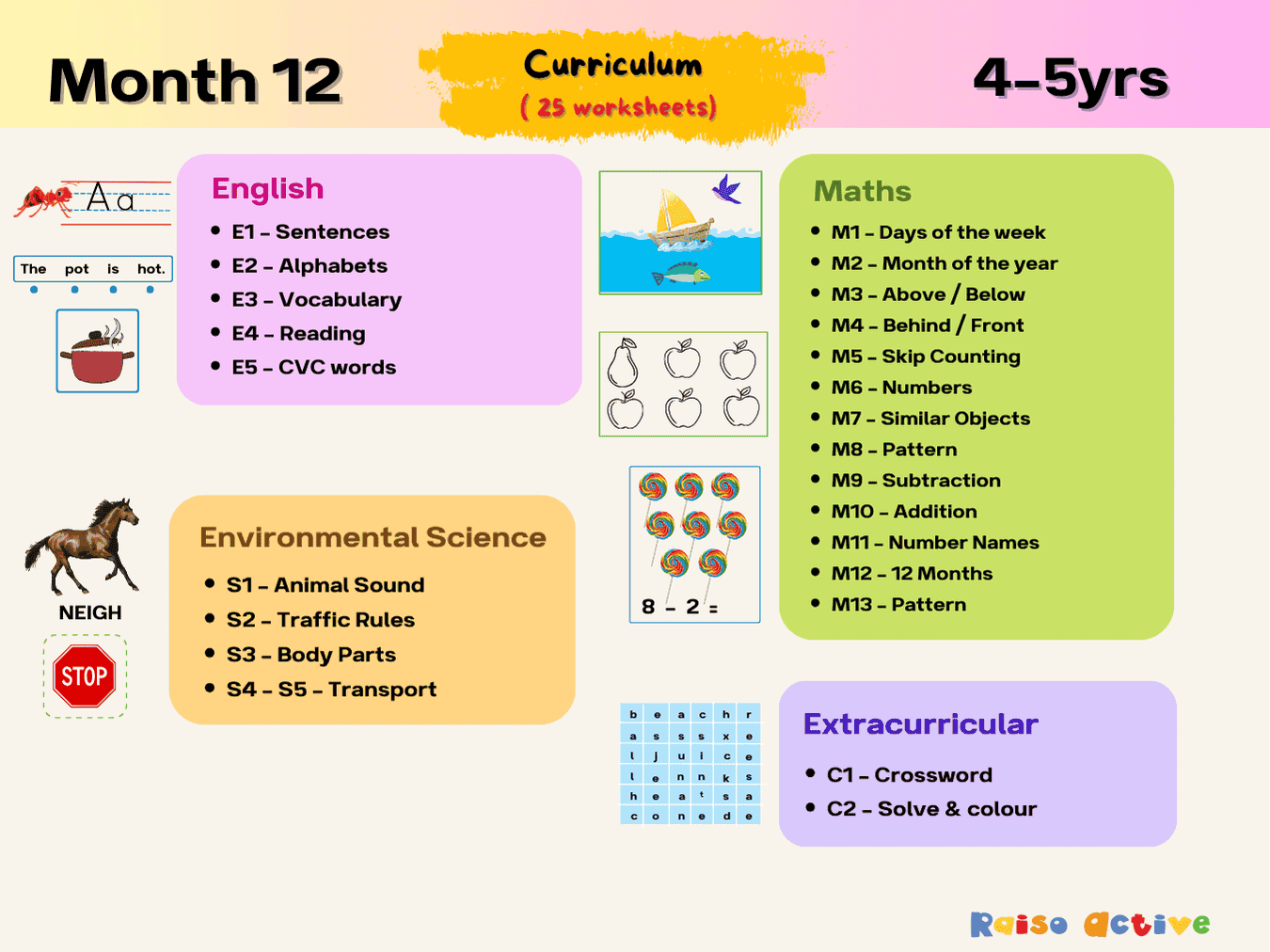
Part of the pack
Month 12: Learning & Development | Ages 4-5
This is page 8 of the pack. Ages 4-5 · Pre-KAges 4-5 · ReceptionAges 4-5 · LKGAges 4-5

Made for your child
Numbers to 20, made for your child
A maths pack with your child's name in it: pictures that explain, practice at three levels, puzzles and story sums about them. Print a new set whenever they finish.
Make a maths packFree preview · free for members
Curriculum
- Phonics - CVC Words > CVC Words
How to use this worksheet
Point to the first CVC word and help your child sound out each letter slowly, blending the sounds together. Have them scan the row of pictures and circle the one that matches the word they just read. Continue through the remaining words, encouraging independent sounding-out before checking the pictures, then circle each final choice with a crayon.
Materials needed
- Pencil
- Crayons
Extension activities
- 1Write each CVC word on an index card and have your child rewrite it from memory.
- 2Ask your child to use one of the CVC words in a spoken sentence about its picture.
- 3Cut out the pictures and words to make a simple matching memory game.
- 4Go on a 'word hunt' around the house looking for objects that make CVC words.
- 5Build the words with magnetic letters, swapping the middle vowel to make new words.

Written by
Hemsweta Jain · Teacher Cheena
MBA and Early Childhood Educator, teaching since 2014 · Founder of RaisoActive, Mumbai
Every RaisoActive worksheet is designed and checked by the founder before publishing.
Published · Last reviewed
More from Month 12: Learning & Development | Ages 4-5

Find the Similar Objects Worksheet for Preschoolers
Ages 3-5 · Preschool–Pre-KAges 3-5 · Nursery–ReceptionAges 3-5 · Nursery–LKGAges 3-5
Comparing a row of objects to find the ones that match and identify the one that's different builds visual discrimination skills for children ages 3-5, an early foundation for noticing the subtle differences between similar-looking letters later in reading.
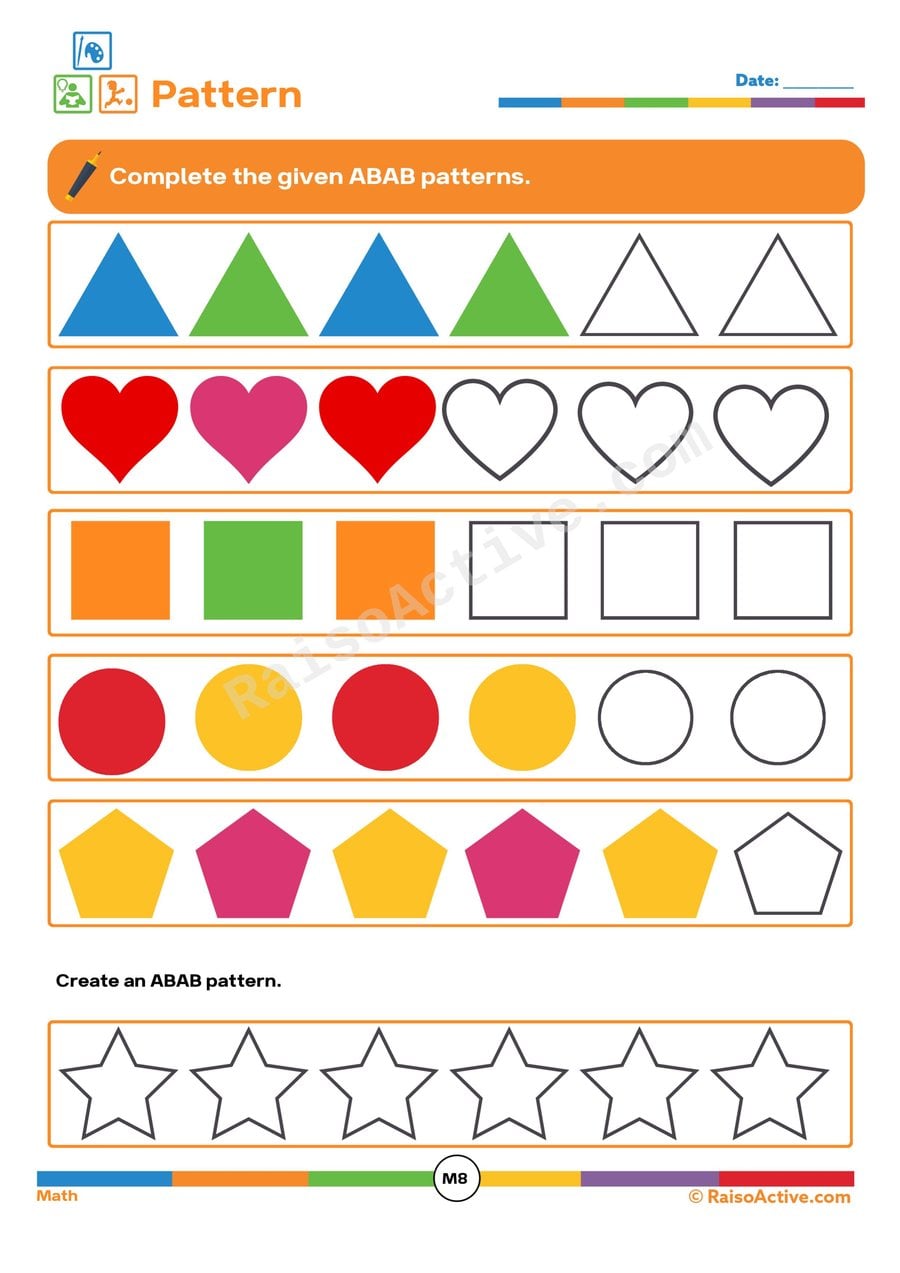
ABAB Pattern Fun: Complete the Shapes Worksheet!
Ages 3-5 · Preschool–Pre-KAges 3-5 · Nursery–ReceptionAges 3-5 · Nursery–LKGAges 3-5
This worksheet builds early algebraic thinking as children ages 3-5 identify and continue ABAB patterns using shapes and colors, then create a pattern of their own using stars. Recognizing that a pattern repeats in a predictable unit is a foundational math skill that later supports understanding sequences, multiplication, and logical prediction, making this simple shape activity more mathematically important than it might first appear.

Parent's Guide: Sight Words and CVC Words Activities
Ages 3-5 · Preschool–Pre-KAges 3-5 · Nursery–ReceptionAges 3-5 · Nursery–LKGAges 3-5
This parent's guide offers a set of hands-on activities for children ages 3-5 that build early reading skills through sight word and CVC (consonant-vowel-consonant) word practice, using letter blocks, storytelling, and even a color-mixing experiment to keep learning varied and engaging. Practicing sight words and simple three-letter words together builds the foundation for sounding out and recognizing whole words while reading.

Transportation Worksheet: Match the Vehicles! (Ages 3-5)
Ages 3-5 · Preschool–Pre-KAges 3-5 · Nursery–ReceptionAges 3-5 · Nursery–LKGAges 3-5
This worksheet asks children ages 3-5 to sort vehicles into four transportation categories — road, track, air, and water — which builds classification skills beyond simple pairs. Because kids must decide which of four groups a vehicle belongs to instead of just two, it stretches their reasoning a level further than basic matching. It also grows vocabulary around trains and tracks, a category many transportation worksheets skip.

Reading Comprehension Worksheet: Matching Sentences to Pictures
Ages 4-6 · Pre-K–KindergartenAges 4-6 · Reception–Year 1Ages 4-6 · LKG–UKGAges 4-6
Children ages 4-6 practice reading short sentences and matching them to the picture that correctly represents their meaning, strengthening reading comprehension by requiring them to understand a sentence rather than just decode its individual words. This skill moves children from word-level reading toward true comprehension of what a sentence describes.

Days of the Week Sequencing Worksheet for Preschoolers
Ages 3-5 · Preschool–Pre-KAges 3-5 · Nursery–ReceptionAges 3-5 · Nursery–LKGAges 3-5
This worksheet builds sequencing skills for children ages 3-5 as they work with the days of the week in order, first filling in a missing day and then cutting and gluing days into the correct sequence. Understanding that days follow a fixed, repeating order is an early step toward time concepts like yesterday, today, and tomorrow, and this hands-on repetition helps cement a sequence that isn't visually obvious the way counting objects is.

Animal Sounds Worksheet: Circle the Correct Sound!
Ages 3-5 · Preschool–Pre-KAges 3-5 · Nursery–ReceptionAges 3-5 · Nursery–LKGAges 3-5
This worksheet strengthens vocabulary and reading readiness for children ages 3-5 by asking them to match each animal picture to the word describing the sound it makes, such as 'moo' for a cow or 'quack' for a duck. Connecting a familiar sound to its written word form is an early step toward reading, since it links spoken vocabulary your child already knows to print they are just beginning to recognize.

Penguin Addition Worksheet for Preschoolers: Counting and Circling
Ages 3-5 · Preschool–Pre-KAges 3-5 · Nursery–ReceptionAges 3-5 · Nursery–LKGAges 3-5
Counting groups of penguins, combining them, and circling the correct sum from several options builds early addition fluency for children ages 3-5, using a fun animal theme to keep counting practice engaging.
Related worksheets
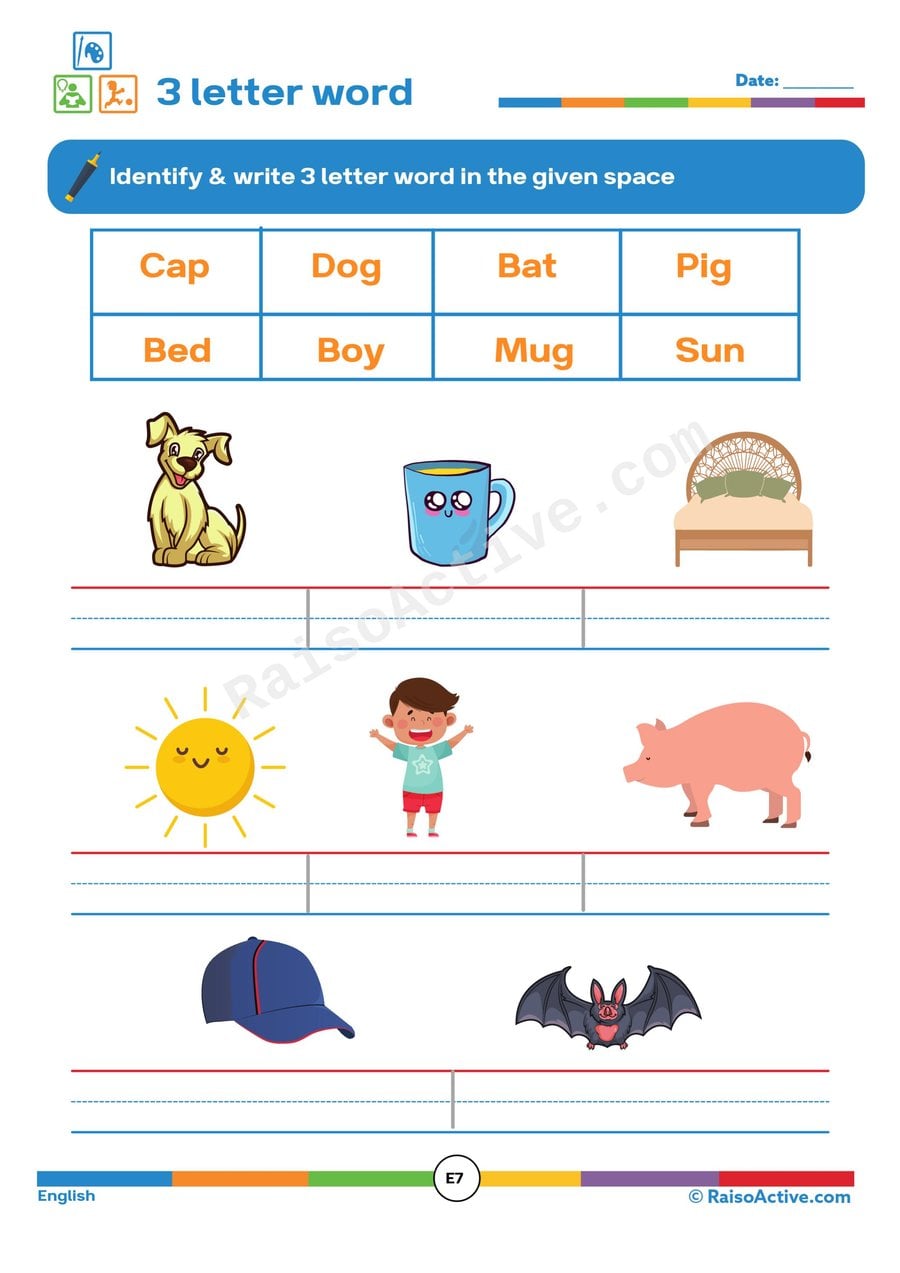
3-Letter Word Fun: Identify and Write! (Worksheet)
Ages 3-5 · Preschool–Pre-KAges 3-5 · Nursery–ReceptionAges 3-5 · Nursery–LKGAges 3-5
This worksheet strengthens CVC (consonant-vowel-consonant) word recognition by having children match a picture to its correct 3-letter word and then write that word themselves. For three- to five-year-olds, writing out a decoded word — not just reading it — cements the connection between letter sounds and spelling, an important step toward independent writing.
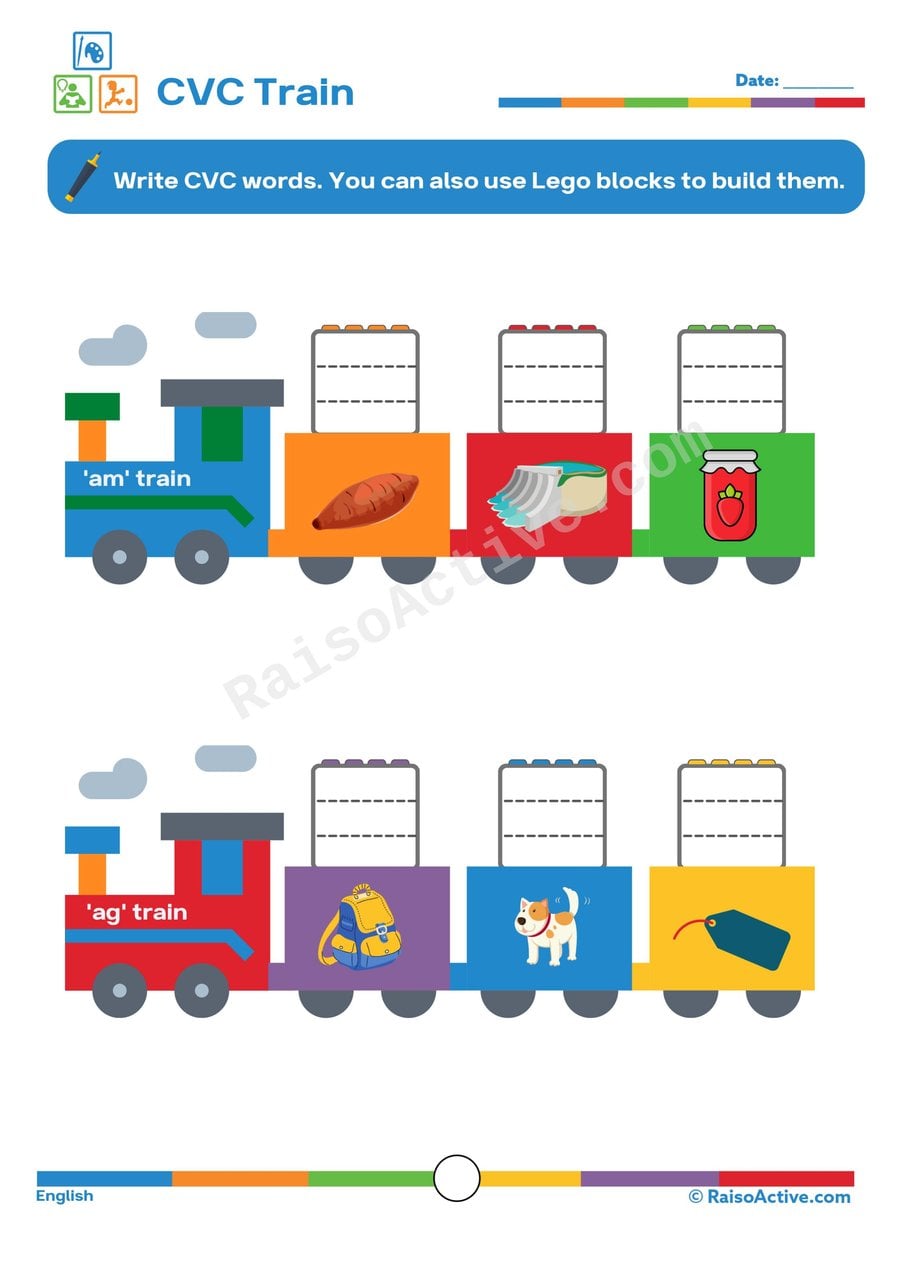
CVC Train Worksheet: Write and Build CVC Words!
Ages 4-6 · Pre-K–KindergartenAges 4-6 · Reception–Year 1Ages 4-6 · LKG–UKGAges 4-6
This worksheet gives children ages 4-6 focused practice blending letter sounds into consonant-vowel-consonant words, using train-car pictures as clues for words like 'dog,' 'hen,' or 'cup.' Because children both write the word and can optionally build it with Lego blocks, this worksheet reinforces the same phonics skill through two different physical actions — handwriting and hands-on construction — which helps the spelling patterns stick.

Zen the Hen CVC Word Worksheet for Early Readers
Ages 3-5 · Preschool–Pre-KAges 3-5 · Nursery–ReceptionAges 3-5 · Nursery–LKGAges 3-5
This worksheet uses a short story about 'Zen the Hen' to give children ages 3-5 practice reading and completing CVC (consonant-vowel-consonant) words, one of the earliest and most important word patterns in learning to read. Filling in missing CVC words within a story context, rather than in isolation, helps children see how decoding skills apply to real reading, building both phonics and comprehension together.

Cut and Paste the Word: Fun Reading Worksheet for Kids!
Ages 4-5 · Pre-KAges 4-5 · ReceptionAges 4-5 · LKGAges 4-5
This cut-and-paste decoding activity has children ages 4-5 sound out simple CVC (consonant-vowel-consonant) words like 'cat' or 'sun' and match the missing picture to complete each word, directly practicing the phonics blending skills that underpin early reading fluency. Because the word is partly built from letters already on the page, children must connect individual letter sounds to a whole word rather than just recognizing a picture in isolation. This bridges the gap between knowing individual letter sounds and reading complete three-letter words independently.
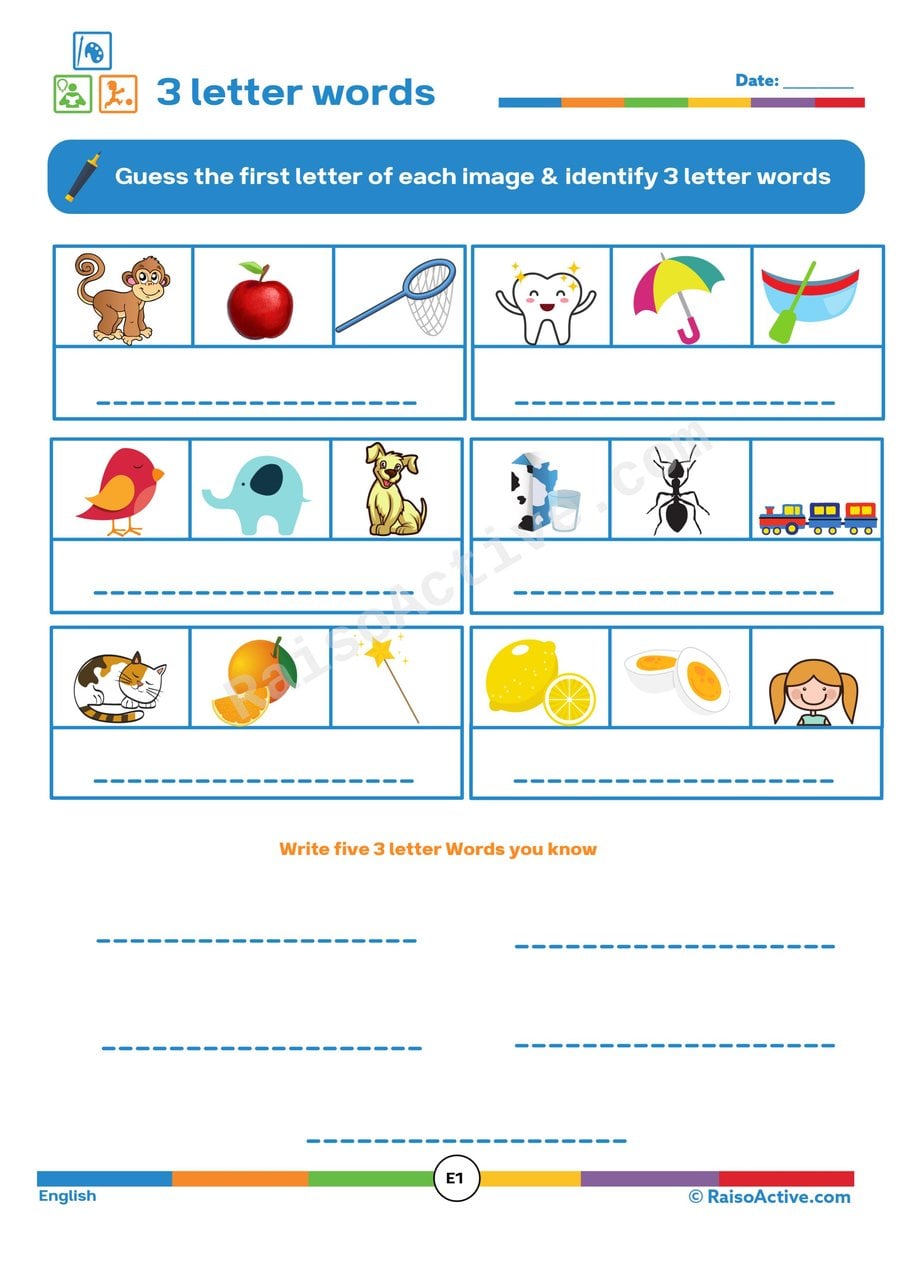
3-Letter Word Fun: Identify and Write! (Ages 3-5)
Ages 3-5 · Preschool–Pre-KAges 3-5 · Nursery–ReceptionAges 3-5 · Nursery–LKGAges 3-5
This worksheet asks children ages 3-5 to identify the beginning sound of a picture and use it to write a complete 3-letter word, moving them from single-letter sounds toward blending sounds into whole words — a key early step in phonics. The final task of writing five known 3-letter words independently also checks how much of this blending skill has transferred beyond the guided examples.
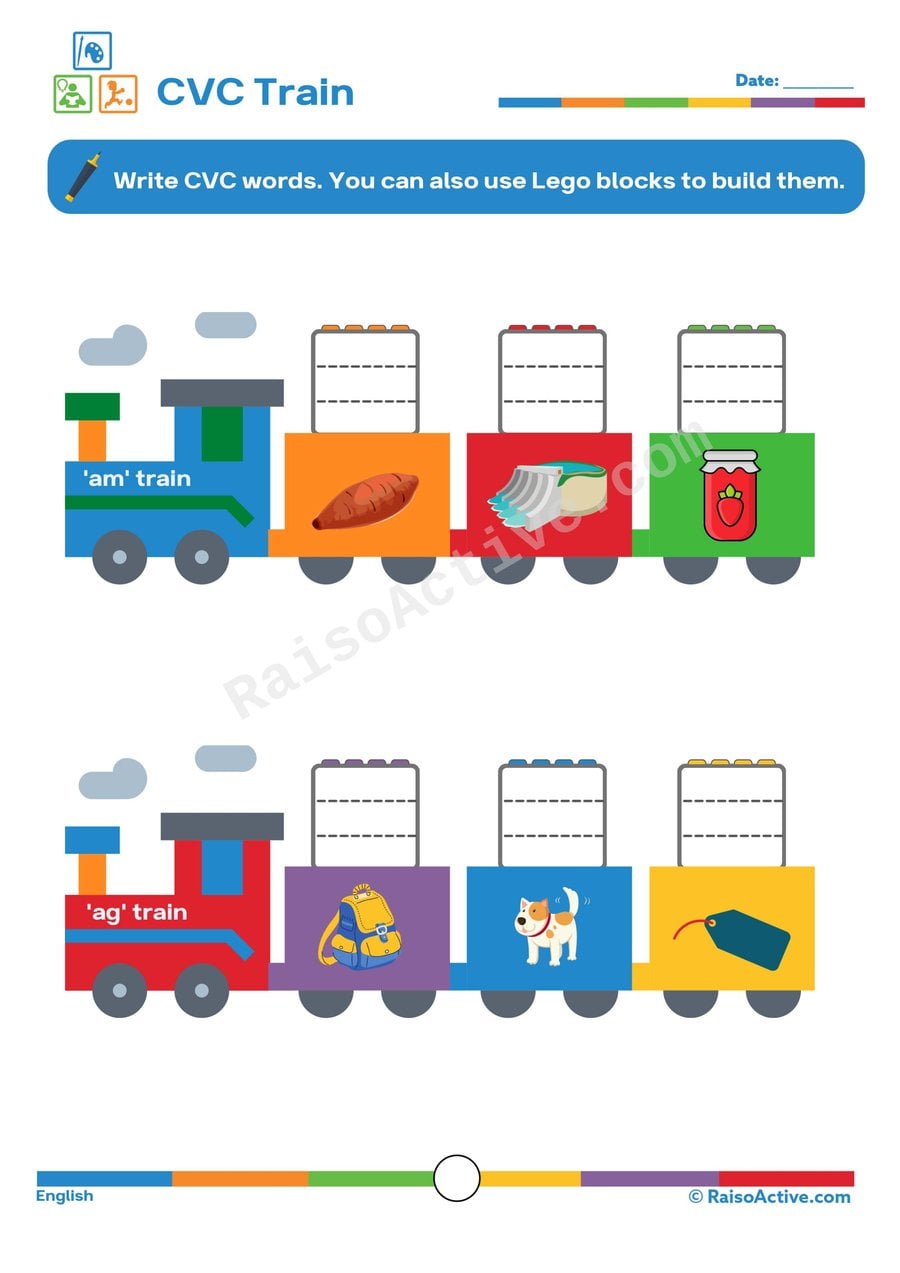
CVC Train Worksheet: Write CVC Words!
Ages 4-6 · Pre-K–KindergartenAges 4-6 · Reception–Year 1Ages 4-6 · LKG–UKGAges 4-6
Writing consonant-vowel-consonant words like 'cat,' 'sun,' or 'pig' under matching pictures gives children ages 4-6 direct practice with letter-sound blending, a core phonics skill that underpins independent reading. Because each train car pairs a picture clue with a blank space, children also practice translating a spoken word they can sound out into its correctly spelled written form.

Easter Egg Match: Add and Find the Matching Designs!
Ages 3-5 · Preschool–Pre-KAges 3-5 · Nursery–ReceptionAges 3-5 · Nursery–LKGAges 3-5
This worksheet blends early addition with visual matching as children ages 3-5 combine two separate shape groups and then search for the Easter egg design that shows the same total. Because the 'answer' is a picture rather than a written number, children practice quantity comparison and pattern-matching without needing to know written numerals yet.
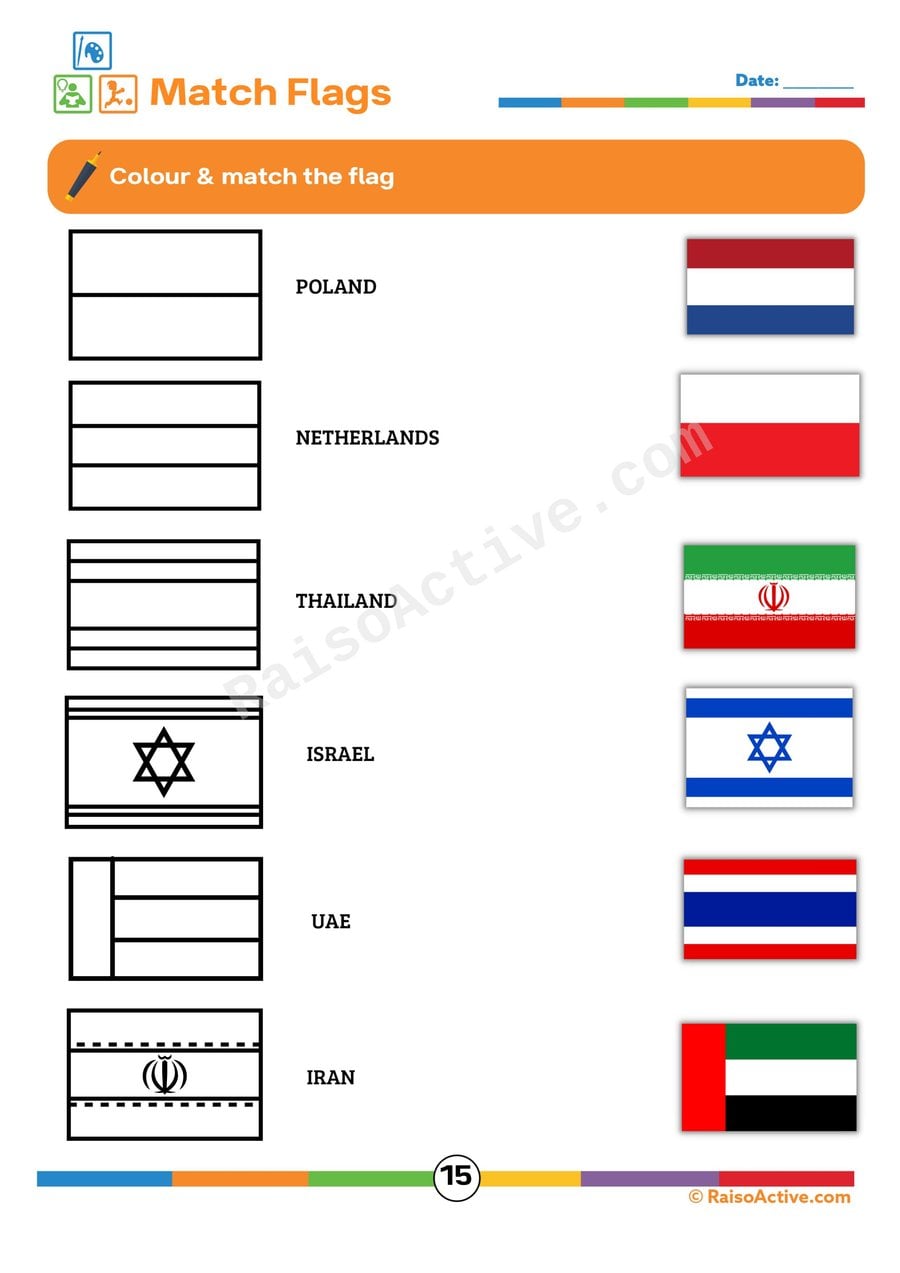
Match the Flags Worksheet: Color and Learn!
Ages 3-5 · Preschool–Pre-KAges 3-5 · Nursery–ReceptionAges 3-5 · Nursery–LKGAges 3-5
This worksheet asks children ages 3-5 to color a set of country flags and then match each one to its printed name, combining fine motor coloring practice with early visual-word association. Matching a colored flag to text also builds pre-reading skills, since children learn to recognize whole words as symbols tied to a picture even before they can sound them out.
Guides for this topic

How to Teach CVC Blending: A Step-by-Step Method That Works in Two Weeks
A step-by-step method for teaching CVC blending, covering continuous sounds, word families, common errors, and a 14-day plan that most children finish reading CVC words.

Best Worksheets for 3-Year-Olds: What Works and What to Avoid
What works on worksheets for 3-year-olds: short sessions, crayons, tracing lines, matching, cutting, a free weekly plan, and signs one is too advanced.
Phase 2 Phonics at Home: Sound Order, Blending Games, Worksheets
Phase 2 phonics at home: the five sound sets in order, oral blending, tricky words, a two-week routine, common mistakes, and free worksheets.
Reviews
Every worksheet for ages 4–6, no watermark
Members download the full library of 1,000+ worksheets and every activity pack without watermarks or daily limits. One year costs ₹999 in India or $20 elsewhere.
See membership plansOr download any worksheet free with a watermark (5 a day).