
Find the Words: A Fun Word Search Worksheet for Early Readers!
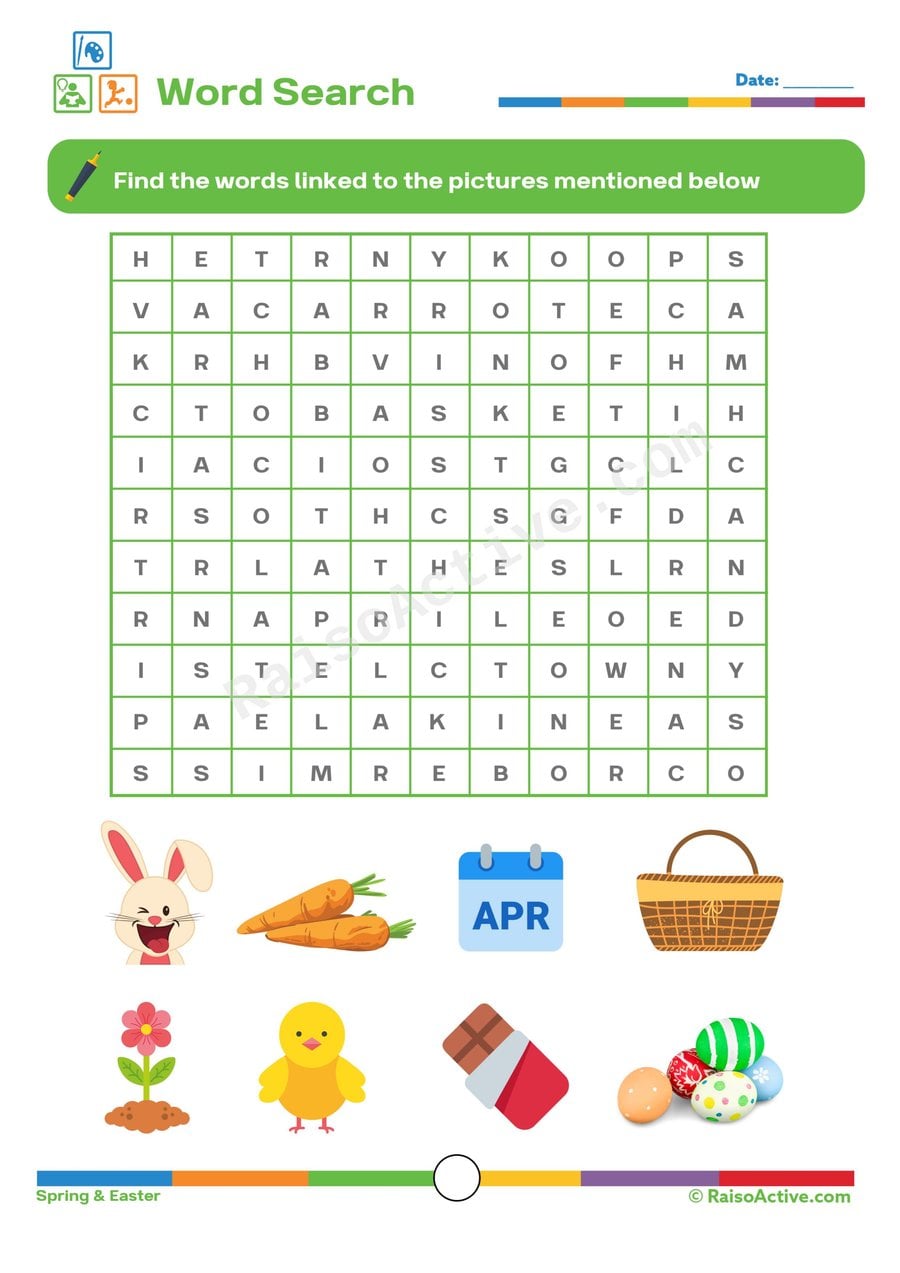
This worksheet builds sight recognition and visual scanning for children ages 4-6 by having them locate hidden words within a letter grid and then connect those words to their matching pictures. Finding a specific word buried among random letters requires a child to hold the exact spelling in mind while scanning row by row, a skill closely related to the visual tracking needed for reading full sentences later on. Following the word search with a picture-matching step ensures the activity builds vocabulary comprehension, not just visual pattern recognition.
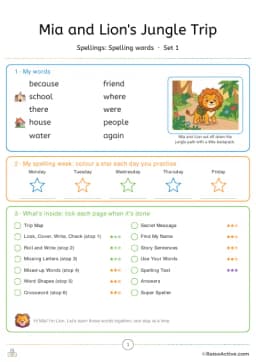
Made for your child
Spelling practice, made for your child
Their own spelling words turned into a pack: trace or look-cover-write-check, roll and write, a secret picture code, a word search, a crossword and a test, with their name in it.
Make a spelling packFree preview · free for members
Or start free: a word search with sight wordsCurriculum
How to use this worksheet
Read through the list of words together first, sounding out each one so your child knows exactly what to look for. Have your child scan the grid row by row, coloring or circling each word once they find it. After all the words are found, move to the matching section and have your child draw a line connecting each found word to the picture it represents. Review the completed page together, rereading each word and its matching picture out loud.
Materials needed
- Pencil
- Crayons
Extension activities
- •Create your own simple word search using new words your child already knows how to read.
- •Write sentences together using the words found in the word search.
- •Time a repeat attempt at the same word search a few days later to see improved speed.
- •Play a quick recall game, covering the words and asking your child to name as many as they remember.
- •Draw pictures for any word not already illustrated on the page.
Tips for parents and teachers
Encourage your child to sound out the letters in each word before beginning the search, since knowing the exact spelling makes scanning the grid far more effective. Celebrate their successes and provide gentle guidance when needed, especially if the grid feels overwhelming at first glance. Keep the pace relaxed, since a word search rewards patient, careful searching over speed.

Written by
Hemsweta Jain · Teacher Cheena
MBA and Early Childhood Educator, teaching since 2014 · Founder of RaisoActive, Mumbai
Every RaisoActive worksheet is designed and checked by the founder before publishing.
Published · Last reviewed
Related worksheets
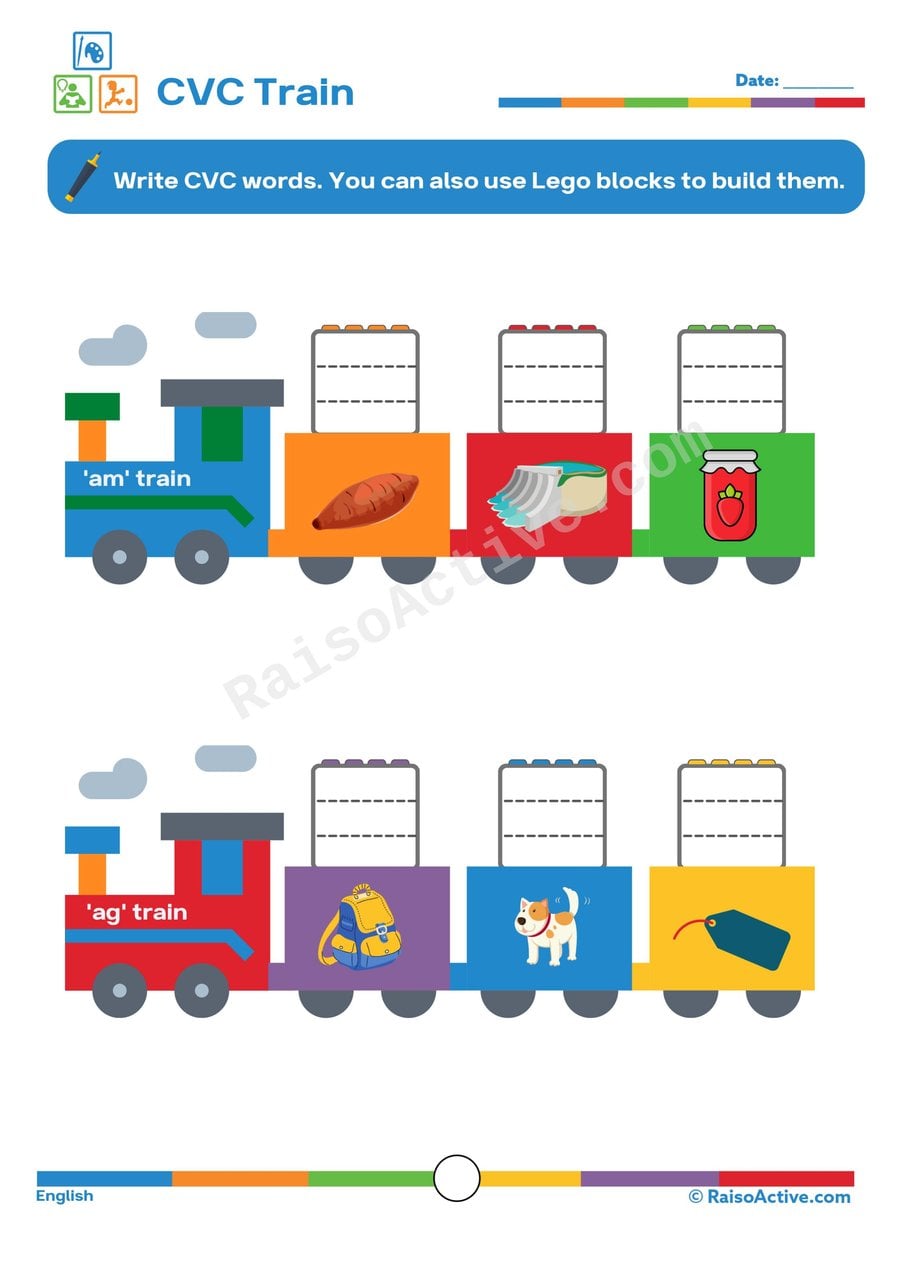
CVC Train Worksheet: Write and Build CVC Words!
This worksheet gives children ages 4-6 focused practice blending letter sounds into consonant-vowel-consonant words, using train-car pictures as clues for words like 'dog,' 'hen,' or 'cup.' Because children both write the word and can optionally build it with Lego blocks, this worksheet reinforces the same phonics skill through two different physical actions — handwriting and hands-on construction — which helps the spelling patterns stick.
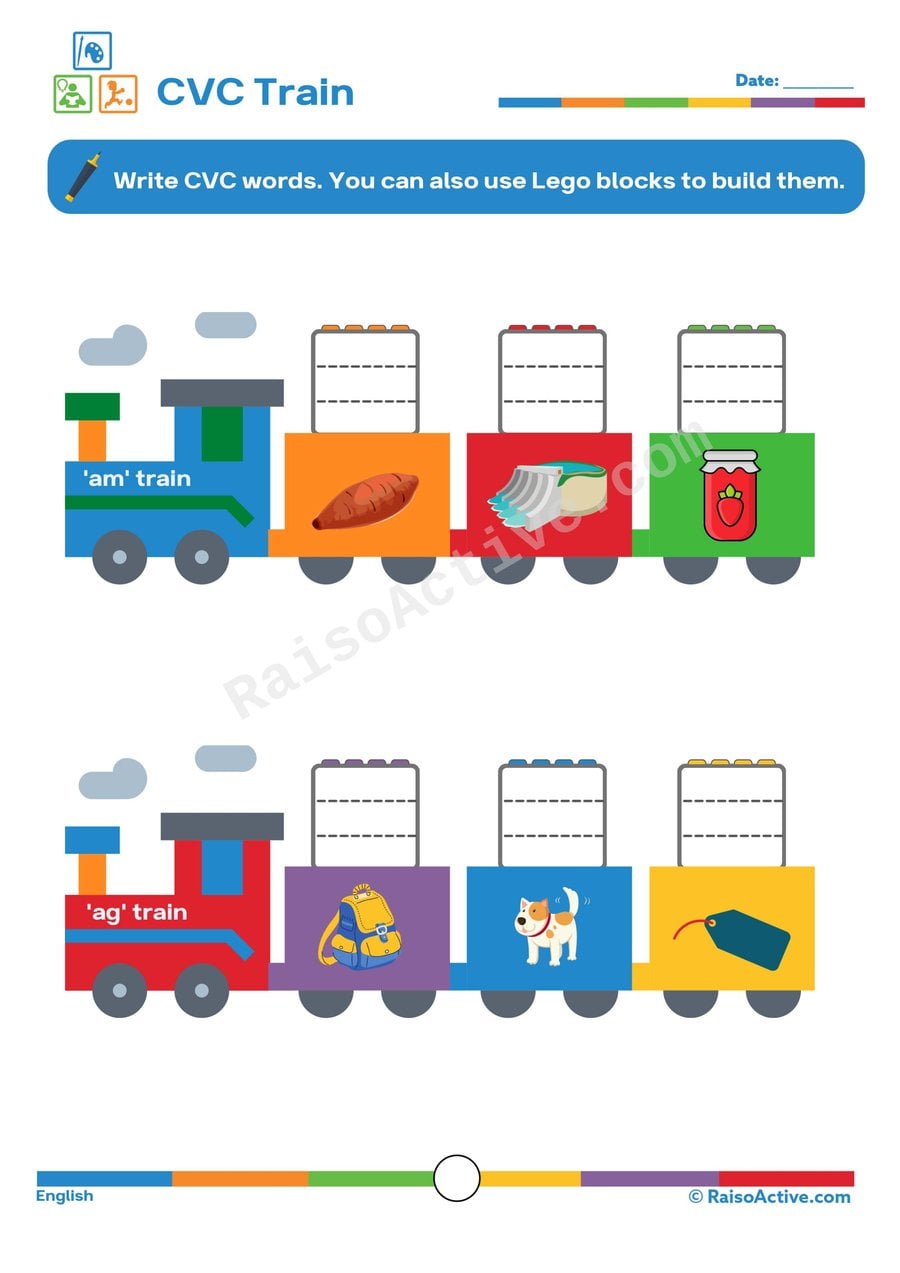
CVC Train Worksheet: Write CVC Words!
Writing consonant-vowel-consonant words like 'cat,' 'sun,' or 'pig' under matching pictures gives children ages 4-6 direct practice with letter-sound blending, a core phonics skill that underpins independent reading. Because each train car pairs a picture clue with a blank space, children also practice translating a spoken word they can sound out into its correctly spelled written form.

Indian Cities Crossword Puzzle Worksheet for Kids
This crossword challenges children ages 4-6 to identify famous Indian cities from picture clues of their landmarks and then spell out each city's name in the puzzle grid, combining observation skills with early geography knowledge. Counting the crossword boxes to match each city's letter count also reinforces attention to word length before writing.
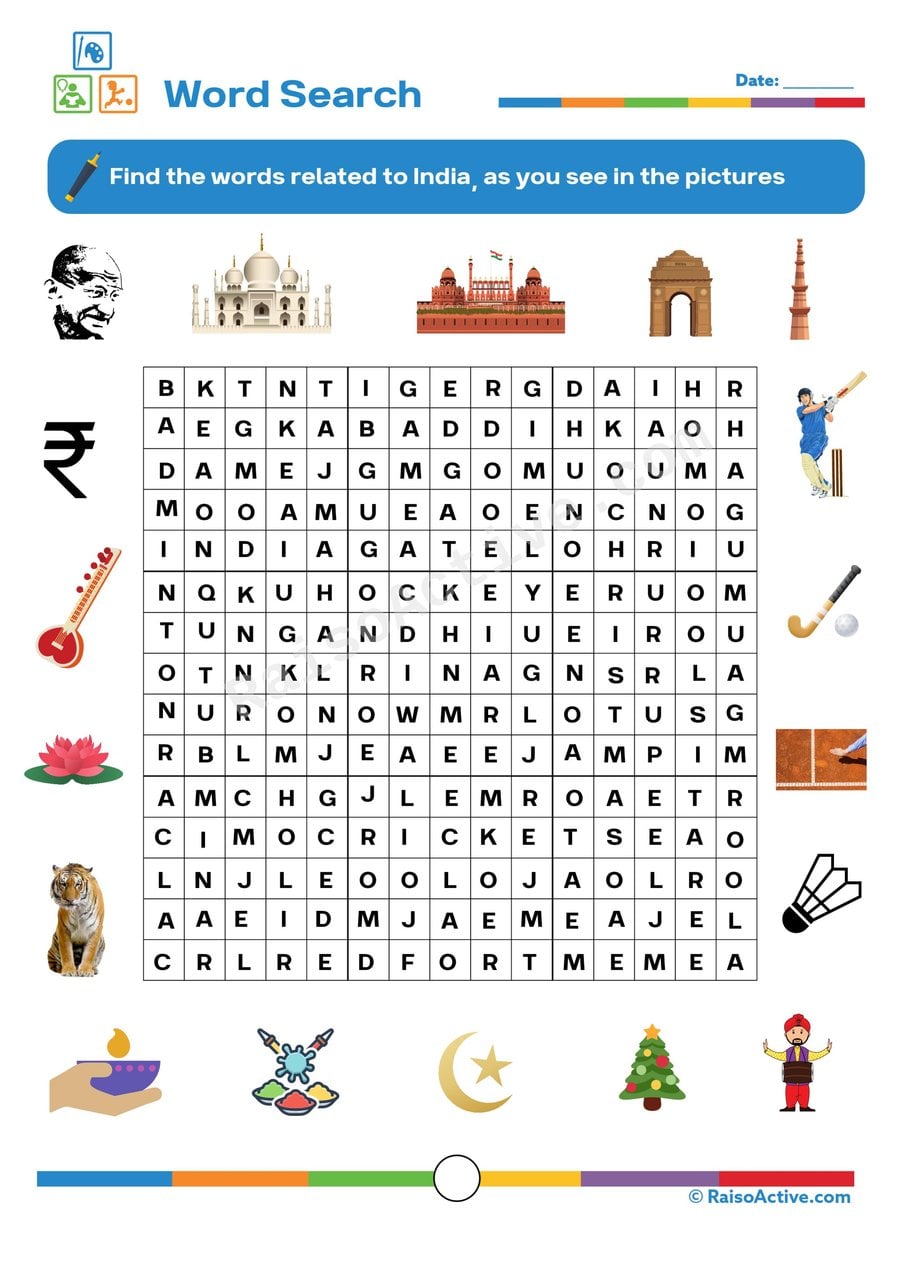
India Word Search Worksheet for Kids
Searching a letter grid for words connected to India, such as festival names, foods, or landmarks, builds visual scanning and word-recognition skills in children ages 4-7 while introducing vocabulary tied to Indian culture and geography. Because the target words vary in length and may run in different directions through the grid, children also practice sustained visual attention and letter-sequence tracking, both important pre-reading skills. This worksheet pairs literacy practice with cultural and social studies exposure in a single activity.

Christmas Fill-in-the-Blanks Worksheet for Preschoolers
Filling in missing letters of Christmas words like 'S_ _W' or 'TR_ _' helps children ages 3-5 connect letter sounds to their written form, an essential early step toward independent spelling. Using the accompanying picture as a clue also teaches them to cross-check visual and phonetic information — a strategy they'll rely on throughout early reading.
Spring Word Search Worksheet for Preschoolers
This Spring Word Search sharpens visual scanning and letter-tracking skills for children ages 3-5 as they hunt for season words hidden inside a grid of letters. Searching row by row and diagonally builds the same left-to-right tracking habit needed for reading, while recognizing whole words like 'FLOWER' or 'RAIN' strengthens early sight-word memory and spring vocabulary.

Spring Vocabulary Unscramble Worksheet for Preschoolers
This unscrambling worksheet has children ages 4-5 rearrange jumbled letters into correctly spelled spring vocabulary words, strengthening letter-sound awareness and reinforcing the idea that letters have a fixed, meaningful order. Working from a picture clue to a written word also builds the bridge between spoken vocabulary and early spelling.

Easter Egg Color by Hints Worksheet for Preschoolers
This worksheet has children ages 3-5 listen to or read simple written hints describing shapes and colors, then apply that information correctly while coloring each Easter egg, building early reading comprehension and the ability to follow multi-step verbal instructions. Because the hints must be followed precisely rather than colored freely, children also practice patience and careful attention to detail.
Guides for this topic
Sight Words by Age: The First 50 Words and How to Teach Them Without Flashcard Fatigue
Which sight words to teach first and why, the heart-word method, a read-trace-write-find routine, games, and a by-age table of typical sight-word progress.
How to Teach CVC Blending: A Step-by-Step Method That Works in Two Weeks
A step-by-step method for teaching CVC blending, covering continuous sounds, word families, common errors, and a 14-day plan that most children finish reading CVC words.
Phase 2 Phonics at Home: Sound Order, Blending Games, Worksheets
Phase 2 phonics at home: the five sound sets in order, oral blending, tricky words, a two-week routine, common mistakes, and free worksheets.
Reviews
Every worksheet for ages 4–6, no watermark
Members download the full library of 1,000+ worksheets and every activity pack without watermarks or daily limits. One year costs ₹1,000 in India or $20 elsewhere.
See membership plansOr download any worksheet free with a watermark (5 a day).