CVC 'op' Word Family Read, Cut and Reveal Worksheet
Children read five 'op' words (shop, hop, mop, pop, top) by blending three sounds, check each one against a hidden picture (a shop, a hopping child, a mop, a popping balloon and a spinning top) and write it, so they see that changing the first sound makes a new word.
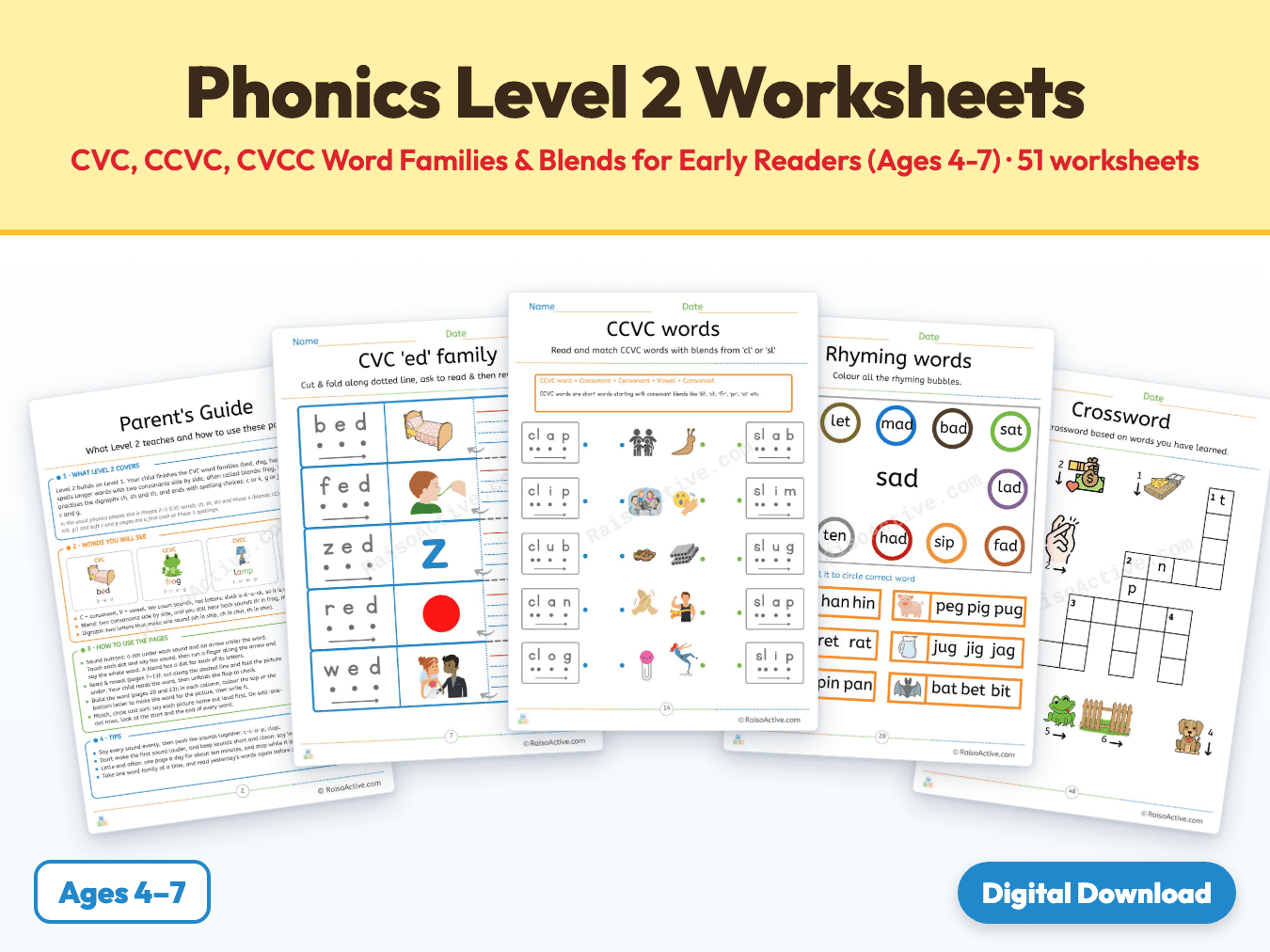
Part of the pack
Phonics Level 2 Worksheets: CVC, CCVC, CVCC Word Families & Blends for Early Readers (Ages 4-7)
This is page 9 of the pack. Ages 4-7 · Pre-K–Grade 1Ages 4-7 · Reception–Year 2Ages 4-7 · LKG–Class 1Ages 4-7
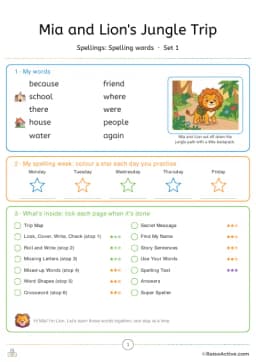
Made for your child
Spelling practice, made for your child
Their own spelling words turned into a pack: trace or look-cover-write-check, roll and write, a secret picture code, a word search, a crossword and a test, with their name in it.
Make a spelling packFree preview · free for members
Or start free: a word search with sight wordsCurriculum
- Phonics - CVC Words > OP Family
- Phonics - CVC Words > CVC Short O Families
How to use this worksheet
Cut along the dashed lines and fold each picture flap over. Your child reads the word using the sound buttons, lifts the flap to check the picture, then writes the word on the lines underneath.
Materials needed
- Scissors
- Pencil
Extension activities
- 1Think of a silly 'op' word that isn't real and say why
- 2Write the five 'op' words from memory

Written by
Hemsweta Jain · Teacher Cheena
MBA and Early Childhood Educator, teaching since 2014 · Founder of RaisoActive, Mumbai
Every RaisoActive worksheet is designed and checked by the founder before publishing.
Published · Last reviewed
More from Phonics Level 2 Worksheets: CVC, CCVC, CVCC Word Families & Blends for Early Readers (Ages 4-7)
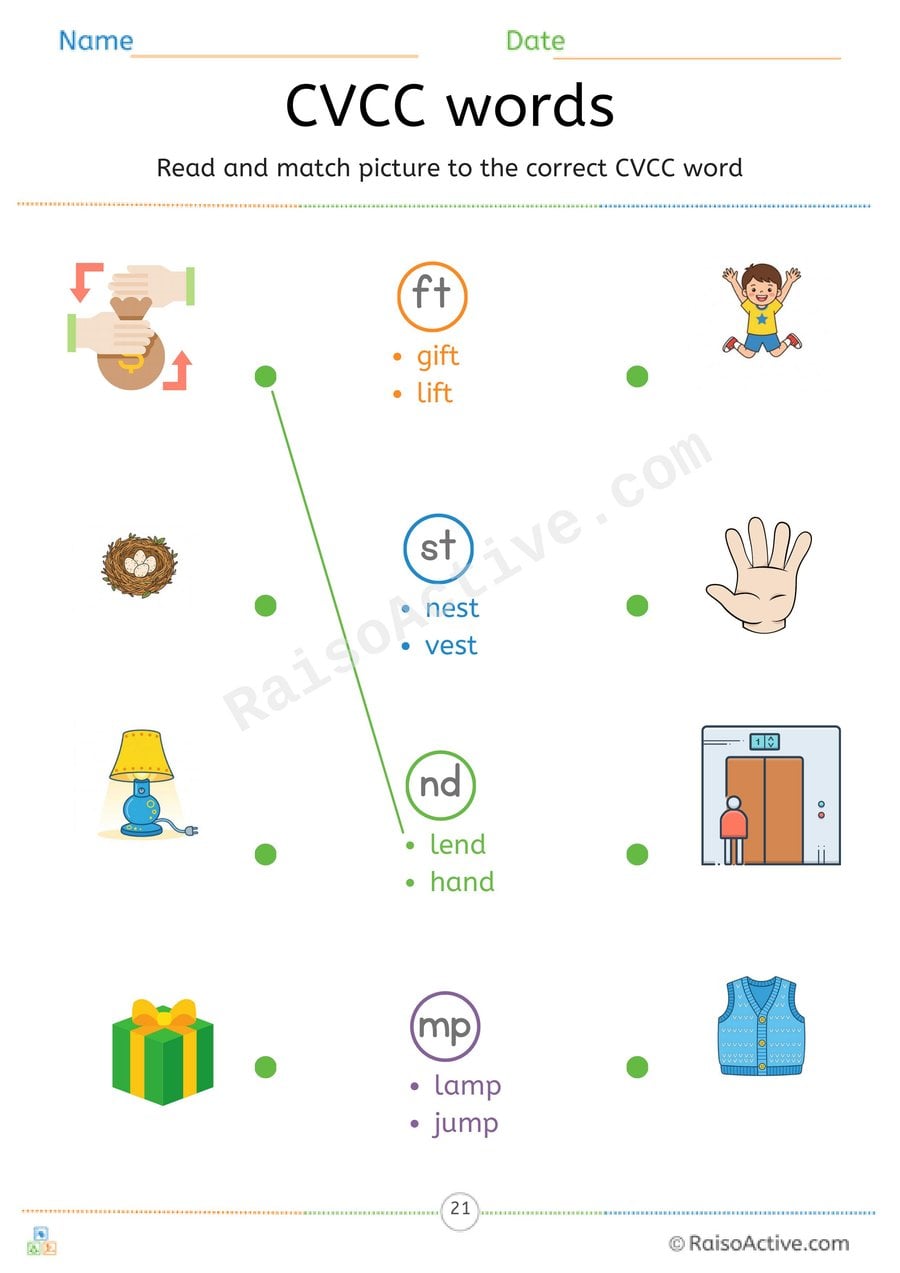
CVCC Ending Blends ft, st, nd and mp Read and Match Worksheet
Ages 4-7 · Pre-K–Grade 1Ages 4-7 · Reception–Year 2Ages 4-7 · LKG–Class 1Ages 4-7
Children read eight CVCC words grouped by their ending blend (gift, lift, nest, vest, lend, hand, lamp, jump) and match each word to its picture.

Match the Blend and Write the Word Worksheet: sk, st, dr, gr, sc, sw
Ages 4-7 · Pre-K–Grade 1Ages 4-7 · Reception–Year 2Ages 4-7 · LKG–Class 1Ages 4-7
Children join each blend to the word ending that fits the picture and write the whole word: skid, stem, drop, grip, scab and swim.
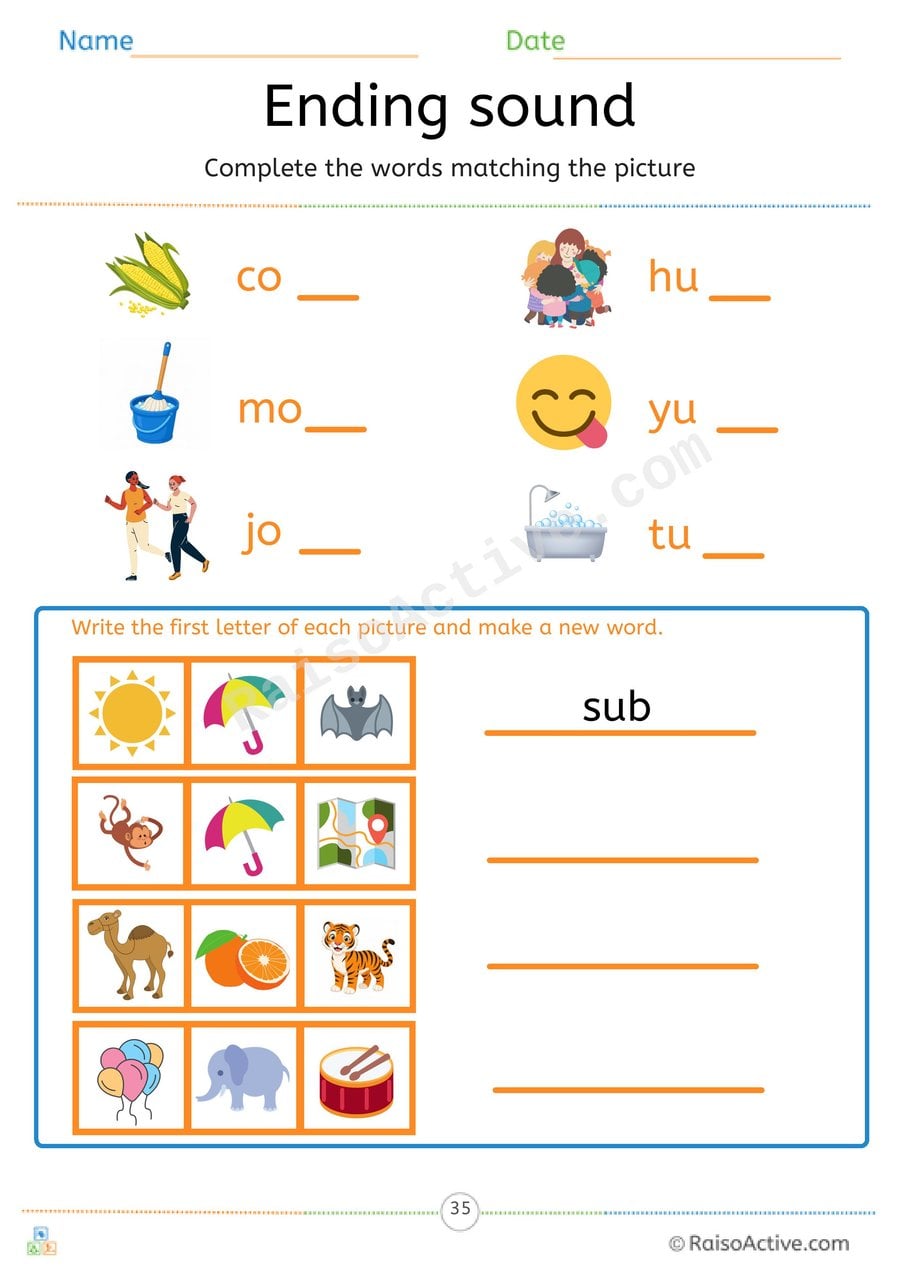
Ending Sounds and First Letter Word Making Worksheet
Ages 4-7 · Pre-K–Grade 1Ages 4-7 · Reception–Year 2Ages 4-7 · LKG–Class 1Ages 4-7
Children write the ending sound of cob, hug, mop, yum, jog and tub, then take the first letter of three pictures to make sub, mum, cot and bed.

Unscramble CVC Words and Missing First Letter Worksheet
Ages 4-7 · Pre-K–Grade 1Ages 4-7 · Reception–Year 2Ages 4-7 · LKG–Class 1Ages 4-7
Children unscramble the letters to write cat, pan and map, then write the missing first letter of gate, cow, bus, ant, hat, bed, car and sun.

Phonics Level 2 Sound Mat 4: Consonant Blends and ck
Ages 4-7 · Pre-K–Grade 1Ages 4-7 · Reception–Year 2Ages 4-7 · LKG–Class 1Ages 4-7
Children see how two consonants keep both their sounds in a blend, at the start of words (bl, cl, fl, sl, br, cr, dr, tr, st, sw) and at the end (nd, nt, mp), and that ck makes one /k/ sound.
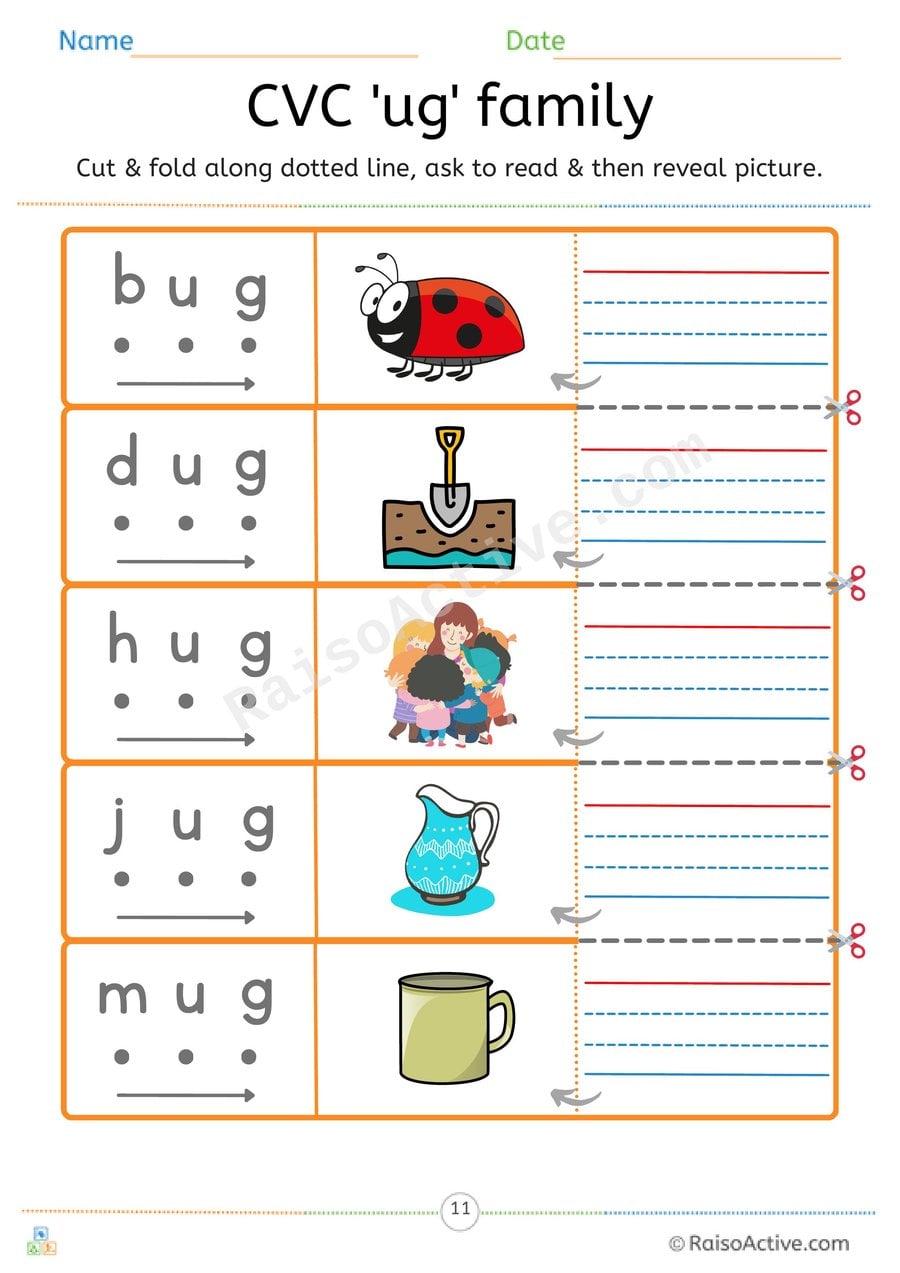
CVC 'ug' Word Family Read, Cut and Reveal Worksheet
Ages 4-7 · Pre-K–Grade 1Ages 4-7 · Reception–Year 2Ages 4-7 · LKG–Class 1Ages 4-7
Children read five 'ug' words (bug, dug, hug, jug, mug) by blending three sounds, check each one against a hidden picture (a ladybird, a spade in soil, a family hug, a jug and a mug) and write it, so they see that changing the first sound makes a new word.

CCVC Words Circle the Right Word and Missing Blend Worksheet
Ages 4-7 · Pre-K–Grade 1Ages 4-7 · Reception–Year 2Ages 4-7 · LKG–Class 1Ages 4-7
Children circle the word for each picture (prep, twig, skip, snap, swim, prop), then write the missing blend to spell spot, spin, crab, drip, drag, flat, plan and step.
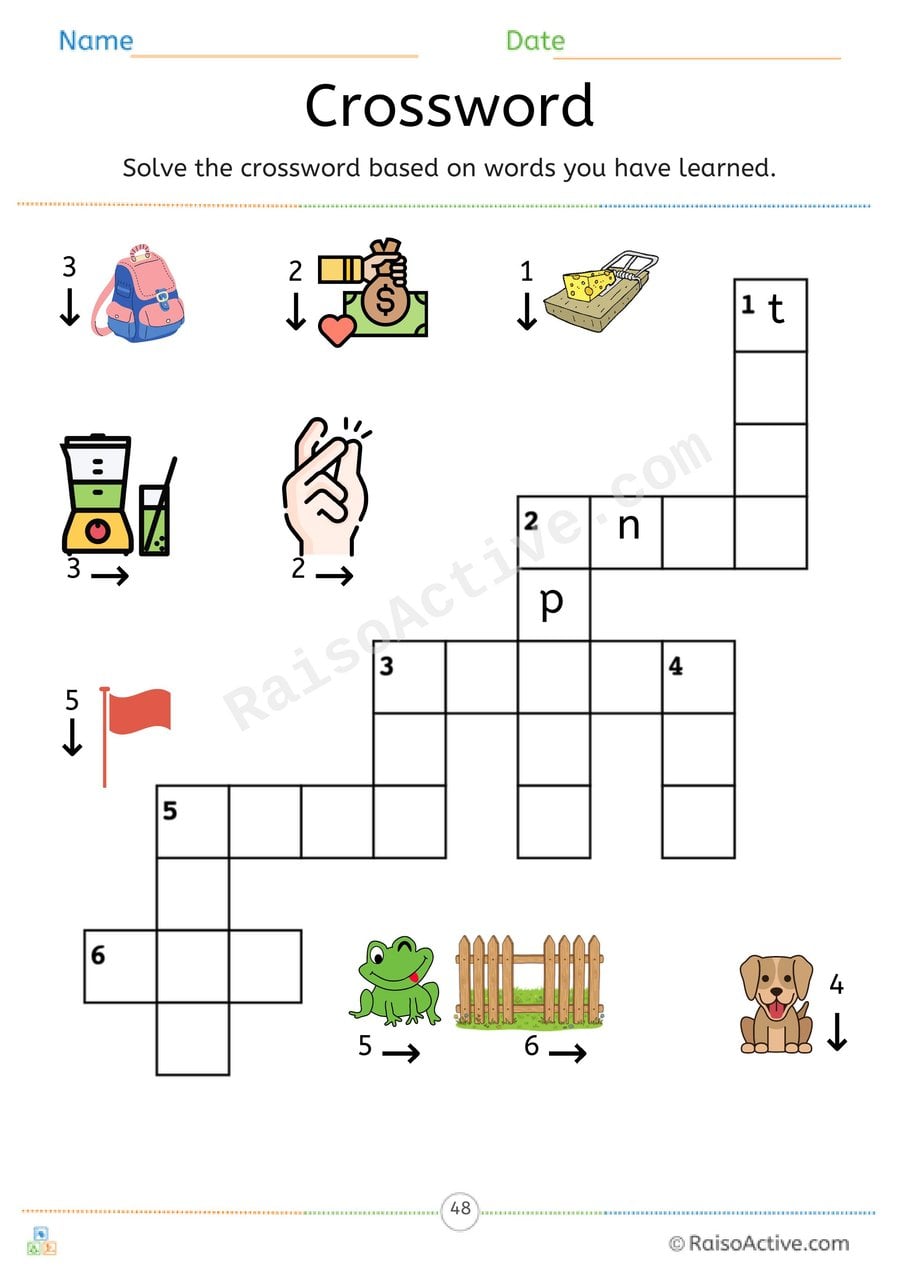
Phonics Level 2 Blends Crossword Puzzle 1
Ages 4-7 · Pre-K–Grade 1Ages 4-7 · Reception–Year 2Ages 4-7 · LKG–Class 1Ages 4-7
Children spell words from the level using picture clues: across snap, blend, frog and gap; down trap, spend, bag, dog and flag.
Related worksheets

Parent's Guide: Fun Activities for Early Readers and Number Learners!
Ages 3-5 · Preschool–Pre-KAges 3-5 · Nursery–ReceptionAges 3-5 · Nursery–LKGAges 3-5
This parent guide brings together a set of activity ideas that build two foundational skills at once for children ages 3-5: early reading, through short sentences and sight words, and early number sense, through counting, adding, and subtracting within a comfortable range. Rather than a single worksheet task, it gives caregivers a roadmap of small, achievable practice moments that fit naturally into daily routines. Following a guide like this helps parents pace learning appropriately instead of jumping into material that's too advanced too soon.
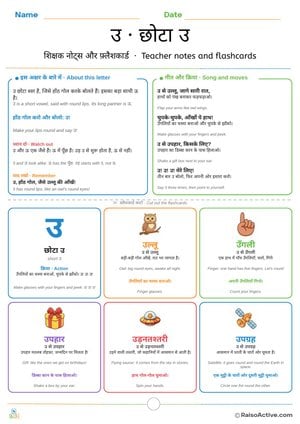
Hindi Letter उ (u) Teacher Notes and Flashcards | उ · छोटा उ
Ages 3-7 · Preschool–Grade 1Ages 3-7 · Nursery–Year 2Ages 3-7 · Nursery–Class 1Ages 3-7
Children meet the short vowel उ with a short note for adults, a song with actions and cut-out flashcards for उल्लू (owl), उँगली (finger), उपहार (gift), उड़नतश्तरी (flying saucer), उपग्रह (satellite). They hear the sound at the start of real words and link it to a hand action.

Apple Picking Fun: A Reading Comprehension Worksheet for Kids
Ages 4-6 · Pre-K–KindergartenAges 4-6 · Reception–Year 1Ages 4-6 · LKG–UKGAges 4-6
This worksheet builds early reading comprehension skills in children ages 4-6 by having them read a short story about apple picking and then answer simple questions that check their understanding of what happened. Answering questions after reading, rather than just decoding words, pushes children to hold the story's meaning in mind and recall specific details, a critical skill for all future reading. Coloring an apple afterward gives a relaxing, creative close to the comprehension task.

Letter Sounds Worksheet: Color the Letter That Begins the Word!
Ages 4-5 · Pre-KAges 4-5 · ReceptionAges 4-5 · LKGAges 4-5
This worksheet strengthens phonemic awareness in children ages 4-5 by asking them to isolate the very first sound of a picture's name and match it to its printed letter. Identifying beginning sounds is one of the strongest early predictors of reading success, since it teaches children that spoken words are made of individual sounds that map onto letters. The coloring component adds a motivating, low-pressure way to record each answer.

Near or Far Worksheet: Following Instructions for Preschoolers
Ages 3-5 · Preschool–Pre-KAges 3-5 · Nursery–ReceptionAges 3-5 · Nursery–LKGAges 3-5
Reading an instruction and circling the object that is either near or far teaches children ages 3-5 relative distance vocabulary, helping them understand that 'near' and 'far' describe a relationship between two things rather than a fixed property of a single object. Following a written or spoken instruction to complete each picture also builds listening comprehension and the ability to carry out a one-step direction independently. This combination of spatial concept and instruction-following prepares children for the kind of directions they'll regularly encounter in a classroom setting.

Fun Activities for Kids: Parent's Guide to Learning Through Play
Ages 3-5 · Preschool–Pre-KAges 3-5 · Nursery–ReceptionAges 3-5 · Nursery–LKGAges 3-5
This parent's guide gives caregivers of children ages 3-5 a set of play-based activities focused on phonics and sentence-building, translating early literacy concepts into hands-on games rather than seated worksheet time. Learning through play, such as storytelling or naming body parts during movement, helps young children absorb language concepts without the pressure of a formal lesson. Covering both phonics and sentence-building in one guide gives caregivers flexibility to match the activity to their child's mood and energy level.

Fall Crossword Puzzle Worksheet for Preschoolers
Ages 3-5 · Preschool–Pre-KAges 3-5 · Nursery–ReceptionAges 3-5 · Nursery–LKGAges 3-5
This fall-themed crossword uses pictures instead of written clues, helping children ages 3-5 connect an image directly to its written word while practicing early letter formation. Counting the boxes in each answer also builds an intuitive sense of word length before formal spelling instruction begins.
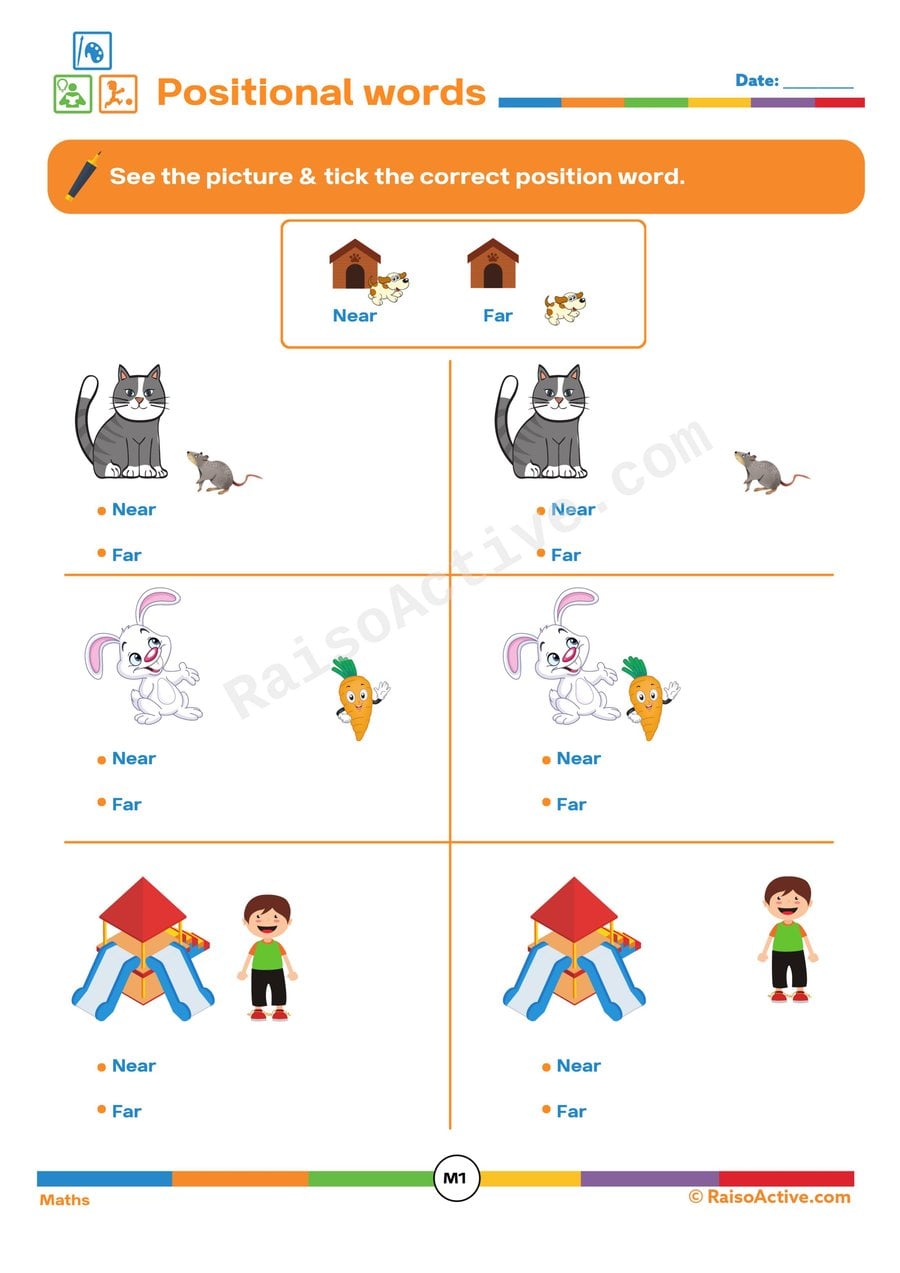
Positional Words Worksheet: Near and Far
Ages 3-5 · Preschool–Pre-KAges 3-5 · Nursery–ReceptionAges 3-5 · Nursery–LKGAges 3-5
This worksheet introduces children ages 3-5 to the positional concepts of 'near' and 'far,' asking them to look at a picture and tick the word that correctly describes an object's distance from a reference point. Positional vocabulary like this is an important building block for spatial reasoning and later geometry and direction-following skills. Because near and far are relative concepts rather than fixed labels, this practice also builds flexible thinking about how position depends on comparison.
Guides for this topic

How to Teach CVC Blending: A Step-by-Step Method That Works in Two Weeks
A step-by-step method for teaching CVC blending, covering continuous sounds, word families, common errors, and a 14-day plan that most children finish reading CVC words.
Phase 2 Phonics at Home: Sound Order, Blending Games, Worksheets
Phase 2 phonics at home: the five sound sets in order, oral blending, tricky words, a two-week routine, common mistakes, and free worksheets.

Reception Year Explained: EYFS Learning and How to Help at Home
A teacher's plain-English guide to the Reception Year: the seven areas of learning, Early Learning Goals, Phase 2/3 phonics, the RBA and home routines.
Reviews
Every worksheet for ages 4–7, no watermark
Members download the full library of 1,000+ worksheets and every activity pack without watermarks or daily limits. One year costs ₹999 in India or $20 elsewhere.
See membership plansOr download any worksheet free with a watermark (5 a day).