Free printable worksheets · United States
Kindergarten Handwriting Worksheets (Ages 5–6)
Kindergarten handwriting worksheets are practice sheets for children aged 5–6 in Kindergarten in the US. Handwriting is forming letters and numerals by hand with consistent size, spacing and shape, moving from single letters to legible sentences. The sheets on this page cover consistent letter formation, sizing and spacing letters on a line, joining letters for cursive and legible sentence writing.
Kindergarten is the year formal reading instruction begins under Common Core: a child is expected to know a sound for every consonant and the short vowels, decode simple three-letter words, write a basic sentence, count to 100 by ones and tens, and add and subtract within 10. Five-year-olds finish the lowercase alphabet and start writing on lines. Tall letters reach the top line, small letters sit between the middle lines, and tails drop below: that is the new idea, and worksheets should use two-line or four-line paper to teach it. Copying a short sentence with a capital and a period, spacing words with a finger, and writing a letter when it is named all belong here. Joined-up writing, where taught, starts after print is secure.
582+ worksheets · free PDF download · print on A4 or Letter
Kindergarten Handwriting Worksheets to print
Browse all worksheets for ages 5–6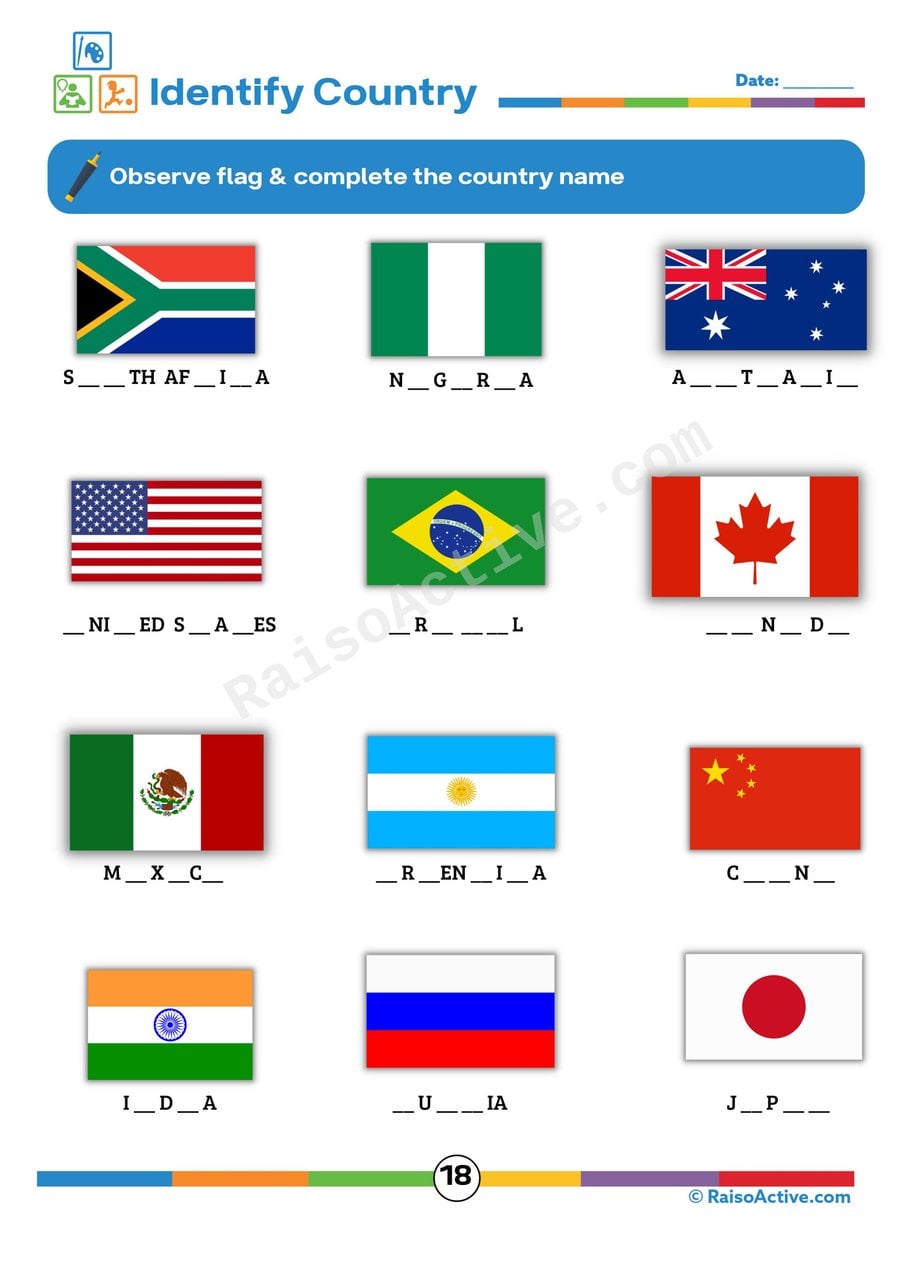
Identify the Country: Flag Matching Worksheet
Filling in the missing letters of each country's name while studying its flag gives children ages 4-7 practice with letter-sound correspondence and spelling patterns, since they must sound out the word and recall which letters are already provided as clues. It also builds early geography knowledge, helping children connect a visual symbol (the flag) to a country's name for the first time. This dual practice of decoding and world knowledge lays groundwork for both literacy and social studies skills.

Sun Safety Worksheet for Kids: Learn About Staying Safe in the Sun!
This worksheet has children ages 4-7 answer questions about sun safety, such as why sunscreen and hats matter, building early health literacy alongside writing practice as they put their understanding into their own words. Because the questions ask children to reason about why certain sun-safety habits matter rather than just label a picture, this worksheet develops early explanatory thinking, a step up from simple factual recall. Practicing writing full answers, even short ones, also builds sentence-forming skills appropriate for this age range.

Long Vowel U Sound Worksheet: Complete the Words & Paste Pictures!
This worksheet gives children ages 4-6 another pass at the long 'u' sound, this time completing words and then cutting and pasting a matching picture rather than drawing a connecting line. The physical cut-and-paste step adds an extra confirmation layer, since your child has to actively search through picture choices to find the one that truly matches their completed word, rather than simply glancing between a word and an already-placed picture. Repeating long 'u' practice in this new format helps solidify a sound that many children find more challenging than the other long vowels.
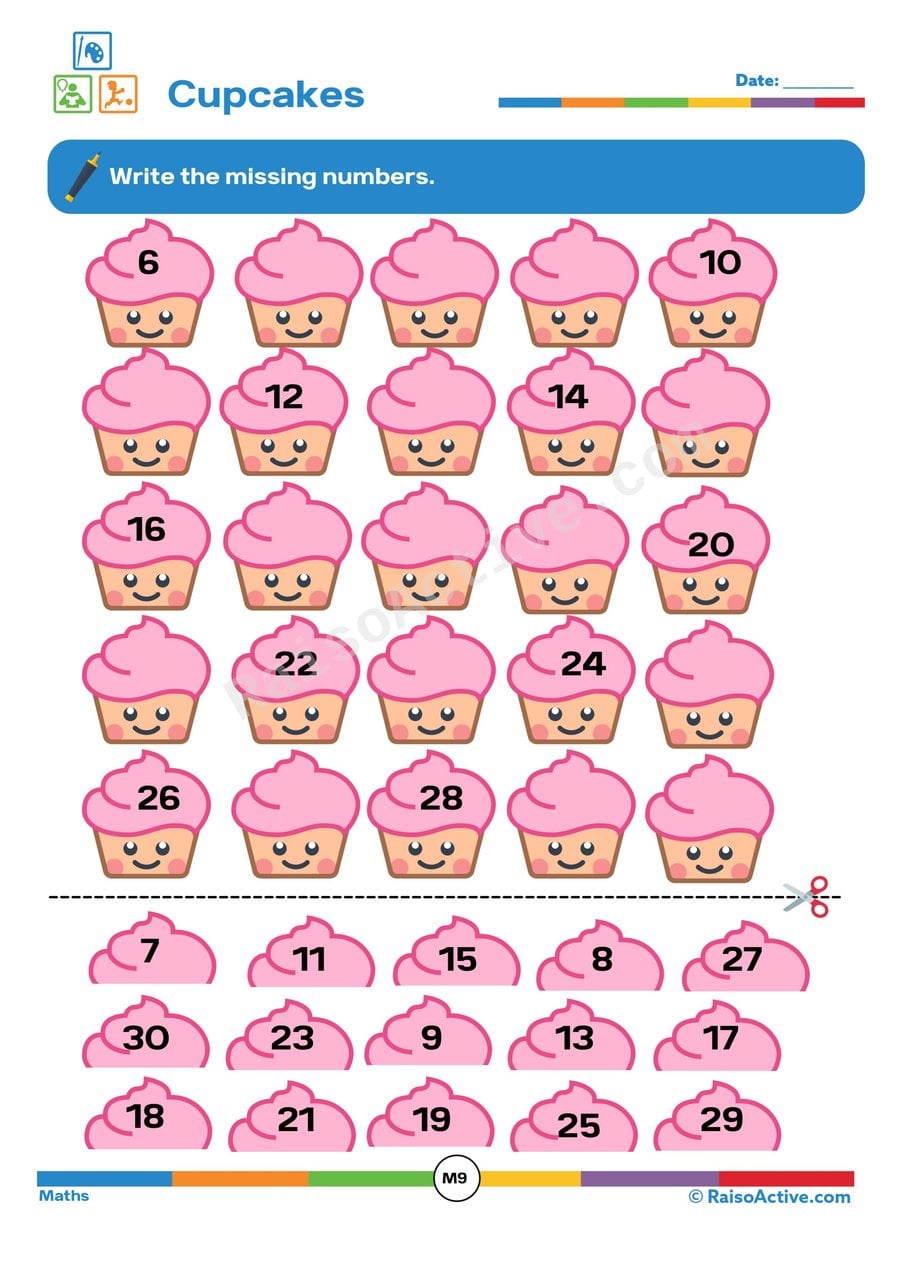
Cupcake Counting Worksheet: Missing Numbers!
This worksheet strengthens number sequencing for children ages 4-6 as they study a row of numbered cupcakes and figure out which numbers are missing from the sequence, then write them in. Identifying a gap in a number sequence requires understanding the pattern of counting well enough to predict what's missing, a step beyond simply counting forward.

Unlocking 'un' Words: A Fun Worksheet for Early Readers!
Ages 4-6 practice decoding and spelling CVC words in the 'un' family, such as 'sun' and 'bun', by matching each picture to its written word. This picture-to-word matching strengthens the bridge between spoken vocabulary and printed text, a core early literacy skill. Writing the word afterward locks in correct letter sequencing and spelling memory.
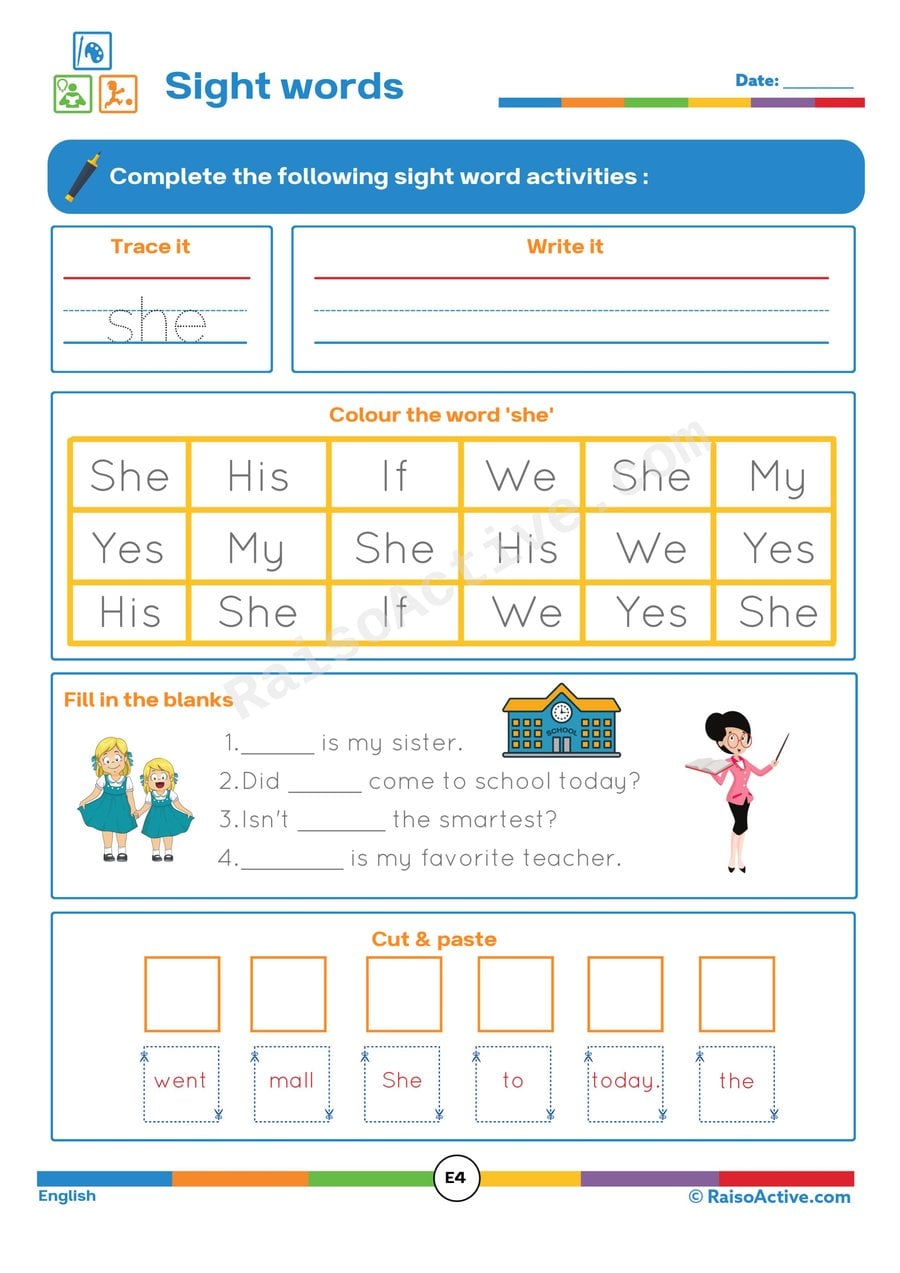
Sight Words Worksheet: Trace, Write, and Color 'She'!
Tracing, writing, coloring, and completing sentences with the sight word 'she' gives children ages 4-6 repeated exposure to this common word across multiple activity types, which builds the instant recognition needed for reading fluency. The cut-and-paste sentence completion at the end adds sentence-level context, helping children see the word used meaningfully rather than in isolation.

Alphabet U-Z Worksheet: Find the Letter and Count!
This worksheet extends alphabet mastery to the less-practiced letters U through Z for children ages 4-6, combining beginning-sound identification with a counting task for each object pictured. Because letters at the end of the alphabet appear less often in early reading material, dedicated practice here helps round out full alphabet fluency, while the counting component keeps numeracy skills active alongside literacy.
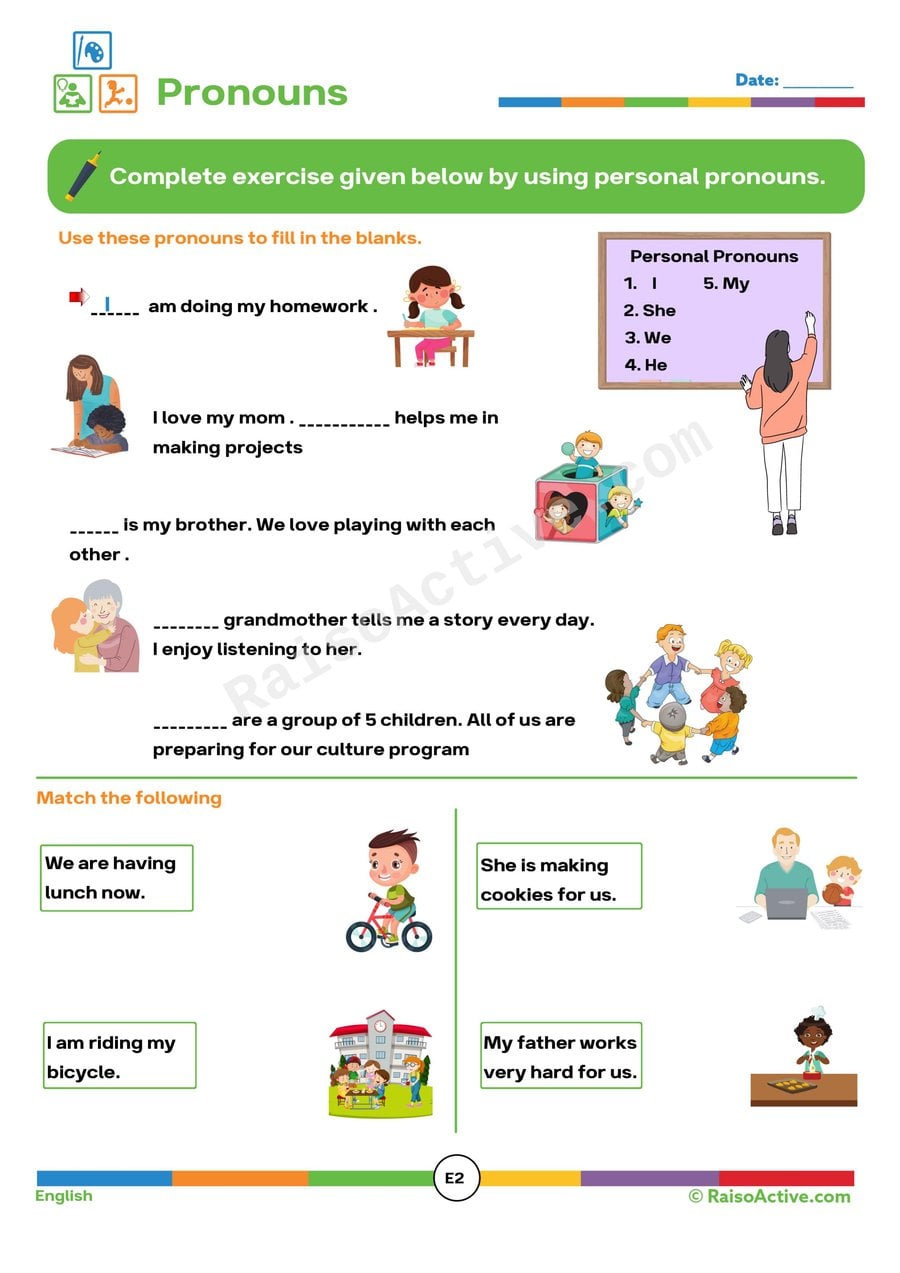
Pronouns Practice Worksheet for Preschoolers
Children ages 4-6 practice using personal pronouns like 'I', 'she', 'we', 'he', and 'my' correctly within simple sentences, an early grammar skill that helps their speech and writing sound clear and natural. Matching completed sentences to images afterward reinforces comprehension, ensuring children understand the meaning behind the pronoun they chose rather than guessing. This combination of fill-in-the-blank and picture matching builds both grammar accuracy and reading comprehension together.

My Favorite Animal: Lifecycle Writing Worksheet for Kids
This writing worksheet asks children ages 4-6 to describe their favorite animal's life cycle using sequencing words like 'first,' 'then,' 'next,' and 'last,' essential building blocks for narrative and informational writing. Choosing their own animal makes the task personally engaging while still requiring them to organize factual information in a logical order. This combination of choice and structure helps children practice both content knowledge and the mechanics of sequential writing.

Comma Practice Worksheet for Kids: Separating Items in a List!
Children ages 4-6 learn exactly where commas belong when writing a list of three or more items in a sentence, a specific punctuation rule that makes their early writing readable to others. Practicing this now, before they start composing longer sentences independently, builds a habit that carries straight into school writing tasks.

Blend Words Worksheet: Fill in the Blanks with Beginning Blends!
Similar to blend recognition but with an added layer of choice, this worksheet gives children ages 4-6 a bank of possible beginning blends to choose from as they complete each picture word, building both phonics recall and careful selection skills. Choosing the correct blend from several options requires your child to test each possibility mentally against the word they're trying to spell, which strengthens their ability to self-check and problem-solve rather than just guessing. This kind of active decision-making with phonics elements builds toward more independent spelling down the road.

Possessive Noun Worksheet for Kids: Practice with Apostrophes!
Children ages 4-6 practice forming possessive nouns by choosing the correct apostrophe-s form to complete a sentence, building an understanding that an apostrophe signals ownership ('the dog's bone' rather than 'the dogs bone'). This is an early but important punctuation skill that sets the foundation for more advanced grammar and writing clarity later on.
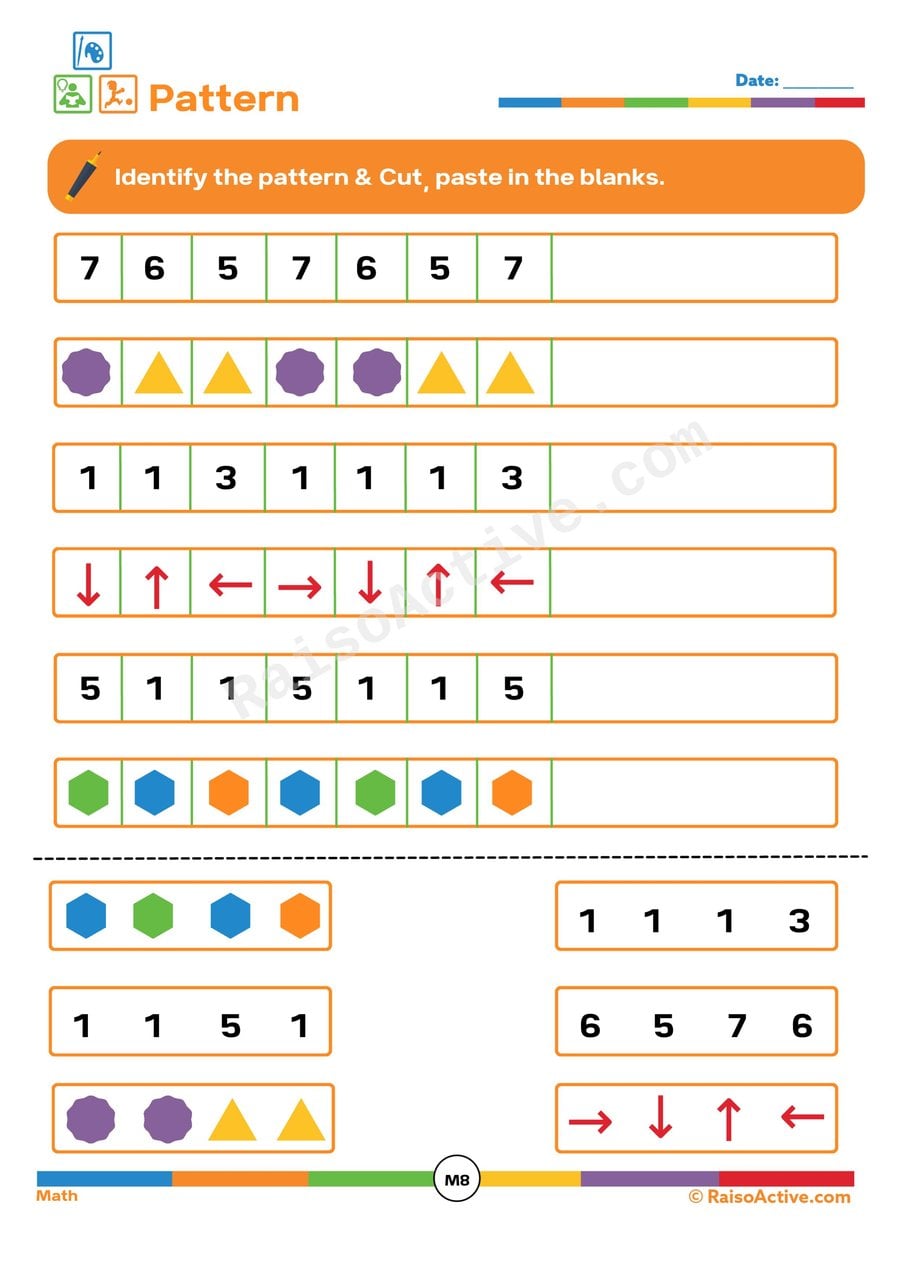
Pattern Fun: Identify and Complete the Sequences!
This worksheet mixes numbers, shapes, and symbols across different pattern types, pushing children to apply the same pattern-recognition logic flexibly rather than to just one familiar format. For ages four to six, practicing across varied pattern types builds a more transferable understanding of sequences, which will support both math and reading skills that rely on recognizing regular structures.

Punctuation Fun: Practice Using Punctuation Marks!
Choosing the correct punctuation mark to complete a sentence teaches children ages 4-6 that periods, question marks, and other marks change how a sentence should be read and understood, not just how it looks on paper. Matching sentences to their correct punctuation marks reinforces this by requiring children to recognize the tone or purpose of a sentence, whether it's a statement, a question, or an exclamation. This early grammar practice builds the foundation for reading with expression and writing complete, correctly punctuated sentences later on.

Articles Adventure: A, An, and The Worksheet for Preschoolers
Choosing between 'a,' 'an,' and 'the' teaches children ages 4-6 one of English grammar's trickier rules — that 'an' is used before words starting with a vowel sound while 'a' comes before consonant sounds — building an ear for language patterns that native speakers often absorb through repetition rather than explicit rules. Practicing these small but frequent words also smooths out overall sentence fluency, since articles appear constantly in everyday speech and writing.

Number Names Worksheet: Writing and Matching Numbers 41-50
Writing number names like 'forty-one' through 'fifty' next to their numerals helps children ages 4-6 connect the spoken word for a two-digit number to both its written word form and its digit form, deepening overall number sense in this specific range. This worksheet also revisits missing-number sequencing and color-coded boxes, reinforcing the same number range through several different, related tasks rather than one repetitive drill. Building fluency with number names in the 40s prepares children to confidently read numbers they encounter in daily life, from clocks to price tags.

Punctuation Practice Worksheet for Early Learners
Children ages 4-6 learn to distinguish between statements and questions by deciding whether each sentence needs a period or a question mark, an early step in understanding how punctuation changes meaning and tone. Recognizing the difference between a question and a statement also supports reading fluency, since readers naturally use rising or falling intonation depending on the punctuation at the end of a sentence.
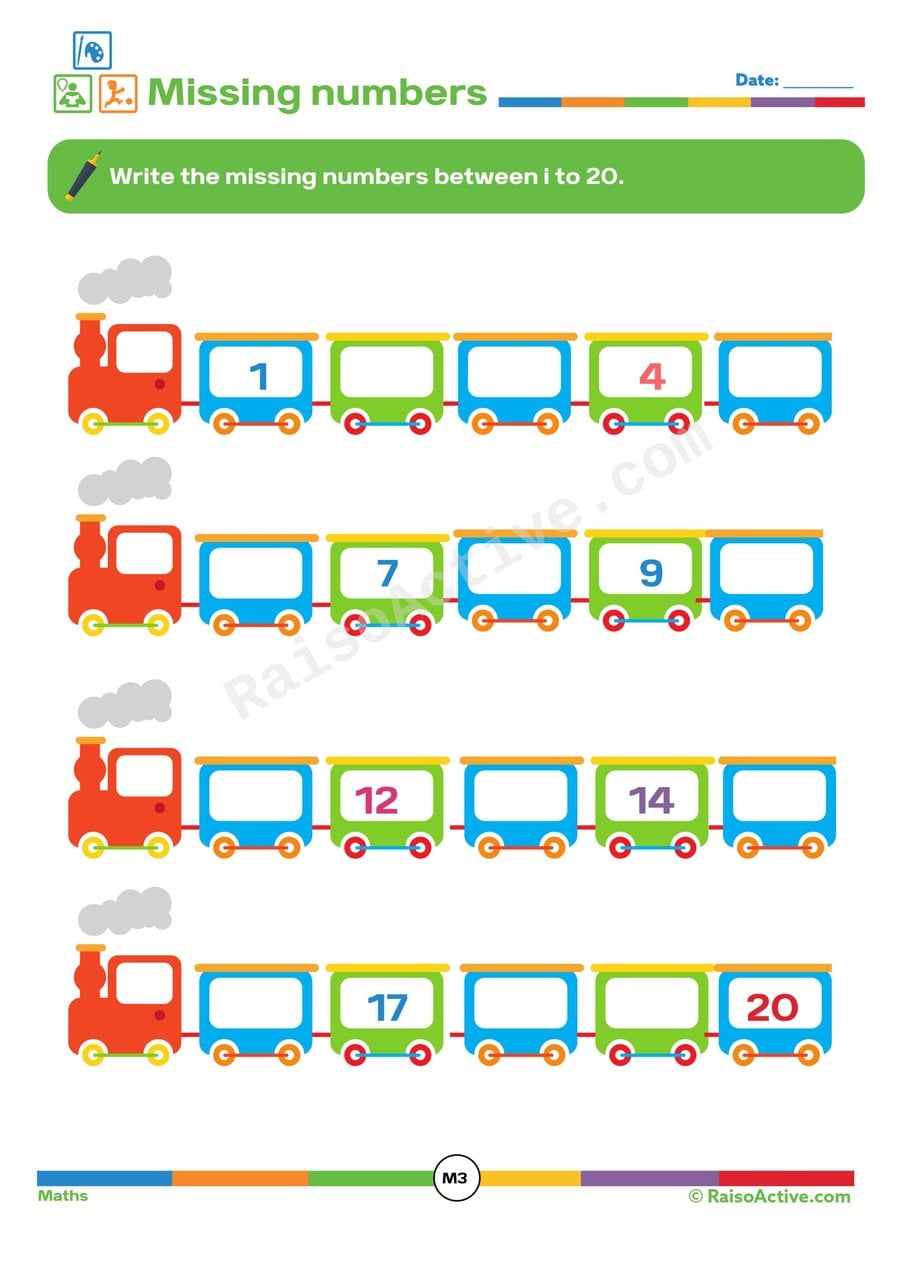
Missing Numbers Train Worksheet: Numbers 1-20
This worksheet helps children ages 4-6 practice number recognition and sequencing by filling in missing numbers on a train of cars that counts from 1 to 20, reinforcing that numbers follow a fixed, predictable order. Working with a range this large also builds the stamina and sustained counting skill needed before children move on to skip-counting and simple addition.

Identify the Countries! A Fun Flag Worksheet for Kids
This worksheet combines flag recognition with spelling practice as children ages 4-6 study each flag and use provided letters to complete the missing parts of its country's name. Working from a partially filled word bank also teaches children to use context and available clues to solve a problem, rather than needing to know the full spelling from memory.
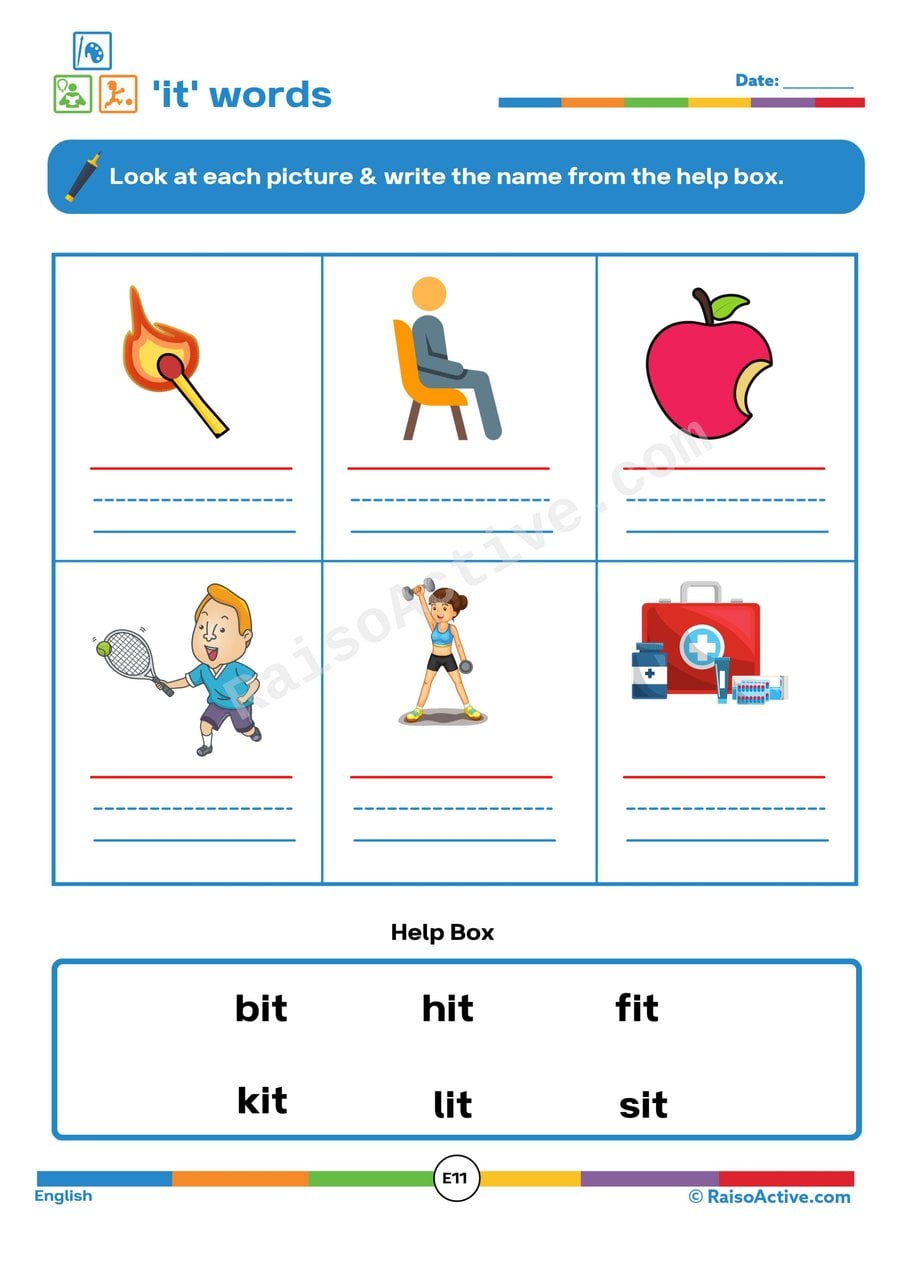
It Words Worksheet: Read and Write 'it' Words!
Children ages 4-6 build phonics fluency by reading and writing CVC words from the 'it' family, such as 'sit', 'bit', and 'fit'. Recognizing this word family pattern teaches children that groups of letters carry predictable, reusable sounds, which speeds up decoding of new words they encounter later. Writing each word after identifying it also reinforces correct spelling and letter sequencing.

Capitalization Worksheet: Practice Writing Sentences Correctly!
This worksheet teaches children ages 4-6 the rule that sentences begin with a capital letter, along with an introduction to capitalizing proper nouns like names and places. Rewriting sentences correctly, rather than just circling errors, gives children active practice applying the capitalization rule themselves, which builds the habit more effectively than passive correction exercises.

Long Vowel 'i-igh' Worksheet: Circle and Write the Words!
The 'igh' spelling pattern (as in 'light' and 'night') is a less intuitive way to represent the long 'i' sound compared to the silent-e pattern, so this worksheet gives children ages 4-6 dedicated practice recognizing and writing words that use this specific, slightly trickier spelling. Identifying pictures with the 'igh' sound and then writing the matching word builds both auditory discrimination and spelling accuracy for a pattern that doesn't follow the more common rules children may have already learned. Since 'igh' words are common in early reading books, this focused practice pays off quickly in reading fluency.
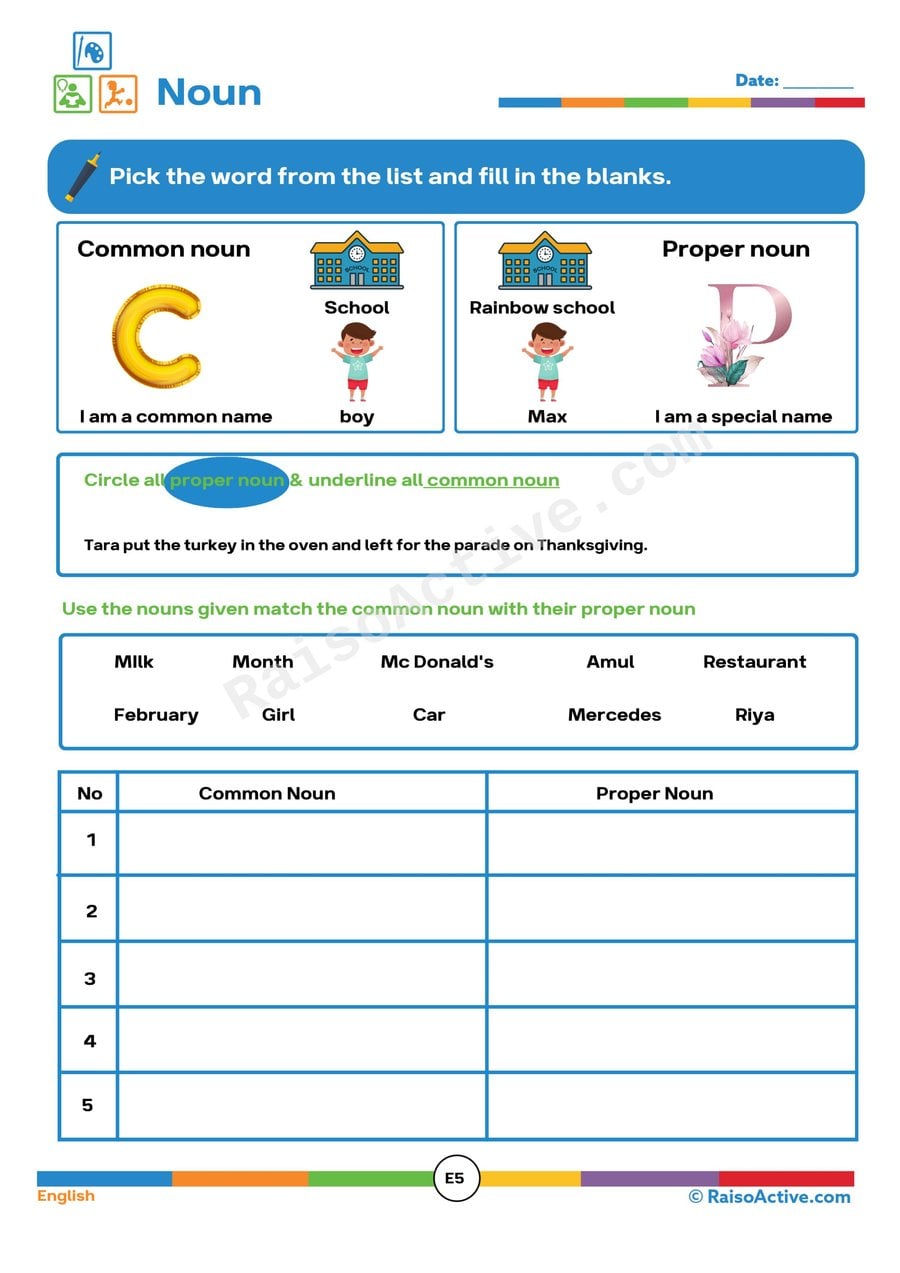
Common and Proper Nouns Worksheet for Kids
This worksheet introduces children ages 4-6 to the grammar concept of common nouns (general words like city or dog) versus proper nouns (specific names like Mumbai or Rex), building an early foundation for capitalization rules and sentence structure. Learning to tell the two apart also sharpens attention to detail, since proper nouns are marked by capital letters that common nouns don't use.

Tenses in Verbs Worksheet: Tick & Write the Correct Option!
This worksheet has children ages 4-6 practice identifying whether a sentence describes a past, present, or future action, ticking the correct verb tense option and then writing it into the sentence. Distinguishing between tenses is a core grammar skill that helps children eventually narrate their own experiences accurately, whether describing something that already happened or something they plan to do.
What Kindergarten handwriting worksheets cover
Five-year-olds finish the lowercase alphabet and start writing on lines. Tall letters reach the top line, small letters sit between the middle lines, and tails drop below: that is the new idea, and worksheets should use two-line or four-line paper to teach it. Copying a short sentence with a capital and a period, spacing words with a finger, and writing a letter when it is named all belong here. Joined-up writing, where taught, starts after print is secure.
- Write all lowercase letters with tall, small and tail heights on lines
- Copy a sentence with a capital letter, finger spaces and a period
- Write a named letter from memory without a model
- Write first and last name on a line at the correct size
- Keep letters sitting on the baseline across a full row
How to use these worksheets at home or in class
One phonics sheet and one math sheet most days, about fifteen minutes altogether, matches the pace many kindergarten classrooms set. Read any word list or passage aloud together first, then let your child attempt it independently before checking the answers.
Start with the sheet that matches what your child can already do, then move one step up. Keep finished sheets in a folder: Kindergarten teachers often ask for evidence of practice, and children like seeing their own progress.
Is your child ready for Kindergarten handwriting work?
A child entering kindergarten typically writes their first name, recognizes most letters, counts a small group of objects accurately, knows basic shapes and colors, and follows a two-step spoken direction without needing it repeated.
Frequently asked questions
What should a five-year-old's handwriting look like?
Readable, not neat. By five to six a child is expected to form every letter in the right direction, keep most letters sitting on the line with tall and small letters roughly the right height, leave gaps between words, and write a short sentence that starts with a capital and ends with a period. Uneven size, wandering spacing and occasional b/d reversals are still normal and usually settle by seven.
What should a Kindergarten child be able to do in handwriting?
Five-year-olds finish the lowercase alphabet and start writing on lines. Tall letters reach the top line, small letters sit between the middle lines, and tails drop below: that is the new idea, and worksheets should use two-line or four-line paper to teach it. Copying a short sentence with a capital and a period, spacing words with a finger, and writing a letter when it is named all belong here. Joined-up writing, where taught, starts after print is secure. A child entering kindergarten typically writes their first name, recognizes most letters, counts a small group of objects accurately, knows basic shapes and colors, and follows a two-step spoken direction without needing it repeated.
Do these worksheets follow the Kindergarten curriculum?
The sheets cover consistent letter formation, sizing and spacing letters on a line, joining letters for cursive and legible sentence writing, which sit inside the Common Core Kindergarten (RF.K, K.CC, K.OA, K.G) outcomes for Kindergarten. Reception / Year 1 (UK), UKG / Senior KG (India) use the same skills at this age, so the sheets also fit families following those programmes.
Are these Kindergarten handwriting worksheets free?
Yes. Each worksheet downloads free as a watermarked PDF once you create an account, with a limit of five a day. An annual membership ($20) removes the watermark and the limit for the whole library of over 1,000 worksheets and every printable pack.

Written by
Hemsweta Jain · Teacher Cheena
MBA and Early Childhood Educator, teaching since 2014 · Founder of RaisoActive, Mumbai
Written and reviewed by Hemsweta Jain (Teacher Cheena), who designs every RaisoActive worksheet.
Last reviewed
Printable packs for ages 5–6
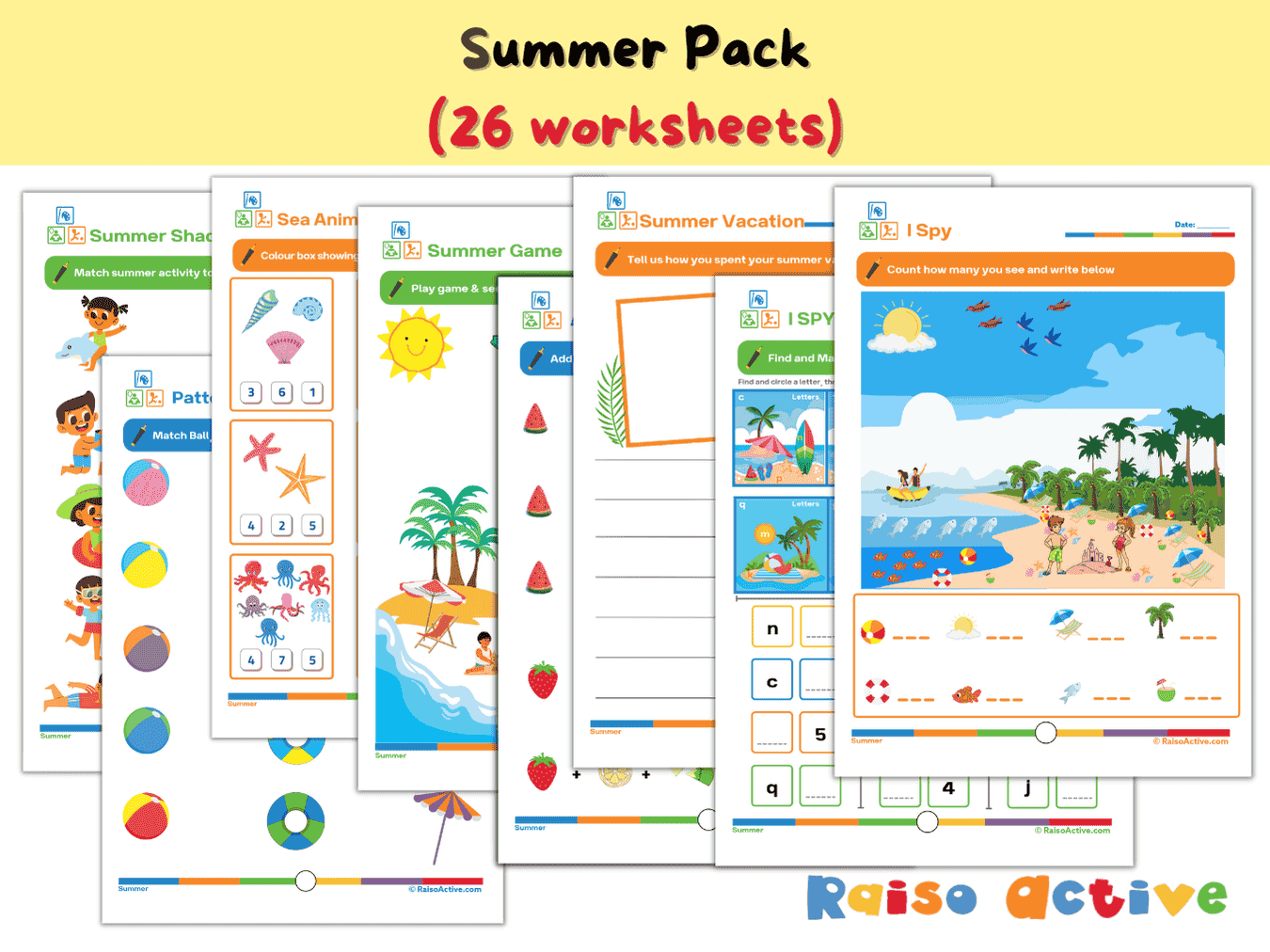
Summer Activity Pack: Math, Literacy, Puzzles & More for Preschool & Kindergarten
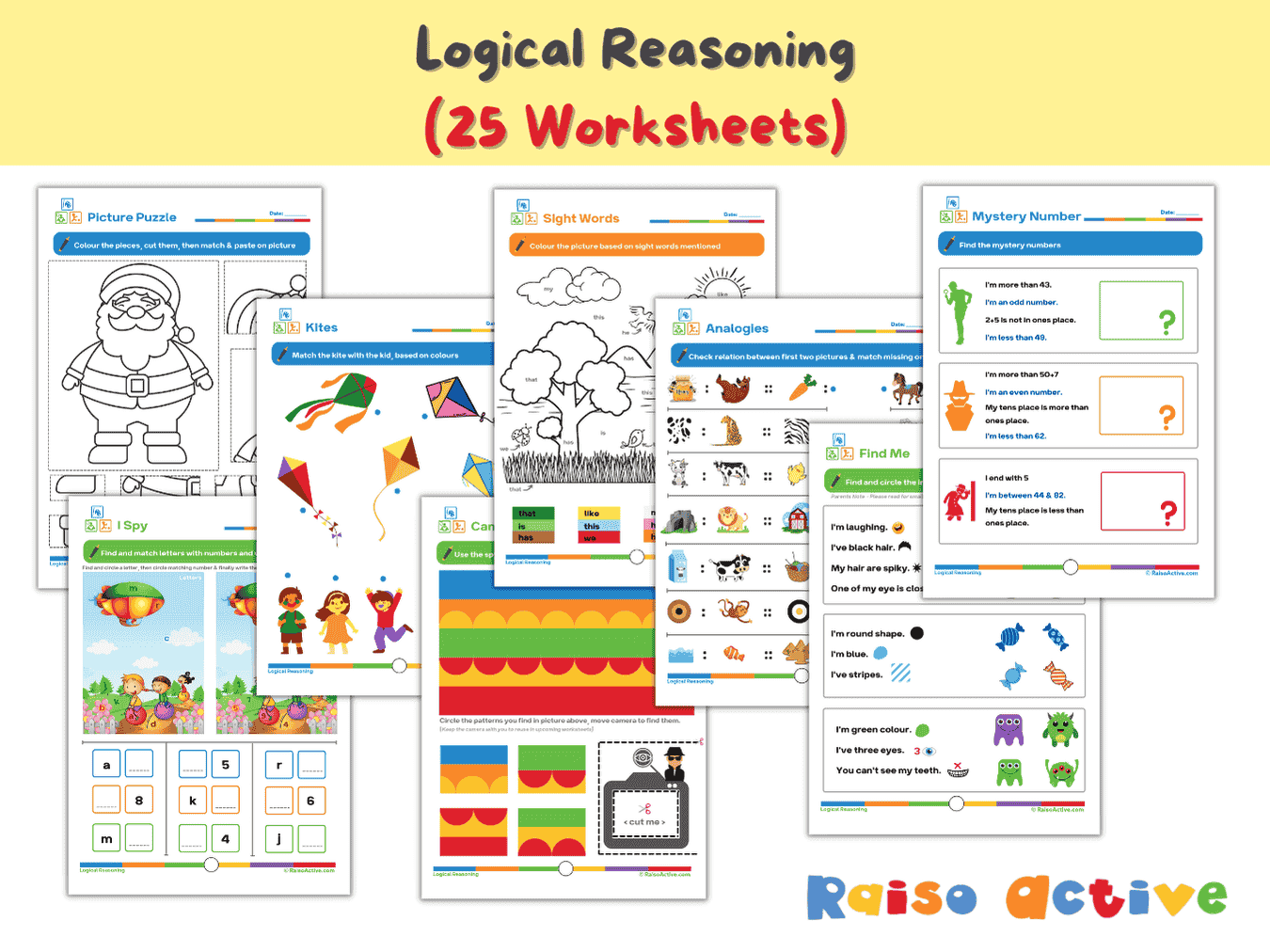
Logical Reasoning Activity Book for Preschool & Kindergarten | Patterns, Puzzles & Analogies
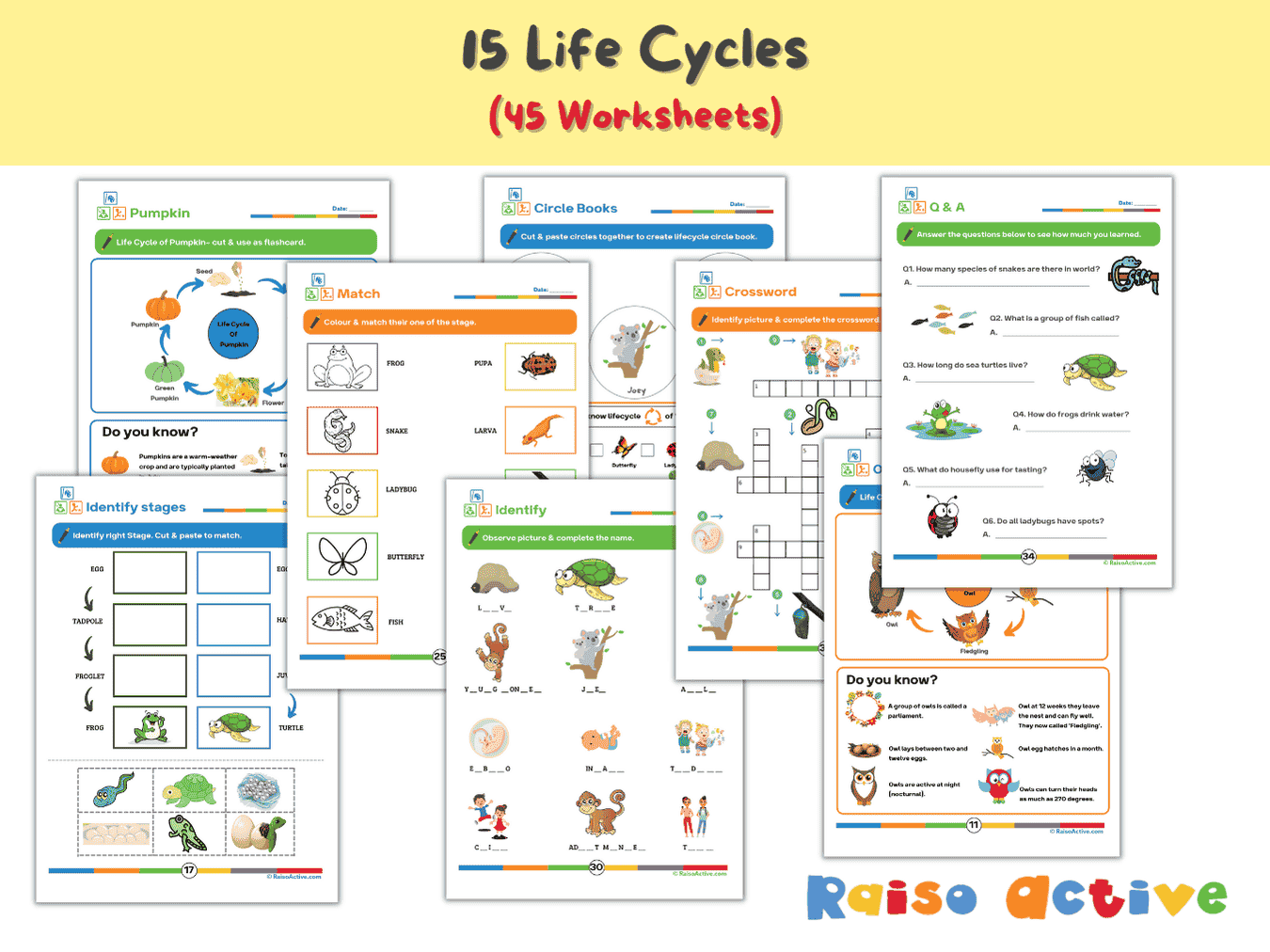
Lifecycles Activity Book & Flashcards for Preschool & Early Elementary
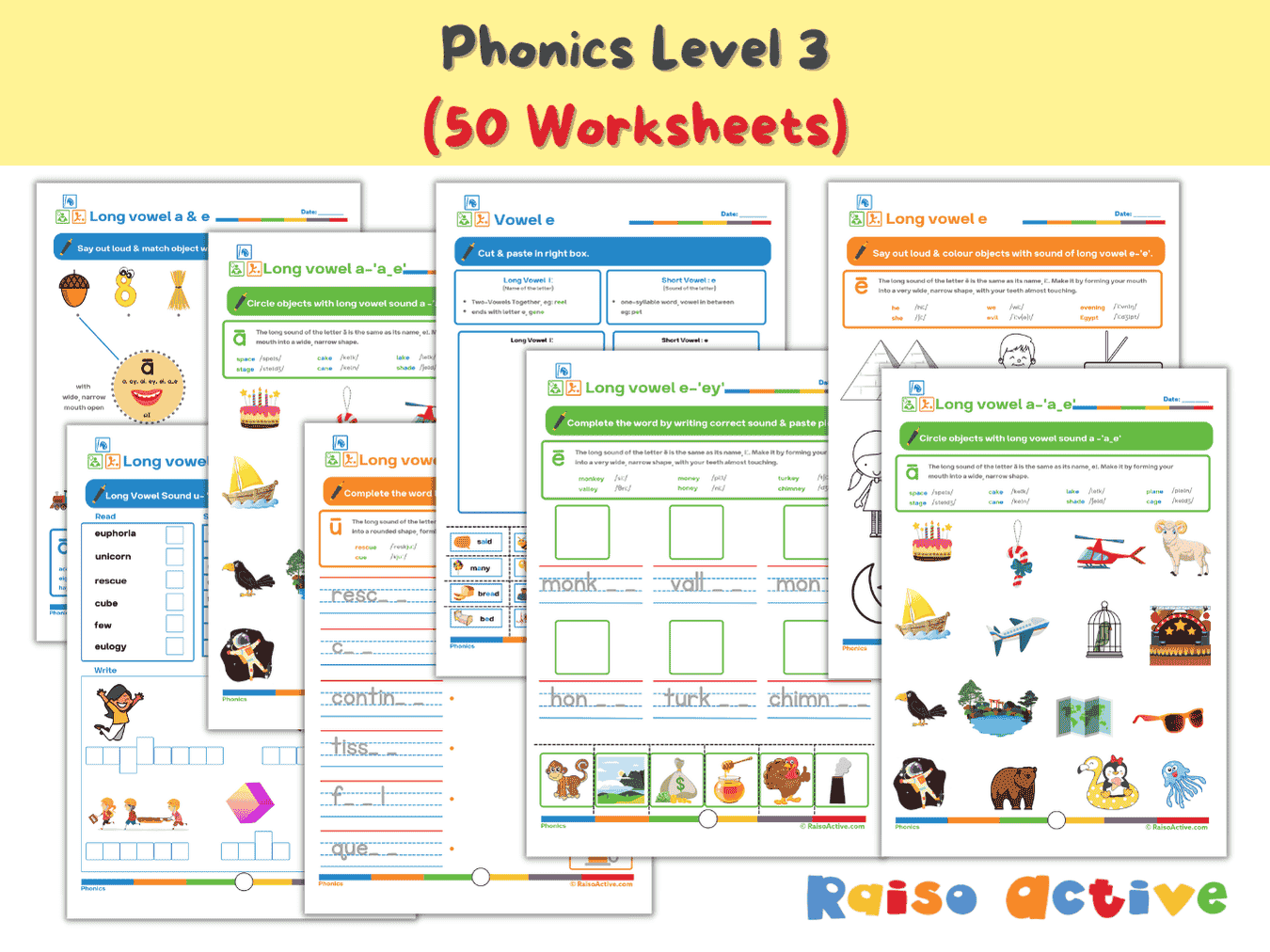
Phonics Level 3 Long Vowels Activity Book for Kindergarten & 1st Grade
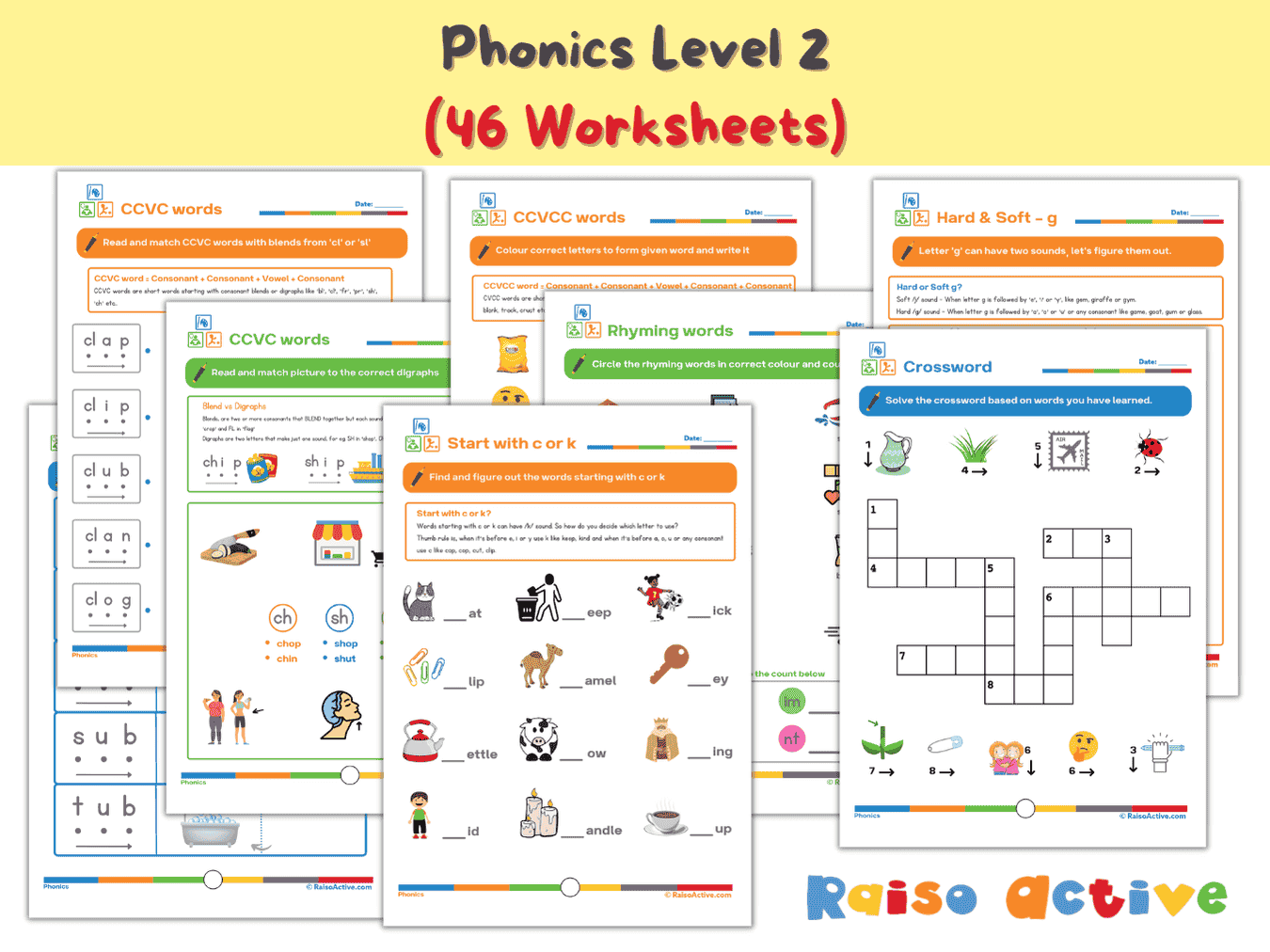
Phonics Level 2 Worksheets: CVC, CCVC, CVCC Word Families & Blends for Early Readers (Ages 4-7)
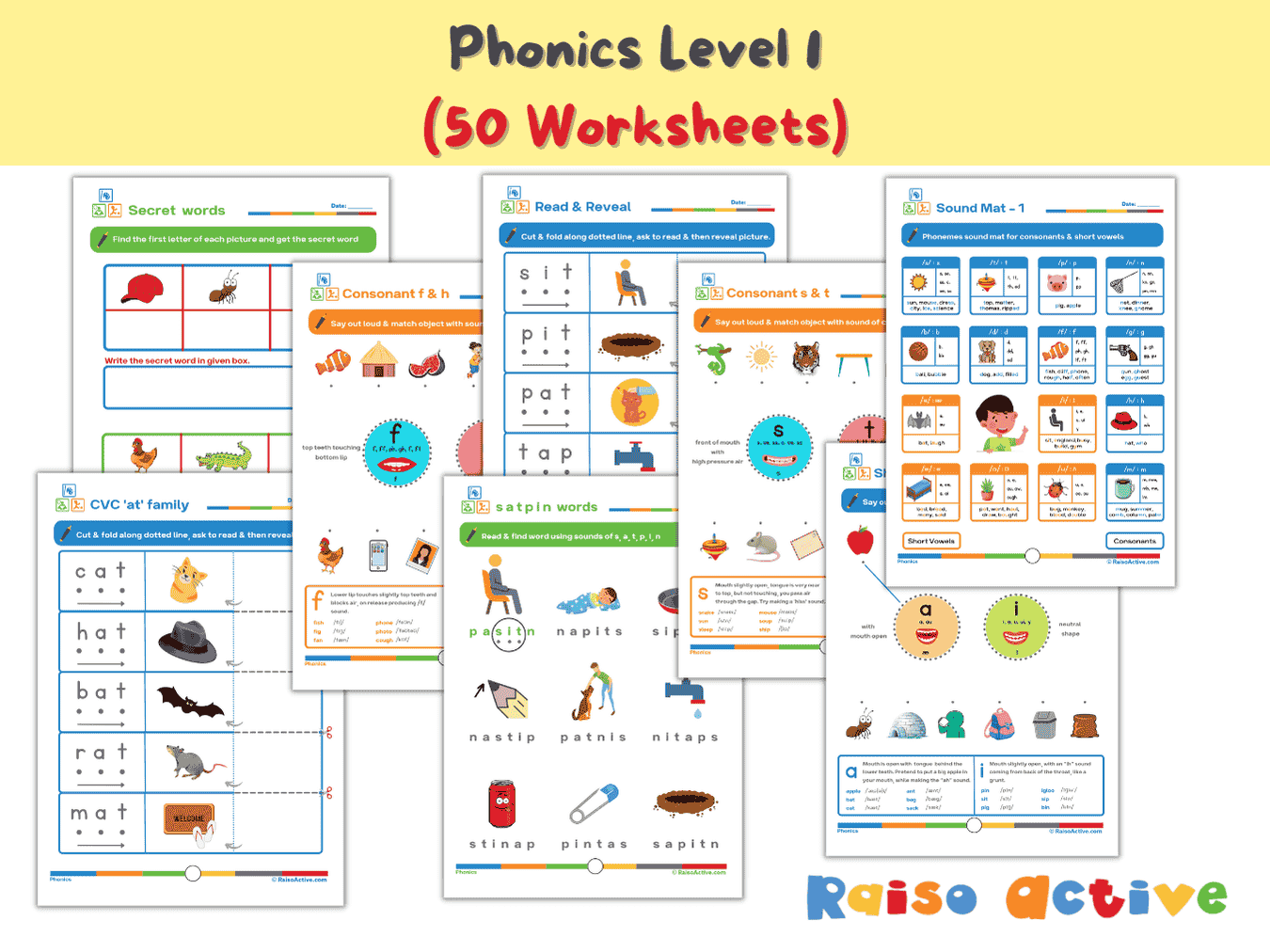
Phonics Level 1 Activity Book: Letter Sounds, Blending & CVC Words for Preschool & Kindergarten
Guides for parents and teachers
See all guides →Number Formation Rhymes 0–9 and How to Fix Reversals
Original number formation rhymes for 0–9, the correct stroke order for each digit, why 3, 5 and 7 get reversed most often, and multisensory fixes that work.
Pre-Writing Strokes in Order: From Standing Lines to Loops (With Printable Patterns)
The developmental order of pre-writing strokes, from vertical lines to loops, and why practicing them in sequence makes letter formation much easier to learn.
Kindergarten Readiness Checklist: 25 Skills to Practice Before the First Day
A kindergarten readiness checklist of 25 literacy, math, motor, self-regulation and self-help skills, with an 8-week summer plan and notes on when not to worry.
Best Worksheets for 3-Year-Olds: What Works and What to Avoid
What works on worksheets for 3-year-olds: short sessions, crayons, tracing lines, matching, cutting, a free weekly plan, and signs one is too advanced.
Reception Year Explained: EYFS Learning and How to Help at Home
A teacher's plain-English guide to the Reception Year: the seven areas of learning, Early Learning Goals, Phase 2/3 phonics, the RBA and home routines.
What Should a 4-Year-Old Know Before LKG? A Readiness Checklist
A calm, teacher-written LKG readiness checklist for 4-year-olds: language, pattern writing, numbers to 10, self-help and social skills, plus a 6-week plan.
Canonical: https://raisoactive.com/worksheets/kindergarten-handwriting