Free printable worksheets · United States
Preschool Handwriting Worksheets (Ages 3–4)
Preschool handwriting worksheets are practice sheets for children aged 3–4 in Preschool in the US. Handwriting is forming letters and numerals by hand with consistent size, spacing and shape, moving from single letters to legible sentences. The sheets on this page cover consistent letter formation, sizing and spacing letters on a line, joining letters for cursive and legible sentence writing.
Preschool builds readiness rather than academics: pre-writing strokes, uppercase letter recognition, counting objects to ten, naming shapes and colors, and cutting along a line, all introduced through short table activities inside a mostly play-based day. Grip is still forming, so most activities favor a thick crayon over a standard pencil. At three, handwriting is not letters yet; it is the strokes letters are made of. A child who has moved from a fist to holding a crayon with fingers can trace thick standing lines, sleeping lines and big circles, then copy them into an empty box. Worksheets should be wide, sparse and short. Tracing the child's own name in capitals is a fair stretch goal late in the year; forming letters from memory is not.
586+ worksheets · free PDF download · print on A4 or Letter
Preschool Handwriting Worksheets to print
Browse all worksheets for ages 3–4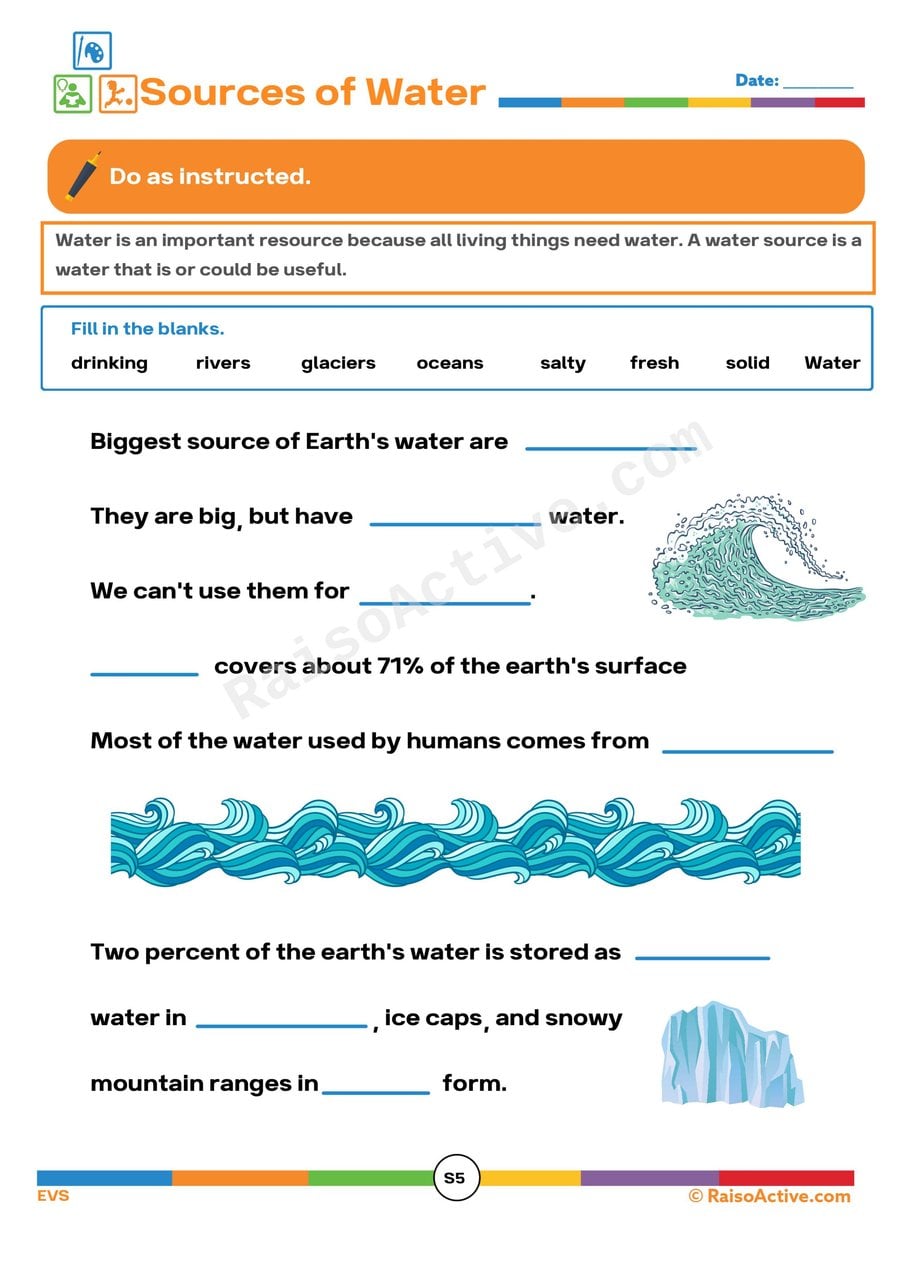
Sources of Water Worksheet for Kids
Learning about different sources of water — like rivers, rain, lakes, and wells — introduces children ages 3-5 to an early environmental science concept: that the water people use every day comes from specific natural places, not just from a tap. Filling in a word bank also reinforces vocabulary and reading skills, requiring children to match a written word to its correct meaning within context.
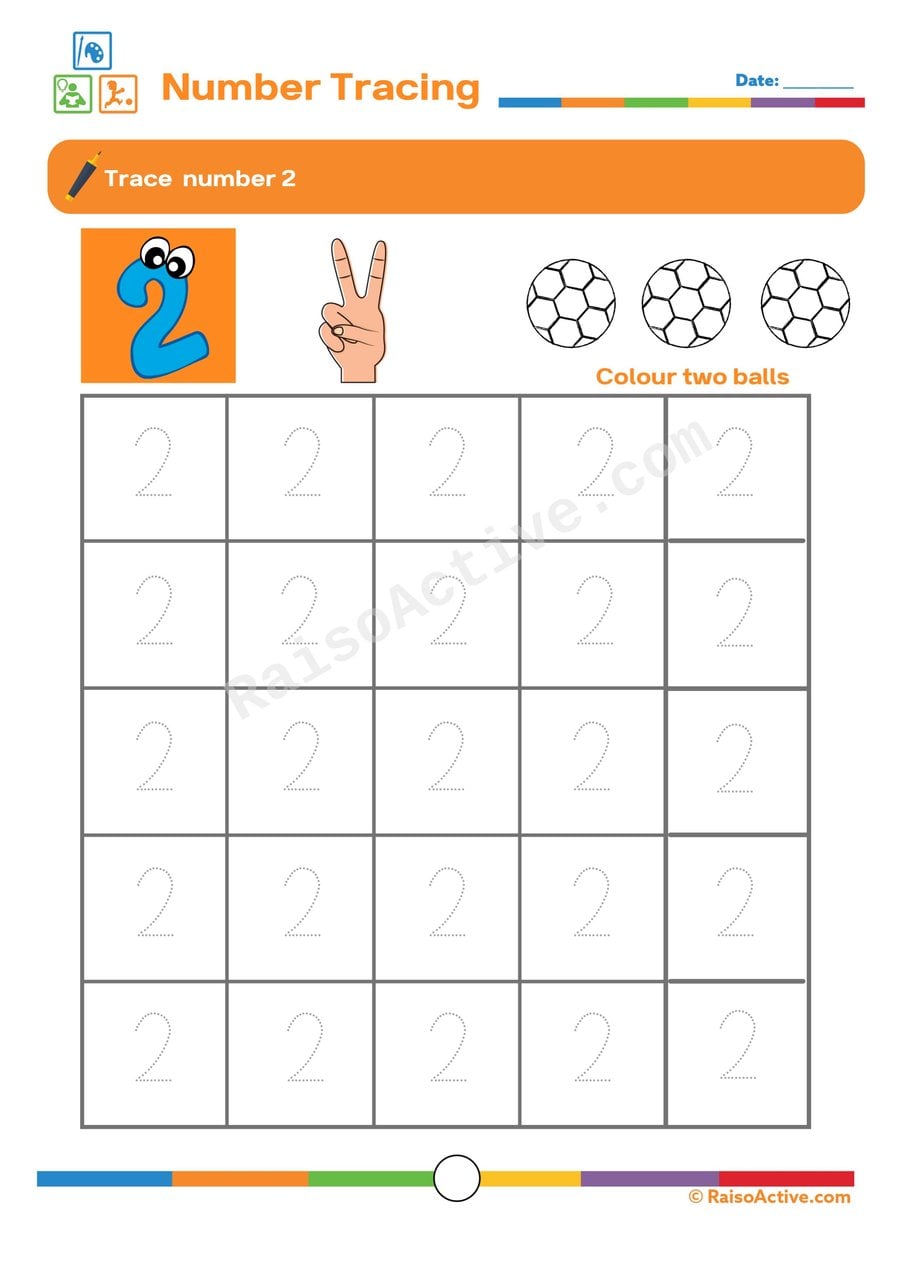
Trace and Color the Number 2 Worksheet
Tracing the number 2 introduces children ages 3-5 to a curved-then-straight stroke pattern, different from the single line of number 1, which builds more complex pencil control. Coloring exactly two soccer balls after tracing reinforces that the numeral 2 represents a specific quantity of two items, not just a shape to copy. This early pairing of writing a number with counting a matching set builds the number sense children will rely on throughout math.

Letter E Tracing Worksheet for Preschoolers: Learn to Write!
Children ages 3-5 use this worksheet to build the specific motor pattern for capital E — three horizontal strokes branching off one vertical line — while reinforcing the /e/ sound through picture recognition. Repeated tracing in a dashed-box format also trains children to keep letters a consistent size, an important pre-writing skill before they move to unlined paper.

Z is for Zebra! Letter Z Tracing and Coloring Worksheet
This letter Z worksheet gives children ages 3-5 focused practice recognizing and forming both the uppercase and lowercase versions of one of the trickiest letters to write, since its diagonal strokes differ from the curves and straight lines used in most other letters. Matching and coloring objects that start with 'z' also builds beginning-sound awareness, helping the letter's shape and sound become linked in memory.

Camera Spy: Find the Patterns Worksheet for Preschoolers
This pattern-recognition worksheet has children ages 3-5 study a set pattern shown at the top of the page and then locate that same repeating sequence within smaller boxes below, training visual comparison and pattern-matching across separate parts of a page. Unlike simply continuing a pattern, this format asks children to recognize an identical pattern elsewhere, a subtly different and useful skill for later tasks like matching sets or comparing groups. Repeating this scan-and-match process across several boxes builds sustained visual attention.

Trace and Write the Letter F Worksheet for Preschoolers
With just the uppercase F to focus on, children get concentrated practice on its vertical line and two separate horizontal strokes without the distraction of a second letter form, helping them build clean, confident stroke order. This focused repetition at ages 3-5 strengthens the fine motor control needed for the two distinct horizontal lines to land at the right heights.

Number Writing Worksheet: Trace, Write, Count, and Paste Numbers!
This multi-step worksheet strengthens number formation, counting, and one-to-one correspondence all in one activity, as children ages 3-5 trace and write numerals, then count a group of objects and paste the matching quantity in a box. Combining writing with hands-on counting and cutting helps children connect the written symbol to the actual amount it represents, a key milestone in early numeracy.
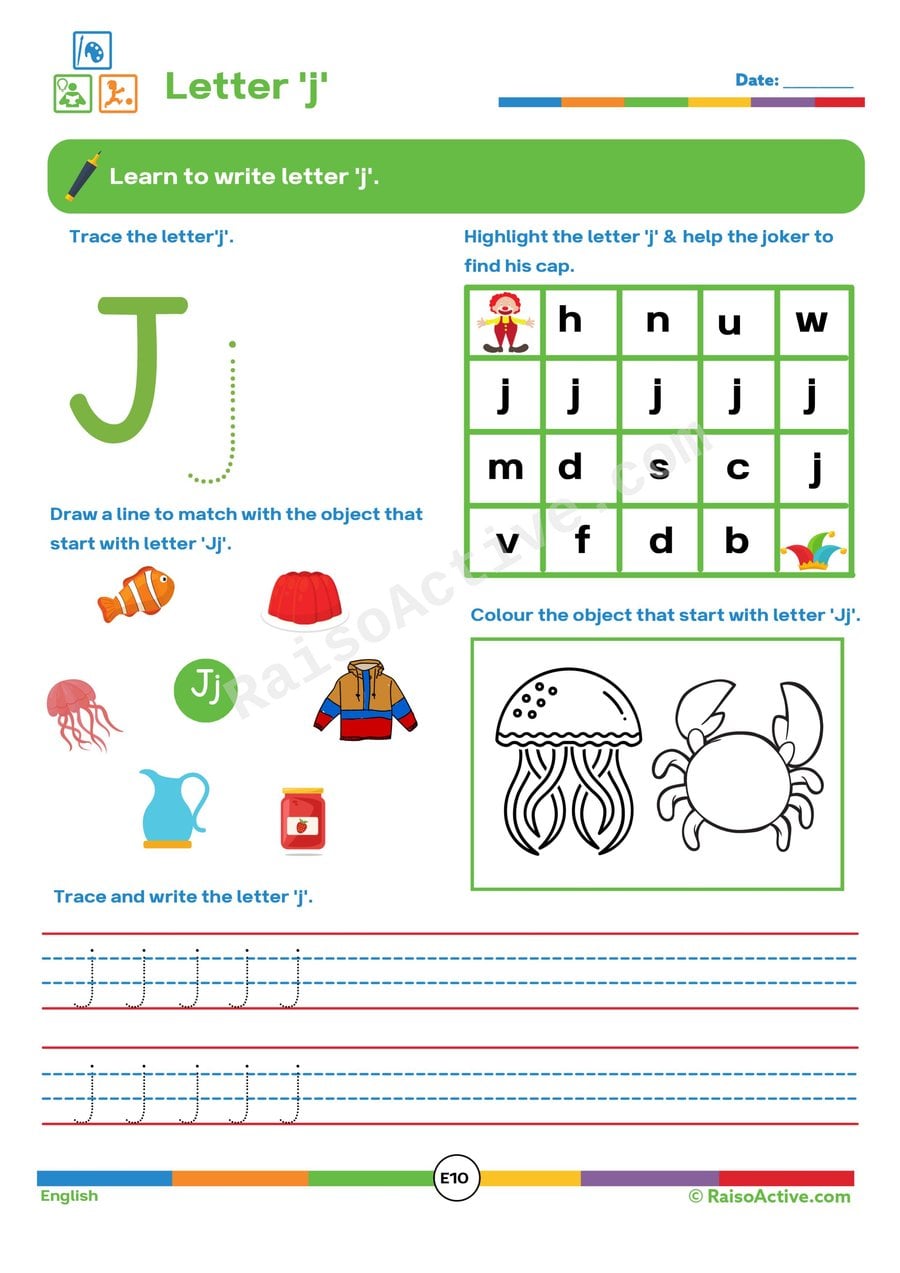
Letter 'j' Worksheet: Trace, Match, and Color!
Tracing the letter 'j' builds the fine motor control and stroke memory children ages 3-5 need for handwriting, while matching it to objects that start with the same sound connects the written letter to its spoken sound. Highlighting and coloring add extra practice recognizing the letter's shape among other letters and pictures.

Trace and Write the Letter D Worksheet for Preschoolers
Focusing only on the uppercase D lets children build solid, repeated practice with its single straight line and large curve before adding the more visually similar lowercase d, which can otherwise get confused with b at this age. Tracing and then writing D independently at ages 3-5 moves a child from copying to recalling the letter shape from memory, an important step toward true handwriting.

Letter O Tracing Worksheet for Preschoolers: Learn to Write!
Tracing the letter 'O' gives children ages 3-5 practice with a fully rounded stroke, a foundational shape that also underlies other letters like 'a,' 'c,' and 'd,' making it valuable early motor practice beyond just this one letter. Coloring pictures that start with 'O' connects that shape and sound to real, familiar words, reinforcing beginning-sound recognition alongside handwriting.

Trace and Color the Number 4 Worksheet for Preschoolers
This worksheet has children ages 3-5 trace the number 4, a shape combining two straight lines and one diagonal line meeting at a specific point, one of the more angular early numerals to master. Coloring exactly four apples afterward reinforces one-to-one correspondence and the specific quantity the numeral 4 represents. Because 4 has more distinct angles than the numbers before it, this worksheet continues building the precise pencil control needed for increasingly complex numerals.

Trace the Funny Caterpillars Worksheet for Preschoolers
Tracing the rounded segments that make up each caterpillar's body helps children ages 3-5 practice circular and curved pencil strokes while also reinforcing shape recognition, since each segment is essentially a circle or oval joined to the next. This combination of shape tracing and sequencing, moving from one segment to the next in order, builds the same left-to-right, in-order habits that later support reading and writing.
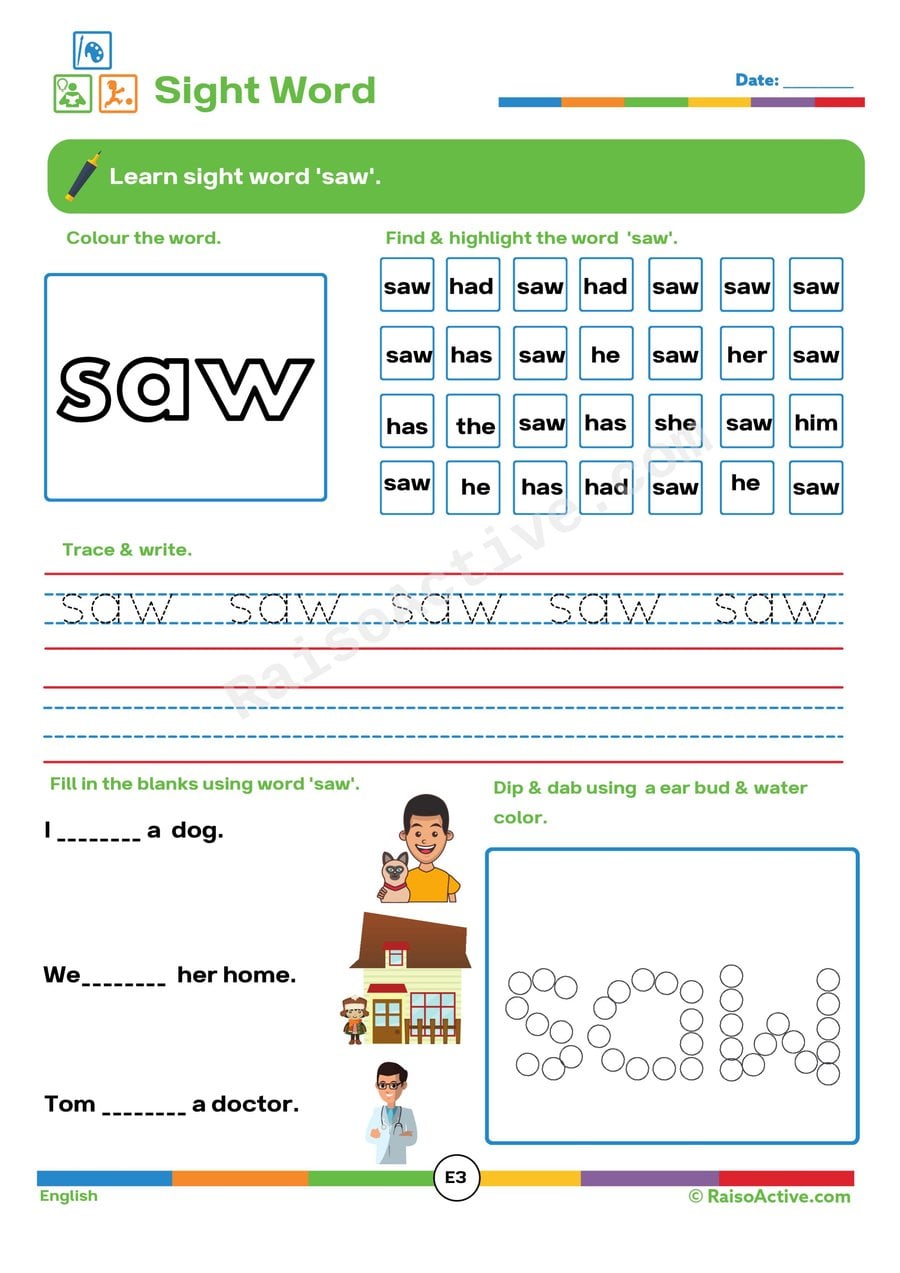
Sight Word 'Saw' Worksheet: Trace, Find, and Color!
The word 'saw' is another high-frequency sight word that doesn't follow standard phonics patterns, so children ages 3-5 need this kind of layered, multi-format practice — coloring, tracing, searching, and sentence completion — to build automatic recognition. Repeated exposure to the same word through different activities strengthens the visual memory needed for instant sight-word recall, which is essential since sight words make up a large percentage of the words in early beginner books. The variety of formats here also keeps a young child's attention across a longer practice session than a single repetitive task would.

Letter R Tracing Worksheet: Practice Uppercase and Lowercase Letters!
The letter R combines a straight vertical stroke with a curved bump and a diagonal leg, making it one of the more motor-complex letters a preschooler tackles — tracing it at ages 3-5 builds precision with curves in a way that straight-line letters don't. Practicing both cases together also reinforces that uppercase and lowercase R, though shaped a little differently, represent the same sound.
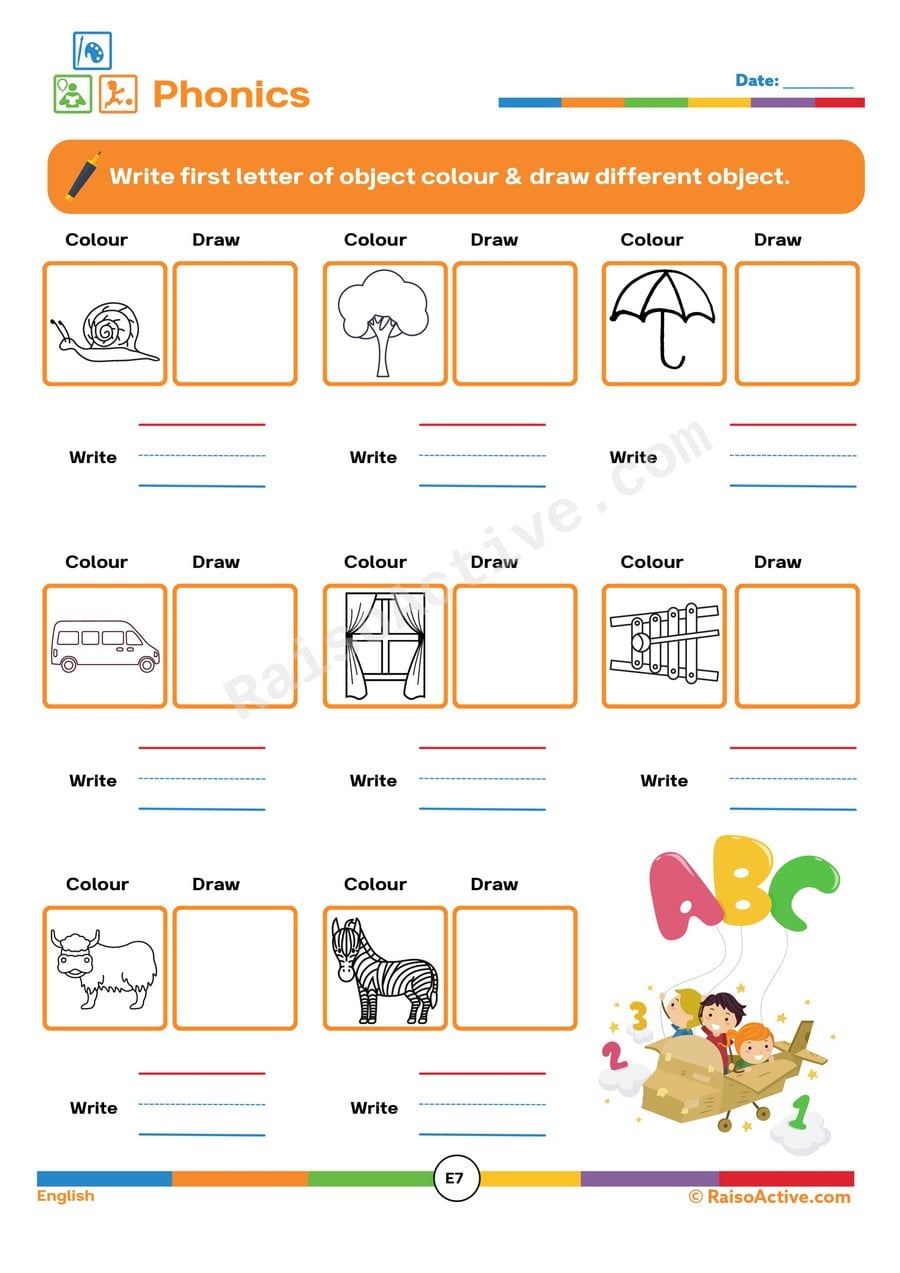
Phonics Fun: Color, Draw, and Write! (Ages 3-5)
Coloring a picture, drawing a related object, and writing its first letter combines three literacy-building tasks in one activity for children ages 3-5 — visual recognition, creative expression, and beginning-sound identification.

Trace and Write the Letter P Worksheet for Preschoolers
Tracing the uppercase letter P introduces children ages 3-5 to a two-part stroke, a straight vertical line followed by a curved loop at the top, which builds on the straight-line control they've likely practiced with letters like T and the curved control practiced with letters like C. This combination stroke is good preparation for other letters that mix lines and curves, such as R and B. The worksheet also reinforces the /p/ sound in words like 'pig,' 'pencil,' and 'popcorn.'

Trace and Color the Letter T Worksheet for Preschoolers
Tracing and writing the letter T gives children ages 3-5 practice with one simple vertical stroke crossed by one horizontal stroke, making it one of the more approachable uppercase letters to master, which builds confidence before moving on to more complex shapes. Coloring the finished letters afterward reinforces recognition of the letter's form independent of the writing motion itself.
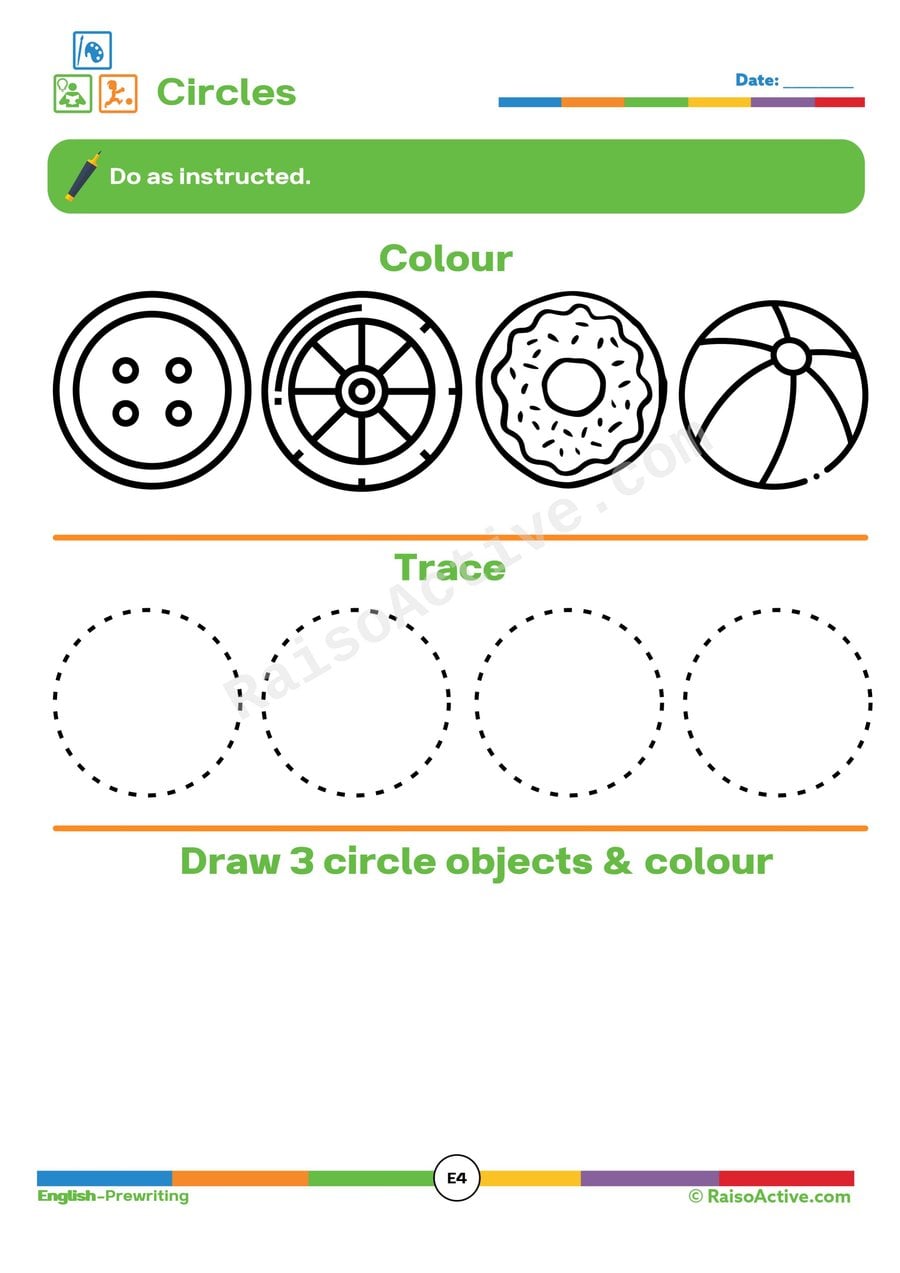
Circle Shapes Worksheet: Trace, Color, and Draw!
This worksheet builds shape recognition and drawing skills as children ages 3-5 trace dotted circles, color pictures of circular objects, and then draw three circle-shaped objects entirely on their own. Moving from tracing to independent drawing tracks a real developmental progression — first following a guide, then applying the shape from memory — which builds true shape mastery rather than just copying.
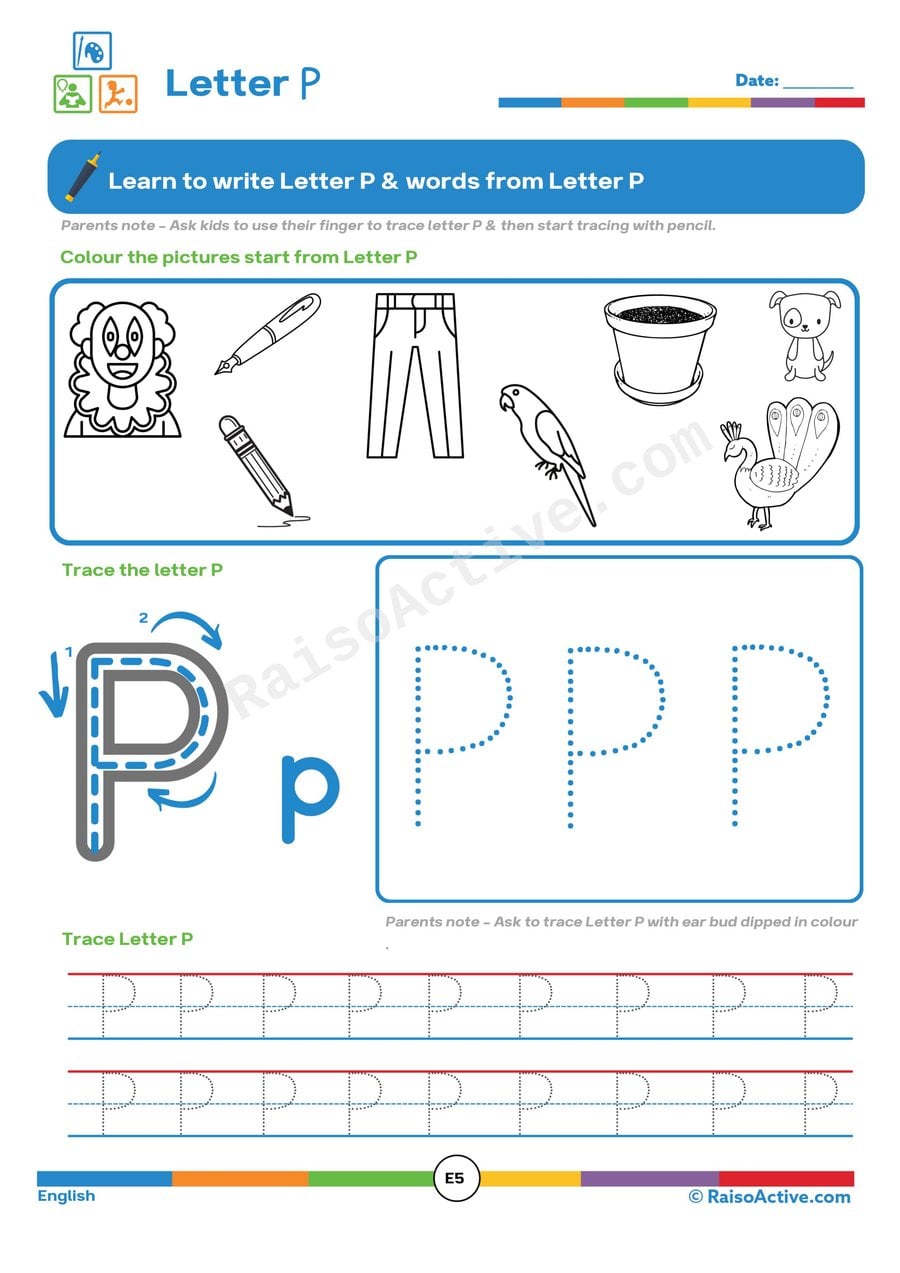
Letter P Tracing Worksheet for Preschoolers
Preschoolers ages 3-5 build the pencil control and muscle memory needed for handwriting by tracing both the uppercase and lowercase letter P along guided dotted lines. Repeated tracing strengthens the fine motor pathways used in future writing while also reinforcing left-to-right, top-to-bottom stroke direction. Naming pictures that start with P connects the letter shape to its sound, laying groundwork for phonics.
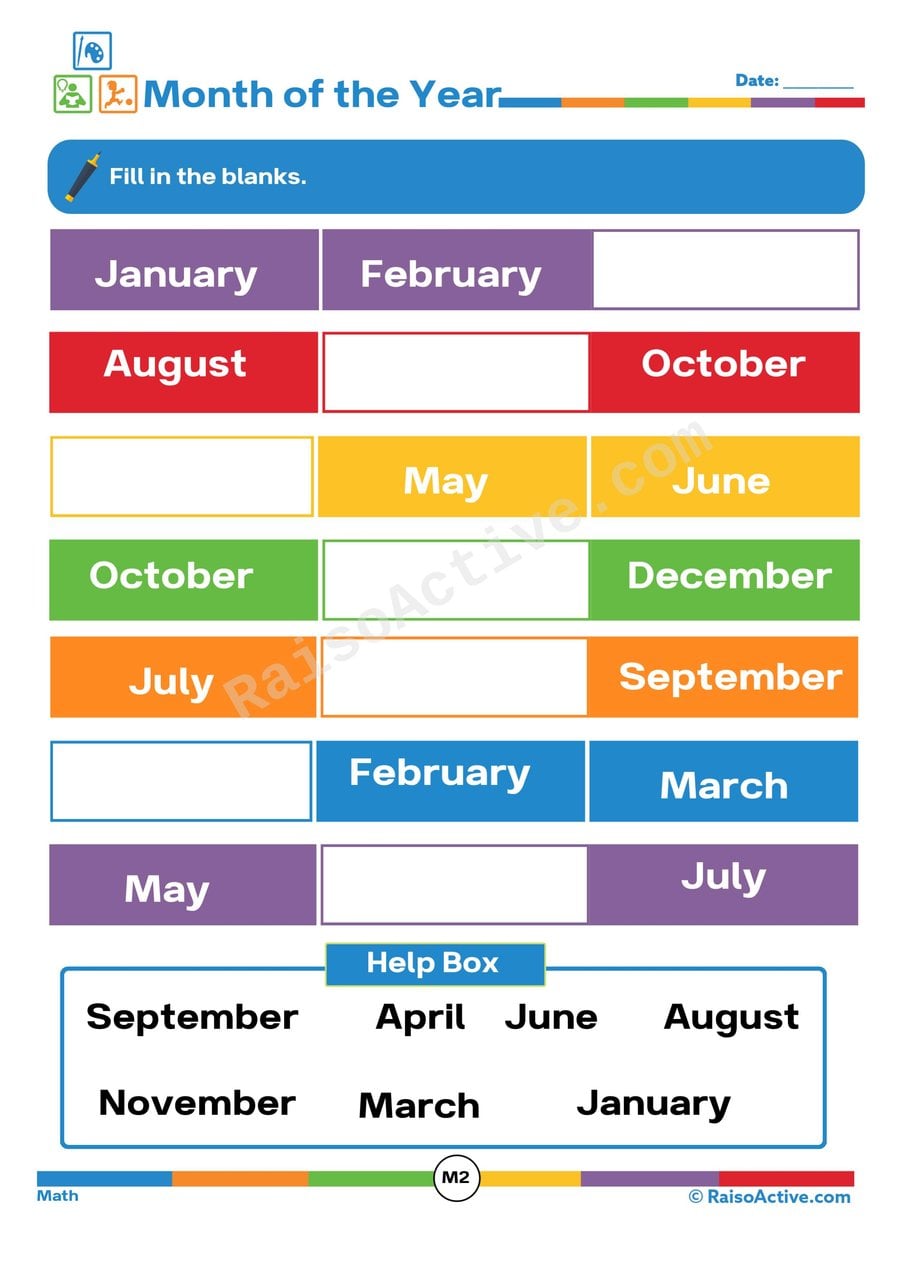
Months of the Year Fill-in-the-Blanks Worksheet
This worksheet introduces children ages 3-5 to the twelve months of the year in order, asking them to fill in missing month names using a reference list. Practicing this longer, less familiar sequence builds memory and early calendar literacy, skills that support understanding birthdays, holidays, and seasons as the year unfolds.

Letter S Tracing Worksheet for Preschoolers: Practice Uppercase and Lowercase!
The letter S is a single continuous curve with no straight lines or corners to anchor against, which makes it one of the trickier letters for 3-5 year olds to control with a pencil. Tracing both the uppercase S and lowercase s builds the smooth, connected hand movement needed for cursive-style curves later, while saying the hissing /s/ sound aloud ties the shape to its sound.

Pre-Writing Practice: Trace the Lines and Shapes Worksheet
This worksheet builds pre-writing skills by having children trace a variety of lines and shapes — following dinosaurs, marbles, skateboarders, and cars along their paths — which develops the hand-eye coordination and pencil control needed before formal letter writing begins. For three- to five-year-olds, tracing varied line types like straight, curved, and zigzag paths builds the specific motor patterns that later show up in letter strokes like the curves in 'c' and 'o' or the straight lines in 'l' and 't.'

First Letter Fun: Identify and Write! Vocabulary Worksheet
Naming a pictured object aloud and writing just its first letter asks children ages 3-5 to isolate the very beginning sound of a word and translate that sound into a written symbol, a core early phonics skill that predicts reading readiness. Unlike simple letter tracing, this worksheet requires children to generate the correct letter from memory based on sound alone, which is a meaningfully harder and more independent task. Practicing this across several different pictures builds both vocabulary and the sound-to-letter link needed for early spelling.
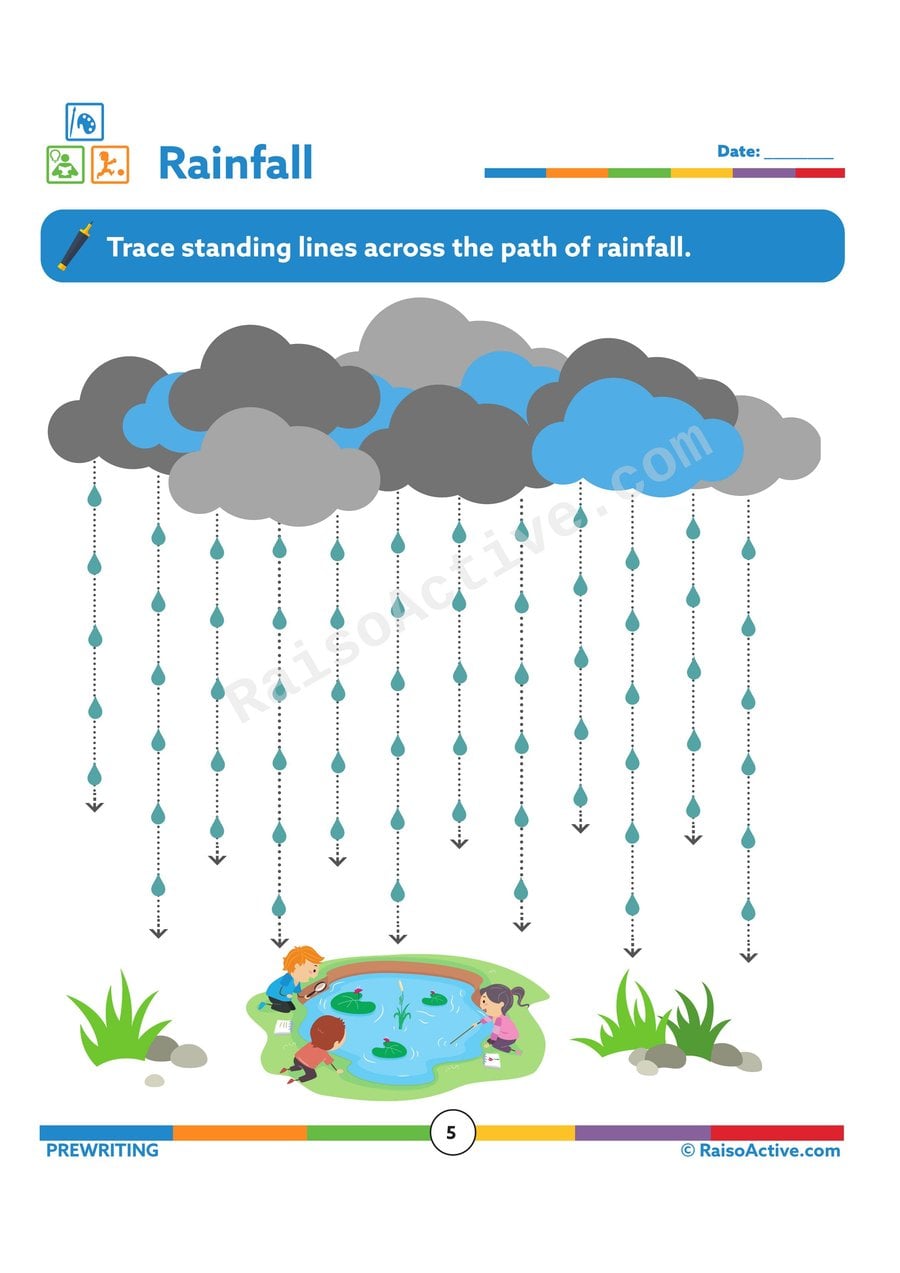
Rainfall Tracing Worksheet for Preschoolers
Tracing straight vertical lines representing falling rain gives children ages 3-5 focused practice with the simple top-to-bottom pencil stroke that forms the basis of letters like l, i, and t. Repeating this single motion across several rain lines on one page builds consistency, helping a child produce evenly spaced, similarly sized strokes rather than lines that vary wildly in length and direction.
What Preschool handwriting worksheets cover
At three, handwriting is not letters yet; it is the strokes letters are made of. A child who has moved from a fist to holding a crayon with fingers can trace thick standing lines, sleeping lines and big circles, then copy them into an empty box. Worksheets should be wide, sparse and short. Tracing the child's own name in capitals is a fair stretch goal late in the year; forming letters from memory is not.
- Trace standing and sleeping lines with a thick crayon
- Copy a circle and a cross into an empty box
- Hold a short, chunky pencil with fingers rather than a fist
- Trace the first letter of own name in a large capital
How to use these worksheets at home or in class
Five minutes is a solid session for a three-year-old, ten minutes the practical ceiling. Offer a thick crayon or a short fat pencil, sit beside your child, and treat the sheet as one activity among blocks, stories and outdoor play rather than as schoolwork.
Start with the sheet that matches what your child can already do, then move one step up. Keep finished sheets in a folder: Preschool teachers often ask for evidence of practice, and children like seeing their own progress.
Is your child ready for Preschool handwriting work?
A child ready for these activities holds a crayon and makes deliberate marks, sits at a table briefly, follows a single spoken instruction, and shows some interest in the letters of their own name or the numbers they hear counted aloud.
Frequently asked questions
Should a three-year-old be practicing letters?
Not formally. A three-year-old's hand is still learning to steer a crayon, and letter sheets at this age tend to produce letters drawn as pictures, from the bottom up or with a cramped grip that then has to be unlearned. Strokes, shapes and the first letter of the child's name are enough. Playdough, tearing paper, threading and drawing on a vertical easel build the hand strength that letters will need at four.
What should a Preschool child be able to do in handwriting?
At three, handwriting is not letters yet; it is the strokes letters are made of. A child who has moved from a fist to holding a crayon with fingers can trace thick standing lines, sleeping lines and big circles, then copy them into an empty box. Worksheets should be wide, sparse and short. Tracing the child's own name in capitals is a fair stretch goal late in the year; forming letters from memory is not. A child ready for these activities holds a crayon and makes deliberate marks, sits at a table briefly, follows a single spoken instruction, and shows some interest in the letters of their own name or the numbers they hear counted aloud.
Do these worksheets follow the Preschool curriculum?
The sheets cover consistent letter formation, sizing and spacing letters on a line, joining letters for cursive and legible sentence writing, which sit inside the Head Start Early Learning Outcomes Framework (ELOF) outcomes for Preschool. Nursery (UK), Nursery (India) use the same skills at this age, so the sheets also fit families following those programmes.
Are these Preschool handwriting worksheets free?
Yes. Each worksheet downloads free as a watermarked PDF once you create an account, with a limit of five a day. An annual membership ($20) removes the watermark and the limit for the whole library of over 1,000 worksheets and every printable pack.

Written by
Hemsweta Jain · Teacher Cheena
MBA and Early Childhood Educator, teaching since 2014 · Founder of RaisoActive, Mumbai
Written and reviewed by Hemsweta Jain (Teacher Cheena), who designs every RaisoActive worksheet.
Last reviewed
Printable packs for ages 3–4
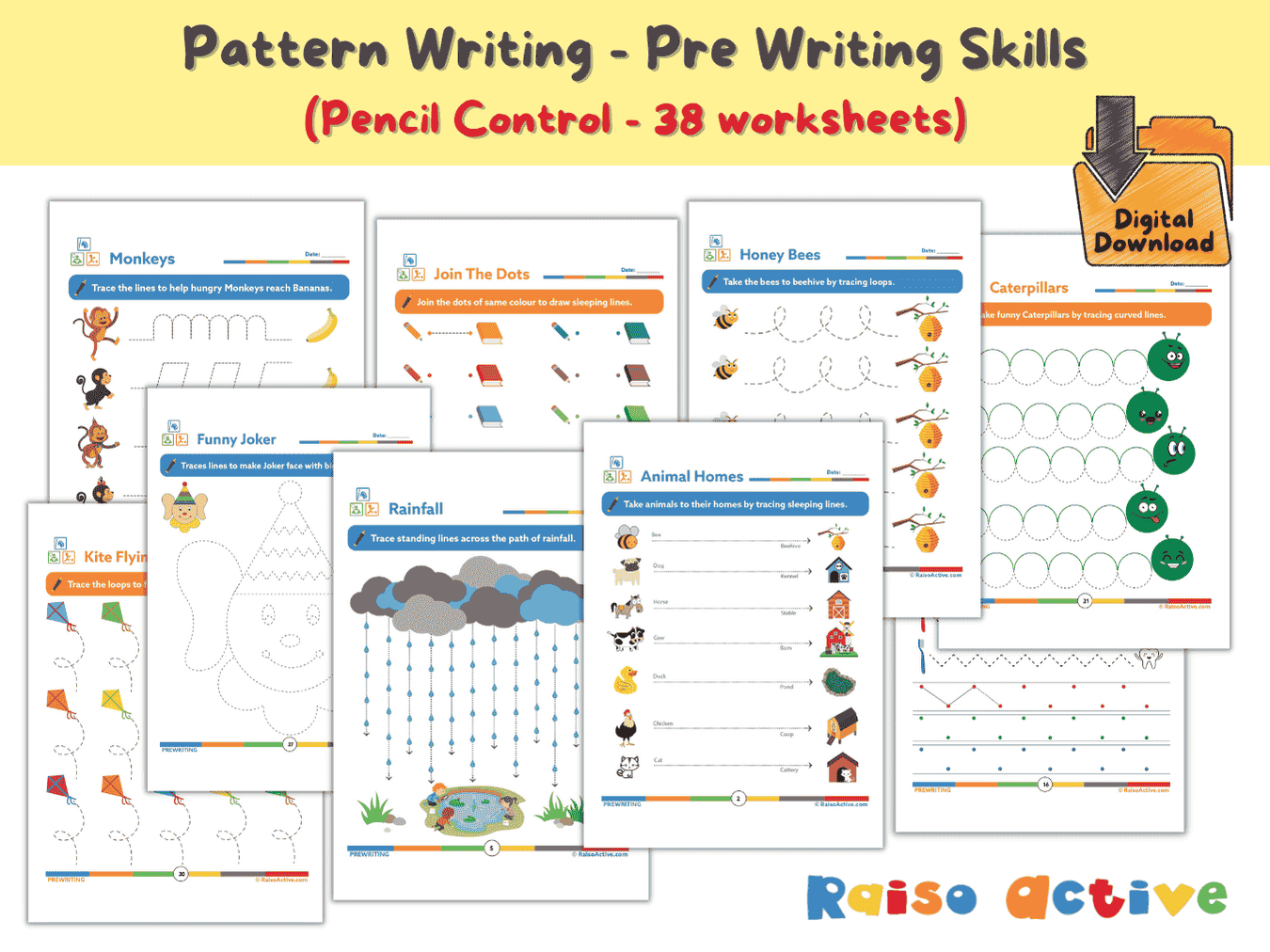
Pattern Writing Pre-writing Skills Activity Book for 3-4 Year Olds
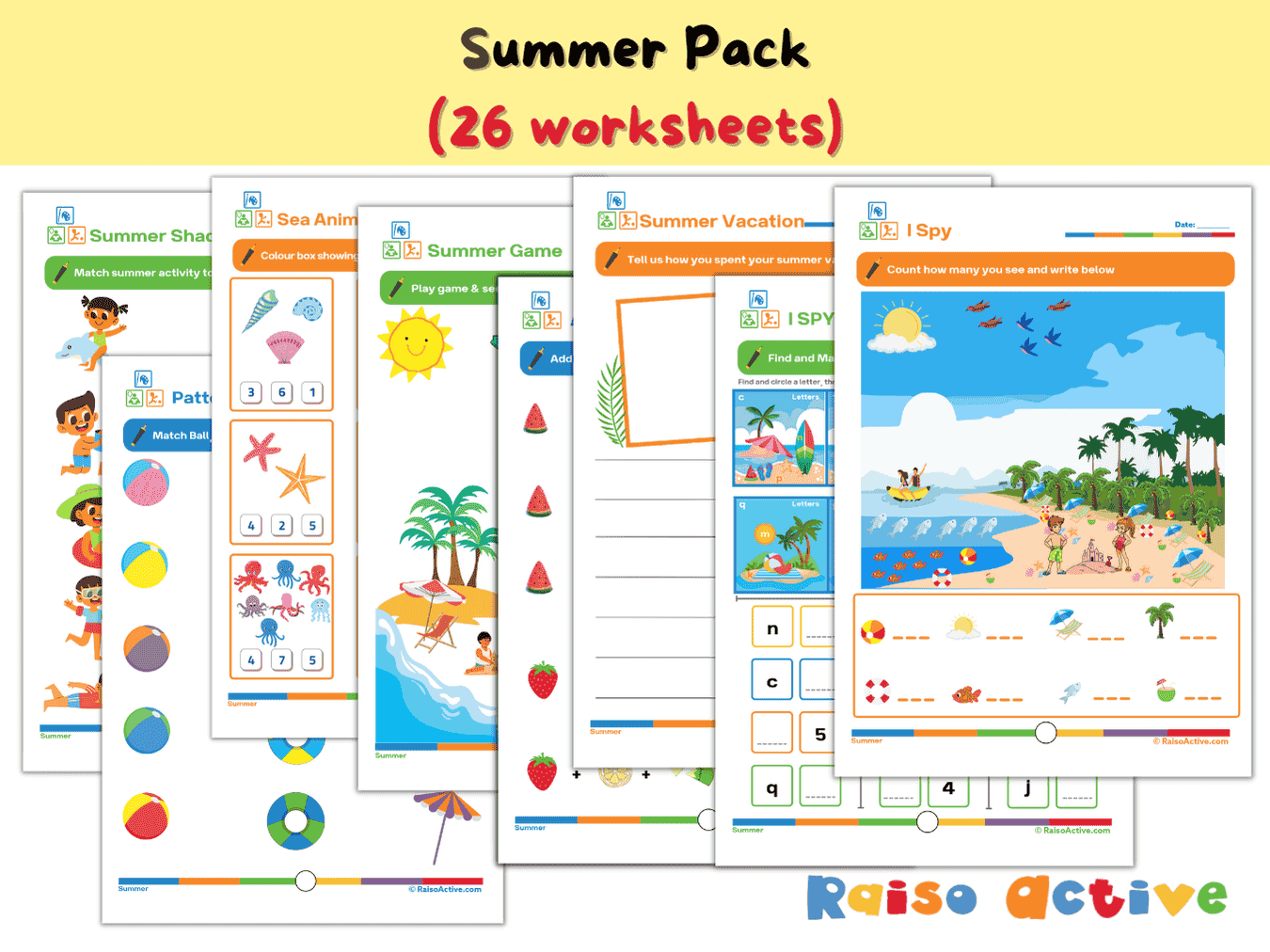
Summer Activity Pack: Math, Literacy, Puzzles & More for Preschool & Kindergarten
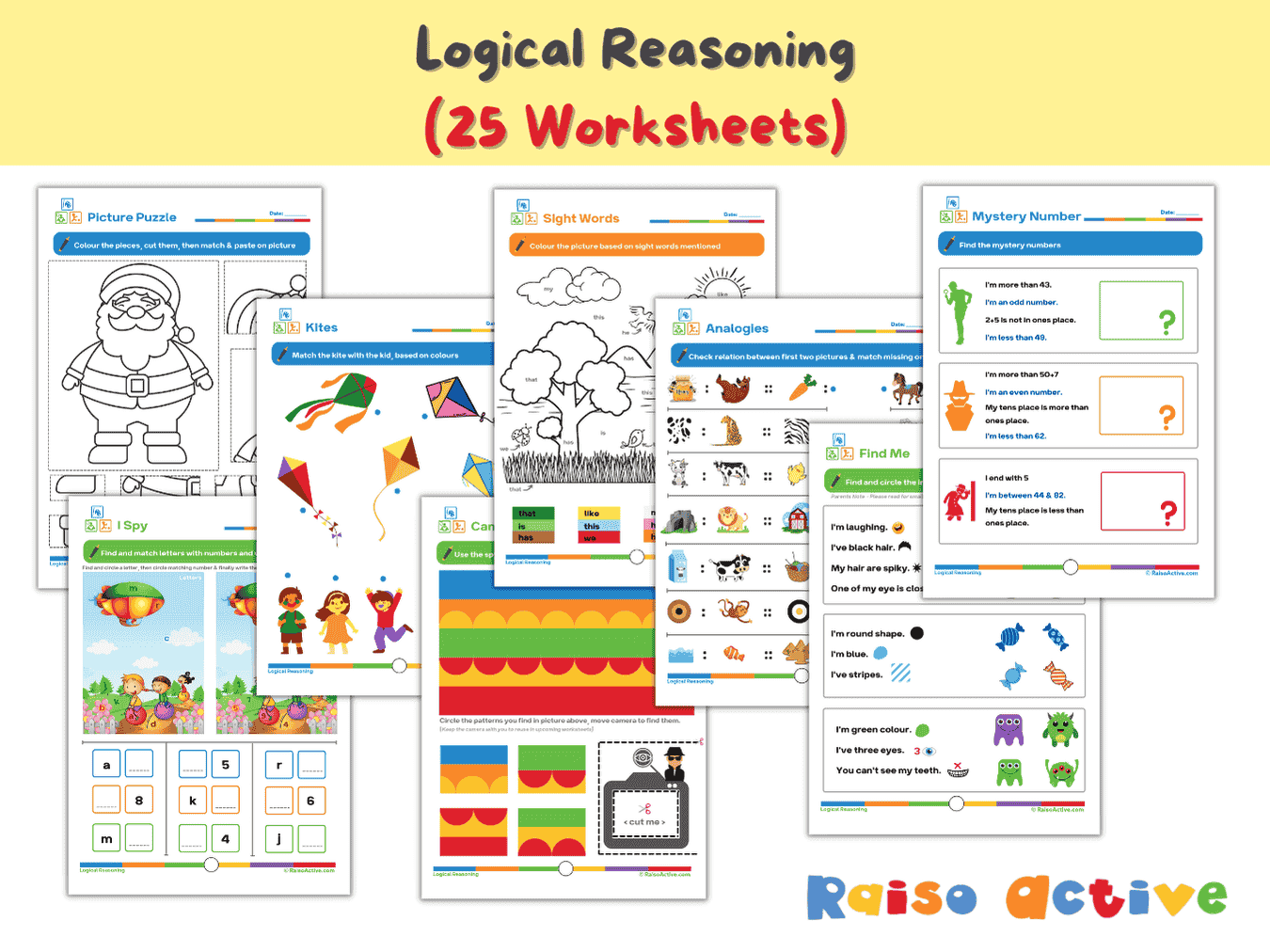
Logical Reasoning Activity Book for Preschool & Kindergarten | Patterns, Puzzles & Analogies
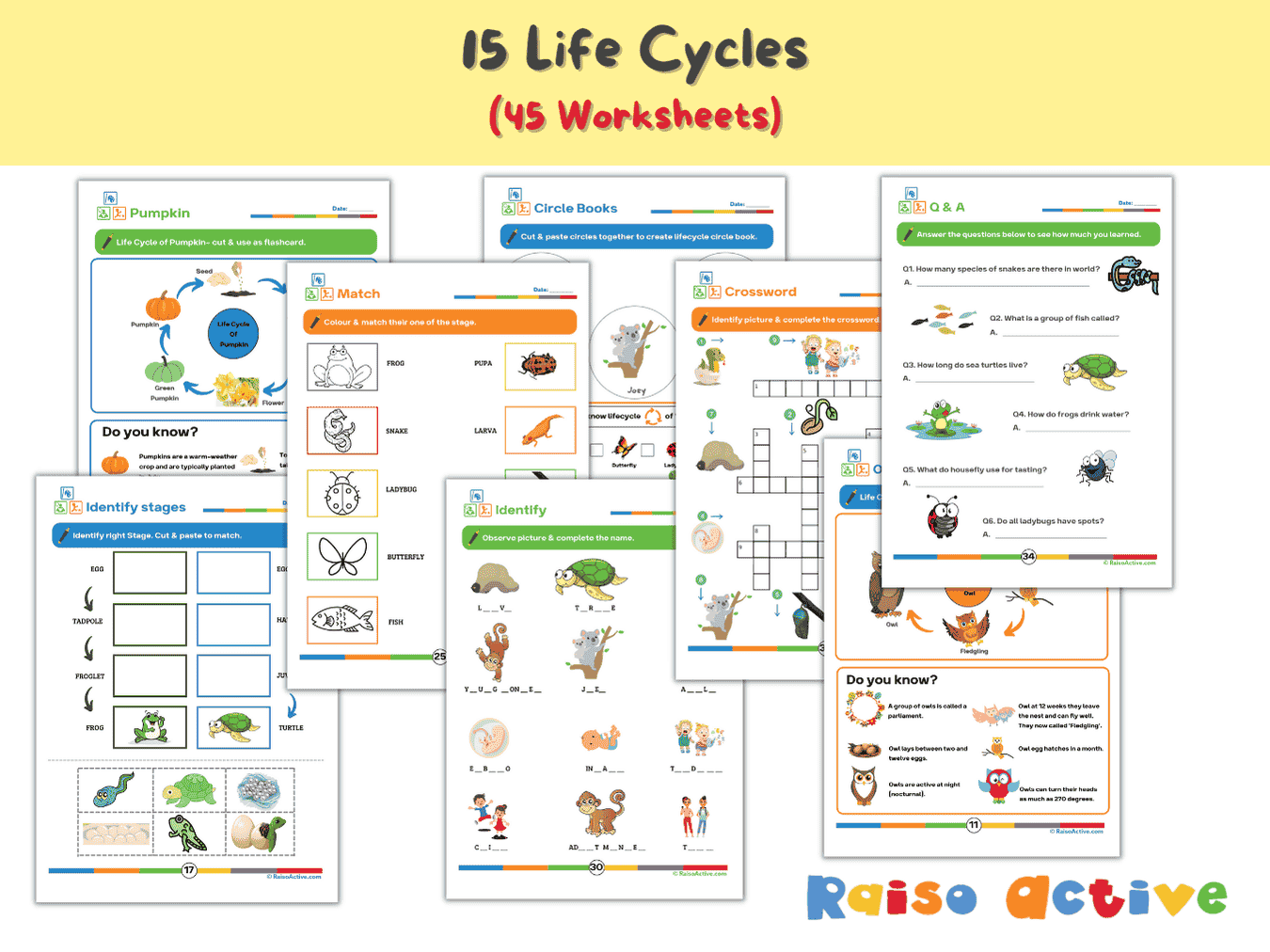
Lifecycles Activity Book & Flashcards for Preschool & Early Elementary
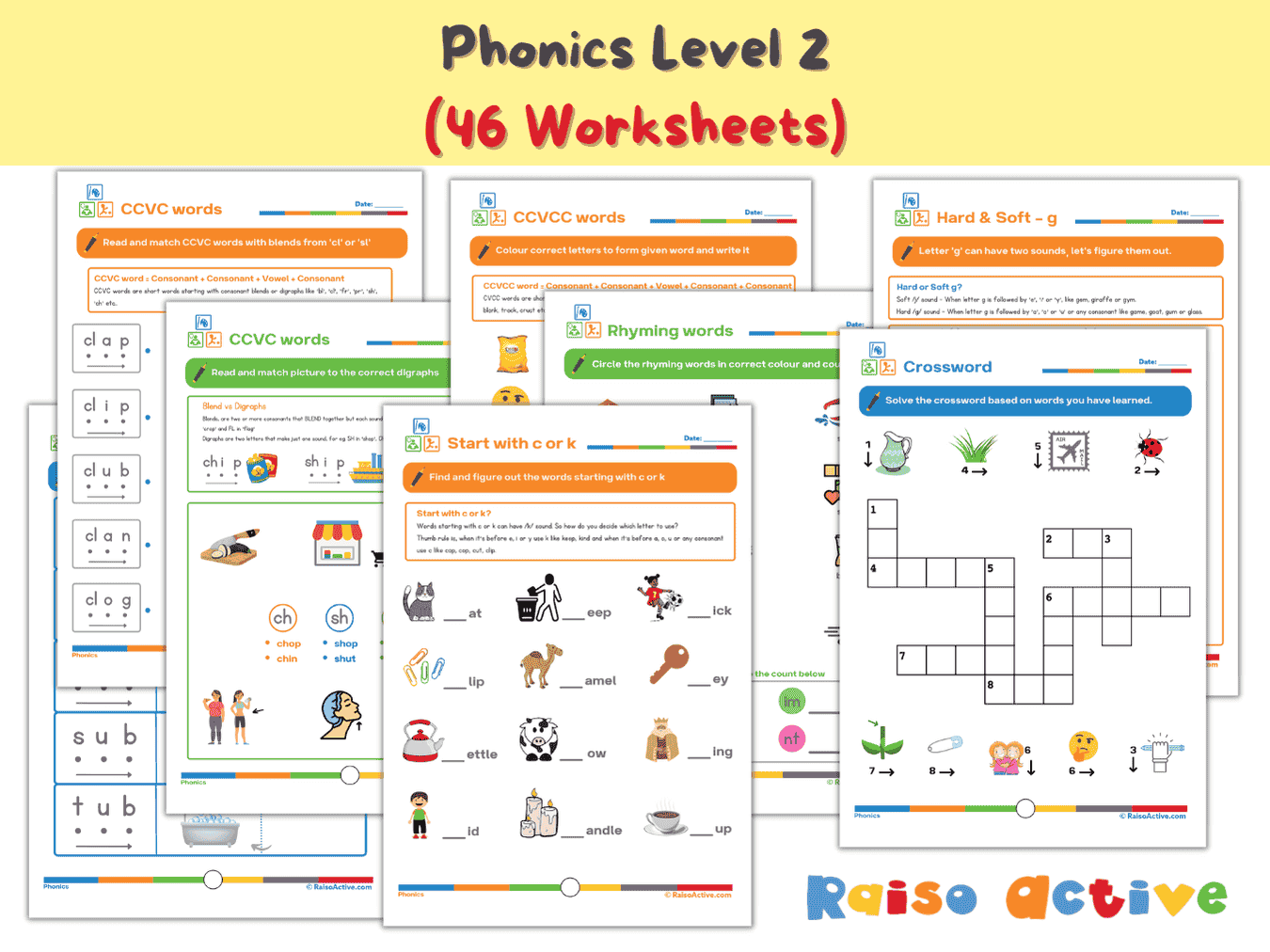
Phonics Level 2 Worksheets: CVC, CCVC, CVCC Word Families & Blends for Early Readers (Ages 4-7)
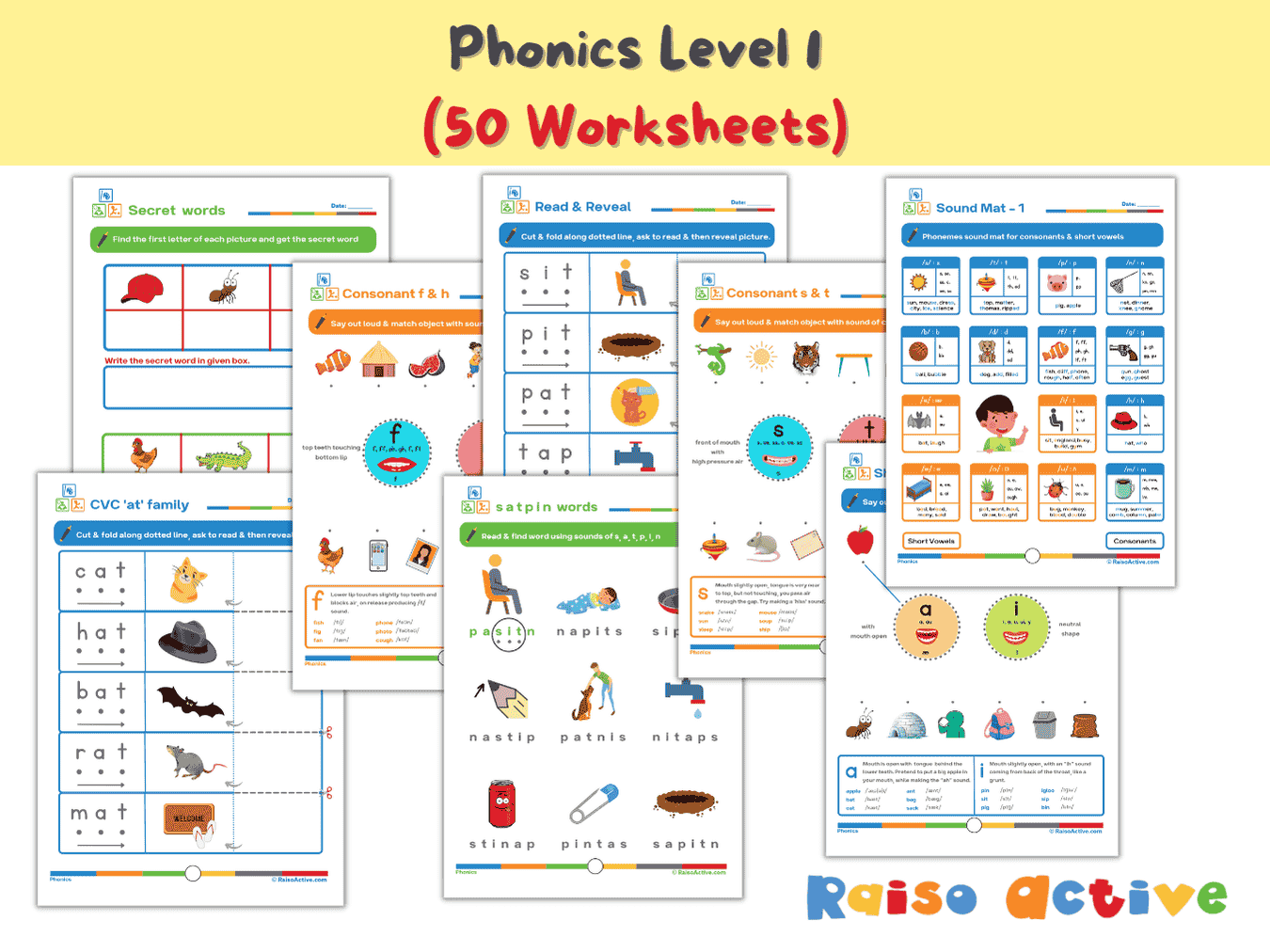
Phonics Level 1 Activity Book: Letter Sounds, Blending & CVC Words for Preschool & Kindergarten
Guides for parents and teachers
See all guides →Number Formation Rhymes 0–9 and How to Fix Reversals
Original number formation rhymes for 0–9, the correct stroke order for each digit, why 3, 5 and 7 get reversed most often, and multisensory fixes that work.
Pre-Writing Strokes in Order: From Standing Lines to Loops (With Printable Patterns)
The developmental order of pre-writing strokes, from vertical lines to loops, and why practicing them in sequence makes letter formation much easier to learn.
Kindergarten Readiness Checklist: 25 Skills to Practice Before the First Day
A kindergarten readiness checklist of 25 literacy, math, motor, self-regulation and self-help skills, with an 8-week summer plan and notes on when not to worry.
Best Worksheets for 3-Year-Olds: What Works and What to Avoid
What works on worksheets for 3-year-olds: short sessions, crayons, tracing lines, matching, cutting, a free weekly plan, and signs one is too advanced.
Reception Year Explained: EYFS Learning and How to Help at Home
A teacher's plain-English guide to the Reception Year: the seven areas of learning, Early Learning Goals, Phase 2/3 phonics, the RBA and home routines.
What Should a 4-Year-Old Know Before LKG? A Readiness Checklist
A calm, teacher-written LKG readiness checklist for 4-year-olds: language, pattern writing, numbers to 10, self-help and social skills, plus a 6-week plan.
Canonical: https://raisoactive.com/worksheets/preschool-handwriting