Beginning Blends cl and sl Circle the Pictures Worksheet
Children listen for the first two sounds and circle the pictures that start with cl (clogs, clan) and with sl (slap, slabs, slip, slug, slipper), leaving the others.
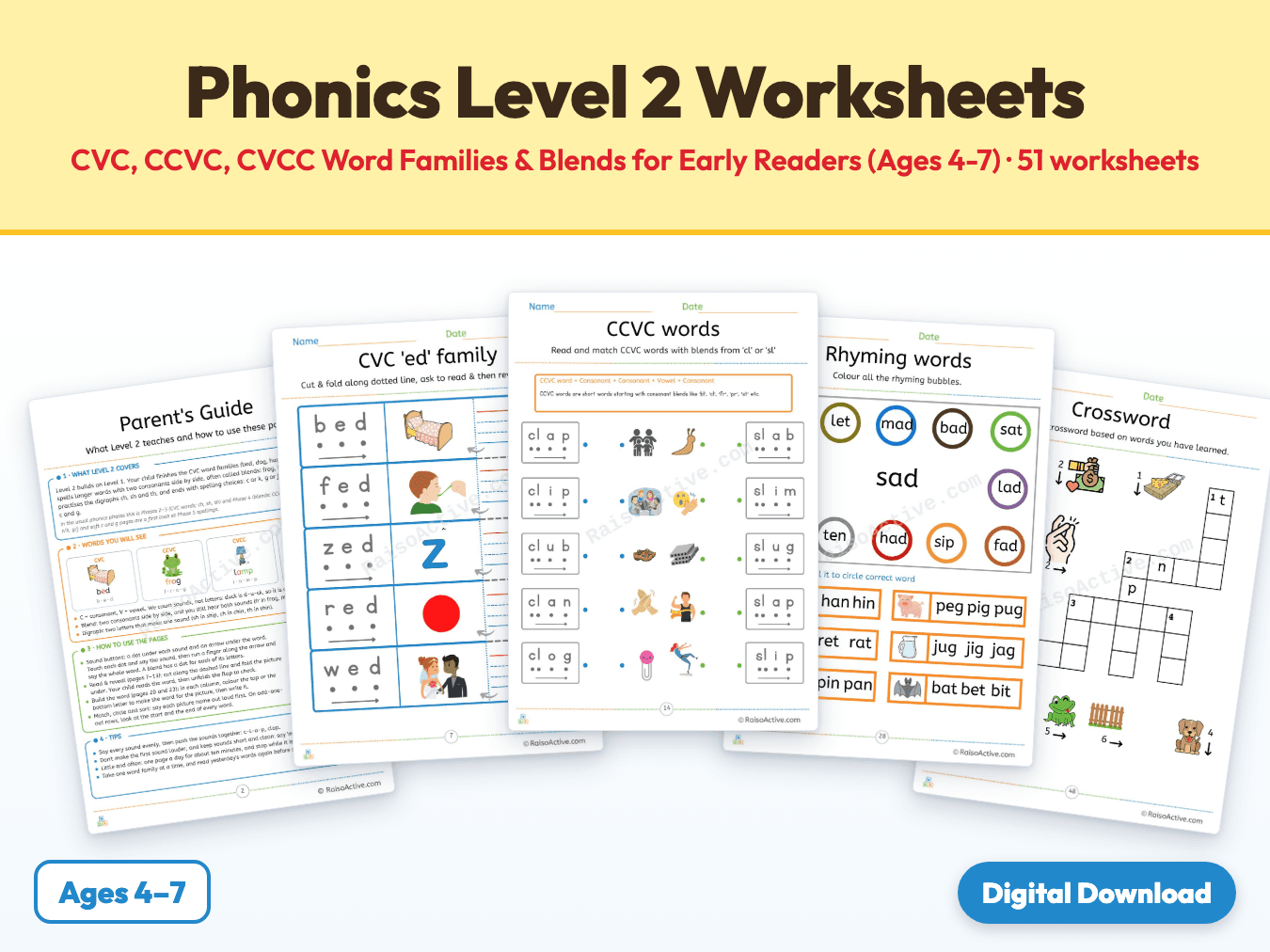
Part of the pack
Phonics Level 2 Worksheets: CVC, CCVC, CVCC Word Families & Blends for Early Readers (Ages 4-7)
This is page 37 of the pack. Ages 4-7 · Pre-K–Grade 1Ages 4-7 · Reception–Year 2Ages 4-7 · LKG–Class 1Ages 4-7

Made for your child
Adding within 10, made for your child
A maths pack with your child's name in it: pictures that explain, practice at three levels, puzzles and story sums about them. Print a new set whenever they finish.
Make a maths packFree preview · free for members
Curriculum
- Phonics - Blends > Consonant Blends
How to use this worksheet
Your child names each picture in a box, listens for the blend in the middle circle and circles only the matching pictures.
Materials needed
- Pencil
- Crayons
Extension activities
- 1Say one more cl and sl word
- 2Slip on a slipper and say 'sl'

Written by
Hemsweta Jain · Teacher Cheena
MBA and Early Childhood Educator, teaching since 2014 · Founder of RaisoActive, Mumbai
Every RaisoActive worksheet is designed and checked by the founder before publishing.
Published · Last reviewed
More from Phonics Level 2 Worksheets: CVC, CCVC, CVCC Word Families & Blends for Early Readers (Ages 4-7)

CCVC Words Match the Same Starting Blend Worksheet
Ages 4-7 · Pre-K–Grade 1Ages 4-7 · Reception–Year 2Ages 4-7 · LKG–Class 1Ages 4-7
Children read twelve CCVC words with pictures and join the pairs that start with the same blend: skip and skin, blot and blob, snip and snap, brag and brim, pram and prop, twig and twin.
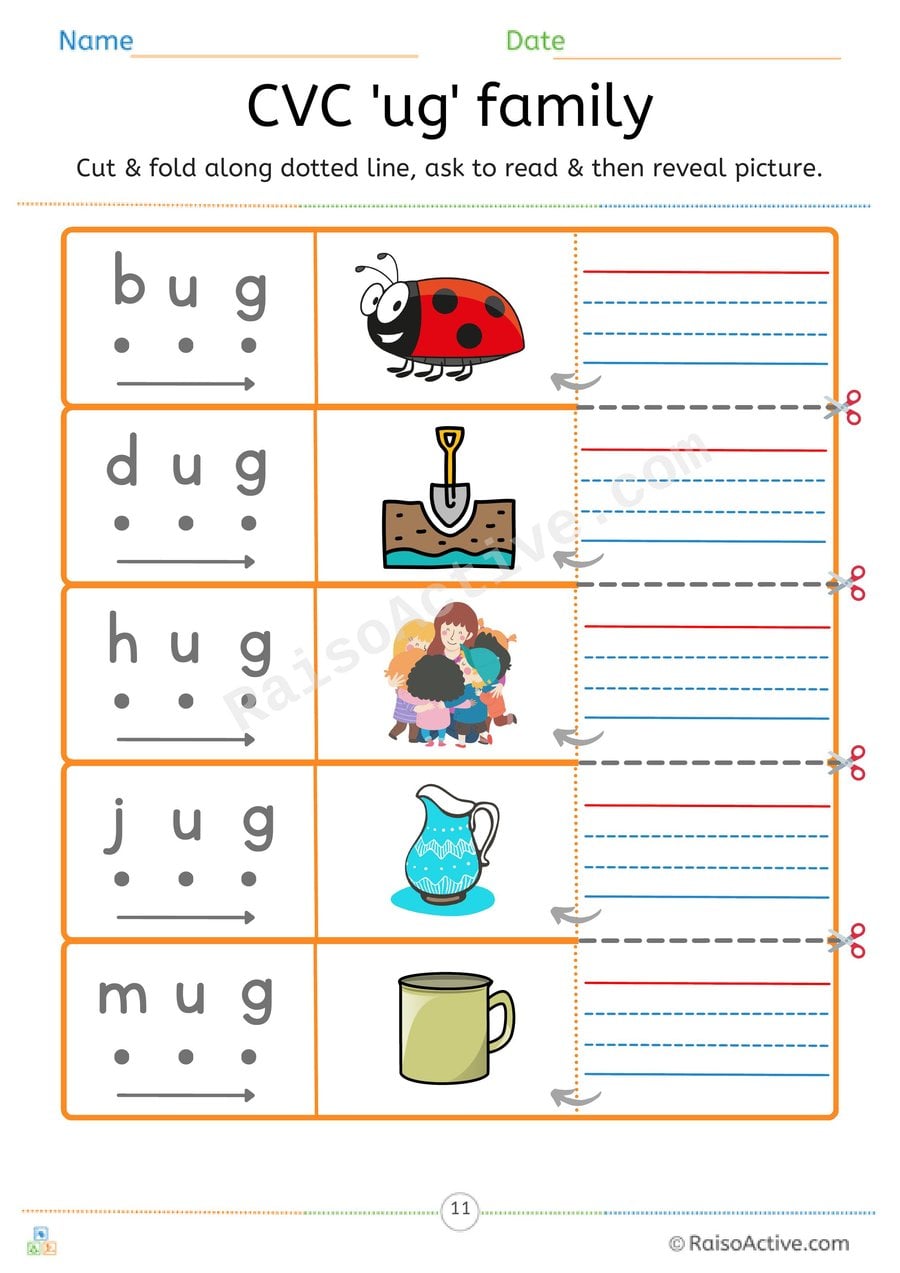
CVC 'ug' Word Family Read, Cut and Reveal Worksheet
Ages 4-7 · Pre-K–Grade 1Ages 4-7 · Reception–Year 2Ages 4-7 · LKG–Class 1Ages 4-7
Children read five 'ug' words (bug, dug, hug, jug, mug) by blending three sounds, check each one against a hidden picture (a ladybird, a spade in soil, a family hug, a jug and a mug) and write it, so they see that changing the first sound makes a new word.
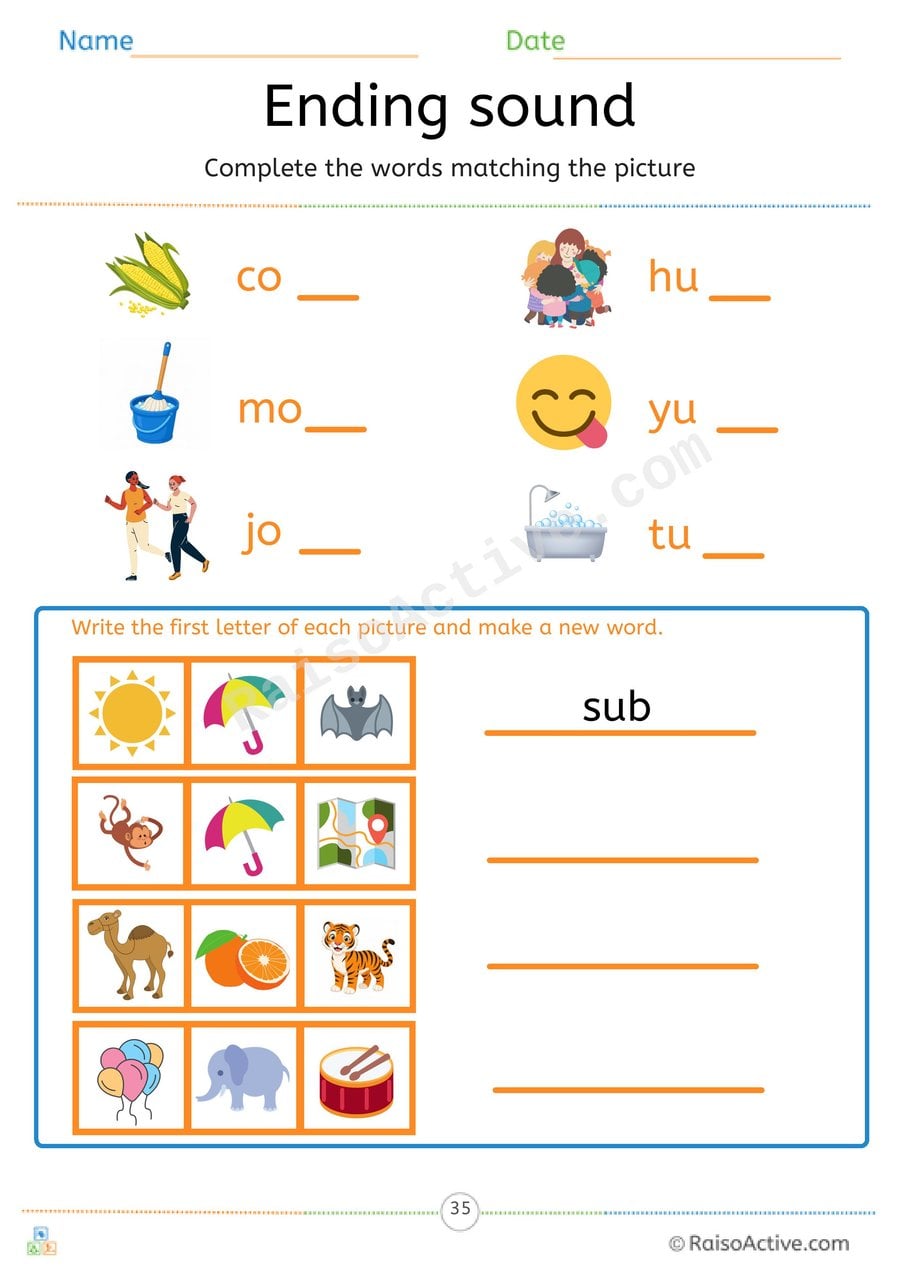
Ending Sounds and First Letter Word Making Worksheet
Ages 4-7 · Pre-K–Grade 1Ages 4-7 · Reception–Year 2Ages 4-7 · LKG–Class 1Ages 4-7
Children write the ending sound of cob, hug, mop, yum, jog and tub, then take the first letter of three pictures to make sub, mum, cot and bed.

Blends Odd One Out Worksheet: Check the Start and End
Ages 4-7 · Pre-K–Grade 1Ages 4-7 · Reception–Year 2Ages 4-7 · LKG–Class 1Ages 4-7
Children read five blend words in each row and circle the one that doesn't match at the start or the end: crop, trim, frog, skid, pant, chop and stag.

G or J Sound Worksheet: Spell the /j/ Sound
Ages 4-7 · Pre-K–Grade 1Ages 4-7 · Reception–Year 2Ages 4-7 · LKG–Class 1Ages 4-7
Children learn that the /j/ sound is often spelt g before e, i or y and j before a, o or u, and write g or j in jam, gem, gym, ginger, jungle, gel, jacket, giraffe, jump, angel, cage and job.

CCVC Words with st, cr and sp Blends Read, Colour and Match Worksheet
Ages 4-7 · Pre-K–Grade 1Ages 4-7 · Reception–Year 2Ages 4-7 · LKG–Class 1Ages 4-7
Children read stag, step, crab, crib, spin and spot, match each word to its outline picture and colour the pictures in.

Unscramble CVC Words and Missing First Letter Worksheet
Ages 4-7 · Pre-K–Grade 1Ages 4-7 · Reception–Year 2Ages 4-7 · LKG–Class 1Ages 4-7
Children unscramble the letters to write cat, pan and map, then write the missing first letter of gate, cow, bus, ant, hat, bed, car and sun.
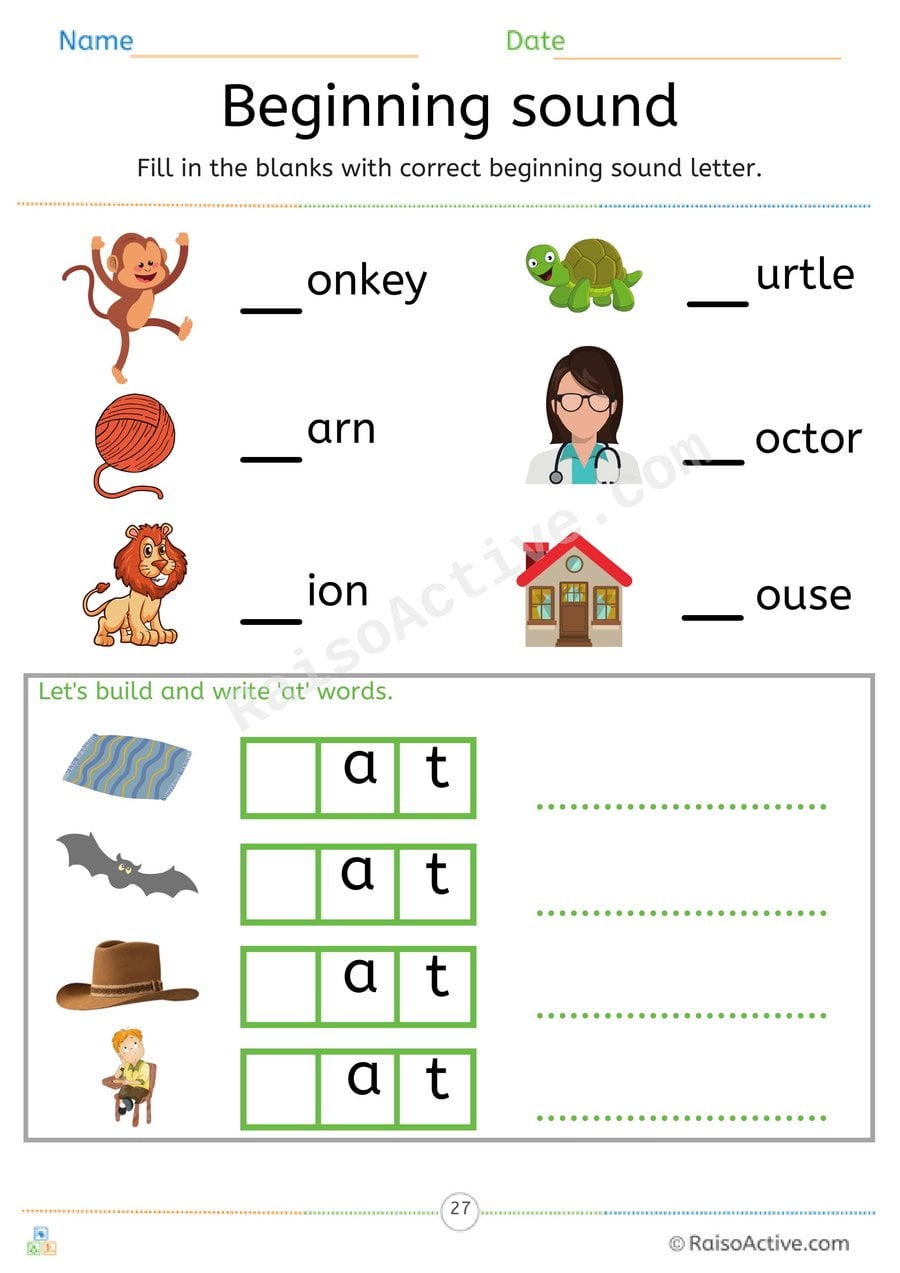
Beginning Sounds and 'at' Word Building Worksheet
Ages 4-7 · Pre-K–Grade 1Ages 4-7 · Reception–Year 2Ages 4-7 · LKG–Class 1Ages 4-7
Children write the first letter of monkey, turtle, yarn, doctor, lion and house, then build and write four 'at' words: mat, bat, hat and sat.
Related worksheets
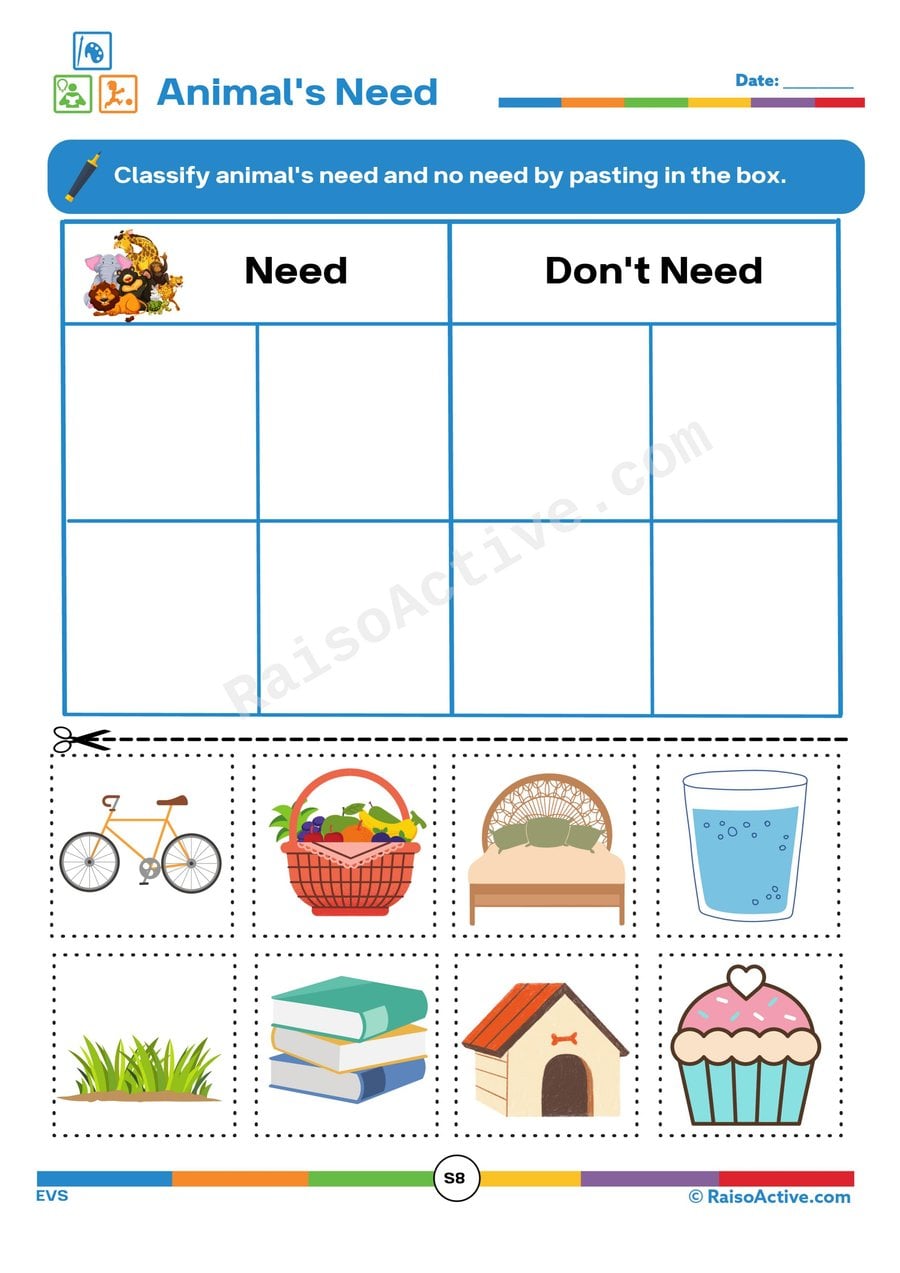
Animal Needs Sorting Worksheet for Preschoolers
Ages 3-5 · Preschool–Pre-KAges 3-5 · Nursery–ReceptionAges 3-5 · Nursery–LKGAges 3-5
This sorting activity helps children ages 3-5 understand that animals have specific survival needs — food, water, shelter, air — by cutting out picture cards and classifying each one as something an animal 'needs' or 'doesn't need.' Making this distinction requires children to reason about cause and effect in a simple form: what happens to an animal without food or water. This early exposure to classification and survival needs lays groundwork for more formal life science concepts children will encounter in later grades.
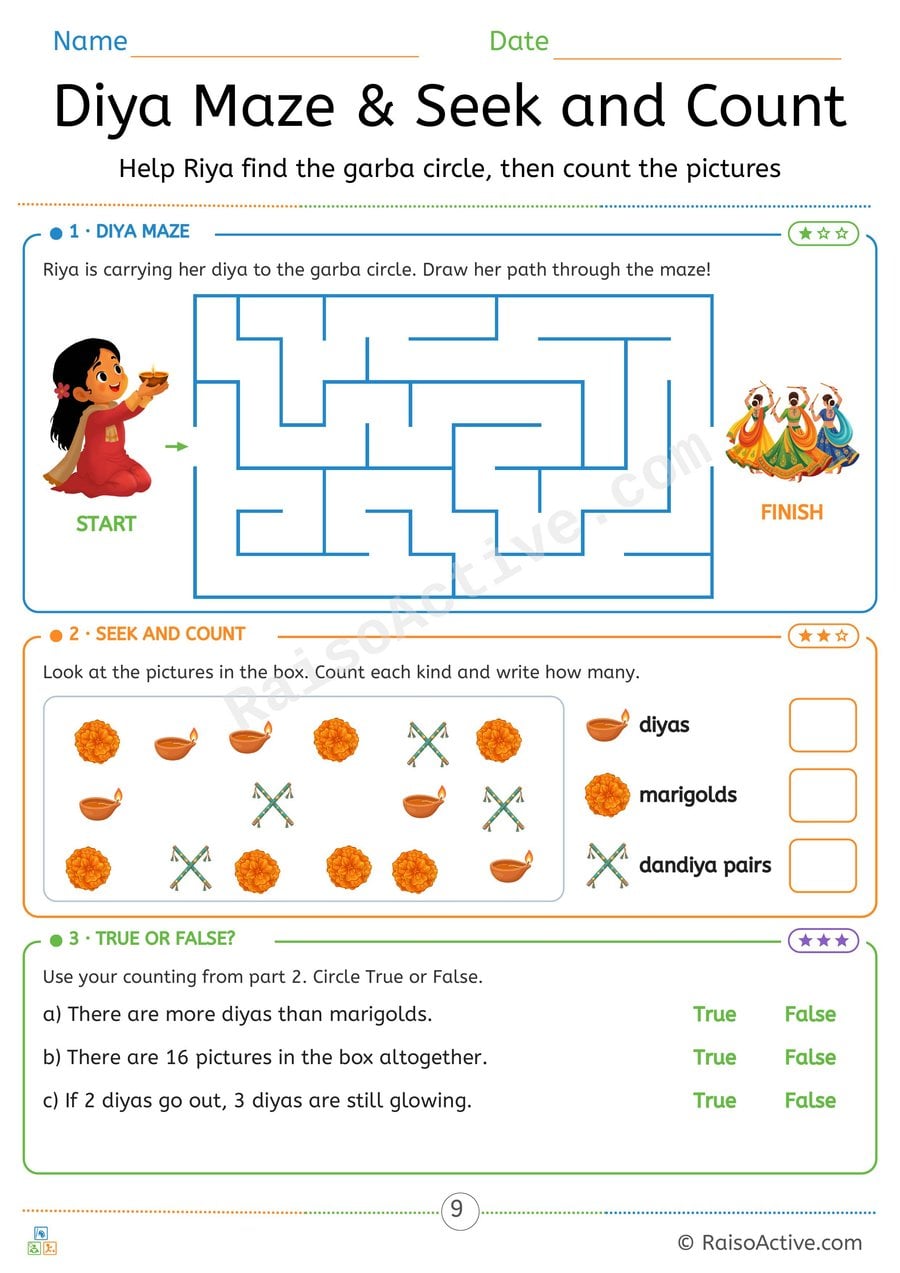
Navratri Diya Maze and Seek-and-Count Worksheet
Ages 4-6 · Pre-K–KindergartenAges 4-6 · Reception–Year 1Ages 4-6 · LKG–UKGAges 4-6
Children plan a path through a maze, count and sort mixed pictures by kind, and use their counts to decide if sentences are true or false.

Logic Grid Puzzle for Kids: Sort by Two Rules
Ages 4-7 · Pre-K–Grade 1Ages 4-7 · Reception–Year 2Ages 4-7 · LKG–Class 1Ages 4-7
Children sort eight numbered objects by two rules at once (big or small, striped or plain) and then use clues in a simple logic grid to work out which child has which pet. This builds classification and deductive reasoning.

Phonics Level 1 Certificate of Achievement
Ages 3-6 · Preschool–KindergartenAges 3-6 · Nursery–Year 1Ages 3-6 · Nursery–UKGAges 3-6
Children celebrate finishing Phonics Level 1 and tick the CVC word families they can now read, from at to ut.

Guess the Word: Cut and Paste Worksheet for Early Learners
Ages 3-5 · Preschool–Pre-KAges 3-5 · Nursery–ReceptionAges 3-5 · Nursery–LKGAges 3-5
This cut-and-paste activity asks children ages 3-5 to look at picture clues, say the words aloud, and paste the correct picture to complete a combined word, giving them early practice in visual word-building and vocabulary expansion. Working with picture combinations helps children understand that some words are made by joining two smaller ideas together, a concept that supports later compound word recognition in reading. Saying each word out loud before pasting also builds the habit of connecting spoken language to printed or pictured words.

Food Bingo Worksheet: Identify Healthy and Unhealthy Foods!
Ages 3-5 · Preschool–Pre-KAges 3-5 · Nursery–ReceptionAges 3-5 · Nursery–LKGAges 3-5
This bingo-style activity helps children ages 3-5 practice distinguishing healthy foods from unhealthy ones by physically placing tokens on matching pictures, turning nutrition education into an active game rather than a lecture. Scanning the board for matches also reinforces visual search skills similar to those used in matching and memory games. Because bingo requires a full row to win, children stay motivated to keep scanning and comparing even after finding a few matches.

Bean Counting Fun: A Sorting Worksheet for Preschoolers!
Ages 3-5 · Preschool–Pre-KAges 3-5 · Nursery–ReceptionAges 3-5 · Nursery–LKGAges 3-5
Children ages 3-5 practice number recognition and one-to-one correspondence by counting out the exact quantity of beans shown on each numeral and physically placing them onto the matching picture. Handling small, individual beans and placing them one at a time reinforces accurate counting far more effectively than counting printed dots, since a misplaced bean is immediately obvious and easy to correct.
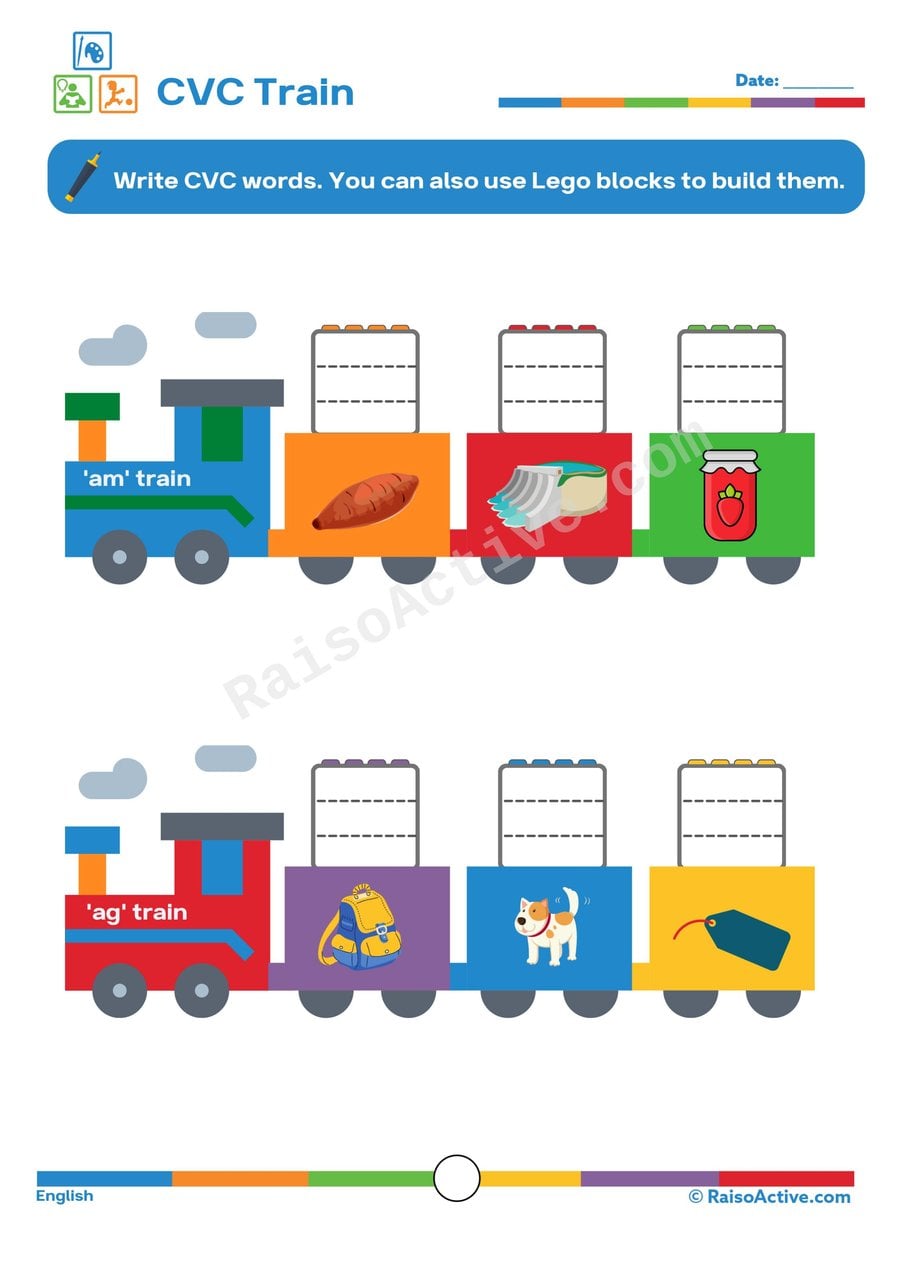
CVC Train Worksheet: Write and Build CVC Words!
Ages 4-6 · Pre-K–KindergartenAges 4-6 · Reception–Year 1Ages 4-6 · LKG–UKGAges 4-6
This worksheet gives children ages 4-6 focused practice blending letter sounds into consonant-vowel-consonant words, using train-car pictures as clues for words like 'dog,' 'hen,' or 'cup.' Because children both write the word and can optionally build it with Lego blocks, this worksheet reinforces the same phonics skill through two different physical actions — handwriting and hands-on construction — which helps the spelling patterns stick.
Guides for this topic

How to Teach CVC Blending: A Step-by-Step Method That Works in Two Weeks
A step-by-step method for teaching CVC blending, covering continuous sounds, word families, common errors, and a 14-day plan that most children finish reading CVC words.
Phase 2 Phonics at Home: Sound Order, Blending Games, Worksheets
Phase 2 phonics at home: the five sound sets in order, oral blending, tricky words, a two-week routine, common mistakes, and free worksheets.

Reception Year Explained: EYFS Learning and How to Help at Home
A teacher's plain-English guide to the Reception Year: the seven areas of learning, Early Learning Goals, Phase 2/3 phonics, the RBA and home routines.
Reviews
Every worksheet for ages 4–7, no watermark
Members download the full library of 1,000+ worksheets and every activity pack without watermarks or daily limits. One year costs ₹999 in India or $20 elsewhere.
See membership plansOr download any worksheet free with a watermark (5 a day).