Blends Odd One Out Worksheet: Check the Start and End
Children read five blend words in each row and circle the one that doesn't match at the start or the end: crop, trim, frog, skid, pant, chop and stag.
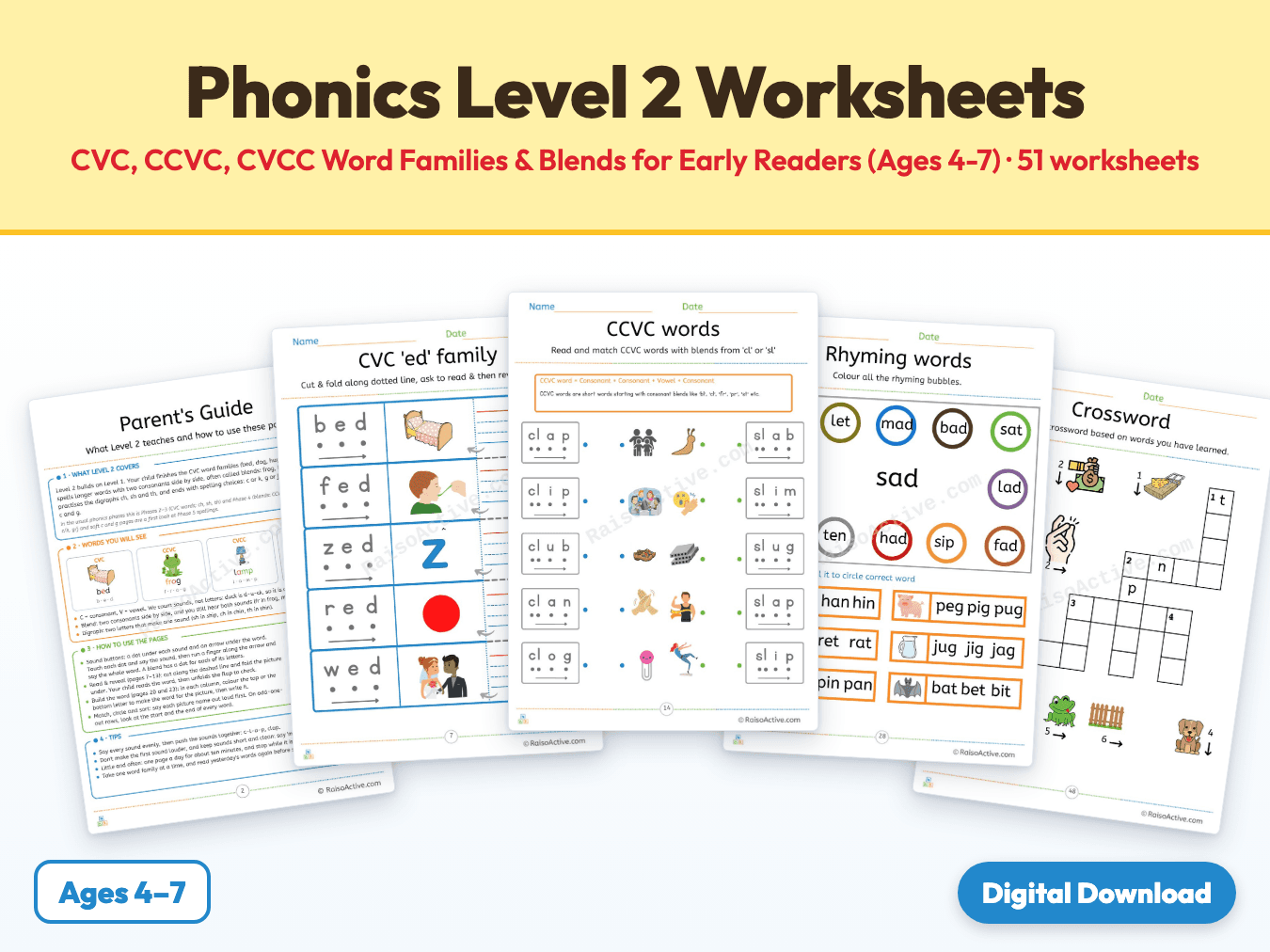
Part of the pack
Phonics Level 2 Worksheets: CVC, CCVC, CVCC Word Families & Blends for Early Readers (Ages 4-7)
This is page 38 of the pack. Ages 4-7 · Pre-K–Grade 1Ages 4-7 · Reception–Year 2Ages 4-7 · LKG–Class 1Ages 4-7
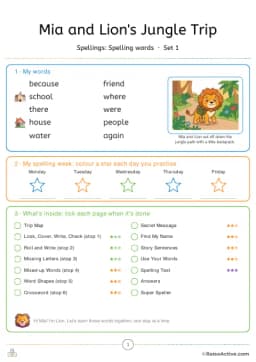
Made for your child
Spelling practice, made for your child
Their own spelling words turned into a pack: trace or look-cover-write-check, roll and write, a secret picture code, a word search, a crossword and a test, with their name in it.
Make a spelling packFree preview · free for members
Or start free: a word search with sight wordsCurriculum
- Phonics - Blends > Consonant Blends
- Phonics - Blends > Blend Words
How to use this worksheet
The first row (crop) is done. Your child reads every word aloud, looks at the first two and last two letters, and circles the odd one out.
Materials needed
- Pencil
Extension activities
- 1Make your own odd one out row
- 2Read the circled words as a list

Written by
Hemsweta Jain · Teacher Cheena
MBA and Early Childhood Educator, teaching since 2014 · Founder of RaisoActive, Mumbai
Every RaisoActive worksheet is designed and checked by the founder before publishing.
Published · Last reviewed
More from Phonics Level 2 Worksheets: CVC, CCVC, CVCC Word Families & Blends for Early Readers (Ages 4-7)

C or K Beginning Sound Worksheet with the Spelling Rule
Ages 4-7 · Pre-K–Grade 1Ages 4-7 · Reception–Year 2Ages 4-7 · LKG–Class 1Ages 4-7
Children learn the rule of thumb (k before e, i or y; c before a, o, u or a consonant) and write c or k to start cat, kite, kick, clip, camel, key, kettle, cow, king, kid, candle and cup.

Phonics Level 2 Sound Mat 3: Long Vowel and R-Influenced Vowel Sounds
Ages 4-7 · Pre-K–Grade 1Ages 4-7 · Reception–Year 2Ages 4-7 · LKG–Class 1Ages 4-7
Children see the long vowel sounds, the r-influenced vowels such as ar, er and or, and other vowel sounds such as ow, oy and oo, each with spellings and examples.

Phonics Level 2 Sound Mat 4: Consonant Blends and ck
Ages 4-7 · Pre-K–Grade 1Ages 4-7 · Reception–Year 2Ages 4-7 · LKG–Class 1Ages 4-7
Children see how two consonants keep both their sounds in a blend, at the start of words (bl, cl, fl, sl, br, cr, dr, tr, st, sw) and at the end (nd, nt, mp), and that ck makes one /k/ sound.

G or J Sound Worksheet: Spell the /j/ Sound
Ages 4-7 · Pre-K–Grade 1Ages 4-7 · Reception–Year 2Ages 4-7 · LKG–Class 1Ages 4-7
Children learn that the /j/ sound is often spelt g before e, i or y and j before a, o or u, and write g or j in jam, gem, gym, ginger, jungle, gel, jacket, giraffe, jump, angel, cage and job.
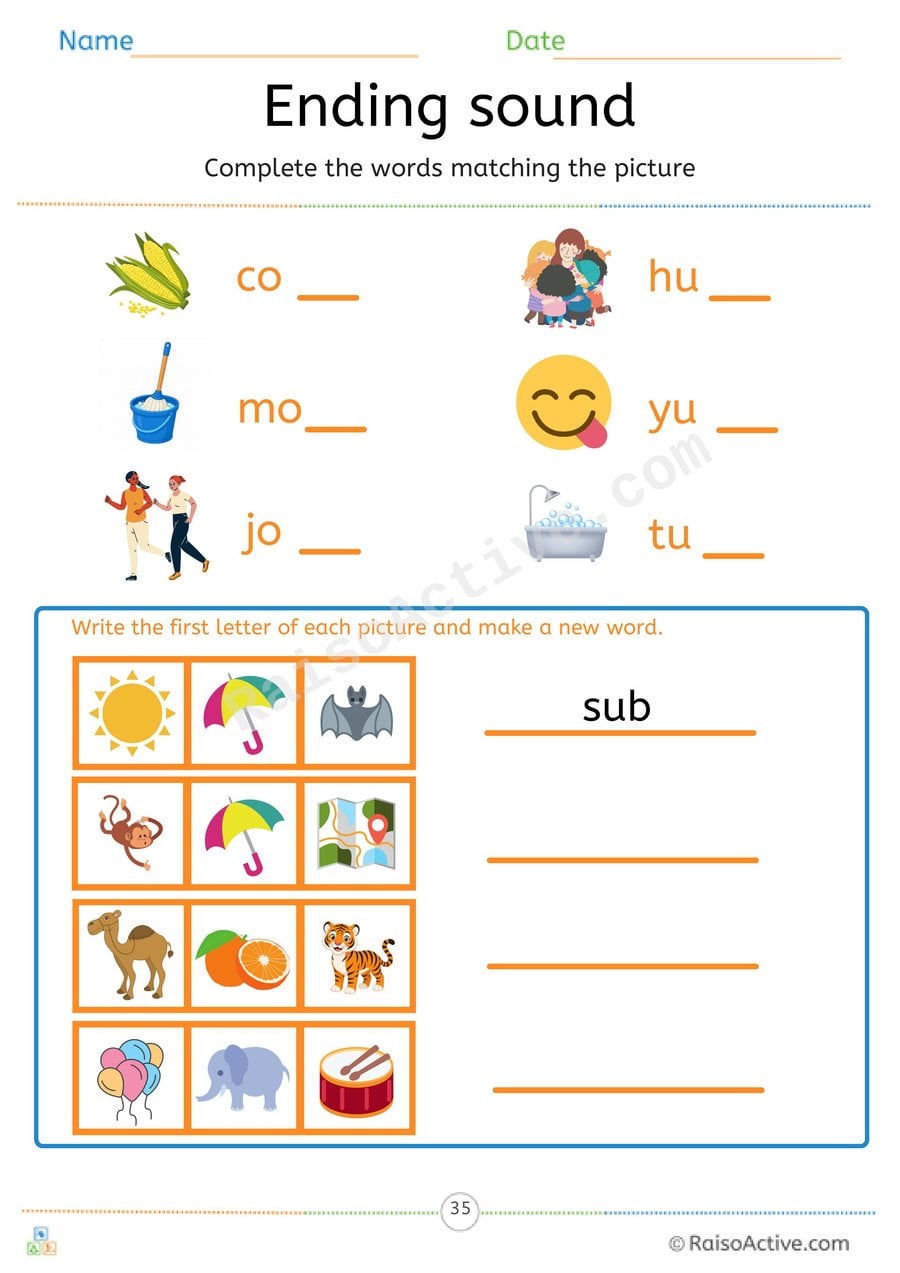
Ending Sounds and First Letter Word Making Worksheet
Ages 4-7 · Pre-K–Grade 1Ages 4-7 · Reception–Year 2Ages 4-7 · LKG–Class 1Ages 4-7
Children write the ending sound of cob, hug, mop, yum, jog and tub, then take the first letter of three pictures to make sub, mum, cot and bed.

Match the Blend and Write the Word Worksheet: sk, st, dr, gr, sc, sw
Ages 4-7 · Pre-K–Grade 1Ages 4-7 · Reception–Year 2Ages 4-7 · LKG–Class 1Ages 4-7
Children join each blend to the word ending that fits the picture and write the whole word: skid, stem, drop, grip, scab and swim.

CVC Word Search and Match: 'at', 'an' and 'ap' Words Worksheet
Ages 4-7 · Pre-K–Grade 1Ages 4-7 · Reception–Year 2Ages 4-7 · LKG–Class 1Ages 4-7
Children find and colour bat, rat, pat and cat in a letter grid, then match man, nap, pan, map and mat to their pictures.
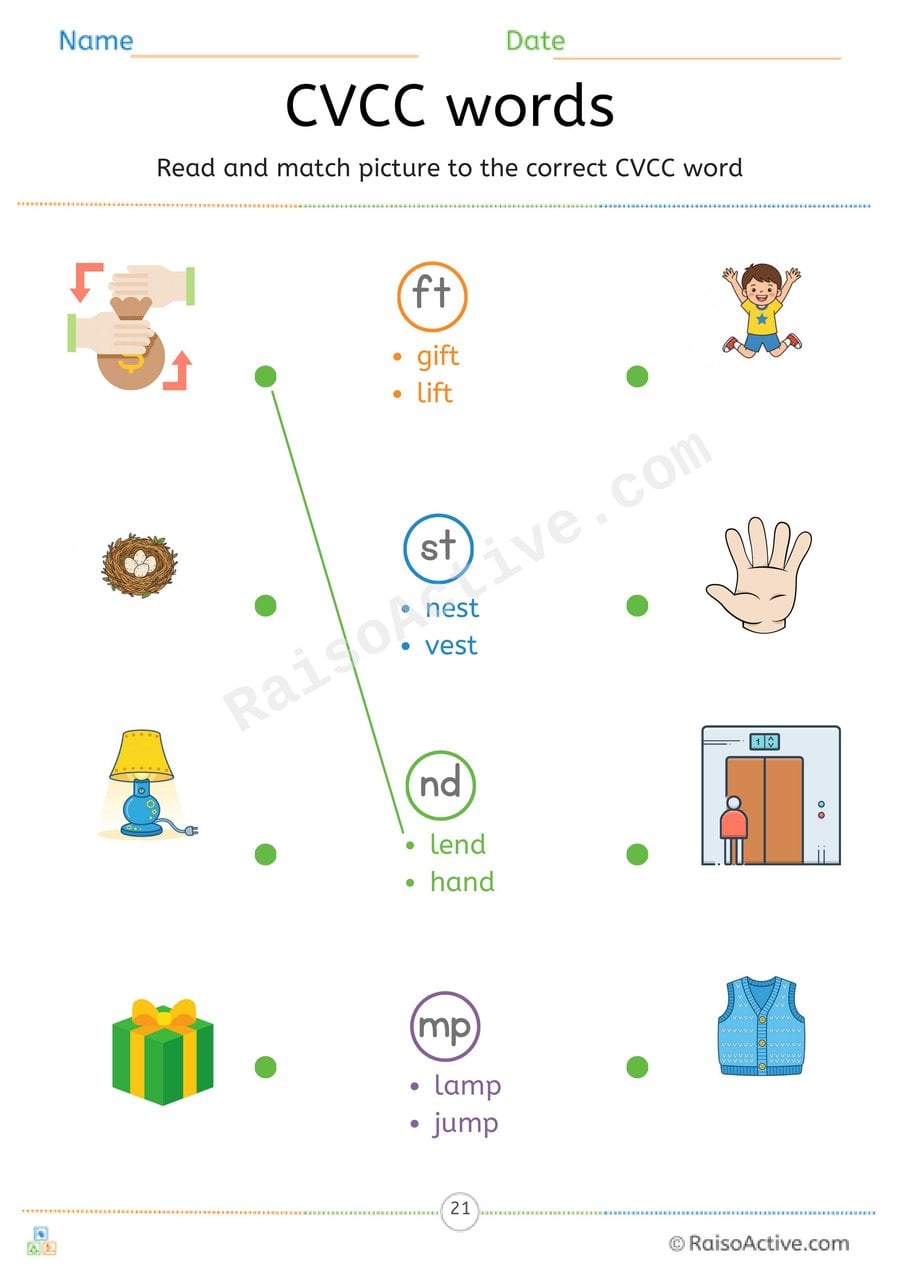
CVCC Ending Blends ft, st, nd and mp Read and Match Worksheet
Ages 4-7 · Pre-K–Grade 1Ages 4-7 · Reception–Year 2Ages 4-7 · LKG–Class 1Ages 4-7
Children read eight CVCC words grouped by their ending blend (gift, lift, nest, vest, lend, hand, lamp, jump) and match each word to its picture.
Related worksheets
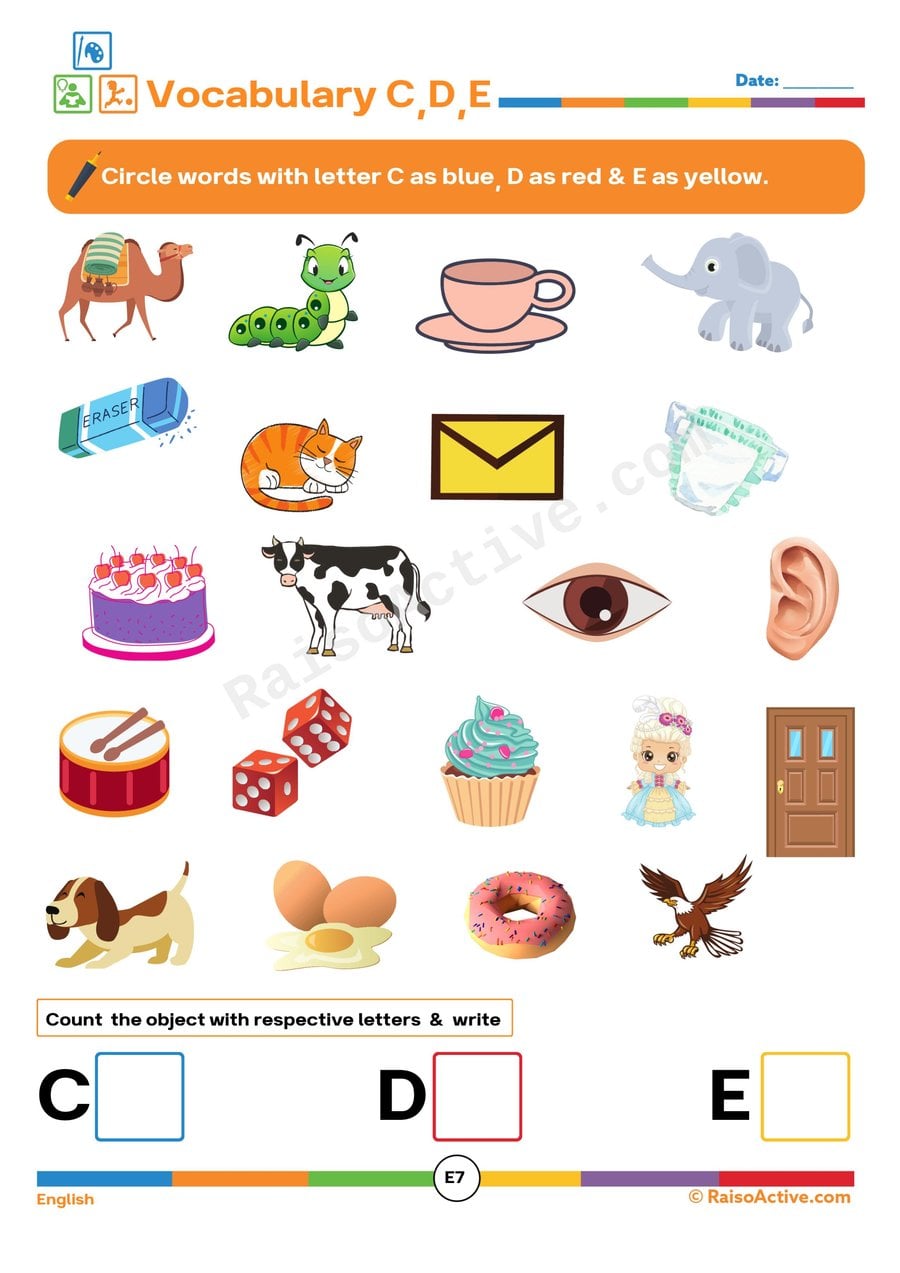
C, D, E Letter Sounds Worksheet: Circle and Count!
Ages 3-5 · Preschool–Pre-KAges 3-5 · Nursery–ReceptionAges 3-5 · Nursery–LKGAges 3-5
This activity gives children ages 3-5 focused practice recognizing the beginning sounds of the letters C, D, and E, asking them to circle matching pictures in different colors for each letter before counting the results. Combining phonics with counting means children practice two skills in one sitting: identifying initial letter sounds and recording a numeric total, both foundational for kindergarten readiness. Color-coding each letter also helps children visually organize the three sounds instead of mixing them together.

Fun Activities for Kids: Parent's Guide to Learning Through Play
Ages 3-5 · Preschool–Pre-KAges 3-5 · Nursery–ReceptionAges 3-5 · Nursery–LKGAges 3-5
This parent's guide gives caregivers of children ages 3-5 a set of play-based activities focused on phonics and sentence-building, translating early literacy concepts into hands-on games rather than seated worksheet time. Learning through play, such as storytelling or naming body parts during movement, helps young children absorb language concepts without the pressure of a formal lesson. Covering both phonics and sentence-building in one guide gives caregivers flexibility to match the activity to their child's mood and energy level.

Read and Circle: Matching Sentences to Pictures Worksheet
Ages 4-5 · Pre-KAges 4-5 · ReceptionAges 4-5 · LKGAges 4-5
Children ages 4-5 build reading comprehension by reading a short, simple sentence and then identifying which of several pictures actually matches its meaning, rather than just decoding words in isolation. This step — connecting written language back to a real scene — is what separates true reading comprehension from mechanical word-calling, making it an important milestone activity for early readers.

Fall Crossword Puzzle Worksheet for Preschoolers
Ages 3-5 · Preschool–Pre-KAges 3-5 · Nursery–ReceptionAges 3-5 · Nursery–LKGAges 3-5
This fall-themed crossword uses pictures instead of written clues, helping children ages 3-5 connect an image directly to its written word while practicing early letter formation. Counting the boxes in each answer also builds an intuitive sense of word length before formal spelling instruction begins.

Phonics Level 1 Answer Key
Ages 3-6 · Preschool–KindergartenAges 3-6 · Nursery–Year 1Ages 3-6 · Nursery–UKGAges 3-6
Grown-ups can check every Phonics Level 1 page that has one right answer, page by page.

Phonics Level 1 Certificate of Achievement
Ages 3-6 · Preschool–KindergartenAges 3-6 · Nursery–Year 1Ages 3-6 · Nursery–UKGAges 3-6
Children celebrate finishing Phonics Level 1 and tick the CVC word families they can now read, from at to ut.
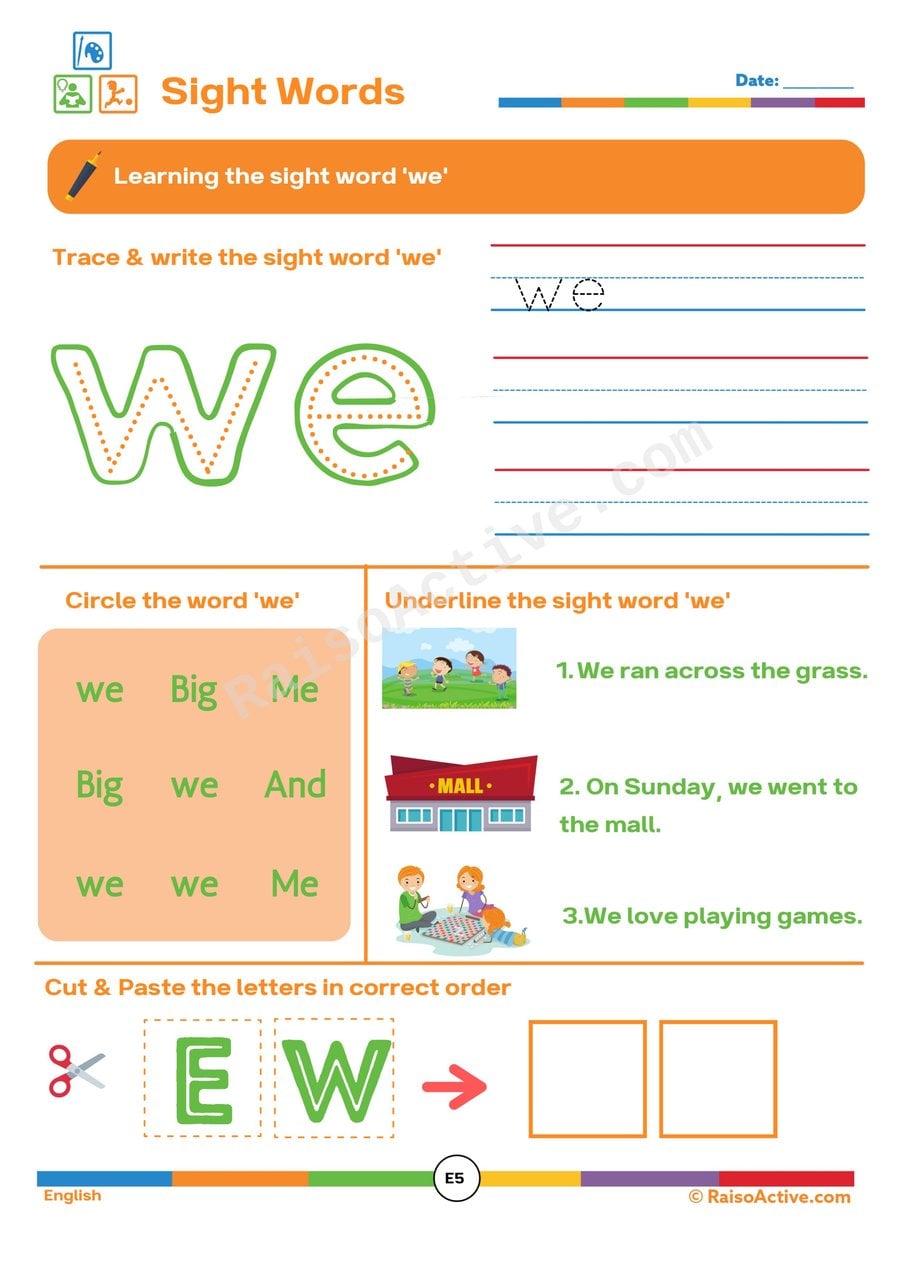
Sight Word 'We' Worksheet: Trace, Write, and Find!
Ages 3-5 · Preschool–Pre-KAges 3-5 · Nursery–ReceptionAges 3-5 · Nursery–LKGAges 3-5
This worksheet builds deep familiarity with the sight word 'we' in children ages 3-5 through four different practice formats — tracing, independent writing, circling, and finding the word within sentences — layered onto a single page. Repeating the same word across so many formats in one sitting is specifically designed to move 'we' from a word your child sounds out each time into one they recognize instantly on sight.

Sight Words Coloring Worksheet: 'His', 'My', and 'Her' Fun!
Ages 3-5 · Preschool–Pre-KAges 3-5 · Nursery–ReceptionAges 3-5 · Nursery–LKGAges 3-5
This coloring activity helps children ages 3-5 recognize and internalize the common sight words 'his,' 'my,' and 'her' by following a color-coded key, an approach that builds sight word memory through repeated visual association rather than isolated flashcard drilling. Because sight words like these don't sound out easily using phonics rules, repeated exposure in a fun context like coloring is one of the most effective ways for young children to memorize them. The activity also reinforces fine motor control as children carefully color within the lines of each labeled section.
Guides for this topic

How to Teach CVC Blending: A Step-by-Step Method That Works in Two Weeks
A step-by-step method for teaching CVC blending, covering continuous sounds, word families, common errors, and a 14-day plan that most children finish reading CVC words.
Phase 2 Phonics at Home: Sound Order, Blending Games, Worksheets
Phase 2 phonics at home: the five sound sets in order, oral blending, tricky words, a two-week routine, common mistakes, and free worksheets.

Reception Year Explained: EYFS Learning and How to Help at Home
A teacher's plain-English guide to the Reception Year: the seven areas of learning, Early Learning Goals, Phase 2/3 phonics, the RBA and home routines.
Reviews
Every worksheet for ages 4–7, no watermark
Members download the full library of 1,000+ worksheets and every activity pack without watermarks or daily limits. One year costs ₹999 in India or $20 elsewhere.
See membership plansOr download any worksheet free with a watermark (5 a day).