Free printable worksheets · United States
Kindergarten Shapes Worksheets (Ages 5–6)
Kindergarten shapes worksheets are practice sheets for children aged 5–6 in Kindergarten in the US. Shapes worksheets build recognition and naming of common two- and three-dimensional forms, and the ability to sort or match them by their features. The sheets on this page cover naming 2D shapes, matching identical shapes, sorting shapes by attribute and finding shapes in everyday objects.
Kindergarten is the year formal reading instruction begins under Common Core: a child is expected to know a sound for every consonant and the short vowels, decode simple three-letter words, write a basic sentence, count to 100 by ones and tens, and add and subtract within 10. Five-year-olds move into three dimensions. Alongside the flat shapes, worksheets introduce cube, sphere, cone and cylinder, ask which object matches each one, and press the key idea that a cube has square faces without being a square. Sorting flat from solid, composing two triangles into a square, and finding shapes in a photo of a kitchen are all fair tasks. Precise words such as "vertex" and "edge" can wait; "corner" and "side" do the job.
959+ worksheets · free PDF download · print on A4 or Letter
Kindergarten Shapes Worksheets to print
Browse all worksheets for ages 5–6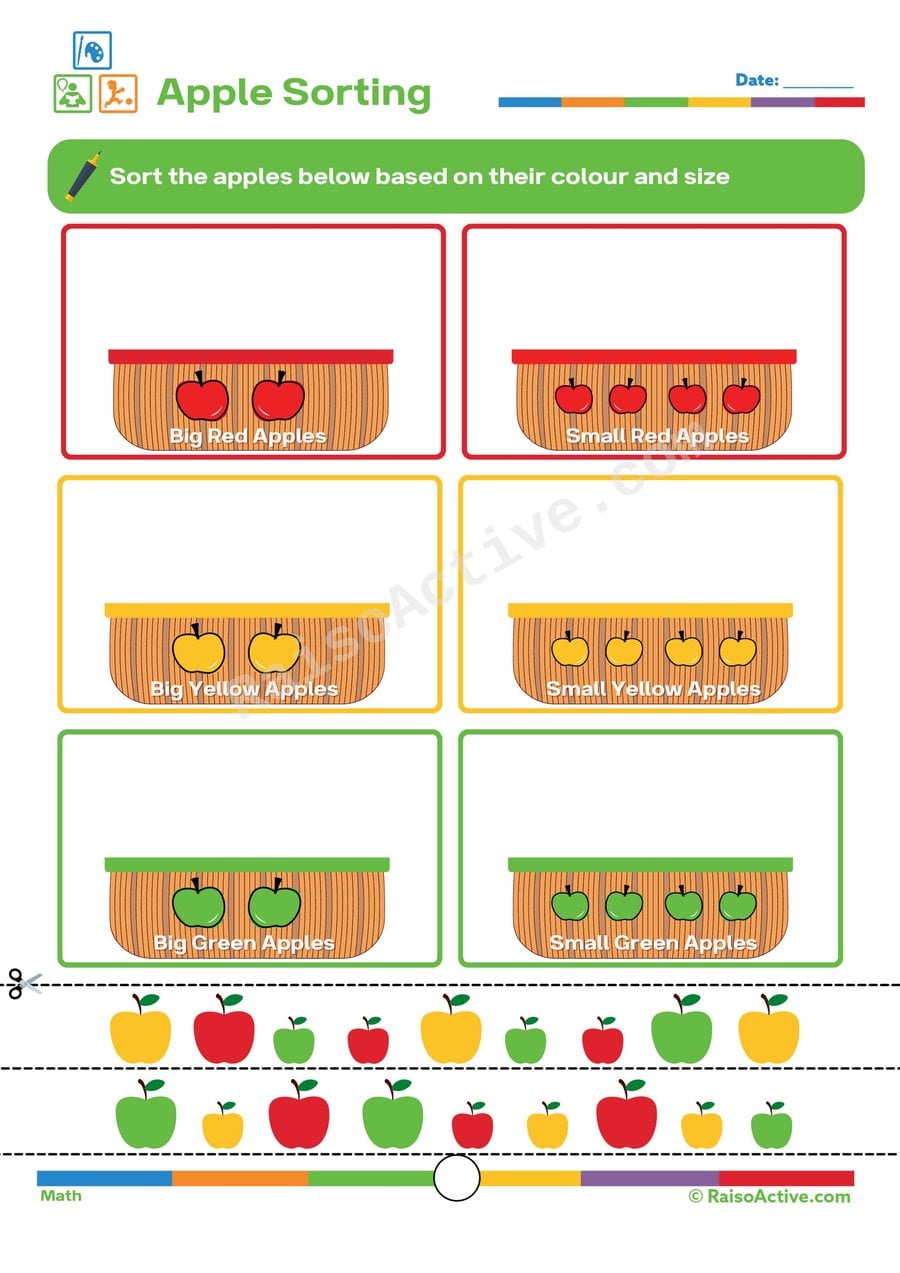
Apple Sorting Worksheet: Color and Size Fun!
This sorting worksheet has children ages 4-6 classify a set of cut-out apples by two different attributes, color and size, simultaneously, which builds more advanced categorization skills than sorting by a single trait alone. Deciding which basket an apple belongs in based on two criteria at once also strengthens early logical reasoning.

Family Words Worksheet: Picture Matching and Word Recognition
This worksheet gives children ages 4-6 another round of practice recognizing family-member vocabulary words, reinforcing the connection between a printed word and the picture it names through both a tick-the-answer step and a cut-and-paste matching step. Repeating this pairing across two different formats on one page helps move these words from recognition with support toward more independent reading.
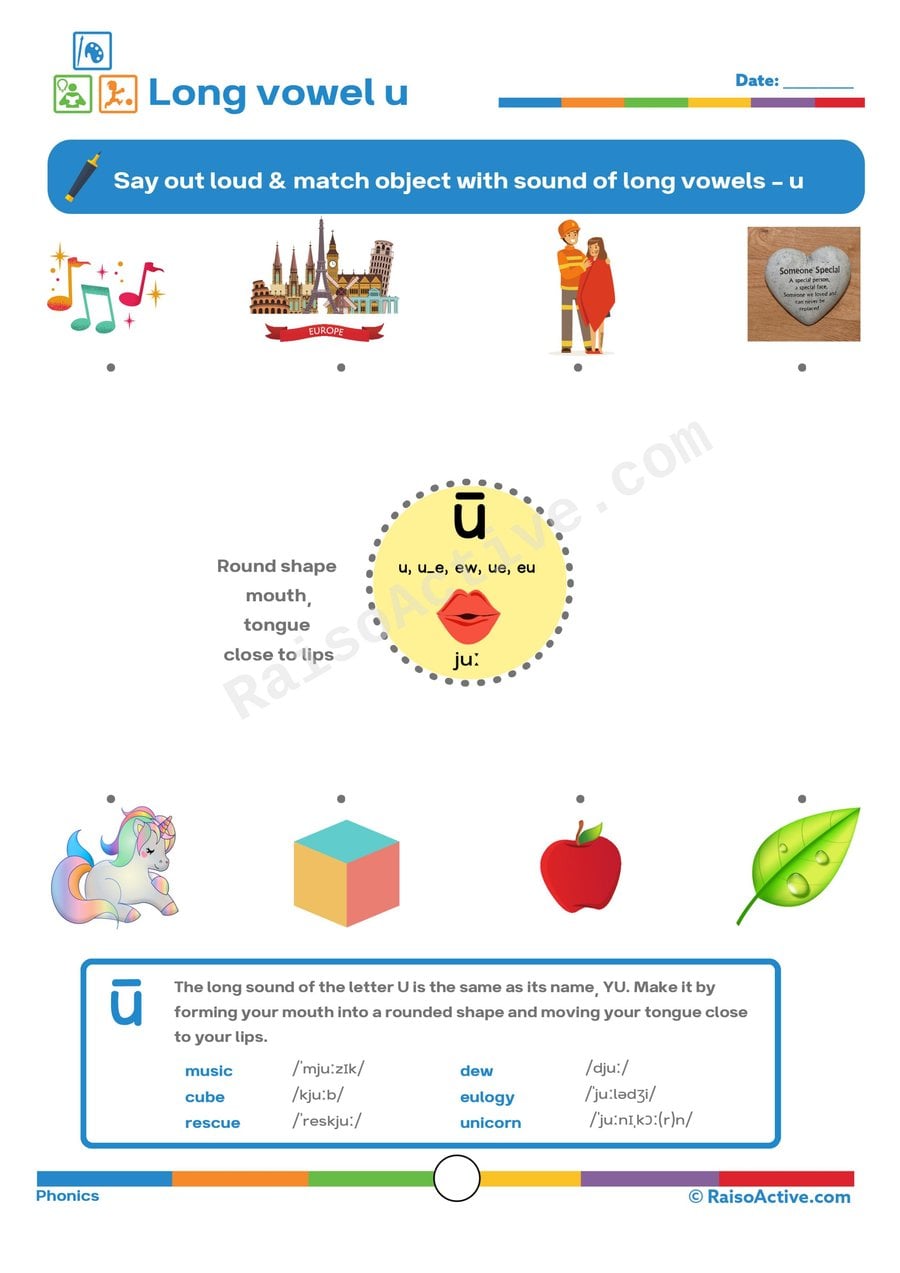
Long Vowel U Worksheet: Say the Sound and Match!
This matching worksheet gives children ages 4-6 focused practice hearing and identifying the long 'u' sound (as in 'cube' and 'mule') inside real words, then connecting that sound to its written form. Matching pictures to words strengthens the sound-symbol link that underlies fluent reading, while distinguishing long 'u' from other vowel sounds sharpens phonemic awareness — a strong predictor of later reading success.

Stick Man Emotions Worksheet: Happy, Sad, Angry, and Surprised!
Children ages 4-6 practice reading facial expressions on this worksheet, matching stick-figure faces to their correct emotion labels by noticing details like mouth shape and eyebrow position. This strengthens emotional literacy — the ability to name and recognize feelings in others — which supports empathy and smoother social interactions as children move into more group play and classroom settings.
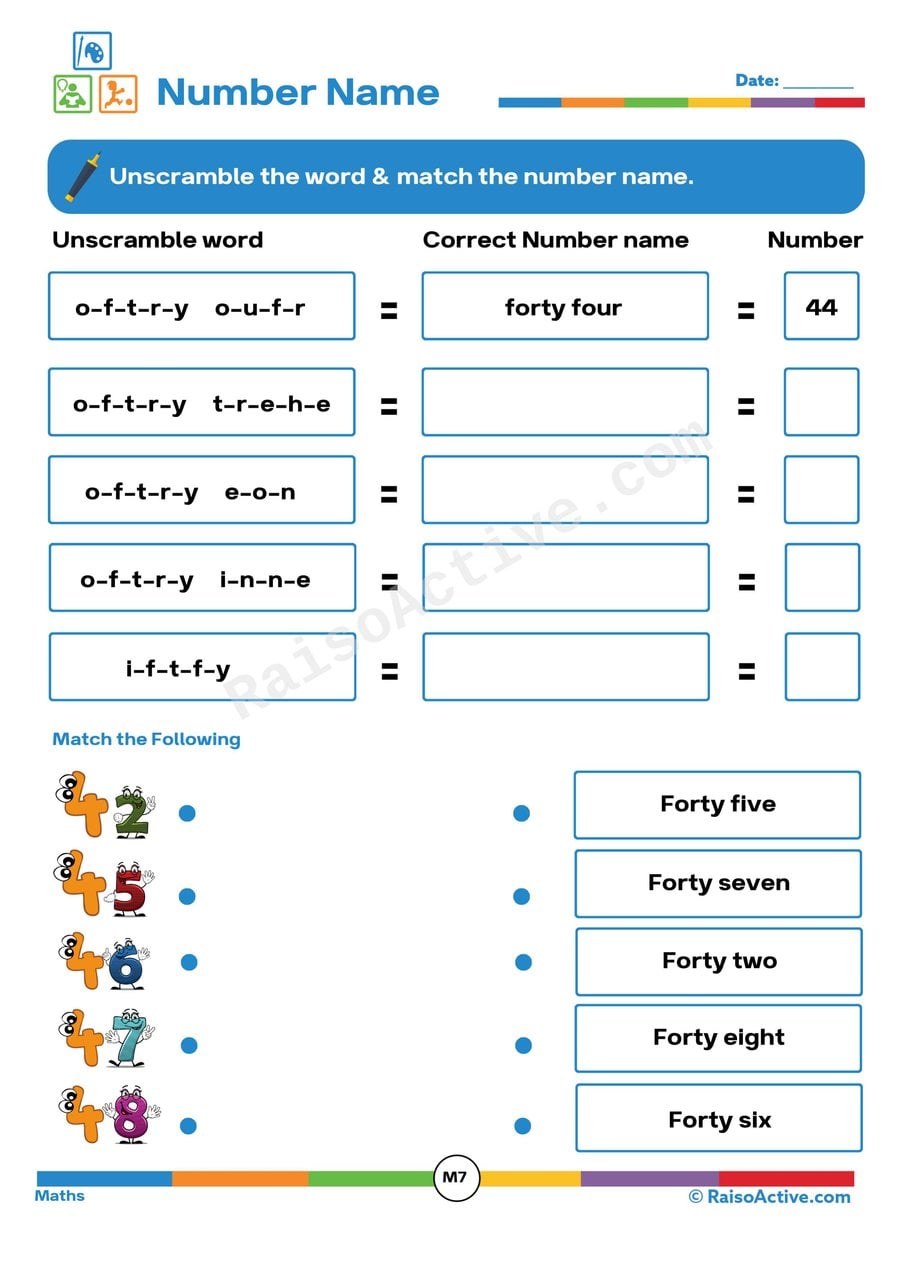
Number Name Matching Worksheet for Preschoolers
This worksheet connects three related number skills at once: unscrambling a jumbled word to spell a number name correctly, writing that number name out, and then matching it to its numeral — a layered task that builds both early spelling and number recognition together. Because number-name spelling (like 'seven' or 'eight') doesn't always follow simple sound-out rules, this worksheet gives 4-6 year olds valuable repeated exposure to sight-word-style number vocabulary.

Family Words Cut and Paste Worksheet for Early Readers
Reading a simple CVC word and matching it to its picture teaches children ages 4-6 to blend individual sounds into a whole word and then connect that word to its meaning, a core decoding skill for early readers. Because CVC words follow a consistent consonant-vowel-consonant pattern, practicing them builds a reliable phonics foundation that transfers to reading many other simple words.

Blend Words Matching Worksheet: Read and Circle the Picture!
This worksheet gives children ages 4-6 further practice reading consonant blend words and connecting them to their matching picture, this time by circling rather than cutting and pasting, which keeps the focus purely on reading and visual scanning. Repeated blend practice across different formats — matching, circling, and later independent writing — helps these two-consonant sounds become automatic rather than something a child has to sound out every time.

Identify Numbers Worksheet: Matching Numbers and Words
This worksheet builds number-word recognition by having children match written number names, like 'seven,' to their corresponding numeral, 7. For four- to six-year-olds, learning to read number words alongside numerals adds an important layer to early numeracy, since numbers appear in both written-word and symbol form in books, signs, and everyday life.
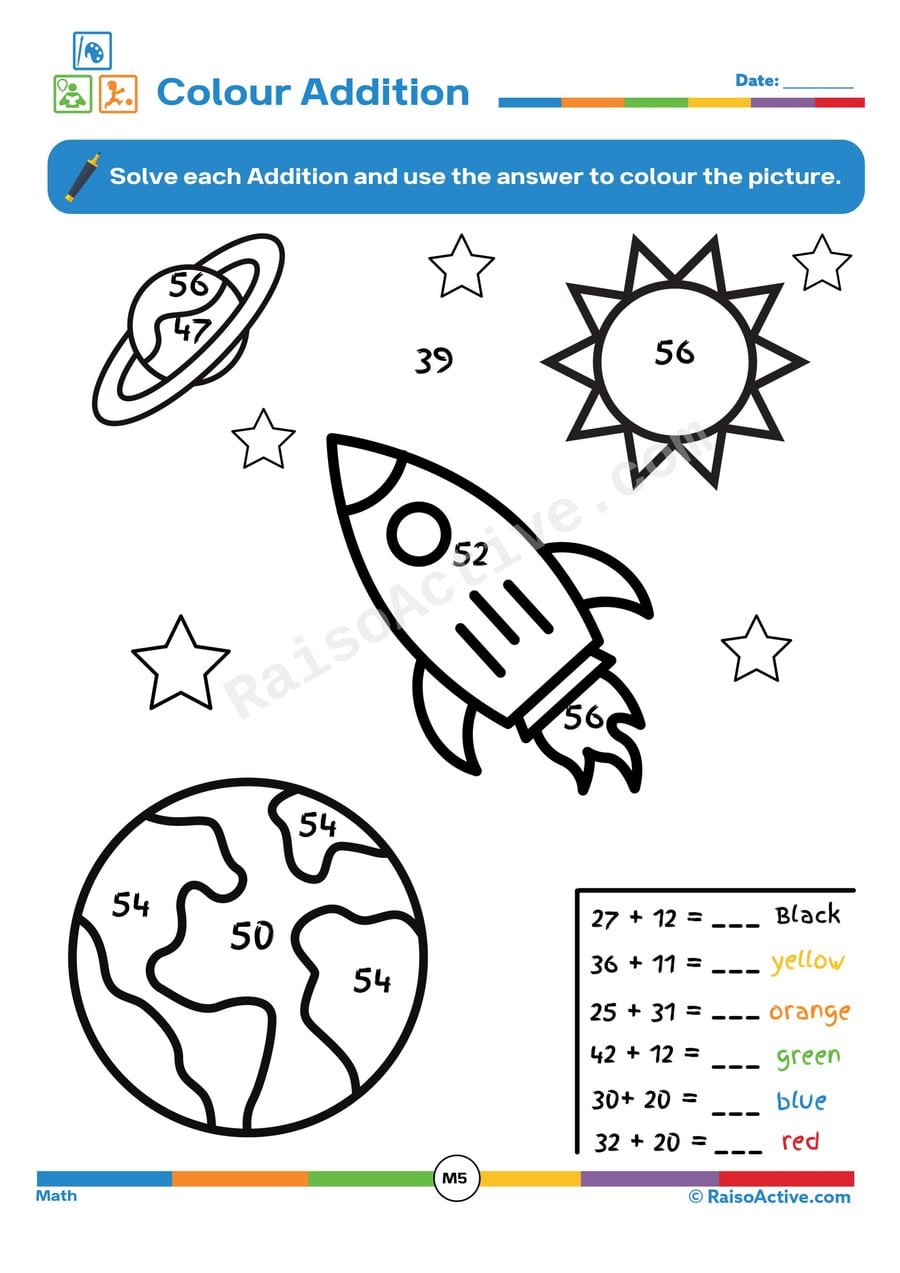
Color Addition Worksheet: Space Adventure!
This worksheet builds addition fluency by having children solve simple equations and then use each answer to determine which color to use in a corresponding section of a space-themed picture. For five- to seven-year-olds, this color-by-number format adds motivation to solve each problem accurately, since a wrong answer means the wrong color goes in the wrong spot and the final picture won't come together correctly.
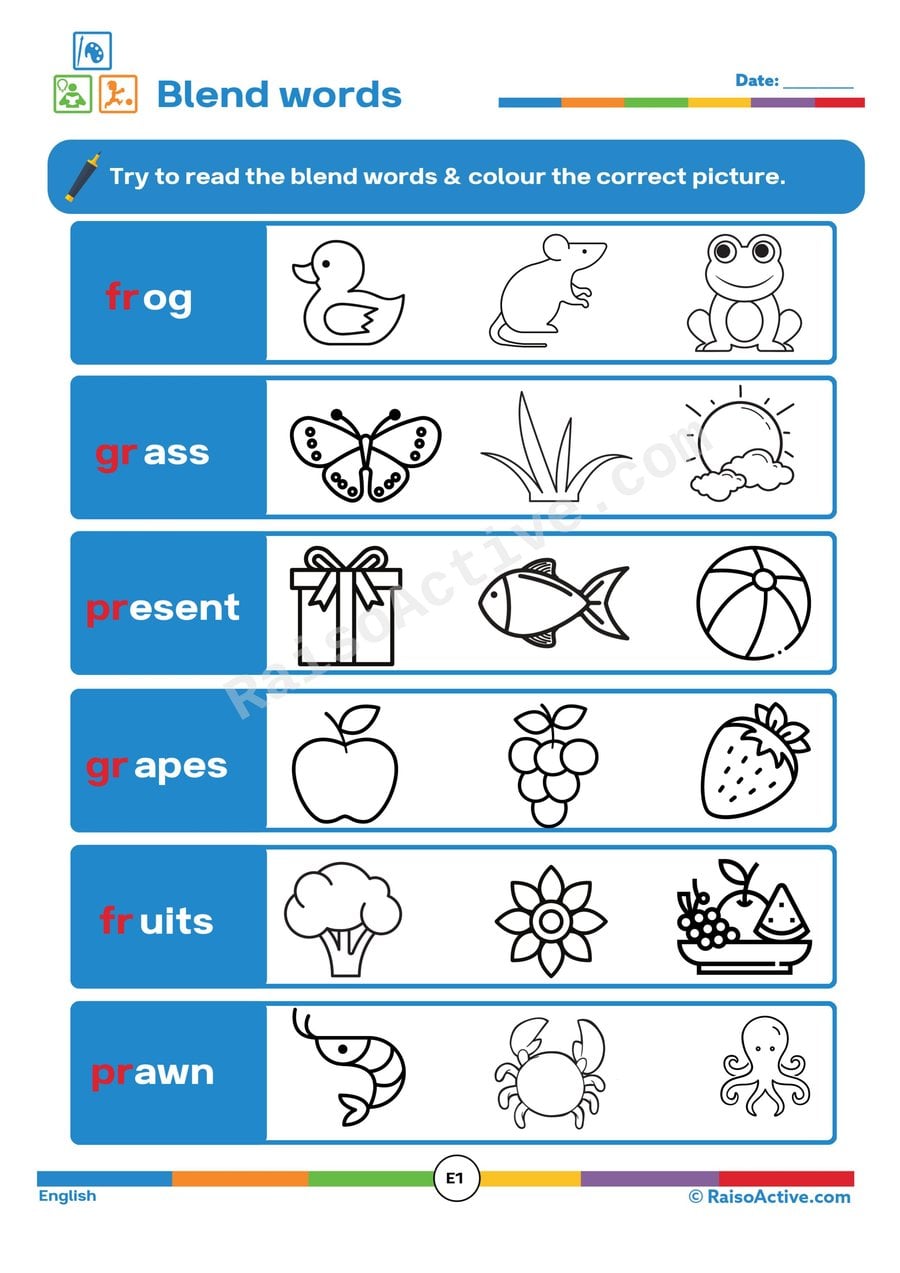
Blend Words Coloring Worksheet for Preschoolers
Consonant blends, like 'bl,' 'st,' or 'fr,' require children ages 4-6 to read two consonant sounds together without a vowel between them, which is genuinely more demanding than single-consonant CVC words and represents an important next step in phonics progression. This worksheet asks children to read a blend word and then color the picture that matches it, giving an immediate visual check on whether they decoded the blend correctly. Because coloring is the reward for accurate reading, the activity keeps repeated blend practice feeling engaging rather than repetitive.

Solar System Number Matching Worksheet for Preschoolers
This worksheet combines number-word recognition with a color-by-key coloring task for children ages 4-6, asking them to match number names written on planets to their corresponding numerals before coloring each planet according to a color code. Matching written number words in a space-themed context adds novelty that keeps repeated number-word practice fresh, while the color-key step reinforces careful, sequential following of visual instructions. Together, these two tasks combine literacy and numeracy practice in one engaging page.
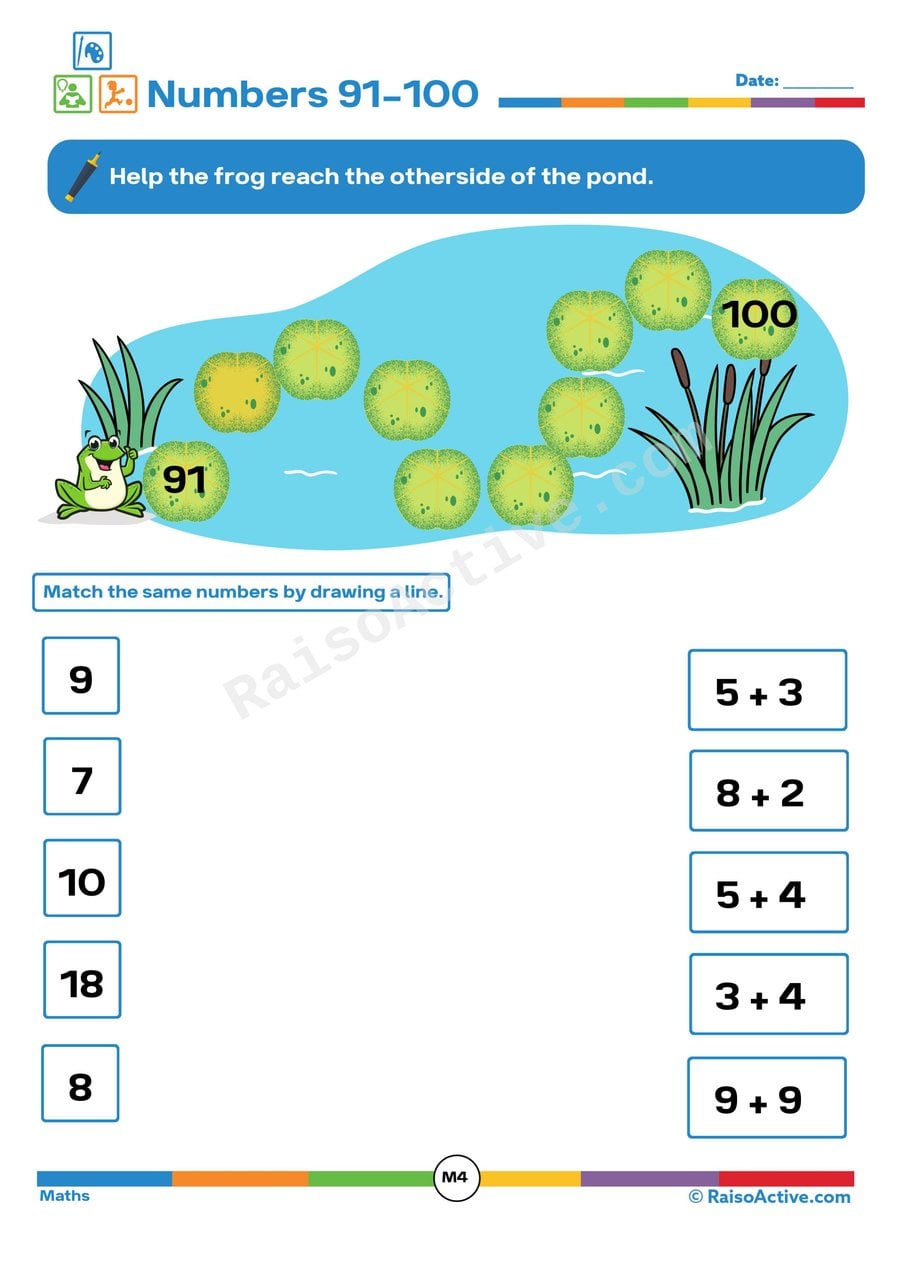
Numbers 91-100 Worksheet: Help the Frog!
Numbers in the 90s are a milestone range for children ages 4-6, since they require holding two-digit number recognition steady while approaching the conceptually significant number 100. This worksheet has children match numbers on lily pads to their corresponding value or sum, reinforcing number recognition within this higher range through a playful matching format. Building fluency with numbers up to 100 lays essential groundwork for place value concepts like tens and ones that children will tackle soon after.
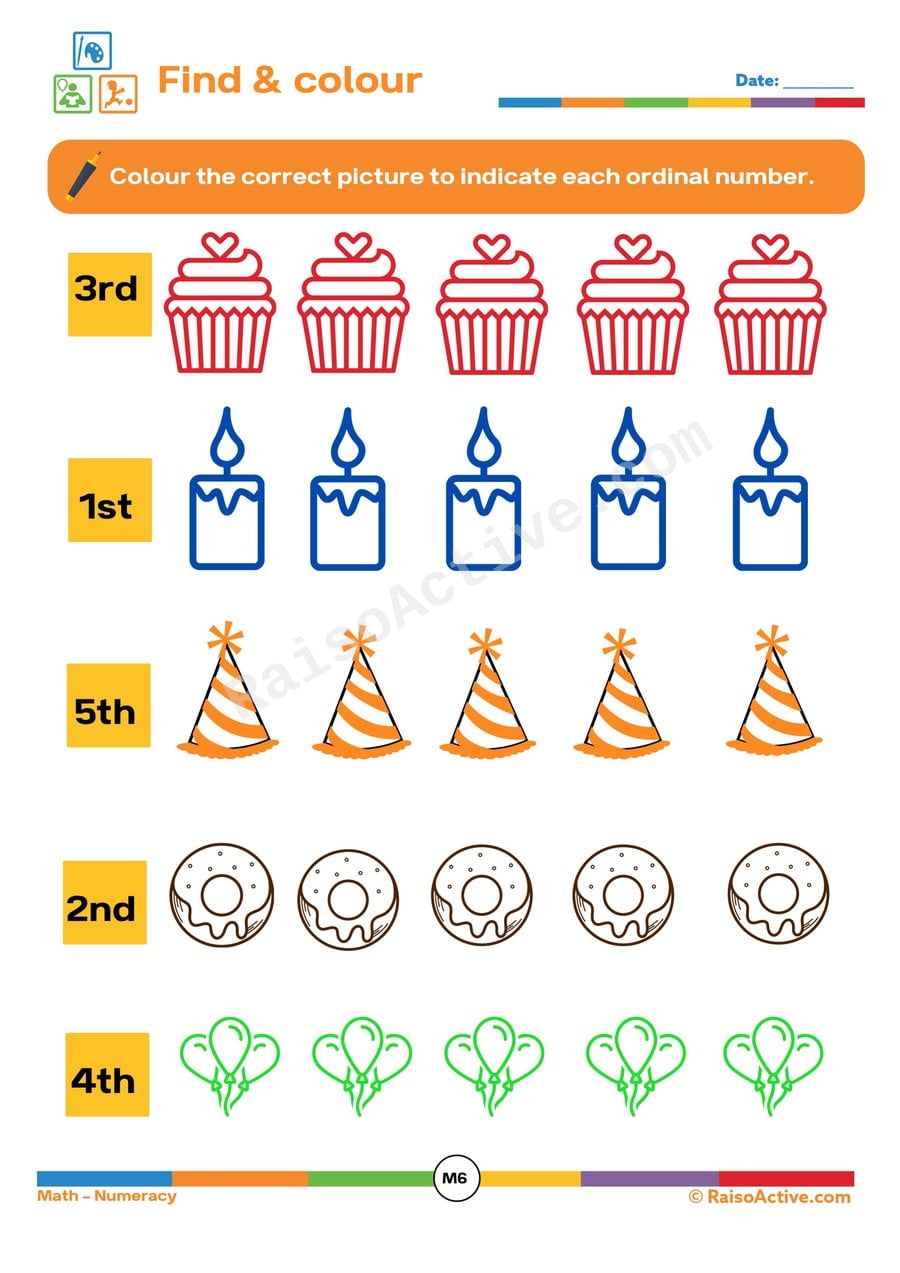
Find and Color Ordinal Numbers Worksheet
Finding and coloring items based on their ordinal position, like the third balloon or the first star, teaches children ages 4-6 a different kind of counting than they may be used to. Ordinal numbers describe position in a sequence, first, second, third, rather than quantity, and this distinction is a genuinely tricky concept that takes deliberate practice to master, forming an important foundation for later math concepts like sequencing steps.

Vowel i Matching Worksheet: Long and Short Sounds
In this worksheet, children ages 4-6 train their ears to tell apart the short 'i' sound (as in 'pig') from the long 'i' sound (as in 'kite'), then sort pictures into the correct category. This side-by-side comparison is a key phonics milestone, because confusing short and long vowels is one of the most common early reading errors, and deliberate practice like this builds the auditory discrimination needed to read unfamiliar words accurately.
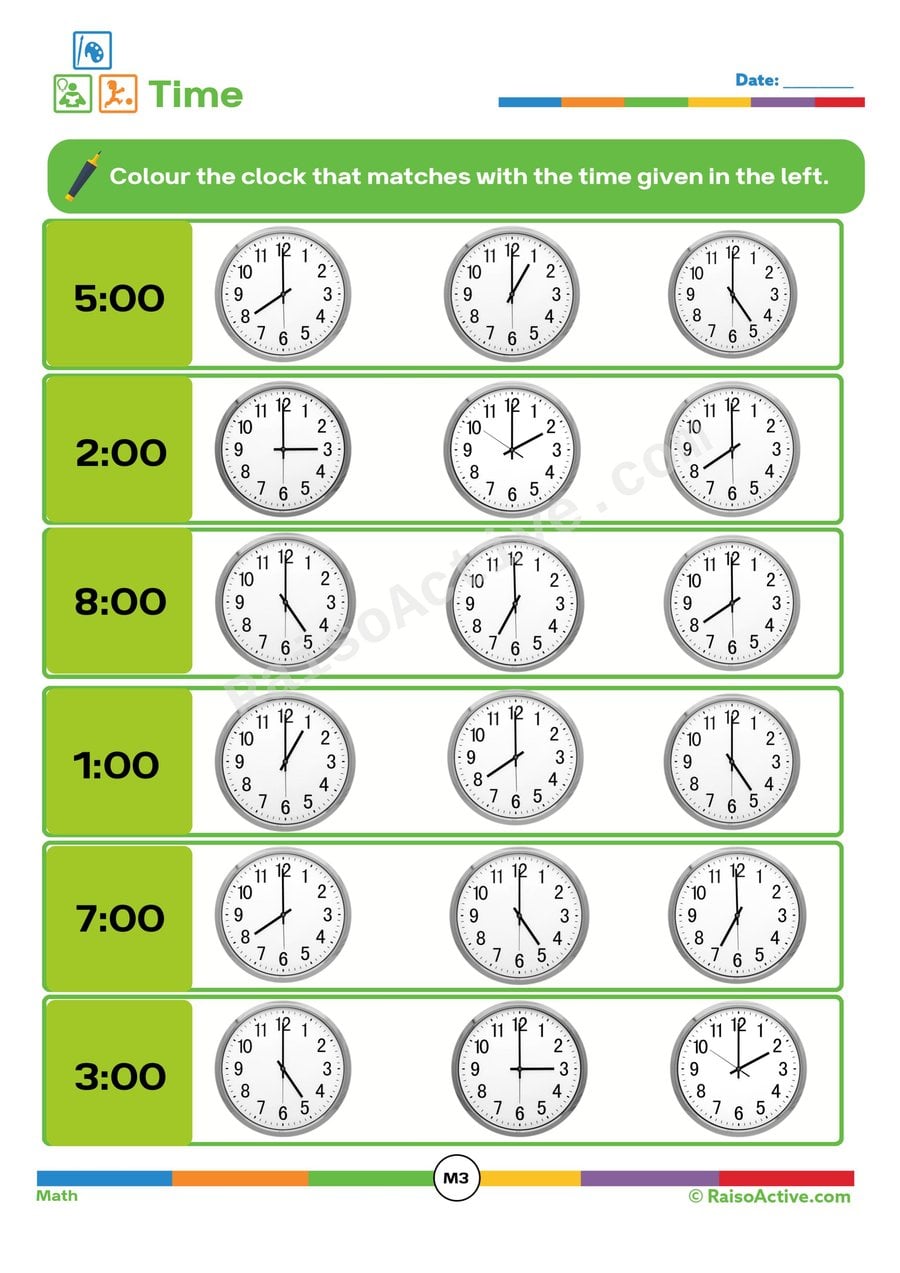
Time Matching Worksheet: Color the Clock!
Matching a written or digital time to the analog clock showing the same time builds clock-reading skills for children ages 4-6, requiring them to translate between two different ways of representing the same moment.

Long Vowel i-y Worksheet: Complete the Words and Match the Pictures!
This worksheet has children ages 4-6 complete words by writing the correct ending sound for the long 'i' pattern, which can be spelled with 'i' or 'y,' and then match each finished word to its picture, combining spelling, phonics, and visual matching in one task. Filling in a missing part of a word, rather than writing it entirely from scratch, gives children a scaffolded way to practice spelling without the full demand of unassisted writing. Matching the finished word to a picture also confirms whether their spelling produced the intended word.
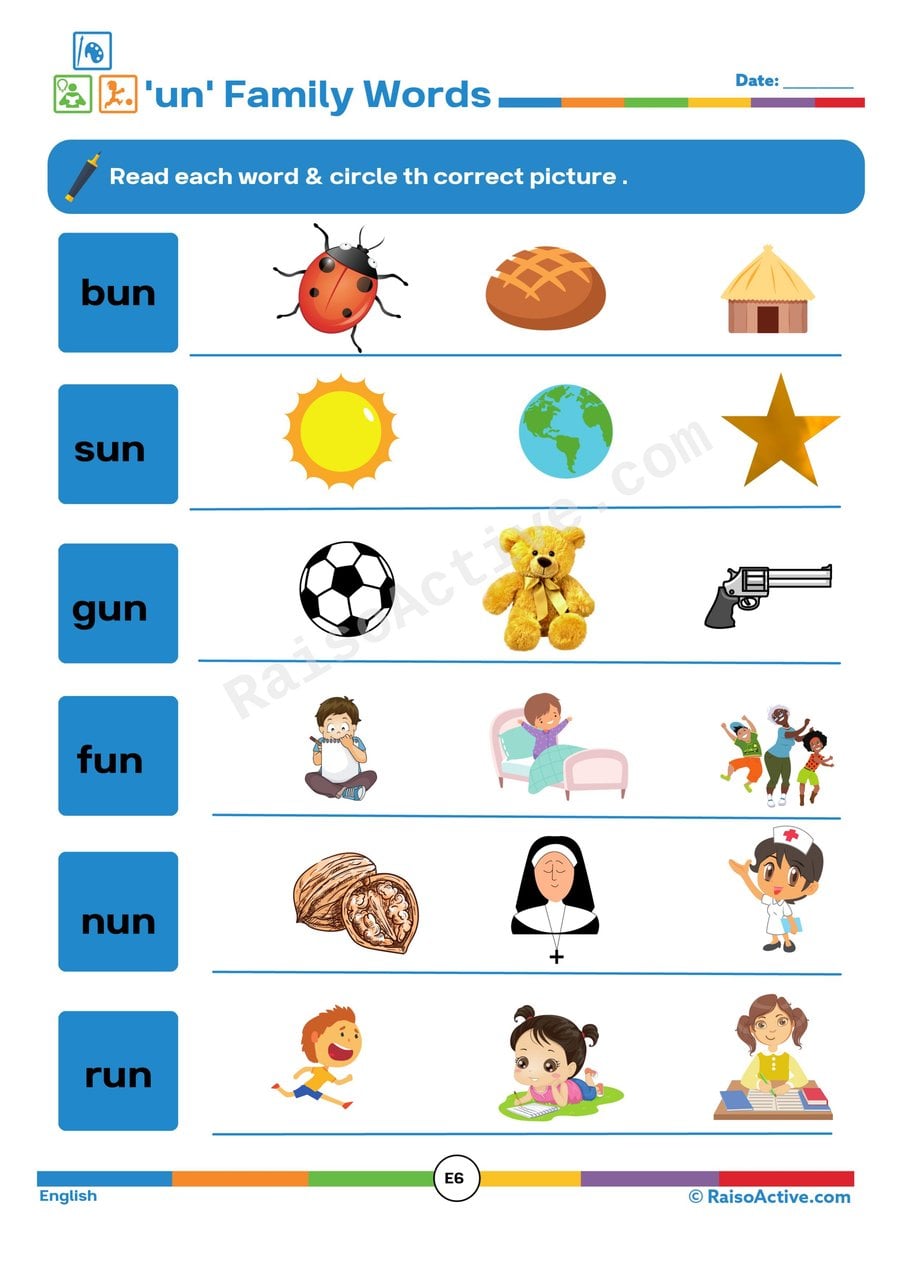
Fun 'un' Family Words Worksheet for Kids
Reading and matching words from the 'un' family, like fun, run, and sun, teaches children ages 4-6 to recognize a shared spelling pattern and use it to decode new words more quickly. Because this word family relies on consistent rhyming sounds, practicing it strengthens the connection between letter patterns and pronunciation that underlies early reading fluency.
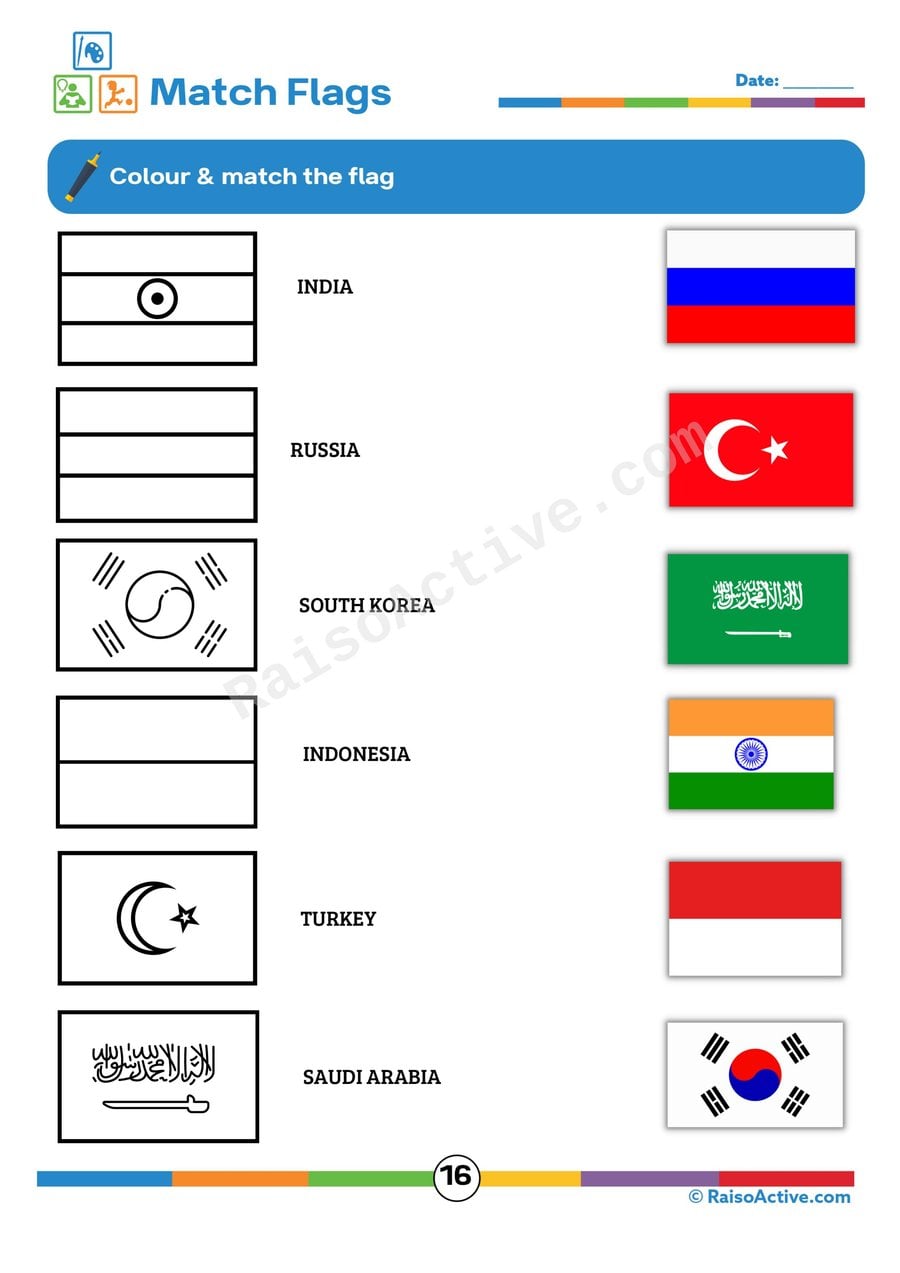
Match the Flags Worksheet for Kids
Children ages 4-6 build flag recognition by matching a set of country flags to their correct names, continuing to strengthen geography vocabulary and visual discrimination through this final flag-focused worksheet. Working with flags is an especially effective way to build visual memory in young children, since each one is a distinct, colorful pattern they can learn to recognize quickly.
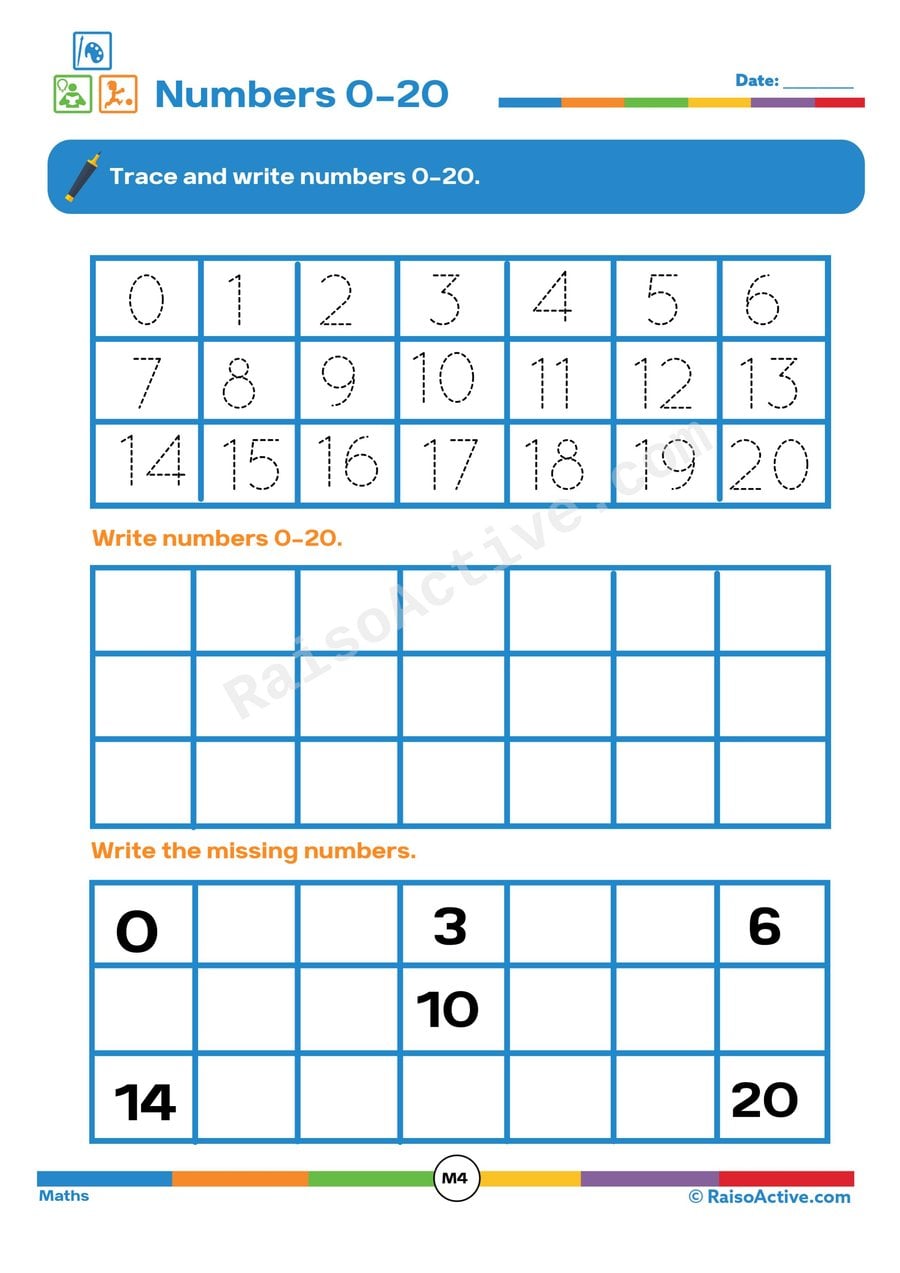
Trace and Write Numbers 0-20 Worksheet
This worksheet extends number formation practice across the full range from 0 to 20, giving children repeated tracing and writing practice on both single-digit and two-digit numerals. For four- to six-year-olds, moving past 10 into the teens and twenties is an important milestone, since it introduces the idea that numbers can be built from combinations of digits rather than each needing its own unique symbol.
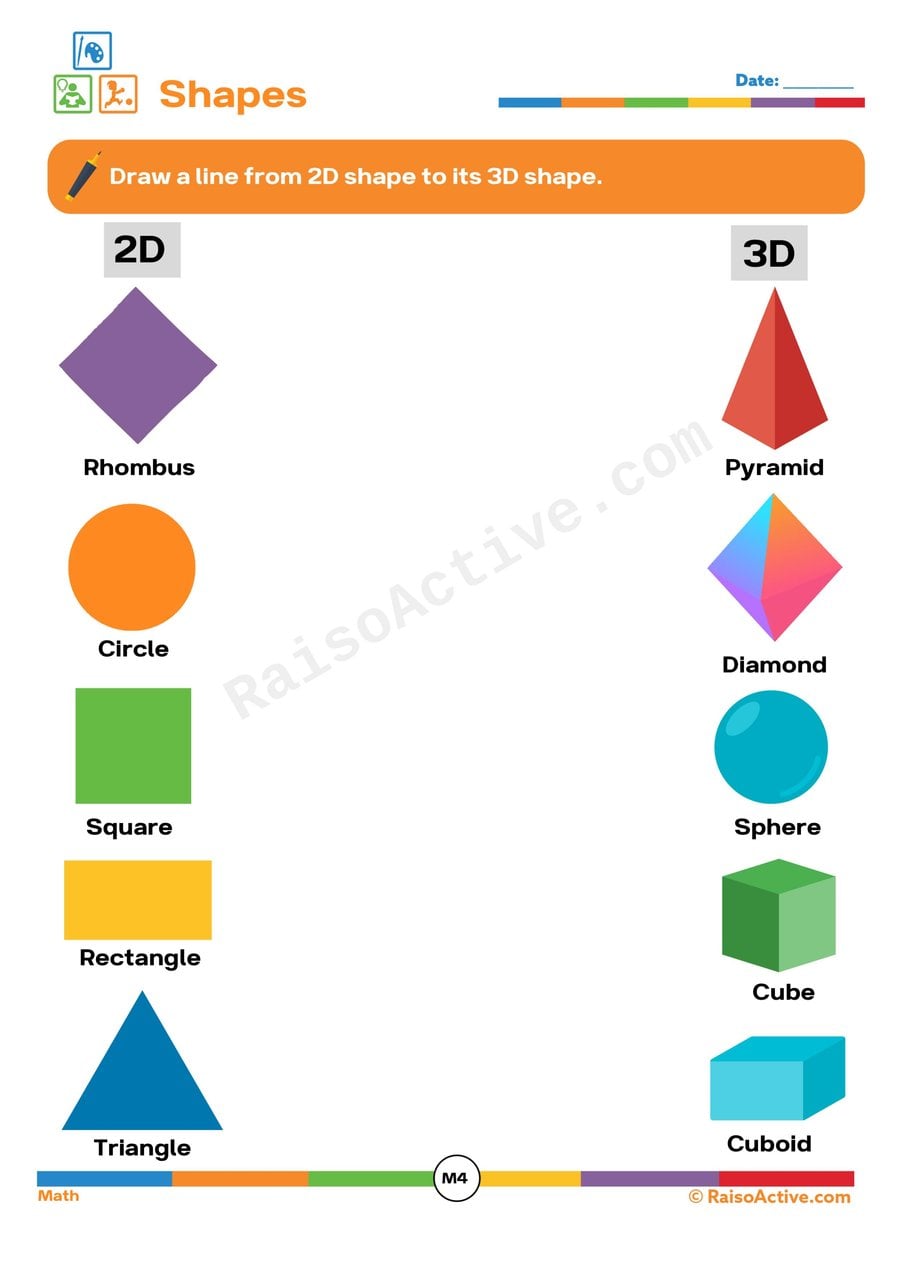
Shape Match: 2D to 3D Shapes Worksheet
This worksheet introduces 4-6 year olds to the relationship between flat 2D shapes and solid 3D shapes — connecting a circle to a sphere, a square to a cube — which is an important spatial reasoning leap, since a 3D shape's flat 'face' is what actually corresponds to its related 2D shape. Making this connection explicit helps children understand that the shapes they've been learning aren't just flat pictures but also describe the surfaces of real, solid objects around them.

Adjective Adventure: Matching Sentences Worksheet for Kids
This worksheet teaches 4-6 year olds that adjectives are the words that describe nouns, asking them to fill in a missing adjective in a sentence and then physically mark the noun and adjective separately by underlining and circling. That separation step — telling apart which word names a thing and which word describes it — is a genuinely useful grammar distinction that most children haven't consciously noticed before, even though they use adjectives constantly in speech.

Blend Words Worksheet: Circle the Correct Picture!
This worksheet strengthens blending skills for children ages 4-6, asking them to say a consonant blend like 'bl' or 'st' together with different word endings and identify which resulting word matches a picture. Blending two consonant sounds smoothly before adding a vowel is a more advanced phonics skill than single-letter sounds, and this practice directly supports decoding multisyllabic and blended words during independent reading.

Animal's World: Sorting Animals by Land, Water, and Air - Printable Worksheet
This sorting worksheet teaches children ages 4-6 to classify animals into three habitat categories — land, water, and air — based on where each animal naturally lives and moves. Classifying by habitat rather than by appearance alone encourages children to think about an animal's features, like fins, wings, or legs, and connect them to function. This three-way sort is more complex than a simple two-category sort, building more advanced categorization skills.
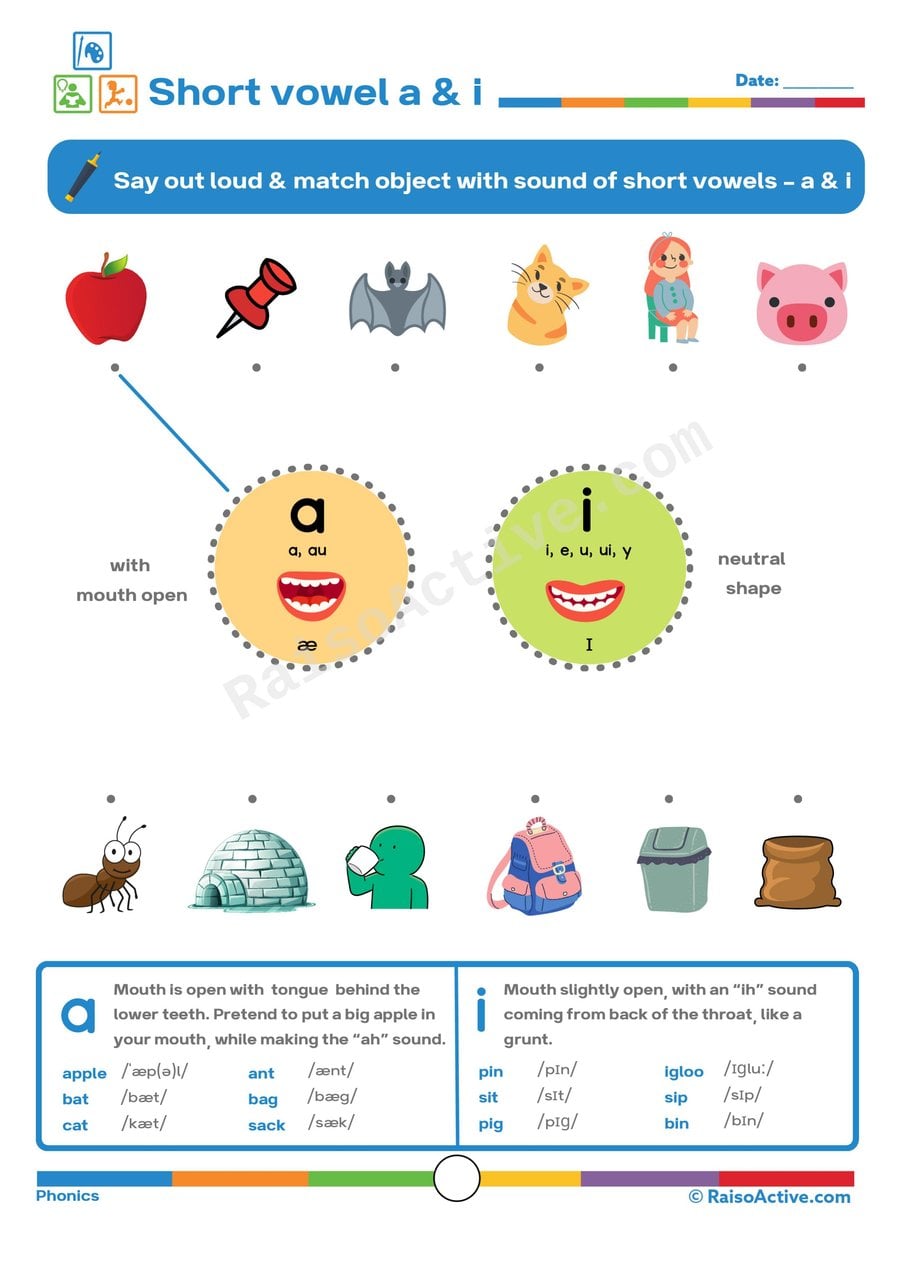
Short Vowel Sounds: Match the Pictures Worksheet
Distinguishing between the short 'a' and short 'i' sounds is a foundational listening skill for children ages 4-6, since these two vowel sounds are easy to confuse and appear constantly in early reading words. This worksheet has children say a word aloud, listen for its vowel sound, and match the picture to the correct sound category, training their ear before they're expected to read or spell independently. Strong auditory discrimination between short vowels directly predicts success decoding CVC words like 'cat' and 'sit' later on.
What Kindergarten shapes worksheets cover
Five-year-olds move into three dimensions. Alongside the flat shapes, worksheets introduce cube, sphere, cone and cylinder, ask which object matches each one, and press the key idea that a cube has square faces without being a square. Sorting flat from solid, composing two triangles into a square, and finding shapes in a photo of a kitchen are all fair tasks. Precise words such as "vertex" and "edge" can wait; "corner" and "side" do the job.
- Match cube, sphere, cone and cylinder to a dice, ball, hat and can
- Sort pictures into flat shapes and solid shapes
- Build a square or rectangle from two or more triangles
- Name the shape of a clock, a door and a slice of pizza
- Say how a square and a cube are alike and different
How to use these worksheets at home or in class
One phonics sheet and one math sheet most days, about fifteen minutes altogether, matches the pace many kindergarten classrooms set. Read any word list or passage aloud together first, then let your child attempt it independently before checking the answers.
Start with the sheet that matches what your child can already do, then move one step up. Keep finished sheets in a folder: Kindergarten teachers often ask for evidence of practice, and children like seeing their own progress.
Is your child ready for Kindergarten shapes work?
A child entering kindergarten typically writes their first name, recognizes most letters, counts a small group of objects accurately, knows basic shapes and colors, and follows a two-step spoken direction without needing it repeated.
Frequently asked questions
What is the easiest way to explain 3D shapes to a five-year-old?
Flat shapes can be drawn; solid shapes can be picked up. Put a ball beside a drawn circle and a dice beside a drawn square, let the child hold the solid ones, and ask which could roll and which could stack. Rolling and stacking are how five-year-olds first tell a sphere from a cube. Names come afterward, one per object: ball is sphere, dice is cube, can is cylinder, party hat is cone.
What should a Kindergarten child be able to do in shapes?
Five-year-olds move into three dimensions. Alongside the flat shapes, worksheets introduce cube, sphere, cone and cylinder, ask which object matches each one, and press the key idea that a cube has square faces without being a square. Sorting flat from solid, composing two triangles into a square, and finding shapes in a photo of a kitchen are all fair tasks. Precise words such as "vertex" and "edge" can wait; "corner" and "side" do the job. A child entering kindergarten typically writes their first name, recognizes most letters, counts a small group of objects accurately, knows basic shapes and colors, and follows a two-step spoken direction without needing it repeated.
Do these worksheets follow the Kindergarten curriculum?
The sheets cover naming 2D shapes, matching identical shapes, sorting shapes by attribute and finding shapes in everyday objects, which sit inside the Common Core Kindergarten (RF.K, K.CC, K.OA, K.G) outcomes for Kindergarten. Reception / Year 1 (UK), UKG / Senior KG (India) use the same skills at this age, so the sheets also fit families following those programmes.
Are these Kindergarten shapes worksheets free?
Yes. Each worksheet downloads free as a watermarked PDF once you create an account, with a limit of five a day. An annual membership ($20) removes the watermark and the limit for the whole library of over 1,000 worksheets and every printable pack.

Written by
Hemsweta Jain · Teacher Cheena
MBA and Early Childhood Educator, teaching since 2014 · Founder of RaisoActive, Mumbai
Written and reviewed by Hemsweta Jain (Teacher Cheena), who designs every RaisoActive worksheet.
Last reviewed
Printable packs for ages 5–6
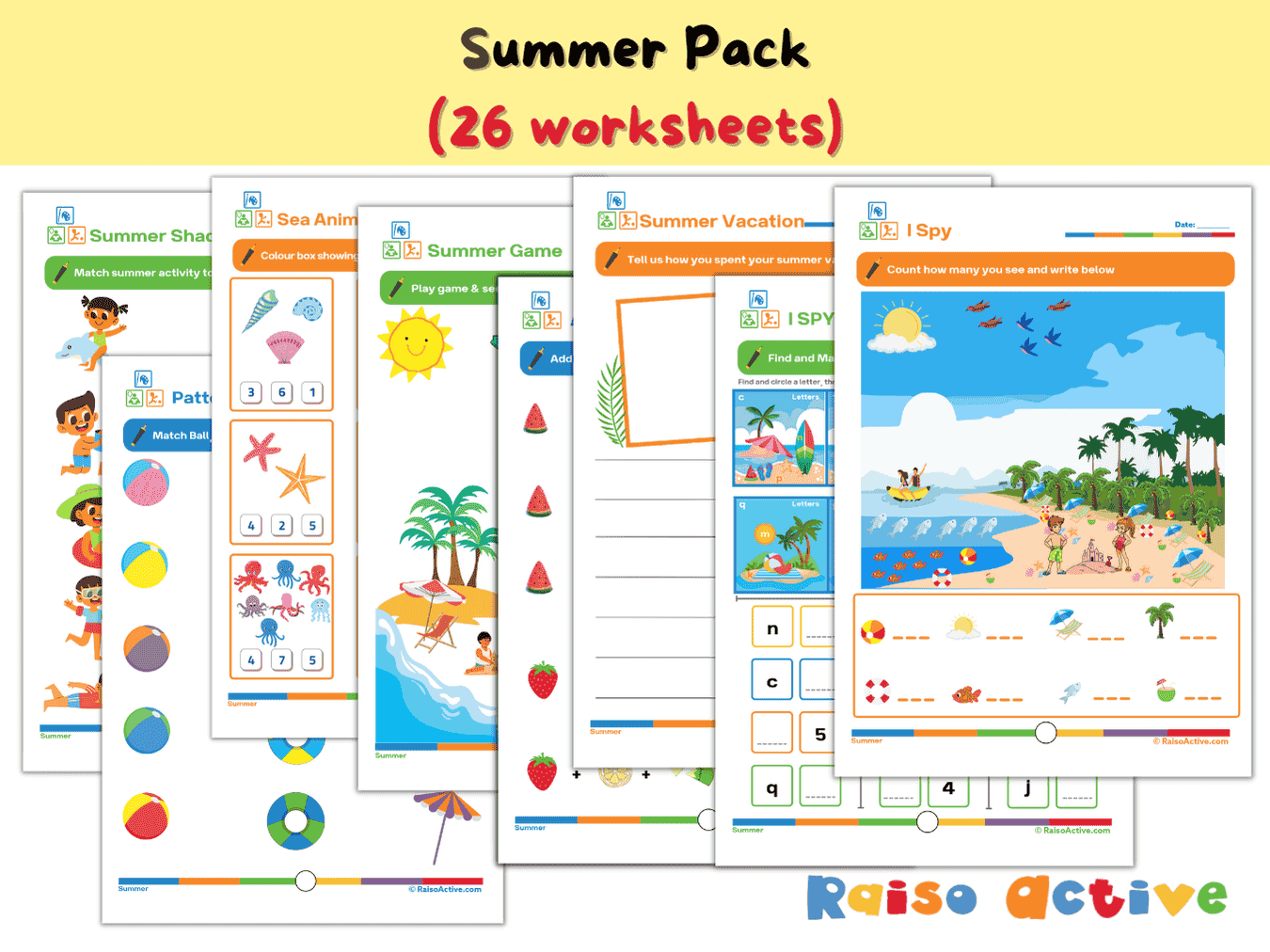
Summer Activity Pack: Math, Literacy, Puzzles & More for Preschool & Kindergarten
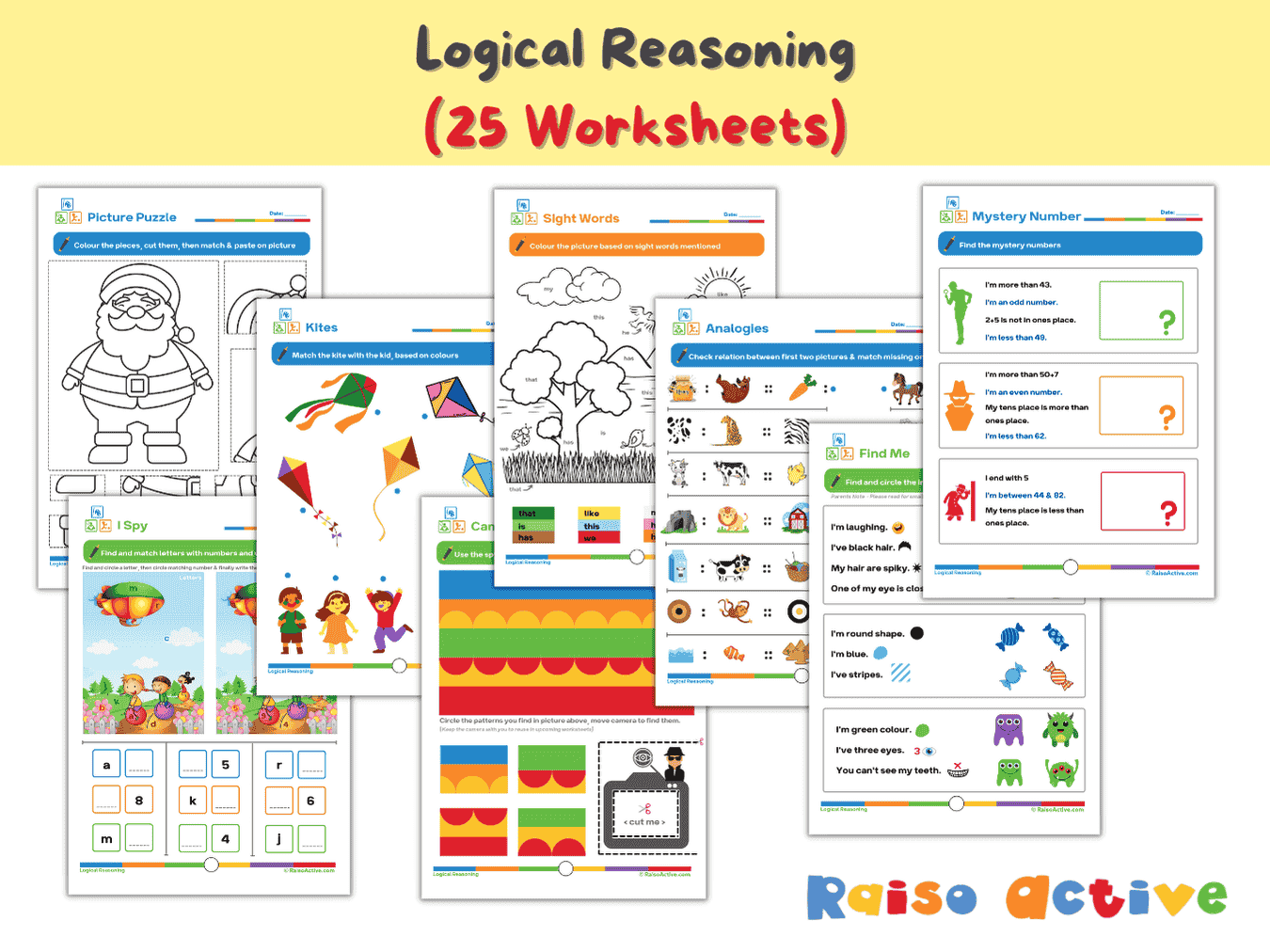
Logical Reasoning Activity Book for Preschool & Kindergarten | Patterns, Puzzles & Analogies
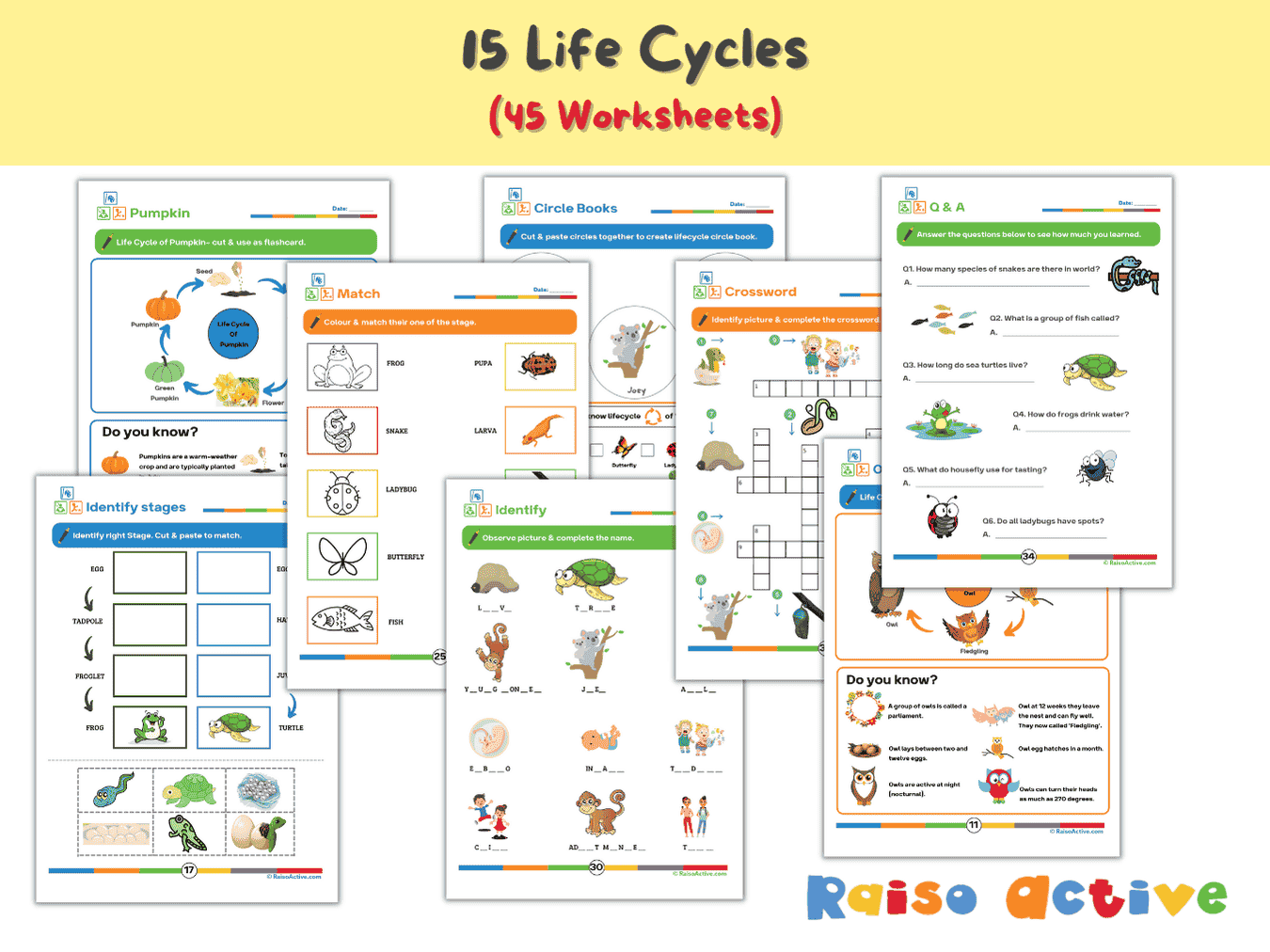
Lifecycles Activity Book & Flashcards for Preschool & Early Elementary
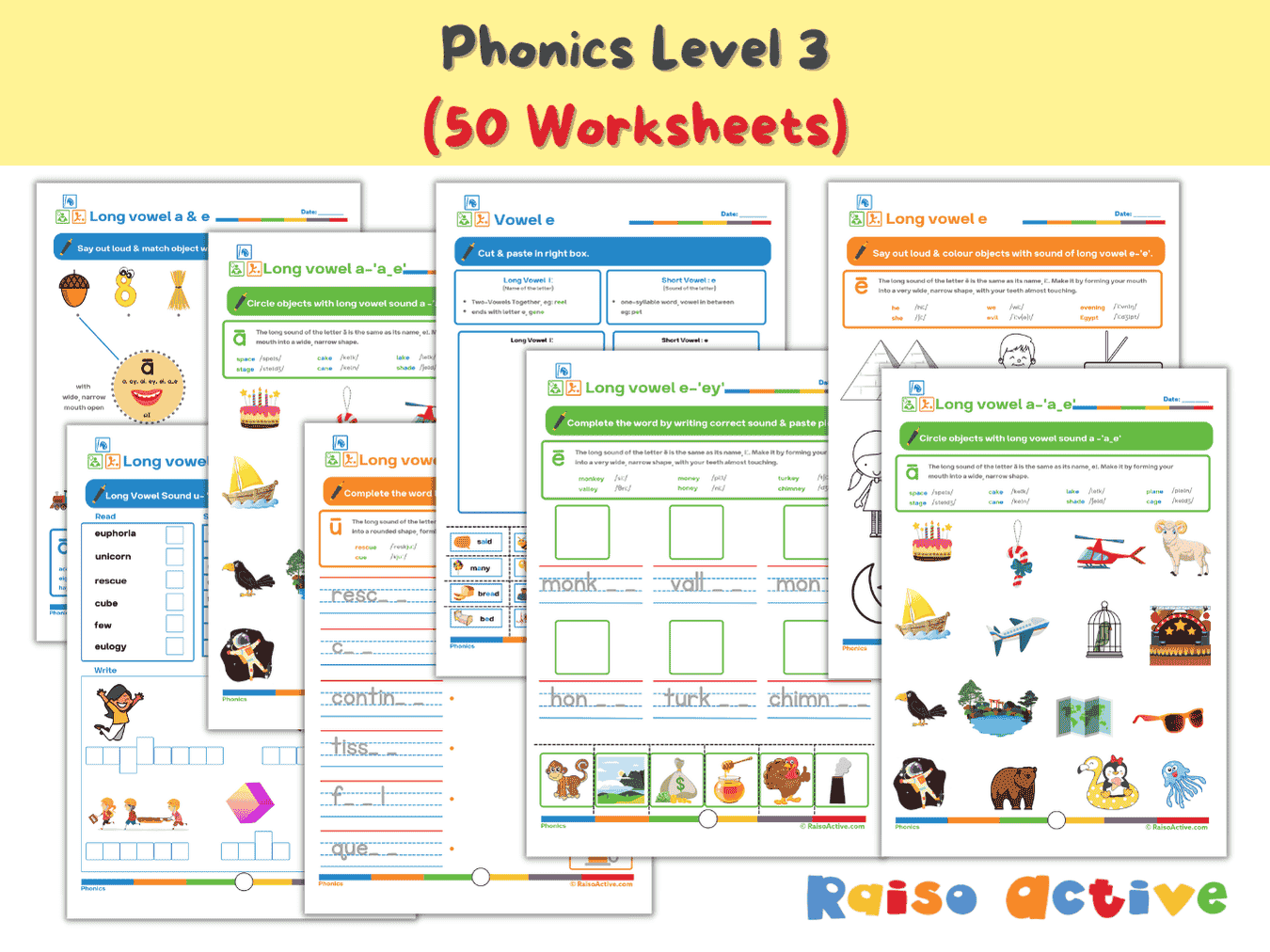
Phonics Level 3 Long Vowels Activity Book for Kindergarten & 1st Grade
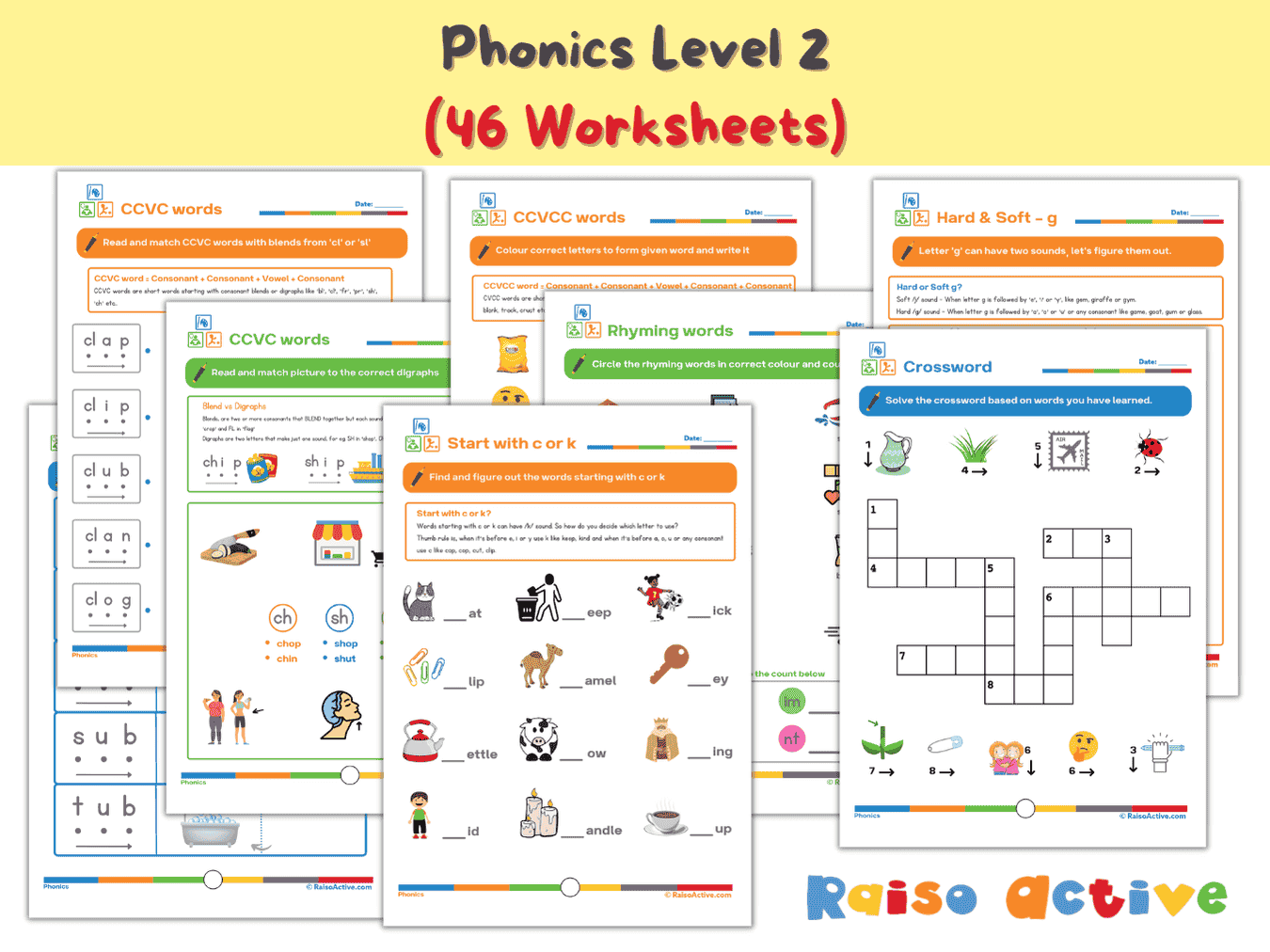
Phonics Level 2 Worksheets: CVC, CCVC, CVCC Word Families & Blends for Early Readers (Ages 4-7)
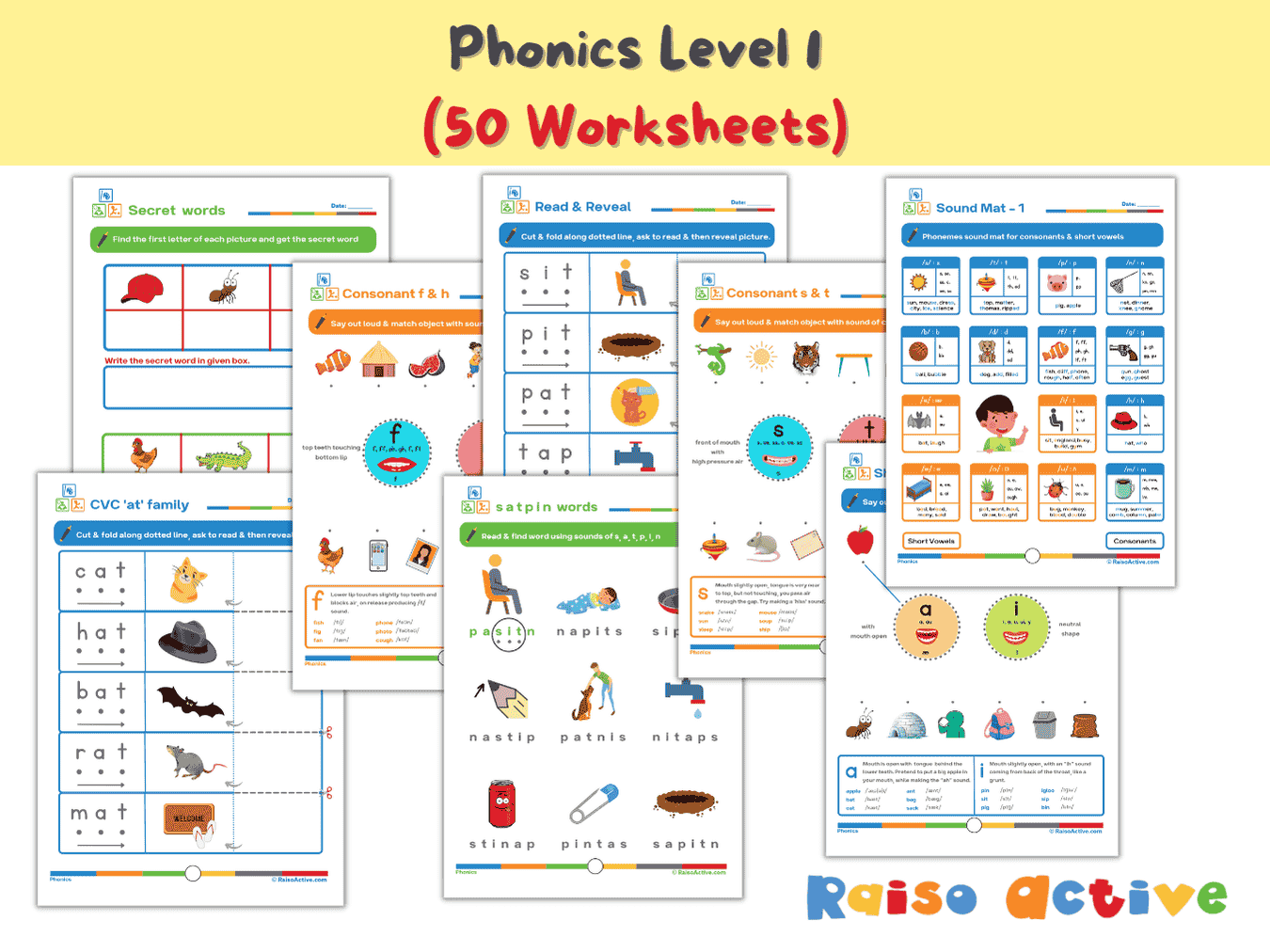
Phonics Level 1 Activity Book: Letter Sounds, Blending & CVC Words for Preschool & Kindergarten
Guides for parents and teachers
See all guides →UKG Syllabus Explained: English, Maths and EVS Month by Month
What UKG classes typically cover in English, maths and EVS, month by month, aligned to NEP 2020, with ways to support at home and signs your child is behind.
How to Teach Your 3-Year-Old to Recognise Numbers: A Parent's Complete Guide
Help your 3-year-old recognise numbers 1-10 with multi-sensory activities, everyday maths moments, and simple routines. Practical guide with Indian context included.
Canonical: https://raisoactive.com/worksheets/kindergarten-shapes