Free printable worksheets · United States
Preschool Shapes Worksheets (Ages 3–4)
Preschool shapes worksheets are practice sheets for children aged 3–4 in Preschool in the US. Shapes worksheets build recognition and naming of common two- and three-dimensional forms, and the ability to sort or match them by their features. The sheets on this page cover naming 2D shapes, matching identical shapes, sorting shapes by attribute and finding shapes in everyday objects.
Preschool builds readiness rather than academics: pre-writing strokes, uppercase letter recognition, counting objects to ten, naming shapes and colors, and cutting along a line, all introduced through short table activities inside a mostly play-based day. Grip is still forming, so most activities favor a thick crayon over a standard pencil. Three-year-olds are collecting names. Circle, square and triangle are usually secure this year, with rectangle arriving late and oval mixed up with circle for a while. A worksheet should ask the child to find every triangle on a busy page, color all the squares one color, trace a large shape with thick dotted lines, and say the name aloud each time. Counting sides and sorting by a rule are still ahead.
956+ worksheets · free PDF download · print on A4 or Letter
Preschool Shapes Worksheets to print
Browse all worksheets for ages 3–4
Clothing Pattern Match Worksheet for Preschoolers
This worksheet has children ages 3-5 study repeating patterns on clothing items — stripes, polka dots, or checks — and match each item to its identical twin, building visual discrimination and early pattern-sequencing skills. Distinguishing between similar-looking patterns also sharpens attention to detail, a skill that later supports letter and word recognition.

Cleanliness Worksheet: Tick the Items to Clean Our Body!
Ticking the items used to clean our bodies helps children ages 3-5 build hygiene vocabulary and practice classification, deciding which objects belong to a category based on their purpose rather than just their appearance. This early sorting skill also supports independence in self-care routines like washing and brushing.

Shape Counting Fun: Color and Count the Shapes Worksheet
Children ages 3-5 practice recognizing common shapes by sight, then apply early counting skills by tallying how many of each shape appear in the picture. Combining shape identification with counting strengthens both geometric awareness and number sense at the same time.

Number Tracing Worksheet: Trace and Find the Number 11!
This worksheet introduces children ages 3-5 to their first two-digit number, helping them understand that 11 is written with two number 1s placed side by side rather than as a brand-new symbol. Tracing 11 builds the pencil control needed to write two digits neatly in a row, while the search-and-find grid strengthens visual scanning skills as children pick 11 out from a field of similar-looking numbers. This combination supports both number recognition and the beginning of place-value thinking.
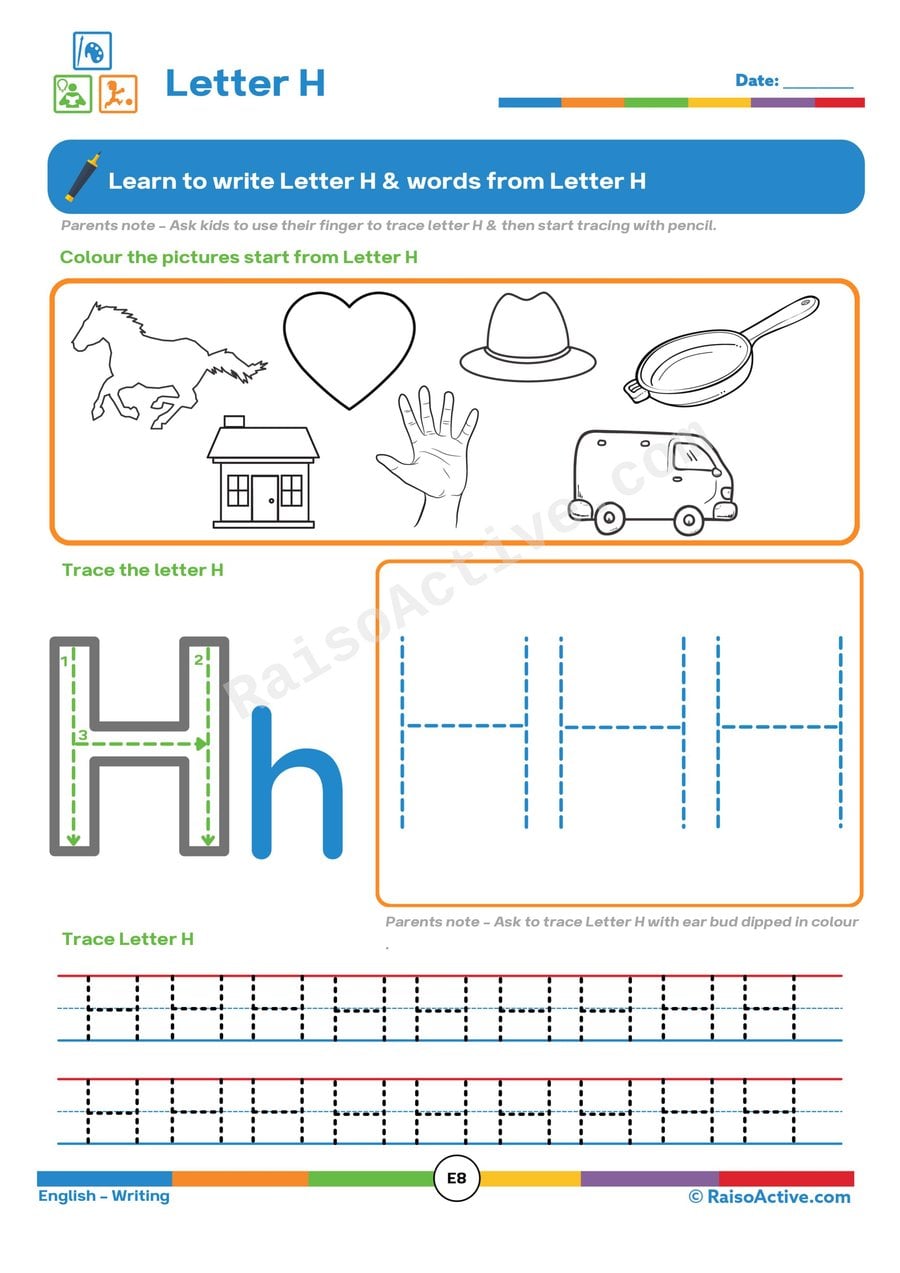
Trace the Letter H Worksheet for Preschoolers
Tracing the capital letter H gives children ages 3-5 focused practice in pencil control, directional tracking (top to bottom, left to right), and the specific line-and-line motion that forms H's two verticals and one horizontal bar. Pairing the tracing with pictures that start with H also strengthens letter-sound association, an essential early step toward decoding words later on.
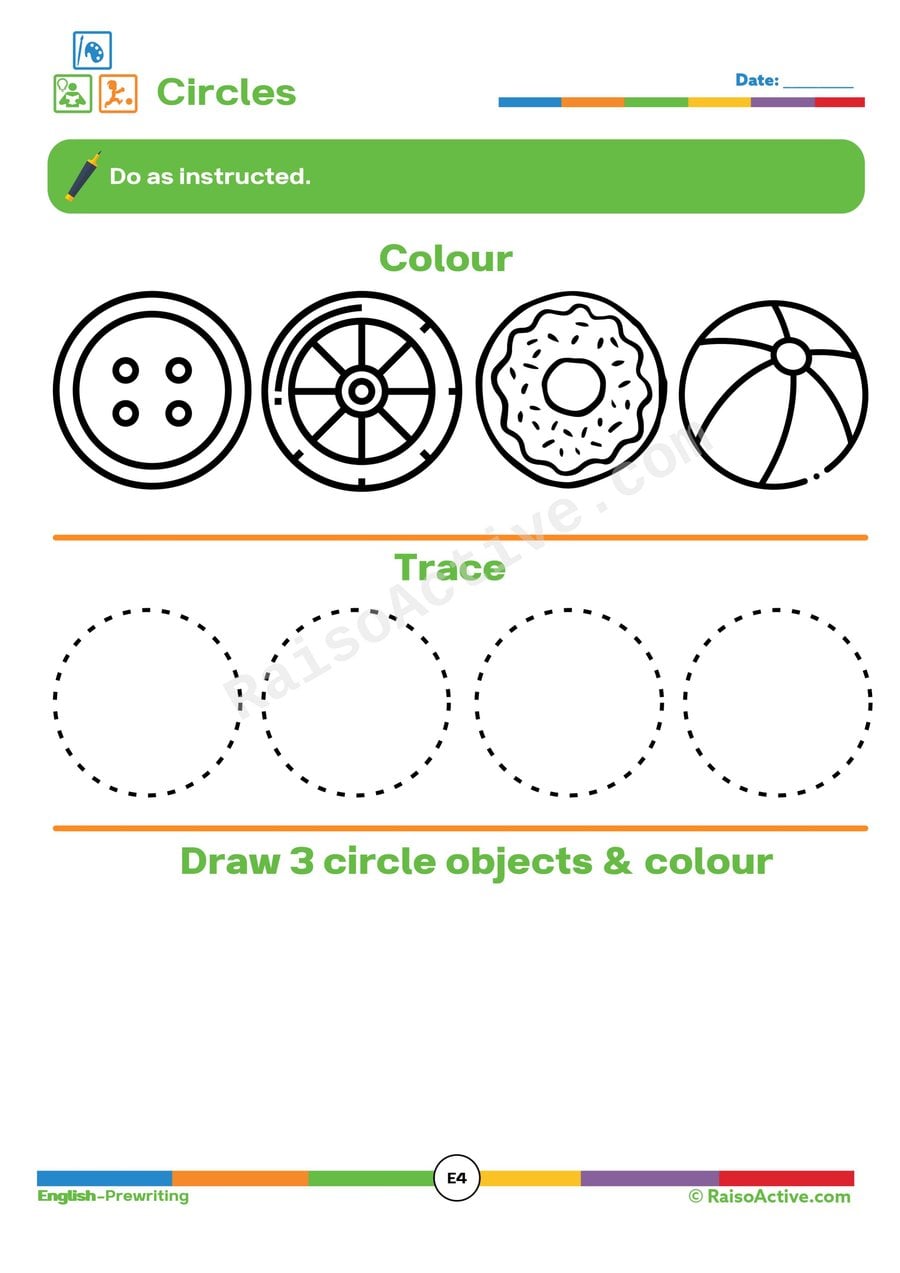
Circle Shapes Worksheet: Trace, Color, and Draw!
This worksheet builds shape recognition and drawing skills as children ages 3-5 trace dotted circles, color pictures of circular objects, and then draw three circle-shaped objects entirely on their own. Moving from tracing to independent drawing tracks a real developmental progression — first following a guide, then applying the shape from memory — which builds true shape mastery rather than just copying.

Christmas Shadow Matching Worksheet for Preschoolers
This shadow-matching worksheet sharpens visual discrimination in children ages 3-5 by asking them to match colorful Christmas images — like a tree, stocking, or ornament — to their black silhouette shadows. Because shadows strip away color and detail, children must focus on overall shape and outline, a skill that supports later letter and number recognition where shape distinctions matter. The seasonal theme also builds vocabulary connected to a holiday children are likely already excited about.

Weather Words Worksheet for Preschoolers: Match & Learn!
This worksheet helps children ages 3-5 build weather-related vocabulary by matching pictures like clouds, rain, or sunshine to their correct written words. Weather is something children experience daily, so connecting familiar sights to new vocabulary words gives this matching task an unusually strong real-world anchor that helps the words stick.

Non-Living Things Coloring Worksheet for Preschoolers
Coloring only the non-living things on the page asks children ages 3-5 to apply a real scientific rule — that living things grow, move, breathe, and eat, while non-living things do not — rather than just naming objects. This requires them to think through each picture individually and test it against the rule, building early classification and critical thinking skills. Learning to separate living from non-living things is one of the first formal science concepts children encounter and sets up later lessons about plants, animals, and the environment.
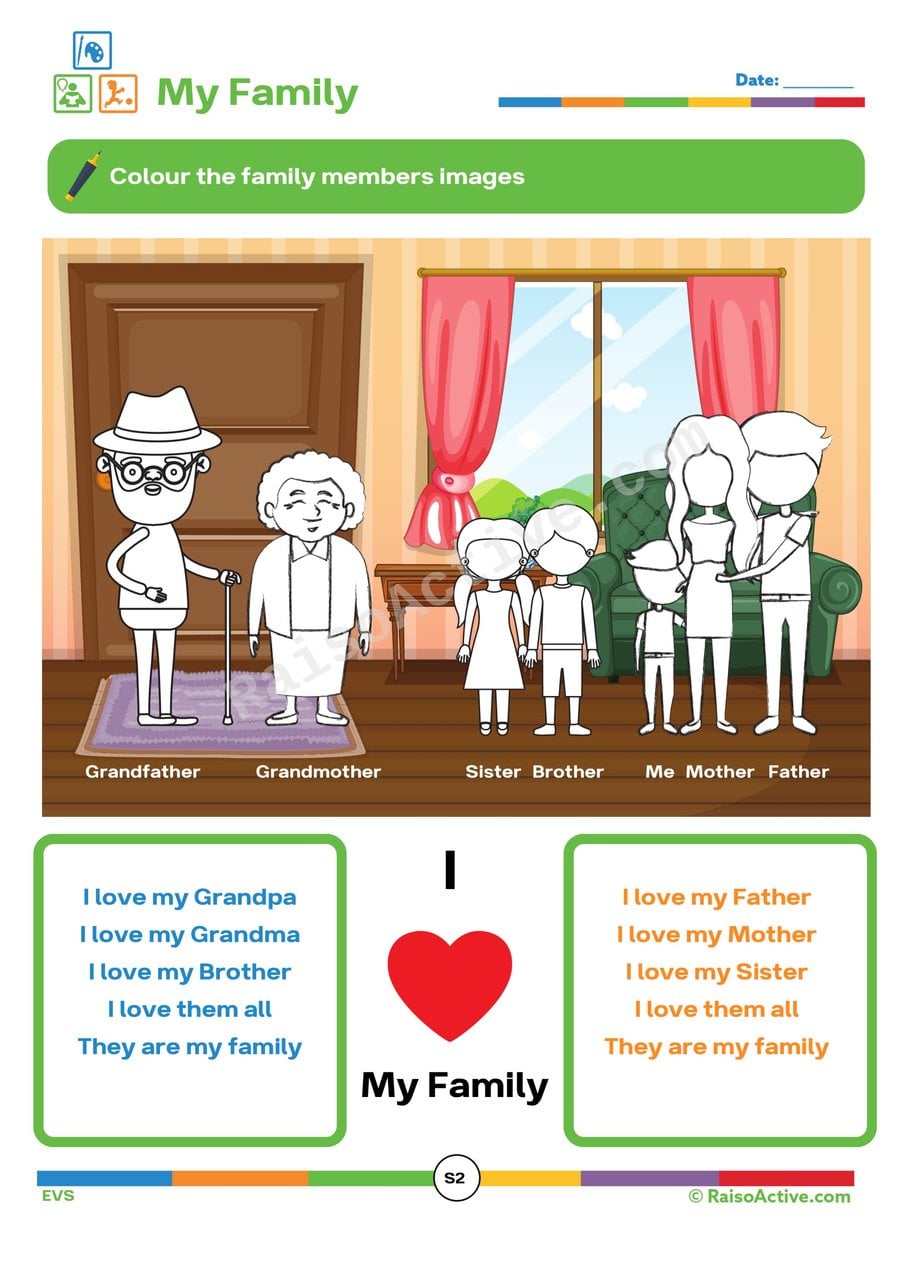
My Family Coloring Worksheet for Preschoolers
This worksheet helps children ages 3-5 practice fine motor control and color-staying-in-the-lines skills while coloring pictures of family members, giving them a personal, meaningful subject that keeps engagement high. Reading and coloring a heart after the family sentences also introduces the idea that words can express feelings, linking literacy with emotional expression.

Letter A Tracing Worksheet for Preschoolers: Learn to Write!
This worksheet focuses on the uppercase letter A alone, giving children a chance to build real confidence and precision with a single letter form — three connected strokes, two diagonals meeting at a point plus a crossbar — before adding the complexity of a second, differently-shaped lowercase version. Mastering capital A's three-stroke structure also lays groundwork for other 'peaked' letters like M.

Letter G Tracing Worksheet: Learn to Write and Color!
Preschoolers ages 3-5 build handwriting readiness by tracing both the uppercase and lowercase letter G along dotted guide lines, developing the fine motor control and pencil grip needed for future writing. The distinct curved shape of the letter G, especially its small hook, offers valuable practice with controlled curved strokes. Coloring pictures that start with G connects the letter's shape to its beginning sound, reinforcing early phonics.

Easter Egg Color Match Worksheet for Preschoolers
This worksheet builds on color recognition by asking children ages 3-5 to color a full row of eggs so they all match one another, reinforcing visual discrimination alongside color vocabulary. Rather than following a printed key, children must compare their own work egg to egg, which adds a self-checking element to the coloring task.
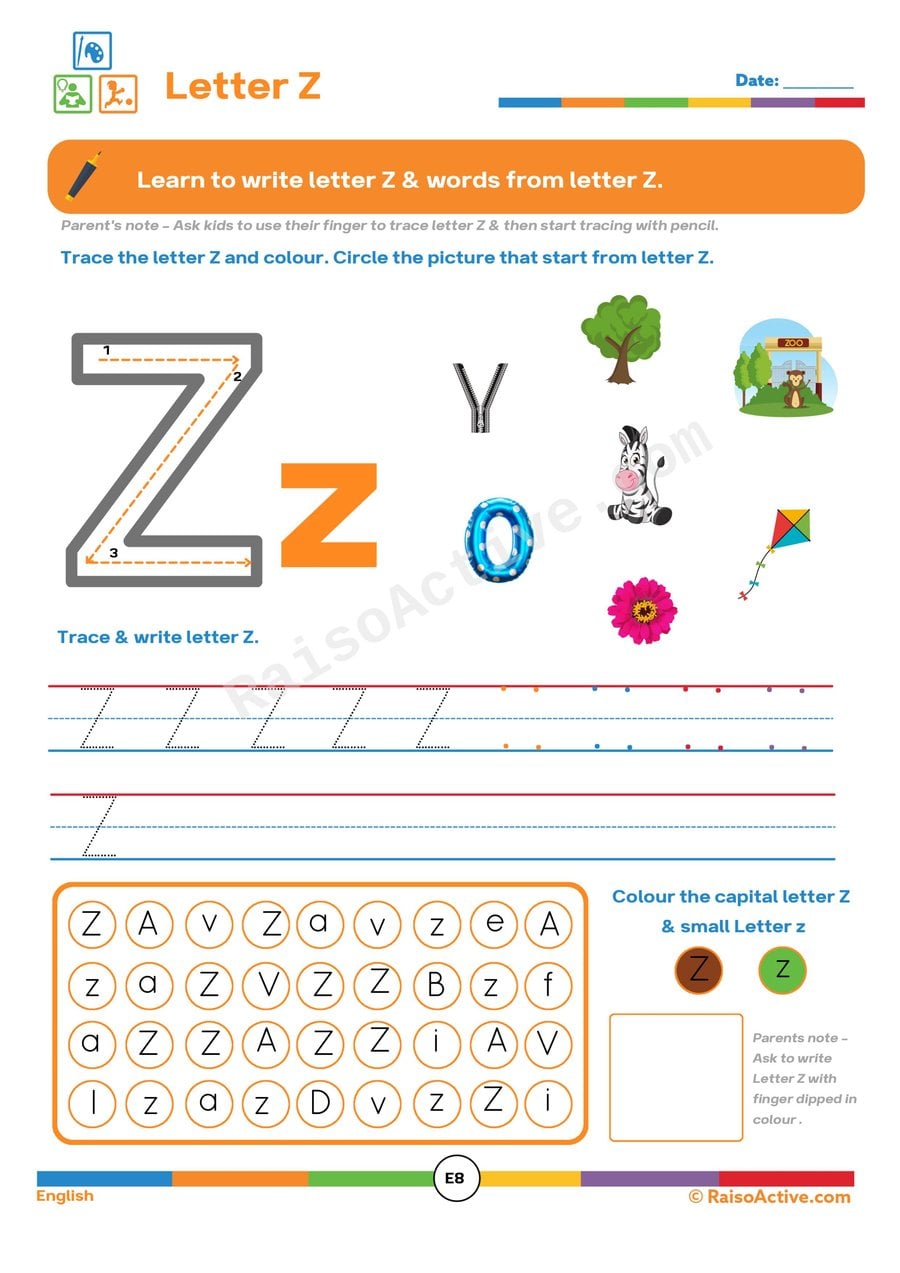
Letter Z Worksheet: Trace, Write, and Color!
This worksheet helps children ages 3-5 learn to recognize and write the letter Z, both uppercase and lowercase, completing their practice of the full alphabet with one of its most visually distinct letters. Tracing Z's sharp diagonal stroke also gives practice with a different kind of pencil movement than the curves and loops used in many other letters.
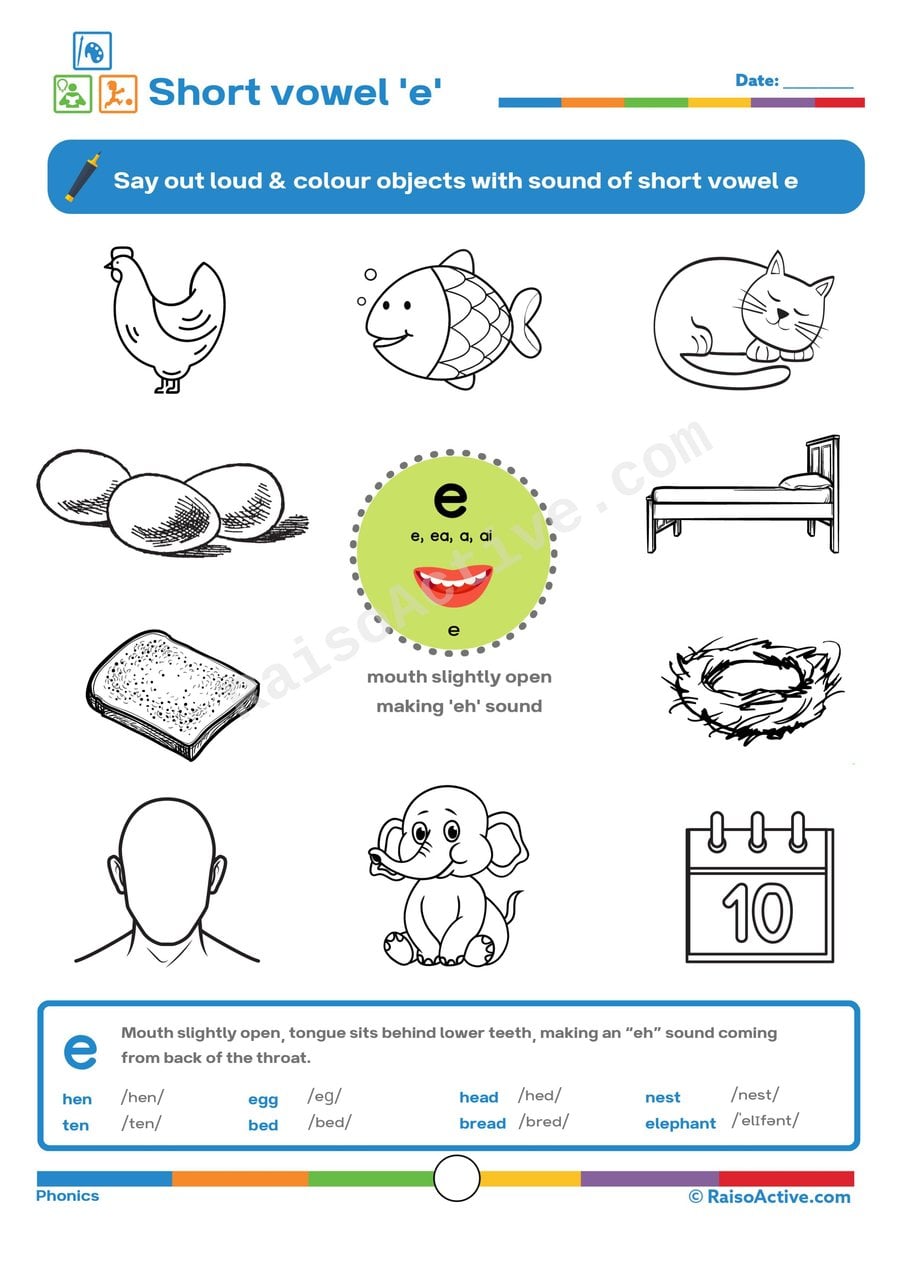
Short Vowel 'e' Worksheet: Say, Color, and Learn!
This worksheet helps children ages 3-5 tune their ears to the short vowel 'e' sound, as in 'bed' or 'net', by saying words aloud and coloring only the pictures that contain that sound. Focusing on a single vowel sound at a time, rather than comparing multiple vowels, lets younger children build a strong, specific auditory memory before they're asked to distinguish between several vowel sounds. Tracing the letter 'e' afterward links the sound they just practiced to its written form.

Before and After Worksheet for Kids: Sequencing Activities
This worksheet helps children ages 3-5 practice sequencing by identifying which picture logically comes before and which comes after a given event. Understanding cause-and-effect order is an early comprehension skill that supports retelling stories and understanding daily routines. Combining a tick-the-answer section with a cut-and-paste section gives repeated practice with the same concept in two different formats.
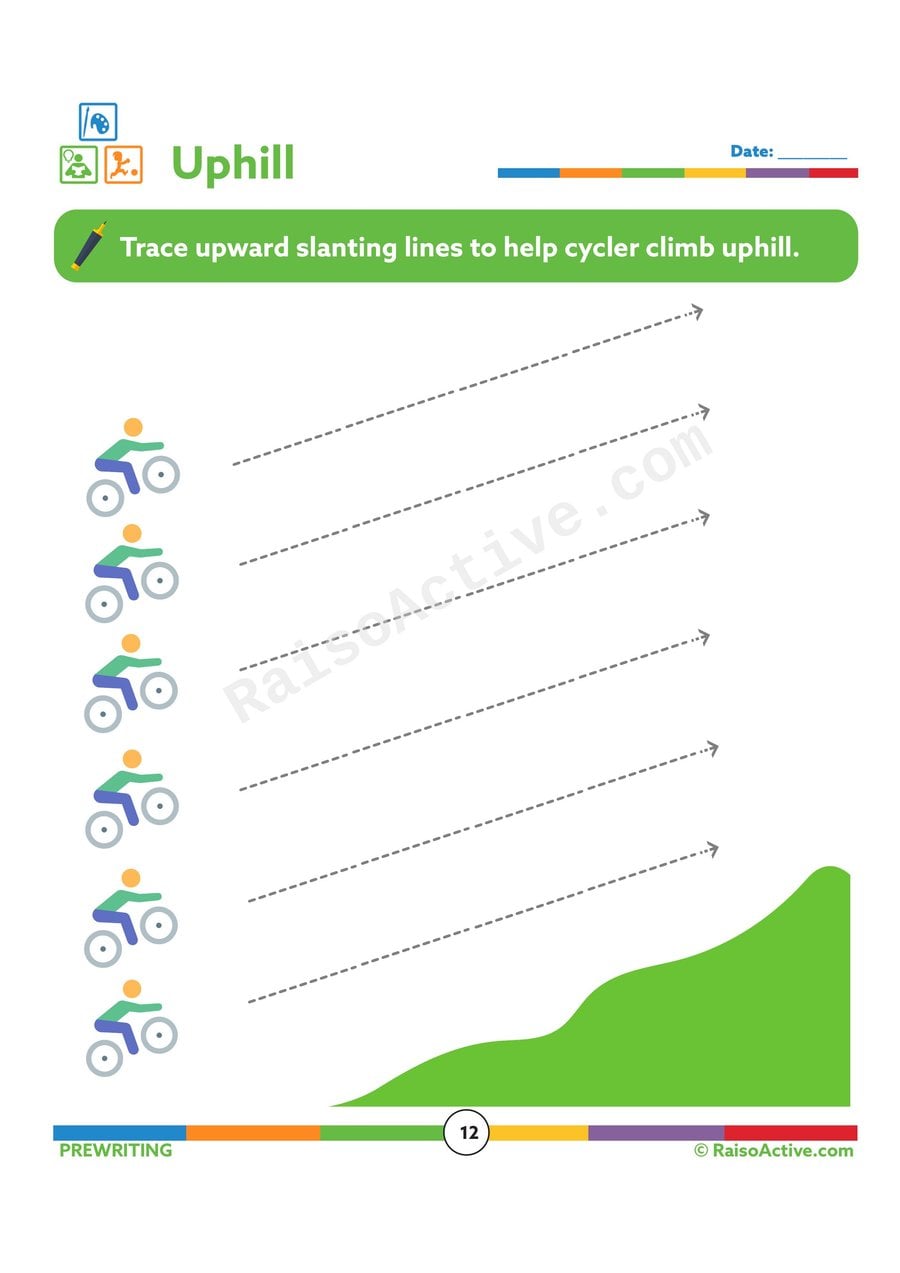
Uphill Tracing Worksheet: Help the Cyclist!
Tracing an uphill diagonal line to help a cyclist reach the top gives children ages 3-5 focused practice with slanting strokes that angle upward, a motion that requires more deliberate wrist control than a downward slant. This worksheet builds on general diagonal-line practice by tying the direction of the line to a concrete idea, going uphill, which helps children understand why the line slants the way it does rather than tracing an abstract shape.
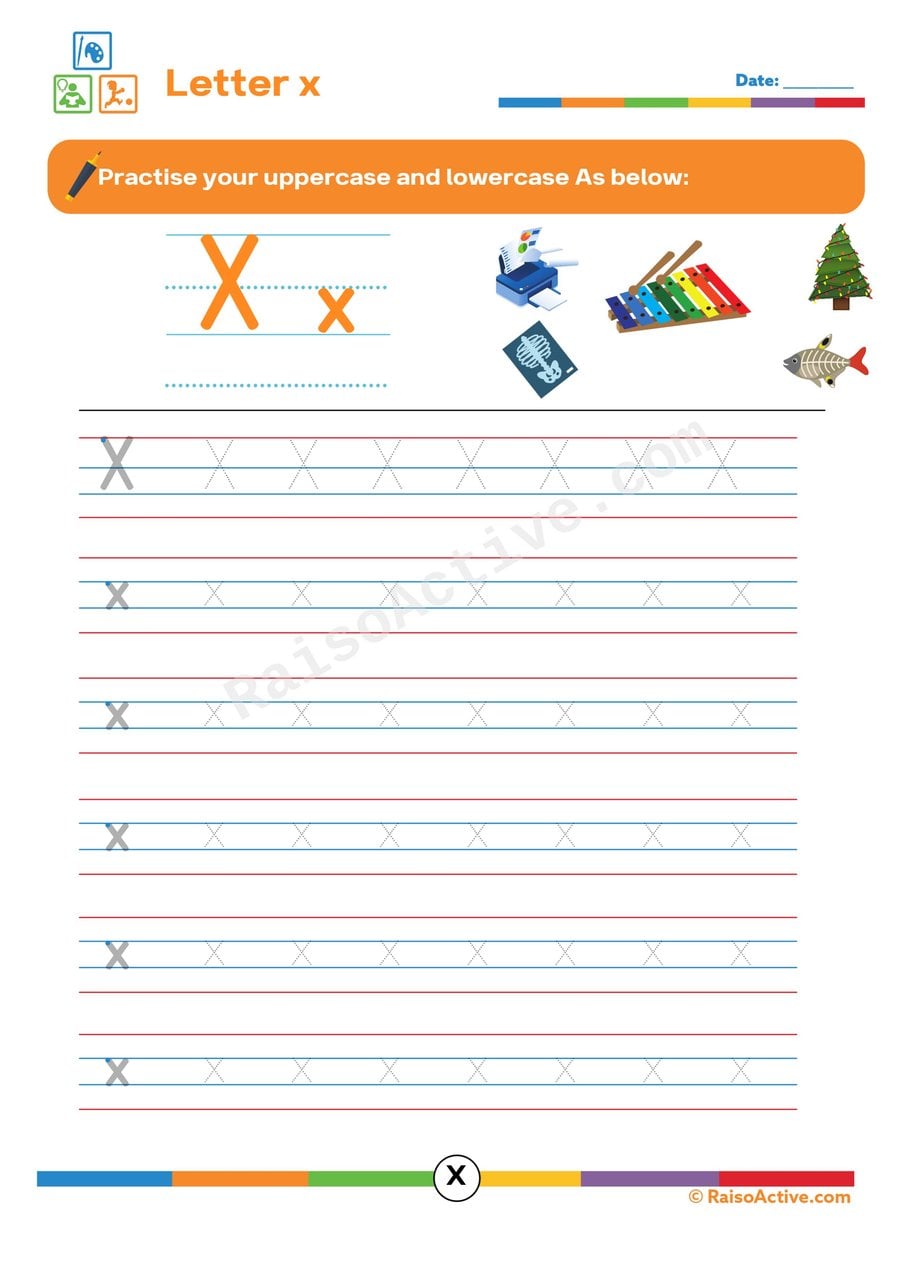
Letter X Tracing Worksheet for Preschoolers
X is formed by two diagonal lines crossing in the middle, which asks preschoolers to plan where a second line should intersect a first one already on the page — a genuinely different motor challenge from letters built with parallel or connected strokes. Because very few common English words start with X, this worksheet also gives a natural opening to talk about letter sounds appearing in the middle or end of words, like 'box' or 'fox'.
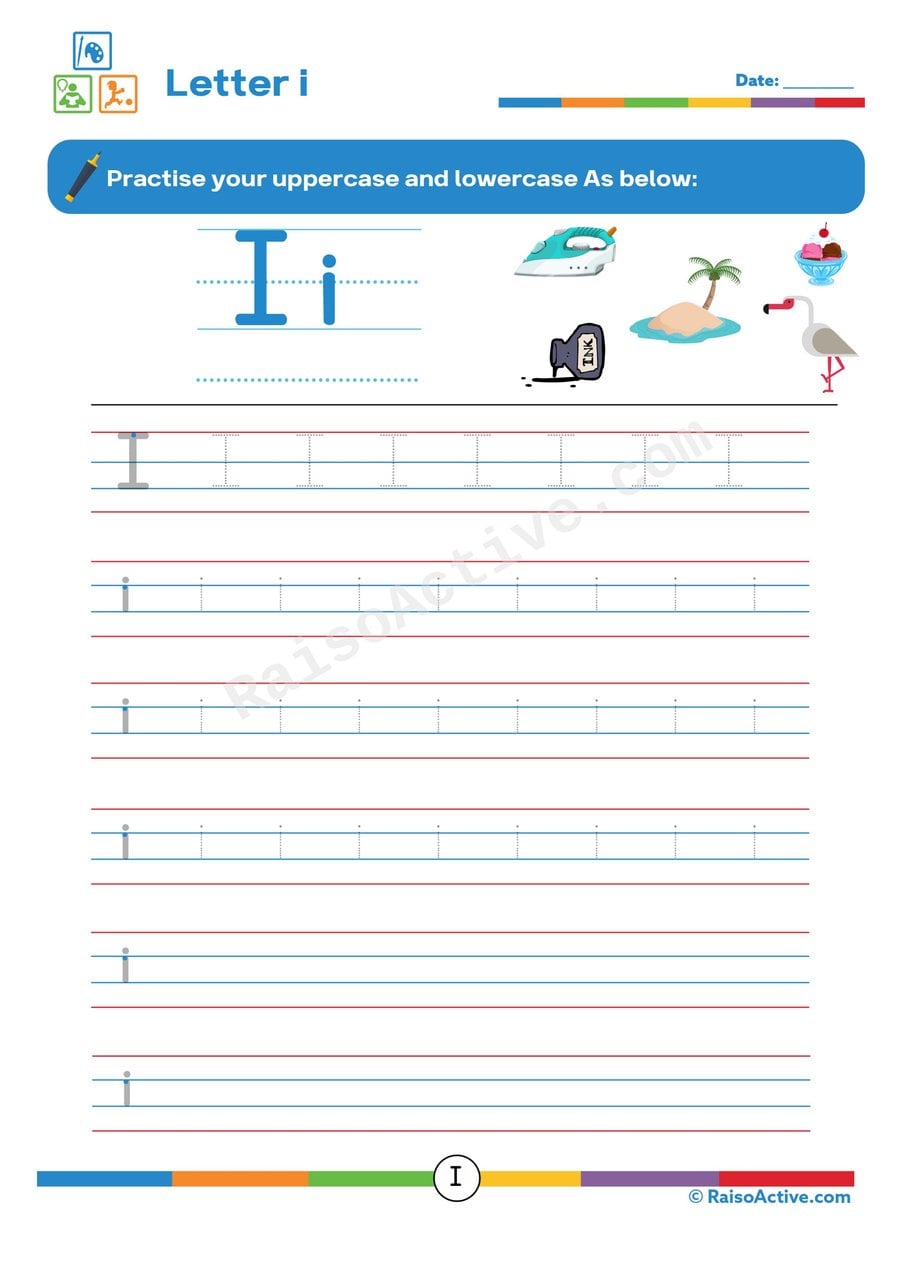
Letter I Tracing Worksheet for Preschoolers
Uppercase I is one of the simplest letters — a single straight vertical line — making it a quick, confidence-building trace, while lowercase i adds a small dot above a short line, introducing the idea that some letters have a separate mark that belongs to them. Practicing both forms at ages 3-5 teaches children that a letter's dot or detail isn't optional decoration but part of the letter itself.
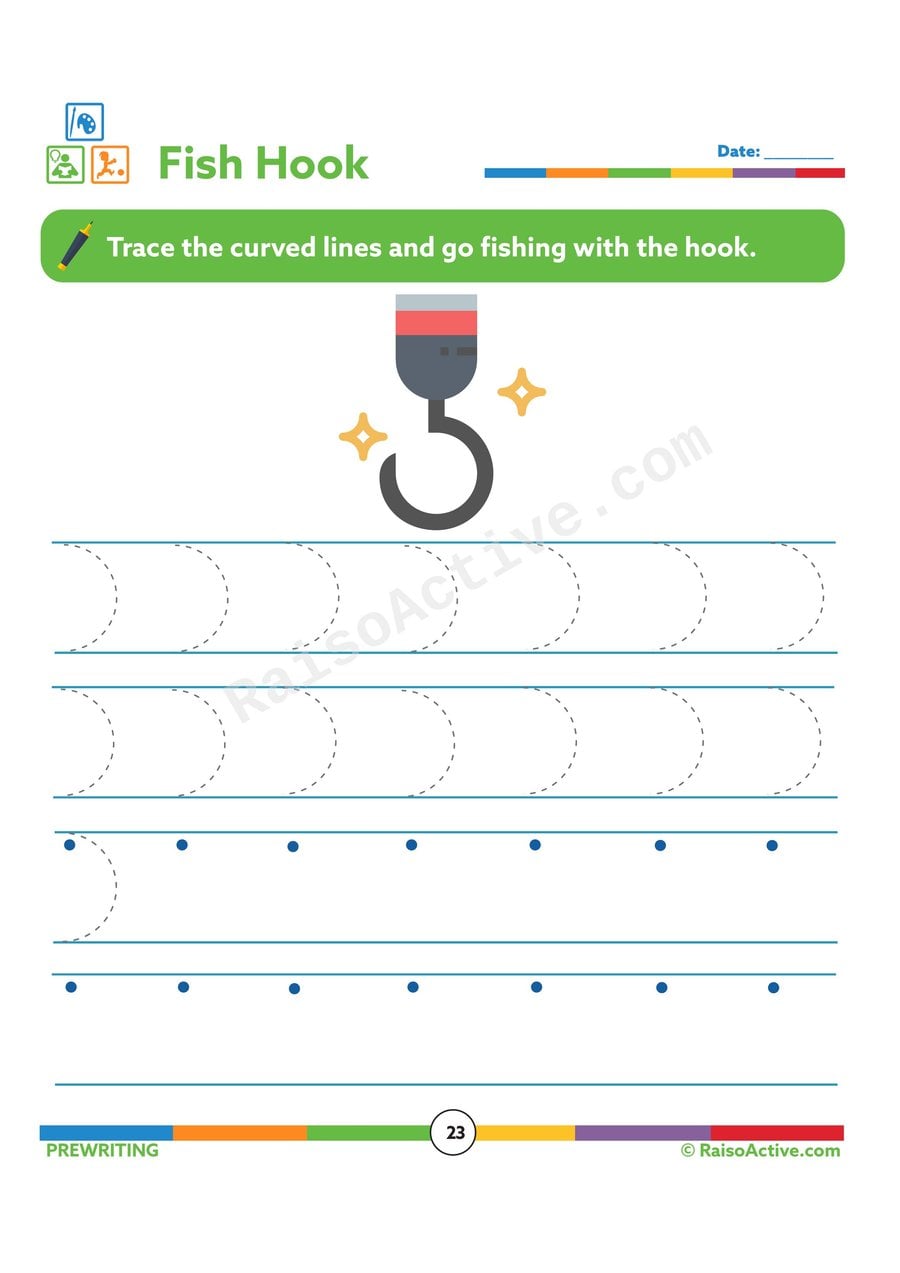
Fish Hook Tracing Worksheet for Preschoolers
Tracing a hook-shaped fishing line curve gives children ages 3-5 practice with a tight, small curved stroke, different from the wide, sweeping curves used in other worksheets, which builds fine control over shorter pencil motions. This particular curve shape is also an early building block for letters like j, which end in a small hook, making this good preparatory practice.
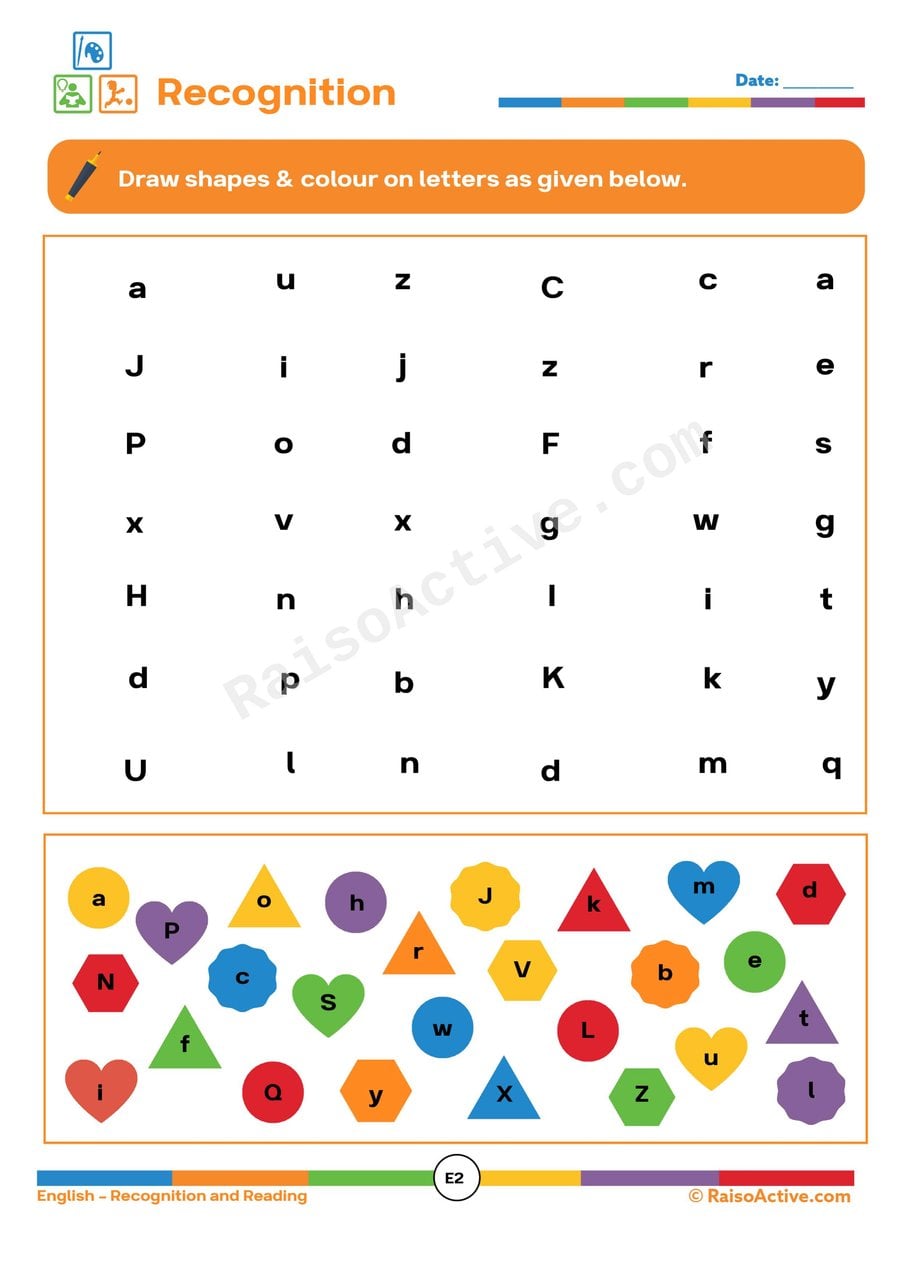
Letter Recognition Worksheet: Draw Shapes & Color!
Pairing letter recognition with drawing shapes gives children ages 3-5 practice on two skills at once: identifying printed letters by sight and following simple shape instructions with a pencil. Coloring the letters afterward reinforces the letter's visual form through repeated, focused attention rather than a quick glance, while the shape-drawing task builds the same pre-writing control needed for forming letters later. Combining these tasks keeps the page varied and engaging for a young attention span.

Butterfly Cutting Practice Worksheet for Preschoolers
This cutting-practice worksheet gives children ages 3-5 dedicated repetition in guiding scissors along a straight or gently curved dotted line, a core pre-writing and self-help skill that strengthens hand strength and bilateral coordination. Framing the goal as 'reaching the butterflies' gives children a visual reward for careful, controlled cutting rather than treating scissor practice as an isolated drill. Building this scissor control early supports later success with more complex cut-and-paste crafts.

Pikachu Pulses Worksheet: Following Instructions and Coloring Fun!
This activity helps children ages 3-5 practice following multi-step color instructions and strengthens pincer grip and fine motor precision as they place small dried lentils onto specific sections of a Pikachu outline. Working with tiny materials like lentils demands more finger control than crayons or markers, making this a genuinely challenging and rewarding fine motor exercise.

Find the Matching Image: A Fun Logical Reasoning Worksheet for Kids
Reading or listening to a short description and circling the image that matches it teaches children ages 3-5 to translate spoken or written language into a mental picture, then compare that picture against several visual options. This kind of description-to-image matching builds listening comprehension and logical reasoning, since children must hold multiple details in mind, like color, size, or action, before deciding which image fits all of them. It's a step up from simple visual matching because it requires connecting language to an image rather than comparing two pictures directly.
What Preschool shapes worksheets cover
Three-year-olds are collecting names. Circle, square and triangle are usually secure this year, with rectangle arriving late and oval mixed up with circle for a while. A worksheet should ask the child to find every triangle on a busy page, color all the squares one color, trace a large shape with thick dotted lines, and say the name aloud each time. Counting sides and sorting by a rule are still ahead.
- Name circle, square and triangle when shown one at a time
- Color every triangle on a page of mixed shapes
- Trace a big circle, square and triangle along thick dotted lines
- Find a named shape in a picture of a house or train
How to use these worksheets at home or in class
Five minutes is a solid session for a three-year-old, ten minutes the practical ceiling. Offer a thick crayon or a short fat pencil, sit beside your child, and treat the sheet as one activity among blocks, stories and outdoor play rather than as schoolwork.
Start with the sheet that matches what your child can already do, then move one step up. Keep finished sheets in a folder: Preschool teachers often ask for evidence of practice, and children like seeing their own progress.
Is your child ready for Preschool shapes work?
A child ready for these activities holds a crayon and makes deliberate marks, sits at a table briefly, follows a single spoken instruction, and shows some interest in the letters of their own name or the numbers they hear counted aloud.
Frequently asked questions
Should a three-year-old know the difference between a square and a rectangle?
Not reliably, and it is fine to wait. At three most children call both "square" because they look at the corners and see four of them. The difference is length of sides, which is a comparison the child can start noticing around four. Introduce rectangle as "a stretched square" when it comes up, use a door or a book as the example, and move on without drilling it.
What should a Preschool child be able to do in shapes?
Three-year-olds are collecting names. Circle, square and triangle are usually secure this year, with rectangle arriving late and oval mixed up with circle for a while. A worksheet should ask the child to find every triangle on a busy page, color all the squares one color, trace a large shape with thick dotted lines, and say the name aloud each time. Counting sides and sorting by a rule are still ahead. A child ready for these activities holds a crayon and makes deliberate marks, sits at a table briefly, follows a single spoken instruction, and shows some interest in the letters of their own name or the numbers they hear counted aloud.
Do these worksheets follow the Preschool curriculum?
The sheets cover naming 2D shapes, matching identical shapes, sorting shapes by attribute and finding shapes in everyday objects, which sit inside the Head Start Early Learning Outcomes Framework (ELOF) outcomes for Preschool. Nursery (UK), Nursery (India) use the same skills at this age, so the sheets also fit families following those programmes.
Are these Preschool shapes worksheets free?
Yes. Each worksheet downloads free as a watermarked PDF once you create an account, with a limit of five a day. An annual membership ($20) removes the watermark and the limit for the whole library of over 1,000 worksheets and every printable pack.

Written by
Hemsweta Jain · Teacher Cheena
MBA and Early Childhood Educator, teaching since 2014 · Founder of RaisoActive, Mumbai
Written and reviewed by Hemsweta Jain (Teacher Cheena), who designs every RaisoActive worksheet.
Last reviewed
Printable packs for ages 3–4
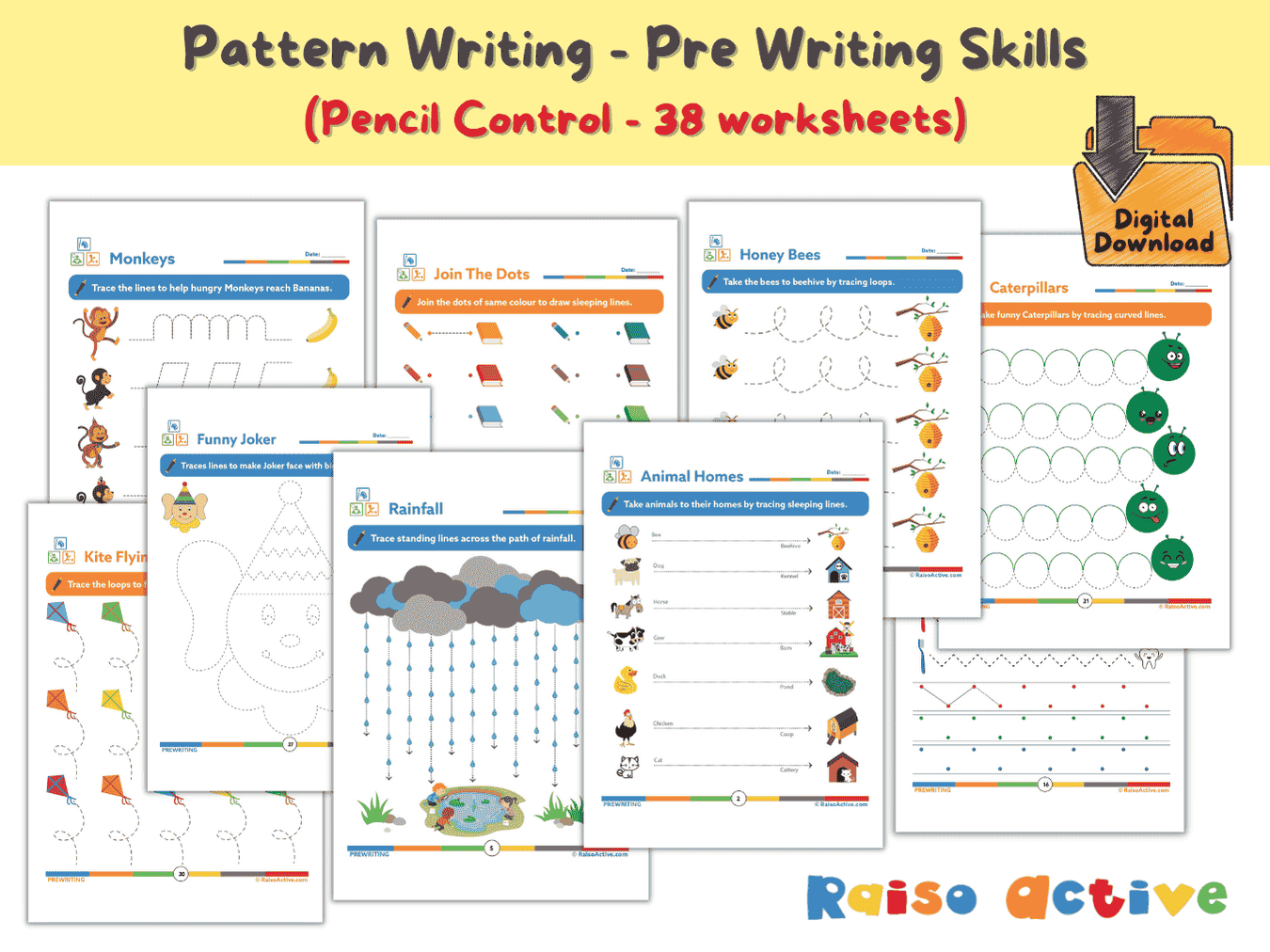
Pattern Writing Pre-writing Skills Activity Book for 3-4 Year Olds
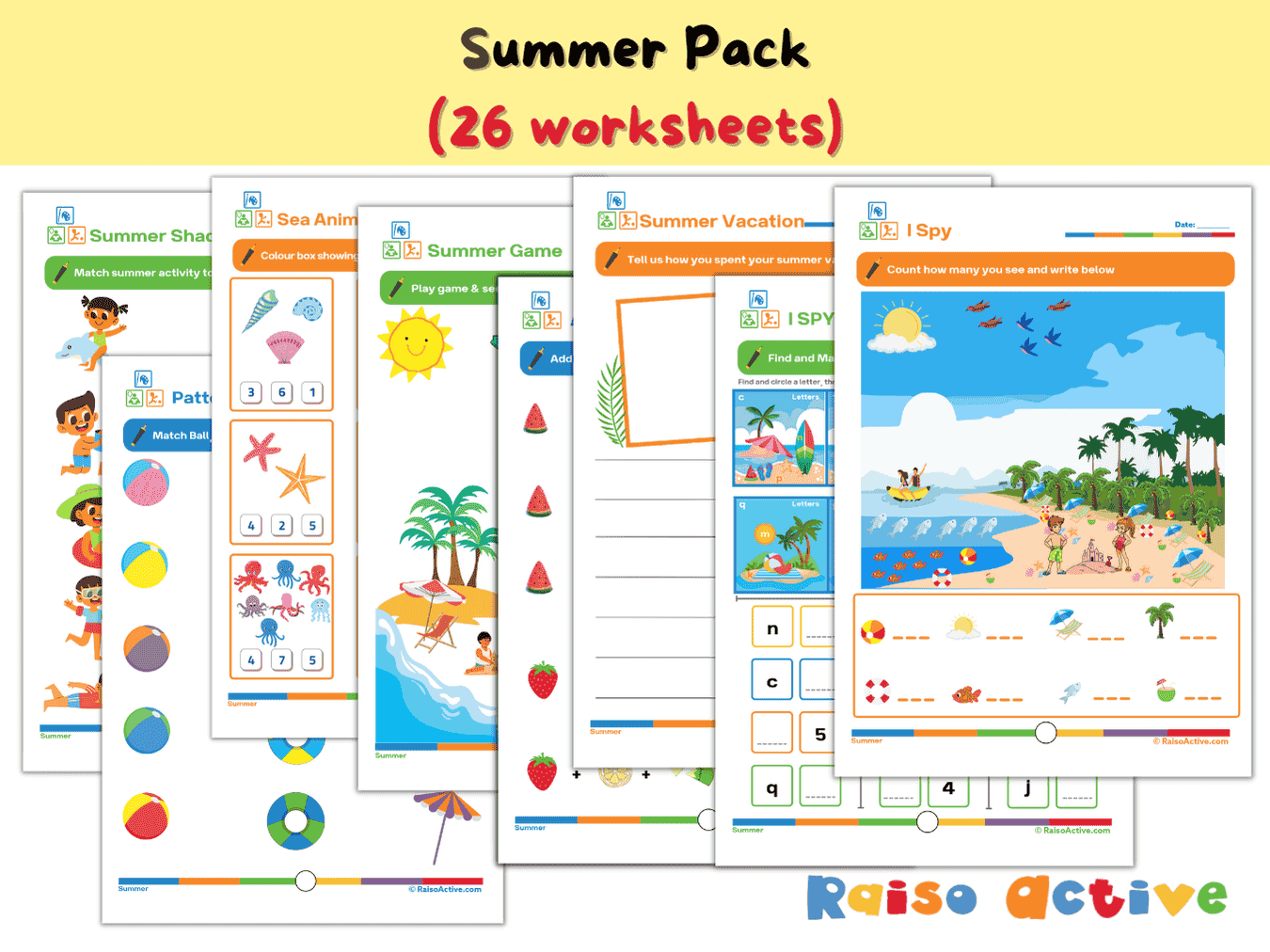
Summer Activity Pack: Math, Literacy, Puzzles & More for Preschool & Kindergarten
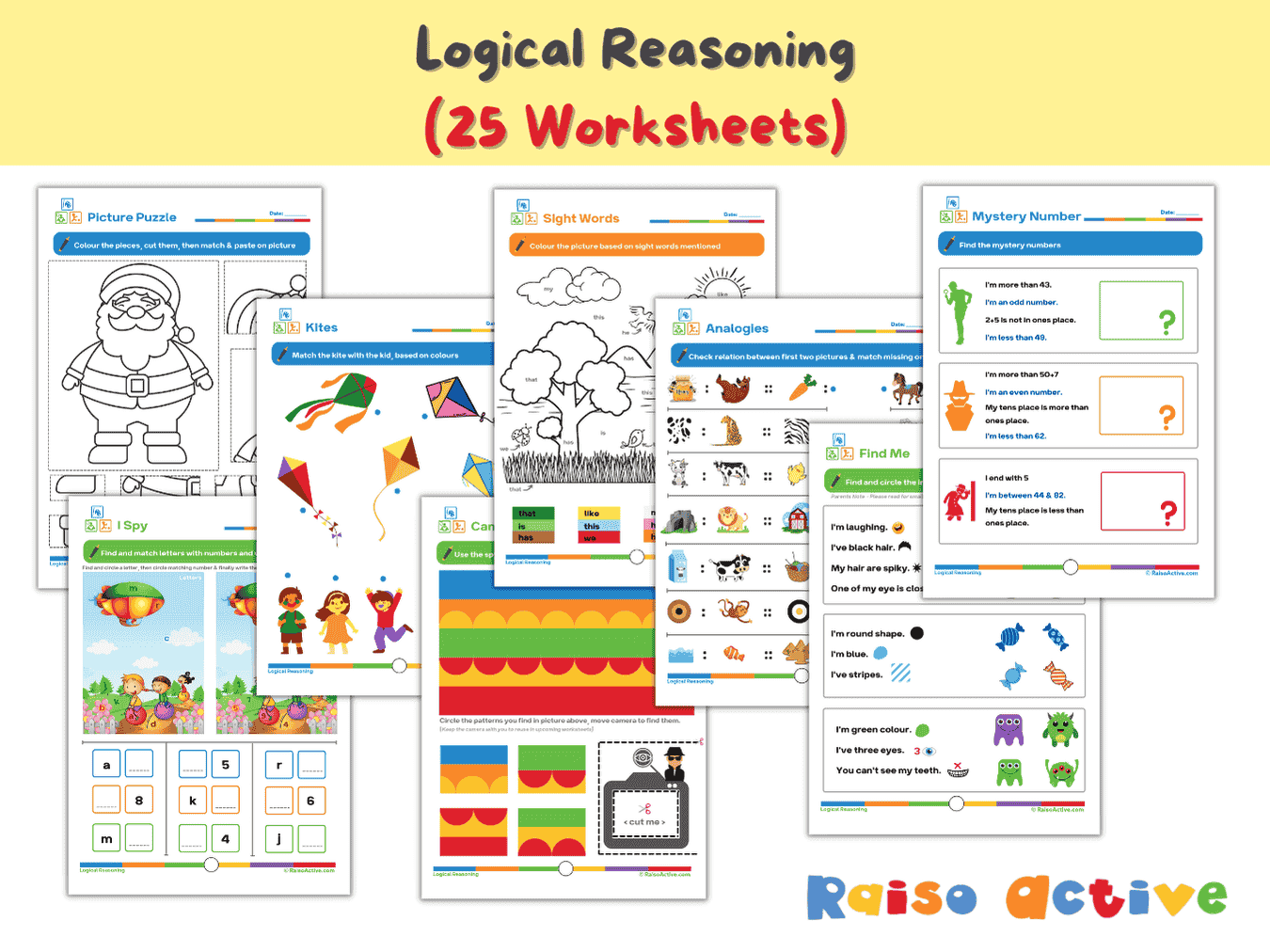
Logical Reasoning Activity Book for Preschool & Kindergarten | Patterns, Puzzles & Analogies
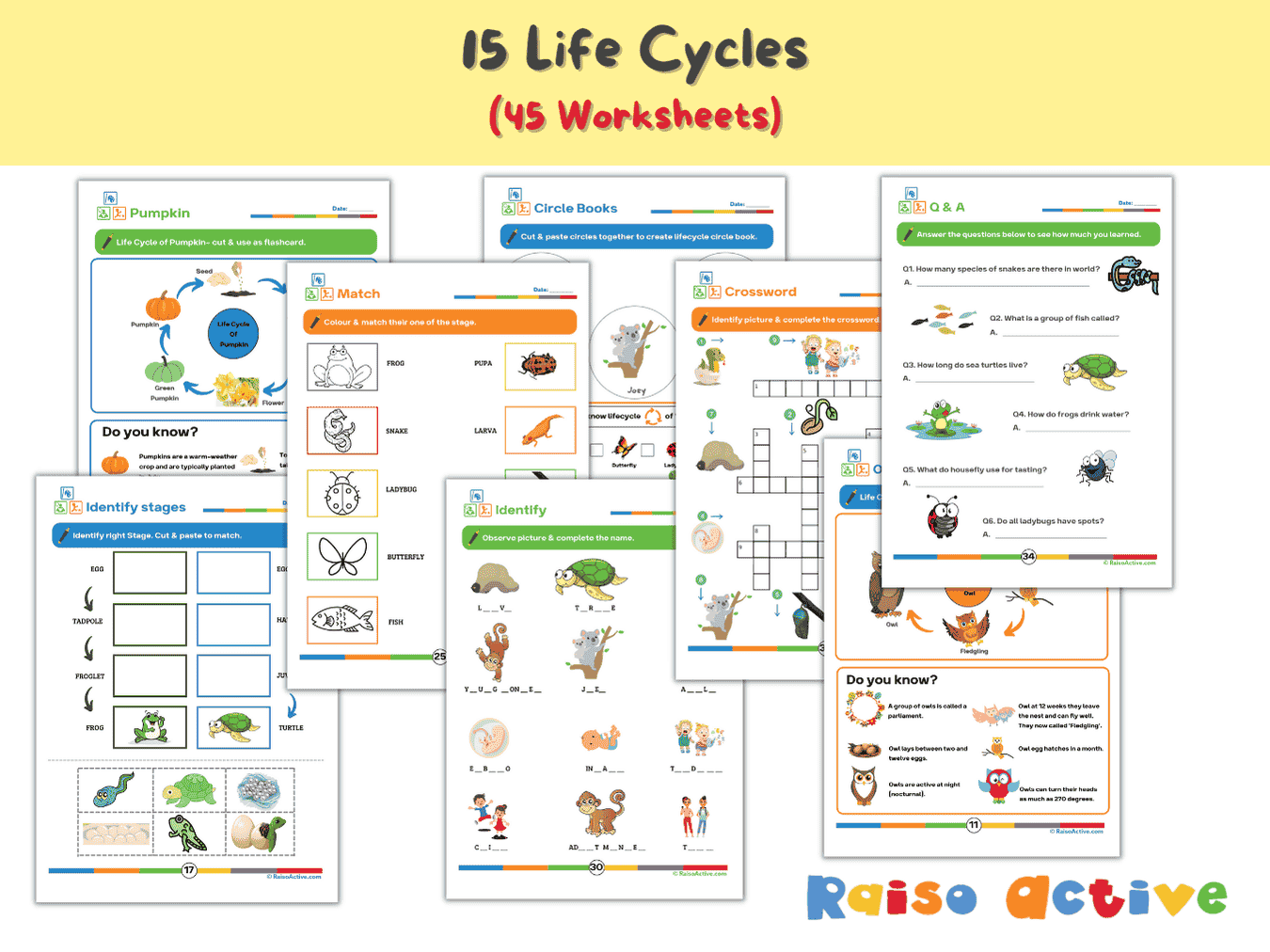
Lifecycles Activity Book & Flashcards for Preschool & Early Elementary
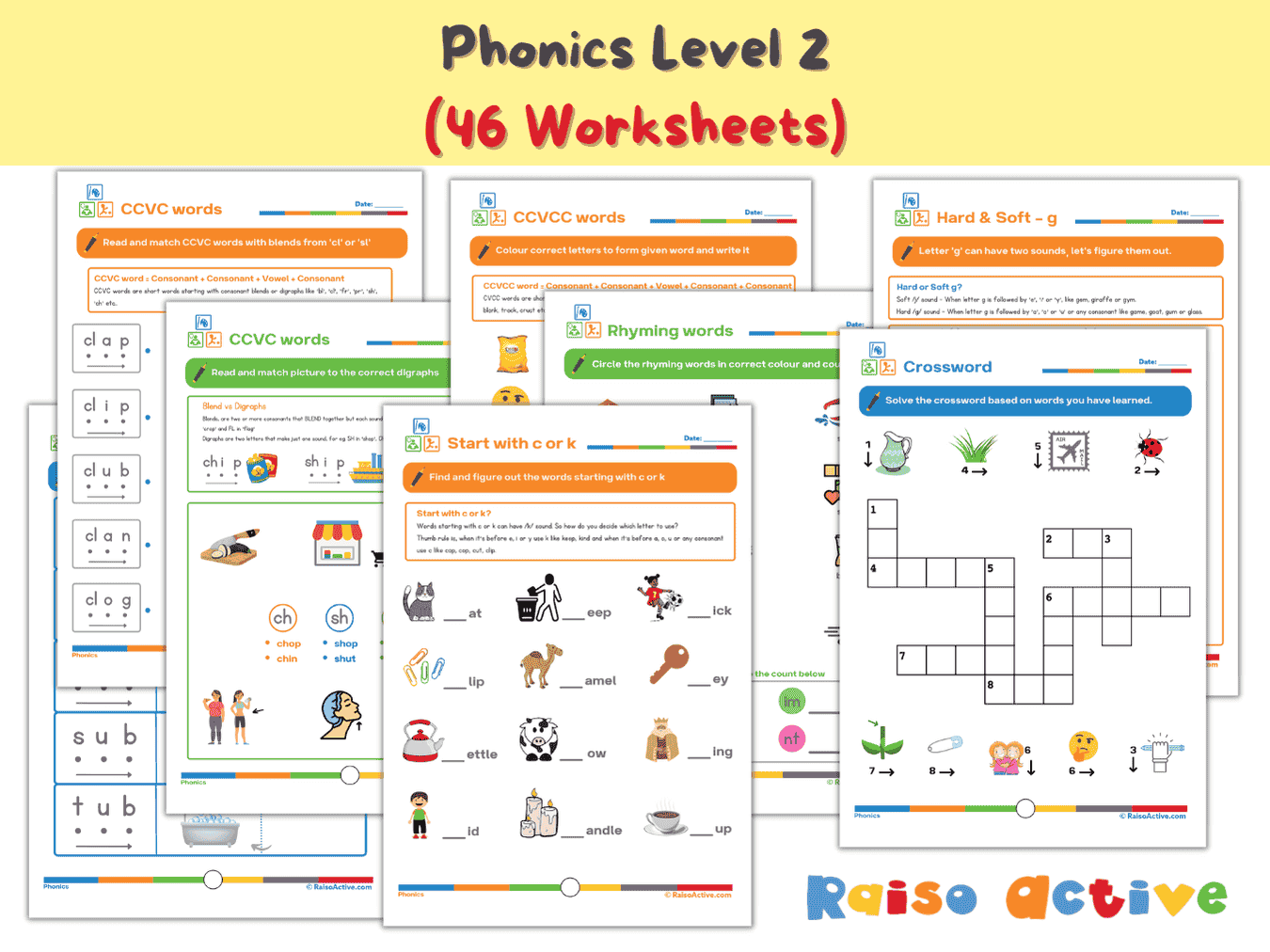
Phonics Level 2 Worksheets: CVC, CCVC, CVCC Word Families & Blends for Early Readers (Ages 4-7)
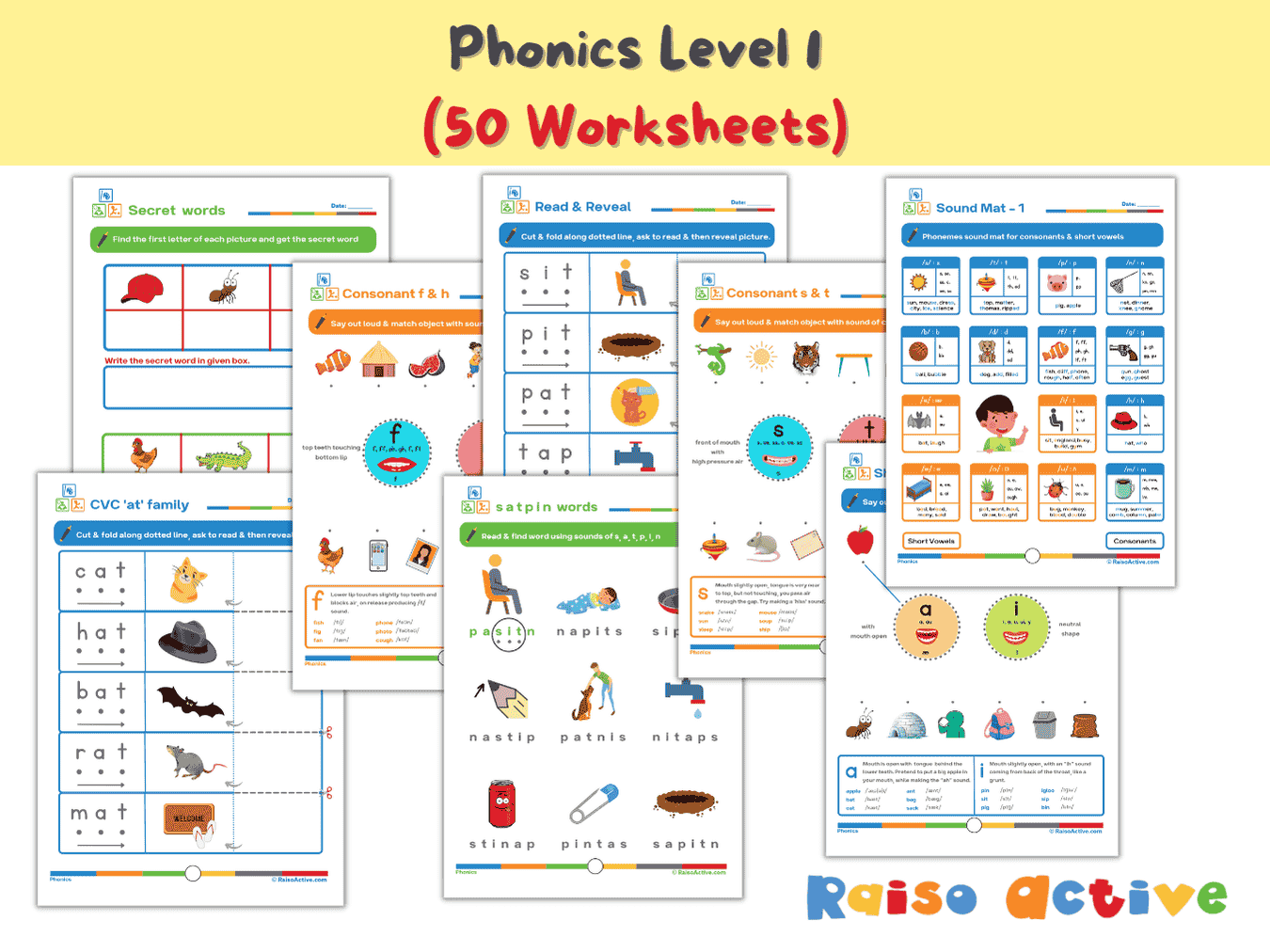
Phonics Level 1 Activity Book: Letter Sounds, Blending & CVC Words for Preschool & Kindergarten
Guides for parents and teachers
See all guides →UKG Syllabus Explained: English, Maths and EVS Month by Month
What UKG classes typically cover in English, maths and EVS, month by month, aligned to NEP 2020, with ways to support at home and signs your child is behind.
How to Teach Your 3-Year-Old to Recognise Numbers: A Parent's Complete Guide
Help your 3-year-old recognise numbers 1-10 with multi-sensory activities, everyday maths moments, and simple routines. Practical guide with Indian context included.
Canonical: https://raisoactive.com/worksheets/preschool-shapes