Free printable worksheets · India
Holi Worksheets (Ages 3–7)
Holi worksheets are printable activity sheets for children aged 3 to 7 based on the Indian festival of colours. They include matching gulal colours to their names, counting pichkaris, completing repeating colour patterns, tracing pichkari and flower outlines, and colouring within bold festival borders, building colour recognition, counting, matching and fine motor skills.
Holi falls on Monday, 22 March 2027, preceded by Holika Dahan on 21 March, and lands at the very start of the Indian school year's spring stretch, when Nursery and LKG classrooms are already covering colours and the change of season. A three-year-old matches a splash of gulal to its printed colour name; a six-year-old counts a row of pichkaris or completes a repeating colour pattern across a row of colour pots. These worksheets use the festival's bright, high-contrast colours to make colour recognition and counting practice feel like play rather than a drill.
291+ worksheets · free PDF download · print on A4 or Letter
Holi Worksheets to print
Browse all worksheets for ages 3–7
CVC 'in' Family Matching Worksheet: Read, Color, and Match!
This worksheet extends word-family practice to the 'in' pattern (pin, bin, win, tin), giving children ages 4-6 another opportunity to apply the analogy strategy of recognizing a shared ending and swapping only the first letter to read new words quickly. Practicing several word families over time — 'ad,' 'ag,' 'it,' and now 'in' — helps children generalize the underlying reading strategy rather than memorizing isolated words, which is exactly the kind of transferable skill that speeds up reading development. Coloring and matching each word to its picture adds a multisensory layer that helps the pattern stick.
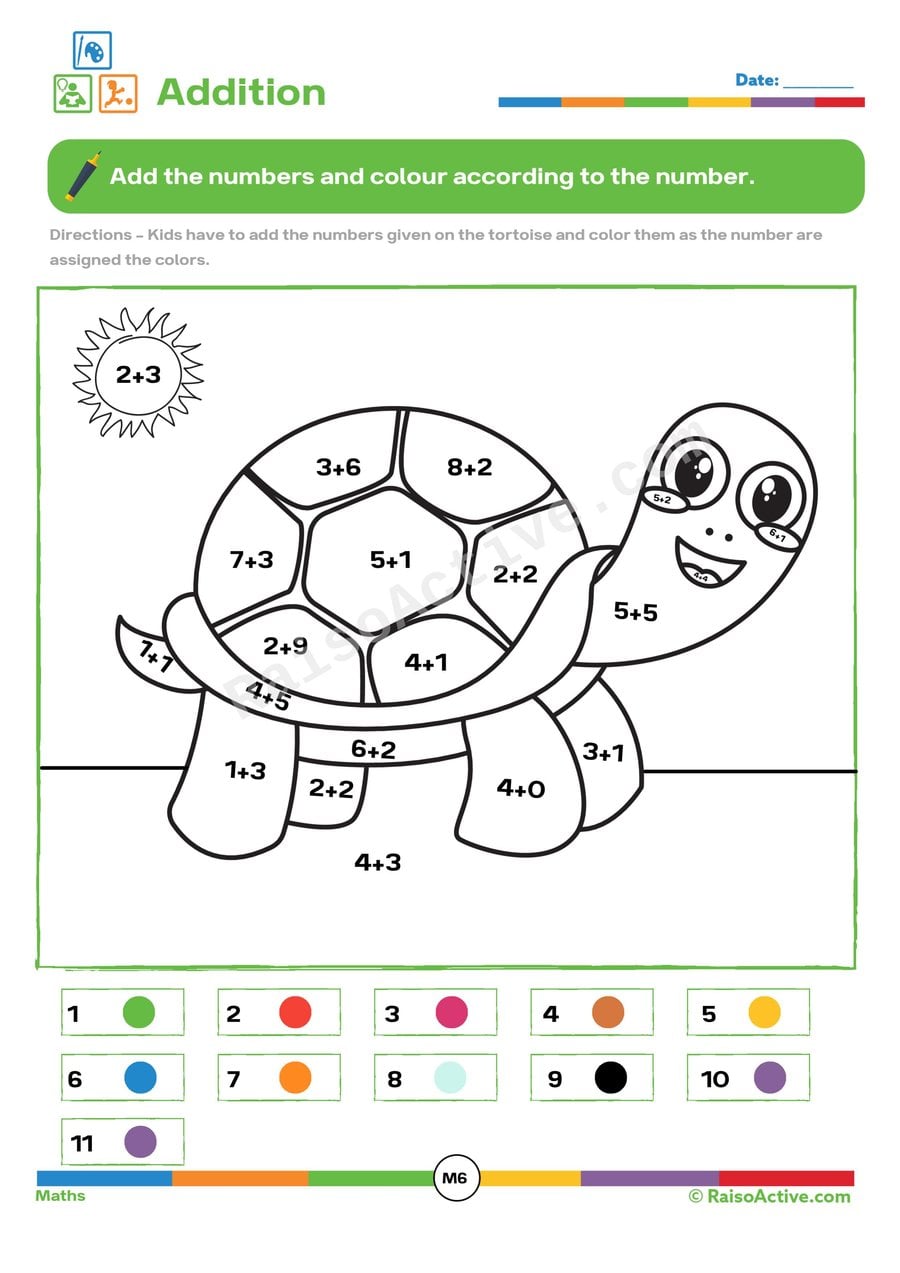
Color by Number Addition Worksheet: The Turtle!
Children ages 4-6 practice single-digit addition facts and then apply a color key to their answers, combining math fluency with careful visual matching as the turtle picture is revealed. The immediate visual payoff of a colored picture gives children a clear, motivating way to check whether their addition was correct.
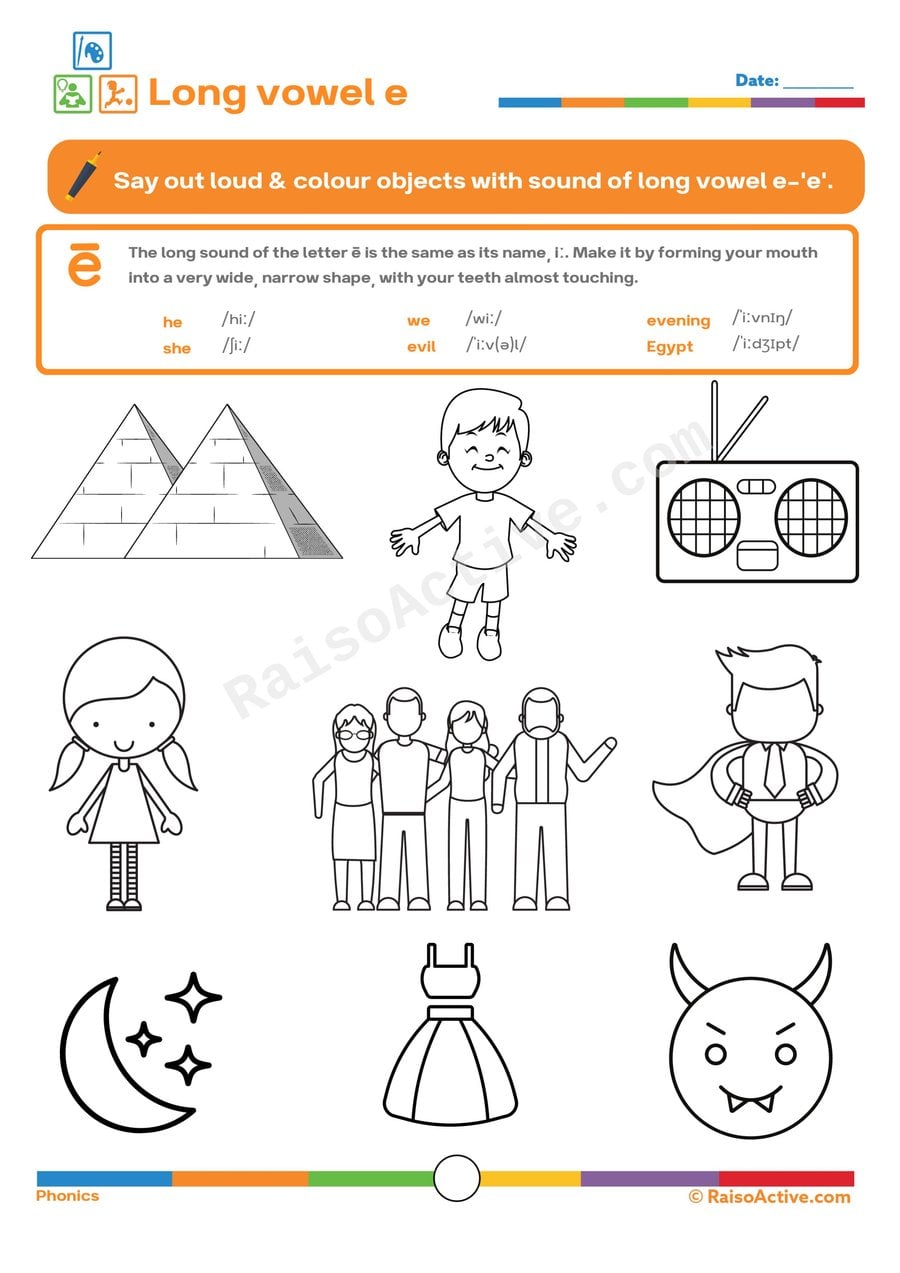
Long Vowel E Coloring Worksheet: Say the Sounds!
This worksheet builds long 'e' sound recognition for children ages 4-6 through a simple listen-and-color format, letting children focus entirely on auditory discrimination without the added demand of reading or writing. Long 'e' words like 'he' and 'she' appear constantly in early reading, so being able to instantly recognize the sound supports smoother decoding once your child starts reading connected text. Coloring only the pictures with the target sound also builds sustained attention, since your child has to evaluate every picture individually rather than color the whole page at once.
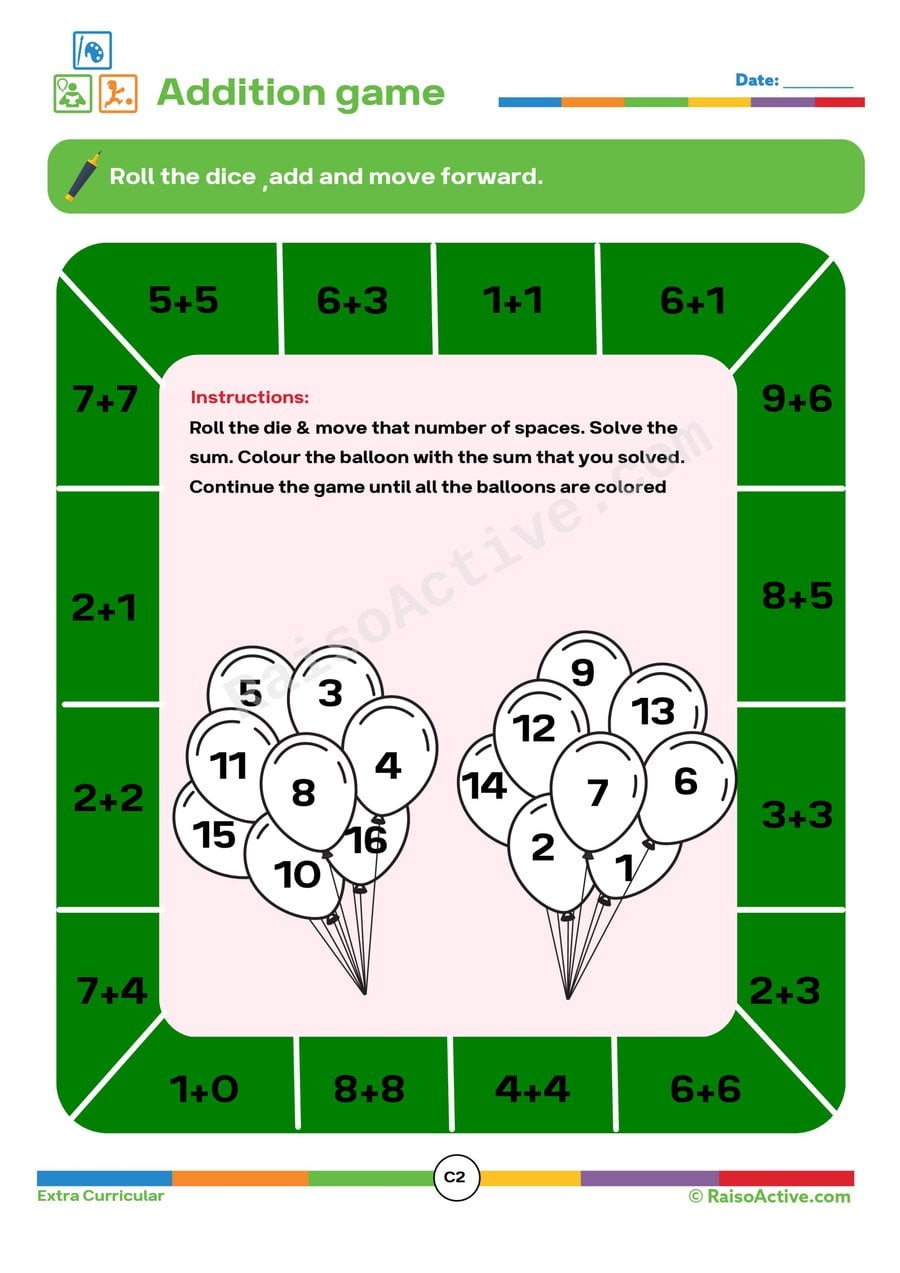
Addition Game: Roll, Add, and Color the Balloons!
Turning addition practice into a dice game gives children ages 4-6 a built-in reason to solve repeated equations without it feeling like a repetitive drill, since each roll introduces a small element of chance and excitement. Solving the addition problem in each space and then coloring the matching balloon connects abstract number work to a satisfying visual result, reinforcing that math has a concrete, visible payoff. Playing a game format like this also builds early skills in following multi-step game rules, which supports both math confidence and general executive function.

Holiday Sudoku: Cut and Paste Picture Puzzle Worksheet
This holiday-themed sudoku worksheet builds logical reasoning and problem-solving skills in children ages 4-6 by having them determine which holiday picture is missing from each row and column of a puzzle grid. Solving a picture sudoku by elimination, rather than by simple matching, requires children to hold multiple constraints in mind at once — what's already in the row and what's already in the column — which is genuinely challenging early logic practice. The festive imagery adds motivation and seasonal fun to an otherwise abstract reasoning task.

Proper and Common Nouns Worksheet: Color the Correct Pencil!
This worksheet introduces children ages 4-6 to the distinction between proper nouns (specific names, like 'London' or 'Max') and common nouns (general words, like 'city' or 'dog'), asking them to color a pencil to show which category each word belongs to. Recognizing that proper nouns are specific and usually capitalized is an early step toward correct capitalization in their own writing.

Ordinal Numbers Coloring Worksheet for Preschoolers
This worksheet introduces children ages 4-6 to ordinal numbers from sixth to tenth, teaching them that position in a sequence, like 'which one is 6th,' is a different idea from counting how many items there are in total. Coloring the correctly positioned picture in each row also reinforces left-to-right tracking, an important pre-reading skill.
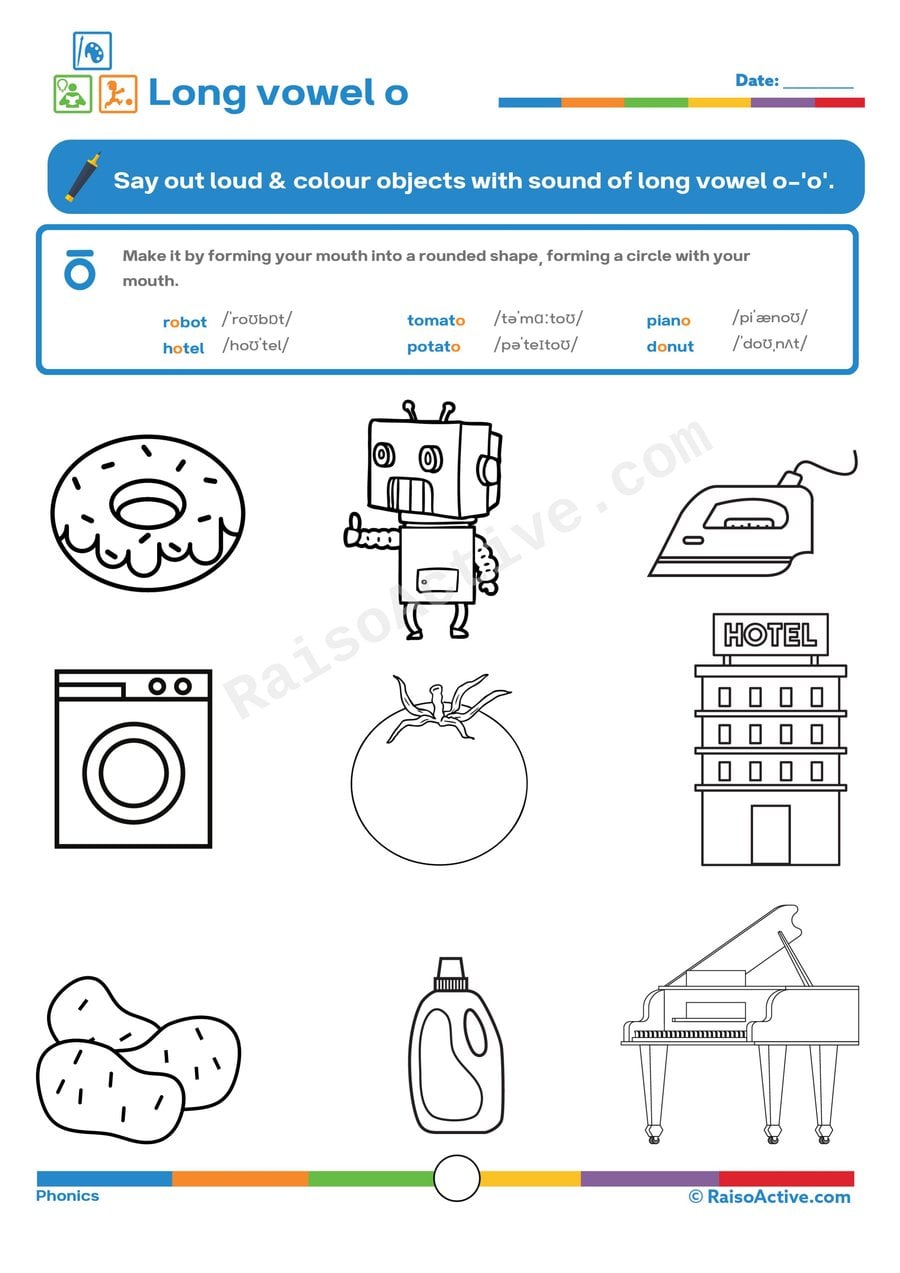
Long Vowel 'o' Coloring Worksheet for Kids
This worksheet has children ages 4-6 listen for the long 'o' sound, as in 'boat' or 'nose,' and color only the objects whose names contain that sound, practicing auditory discrimination without requiring any writing. Because the task depends entirely on listening carefully to each word rather than reading it, this worksheet works well for children still building their sound-recognition skills before they're fully confident readers. Coloring based on sound rather than simply coloring a whole picture also keeps children actively thinking throughout the activity.
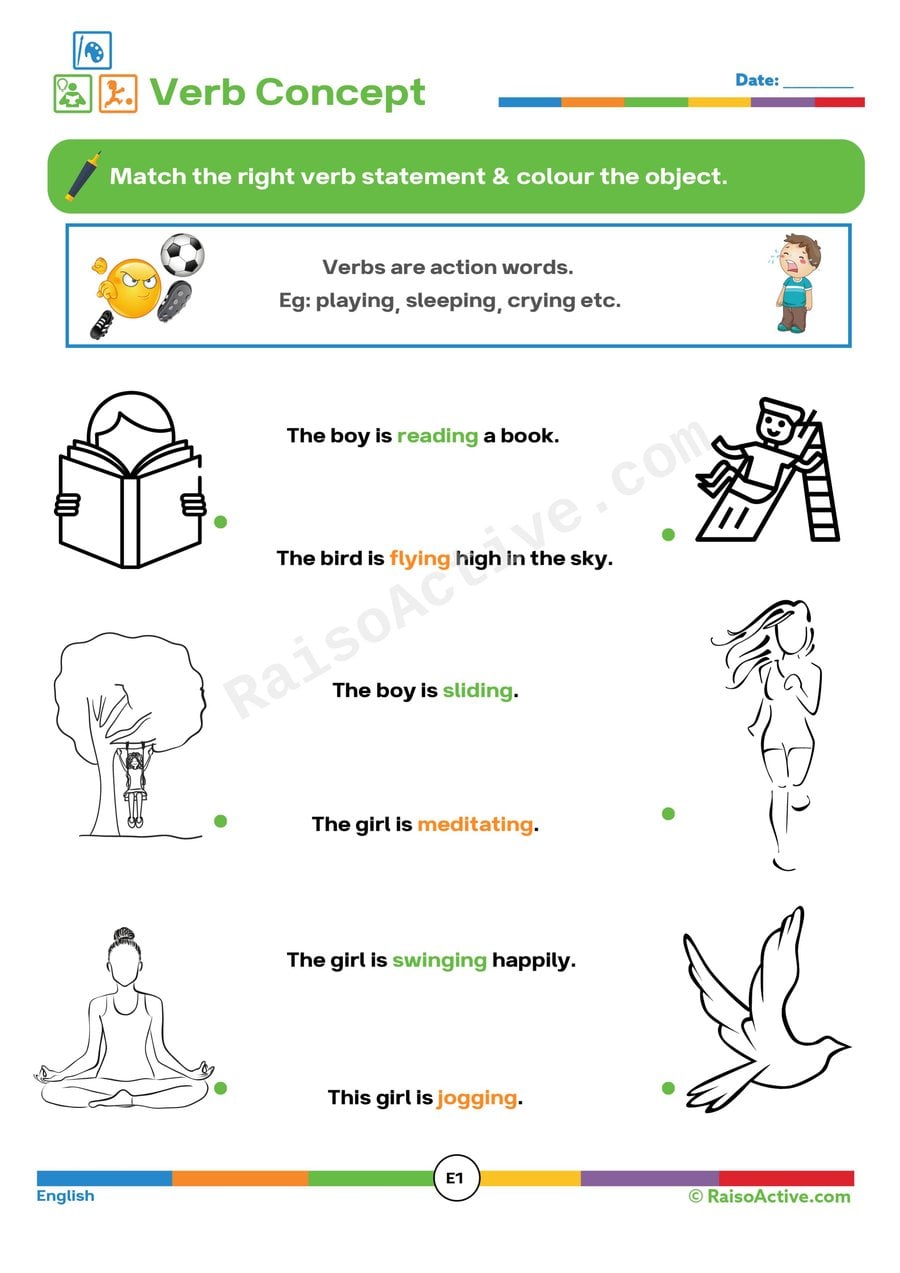
Action Verbs Worksheet: Match and Color!
This worksheet has 4-6 year olds read a short sentence, pick out the action word inside it, and match that sentence to the picture showing the action happening — a skill that bridges early reading with grammar. Identifying the verb specifically (rather than just understanding the sentence generally) is a more advanced task than simple picture-word matching, since children have to isolate one word's job within a whole sentence. Coloring the matched picture afterward gives an easy, low-pressure way to confirm the match was correct.

Trace and Color the Fruits: Number Matching Worksheet
This worksheet links three number skills together for 4-6 year olds: tracing dotted numerals for handwriting practice, counting a row of fruit for quantity, and then checking that the fruit count actually matches the traced number — a self-checking loop that reinforces number-to-quantity correspondence rather than treating tracing and counting as separate tasks. That verification step (does the fruit count really match?) pushes your child to count carefully rather than just glance and guess.

Long Vowel 'U' Coloring Worksheet for Preschoolers
This worksheet has children ages 4-6 listen for the long 'u' sound, as in 'unicorn' or 'cube,' and color only the objects whose names contain that sound, building auditory discrimination through a listening-focused activity rather than reading or writing. Long 'u' can be one of the trickier vowel sounds for children to isolate, since it sometimes blends with a 'y' sound at the start, so this worksheet gives focused practice on a sound that needs extra repetition. Coloring selectively, rather than coloring an entire picture, keeps children actively evaluating each word rather than coloring on autopilot.
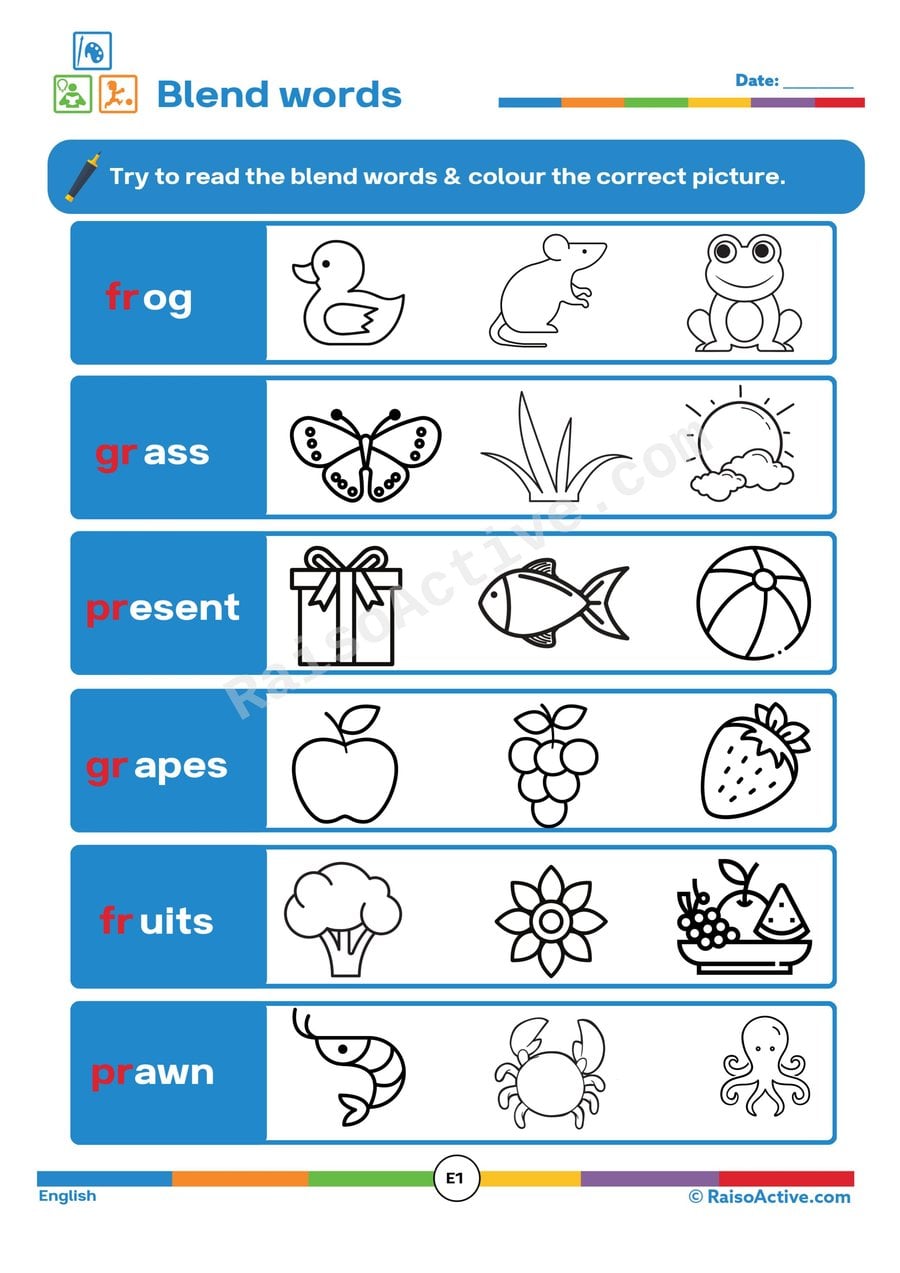
Blend Words Coloring Worksheet for Preschoolers
Consonant blends, like 'bl,' 'st,' or 'fr,' require children ages 4-6 to read two consonant sounds together without a vowel between them, which is genuinely more demanding than single-consonant CVC words and represents an important next step in phonics progression. This worksheet asks children to read a blend word and then color the picture that matches it, giving an immediate visual check on whether they decoded the blend correctly. Because coloring is the reward for accurate reading, the activity keeps repeated blend practice feeling engaging rather than repetitive.
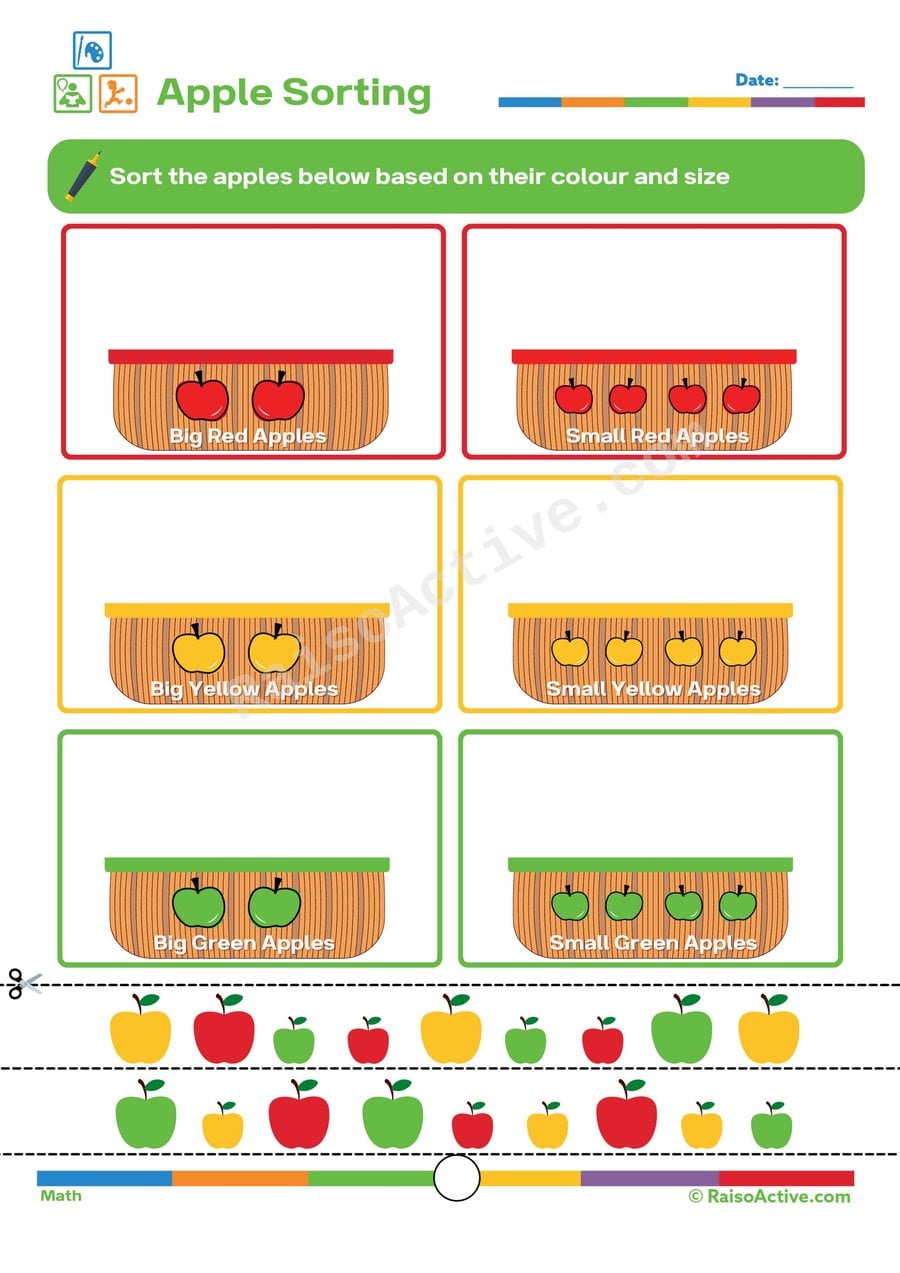
Apple Sorting Worksheet: Color and Size Fun!
This sorting worksheet has children ages 4-6 classify a set of cut-out apples by two different attributes, color and size, simultaneously, which builds more advanced categorization skills than sorting by a single trait alone. Deciding which basket an apple belongs in based on two criteria at once also strengthens early logical reasoning.

Bee's Number Sequence Adventure: Coloring Numbers 0-50!
Children ages 4-6 practice counting and recognizing numbers from 0 to 50 in sequence by coloring each number in order to help a bee find its way to the hive, extending number recognition well beyond the smaller ranges typically practiced at this age. Following a long numerical sequence builds persistence and reinforces counting patterns like the teens, twenties, and thirties.
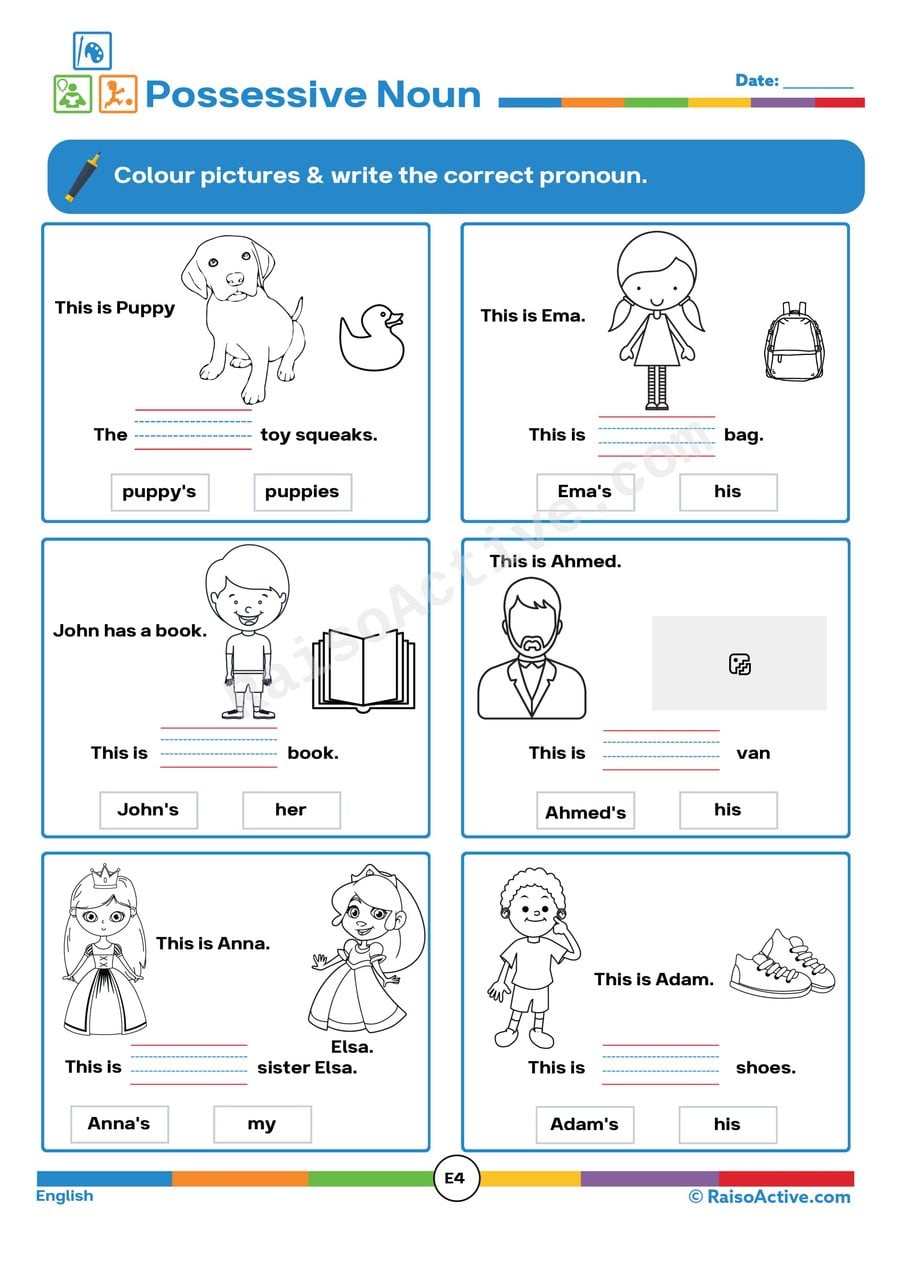
Possessive Nouns Worksheet: Color and Write!
Children ages 4-6 practice forming possessive nouns, learning to add an apostrophe and 's' to show that something belongs to someone, like 'the dog's bone.' This is a specific grammar rule that children will use constantly once they start writing about ownership in their own sentences.

Spring Sudoku Worksheet: Cut and Paste Puzzle for Kids
Placing cut-out pictures into a sudoku-style grid so that no image repeats in any row, column, or box teaches children ages 4-6 early logical reasoning and systematic thinking, since they must check multiple directions before deciding where each piece belongs. Cutting out the small picture squares beforehand also builds scissor control and hand-eye coordination. Together, this combines a pre-math logic puzzle with fine motor practice in a single spring-themed activity.

Coloring Fun: Addition Worksheet for Preschoolers
Solving each addition problem reinforces single-digit sums, while matching the answer to a color-by-number key trains children ages 4-6 to connect a symbol — the number — to a category — the color, an early bridge between arithmetic and following multi-step visual instructions.

Color Mixing Worksheet for Preschoolers: Learn Primary and Secondary Colors!
Identifying primary colors and predicting which two combine to create each secondary color introduces children ages 4-6 to basic color theory, an early scientific concept about how colors interact. This worksheet builds the vocabulary and reasoning skills needed to understand color mixing before testing it out with real paint or crayons.
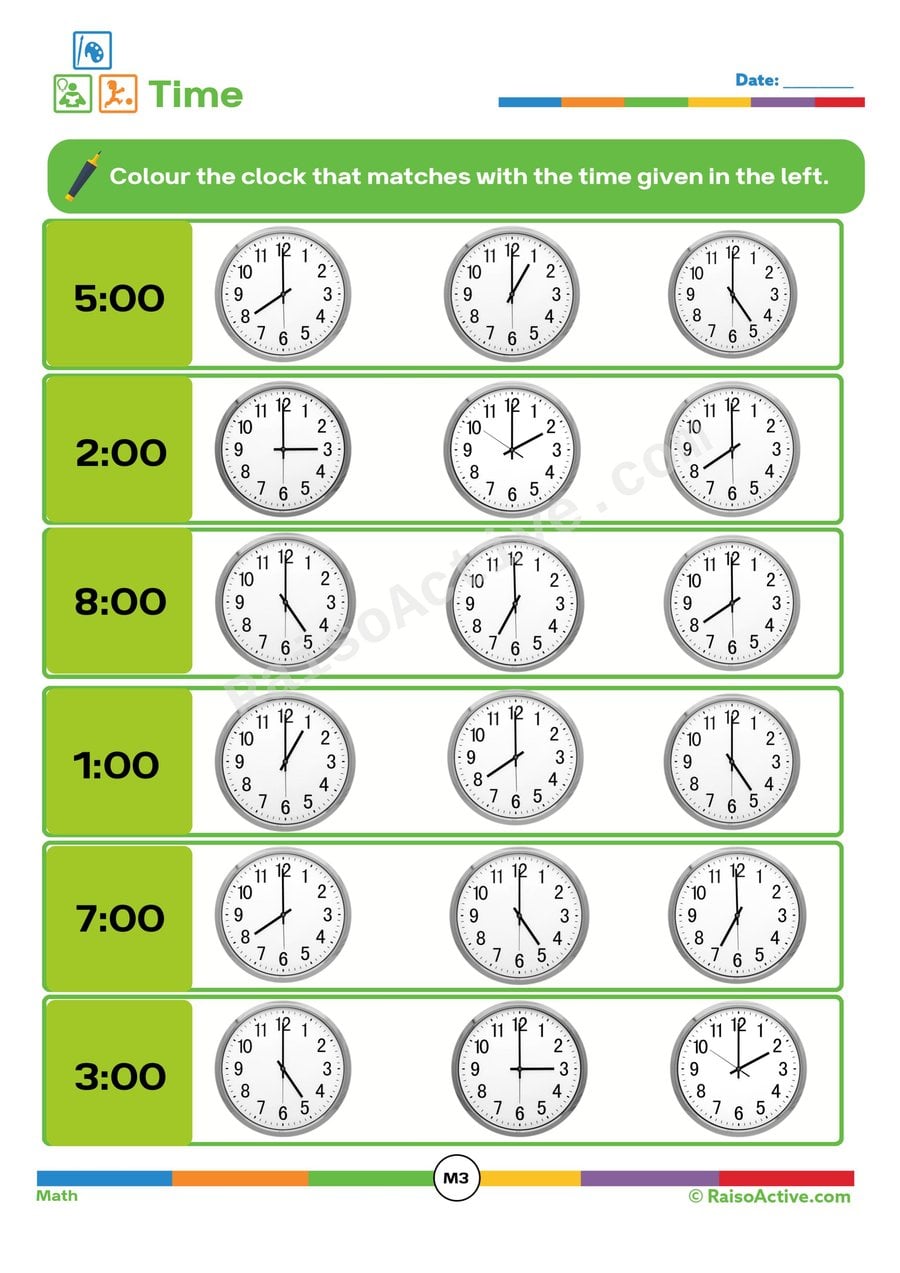
Time Matching Worksheet: Color the Clock!
Matching a written or digital time to the analog clock showing the same time builds clock-reading skills for children ages 4-6, requiring them to translate between two different ways of representing the same moment.

Solve & Color: Fun Addition and Subtraction Worksheet for Kids!
This worksheet combines early arithmetic practice with a color-by-number format, as children ages 4-6 solve simple addition and subtraction problems and then use a color key to fill in each shape based on their answer. Because getting the coloring 'right' depends on solving the math correctly, children get built-in, self-checking feedback on their arithmetic while also practicing shape recognition and staying within lines.

Phonics Worksheet: Color the Correct Letter Sounds!
This worksheet gives children ages 4-6 practice matching a picture to its correct beginning letter sound by coloring the box containing the right letter, reinforcing the phonics skill of connecting spoken sounds to written symbols. Because children choose from a set of letter options rather than writing freehand, the activity isolates sound recognition from the separate challenge of handwriting.
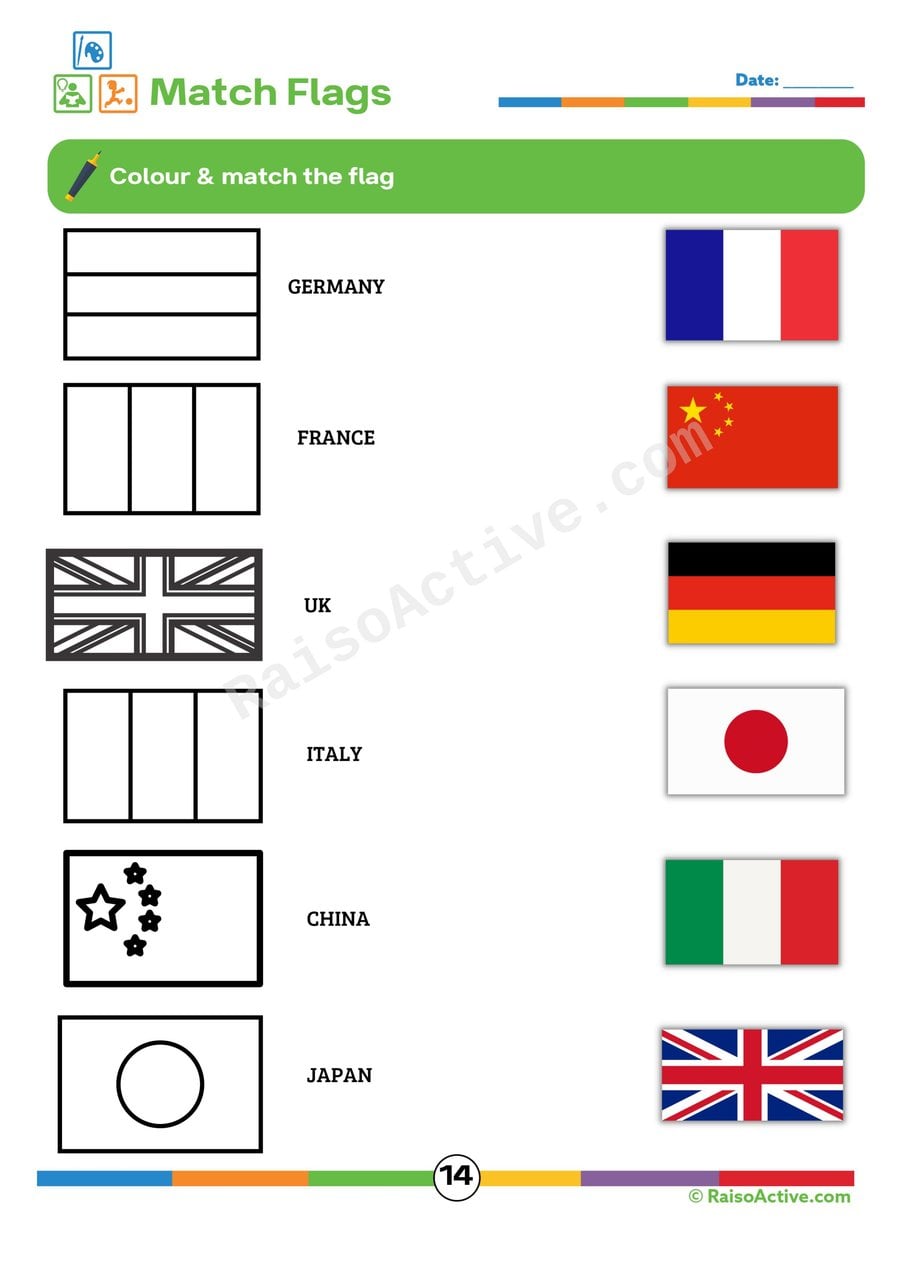
Match the Flags Worksheet: Color and Learn!
This worksheet helps children ages 4-6 recognize different country flags by coloring them accurately and matching each one to its correct country name. Coloring flags with real colors, rather than free choice, adds a layer of factual precision to the usual creative coloring task, reinforcing that flags carry specific, meaningful designs.
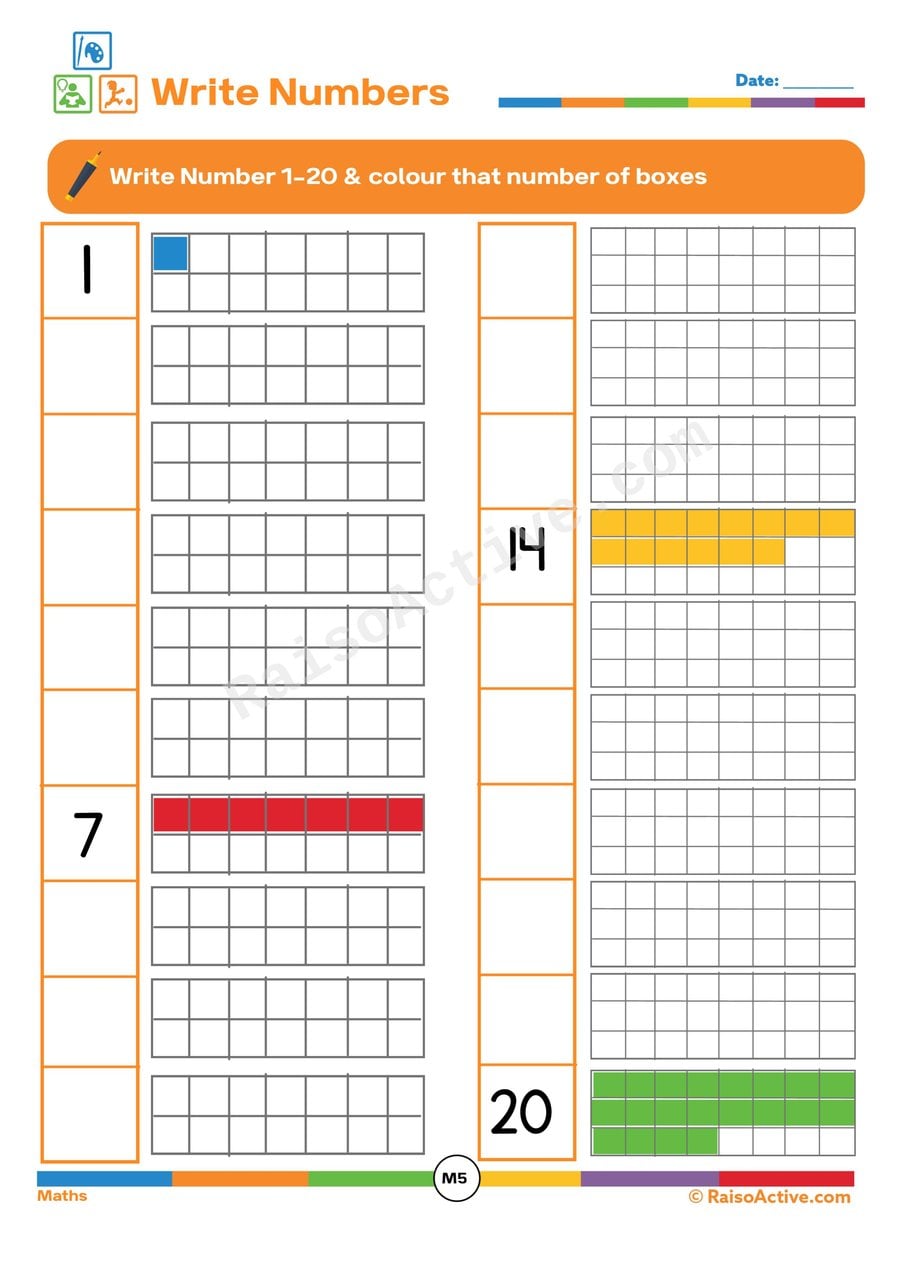
Write and Color Numbers 1-20 Worksheet
Children ages 4-6 practice writing numbers from 1 to 20 in sequence while reinforcing quantity recognition by coloring the matching number of boxes for each number, connecting the written numeral to the amount it represents. Extending number writing practice up through 20 supports children moving beyond single digits into the teens and twenties, a range many children find confusing.

Long Vowel 'i' Coloring Worksheet for Preschoolers
This worksheet has children ages 4-6 listen for the long 'i' sound in words, as in 'kite' and 'bike', and color only the pictures whose names contain it. Coloring as the response format keeps the activity low-pressure and engaging, while still requiring real auditory discrimination to succeed, since children must listen carefully before picking up a crayon.
What children learn through Holi worksheets
Holi worksheets use gulal, pichkaris and colour pots as the material for colour recognition and counting: a three- to five-year-old matches a splash of colour to its name or counts pichkaris up to 10, while a six- or seven-year-old completes a repeating colour pattern or sorts colour pots by shade. Tracing sheets follow pichkari, flower and colour-splash outlines to build the pencil control needed before letter formation.
- Matching gulal splashes to their colour names
- Counting pichkaris and colour pots to 10
- Completing repeating colour patterns across a row of pots
- Tracing pichkari, flower and colour-splash outlines
What to prepare a week before Holi
Print a mixed set of colour-matching, counting and tracing sheets before Holika Dahan on 21 March so a child has ready-made indoor activities on the days either side of the colour play itself, when clothes and hands are usually too messy for crayons. Keep bright crayons or colour pencils with the printed pack, and set aside one harder colour-pattern sheet for an older sibling or cousin.
- Print 5–6 sheets across colour matching, counting and tracing
- Stock bright crayons or colour pencils with the printed pack
- Keep a harder colour-pattern sheet aside for older children
- Plan indoor sheets for the day before and after Holi play
Frequently asked questions
What age are Holi worksheets for?
Holi worksheets on this page suit children aged 3 to 7, roughly Nursery through Class 1 in Indian schools. Three- and four-year-olds do best with colour-matching and tracing sheets using large gulal splashes, while five- to seven-year-olds are ready for counting, pattern and sorting sheets that match the UKG and Class 1 syllabus.
What colour recognition should a child know by age 4?
By age 4, in Nursery, most children can name and match the primary and a few secondary colours, red, yellow, blue, green, orange and purple, and can sort a small set of coloured objects by shade. Holi worksheets that ask a child to match gulal splashes to printed colour names check exactly this skill using festival imagery.
How do Holi worksheets connect to the festival for a young child?
A worksheet gives a young child a concrete, hands-related task, matching or counting colours, that mirrors the physical colour play of Holi itself without the mess. Preschool-aged children understand festivals through repeated, hands-on activity rather than explanation, so a colour-matching sheet reinforces what the festival is about more effectively than description alone.
When should Holi worksheet practice start?
Starting seven to ten days before Holika Dahan on 21 March gives a child several short sessions of colour matching and counting before the festival itself, without turning it into a rushed daily task. Two or three short sessions a week in that window suits most children aged 3 to 7.
Are the Holi worksheets free to download?
Yes. Every Holi worksheet and printable pack can be downloaded free as a watermarked PDF after creating an account, with five downloads a day. An annual subscription removes the watermark and the daily limit across the Holi sheets, printable packs and the rest of the 1,000+ worksheet library.

Written by
Hemsweta Jain · Teacher Cheena
MBA and Early Childhood Educator, teaching since 2014 · Founder of RaisoActive, Mumbai
Written and reviewed by Hemsweta Jain (Teacher Cheena), who designs every RaisoActive worksheet.
Last reviewed
Printable packs for ages 3–7
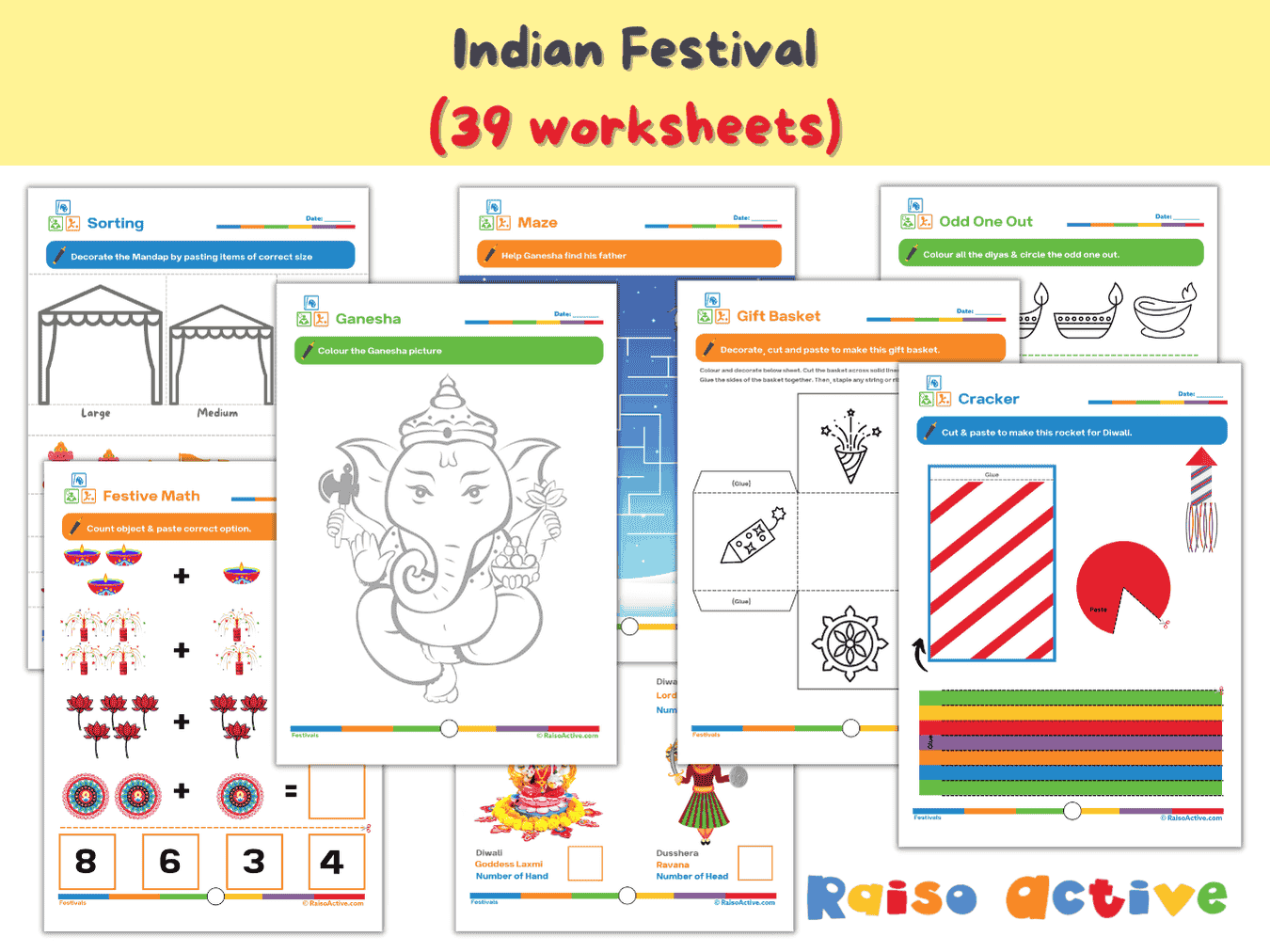
Festivals & Cultural Diversity Activity Book for Kids (Ages 4-8)
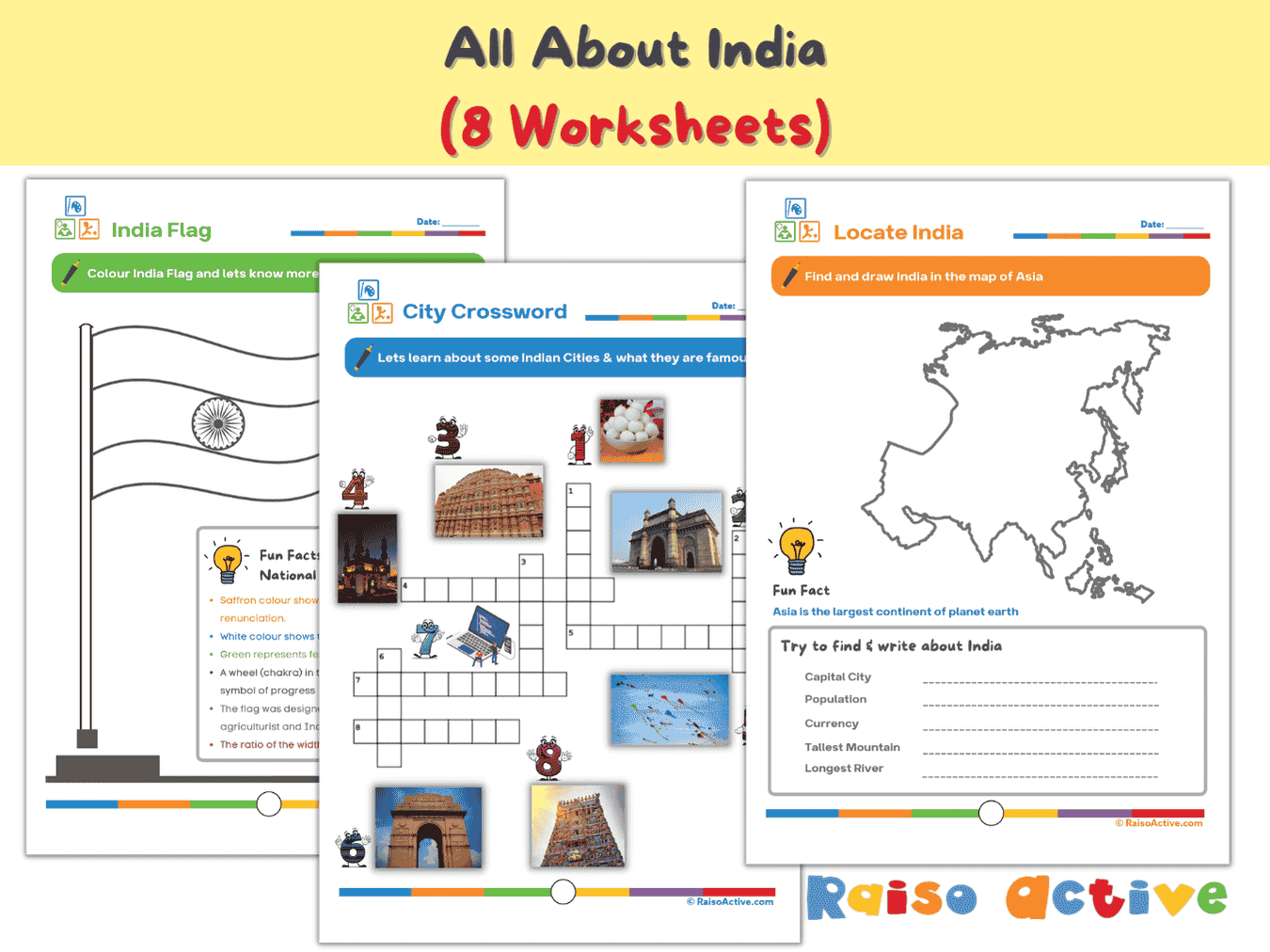
India Activity Book for Kids: Explore Geography, Culture & Symbols (Ages 5-8)
Guides for parents and teachers
See all guides →Number Formation Rhymes 0–9 and How to Fix Reversals
Original number formation rhymes for 0–9, the correct stroke order for each digit, why 3, 5 and 7 get reversed most often, and multisensory fixes that work.
Best Worksheets for 3-Year-Olds: What Works and What to Avoid
What works on worksheets for 3-year-olds: short sessions, crayons, tracing lines, matching, cutting, a free weekly plan, and signs one is too advanced.
Portfolio Assessment with Young Children: A Comprehensive Guide to Meaningful Documentation
Learn how portfolio assessment captures your child's growth through meaningful documentation. Practical tips, templates, and age-appropriate strategies for ages 1-8.
Fostering Creativity in Structured Learning: The Perfect Balance for Young Minds
Learn how to blend creativity with structured learning for children ages 1-8. Practical strategies, activities, and printable worksheets for parents and teachers.
Preparing Your Child for a Rapidly Changing World: Essential Skills for Future Success
Discover the essential 21st century skills your child needs for future success. Practical tips on creativity, critical thinking, digital literacy & emotional intelligence for ages 1-8.
Celebrating Diversity: How to Incorporate Cultural Awareness in Learning Activities for Young Children
Practical cultural awareness activities for young children aged 2-8. Explore Indian festivals, world cultures, food, music, and crafts to teach diversity and inclusion.
Canonical: https://raisoactive.com/worksheets/holi-worksheets