Food Bingo Worksheet: Identify Healthy and Unhealthy Foods!
This bingo-style activity helps children ages 3-5 practice distinguishing healthy foods from unhealthy ones by physically placing tokens on matching pictures, turning nutrition education into an active game rather than a lecture. Scanning the board for matches also reinforces visual search skills similar to those used in matching and memory games. Because bingo requires a full row to win, children stay motivated to keep scanning and comparing even after finding a few matches.

Part of the pack
Month 10: Learning & Development | Ages Up to 4
This is page 22 of the pack. Ages 2-4 · PreschoolAges 2-4 · NurseryAges 2-4
Curriculum
- Health & Hygiene > Healthy Eating
How to use this worksheet
Look at the bingo board together and name each food pictured, noting which ones are healthy choices. Give your child the healthy food tokens and have them find the matching picture on the board for each one. Place a token on every correct match, checking together that each token really is landing on a healthy food. When a full row is covered, celebrate by shouting 'BINGO!' together.
Materials needed
- Pencil
- Tokens (provided on the worksheet)
Extension activities
- 1Plan a real healthy meal together using foods pictured on the bingo board.
- 2Play the game again, this time with your child explaining why each food is healthy before placing a token.
- 3Make a healthy snack from the kitchen that matches one of the bingo pictures.
- 4Draw a new bingo board with different healthy and unhealthy foods.
- 5Sort pantry or fridge items into healthy and less-healthy groups.

Written by
Hemsweta Jain · Teacher Cheena
MBA and Early Childhood Educator, teaching since 2014 · Founder of RaisoActive, Mumbai
Every RaisoActive worksheet is designed and checked by the founder before publishing.
Published · Last reviewed
More from Month 10: Learning & Development | Ages Up to 4
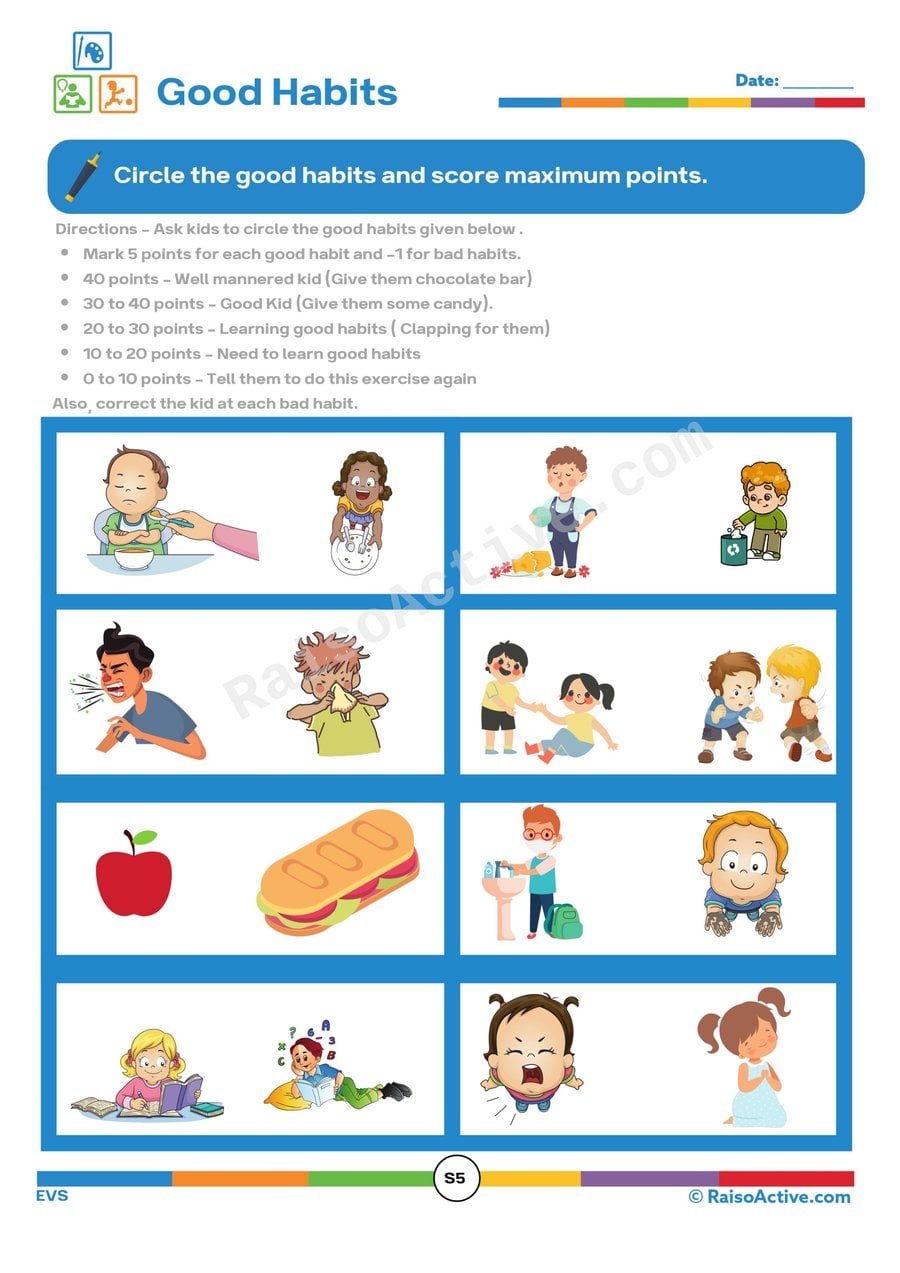
Good Habits Worksheet for Kids: Circle and Learn!
Ages 3-5 · Preschool–Pre-KAges 3-5 · Nursery–ReceptionAges 3-5 · Nursery–LKGAges 3-5
Circling pictures that show good habits, like washing hands or sharing toys, helps children ages 3-5 build early social-emotional understanding by connecting a picture to a value judgment about right and helpful behavior. This visual identification task lays the groundwork for self-regulation, since recognizing a good habit in a picture is a first step toward recognizing and choosing that same behavior in real life. The point-based reward system also introduces the early concept of positive reinforcement tied to good choices.

Shape Matching Worksheet: Circle, Square, Triangle, and Rectangle!
Ages 3-5 · Preschool–Pre-KAges 3-5 · Nursery–ReceptionAges 3-5 · Nursery–LKGAges 3-5
Children ages 3-5 practice recognizing and naming four basic shapes — circle, square, triangle, and rectangle — by matching everyday objects to their shape, then applying that recognition to a themed snowman picture. Counting the circles and triangles that make up the snowman afterward layers a numeracy task on top of the geometry, connecting shape recognition to early counting practice.

Spin the Wheel Activity: Follow Instructions and Perform Actions!
Ages 3-5 · Preschool–Pre-KAges 3-5 · Nursery–ReceptionAges 3-5 · Nursery–LKGAges 3-5
Spinning a homemade wheel and performing whatever action it lands on teaches children ages 3-5 to listen carefully and follow a one-step instruction, a foundational social and self-regulation skill for classroom and group settings. Because the action changes with every spin, children also practice quick physical responses, like jumping, hopping, or spinning, which supports gross motor development. The randomness of the spinner keeps the activity unpredictable and exciting, which helps sustain engagement through repeated rounds.

Healthy Habits Game: Roll the Dice and Practice Good Manners!
Ages 3-5 · Preschool–Pre-KAges 3-5 · Nursery–ReceptionAges 3-5 · Nursery–LKGAges 3-5
This dice-based board game teaches children ages 3-5 healthy habits and polite social language by combining movement, counting, and speaking practice in one activity. Rolling the dice and counting spaces builds number recognition and one-to-one counting, while landing on speaker icons gives structured practice saying polite phrases like 'please' and 'thank you' out loud. Coloring a smiley or sad face based on the habit shown also reinforces the idea that choices have positive or negative consequences.

Hidden Numbers Worksheet: Find and Complete the Table!
Ages 3-5 · Preschool–Pre-KAges 3-5 · Nursery–ReceptionAges 3-5 · Nursery–LKGAges 3-5
Searching a busy picture for hidden numbers trains visual scanning and sustained attention in children ages 3-5, since numbers may be tucked into small or unexpected spots within the artwork. Completing the table with the missing numbers afterward reinforces the counting sequence and numeral recognition, requiring children to recall which numbers they've already found and figure out which ones are still missing. Together, the search-and-complete format turns basic number practice into an engaging seek-and-find challenge.
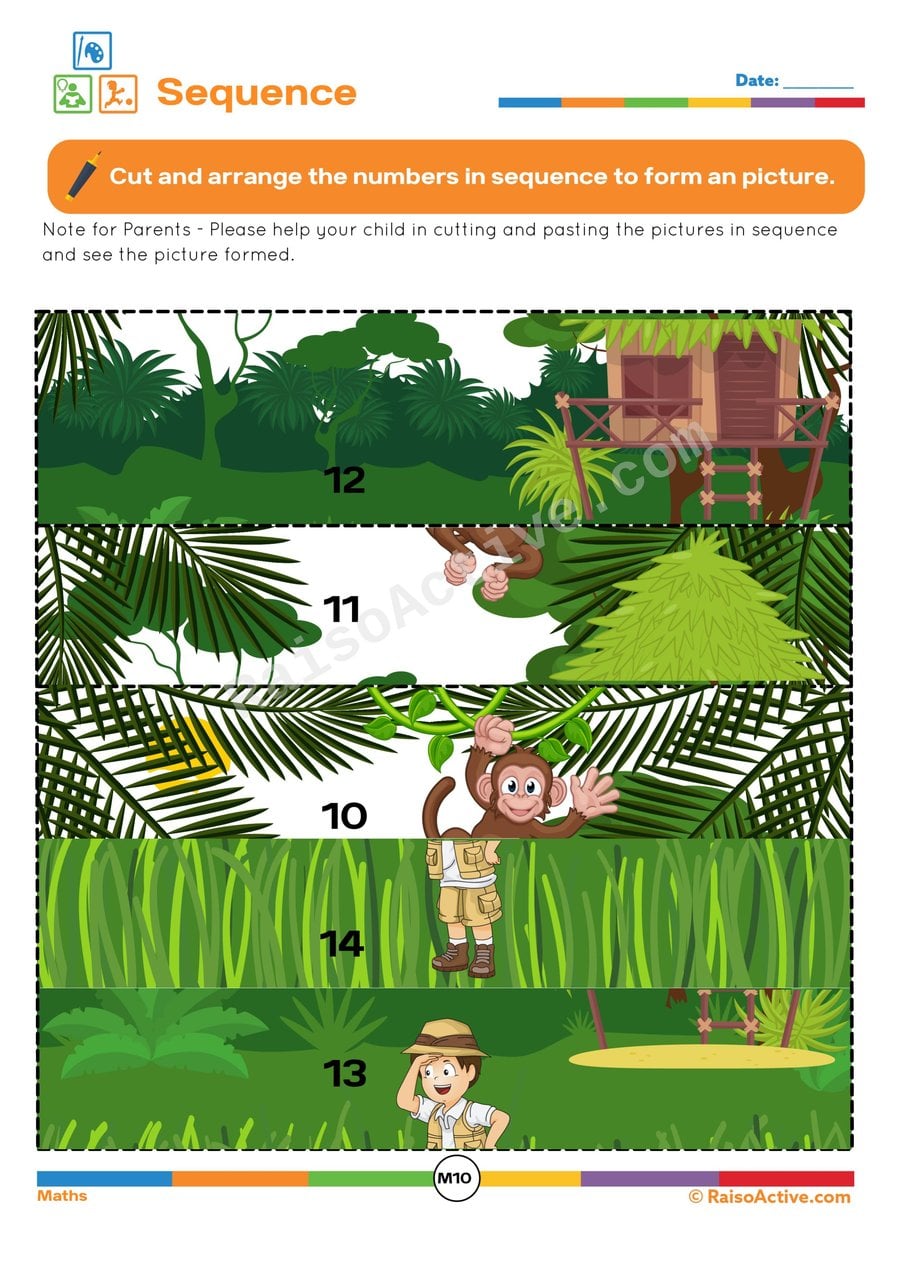
Jungle Adventure Sequence Worksheet for Kids
Ages 3-5 · Preschool–Pre-KAges 3-5 · Nursery–ReceptionAges 3-5 · Nursery–LKGAges 3-5
This cut-and-paste sequencing activity has children ages 3-5 arrange picture strips numbered 10 through 14 in the correct order to reveal a hidden jungle scene, linking number sequencing directly to a satisfying visual reward. Because the reveal only works if every strip is placed correctly, children get immediate, built-in feedback on whether their sequencing is accurate. Practicing numbers in the 10-14 range also pushes counting skills just beyond the more commonly rehearsed 1-10 range.

Match the Pictures: Letter Matching Worksheet for Preschoolers
Ages 3-5 · Preschool–Pre-KAges 3-5 · Nursery–ReceptionAges 3-5 · Nursery–LKGAges 3-5
Connecting pictures to their matching letters helps children ages 3-5 build the foundation of phonics, learning that a printed letter represents the beginning sound of a spoken word. Circling the animals that specifically start with the letter B adds a second layer of practice, requiring children to apply that letter-sound knowledge rather than just matching shapes. This two-step approach moves children from simple visual matching toward true letter-sound recognition, a critical pre-reading skill.

Animal's World: Count and Identify Animals Worksheet for Kids
Ages 3-5 · Preschool–Pre-KAges 3-5 · Nursery–ReceptionAges 3-5 · Nursery–LKGAges 3-5
Counting the total number of animals in a picture builds one-to-one correspondence and number-writing practice for children ages 3-5, while circling the food each animal eats adds an early science layer about animal diets and habitats. Combining a counting task with an animal-knowledge task in one worksheet keeps children engaged across two different types of thinking, numerical and factual, within a single page. This variety helps maintain focus better than a single repetitive task might at this age.
Related worksheets
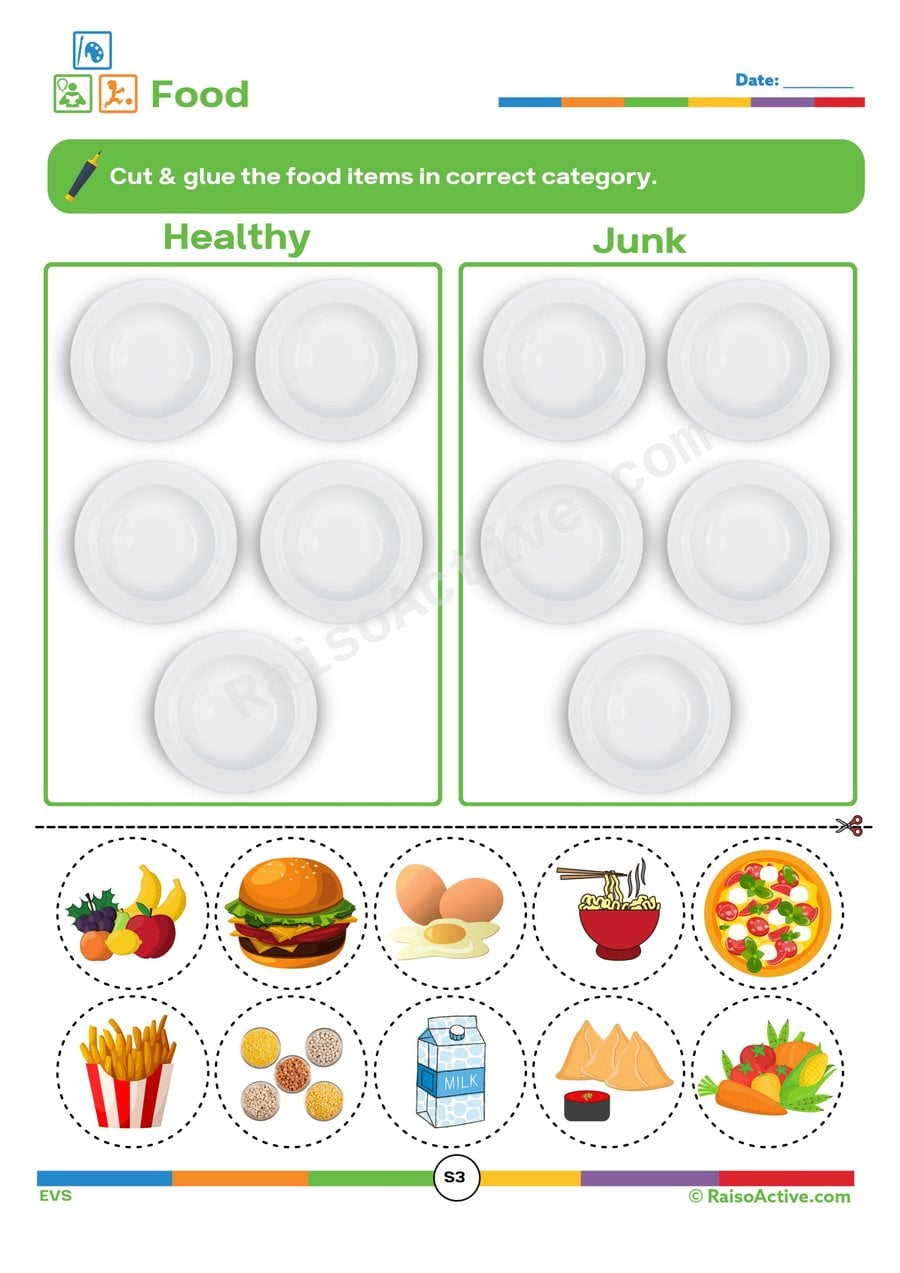
Healthy vs. Junk Food Sorting Worksheet for Kids
Ages 3-5 · Preschool–Pre-KAges 3-5 · Nursery–ReceptionAges 3-5 · Nursery–LKGAges 3-5
This worksheet asks children ages 3-5 to cut out pictures of different foods and sort them into 'Healthy' and 'Junk' categories, building early nutrition awareness alongside classification skills. Learning to categorize foods by type — rather than just naming them — introduces the idea that food choices matter for the body, a concept children will build on throughout their lives.

Food Pyramid Worksheet: Learn About Healthy Eating!
Ages 3-5 · Preschool–Pre-KAges 3-5 · Nursery–ReceptionAges 3-5 · Nursery–LKGAges 3-5
This worksheet introduces children ages 3-5 to the food pyramid as a visual guide for balanced eating, helping them understand that different food groups should be eaten in different amounts. Filling in the blanks about food groups and serving sizes builds early nutrition literacy and reinforces the idea that a healthy diet includes variety, not just favorite foods.

Healthy Maze Worksheet for Kids: Help the Girl Find Healthy Food!
Ages 3-5 · Preschool–Pre-KAges 3-5 · Nursery–ReceptionAges 3-5 · Nursery–LKGAges 3-5
This maze worksheet combines fine motor path-tracing with healthy-eating awareness for children ages 3-5, as they guide a character through a maze while avoiding unhealthy food obstacles to reach a healthy treat. Embedding a decision-making theme into the maze, rather than a neutral path, gives children a reason to think about food choices while also practicing visual scanning and planning. This combination makes an abstract nutrition lesson feel like part of a fun, goal-directed game.
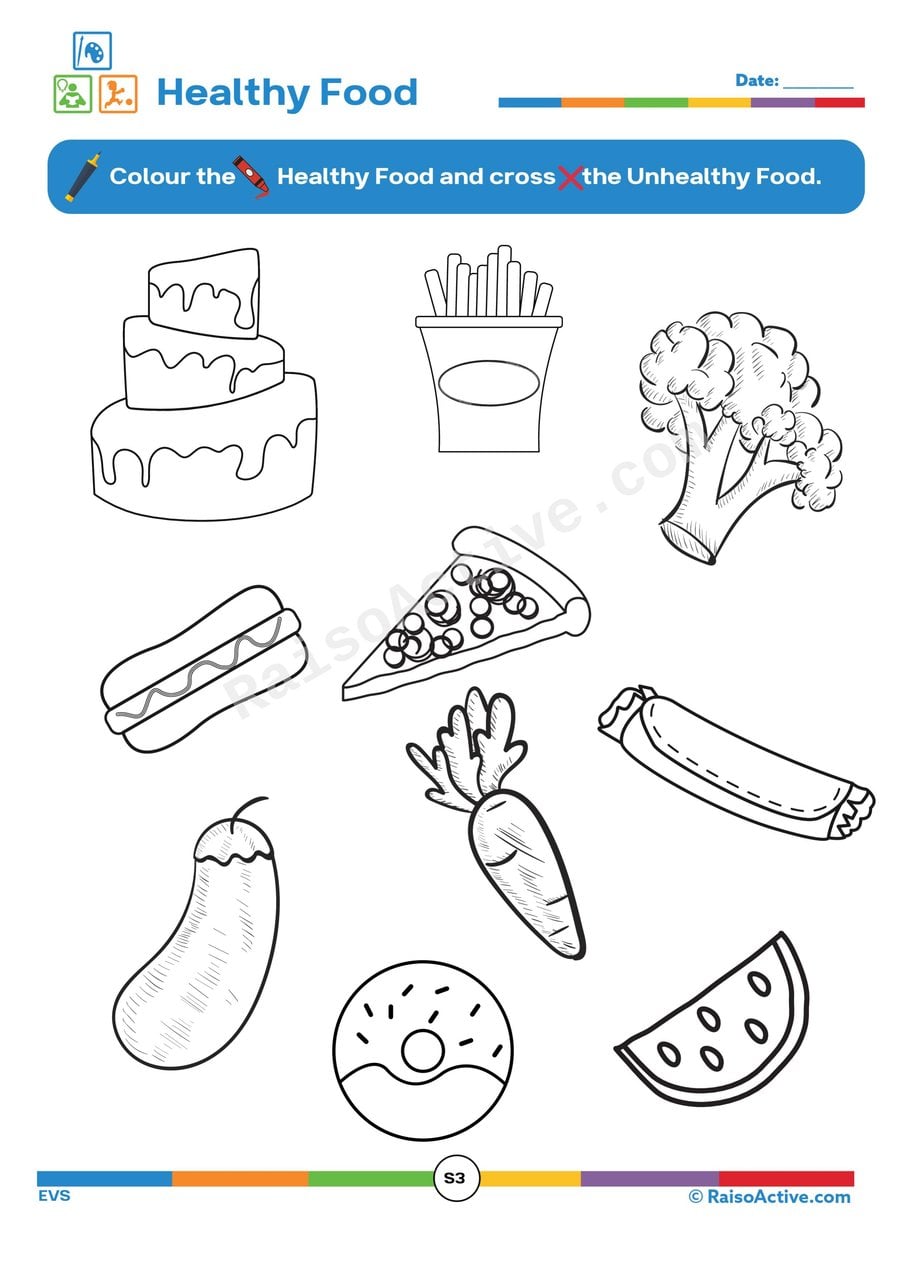
Healthy Food Fun: Color and Cross Out Worksheet
Ages 3-5 · Preschool–Pre-KAges 3-5 · Nursery–ReceptionAges 3-5 · Nursery–LKGAges 3-5
This worksheet builds nutrition awareness in children ages 3-5 by having them make an active choice about each pictured food — coloring the healthy ones and crossing out the unhealthy ones — rather than passively looking at a list. Requiring two different physical responses for two categories reinforces the distinction more strongly than a single sorting action would. Talking through the reasoning behind each choice also builds early critical thinking about cause and effect between food choices and health.
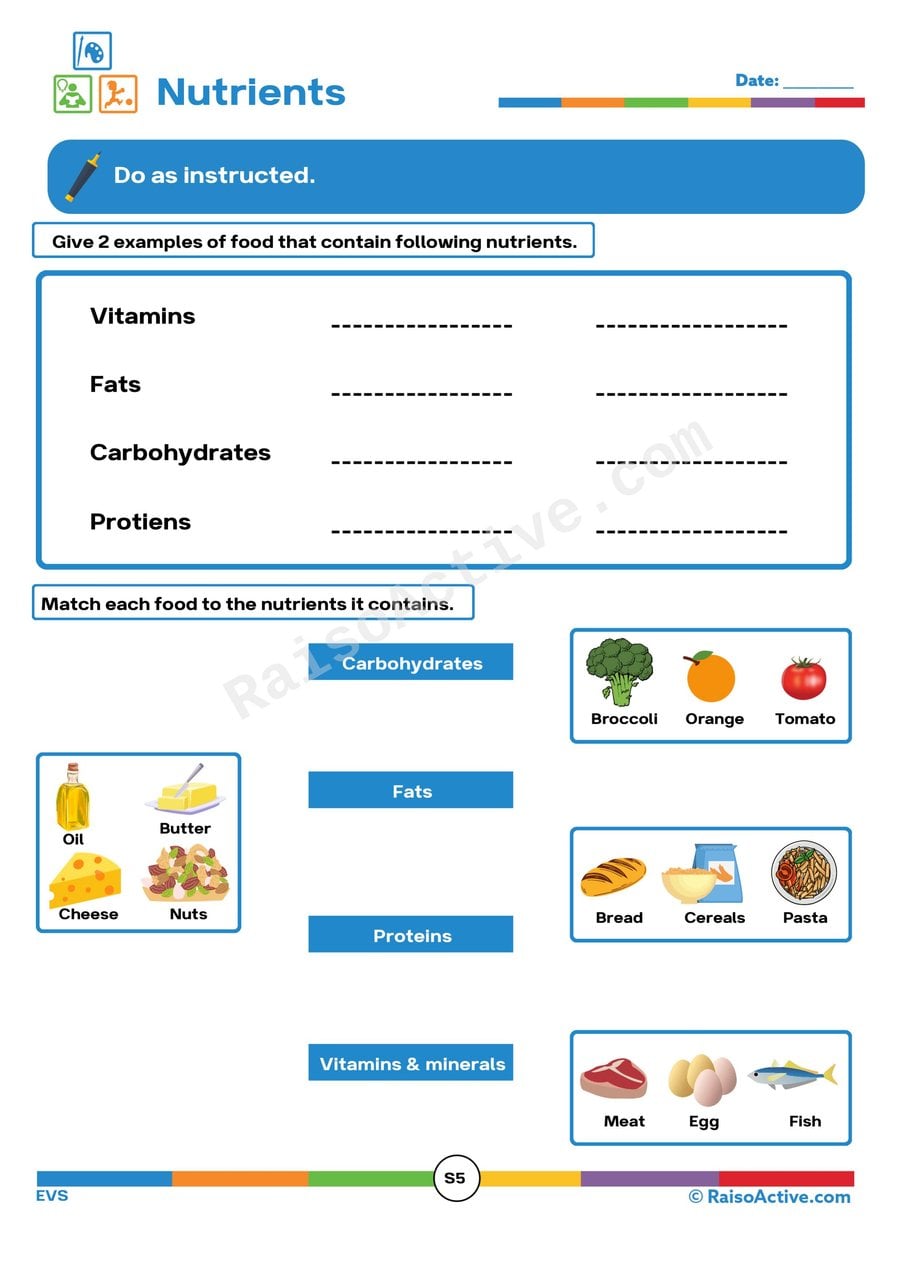
Nutrient Match: Food Examples Worksheet for Kids
Ages 4-6 · Pre-K–KindergartenAges 4-6 · Reception–Year 1Ages 4-6 · LKG–UKGAges 4-6
This worksheet introduces children ages 4-6 to basic nutrition concepts by having them match food items to the nutrient category they belong to — vitamins, fats, carbohydrates, or proteins — and then name additional food examples for each. Going beyond a simple healthy/unhealthy sort, this task builds a more detailed understanding of why different foods matter for the body, an early foundation for lifelong healthy eating habits.

My Plate: Cut and Paste Food Groups Worksheet for Kids
Ages 3-6 · Preschool–KindergartenAges 3-6 · Nursery–Year 1Ages 3-6 · Nursery–UKGAges 3-6
Children ages 3-6 learn about balanced nutrition by cutting out pictures of different foods and pasting each one onto the correct section of a plate diagram representing food groups like fruits, vegetables, grains, and proteins. This hands-on sorting activity introduces the idea that a healthy meal includes a variety of food types, an early building block for lifelong healthy eating habits.

Healthy vs. Unhealthy Eating Habits Worksheet for Kids
Ages 3-5 · Preschool–Pre-KAges 3-5 · Nursery–ReceptionAges 3-5 · Nursery–LKGAges 3-5
This worksheet helps children ages 3-5 begin distinguishing between healthy and unhealthy food choices by matching specific foods to a healthy or unhealthy person, building early awareness of how eating habits connect to wellbeing. Making this connection concrete and visual, rather than abstract, gives young children a first foothold in nutrition concepts well before they can understand more detailed health information.
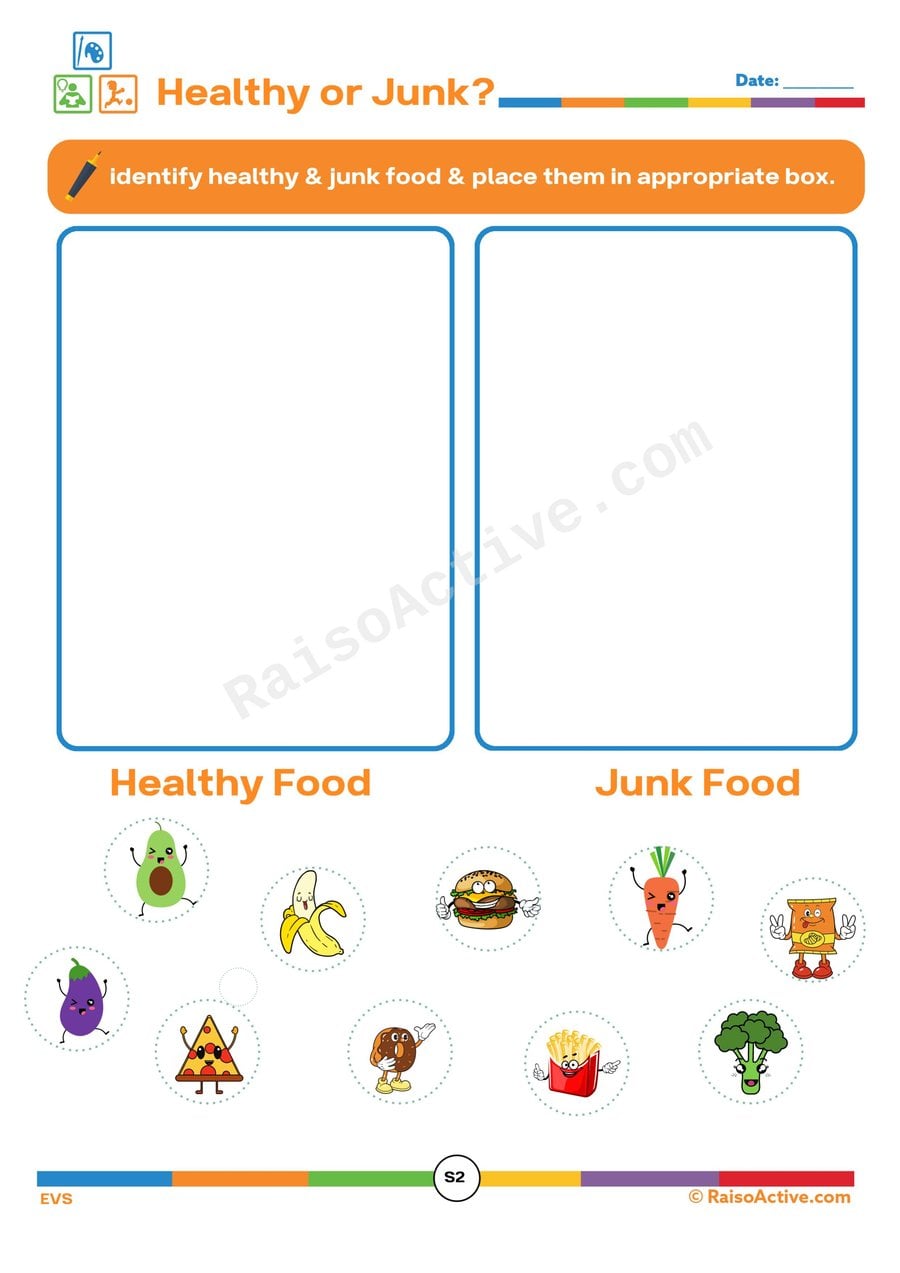
Healthy Food Sorting Worksheet for Preschoolers
Ages 3-5 · Preschool–Pre-KAges 3-5 · Nursery–ReceptionAges 3-5 · Nursery–LKGAges 3-5
Sorting food pictures into 'Healthy' and 'Junk Food' boxes teaches children ages 3-5 to classify items by a shared characteristic, an early categorization skill that underlies later science and math thinking. At the same time, it introduces basic nutrition concepts — that fruits, vegetables, and whole foods nourish the body differently than sugary or fried treats. Talking through each choice also builds vocabulary around food and health.
Guides for this topic

Age-Appropriate Problem-Solving Activities: Building Critical Thinkers from the Ground Up
Discover fun, age-appropriate problem-solving activities for children ages 1-8. Build critical thinking, logic, and reasoning skills through play-based learning.
Critical Thinking Activities That Actually Work for Young Children: Building Tomorrow's Thinkers Today
Discover proven critical thinking activities for young children. Age-wise logic games, questioning techniques, and hands-on ideas to build thinking skills at home.

Preparing Your Child for a Rapidly Changing World: Essential Skills for Future Success
Discover the essential 21st century skills your child needs for future success. Practical tips on creativity, critical thinking, digital literacy & emotional intelligence for ages 1-8.
Reviews
Every worksheet for ages 3–5, no watermark
Members download the full library of 1,000+ worksheets and every activity pack without watermarks or daily limits. One year costs ₹999 in India or $20 elsewhere.
See membership plansOr download any worksheet free with a watermark (5 a day).