Letter V Tracing Worksheet: Practice Uppercase and Lowercase 'V'
V is formed from two diagonal strokes that meet at a single point, giving 3-5 year olds practice angling a pencil in two different directions within one letter — a step up from letters made of straight up-and-down or side-to-side lines. Repeating the uppercase V and lowercase v also reinforces that the two forms share the same basic V shape, just at different sizes.
Part of the pack
Alphabet Tracing Activity Book | Uppercase & Lowercase A-Z for Preschool & Kindergarten
This is page 23 of the pack. Ages 3-6 · Preschool–KindergartenAges 3-6 · Nursery–Year 1Ages 3-6 · Nursery–UKGAges 3-6
Made for your child
A whole activity pack made with their name
60 pages to spot, build, trace and write their own name, plus pages about their favourites, feelings and family. See a free preview with their name.
Make an All About Me packFree preview · free for members
Or start free: a name tracing sheet with their nameCurriculum
- Writing > Letter Tracing A-Z
How to use this worksheet
Show your child the dotted V and v and trace the two diagonal lines with a finger first, noting where they meet at the bottom point. Have them trace the dotted letter, slowing down at the point where the two lines meet so it comes to a clean angle rather than a rounded curve. Repeat the tracing on each line provided on the page for extra practice. Once they're comfortable, ask them to try writing V on their own on a separate sheet.
Materials needed
- Pencil
- Crayons
Extension activities
- 1Find objects that start with V around the house, like a vase, a van toy, or a vegetable.
- 2Draw a simple volcano or van and write a big letter V beside it.
- 3Practice making the V shape with your arms held out at an angle, like a big body letter.
- 4Trace the letter V with a finger in a tray of sand or on a steamy bathroom mirror.
- 5Cut two straw pieces and arrange them into a V shape on paper, then glue them down.

Written by
Hemsweta Jain · Teacher Cheena
MBA and Early Childhood Educator, teaching since 2014 · Founder of RaisoActive, Mumbai
Every RaisoActive worksheet is designed and checked by the founder before publishing.
Published · Last reviewed
More from Alphabet Tracing Activity Book | Uppercase & Lowercase A-Z for Preschool & Kindergarten
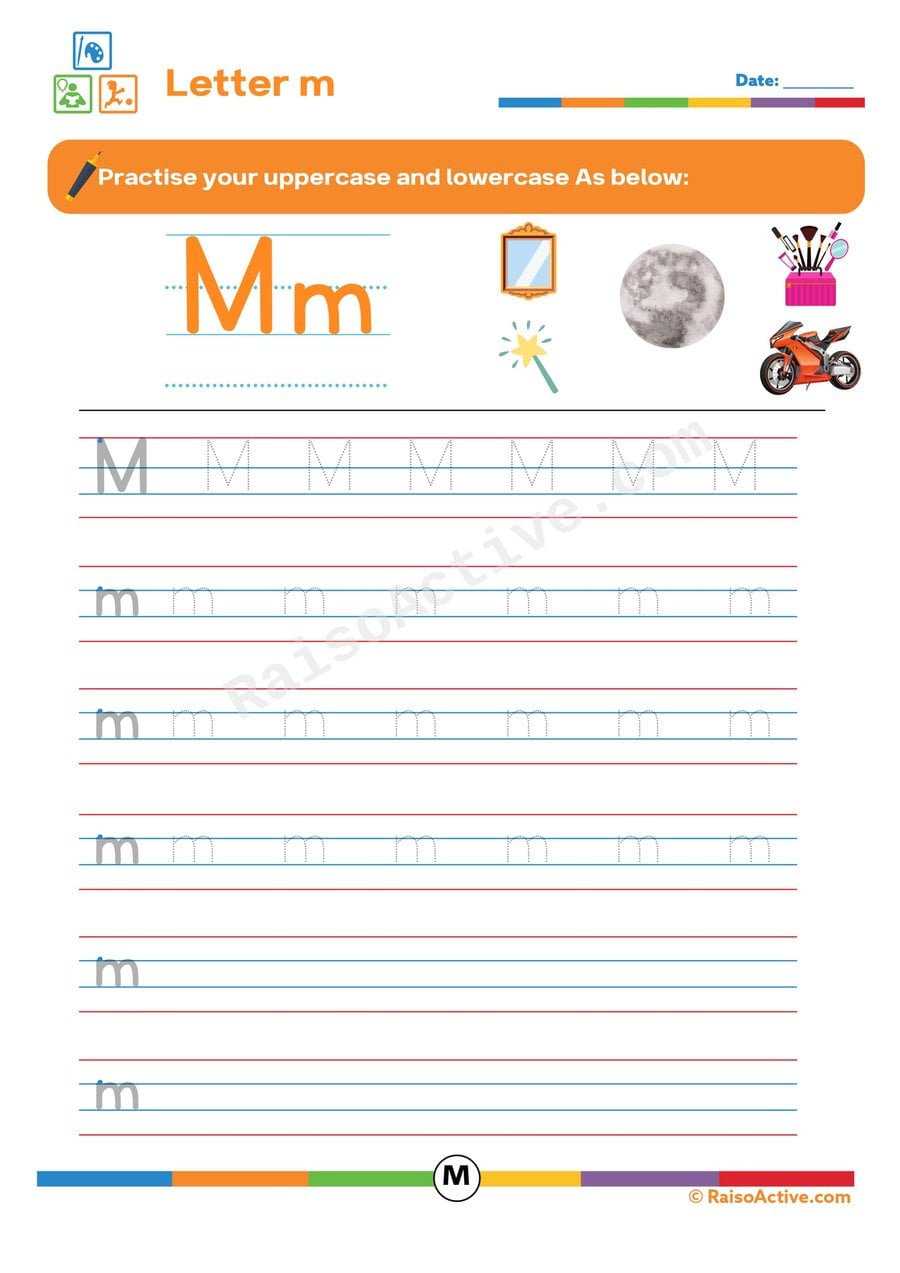
Letter M Tracing Worksheet for Preschoolers
Ages 3-5 · Preschool–Pre-KAges 3-5 · Nursery–ReceptionAges 3-5 · Nursery–LKGAges 3-5
M is built from four connected strokes — down, diagonal up, diagonal down, up — making it one of the most stroke-heavy letters in the early alphabet alongside W, and tracing it at ages 3-5 builds stamina and precision for multi-part letters. Practicing both uppercase M and lowercase m also shows children how the same basic zigzag pattern appears in different sizes.
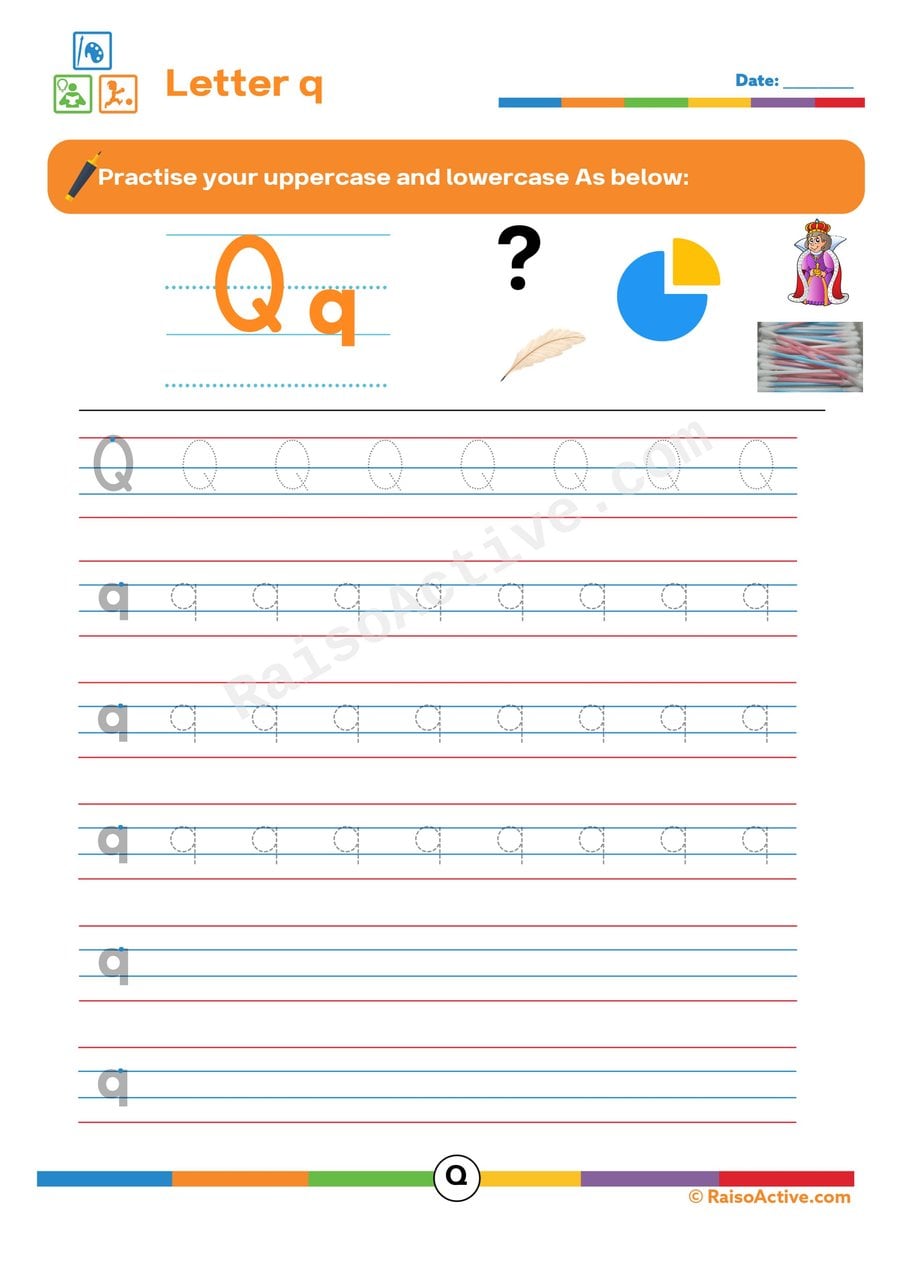
Letter Q Tracing Worksheet for Preschoolers
Ages 3-5 · Preschool–Pre-KAges 3-5 · Nursery–ReceptionAges 3-5 · Nursery–LKGAges 3-5
Q is unusual among the alphabet because it's almost never seen without a u right after it, and its shape — a circle with a small tail — visually echoes that pairing. Tracing Q at ages 3-5 builds the same curved-stroke control as O and C, while giving parents a natural opening to explain that Q and u are best friends who almost always appear together in words.
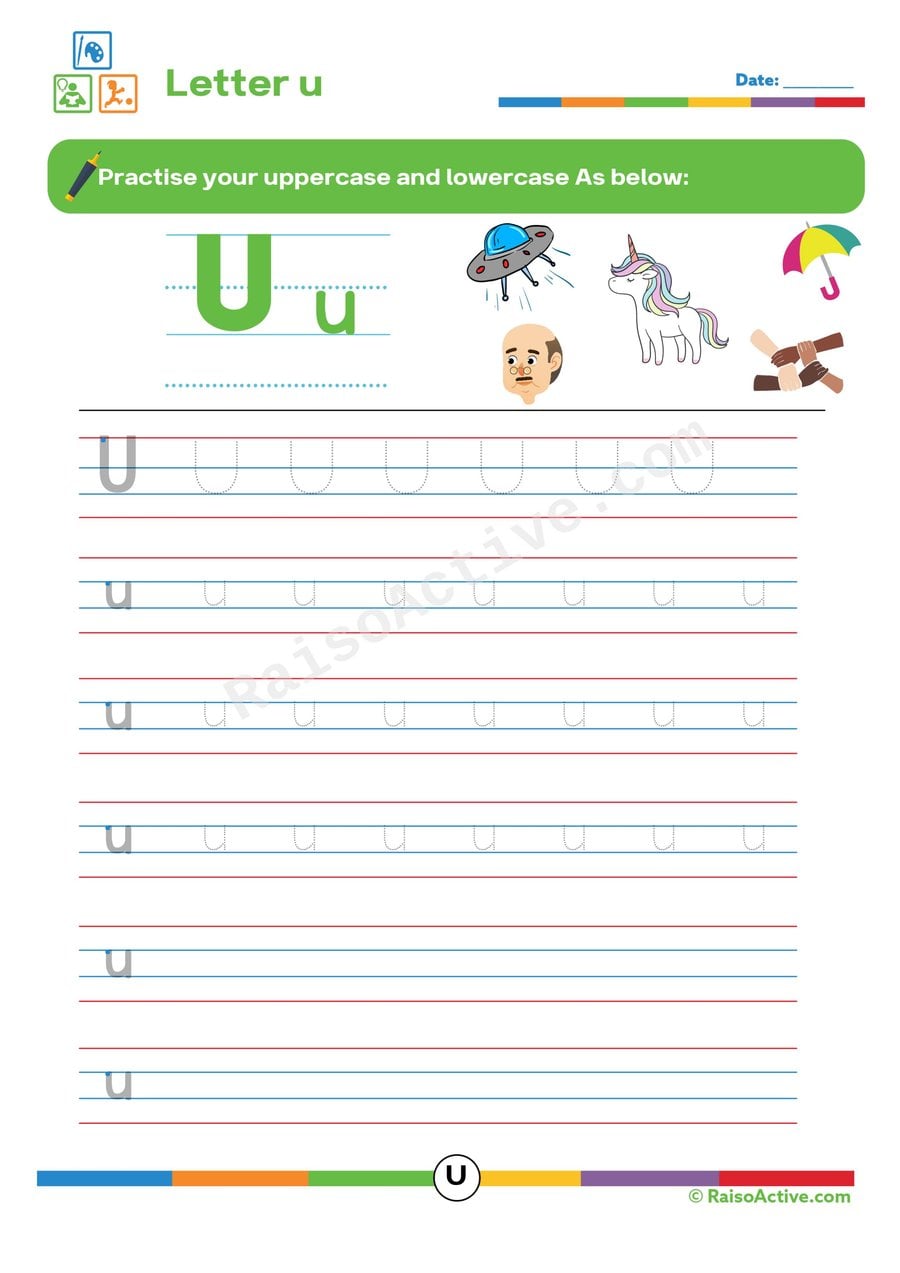
Letter U Tracing Worksheet for Preschoolers
Ages 3-5 · Preschool–Pre-KAges 3-5 · Nursery–ReceptionAges 3-5 · Nursery–LKGAges 3-5
U is a single smooth curve that dips down and back up, similar in motion to a shallow smile shape, giving 3-5 year olds continued practice with curved strokes after tackling letters like C and O. Tracing both uppercase U and lowercase u also shows children that, unlike many letters, U looks almost the same in both cases, just at a different size.

Letter J Tracing Worksheet for Preschoolers: Practice Writing the Letter J!
Ages 3-5 · Preschool–Pre-KAges 3-5 · Nursery–ReceptionAges 3-5 · Nursery–LKGAges 3-5
J is a short vertical or curved line with a hook at the bottom and a dot on top for the uppercase form, combining features from both straight and curved letters in one relatively uncommon shape. Tracing J at ages 3-5 also introduces the idea of a letter that dips slightly below the writing line, similar to g and y, preparing children for that concept ahead of time.
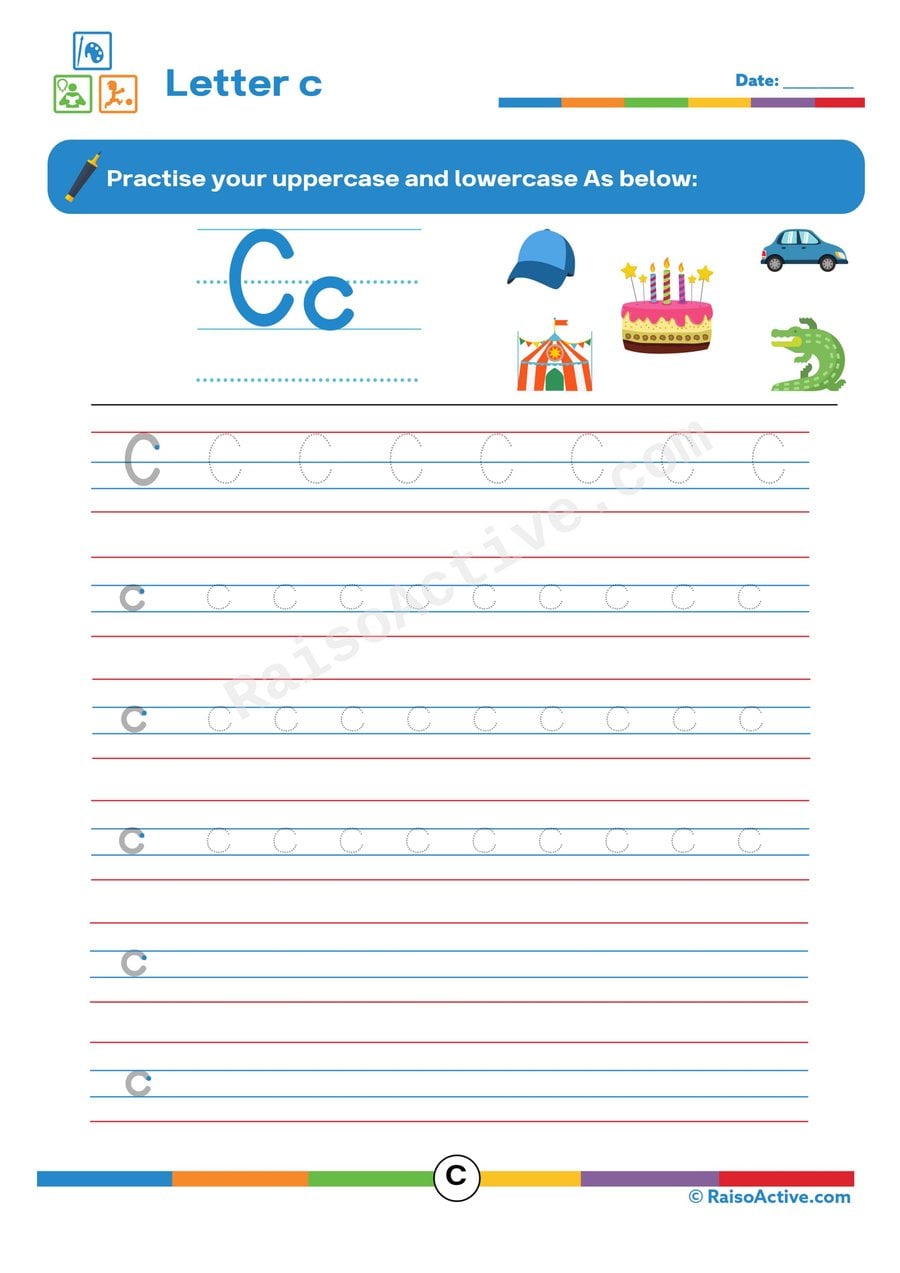
C is for Circus! Letter C Tracing Worksheet
Ages 3-5 · Preschool–Pre-KAges 3-5 · Nursery–ReceptionAges 3-5 · Nursery–LKGAges 3-5
Because C is a single open curve, tracing it gives children practice with smooth, continuous pencil movement without any straight lines or corners to lean on, similar to the challenge of letters like S and O. The circus theme on this worksheet also ties the letter to a memorable, exciting image, which helps preschoolers retain new letter-sound associations better than a plain, unthemed page.

Letter S Tracing Worksheet for Preschoolers: Practice Uppercase and Lowercase!
Ages 3-5 · Preschool–Pre-KAges 3-5 · Nursery–ReceptionAges 3-5 · Nursery–LKGAges 3-5
The letter S is a single continuous curve with no straight lines or corners to anchor against, which makes it one of the trickier letters for 3-5 year olds to control with a pencil. Tracing both the uppercase S and lowercase s builds the smooth, connected hand movement needed for cursive-style curves later, while saying the hissing /s/ sound aloud ties the shape to its sound.
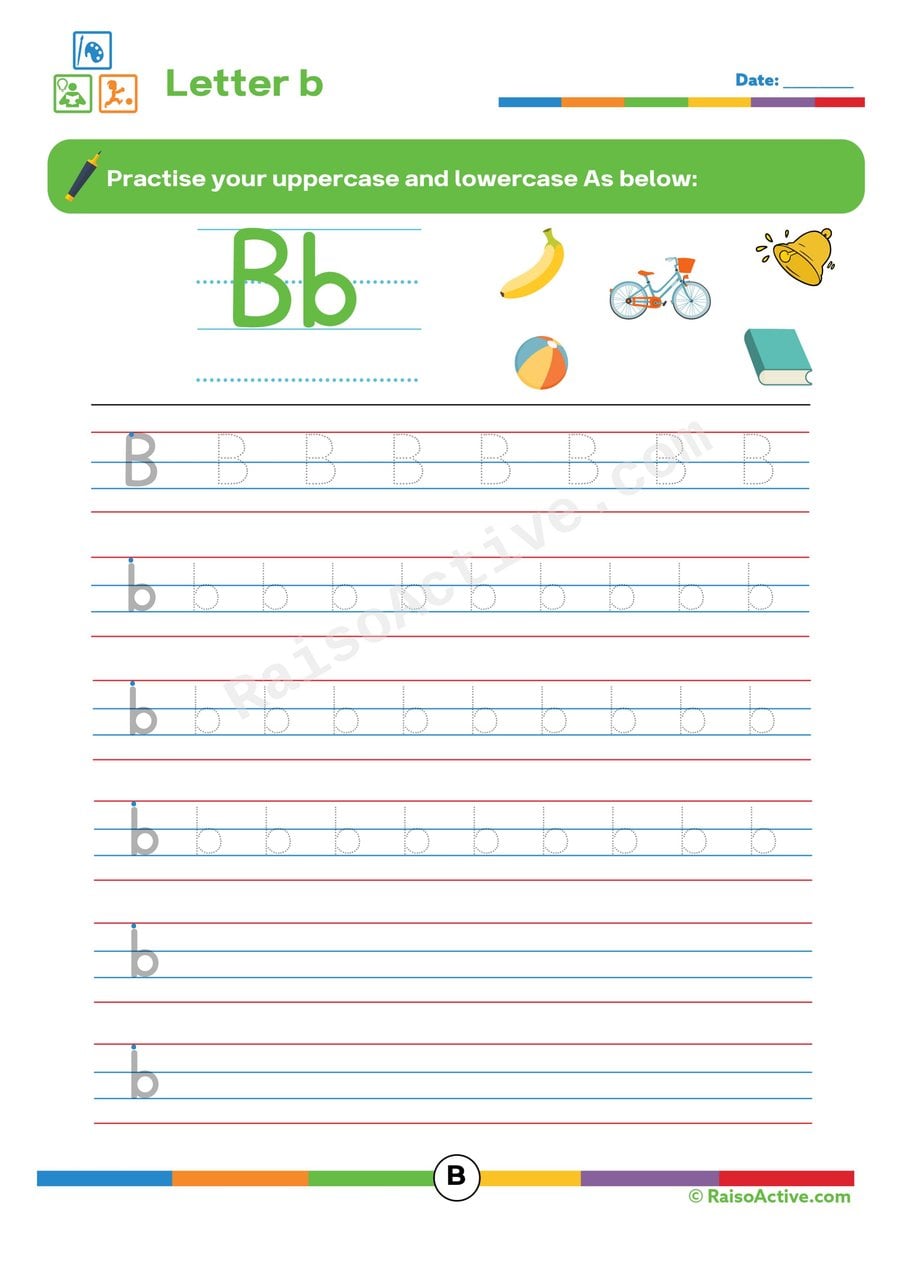
Letter B Tracing Worksheet for Preschoolers
Ages 3-5 · Preschool–Pre-KAges 3-5 · Nursery–ReceptionAges 3-5 · Nursery–LKGAges 3-5
B combines a straight vertical line with two stacked curves on the right side, making it one of the more visually complex letters a preschooler traces, similar in difficulty to R and P. Practicing both uppercase B and lowercase b at ages 3-5 builds the precision needed to keep the two curves separate and roughly equal in size rather than merging into one large loop.

Letter a-z Practice Sheet: Handwriting Worksheet for Preschoolers
Ages 3-5 · Preschool–Pre-KAges 3-5 · Nursery–ReceptionAges 3-5 · Nursery–LKGAges 3-5
Practicing all 26 lowercase letters in one sitting builds the repeated, controlled pencil strokes that handwriting depends on, and doing them in order helps a 3-5 year old start to notice how letters relate to each other in the alphabet. Lowercase letters are what children encounter most often in books and signs, so fluency here has more everyday payoff than uppercase practice alone.
Related worksheets
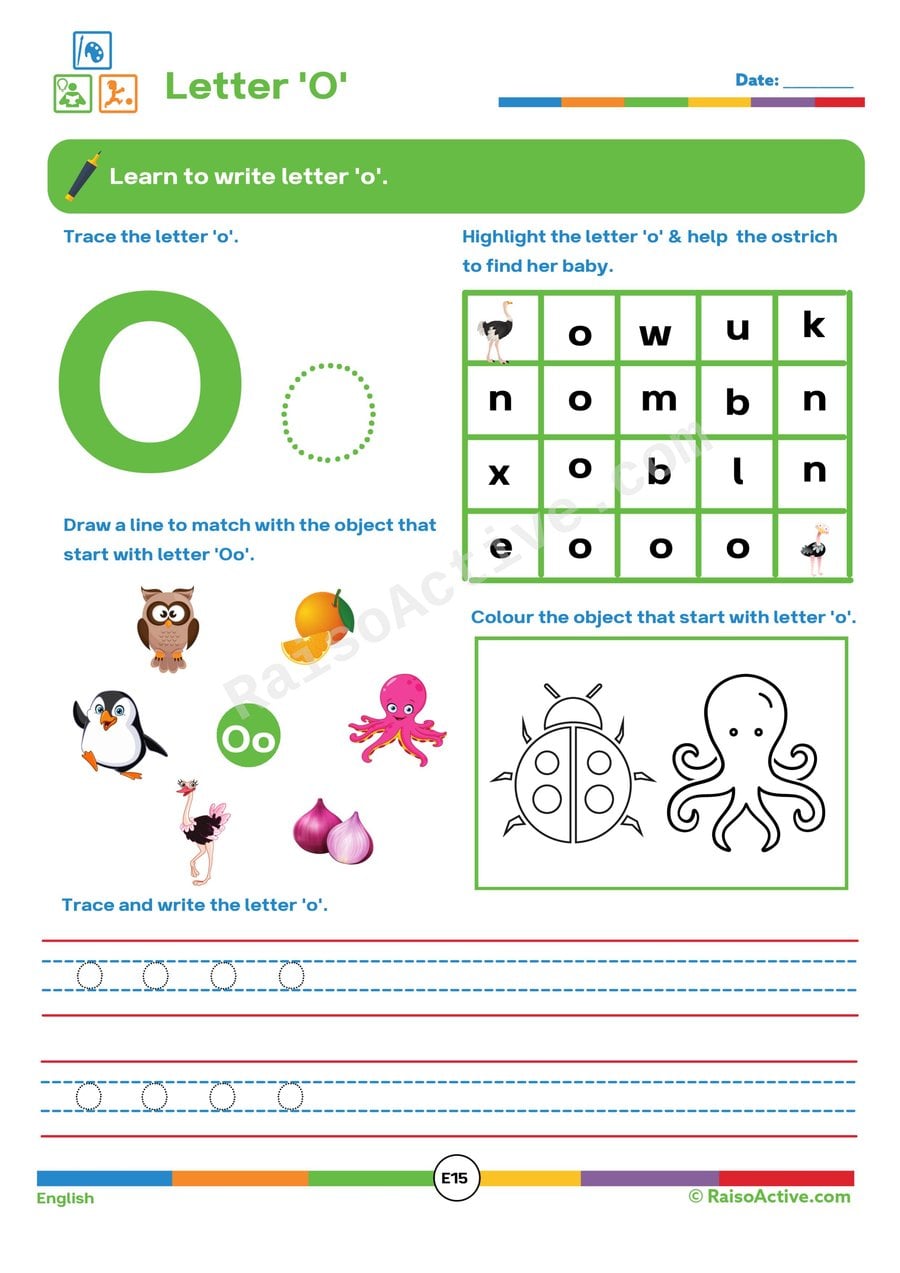
Letter 'O' Worksheet: Trace, Match, and Color!
Ages 3-5 · Preschool–Pre-KAges 3-5 · Nursery–ReceptionAges 3-5 · Nursery–LKGAges 3-5
Tracing, matching, and coloring the letter 'O' gives children ages 3-5 practice with one of the simplest letter shapes to form, making it a great confidence-building letter alongside its sound recognition value for words like 'octopus' and 'ostrich.' Matching pictures that start with 'O' to the letter reinforces the sound-symbol connection through familiar, often fun animal vocabulary. Highlighting the letter within a busy grid adds a visual search challenge that builds focus and letter discrimination beyond simple tracing.

Learn the Letter N! Tracing and Coloring Worksheet for Preschoolers
Ages 3-5 · Preschool–Pre-KAges 3-5 · Nursery–ReceptionAges 3-5 · Nursery–LKGAges 3-5
This worksheet helps children ages 3-5 build the specific hand movements needed to form the letter N, tracing both its uppercase and lowercase shapes while also linking the letter to its sound through picture coloring. Repeated tracing strengthens the pencil grip and directional control that later support fluent handwriting.

Letter K Tracing and Coloring Worksheet for Preschoolers
Ages 3-5 · Preschool–Pre-KAges 3-5 · Nursery–ReceptionAges 3-5 · Nursery–LKGAges 3-5
This worksheet builds recognition and formation of the letter K in both uppercase and lowercase forms through tracing, coloring, and identifying words that start with K, like 'kite' or 'kangaroo.' For three- to five-year-olds, working through both letter cases together, plus circling the letter among distractors, strengthens visual discrimination alongside handwriting practice.

Letter Z Tracing Worksheet for Preschoolers: Learn to Write the Letter Z!
Ages 3-5 · Preschool–Pre-KAges 3-5 · Nursery–ReceptionAges 3-5 · Nursery–LKGAges 3-5
Tracing the uppercase letter Z introduces children ages 3-5 to a distinctive zigzag stroke pattern, different from the curved or straight strokes used in most other letters, which builds versatile pencil control. Coloring pictures that start with Z afterward links this less common letter to real, memorable words like zebra or zipper.

Letter X Worksheet: Trace, Write, and Color the Letter X!
Ages 3-5 · Preschool–Pre-KAges 3-5 · Nursery–ReceptionAges 3-5 · Nursery–LKGAges 3-5
This worksheet introduces the letter X, one of the trickier letters for young children since so few common words start with it, by pairing tracing practice with picture identification for words like 'x-ray' or 'xylophone.' For three- to five-year-olds, working through a less familiar letter like X builds persistence and completes their sense of mastering the full alphabet.

Letter Aa Tracing and Matching Worksheet for Preschoolers
Ages 3-5 · Preschool–Pre-KAges 3-5 · Nursery–ReceptionAges 3-5 · Nursery–LKGAges 3-5
This worksheet combines tracing practice for the letter Aa with a letter-hunt task, where children ages 3-5 scan a grid to circle every instance of Aa before also identifying pictures that start with the letter. Practicing both uppercase and lowercase forms together, alongside visual search and picture matching, builds a rounded understanding of what the letter A looks like in its different appearances.
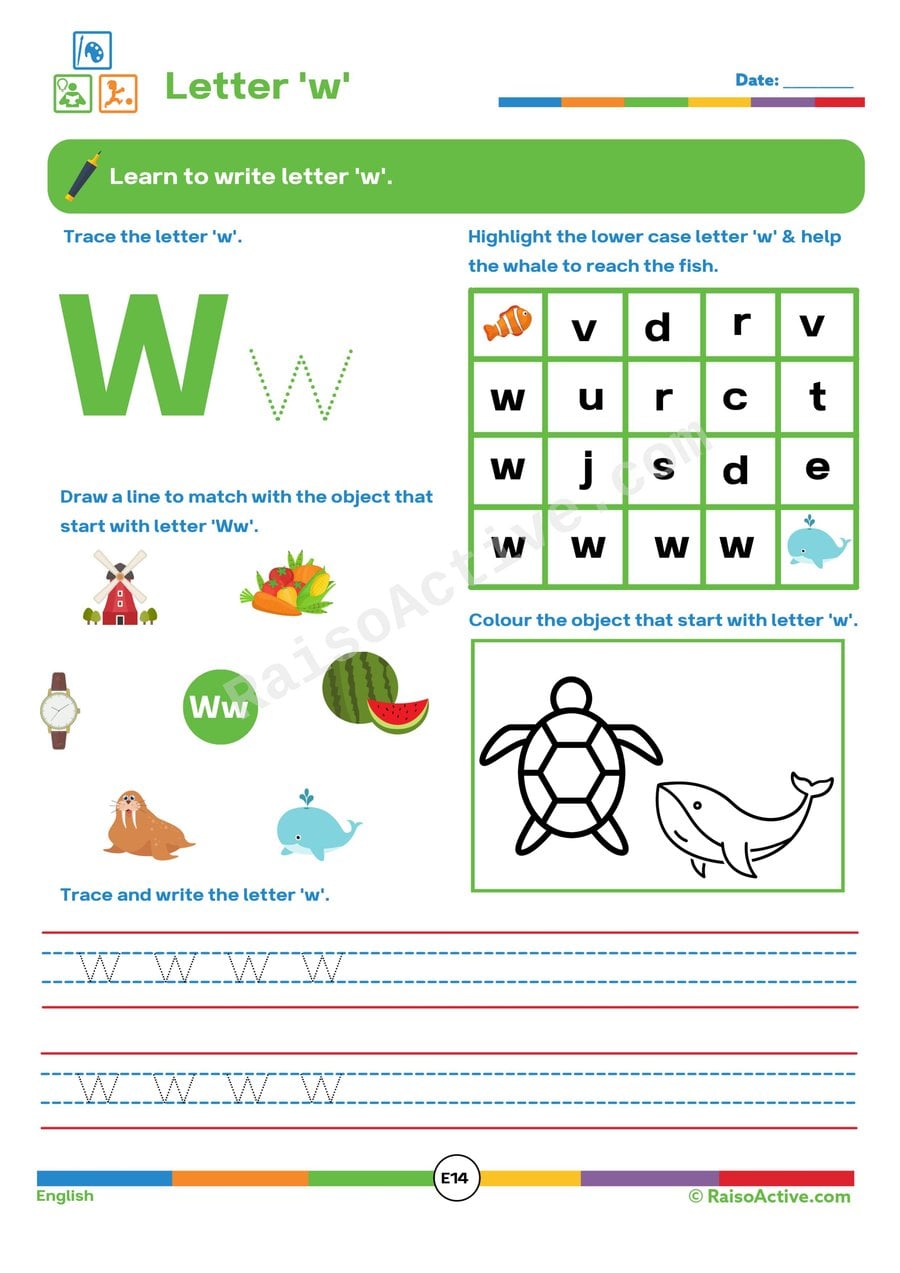
Letter 'w' Worksheet: Trace, Match, and Color!
Ages 3-5 · Preschool–Pre-KAges 3-5 · Nursery–ReceptionAges 3-5 · Nursery–LKGAges 3-5
Tracing, matching, and highlighting the letter 'w' gives children ages 3-5 practice with one of the more visually complex lowercase letters, made up of four connected diagonal strokes rather than a single simple shape. Matching pictures that start with 'w' to the letter reinforces the /w/ sound-to-symbol link, while scanning a letter grid to highlight every 'w' builds visual search skills alongside letter recognition. This combination of tracing, matching, searching, and coloring keeps the practice varied enough to hold a young child's attention across the full page.

Letter 't' Tracing and Matching Worksheet for Preschoolers
Ages 3-5 · Preschool–Pre-KAges 3-5 · Nursery–ReceptionAges 3-5 · Nursery–LKGAges 3-5
Tracing, matching, and writing the letter 't' gives children ages 3-5 repeated exposure to one of the more frequent letters in early reading vocabulary, building both the motor memory for its cross-stroke shape and the sound-to-symbol connection for its sharp /t/ sound. Matching pictures that start with 't' to the letter itself reinforces that recognition beyond just the written form, connecting it to real objects and words. This kind of combined tracing-and-matching practice suits how young children learn best: through repetition across slightly different tasks.
Guides for this topic

Documenting Learning Without Drowning in Data: A Practical Guide for Parents and Teachers
Learn practical ways to document your child's learning without overwhelm. Simple portfolios, observation tips, and printable trackers for ages 1-8.
Bridging Two Worlds: A Complete Guide to Teaching Heritage Languages Alongside English
A practical guide to raising bilingual children who speak both their heritage language and English with confidence. Research-backed strategies, activities, and tips for Indian families.

How to Help Your Child with Letter Reversals: A Complete Guide for Parents and Teachers
Letter reversals are normal until age 7-8. Learn the best multisensory strategies, anchor letter tricks, and activities to help children write b, d, p, and q correctly.
Reviews
Every worksheet for ages 3–5, no watermark
Members download the full library of 1,000+ worksheets and every activity pack without watermarks or daily limits. One year costs ₹999 in India or $20 elsewhere.
See membership plansOr download any worksheet free with a watermark (5 a day).