Free printable worksheets · United States
1st Grade Shapes Worksheets (Ages 6–7)
1st Grade shapes worksheets are practice sheets for children aged 6–7 in First Grade in the US. Shapes worksheets build recognition and naming of common two- and three-dimensional forms, and the ability to sort or match them by their features. The sheets on this page cover naming 2D shapes, matching identical shapes, sorting shapes by attribute and finding shapes in everyday objects.
First grade pushes reading toward fluency and math toward larger numbers: consonant digraphs, long vowels and silent e appear in decodable passages, while place value work extends to 120 and addition and subtraction move from within 10 to within 20. A six-year-old should recognize any of the common flat and solid shapes regardless of size, color or how they are turned, and worksheets can now test exactly that. Tasks include sorting shapes by number of sides, drawing a shape with a given number of corners, splitting a rectangle into halves and quarters, and naming the faces on a cube or the shape you see when a cylinder is cut across. Angles and symmetry are only just beginning.
165+ worksheets · free PDF download · print on A4 or Letter
1st Grade Shapes Worksheets to print
Browse all worksheets for ages 6–7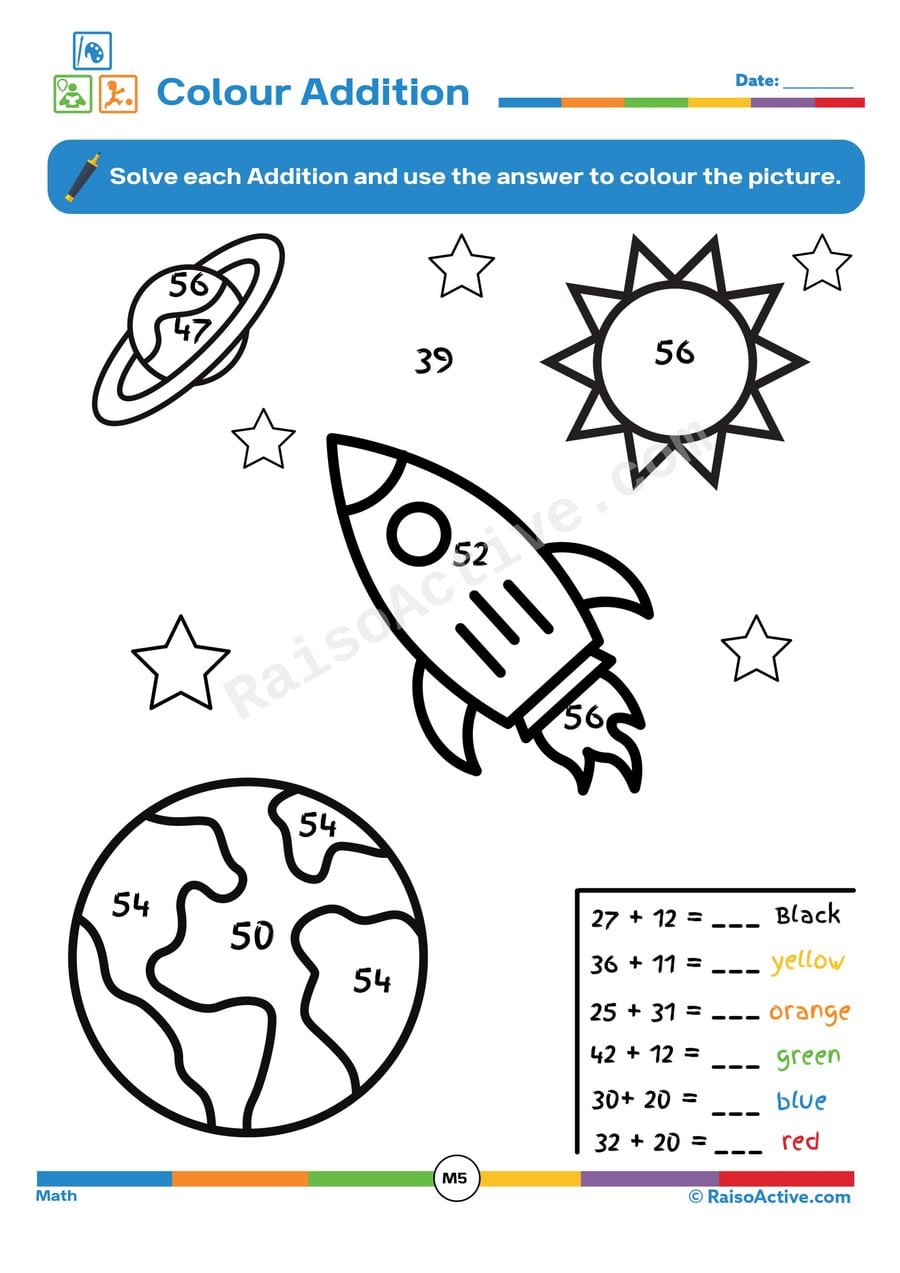
Color Addition Worksheet: Space Adventure!
This worksheet builds addition fluency by having children solve simple equations and then use each answer to determine which color to use in a corresponding section of a space-themed picture. For five- to seven-year-olds, this color-by-number format adds motivation to solve each problem accurately, since a wrong answer means the wrong color goes in the wrong spot and the final picture won't come together correctly.

Family Words Worksheet: Picture Matching and Word Recognition
This worksheet gives children ages 4-6 another round of practice recognizing family-member vocabulary words, reinforcing the connection between a printed word and the picture it names through both a tick-the-answer step and a cut-and-paste matching step. Repeating this pairing across two different formats on one page helps move these words from recognition with support toward more independent reading.

Noun, Pronoun, or Adjective? Match the Words! Worksheet for Kids
This worksheet introduces children ages 4-6 to three foundational parts of speech — nouns, pronouns, and adjectives — by asking them to sort individual words into the correct grammatical category. Learning to tell these word types apart early gives children a vocabulary for talking about language itself, which supports both reading comprehension and their own sentence writing later on. Matching words to pictures also keeps an abstract grammar concept grounded in something concrete and visual.

Abbreviations Worksheet: Matching Words and Abbreviations!
This worksheet teaches children common abbreviations, like 'Dr.' for Doctor or 'St.' for Street, by having them match each full word to its shortened form. For four- to six-year-olds who are building early reading and writing fluency, recognizing abbreviations is a practical real-world skill, since these shortened forms appear regularly in addresses, titles, and everyday writing.

Match the Countries with Their Symbols Worksheet
Children ages 4-6 build early social studies awareness by matching country flags to their well-known national symbols, connecting visual recognition with basic geography and cultural knowledge. This kind of matching exercise strengthens careful observation, since children must compare colors, shapes, and details across both the flag and the symbol image. It also plants the seed for understanding that different countries have distinct identities and traditions.

Sports Match-Up Worksheet for Kids: Match the Sports to Their Equipment!
Matching sports to their equipment teaches children ages 4-6 to connect an activity with the tools used to play it, building categorization skills alongside sports vocabulary. This kind of real-world matching helps children make sense of things they may see on television, at the park, or during physical education class.
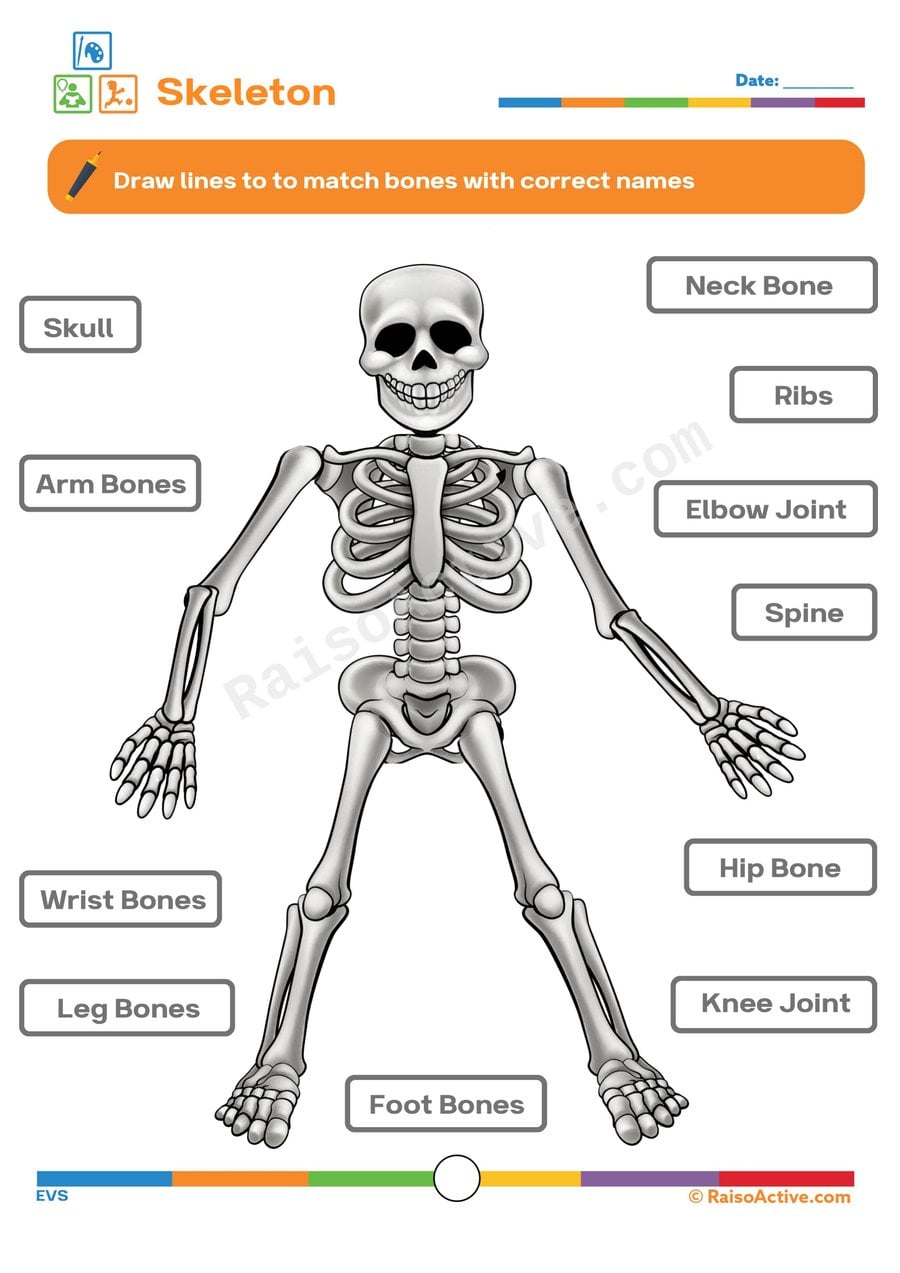
Skeleton Matching Worksheet: Learn About Bones!
Drawing lines from bone names to their locations on a skeleton diagram introduces children ages 4-6 to basic human anatomy vocabulary, such as skull, ribs, or spine, while practicing left-to-right reading and matching skills. Because children must read a word and then visually locate the correct part of the body, this worksheet also strengthens the connection between written language and real-world objects, an important step toward reading comprehension. The Halloween-skeleton framing makes an otherwise academic science topic feel playful and approachable.

Trace and Write Numbers 11-15: Counting and Writing Worksheet
This worksheet helps children ages 4-6 practice tracing and writing the number words from eleven to fifteen, moving beyond single-digit numbers into the trickier teen range where number names don't always follow an obvious pattern. Matching the number of dots on dice to the correct written number name also reinforces that these longer number words still represent a specific countable quantity.

Taste Bud Sorting Worksheet: Identify and Sort Foods by Taste!
This worksheet introduces children ages 4-6 to four basic taste categories — salty, sour, bitter, and sweet — by having them sort pictured foods into the correct group. Beyond taste vocabulary, sorting foods by an invisible property like flavor (rather than an obvious one like color or shape) pushes children to draw on memory and prior experience, building more advanced classification skills.
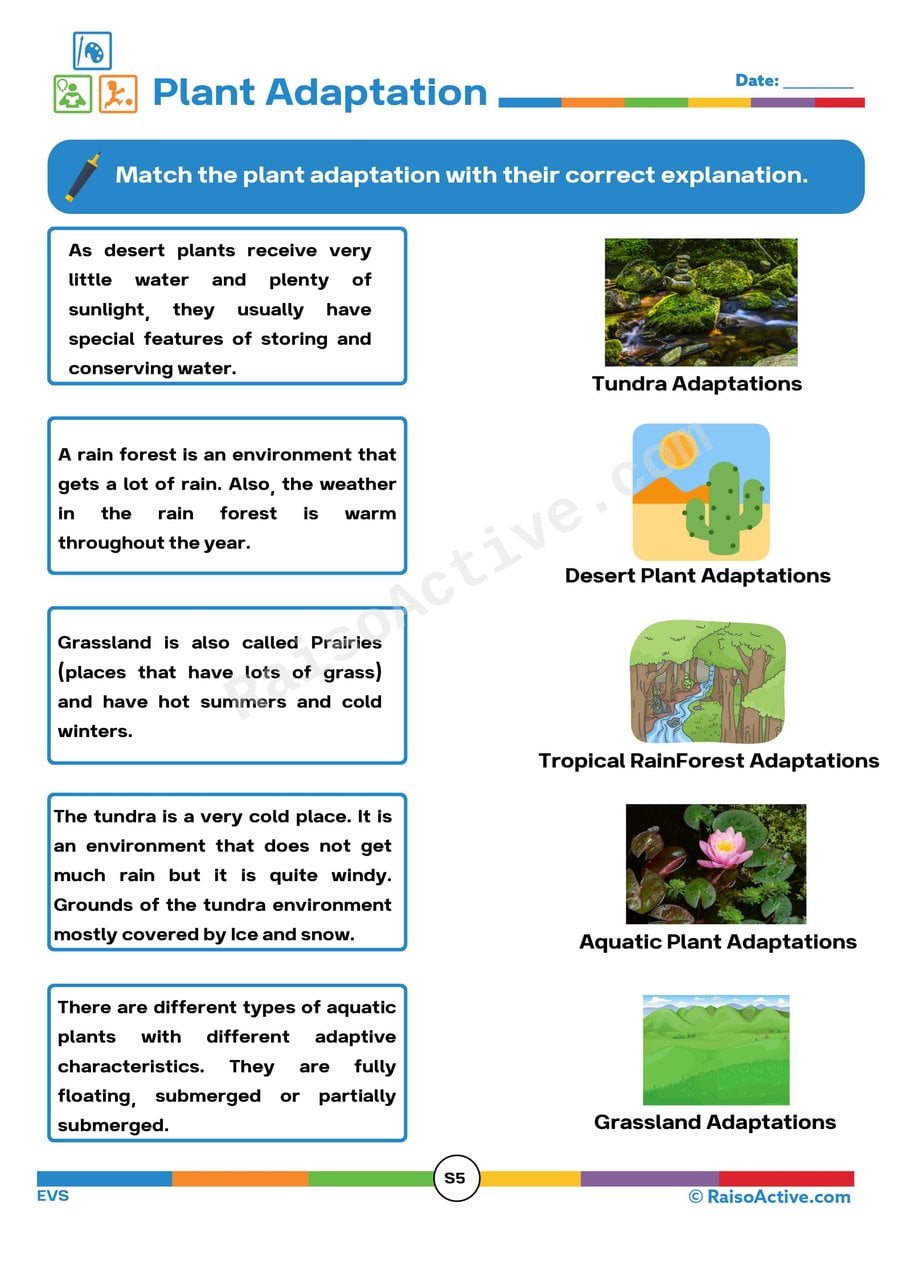
Plant Adaptation Matching Worksheet for Kids
This worksheet has 4-6 year olds match written descriptions of plant adaptations to the correct pictures, building on the idea that plants develop specific features — thick leaves, deep roots, bright flowers — to help them survive in their particular environment. Matching a description to an image requires your child to connect an abstract idea (why does this feature help?) to a concrete picture, which is a genuine step up from simple plant-part identification.

Read and Match: Sentence Matching Worksheet for Early Readers
This worksheet moves children ages 4-6 beyond single words into reading whole simple sentences and matching each one to the picture it describes. Comprehending a full sentence — not just recognizing individual words — is a genuine leap in reading skill, since it requires holding several words in mind together and connecting their combined meaning to an image.
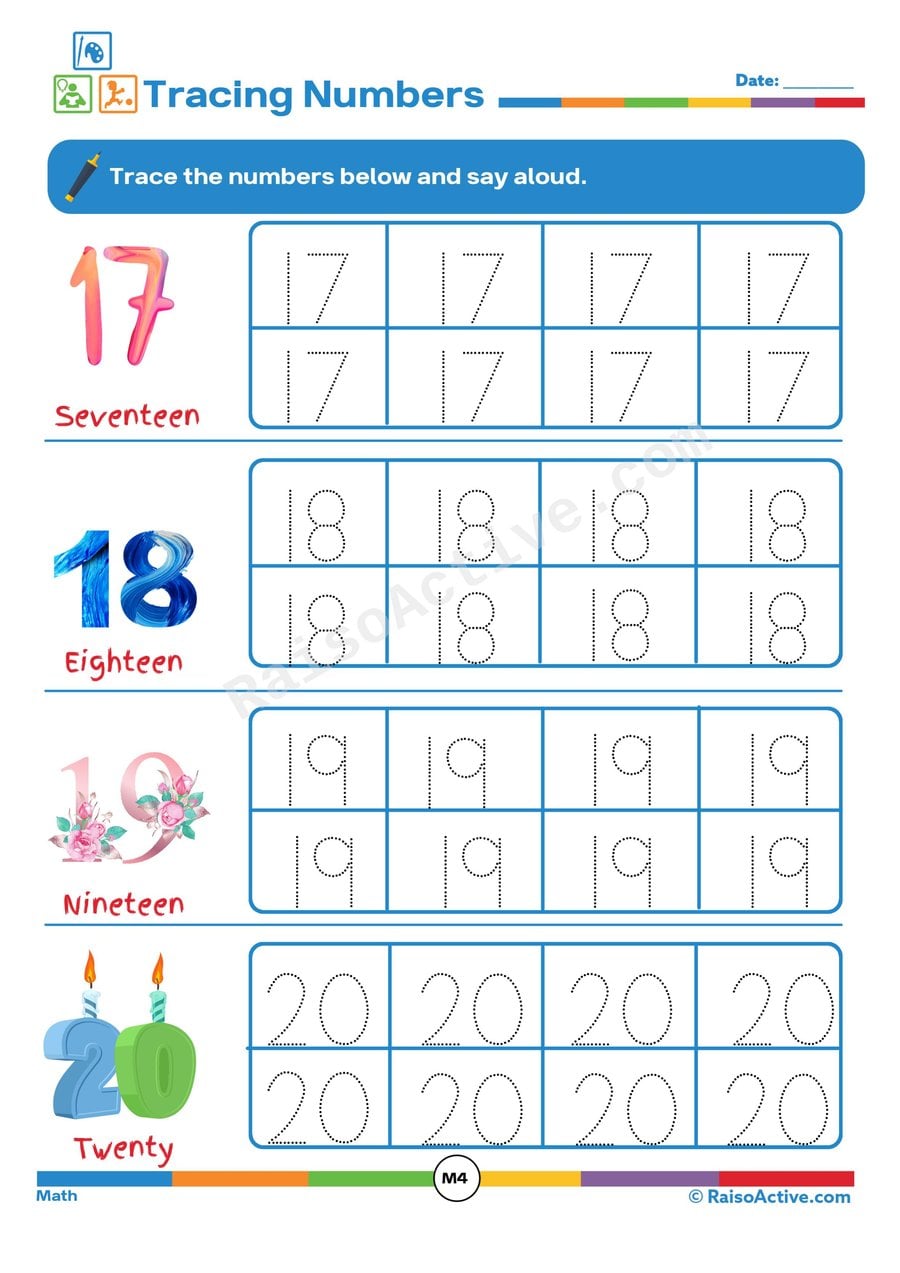
Trace and Learn Numbers 17-20 Worksheet
This tracing worksheet helps children ages 4-6 build number-writing fluency and number-name recognition for 17 through 20, a range that's often trickier than smaller numbers because it involves two-digit sequencing and less familiar number words like 'seventeen' and 'nineteen'. Tracing the dotted numerals builds the fine motor control and muscle memory needed for independent number writing, while saying each number aloud reinforces the link between the written numeral and its spoken name. This range also sets up the transition into the twenties and beyond.

Ot Word Family Worksheet: Read, Trace, and Identify!
Reading, tracing, and identifying words from the 'ot' family — like pot, dot, and hot — helps children ages 4-6 see how changing the first letter of a word while keeping the same ending produces a whole new word, reinforcing the pattern-based phonics strategy known as word families. Tracing each word while reading it connects handwriting practice directly to reading practice, and identifying the matching picture afterward checks genuine comprehension rather than rote letter-sounding. Word family practice like this builds the foundation for decoding many more words independently later on.

Numeracy Match: Counting and Number Recognition Worksheet
Children ages 4-6 strengthen number recognition by matching written numerals to their corresponding word names or quantities, reinforcing that numbers can be represented in more than one way. This kind of numeral-to-word matching deepens number sense beyond simple counting, helping children see the relationship between symbol, word, and quantity. Coloring in their birth date personalizes the practice and connects it to something meaningful in their own life.

CVC 'in' Family Matching Worksheet: Read, Color, and Match!
This worksheet extends word-family practice to the 'in' pattern (pin, bin, win, tin), giving children ages 4-6 another opportunity to apply the analogy strategy of recognizing a shared ending and swapping only the first letter to read new words quickly. Practicing several word families over time — 'ad,' 'ag,' 'it,' and now 'in' — helps children generalize the underlying reading strategy rather than memorizing isolated words, which is exactly the kind of transferable skill that speeds up reading development. Coloring and matching each word to its picture adds a multisensory layer that helps the pattern stick.

Color Mixing Worksheet for Preschoolers: Learn Primary and Secondary Colors!
Identifying primary colors and predicting which two combine to create each secondary color introduces children ages 4-6 to basic color theory, an early scientific concept about how colors interact. This worksheet builds the vocabulary and reasoning skills needed to understand color mixing before testing it out with real paint or crayons.
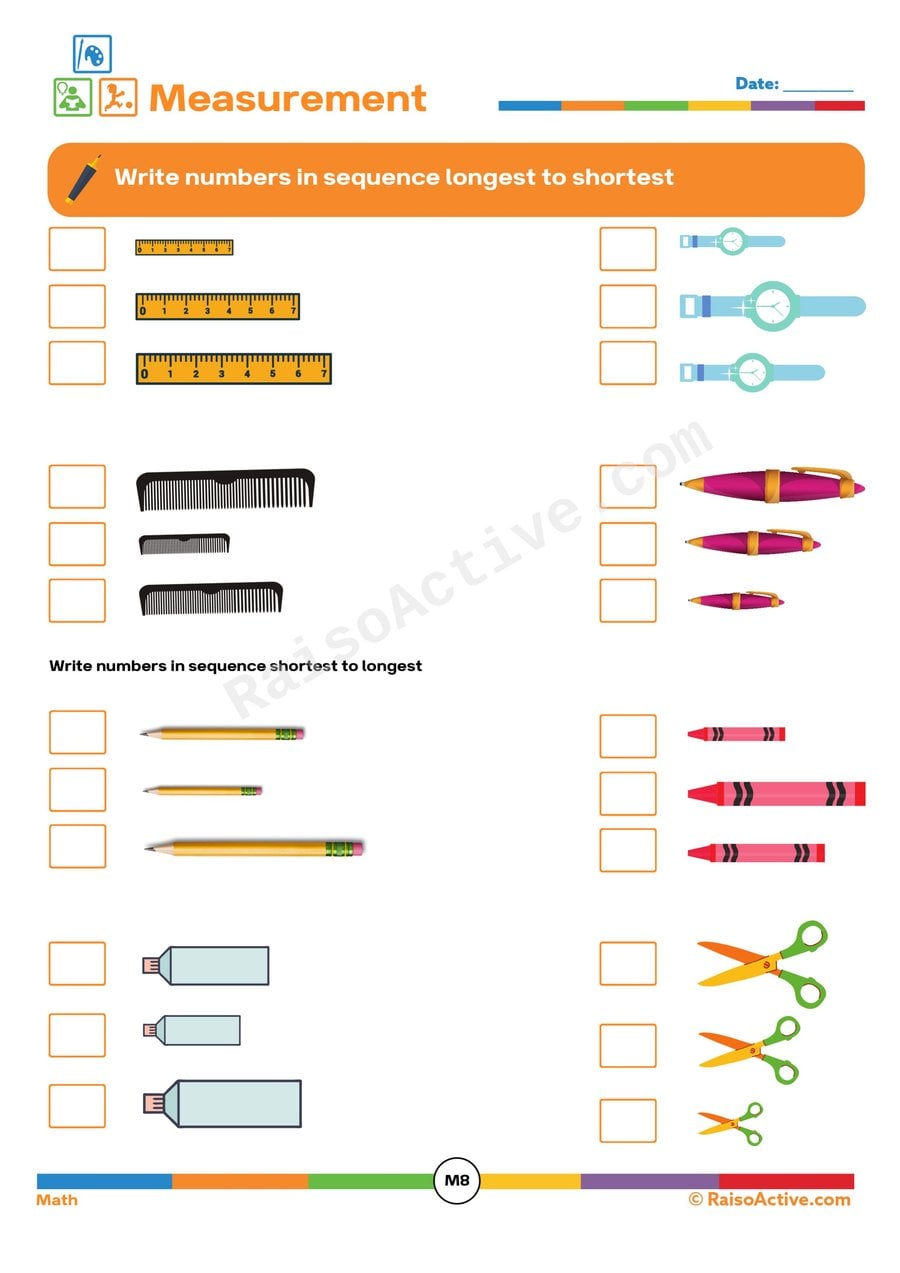
Measurement Worksheet: Longest to Shortest!
This worksheet builds comparative measurement skills by having children visually assess and rank three objects from longest to shortest and again from shortest to longest, reinforcing that length can be ordered, not just measured in isolation. For ages 4-6, this kind of ordinal comparison is an important stepping stone before children begin measuring with actual units like inches or centimeters.

Transportation Match-Up Worksheet for Preschoolers
Matching a written description to the correct vehicle picture builds reading comprehension for children ages 4-6, requiring them to connect specific details, like where a vehicle travels or what it carries, to a visual image. This strengthens both transportation vocabulary and the broader skill of using descriptive clues to identify something, which supports comprehension in future reading tasks.
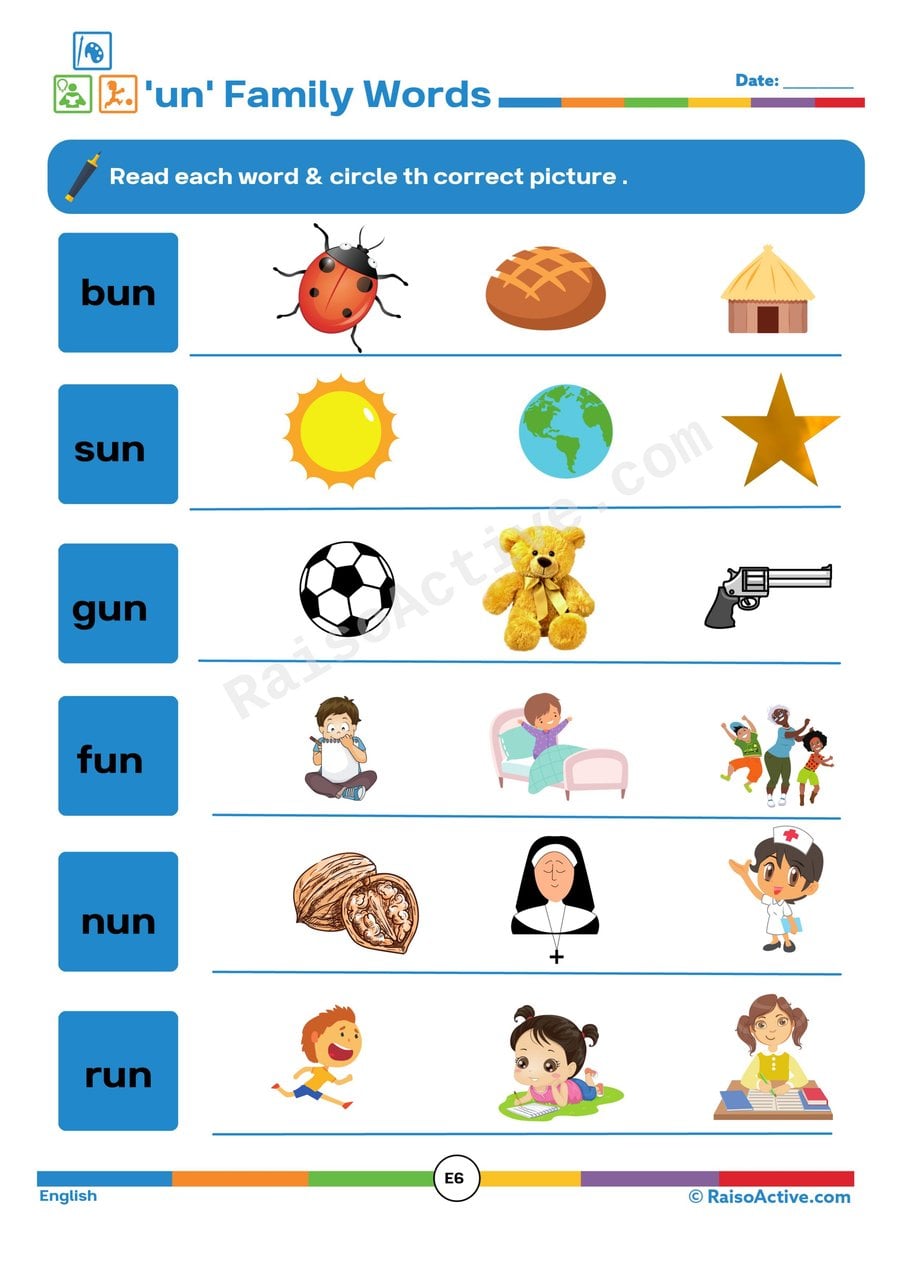
Fun 'un' Family Words Worksheet for Kids
Reading and matching words from the 'un' family, like fun, run, and sun, teaches children ages 4-6 to recognize a shared spelling pattern and use it to decode new words more quickly. Because this word family relies on consistent rhyming sounds, practicing it strengthens the connection between letter patterns and pronunciation that underlies early reading fluency.

Internal Organs Worksheet: Find and Match the Body Parts!
Finding organ names hidden in a word search and then cutting and pasting the organs onto the correct spot on a body diagram teaches children ages 4-6 the names and general locations of internal organs, like the heart, lungs, and stomach, introducing basic human biology. Searching the word grid builds visual scanning and word recognition, while the cut-and-paste placement step reinforces spatial understanding of where each organ sits inside the body. Combining a word search with a hands-on placement task gives this worksheet both a literacy and a science learning goal.

Moon Phases Worksheet for Kids: Learn About the Moon!
This worksheet introduces children ages 4-6 to basic astronomy by having them shade the parts of the moon that aren't lit by the sun and draw how the moon actually appears from Earth during each phase. Understanding that the moon's shape doesn't change but the part we see does is an early, concrete way to introduce the science of light, shadow, and orbit.
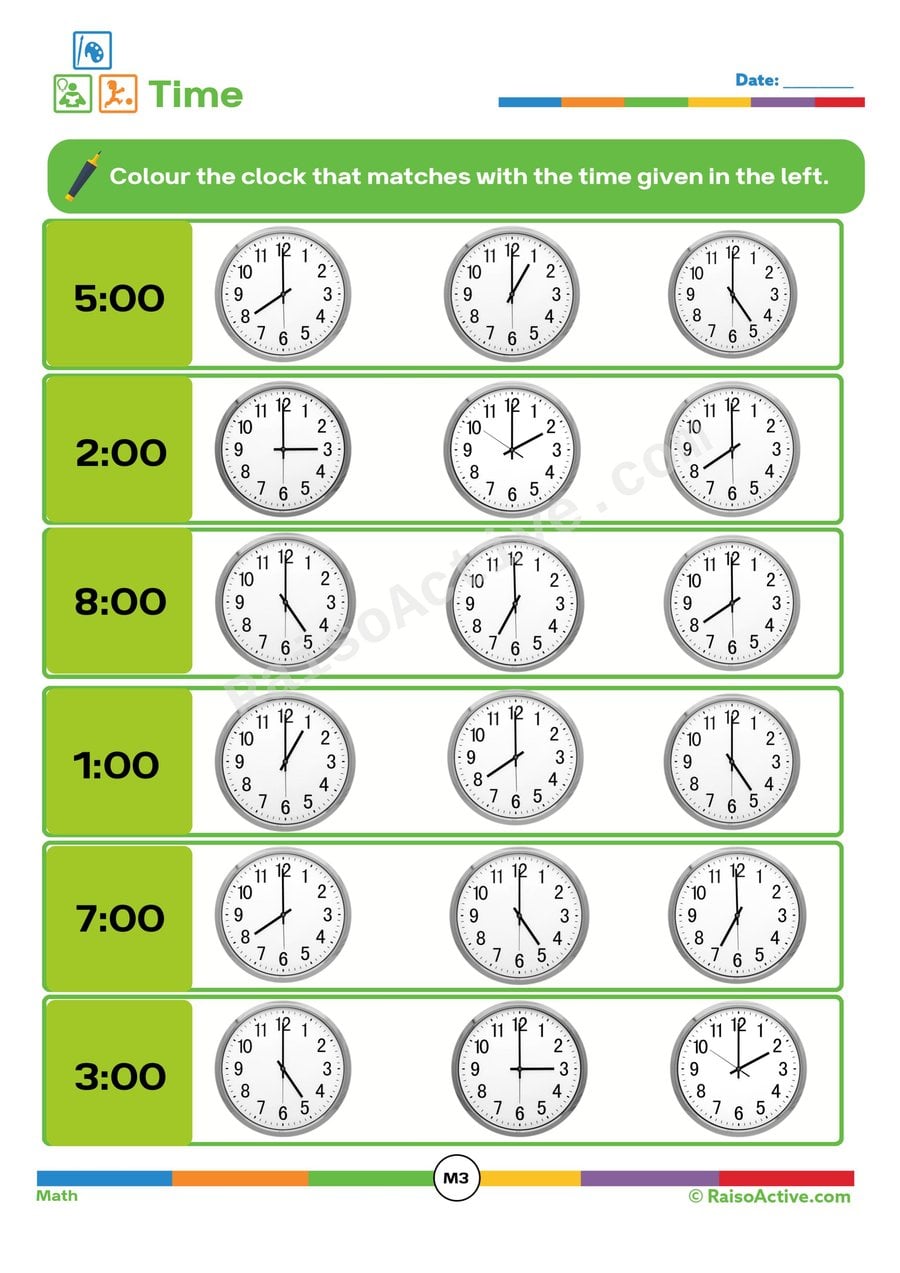
Time Matching Worksheet: Color the Clock!
Matching a written or digital time to the analog clock showing the same time builds clock-reading skills for children ages 4-6, requiring them to translate between two different ways of representing the same moment.
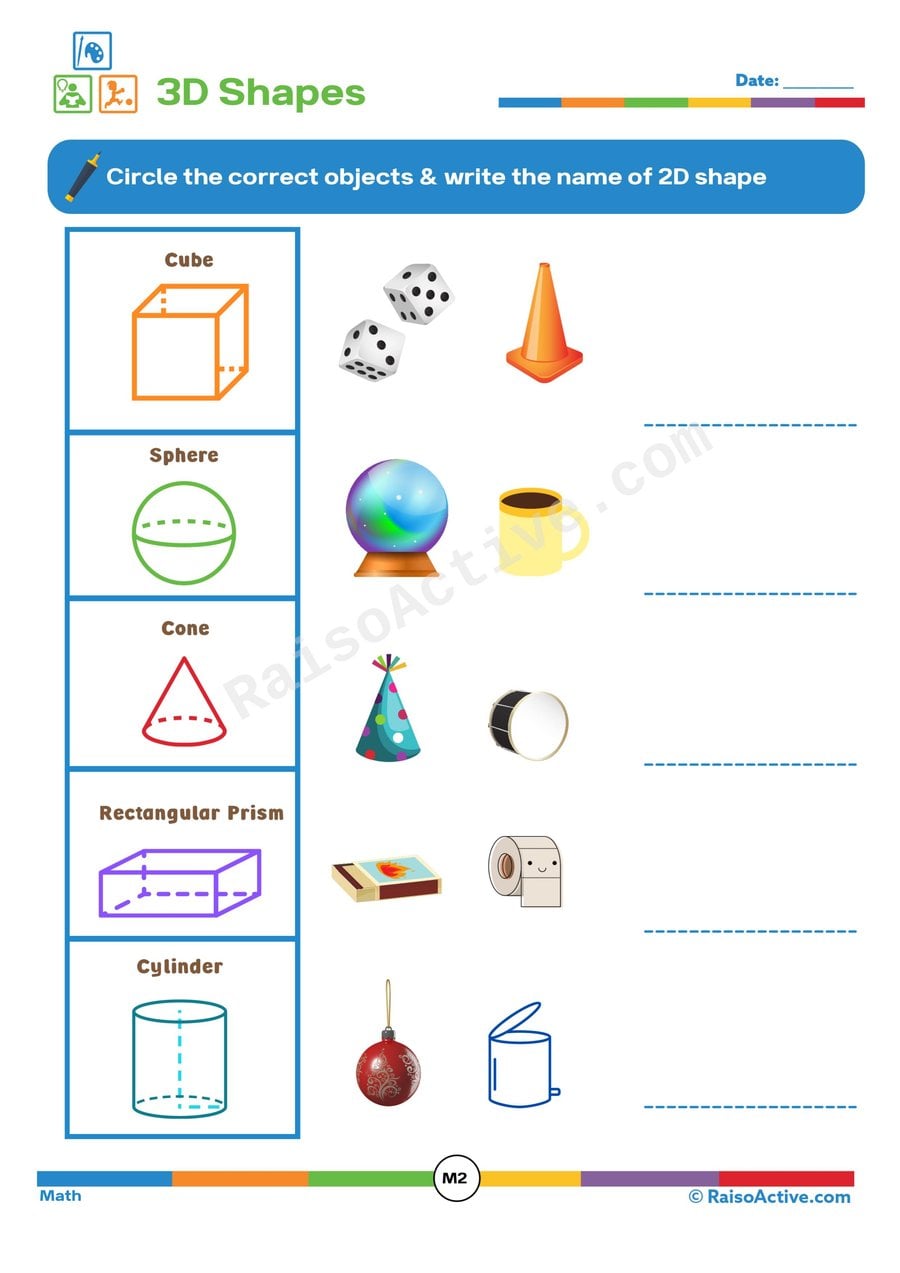
3D Shapes Worksheet: Circle and Name the Shapes!
This worksheet helps children ages 4-6 identify common 3D shapes like spheres, cubes, and cylinders by matching them to real objects, then connects each 3D shape to its related 2D shape, such as a cube's square face or a sphere's circular outline. Understanding that 3D shapes are built from 2D shapes is an important early geometry concept that supports later spatial reasoning and measurement skills.
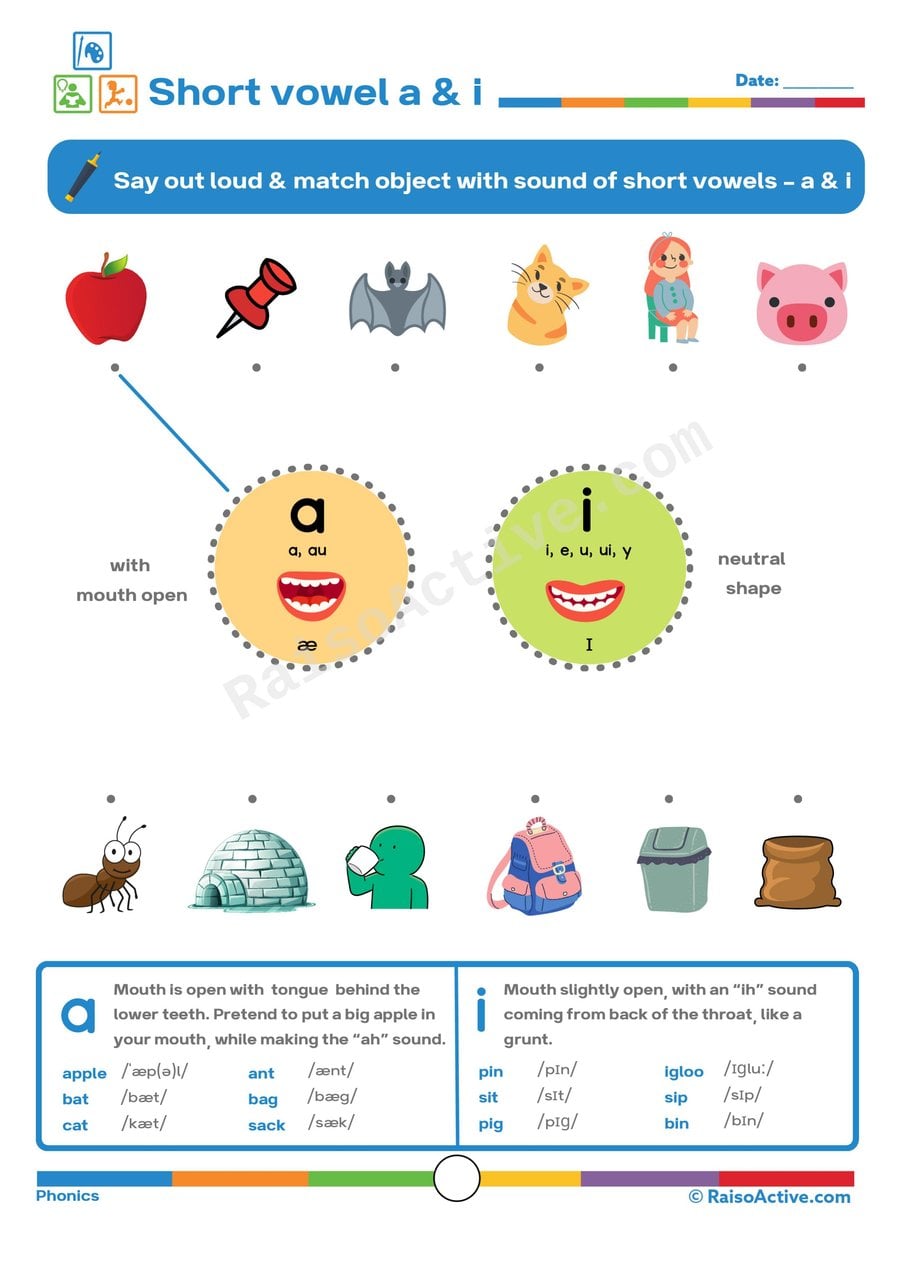
Short Vowel Sounds: Match the Pictures Worksheet
Distinguishing between the short 'a' and short 'i' sounds is a foundational listening skill for children ages 4-6, since these two vowel sounds are easy to confuse and appear constantly in early reading words. This worksheet has children say a word aloud, listen for its vowel sound, and match the picture to the correct sound category, training their ear before they're expected to read or spell independently. Strong auditory discrimination between short vowels directly predicts success decoding CVC words like 'cat' and 'sit' later on.
What 1st Grade shapes worksheets cover
A six-year-old should recognize any of the common flat and solid shapes regardless of size, color or how they are turned, and worksheets can now test exactly that. Tasks include sorting shapes by number of sides, drawing a shape with a given number of corners, splitting a rectangle into halves and quarters, and naming the faces on a cube or the shape you see when a cylinder is cut across. Angles and symmetry are only just beginning.
- Draw a closed shape with exactly five corners
- Divide a circle and a rectangle into halves and quarters
- Name pentagon, hexagon and rhombus from a mixed set
- Count faces, edges and corners on a cube and a rectangular box
- Sort shapes with a line of symmetry from those without
How to use these worksheets at home or in class
Fifteen to twenty minutes on most school days, split between a decodable passage with questions and a math page, matches what many first grade teachers assign. Keep base-ten blocks or bundled straws nearby so place value stays physical before it becomes purely written.
Start with the sheet that matches what your child can already do, then move one step up. Keep finished sheets in a folder: 1st Grade teachers often ask for evidence of practice, and children like seeing their own progress.
Is your child ready for 1st Grade shapes work?
A child ready for this stage decodes CVC words automatically, writes a simple sentence with a capital letter and end punctuation, adds and subtracts fluently within 10, and counts and writes numerals confidently to 20.
Frequently asked questions
What shapes should a six-year-old know?
By six or seven, a child is expected to name circle, triangle, square, rectangle, pentagon and hexagon on sight in any orientation, to name cube, sphere, cone, cylinder and rectangular prism, to say how many sides or corners a flat shape has, and to describe a solid by its faces. Halving and quartering shapes and spotting a line of symmetry are introduced this year. Common Core 1.G describes this level. Measuring angles is not expected until much later.
What should a 1st Grade child be able to do in shapes?
A six-year-old should recognize any of the common flat and solid shapes regardless of size, color or how they are turned, and worksheets can now test exactly that. Tasks include sorting shapes by number of sides, drawing a shape with a given number of corners, splitting a rectangle into halves and quarters, and naming the faces on a cube or the shape you see when a cylinder is cut across. Angles and symmetry are only just beginning. A child ready for this stage decodes CVC words automatically, writes a simple sentence with a capital letter and end punctuation, adds and subtracts fluently within 10, and counts and writes numerals confidently to 20.
Do these worksheets follow the 1st Grade curriculum?
The sheets cover naming 2D shapes, matching identical shapes, sorting shapes by attribute and finding shapes in everyday objects, which sit inside the Common Core Grade 1 (1.OA, 1.NBT, RF.1.3) outcomes for 1st Grade. Year 1 / Year 2 (UK), Class 1 (India) use the same skills at this age, so the sheets also fit families following those programmes.
Are these 1st Grade shapes worksheets free?
Yes. Each worksheet downloads free as a watermarked PDF once you create an account, with a limit of five a day. An annual membership ($20) removes the watermark and the limit for the whole library of over 1,000 worksheets and every printable pack.

Written by
Hemsweta Jain · Teacher Cheena
MBA and Early Childhood Educator, teaching since 2014 · Founder of RaisoActive, Mumbai
Written and reviewed by Hemsweta Jain (Teacher Cheena), who designs every RaisoActive worksheet.
Last reviewed
Printable packs for ages 6–7
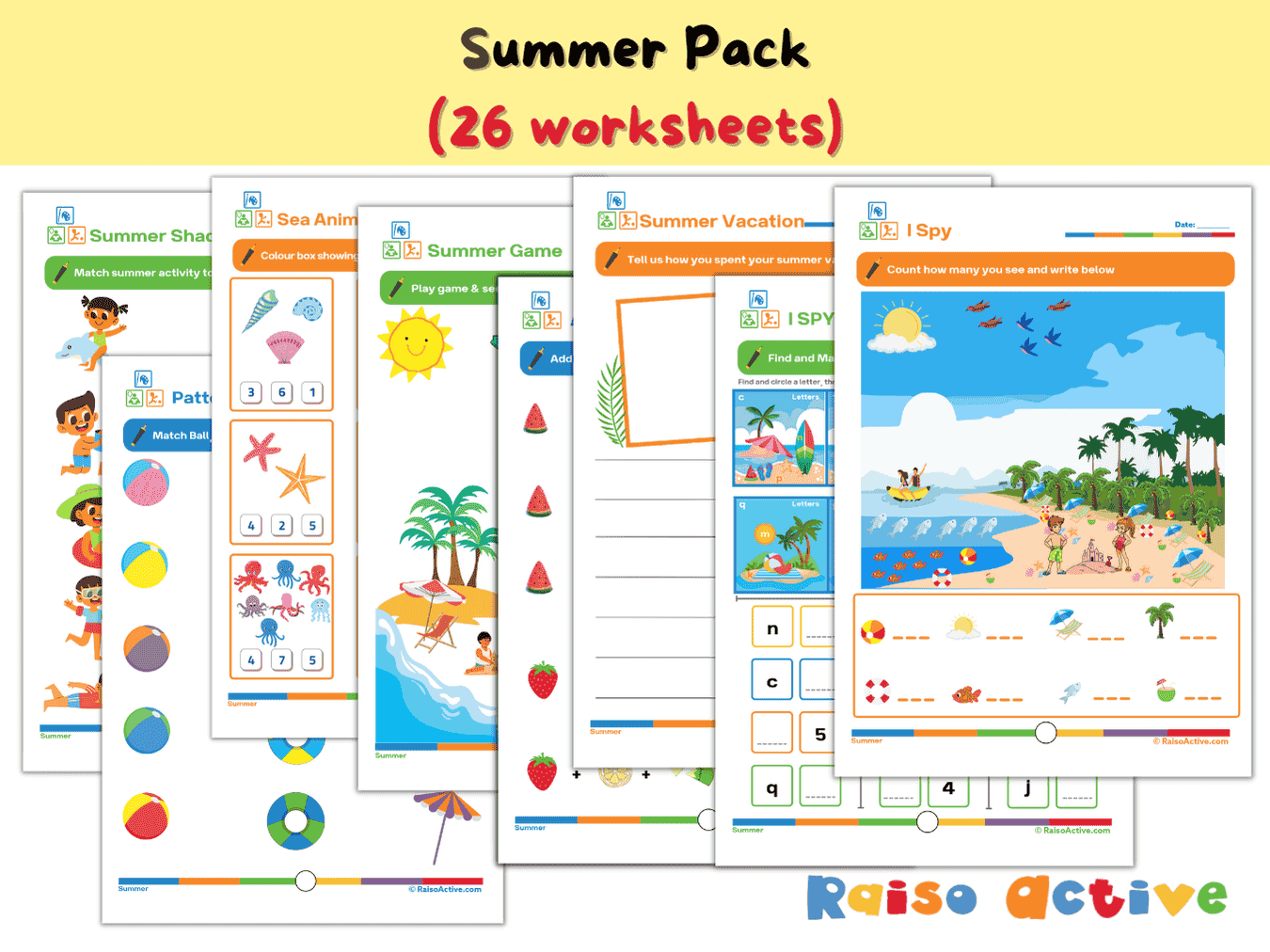
Summer Activity Pack: Math, Literacy, Puzzles & More for Preschool & Kindergarten
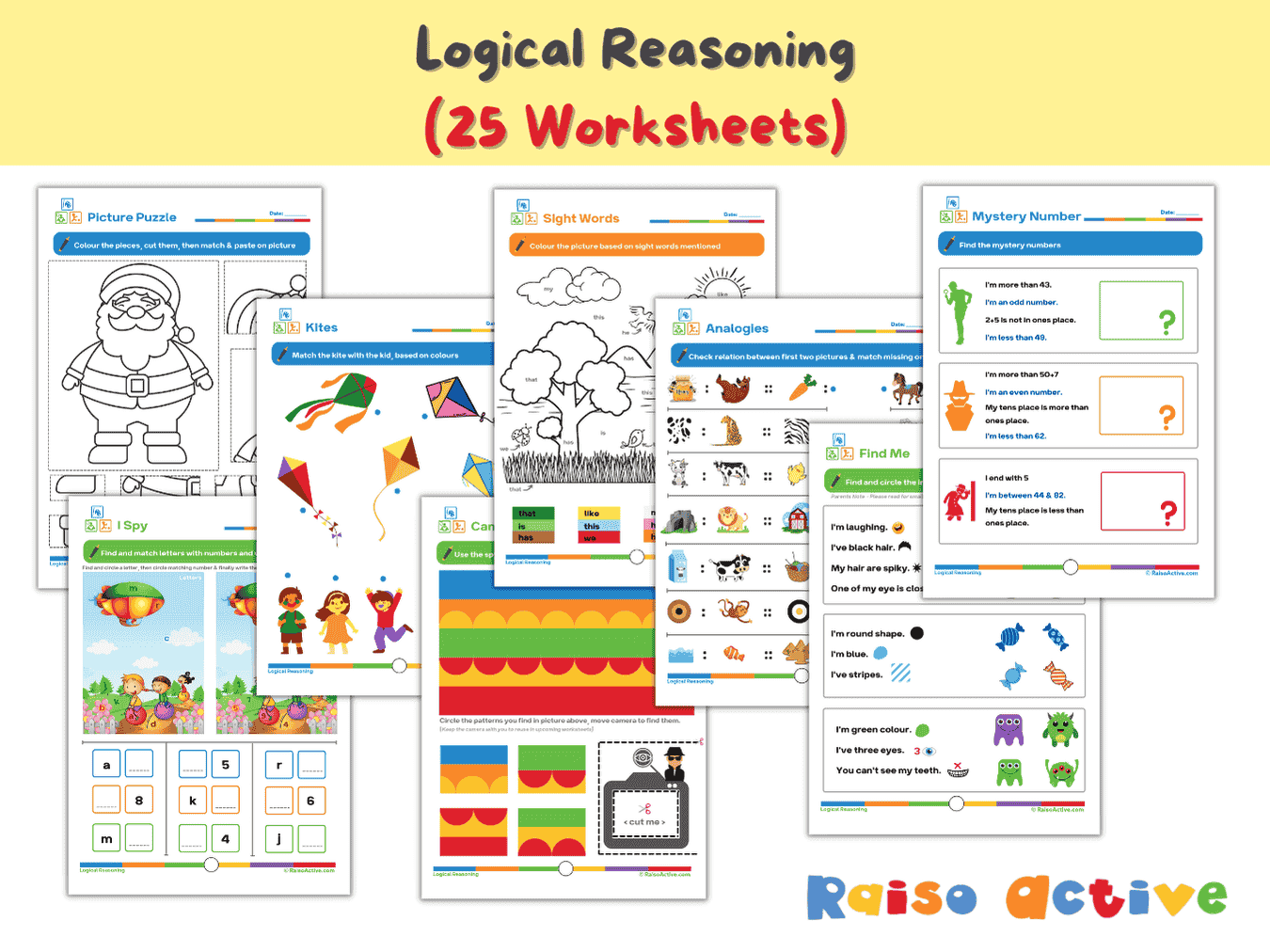
Logical Reasoning Activity Book for Preschool & Kindergarten | Patterns, Puzzles & Analogies
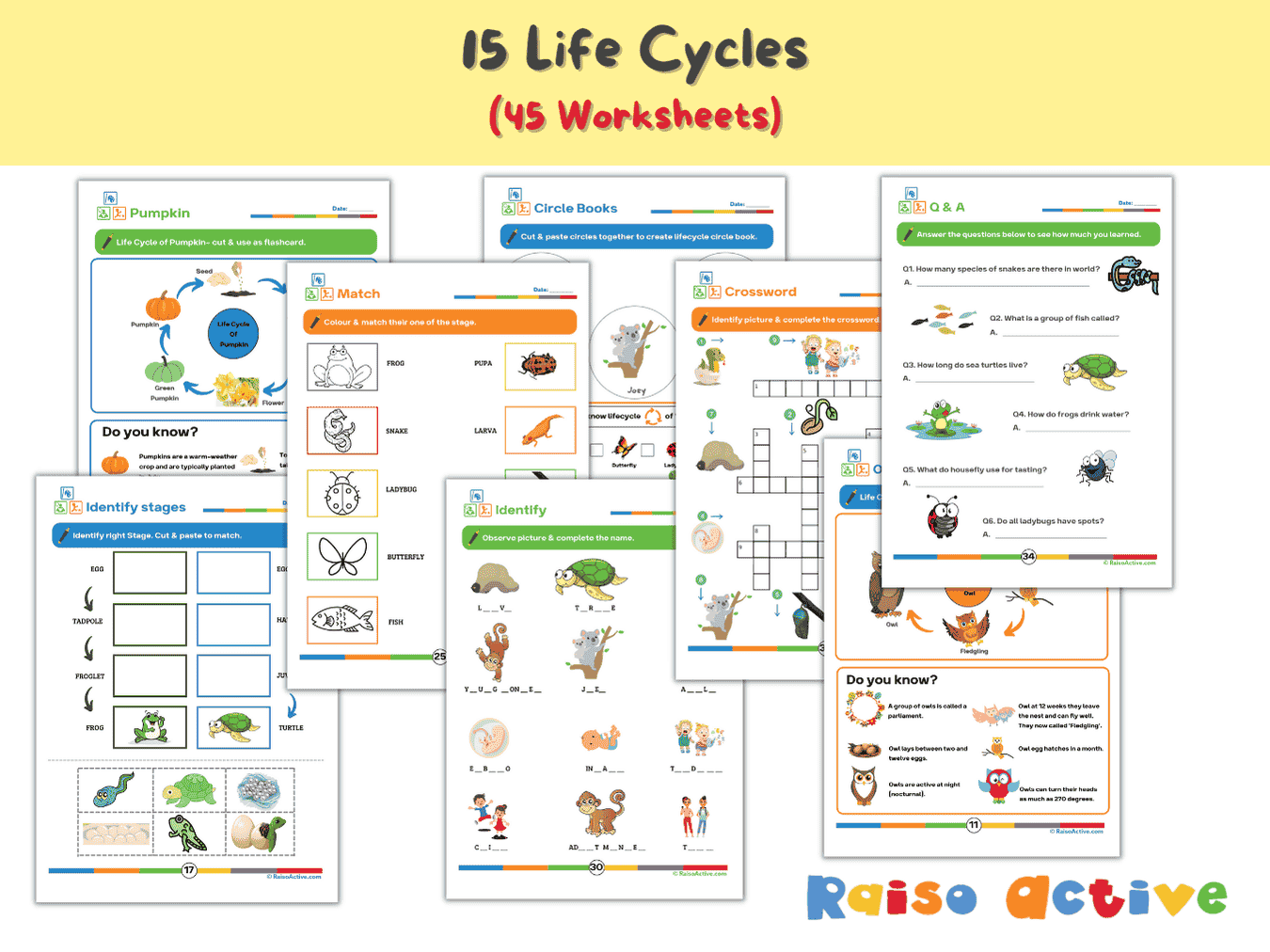
Lifecycles Activity Book & Flashcards for Preschool & Early Elementary
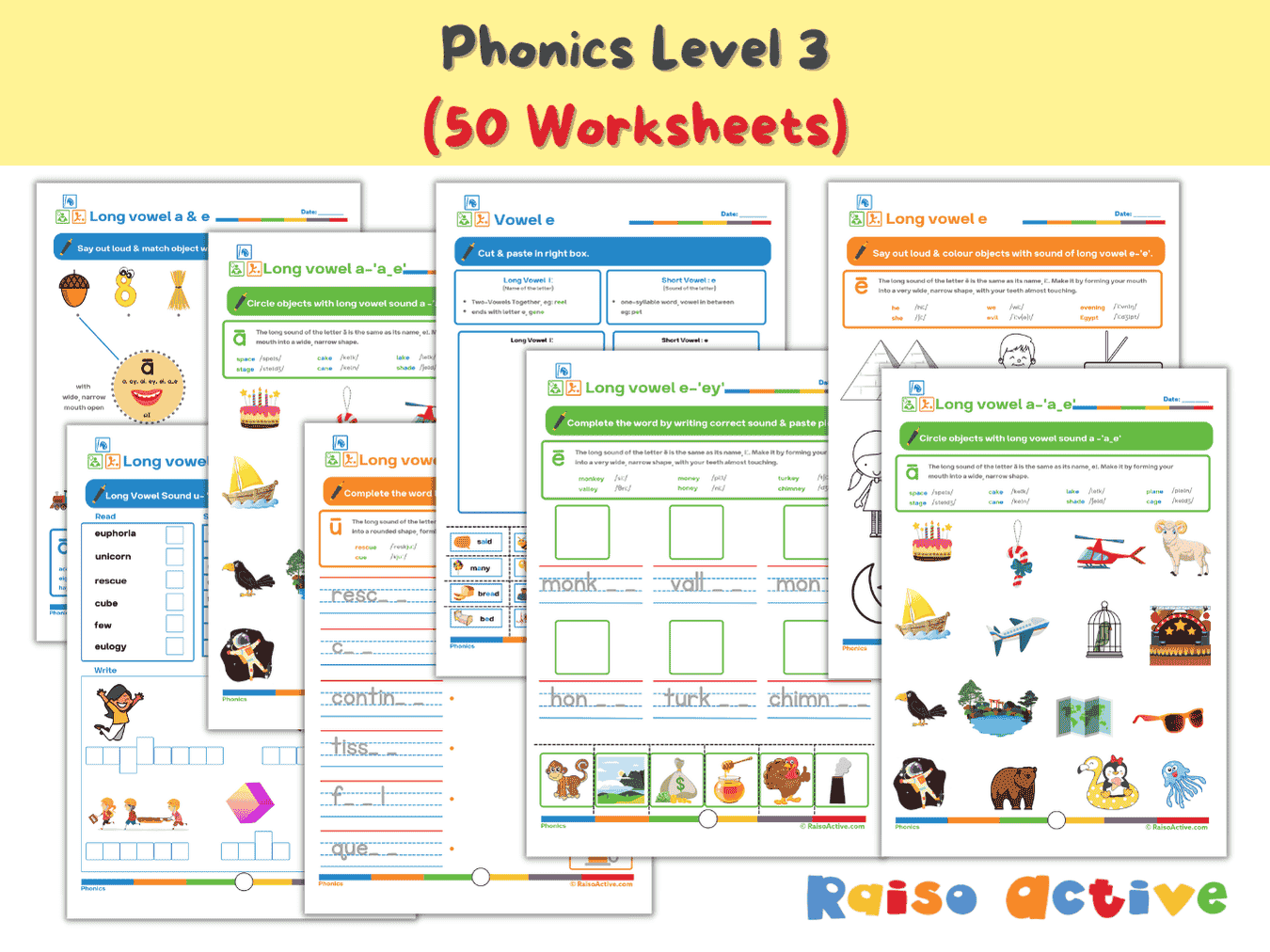
Phonics Level 3 Long Vowels Activity Book for Kindergarten & 1st Grade
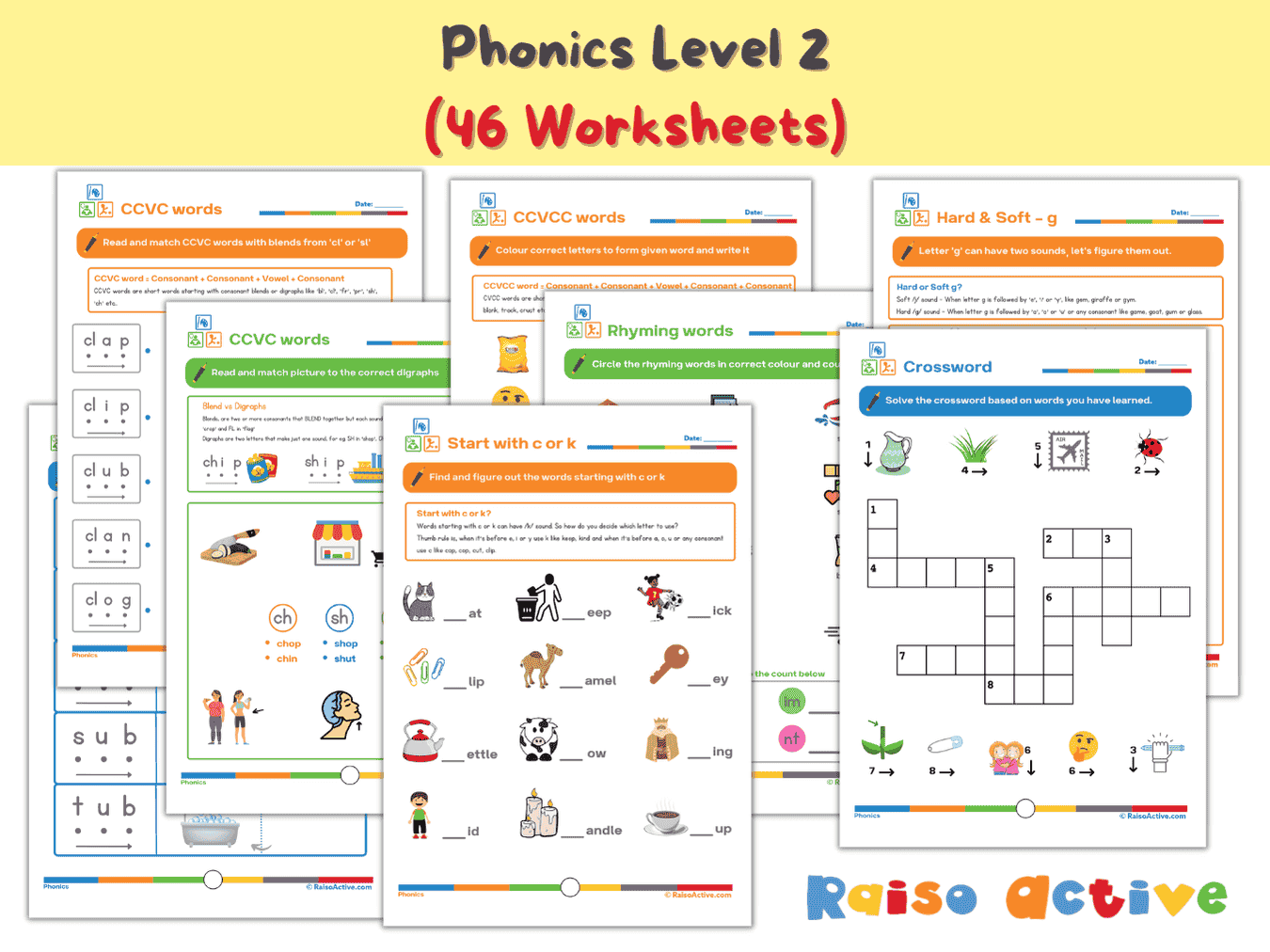
Phonics Level 2 Worksheets: CVC, CCVC, CVCC Word Families & Blends for Early Readers (Ages 4-7)
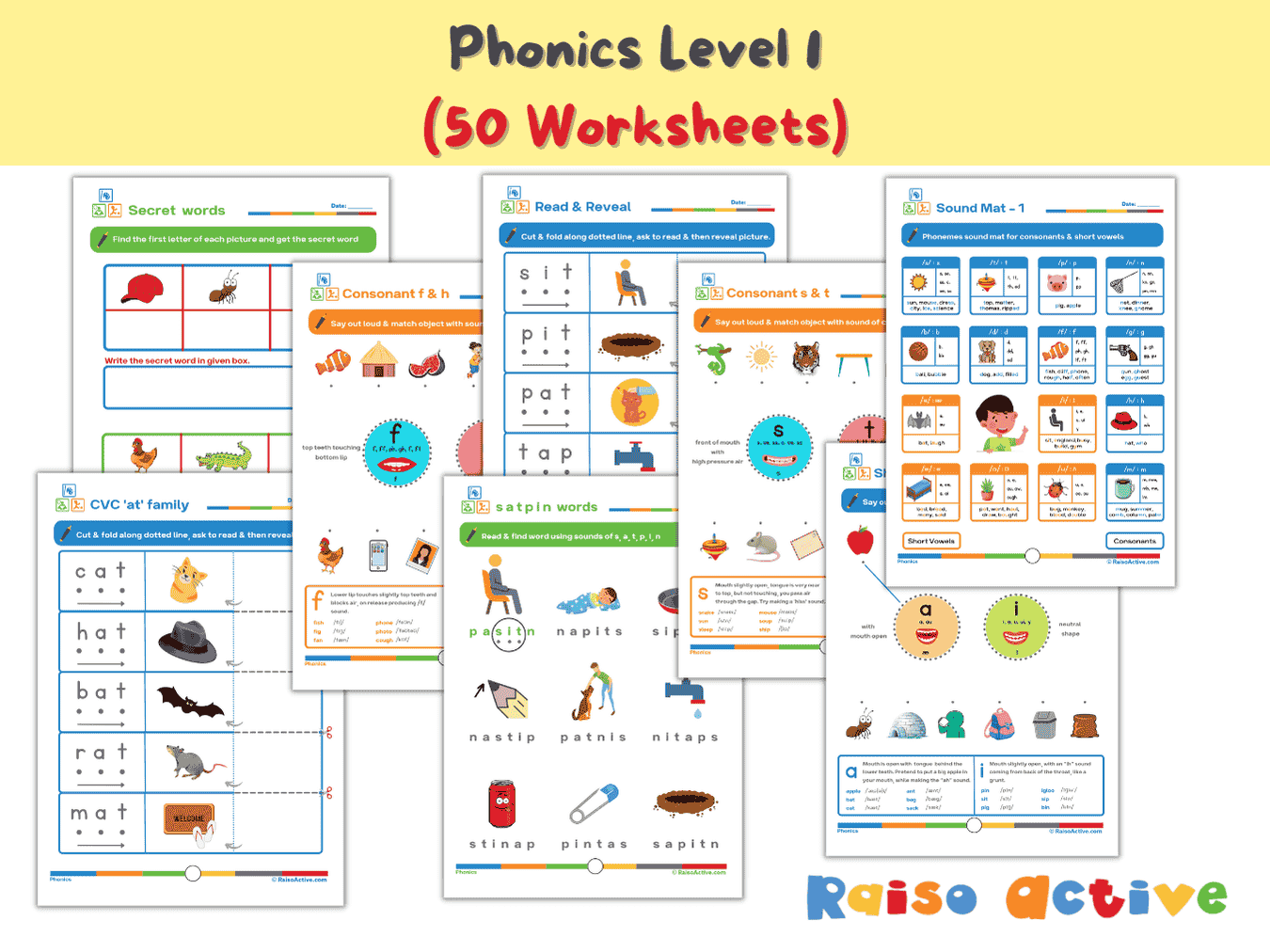
Phonics Level 1 Activity Book: Letter Sounds, Blending & CVC Words for Preschool & Kindergarten
Guides for parents and teachers
See all guides →UKG Syllabus Explained: English, Maths and EVS Month by Month
What UKG classes typically cover in English, maths and EVS, month by month, aligned to NEP 2020, with ways to support at home and signs your child is behind.
How to Teach Your 3-Year-Old to Recognise Numbers: A Parent's Complete Guide
Help your 3-year-old recognise numbers 1-10 with multi-sensory activities, everyday maths moments, and simple routines. Practical guide with Indian context included.
Canonical: https://raisoactive.com/worksheets/first-grade-shapes