Free printable worksheets · United States
1st Grade Sight Words Worksheets (Ages 6–7)
1st Grade sight words worksheets are practice sheets for children aged 6–7 in First Grade in the US. Sight words are common words practiced until they are recognized instantly, because many cannot be sounded out with regular phonics rules. The sheets on this page cover instant recognition of high-frequency words, reading words that cannot be sounded out, spelling common words from memory and using sight words inside a sentence.
First grade pushes reading toward fluency and math toward larger numbers: consonant digraphs, long vowels and silent e appear in decodable passages, while place value work extends to 120 and addition and subtraction move from within 10 to within 20. Six-year-olds are reading sight words inside sentences rather than on cards. The target list grows to the first hundred high-frequency words, and the harder ones, "because", "friend", "where", "could", need spelling as well as reading. Worksheets at this age should hide words in short passages, ask the child to write a sentence using two of them, and include cloze gaps where the missing word must fit the meaning. Word-by-word reading should be fading into phrases.
- 24 worksheets
- Free PDF download
- Print on A4 or Letter
Made for your child
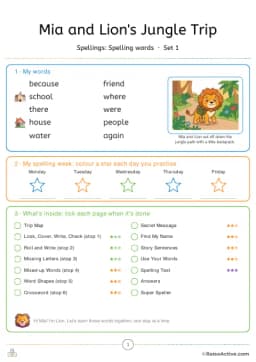
Spelling practice, made for your child
Their own spelling words turned into a pack: trace or look-cover-write-check, roll and write, a secret picture code, a word search, a crossword and a test, with their name in it.
Make a spelling packFree preview · free for members
Or start free: a word search with sight words1st Grade Sight Words Worksheets to print
Browse all worksheets for ages 6–7
Meera's Garba Night: Navratri Reading Comprehension Story
Ages 4-6 · Pre-K–KindergartenAges 4-6 · Reception–Year 1Ages 4-6 · LKG–UKGAges 4-6
Children listen to or read a short story, recall details by circling answers, write answers using a word bank and explain a simple idea in their own words.
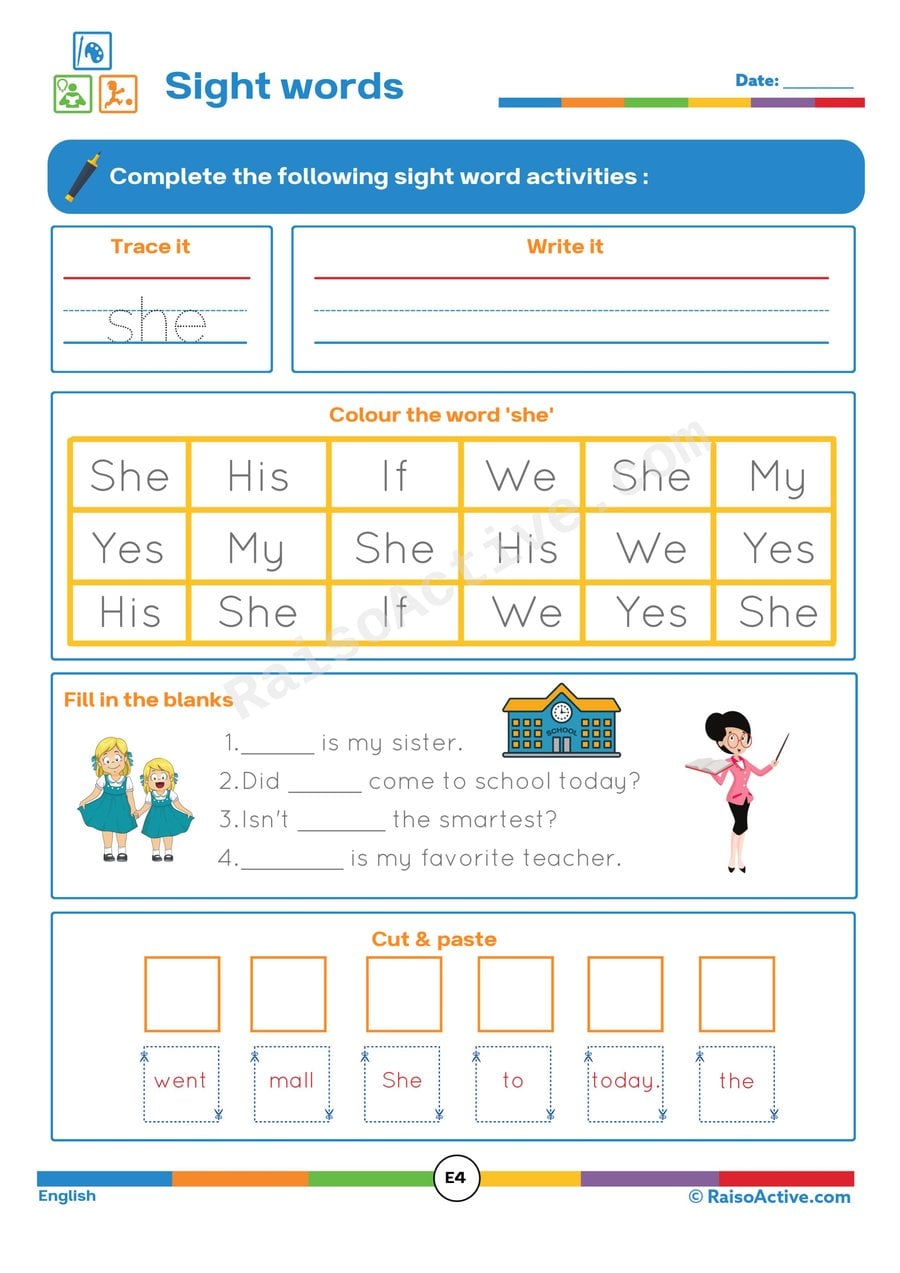
Sight Words Worksheet: Trace, Write, and Color 'She'!
Ages 4-6 · Pre-K–KindergartenAges 4-6 · Reception–Year 1Ages 4-6 · LKG–UKGAges 4-6
Tracing, writing, coloring, and completing sentences with the sight word 'she' gives children ages 4-6 repeated exposure to this common word across multiple activity types, which builds the instant recognition needed for reading fluency. The cut-and-paste sentence completion at the end adds sentence-level context, helping children see the word used meaningfully rather than in isolation.

Sight Words Worksheet: Practice with 'is', 'we', and 'my'
Ages 4-6 · Pre-K–KindergartenAges 4-6 · Reception–Year 1Ages 4-6 · LKG–UKGAges 4-6
This worksheet challenges children ages 4-6 to choose the correct sight word from a small word bank — 'is,' 'we,' or 'my' — to complete a sentence, rather than simply tracing or copying a single word. Selecting the right word based on sentence meaning requires a deeper level of reading comprehension than earlier single-word practice, since children must understand what each sentence is saying before choosing correctly. Writing the chosen word from memory also builds spelling recall for these common words.

Sight Word Search and Reading Comprehension Worksheet for Preschoolers
Ages 4-6 · Pre-K–KindergartenAges 4-6 · Reception–Year 1Ages 4-6 · LKG–UKGAges 4-6
This worksheet combines three literacy skills for children ages 4-6 in one activity: reading a short story and spotting sight words within it, answering comprehension questions about what happened, and finding those same sight words hidden in a word search grid. Practicing the same words across reading, comprehension, and search formats gives children multiple angles of exposure that build genuine reading confidence rather than rote memorization.

CVC 'in' Word Family Read, Colour and Match Worksheet
Ages 3-6 · Preschool–KindergartenAges 3-6 · Nursery–Year 1Ages 3-6 · Nursery–UKGAges 3-6
Children read the 'in' words pin, fin, win, bin and tin on their own and match each word to its picture, checking that they understood what they read.

CVC 'at' Word Family Read, Colour and Match Worksheet
Ages 3-6 · Preschool–KindergartenAges 3-6 · Nursery–Year 1Ages 3-6 · Nursery–UKGAges 3-6
Children read the 'at' words cat, hat, bat, rat and mat on their own and match each word to its picture, checking that they understood what they read.

CVC 'an' Word Family Read, Colour and Match Worksheet
Ages 3-6 · Preschool–KindergartenAges 3-6 · Nursery–Year 1Ages 3-6 · Nursery–UKGAges 3-6
Children read the 'an' words man, pan, fan, ran and van on their own and match each word to its picture, checking that they understood what they read.
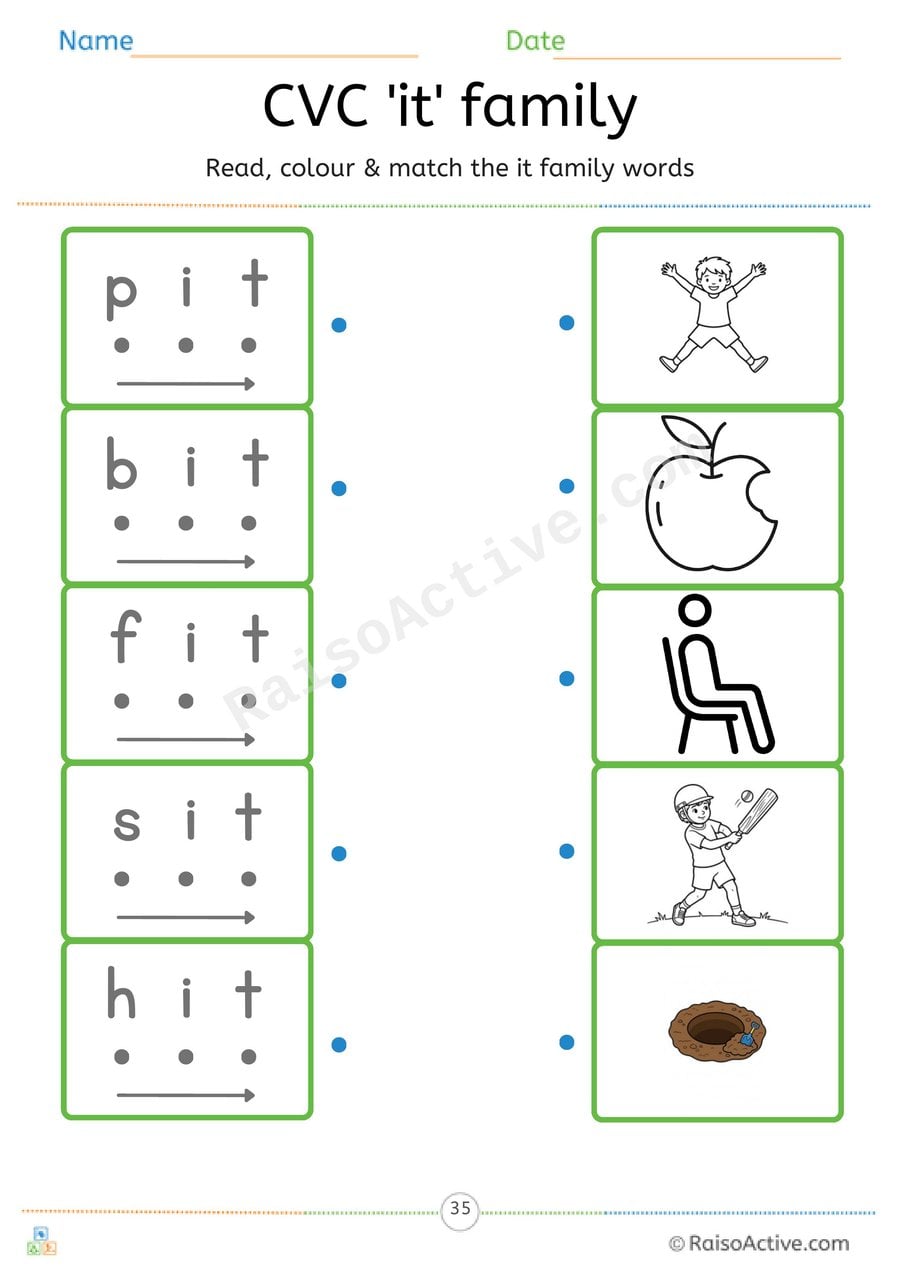
CVC 'it' Word Family Read, Colour and Match Worksheet
Ages 3-6 · Preschool–KindergartenAges 3-6 · Nursery–Year 1Ages 3-6 · Nursery–UKGAges 3-6
Children read the 'it' words pit, bit, fit, sit and hit on their own and match each word to its picture, checking that they understood what they read.
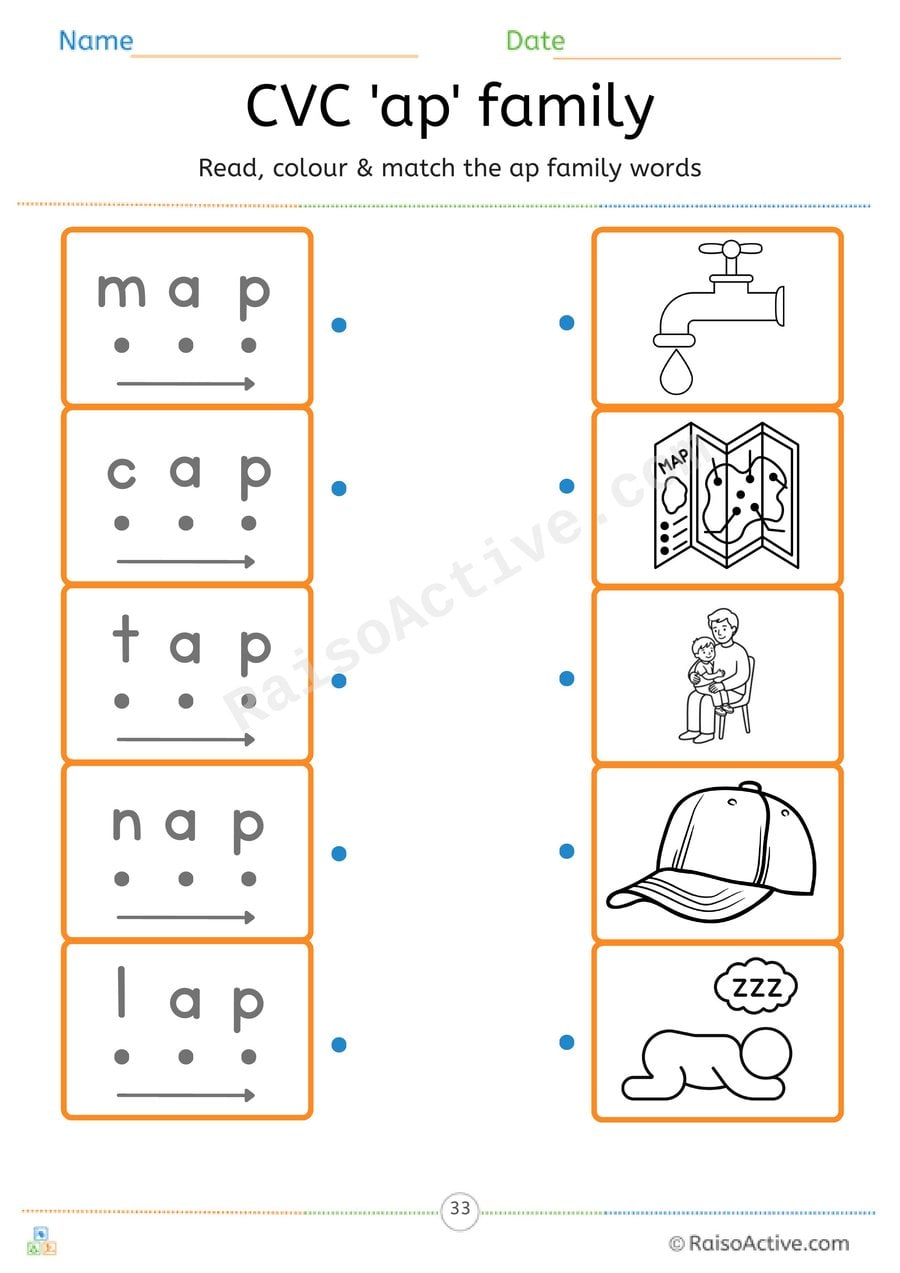
CVC 'ap' Word Family Read, Colour and Match Worksheet
Ages 3-6 · Preschool–KindergartenAges 3-6 · Nursery–Year 1Ages 3-6 · Nursery–UKGAges 3-6
Children read the 'ap' words map, cap, tap, nap and lap on their own and match each word to its picture, checking that they understood what they read.

CVC 'ag' Word Family Read, Colour and Match Worksheet
Ages 3-6 · Preschool–KindergartenAges 3-6 · Nursery–Year 1Ages 3-6 · Nursery–UKGAges 3-6
Children read the 'ag' words bag, tag, wag, rag and nag on their own and match each word to its picture, checking that they understood what they read.

CVC 'am' Word Family Read, Colour and Match Worksheet
Ages 3-6 · Preschool–KindergartenAges 3-6 · Nursery–Year 1Ages 3-6 · Nursery–UKGAges 3-6
Children read the 'am' words jam, dam, yam, ham and ram on their own and match each word to its picture, checking that they understood what they read.

CVC 'ip' Word Family Read, Colour and Match Worksheet
Ages 3-6 · Preschool–KindergartenAges 3-6 · Nursery–Year 1Ages 3-6 · Nursery–UKGAges 3-6
Children read the 'ip' words lip, sip, rip, tip and dip on their own and match each word to its picture, checking that they understood what they read.

s a t p i n Words Read and Find Worksheet
Ages 3-6 · Preschool–KindergartenAges 3-6 · Nursery–Year 1Ages 3-6 · Nursery–UKGAges 3-6
Children read s a t p i n words and find them hidden in a row of letters: sit, nap, pan, tip, pat, tap, tin, pin and pit.

CVC 'ad' Word Family Read, Colour and Match Worksheet
Ages 3-6 · Preschool–KindergartenAges 3-6 · Nursery–Year 1Ages 3-6 · Nursery–UKGAges 3-6
Children read the 'ad' words dad, lad, sad, mad and bad on their own and match each word to its picture, checking that they understood what they read.

Sight Word Coloring Worksheet for Preschoolers
Ages 4-7 · Pre-K–Grade 1Ages 4-7 · Reception–Year 2Ages 4-7 · LKG–Class 1Ages 4-7
This worksheet helps children recognize and read common sight words while practicing their coloring skills.

Circle the Picture: Read CVC Words and Write First Letters
Ages 3-6 · Preschool–KindergartenAges 3-6 · Nursery–Year 1Ages 3-6 · Nursery–UKGAges 3-6
Children read the CVC words bag, sad and dad and find the right picture, then write the first letter of fish, grapes, kite, egg, bat, jug, duck, hat and leaf.

Phonics Level 1 Answer Key
Ages 3-6 · Preschool–KindergartenAges 3-6 · Nursery–Year 1Ages 3-6 · Nursery–UKGAges 3-6
Grown-ups can check every Phonics Level 1 page that has one right answer, page by page.

Phonics Level 1 Certificate of Achievement
Ages 3-6 · Preschool–KindergartenAges 3-6 · Nursery–Year 1Ages 3-6 · Nursery–UKGAges 3-6
Children celebrate finishing Phonics Level 1 and tick the CVC word families they can now read, from at to ut.

Phonics Review: Circle the Word and Fill in the Missing Letter
Ages 3-6 · Preschool–KindergartenAges 3-6 · Nursery–Year 1Ages 3-6 · Nursery–UKGAges 3-6
Children read three similar words and choose the one that matches the picture, then hear the first sound of hat, bed, dog, bus, cow, car, cat and ant.

'an' Word Family Cut and Paste and Read and Circle Worksheet
Ages 3-6 · Preschool–KindergartenAges 3-6 · Nursery–Year 1Ages 3-6 · Nursery–UKGAges 3-6
Children build the 'an' words ran, pan, van, fan and can by adding a first letter, write each word, then read bus, cup and hut and find the matching pictures.
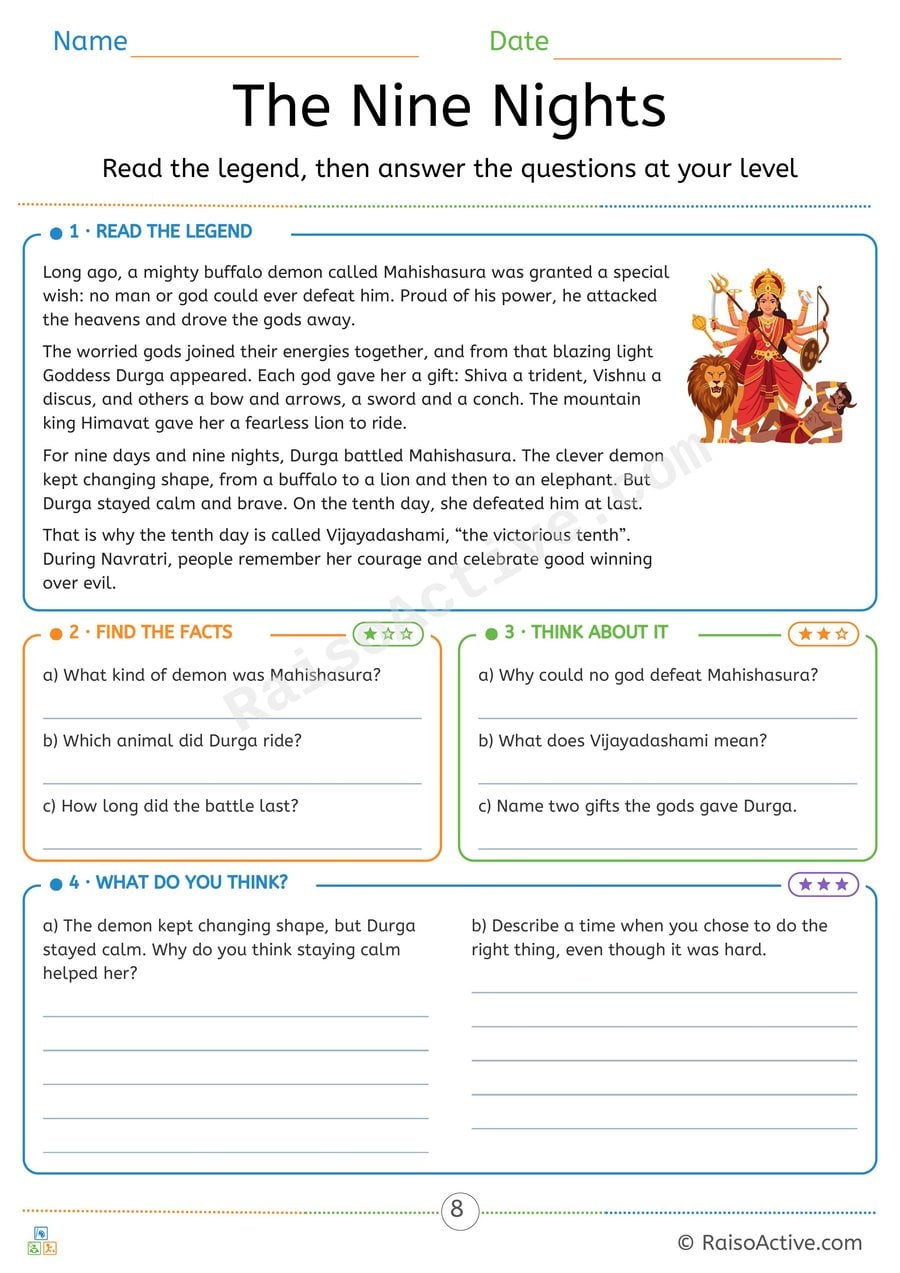
The Nine Nights: Durga and Mahishasura Reading Comprehension
Ages 7-11 · Grade 2–Grade 3Ages 7-11 · Year 3–Year 4Ages 7-11 · Class 2–Class 3Ages 7-11
Children read a retelling of the legend of Durga and Mahishasura, find facts in the text, answer inference questions about why things happened, and write their own opinion about staying calm and doing the right thing.

Long Vowel u Spellings Match Worksheet: u, u_e, ew, ue, eu
Ages 5-7 · Kindergarten–Grade 1Ages 5-7 · Year 1–Year 2Ages 5-7 · UKG–Class 1Ages 5-7
Children link each picture to its word and then to its long u spelling (eucalyptus: eu; mule: u_e; cucumber: u; statue: ue; news: ew; tissue: ue). One spelling, ue, is used twice.
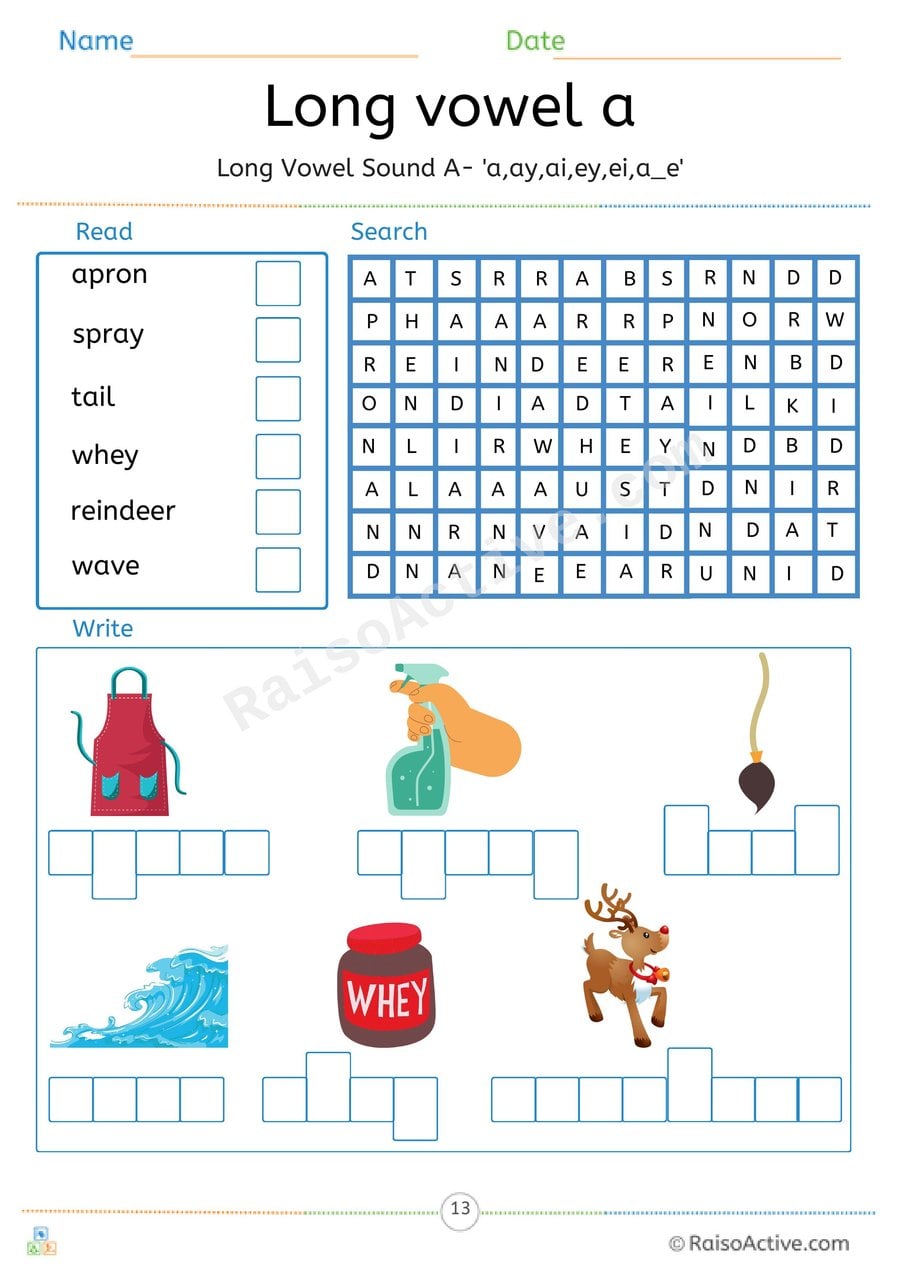
Long Vowel a Read, Search and Write Worksheet
Ages 5-7 · Kindergarten–Grade 1Ages 5-7 · Year 1–Year 2Ages 5-7 · UKG–Class 1Ages 5-7
Children review long a spellings (a, ay, ai, ey, ei, a_e) by reading, finding and writing the words apron, spray, tail, whey, reindeer and wave.
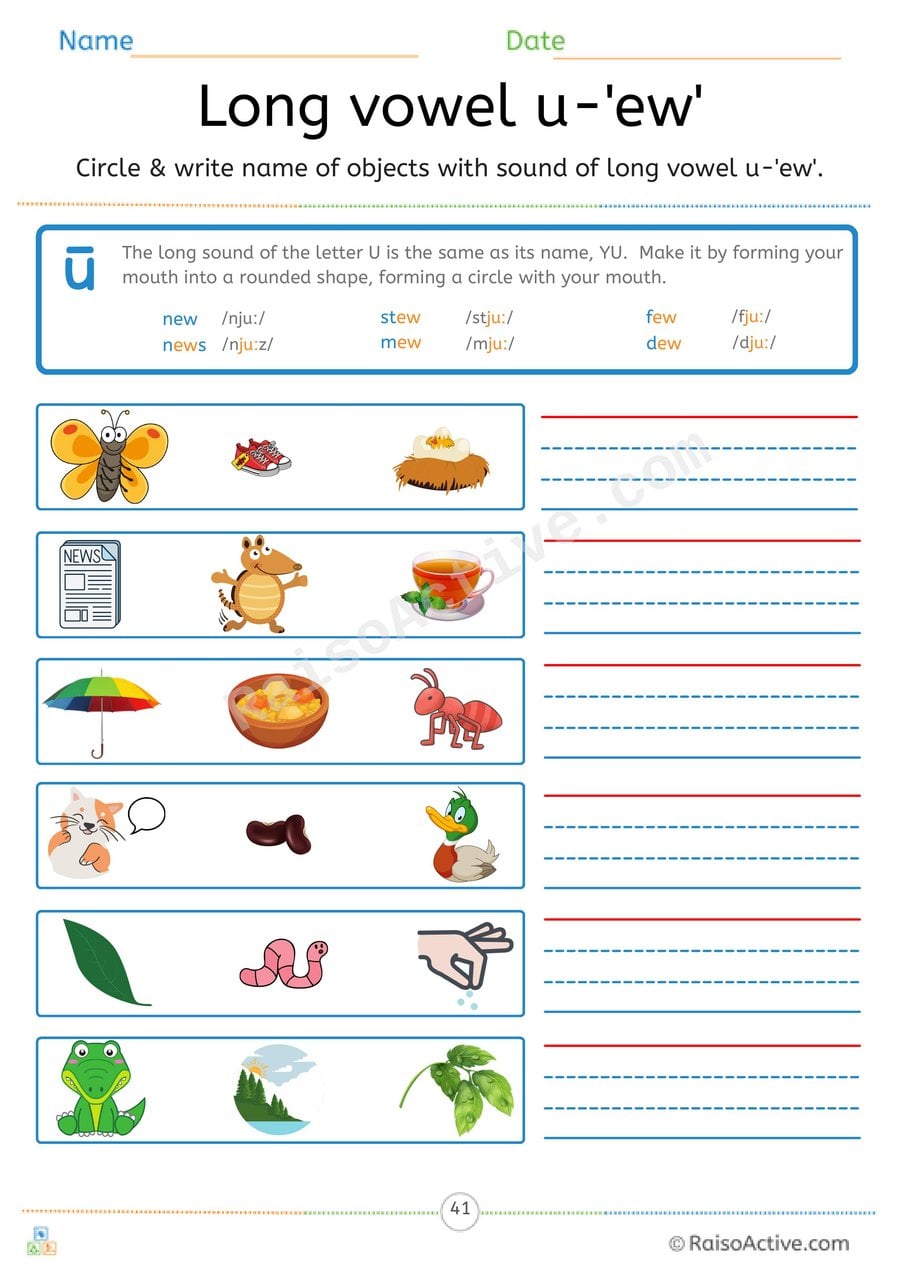
Long Vowel u 'ew' Circle and Write Worksheet
Ages 5-7 · Kindergarten–Grade 1Ages 5-7 · Year 1–Year 2Ages 5-7 · UKG–Class 1Ages 5-7
Children spot the long u 'ew' word in each row of three pictures, then spell it: new, news, stew, mew, few and dew.
What 1st Grade sight words worksheets cover
Six-year-olds are reading sight words inside sentences rather than on cards. The target list grows to the first hundred high-frequency words, and the harder ones, "because", "friend", "where", "could", need spelling as well as reading. Worksheets at this age should hide words in short passages, ask the child to write a sentence using two of them, and include cloze gaps where the missing word must fit the meaning. Word-by-word reading should be fading into phrases.
- Read the first hundred high-frequency words with no hesitation
- Fill a cloze sentence with the sight word that fits the meaning
- Write two sentences each using "because" or "where"
- Spell "said", "were" and "there" from dictation
- Find and underline ten sight words in a short passage
How to use these worksheets at home or in class
Fifteen to twenty minutes on most school days, split between a decodable passage with questions and a math page, matches what many first grade teachers assign. Keep base-ten blocks or bundled straws nearby so place value stays physical before it becomes purely written.
Start with the sheet that matches what your child can already do, then move one step up. Keep finished sheets in a folder: 1st Grade teachers often ask for evidence of practice, and children like seeing their own progress.
Is your child ready for 1st Grade sight words work?
A child ready for this stage decodes CVC words automatically, writes a simple sentence with a capital letter and end punctuation, adds and subtracts fluently within 10, and counts and writes numerals confidently to 20.
Frequently asked questions
My six-year-old reads sight words on flashcards but not in books. Why?
Cards show a word alone, large and expected; a book shows it small, surrounded by other words, in a font the child may not have seen. The fix is practice in context. Use sheets where the word sits inside a sentence and then a paragraph, ask the child to hunt for the day's words in a storybook, and vary the fonts on cards so recognition does not depend on one shape.
What should a 1st Grade child be able to do in sight words?
Six-year-olds are reading sight words inside sentences rather than on cards. The target list grows to the first hundred high-frequency words, and the harder ones, "because", "friend", "where", "could", need spelling as well as reading. Worksheets at this age should hide words in short passages, ask the child to write a sentence using two of them, and include cloze gaps where the missing word must fit the meaning. Word-by-word reading should be fading into phrases. A child ready for this stage decodes CVC words automatically, writes a simple sentence with a capital letter and end punctuation, adds and subtracts fluently within 10, and counts and writes numerals confidently to 20.
Do these worksheets follow the 1st Grade curriculum?
The sheets cover instant recognition of high-frequency words, reading words that cannot be sounded out, spelling common words from memory and using sight words inside a sentence, which sit inside the Common Core Grade 1 (1.OA, 1.NBT, RF.1.3) outcomes for 1st Grade. Year 1 / Year 2 (UK), Class 1 (India) use the same skills at this age, so the sheets also fit families following those programmes.
Are these 1st Grade sight words worksheets free?
Yes. Each worksheet downloads free as a watermarked PDF once you create an account, with a limit of five a day. An annual membership ($20) removes the watermark and the limit for the whole library of over 1,000 worksheets and every printable pack.

Written by
Hemsweta Jain · Teacher Cheena
MBA and Early Childhood Educator, teaching since 2014 · Founder of RaisoActive, Mumbai
Written and reviewed by Hemsweta Jain (Teacher Cheena), who designs every RaisoActive worksheet.
Last reviewed
Printable packs for ages 6–7
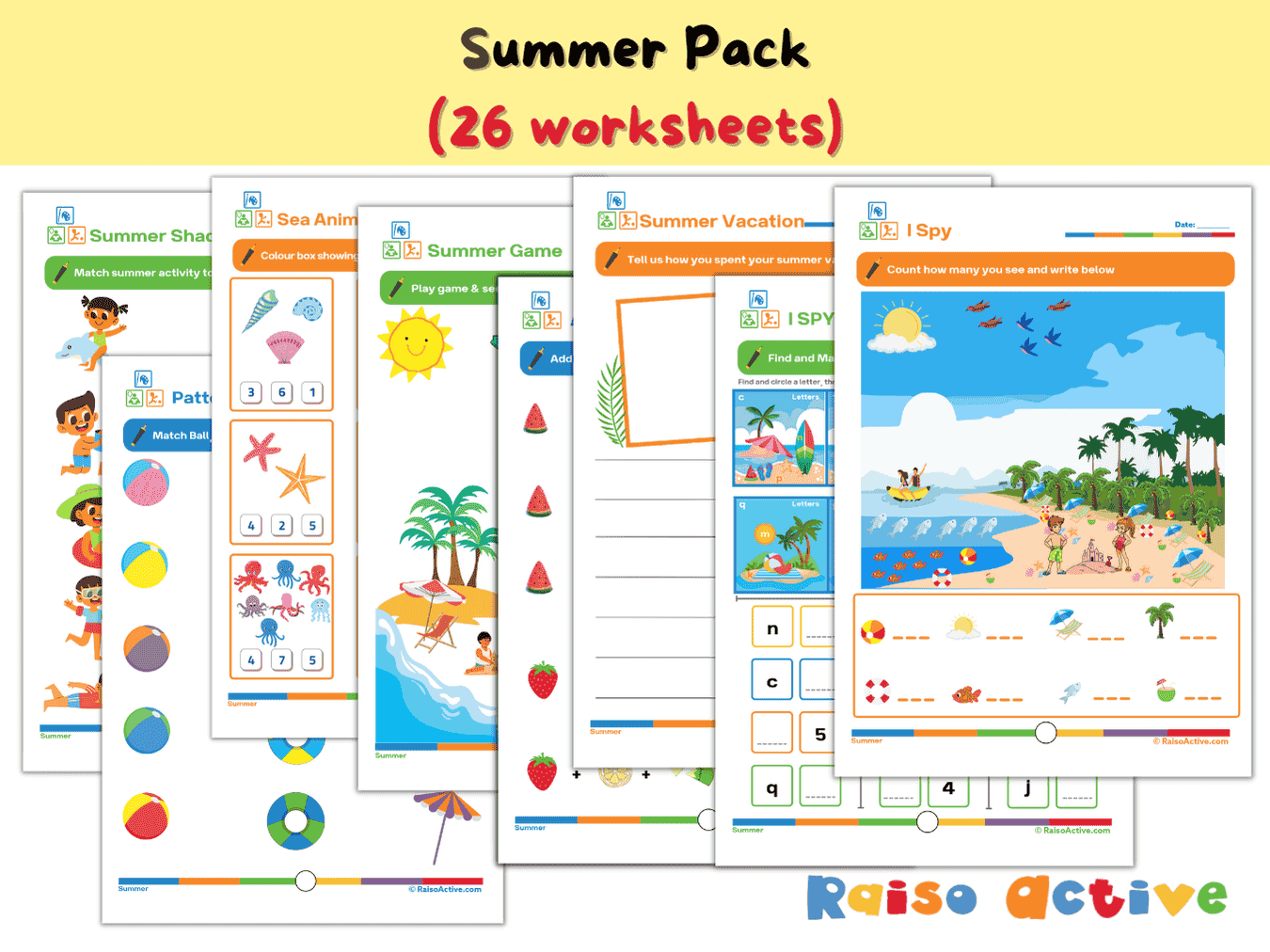

Summer Activity Pack: Math, Literacy, Puzzles & More for Preschool & Kindergarten
Ages 3-7 · Preschool–Grade 1Ages 3-7 · Nursery–Year 2Ages 3-7 · Nursery–Class 1Ages 3-7 · 26 pages
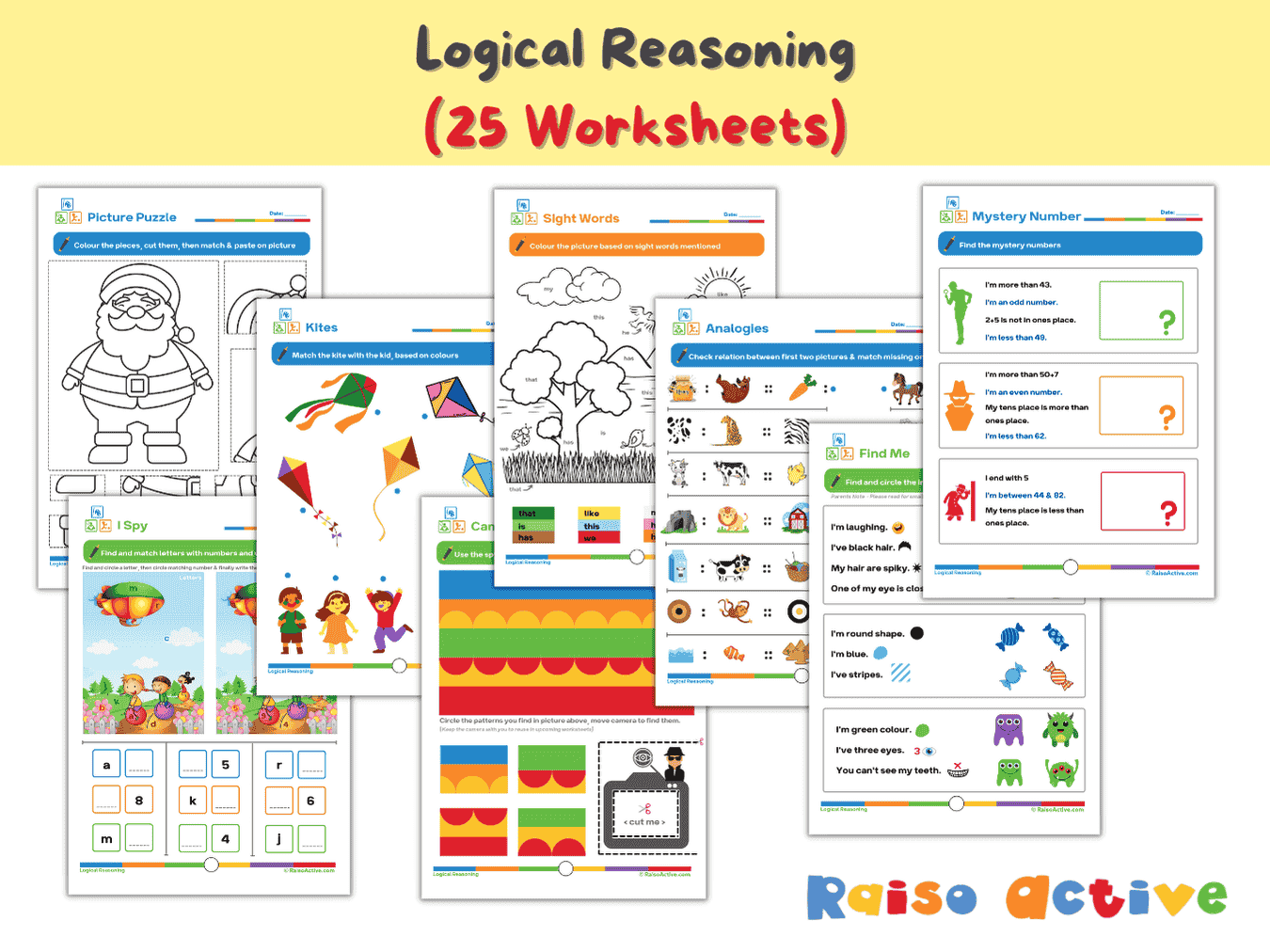

Logical Reasoning Activity Book for Preschool & Kindergarten | Patterns, Sudoku, Mazes & Coding
Ages 4-7 · Pre-K–Grade 1Ages 4-7 · Reception–Year 2Ages 4-7 · LKG–Class 1Ages 4-7 · 34 pages
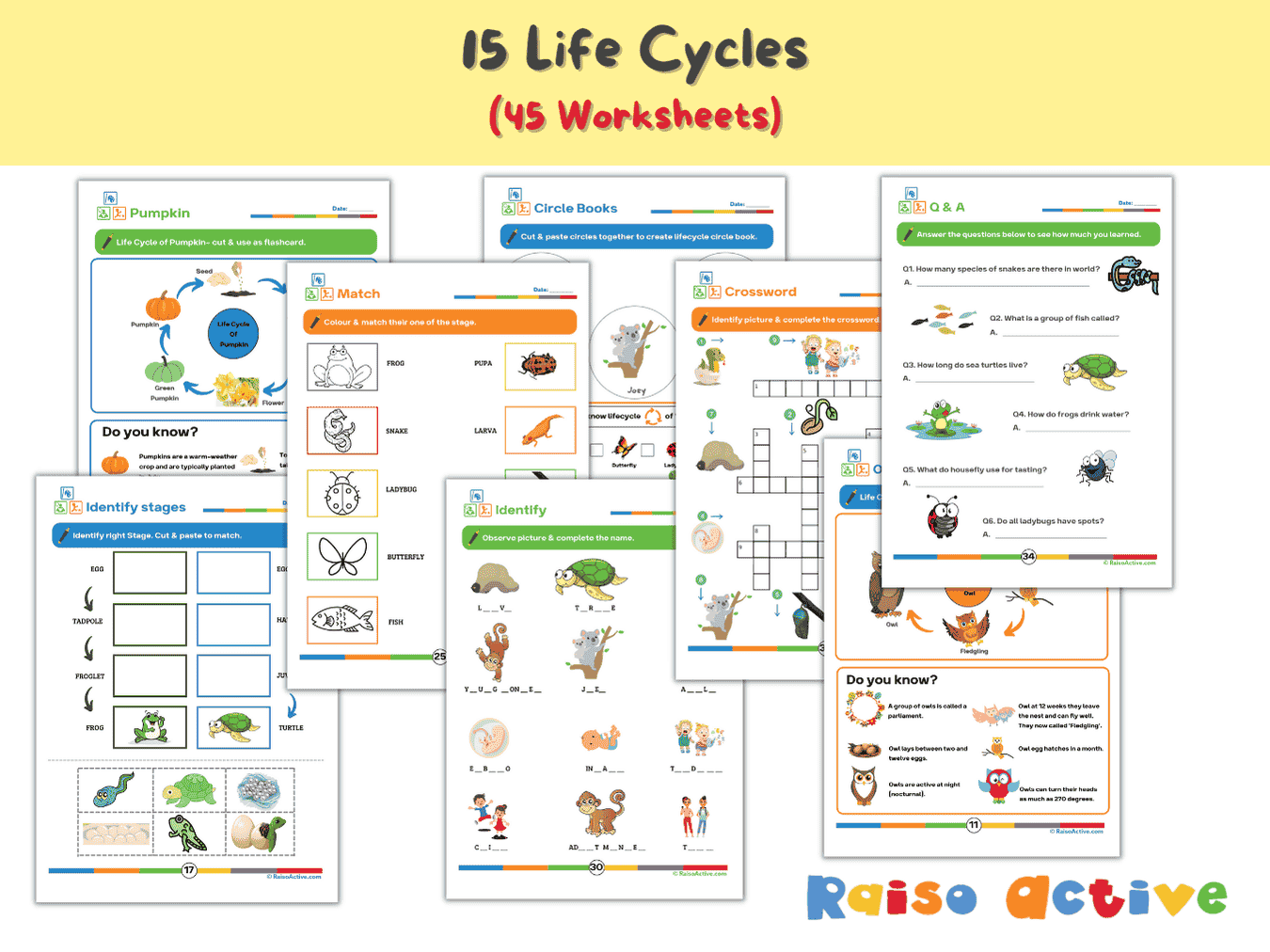

Lifecycles Activity Book & Flashcards for Preschool & Early Elementary
Ages 3-8 · Preschool–Grade 2Ages 3-8 · Nursery–Year 3Ages 3-8 · Nursery–Class 2Ages 3-8 · 46 pages
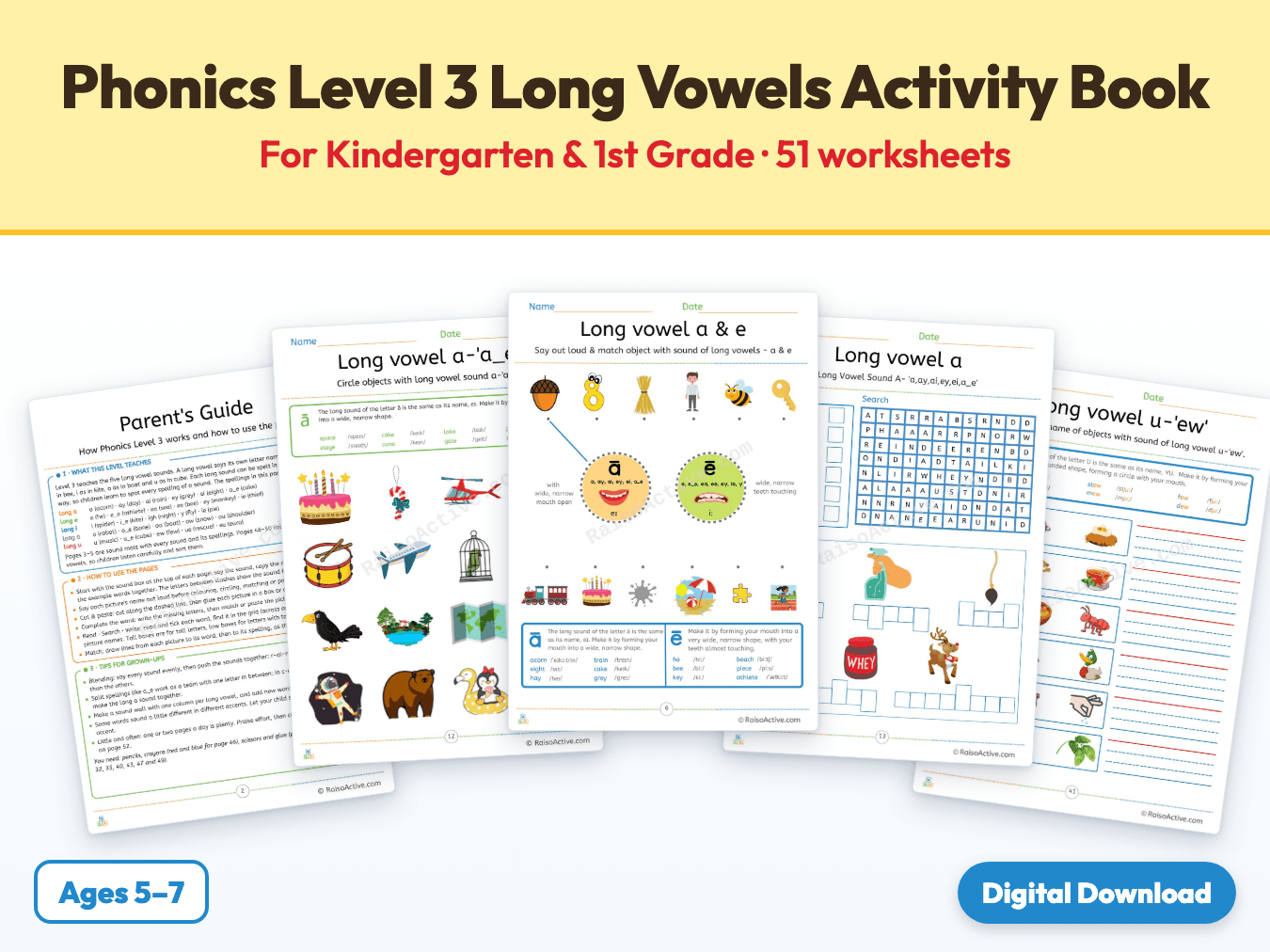

Phonics Level 3 Long Vowels Activity Book for Kindergarten & 1st Grade
Ages 5-7 · Kindergarten–Grade 1Ages 5-7 · Year 1–Year 2Ages 5-7 · UKG–Class 1Ages 5-7 · 52 pages
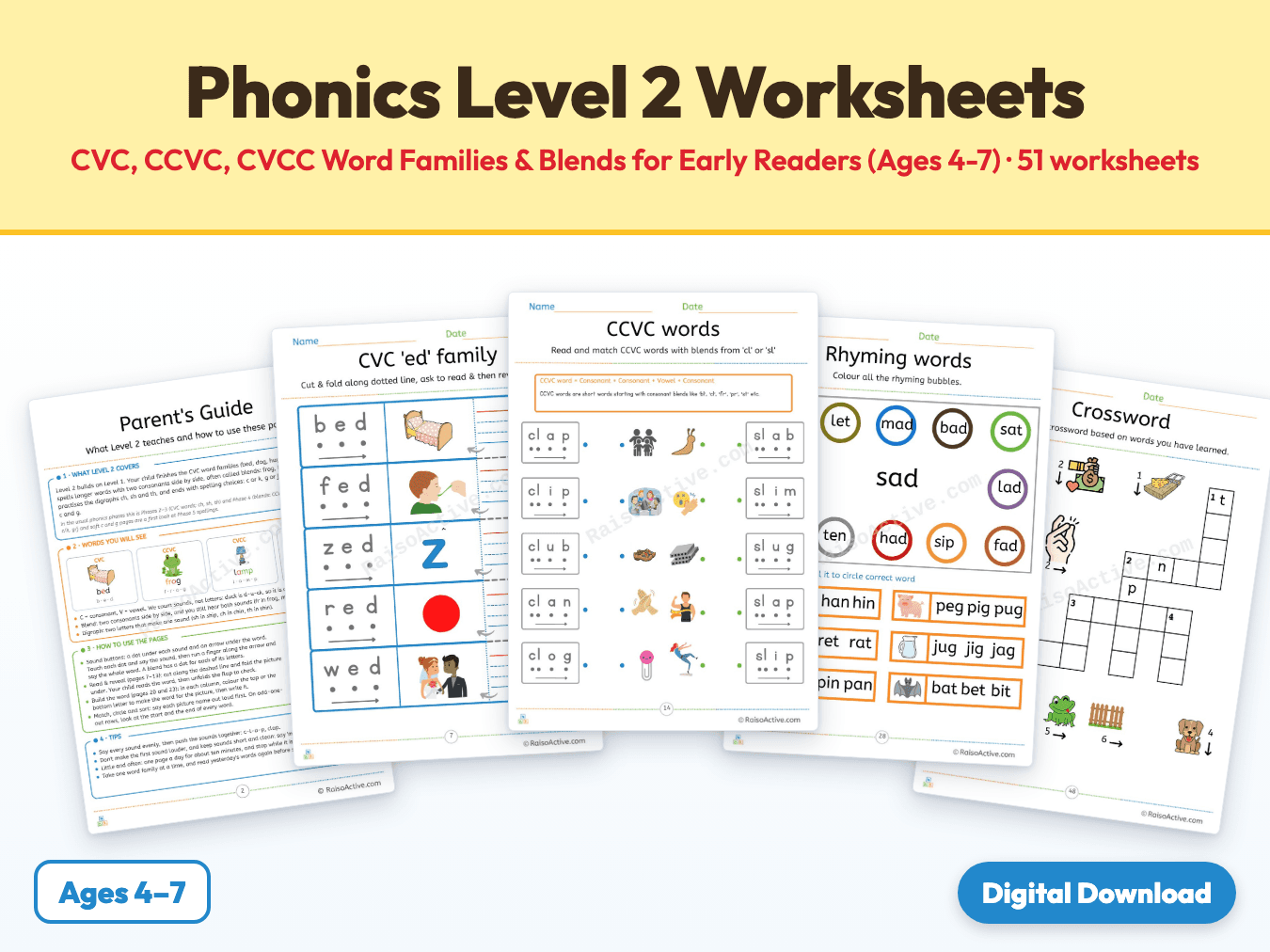
Phonics Level 2 Worksheets: CVC, CCVC, CVCC Word Families & Blends for Early Readers (Ages 4-7)
Ages 4-7 · Pre-K–Grade 1Ages 4-7 · Reception–Year 2Ages 4-7 · LKG–Class 1Ages 4-7 · 52 pages
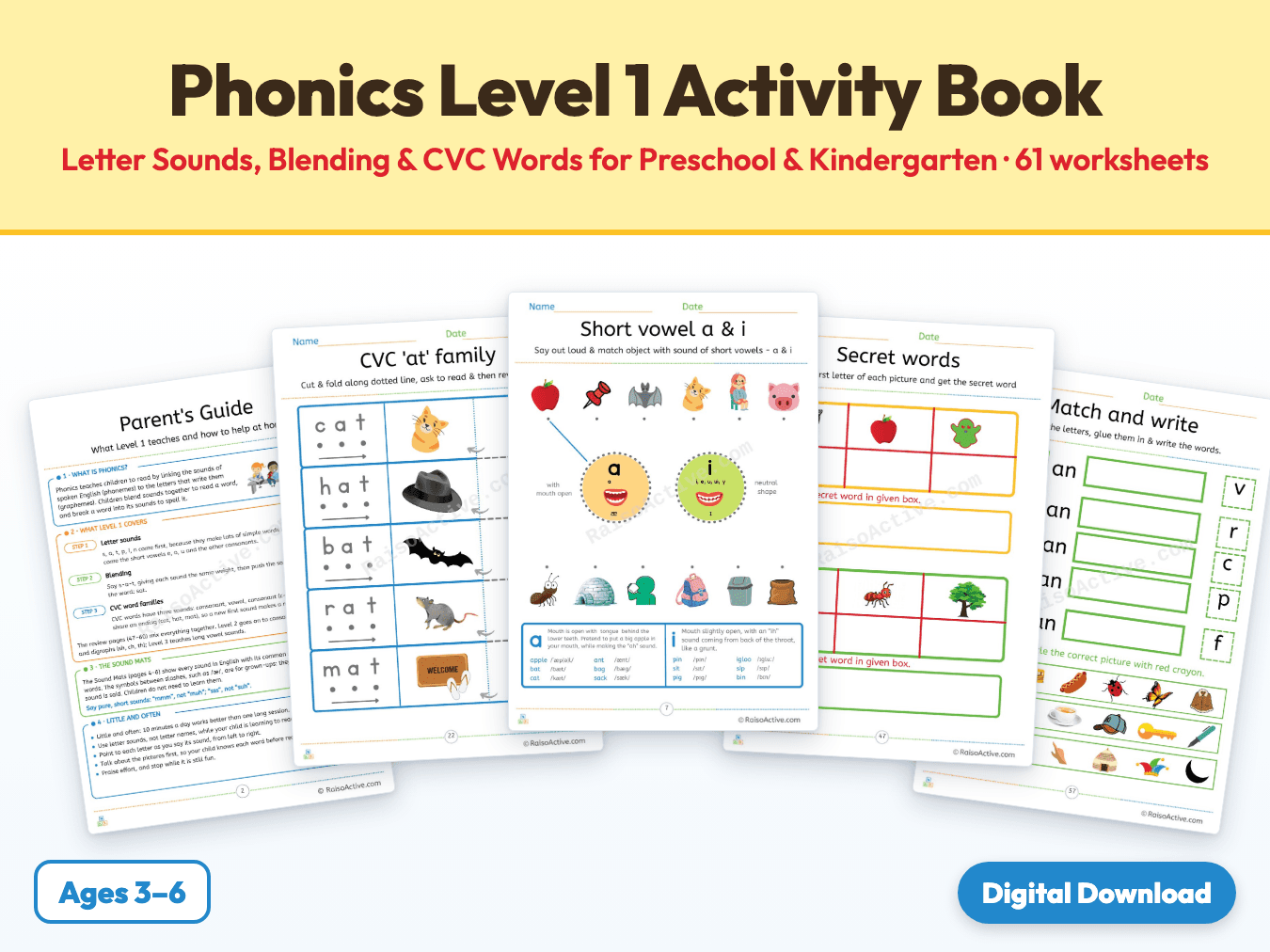
Phonics Level 1 Activity Book: Letter Sounds, Blending & CVC Words for Preschool & Kindergarten
Ages 3-6 · Preschool–KindergartenAges 3-6 · Nursery–Year 1Ages 3-6 · Nursery–UKGAges 3-6 · 62 pages
Guides for parents and teachers
See all guides
Sight Words by Age: The First 50 Words and How to Teach Them Without Flashcard Fatigue
Which sight words to teach first and why, the heart-word method, a read-trace-write-find routine, games, and a by-age table of typical sight-word progress.
How to Teach CVC Blending: A Step-by-Step Method That Works in Two Weeks
A step-by-step method for teaching CVC blending, covering continuous sounds, word families, common errors, and a 14-day plan that most children finish reading CVC words.
Phase 2 Phonics at Home: Sound Order, Blending Games, Worksheets
Phase 2 phonics at home: the five sound sets in order, oral blending, tricky words, a two-week routine, common mistakes, and free worksheets.
UKG Syllabus Explained: English, Maths and EVS Month by Month
What UKG classes typically cover in English, maths and EVS, month by month, aligned to NEP 2020, with ways to support at home and signs your child is behind.

Bridging Two Worlds: A Complete Guide to Teaching Heritage Languages Alongside English
A practical guide to raising bilingual children who speak both their heritage language and English with confidence. Research-backed strategies, activities, and tips for Indian families.

Empowering Multilingual Learners: Essential Resources and Strategies for Bilingual and Multilingual Children
Discover research-backed strategies, activities, and free printable resources to support bilingual and multilingual children ages 1-8. Practical tips for Indian families raising confident multilingual learners.