Free printable worksheets · United States
Preschool Sorting Worksheets (Ages 3–4)
Preschool sorting worksheets are practice sheets for children aged 3–4 in Preschool in the US. Sorting is grouping a set of objects or pictures by a shared attribute, such as color, size, shape or type. The sheets on this page cover grouping objects by one attribute, classifying by size, color or type, recognizing what does not belong and comparing two groups after sorting.
Preschool builds readiness rather than academics: pre-writing strokes, uppercase letter recognition, counting objects to ten, naming shapes and colors, and cutting along a line, all introduced through short table activities inside a mostly play-based day. Grip is still forming, so most activities favor a thick crayon over a standard pencil. Three-year-olds can hold a rule in mind that is not the most obvious one. Shape sorting arrives, which means ignoring color to see a circle or triangle, and three or four groups become manageable. Simple category sorts with a strong visual cue work well: hot and cold, day and night, things that belong in a kitchen. Cut-and-paste under headings, circling, or coloring by group all suit this age. Two-attribute sorts do not.
696+ worksheets · free PDF download · print on A4 or Letter
Preschool Sorting Worksheets to print
Browse all worksheets for ages 3–4
Clothing Pattern Match Worksheet for Preschoolers
This worksheet has children ages 3-5 study repeating patterns on clothing items — stripes, polka dots, or checks — and match each item to its identical twin, building visual discrimination and early pattern-sequencing skills. Distinguishing between similar-looking patterns also sharpens attention to detail, a skill that later supports letter and word recognition.

Animal Homes: Cut and Paste Sorting Worksheet for Preschoolers
Matching each animal to its home using numbered cut-and-paste pieces gives children ages 3-5 practice with number-based sorting while also building early knowledge of animal habitats, like a bird's nest or a bee's hive. Using numbers as the matching key, rather than just visual similarity, adds a layer of number recognition and one-to-one matching to the classification task. Understanding that different animals live in different kinds of homes is an early building block of basic life science and habitat concepts.

Christmas Matching Worksheet for Preschoolers: Find the Identical Objects!
Comparing objects in a row to find the one that exactly matches the first picture builds visual discrimination in children ages 3-5, a skill that requires noticing small differences in shape, color, and detail. This kind of close looking is a direct precursor to letter recognition, since young readers must later tell apart similarly shaped letters like b and d using the same careful visual comparison. The Christmas theme keeps the repetitive matching task feeling festive rather than tedious.

Colorful Butterfly Cut and Paste Worksheet for Preschoolers
Cutting out heart shapes and arranging them into a butterfly gives children ages 3-5 focused practice with scissor control and precise gluing, since the final picture only comes together correctly if each heart is placed in the right spot. Following a visual example to build a specific, recognizable shape also strengthens spatial reasoning, requiring children to compare their work to a model rather than assembling pieces at random. This kind of guided craft bridges basic coloring and more advanced, independent art projects.

My School Cut and Paste Worksheet for Preschoolers
Cutting out school-related pictures and pasting them into the correct spaces on a school building teaches children ages 3-5 vocabulary for familiar school spaces, like a classroom or playground, while also strengthening spatial matching and fine motor cutting and pasting skills. This activity helps children who are new to school, or preparing to start, connect words to places they'll actually encounter.

V and W Consonant Sounds Worksheet for Preschoolers
This worksheet helps children ages 3-5 tell apart the 'v' and 'w' sounds, two consonants that can sound similar to a young ear, by matching pictures to the correct starting letter. Because 'v' and 'w' involve different mouth and teeth positions (top teeth touching bottom lip for 'v', rounded lips for 'w'), this practice trains children to listen closely rather than guess. Matching, rather than writing, keeps the focus on the auditory skill for children who are still developing letter-writing control.
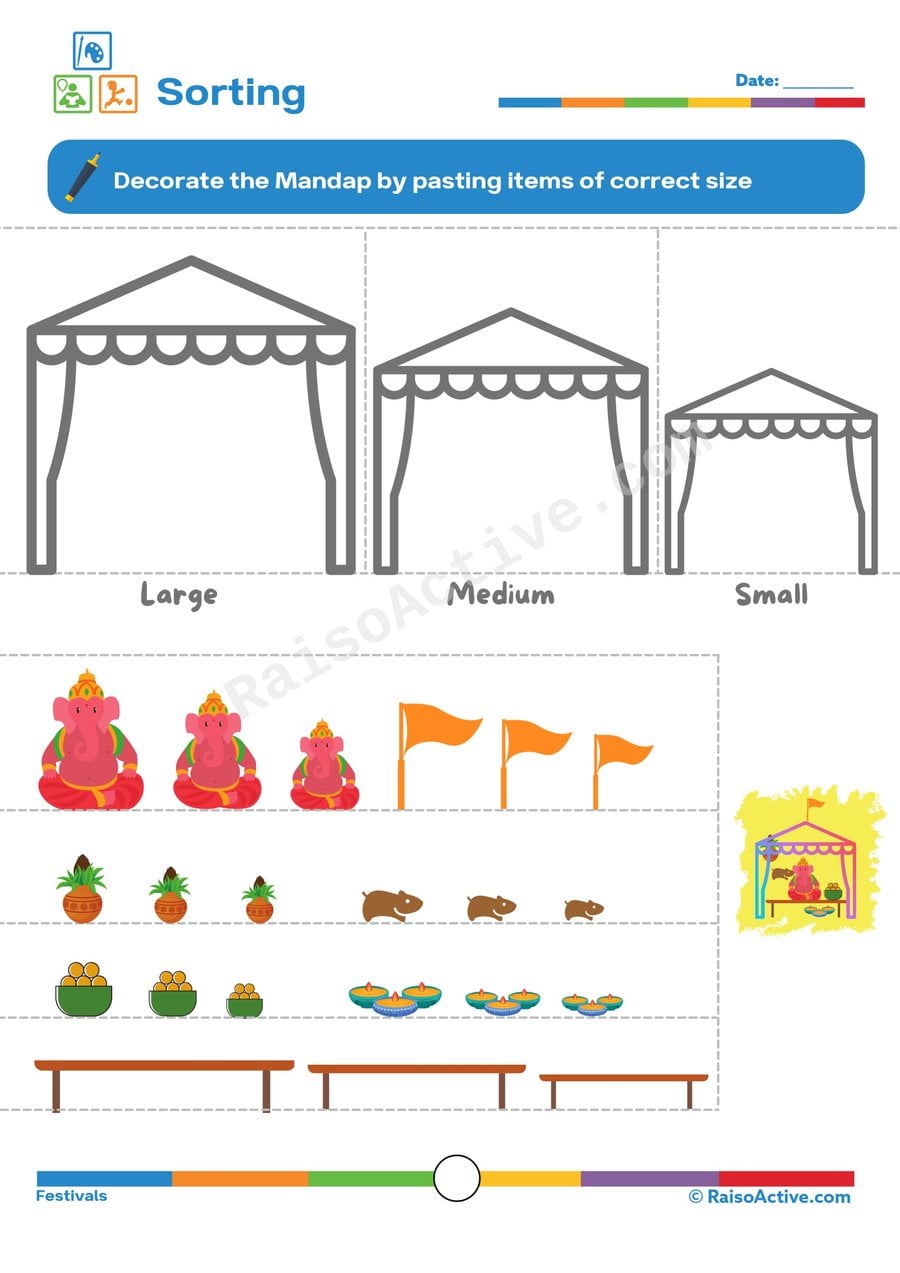
Sorting Fun: Decorate the Mandap by Size!
Children ages 3-5 practice sorting and size comparison by matching festival decorations of different sizes to the correctly sized mandap. Sorting into large, medium, and small categories builds early classification skills, an important precursor to more formal measurement and math concepts.
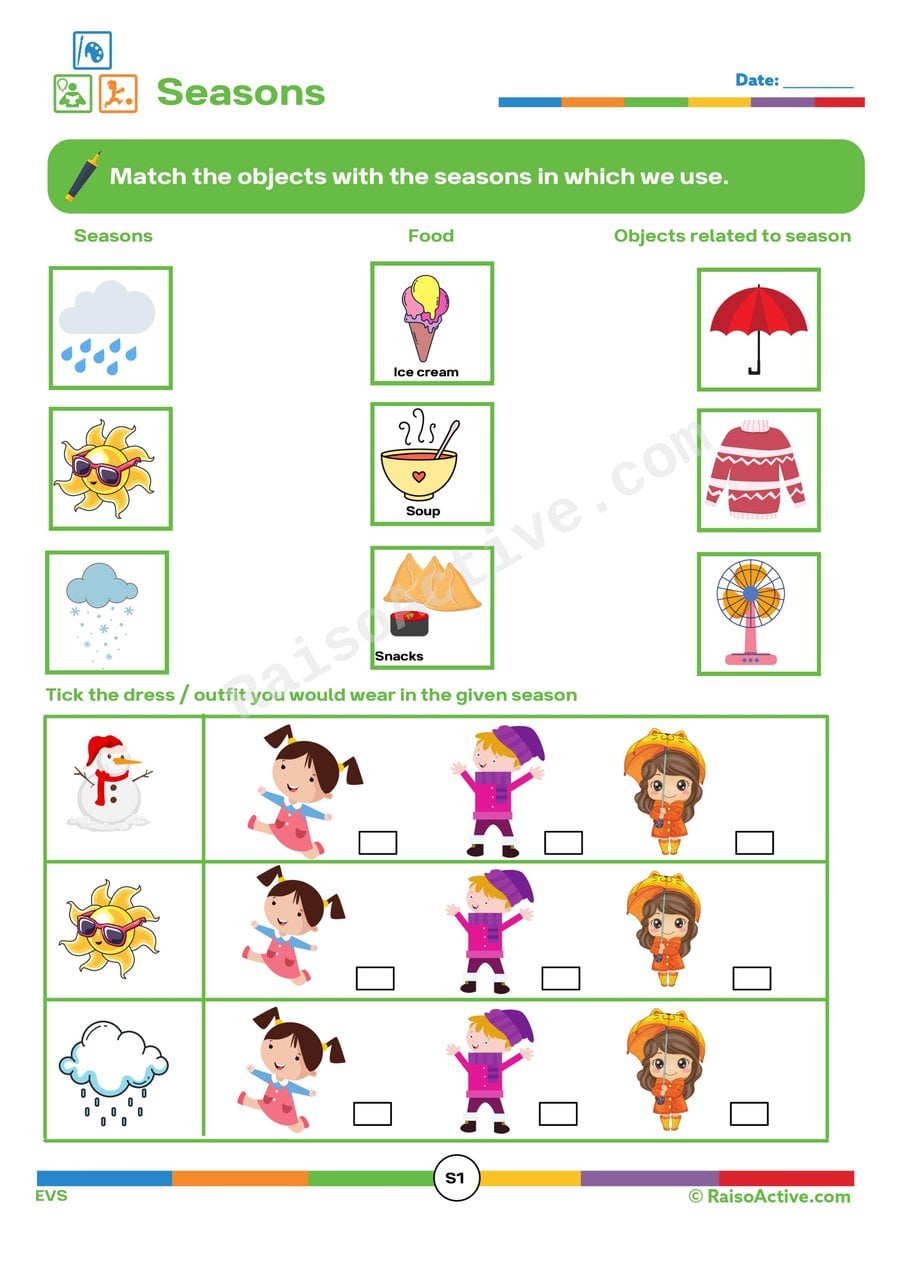
Seasons Matching Worksheet for Preschoolers
Understanding that different seasons bring different weather, clothing, and activities is an early science and life-skills concept for children ages 3-5, and this worksheet builds that understanding by having them match objects to the correct season and consider what they'd wear in each. Making these connections requires observation and categorization skills, since a child has to recall or reason through why a snowman belongs with winter or shorts belong with summer rather than simply memorizing a fixed answer. This kind of seasonal reasoning also lays groundwork for later science topics like weather patterns and the calendar year.
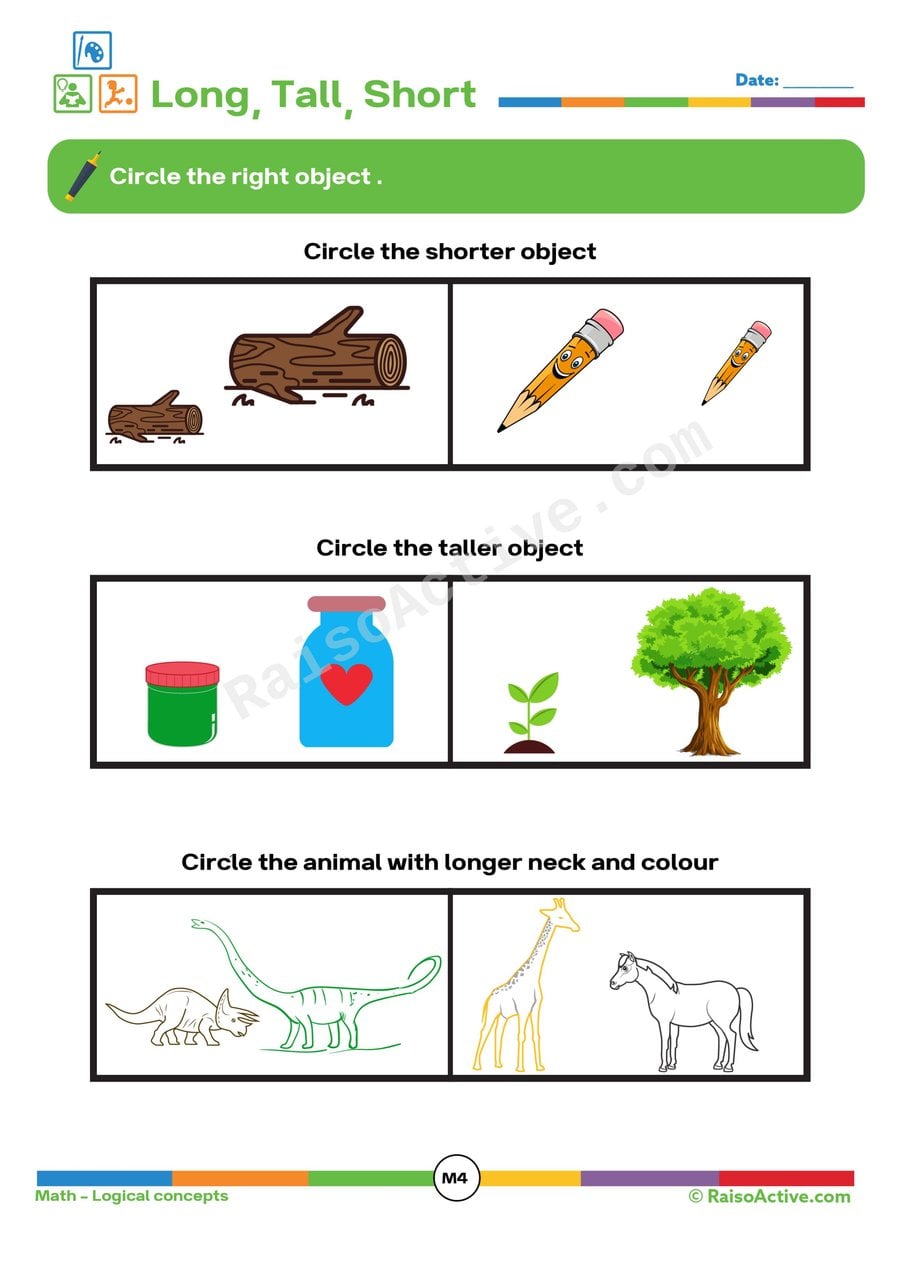
Long, Tall, Short Worksheet: Comparing Objects!
This worksheet guides your child in visually comparing objects based on their length and height, using terms like "long," "tall," and "short." By matching items with specific size descriptions, children aged 3-5 build essential observation skills and foundational pre-math understanding of attributes. This practice helps develop their vocabulary for describing the world around them and strengthens critical thinking as they distinguish subtle differences.

Guess the Word: Cut and Paste Worksheet for Early Learners
This cut-and-paste activity asks children ages 3-5 to look at picture clues, say the words aloud, and paste the correct picture to complete a combined word, giving them early practice in visual word-building and vocabulary expansion. Working with picture combinations helps children understand that some words are made by joining two smaller ideas together, a concept that supports later compound word recognition in reading. Saying each word out loud before pasting also builds the habit of connecting spoken language to printed or pictured words.

Card Making Worksheet: Create a Heartfelt Valentine's Day Card!
Cutting along the card's outer lines strengthens scissor control and hand strength, while folding the card in half builds the bilateral coordination of holding with one hand and creasing with the other. Composing a short message inside also introduces children ages 3-5 to early written expression tied to a real feeling.

Thick and Thin Sorting Worksheet for Preschoolers
This sorting worksheet asks children ages 3-5 to classify pictured objects as either thick or thin, building an early comparative vocabulary skill that goes beyond simple size words like big and small into more specific, descriptive language. Learning to compare and sort by a specific physical property is an important step toward the broader skill of classification used throughout early math and science.

Counting Fun: Match the Numbers Worksheet for Preschoolers!
This worksheet layers three related counting skills, counting a group of objects, matching that group to its printed numeral, and matching the numeral to a set of fingers, so children see the same quantity represented three different ways. Seeing one number expressed as objects, digits, and fingers helps cement true number sense rather than just memorized counting words.

Finger Puppet Fun: Make and Play with Mouse and Elephant!
Cutting out the mouse and elephant shapes and then folding the tabs to form each puppet adds a sequencing step — cut, then fold, then assemble — that goes a level beyond simple cutting and paste worksheets, teaching children to follow a short chain of instructions in order. The size contrast between a tiny mouse and a huge elephant also gives a natural, playful way to talk about big and small.

Say My Sound: Beginning Letter Sounds Worksheet for Preschoolers
Saying a picture's name aloud and then circling the letter that matches its beginning sound builds phonemic awareness in children ages 3-5, teaching them to isolate the very first sound in a spoken word before connecting it to a printed letter. Because several letter options are given for each picture, this worksheet requires children to actively compare sounds rather than simply recognize a single correct letter by memory. This kind of applied letter-sound practice is one of the strongest early predictors of later reading success.

Seasons Cut and Paste Worksheet for Preschoolers
Children ages 3-5 build early science vocabulary and classification skills as they identify the four seasons and match seasonal pictures — like snowflakes, flowers, or sunhats — to the correct season circle. Understanding that weather and clothing change in predictable patterns throughout the year is a foundational science concept that also supports calendar and time awareness.

Days of the Week Cut and Paste Worksheet for Preschoolers
This worksheet teaches children ages 3-5 the order of the days of the week by having them cut out day names and paste them correctly under 'Yesterday', 'Today', and 'Tomorrow'. Understanding this relative time sequence is an important early step in developing time concepts, and the physical cut-and-paste format makes an abstract idea like 'yesterday' more concrete and hands-on.

Handprint Face Fun: A Creative Cut and Paste Worksheet for Kids!
Tracing or printing a handprint and then building a face on it with cut-out features combines fine motor practice, following multi-step instructions, and open-ended creativity in a single activity. For ages three to five, the sequencing required, print, then cut, then arrange, then paste, also strengthens working memory as children hold several steps in mind at once.
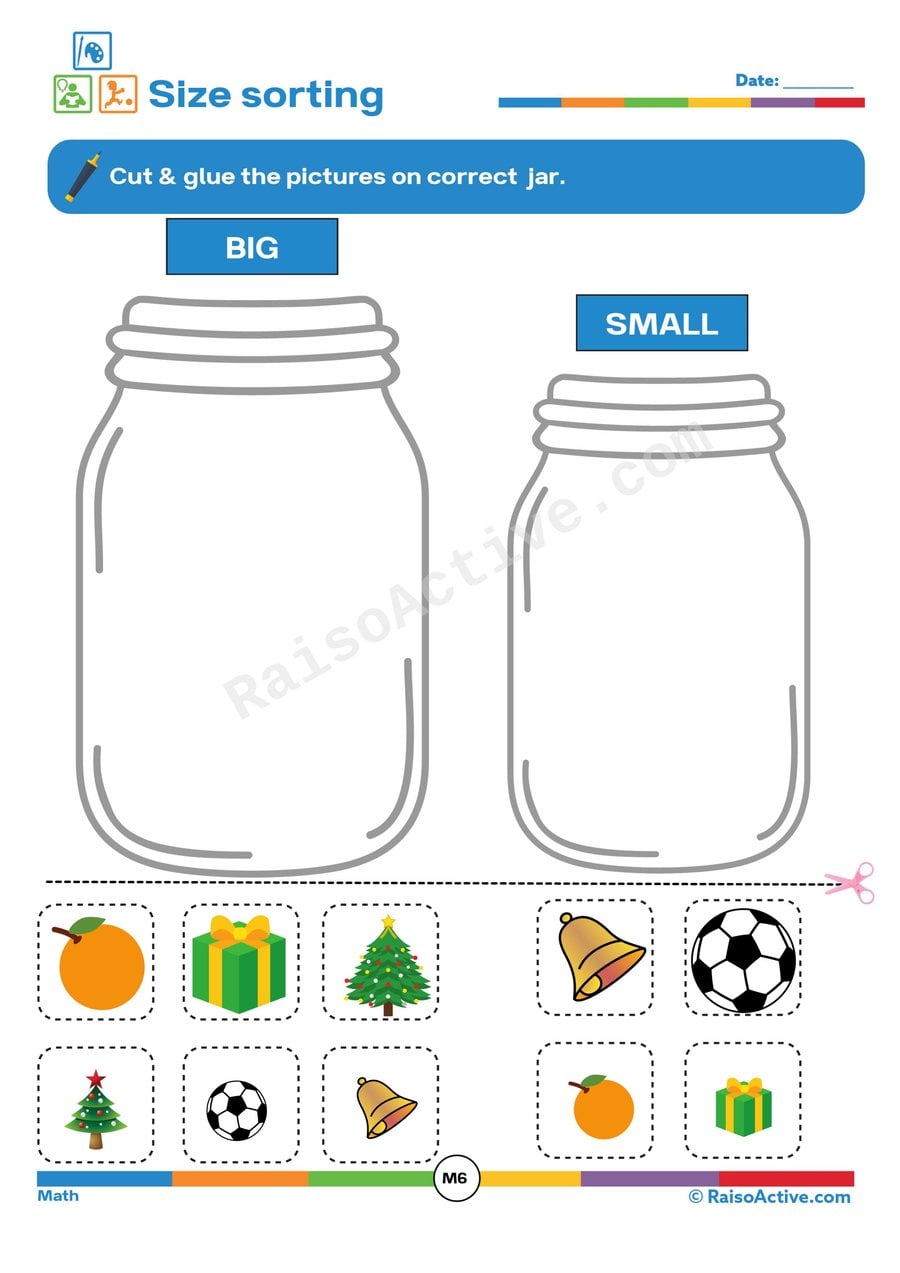
Size Sorting Worksheet: Big vs. Small!
Deciding whether a cut-out picture is big or small and gluing it into the correct jar builds comparative reasoning for children ages 3-5, an early step toward understanding relative size before moving into formal measurement.

Shape Count Worksheet: Count and Decorate the Crown!
Counting diamond shapes and matching each group to its correct number builds one-to-one correspondence and numeral recognition in children ages 3-5, while identifying the shape itself reinforces basic geometry vocabulary. Coloring, cutting, and gluing the diamonds onto a crown afterward adds a craft element that rewards accurate counting with a wearable, decorative result. Combining counting, shape recognition, and a craft project gives this worksheet several layers of skill practice within one engaging activity.

Living or Non-Living? A Fun Sorting Worksheet for Preschoolers
This sorting worksheet introduces children ages 3-5 to one of science's foundational classification concepts: distinguishing living things from non-living things. Deciding whether to tick or cross each picture pushes children to apply criteria — does it grow, move, breathe, or need food — rather than sort by appearance alone, an early form of scientific reasoning. This distinction also builds vocabulary they'll use throughout later nature and biology topics.

Shape Matching Worksheet: Circle, Square, Triangle, and Rectangle!
Children ages 3-5 practice recognizing and naming four basic shapes — circle, square, triangle, and rectangle — by matching everyday objects to their shape, then applying that recognition to a themed snowman picture. Counting the circles and triangles that make up the snowman afterward layers a numeracy task on top of the geometry, connecting shape recognition to early counting practice.

Cut and Paste a Fun Fish Worksheet for Preschoolers
Building a fish from separate cut-out shapes glued onto a large circle base gives children practice constructing a picture within a defined boundary, teaching them to fit and arrange pieces inside a fixed space rather than a blank page. This kind of bounded assembly at ages 3-5 builds spatial planning alongside the usual scissor and gluing practice.

Shape Sorting Fun: Cut and Paste Worksheet for Preschoolers
Matching pictures of everyday objects to the 2D shape they resemble builds shape recognition and categorization for children ages 3-5, helping them see geometric shapes as patterns that exist in the real world around them.
What Preschool sorting worksheets cover
Three-year-olds can hold a rule in mind that is not the most obvious one. Shape sorting arrives, which means ignoring color to see a circle or triangle, and three or four groups become manageable. Simple category sorts with a strong visual cue work well: hot and cold, day and night, things that belong in a kitchen. Cut-and-paste under headings, circling, or coloring by group all suit this age. Two-attribute sorts do not.
- Sort circles, squares and triangles into three groups
- Cut out pictures and paste them under "hot" or "cold"
- Circle the things that belong in a kitchen
- Sort a mixed set into four color groups
- Separate daytime pictures from nighttime pictures
How to use these worksheets at home or in class
Five minutes is a solid session for a three-year-old, ten minutes the practical ceiling. Offer a thick crayon or a short fat pencil, sit beside your child, and treat the sheet as one activity among blocks, stories and outdoor play rather than as schoolwork.
Start with the sheet that matches what your child can already do, then move one step up. Keep finished sheets in a folder: Preschool teachers often ask for evidence of practice, and children like seeing their own progress.
Is your child ready for Preschool sorting work?
A child ready for these activities holds a crayon and makes deliberate marks, sits at a table briefly, follows a single spoken instruction, and shows some interest in the letters of their own name or the numbers they hear counted aloud.
Frequently asked questions
Why does my three-year-old sort by color when I asked for shape?
Color is the most visible feature of anything on a page, and at three it captures attention before shape does. Sorting by shape requires ignoring color, which is a real step in thinking rather than a lapse in listening. Start with shapes printed in a single color, then mix colors once shape sorting is secure. Most children make the switch reliably between three and a half and four.
What should a Preschool child be able to do in sorting?
Three-year-olds can hold a rule in mind that is not the most obvious one. Shape sorting arrives, which means ignoring color to see a circle or triangle, and three or four groups become manageable. Simple category sorts with a strong visual cue work well: hot and cold, day and night, things that belong in a kitchen. Cut-and-paste under headings, circling, or coloring by group all suit this age. Two-attribute sorts do not. A child ready for these activities holds a crayon and makes deliberate marks, sits at a table briefly, follows a single spoken instruction, and shows some interest in the letters of their own name or the numbers they hear counted aloud.
Do these worksheets follow the Preschool curriculum?
The sheets cover grouping objects by one attribute, classifying by size, color or type, recognizing what does not belong and comparing two groups after sorting, which sit inside the Head Start Early Learning Outcomes Framework (ELOF) outcomes for Preschool. Nursery (UK), Nursery (India) use the same skills at this age, so the sheets also fit families following those programmes.
Are these Preschool sorting worksheets free?
Yes. Each worksheet downloads free as a watermarked PDF once you create an account, with a limit of five a day. An annual membership ($20) removes the watermark and the limit for the whole library of over 1,000 worksheets and every printable pack.

Written by
Hemsweta Jain · Teacher Cheena
MBA and Early Childhood Educator, teaching since 2014 · Founder of RaisoActive, Mumbai
Written and reviewed by Hemsweta Jain (Teacher Cheena), who designs every RaisoActive worksheet.
Last reviewed
Printable packs for ages 3–4
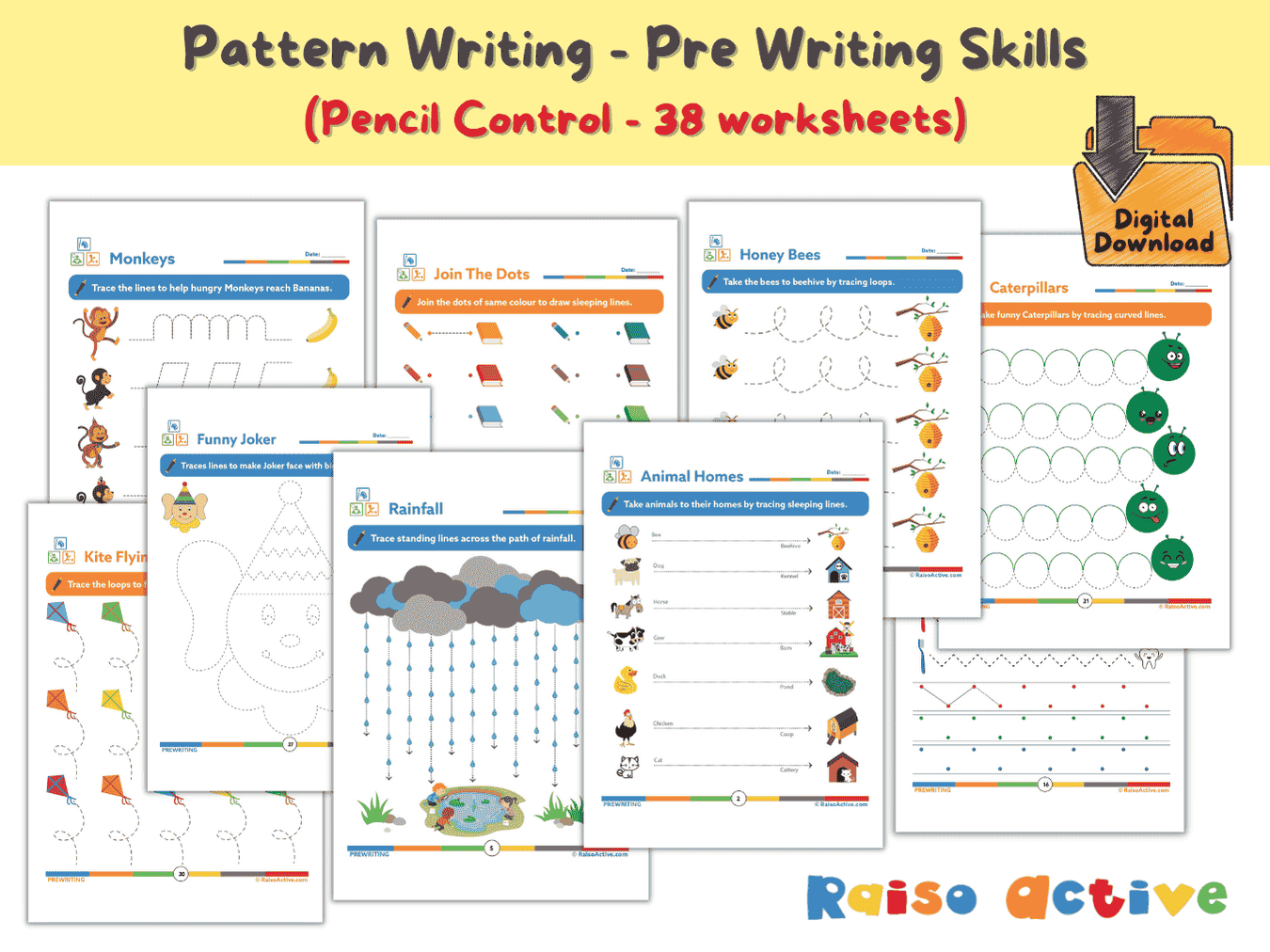
Pattern Writing Pre-writing Skills Activity Book for 3-4 Year Olds
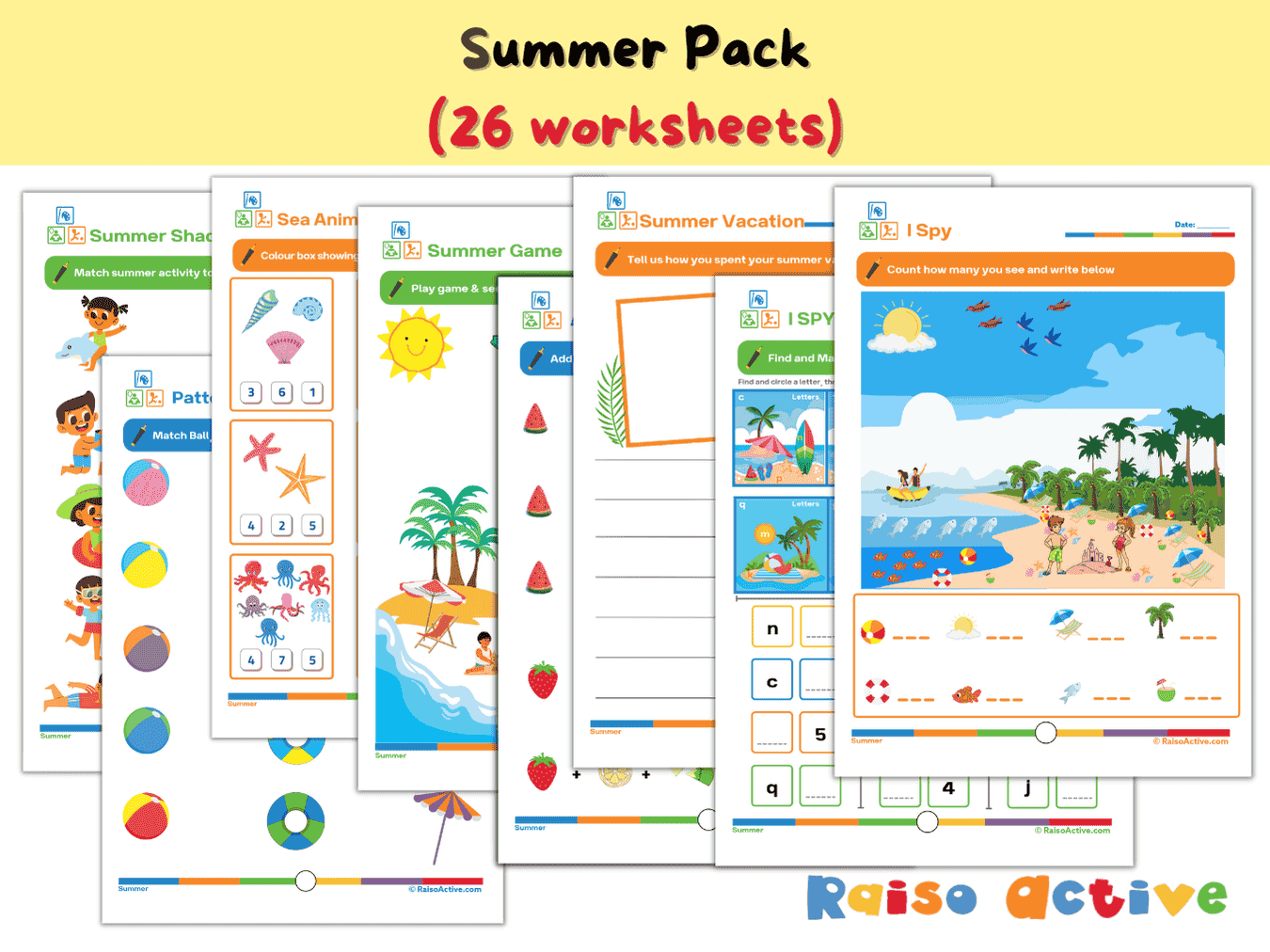
Summer Activity Pack: Math, Literacy, Puzzles & More for Preschool & Kindergarten
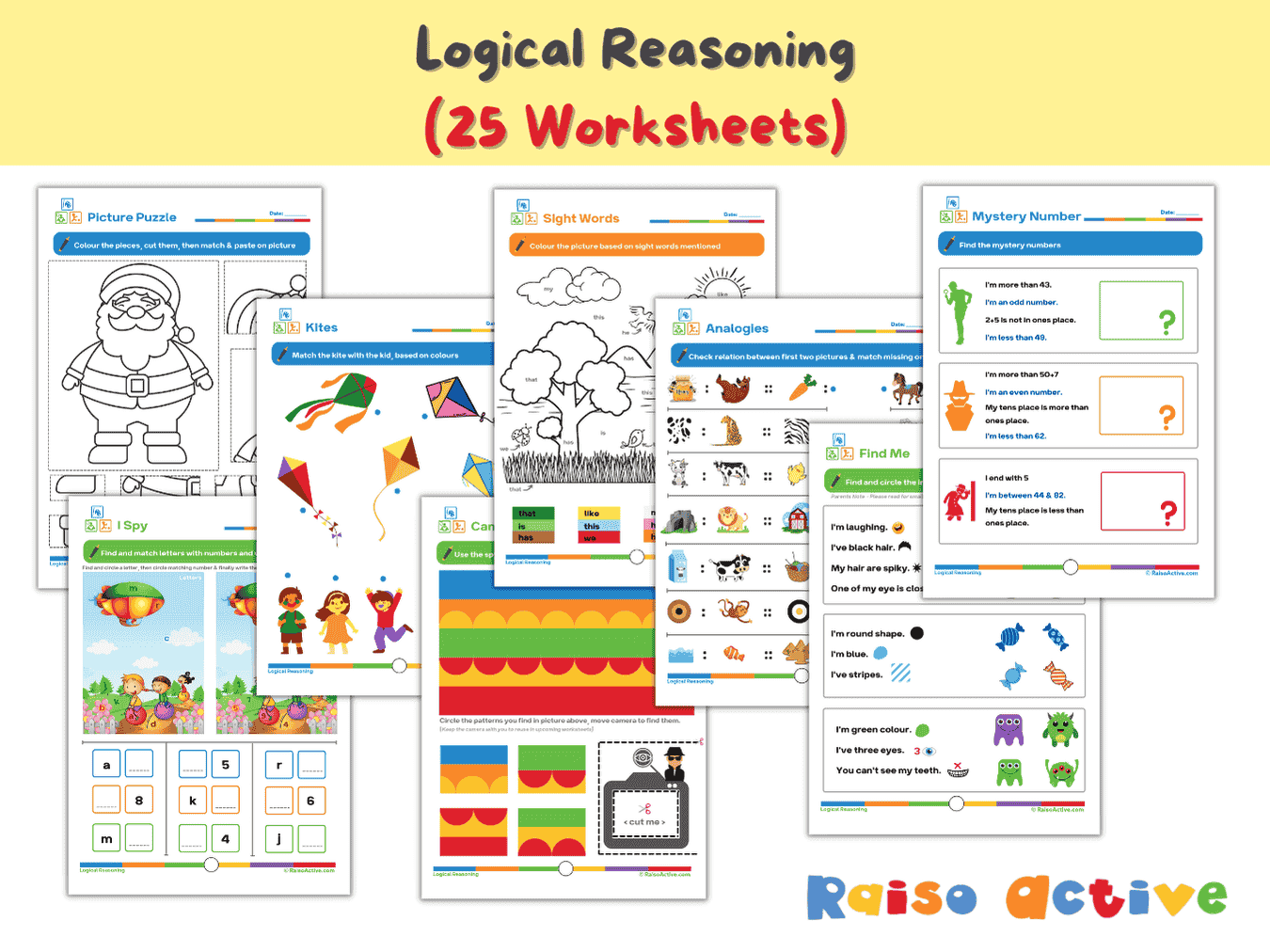
Logical Reasoning Activity Book for Preschool & Kindergarten | Patterns, Puzzles & Analogies
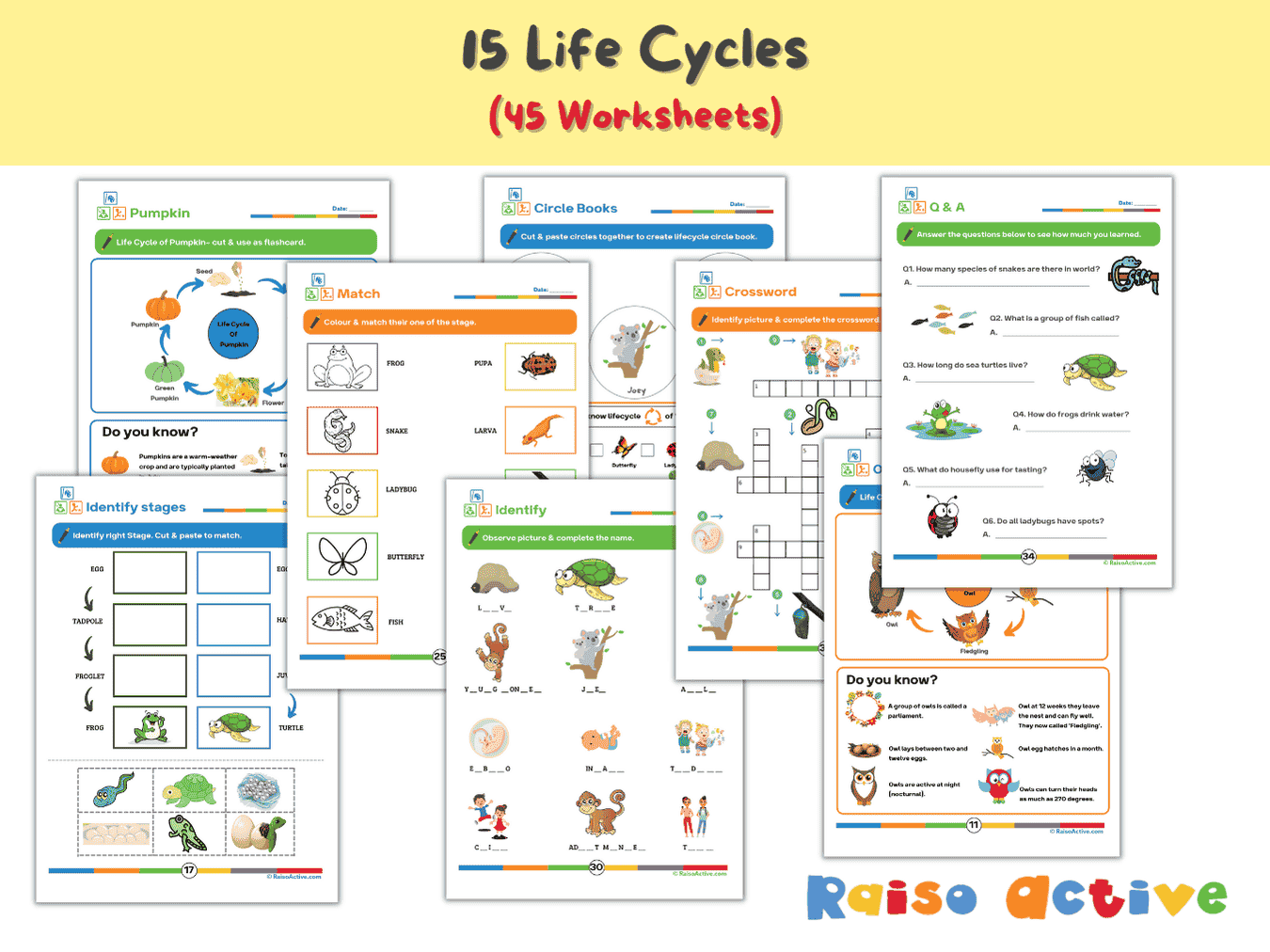
Lifecycles Activity Book & Flashcards for Preschool & Early Elementary
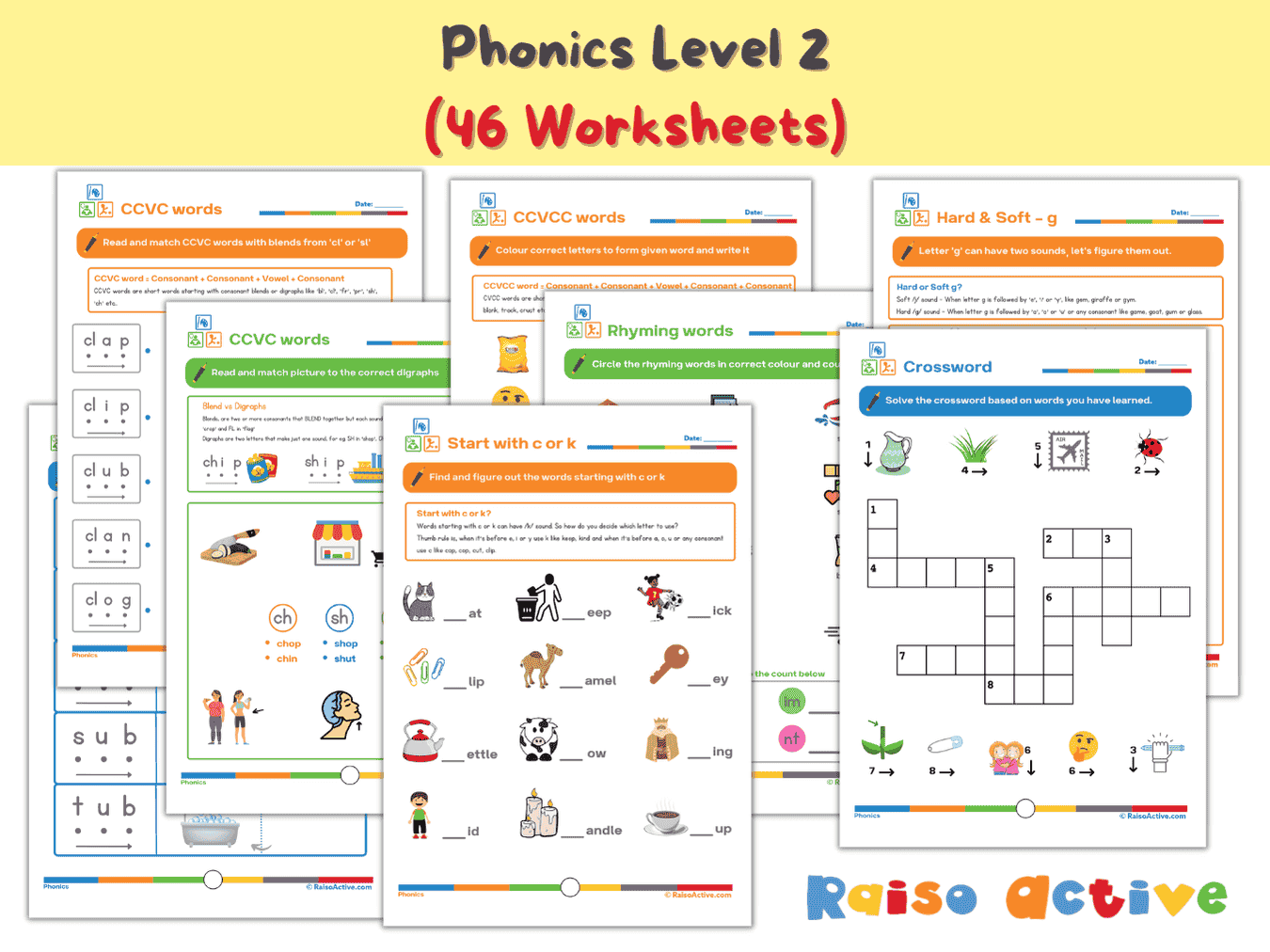
Phonics Level 2 Worksheets: CVC, CCVC, CVCC Word Families & Blends for Early Readers (Ages 4-7)
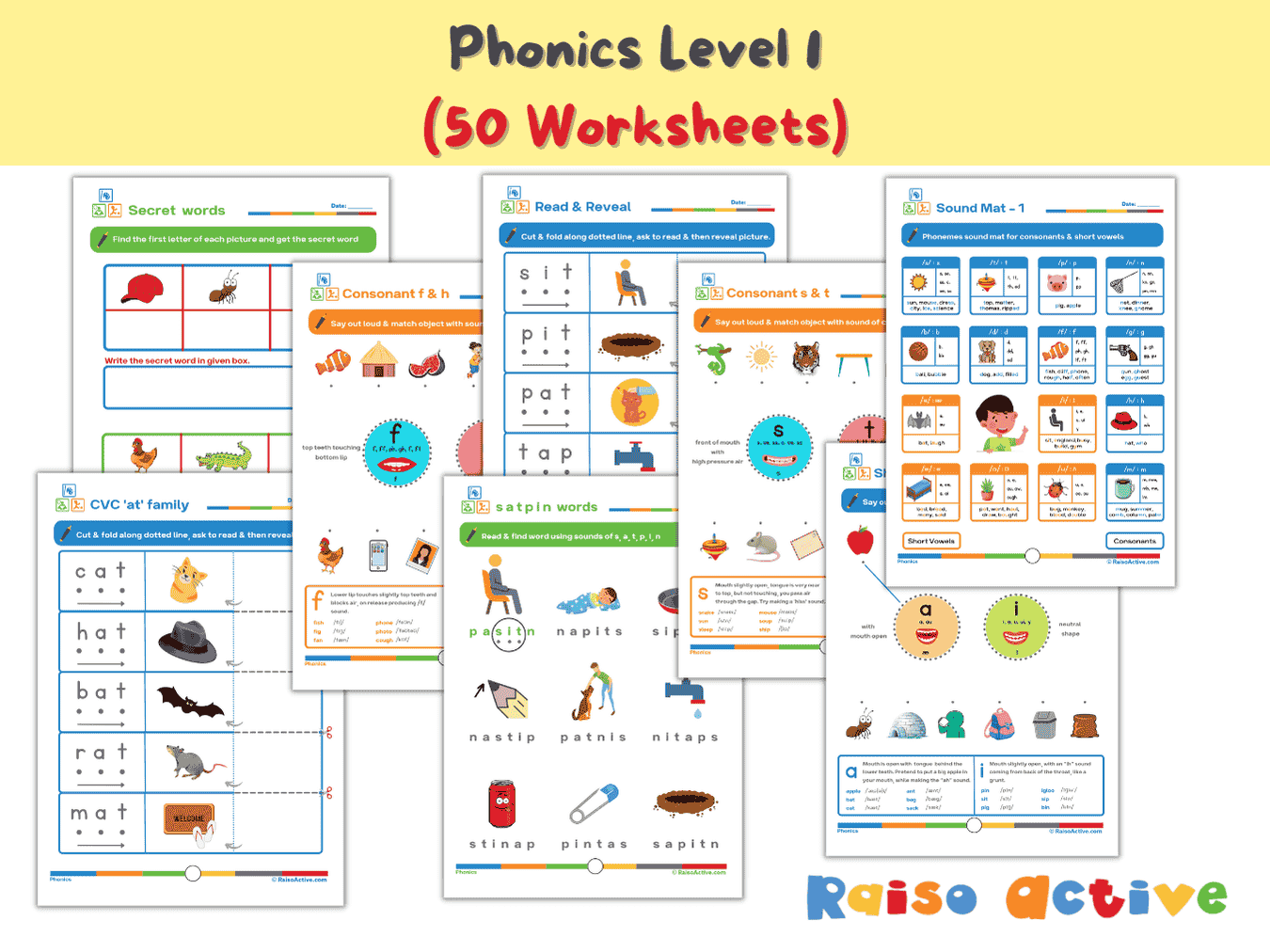
Phonics Level 1 Activity Book: Letter Sounds, Blending & CVC Words for Preschool & Kindergarten
Guides for parents and teachers
See all guides →Age-Appropriate Problem-Solving Activities: Building Critical Thinkers from the Ground Up
Discover fun, age-appropriate problem-solving activities for children ages 1-8. Build critical thinking, logic, and reasoning skills through play-based learning.
Critical Thinking Activities That Actually Work for Young Children: Building Tomorrow's Thinkers Today
Discover proven critical thinking activities for young children. Age-wise logic games, questioning techniques, and hands-on ideas to build thinking skills at home.
Coding Activities for Preschoolers: Building Tomorrow's Thinkers Today
Discover 15+ unplugged and screen-based coding activities for preschoolers that build sequencing, logic, and problem-solving skills through play. NEP 2020 aligned.
Montessori Activities for 3-4 Year Olds: A Complete Guide to Purposeful Learning
Discover practical Montessori activities for 3-4 year olds — practical life, sensorial, language, and maths — with Indian kitchen adaptations and budget shelf ideas.
Canonical: https://raisoactive.com/worksheets/preschool-sorting