Sort by Ending Blend Worksheet: st, mp, nd and nt
Children read twelve words and colour each by its ending blend: st (best, nest, fast), mp (lamp, jump, camp), nd (sand, hand, band) and nt (ant, tent, stunt), then write how many of each.
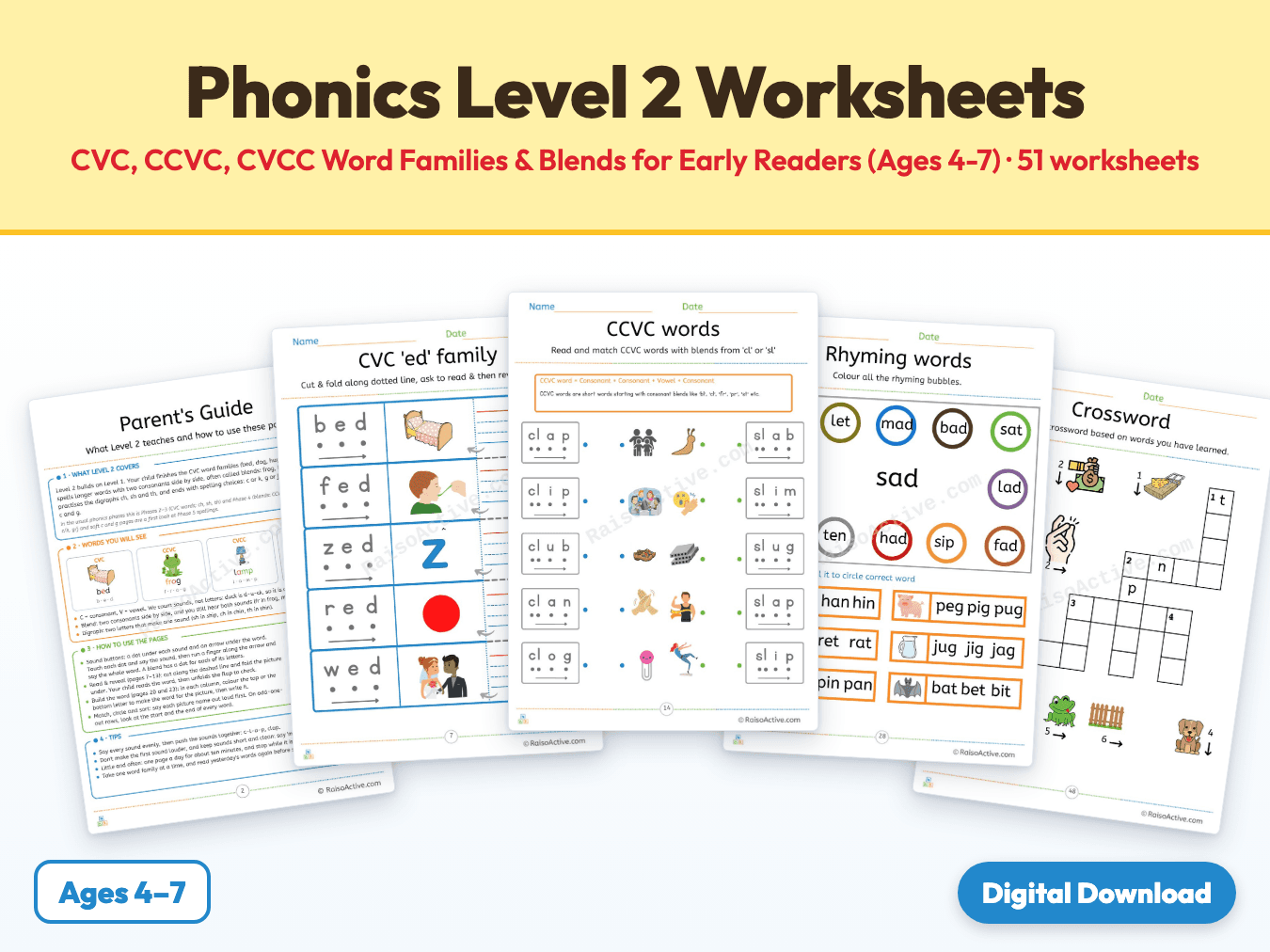
Part of the pack
Phonics Level 2 Worksheets: CVC, CCVC, CVCC Word Families & Blends for Early Readers (Ages 4-7)
This is page 42 of the pack. Ages 4-7 · Pre-K–Grade 1Ages 4-7 · Reception–Year 2Ages 4-7 · LKG–Class 1Ages 4-7
Made for your child
Adding within 10, made for your child
A maths pack with your child's name in it: pictures that explain, practice at three levels, puzzles and story sums about them. Print a new set whenever they finish.
Make a maths packFree preview · free for members
Curriculum
- Phonics - Blends > CVCC Words
How to use this worksheet
Your child reads each word under its picture, circles it in the colour of its ending, then counts and writes the totals (three of each).
Materials needed
- Crayons
- Pencil
Extension activities
- 1Find one more word for each ending
- 2Make a tent with a blanket and write 'tent'

Written by
Hemsweta Jain · Teacher Cheena
MBA and Early Childhood Educator, teaching since 2014 · Founder of RaisoActive, Mumbai
Every RaisoActive worksheet is designed and checked by the founder before publishing.
Published · Last reviewed
More from Phonics Level 2 Worksheets: CVC, CCVC, CVCC Word Families & Blends for Early Readers (Ages 4-7)

Phonics Level 2 Sound Mat 2: Consonants and Consonant Digraphs
Ages 4-7 · Pre-K–Grade 1Ages 4-7 · Reception–Year 2Ages 4-7 · LKG–Class 1Ages 4-7
Children meet more consonant sounds and the digraphs th, sh, ch, zh and ng, with pictures, spellings and example words.

Middle Sound Short Vowels Circle and Write Worksheet
Ages 4-7 · Pre-K–Grade 1Ages 4-7 · Reception–Year 2Ages 4-7 · LKG–Class 1Ages 4-7
Children circle the middle vowel in hat, bed, pin, log, cup and jug, then write the missing vowel in hen, web, man, sun, bat and box.
CVC 'ub' Word Family Read, Cut and Reveal Worksheet
Ages 4-7 · Pre-K–Grade 1Ages 4-7 · Reception–Year 2Ages 4-7 · LKG–Class 1Ages 4-7
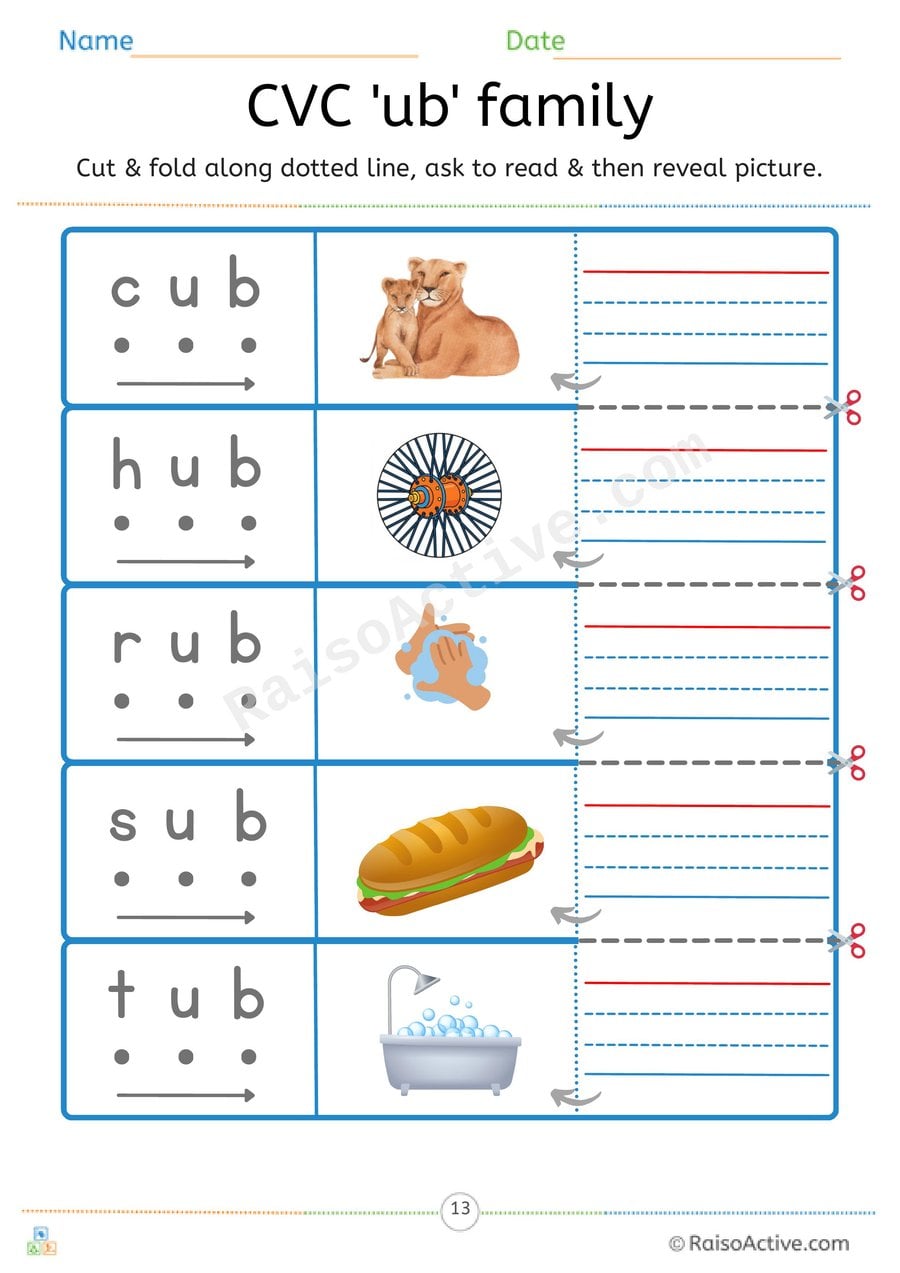
Children read five 'ub' words (cub, hub, rub, sub, tub) by blending three sounds, check each one against a hidden picture (a lion and cub, a wheel hub, hands rubbing, a sub roll and a bath tub) and write it, so they see that changing the first sound makes a new word.

Digraph and Blend Words Circle the Word and First Sound Worksheet
Ages 4-7 · Pre-K–Grade 1Ages 4-7 · Reception–Year 2Ages 4-7 · LKG–Class 1Ages 4-7
Children circle the word for each picture (ship, shut, chop, chin, thin, chat), then circle the blend or digraph each picture starts with: st (stem), gr (grab), br (bread), sh (shop), cr (crib) and sl (slug).

G or J Sound Worksheet: Spell the /j/ Sound
Ages 4-7 · Pre-K–Grade 1Ages 4-7 · Reception–Year 2Ages 4-7 · LKG–Class 1Ages 4-7
Children learn that the /j/ sound is often spelt g before e, i or y and j before a, o or u, and write g or j in jam, gem, gym, ginger, jungle, gel, jacket, giraffe, jump, angel, cage and job.
CVC 'ug' Word Family Read, Cut and Reveal Worksheet
Ages 4-7 · Pre-K–Grade 1Ages 4-7 · Reception–Year 2Ages 4-7 · LKG–Class 1Ages 4-7
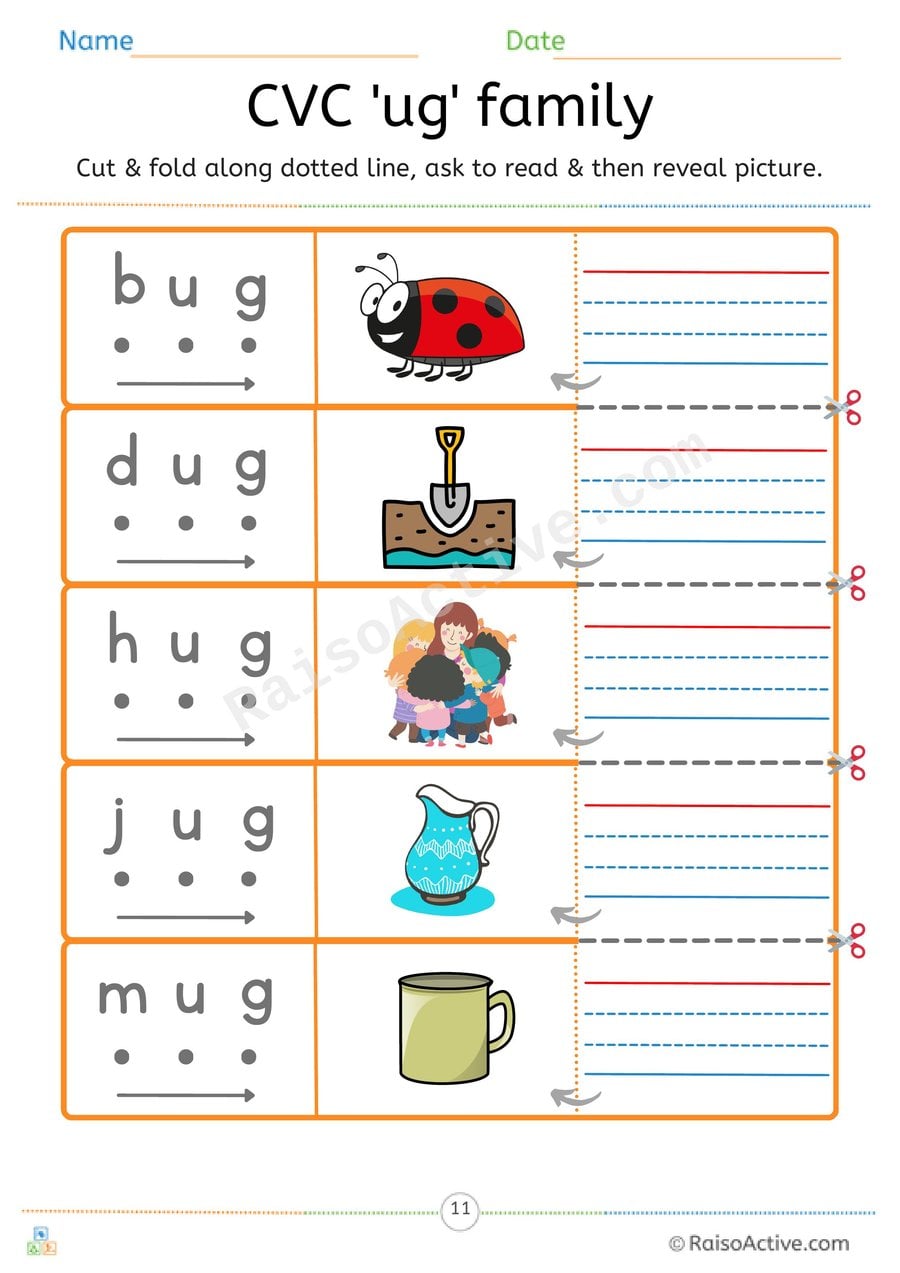
Children read five 'ug' words (bug, dug, hug, jug, mug) by blending three sounds, check each one against a hidden picture (a ladybird, a spade in soil, a family hug, a jug and a mug) and write it, so they see that changing the first sound makes a new word.
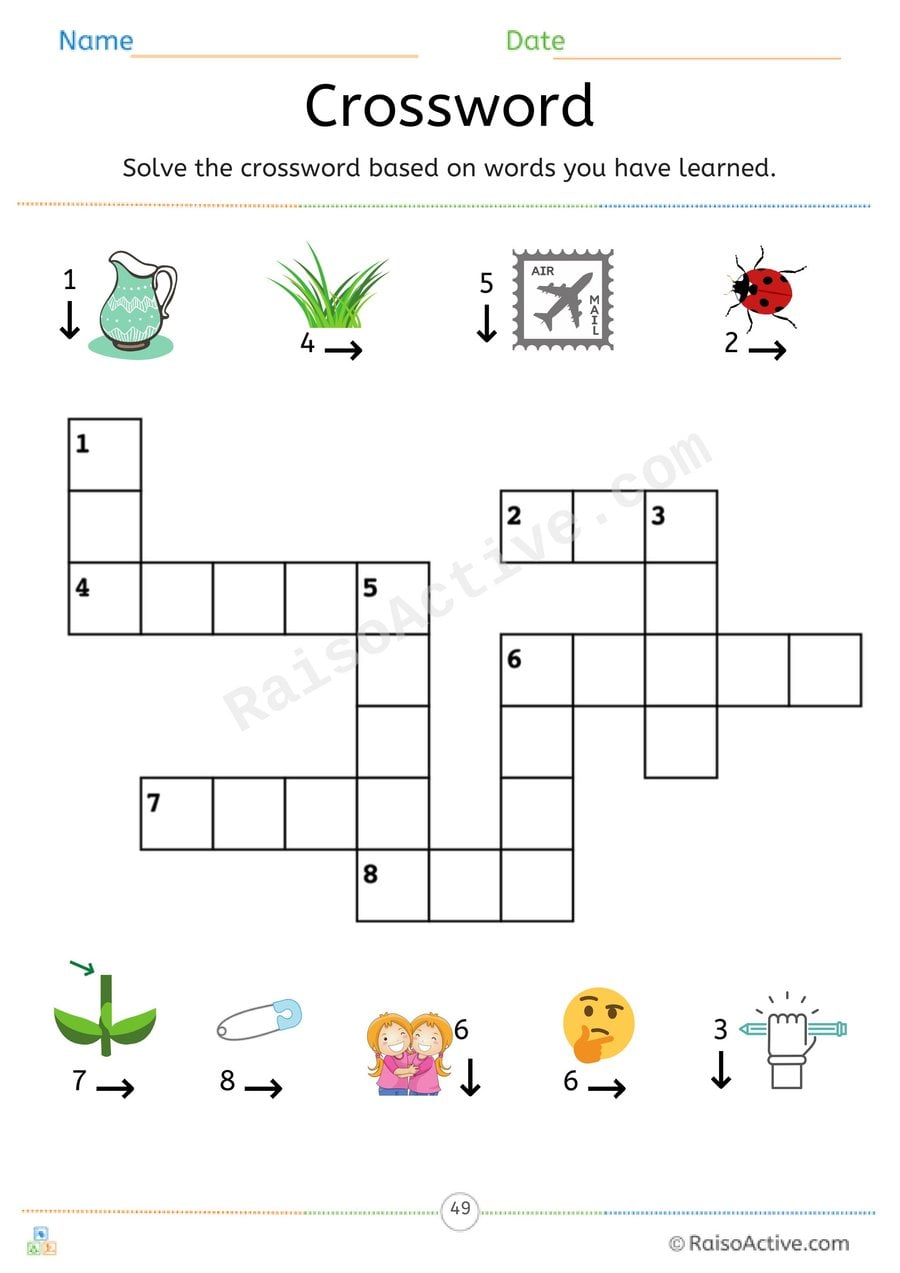
Phonics Level 2 Blends and Digraphs Crossword Puzzle 2
Ages 4-7 · Pre-K–Grade 1Ages 4-7 · Reception–Year 2Ages 4-7 · LKG–Class 1Ages 4-7
Children solve a picture crossword with words from the level: across bug, grass, think, stem and pin; down jug, grip, stamp and twin.

CVC 'og' Word Family Read, Cut and Reveal Worksheet
Ages 4-7 · Pre-K–Grade 1Ages 4-7 · Reception–Year 2Ages 4-7 · LKG–Class 1Ages 4-7
Children read five 'og' words (dog, fog, hog, jog, log) by blending three sounds, check each one against a hidden picture (a dog, fog, a hog, two joggers and a log) and write it, so they see that changing the first sound makes a new word.
Related worksheets

Phonics Level 3 Long Vowels Answer Key for Grown-ups
Ages 5-7 · Kindergarten–Grade 1Ages 5-7 · Year 1–Year 2Ages 5-7 · UKG–Class 1Ages 5-7
Grown-ups get every answer for the long a, e, i, o and u pages and the long-or-short sorting pages, including word search positions by row and column.

Inside or Outside Sorting Worksheet for Preschoolers
Ages 3-5 · Preschool–Pre-KAges 3-5 · Nursery–ReceptionAges 3-5 · Nursery–LKGAges 3-5
This worksheet teaches children ages 3-5 to apply the spatial concepts of 'inside' and 'outside' by sorting pictures of objects into the location where they typically belong. Deciding where an object usually belongs requires children to draw on their own real-world experience and apply it to a new sorting task, strengthening both spatial vocabulary and everyday reasoning. This kind of applied sorting is more demanding than simply naming inside or outside items when shown a single picture.
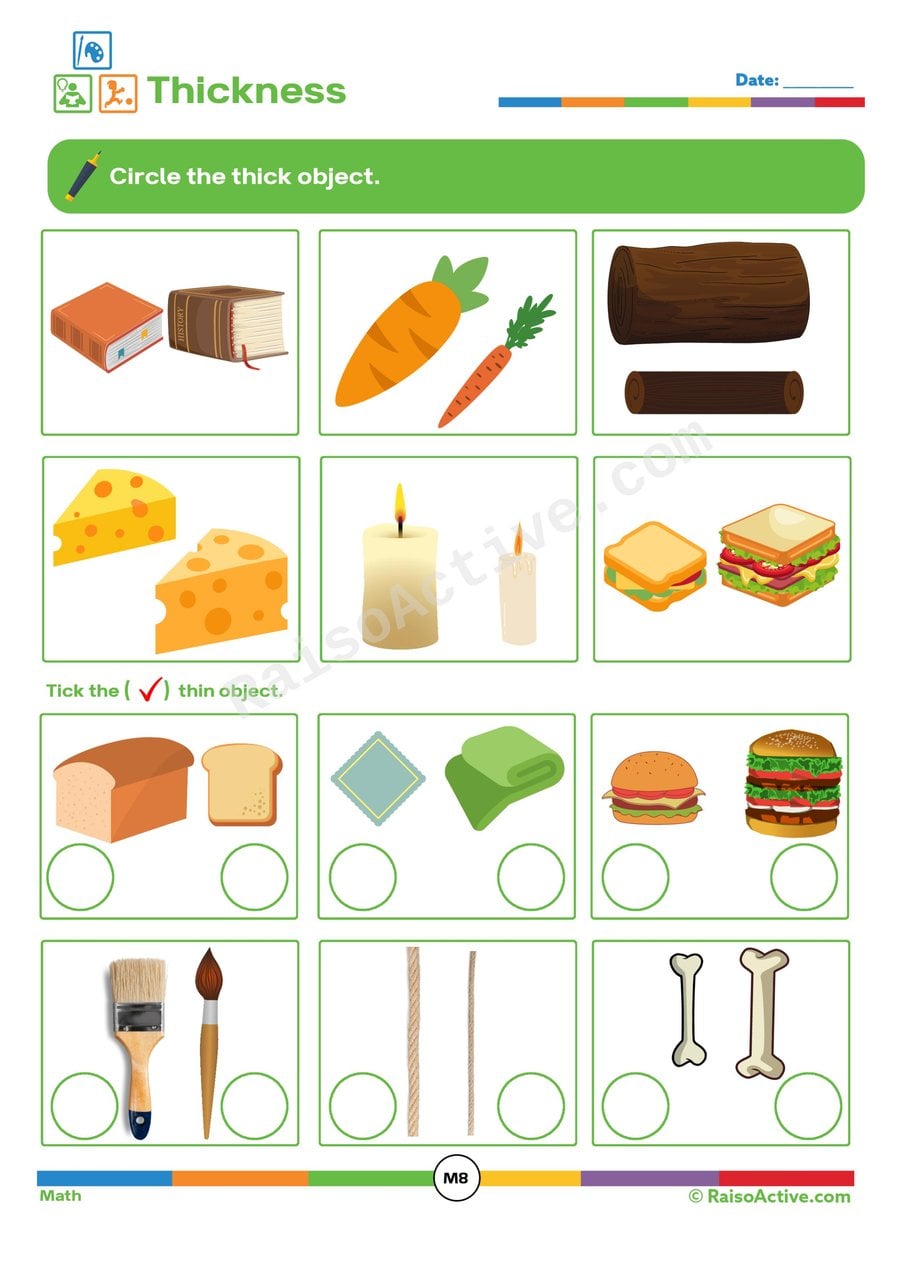
Thickness Worksheet: Circle the Thick Objects!
Ages 3-5 · Preschool–Pre-KAges 3-5 · Nursery–ReceptionAges 3-5 · Nursery–LKGAges 3-5
This sorting worksheet introduces children ages 3-5 to the comparative concept of thickness, asking them to distinguish thick objects from thin ones within paired pictures. Comparing physical properties like thickness, rather than just size or color, sharpens observational vocabulary and prepares children for later measurement concepts involving width and volume. Requiring two different responses — circling the thick object and ticking the thin one — also reinforces that opposite concepts can appear side by side in the very same picture.
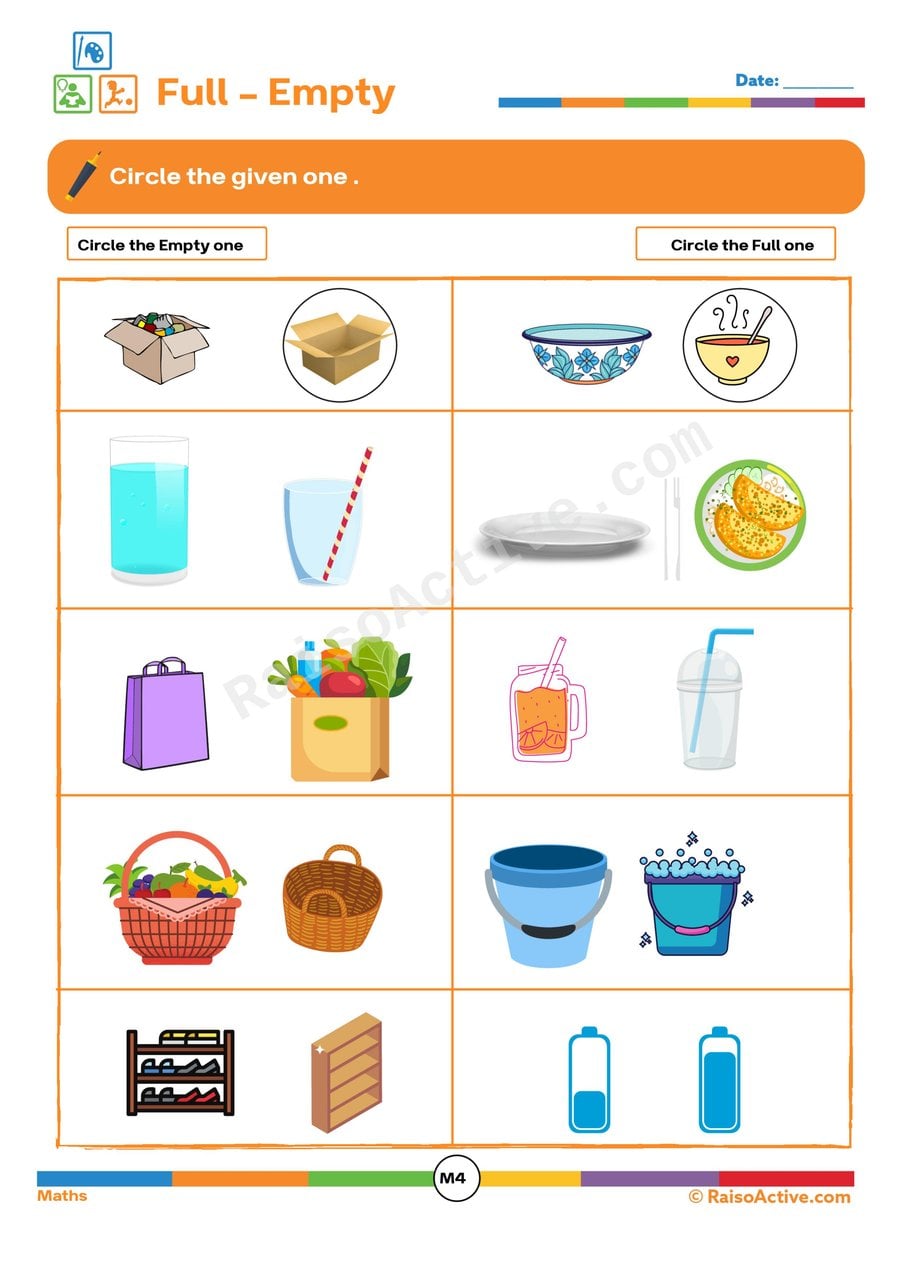
Full and Empty Worksheet for Preschoolers
Ages 3-5 · Preschool–Pre-KAges 3-5 · Nursery–ReceptionAges 3-5 · Nursery–LKGAges 3-5
This sorting worksheet introduces children ages 3-5 to the comparative concepts of 'full' and 'empty,' an early measurement idea that lays groundwork for later understanding of quantity and volume. By examining containers and objects at different fill levels, children practice careful visual observation rather than relying on counting alone. Learning to describe amounts in everyday language like full and empty also supports vocabulary development children will use constantly in daily life.

Phonics Fun: Matching Letters and Words Worksheet for Preschoolers
Ages 4-5 · Pre-KAges 4-5 · ReceptionAges 4-5 · LKGAges 4-5
Identifying the beginning sound of a pictured word and writing the matching letter teaches children ages 4-5 phonemic awareness, the ability to isolate individual sounds within spoken words, which is one of the strongest predictors of future reading success. Saying each word aloud after writing the letter reinforces the connection between the printed letter and its spoken sound, closing the loop between listening, writing, and speaking. This worksheet moves children from simply recognizing letters to actively applying letter-sound knowledge, a more advanced early literacy skill.
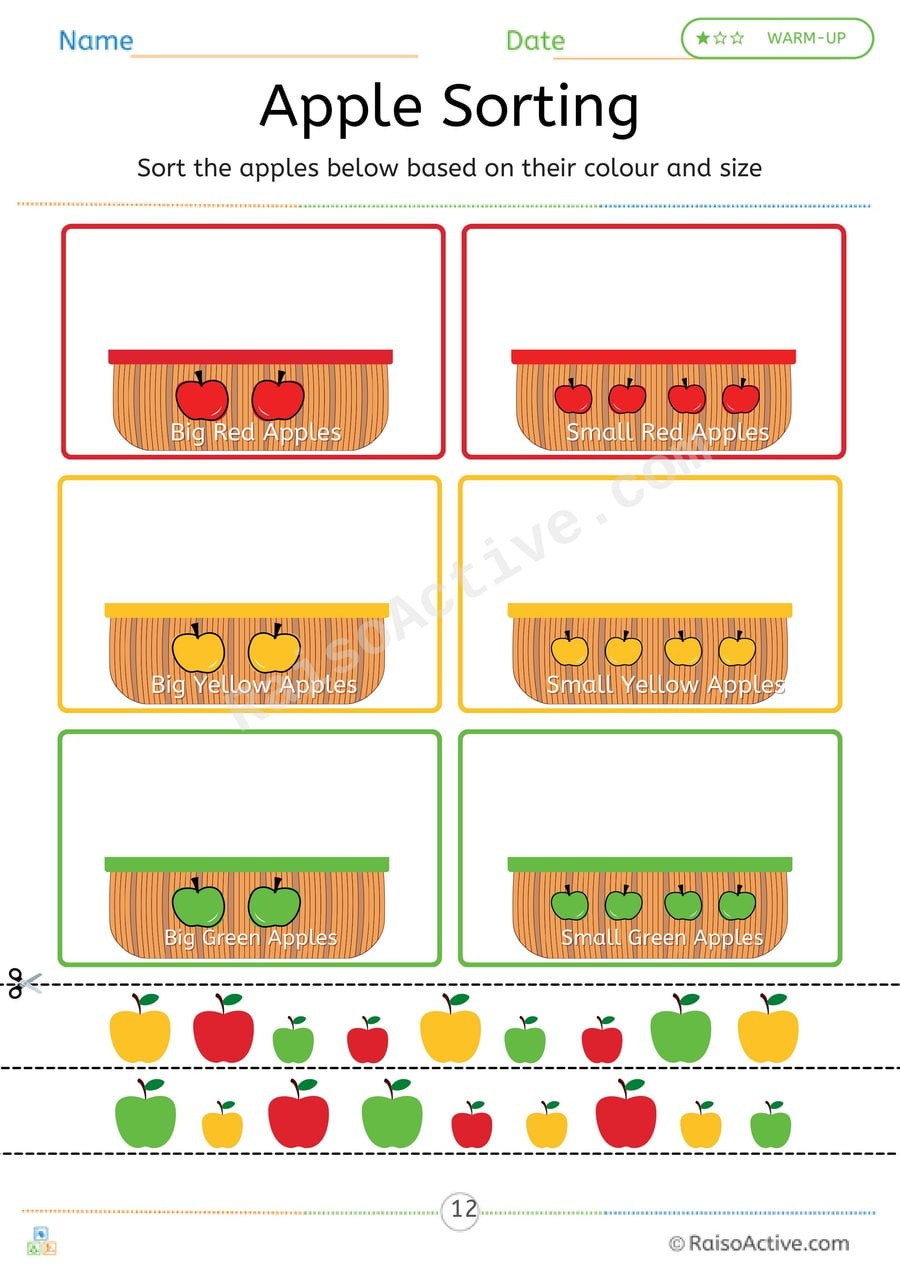
Apple Sorting Worksheet: Color and Size Fun!
Ages 4-6 · Pre-K–KindergartenAges 4-6 · Reception–Year 1Ages 4-6 · LKG–UKGAges 4-6
This sorting worksheet has children ages 4-6 classify a set of cut-out apples by two different attributes, color and size, simultaneously, which builds more advanced categorization skills than sorting by a single trait alone. Deciding which basket an apple belongs in based on two criteria at once also strengthens early logical reasoning.

Shape Sorting Fun: Cut and Paste Worksheet for Preschoolers
Ages 3-5 · Preschool–Pre-KAges 3-5 · Nursery–ReceptionAges 3-5 · Nursery–LKGAges 3-5
This cut-and-paste worksheet helps children ages 3-5 practice visually matching real-world objects to their underlying geometric shape, specifically distinguishing circles from ovals. Learning to see the circle or oval 'hiding' inside everyday objects, like a clock or an egg, builds the shape-recognition foundation that supports later geometry and spatial reasoning. Cutting and gluing each piece also strengthens fine motor precision.
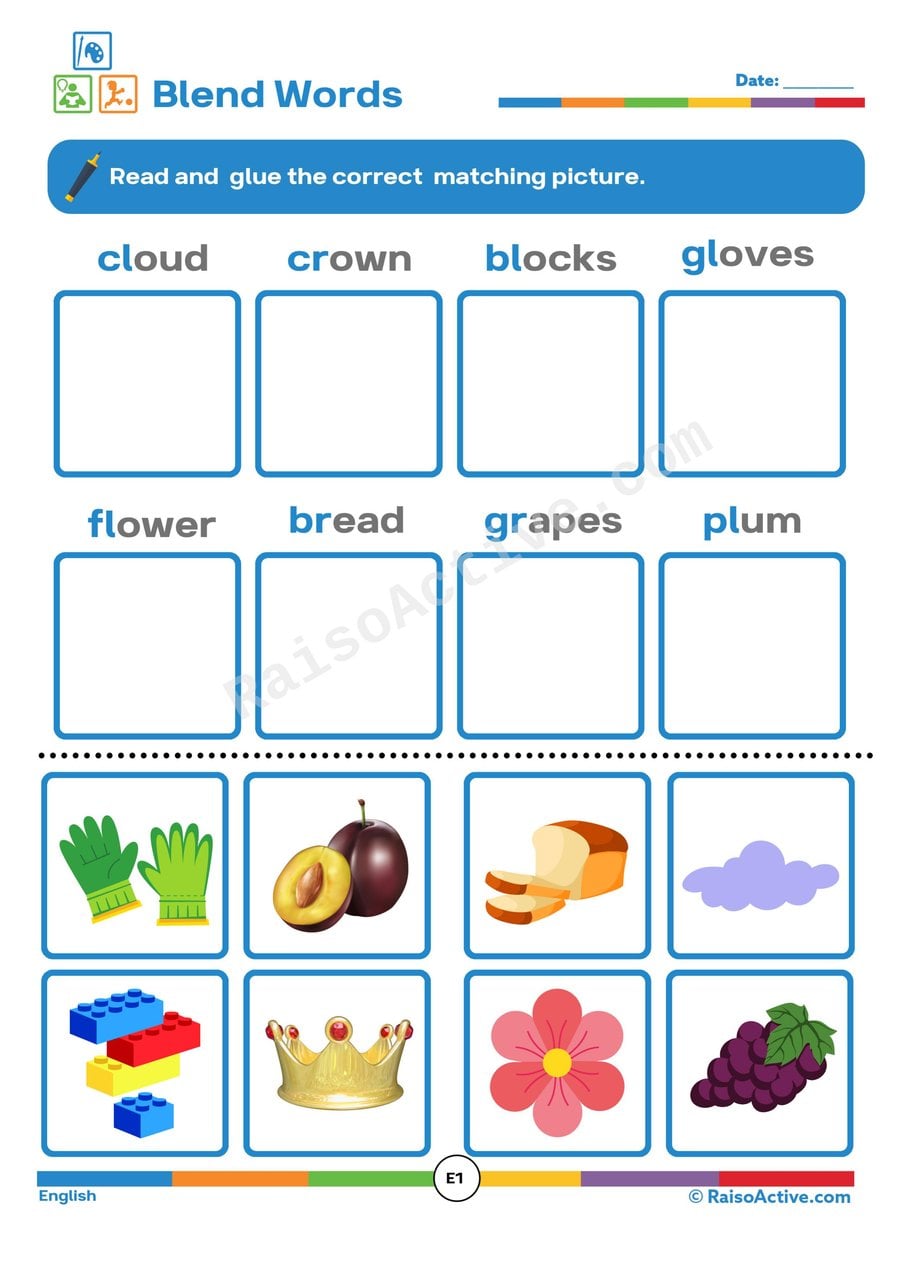
Blend Words Matching Worksheet for Preschoolers
Ages 4-5 · Pre-KAges 4-5 · ReceptionAges 4-5 · LKGAges 4-5
Children ages 4-5 practice reading consonant blend words — words that start with two consonant sounds blended together, like 'bl' or 'st' — and connecting them to the correct picture through a cut-and-paste matching activity. Blends are a step up in difficulty from single beginning sounds, since children must hear and produce two consonant sounds smoothly together, an important milestone on the way to more advanced phonics.
Guides for this topic

How to Teach CVC Blending: A Step-by-Step Method That Works in Two Weeks
A step-by-step method for teaching CVC blending, covering continuous sounds, word families, common errors, and a 14-day plan that most children finish reading CVC words.
Phase 2 Phonics at Home: Sound Order, Blending Games, Worksheets
Phase 2 phonics at home: the five sound sets in order, oral blending, tricky words, a two-week routine, common mistakes, and free worksheets.
Reception Year Explained: EYFS Learning and How to Help at Home
A teacher's plain-English guide to the Reception Year: the seven areas of learning, Early Learning Goals, Phase 2/3 phonics, the RBA and home routines.
Reviews
Every worksheet for ages 4–7, no watermark
Members download the full library of 1,000+ worksheets and every activity pack without watermarks or daily limits. One year costs ₹999 in India or $20 elsewhere.
See membership plansOr download any worksheet free with a watermark (5 a day).