Free printable worksheets · India
Nursery Sorting Worksheets (Ages 3–4)
Nursery sorting worksheets are practice sheets for children aged 3–4 in Nursery in India. Sorting is grouping a set of objects or pictures by a shared attribute, such as colour, size, shape or type. The sheets on this page cover grouping objects by one attribute, classifying by size, colour or type, recognizing what does not belong and comparing two groups after sorting.
Nursery marks the first year an Indian child sits at a table with a pencil rather than only playing with one. Grip is still developing, so schools expect pre-writing strokes, colouring within a bold outline, matching identical pictures and counting small groups rather than any letter writing. Attention rarely holds past a few minutes at a stretch. Three-year-olds can hold a rule in mind that is not the most obvious one. Shape sorting arrives, which means ignoring colour to see a circle or triangle, and three or four groups become manageable. Simple category sorts with a strong visual cue work well: hot and cold, day and night, things that belong in a kitchen. Cut-and-paste under headings, circling, or colouring by group all suit this age. Two-attribute sorts do not.
696+ worksheets · free PDF download · print on A4 or Letter
Nursery Sorting Worksheets to print
Browse all worksheets for ages 3–4
Clothing Pattern Match Worksheet for Preschoolers
This worksheet has children ages 3-5 study repeating patterns on clothing items — stripes, polka dots, or checks — and match each item to its identical twin, building visual discrimination and early pattern-sequencing skills. Distinguishing between similar-looking patterns also sharpens attention to detail, a skill that later supports letter and word recognition.

Match the Word! A Fun Phonics Worksheet for Early Readers
Early readers ages 3-5 practice two connected skills here: recognizing a whole written word that matches a picture, and identifying the missing letter needed to complete a related word. Circling a matching word builds sight recognition and picture-word association, while filling in a missing letter requires active sound analysis rather than passive reading. Combining both tasks on one page gives children practice moving fluidly between reading and early spelling, which are two sides of the same phonics coin.

Human Body Parts Cut and Paste Worksheet for Kids
This cut-and-paste activity teaches children ages 3-5 to identify and correctly place major body parts — like the head, arms, legs, and torso — onto a body outline, reinforcing body awareness alongside cutting and gluing fine motor skills. Understanding where each part belongs on the body supports early self-awareness and vocabulary that children use constantly, from getting dressed to describing how they feel. Physically assembling the body from separate pieces also helps children see how individual parts combine into a whole, functioning figure.
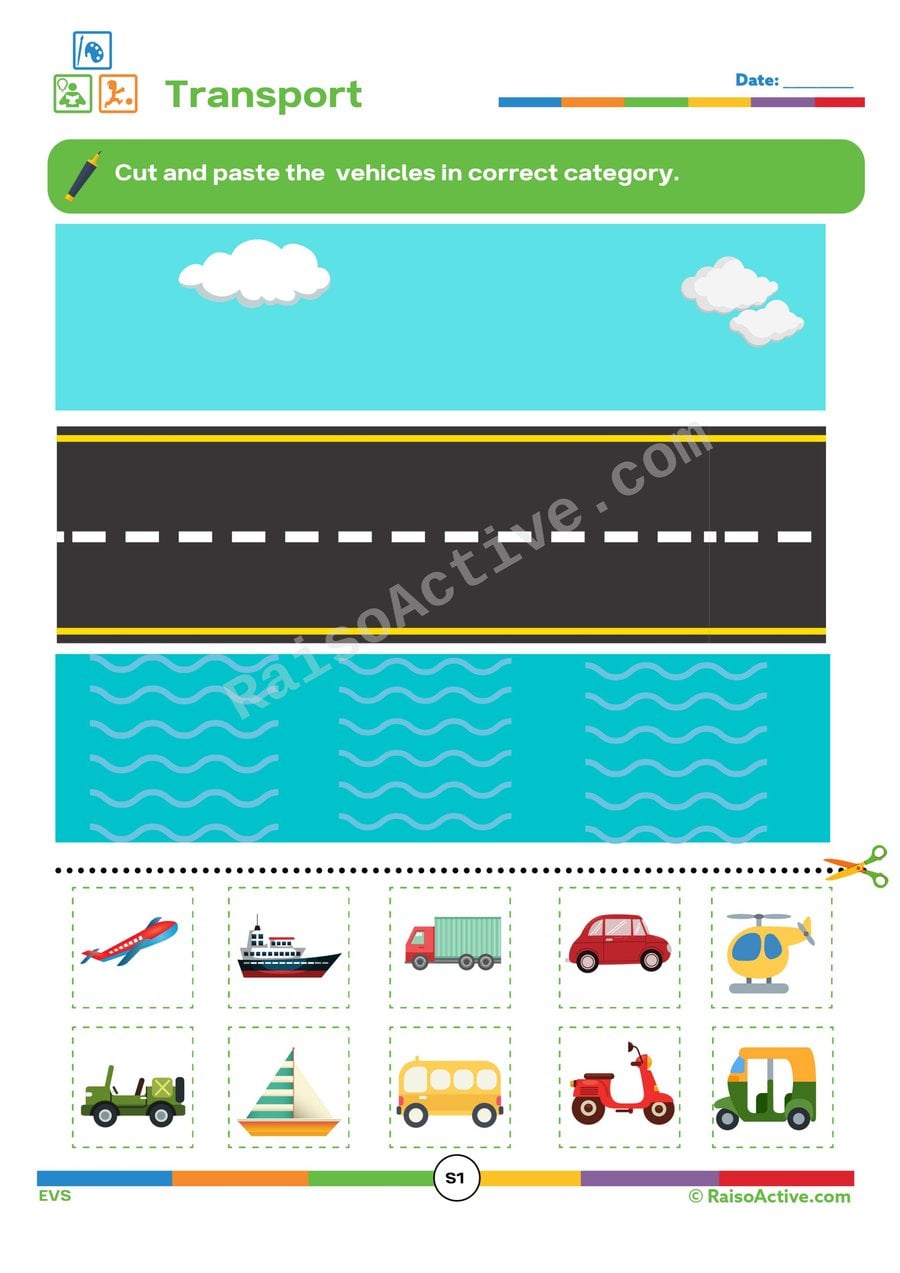
Transport Sorting Worksheet for Preschoolers
Children ages 3-5 practice classification and vocabulary as they sort vehicle pictures into three categories — air, road, and water — based on how each one travels. This kind of sorting task builds early logical reasoning, since children must identify a shared property among different pictures rather than just naming each vehicle individually.

Animal Sorting Worksheet: Wild, Domestic, and Sea Animals!
This worksheet asks children ages 3-5 to classify animals into three categories - wild, domestic, and sea animals - based on where and how each one lives, building early categorization skills alongside animal and habitat vocabulary. Learning to sort by a shared characteristic, like habitat, is foundational scientific thinking that children will use again and again as they group and compare other things in the world around them.

Summer Fun: Find, Match, and Write Letters and Numbers Worksheet
This worksheet combines three skills in one activity for children ages 3-5: finding a target letter, matching it to a corresponding number, and then writing the letter independently. Working through find, match, and write in sequence builds sustained attention across multiple steps, which is an important readiness skill for the multi-part instructions children will encounter in kindergarten. It also reinforces both letter recognition and number recognition side by side rather than practicing them separately.
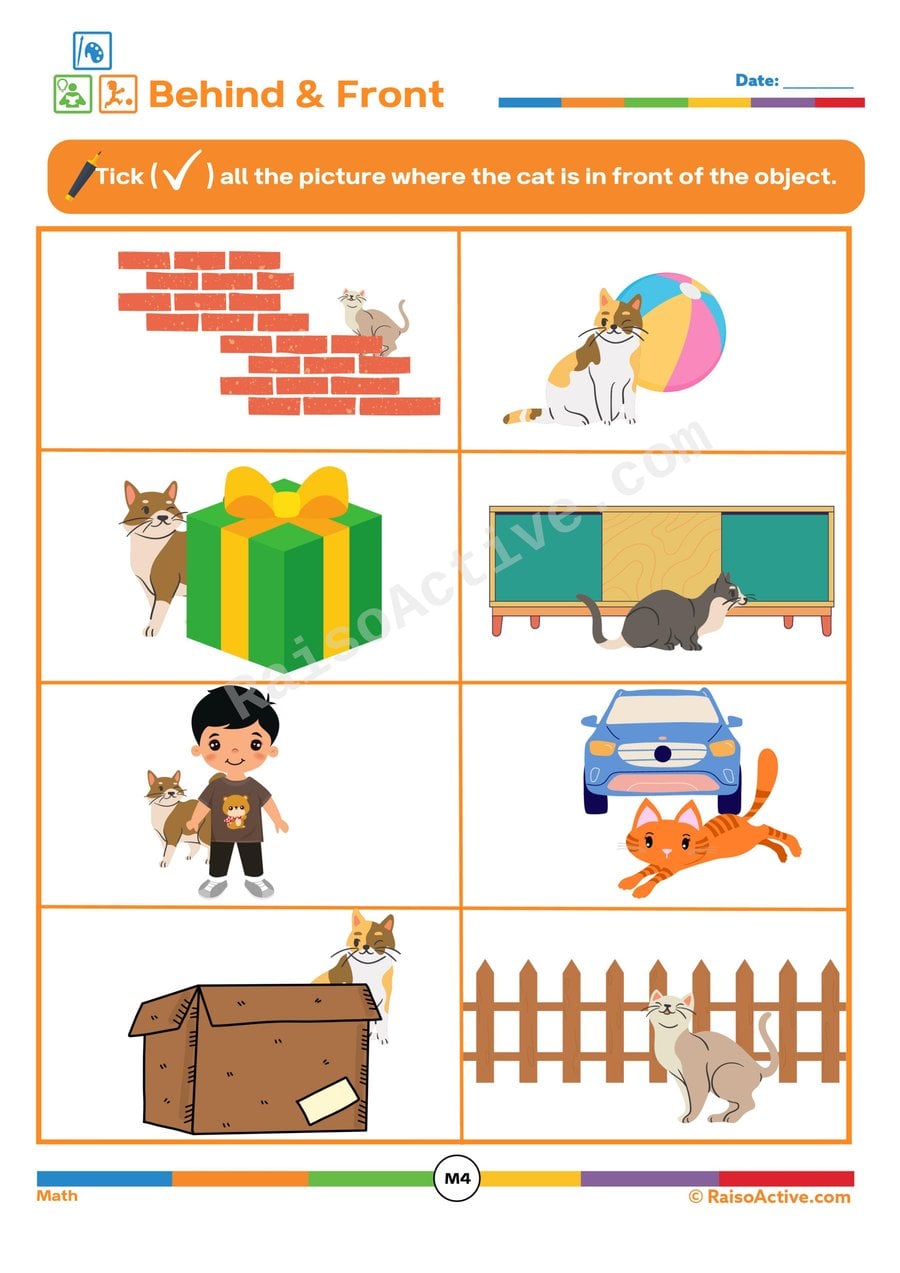
Front and Behind Worksheet: Where is the Cat?
Judging whether the cat sits 'in front of' or 'behind' an object in each picture develops relative-position reasoning for children ages 3-5, an early spatial skill that also builds the vocabulary needed for giving and following directions.
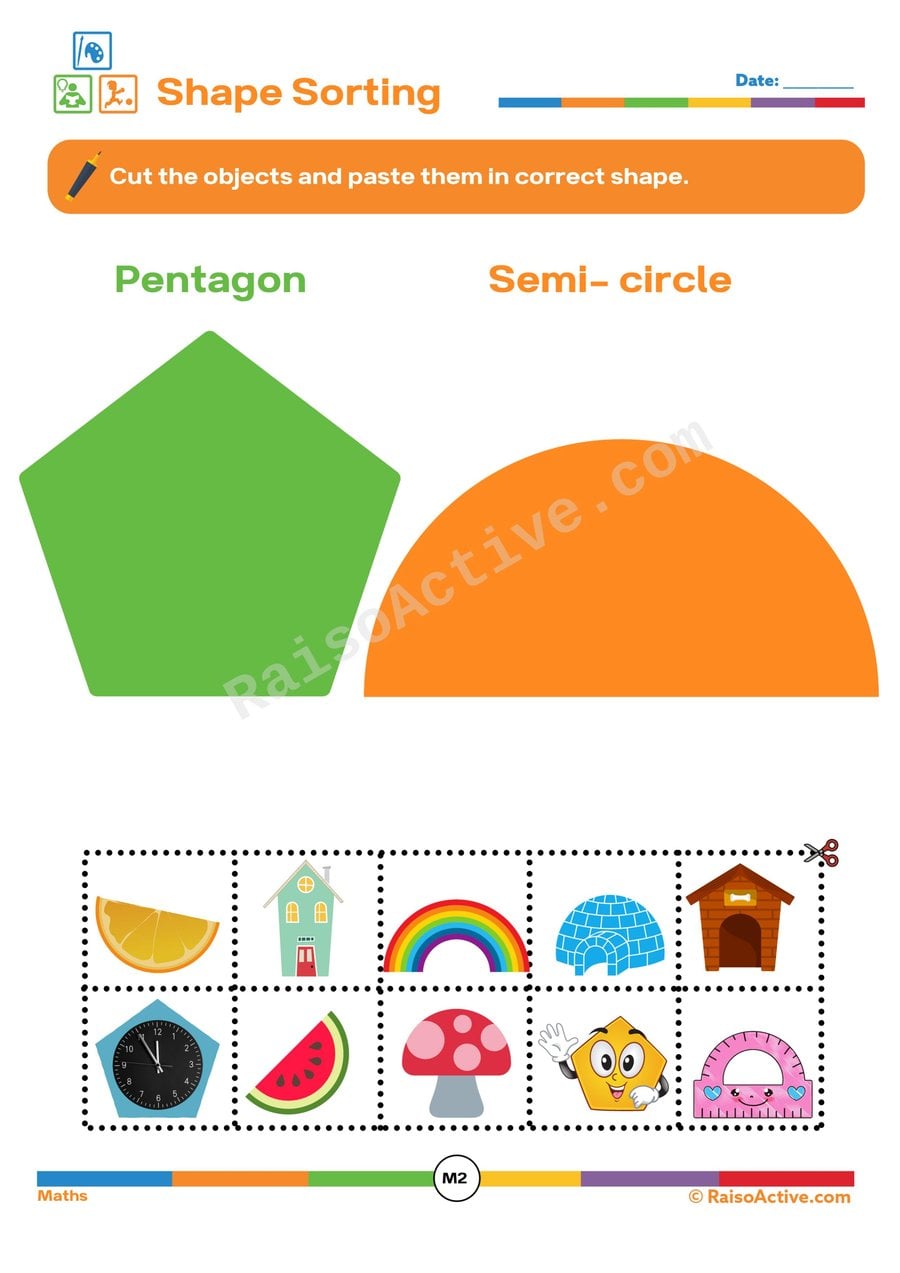
Shape Sorting Fun: Cut and Paste Shapes!
Cutting out shapes and pasting them into matching outlines teaches children ages 3-5 to recognize basic 2D shapes like circles, squares, and triangles by their defining features rather than just their color or size. The cutting and pasting also strengthens the fine motor coordination needed for handwriting later on.

Light Energy Worksheet for Preschoolers: Identifying Light Sources
Identifying which objects give off light, the sun, a lamp, a flashlight, introduces preschoolers to the basic science idea that light comes from specific sources rather than simply existing everywhere, an early step toward understanding energy. Ages three to five are naturally curious about how they see the world, making this a good moment to connect that curiosity to real vocabulary about light energy.
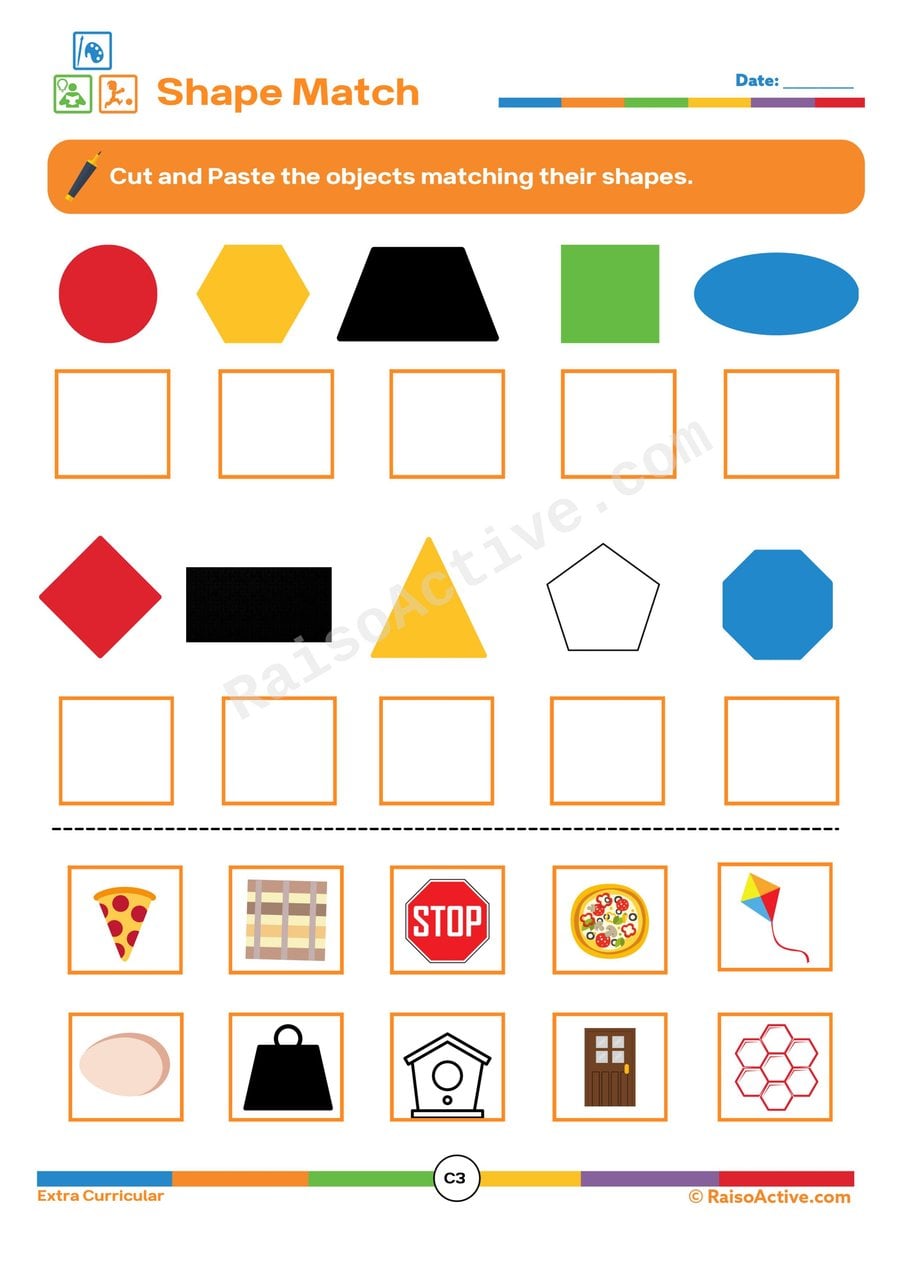
Shape Match Worksheet: Cut and Paste Shapes!
Children ages 3-5 practice shape recognition and visual discrimination as they cut out everyday objects and match each one to the 2D shape it most closely resembles, reinforcing that shapes exist all around them, not just on a worksheet page. This kind of real-world shape matching builds a stronger foundation than memorizing shape names in isolation.

Read and Match: Sentence Reading Worksheet for Preschoolers
Reading a sentence aloud and then circling its matching picture strengthens reading comprehension for children ages 3-5, requiring them to hold the meaning of several words in mind at once rather than recognizing them individually. This early comprehension practice builds toward the ability to read a full passage and understand what actually happened, not just decode isolated words.
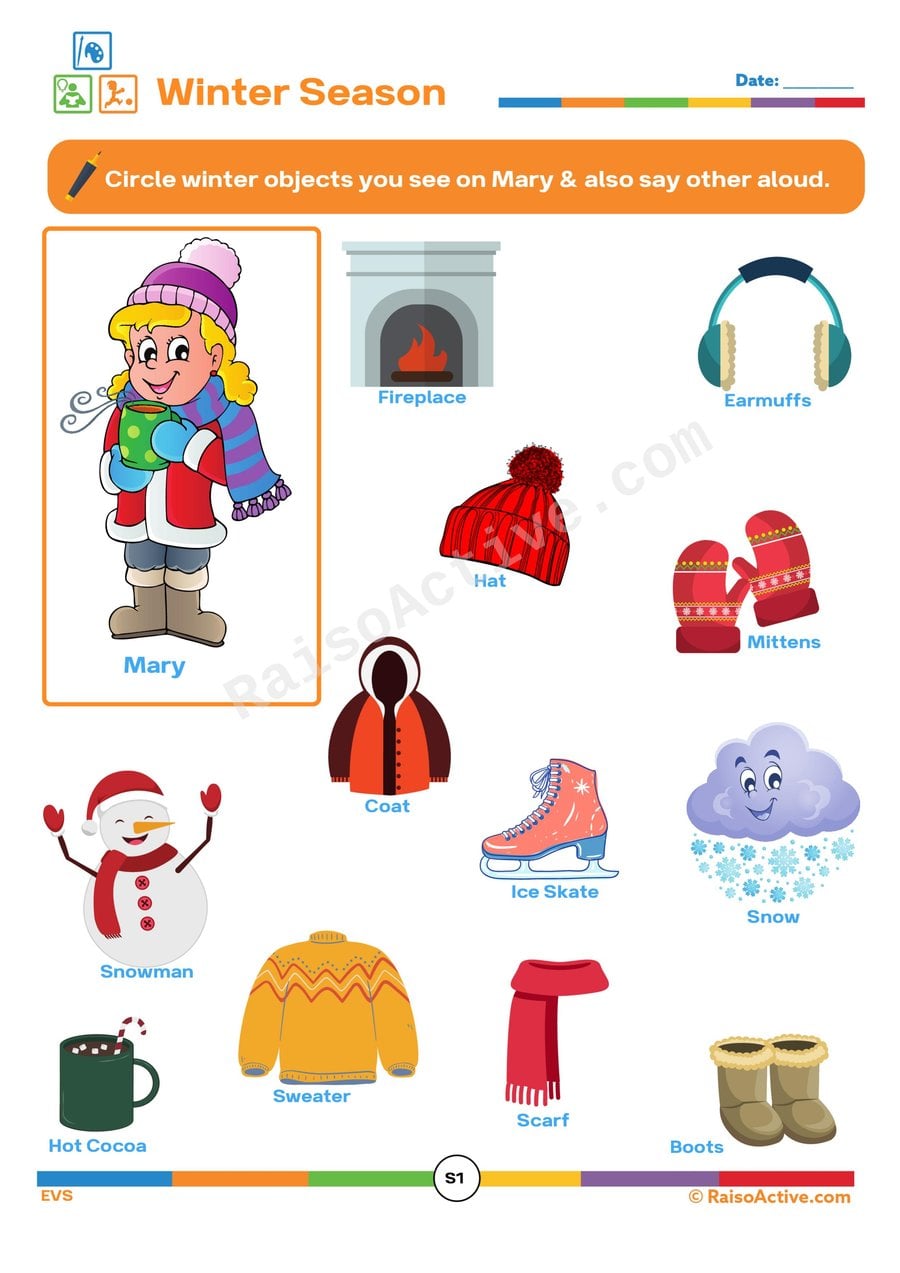
Winter Objects Worksheet: Circle and Say!
Identifying winter-related objects on this worksheet builds vocabulary and seasonal awareness for children ages 3-5, teaching them to associate specific items, like scarves, mittens, and snowflakes, with a particular time of year. Circling objects within a larger picture also sharpens visual scanning skills, requiring children to search carefully rather than glance at the whole image at once.

Small Letter a-h Matching Worksheet for Preschoolers
This worksheet builds lowercase letter recognition for a through h by having children match each letter to a picture whose name starts with that sound. For three- to five-year-olds, focusing on lowercase forms specifically matters because most of the text children encounter in books is written in lowercase, making this recognition more directly useful for early reading than uppercase alone.
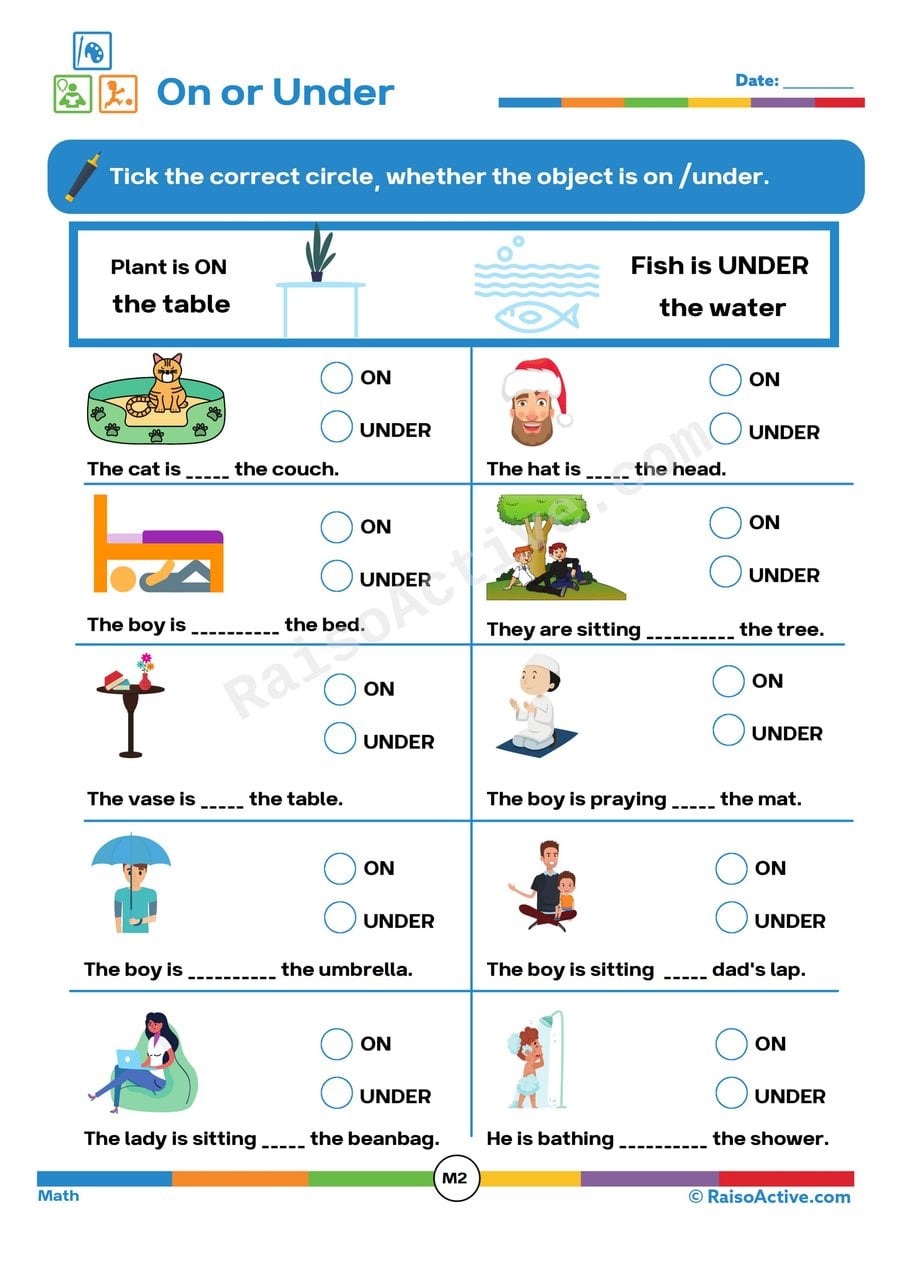
On or Under Worksheet: Where is the Object?
Reading a short sentence describing an object's location and then ticking the picture that matches teaches children ages 3-5 to connect spoken or written prepositions, 'on' and 'under,' to a visual representation, strengthening both listening comprehension and spatial vocabulary. This worksheet requires children to hold a sentence in mind and compare it against a picture, which is a slightly more advanced skill than simply naming a position they can already see. Understanding prepositions like these supports later reading comprehension, since so many simple stories depend on describing where things are.
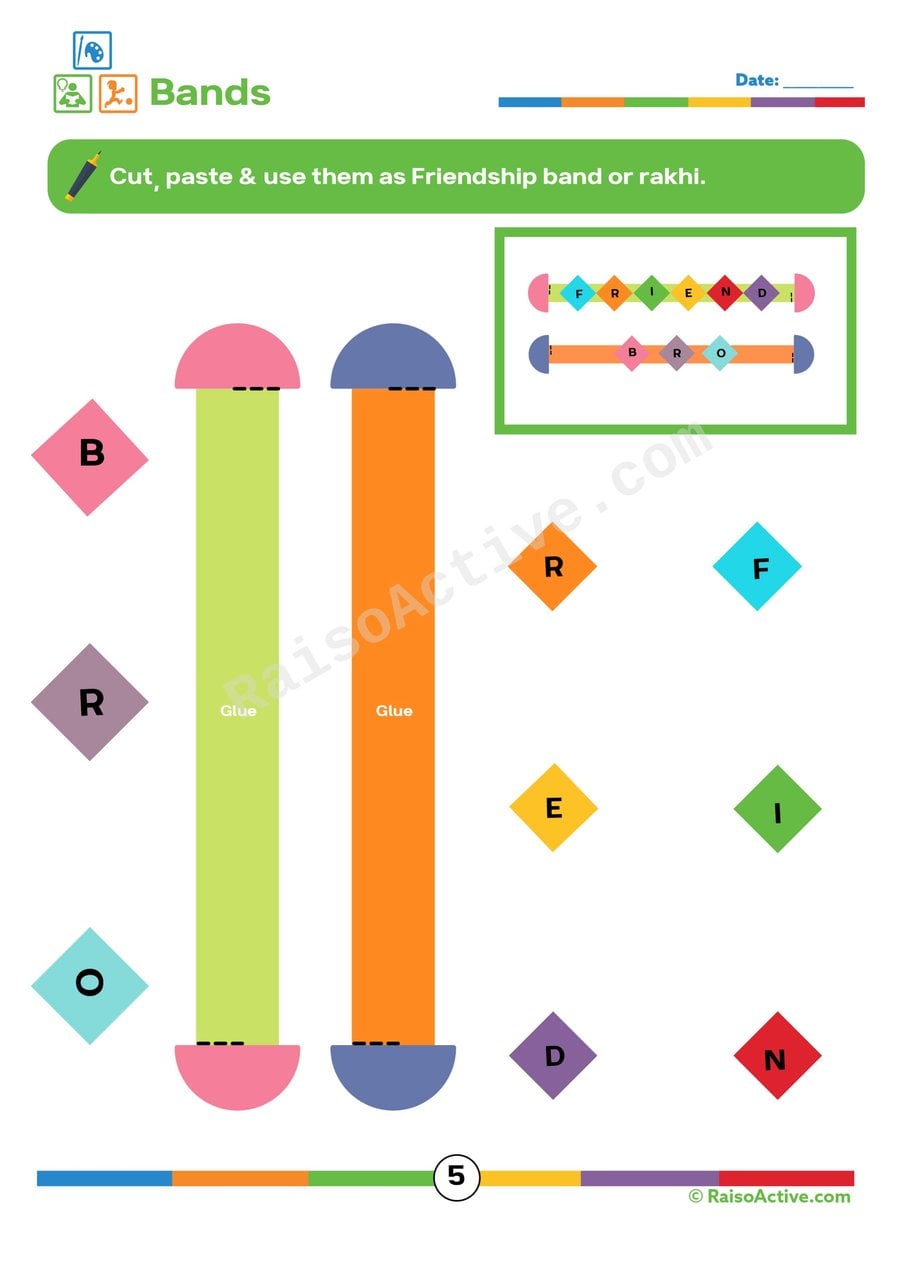
Friendship Band Craft Worksheet for Kids
This worksheet builds fine motor precision as children ages 3-5 cut out individual shapes and glue them onto a paper strip in a sequence of their choosing, creating a personalized friendship band or rakhi. Deciding where each shape goes along the strip also introduces early spatial planning and pattern-making, since children must space the shapes evenly to fill the band.

Measurement Worksheet: Big to Small & Hand Measurement Fun!
Ranking objects from biggest to smallest teaches children to make and justify comparative judgments, while the hand-measurement activity introduces the idea of using a non-standard unit, their own hand, to measure length, both foundational concepts before children move on to rulers and standardized units. This combination suits ages three to five well, since it keeps measurement concrete and physical rather than abstract.

Koala Life Cycle Worksheet: Cut and Paste Matching Activity
This worksheet introduces children ages 3-5 to the life cycle of a koala, from a tiny newborn called a joey that lives in its mother's pouch to a fully grown adult, while practicing scissor and gluing skills. Learning that koala joeys start out riding on their mother's back adds a memorable, specific detail that makes the science concept stick.
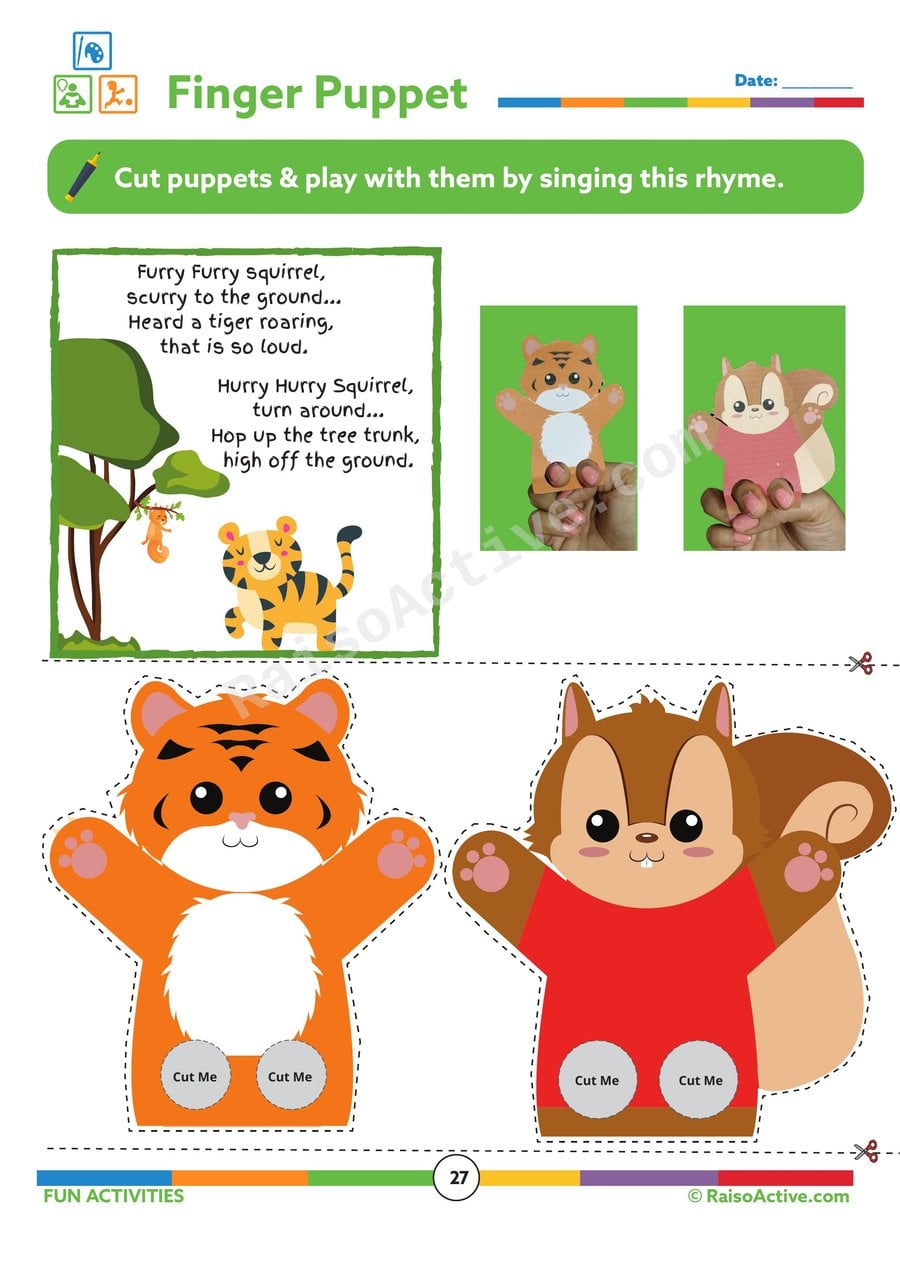
Finger Puppet Fun: Cut and Play with a Rhyme!
Cutting out the tiger and squirrel puppets and then using them to act out an accompanying rhyme builds scissor precision on animal shapes while also developing oral language and memory, since repeating a short rhyme with props helps children internalize its rhythm and words. This blend of fine motor and language practice at ages 3-5 supports both handwriting readiness and early literacy at once.

Front and Back Matching Worksheet for Preschoolers
This cut-and-paste worksheet builds spatial reasoning by asking children to recognize that many objects and animals look different from the front versus the back, and to match each front view to its correct back view. For ages 3-5, this kind of visual matching strengthens observational skills and the beginning of perspective-taking, understanding that the same object can look different depending on which side you're viewing.

Coding Shapes Worksheet for Preschoolers: Cut and Paste Patterns
This cut-and-paste activity has children ages 3-5 recreate shape sequences shown in sample boxes, combining shape recognition with the same ordered, step-by-step thinking used in beginner coding concepts. Cutting out individual shapes and arranging them in the correct sequence also builds fine motor precision and spatial planning.

Living or Non-Living? A Fun Sorting Worksheet for Preschoolers
This sorting worksheet introduces children ages 3-5 to one of science's foundational classification concepts: distinguishing living things from non-living things. Deciding whether to tick or cross each picture pushes children to apply criteria — does it grow, move, breathe, or need food — rather than sort by appearance alone, an early form of scientific reasoning. This distinction also builds vocabulary they'll use throughout later nature and biology topics.
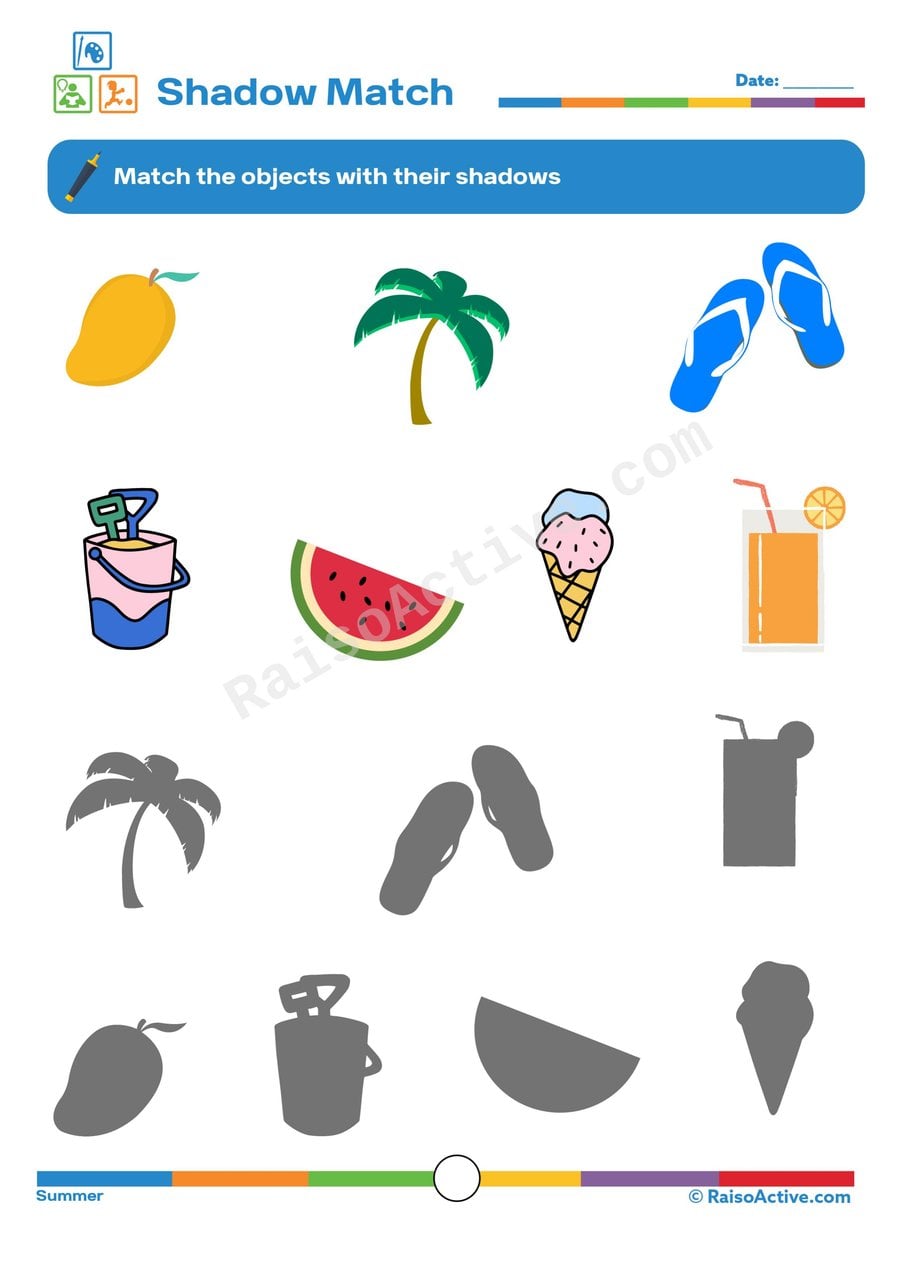
Summer Shadow Match Worksheet for Preschoolers
This worksheet has children ages 3-5 match summer objects to their correct black silhouette shadows, building visual discrimination by focusing on outline and shape rather than color or detail. Because a shadow strips away all the color and texture of an object, leaving only its outline, children must rely purely on shape recognition to make each match, a more demanding visual skill than matching identical pictures. This kind of shape-based reasoning also supports early geometry and spatial awareness.

Secret Words Worksheet: Matching Shapes and Letters!
Matching shapes to letters and then using that code to figure out a sequence of pictures teaches children ages 3-5 early symbolic reasoning, understanding that one thing, a shape, can stand in for another, a letter. This kind of code-breaking task builds logical thinking and pattern recognition beyond simple matching, since children must apply a rule consistently across multiple steps to reach a final answer. Framing the activity as uncovering a 'secret word' adds a sense of mystery and motivation that keeps children engaged through a multi-step reasoning task.

Number Names Matching Worksheet for Preschoolers
This worksheet helps children ages 3-5 connect written number words — like 'three' or 'seven' — to their matching numerals, an important step beyond simple numeral recognition toward full number literacy. Drawing a line from a number name to the numeral it stands for requires children to read or recall the word and hold it in mind while scanning for its match, which builds working memory alongside early reading and number skills.
What Nursery sorting worksheets cover
Three-year-olds can hold a rule in mind that is not the most obvious one. Shape sorting arrives, which means ignoring colour to see a circle or triangle, and three or four groups become manageable. Simple category sorts with a strong visual cue work well: hot and cold, day and night, things that belong in a kitchen. Cut-and-paste under headings, circling, or colouring by group all suit this age. Two-attribute sorts do not.
- Sort circles, squares and triangles into three groups
- Cut out pictures and paste them under "hot" or "cold"
- Circle the things that belong in a kitchen
- Sort a mixed set into four colour groups
- Separate daytime pictures from nighttime pictures
How to use these worksheets at home or in class
A single sheet a day, five to ten minutes, suits a three-year-old best. Sit alongside your child rather than opposite, demonstrate one stroke, then let them attempt it themselves, praising the try rather than the neatness of the line.
Start with the sheet that matches what your child can already do, then move one step up. Keep finished sheets in a folder: Nursery teachers often ask for evidence of practice, and children like seeing their own progress.
Is your child ready for Nursery sorting work?
Readiness shows up as a proper crayon grip with fingers instead of a fist, purposeful scribbling, sitting through a short task and following one spoken instruction such as pointing to a colour. Without these, stick to sticker play and large colouring pages for now.
Frequently asked questions
Why does my three-year-old sort by colour when I asked for shape?
Colour is the most visible feature of anything on a page, and at three it captures attention before shape does. Sorting by shape requires ignoring colour, which is a real step in thinking rather than a lapse in listening. Start with shapes printed in a single colour, then mix colours once shape sorting is secure. Most children make the switch reliably between three and a half and four.
What should a Nursery child be able to do in sorting?
Three-year-olds can hold a rule in mind that is not the most obvious one. Shape sorting arrives, which means ignoring colour to see a circle or triangle, and three or four groups become manageable. Simple category sorts with a strong visual cue work well: hot and cold, day and night, things that belong in a kitchen. Cut-and-paste under headings, circling, or colouring by group all suit this age. Two-attribute sorts do not. Readiness shows up as a proper crayon grip with fingers instead of a fist, purposeful scribbling, sitting through a short task and following one spoken instruction such as pointing to a colour. Without these, stick to sticker play and large colouring pages for now.
Do these worksheets follow the Nursery curriculum?
The sheets cover grouping objects by one attribute, classifying by size, colour or type, recognizing what does not belong and comparing two groups after sorting, which sit inside the NEP 2020 Foundational Stage (NCF-FS 2022) outcomes for Nursery. Preschool (US), Nursery (UK) use the same skills at this age, so the sheets also fit families following those programmes.
Are the Nursery sorting worksheets free to download?
Yes. Every sheet on this page can be downloaded free as a watermarked PDF after creating an account, up to five downloads a day. The annual membership (₹1000) removes the watermark and the daily limit across the full library of more than 1,000 worksheets and all activity packs.

Written by
Hemsweta Jain · Teacher Cheena
MBA and Early Childhood Educator, teaching since 2014 · Founder of RaisoActive, Mumbai
Written and reviewed by Hemsweta Jain (Teacher Cheena), who designs every RaisoActive worksheet.
Last reviewed
Printable packs for ages 3–4
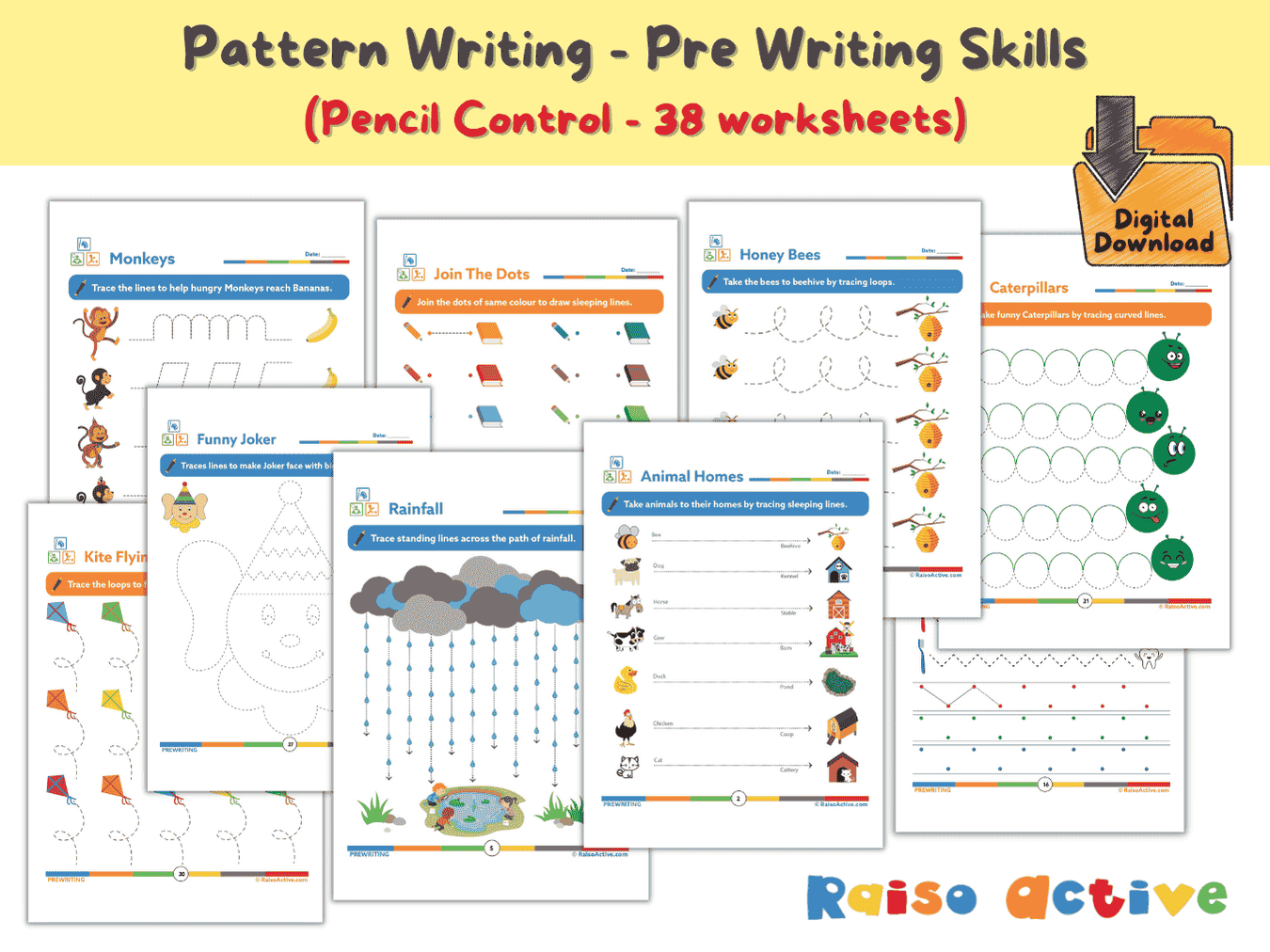
Pattern Writing Pre-writing Skills Activity Book for 3-4 Year Olds
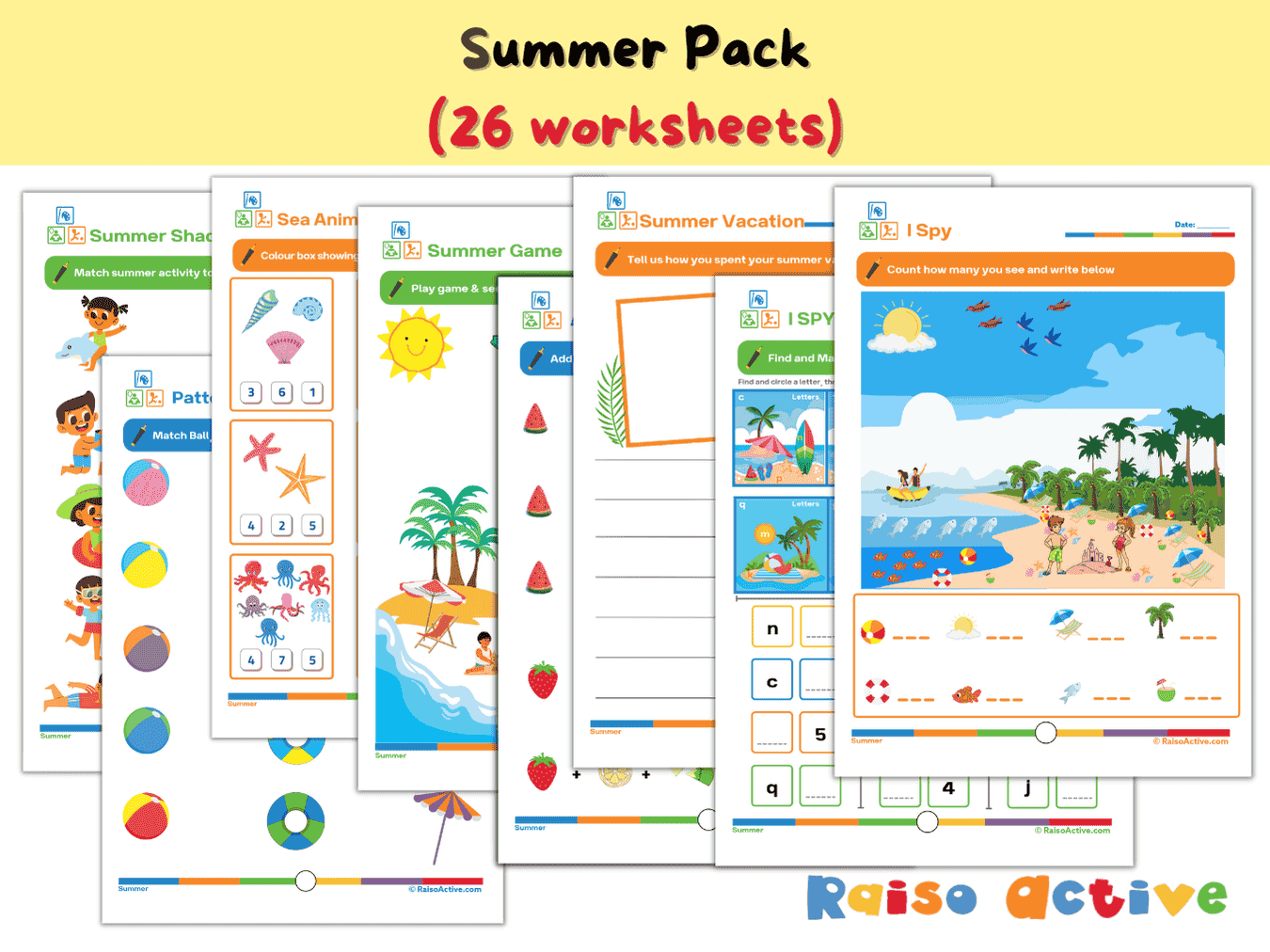
Summer Activity Pack: Math, Literacy, Puzzles & More for Preschool & Kindergarten
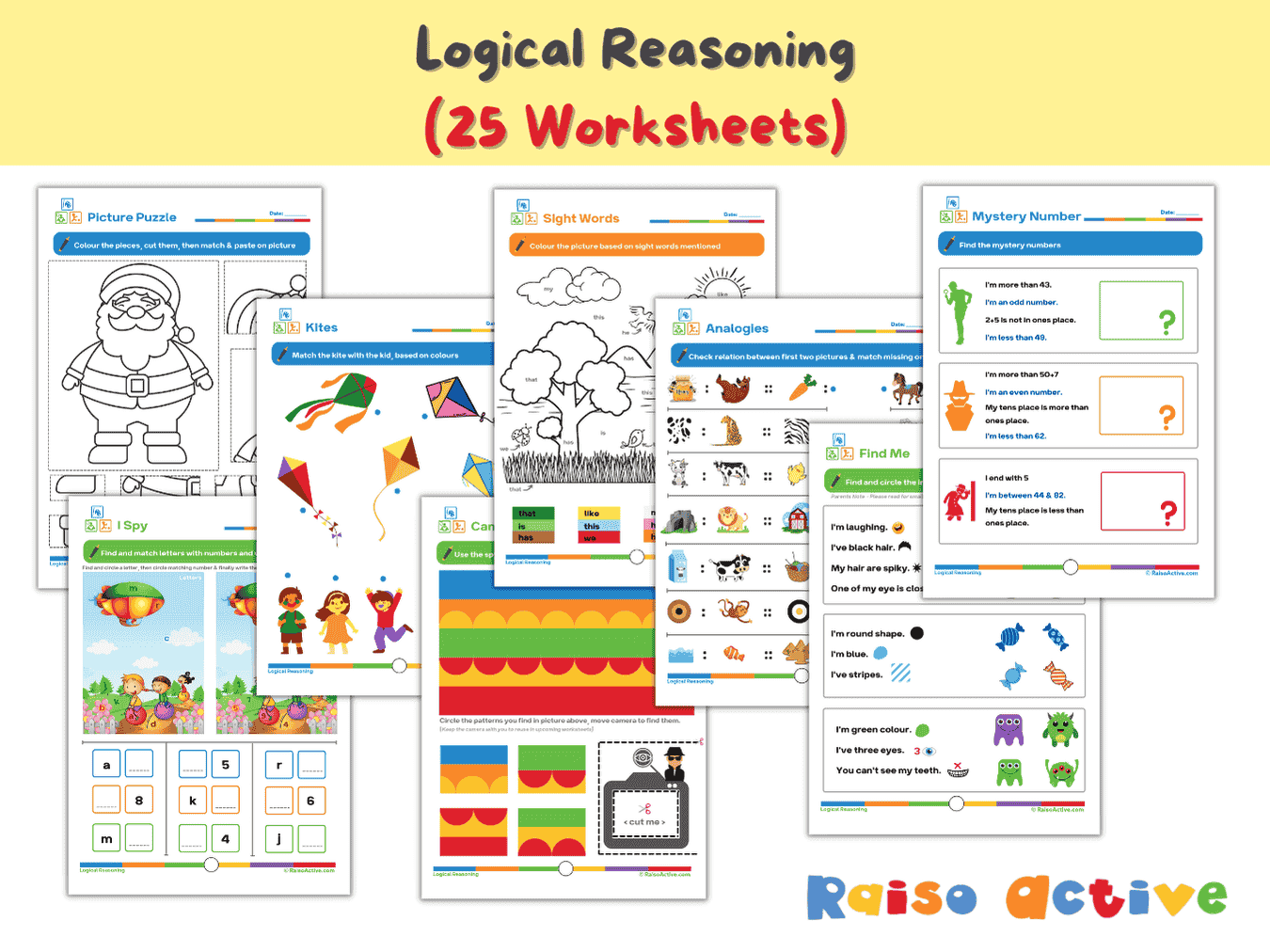
Logical Reasoning Activity Book for Preschool & Kindergarten | Patterns, Puzzles & Analogies
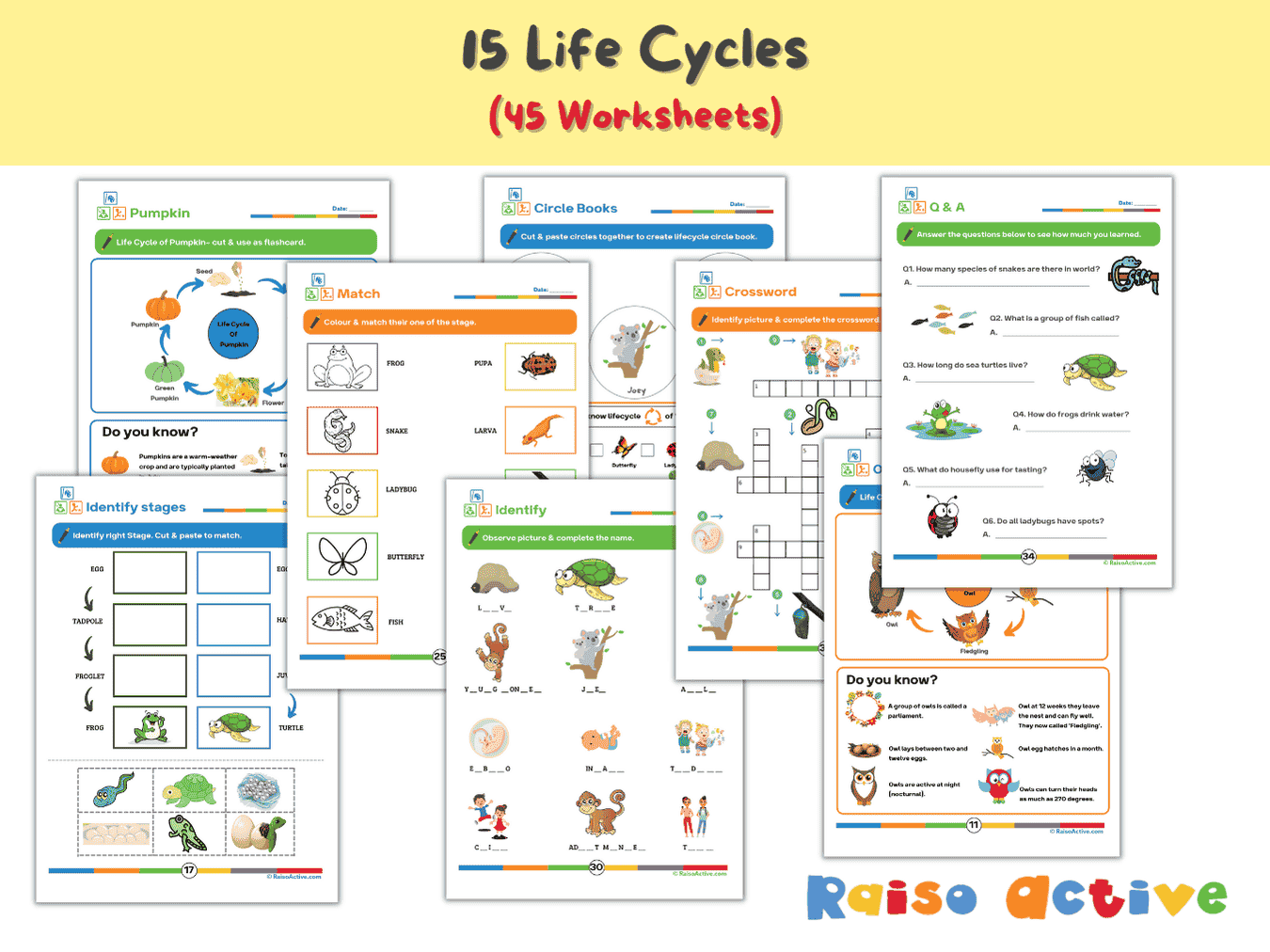
Lifecycles Activity Book & Flashcards for Preschool & Early Elementary
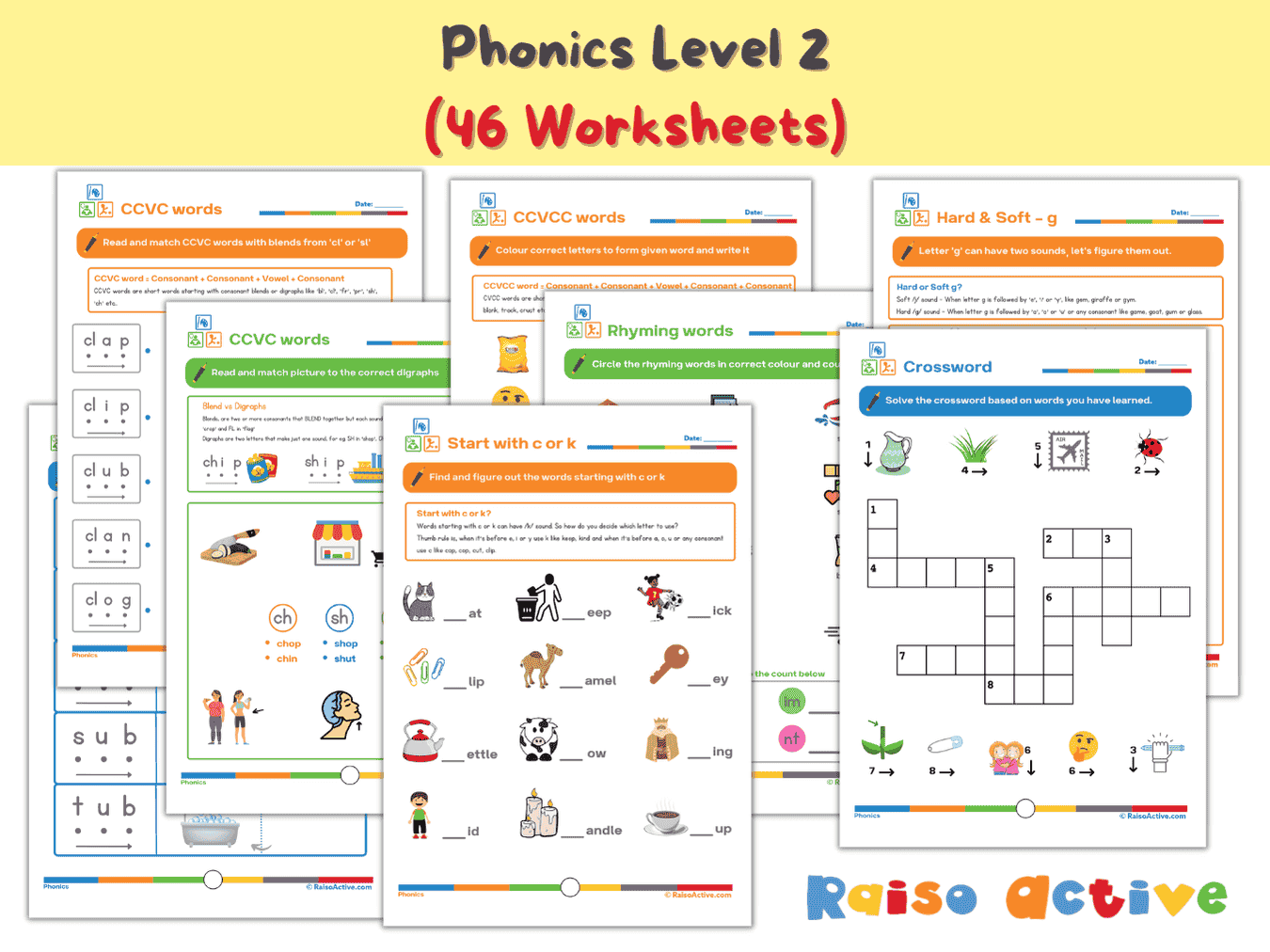
Phonics Level 2 Worksheets: CVC, CCVC, CVCC Word Families & Blends for Early Readers (Ages 4-7)
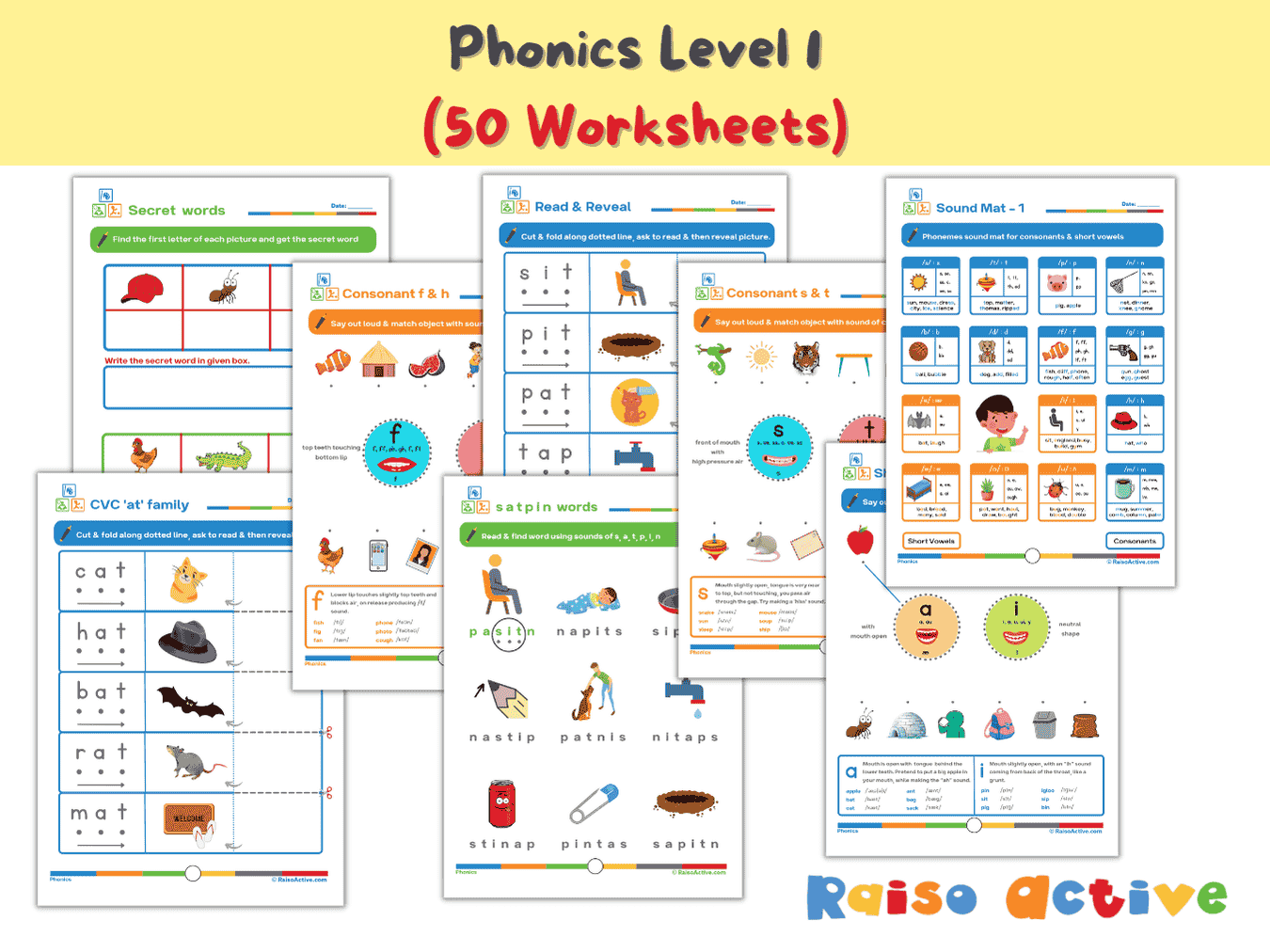
Phonics Level 1 Activity Book: Letter Sounds, Blending & CVC Words for Preschool & Kindergarten
Guides for parents and teachers
See all guides →Age-Appropriate Problem-Solving Activities: Building Critical Thinkers from the Ground Up
Discover fun, age-appropriate problem-solving activities for children ages 1-8. Build critical thinking, logic, and reasoning skills through play-based learning.
Critical Thinking Activities That Actually Work for Young Children: Building Tomorrow's Thinkers Today
Discover proven critical thinking activities for young children. Age-wise logic games, questioning techniques, and hands-on ideas to build thinking skills at home.
Coding Activities for Preschoolers: Building Tomorrow's Thinkers Today
Discover 15+ unplugged and screen-based coding activities for preschoolers that build sequencing, logic, and problem-solving skills through play. NEP 2020 aligned.
Montessori Activities for 3-4 Year Olds: A Complete Guide to Purposeful Learning
Discover practical Montessori activities for 3-4 year olds — practical life, sensorial, language, and maths — with Indian kitchen adaptations and budget shelf ideas.
Canonical: https://raisoactive.com/worksheets/nursery-sorting