Free printable worksheets · United Kingdom
Year 1 Sorting Worksheets (Ages 5–6)
Year 1 sorting worksheets are practice sheets for children aged 5–6 in Year 1 in the UK. Sorting is grouping a set of objects or pictures by a shared attribute, such as colour, size, shape or type. The sheets on this page cover grouping objects by one attribute, classifying by size, colour or type, recognizing what does not belong and comparing two groups after sorting.
Year 1 opens the National Curriculum proper: daily phonics moves through Phases 3 to 5, written number sentences replace counted objects, and the phonics screening check in June asks each child to read forty words, some of them invented, to confirm they can decode reliably. Five-year-olds can sort by a rule they cannot see and by two rules at once. Living and non-living things is the classic invisible rule: does it grow, does it need food, does it move by itself. Two-attribute sorts ask for pictures that are both red and round. Sort-and-count sheets end with a simple chart, and sorting pictures by beginning sound or numbers by size links the skill to reading and maths. Venn diagrams come next year.
696+ worksheets · free PDF download · print on A4 or Letter
Year 1 Sorting Worksheets to print
Browse all worksheets for ages 5–6
Transportation Match-Up Worksheet for Preschoolers
Matching a written description to the correct vehicle picture builds reading comprehension for children ages 4-6, requiring them to connect specific details, like where a vehicle travels or what it carries, to a visual image. This strengthens both transportation vocabulary and the broader skill of using descriptive clues to identify something, which supports comprehension in future reading tasks.
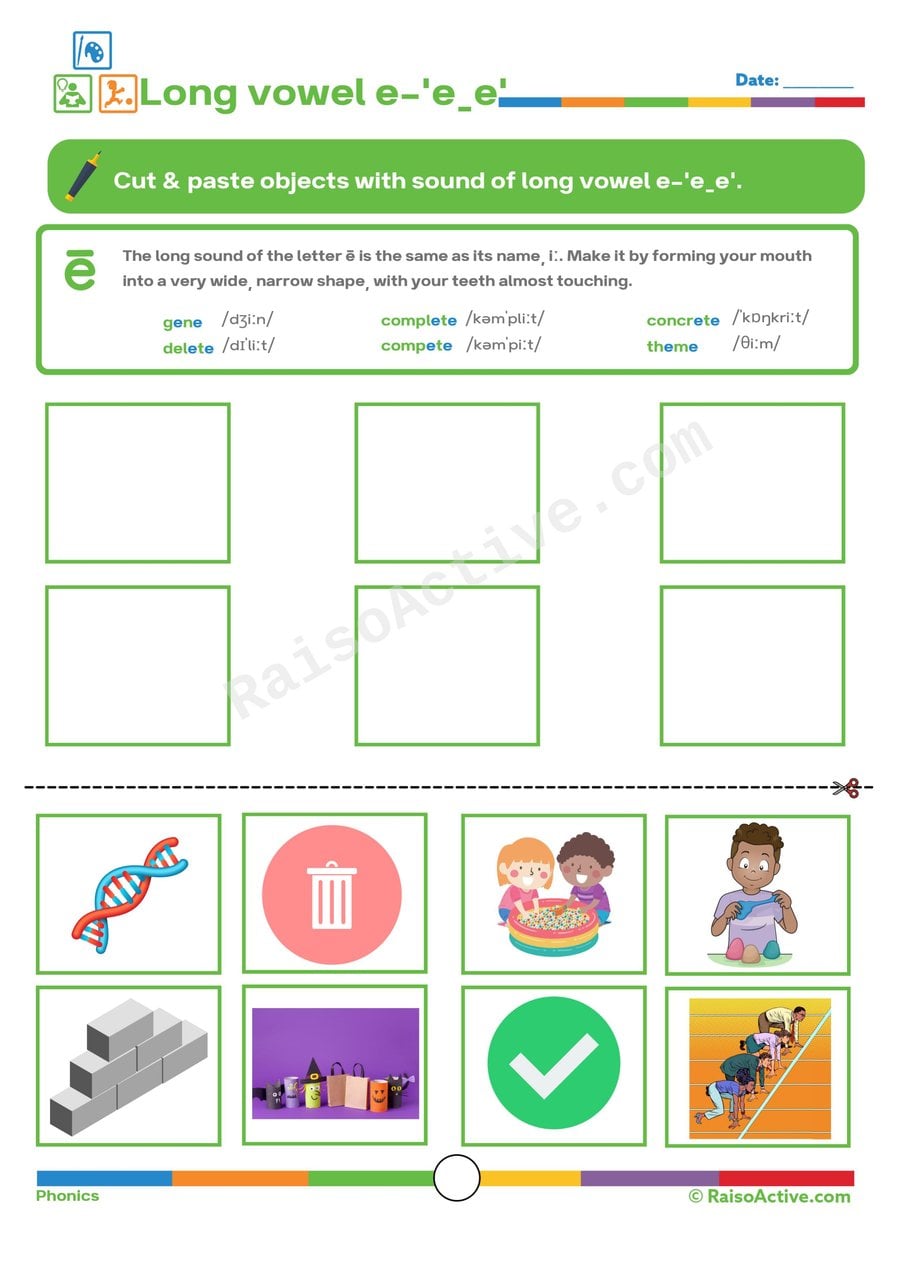
Long Vowel E Worksheet: Cut and Paste Fun!
This worksheet has children ages 4-6 practice identifying the long 'e' sound, as heard in words like 'tree' or 'bee,' by saying picture names aloud and sorting them based on whether they contain that sound. Cutting out each picture and pasting it into the correct category requires children to make a phonics judgment before committing to a placement, which builds more careful listening than simply circling an answer. This sorting-based approach to phonics also strengthens fine motor skills through scissor and glue use alongside the reading skill itself.

Body Parts Worksheet: Identify and Paste the Correct Organ!
Reading a clue about a body part's function and finding the matching organ builds science vocabulary and reading comprehension for children ages 4-6, linking what a body part does to its correct name.

Earth Day Sorting Worksheet: Good vs. Bad for the Environment!
Sorting pictures of everyday actions into 'good for the environment' and 'bad for the environment' introduces children ages 4-6 to cause-and-effect reasoning about human impact, an early building block for environmental awareness and responsible habits.

Read and Match: Sentence Matching Worksheet for Early Readers
This worksheet moves children ages 4-6 beyond single words into reading whole simple sentences and matching each one to the picture it describes. Comprehending a full sentence — not just recognizing individual words — is a genuine leap in reading skill, since it requires holding several words in mind together and connecting their combined meaning to an image.
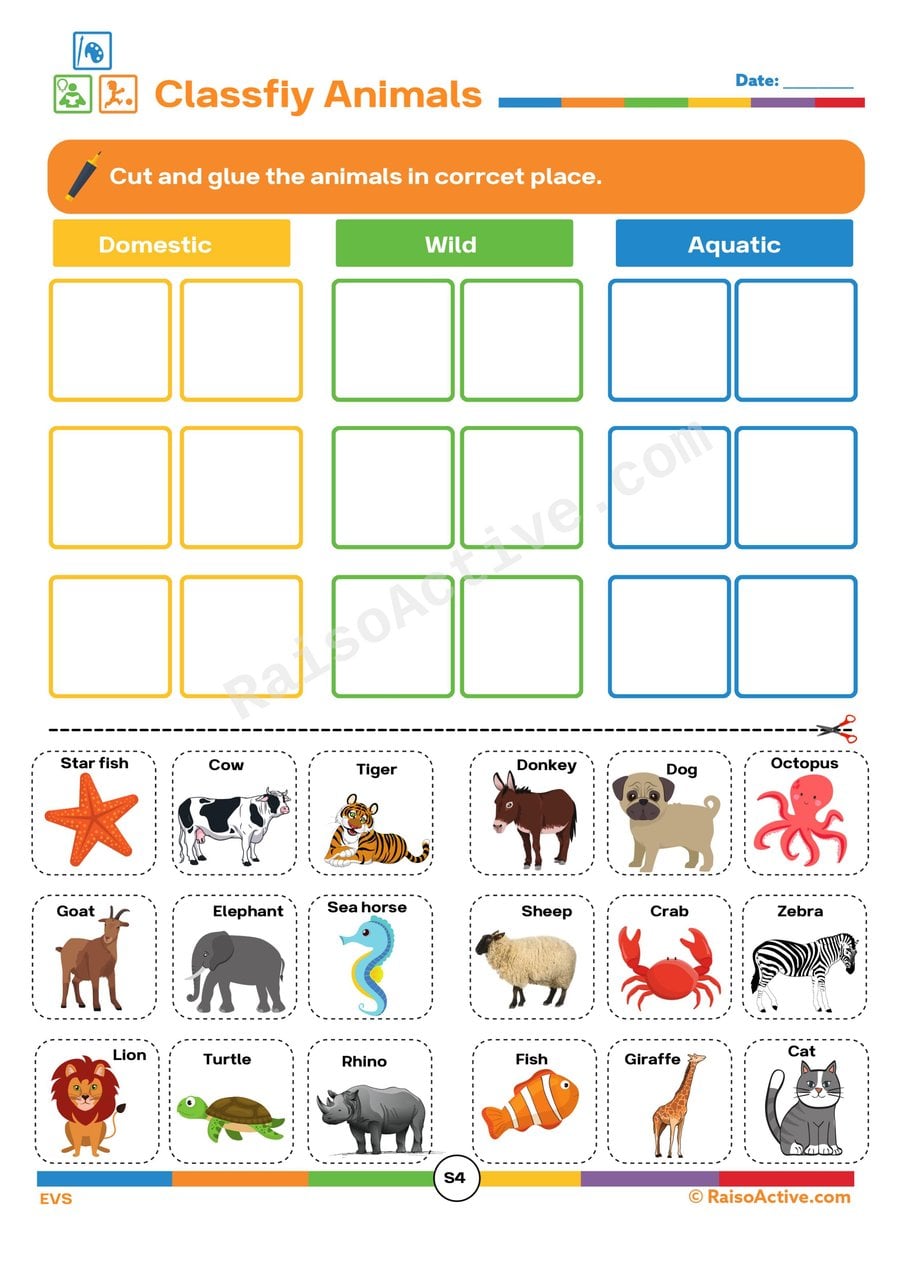
Classify Animals: Sorting Worksheet for Kids
Sorting animals into domestic, wild, and aquatic categories asks children ages 4-6 to classify based on habitat and human relationship rather than just appearance, a more advanced kind of categorization than simple color or shape sorting. This builds early scientific thinking, since children must consider where an animal lives and how it behaves to decide where it belongs. The cut-and-paste format also reinforces the categories through repeated physical sorting rather than a single verbal answer.

Family Words Cut and Paste Worksheet for Early Readers
Reading a simple CVC word and matching it to its picture teaches children ages 4-6 to blend individual sounds into a whole word and then connect that word to its meaning, a core decoding skill for early readers. Because CVC words follow a consistent consonant-vowel-consonant pattern, practicing them builds a reliable phonics foundation that transfers to reading many other simple words.
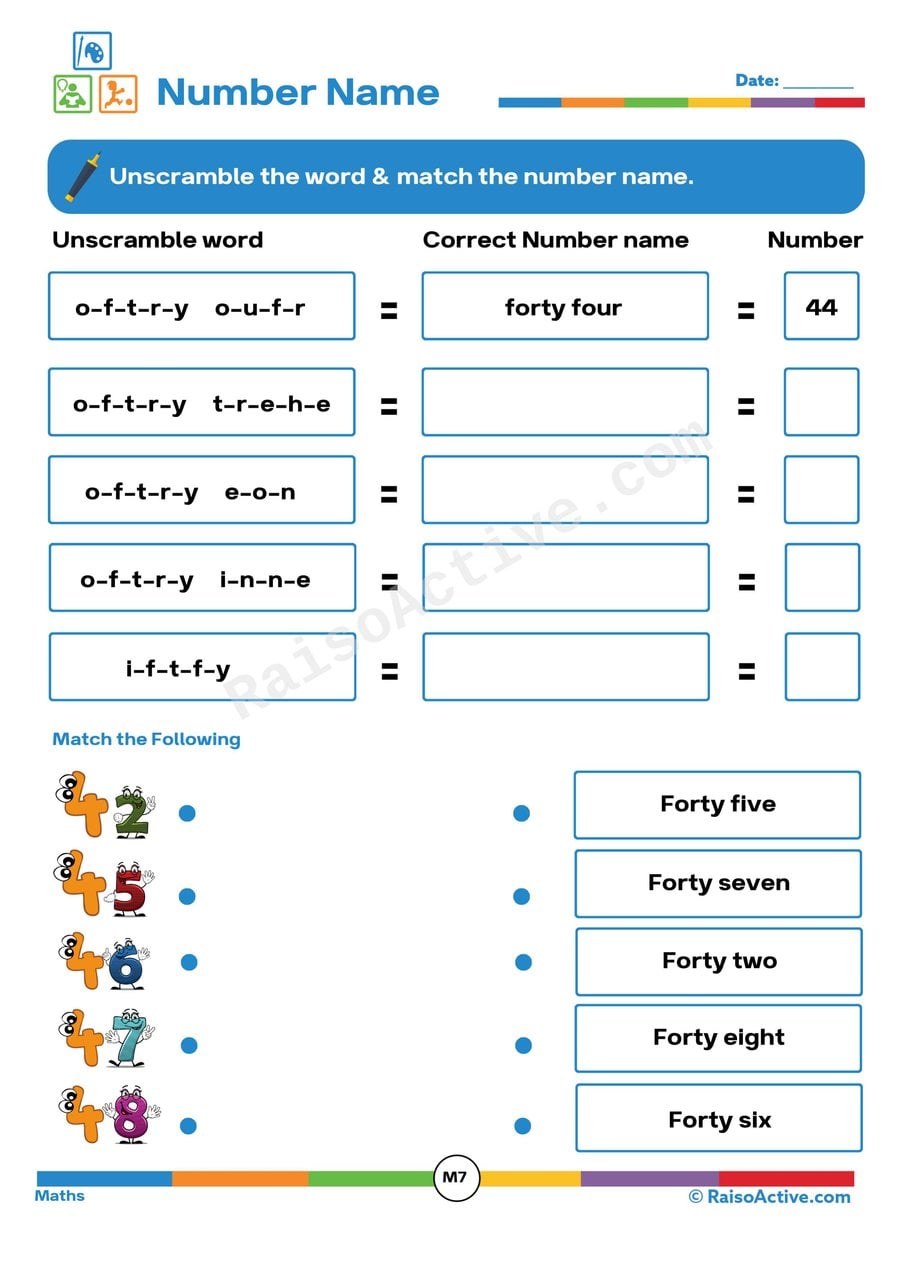
Number Name Matching Worksheet for Preschoolers
This worksheet connects three related number skills at once: unscrambling a jumbled word to spell a number name correctly, writing that number name out, and then matching it to its numeral — a layered task that builds both early spelling and number recognition together. Because number-name spelling (like 'seven' or 'eight') doesn't always follow simple sound-out rules, this worksheet gives 4-6 year olds valuable repeated exposure to sight-word-style number vocabulary.

J and K Consonant Sounds Matching Worksheet for Preschoolers
The letters J and K are frequently mixed up by children ages 4-6 because both are less common consonants that don't appear in as many early words as letters like S or T, so this worksheet gives them focused, repeated practice distinguishing the two sounds. Matching each letter to a picture that starts with its sound builds the letter-sound association needed before a child can spell or read J and K words confidently. This kind of targeted practice on less-frequent letters fills a gap that broader phonics worksheets often skip over.

Butterfly Life Cycle Cut and Paste Worksheet for Preschoolers
Children ages 4-6 build on earlier metamorphosis learning by assembling a butterfly life cycle circle book, practicing sequencing and fine motor precision as they cut and glue circular pieces. The rotating circle book format reinforces that metamorphosis is a repeating cycle, helping children move beyond a simple straight-line understanding of egg to butterfly.

Safety Signs Matching Worksheet for Early Learners
This worksheet has children ages 4-6 cut and paste safety signs to match their correct descriptions and fill in blanks identifying travel and safety symbols, deepening the recognition skill of reading signs by their shape, color, and symbol rather than by words alone. Building fluency in reading safety signs is a genuinely practical life skill that supports children's growing independence as pedestrians.

Family Words Cut and Paste Worksheet for Preschoolers
This worksheet gives children ages 4-6 repeated practice connecting a written word to its meaning through picture matching, reinforcing that letters combine to represent real, recognizable things. Cutting and gluing the pictures also builds the fine motor control and spatial planning needed to place a small object precisely within a defined space.

Family Words Worksheet: Picture Matching and Word Recognition
This worksheet gives children ages 4-6 another round of practice recognizing family-member vocabulary words, reinforcing the connection between a printed word and the picture it names through both a tick-the-answer step and a cut-and-paste matching step. Repeating this pairing across two different formats on one page helps move these words from recognition with support toward more independent reading.

S and T Sounds Worksheet: Matching Sounds to Objects
This matching worksheet helps children ages 4-6 build beginning-sound awareness for the letters 's' and 't' by listening to each sound and connecting it to the correct object. Distinguishing between these two common consonant sounds strengthens the foundational skill of linking a spoken sound to its written letter, which is essential before children can spell or decode independently. Matching by sound, rather than by sight alone, keeps the focus on auditory phonics rather than memorized shapes.

Cut and Paste Number Matching Worksheet: Numbers 31-40
Matching number words like thirty-one through forty to their correct numerals teaches children ages 4-6 to recognize larger two-digit numbers by both their written word form and their numeral form, extending number recognition well beyond the more familiar numbers under twenty. Cutting and pasting the matching numeral also reinforces careful visual comparison, since numbers in this range can look similar to one another.

Landforms Worksheet: Identify and Circle the Correct Answer!
Reading a short description and circling the matching landform picture asks children ages 4-6 to connect written or spoken language directly to a visual feature of the natural world, strengthening both reading comprehension and early geography vocabulary. Because landforms like deserts, hills, and mountains can look somewhat similar in simple illustrations, this task also sharpens careful reading and visual comparison rather than quick guessing. Understanding these terms gives children language to describe landscapes they see in books, on trips, or in nature.

Long Vowel Sounds: Matching Objects to Sounds - A & E Worksheet
This worksheet asks children ages 4-6 to listen for and match objects whose names contain the long 'a' sound, as in 'cake,' or the long 'e' sound, as in 'bee,' sharpening their ability to distinguish between vowel sounds that look and sound similar to a beginning reader. Practicing long vowels alongside short vowels builds the fuller phonics picture children need to decode a wider range of words as their reading vocabulary grows.
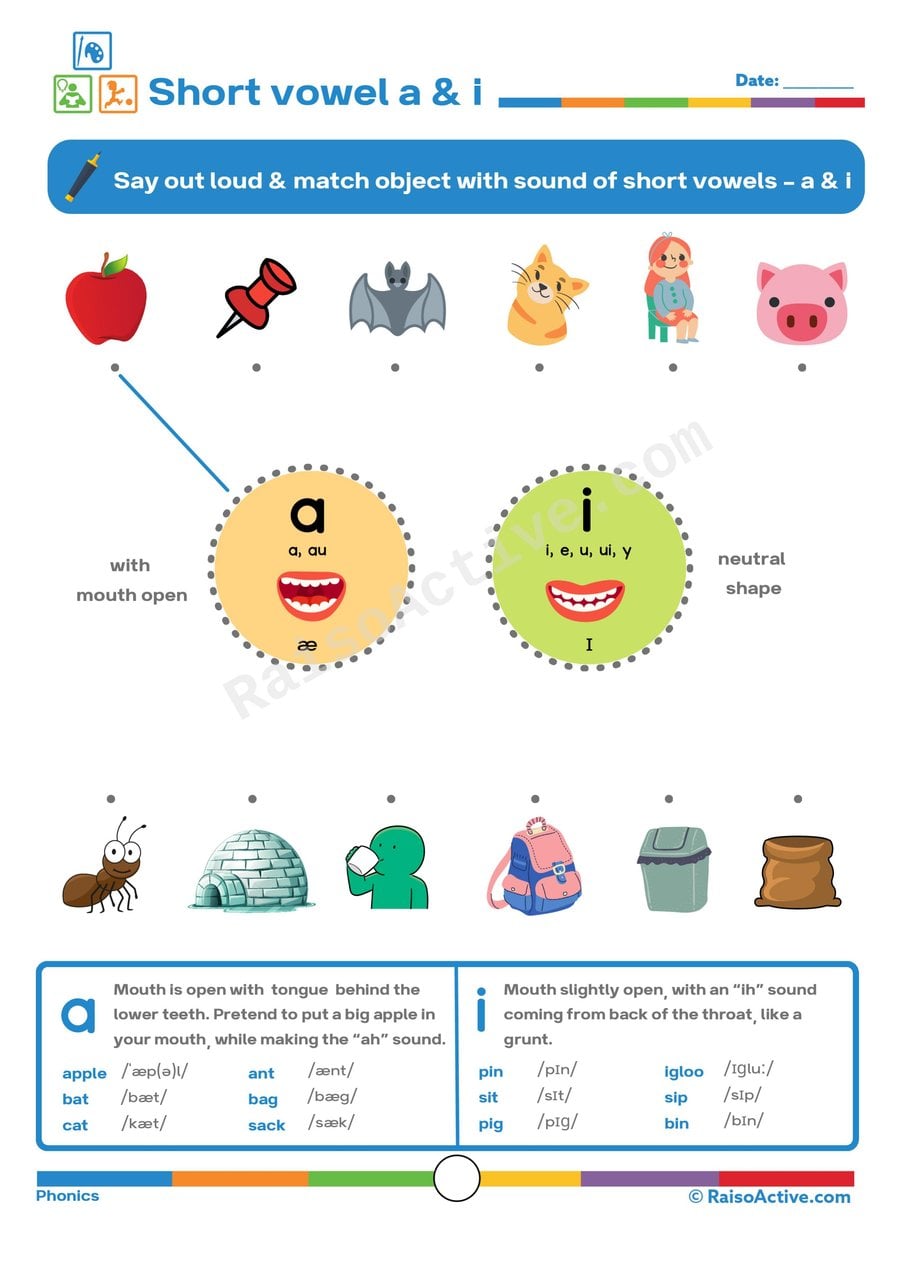
Short Vowel Sounds: Match the Pictures Worksheet
Distinguishing between the short 'a' and short 'i' sounds is a foundational listening skill for children ages 4-6, since these two vowel sounds are easy to confuse and appear constantly in early reading words. This worksheet has children say a word aloud, listen for its vowel sound, and match the picture to the correct sound category, training their ear before they're expected to read or spell independently. Strong auditory discrimination between short vowels directly predicts success decoding CVC words like 'cat' and 'sit' later on.

Life Cycle Stages Worksheet: Identify and Sequence!
This worksheet asks children ages 4-6 to identify what life-cycle stage is shown in each individual picture and then number a whole set of pictures into the correct growth sequence, moving beyond simple matching into independent ordering and logical reasoning. Because the worksheet likely mixes several different animals' or plants' stages, it also asks children to recognize what type of life cycle a picture belongs to before sequencing it.
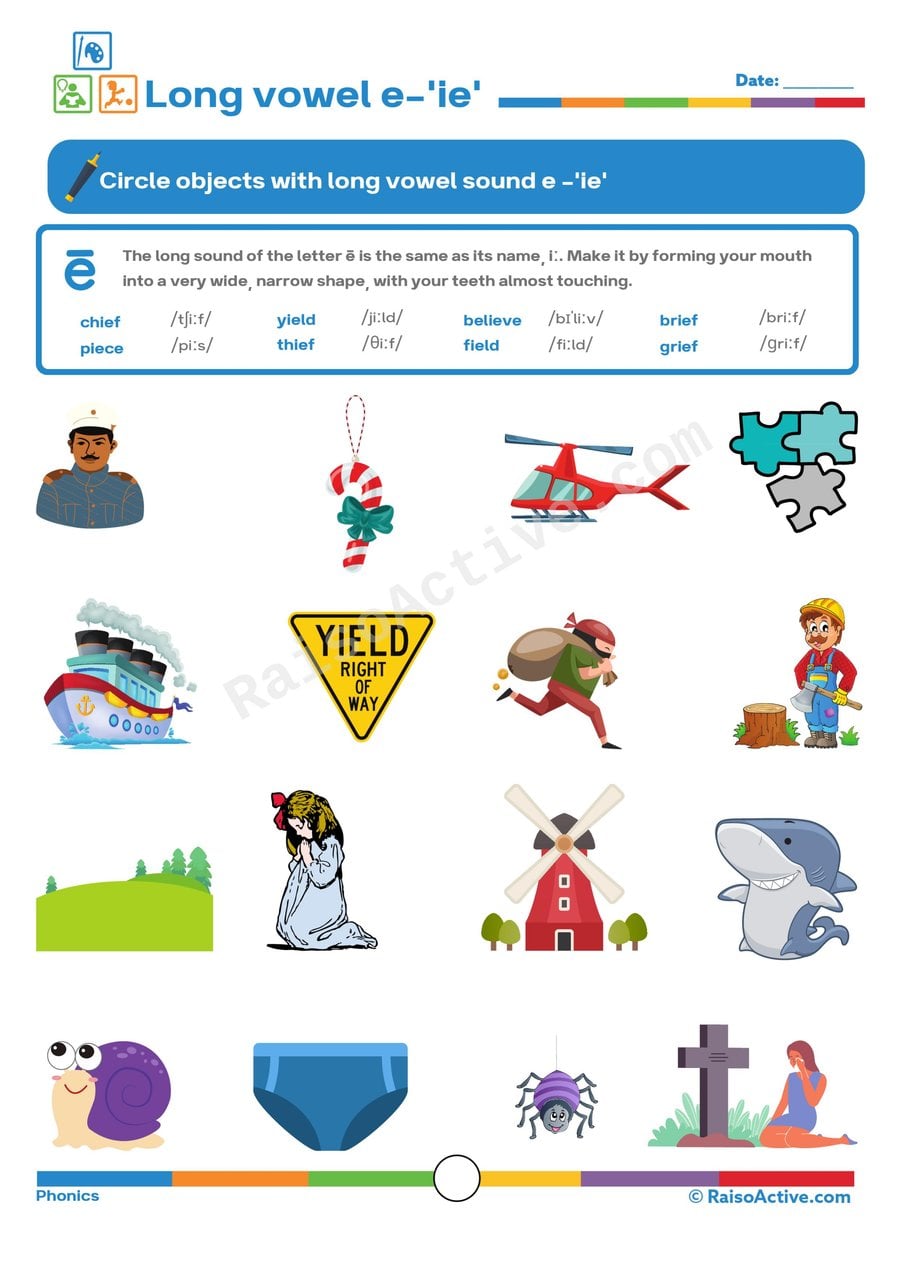
Long Vowel E 'ie' Worksheet: Circle the Pictures!
This worksheet asks children ages 4-6 to identify words with the long 'e' sound spelled using the less common 'ie' pattern, as in 'chief' and 'field', and circle the matching pictures. Because 'ie' is a trickier, less intuitive spelling for the long 'e' sound than more familiar patterns like 'ee', this worksheet stretches children's phonics knowledge toward more advanced and irregular spelling patterns.

Sentence Matching Worksheet: Read and Match the Sentences!
Reading a short sentence and pasting it beneath its matching picture builds reading comprehension for children ages 4-6, requiring them to understand the full meaning of a sentence rather than recognizing isolated words. This task also reinforces fine motor precision as children position and glue a small strip of text accurately within a defined space.
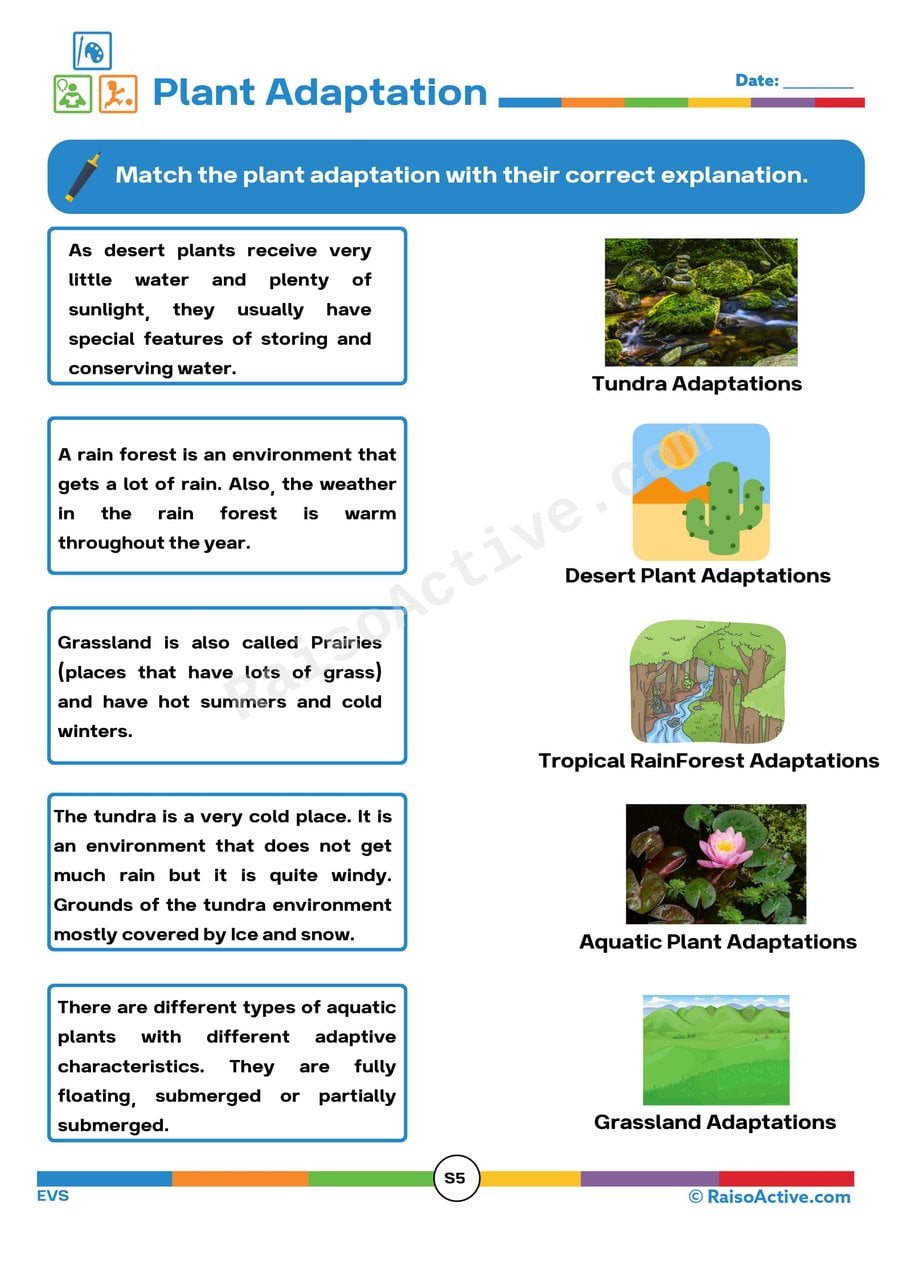
Plant Adaptation Matching Worksheet for Kids
This worksheet has 4-6 year olds match written descriptions of plant adaptations to the correct pictures, building on the idea that plants develop specific features — thick leaves, deep roots, bright flowers — to help them survive in their particular environment. Matching a description to an image requires your child to connect an abstract idea (why does this feature help?) to a concrete picture, which is a genuine step up from simple plant-part identification.
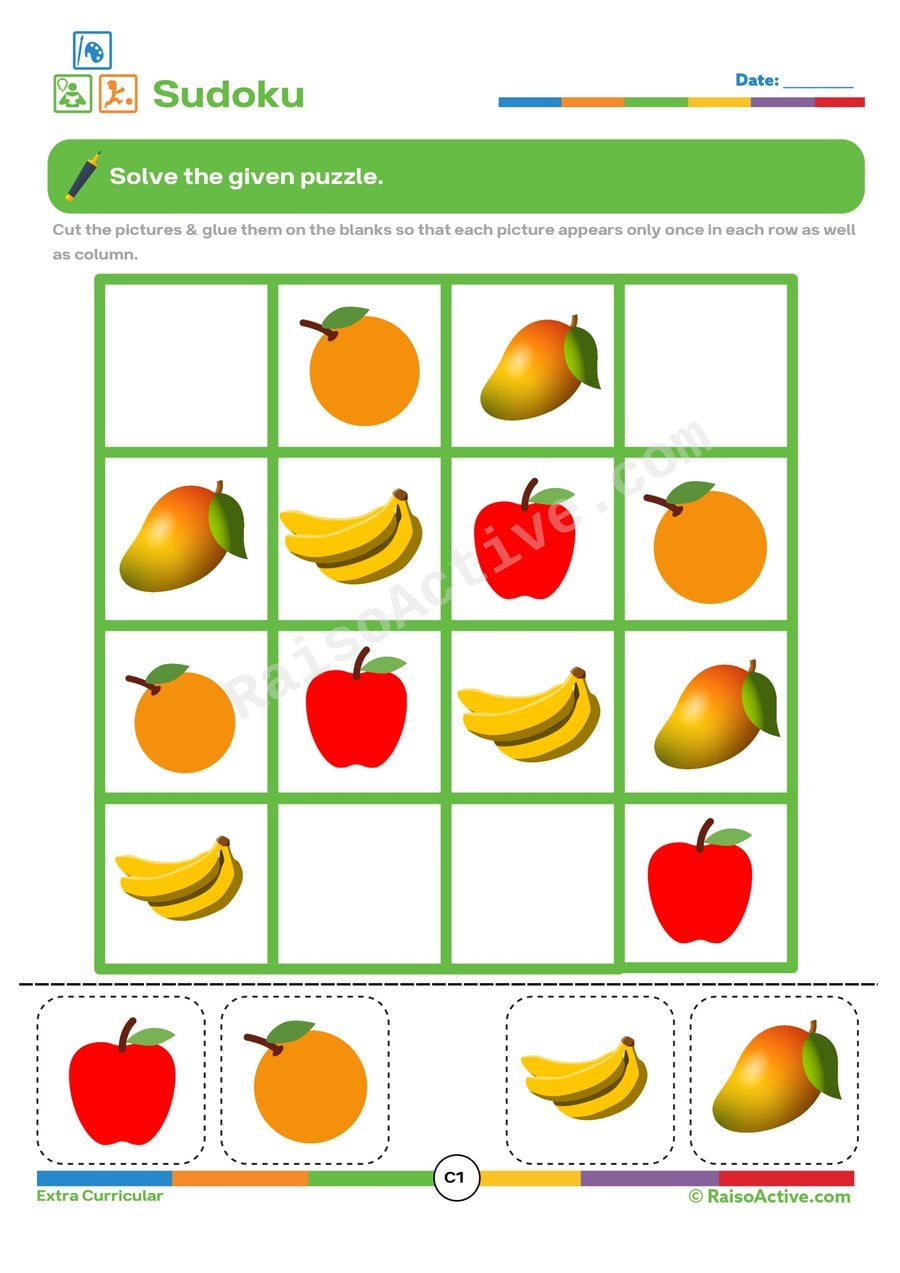
Fruit Sudoku Puzzle Worksheet for Kids
Completing a fruit-themed Sudoku grid builds early logical reasoning for children ages 4-6, requiring them to track which fruits are already placed in a row or column and deduce which one is missing — a foundational problem-solving skill.

Internal Parts Worksheet: Cut and Paste the Organs!
This worksheet introduces children ages 4-6 to basic human anatomy by having them cut out pictures of internal organs, such as the heart, lungs, and stomach, and glue each one into its correct location on a body outline. Beyond scissor and gluing practice, this activity builds spatial body awareness and early scientific vocabulary, giving children a first mental map of what's inside their own bodies.
What Year 1 sorting worksheets cover
Five-year-olds can sort by a rule they cannot see and by two rules at once. Living and non-living things is the classic invisible rule: does it grow, does it need food, does it move by itself. Two-attribute sorts ask for pictures that are both red and round. Sort-and-count sheets end with a simple chart, and sorting pictures by beginning sound or numbers by size links the skill to reading and maths. Venn diagrams come next year.
- Sort pictures into living things and non-living things
- Find the shapes that are both red and round
- Sort, count each group and record the totals in a chart
- Group pictures by the sound their names begin with
- Sort numbers into less than 10 and more than 10
How to use these worksheets at home or in class
A decodable passage or word list most days, plus a short number bonds sheet, keeps pace with a Year 1 classroom. Fifteen minutes is a reasonable ceiling, and reading the passage twice in one sitting builds the fluency the screening check rewards.
Start with the sheet that matches what your child can already do, then move one step up. Keep finished sheets in a folder: Year 1 teachers often ask for evidence of practice, and children like seeing their own progress.
Is your child ready for Year 1 sorting work?
Entering this stage, a child should blend most Phase 3 sounds into words, write a few letters correctly formed, count reliably to twenty, and sit through a short table task without needing constant redirection.
Frequently asked questions
My five-year-old says a plant is not alive. Is that a problem?
It is the most common answer at this age, because the child is using movement as the test. Add the other rules a sheet relies on: living things grow, need food and water, and make new living things. Grow a bean on the windowsill and compare it with a toy car that moves but never changes. Reaching that understanding is the purpose of the living and non-living sort, not a prerequisite for it.
What should a Year 1 child be able to do in sorting?
Five-year-olds can sort by a rule they cannot see and by two rules at once. Living and non-living things is the classic invisible rule: does it grow, does it need food, does it move by itself. Two-attribute sorts ask for pictures that are both red and round. Sort-and-count sheets end with a simple chart, and sorting pictures by beginning sound or numbers by size links the skill to reading and maths. Venn diagrams come next year. Entering this stage, a child should blend most Phase 3 sounds into words, write a few letters correctly formed, count reliably to twenty, and sit through a short table task without needing constant redirection.
Do these worksheets follow the Year 1 curriculum?
The sheets cover grouping objects by one attribute, classifying by size, colour or type, recognizing what does not belong and comparing two groups after sorting, which sit inside the National Curriculum KS1 (Year 1); Letters and Sounds Phase 3–5 outcomes for Year 1. Kindergarten / 1st Grade (US), UKG (India) use the same skills at this age, so the sheets also fit families following those programmes.
Are these Year 1 sorting worksheets free?
Yes. Each worksheet downloads free as a watermarked PDF once you create an account, with a limit of five a day. An annual membership ($20) removes the watermark and the limit for the whole library of over 1,000 worksheets and every printable pack.

Written by
Hemsweta Jain · Teacher Cheena
MBA and Early Childhood Educator, teaching since 2014 · Founder of RaisoActive, Mumbai
Written and reviewed by Hemsweta Jain (Teacher Cheena), who designs every RaisoActive worksheet.
Last reviewed
Printable packs for ages 5–6
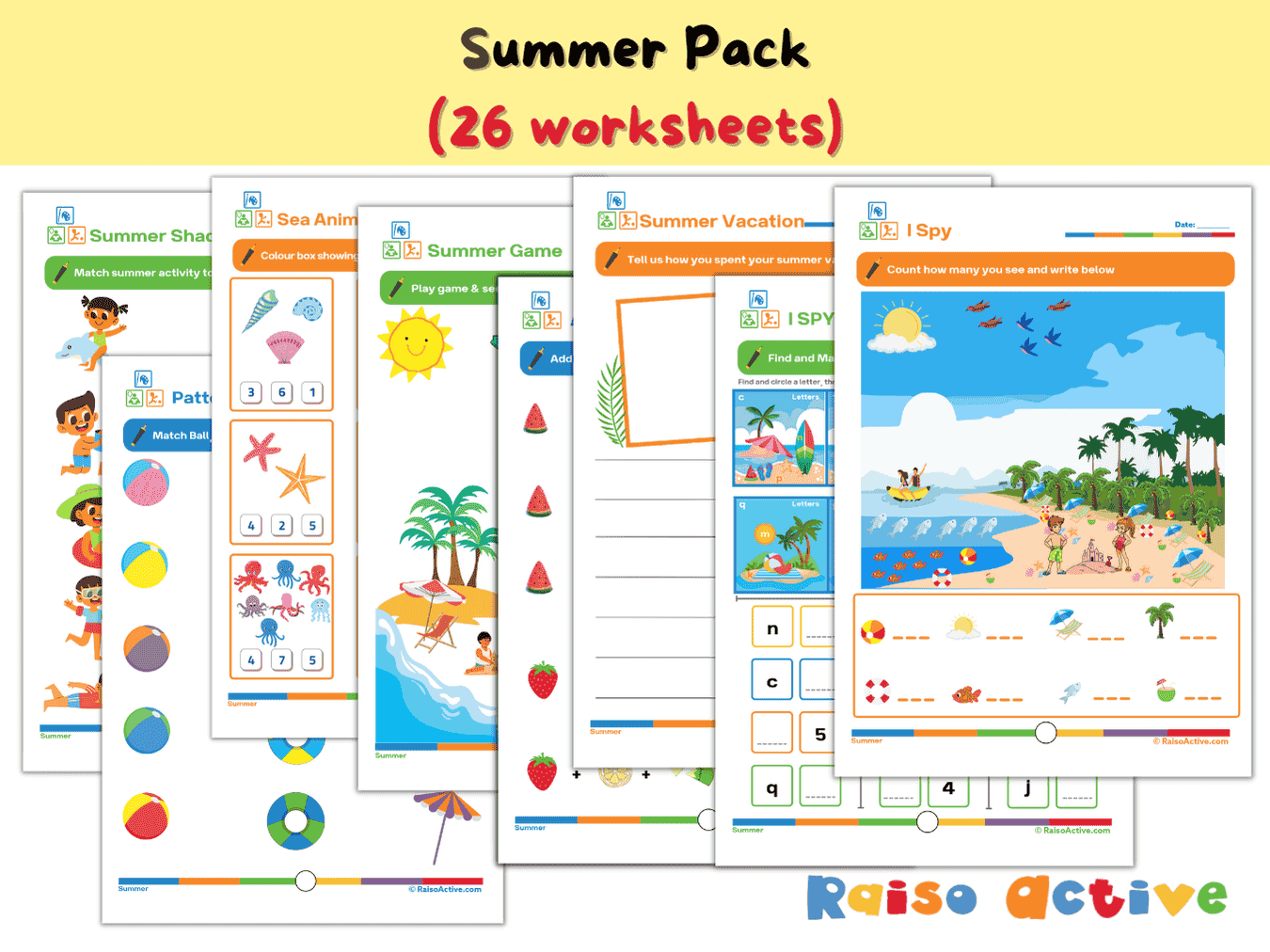
Summer Activity Pack: Math, Literacy, Puzzles & More for Preschool & Kindergarten
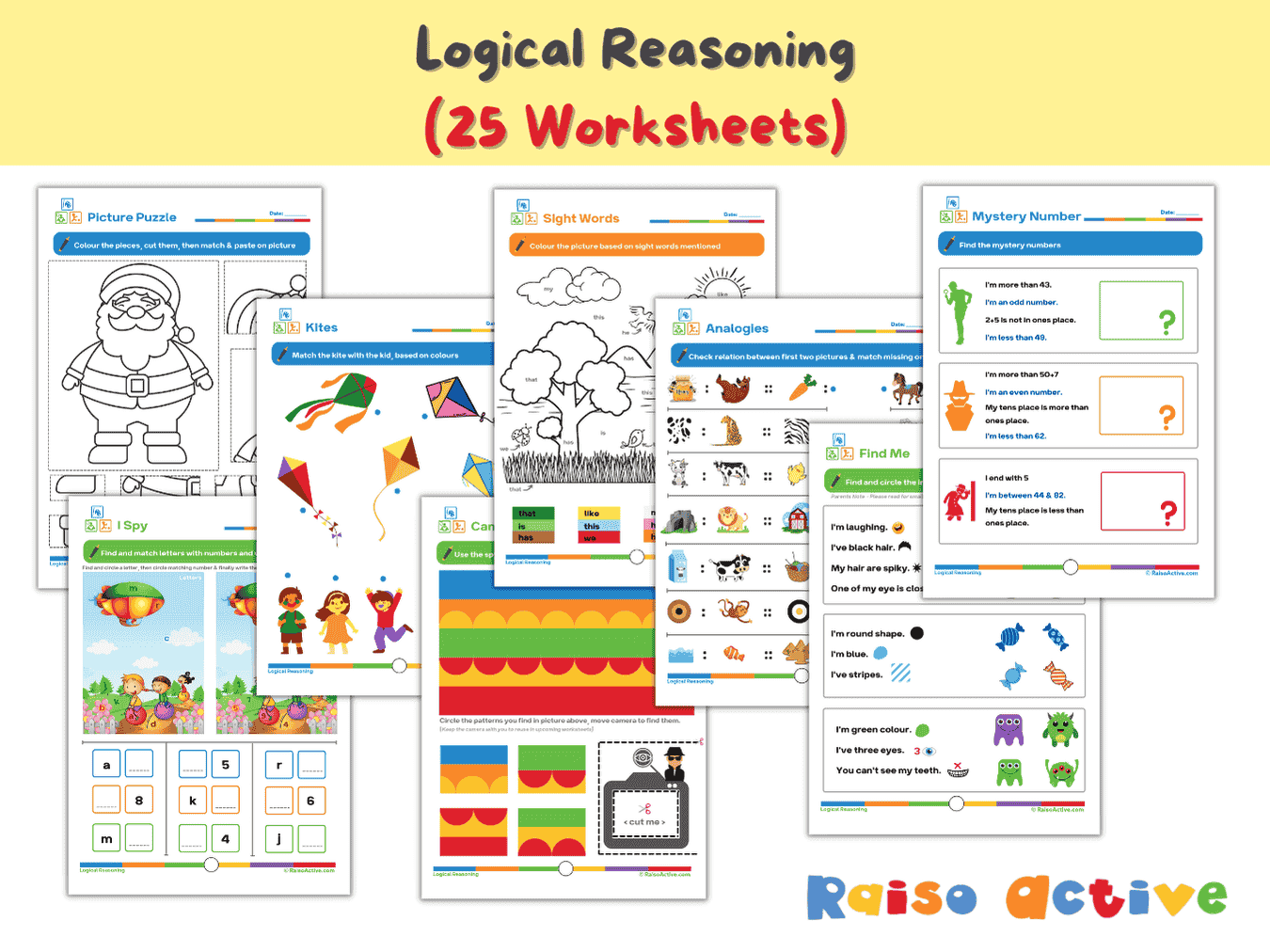
Logical Reasoning Activity Book for Preschool & Kindergarten | Patterns, Puzzles & Analogies
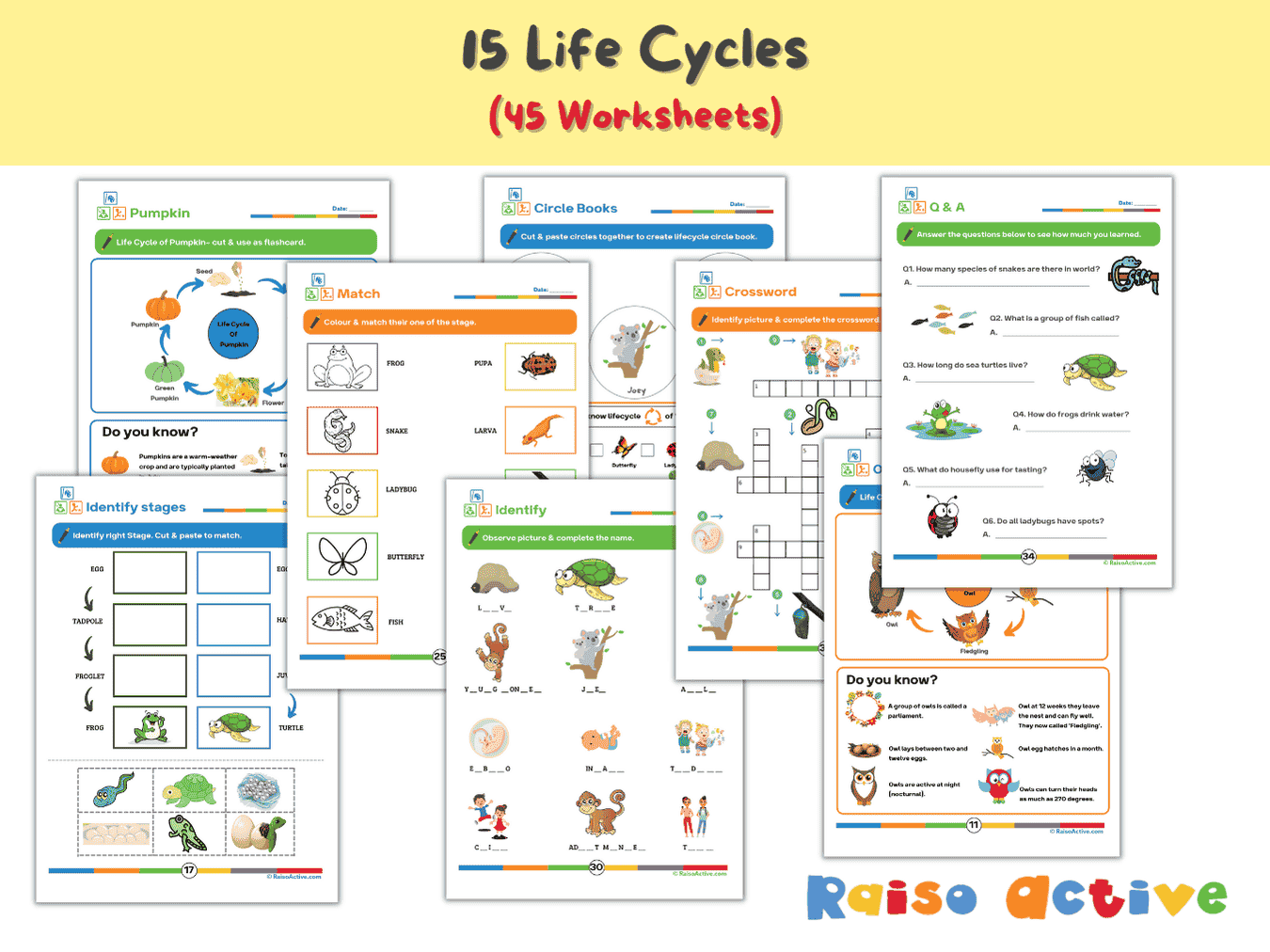
Lifecycles Activity Book & Flashcards for Preschool & Early Elementary
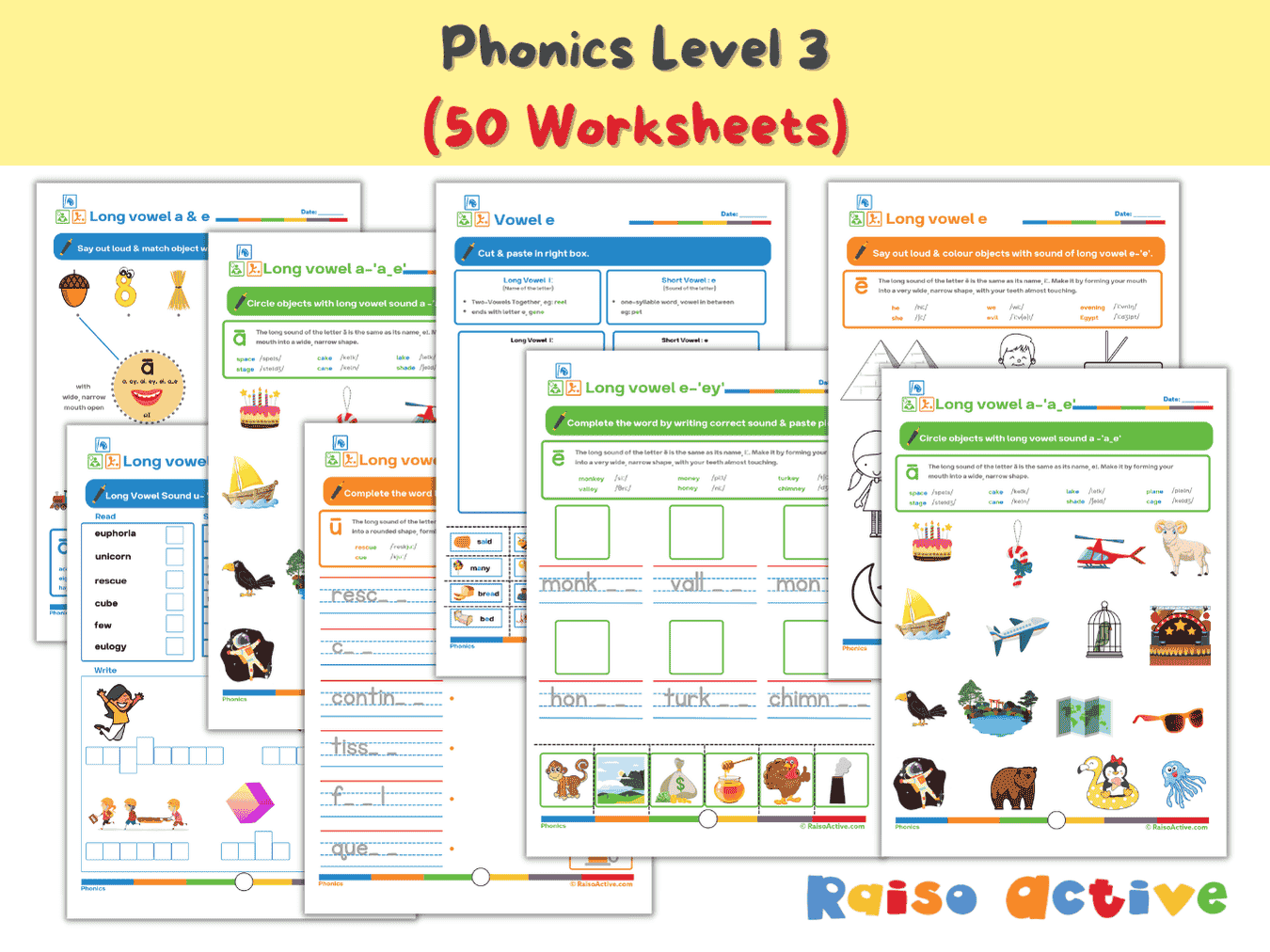
Phonics Level 3 Long Vowels Activity Book for Kindergarten & 1st Grade
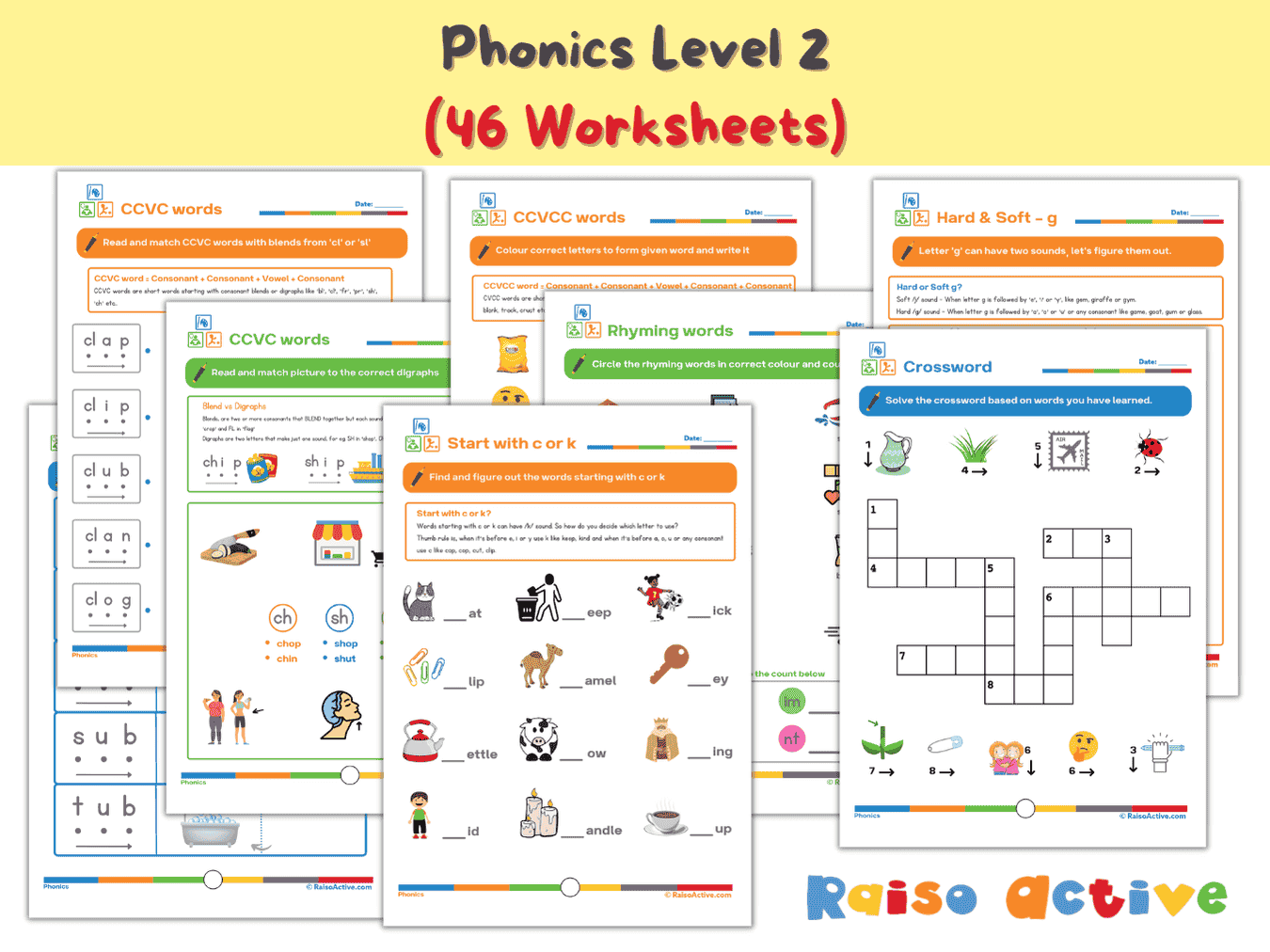
Phonics Level 2 Worksheets: CVC, CCVC, CVCC Word Families & Blends for Early Readers (Ages 4-7)
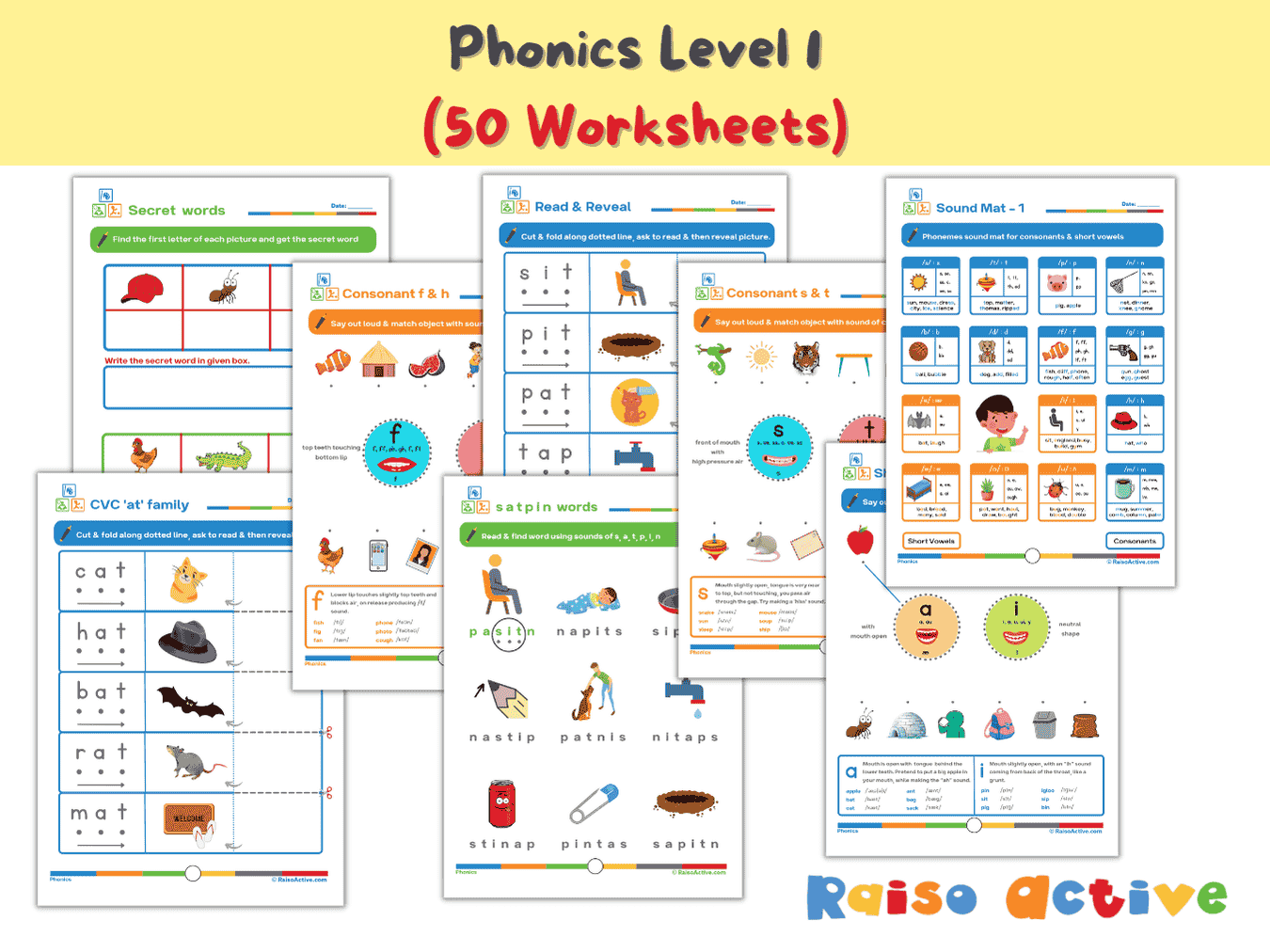
Phonics Level 1 Activity Book: Letter Sounds, Blending & CVC Words for Preschool & Kindergarten
Guides for parents and teachers
See all guides →Age-Appropriate Problem-Solving Activities: Building Critical Thinkers from the Ground Up
Discover fun, age-appropriate problem-solving activities for children ages 1-8. Build critical thinking, logic, and reasoning skills through play-based learning.
Critical Thinking Activities That Actually Work for Young Children: Building Tomorrow's Thinkers Today
Discover proven critical thinking activities for young children. Age-wise logic games, questioning techniques, and hands-on ideas to build thinking skills at home.
Coding Activities for Preschoolers: Building Tomorrow's Thinkers Today
Discover 15+ unplugged and screen-based coding activities for preschoolers that build sequencing, logic, and problem-solving skills through play. NEP 2020 aligned.
Montessori Activities for 3-4 Year Olds: A Complete Guide to Purposeful Learning
Discover practical Montessori activities for 3-4 year olds — practical life, sensorial, language, and maths — with Indian kitchen adaptations and budget shelf ideas.
Canonical: https://raisoactive.com/worksheets/year-1-sorting