Free printable worksheets · United Kingdom
EYFS Sorting Worksheets (Ages 3–5)
EYFS sorting worksheets are practice sheets for children aged 3–5 in Early Years Foundation Stage in the UK. Sorting is grouping a set of objects or pictures by a shared attribute, such as colour, size, shape or type. The sheets on this page cover grouping objects by one attribute, classifying by size, colour or type, recognizing what does not belong and comparing two groups after sorting.
The Early Years Foundation Stage spans Nursery and Reception and treats a worksheet as a small supplement to play rather than the main event. Mark making, matching and sorting dominate the Nursery year; Reception adds letter formation, sound matching and counting to ten as phonics teaching begins in earnest. Three-year-olds can hold a rule in mind that is not the most obvious one. Shape sorting arrives, which means ignoring colour to see a circle or triangle, and three or four groups become manageable. Simple category sorts with a strong visual cue work well: hot and cold, day and night, things that belong in a kitchen. Cut-and-paste under headings, circling, or colouring by group all suit this age. Two-attribute sorts do not.
696+ worksheets · free PDF download · print on A4 or Letter
EYFS Sorting Worksheets to print
Browse all worksheets for ages 3–5
Clothing Pattern Match Worksheet for Preschoolers
This worksheet has children ages 3-5 study repeating patterns on clothing items — stripes, polka dots, or checks — and match each item to its identical twin, building visual discrimination and early pattern-sequencing skills. Distinguishing between similar-looking patterns also sharpens attention to detail, a skill that later supports letter and word recognition.

Consonant Sounds: Matching Objects to 'p' and 'n' Sounds Worksheet
This worksheet gives children ages 3-5 practice identifying the beginning sounds 'p' and 'n' and matching them to the correct pictures, an early step in connecting spoken sounds to written letters. At this age, distinguishing between consonant sounds that use different parts of the mouth (lips for 'p', tongue and nose for 'n') helps children build a mental map of how sounds are produced, which supports both listening and eventual spelling. Matching objects to sounds also reinforces vocabulary alongside phonics.

Bird Parts Cut and Paste Worksheet for Preschoolers
Children ages 3-5 learn the names of specific bird body parts — such as wings, beak, tail, and feathers — by cutting out labels and pasting them next to the correct part of a bird illustration. This activity builds early scientific vocabulary and observational skills, teaching children to notice distinct features rather than viewing an animal as one shape. The cutting and pasting also develops the scissor control and hand-eye coordination needed for fine motor growth.
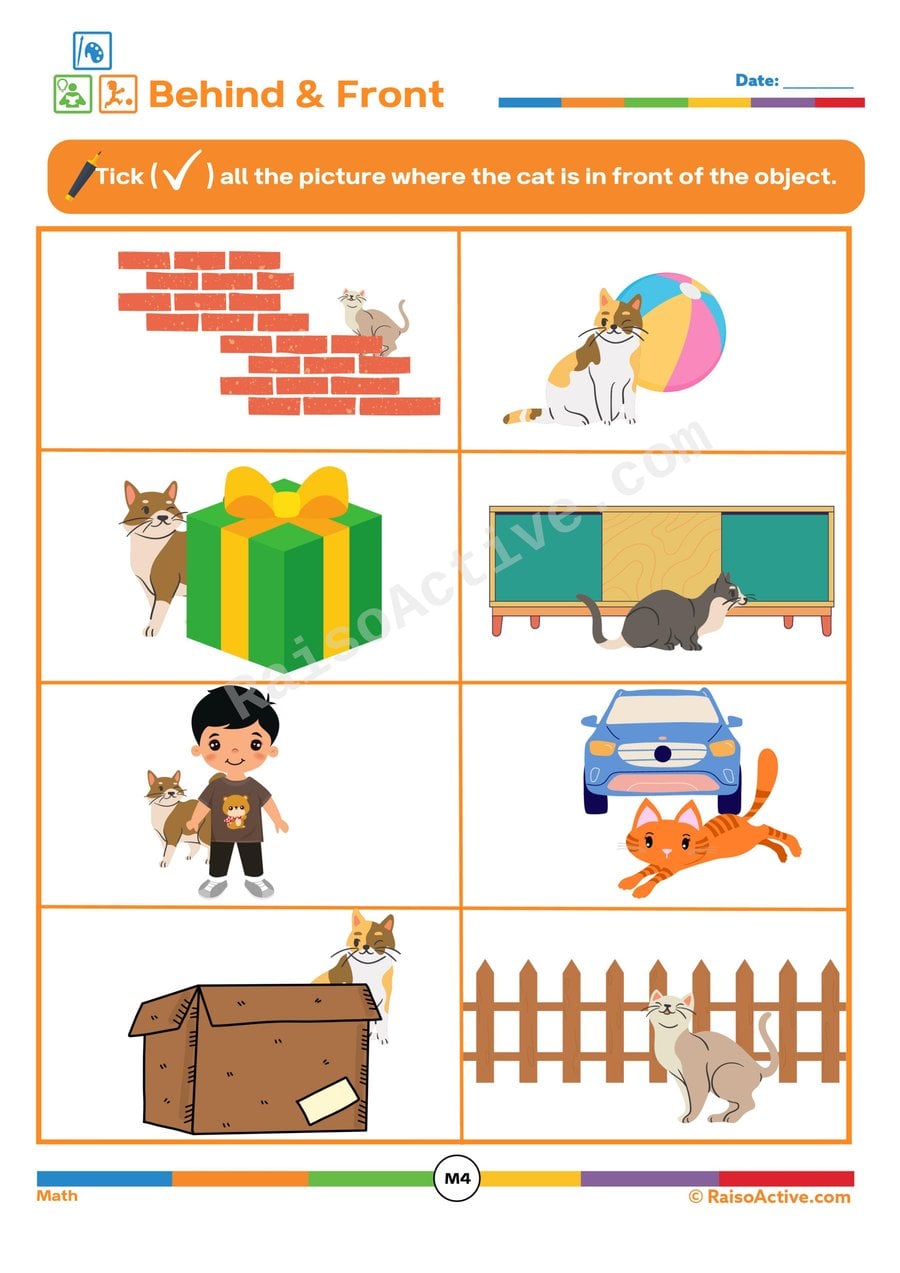
Front and Behind Worksheet: Where is the Cat?
Judging whether the cat sits 'in front of' or 'behind' an object in each picture develops relative-position reasoning for children ages 3-5, an early spatial skill that also builds the vocabulary needed for giving and following directions.

3D Pig Craft: Cut and Paste Worksheet for Preschoolers
Assembling this 3D pig involves cutting, folding the main body, gluing tabs, and attaching a separate head and tail — a longer instruction sequence than most flat crafts — which builds children's ability to hold and execute several steps in order. At ages 3-5, successfully following this kind of multi-step build is an early form of the executive function skills needed for more complex tasks later in school.

Cut and Paste a Turtle Worksheet for Preschoolers
Children ages 3-5 build fine motor precision and shape recognition by cutting out individual geometric pieces and assembling them into a complete turtle picture. Because each shape must be correctly identified and positioned — the oval for the shell, circles for the head and legs — this activity trains spatial reasoning alongside scissor and gluing skills. Completing a recognizable image from separate parts also strengthens whole-to-part visual thinking.

Material Properties Sorting Worksheet for Preschoolers
Children ages 3-5 practice identifying basic material properties, like hard, soft, rough, or smooth, and sorting everyday objects accordingly, an early science observation skill that builds the foundation for later lessons on states of matter and physical properties. Describing why an object belongs in a category also strengthens descriptive vocabulary.

Classroom Objects Worksheet: Circle the Classroom Items!
This worksheet builds vocabulary and visual discrimination in children ages 3-5 by asking them to scan a mixed set of pictures and identify only the ones that belong in a classroom. Sorting relevant from irrelevant items in this way strengthens categorization skills and attention to detail, since children must compare each picture against their own knowledge of what a classroom contains. It also reinforces school-readiness vocabulary like 'desk,' 'crayons,' and 'books.'

Happy or Sad Teeth: Dental Sorting Worksheet for Kids
This sorting worksheet has children ages 3-5 cut out pictures of foods and place them next to either a happy or sad tooth, teaching which foods support healthy teeth (like fruits, vegetables, and dairy) and which contribute to cavities (like candy and soda). Making the effects of food choices visible through a simple happy/sad symbol helps young children connect everyday eating decisions to a health outcome they can understand.

Decorate the Christmas Tree! Cut and Paste Worksheet
This cut-and-paste activity builds scissor control and hand strength in children ages 3-5 as they snip out ornaments, stars, and lights to decorate their own Christmas tree. Deciding where each decoration goes also develops spatial planning and following a visual guide, since children compare their tree to the sample image while placing pieces.
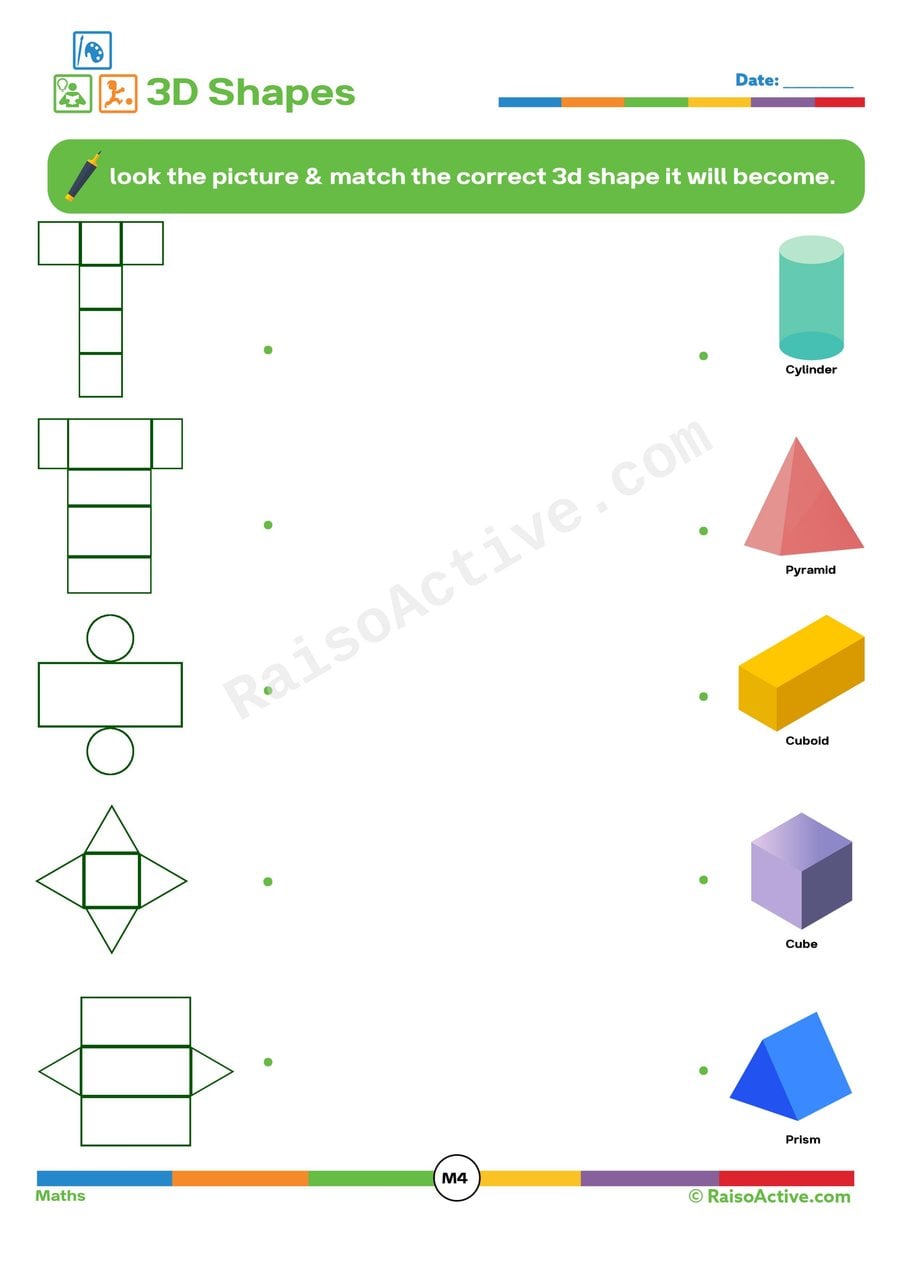
3D Shapes Matching Worksheet for Preschoolers
Connecting a flat, unfolded 2D net to the 3D shape it forms when folded builds spatial reasoning for children ages 3-5, an early introduction to geometry that helps them visualize how flat surfaces combine into solid forms like cubes and cones.
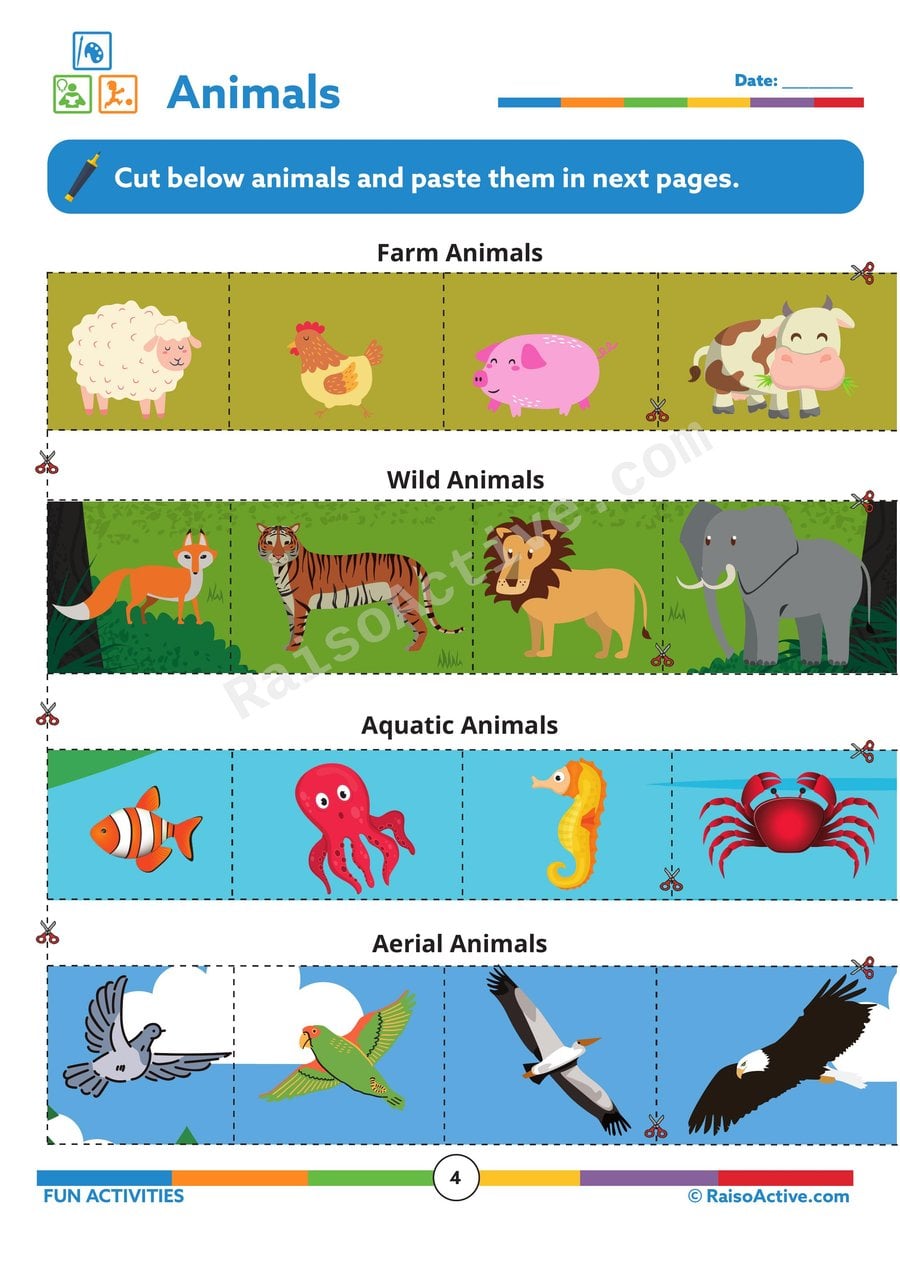
Animal Cut and Paste Worksheet for Preschoolers
Cutting out animal shapes or parts and gluing them into place builds scissor control and gluing precision in children ages 3-5, while sorting or placing animals correctly, such as onto a matching habitat or body outline, reinforces basic animal knowledge and classification. This combination of a physical craft skill and a simple thinking task makes the activity more than just cutting practice alone.

Plant or Animal? A Fun Sorting Worksheet for Kids!
Children ages 3-5 practice distinguishing plants from animals by identifying key characteristics like movement and growth, an early biology classification skill that builds their ability to organize the natural world into categories. Labeling each picture with 'A' or 'P' also reinforces letter recognition alongside the science content.

Honey Bee Cut and Paste Worksheet for Preschoolers
Assembling a honey bee from separate paper pieces — body, wings, stripes — asks children to hold a finished picture in mind and build toward it piece by piece, an early form of the planning and sequencing skills used later in following multi-step instructions. The repeated cutting also strengthens the small hand muscles needed for a mature pencil grip, while the bee theme naturally opens the door to simple nature vocabulary.
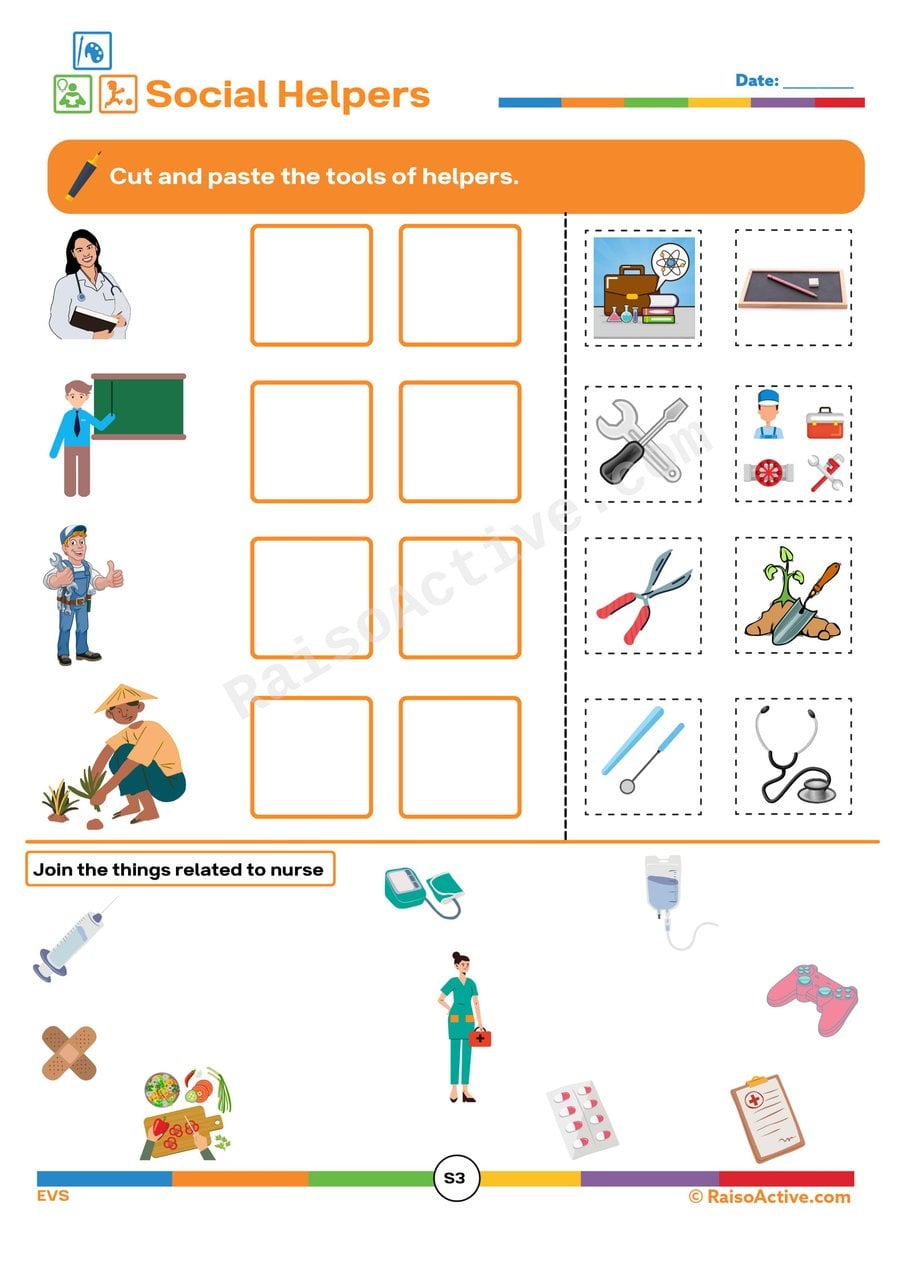
Social Helpers Tools Worksheet for Kids
This worksheet teaches children ages 3-5 to connect community helpers with the tools and equipment they use in their jobs, building early social studies knowledge alongside visual matching skills. Recognizing that a stethoscope belongs to a doctor or a hose belongs to a firefighter helps children understand how tools relate to specific roles and responsibilities in their community. The cut-and-paste and joining activities also reinforce fine motor control and visual discrimination as children sort similar-looking small pictures.

Water Transport Matching Worksheet for Preschoolers
This worksheet builds visual matching and vocabulary skills as children connect the two halves of different water vehicles — like a boat, ship, or submarine — and learn their names. Piecing together a whole object from its parts also sharpens visual discrimination, helping children notice small differences in shape and detail that matter for later reading skills.

Koala Life Cycle Worksheet: Cut and Paste Matching Activity
This worksheet introduces children ages 3-5 to the life cycle of a koala, from a tiny newborn called a joey that lives in its mother's pouch to a fully grown adult, while practicing scissor and gluing skills. Learning that koala joeys start out riding on their mother's back adds a memorable, specific detail that makes the science concept stick.

Animal Homes Matching Worksheet for Preschoolers
By matching each animal to its home, children ages 3-5 build early classification skills and expand their vocabulary around habitats like nests, dens, hives, and burrows. This kind of cause-and-effect pairing — this animal lives in this particular place — lays groundwork for later science concepts about how living things depend on their environment.

Number Names Matching Worksheet for Preschoolers
This worksheet helps children ages 3-5 connect written number words — like 'three' or 'seven' — to their matching numerals, an important step beyond simple numeral recognition toward full number literacy. Drawing a line from a number name to the numeral it stands for requires children to read or recall the word and hold it in mind while scanning for its match, which builds working memory alongside early reading and number skills.

Cr Blend Words Worksheet for Preschoolers: Read & Match!
This worksheet has children read words starting with the 'cr' blend, like 'crab' or 'crayon,' and then match each one to its picture, building both decoding skill and the vocabulary connection between a written word and a real object. For ages three to five, hearing and producing the blended 'cr' sound also improves overall speech clarity, since blended consonants are often among the later sounds children master.
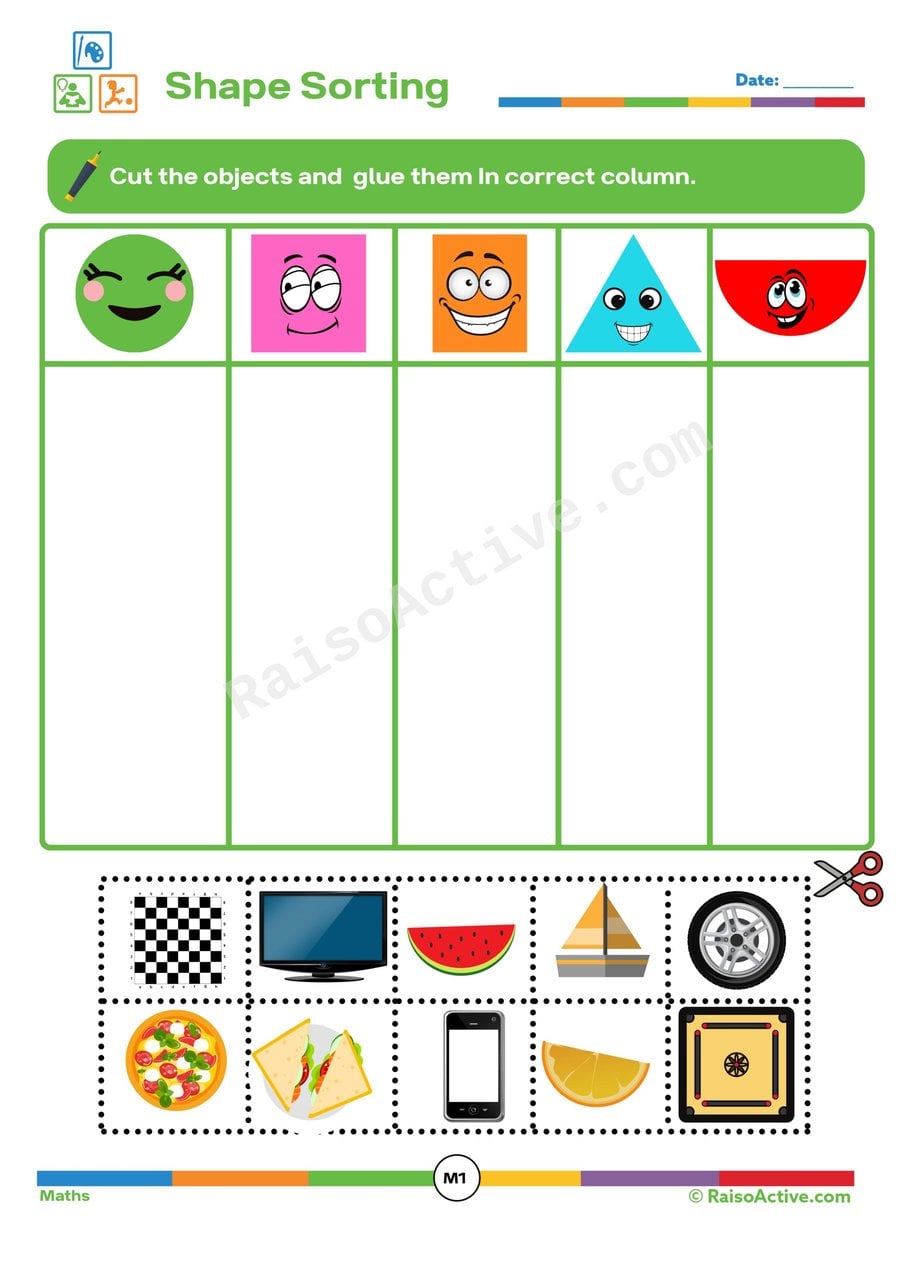
Shape Sorting Worksheet: Cut and Paste Fun!
This cut-and-paste activity asks 3-5 year olds to do more than just name a shape — they have to look at a jumble of circles, squares, and triangles, decide which column each one belongs to, and physically place it there. That sorting step is what builds real shape classification, not just shape labeling, since your child must compare each new piece against the ones already in the column. Cutting the shapes out along their curves and corners is also genuine scissor practice, since curved cuts (circles) are notably harder for small hands than straight ones (triangles, squares).

Diwali Rocket Craft: Cut and Paste Worksheet for Kids
This Diwali-themed rocket craft has children ages 3-5 cut out several rocket parts and assemble them in the correct order, building scissor control and an early understanding of how individual pieces combine into a whole structure. Because rockets are traditionally associated with Diwali fireworks and celebrations, the craft also connects a fine motor activity to real festival traditions your child may have observed.

Capacity Worksheet: Circle the Object with More Capacity!
Comparing pairs of containers teaches children ages 3-5 the early measurement concept of capacity — how much space is inside an object for holding something — which is distinct from simply judging an object's overall size. Making a choice and explaining it also builds early reasoning skills, since children must connect what they see to an invisible property, the amount something can hold.

Cleanliness Worksheet: Tick the Items to Clean Our Body!
Ticking the items used to clean our bodies helps children ages 3-5 build hygiene vocabulary and practice classification, deciding which objects belong to a category based on their purpose rather than just their appearance. This early sorting skill also supports independence in self-care routines like washing and brushing.
What EYFS sorting worksheets cover
Three-year-olds can hold a rule in mind that is not the most obvious one. Shape sorting arrives, which means ignoring colour to see a circle or triangle, and three or four groups become manageable. Simple category sorts with a strong visual cue work well: hot and cold, day and night, things that belong in a kitchen. Cut-and-paste under headings, circling, or colouring by group all suit this age. Two-attribute sorts do not.
- Sort circles, squares and triangles into three groups
- Cut out pictures and paste them under "hot" or "cold"
- Circle the things that belong in a kitchen
- Sort a mixed set into four colour groups
- Separate daytime pictures from nighttime pictures
How to use these worksheets at home or in class
Five to ten minutes at a table, with an adult alongside to talk through the sheet, is enough at any point in this stage. Use a worksheet to echo something already met through play that week rather than to introduce a brand new idea.
Start with the sheet that matches what your child can already do, then move one step up. Keep finished sheets in a folder: EYFS teachers often ask for evidence of practice, and children like seeing their own progress.
Is your child ready for EYFS sorting work?
Look for a child who can make deliberate marks with a crayon, sit briefly at a table, follow a one-step spoken instruction and show curiosity about letters or numbers seen around the house or classroom.
- Sort farm animals and wild animals into two columns
- Paste fruits and vegetables under the right heading
- Group vehicles by whether they travel on land, water or air
Frequently asked questions
Why does my three-year-old sort by colour when I asked for shape?
Colour is the most visible feature of anything on a page, and at three it captures attention before shape does. Sorting by shape requires ignoring colour, which is a real step in thinking rather than a lapse in listening. Start with shapes printed in a single colour, then mix colours once shape sorting is secure. Most children make the switch reliably between three and a half and four.
What should a EYFS child be able to do in sorting?
Three-year-olds can hold a rule in mind that is not the most obvious one. Shape sorting arrives, which means ignoring colour to see a circle or triangle, and three or four groups become manageable. Simple category sorts with a strong visual cue work well: hot and cold, day and night, things that belong in a kitchen. Cut-and-paste under headings, circling, or colouring by group all suit this age. Two-attribute sorts do not. Look for a child who can make deliberate marks with a crayon, sit briefly at a table, follow a one-step spoken instruction and show curiosity about letters or numbers seen around the house or classroom.
Do these worksheets follow the EYFS curriculum?
The sheets cover grouping objects by one attribute, classifying by size, colour or type, recognizing what does not belong and comparing two groups after sorting, which sit inside the EYFS Early Learning Goals (Statutory Framework) outcomes for EYFS. Preschool and Pre-K (US), Nursery and LKG (India) use the same skills at this age, so the sheets also fit families following those programmes.
Are these EYFS sorting worksheets free?
Yes. Each worksheet downloads free as a watermarked PDF once you create an account, with a limit of five a day. An annual membership ($20) removes the watermark and the limit for the whole library of over 1,000 worksheets and every printable pack.

Written by
Hemsweta Jain · Teacher Cheena
MBA and Early Childhood Educator, teaching since 2014 · Founder of RaisoActive, Mumbai
Written and reviewed by Hemsweta Jain (Teacher Cheena), who designs every RaisoActive worksheet.
Last reviewed
Printable packs for ages 3–5
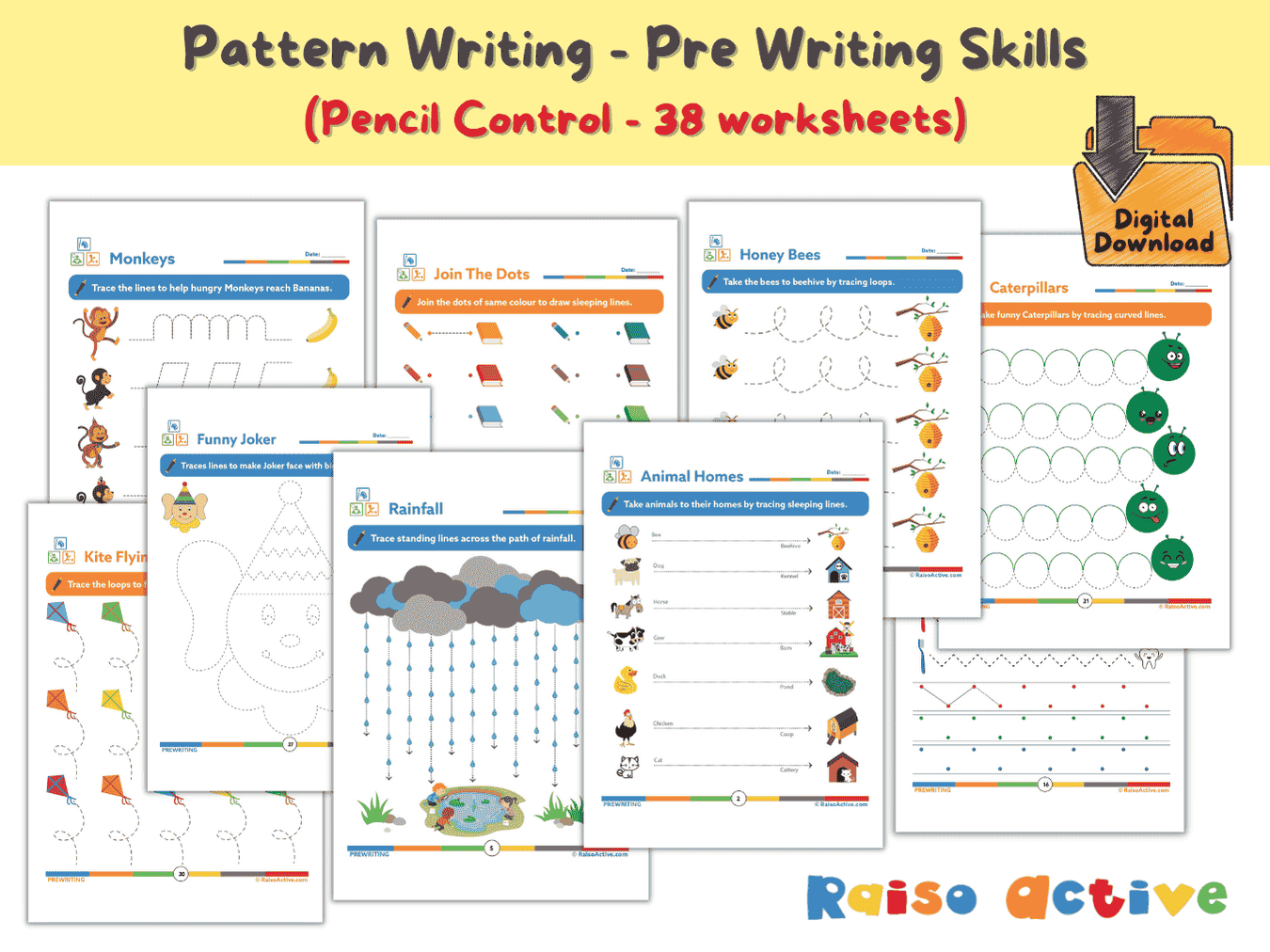
Pattern Writing Pre-writing Skills Activity Book for 3-4 Year Olds
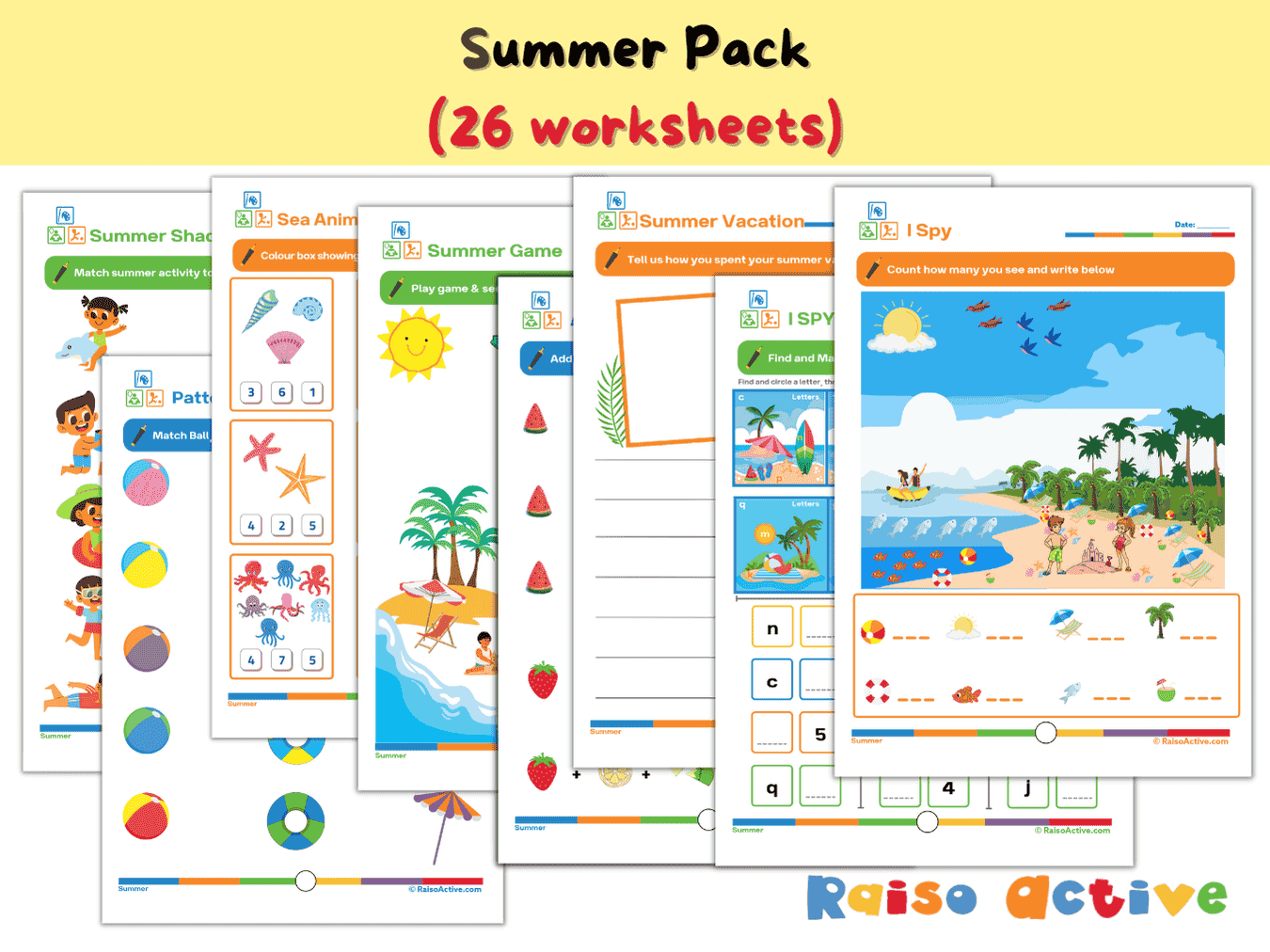
Summer Activity Pack: Math, Literacy, Puzzles & More for Preschool & Kindergarten
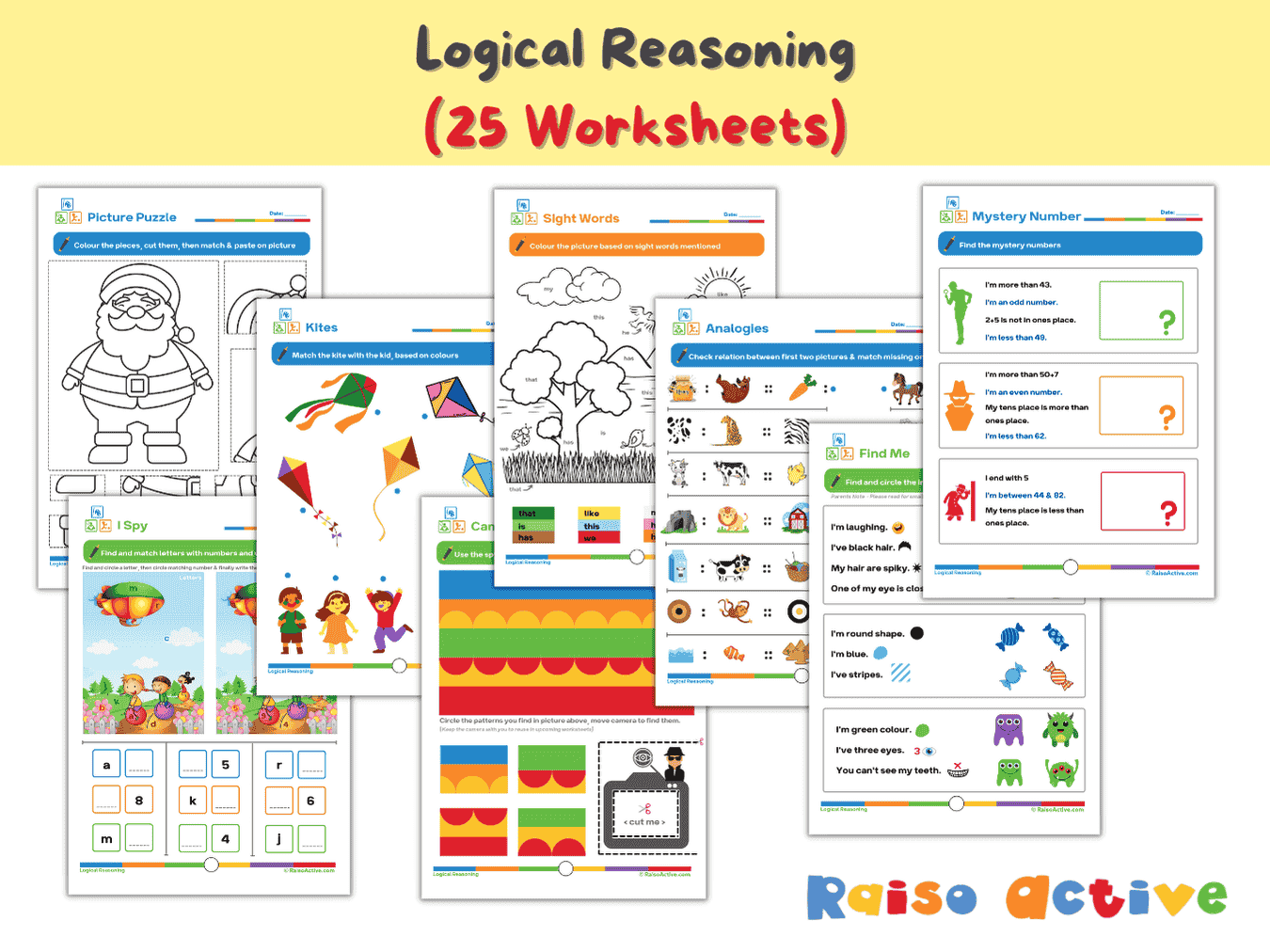
Logical Reasoning Activity Book for Preschool & Kindergarten | Patterns, Puzzles & Analogies
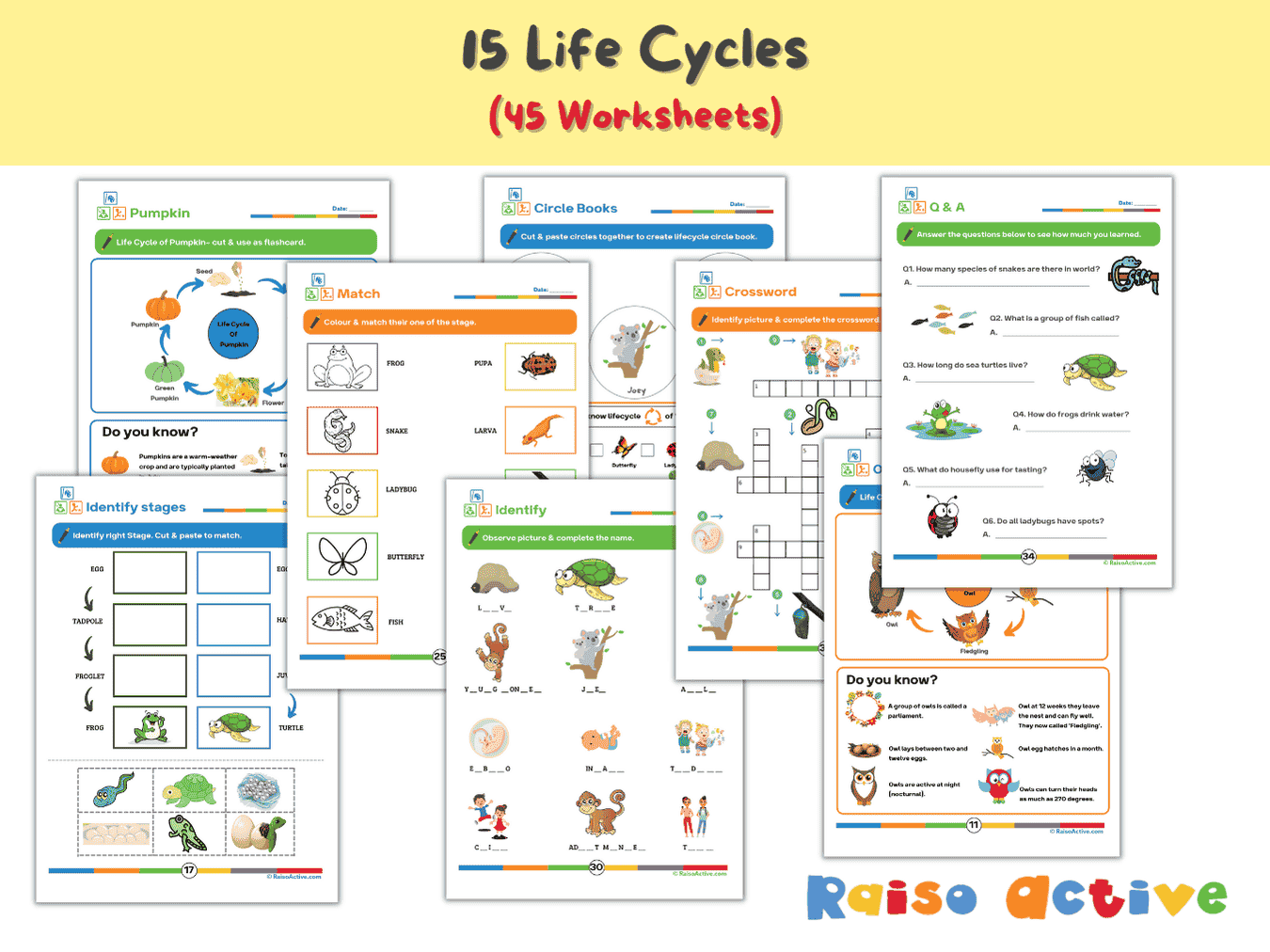
Lifecycles Activity Book & Flashcards for Preschool & Early Elementary
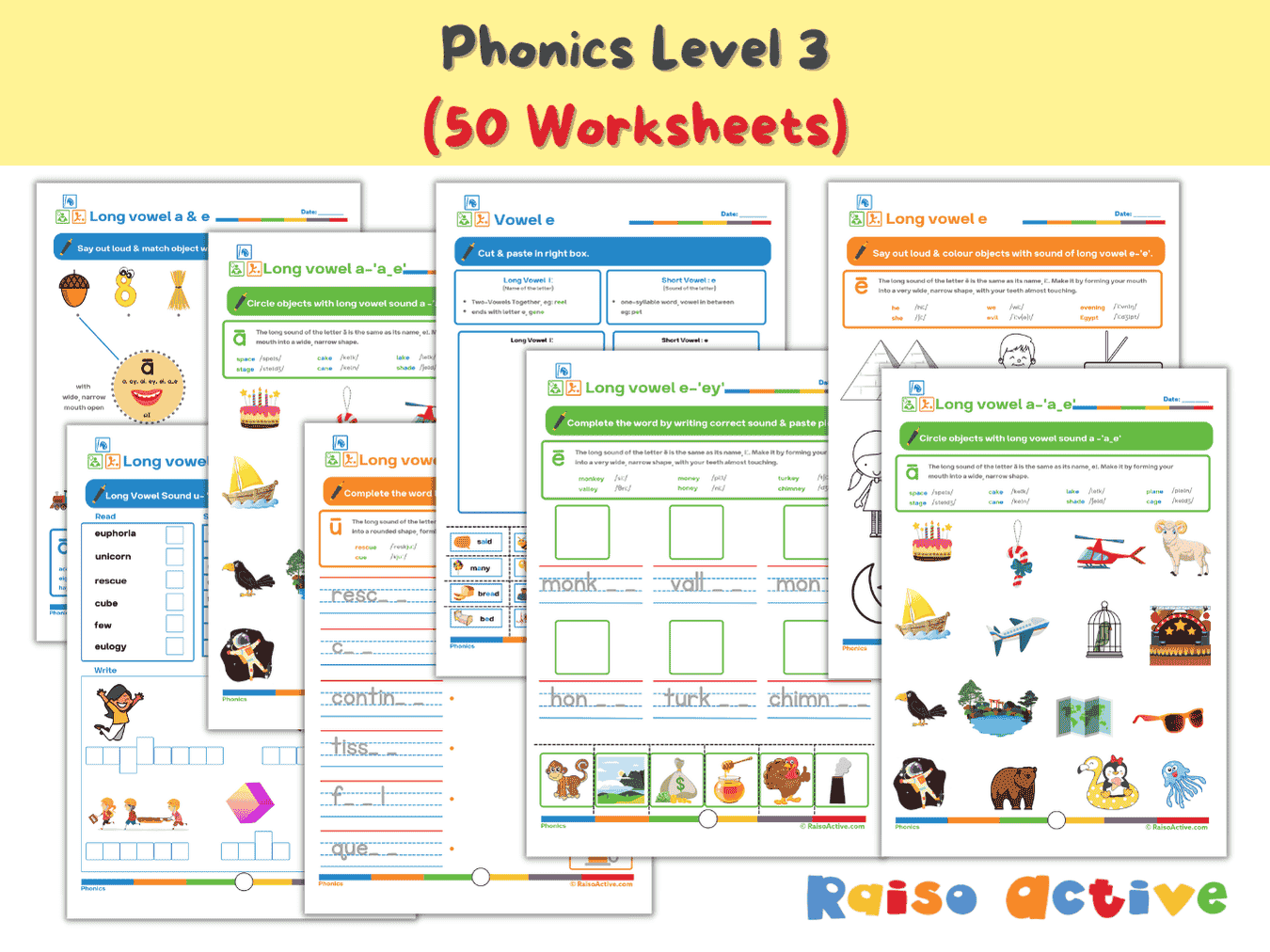
Phonics Level 3 Long Vowels Activity Book for Kindergarten & 1st Grade
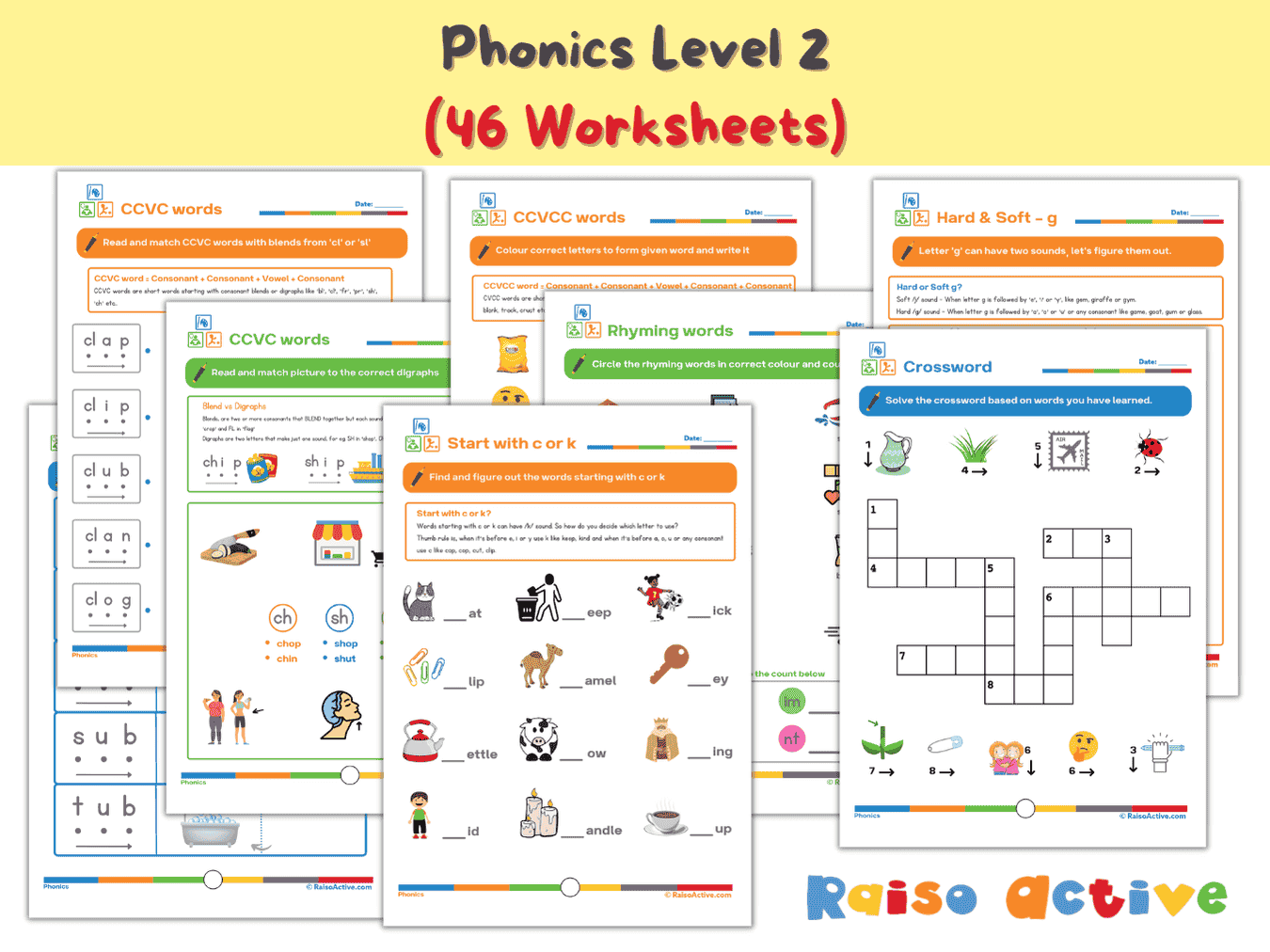
Phonics Level 2 Worksheets: CVC, CCVC, CVCC Word Families & Blends for Early Readers (Ages 4-7)
Guides for parents and teachers
See all guides →Age-Appropriate Problem-Solving Activities: Building Critical Thinkers from the Ground Up
Discover fun, age-appropriate problem-solving activities for children ages 1-8. Build critical thinking, logic, and reasoning skills through play-based learning.
Critical Thinking Activities That Actually Work for Young Children: Building Tomorrow's Thinkers Today
Discover proven critical thinking activities for young children. Age-wise logic games, questioning techniques, and hands-on ideas to build thinking skills at home.
Coding Activities for Preschoolers: Building Tomorrow's Thinkers Today
Discover 15+ unplugged and screen-based coding activities for preschoolers that build sequencing, logic, and problem-solving skills through play. NEP 2020 aligned.
Montessori Activities for 3-4 Year Olds: A Complete Guide to Purposeful Learning
Discover practical Montessori activities for 3-4 year olds — practical life, sensorial, language, and maths — with Indian kitchen adaptations and budget shelf ideas.