Traffic Signals Cut and Paste Worksheet for Preschoolers
Children ages 3-5 learn to recognize red, yellow, and green traffic signals and connect each color to its meaning, an early road-safety skill that also reinforces color recognition and matching. Understanding what each signal means builds real-world safety awareness they'll use as pedestrians and passengers.

Part of the pack
Month 12: Learning & Development | Ages Up to 4
This is page 23 of the pack. Ages 2-4 · PreschoolAges 2-4 · NurseryAges 2-4
Curriculum
- Safety > Road Safety
How to use this worksheet
Cut out the picture pieces at the bottom of the page together, helping your child with the scissors if needed. Look at each traffic signal box on the page and talk about what that color means — stop, wait, or go. Have your child find the matching picture for each signal and glue it into the correct box above, discussing the meaning of each signal as they paste it in.
Materials needed
- Scissors
- Glue
- Pencil
Extension activities
- 1Go for a walk and point out real traffic signals, saying aloud what each color means as you see it.
- 2Draw your own traffic signs, like a stop sign or crosswalk sign, and explain what each one tells drivers and walkers to do.
- 3Set up a pretend road with toy cars and take turns being the traffic signal, calling out 'stop' or 'go.'
- 4Make a simple traffic light out of red, yellow, and green paper circles and practice road safety rules together.

Written by
Hemsweta Jain · Teacher Cheena
MBA and Early Childhood Educator, teaching since 2014 · Founder of RaisoActive, Mumbai
Every RaisoActive worksheet is designed and checked by the founder before publishing.
Published · Last reviewed
More from Month 12: Learning & Development | Ages Up to 4
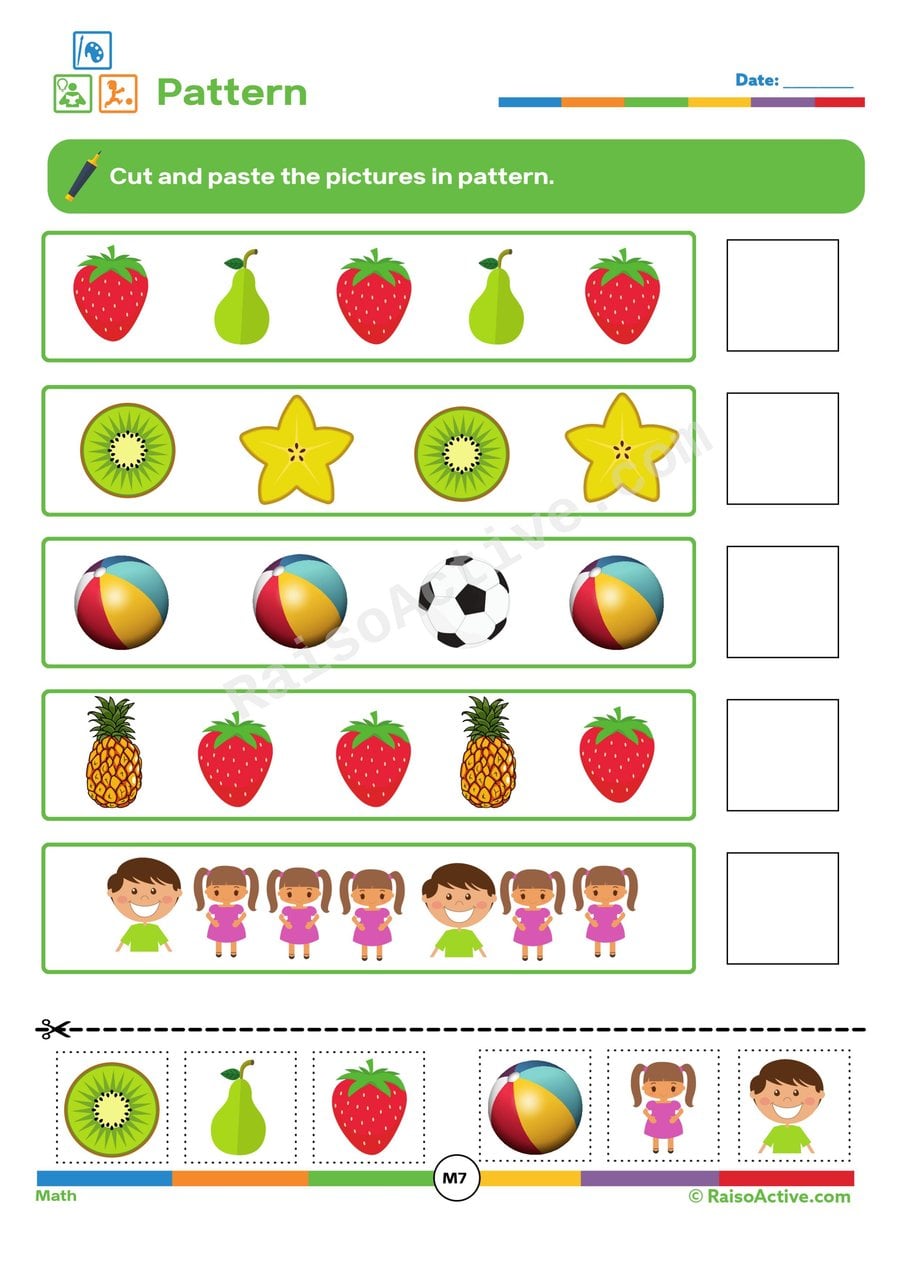
Fruit and Friends Pattern Worksheet
Ages 3-5 · Preschool–Pre-KAges 3-5 · Nursery–ReceptionAges 3-5 · Nursery–LKGAges 3-5
Identifying a repeating sequence of fruits or characters and choosing the correct picture to continue it builds pattern-recognition skills for children ages 3-5, an early form of logical reasoning that connects directly to later math concepts like skip counting.
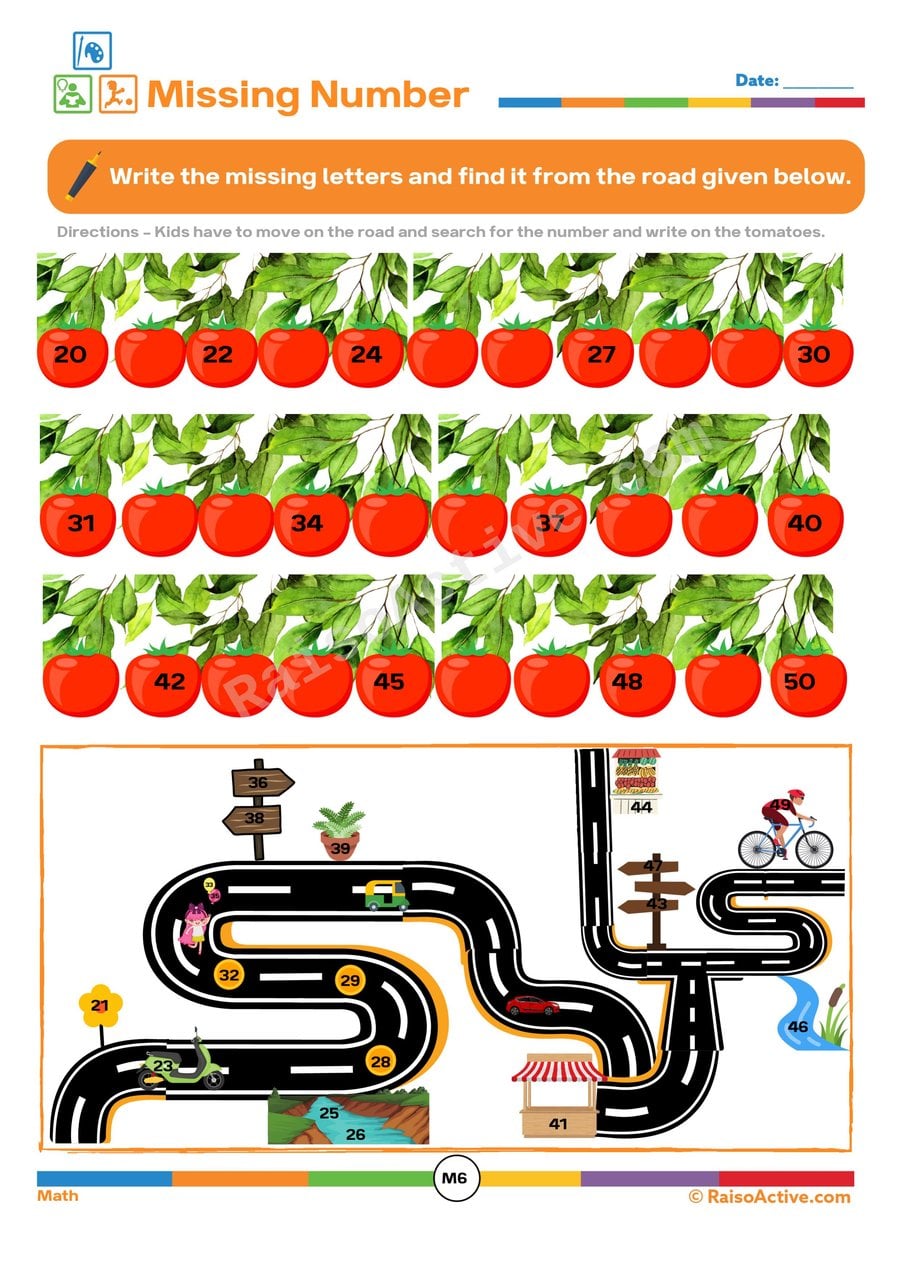
Missing Number Road Trip Worksheet for Kids
Ages 4-6 · Pre-K–KindergartenAges 4-6 · Reception–Year 1Ages 4-6 · LKG–UKGAges 4-6
Children ages 4-6 practice number sequencing by identifying which numbers are missing from a road of tomatoes, a skill that requires understanding what comes before and after a given number in counting order. This strengthens number recognition and prepares children to count confidently without needing to start from one every time.

Froggy Skip Counting Worksheet: Practice Number Patterns!
Ages 4-6 · Pre-K–KindergartenAges 4-6 · Reception–Year 1Ages 4-6 · LKG–UKGAges 4-6
This worksheet introduces children ages 4-6 to skip counting — counting forward by a number other than one, such as by 2s or 5s — using a playful frog theme to keep the repetitive number pattern engaging. Recognizing and continuing a skip-counting sequence builds early number pattern awareness, a skill that later supports multiplication, telling time, and counting money.

Fun Phonics Worksheet: Matching Uppercase and Lowercase Letters!
Ages 3-5 · Preschool–Pre-KAges 3-5 · Nursery–ReceptionAges 3-5 · Nursery–LKGAges 3-5
This matching worksheet teaches children ages 3-5 to recognize that uppercase and lowercase versions of the same letter — like S and s — represent one letter despite looking different, a concept that trips up many early readers. Drawing a line between the four matching pairs builds visual discrimination and letter-form memory, while the follow-up task of circling pictures that start with 'C' adds practice connecting a letter to its sound.

Living or Non-Living? A Fun Sorting Worksheet for Preschoolers
Ages 3-5 · Preschool–Pre-KAges 3-5 · Nursery–ReceptionAges 3-5 · Nursery–LKGAges 3-5
This sorting worksheet introduces children ages 3-5 to one of science's foundational classification concepts: distinguishing living things from non-living things. Deciding whether to tick or cross each picture pushes children to apply criteria — does it grow, move, breathe, or need food — rather than sort by appearance alone, an early form of scientific reasoning. This distinction also builds vocabulary they'll use throughout later nature and biology topics.

Rainbow Sequence Cut and Paste Worksheet for Preschoolers
Ages 4-6 · Pre-K–KindergartenAges 4-6 · Reception–Year 1Ages 4-6 · LKG–UKGAges 4-6
Children ages 4-6 practice numerical sequencing by arranging rainbow picture pieces in the correct numbered order, while also building fine motor control through cutting and gluing. Combining sequencing with a cut-and-paste format makes an abstract ordering skill into a tactile, visual task.

Parent's Guide: Fun Activities for Early Learners!
Ages 3-5 · Preschool–Pre-KAges 3-5 · Nursery–ReceptionAges 3-5 · Nursery–LKGAges 3-5
This parent's guide bundles several hands-on activities — letter matching, sorting, art, and simple crafts like paper cup animals — that build early literacy, fine motor skills, and creativity for children ages 3-5 through play rather than worksheets.
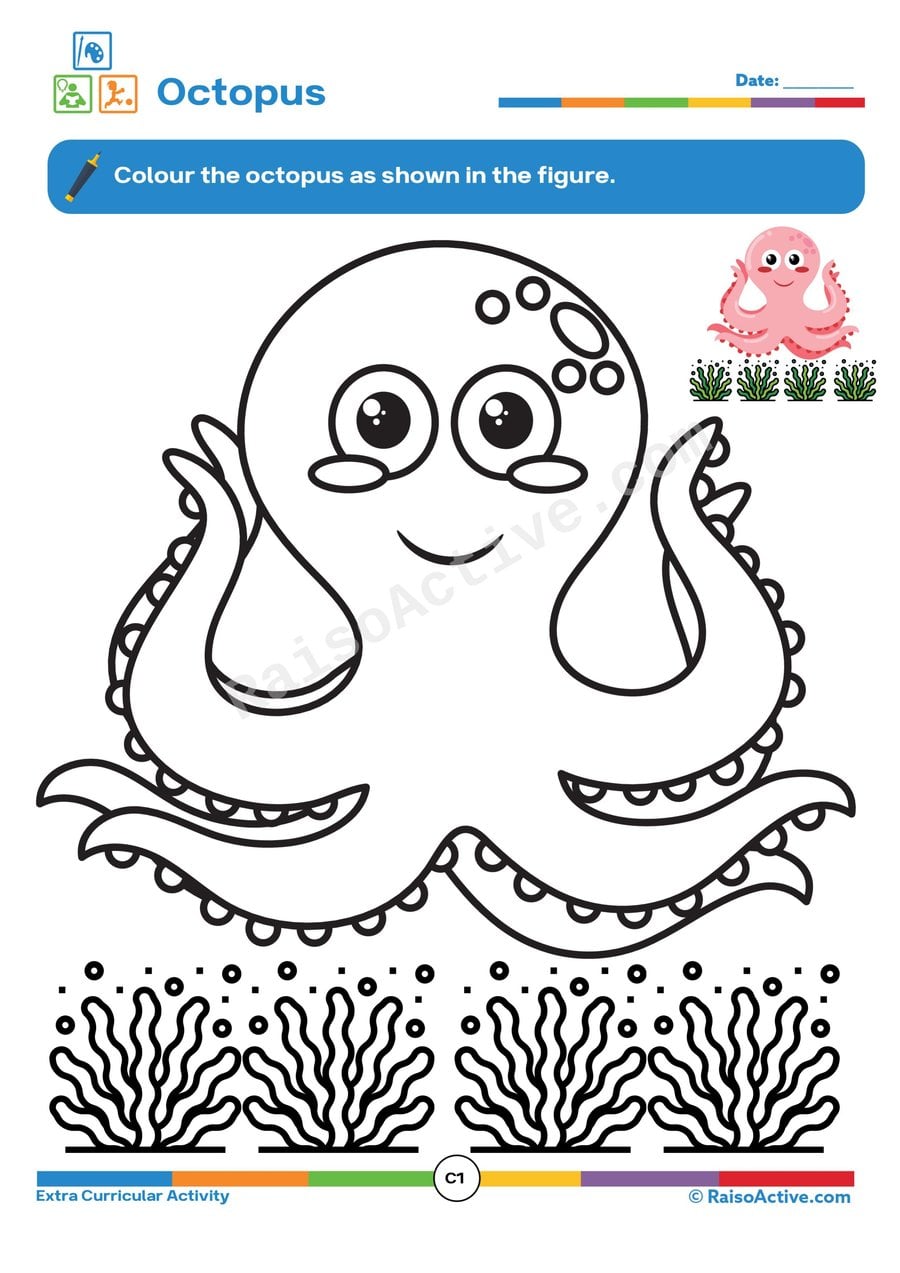
Color the Octopus Worksheet for Preschoolers
Ages 3-5 · Preschool–Pre-KAges 3-5 · Nursery–ReceptionAges 3-5 · Nursery–LKGAges 3-5
Children ages 3-5 practice fine motor control and following a color example by coloring a detailed octopus picture, strengthening the hand control and attention needed for later writing tasks. Matching a model image also builds visual observation skills as they compare their work to the example provided.
Related worksheets
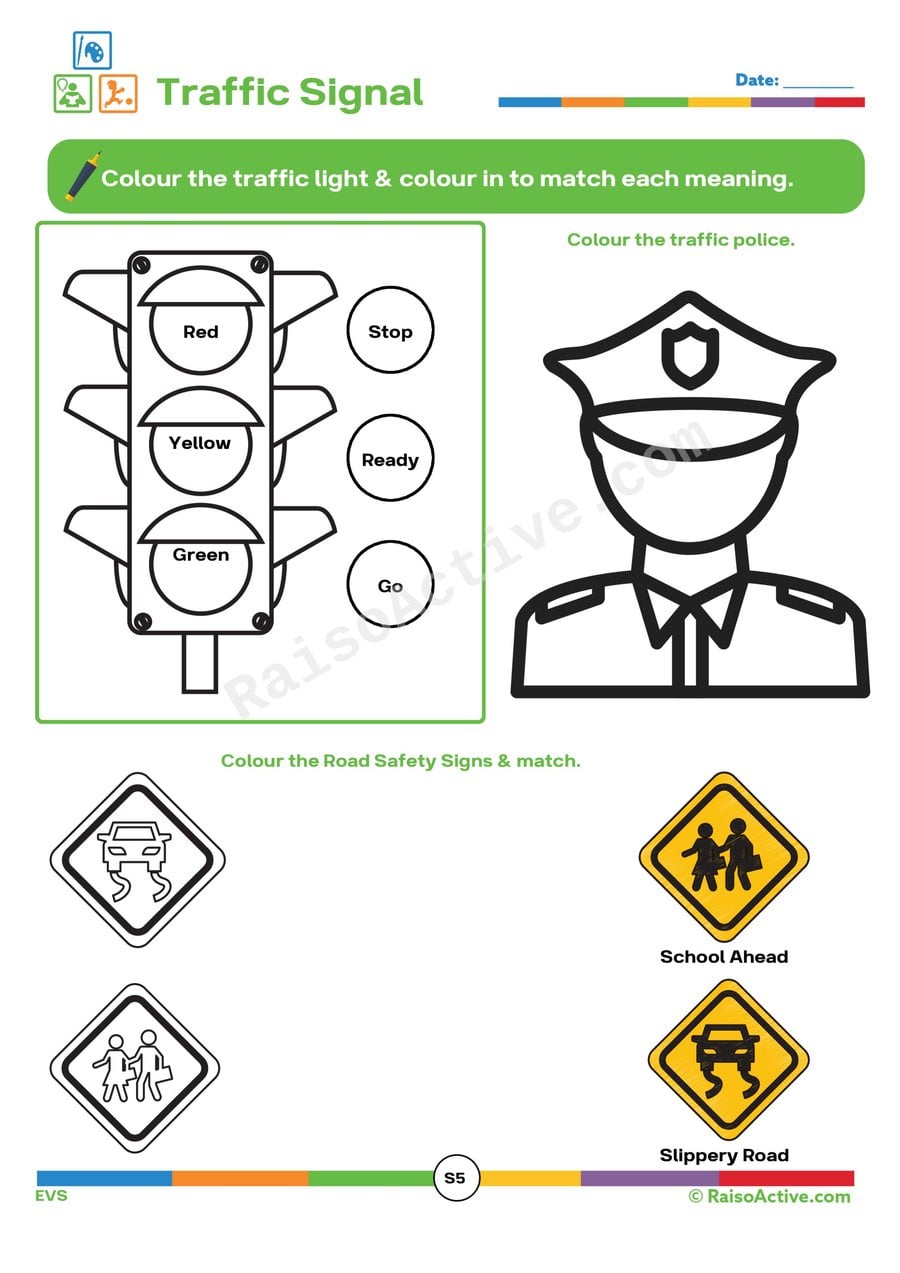
Traffic Signal Fun: Color and Match the Meanings!
Ages 3-5 · Preschool–Pre-KAges 3-5 · Nursery–ReceptionAges 3-5 · Nursery–LKGAges 3-5
Coloring traffic lights and matching words to their meanings teaches children ages 3-5 that colors carry specific, important messages in the real world, an early and practical form of symbol recognition and road safety awareness. Matching written words to the correct traffic light or road sign also reinforces early reading skills by connecting simple vocabulary to something visually familiar from everyday outings. Understanding what red, yellow, and green mean at a traffic light gives children knowledge they can apply immediately as pedestrians and future road users.
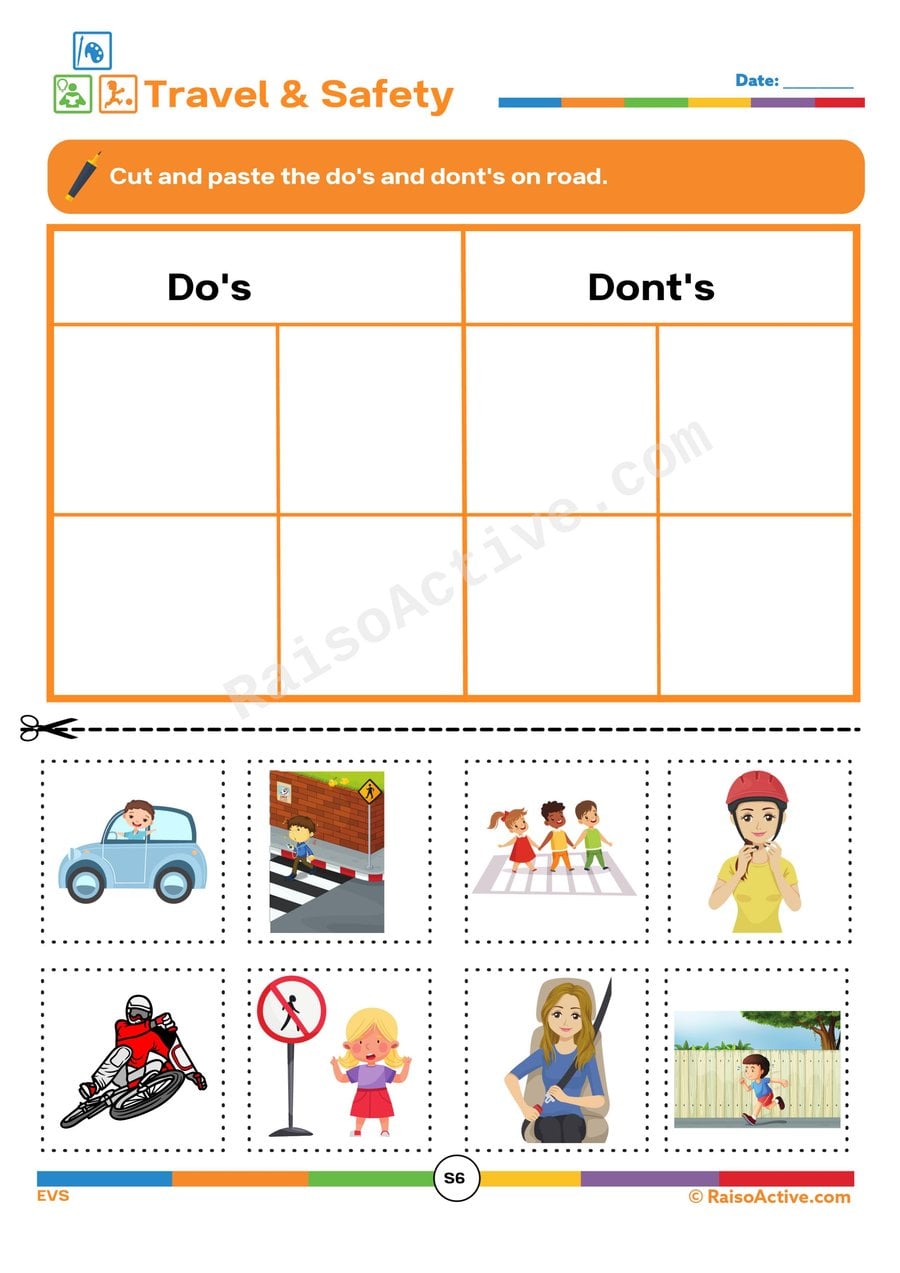
Road Safety Cut and Paste Worksheet for Kids
Ages 3-5 · Preschool–Pre-KAges 3-5 · Nursery–ReceptionAges 3-5 · Nursery–LKGAges 3-5
Children ages 3-5 practice identifying safe versus unsafe behaviors near roads and traffic by sorting pictures into 'Do's' and 'Don'ts' columns, building early safety awareness alongside basic classification skills. Talking through why each picture belongs in its column helps children move beyond simply memorizing rules toward actually understanding the reasoning behind road safety.

Traffic Rules Worksheet: Cut and Glue the Traffic Signs!
Ages 3-5 · Preschool–Pre-KAges 3-5 · Nursery–ReceptionAges 3-5 · Nursery–LKGAges 3-5
Cutting out traffic sign pictures and matching them to their correct labels builds early sign recognition and vocabulary for children ages 3-5, connecting a familiar shape and color to its real-world safety meaning.

Road Safety Worksheet for Kids: Fill-in-the-Blanks
Ages 3-5 · Preschool–Pre-KAges 3-5 · Nursery–ReceptionAges 3-5 · Nursery–LKGAges 3-5
This worksheet teaches children ages 3-5 essential road safety vocabulary and rules — like looking both ways, using crosswalks, and obeying traffic signals — by having them choose the correct word to complete each safety-related sentence. Learning these rules in a reading and writing context, rather than just hearing them, helps reinforce safety habits that protect children in real traffic situations.

Traffic Rules Worksheet for Kids: Learn Road Safety!
Ages 3-5 · Preschool–Pre-KAges 3-5 · Nursery–ReceptionAges 3-5 · Nursery–LKGAges 3-5
This worksheet builds children ages 3-5's understanding of basic traffic rules, including who controls traffic, where it's safe to cross, and what each traffic light color means, through a combination of circling correct answers and coloring a traffic signal. Learning these rules early helps children build genuine road safety awareness rather than just memorized instructions.

Safety Stairs Worksheet: Matching Traffic Signs and Following Directions
Ages 3-5 · Preschool–Pre-KAges 3-5 · Nursery–ReceptionAges 3-5 · Nursery–LKGAges 3-5
This worksheet builds road safety awareness in children ages 3-5 while also practicing sign recognition, visual matching, and following a multi-step path from start to finish. Matching sign names to sign shapes teaches children to recognize traffic signs by both their look and their meaning, a real-world reading skill that supports their safety once they're out walking or biking.
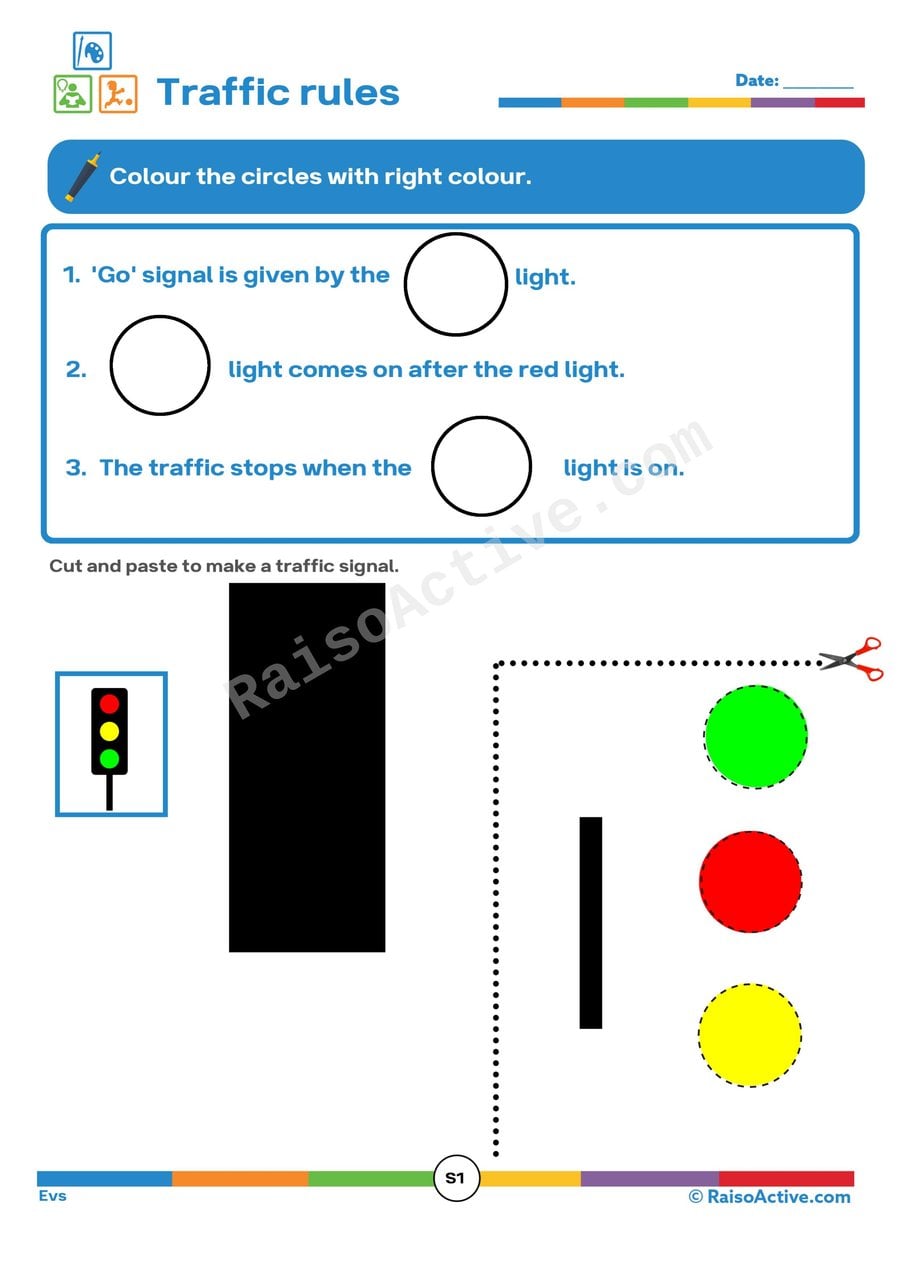
Traffic Light Colors Worksheet for Kids
Ages 3-5 · Preschool–Pre-KAges 3-5 · Nursery–ReceptionAges 3-5 · Nursery–LKGAges 3-5
Coloring the traffic light and completing the signal teaches children ages 3-5 what each color means, connecting red, yellow, and green to stop, wait, and go in a way that supports real road safety awareness. Cutting and pasting the finished signal also gives extra fine motor practice tied directly to the lesson.

Road Safety Signs Matching Worksheet for Preschoolers
Ages 3-5 · Preschool–Pre-KAges 3-5 · Nursery–ReceptionAges 3-5 · Nursery–LKGAges 3-5
Matching road safety signs teaches 3-5 year olds to recognize specific shapes, colors, and symbols and connect them to their real-world meaning — an early form of symbol literacy that matters well beyond the worksheet, since these are signs your child will actually encounter on walks and car rides. Coloring the signs first, then matching them, reinforces visual recognition through repetition before the matching task asks them to recall each sign's identity without color cues alone.
Guides for this topic

Age-Appropriate Problem-Solving Activities: Building Critical Thinkers from the Ground Up
Discover fun, age-appropriate problem-solving activities for children ages 1-8. Build critical thinking, logic, and reasoning skills through play-based learning.

Teaching Health and Safety to Young Children: Building Lifelong Protective Habits
Practical guide to teaching safety to kids: hygiene activities, road safety, body safety, fire drills & more. Age-appropriate strategies for children ages 1-8.
Christmas and Winter Activities That Combine Fun and Learning: Creating Magical Educational Experiences
Discover Christmas and winter activities that combine festive fun with real learning. Crafts, counting, literacy, and printable worksheets for ages 2 to 8 — perfect for home and school.
Reviews
Every worksheet for ages 3–5, no watermark
Members download the full library of 1,000+ worksheets and every activity pack without watermarks or daily limits. One year costs ₹999 in India or $20 elsewhere.
See membership plansOr download any worksheet free with a watermark (5 a day).