Free printable worksheets · India
UKG Sight Words Worksheets (Ages 5–6)
UKG sight words worksheets are practice sheets for children aged 5–6 in Upper Kindergarten (Senior KG) in India. Sight words are common words practiced until they are recognised instantly, because many cannot be sounded out with regular phonics rules. The sheets on this page cover instant recognition of high-frequency words, reading words that cannot be sounded out, spelling common words from memory and using sight words inside a sentence.
Upper Kindergarten shifts from recognising symbols to using them: children blend letter sounds into words, write short sentences, and solve small addition and subtraction sums instead of only counting objects. Numbers extend to fifty, and the plus and minus signs appear on the page for the first time. This is the year sight words are learned in bulk. Children at five to six work through the first forty to fifty high-frequency words, the pre-primer list or the tricky words of the early phonics phases, at a pace of three to five a week. Worksheets should follow read, trace, write, find on one page and mix the new word with older ones. Expect slow, deliberate reading; expect spelling of "was" and "said" to still wobble.
914+ worksheets · free PDF download · print on A4 or Letter
UKG Sight Words Worksheets to print
Browse all worksheets for ages 5–6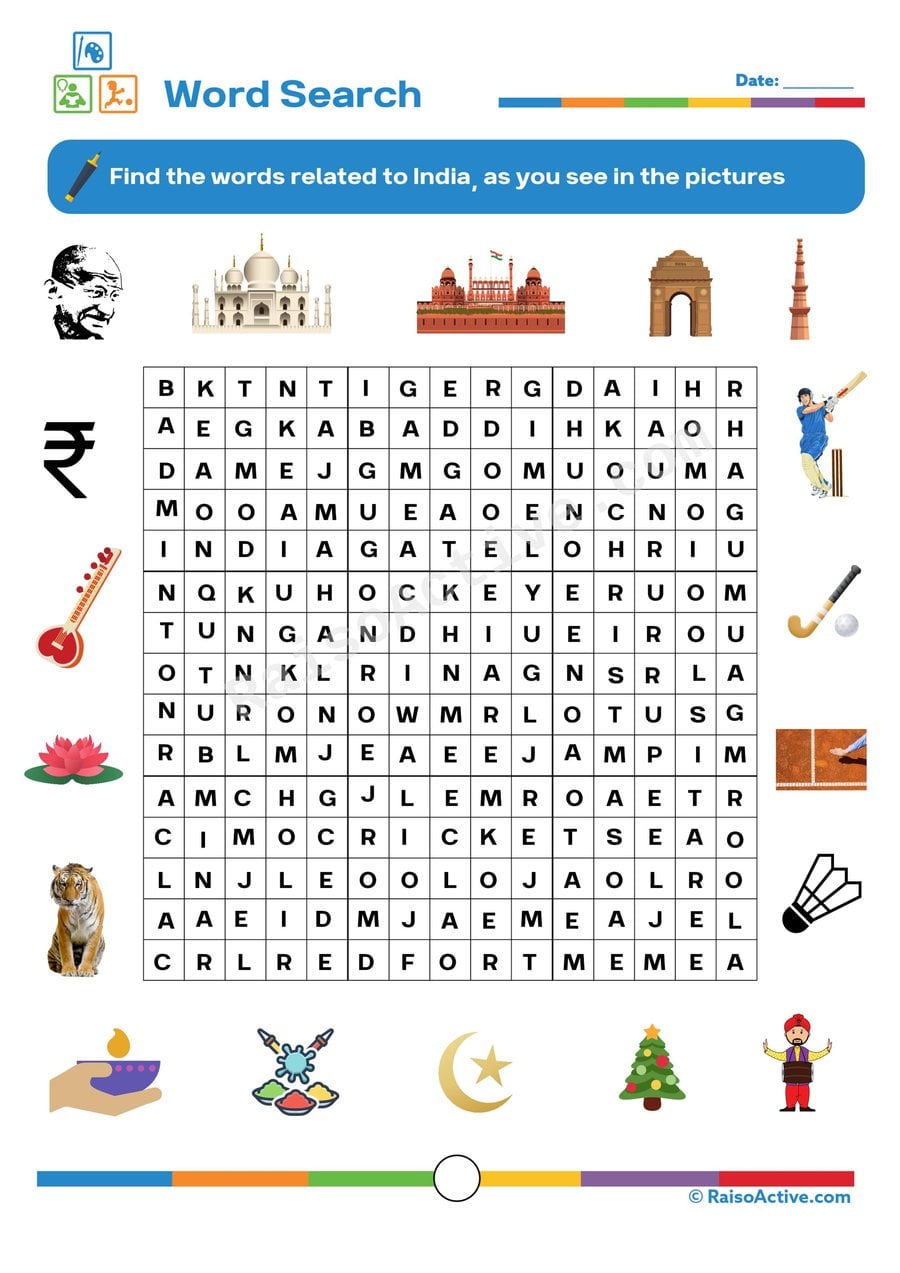
India Word Search Worksheet for Kids
Searching a letter grid for words connected to India, such as festival names, foods, or landmarks, builds visual scanning and word-recognition skills in children ages 4-7 while introducing vocabulary tied to Indian culture and geography. Because the target words vary in length and may run in different directions through the grid, children also practice sustained visual attention and letter-sequence tracking, both important pre-reading skills. This worksheet pairs literacy practice with cultural and social studies exposure in a single activity.
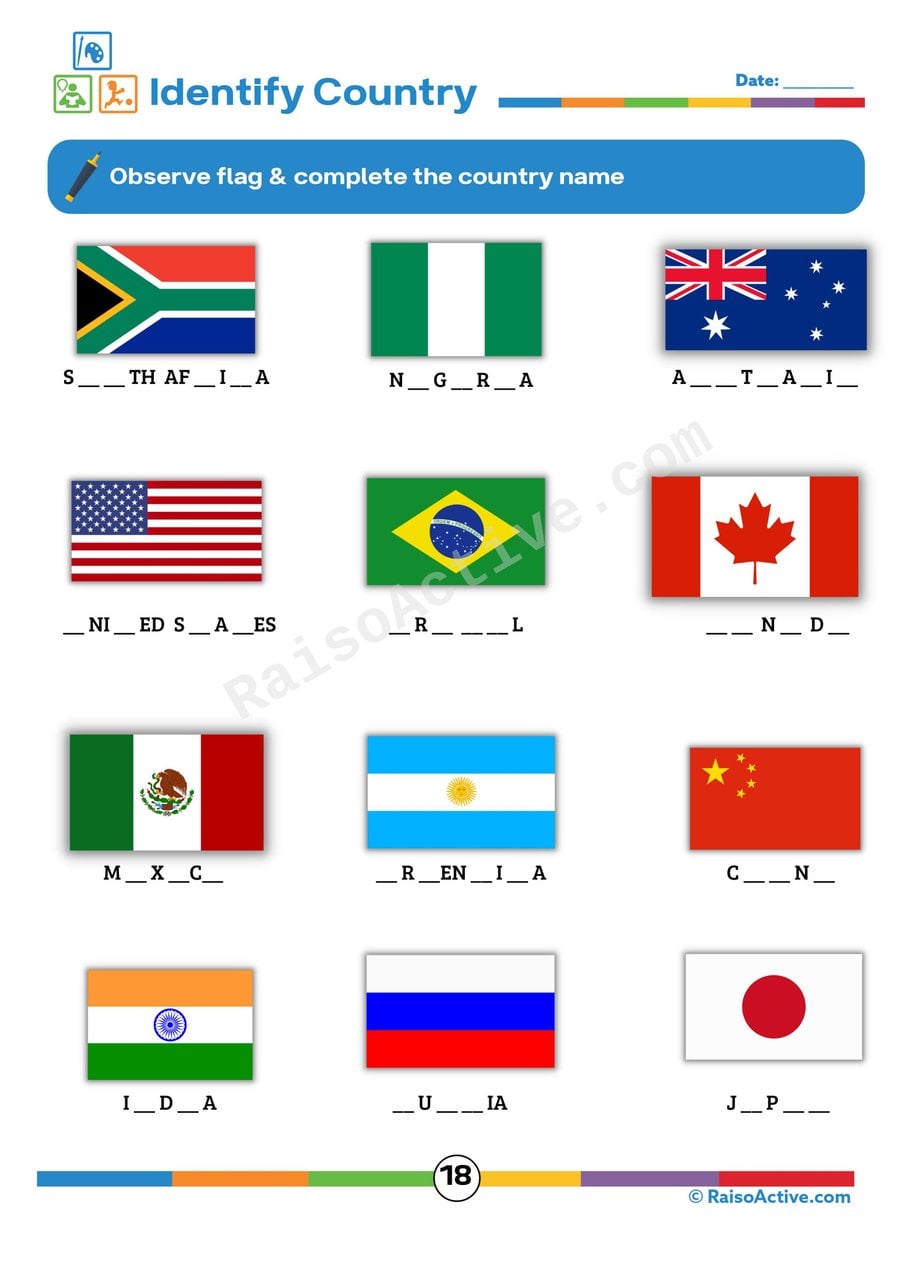
Identify the Country: Flag Matching Worksheet
Filling in the missing letters of each country's name while studying its flag gives children ages 4-7 practice with letter-sound correspondence and spelling patterns, since they must sound out the word and recall which letters are already provided as clues. It also builds early geography knowledge, helping children connect a visual symbol (the flag) to a country's name for the first time. This dual practice of decoding and world knowledge lays groundwork for both literacy and social studies skills.

Sun Safety Worksheet for Kids: Learn About Staying Safe in the Sun!
This worksheet has children ages 4-7 answer questions about sun safety, such as why sunscreen and hats matter, building early health literacy alongside writing practice as they put their understanding into their own words. Because the questions ask children to reason about why certain sun-safety habits matter rather than just label a picture, this worksheet develops early explanatory thinking, a step up from simple factual recall. Practicing writing full answers, even short ones, also builds sentence-forming skills appropriate for this age range.

Consonant Sounds: Match the Objects! L & R Sounds Worksheet
Distinguishing between 'l' and 'r' is one of the trickier auditory discriminations in early phonics, since the two sounds are formed with similar tongue positions and are frequently confused by young English learners. This worksheet gives children ages 4-6 focused practice listening for the difference at the start of familiar object names, then matching each picture to its correct consonant. Strengthening this specific sound contrast supports both clearer speech and more accurate spelling later on.

Life Cycle Match: Frog, Snake, Ladybug, Butterfly, and Fish Worksheet
This matching worksheet helps children ages 4-6 compare life cycle stages across five very different animals: frogs, snakes, ladybugs, butterflies, and fish. By matching each animal to its correct stage picture, children start to notice that not all animals grow the same way — some hatch from eggs looking like miniature adults, while others go through dramatic transformations like metamorphosis. This comparative thinking builds a deeper foundation in life science than studying just one animal alone.

Fall Vocabulary Unscramble Worksheet for Preschoolers
This unscrambling activity asks children ages 4-6 to rearrange jumbled letters into correctly spelled fall vocabulary words, building letter-sound awareness and an early sense of correct spelling patterns. Because each word relates to a picture clue, children also practice connecting spoken vocabulary to its written form, a key step on the road to independent reading.

Pollution Awareness Worksheet for Kids: Circle the Correct Answer!
This worksheet introduces children ages 4-6 to the idea that pollution comes in different forms — air, water, and land — and asks them to connect each type to a picture, building early environmental science vocabulary alongside visual reasoning. Sorting items into recycling categories afterward extends the lesson from simply naming a problem to practicing a real-world solution, which helps young children start to see themselves as capable of taking action. This blend of identification and hands-on sorting suits a preschooler's concrete way of understanding abstract ideas like 'the environment.'

Long Vowel U Worksheet: Complete the Words and Match!
Rounding out the five long vowel sounds, this worksheet has children ages 4-6 complete words containing the long 'u' sound and then match each one to its picture, reinforcing both spelling recall and word meaning together. The long 'u' sound is often trickier than other long vowels since it can sound like 'oo' in some words and like 'yoo' in others, so focused, repeated practice really helps here. Completing this worksheet means your child will have now practiced identifying and spelling all five long vowel patterns, a major milestone in decoding independence.
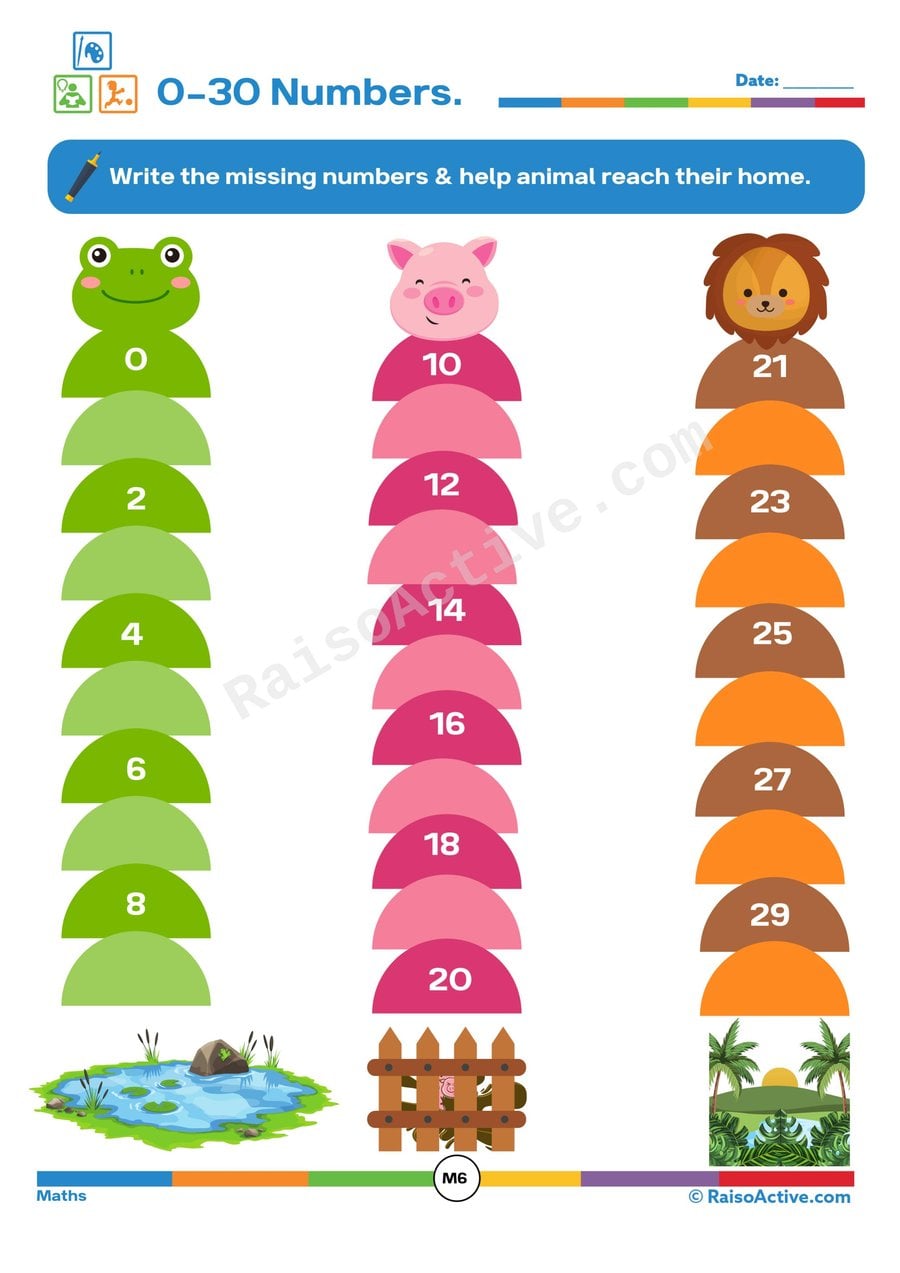
Number Fun: Missing Numbers Worksheet for Kids!
Filling in missing numbers from a sequence up to 30 helps children ages 4-6 strengthen number recognition and counting-on, the skill of continuing a sequence without starting over from one each time. Completing the animal path adds a motivating storyline that encourages children to work through the full sequence.
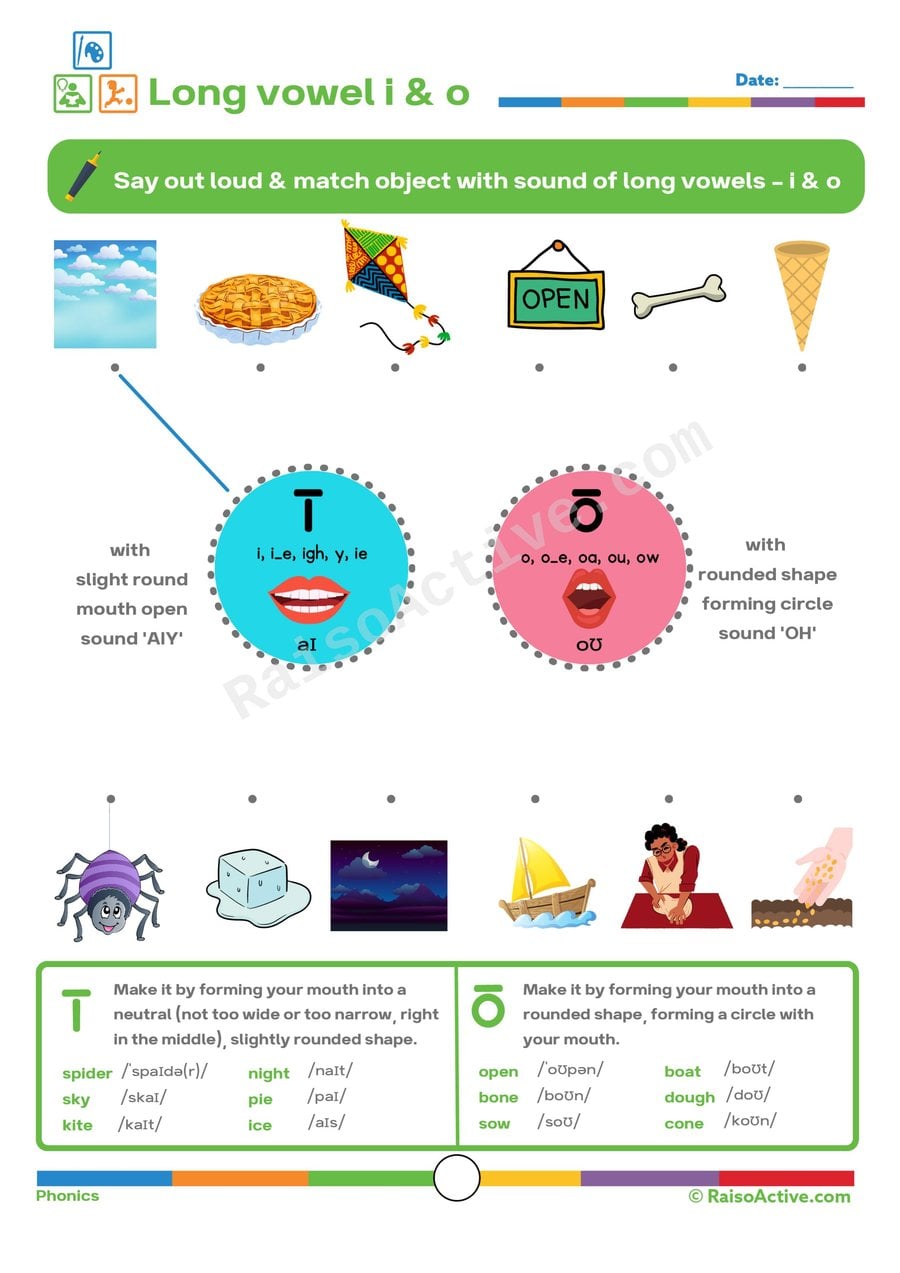
Long Vowel Sounds: Match the Pictures Worksheet
This worksheet gives children ages 4-6 broader practice recognizing long vowel sounds across several different vowels at once, matching pictures to the correct sound category. Mixing multiple long vowel sounds together — rather than practicing just one at a time — challenges children to actively discriminate between sounds rather than relying on a single expected pattern, deepening overall phonemic awareness.

Landforms Worksheet: Identify and Circle the Correct Answer!
Reading a short description and circling the matching landform picture asks children ages 4-6 to connect written or spoken language directly to a visual feature of the natural world, strengthening both reading comprehension and early geography vocabulary. Because landforms like deserts, hills, and mountains can look somewhat similar in simple illustrations, this task also sharpens careful reading and visual comparison rather than quick guessing. Understanding these terms gives children language to describe landscapes they see in books, on trips, or in nature.
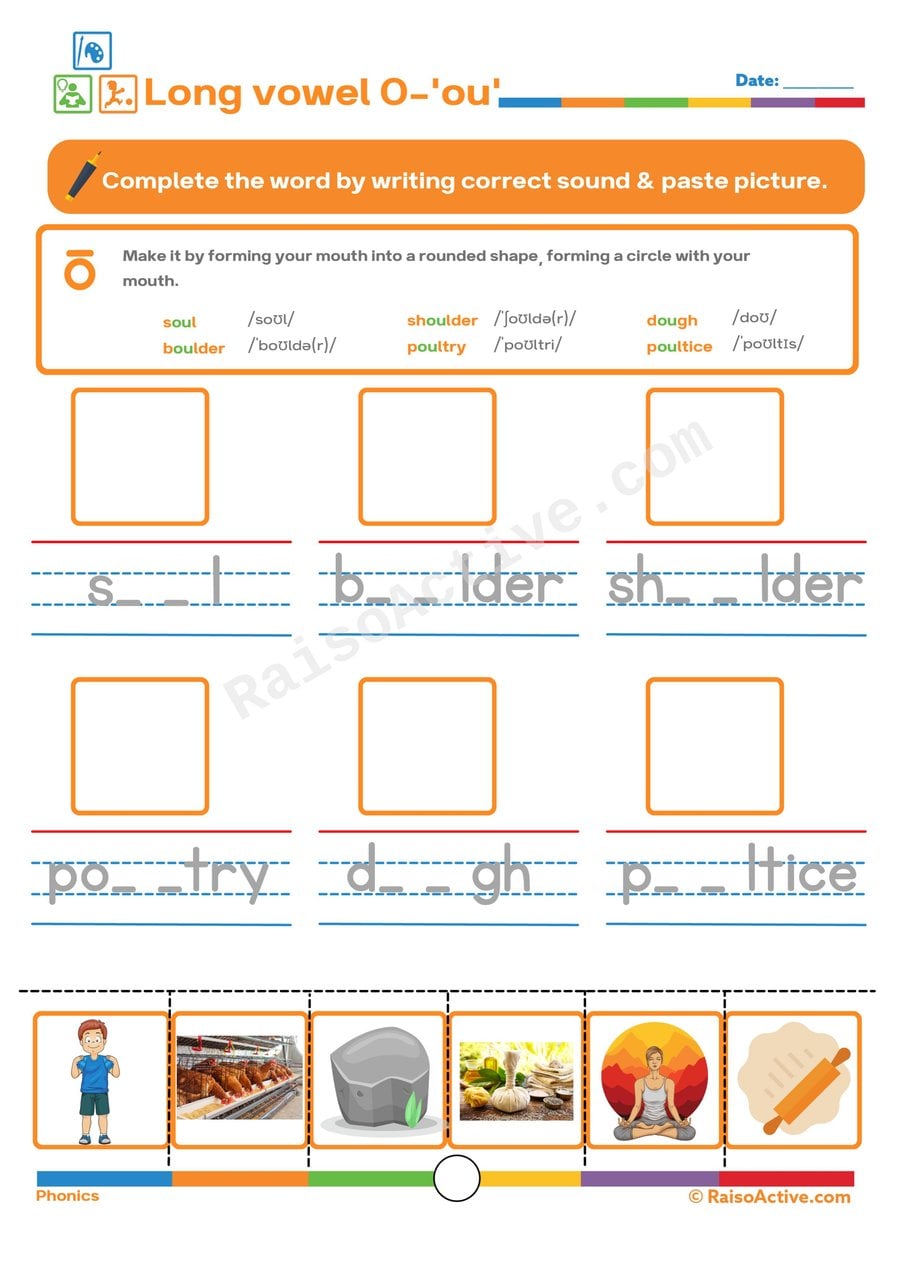
Long Vowel O-'ou' Worksheet: Complete the Words!
This worksheet introduces children ages 4-6 to the 'ou' spelling pattern for the long 'o' sound, as found in words like 'soul' or 'shoulder,' by having them fill in missing letters to complete words and then match each finished word to its picture. Because 'ou' is a less common and less intuitive spelling for the long 'o' sound, this practice builds the flexible spelling awareness needed to recognize the same sound written in unfamiliar ways.

Personal Pronouns Worksheet for Kids: Circle and Underline!
Circling the subject pronoun and underlining the object pronoun in each sentence teaches children ages 5-7 to recognize that pronouns play different grammatical roles depending on their position in a sentence, an important step toward more advanced grammar understanding. This careful, close-reading task also builds attention to sentence structure that supports stronger writing later on.

S and T Sounds Worksheet: Matching Sounds to Objects
This matching worksheet helps children ages 4-6 build beginning-sound awareness for the letters 's' and 't' by listening to each sound and connecting it to the correct object. Distinguishing between these two common consonant sounds strengthens the foundational skill of linking a spoken sound to its written letter, which is essential before children can spell or decode independently. Matching by sound, rather than by sight alone, keeps the focus on auditory phonics rather than memorized shapes.

CCVC Word Matching Worksheet: Read and Match 'cl' and 'sl' Blends
This worksheet gives children ages 4-6 focused practice reading and matching CCVC words that begin with the 'cl' and 'sl' consonant blends, like 'clap' and 'slide'. Practicing two specific, similarly structured blends side by side sharpens a child's ability to hear the subtle difference between them, a skill that becomes increasingly important as vocabulary and reading material grow more complex.
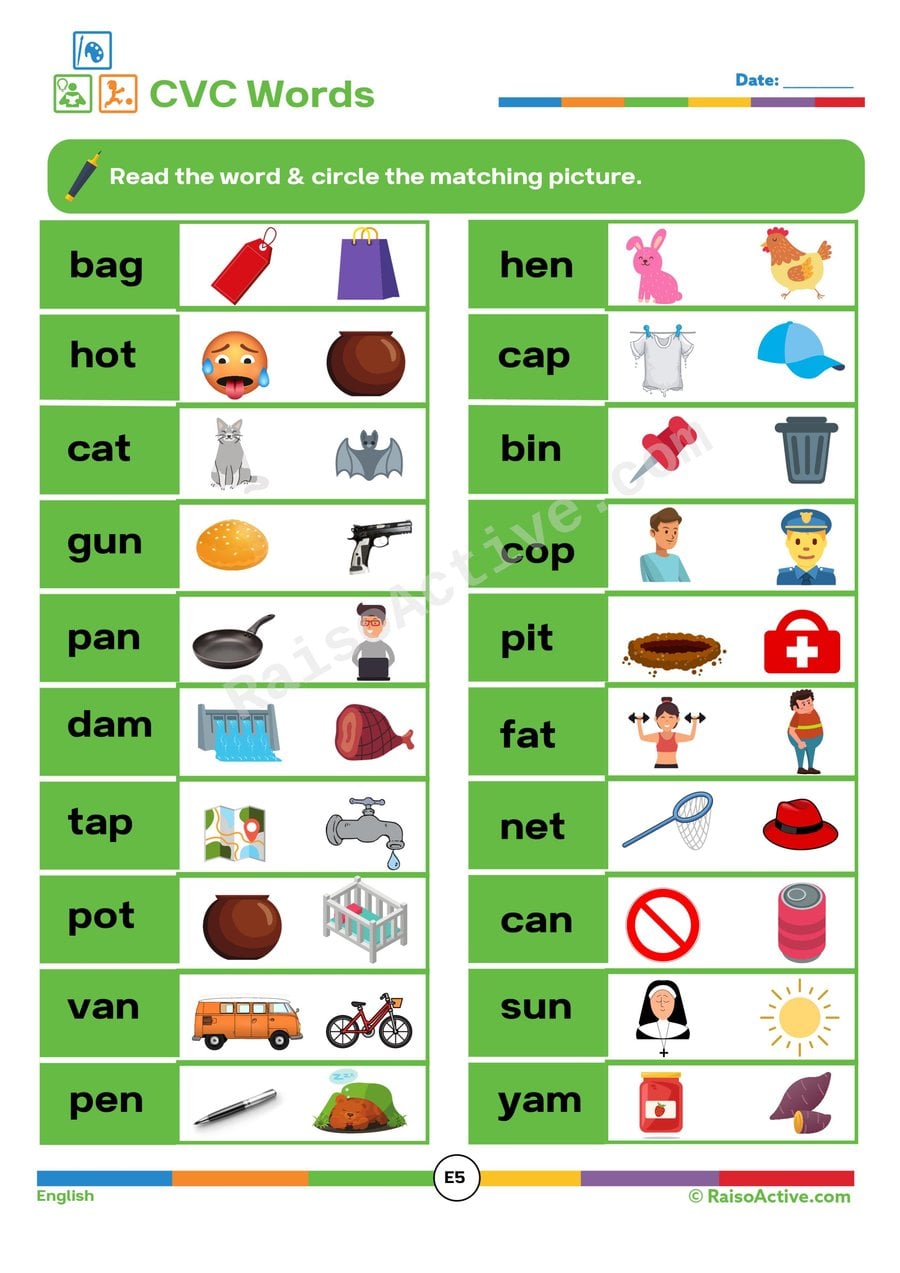
CVC Word Matching Worksheet: Read and Circle!
Sounding out each consonant-vowel-consonant word letter by letter strengthens decoding, and matching that word to its picture connects decoding to meaning — an essential step for children ages 4-6 becoming independent readers.
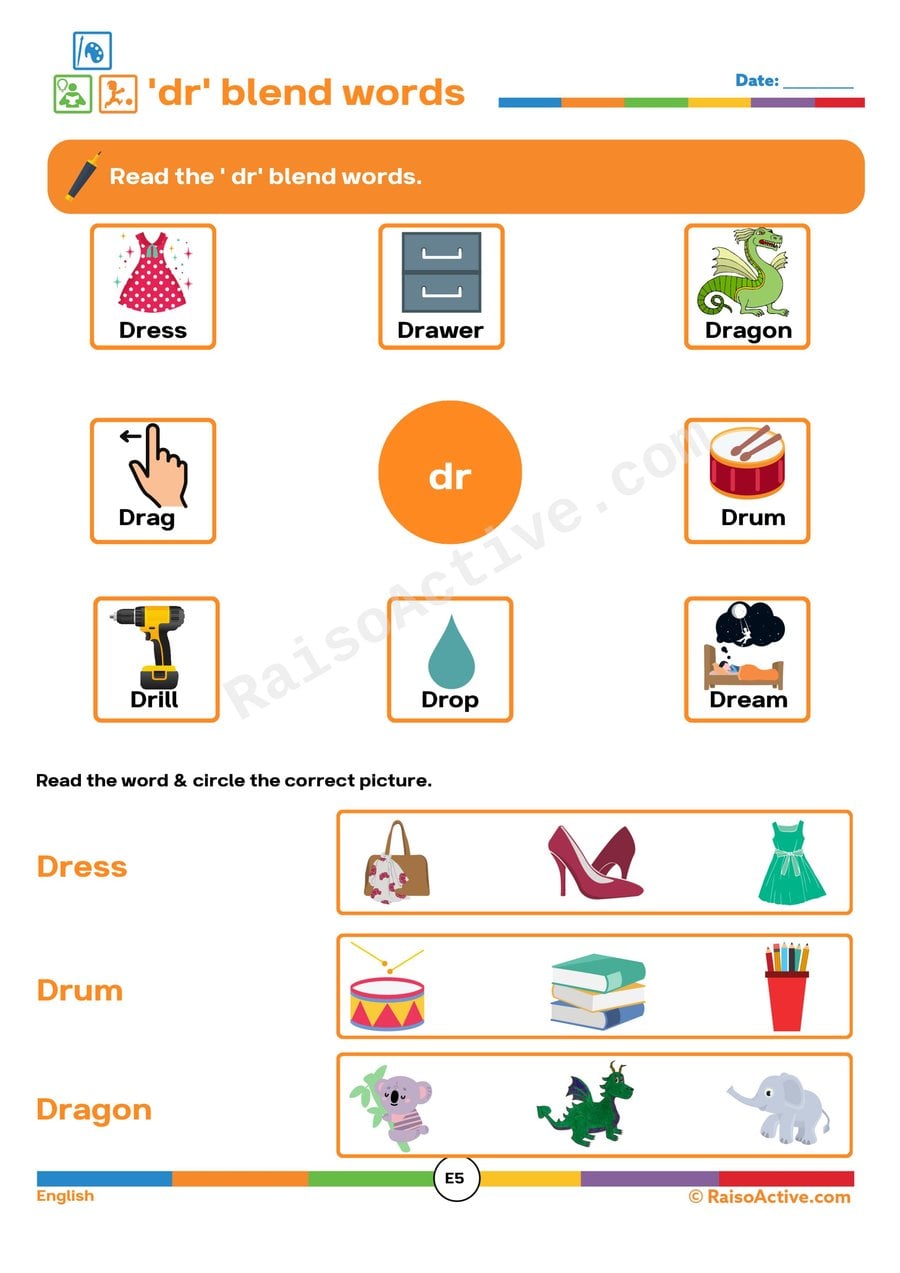
Dr Blend Words Worksheet: Read and Match!
This worksheet focuses on the 'dr' blend, as in 'drum' or 'dress,' asking children to read the word first and then find its matching picture, which reverses the more common picture-first phonics approach and pushes children to truly decode the word rather than guess from an image. For ages four to six, reading the word independently before checking against a picture builds real decoding confidence.
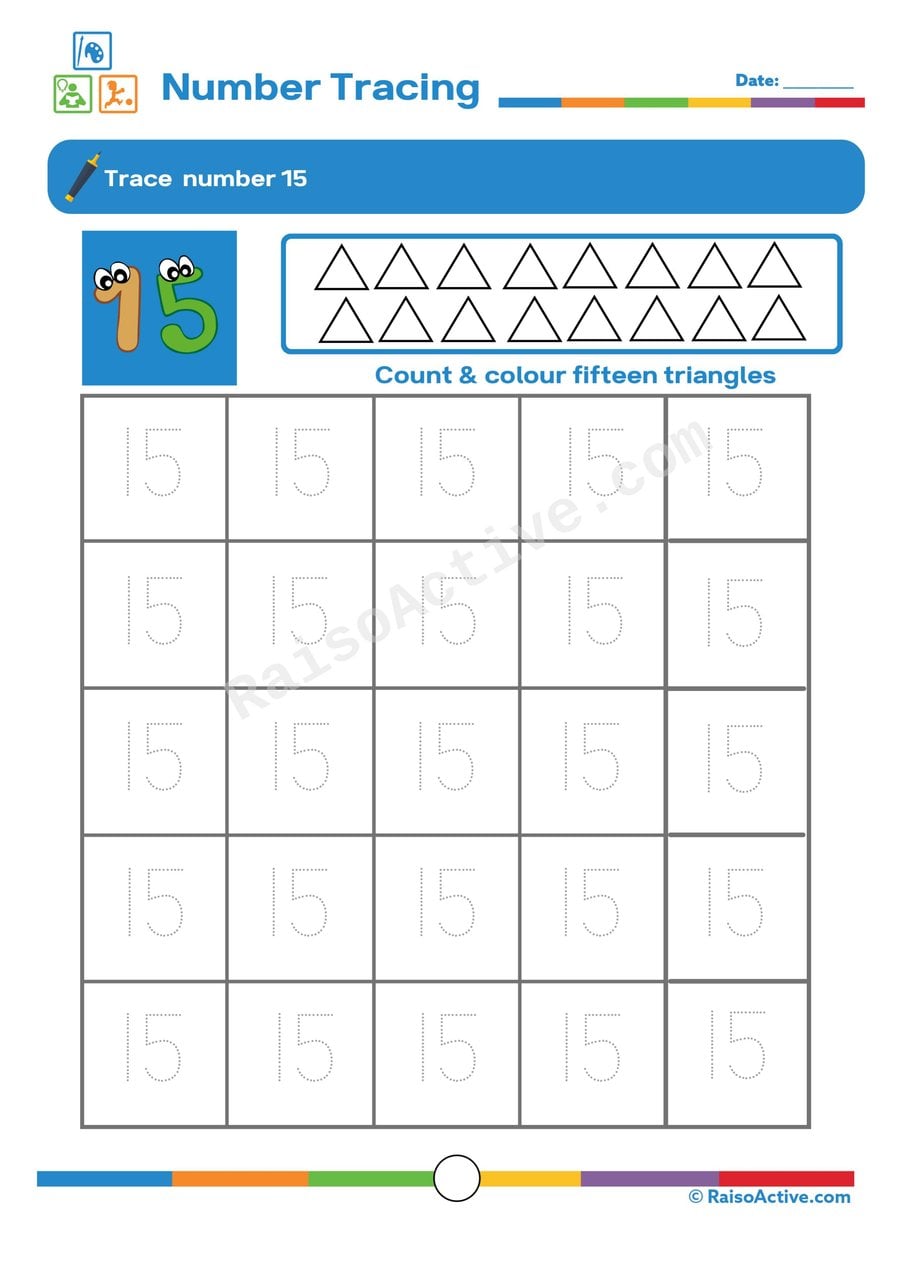
Number Tracing Worksheet: Trace and Count to 15!
This worksheet has children ages 4-6 trace the number 15 and then count and color a full set of fifteen triangles, extending their counting range further into the teens than many earlier worksheets. Counting all the way to fifteen requires children to keep track across a larger set without losing their place, building the working memory and sustained attention needed for extended counting. Introducing triangles instead of circles or balls also lets this worksheet quietly reinforce basic shape recognition alongside the counting task.

Frame a Sentence Worksheet: Building Sentences with Cows!
Arranging a set of given words into a complete, correctly ordered sentence teaches children ages 4-6 basic sentence structure, helping them understand that word order changes meaning and that sentences follow predictable patterns like subject before action. Remembering to start with a capital letter and end with a period also reinforces early writing conventions alongside the sentence-building itself. This combination of grammar and mechanics gives children practice with the full process of forming a proper written sentence, not just choosing words.
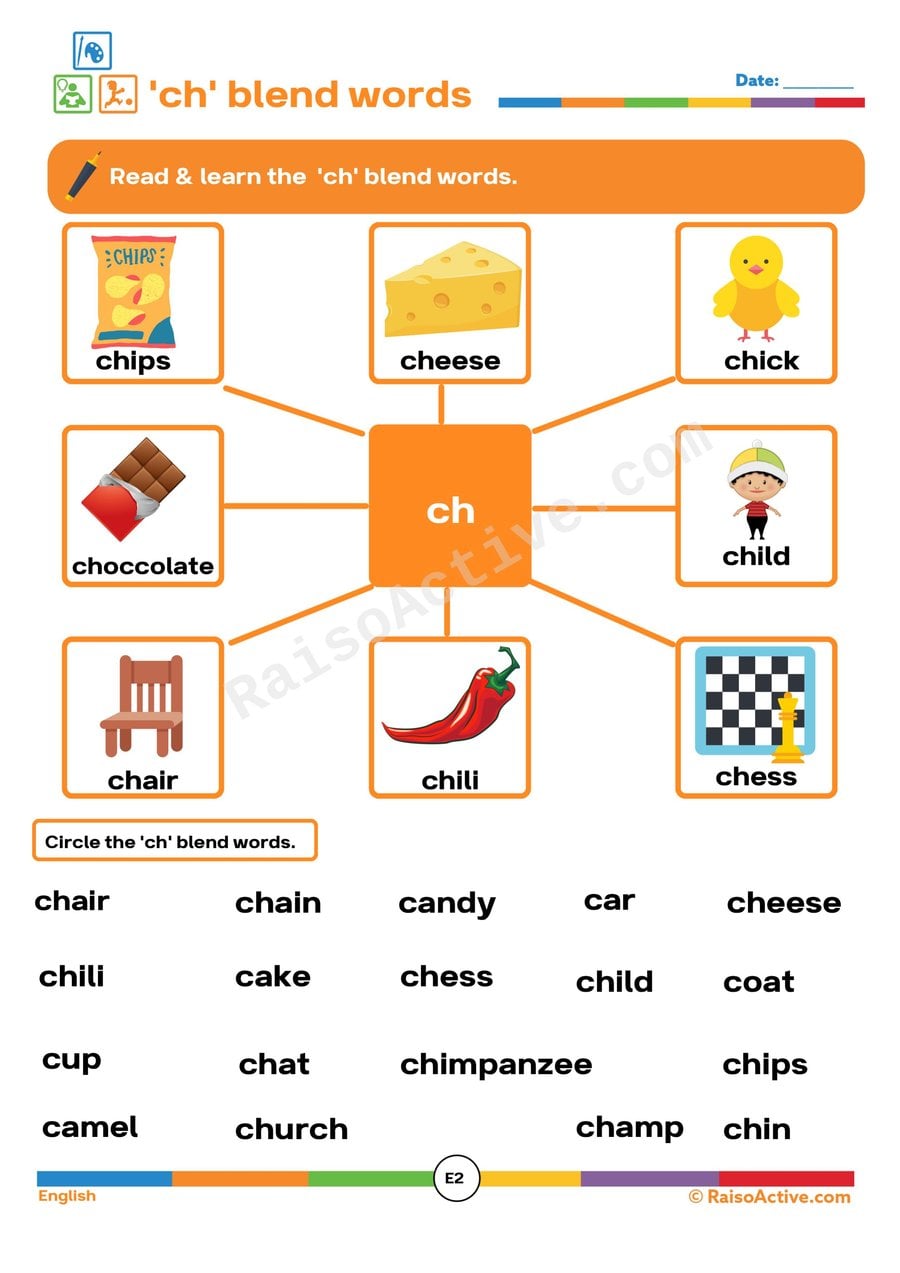
Ch Blend Words Worksheet: Read, Learn, and Circle!
This worksheet focuses children ages 4-6 on recognizing words that begin with the 'ch' digraph, like 'chair' and 'cheese', asking them to read and then circle matching words. Because 'ch' represents a single new sound rather than two blended consonants, mastering it teaches children an important phonics rule: some letter pairs combine to make one brand-new sound entirely.

Animal Homes Worksheet: Match the Animals to Their Habitats!
Children ages 4-6 build early life-science knowledge as they match each animal to the habitat where it actually lives, such as a fish to water or a bird to a nest. This worksheet moves beyond simple animal identification into understanding the relationship between a living thing and its environment, an important building block for later ecosystem and habitat topics in science class.

J and K Consonant Sounds Matching Worksheet for Preschoolers
The letters J and K are frequently mixed up by children ages 4-6 because both are less common consonants that don't appear in as many early words as letters like S or T, so this worksheet gives them focused, repeated practice distinguishing the two sounds. Matching each letter to a picture that starts with its sound builds the letter-sound association needed before a child can spell or read J and K words confidently. This kind of targeted practice on less-frequent letters fills a gap that broader phonics worksheets often skip over.
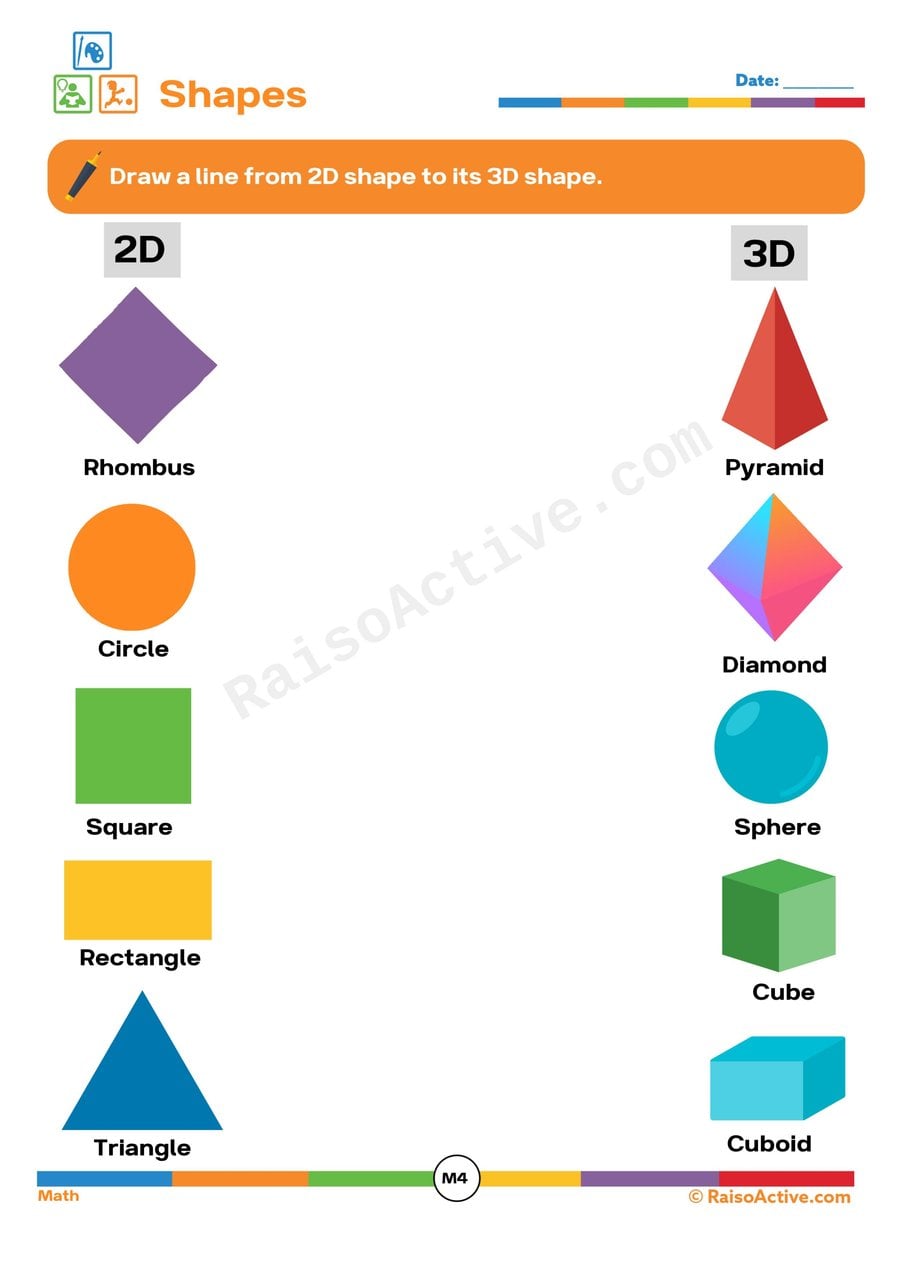
Shape Match: 2D to 3D Shapes Worksheet
This worksheet introduces 4-6 year olds to the relationship between flat 2D shapes and solid 3D shapes — connecting a circle to a sphere, a square to a cube — which is an important spatial reasoning leap, since a 3D shape's flat 'face' is what actually corresponds to its related 2D shape. Making this connection explicit helps children understand that the shapes they've been learning aren't just flat pictures but also describe the surfaces of real, solid objects around them.

Vowel Fun: Crossword and Word Fill-in Worksheet for Early Readers
Solving a crossword and filling in sentence blanks gives children ages 4-6 practice spelling and reading simple words, while identifying the vowels in each completed word sharpens their awareness of these key building blocks of every syllable. Combining a puzzle format with vowel identification keeps the phonics practice feeling like a game rather than a drill.
What UKG sight words worksheets cover
This is the year sight words are learned in bulk. Children at five to six work through the first forty to fifty high-frequency words, the pre-primer list or the tricky words of the early phonics phases, at a pace of three to five a week. Worksheets should follow read, trace, write, find on one page and mix the new word with older ones. Expect slow, deliberate reading; expect spelling of "was" and "said" to still wobble.
- Learn three to five new words a week with daily review
- Read, trace, write and find "was" on one sheet
- Mark the tricky letter in "said" with a heart
- Read a sentence built only from known sight words and CVC words
- Recognize around fifty high-frequency words on sight by the end of the year
How to use these worksheets at home or in class
Two short sheets a day, roughly fifteen to twenty minutes altogether, keeps a five-year-old moving without overload. Alternate an English page with a maths page so neither subject stalls, and let your child attempt the first few items before stepping in.
Start with the sheet that matches what your child can already do, then move one step up. Keep finished sheets in a folder: UKG teachers often ask for evidence of practice, and children like seeing their own progress.
Is your child ready for UKG sight words work?
Before this stage a child should write most capital letters from memory, know the sound each letter makes, count objects accurately to twenty, and sit through a full worksheet without needing a break halfway through.
Frequently asked questions
How many sight words should a five-year-old know?
Around fifty by the end of the year is a common school target, with the most frequent twenty or so spelled as well as read. That covers the Dolch pre-primer and primer lists, or the tricky words from Letters and Sounds Phases 2 to 4. Numbers matter less than instant recognition: a child who reads twenty words without hesitation is further along than one who guesses at eighty.
What should a UKG child be able to do in sight words?
This is the year sight words are learned in bulk. Children at five to six work through the first forty to fifty high-frequency words, the pre-primer list or the tricky words of the early phonics phases, at a pace of three to five a week. Worksheets should follow read, trace, write, find on one page and mix the new word with older ones. Expect slow, deliberate reading; expect spelling of "was" and "said" to still wobble. Before this stage a child should write most capital letters from memory, know the sound each letter makes, count objects accurately to twenty, and sit through a full worksheet without needing a break halfway through.
Do these worksheets follow the UKG curriculum?
The sheets cover instant recognition of high-frequency words, reading words that cannot be sounded out, spelling common words from memory and using sight words inside a sentence, which sit inside the NEP 2020 Foundational Stage (NCF-FS 2022) outcomes for UKG. Kindergarten (US), Reception / Year 1 (UK) use the same skills at this age, so the sheets also fit families following those programmes.
Are the UKG sight words worksheets free to download?
Yes. Every sheet on this page can be downloaded free as a watermarked PDF after creating an account, up to five downloads a day. The annual membership (₹1000) removes the watermark and the daily limit across the full library of more than 1,000 worksheets and all activity packs.

Written by
Hemsweta Jain · Teacher Cheena
MBA and Early Childhood Educator, teaching since 2014 · Founder of RaisoActive, Mumbai
Written and reviewed by Hemsweta Jain (Teacher Cheena), who designs every RaisoActive worksheet.
Last reviewed
Printable packs for ages 5–6
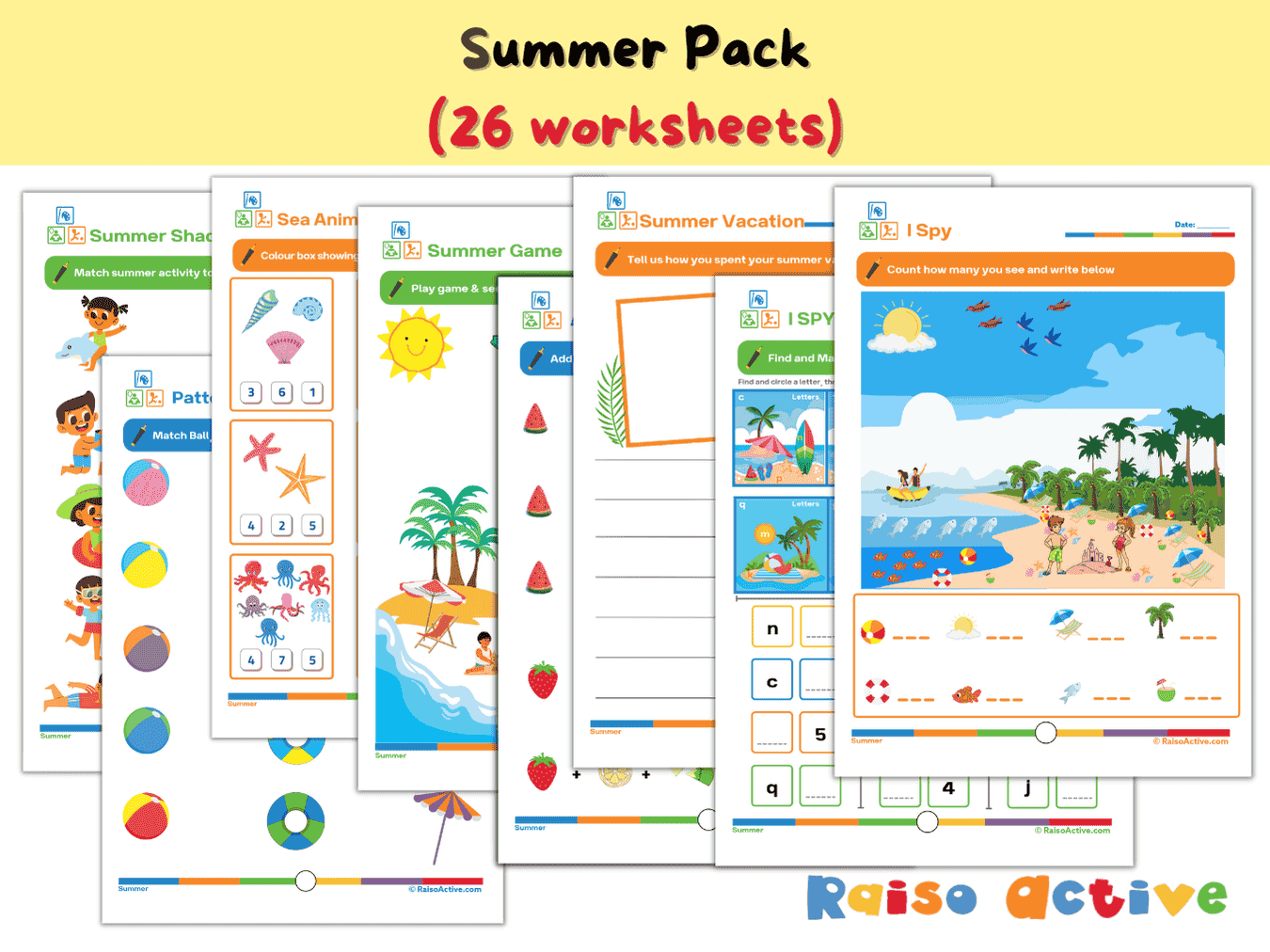
Summer Activity Pack: Math, Literacy, Puzzles & More for Preschool & Kindergarten
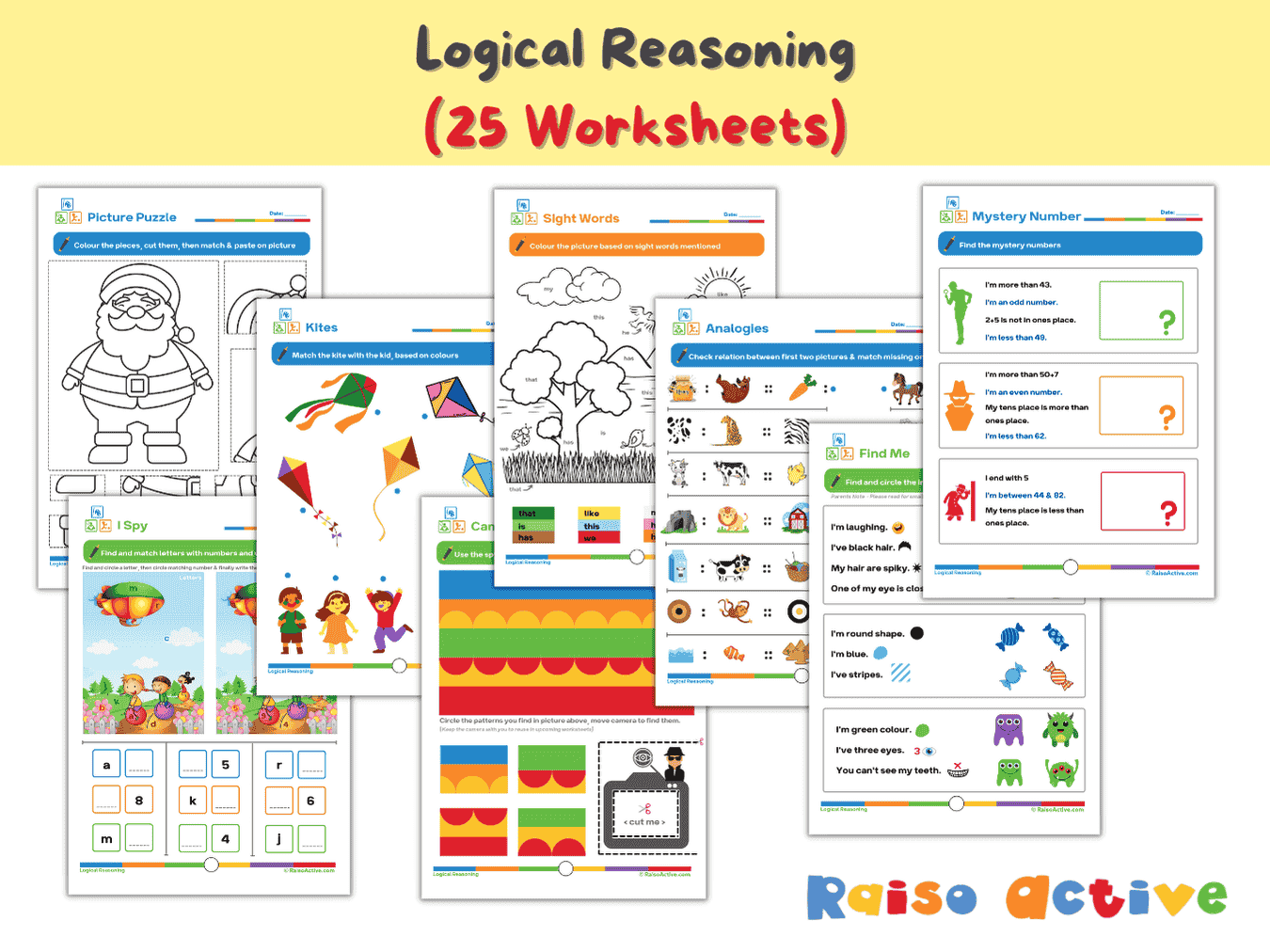
Logical Reasoning Activity Book for Preschool & Kindergarten | Patterns, Puzzles & Analogies
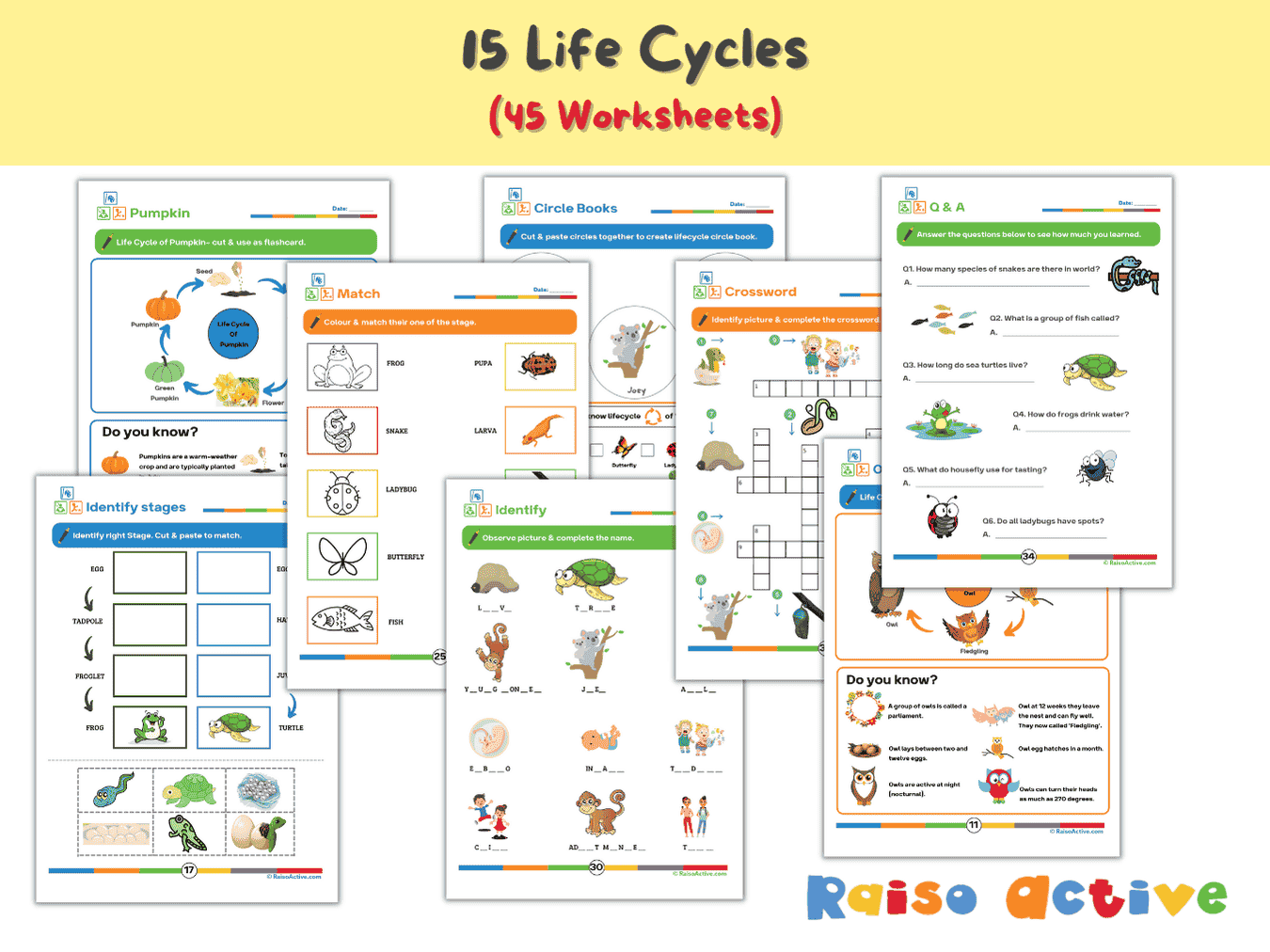
Lifecycles Activity Book & Flashcards for Preschool & Early Elementary
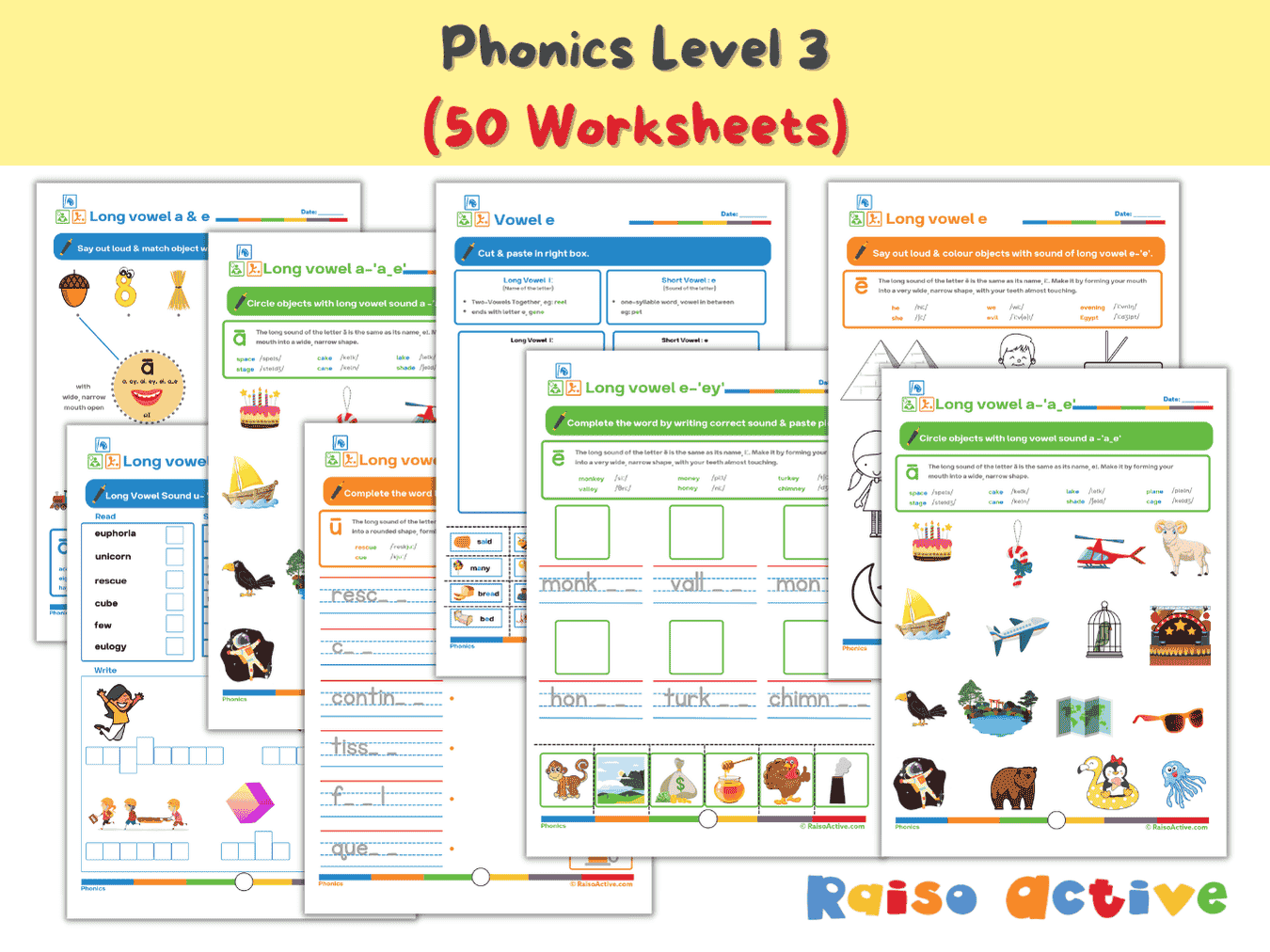
Phonics Level 3 Long Vowels Activity Book for Kindergarten & 1st Grade
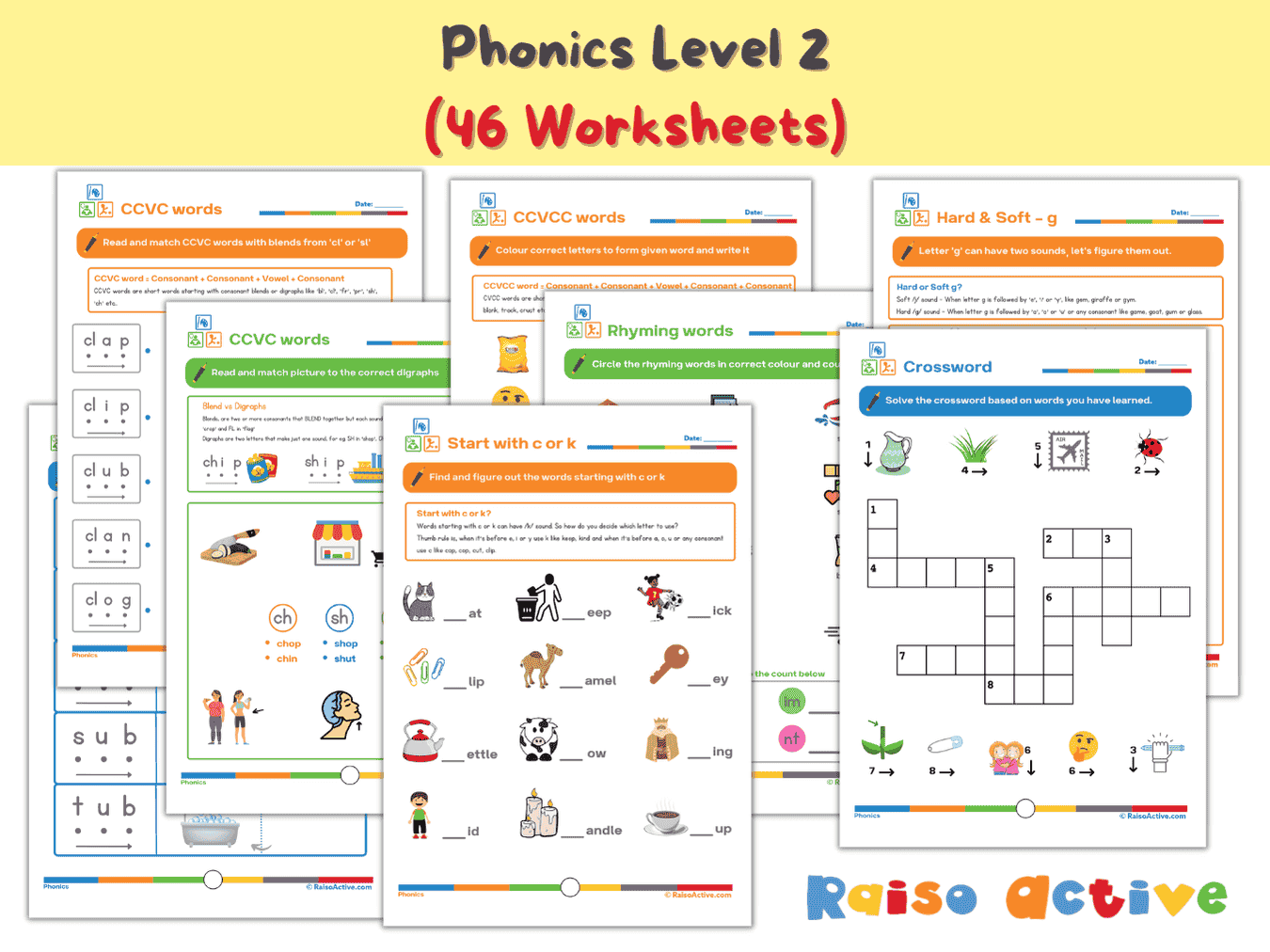
Phonics Level 2 Worksheets: CVC, CCVC, CVCC Word Families & Blends for Early Readers (Ages 4-7)
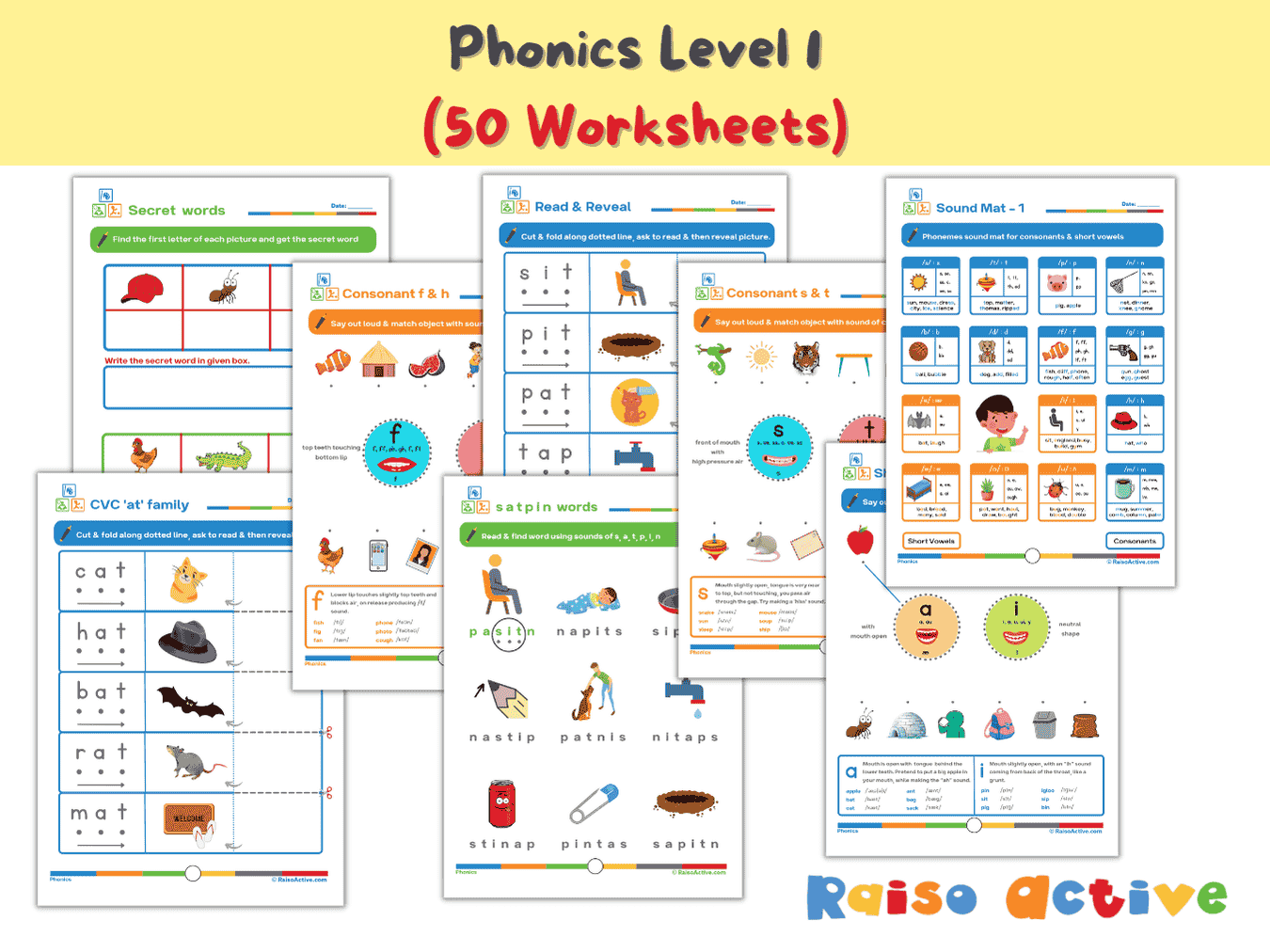
Phonics Level 1 Activity Book: Letter Sounds, Blending & CVC Words for Preschool & Kindergarten
Guides for parents and teachers
See all guides →Sight Words by Age: The First 50 Words and How to Teach Them Without Flashcard Fatigue
Which sight words to teach first and why, the heart-word method, a read-trace-write-find routine, games, and a by-age table of typical sight-word progress.
How to Teach CVC Blending: A Step-by-Step Method That Works in Two Weeks
A step-by-step method for teaching CVC blending, covering continuous sounds, word families, common errors, and a 14-day plan that most children finish reading CVC words.
Phase 2 Phonics at Home: Sound Order, Blending Games, Worksheets
Phase 2 phonics at home: the five sound sets in order, oral blending, tricky words, a two-week routine, common mistakes, and free worksheets.
UKG Syllabus Explained: English, Maths and EVS Month by Month
What UKG classes typically cover in English, maths and EVS, month by month, aligned to NEP 2020, with ways to support at home and signs your child is behind.
Bridging Two Worlds: A Complete Guide to Teaching Heritage Languages Alongside English
A practical guide to raising bilingual children who speak both their heritage language and English with confidence. Research-backed strategies, activities, and tips for Indian families.
Empowering Multilingual Learners: Essential Resources and Strategies for Bilingual and Multilingual Children
Discover research-backed strategies, activities, and free printable resources to support bilingual and multilingual children ages 1-8. Practical tips for Indian families raising confident multilingual learners.
Canonical: https://raisoactive.com/worksheets/ukg-sight-words