Free printable worksheets · India
LKG Sight Words Worksheets (Ages 4–5)
LKG sight words worksheets are practice sheets for children aged 4–5 in Lower Kindergarten (Junior KG) in India. Sight words are common words practiced until they are recognised instantly, because many cannot be sounded out with regular phonics rules. The sheets on this page cover instant recognition of high-frequency words, reading words that cannot be sounded out, spelling common words from memory and using sight words inside a sentence.
Lower Kindergarten turns a scribbling hand into a writing one: capital letters A to Z and numbers up to twenty become the daily target, alongside pattern practice that keeps curves and loops steady. Reversed letters and numerals are still common at this stage and settle with repetition rather than correction. At four to five a child meets the first handful of words that must be known: "I", "a", "the", "to", "and". A worksheet should present one word at a time in large print, ask the child to read it, trace it, find it among lookalikes and spot it in a three-word sentence. Ten to twenty words over the year is plenty. Spelling them from memory, or reading them inside a full story, is not the goal yet.
914+ worksheets · free PDF download · print on A4 or Letter
LKG Sight Words Worksheets to print
Browse all worksheets for ages 4–5
I Spy Letters and Numbers Worksheet: Find, Match, and Write!
This worksheet blends letter and number recognition for children ages 4-5, asking them to spot a hidden letter within a picture, find its matching number, and then write both symbols down, combining visual search with early literacy and numeracy in a single activity. Working with letters and numbers side by side reinforces that both are symbols that carry specific meaning and can be found, matched, and recorded.
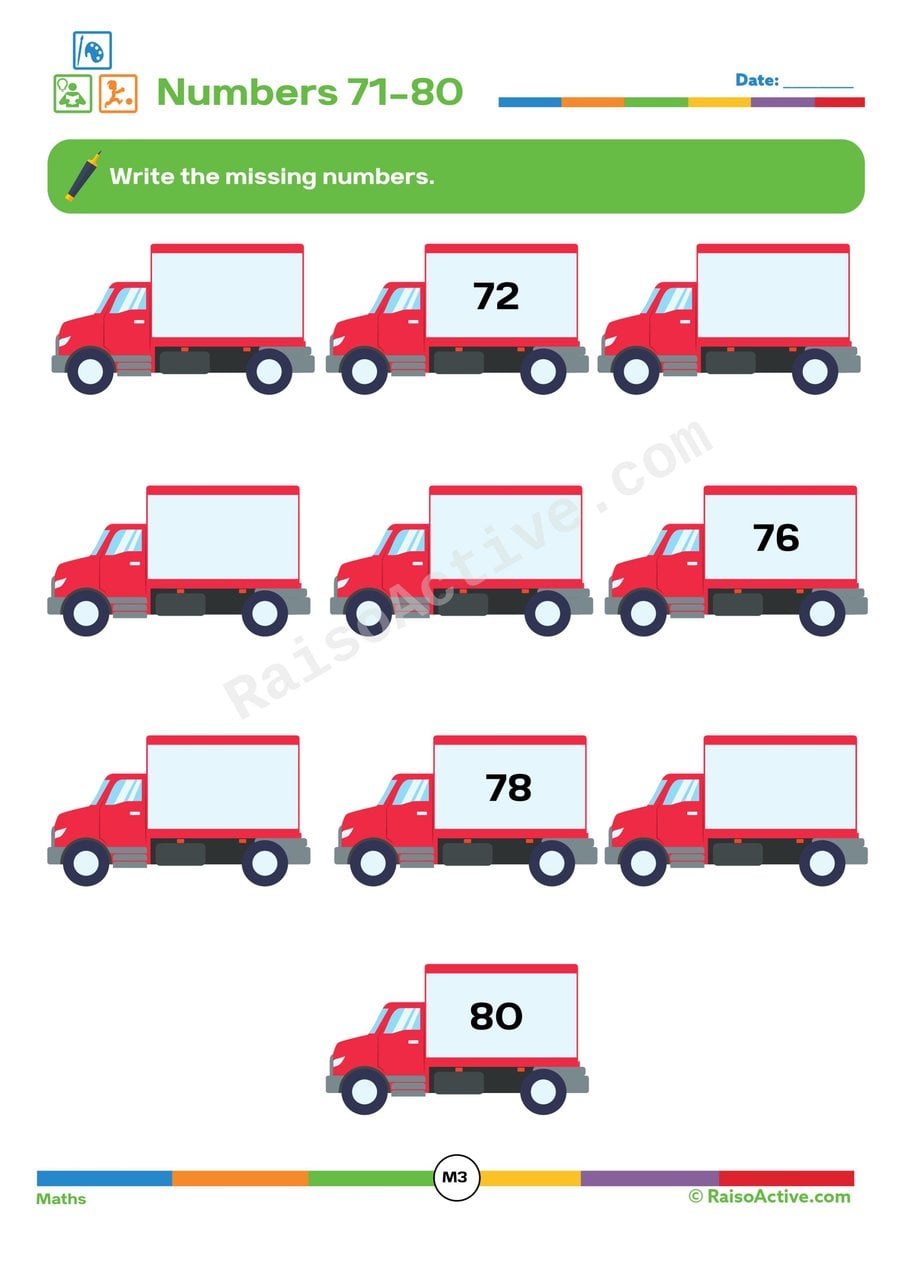
Missing Numbers: Trucks Worksheet for Kids (71-80)
Filling in missing numbers within the 71-to-80 range asks children to hold a mental number sequence steady enough to identify a gap and supply the correct value, a more demanding task than simply counting forward from one. For ages four to five, practicing in this specific decade extends their counting range beyond the more familiar numbers under 50 while the truck theme keeps the task visually engaging.
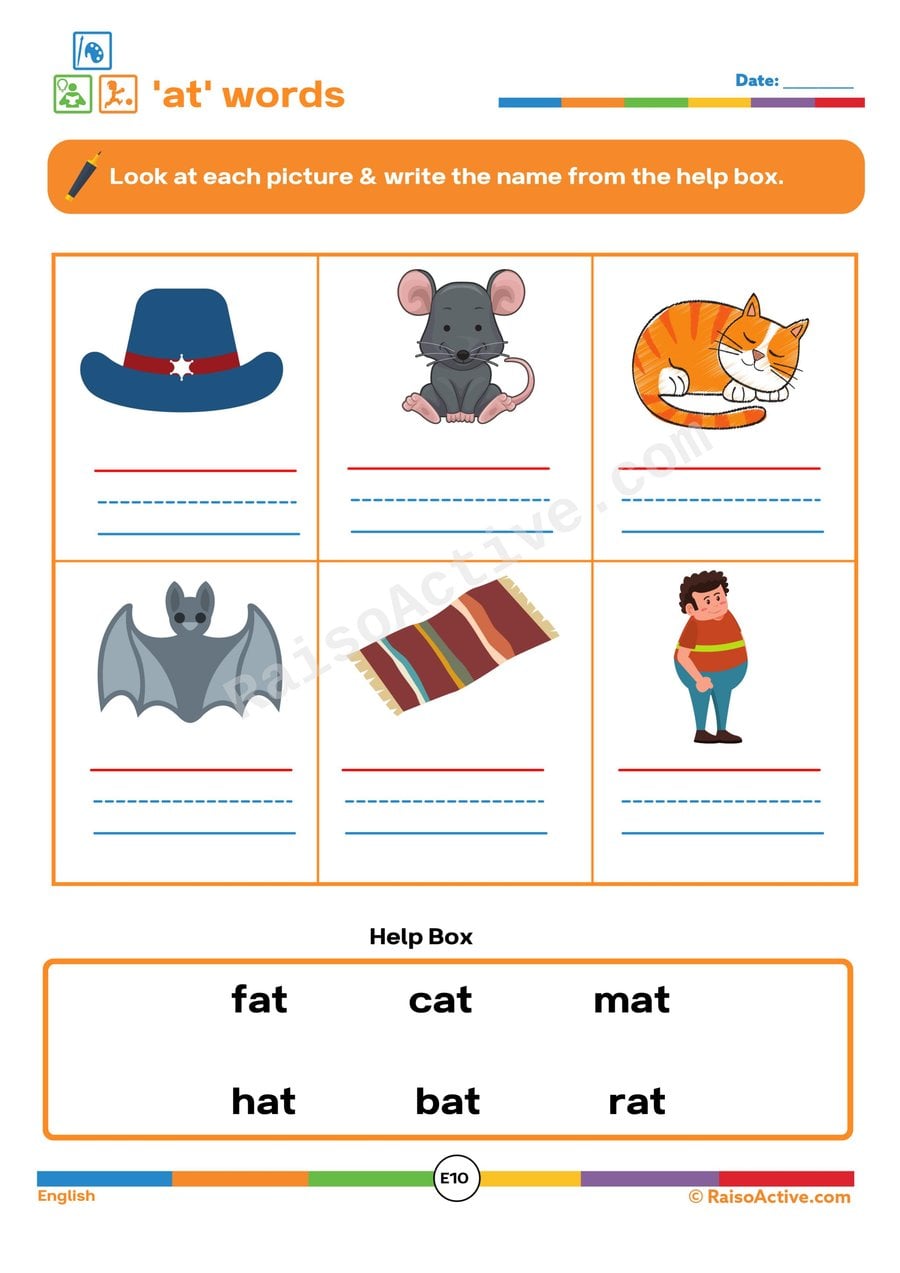
Fun 'at' Word Worksheet for Preschoolers
The 'at' word family (cat, hat, bat) is often one of the very first CVC patterns children ages 4-5 encounter, and this worksheet asks them to go a step further than simple reading by identifying and writing the correct word to match each picture themselves. Choosing the right word from a word bank and writing it out, rather than just reading a word that's already printed, requires children to actively recall spelling rather than passively recognize it. This active recall step is an important bridge between reading CVC words and eventually spelling them independently from memory.
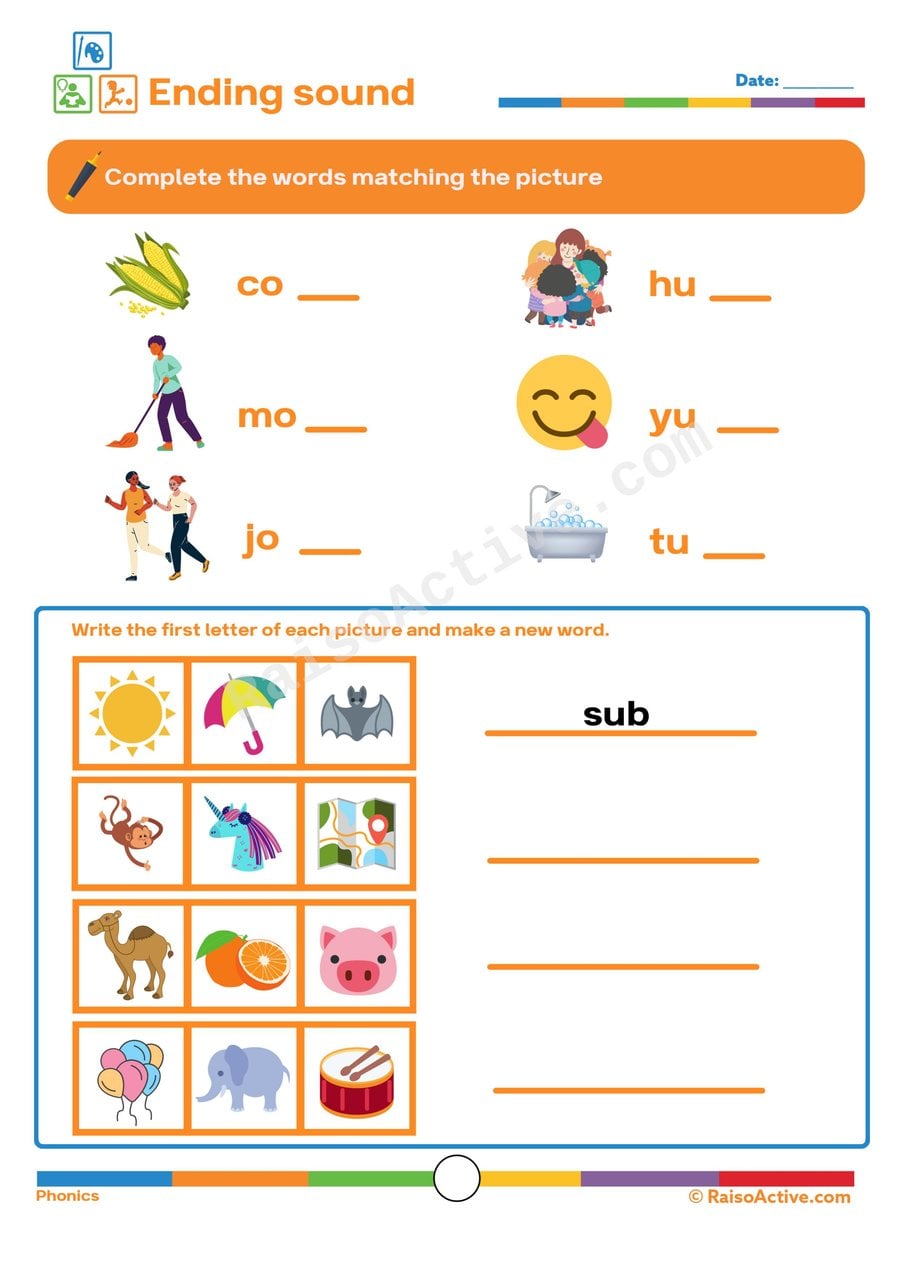
Ending Sound Worksheet: Complete the Words!
This worksheet builds on ending sound practice for children ages 4-5 by having them complete words based on pictures and then use the very first letter of each picture to build an entirely new word, adding a layer of creative word-building on top of straightforward phonics practice. Completing words by ending sound requires the same phonemic segmentation skill as beginning sound work, just applied to the trickier final position in a word. The second half of the worksheet, where beginning letters are strung together to form a new word, adds a satisfying puzzle element that rewards careful, accurate sounding-out in the first section.

Match the 'et' Family Words Worksheet for Preschoolers
Matching 'et' family words like bet, net, and pet to their pictures helps children ages 4-5 recognize a common phonics pattern, learning to read new words by swapping the beginning sound while keeping the familiar 'et' ending. This rime-based approach is a powerful early reading strategy that makes decoding faster once a pattern is learned.
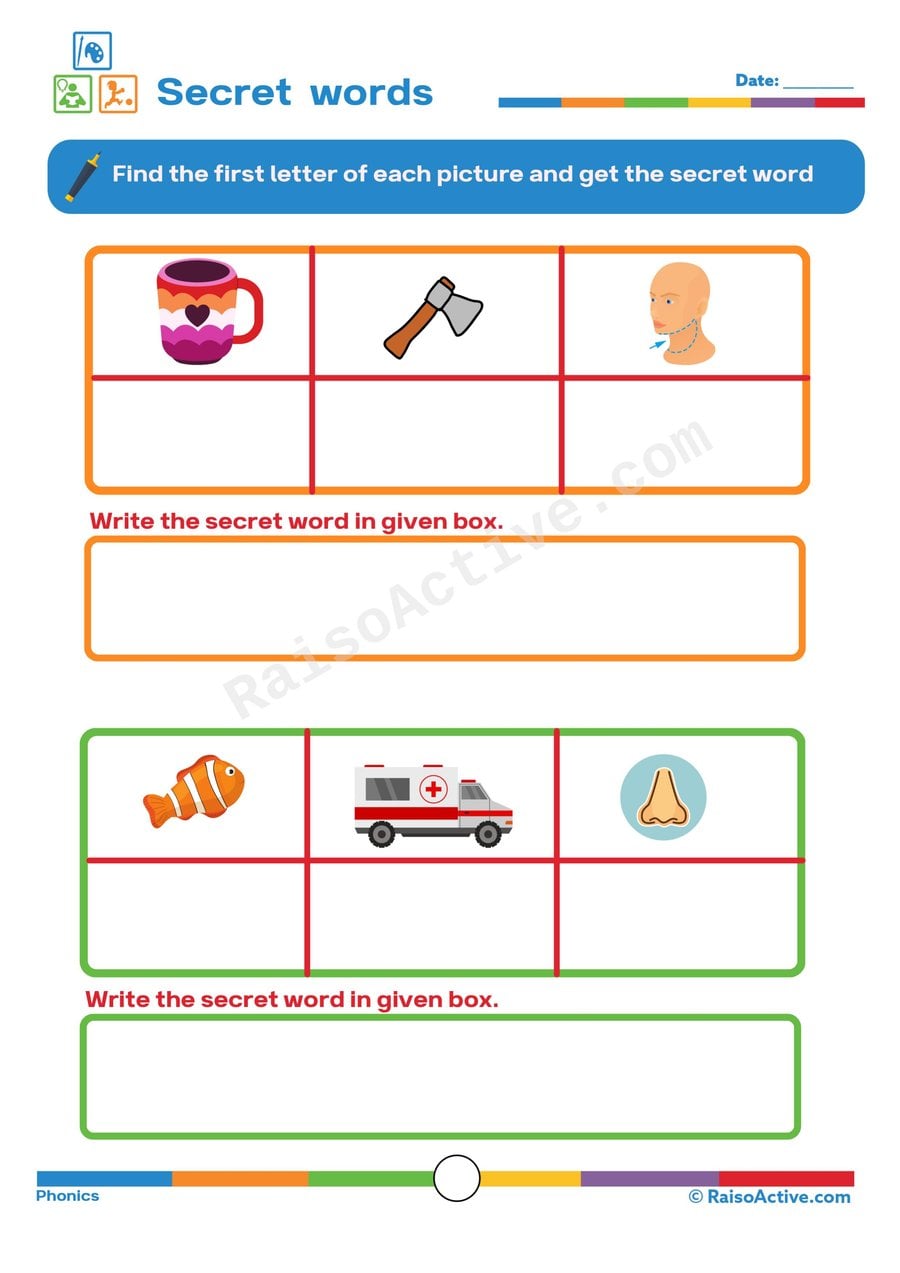
Secret Words Worksheet: Find the First Letter!
This beginning-sounds worksheet asks children ages 4-5 to listen closely to a series of pictures, name the very first sound in each word, and record the matching letter — a core phonemic awareness skill that precedes fluent reading. Because each correct letter contributes to spelling out a hidden 'secret word,' children get an immediate, motivating reason to focus on sound isolation rather than treating it as an abstract drill. This step also builds early spelling instincts, since children practice matching sound to symbol one letter at a time.

Sight Word 'For' Worksheet: Learn to Read and Write!
The word 'for' appears constantly in early reading material but doesn't follow simple sound-it-out rules, so children ages 4-5 need repeated practice to recognize it instantly as a sight word. Working through tracing, a word search, and sentence completion in one sitting gives multiple angles of exposure, which research on early literacy shows helps cement tricky high-frequency words into memory.

Make a Pancake! Sight Word 'Make' Worksheet for Preschoolers
Children ages 4-5 build automatic recognition of the high-frequency sight word 'make', practicing it through coloring, highlighting, tracing, and sentence completion for repeated, varied exposure. Since 'make' doesn't follow standard phonics rules cleanly, memorizing its shape by sight is essential for reading fluency. Completing sentences with 'make' also shows children how the word functions naturally in everyday spoken and written language, like making a pancake.

Trace and Count the Number 16 Worksheet for Preschoolers
This worksheet has children ages 4-5 trace the two-digit number 16 and then count and color a full set of sixteen squares, continuing to build counting stamina in the teens range that many children find more challenging than counting to 10. Because 16 combines a 1 and a 6, tracing it reinforces the same two-digit writing pattern practiced with numbers like 11 through 15, helping children generalize the pattern rather than treating each teen number as entirely new. Counting squares instead of round objects also quietly introduces basic shape vocabulary.
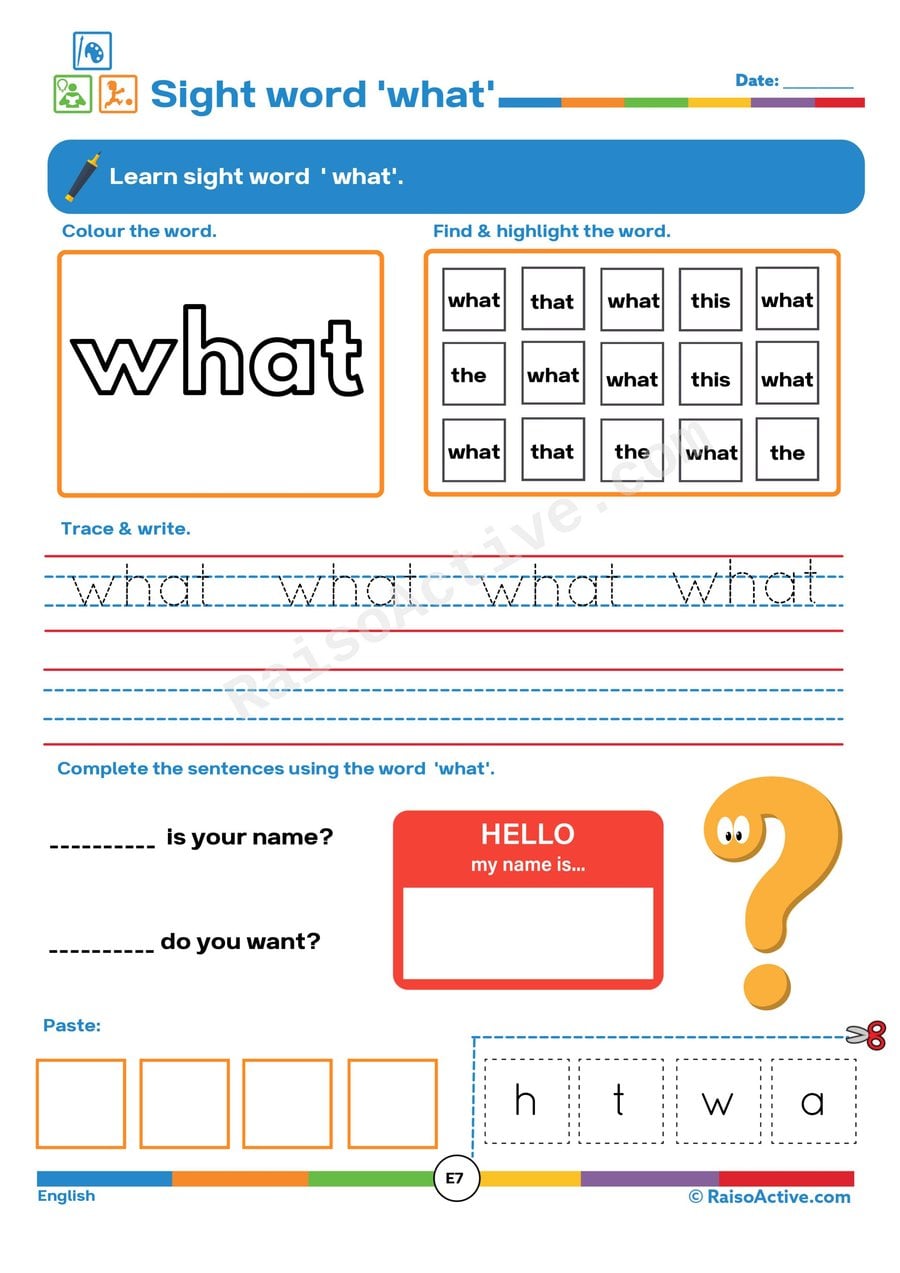
Sight Word 'What' Worksheet: Learn, Trace, and Find!
The word 'what' is a common question word that children ages 4-5 encounter constantly in both spoken conversation and early reading, making it an important addition to their sight word vocabulary. This worksheet builds recognition through several formats — coloring, tracing, word searching, sentence completion, and cut-and-paste spelling — giving the word repeated, varied exposure in a single sitting. Because 'what' is a question word, practicing it in sentences also gives children an early sense of how question structures differ from statement structures.
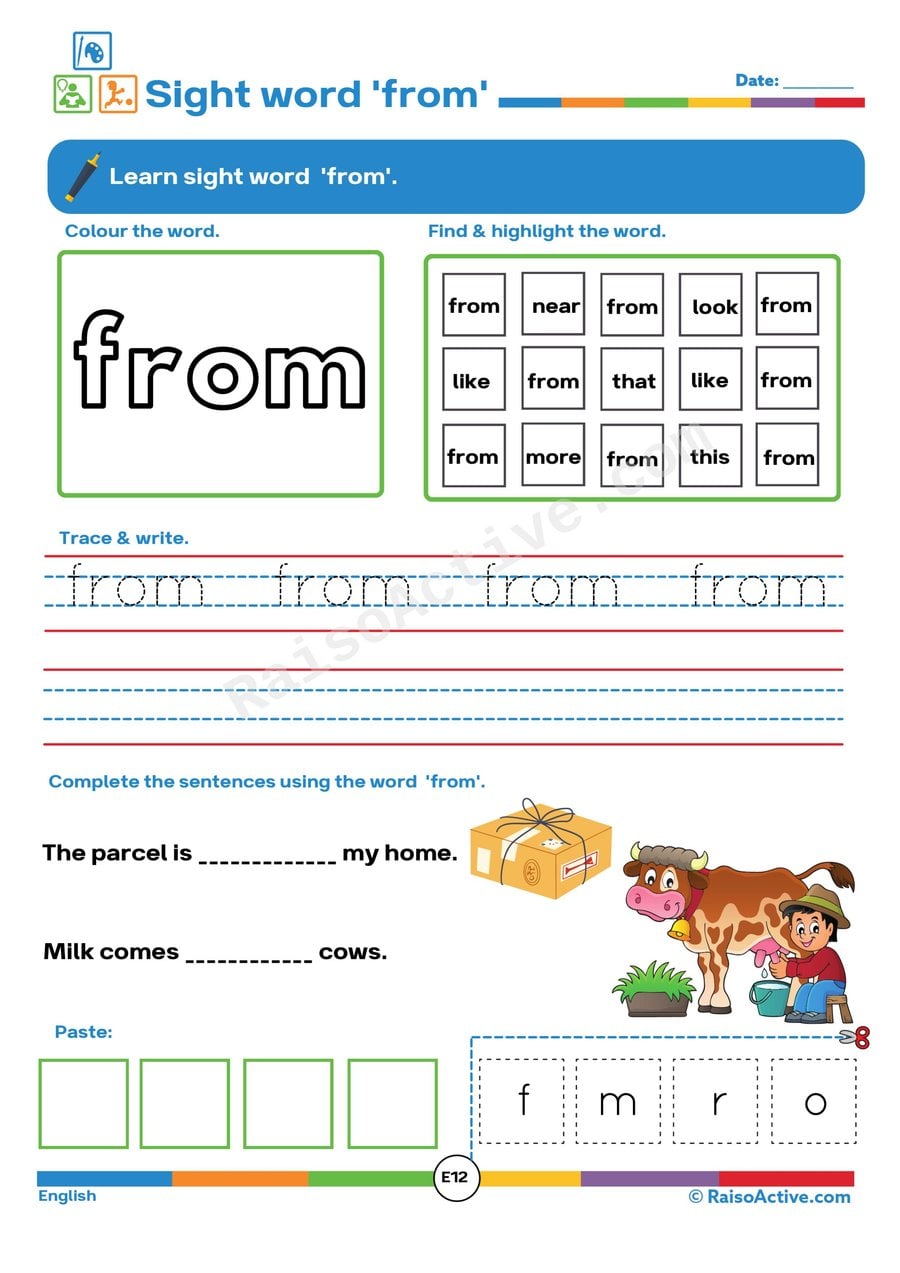
Sight Word 'From' Worksheet: Trace, Find, and Write!
This worksheet targets the sight word 'from' through a five-step sequence of coloring, searching, tracing, writing, and sentence practice, giving children ages 4-5 the repeated, varied exposure needed to recognize this common word instantly rather than sounding it out each time. Because 'from' appears constantly in early reading material, building fluency with it directly supports smoother, more confident reading of simple sentences and books.
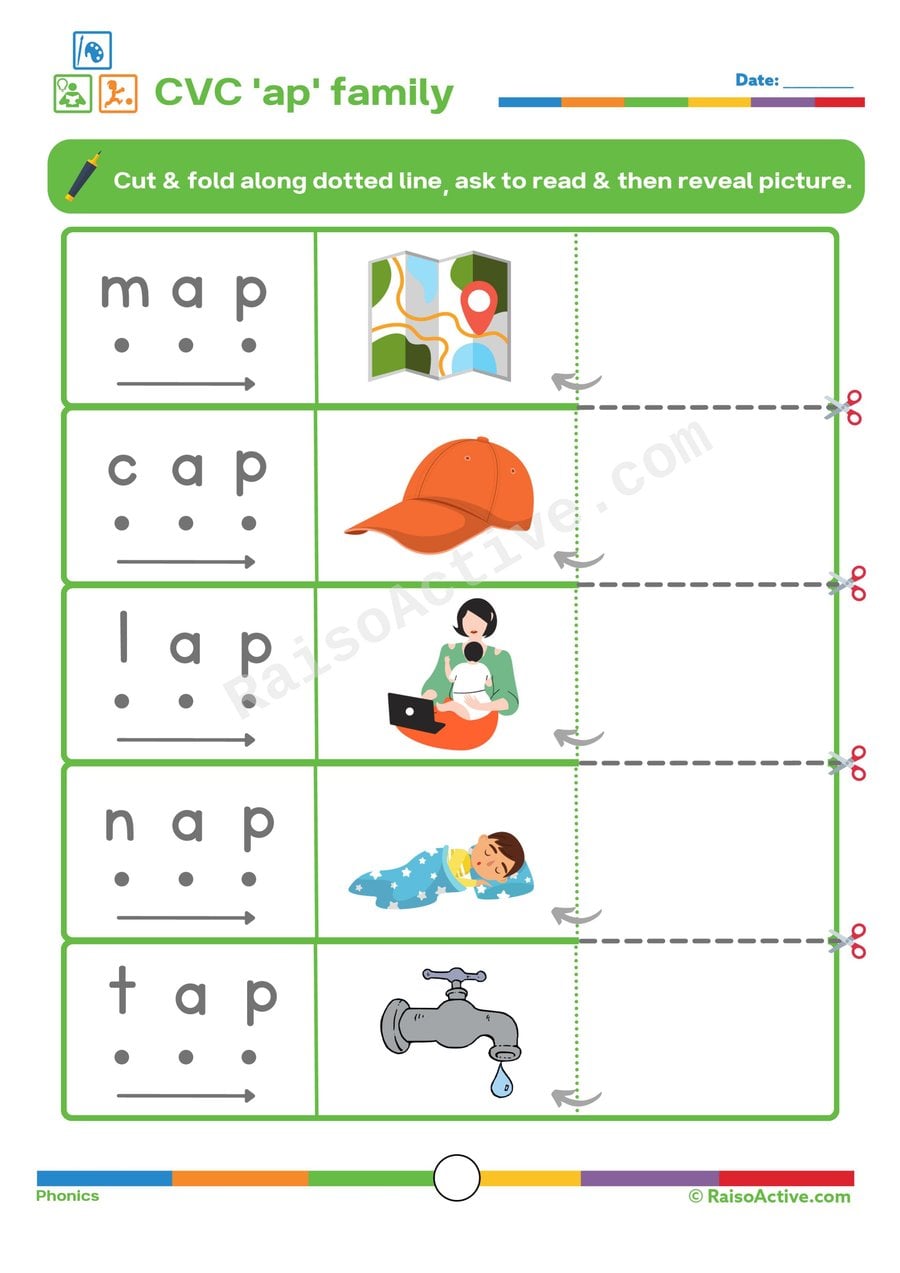
CVC Word Family 'ap' Worksheet: Read, Cut, and Match!
Working through the 'ap' word family (cap, map, nap) helps children ages 4-5 practice both decoding and matching in one activity, reinforcing that a small set of letter patterns can unlock many different words. Cutting apart the word and picture cards adds a fine motor and organizational challenge, requiring children to keep track of pieces while still focusing on reading accuracy. This combination of literacy and hands-on manipulation suits the shorter attention spans typical of this age group.

Sight Word 'There' Worksheet for Preschoolers: Tracing, Coloring, and Sentence Building
Because 'there' can't be decoded using typical phonics rules and is easily confused with the similar-sounding 'their' and 'they're,' children ages 4-5 need repeated, varied exposure to memorize it as a sight word. Practicing it through coloring, tracing, searching, and sentence-building helps move the word from momentary recognition into automatic recall needed for fluent reading.

First Letter Fun: Identify and Write the Beginning Sounds Worksheet
Naming each pictured object and writing its first letter helps children ages 4-5 practice phonemic awareness, the skill of isolating the very first sound in a word, which is a key building block for spelling and early reading. This worksheet turns that listening skill into a writing task, reinforcing the connection between a spoken sound and its written letter.

Phonic Sounds Worksheet: Circle the Picture That Starts with the Alphabet Sound!
This worksheet reinforces beginning-sound recognition for children ages 4-5 by presenting a letter at the start of each row and asking them to find the one picture among several that begins with that same sound. Because each row contains multiple pictures, children must test several beginning sounds against the target letter before settling on the correct one, which builds more precise listening skills than simpler one-picture matching tasks. This process also strengthens the letter-sound mapping that underlies early decoding.

Trace and Write Numbers: Sixteen to Twenty Worksheet
This worksheet helps children ages 4-5 practice tracing and writing the number words from sixteen to twenty, completing the teen and early twenty number-word range that builds toward full number fluency to 20. Repeated tracing of these longer words also continues to build the handwriting stamina needed for more complex writing tasks ahead.
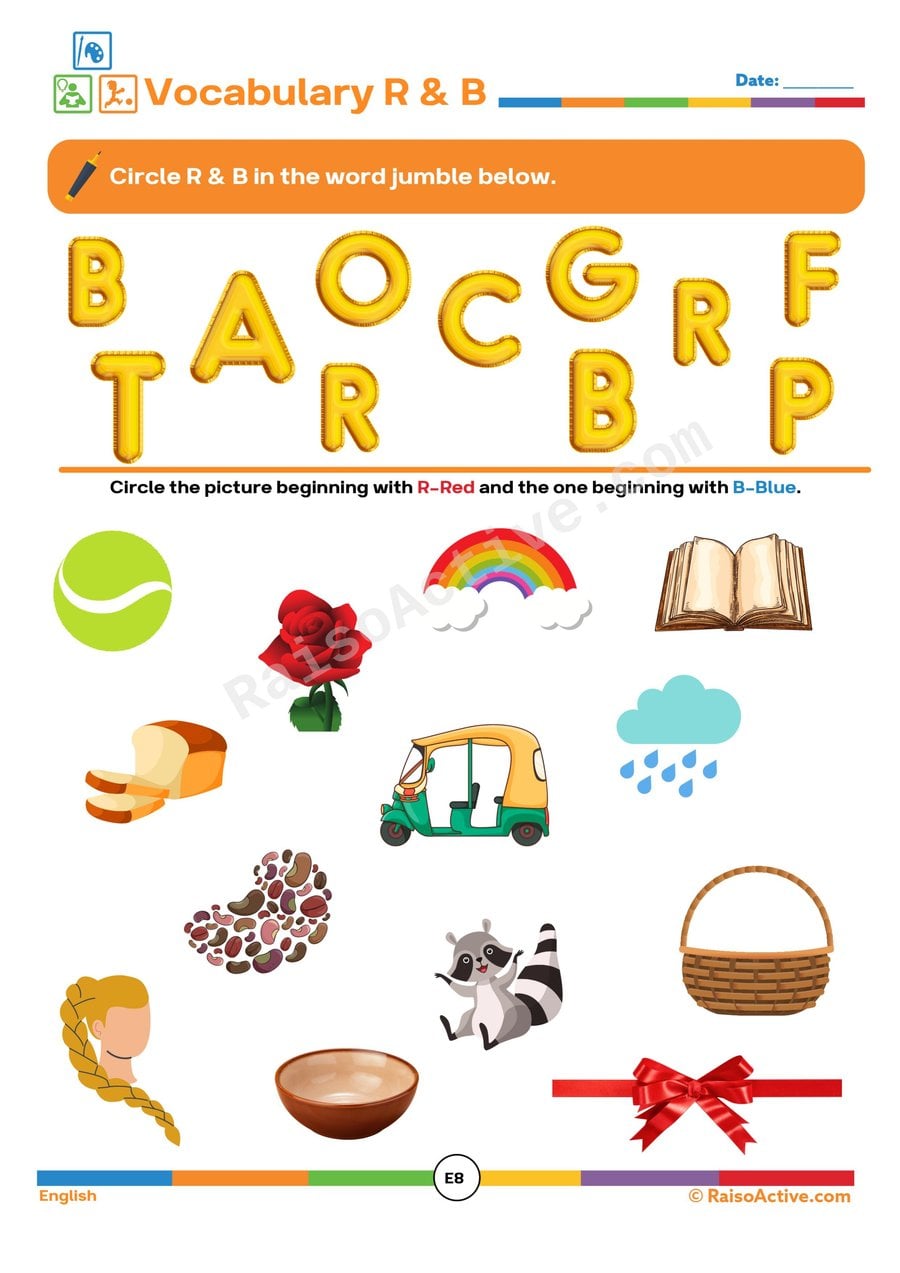
R & B Word Jumble Worksheet for Preschoolers
Circling the letters R and B within a jumbled group of letters sharpens visual discrimination for children ages 4-5, training their eyes to spot a specific letter shape among similar-looking distractions. Pairing this with picture identification for words that start with R and B reinforces beginning-sound recognition, connecting the visual letter search to actual spoken sounds.

Letter N Tracing Worksheet: Practice Uppercase and Lowercase!
N is built from two vertical lines connected by a diagonal stroke between them, a genuinely different pattern from letters like M that have four strokes, so tracing it at ages 4-5 sharpens a child's ability to notice and reproduce a specific number and order of strokes. This precision matters increasingly at this slightly older end of the preschool range, where handwriting expectations start to rise.
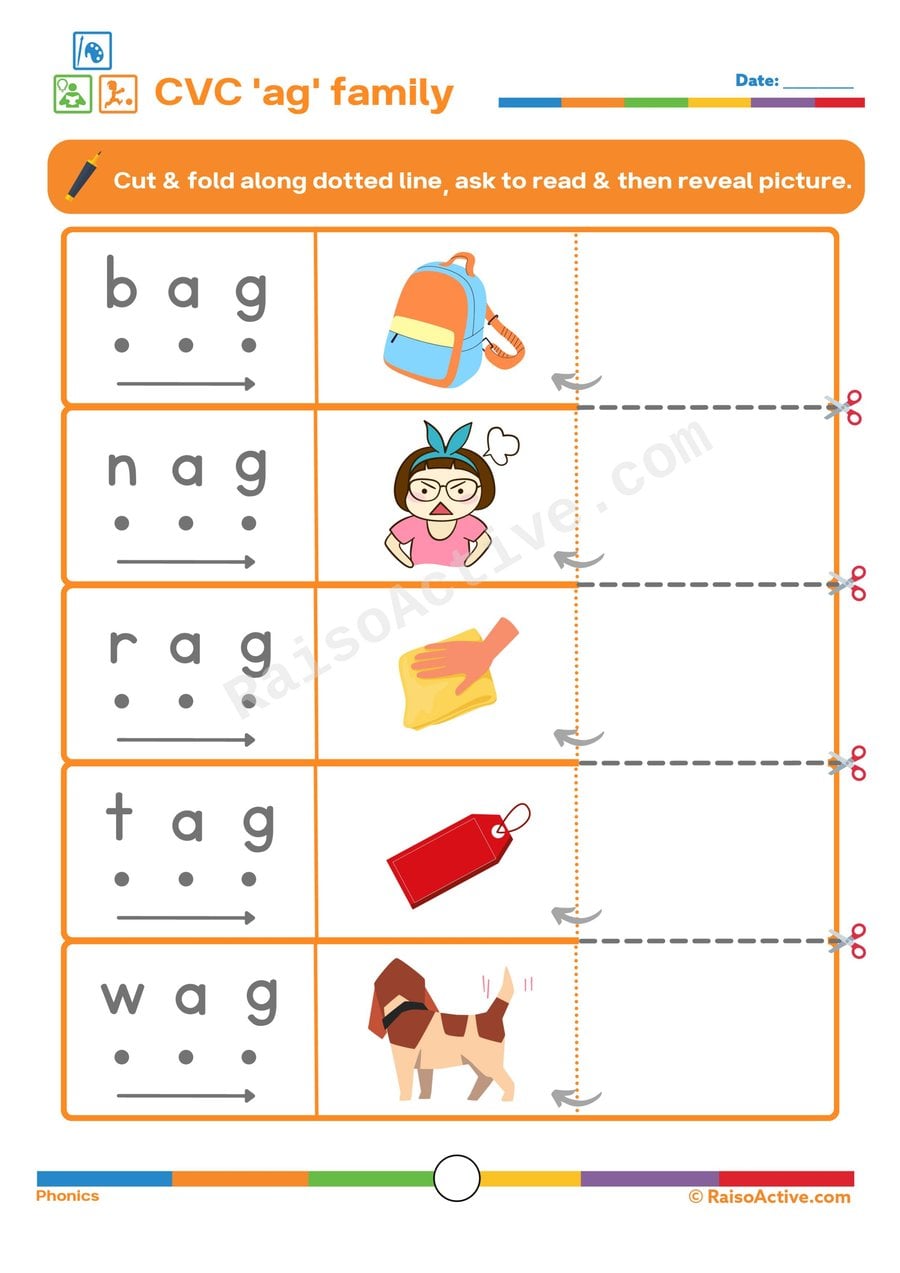
CVC 'ag' Family Worksheet: Read, Cut, and Reveal!
This 'ag' family worksheet (bag, tag, wag) gives children ages 4-5 repeated practice decoding CVC words that share a common ending, reinforcing the idea that recognizing a familiar chunk speeds up reading far more than sounding out letter by letter. The cut-and-fold reveal format turns each word into a small guessing game, which keeps motivation high through repetition that would otherwise feel like drill work. Matching the decoded word to its picture also gives children an immediate, visual way to check their own accuracy.
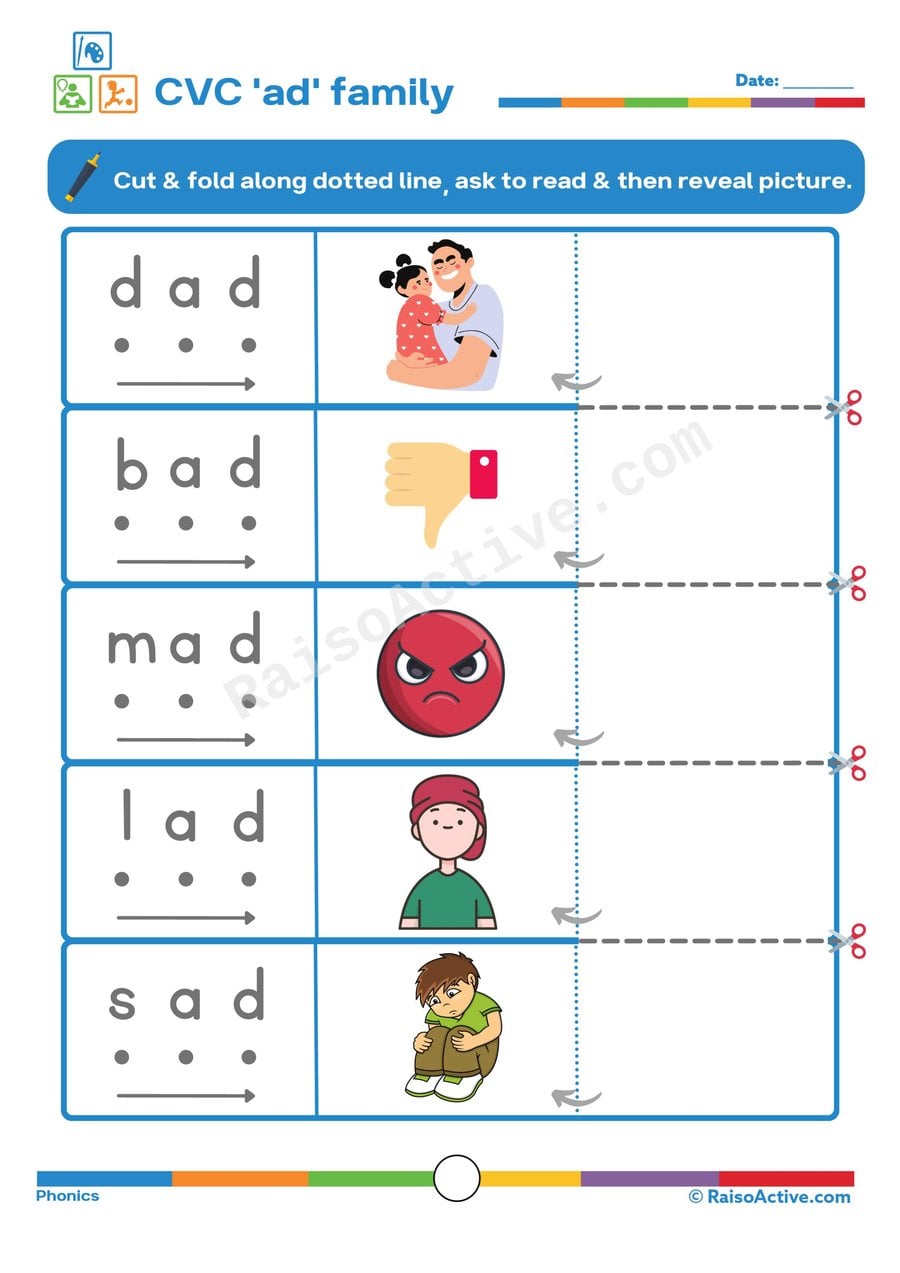
CVC Word Family 'ad' Worksheet: Read, Cut & Match!
Word families let children ages 4-5 apply one phonics pattern to many words at once, and this worksheet uses the 'ad' family — words like bad, sad, and dad — to build that pattern recognition. Because only the first letter changes while 'ad' stays constant, children start to notice spelling chunks instead of sounding out every single letter from scratch, which is a key step toward reading fluency. The cut-and-match format also adds a fine motor and matching challenge on top of the phonics work.

Frame the Sentence: Sight Word Fun Worksheet for Preschoolers
Constructing a full sentence from individual sight words is a meaningful step up from recognizing words in isolation, asking children ages 4-5 to understand how words function together to make meaning. This worksheet has children read a small bank of sight words and place them correctly into a sentence frame, which builds both reading comprehension and early grammar sense — understanding that word order matters. Because the words are provided rather than freely written, children can focus entirely on sentence structure without the added challenge of spelling from scratch.

Does Not Match: Circle the Odd Word Out Worksheet
This worksheet builds critical thinking alongside phonics for children ages 4-5 by having them examine a group of words and identify the one that doesn't belong based on its initial sound. Spotting the 'odd one out' requires more than just reading each word individually — your child has to compare all the words in a group simultaneously and reason about which shared feature the majority have in common. This kind of comparative reasoning strengthens both phonemic awareness and early logical thinking, since it's not enough to read correctly; your child also has to analyze and categorize.

Unscramble and Match: Vowel 'u' Worksheet for Preschoolers
This two-step worksheet challenges children ages 4-5 to unscramble jumbled letters into real words, then decide whether each word carries a long or short 'u' sound. Unscrambling builds letter-sequencing and spelling awareness, while the follow-up sound sort reinforces the vowel discrimination skills children need before they can decode new words independently.
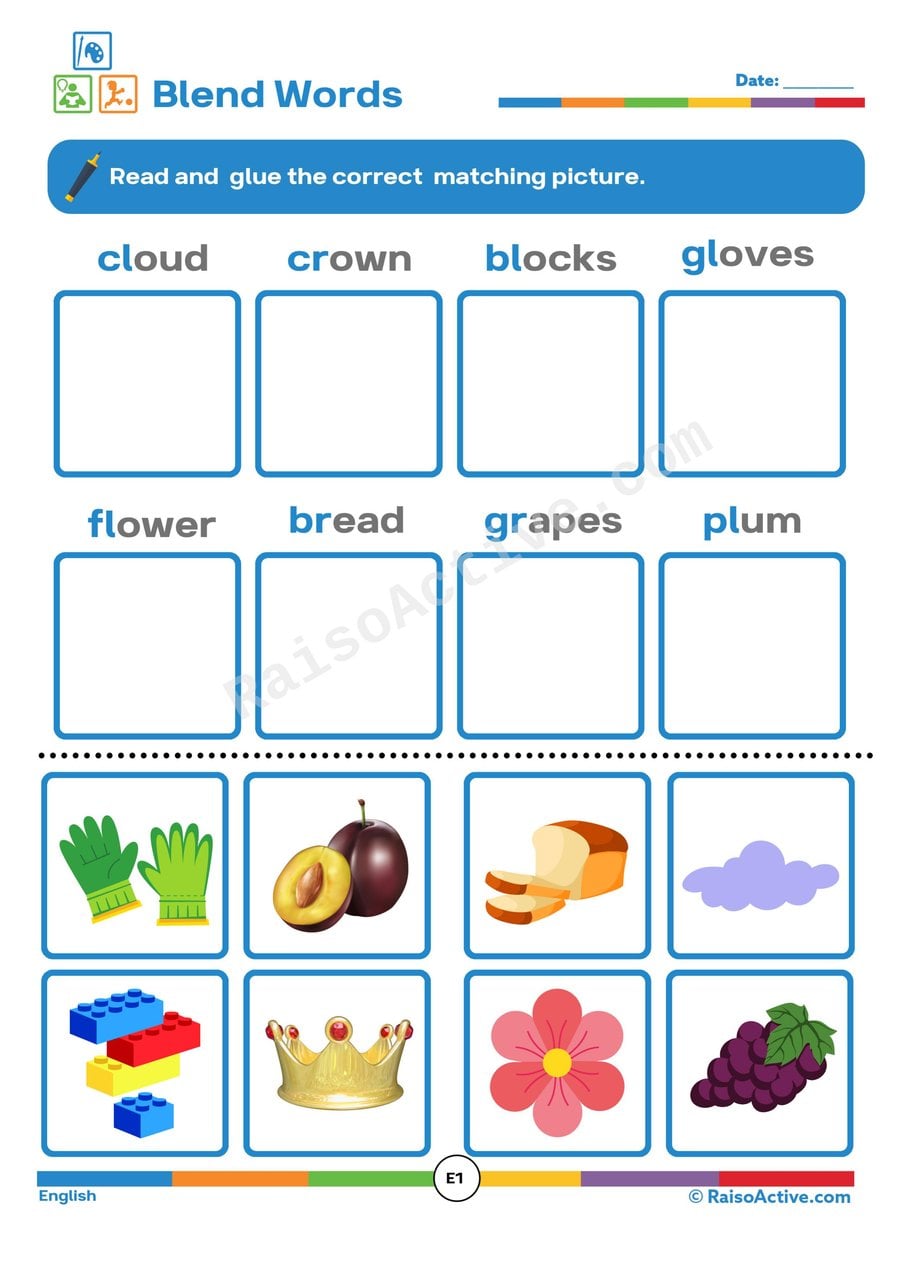
Blend Words Matching Worksheet for Preschoolers
Children ages 4-5 practice reading consonant blend words — words that start with two consonant sounds blended together, like 'bl' or 'st' — and connecting them to the correct picture through a cut-and-paste matching activity. Blends are a step up in difficulty from single beginning sounds, since children must hear and produce two consonant sounds smoothly together, an important milestone on the way to more advanced phonics.
What LKG sight words worksheets cover
At four to five a child meets the first handful of words that must be known: "I", "a", "the", "to", "and". A worksheet should present one word at a time in large print, ask the child to read it, trace it, find it among lookalikes and spot it in a three-word sentence. Ten to twenty words over the year is plenty. Spelling them from memory, or reading them inside a full story, is not the goal yet.
- Read, trace and circle "the" on a single-word sheet
- Find "I" and "a" hidden in a row of similar letters
- Match the word "to" to the same word in a short sentence
- Recognize own name and one or two words from a favorite book
How to use these worksheets at home or in class
Ten to fifteen minutes with one warm-up pattern sheet followed by a single letter or number page fits a four-year-old's attention span. Read each instruction aloud before your child begins, and show a correct starting point once rather than repeatedly erasing an attempt.
Start with the sheet that matches what your child can already do, then move one step up. Keep finished sheets in a folder: LKG teachers often ask for evidence of practice, and children like seeing their own progress.
Is your child ready for LKG sight words work?
A child entering this stage should already trace straight and curved lines confidently, hold a pencil with three fingers rather than a fist, sit for ten minutes without wandering off, and recognise a handful of capital letters from their own name.
Frequently asked questions
Should a four-year-old be learning sight words or letters?
Letters and their sounds come first, and most of the year at four should go there. A few sight words can sit alongside once the child knows about half the alphabet, because words like "the" and "I" appear in every book and cannot be sounded out with early phonics. Keep the list short, five to ten words, and stop if the child starts guessing whole words instead of looking at letters.
What should a LKG child be able to do in sight words?
At four to five a child meets the first handful of words that must be known: "I", "a", "the", "to", "and". A worksheet should present one word at a time in large print, ask the child to read it, trace it, find it among lookalikes and spot it in a three-word sentence. Ten to twenty words over the year is plenty. Spelling them from memory, or reading them inside a full story, is not the goal yet. A child entering this stage should already trace straight and curved lines confidently, hold a pencil with three fingers rather than a fist, sit for ten minutes without wandering off, and recognise a handful of capital letters from their own name.
Do these worksheets follow the LKG curriculum?
The sheets cover instant recognition of high-frequency words, reading words that cannot be sounded out, spelling common words from memory and using sight words inside a sentence, which sit inside the NEP 2020 Foundational Stage (NCF-FS 2022) outcomes for LKG. Pre-K (US), Reception (UK) use the same skills at this age, so the sheets also fit families following those programmes.
Are the LKG sight words worksheets free to download?
Yes. Every sheet on this page can be downloaded free as a watermarked PDF after creating an account, up to five downloads a day. The annual membership (₹1000) removes the watermark and the daily limit across the full library of more than 1,000 worksheets and all activity packs.

Written by
Hemsweta Jain · Teacher Cheena
MBA and Early Childhood Educator, teaching since 2014 · Founder of RaisoActive, Mumbai
Written and reviewed by Hemsweta Jain (Teacher Cheena), who designs every RaisoActive worksheet.
Last reviewed
Printable packs for ages 4–5
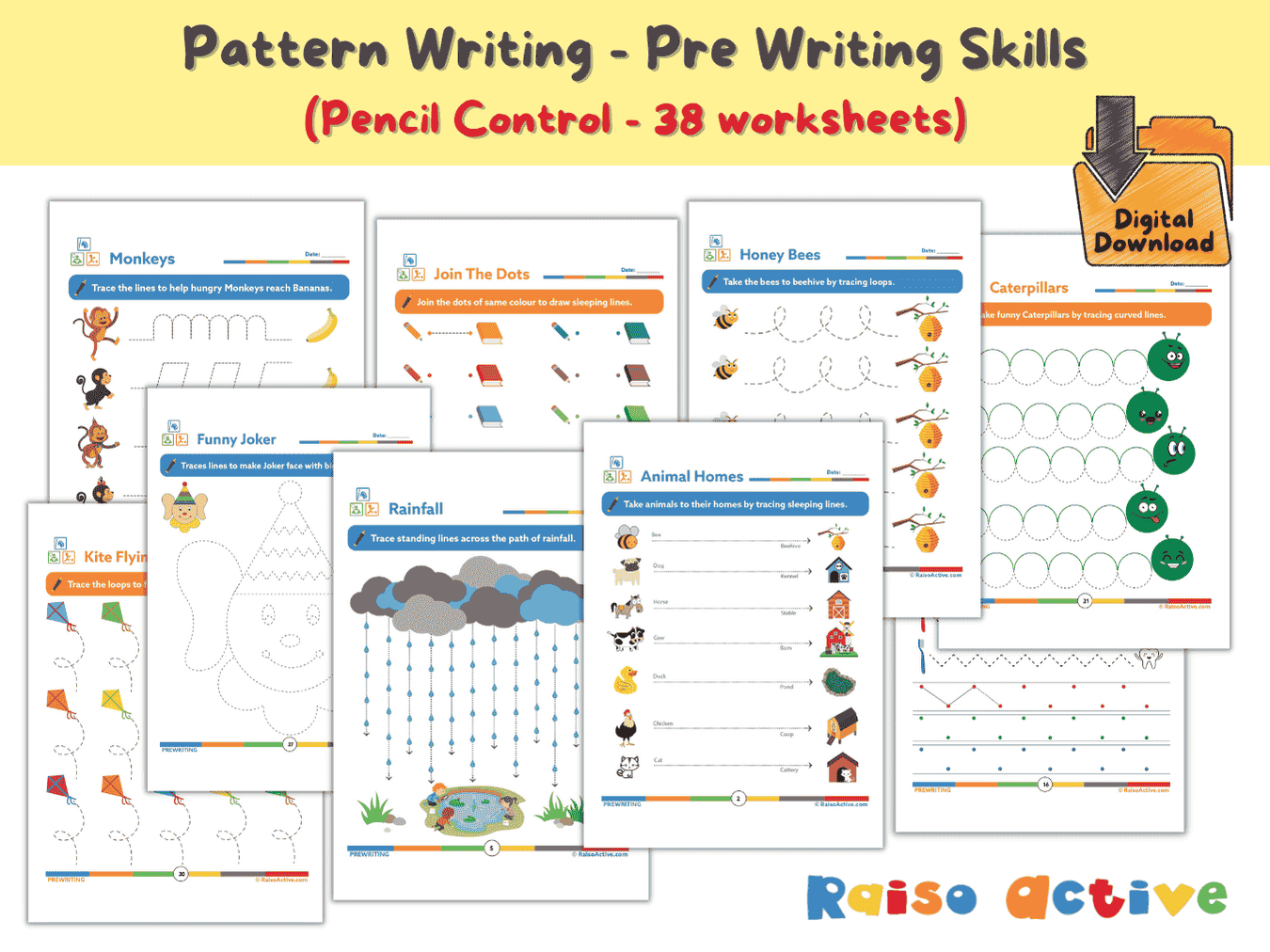
Pattern Writing Pre-writing Skills Activity Book for 3-4 Year Olds
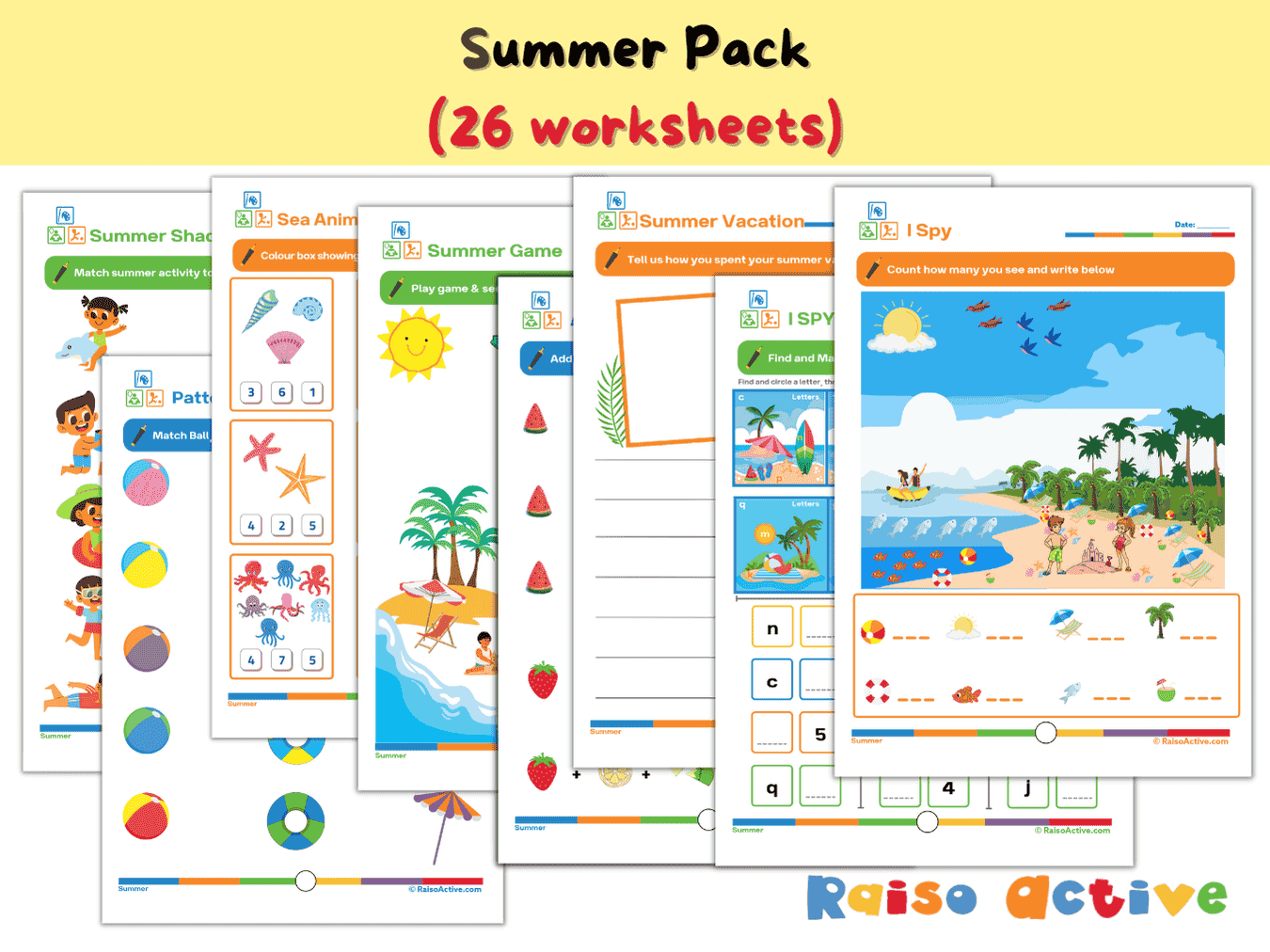
Summer Activity Pack: Math, Literacy, Puzzles & More for Preschool & Kindergarten
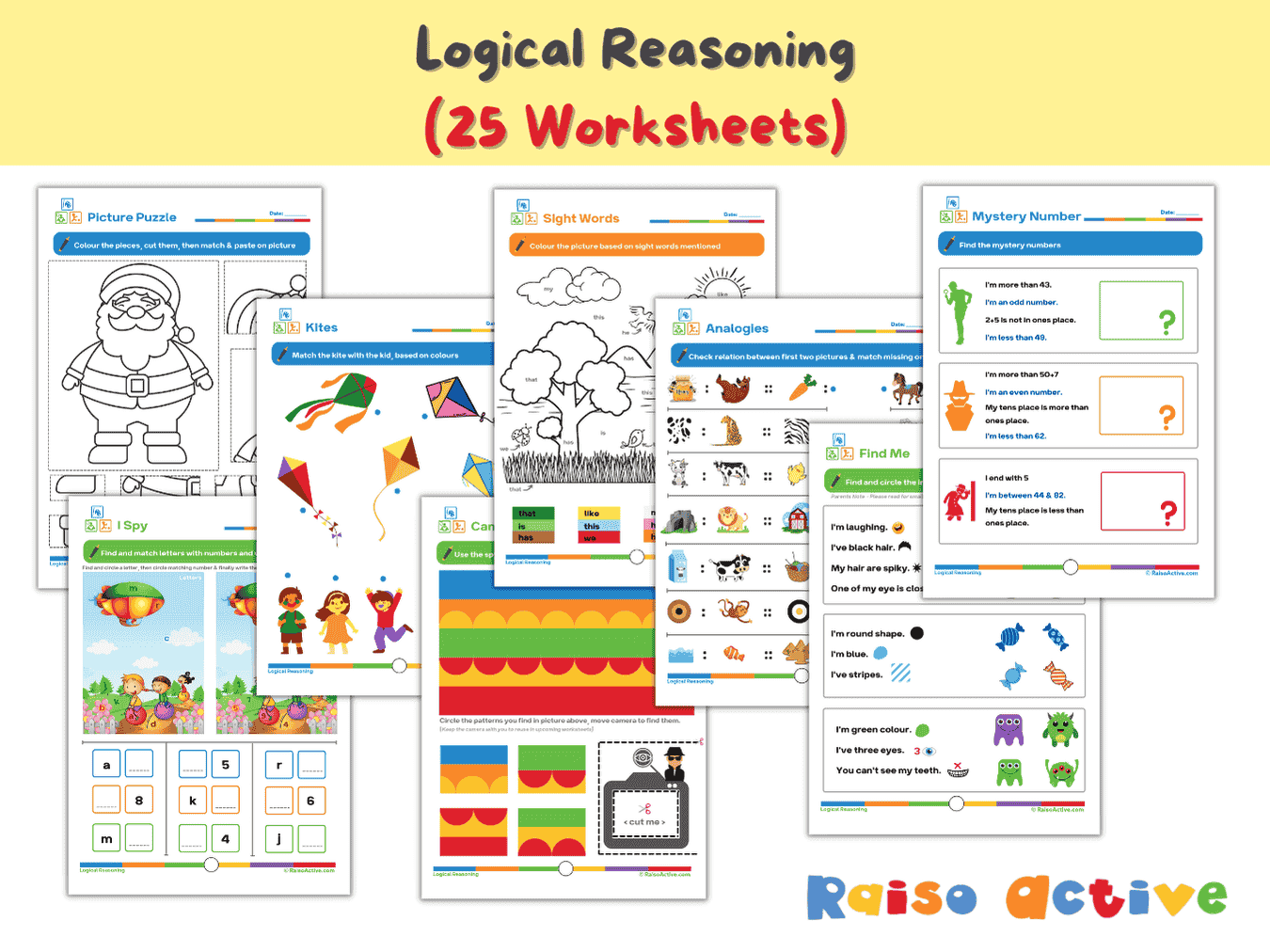
Logical Reasoning Activity Book for Preschool & Kindergarten | Patterns, Puzzles & Analogies
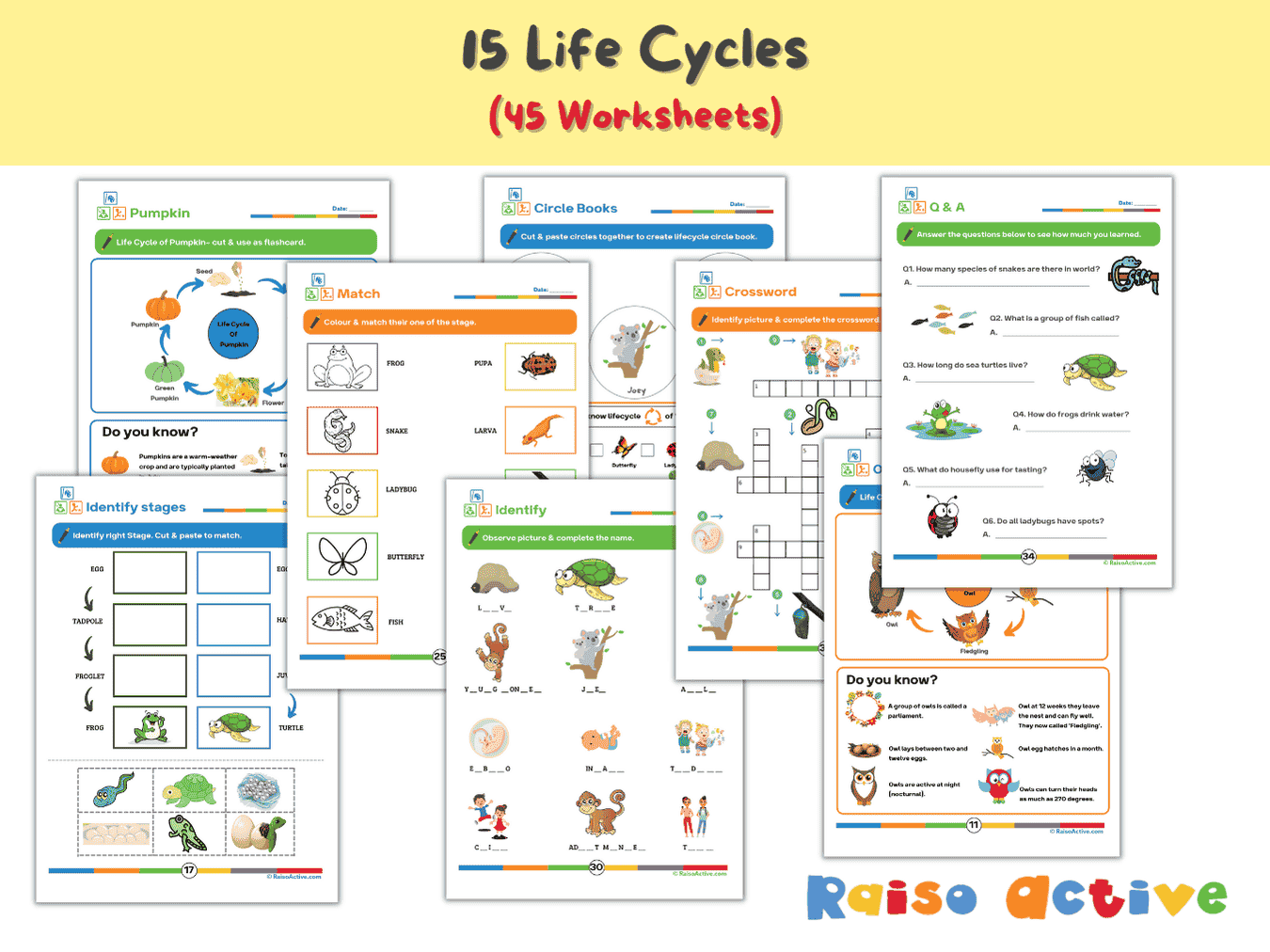
Lifecycles Activity Book & Flashcards for Preschool & Early Elementary
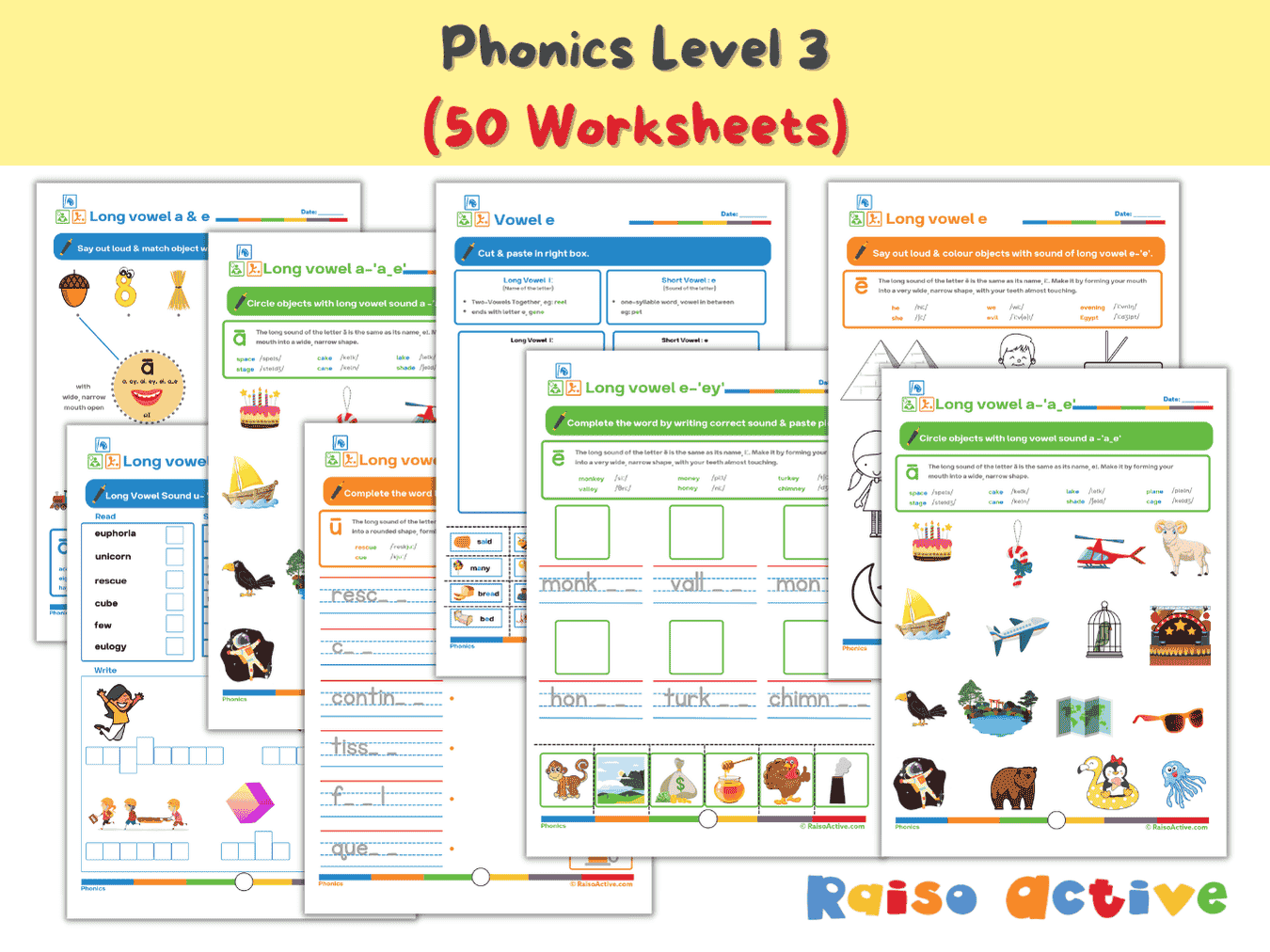
Phonics Level 3 Long Vowels Activity Book for Kindergarten & 1st Grade
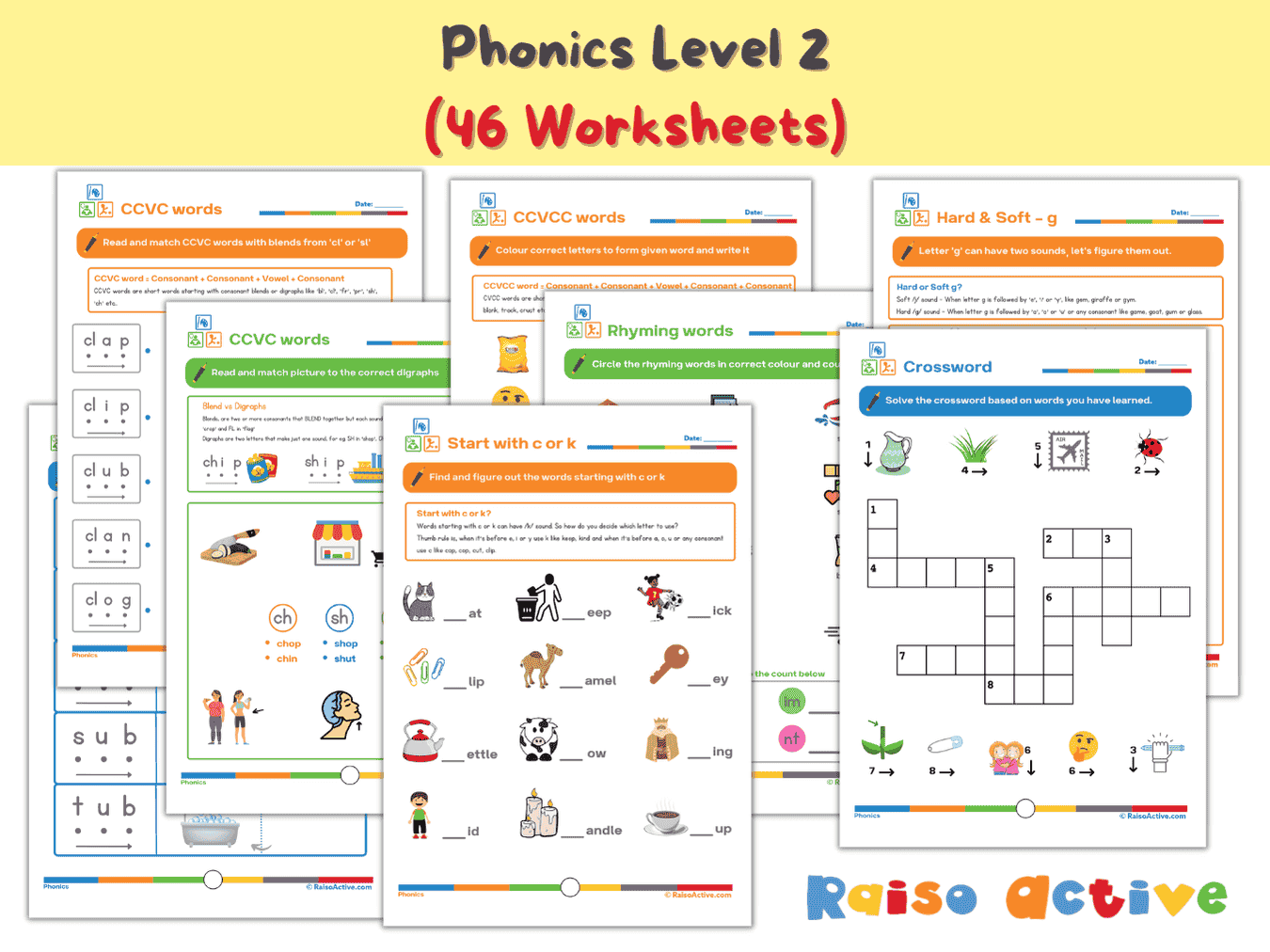
Phonics Level 2 Worksheets: CVC, CCVC, CVCC Word Families & Blends for Early Readers (Ages 4-7)
Guides for parents and teachers
See all guides →Sight Words by Age: The First 50 Words and How to Teach Them Without Flashcard Fatigue
Which sight words to teach first and why, the heart-word method, a read-trace-write-find routine, games, and a by-age table of typical sight-word progress.
How to Teach CVC Blending: A Step-by-Step Method That Works in Two Weeks
A step-by-step method for teaching CVC blending, covering continuous sounds, word families, common errors, and a 14-day plan that most children finish reading CVC words.
Phase 2 Phonics at Home: Sound Order, Blending Games, Worksheets
Phase 2 phonics at home: the five sound sets in order, oral blending, tricky words, a two-week routine, common mistakes, and free worksheets.
UKG Syllabus Explained: English, Maths and EVS Month by Month
What UKG classes typically cover in English, maths and EVS, month by month, aligned to NEP 2020, with ways to support at home and signs your child is behind.
Bridging Two Worlds: A Complete Guide to Teaching Heritage Languages Alongside English
A practical guide to raising bilingual children who speak both their heritage language and English with confidence. Research-backed strategies, activities, and tips for Indian families.
Empowering Multilingual Learners: Essential Resources and Strategies for Bilingual and Multilingual Children
Discover research-backed strategies, activities, and free printable resources to support bilingual and multilingual children ages 1-8. Practical tips for Indian families raising confident multilingual learners.
Canonical: https://raisoactive.com/worksheets/lkg-sight-words