Free printable worksheets · India
UKG Subtraction Worksheets (Ages 5–6)
UKG subtraction worksheets are practice sheets for children aged 5–6 in Upper Kindergarten (Senior KG) in India. Subtraction is taking a smaller group away from a larger one, or comparing two groups, to find how many or how much remain. The sheets on this page cover taking away from a group, counting back from a number, finding the difference between two numbers and fact families linked to addition.
Upper Kindergarten shifts from recognising symbols to using them: children blend letter sounds into words, write short sentences, and solve small addition and subtraction sums instead of only counting objects. Numbers extend to fifty, and the plus and minus signs appear on the page for the first time. Between five and six the action moves onto paper. A child crosses out pictures, counts the survivors, and for the first time writes the result as a number sentence with a minus sign. Sheets at this age should stay within ten, show the objects for every problem, and introduce a number line so counting back becomes a strategy rather than a guess. Instant recall of subtraction facts is not expected; counting, out loud, still is.
166+ worksheets · free PDF download · print on A4 or Letter
UKG Subtraction Worksheets to print
Browse all worksheets for ages 5–6
Subtraction Fun: Count and Subtract with Cute Animals!
Counting a group of animal pictures and then crossing out or removing a specified number teaches children ages 4-6 the concept of subtraction as taking away from a starting quantity, which is easier to grasp visually than through numbers alone. Writing the remaining total after the take-away step reinforces that subtraction results in a smaller, specific number, connecting the physical act of removing objects to a written numeral. Using cute animal pictures as the countable objects keeps a potentially tricky math concept approachable and fun.

Comparing Numbers Worksheet: Greater Than, Less Than, and Equal To!
Children ages 4-6 learn to compare two numbers and choose the correct symbol — greater than, less than, or equal to — building an essential foundation for later work with inequalities and algebra. Comparing quantities and representing the relationship symbolically is a more abstract skill than simple counting, so this worksheet stretches children just past straightforward number recognition into true numerical reasoning.

Counting Fun: Count by 5 or 10 Worksheet for Preschoolers!
Counting objects arranged in groups of five or ten teaches children ages 4-6 skip counting, a faster strategy for finding a total than counting every single object one by one. This early efficiency strategy builds a foundation for later multiplication and for quickly estimating larger quantities.

Froggy Fun: Word Problems Worksheet for Early Learners
This worksheet introduces basic addition word problems using a frog theme, teaching children to translate a short story into a math equation they can solve. For four- to six-year-olds, this is a critical bridge skill — moving from simply adding numbers on a page to understanding what a real-world situation like '3 frogs on a lily pad, 2 more hop on' is actually asking them to find.
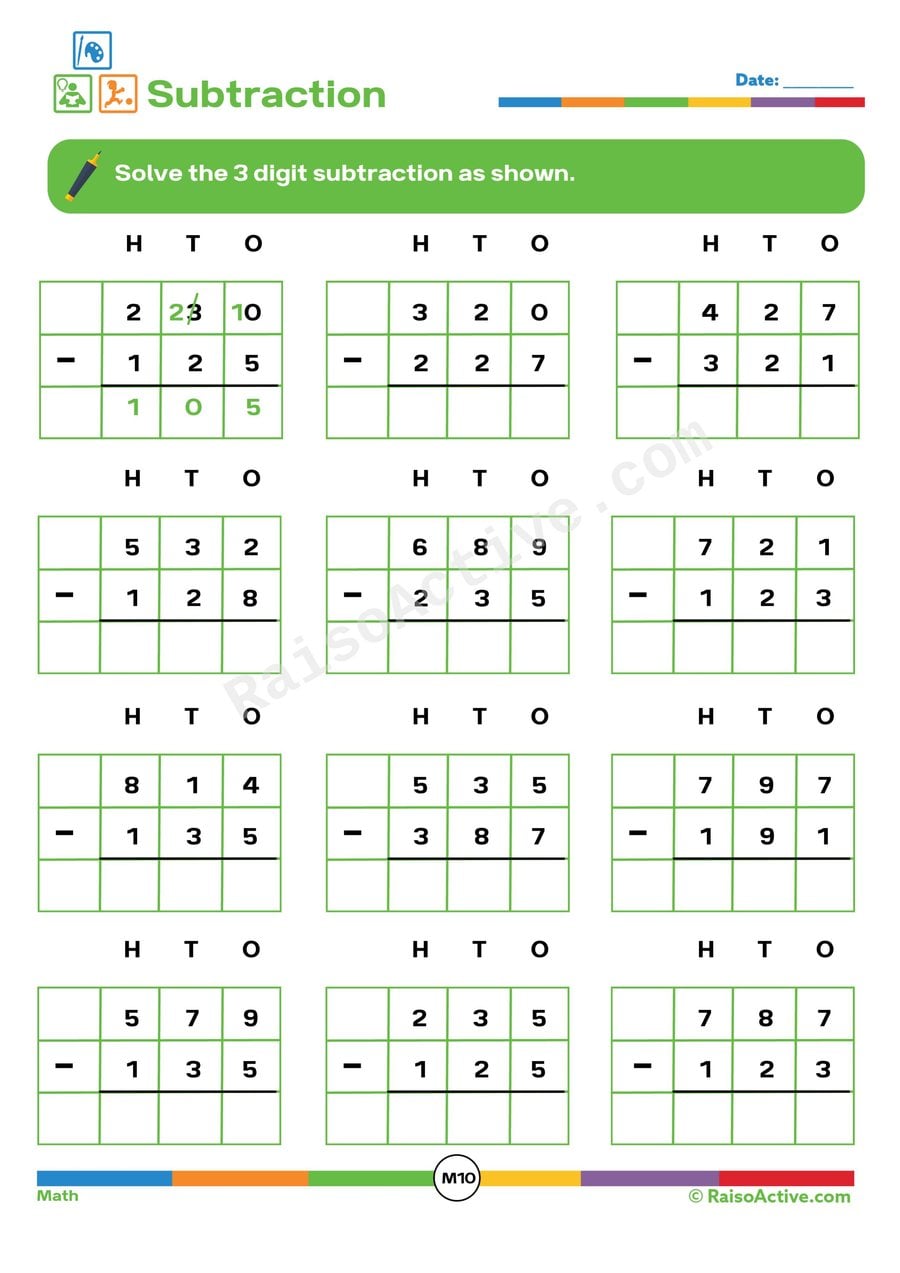
3-Digit Subtraction Worksheet for Kids
Subtracting three-digit numbers introduces children to borrowing, or regrouping, across place value columns, a more demanding skill than simple subtraction since it requires understanding that a ten can be 'broken' into ones when a column doesn't have enough to subtract from. For ages five to seven, this worksheet builds the procedural foundation for confident multi-digit subtraction going forward.

Word Problems Worksheet: Addition Practice for Kids
Children ages 4-6 practice applying addition to real-life scenarios by reading short word problems and figuring out what numbers to add together, a skill that bridges basic number facts with reading comprehension and problem-solving. Solving word problems teaches children to translate language into math, a step beyond simply adding numbers already given.

Word Problems Worksheet: Addition Practice for Young Learners
Solving simple addition word problems teaches children ages 4-6 to translate a short story into a number sentence, practicing both reading comprehension and the mechanics of combining two groups into a total.

Princess's Number Path: Fill in the Missing Numbers Worksheet
Filling in missing numbers along a themed path gives children ages 4-6 practice with number sequencing — understanding that numbers follow a fixed, predictable order and being able to identify what comes before or after a given number. This skill goes beyond simple counting, since a child has to hold the number sequence in their head and apply it to gaps rather than just reciting numbers in order from the start. The princess-and-prince storyline gives the exercise a narrative hook that keeps young children engaged through what might otherwise feel like a repetitive counting task.

Froggy Skip Counting Worksheet: Practice Number Patterns!
This worksheet introduces children ages 4-6 to skip counting — counting forward by a number other than one, such as by 2s or 5s — using a playful frog theme to keep the repetitive number pattern engaging. Recognizing and continuing a skip-counting sequence builds early number pattern awareness, a skill that later supports multiplication, telling time, and counting money.

Counting Ones Worksheet: Match and Fill in the Blanks!
Children ages 4-6 build early place value understanding by matching numbers to their corresponding sums and filling in blanks with the correct count of ones. This introduces the foundational idea that numbers are made up of countable units, a concept that underlies all later addition, subtraction, and multi-digit math. Matching and filling in blanks together reinforces both number recognition and basic counting accuracy.

Skip Counting Adventure: Fill in the Blanks Worksheet for Numbers 2, 5, and 10!
Filling in missing numbers in sequences that count by twos, fives, and tens teaches children ages 4-6 to recognize numerical patterns beyond counting one at a time, an important stepping stone toward multiplication later in school. Because each skip-counting sequence has a consistent gap between numbers, children must notice and apply that pattern rather than simply reciting a memorized list. This worksheet also builds flexible number sense, helping children see numbers as a system with predictable structure rather than an arbitrary list to memorize.

Mental Addition Worksheet: Add Dots and Find the Total!
This worksheet bridges concrete counting and mental addition by having children count visible dots, add them to a given number, and then draw missing dots to complete equations, reinforcing that addition means combining quantities together. For ages 4-6, physically drawing the missing dots makes the abstract equation tangible, helping cement the connection between a math symbol and what it actually represents.

Skip Counting Adventure: Help Community Helpers! A Fun Math Worksheet
Filling in missing numbers while skip counting by 5s and 10s builds a foundation for multiplication and faster counting for children ages 4-6, using a community helpers theme to make the abstract number pattern feel purposeful.

Tens and Ones Worksheet: Practice Place Value with Fun Elephants!
This worksheet has children break two-digit numbers into their tens and ones parts, then apply that understanding to simple addition and subtraction, a natural next step once place value clicks. For ages four to six, using the playful elephant images keeps a fairly abstract math concept approachable while still building the numerical foundation they'll rely on for years of arithmetic to come.
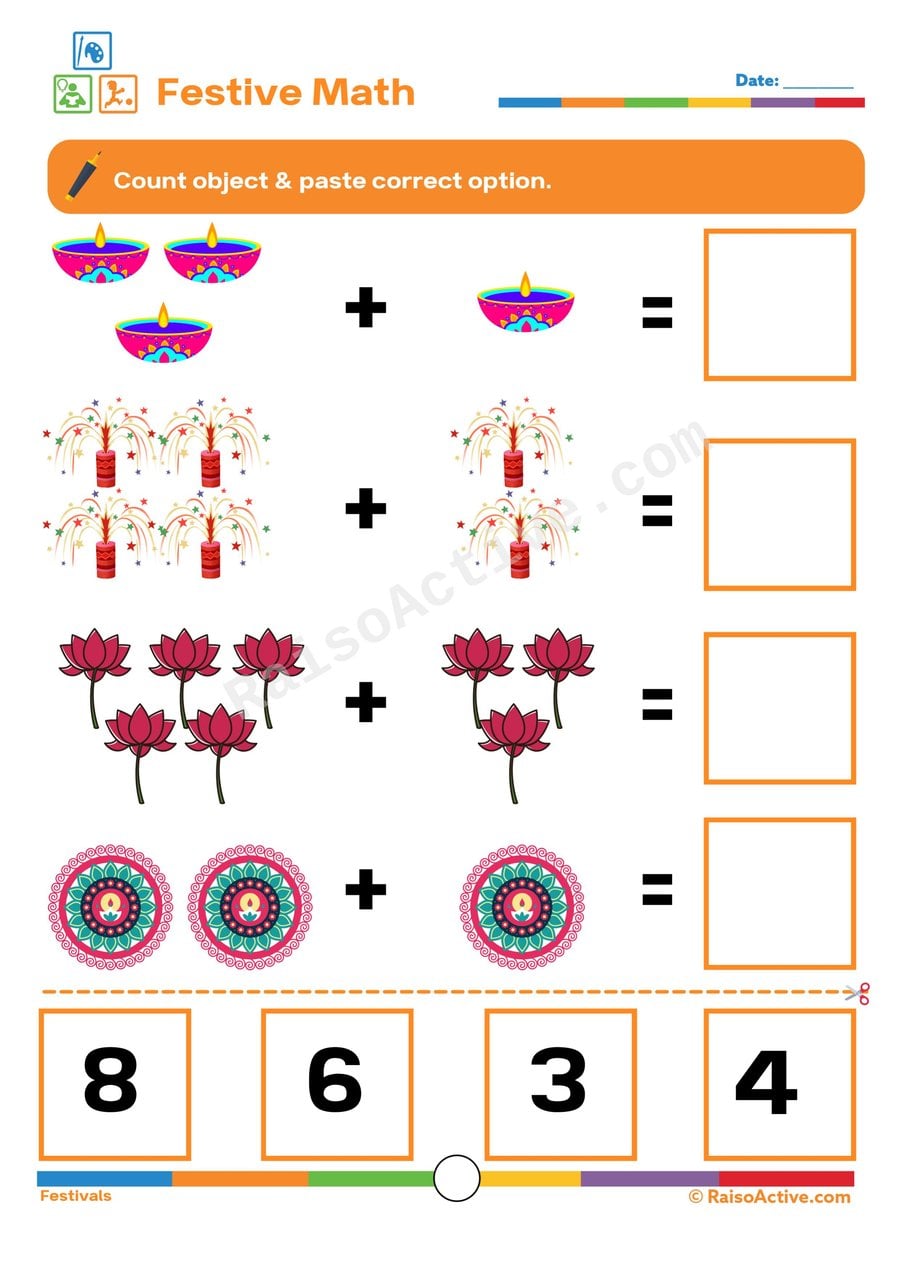
Festive Math: Count and Add Objects Worksheet
Children ages 4-6 practice counting groups of festival-themed objects and combining them through simple addition, building early number sense and the concept that addition means putting two groups together. Counting festive imagery keeps the math concrete and visual, which is especially important before children can add using abstract numerals alone.

Subtraction Fun: Practice Problems for Early Learners
This worksheet gives children ages 4-6 repeated practice with basic subtraction, working through simple equations and word problems that build number sense before formal arithmetic instruction begins. Filling in missing numbers within equations also introduces the idea that subtraction is reversible and connected to addition, an early step toward flexible number thinking. Repeated, varied practice like this helps subtraction facts move from effortful counting to quick recall.

Subtraction Worksheet: Practice Subtracting with Fun Pictures!
Children ages 4-6 practice subtraction by looking at a set of pictured objects, crossing out or removing the indicated amount, and writing the resulting total. Seeing subtraction visually, rather than only as abstract numbers, helps children genuinely understand what 'taking away' means before relying on memorized facts. This visual approach builds a strong foundation for mental math strategies used in later grades.
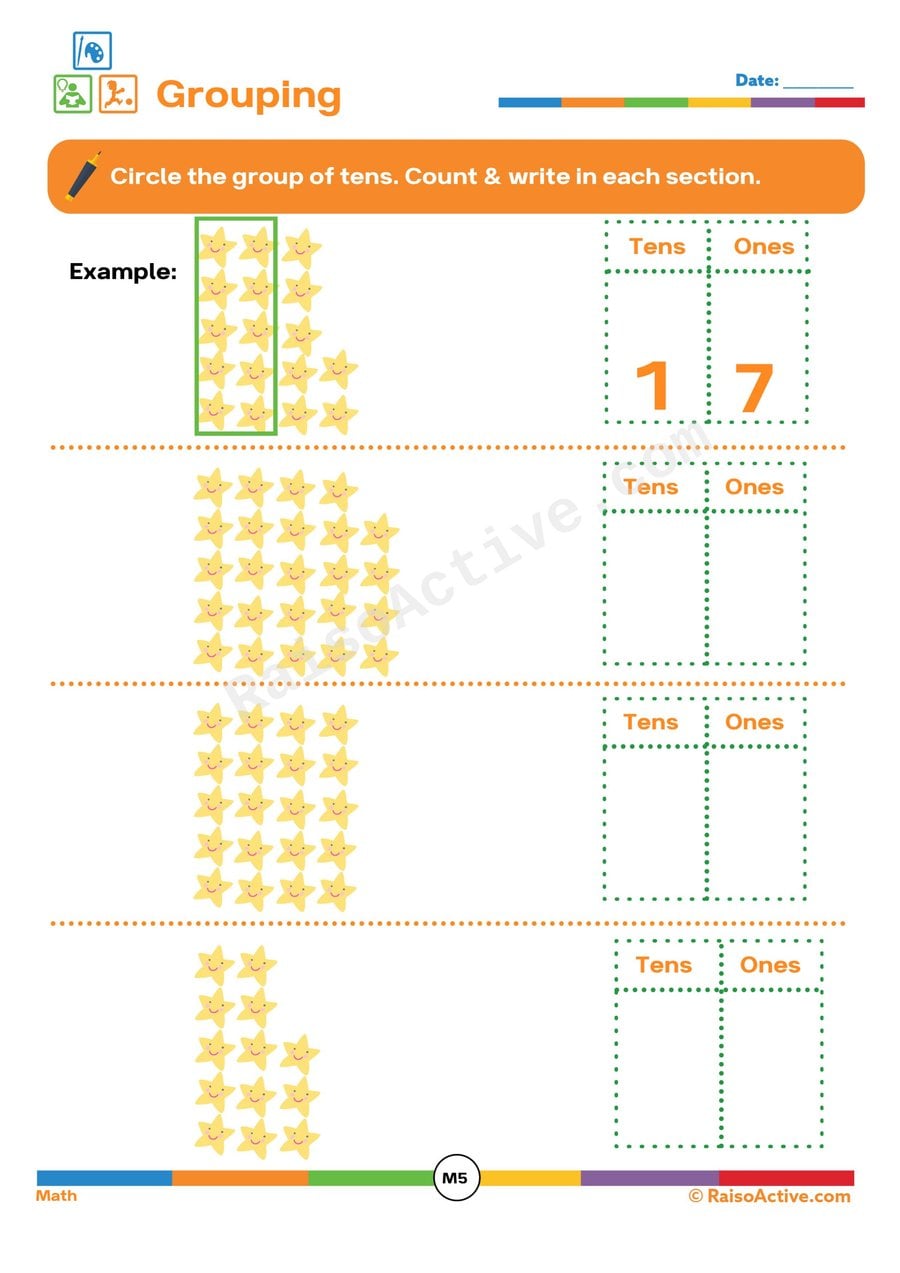
Grouping Stars: Tens and Ones Worksheet for Kids
Circling groups of ten stars and counting the leftover ones teaches children ages 4-6 to see a two-digit number as tens plus ones, reinforcing place value in a visual, hands-on way. This grouping practice builds a stronger number sense than memorizing numerals alone, since children physically organize quantities before writing them down.

Subtraction Worksheet: Find the Row with Matching Answers!
This worksheet pushes subtraction practice a step further for children ages 4-6 by having them solve several subtraction problems and then compare the answers across different rows to find matches, adding a layer of number-sense reasoning on top of basic calculation. Recognizing that two different subtraction problems can produce the same answer helps children understand that numbers can be reached in more than one way, which is an important early step toward flexible mathematical thinking. This kind of comparison task also builds attention to detail, since a child has to solve every problem accurately before the matching rows can be found.

Mental Addition Worksheet for Kids: Practice Adding Numbers!
This worksheet builds mental math fluency by asking children to solve simple addition problems in their heads rather than relying on counters or drawings, strengthening the internal number sense that supports faster, more confident arithmetic. For ages 4-6, moving from concrete counting toward mental calculation is a significant milestone that sets the foundation for later multi-digit addition.
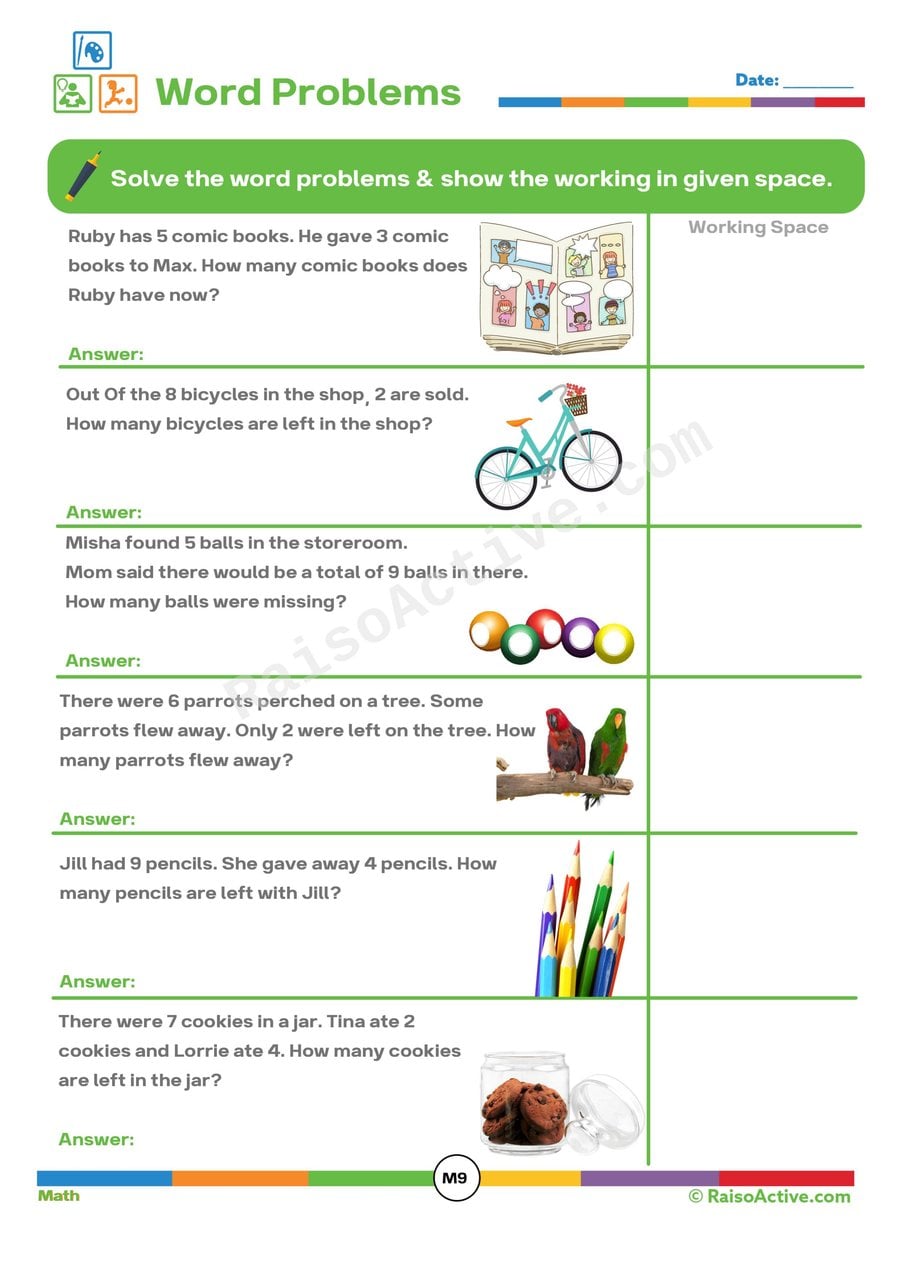
Word Problems Worksheet for Early Learners
Word problems ask 4-6 year olds to do something harder than a bare equation: read a short story, figure out what operation it's describing, and only then do the addition or subtraction. That translation step — turning 'Sam had 3 apples and ate 1' into a subtraction fact — is the real skill this worksheet builds, and it's the foundation for all later math word problems your child will encounter in school. Because the numbers here stay small, the challenge is almost entirely about comprehension rather than calculation.

Word Problem Fun: Balloon and Mango Math Worksheet for Kids
Solving addition word problems featuring balloons and mangoes teaches children ages 4-6 to translate a short story into a number sentence, practicing both reading comprehension and basic addition in a playful, visual context.
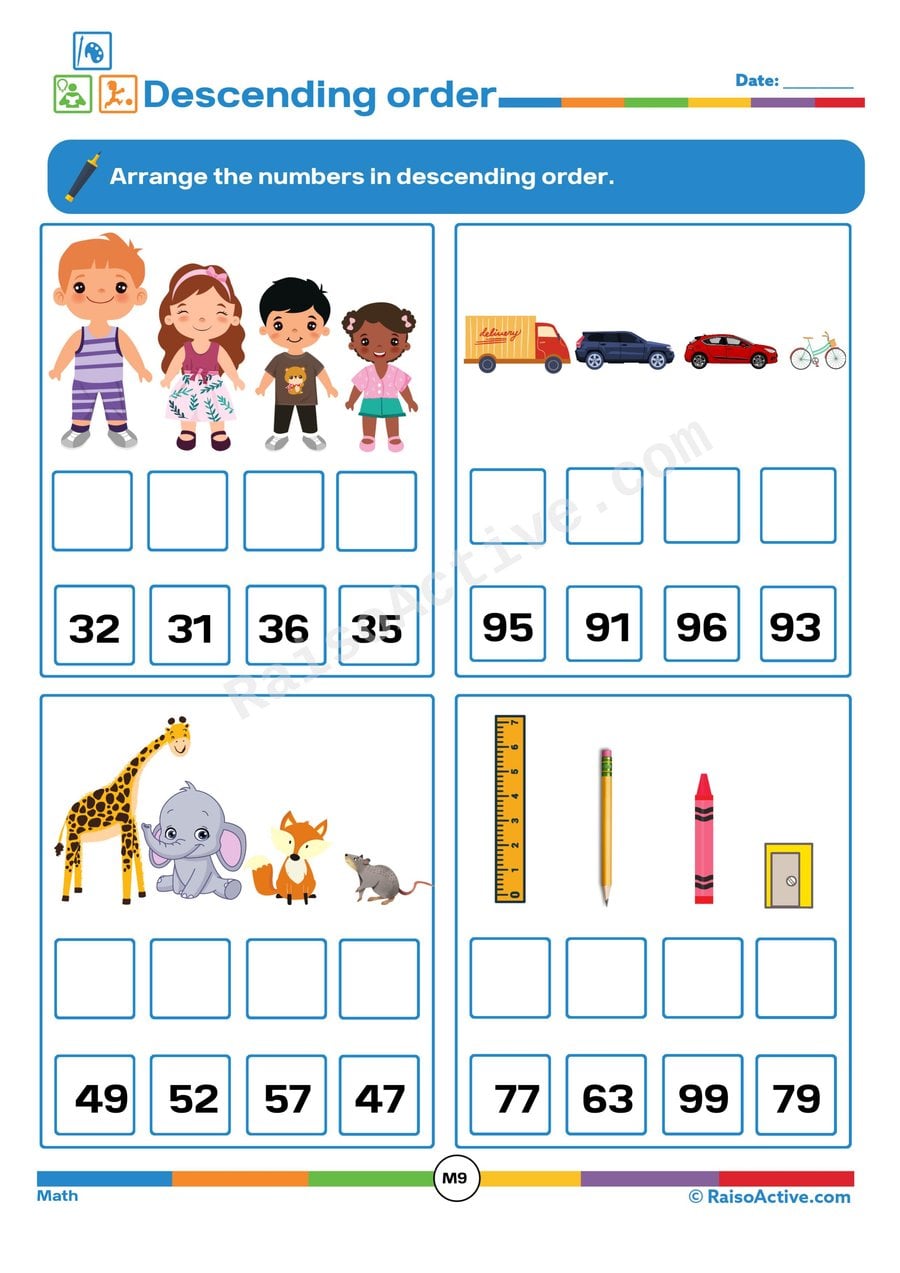
Descending Order Worksheet: Numbers 31-99
This worksheet extends number-sequencing skills for children ages 4-6 into the two-digit range of 31 to 99, asking them to arrange given numbers from largest to smallest. Working with larger numbers requires understanding that the tens digit generally determines size first, an important step toward place-value thinking. Practicing descending order, which is less intuitive than counting up, also strengthens flexible number sense.
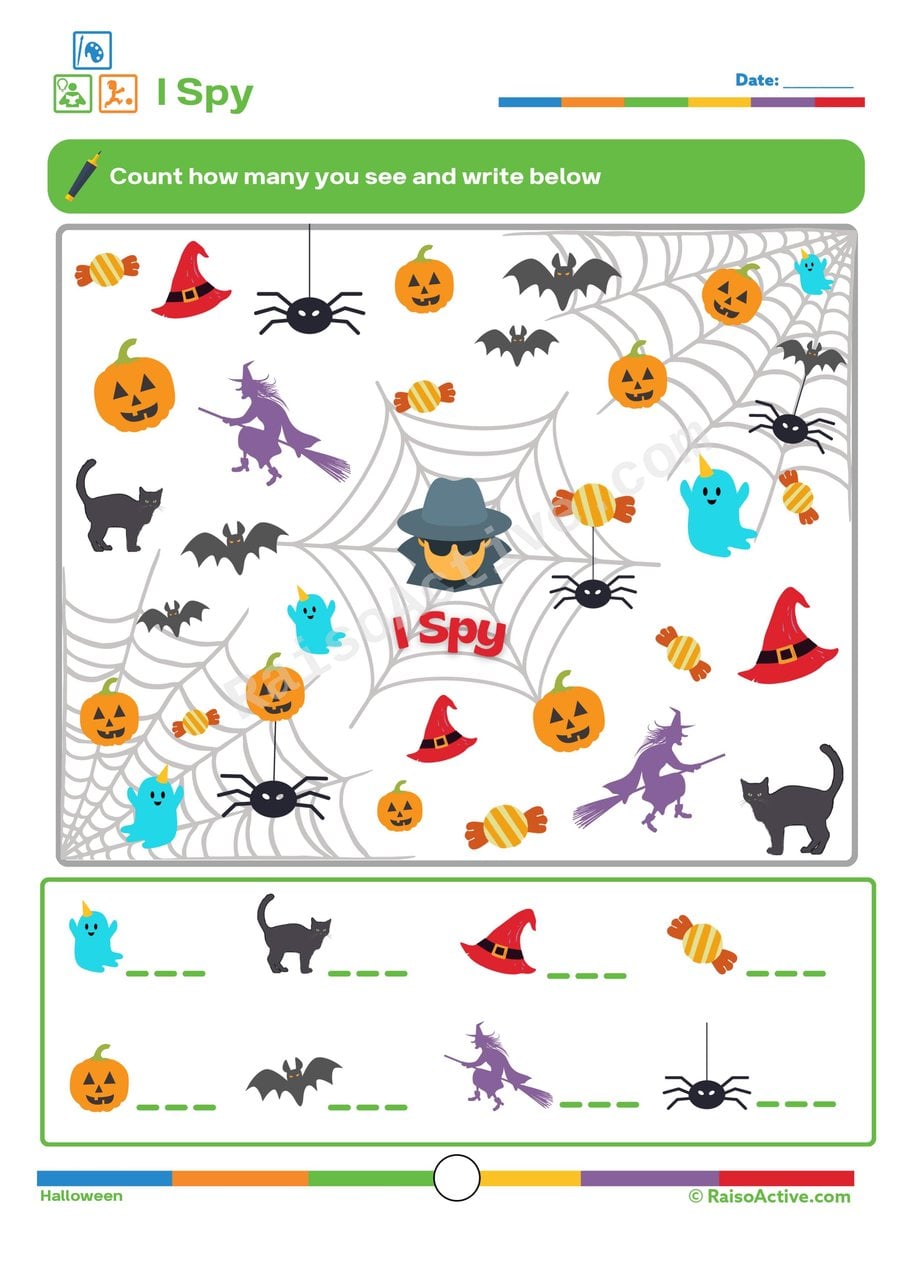
I Spy Halloween Worksheet: Count and Write!
This 'I Spy' worksheet has children ages 4-6 scan a busy Halloween scene to count how many of each specific object appear, then write the total as a numeral, combining visual search skills with number-writing practice. Because several object types are mixed together in one picture, children must also stay organized and avoid recounting the same object twice.
What UKG subtraction worksheets cover
Between five and six the action moves onto paper. A child crosses out pictures, counts the survivors, and for the first time writes the result as a number sentence with a minus sign. Sheets at this age should stay within ten, show the objects for every problem, and introduce a number line so counting back becomes a strategy rather than a guess. Instant recall of subtraction facts is not expected; counting, out loud, still is.
- Cross out pictures and write the matching number sentence within 10
- Hop backward on a 0–10 number line to solve 9 − 4
- Fill subtraction bonds of 5 and 10 with one number missing
- Count down from 10 to 1 aloud before starting the sheet
- Solve a picture word problem: seven ducks, three swim away
How to use these worksheets at home or in class
Two short sheets a day, roughly fifteen to twenty minutes altogether, keeps a five-year-old moving without overload. Alternate an English page with a maths page so neither subject stalls, and let your child attempt the first few items before stepping in.
Start with the sheet that matches what your child can already do, then move one step up. Keep finished sheets in a folder: UKG teachers often ask for evidence of practice, and children like seeing their own progress.
Is your child ready for UKG subtraction work?
Before this stage a child should write most capital letters from memory, know the sound each letter makes, count objects accurately to twenty, and sit through a full worksheet without needing a break halfway through.
Frequently asked questions
Why does my five-year-old add when the sheet says subtract?
Because adding is the habit and the sign is small. Children at five have spent a year joining groups, so when two numbers appear they combine them unless something stops them. Mixed sheets that alternate plus and minus force a look at the sign each time. Before each row, ask the child to point to the sign and say "take away" or "add" before touching the pencil. The habit usually corrects itself within a few sessions.
What should a UKG child be able to do in subtraction?
Between five and six the action moves onto paper. A child crosses out pictures, counts the survivors, and for the first time writes the result as a number sentence with a minus sign. Sheets at this age should stay within ten, show the objects for every problem, and introduce a number line so counting back becomes a strategy rather than a guess. Instant recall of subtraction facts is not expected; counting, out loud, still is. Before this stage a child should write most capital letters from memory, know the sound each letter makes, count objects accurately to twenty, and sit through a full worksheet without needing a break halfway through.
Do these worksheets follow the UKG curriculum?
The sheets cover taking away from a group, counting back from a number, finding the difference between two numbers and fact families linked to addition, which sit inside the NEP 2020 Foundational Stage (NCF-FS 2022) outcomes for UKG. Kindergarten (US), Reception / Year 1 (UK) use the same skills at this age, so the sheets also fit families following those programmes.
Are the UKG subtraction worksheets free to download?
Yes. Every sheet on this page can be downloaded free as a watermarked PDF after creating an account, up to five downloads a day. The annual membership (₹1000) removes the watermark and the daily limit across the full library of more than 1,000 worksheets and all activity packs.

Written by
Hemsweta Jain · Teacher Cheena
MBA and Early Childhood Educator, teaching since 2014 · Founder of RaisoActive, Mumbai
Written and reviewed by Hemsweta Jain (Teacher Cheena), who designs every RaisoActive worksheet.
Last reviewed
Printable packs for ages 5–6
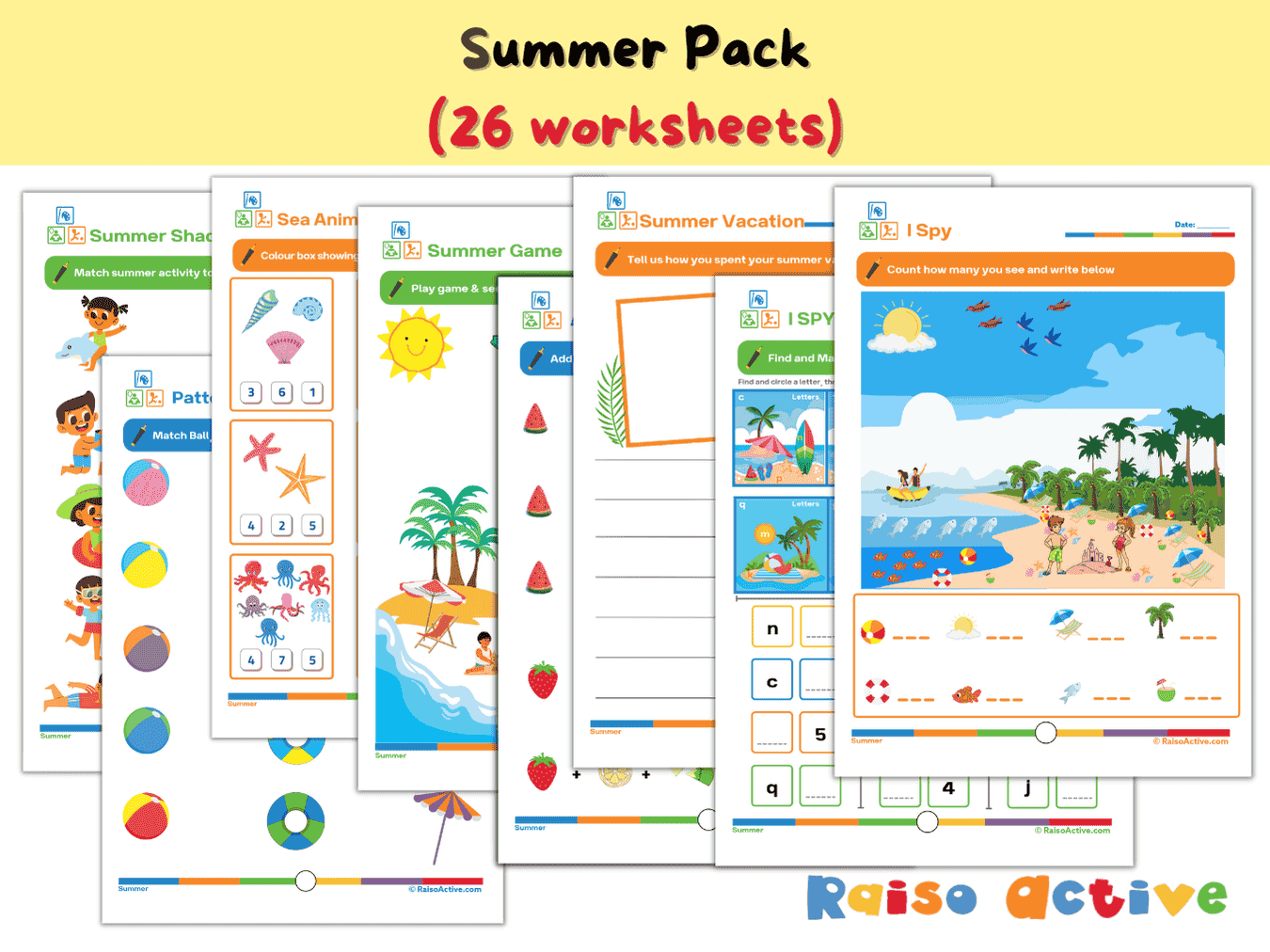
Summer Activity Pack: Math, Literacy, Puzzles & More for Preschool & Kindergarten
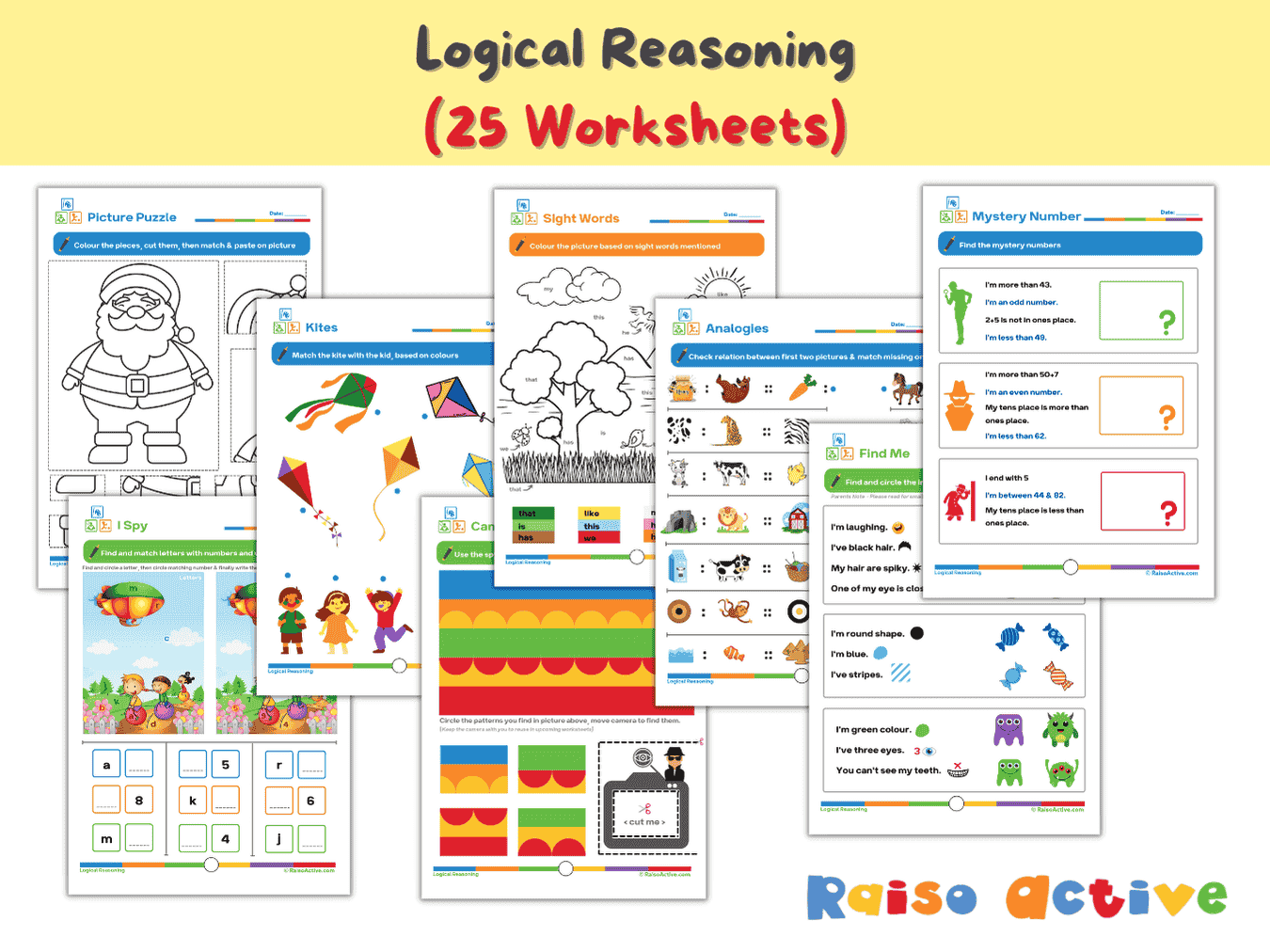
Logical Reasoning Activity Book for Preschool & Kindergarten | Patterns, Puzzles & Analogies
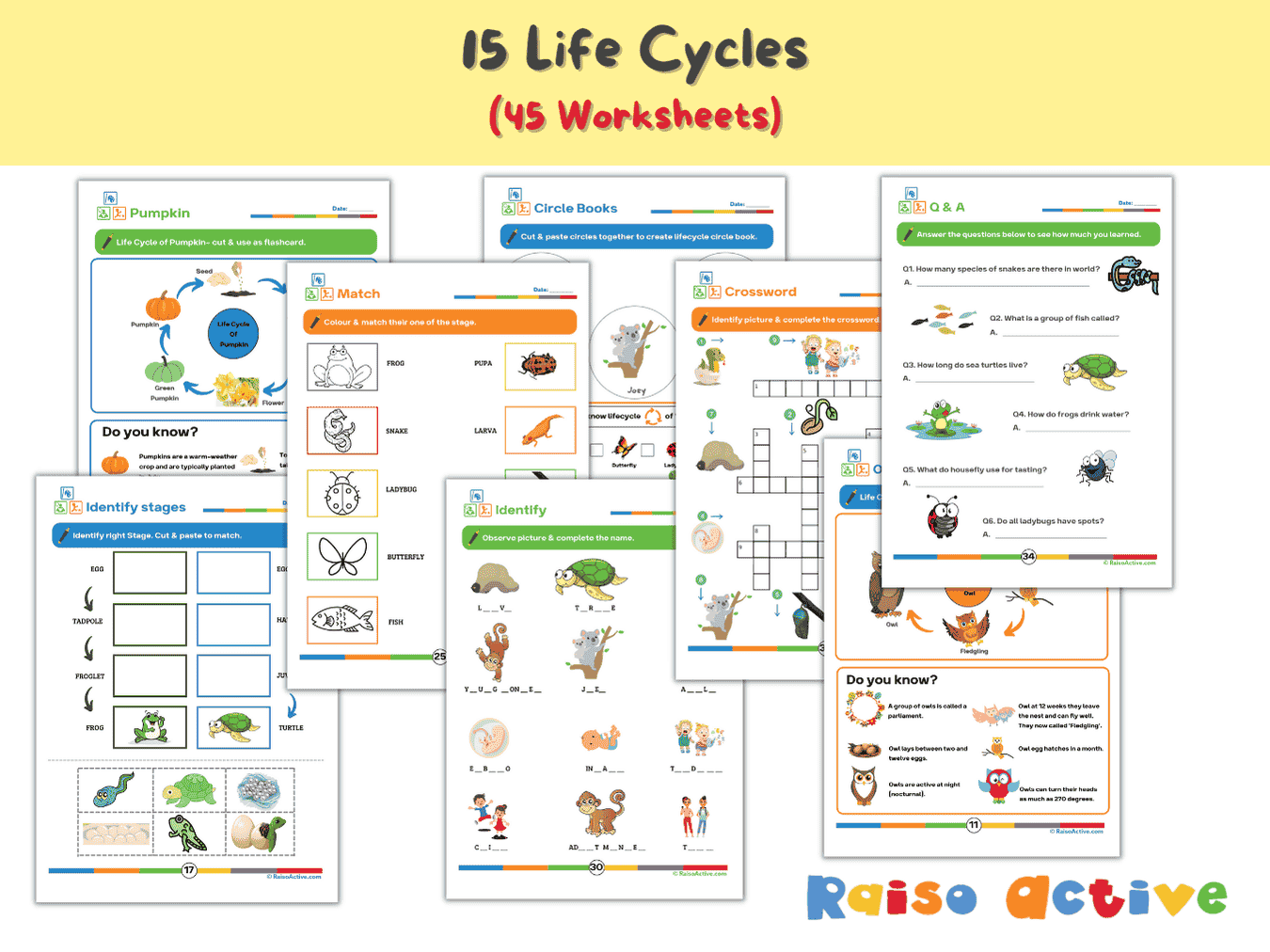
Lifecycles Activity Book & Flashcards for Preschool & Early Elementary
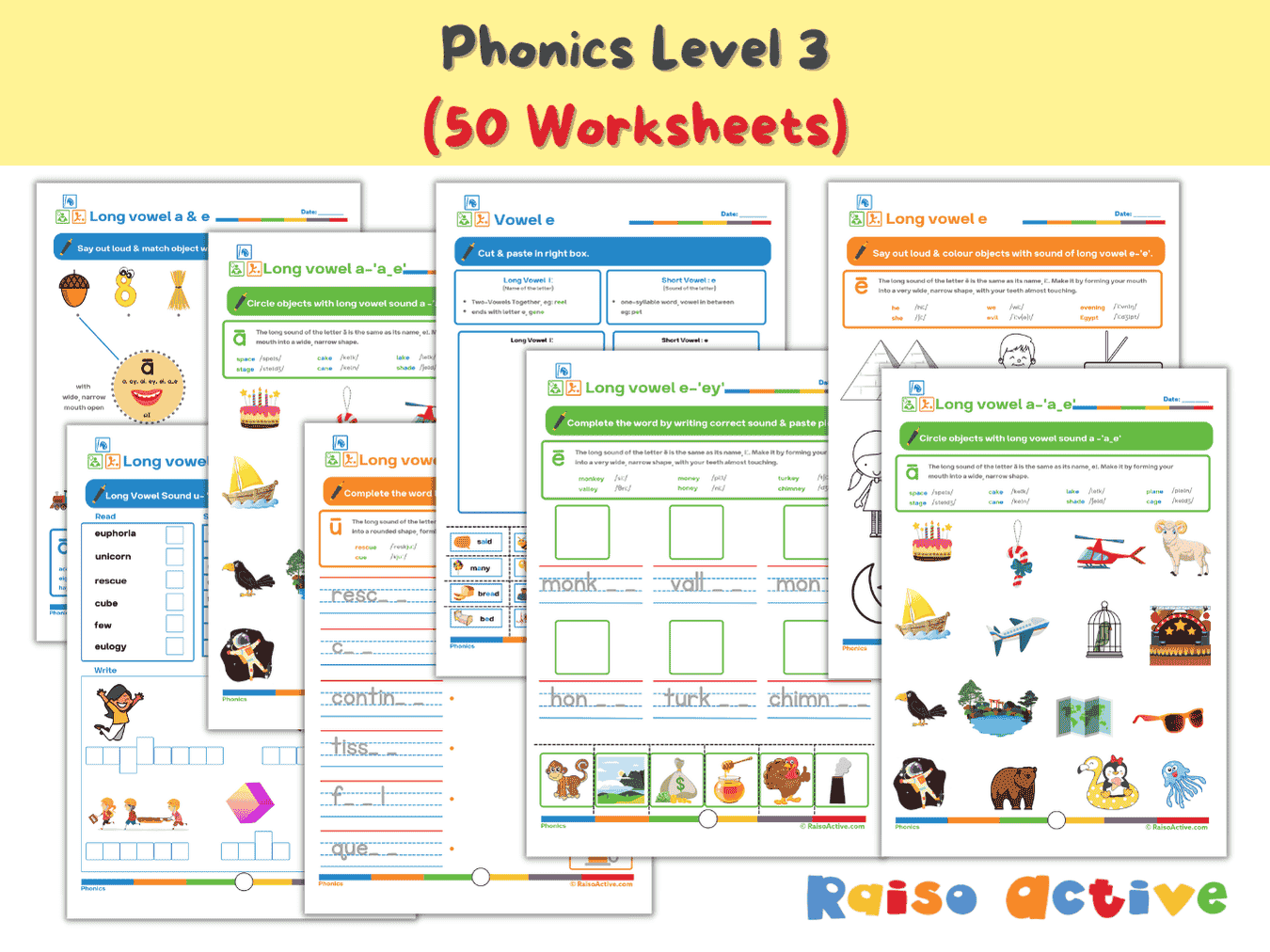
Phonics Level 3 Long Vowels Activity Book for Kindergarten & 1st Grade
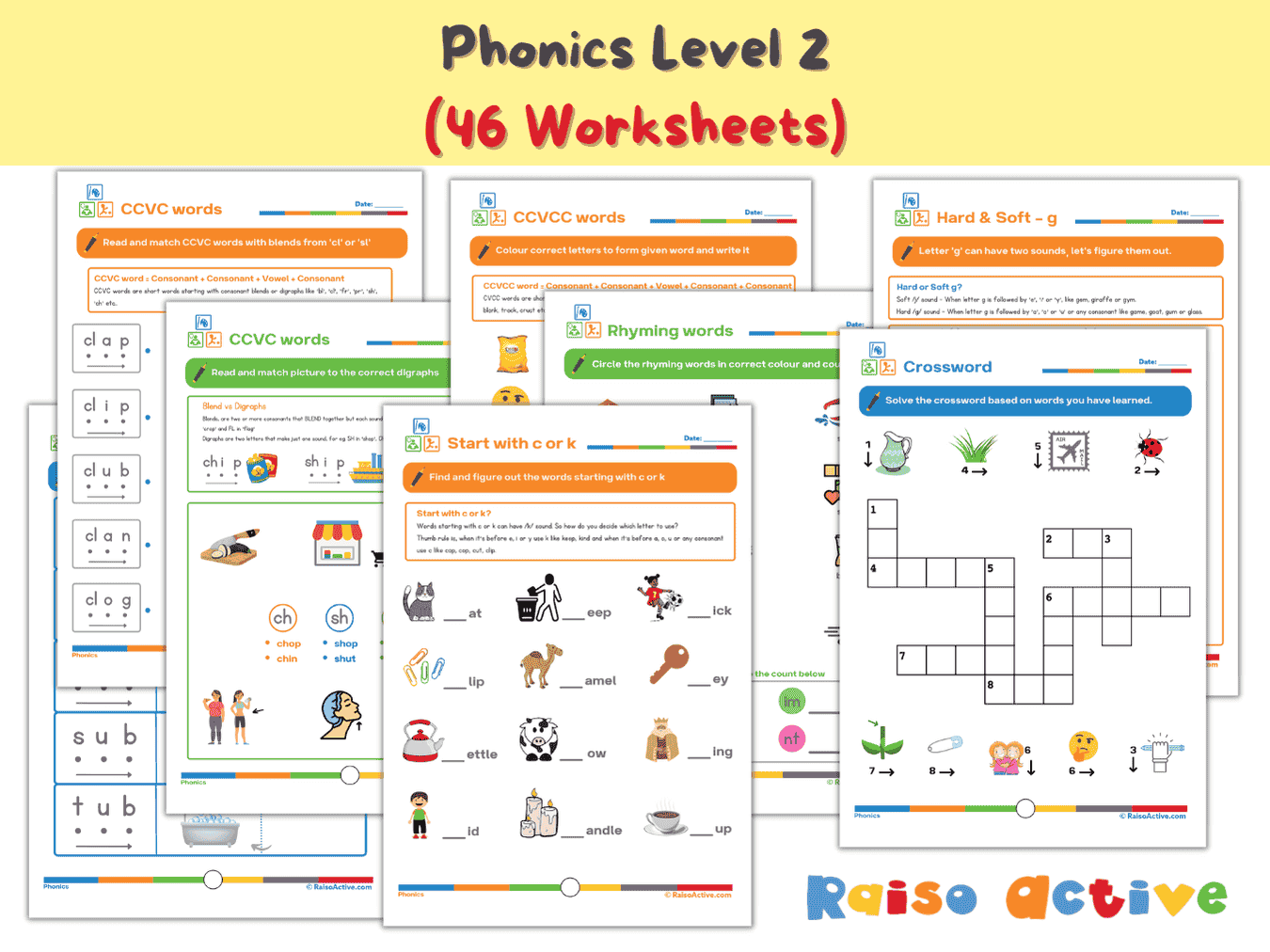
Phonics Level 2 Worksheets: CVC, CCVC, CVCC Word Families & Blends for Early Readers (Ages 4-7)
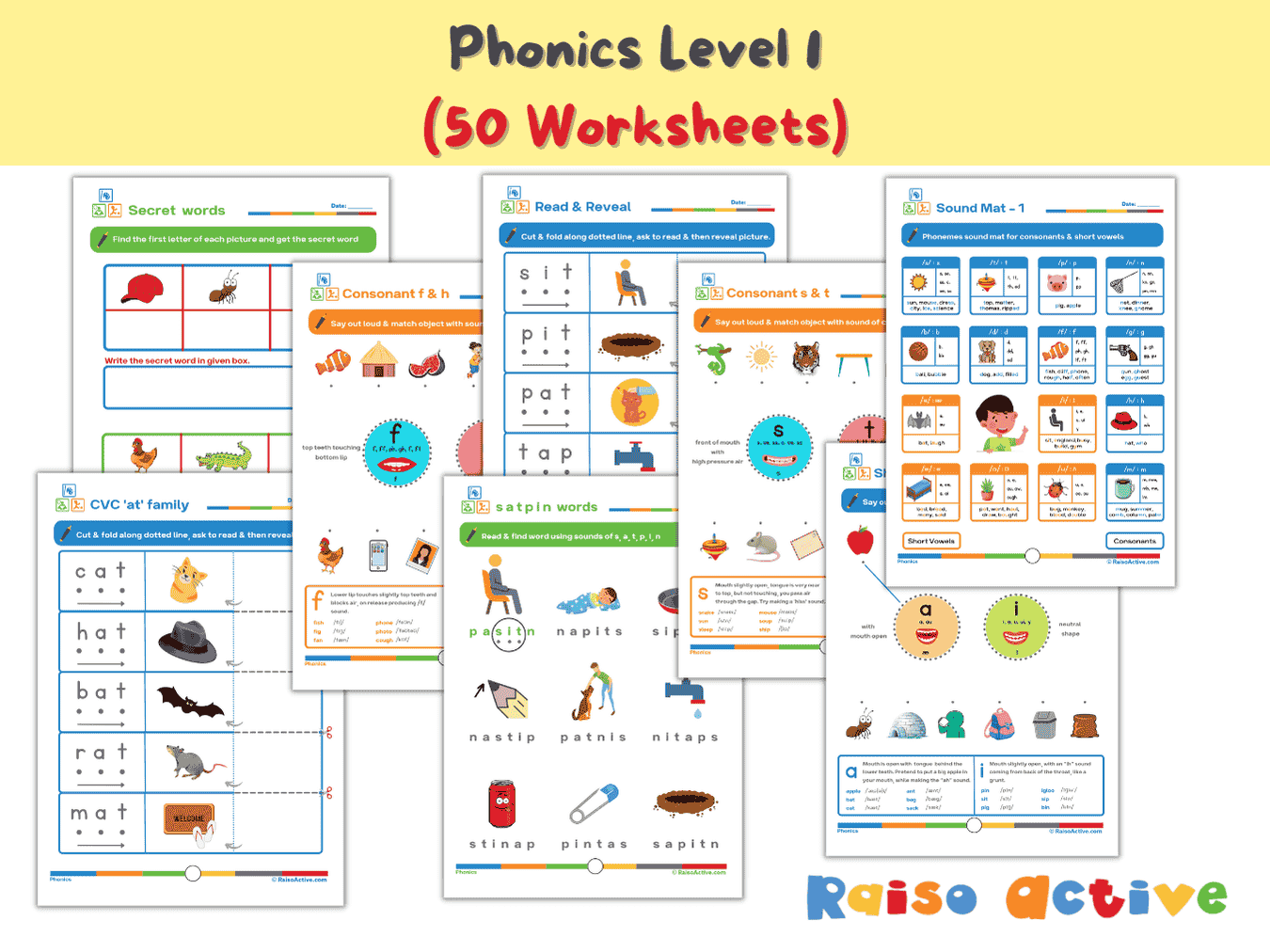
Phonics Level 1 Activity Book: Letter Sounds, Blending & CVC Words for Preschool & Kindergarten
Guides for parents and teachers
See all guides →Number Formation Rhymes 0–9 and How to Fix Reversals
Original number formation rhymes for 0–9, the correct stroke order for each digit, why 3, 5 and 7 get reversed most often, and multisensory fixes that work.
UKG Syllabus Explained: English, Maths and EVS Month by Month
What UKG classes typically cover in English, maths and EVS, month by month, aligned to NEP 2020, with ways to support at home and signs your child is behind.
Christmas and Winter Activities That Combine Fun and Learning: Creating Magical Educational Experiences
Discover Christmas and winter activities that combine festive fun with real learning. Crafts, counting, literacy, and printable worksheets for ages 2 to 8 — perfect for home and school.
Age-Appropriate Halloween Learning Activities: Balancing Spooks and Skills for Young Learners
Discover fun, age-appropriate Halloween learning activities for young children. Spooky crafts, counting games, literacy ideas, and printable worksheets for ages 2 to 8.
The Power of Music: How Musical Activities Accelerate Learning Development in Young Children
Discover how musical activities accelerate brain development, phonics, maths, and emotional regulation in children ages 1–8. Practical tips for Indian homes and classrooms.
Is Khan Academy Kids Really Free? A Parent's Complete Guide to Costs, Features, and Hidden Fees
Confirmed: Khan Academy Kids has zero subscription fees, ads, or paywalls. See what's included, age-by-age tips, and offline use for Indian families.
Canonical: https://raisoactive.com/worksheets/ukg-subtraction