
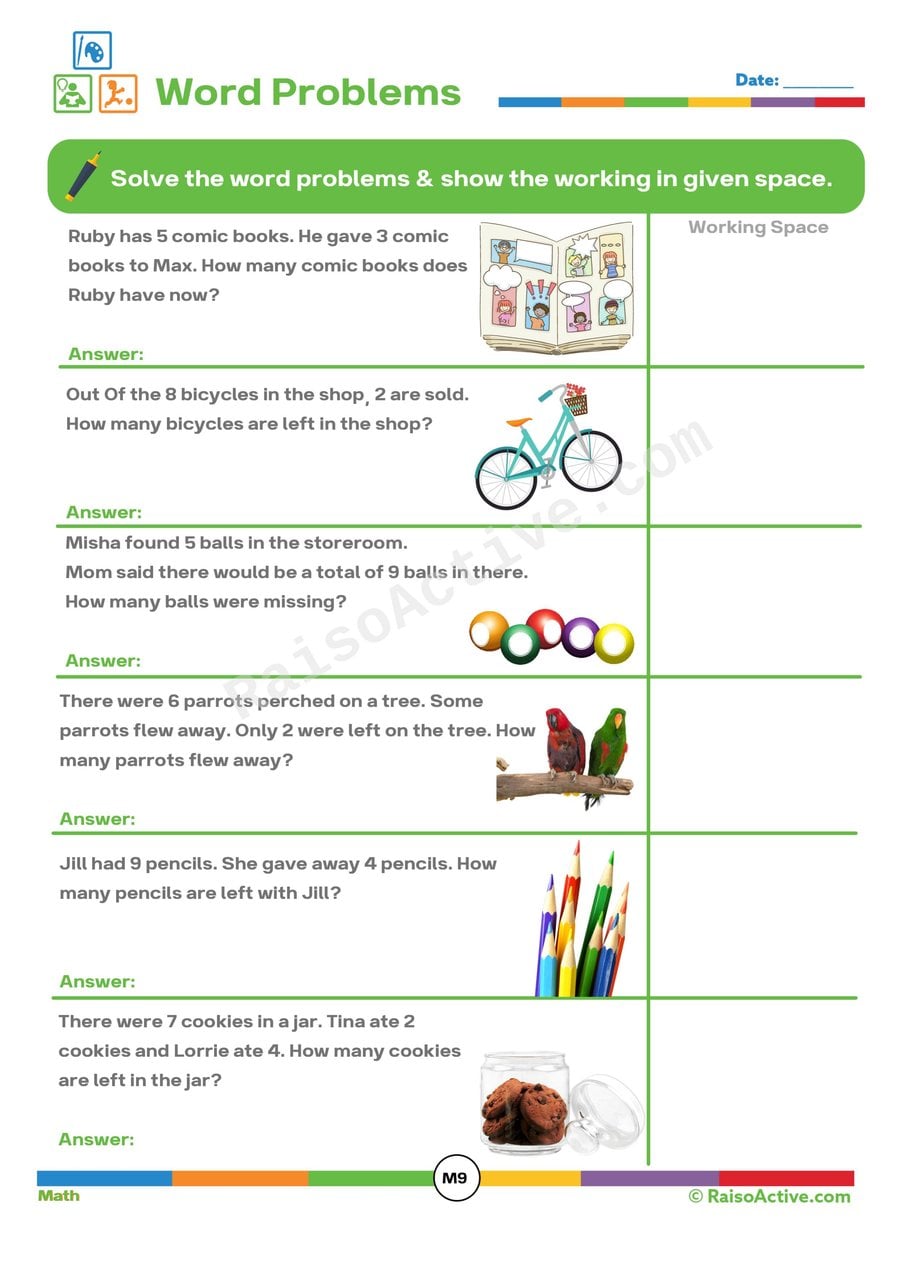
Word Problems Worksheet: Solving for Addition and Subtraction
This worksheet builds the ability to translate real-world scenarios into number sentences, teaching children ages 4-6 to spot clue words like 'gave away' or 'found more' that signal whether to add or subtract. It also practices reading comprehension applied to math, a key step as children move from rote counting toward applied reasoning.
Part of the pack
Month 12: Learning & Development | Ages 5-6Curriculum
How to use this worksheet
Read the first word problem aloud together, pointing out key words that hint at addition or subtraction. Ask your child to decide which operation fits the story before solving it using fingers, drawings, or counters. Have them write the answer in the solution box, then repeat with each remaining problem, checking the answer by retelling the story with the number included.
Materials needed
- Pencil
- Eraser
Extension activities
- •Turn snack time into a word problem, like 'You have 5 crackers and eat 2 — how many are left?'
- •Act out a pretend shopping trip with play money, adding and subtracting the cost of toys.
- •Have your child dictate their own word problem for you to solve.
- •Draw the story on a whiteboard before writing the number sentence.
- •Read problems aloud and have your child shout 'add' or 'subtract' before solving.
Tips for parents and teachers
Watch whether your child is reasoning from the story or just guessing an operation — if they default to always adding, slow down and reread the key words together. Keep the problems grounded in familiar objects and praise their reasoning process even when the final number is wrong.

Written by
Hemsweta Jain · Teacher Cheena
MBA and Early Childhood Educator, teaching since 2014 · Founder of RaisoActive, Mumbai
Every RaisoActive worksheet is designed and checked by the founder before publishing.
Published · Last reviewed
Related worksheets

Froggy Fun: Word Problems Worksheet for Early Learners
This worksheet introduces basic addition word problems using a frog theme, teaching children to translate a short story into a math equation they can solve. For four- to six-year-olds, this is a critical bridge skill — moving from simply adding numbers on a page to understanding what a real-world situation like '3 frogs on a lily pad, 2 more hop on' is actually asking them to find.
Word Problems Worksheet for Early Learners
Word problems ask 4-6 year olds to do something harder than a bare equation: read a short story, figure out what operation it's describing, and only then do the addition or subtraction. That translation step — turning 'Sam had 3 apples and ate 1' into a subtraction fact — is the real skill this worksheet builds, and it's the foundation for all later math word problems your child will encounter in school. Because the numbers here stay small, the challenge is almost entirely about comprehension rather than calculation.
Fruit Shop Counting Worksheet for Kids
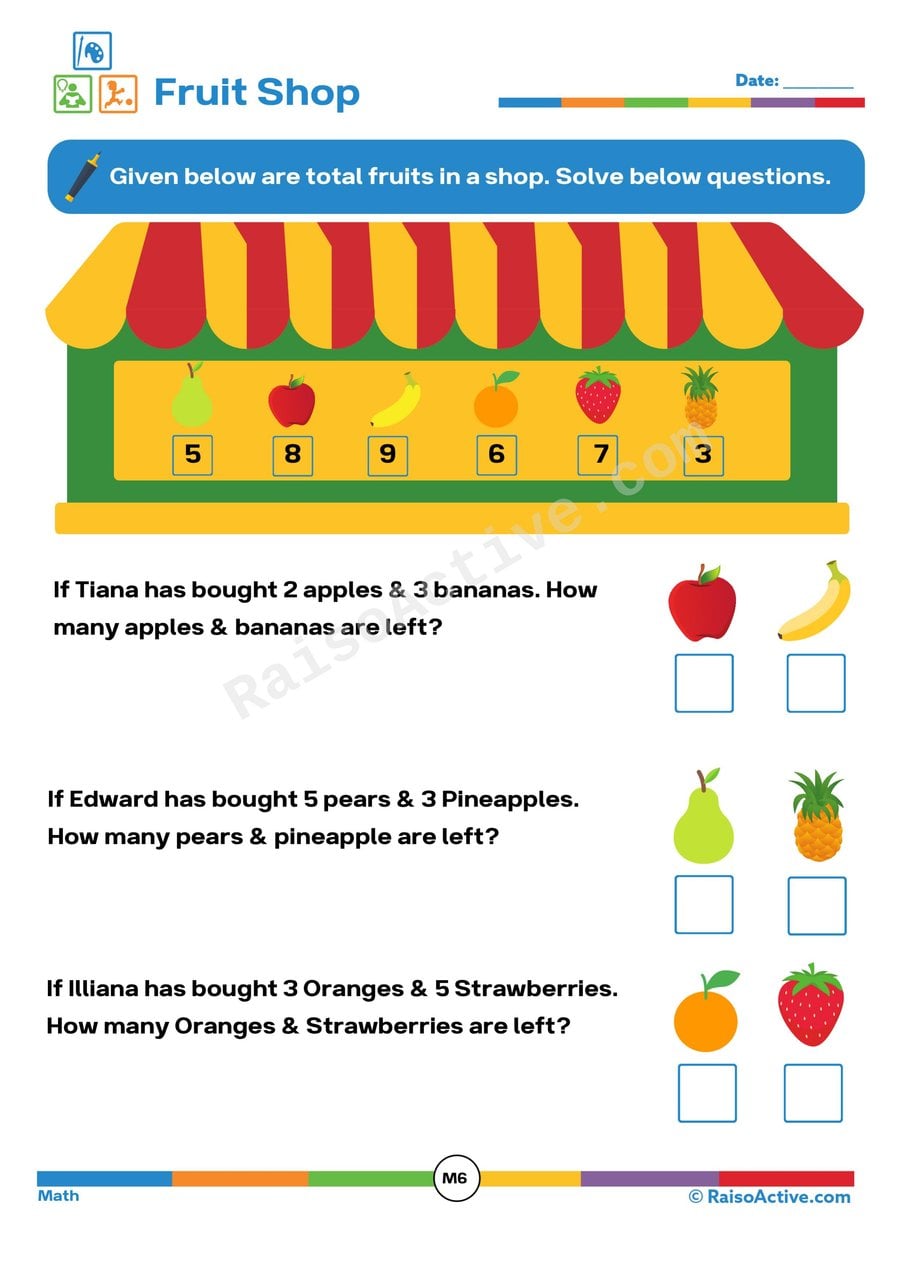
This worksheet applies subtraction to a real-world shopping scenario for 3-5 year olds, asking them to count a total number of fruits, read a short word problem about fruits being bought, and then subtract to find how many remain — combining reading comprehension with the counting and subtraction skills practiced elsewhere. Framing the math inside a relatable 'fruit shop' story helps your child see subtraction as something that happens in everyday situations, not just on a worksheet.

Trace the Numbers 1-9 Worksheet for Preschoolers
Tracing the numerals 1 through 9 gives children ages 3-5 repeated, guided practice with the specific pencil strokes each number requires, building the fine motor control and muscle memory needed for independent number writing. Because tracing follows a fixed, correct path, it also reinforces accurate numeral recognition, helping children tell visually similar digits apart.
Caterpillar Counting Worksheet for Preschoolers
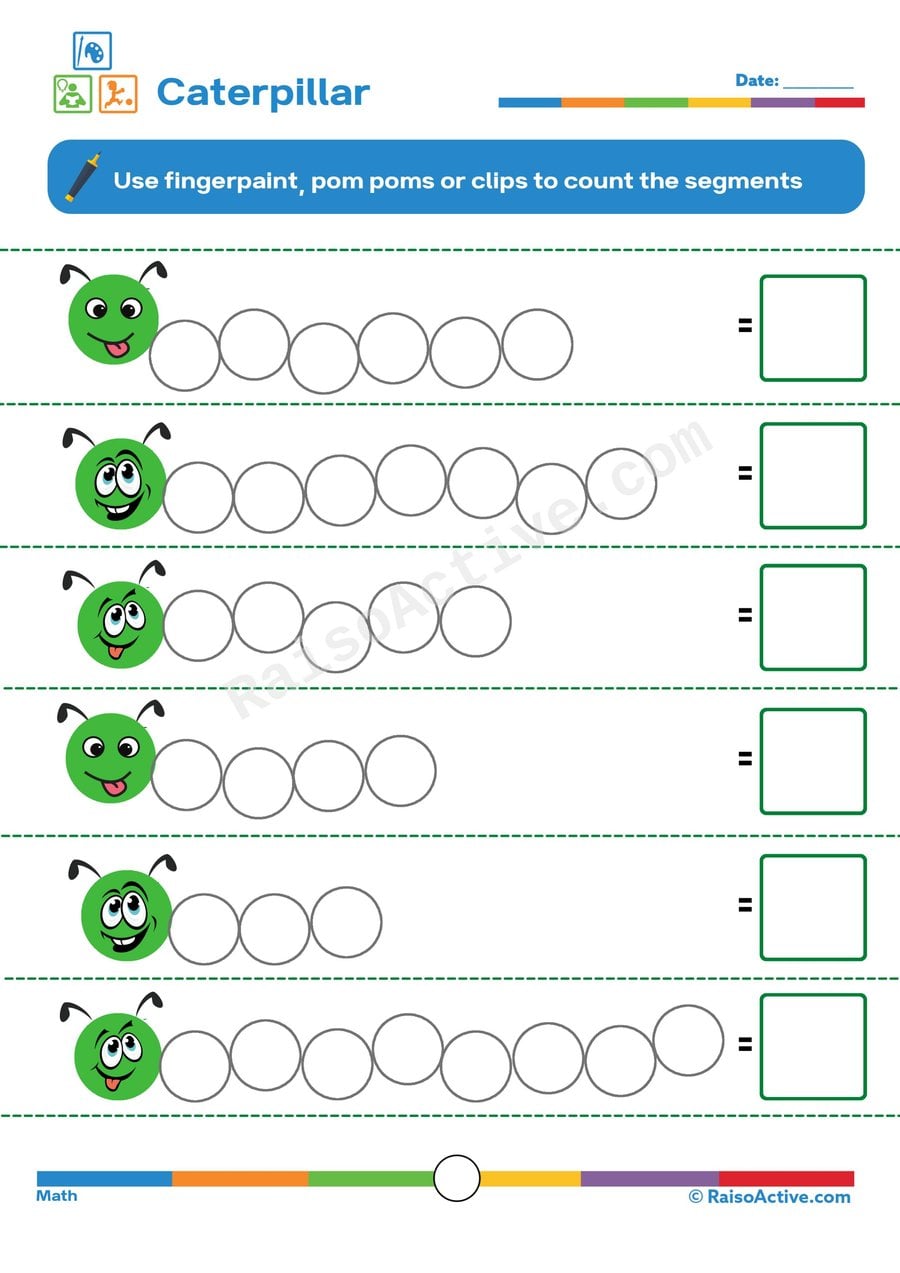
Counting the segments of each caterpillar teaches children ages 3-5 one-to-one correspondence — touching or marking each segment exactly once while saying a number — which is the core skill underlying accurate counting. Writing the final total in a box also connects the physical act of counting to its written numeral, reinforcing early number-writing practice.
Pac-Man Maze Worksheet: Count and Move!
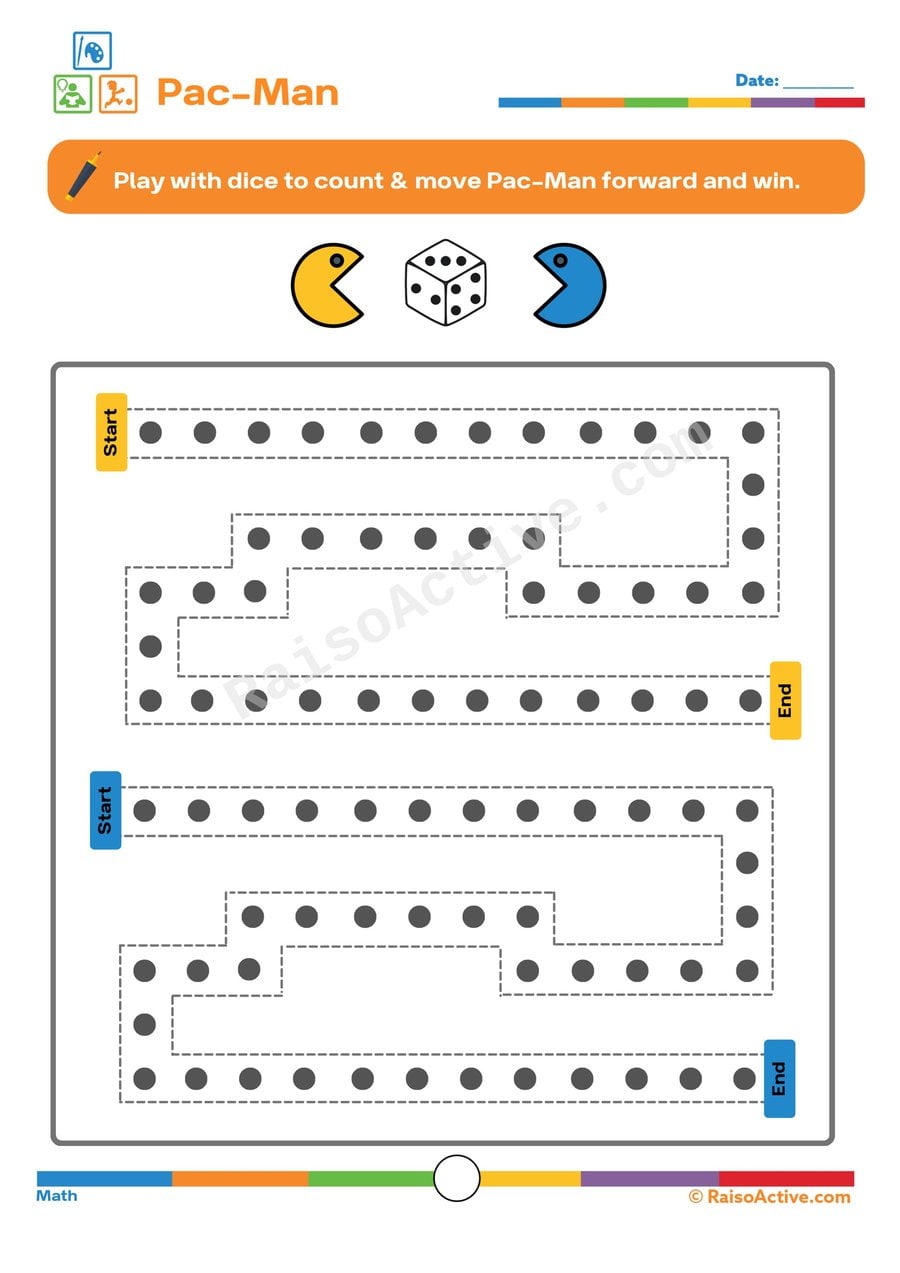
This dice-driven maze combines counting practice with path-following for children ages 3-5, since they must accurately count dots on a die before moving Pac-Man the matching number of spaces forward. Deciding how far to move and staying on the correct path also builds early strategic thinking, as children track their current position within the maze after each turn.
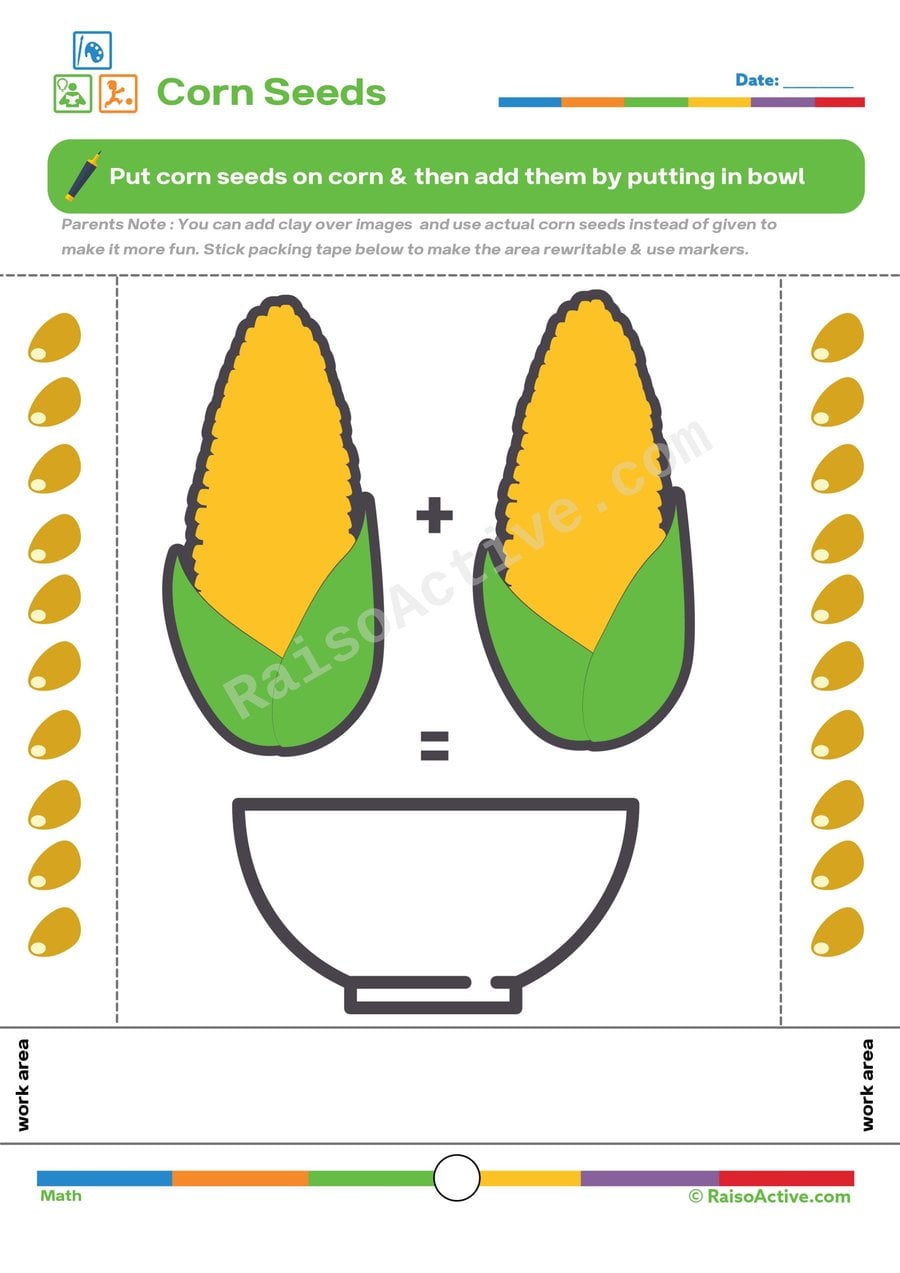
Corn Seed Addition Worksheet for Preschoolers
Counting corn seeds on two ears of corn and combining them into one total teaches children ages 3-5 the core concept of addition as joining groups together, using a concrete, countable image rather than abstract numerals alone. This worksheet also builds one-to-one correspondence, since accurate addition depends on touching or pointing to each seed exactly once while counting.
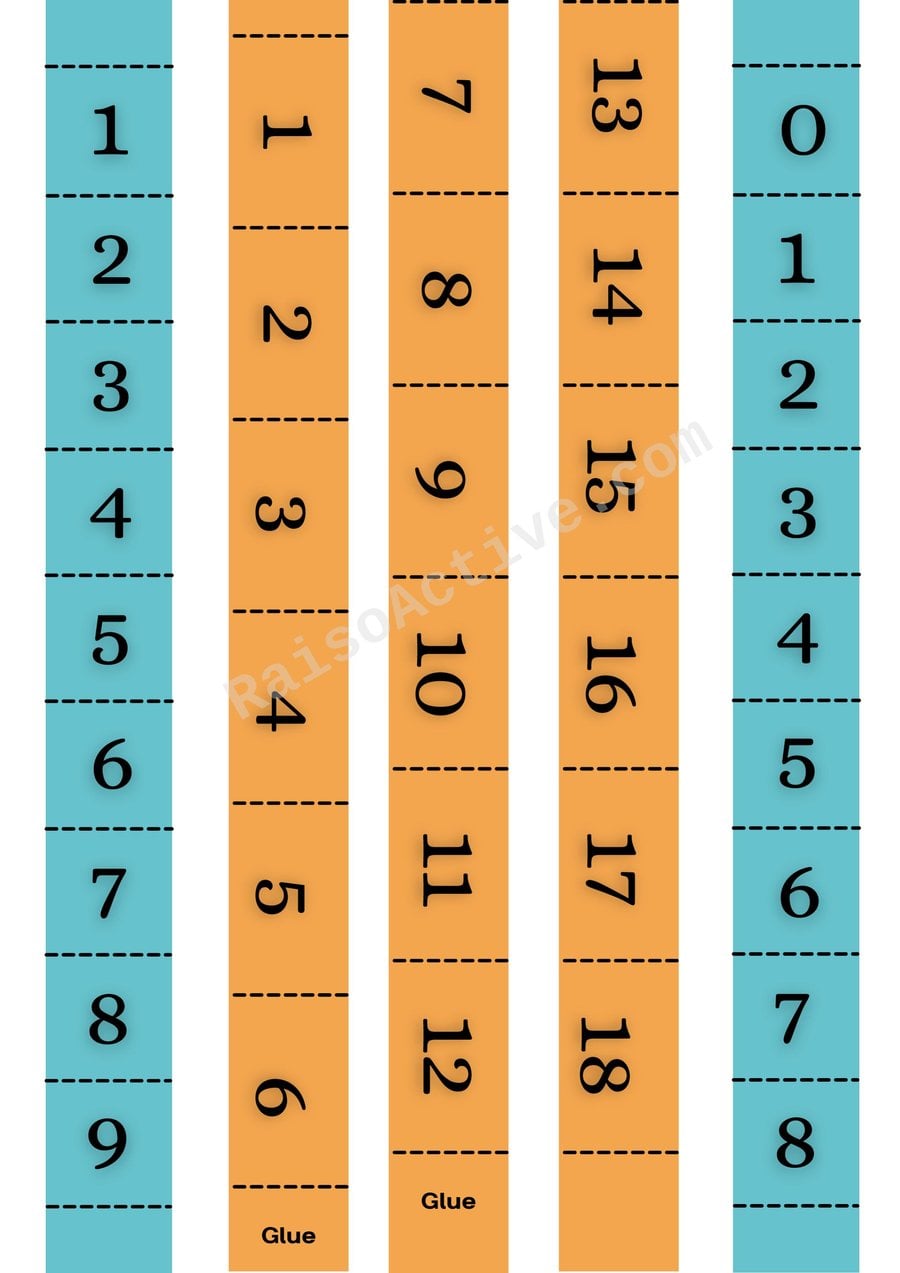
Number Matching Worksheet: 0-18
This activity strengthens numeral recognition for children ages 3-5 by having them find and pair matching numbers from 0 to 18 printed on separate strips. Because the numbers are scattered rather than in order, children must recognize each digit shape on its own rather than relying on counting sequence, which builds true number recognition instead of rote list-reciting.
Guides for this topic
Number Formation Rhymes 0–9 and How to Fix Reversals
Original number formation rhymes for 0–9, the correct stroke order for each digit, why 3, 5 and 7 get reversed most often, and multisensory fixes that work.
What's the Best Alternative to ABCmouse? A Complete Parent's Guide to Free and Affordable Educational Apps
ABCmouse runs ~Rs 4,000-5,000/year with US spellings and curriculum. Compare free & affordable Indian-friendly apps like Khan Academy Kids and DIKSHA.
Is My Child Ready for Kindergarten? Essential Skills and Honest Assessment
Wondering if your child is ready for Class 1 or kindergarten? Learn the 5 domains of school readiness, what Indian schools look for, and how to support your child at home.
Reviews
Every worksheet for ages 4–6, no watermark
Members download the full library of 1,000+ worksheets and every activity pack without watermarks or daily limits. One year costs ₹1,000 in India or $20 elsewhere.
See membership plansOr download any worksheet free with a watermark (5 a day).