Free printable worksheets · United Kingdom
Year 1 Handwriting Worksheets (Ages 5–6)
Year 1 handwriting worksheets are practice sheets for children aged 5–6 in Year 1 in the UK. Handwriting is forming letters and numerals by hand with consistent size, spacing and shape, moving from single letters to legible sentences. The sheets on this page cover consistent letter formation, sizing and spacing letters on a line, joining letters for cursive and legible sentence writing.
Year 1 opens the National Curriculum proper: daily phonics moves through Phases 3 to 5, written number sentences replace counted objects, and the phonics screening check in June asks each child to read forty words, some of them invented, to confirm they can decode reliably. Five-year-olds finish the lowercase alphabet and start writing on lines. Tall letters reach the top line, small letters sit between the middle lines, and tails drop below: that is the new idea, and worksheets should use two-line or four-line paper to teach it. Copying a short sentence with a capital and a period, spacing words with a finger, and writing a letter when it is named all belong here. Joined-up writing, where taught, starts after print is secure.
582+ worksheets · free PDF download · print on A4 or Letter
Year 1 Handwriting Worksheets to print
Browse all worksheets for ages 5–6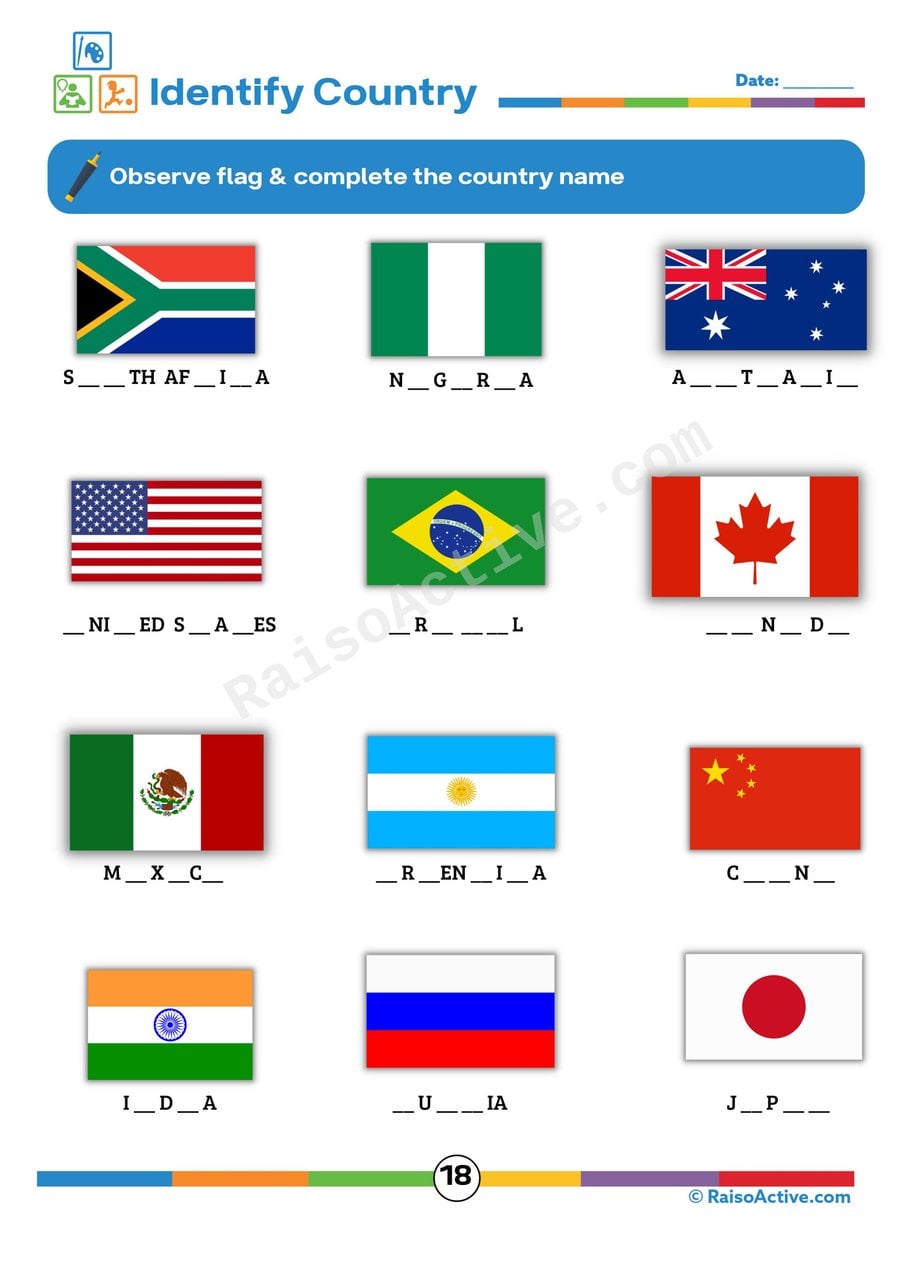
Identify the Country: Flag Matching Worksheet
Filling in the missing letters of each country's name while studying its flag gives children ages 4-7 practice with letter-sound correspondence and spelling patterns, since they must sound out the word and recall which letters are already provided as clues. It also builds early geography knowledge, helping children connect a visual symbol (the flag) to a country's name for the first time. This dual practice of decoding and world knowledge lays groundwork for both literacy and social studies skills.

Sun Safety Worksheet for Kids: Learn About Staying Safe in the Sun!
This worksheet has children ages 4-7 answer questions about sun safety, such as why sunscreen and hats matter, building early health literacy alongside writing practice as they put their understanding into their own words. Because the questions ask children to reason about why certain sun-safety habits matter rather than just label a picture, this worksheet develops early explanatory thinking, a step up from simple factual recall. Practicing writing full answers, even short ones, also builds sentence-forming skills appropriate for this age range.

Trace and Color the Fruits: Number Matching Worksheet
This worksheet links three number skills together for 4-6 year olds: tracing dotted numerals for handwriting practice, counting a row of fruit for quantity, and then checking that the fruit count actually matches the traced number — a self-checking loop that reinforces number-to-quantity correspondence rather than treating tracing and counting as separate tasks. That verification step (does the fruit count really match?) pushes your child to count carefully rather than just glance and guess.
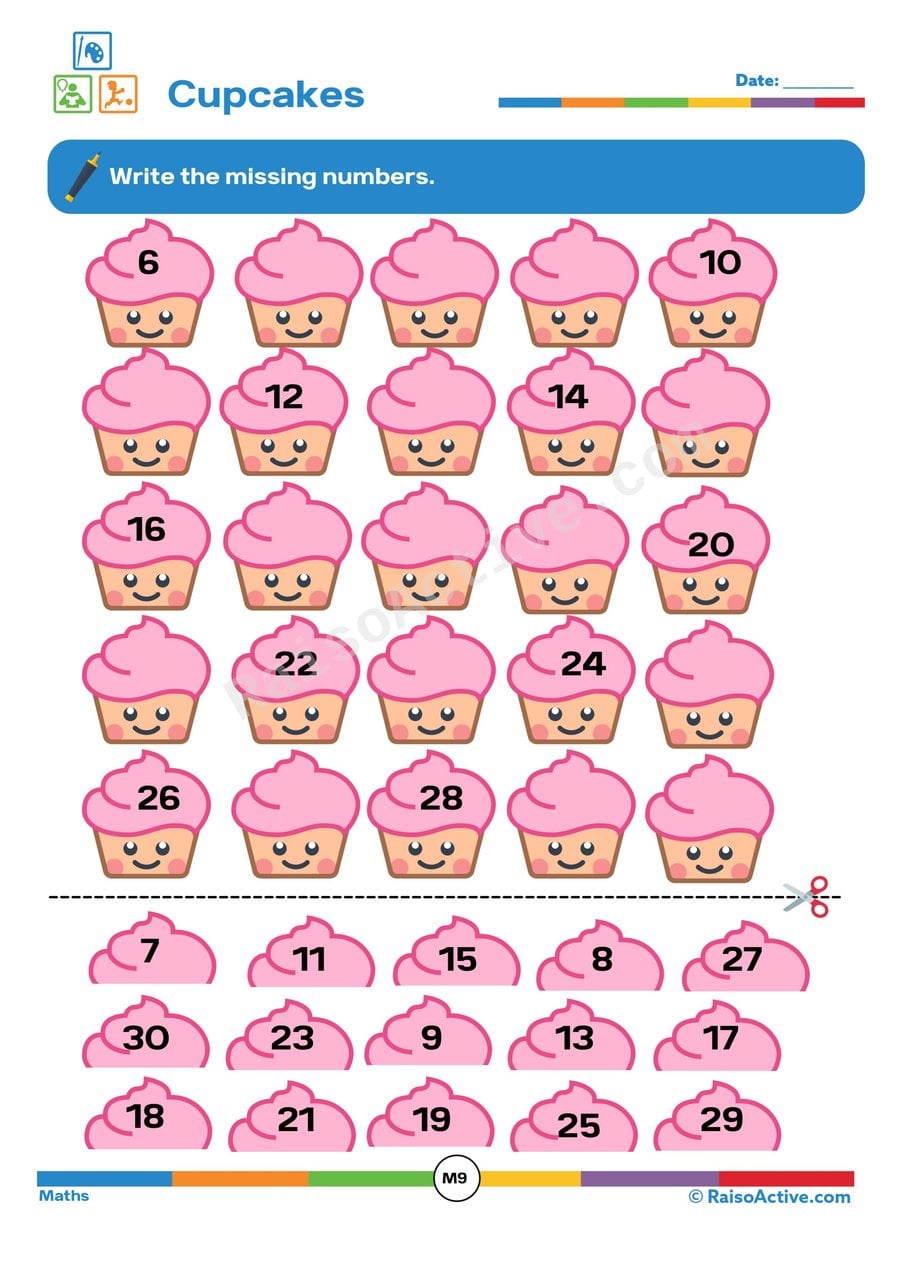
Cupcake Counting Worksheet: Missing Numbers!
This worksheet strengthens number sequencing for children ages 4-6 as they study a row of numbered cupcakes and figure out which numbers are missing from the sequence, then write them in. Identifying a gap in a number sequence requires understanding the pattern of counting well enough to predict what's missing, a step beyond simply counting forward.
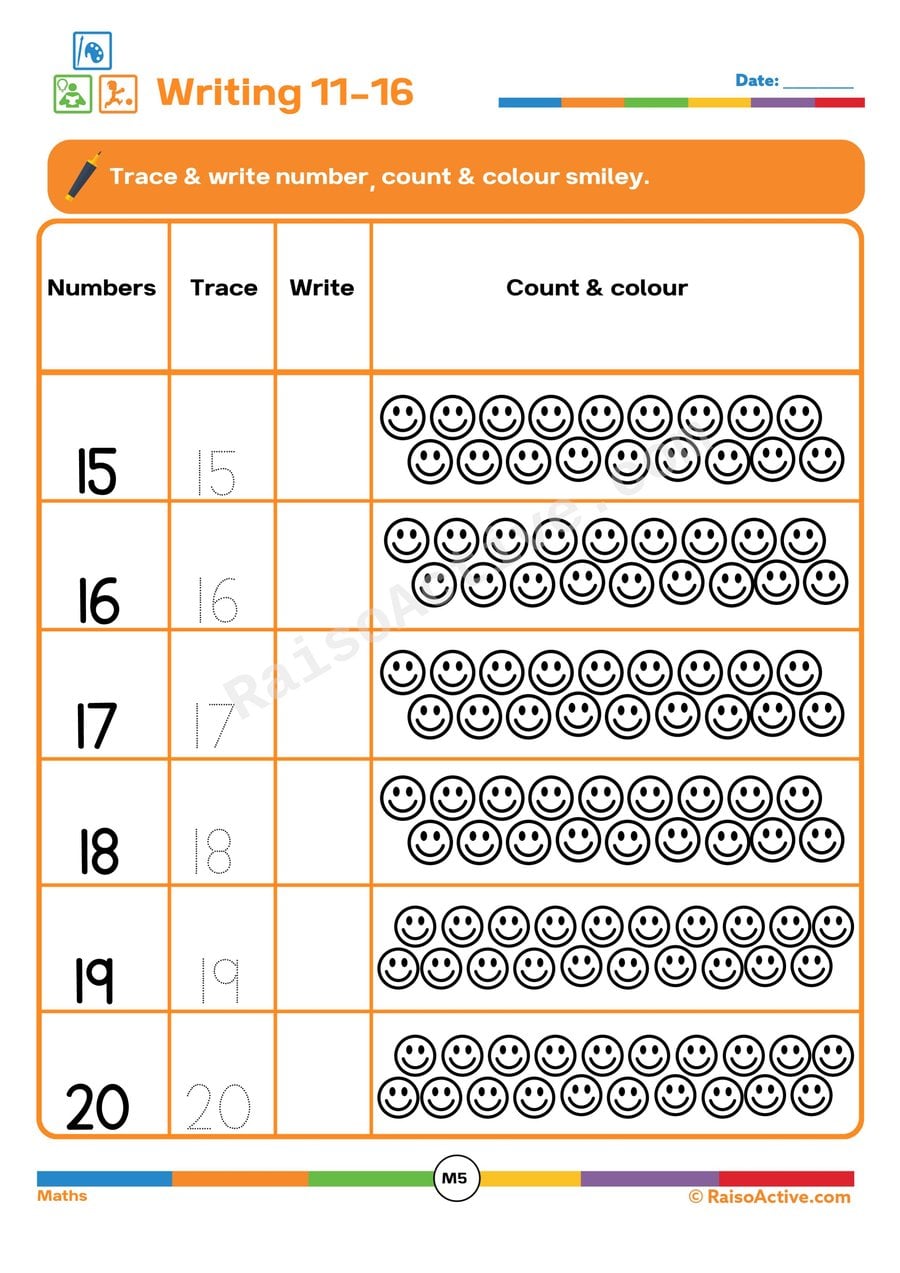
Number Tracing and Counting Worksheet for Kids
This worksheet layers three connected numeracy skills for children ages 4-6: tracing numerals to build correct number formation, writing numbers independently from memory, and counting objects to connect a written numeral to an actual quantity. Number formation practice at this age matters because children often develop habits — like starting a number from the wrong point — that are hard to unlearn later, so guided tracing helps establish correct strokes early. Pairing that with counting smiley faces ensures the numeral isn't just a shape being copied but a quantity being understood.

Number Names Worksheet: Matching and Writing Numbers
This worksheet strengthens the connection between a written number name and its numeral for 4-6 year olds — first by circling the numeral that matches a given name, then by writing the number name out themselves, which adds a spelling and handwriting layer on top of simple recognition. Because number-name spelling doesn't always follow easy sound-out rules, this repeated practice with both reading and writing the words builds genuine sight-word familiarity with number vocabulary.

First Letter Fun: Identify and Write! A Vocabulary Worksheet for Kids
Designed for 4-6 year olds, this worksheet pairs vocabulary building with first-letter phonics — your child has to recognize or learn each pictured object's name and then isolate and write its opening sound, which stretches both spoken vocabulary and early spelling skills together. Because this version targets a slightly older age range, it's a good check for whether your child can move through the naming-and-writing process more independently than a beginning 3-year-old would.

Hopscotch Numbers 1-50 Worksheet: Fill in the Missing Numbers!
This hopscotch-themed worksheet gives children ages 4-6 practice filling in missing numbers within the 1-50 range, extending their number sequencing beyond the more commonly rehearsed 1-20 range and building familiarity with two-digit number patterns like the '20s' or '30s.' Framing the numbers as a hopscotch grid connects the paper activity to a familiar physical game, helping children mentally picture themselves counting forward as they move up the grid. This kind of extended-range practice is an important bridge toward comfortable counting to 100.

Time Telling Worksheet: Write the Time on the Clocks!
Reading the position of the hour and minute hands on an analog clock and writing the matching time builds clock-reading fluency for children ages 4-6, a more advanced step than simply recognizing a given time, since it requires producing the answer independently.
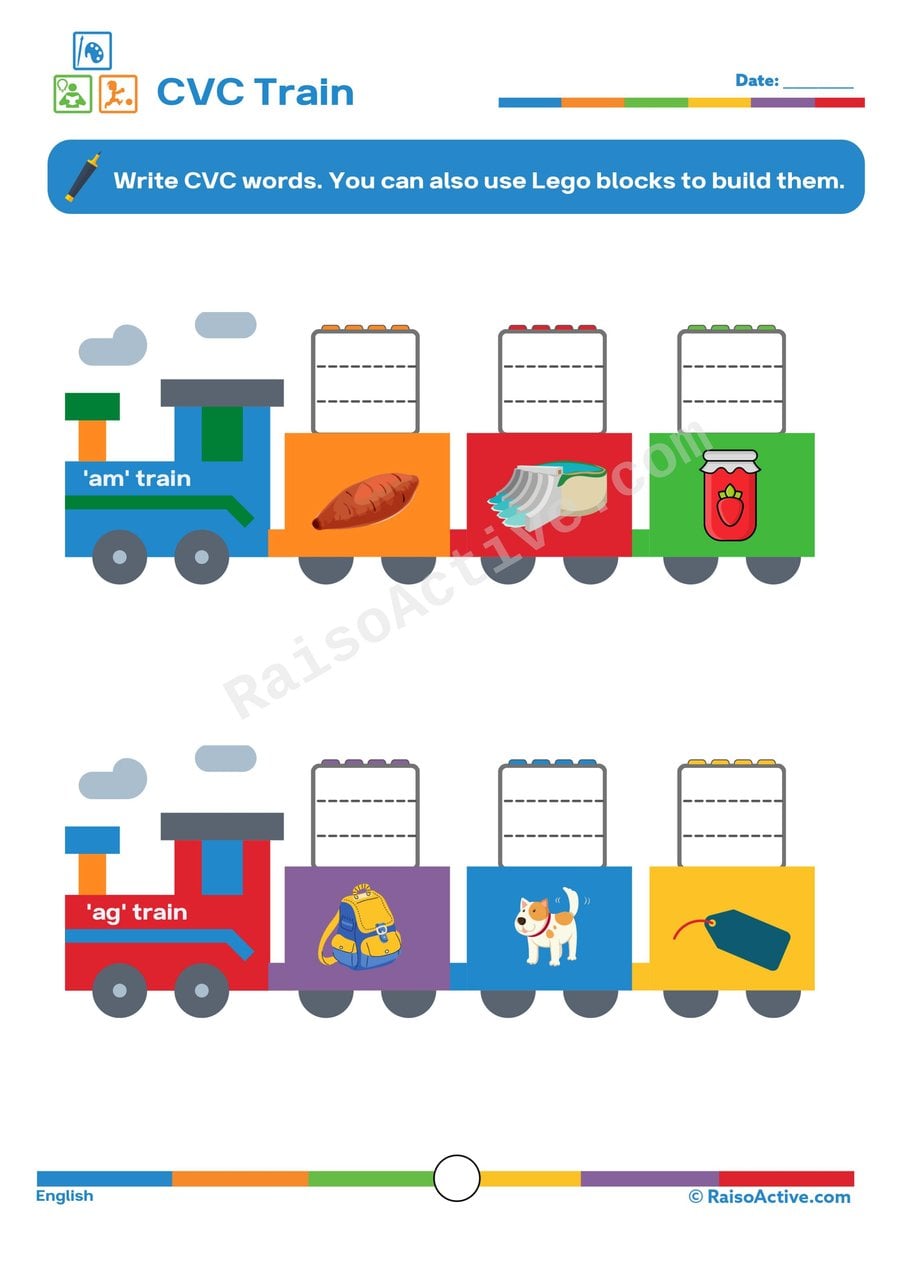
CVC Train Worksheet: Write CVC Words!
Writing consonant-vowel-consonant words like 'cat,' 'sun,' or 'pig' under matching pictures gives children ages 4-6 direct practice with letter-sound blending, a core phonics skill that underpins independent reading. Because each train car pairs a picture clue with a blank space, children also practice translating a spoken word they can sound out into its correctly spelled written form.

Tense Time! A Worksheet on Past, Present, and Future Verbs
This worksheet has 4-6 year olds take a given verb and write it correctly in past, present, and future tense boxes, which is a more demanding task than simply identifying tense since it requires actually producing the correct verb form each time — including the common '-ed' ending pattern for regular verbs. Practicing this transformation across multiple verbs builds the flexible understanding that the same action word changes shape depending on when it happens.

Frame a Sentence Worksheet: Building Sentences with Cows!
Arranging a set of given words into a complete, correctly ordered sentence teaches children ages 4-6 basic sentence structure, helping them understand that word order changes meaning and that sentences follow predictable patterns like subject before action. Remembering to start with a capital letter and end with a period also reinforces early writing conventions alongside the sentence-building itself. This combination of grammar and mechanics gives children practice with the full process of forming a proper written sentence, not just choosing words.

Alphabet Adventures: Write the First Letter - Small Alphabet Worksheet
This worksheet strengthens phonemic awareness by asking children ages 4-6 to isolate the very first sound in a spoken word and match it to its lowercase letter - a skill that sits at the heart of early decoding and spelling. Because it uses small (lowercase) letters specifically, it also reinforces letter-case recognition, since children encounter lowercase print far more often than capitals once they begin reading books.

Long Vowel U Worksheet: Complete the Words and Match!
Rounding out the five long vowel sounds, this worksheet has children ages 4-6 complete words containing the long 'u' sound and then match each one to its picture, reinforcing both spelling recall and word meaning together. The long 'u' sound is often trickier than other long vowels since it can sound like 'oo' in some words and like 'yoo' in others, so focused, repeated practice really helps here. Completing this worksheet means your child will have now practiced identifying and spelling all five long vowel patterns, a major milestone in decoding independence.
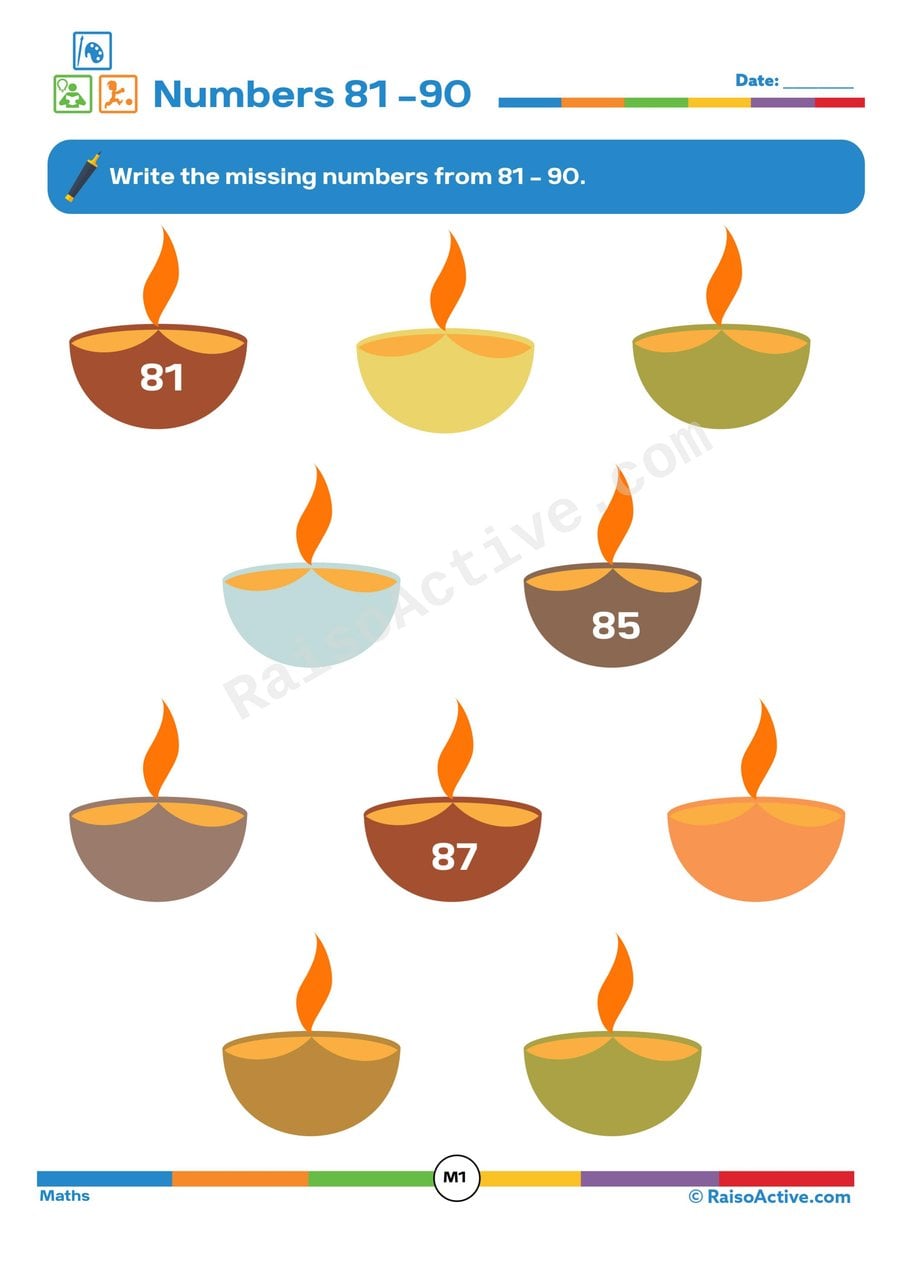
Missing Numbers: Diwali Diyas Worksheet for Kids
Children ages 4-6 practice number sequencing within the 81 to 90 range by identifying and writing missing numbers on a set of Diwali-themed diyas. Working with numbers in the 80s pushes children beyond the more familiar 1-20 range, reinforcing that the same counting pattern continues predictably into higher numbers. This festive theme also connects math practice to a meaningful cultural celebration, making the abstract number work feel relevant.
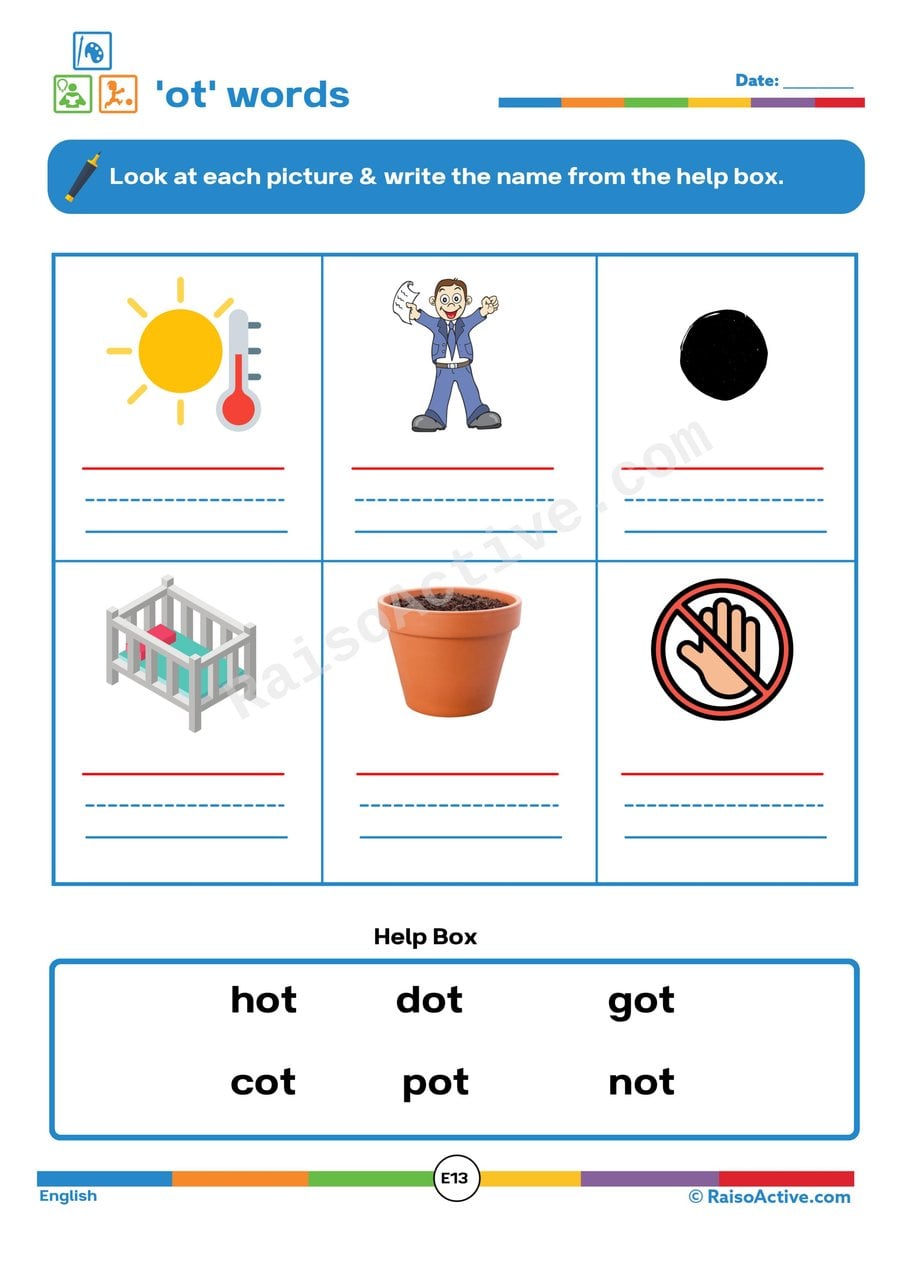
Ot Word Fun: 'ot' Word Worksheet for Early Readers
Children ages 4-6 build phonics fluency by reading and writing CVC words in the 'ot' family, like 'pot', 'dot', and 'hot'. Recognizing this consistent letter pattern teaches early readers that groups of letters make predictable sounds, a key strategy for decoding unfamiliar words independently. Writing the words afterward reinforces the sound-to-letter connection needed for spelling.

Before Number Worksheet: Practice Number Sequencing!
Practicing 'what comes before' a given number strengthens number sequencing for children ages 4-6, requiring them to think backward through the counting sequence rather than only forward, which is how most early counting practice happens. This backward thinking builds flexibility with numbers that supports later subtraction and number-line reasoning.

Sentence Building Worksheet: Write Sentences with Given Words!
Using given words to build a complete sentence teaches children ages 4-6 how word order creates meaning, an essential step toward reading fluency and independent writing. Practicing this skill also reinforces sentence mechanics like starting with a capital letter and ending with a period, which many children this age are just beginning to apply consistently.

Before, After, and Between Numbers Worksheet for Preschoolers
This number sequencing worksheet gives children ages 4-6 practice identifying what comes before, after, and between given numbers, a skill that builds the flexible mental number line children need before tackling formal addition and subtraction. Unlike a matching or counting task, this version asks children to write in the missing numbers directly, which requires stronger independent recall of number order rather than recognition from a set of choices. Practicing all three directions — before, after, and between — on one page also reinforces that number sequences can be approached from multiple angles, not just forward counting.

Formal vs. Informal Language Worksheet: Practice with Sentences!
Rewriting sentences between formal and informal versions teaches children ages 4-6 that the same message can be expressed differently depending on the audience, an early step toward social and register awareness in language. Because the task also involves matching a picture to each sentence, children practice connecting tone of language to context and setting, not just memorizing rules.
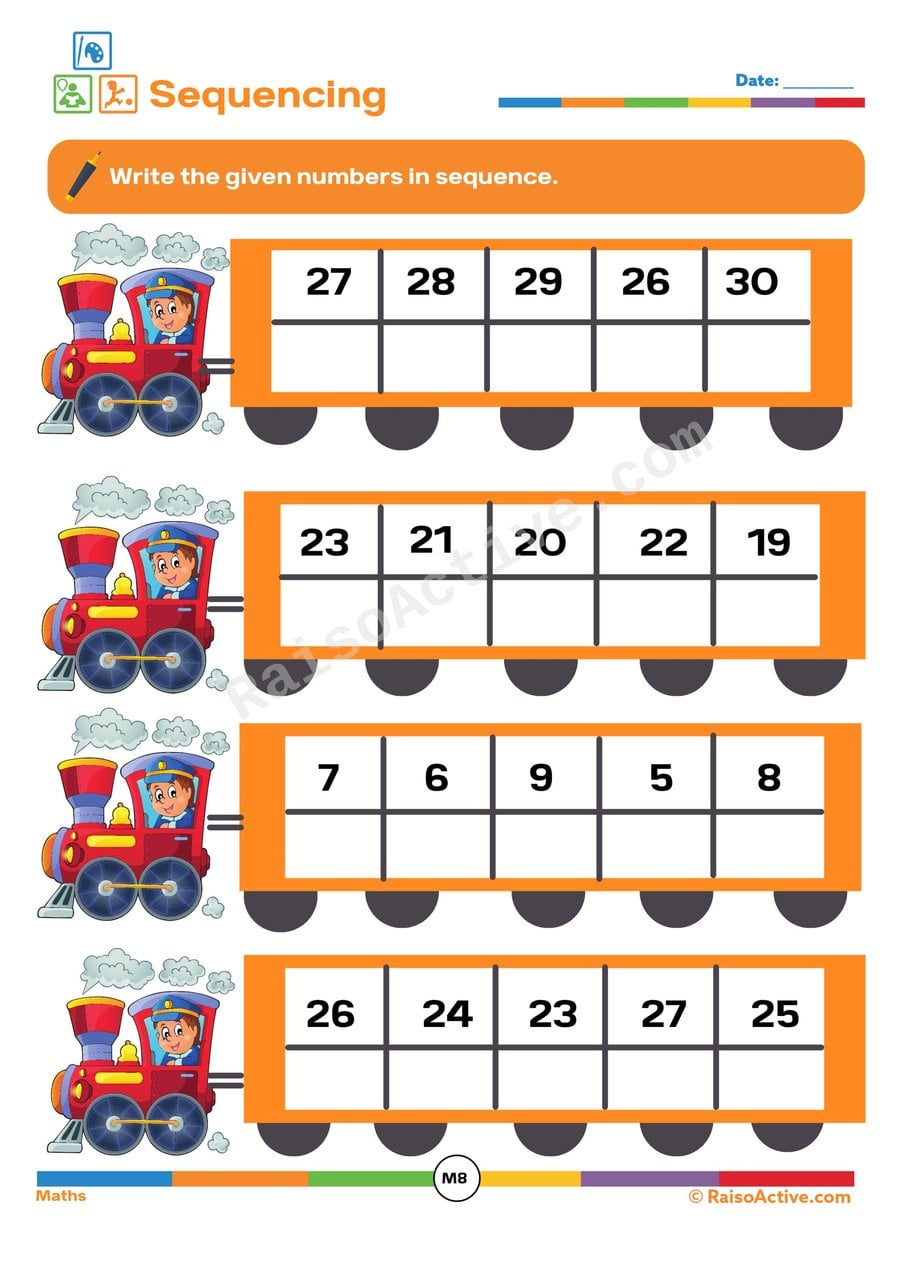
Number Sequencing Train Worksheet for Kids
This train-themed sequencing worksheet challenges children ages 4-6 to fill in missing numbers scattered throughout a sequence, requiring them to recognize number order well enough to identify a gap anywhere in the run rather than only counting forward from the start. This deeper sequencing skill supports later math concepts like skip counting, addition, and number lines. Writing the missing numbers by hand, rather than just saying them aloud, also reinforces number formation alongside number order.

Short Vowel Fun: Complete the Words Worksheet for Kids
This worksheet has children ages 4-6 fill in missing short vowels to complete words based on pictures, then locate and color those same words within a grid, layering active spelling recall with visual word-search practice. Completing a word by choosing the correct short vowel requires your child to distinguish between five different vowel sounds — a, e, i, o, and u — which is a more demanding discrimination task than working with just one or two vowels at a time. Following that with a word search reinforces the completed spelling by having your child recognize and locate the exact same word again.

Simple Sentences Worksheet: Rewriting Sentences for Early Readers
Children ages 4-6 practice sentence construction by rearranging scrambled words into a grammatically correct, meaningful sentence, building an understanding of proper word order in English. This hands-on rearranging task teaches children to recognize where a sentence's subject, action, and details belong, a skill they'll use in all future writing.

Long Vowel i-'ie' Worksheet: Complete the Words & Paste Pictures!
This worksheet introduces yet another spelling of the long 'i' sound — the 'ie' pattern found in words like 'tie' and 'pie' — giving children ages 4-6 practice completing words with missing letters before matching and pasting the correct picture. Filling in missing letters for a specific spelling pattern requires more active recall than simply reading a finished word, since your child has to remember exactly which letters create the long 'i' sound in this particular pattern. Rounding out practice across silent-e, 'igh,' and now 'ie' spellings helps children see that English represents the same sound in several different ways.
What Year 1 handwriting worksheets cover
Five-year-olds finish the lowercase alphabet and start writing on lines. Tall letters reach the top line, small letters sit between the middle lines, and tails drop below: that is the new idea, and worksheets should use two-line or four-line paper to teach it. Copying a short sentence with a capital and a period, spacing words with a finger, and writing a letter when it is named all belong here. Joined-up writing, where taught, starts after print is secure.
- Write all lowercase letters with tall, small and tail heights on lines
- Copy a sentence with a capital letter, finger spaces and a period
- Write a named letter from memory without a model
- Write first and last name on a line at the correct size
- Keep letters sitting on the baseline across a full row
How to use these worksheets at home or in class
A decodable passage or word list most days, plus a short number bonds sheet, keeps pace with a Year 1 classroom. Fifteen minutes is a reasonable ceiling, and reading the passage twice in one sitting builds the fluency the screening check rewards.
Start with the sheet that matches what your child can already do, then move one step up. Keep finished sheets in a folder: Year 1 teachers often ask for evidence of practice, and children like seeing their own progress.
Is your child ready for Year 1 handwriting work?
Entering this stage, a child should blend most Phase 3 sounds into words, write a few letters correctly formed, count reliably to twenty, and sit through a short table task without needing constant redirection.
Frequently asked questions
What should a five-year-old's handwriting look like?
Readable, not neat. By five to six a child is expected to form every letter in the right direction, keep most letters sitting on the line with tall and small letters roughly the right height, leave gaps between words, and write a short sentence that starts with a capital and ends with a period. Uneven size, wandering spacing and occasional b/d reversals are still normal and usually settle by seven.
What should a Year 1 child be able to do in handwriting?
Five-year-olds finish the lowercase alphabet and start writing on lines. Tall letters reach the top line, small letters sit between the middle lines, and tails drop below: that is the new idea, and worksheets should use two-line or four-line paper to teach it. Copying a short sentence with a capital and a period, spacing words with a finger, and writing a letter when it is named all belong here. Joined-up writing, where taught, starts after print is secure. Entering this stage, a child should blend most Phase 3 sounds into words, write a few letters correctly formed, count reliably to twenty, and sit through a short table task without needing constant redirection.
Do these worksheets follow the Year 1 curriculum?
The sheets cover consistent letter formation, sizing and spacing letters on a line, joining letters for cursive and legible sentence writing, which sit inside the National Curriculum KS1 (Year 1); Letters and Sounds Phase 3–5 outcomes for Year 1. Kindergarten / 1st Grade (US), UKG (India) use the same skills at this age, so the sheets also fit families following those programmes.
Are these Year 1 handwriting worksheets free?
Yes. Each worksheet downloads free as a watermarked PDF once you create an account, with a limit of five a day. An annual membership ($20) removes the watermark and the limit for the whole library of over 1,000 worksheets and every printable pack.

Written by
Hemsweta Jain · Teacher Cheena
MBA and Early Childhood Educator, teaching since 2014 · Founder of RaisoActive, Mumbai
Written and reviewed by Hemsweta Jain (Teacher Cheena), who designs every RaisoActive worksheet.
Last reviewed
Printable packs for ages 5–6
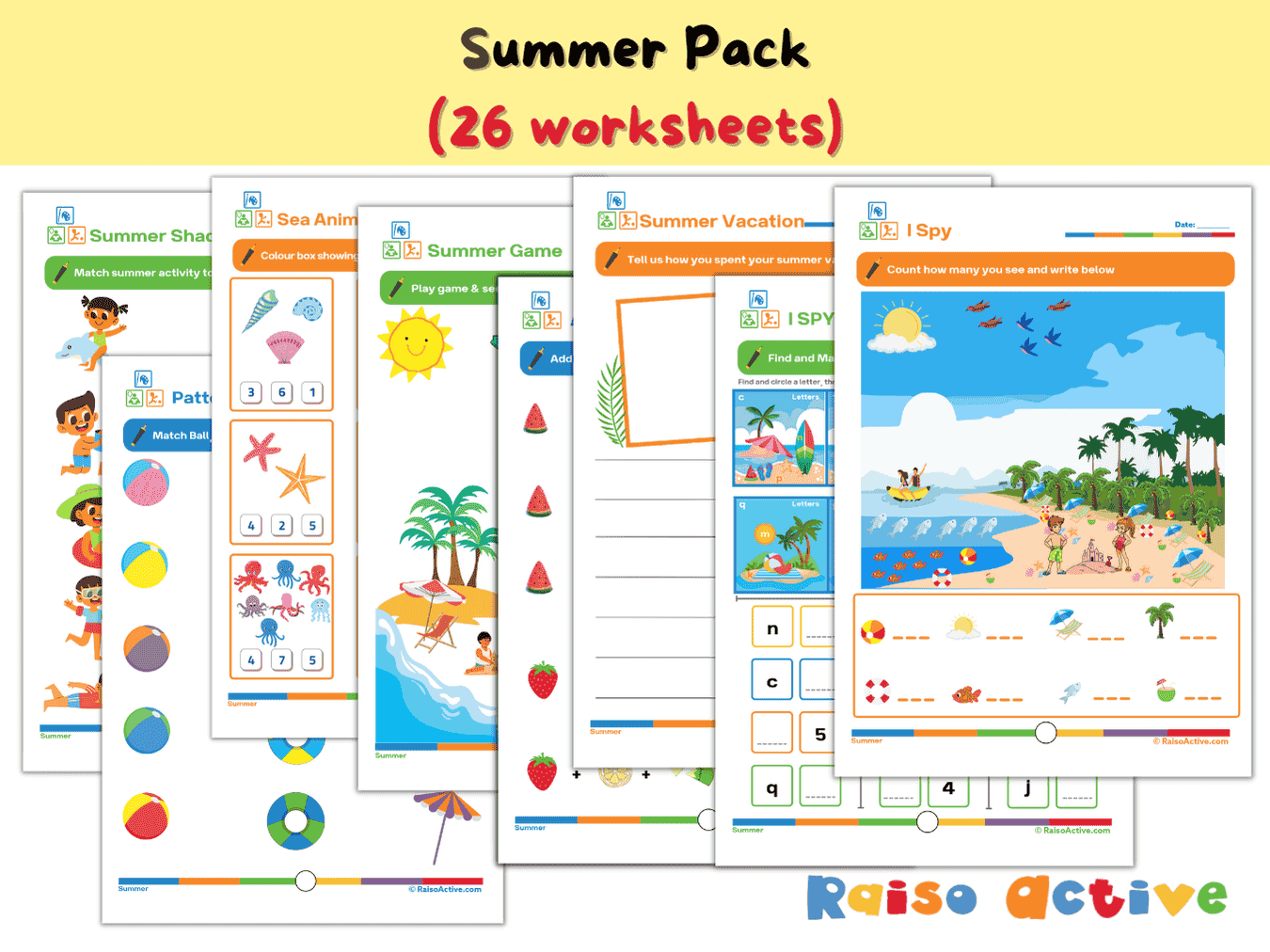
Summer Activity Pack: Math, Literacy, Puzzles & More for Preschool & Kindergarten
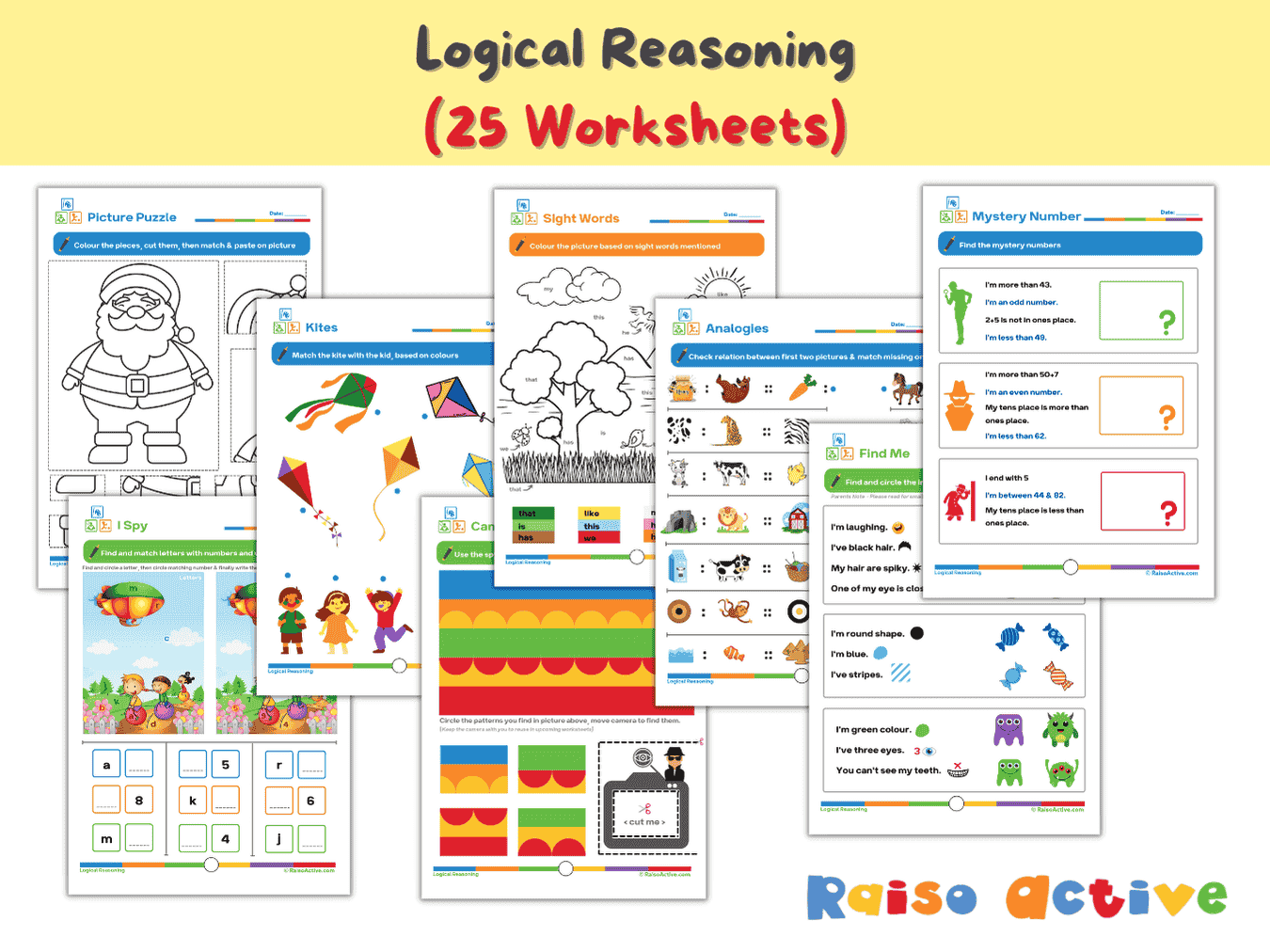
Logical Reasoning Activity Book for Preschool & Kindergarten | Patterns, Puzzles & Analogies
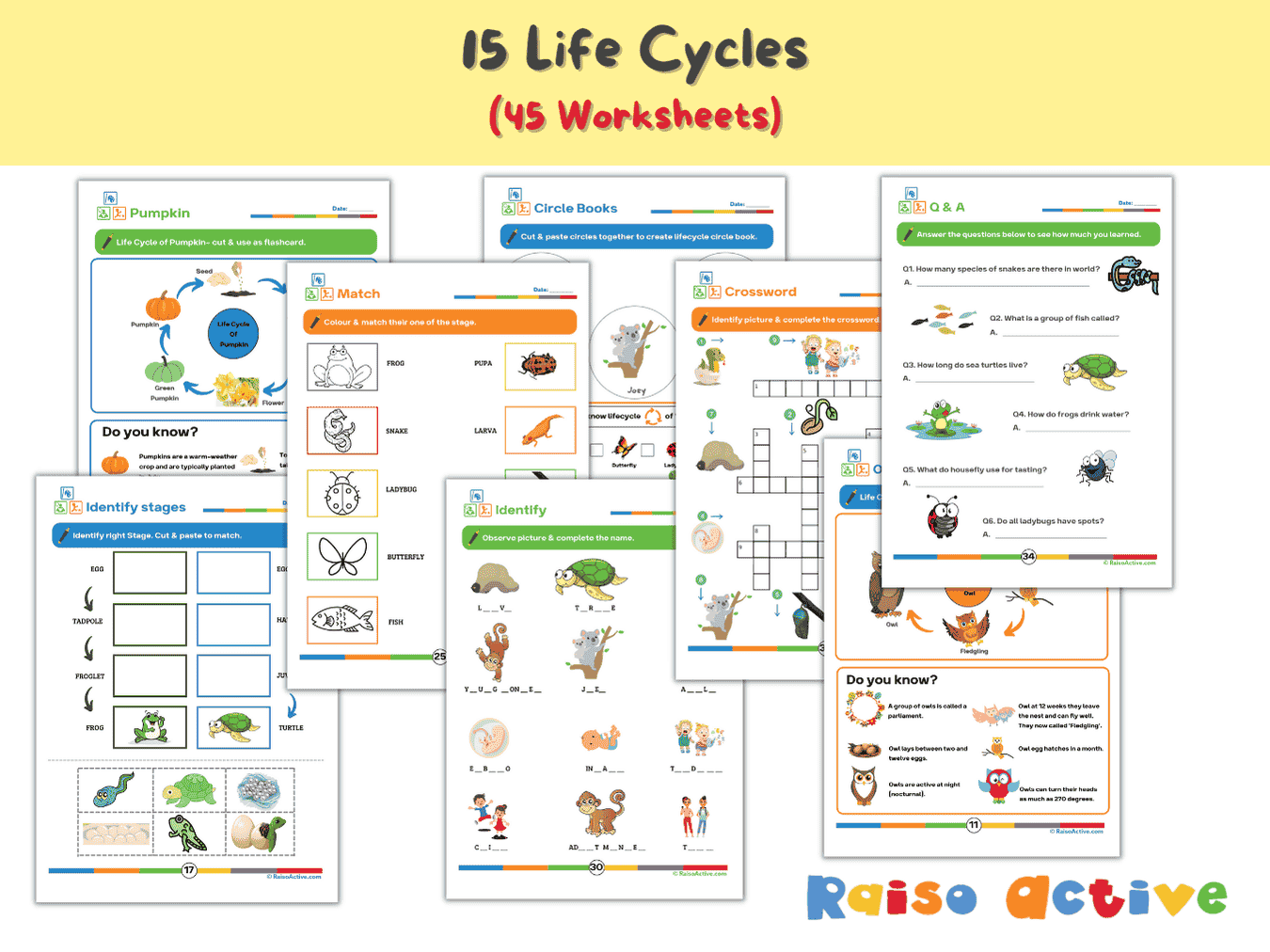
Lifecycles Activity Book & Flashcards for Preschool & Early Elementary
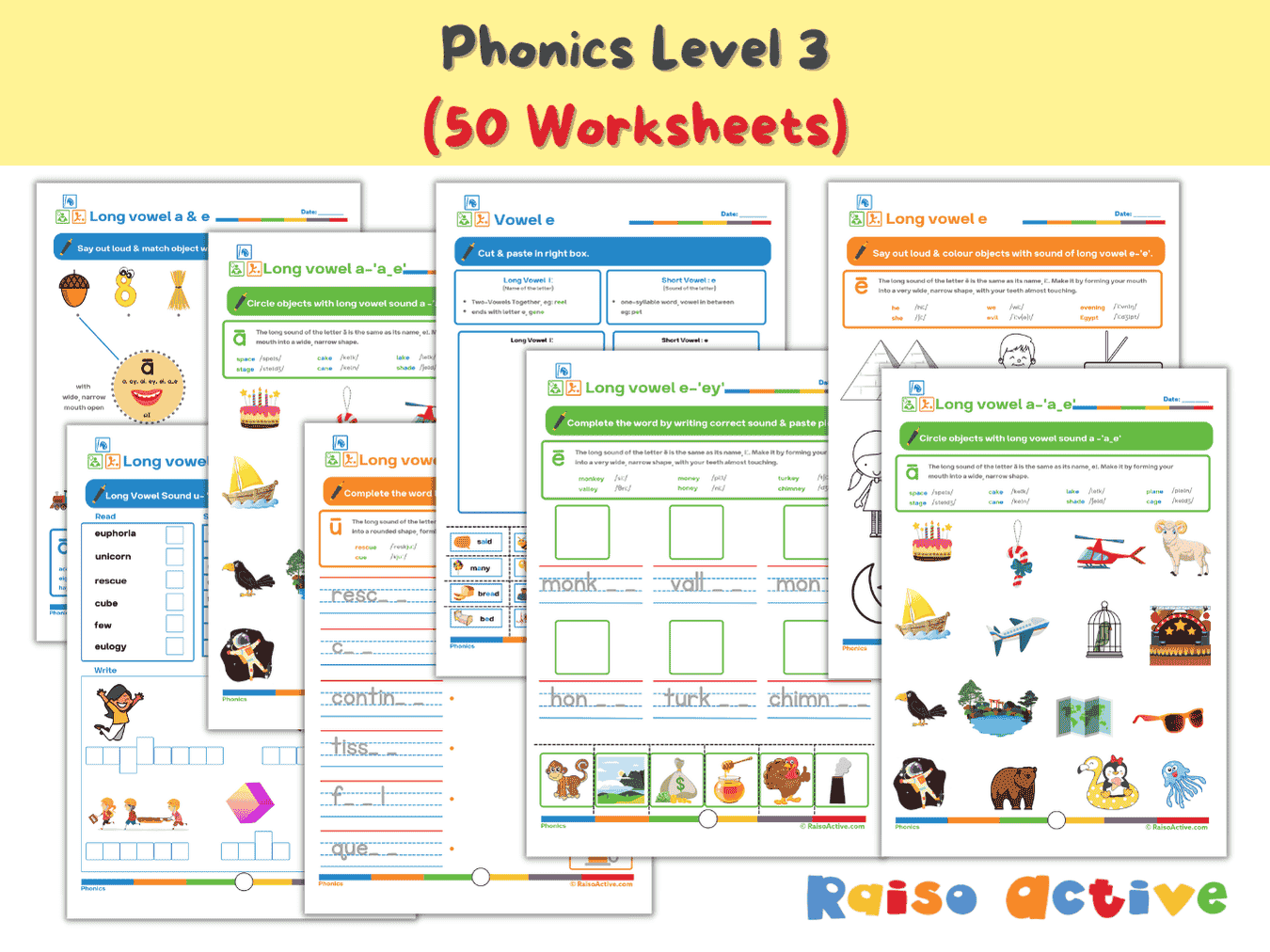
Phonics Level 3 Long Vowels Activity Book for Kindergarten & 1st Grade
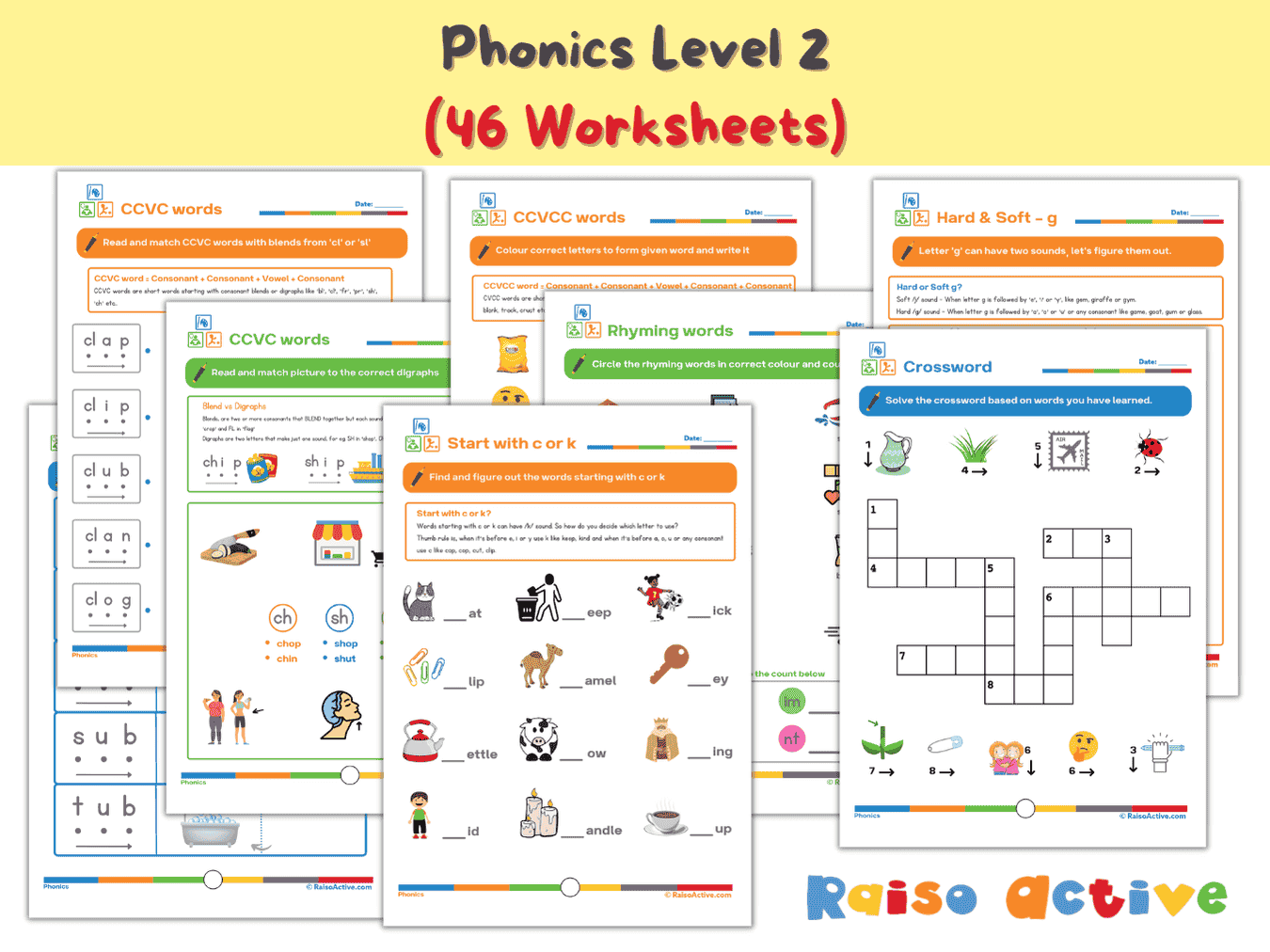
Phonics Level 2 Worksheets: CVC, CCVC, CVCC Word Families & Blends for Early Readers (Ages 4-7)
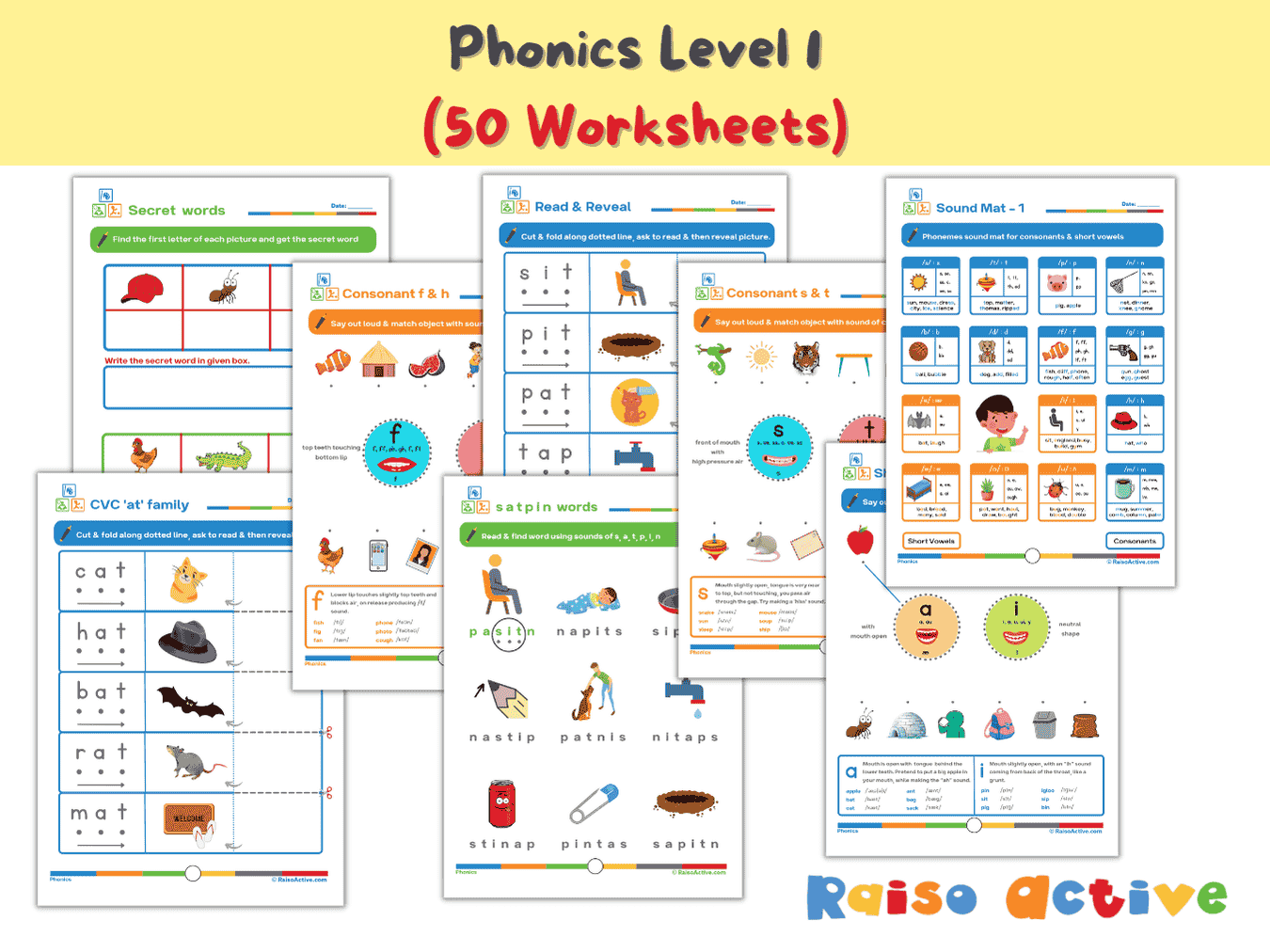
Phonics Level 1 Activity Book: Letter Sounds, Blending & CVC Words for Preschool & Kindergarten
Guides for parents and teachers
See all guides →Number Formation Rhymes 0–9 and How to Fix Reversals
Original number formation rhymes for 0–9, the correct stroke order for each digit, why 3, 5 and 7 get reversed most often, and multisensory fixes that work.
Pre-Writing Strokes in Order: From Standing Lines to Loops (With Printable Patterns)
The developmental order of pre-writing strokes, from vertical lines to loops, and why practicing them in sequence makes letter formation much easier to learn.
Kindergarten Readiness Checklist: 25 Skills to Practice Before the First Day
A kindergarten readiness checklist of 25 literacy, math, motor, self-regulation and self-help skills, with an 8-week summer plan and notes on when not to worry.
Best Worksheets for 3-Year-Olds: What Works and What to Avoid
What works on worksheets for 3-year-olds: short sessions, crayons, tracing lines, matching, cutting, a free weekly plan, and signs one is too advanced.
Reception Year Explained: EYFS Learning and How to Help at Home
A teacher's plain-English guide to the Reception Year: the seven areas of learning, Early Learning Goals, Phase 2/3 phonics, the RBA and home routines.
What Should a 4-Year-Old Know Before LKG? A Readiness Checklist
A calm, teacher-written LKG readiness checklist for 4-year-olds: language, pattern writing, numbers to 10, self-help and social skills, plus a 6-week plan.
Canonical: https://raisoactive.com/worksheets/year-1-handwriting