Free printable worksheets · United Kingdom
EYFS Cutting Practice Worksheets (Ages 3–5)
EYFS cutting practice worksheets are practice sheets for children aged 3–5 in Early Years Foundation Stage in the UK. Cutting practice is using child scissors to cut along a printed line, straight or curved, to build hand strength and bilateral coordination. The sheets on this page cover scissor grip and control, cutting along a straight line, cutting along a curved line and cutting out a shape in one piece.
The Early Years Foundation Stage spans Nursery and Reception and treats a worksheet as a small supplement to play rather than the main event. Mark making, matching and sorting dominate the Nursery year; Reception adds letter formation, sound matching and counting to ten as phonics teaching begins in earnest. At three, cutting is the open-and-close movement itself. A child holds blunt safety scissors thumb-up, snips fringe into the edge of a stiff strip, and cuts a narrow strip in two with a single squeeze. Toward four, short straight lines on thick paper become possible. A worksheet should offer strips and short lines, not shapes; curves and turning the paper with the helper hand come later.
342+ worksheets · free PDF download · print on A4 or Letter
EYFS Cutting Practice Worksheets to print
Browse all worksheets for ages 3–5
Before and After: Sequencing Worksheet for Early Learners
Sequencing 'before' and 'after' events trains children to think about time and cause-and-effect in order, a reasoning skill that underlies reading comprehension, like following a story's plot, and everyday routines alike. This cut-and-paste format adds a physical, hands-on layer, requiring children to manipulate and place pictures correctly rather than just pointing, which reinforces the sequencing concept through action.

This or That? Cut and Paste Worksheet for Early Learners
Sorting objects into 'this' and 'that' categories helps children ages 3-5 connect an abstract grammar concept to something they can physically place and see, reinforcing the idea that these words describe relative closeness rather than a fixed rule. This early categorization practice also builds general sorting and decision-making skills that extend well beyond grammar itself.
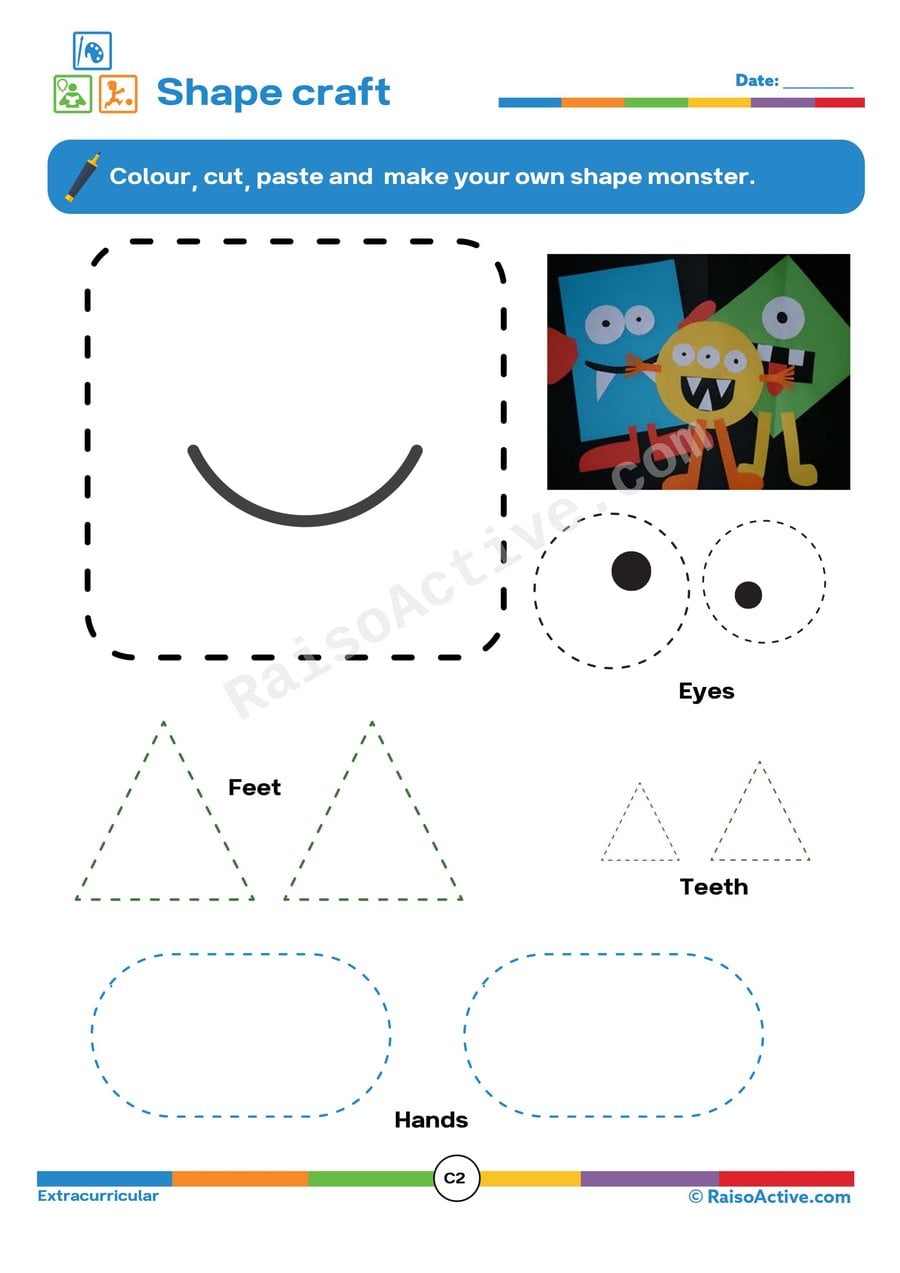
Shape Monster Craft Worksheet for Preschoolers
Coloring, cutting, and gluing shape pieces to build a monster teaches children ages 3-5 to recognize basic 2D shapes, like circles, triangles, and squares, while practicing scissor control along different edge types. Because the shapes need to be arranged in a specific way to form a recognizable monster face and body, this activity also builds spatial reasoning as children decide where each piece belongs. Turning geometry practice into a silly monster craft keeps repetitive shape work feeling like imaginative play rather than a math drill.
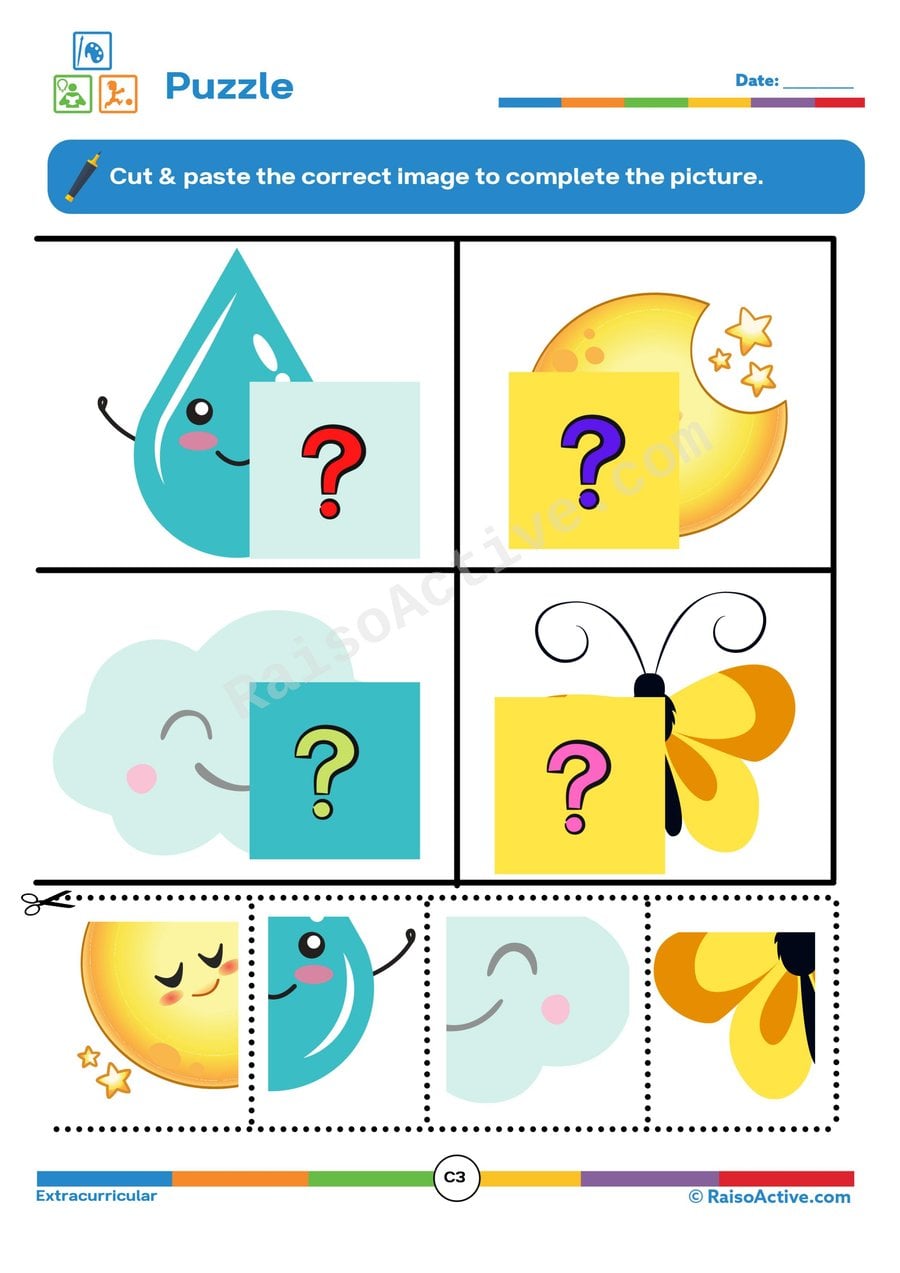
Cut and Paste Puzzle: Complete the Pictures!
This cut-and-paste puzzle challenges children ages 3-5 to visually compare cut-out image pieces to the gaps in a larger picture, strengthening visual discrimination and problem-solving as they figure out which piece fits where. Because more than one cut-out may look similar at a glance, children must attend closely to small details like color, shape, and orientation before gluing. This close visual comparison builds the same attention-to-detail skills used later in reading, where small differences between letters and words matter.
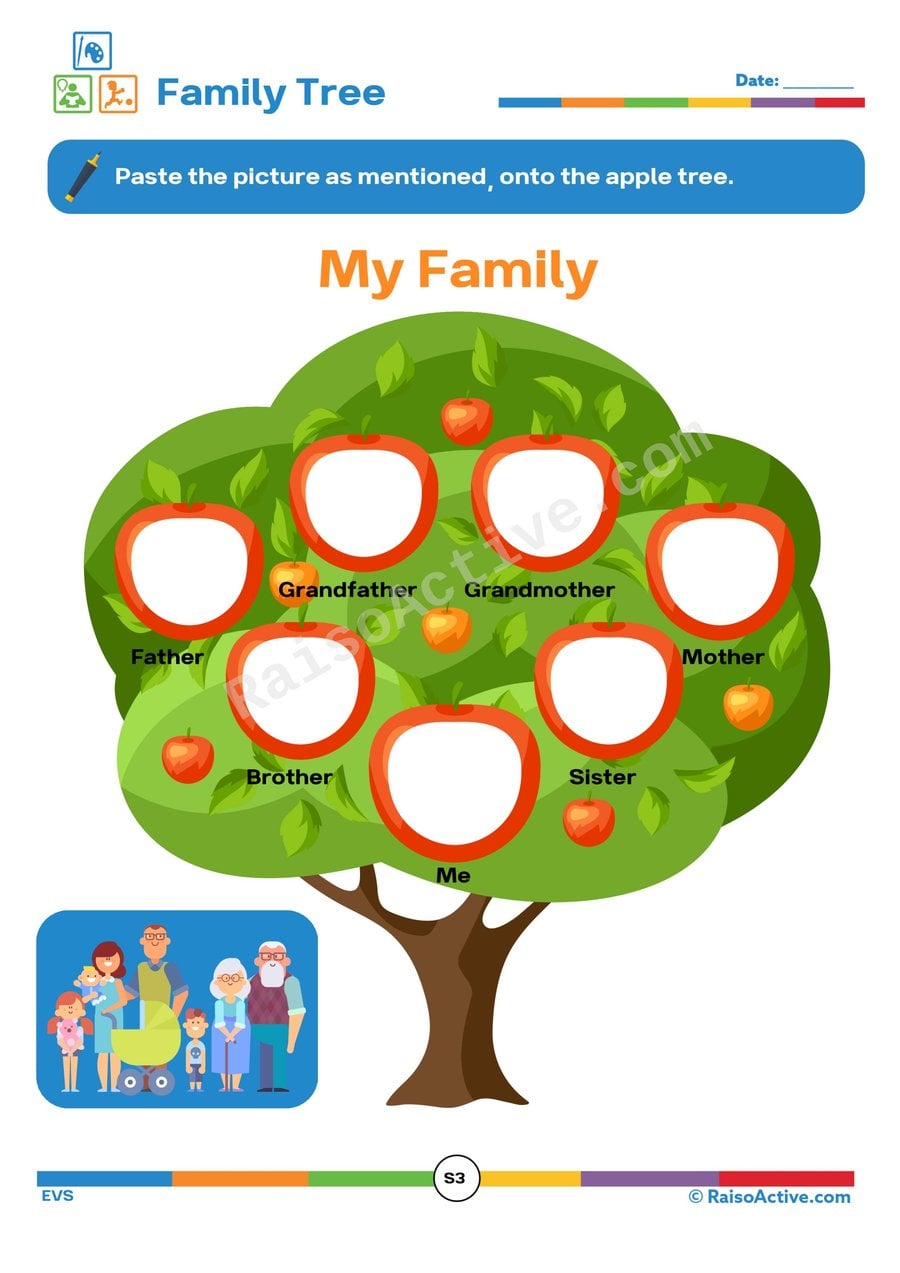
My Family Tree Worksheet: Paste & Learn!
This worksheet helps children ages 3-5 build vocabulary around family relationships while practicing pasting skills and personal storytelling. Creating a visual, personalized family tree helps children organize and talk about the people closest to them, an early step in understanding relationships and social structure.

Color Sorting Fun: Cut and Paste Worksheet for Preschoolers
This cut-and-paste activity builds color recognition alongside fine motor control, as children use scissors to cut out pictures and glue them into matching color categories. For ages 3-5, sorting by a single attribute like color is an early classification skill that lays the groundwork for later math concepts like grouping and comparing.
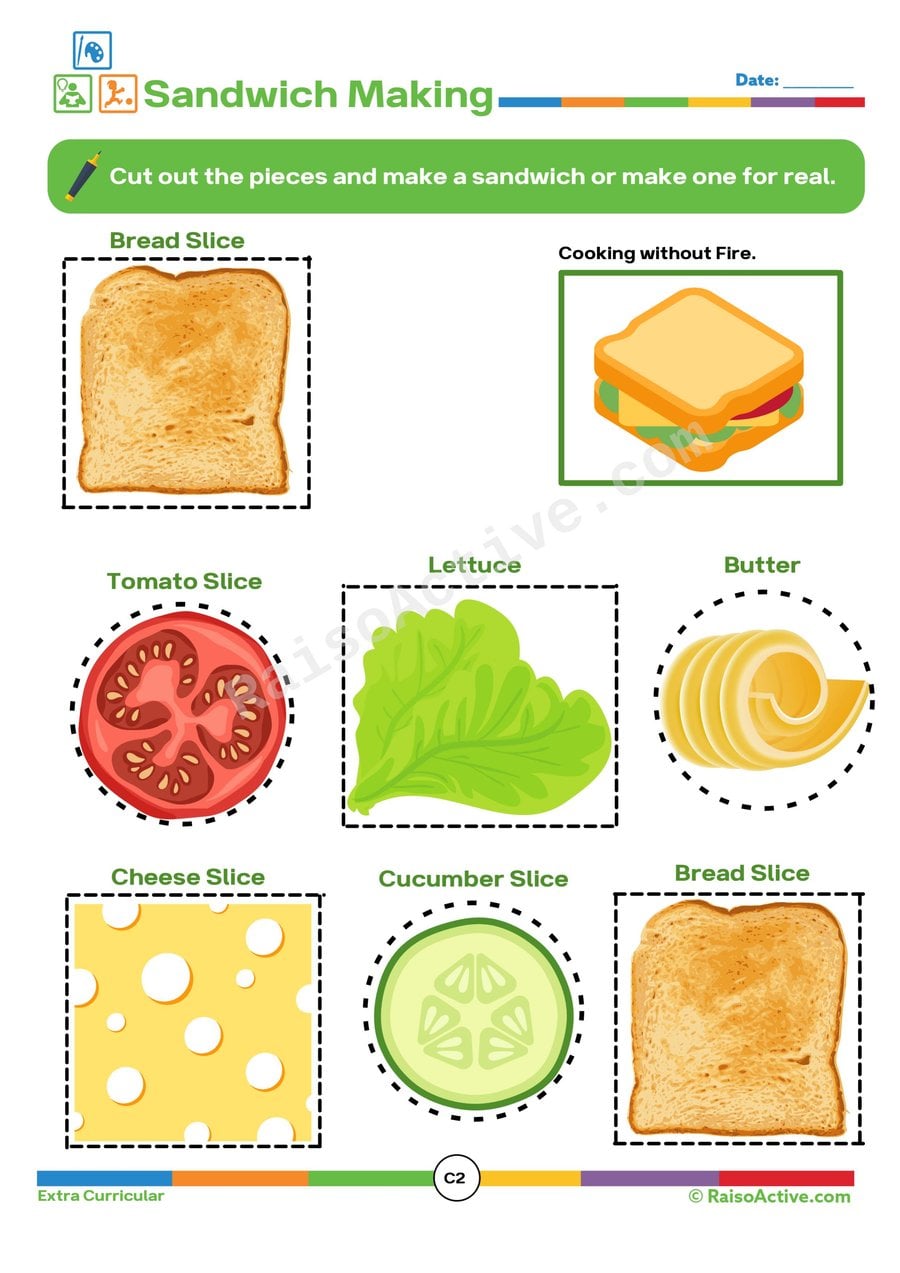
Sandwich Making Fun: Cut, Paste, and Create!
This worksheet helps children ages 3-5 develop fine motor skills by cutting out different food item shapes, while encouraging creativity as they decide which ingredients to layer to design their own imaginary sandwich. Making design choices about food order also introduces basic sequencing, since a sandwich is built in a specific stacked layer order.
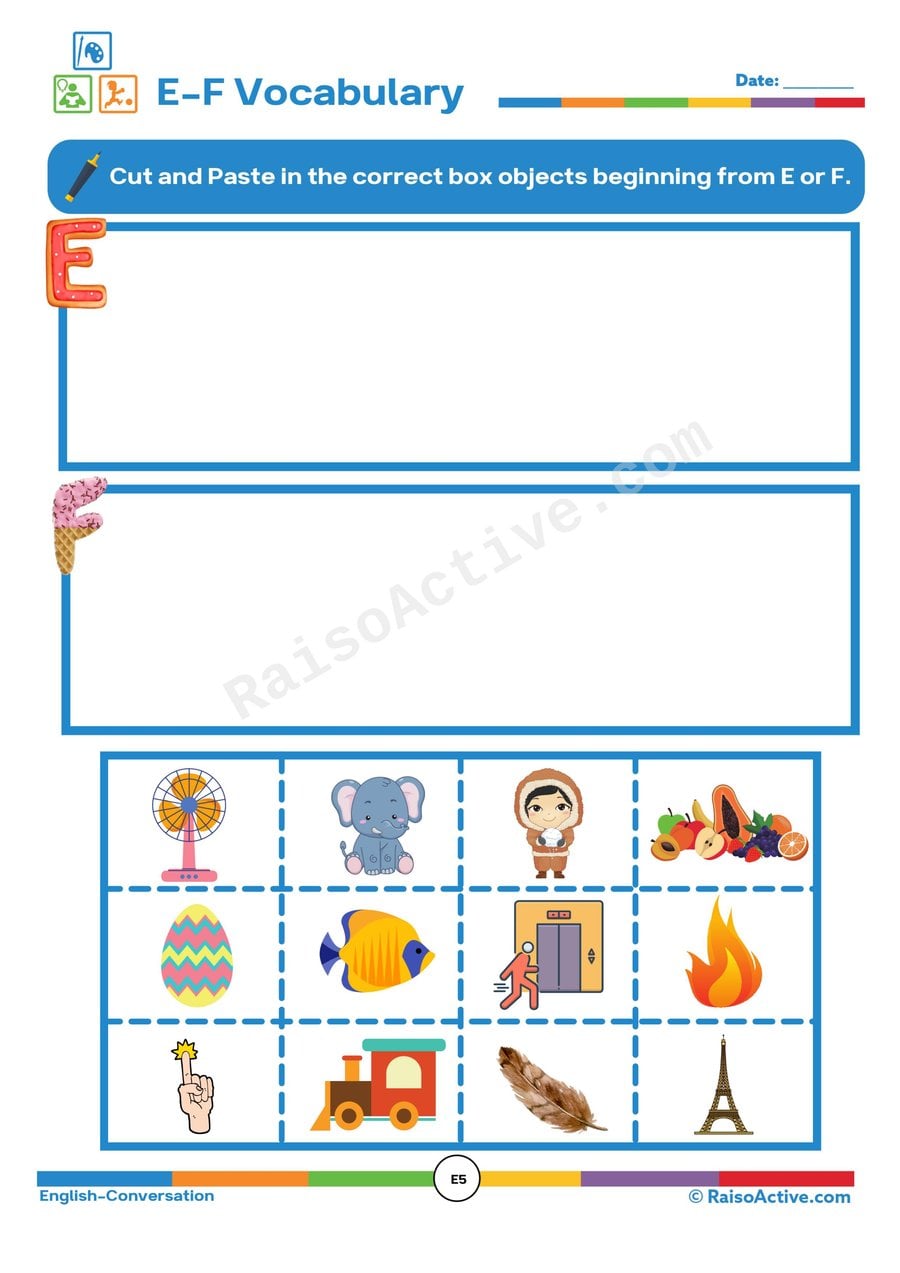
E-F Vocabulary Worksheet: Cut and Paste Fun!
This worksheet builds phonemic awareness and vocabulary as children ages 3-5 sort pictures by their beginning sound, deciding whether each object starts with the letter E or F. Practicing this kind of sound-sorting strengthens the auditory discrimination skills children need before they can reliably match letters to sounds in reading.
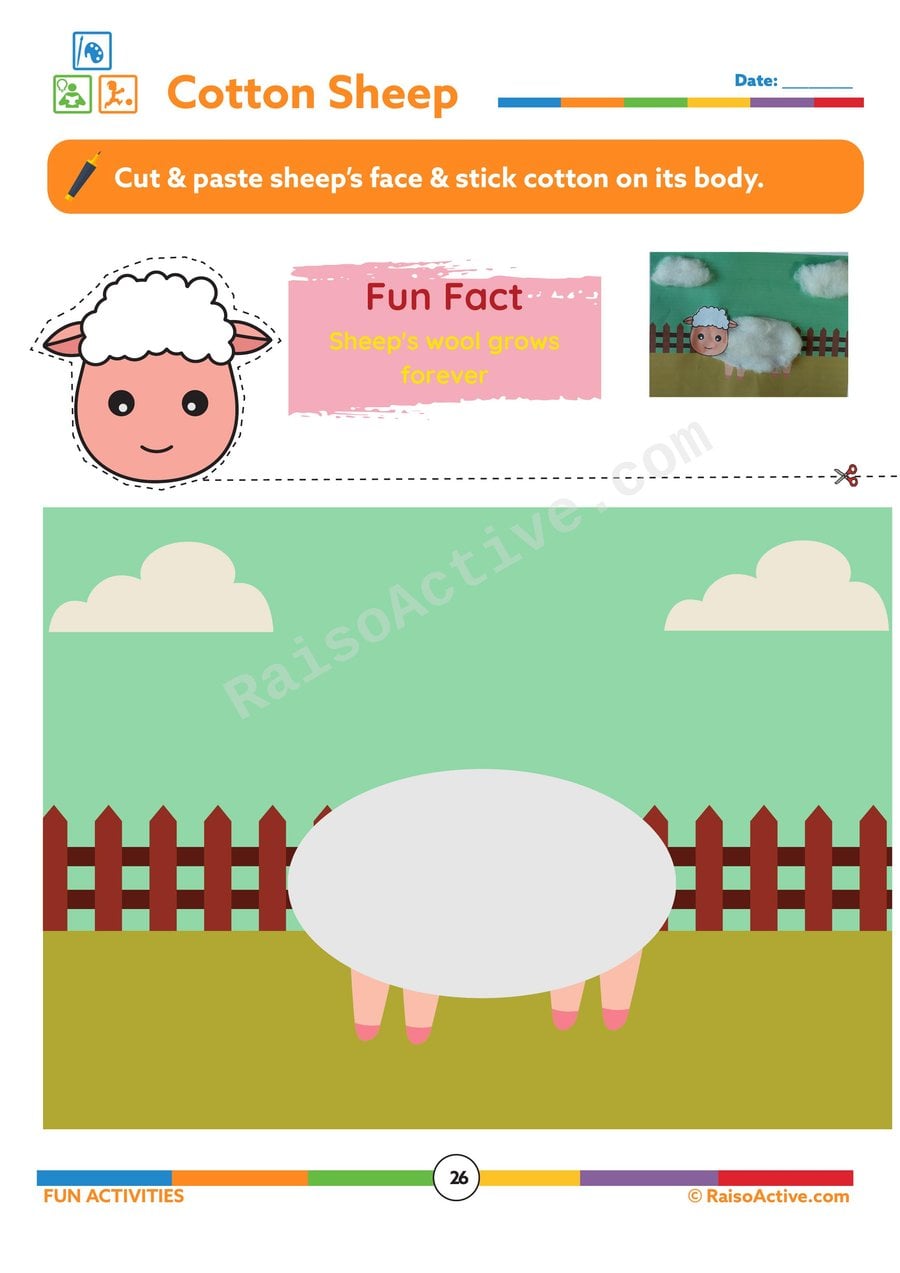
Cotton Sheep Craft Worksheet for Preschoolers
Cutting out the sheep's face and body and then pressing on individual cotton balls to build up its wool gives children a satisfying sensory contrast — the crisp, controlled cut of paper versus the soft, pinch-and-place texture of cotton — while practicing pincer grip strength needed for holding a pencil. The sheep theme also opens up simple, concrete conversation about where wool comes from.

Classify Animals: Cut and Paste Worksheet for Preschoolers
Children ages 3-5 practice classifying animals by their natural habitat, sorting pictures into groups like forest animals and farm animals, building early science reasoning about how different environments support different animals. Combining this classification task with cutting and pasting also strengthens fine motor control.
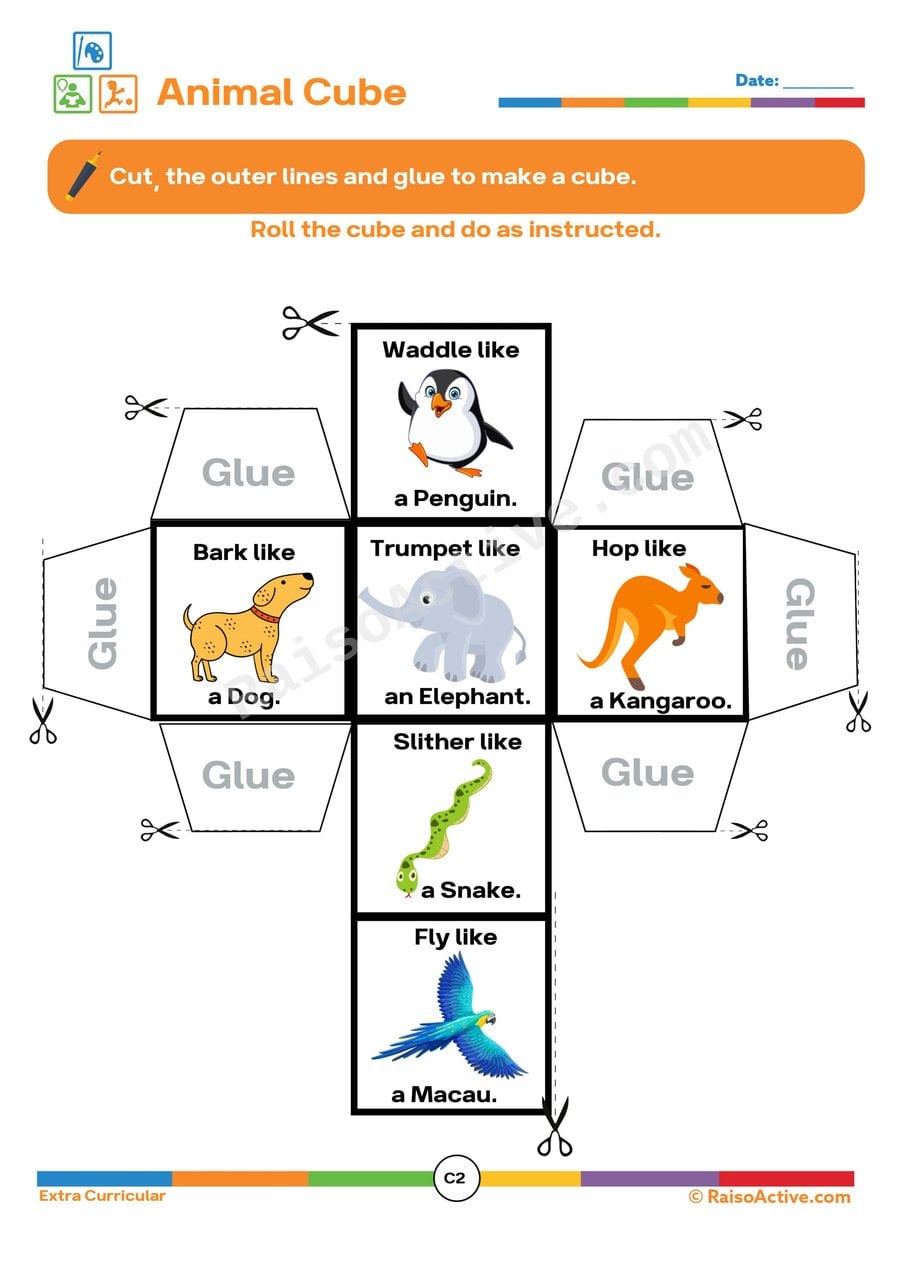
Animal Cube: Cut, Glue, and Learn!
Children ages 3-5 practice following a multi-step assembly sequence as they cut out a net, fold it, and glue the tabs to build a 3D cube featuring different animals, then use it as a game piece to review animal names and sounds. Assembling a flat shape into a 3D object also introduces early spatial reasoning about how 2D shapes fold into 3D forms.

Seasons Cut and Paste Worksheet for Preschoolers
Children ages 3-5 build early science vocabulary and classification skills as they identify the four seasons and match seasonal pictures — like snowflakes, flowers, or sunhats — to the correct season circle. Understanding that weather and clothing change in predictable patterns throughout the year is a foundational science concept that also supports calendar and time awareness.

Descending Order Snail Puzzle Worksheet for Preschoolers
Arranging cut-out puzzle pieces from the highest number down to the lowest asks children ages 3-5 to apply number order in the reverse direction from typical ascending counting, a genuinely different and more challenging skill than counting up. This descending-order practice deepens overall number sense, since children must compare values rather than just recite a memorized forward sequence. The reveal of a hidden picture once the pieces are correctly ordered adds a rewarding, motivating payoff to an otherwise abstract number task.
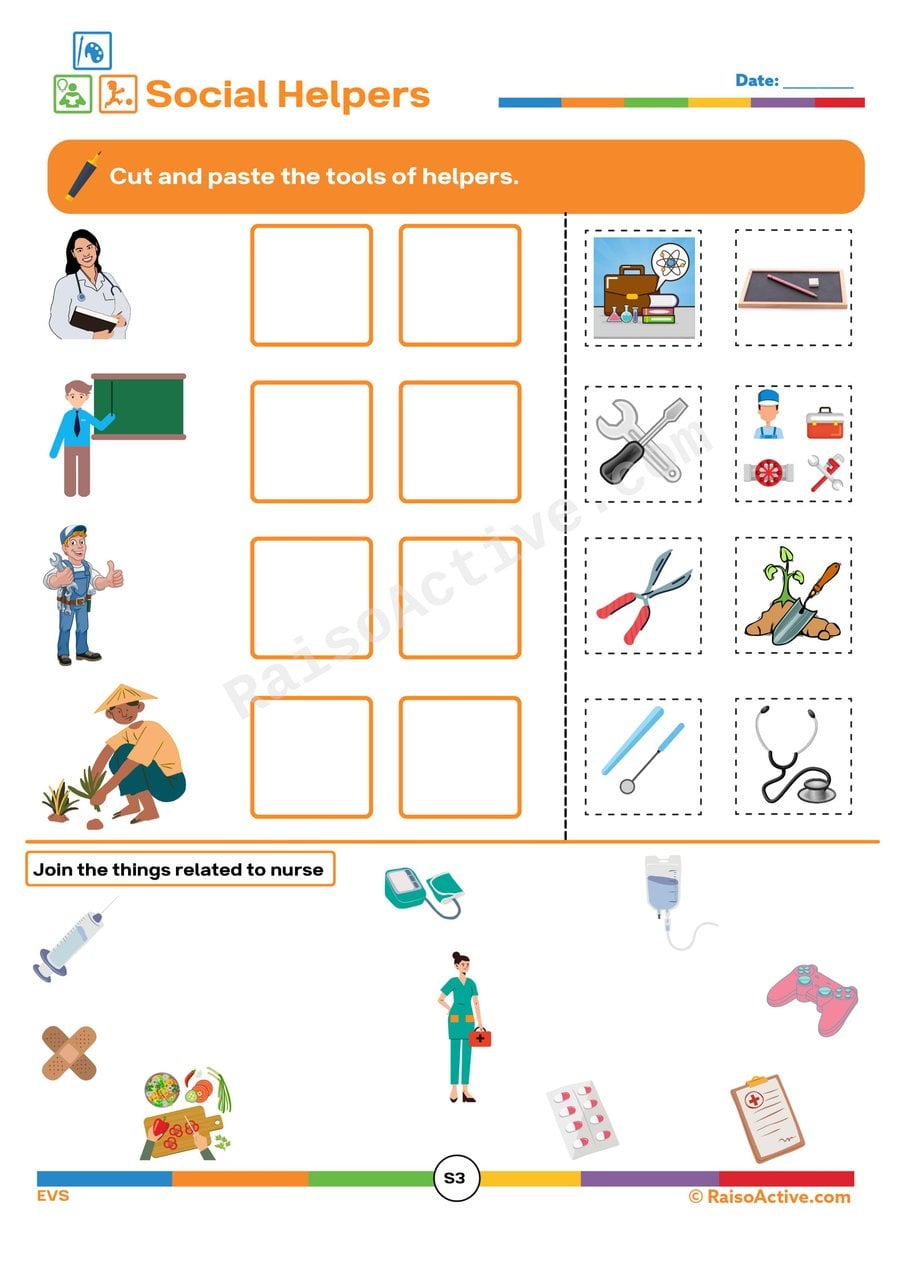
Social Helpers Tools Worksheet for Kids
This worksheet teaches children ages 3-5 to connect community helpers with the tools and equipment they use in their jobs, building early social studies knowledge alongside visual matching skills. Recognizing that a stethoscope belongs to a doctor or a hose belongs to a firefighter helps children understand how tools relate to specific roles and responsibilities in their community. The cut-and-paste and joining activities also reinforce fine motor control and visual discrimination as children sort similar-looking small pictures.
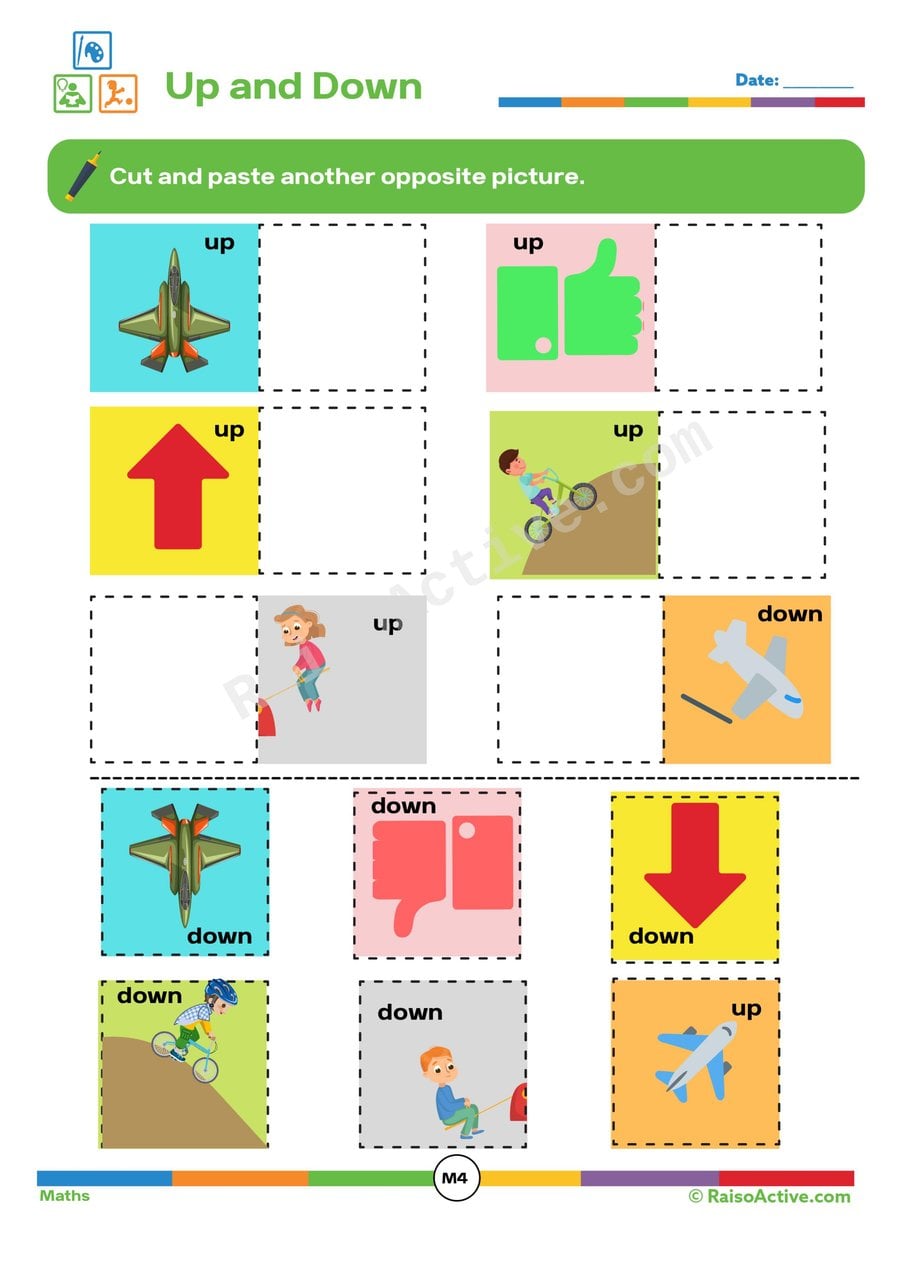
Up and Down Worksheet: Cut and Paste Opposites!
Children ages 3-5 build spatial vocabulary and comparative reasoning as they identify pictures representing 'up' and match them to their opposite, 'down,' by cutting and pasting. Understanding opposite pairs like up/down strengthens both language development and the early logical thinking needed to compare and categorize.
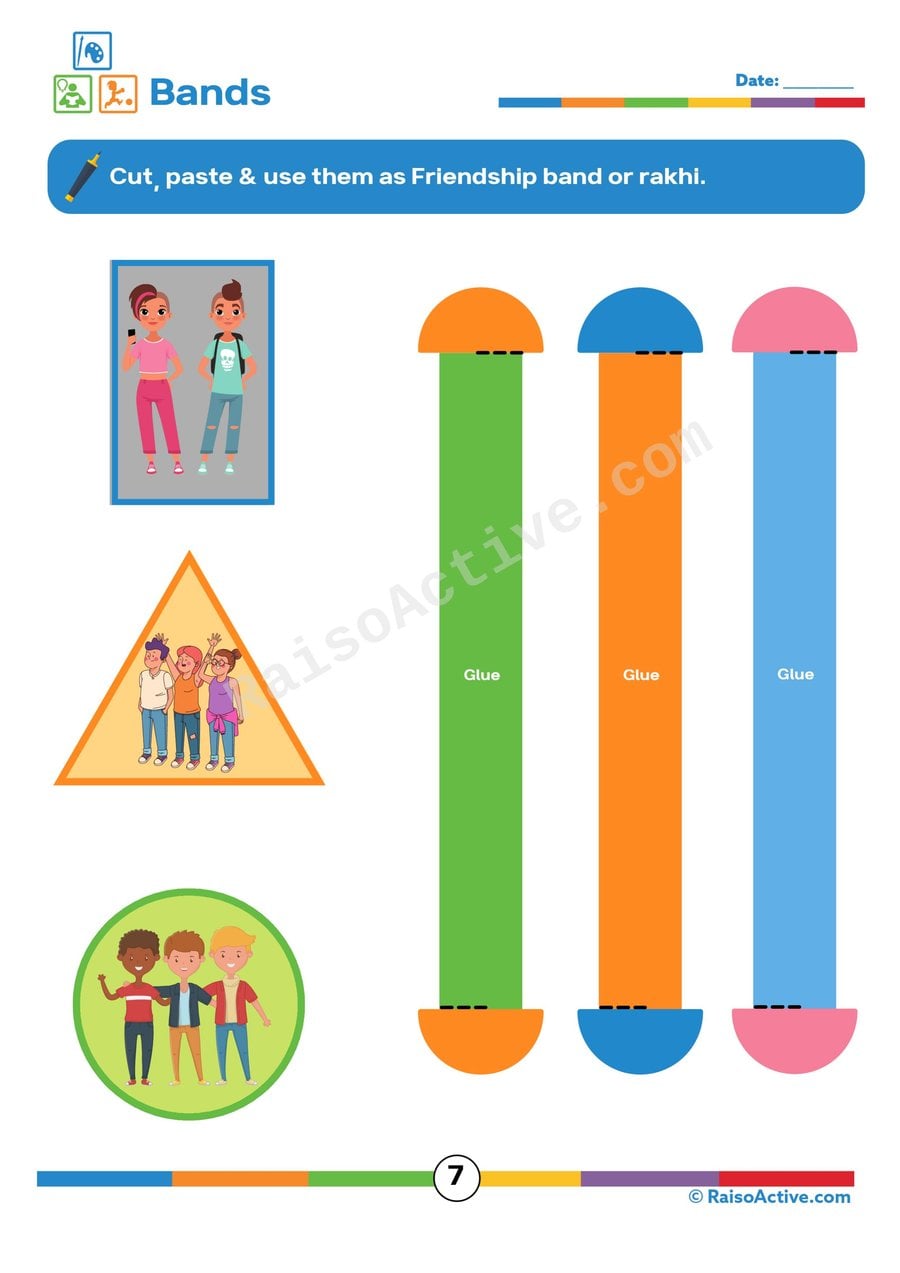
Friendship Band Craft Worksheet for Kids
Children ages 3-5 continue building scissor and gluing precision through this friendship band or rakhi craft, practicing the multi-step process of cutting a shape, forming a loop, and decorating the finished piece. Completing each construction step in the correct order reinforces sequencing skills alongside fine motor development.

Paste the Animals: Aerial and Aquatic Animals Worksheet
Sorting animals into 'aerial' and 'aquatic' groups introduces slightly more advanced classification vocabulary than a simple farm-versus-wild sort, asking children to think about how an animal moves and where it lives — in the air or in water — rather than just what it looks like. This kind of habitat-based categorization at ages 3-5 builds early science thinking alongside the scissor and gluing practice.

School Bus Coloring and Cutting Worksheet for Preschoolers
Coloring, cutting, and assembling a school bus gives children ages 3-5 practice with precise scissor control, since cutting small shapes like windows and wheels demands more accuracy than cutting along a straight edge. The activity also introduces a familiar, comforting topic — the school bus — which can help ease transportation-related anxieties for children starting or continuing school.

Christmas Cut and Paste Worksheet for Preschoolers
Cutting out a moon, snowman, gifts, and trees and arranging them inside a circle builds scissor precision and compositional thinking in children ages 3-5. Because there's no single 'correct' layout, children also practice early creative decision-making — choosing where each element belongs within a bordered space, which supports spatial awareness.

Food Group Sorting Worksheet for Kids: Cut and Paste!
Children ages 3-5 learn to sort familiar foods into the five major food groups — vegetables, fruits, dairy, meat and fish, and grains — building an early foundation for understanding balanced nutrition. Cutting and gluing each food item into its correct category also strengthens scissor control and hand-eye coordination alongside the health and classification learning.

Alphabet Cut and Paste Worksheet: Matching Letters and Objects
This cut-and-paste worksheet helps children ages 3-5 practice letter recognition by matching pictures to their correct beginning letter and gluing them into place, combining early phonics with fine motor skill development. Handling scissors and glue at this age builds the hand strength and precision needed for later handwriting, while the matching task reinforces that each letter represents a specific sound. Doing both together makes this a genuinely multi-skill activity rather than a single-purpose worksheet.

I Love You To Pieces: Valentine's Day Cut and Paste Worksheet
This Valentine-themed cut-and-paste activity builds scissor control and hand-eye coordination in children ages 3-5 as they cut along lines to separate heart pieces, then strengthens spatial reasoning as they figure out how each piece fits back together into a whole picture. Reassembling something from parts is an early puzzle skill that also supports later understanding of how wholes are made of smaller parts, useful in both math and reading.
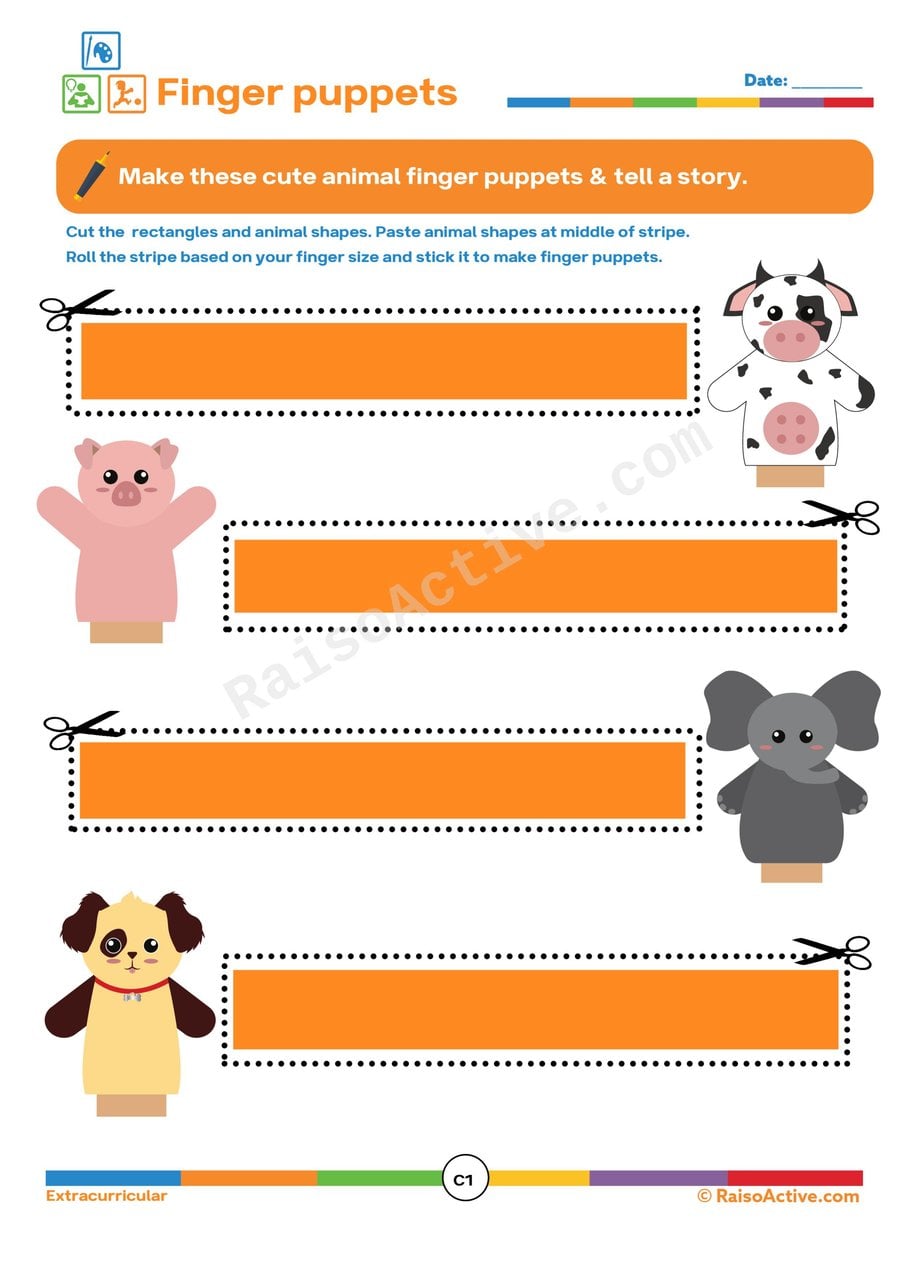
Make Finger Puppets! Fun Animal Craft Worksheet
This hands-on craft worksheet builds scissor control and fine motor precision in children ages 3-5 as they cut out animal shapes and rectangles, then roll and secure the rectangle into a puppet that fits their finger. The three-dimensional assembly step also introduces early spatial reasoning, since children must figure out how a flat shape becomes a wearable tube.

Diwali Rocket Craft: Cut and Paste Worksheet for Kids
This Diwali-themed rocket craft has children ages 3-5 cut out several rocket parts and assemble them in the correct order, building scissor control and an early understanding of how individual pieces combine into a whole structure. Because rockets are traditionally associated with Diwali fireworks and celebrations, the craft also connects a fine motor activity to real festival traditions your child may have observed.
What EYFS cutting practice worksheets cover
At three, cutting is the open-and-close movement itself. A child holds blunt safety scissors thumb-up, snips fringe into the edge of a stiff strip, and cuts a narrow strip in two with a single squeeze. Toward four, short straight lines on thick paper become possible. A worksheet should offer strips and short lines, not shapes; curves and turning the paper with the helper hand come later.
- Snip fringe along the edge of a stiff paper strip
- Cut a narrow strip in two with one squeeze
- Follow a short, thick straight line on card
- Hold the scissors thumb-up with the elbow tucked in
- Squeeze tongs and tweezers to build the same open-close motion
How to use these worksheets at home or in class
Five to ten minutes at a table, with an adult alongside to talk through the sheet, is enough at any point in this stage. Use a worksheet to echo something already met through play that week rather than to introduce a brand new idea.
Start with the sheet that matches what your child can already do, then move one step up. Keep finished sheets in a folder: EYFS teachers often ask for evidence of practice, and children like seeing their own progress.
Is your child ready for EYFS cutting practice work?
Look for a child who can make deliberate marks with a crayon, sit briefly at a table, follow a one-step spoken instruction and show curiosity about letters or numbers seen around the house or classroom.
- Cut a straight line across a full page, staying near it
- Turn the paper with the helper hand to follow wide curves
- Cut a zigzag with three or four changes of direction
Frequently asked questions
Is three too young for scissors?
No, provided the scissors are blunt-tipped, sized for a small hand, and an adult sits beside the child. Most three-year-olds can open and close the blades on request, which is the only prerequisite. Cut the worksheet into strips first so each task takes a minute, expect ragged edges, and stop after five minutes. If the child cannot yet work the blades, play squeezing games with tongs and clothespins first.
What should a EYFS child be able to do in cutting practice?
At three, cutting is the open-and-close movement itself. A child holds blunt safety scissors thumb-up, snips fringe into the edge of a stiff strip, and cuts a narrow strip in two with a single squeeze. Toward four, short straight lines on thick paper become possible. A worksheet should offer strips and short lines, not shapes; curves and turning the paper with the helper hand come later. Look for a child who can make deliberate marks with a crayon, sit briefly at a table, follow a one-step spoken instruction and show curiosity about letters or numbers seen around the house or classroom.
Do these worksheets follow the EYFS curriculum?
The sheets cover scissor grip and control, cutting along a straight line, cutting along a curved line and cutting out a shape in one piece, which sit inside the EYFS Early Learning Goals (Statutory Framework) outcomes for EYFS. Preschool and Pre-K (US), Nursery and LKG (India) use the same skills at this age, so the sheets also fit families following those programmes.
Are these EYFS cutting practice worksheets free?
Yes. Each worksheet downloads free as a watermarked PDF once you create an account, with a limit of five a day. An annual membership ($20) removes the watermark and the limit for the whole library of over 1,000 worksheets and every printable pack.

Written by
Hemsweta Jain · Teacher Cheena
MBA and Early Childhood Educator, teaching since 2014 · Founder of RaisoActive, Mumbai
Written and reviewed by Hemsweta Jain (Teacher Cheena), who designs every RaisoActive worksheet.
Last reviewed
Printable packs for ages 3–5
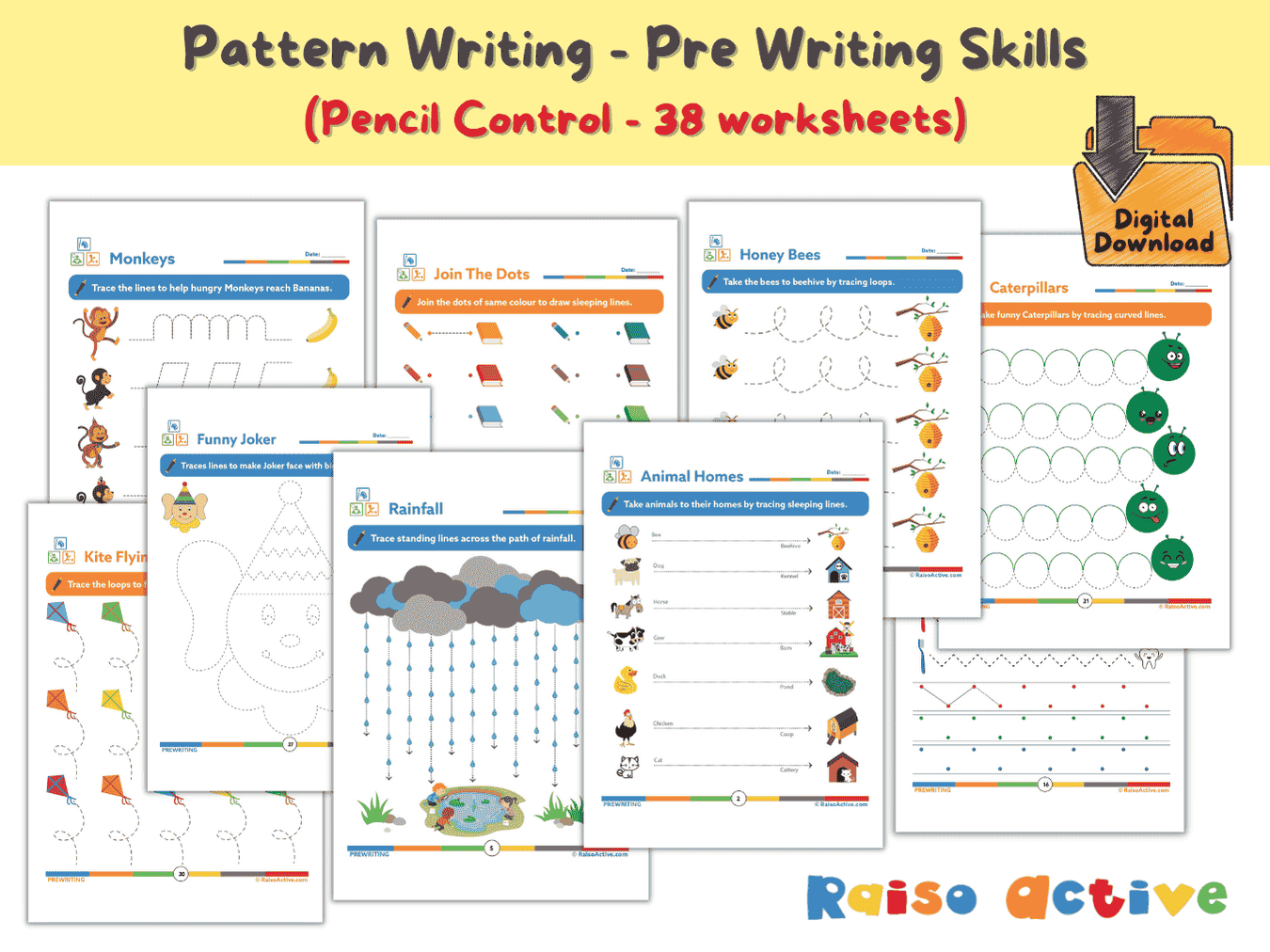
Pattern Writing Pre-writing Skills Activity Book for 3-4 Year Olds
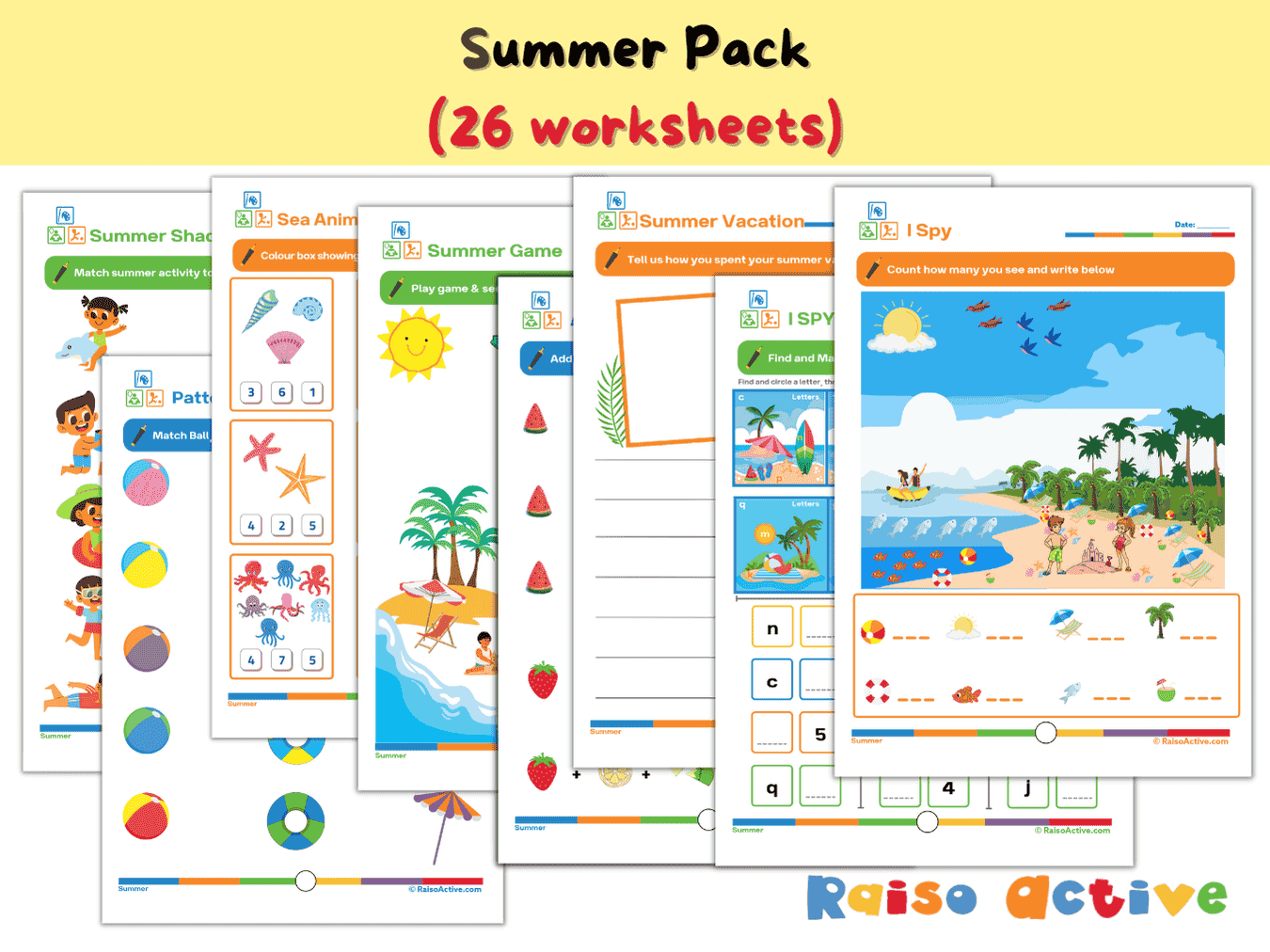
Summer Activity Pack: Math, Literacy, Puzzles & More for Preschool & Kindergarten
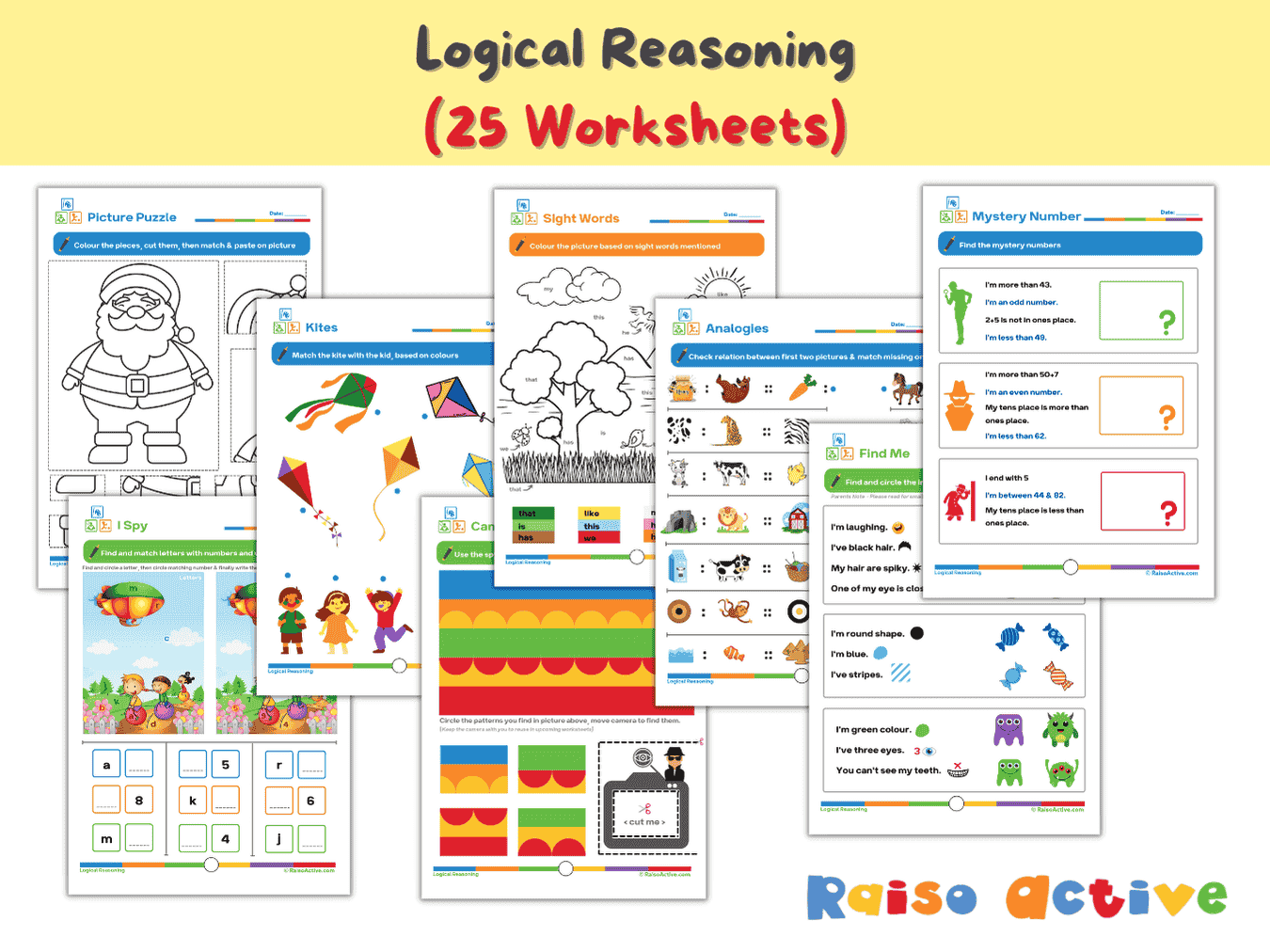
Logical Reasoning Activity Book for Preschool & Kindergarten | Patterns, Puzzles & Analogies
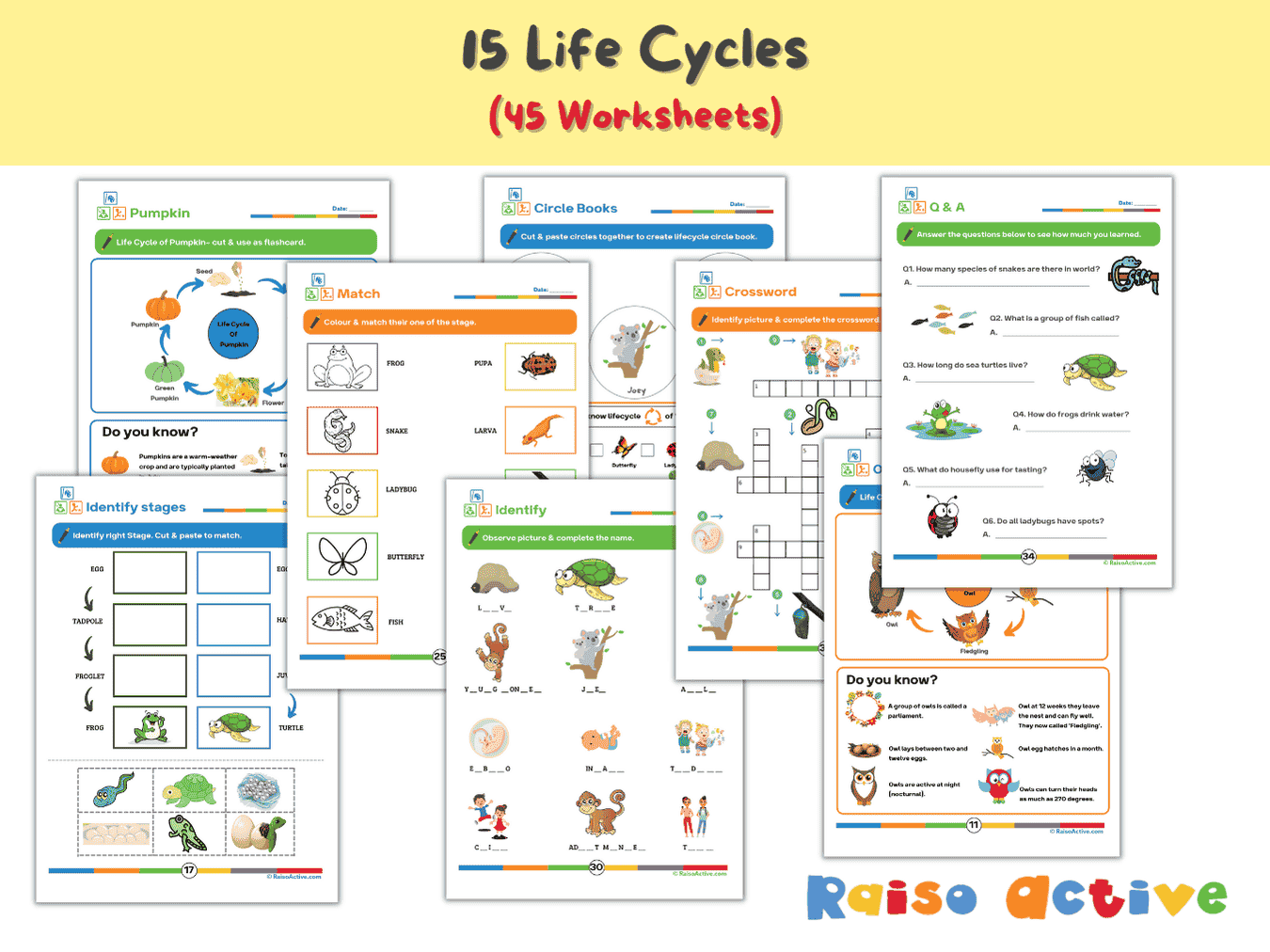
Lifecycles Activity Book & Flashcards for Preschool & Early Elementary
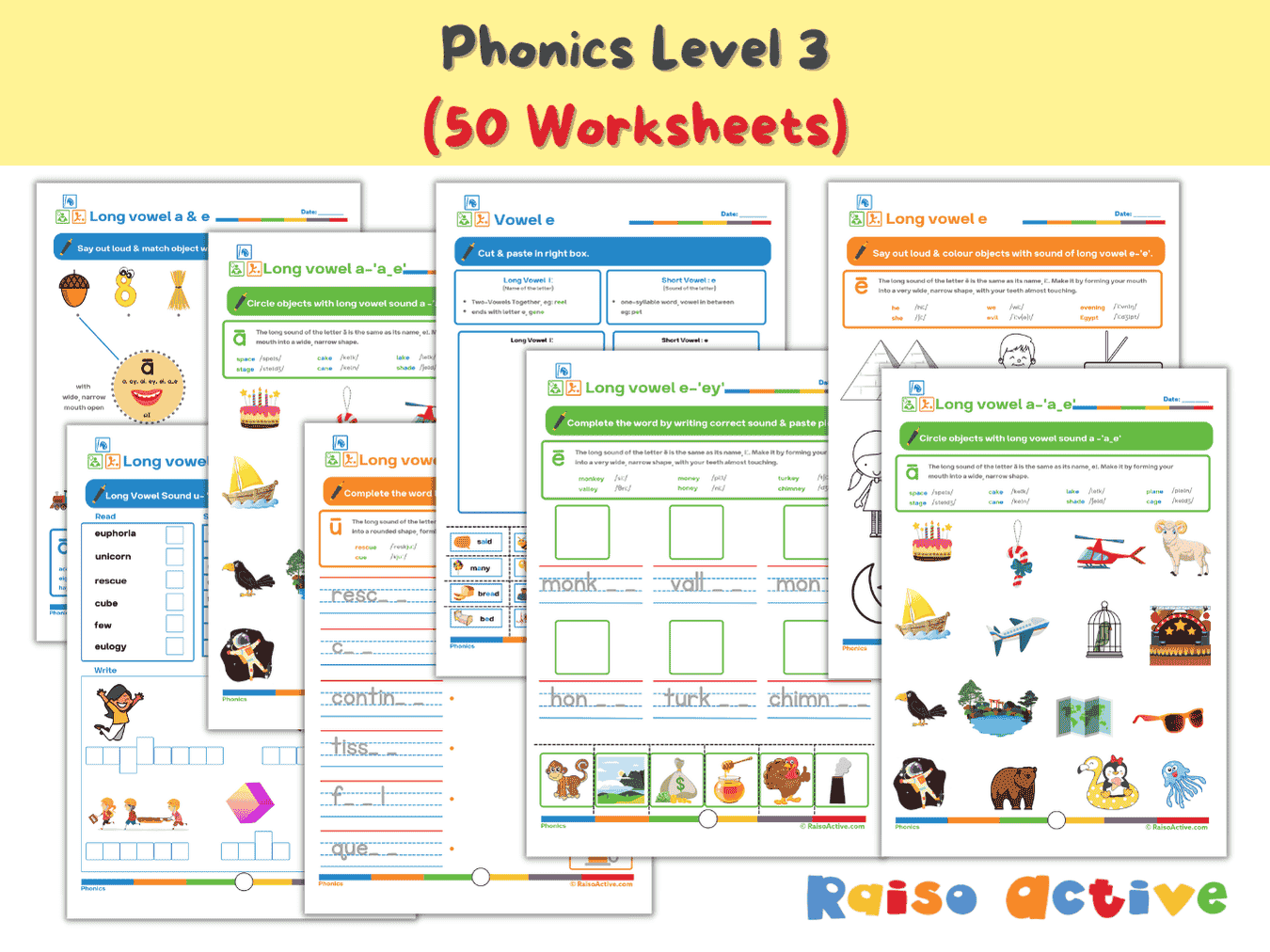
Phonics Level 3 Long Vowels Activity Book for Kindergarten & 1st Grade
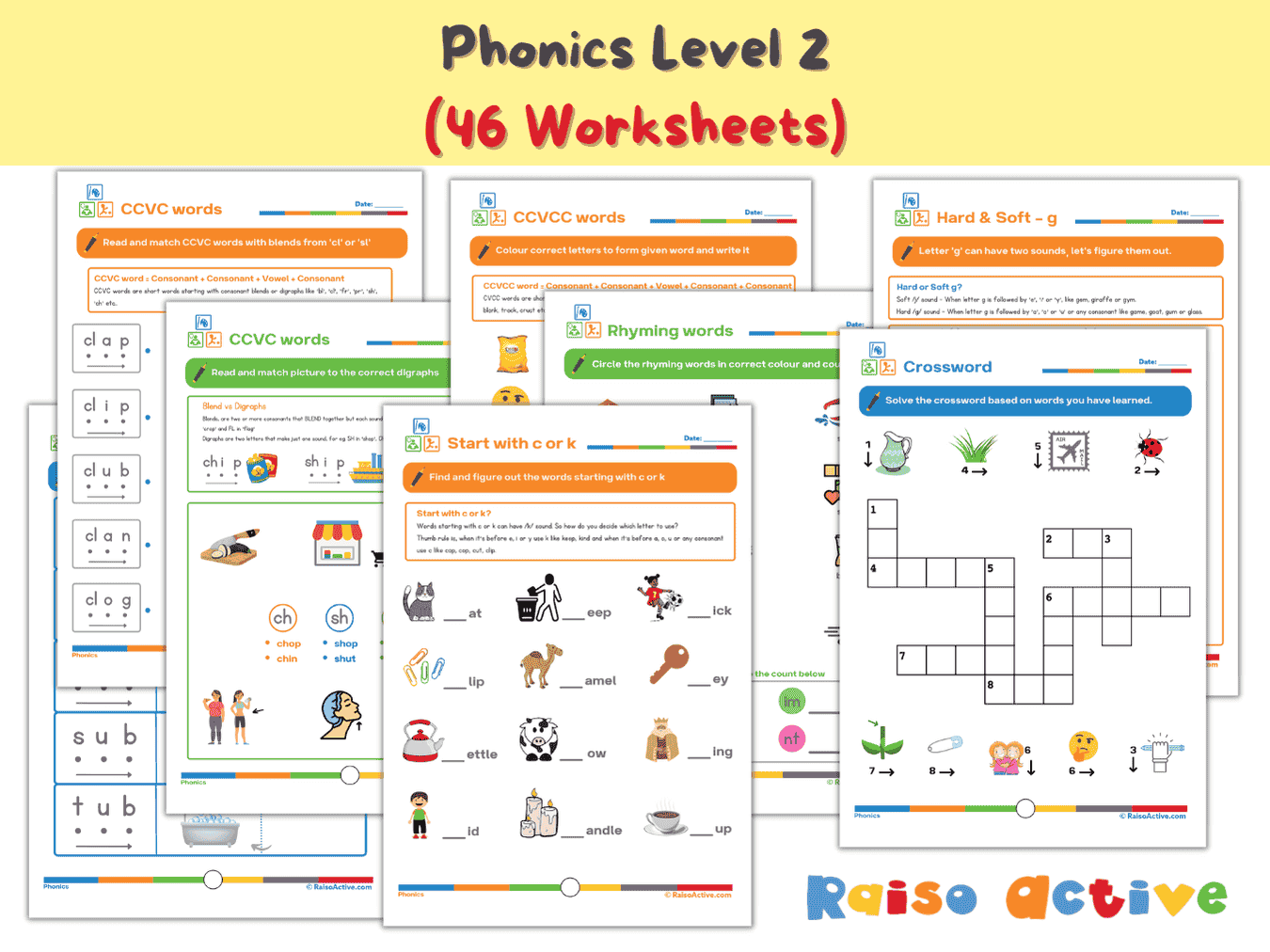
Phonics Level 2 Worksheets: CVC, CCVC, CVCC Word Families & Blends for Early Readers (Ages 4-7)
Guides for parents and teachers
See all guides →Number Formation Rhymes 0–9 and How to Fix Reversals
Original number formation rhymes for 0–9, the correct stroke order for each digit, why 3, 5 and 7 get reversed most often, and multisensory fixes that work.
Pre-Writing Strokes in Order: From Standing Lines to Loops (With Printable Patterns)
The developmental order of pre-writing strokes, from vertical lines to loops, and why practicing them in sequence makes letter formation much easier to learn.
Kindergarten Readiness Checklist: 25 Skills to Practice Before the First Day
A kindergarten readiness checklist of 25 literacy, math, motor, self-regulation and self-help skills, with an 8-week summer plan and notes on when not to worry.
Best Worksheets for 3-Year-Olds: What Works and What to Avoid
What works on worksheets for 3-year-olds: short sessions, crayons, tracing lines, matching, cutting, a free weekly plan, and signs one is too advanced.
What Should a 4-Year-Old Know Before LKG? A Readiness Checklist
A calm, teacher-written LKG readiness checklist for 4-year-olds: language, pattern writing, numbers to 10, self-help and social skills, plus a 6-week plan.
Resources for Children with Multiple Disabilities: A Comprehensive Guide for Families
Discover essential resources for children with multiple disabilities. Therapies, inclusive learning, assistive technology, and printable activities for ages 1-8.
Canonical: https://raisoactive.com/worksheets/eyfs-cutting-practice