Paste the Animals: Aerial and Aquatic Animals Worksheet
Sorting animals into 'aerial' and 'aquatic' groups introduces slightly more advanced classification vocabulary than a simple farm-versus-wild sort, asking children to think about how an animal moves and where it lives — in the air or in water — rather than just what it looks like. This kind of habitat-based categorization at ages 3-5 builds early science thinking alongside the scissor and gluing practice.
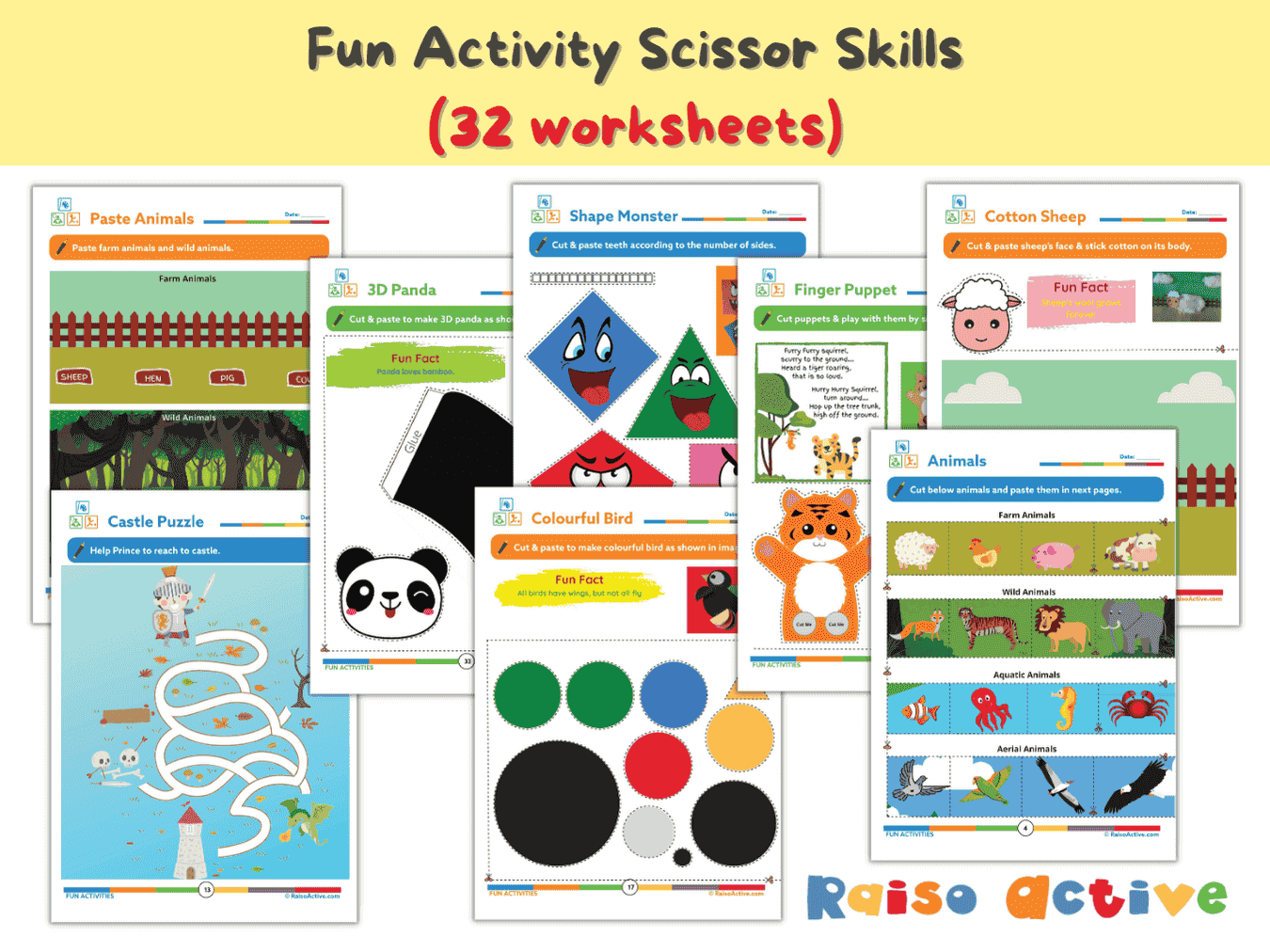
Part of the pack
Preschool Scissor Skills Activity Book: Fine Motor & Craft Fun for Ages 3-6
This is page 6 of the pack. Ages 3-6 · Preschool–KindergartenAges 3-6 · Nursery–Year 1Ages 3-6 · Nursery–UKGAges 3-6
Curriculum
- Fine Motor > Scissor Skills & Cutting
How to use this worksheet
Look at each animal picture together first and talk about whether it flies or swims. Cut out the animal pictures along their dotted lines. One at a time, have your child decide whether each animal belongs in the Aerial Animals or Aquatic Animals section, then glue it into the correct spot. Review both finished groups together once everything is glued, asking your child to explain why each animal belongs where it is.
Materials needed
- Scissors
- Glue
- Pencil
Extension activities
- 1Watch birds flying outside or fish swimming in a tank and talk about how their movement differs.
- 2Sort toy animals into 'flies' and 'swims' piles using bath toys and stuffed animals.
- 3Visit an aquarium or aviary, or look at pictures of one, and match what you see to the worksheet categories.
- 4Draw your own aerial animal and aquatic animal and explain your choices.
- 5Talk about animals that can do both, like ducks, and why they don't fit neatly into one group.

Written by
Hemsweta Jain · Teacher Cheena
MBA and Early Childhood Educator, teaching since 2014 · Founder of RaisoActive, Mumbai
Every RaisoActive worksheet is designed and checked by the founder before publishing.
Published · Last reviewed
More from Preschool Scissor Skills Activity Book: Fine Motor & Craft Fun for Ages 3-6

Giraffe Cut and Paste Worksheet for Preschoolers
Ages 3-5 · Preschool–Pre-KAges 3-5 · Nursery–ReceptionAges 3-5 · Nursery–LKGAges 3-5
Assembling a giraffe from separate cut-out parts and gluing them onto a background gives children practice with proportion and placement — a giraffe's long neck and small head need to be positioned correctly relative to its body — which is a slightly more advanced spatial task than assembling rounder, simpler animals. This craft at ages 3-5 builds scissor control alongside basic animal knowledge.

Funny Clown Craft: Cut and Paste Worksheet for Kids
Ages 3-5 · Preschool–Pre-KAges 3-5 · Nursery–ReceptionAges 3-5 · Nursery–LKGAges 3-5
Curling colorful paper strips into loops and gluing the ends together builds a different kind of fine motor control than straight cutting — bending, holding, and pinching paper into a curved shape while applying glue — which strengthens hand coordination in a new way. Assembling the finished clown from these loops also reinforces color recognition and the idea of building something bigger from repeated smaller pieces.

Rocking Ship Cut and Paste Worksheet for Preschoolers
Ages 3-5 · Preschool–Pre-KAges 3-5 · Nursery–ReceptionAges 3-5 · Nursery–LKGAges 3-5
Building this rocking ship from separate cut pieces glued onto a large circular base asks children to think about spatial arrangement — which piece goes where on a curved surface — which is a slightly different challenge than pasting onto a flat rectangular page. At ages 3-5, this kind of assembly builds both scissor control and the visual planning needed to construct a recognizable picture from parts.

Cut and Paste a Fun Fish Worksheet for Preschoolers
Ages 3-5 · Preschool–Pre-KAges 3-5 · Nursery–ReceptionAges 3-5 · Nursery–LKGAges 3-5
Building a fish from separate cut-out shapes glued onto a large circle base gives children practice constructing a picture within a defined boundary, teaching them to fit and arrange pieces inside a fixed space rather than a blank page. This kind of bounded assembly at ages 3-5 builds spatial planning alongside the usual scissor and gluing practice.

Cut and Paste the Flowers: A Fun Worksheet for Preschoolers
Ages 3-5 · Preschool–Pre-KAges 3-5 · Nursery–ReceptionAges 3-5 · Nursery–LKGAges 3-5
Snipping along the curved outlines of each flower asks preschoolers to open and close scissors in a controlled rhythm rather than one big chop, which is exactly the skill that precedes writing with a pencil. Matching each flower to its pot and gluing it in place also builds visual-spatial planning and a sense of completing a task from start to finish, both important markers of readiness for structured classroom work at ages 3-5.

Parent's Guide to Scissor Skills: Fun Activities for Preschoolers
Ages 3-5 · Preschool–Pre-KAges 3-5 · Nursery–ReceptionAges 3-5 · Nursery–LKGAges 3-5
This guide walks through the progression of scissor skills that most children move through between ages 3 and 5 — from squeezing to snip fringe, to cutting straight lines, to curves — rather than a single activity, so it teaches adults how to sequence practice rather than teaching a single skill directly. Following the staged activities (tearing, spraying water, punching holes, snipping with chopsticks) builds the specific hand-strength and bilateral coordination that true scissor cutting depends on before a child is even handed scissors.

Cut and Match Worksheet: Fun Matching Activity for Kids
Ages 3-5 · Preschool–Pre-KAges 3-5 · Nursery–ReceptionAges 3-5 · Nursery–LKGAges 3-5
This general cut-and-match activity has children ages 3-5 cut out individual cards or pieces and then figure out which ones go together, combining scissor control with visual matching and comparison skills. Because the matching pairs aren't pre-arranged the way they are in a simple line-tracing matching worksheet, your child also has to search and compare across all the pieces, a slightly more demanding visual task.
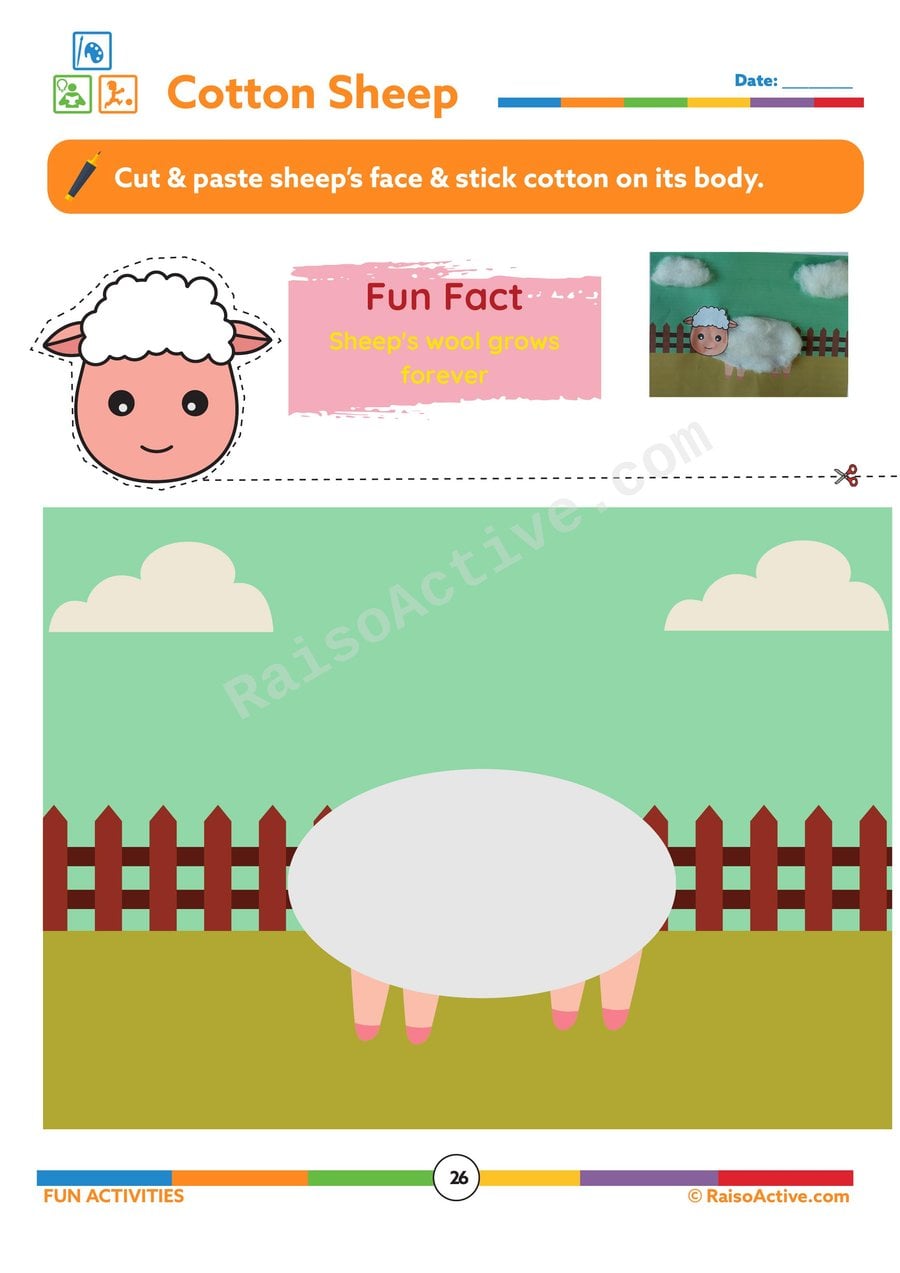
Cotton Sheep Craft Worksheet for Preschoolers
Ages 3-5 · Preschool–Pre-KAges 3-5 · Nursery–ReceptionAges 3-5 · Nursery–LKGAges 3-5
Cutting out the sheep's face and body and then pressing on individual cotton balls to build up its wool gives children a satisfying sensory contrast — the crisp, controlled cut of paper versus the soft, pinch-and-place texture of cotton — while practicing pincer grip strength needed for holding a pencil. The sheep theme also opens up simple, concrete conversation about where wool comes from.
Related worksheets
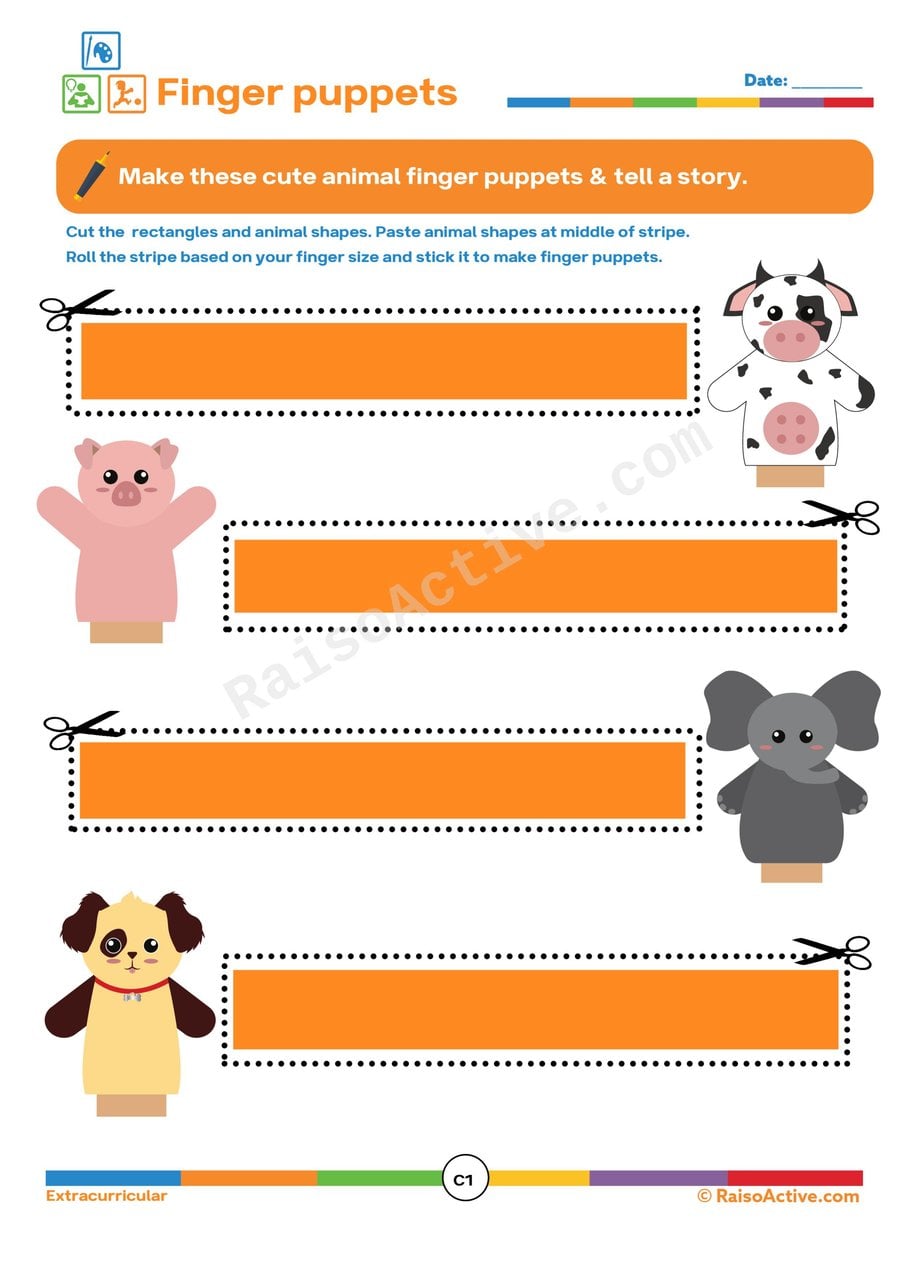
Make Finger Puppets! Fun Animal Craft Worksheet
Ages 3-5 · Preschool–Pre-KAges 3-5 · Nursery–ReceptionAges 3-5 · Nursery–LKGAges 3-5
This hands-on craft worksheet builds scissor control and fine motor precision in children ages 3-5 as they cut out animal shapes and rectangles, then roll and secure the rectangle into a puppet that fits their finger. The three-dimensional assembly step also introduces early spatial reasoning, since children must figure out how a flat shape becomes a wearable tube.

Learn India's National Symbols: A Dot-to-Dot Worksheet
Ages 3-5 · Preschool–Pre-KAges 3-5 · Nursery–ReceptionAges 3-5 · Nursery–LKGAges 3-5
Connecting numbered dots to reveal each national symbol builds fine motor control and number-sequence recognition in children ages 3-5, since they must find and connect dots in the correct numerical order to form a recognizable picture. As each symbol emerges from the dots, children also gain early familiarity with important national imagery and its name.
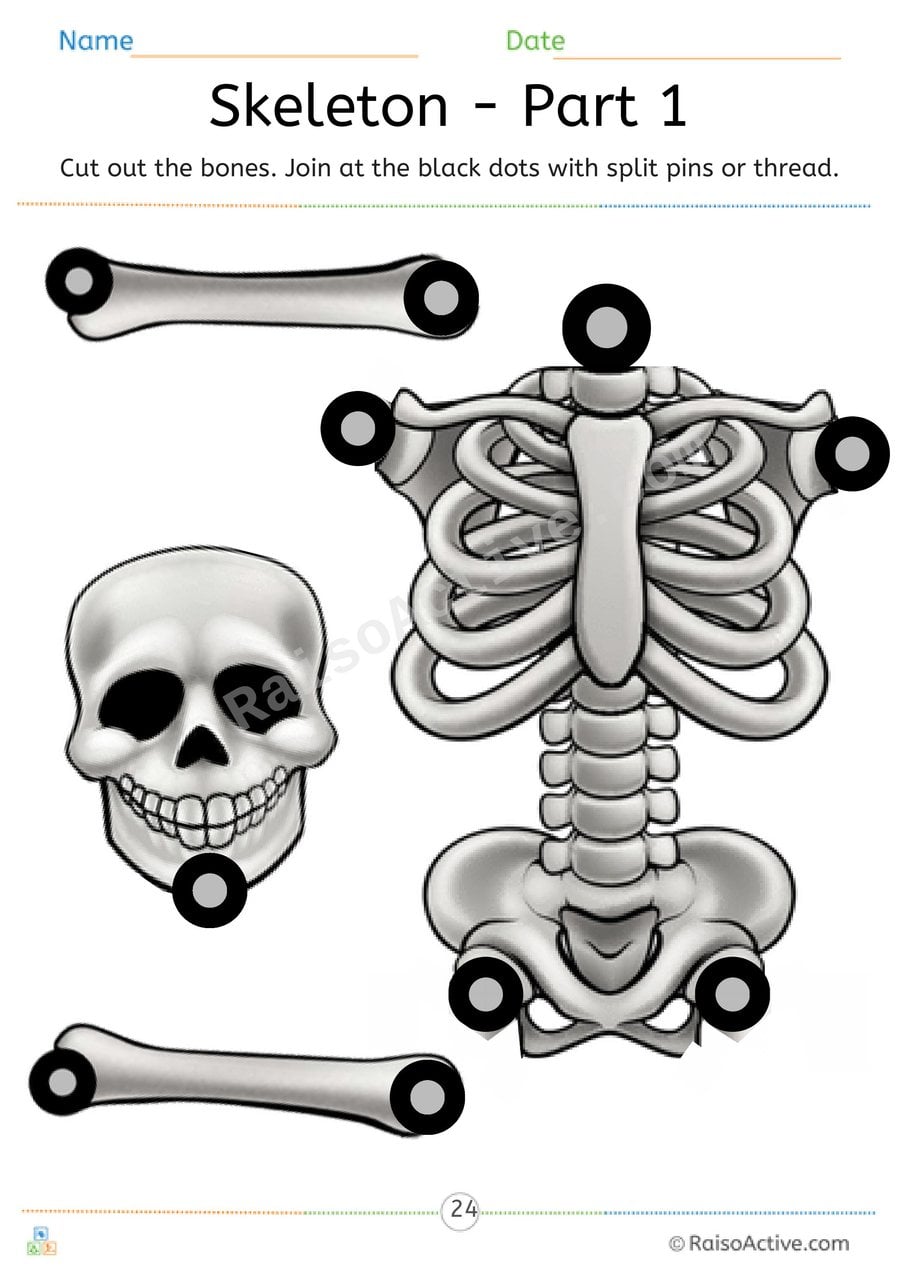
Skeleton Cut and Join Worksheet for Kids
Ages 3-5 · Preschool–Pre-KAges 3-5 · Nursery–ReceptionAges 3-5 · Nursery–LKGAges 3-5
This worksheet has children ages 3-5 cut out individual bone shapes and piece them together to assemble a skeleton, building scissor control and spatial reasoning as they figure out where each bone belongs relative to the others. Gluing the assembled bones onto a backing sheet also gives the activity a lasting, displayable result.
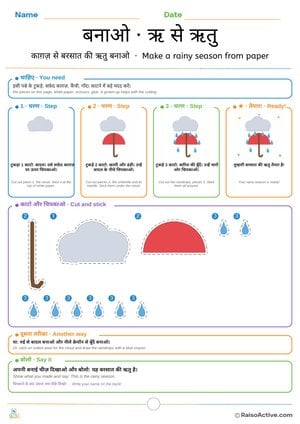
Make a Paper Rainy Season: Hindi Letter ऋ (ri) Cut and Stick Craft | बनाओ · ऋ से ऋतु
Ages 4-7 · Pre-K–Grade 1Ages 4-7 · Reception–Year 2Ages 4-7 · LKG–Class 1Ages 4-7
Children cut out the numbered pieces and stick them in order to make a rainy season scene with a cloud, umbrella and rain, then show it and say a full sentence about it. It links the letter ऋ with a real picture word, ऋतु (season), and practises scissor control and following steps.

Logic Grid Puzzle for Kids: Sort by Two Rules
Ages 4-7 · Pre-K–Grade 1Ages 4-7 · Reception–Year 2Ages 4-7 · LKG–Class 1Ages 4-7
Children sort eight numbered objects by two rules at once (big or small, striped or plain) and then use clues in a simple logic grid to work out which child has which pet. This builds classification and deductive reasoning.
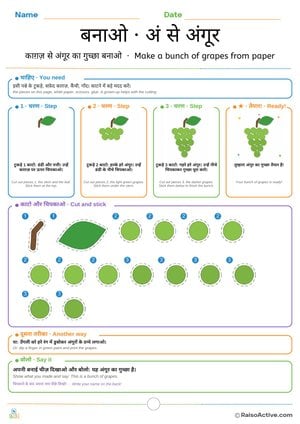
Make a Bunch of Paper Grapes: Hindi Letter अं (am) Cut and Stick Craft | बनाओ · अं से अंगूर
Ages 4-7 · Pre-K–Grade 1Ages 4-7 · Reception–Year 2Ages 4-7 · LKG–Class 1Ages 4-7
Children cut out the numbered pieces and stick them in order to make a bunch of grapes from light and dark green circles, then show it and say a full sentence about it. It links the letter अं with a real picture word, अंगूर, and practises scissor control and following steps.

Coding Shapes Worksheet for Preschoolers: Cut and Paste Patterns
Ages 3-5 · Preschool–Pre-KAges 3-5 · Nursery–ReceptionAges 3-5 · Nursery–LKGAges 3-5
This cut-and-paste activity has children ages 3-5 recreate shape sequences shown in sample boxes, combining shape recognition with the same ordered, step-by-step thinking used in beginner coding concepts. Cutting out individual shapes and arranging them in the correct sequence also builds fine motor precision and spatial planning.

Color Santa Claus for Christmas! A Fun Coloring Worksheet
Ages 3-5 · Preschool–Pre-KAges 3-5 · Nursery–ReceptionAges 3-5 · Nursery–LKGAges 3-5
This Santa Claus coloring page lets children ages 3-5 practice crayon control and color selection on a large, familiar holiday figure, building confidence with fine motor coloring skills before moving to smaller or more detailed pictures. Choosing colors for Santa's suit, hat, and beard also opens up conversation about the holiday season and familiar seasonal symbols.
Guides for this topic

Age-Appropriate Problem-Solving Activities: Building Critical Thinkers from the Ground Up
Discover fun, age-appropriate problem-solving activities for children ages 1-8. Build critical thinking, logic, and reasoning skills through play-based learning.

How to Teach Cutting Skills to Your Preschooler: A Complete Guide for Parents and Teachers
Help your child master scissor skills safely. Expert guide covering readiness signs, scissor types, progression steps, pre-cutting exercises, and fun practice ideas for ages 2-6.
Christmas and Winter Activities That Combine Fun and Learning: Creating Magical Educational Experiences
Discover Christmas and winter activities that combine festive fun with real learning. Crafts, counting, literacy, and printable worksheets for ages 2 to 8 — perfect for home and school.
Reviews
Every worksheet for ages 3–5, no watermark
Members download the full library of 1,000+ worksheets and every activity pack without watermarks or daily limits. One year costs ₹999 in India or $20 elsewhere.
See membership plansOr download any worksheet free with a watermark (5 a day).