Cut and Paste a Fun Fish Worksheet for Preschoolers
Building a fish from separate cut-out shapes glued onto a large circle base gives children practice constructing a picture within a defined boundary, teaching them to fit and arrange pieces inside a fixed space rather than a blank page. This kind of bounded assembly at ages 3-5 builds spatial planning alongside the usual scissor and gluing practice.
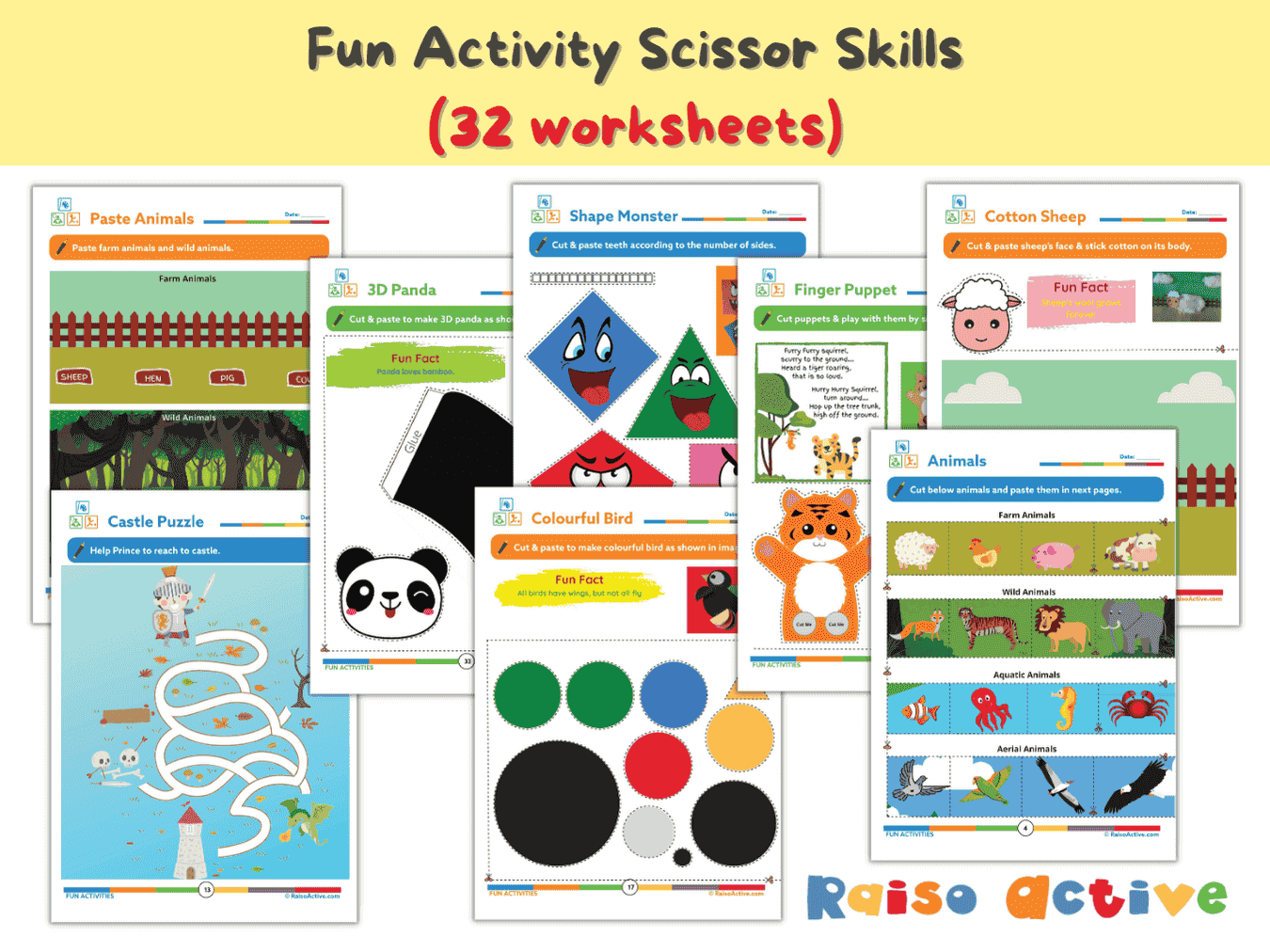
Part of the pack
Preschool Scissor Skills Activity Book: Fine Motor & Craft Fun for Ages 3-6
This is page 21 of the pack. Ages 3-6 · Preschool–KindergartenAges 3-6 · Nursery–Year 1Ages 3-6 · Nursery–UKGAges 3-6
Curriculum
- Fine Motor > Scissor Skills & Cutting
How to use this worksheet
Cut out the shapes provided along their dotted lines. Glue the shapes onto the large circle to assemble the fish, using the example image as a guide for where the fins, tail, and eye belong. Work through the pieces one at a time, checking the picture before gluing each one. Let your child color the fish and its surroundings once assembly is complete.
Materials needed
- Scissors
- Glue
- Crayons or Markers
Extension activities
- 1Draw other sea creatures, like an octopus or a starfish, to keep the fish company.
- 2Talk about how fish use their fins and tail to swim, moving your hand like a fish in the air.
- 3Make a simple ocean scene with blue paper or fabric for the finished fish to 'swim' in.
- 4Visit an aquarium, or look at pictures of one, and compare real fish to the finished craft.
- 5Count how many separate pieces it took to build the finished fish.

Written by
Hemsweta Jain · Teacher Cheena
MBA and Early Childhood Educator, teaching since 2014 · Founder of RaisoActive, Mumbai
Every RaisoActive worksheet is designed and checked by the founder before publishing.
Published · Last reviewed
More from Preschool Scissor Skills Activity Book: Fine Motor & Craft Fun for Ages 3-6

Paste the Animals: Aerial and Aquatic Animals Worksheet
Ages 3-5 · Preschool–Pre-KAges 3-5 · Nursery–ReceptionAges 3-5 · Nursery–LKGAges 3-5
Sorting animals into 'aerial' and 'aquatic' groups introduces slightly more advanced classification vocabulary than a simple farm-versus-wild sort, asking children to think about how an animal moves and where it lives — in the air or in water — rather than just what it looks like. This kind of habitat-based categorization at ages 3-5 builds early science thinking alongside the scissor and gluing practice.

3D Cow Craft: Cut and Paste Worksheet for Preschoolers
Ages 3-5 · Preschool–Pre-KAges 3-5 · Nursery–ReceptionAges 3-5 · Nursery–LKGAges 3-5
Folding the body piece and gluing the head onto it to build a standing 3D cow reinforces the same fold-and-assemble sequencing as other 3D animal crafts, while giving children a satisfying, playable result rather than a flat picture. The paired fun fact about cows adds a small piece of real-world knowledge that makes the craft memorable beyond the cutting and gluing itself.

Cut and Match Worksheet: Fun Matching Activity for Kids
Ages 3-5 · Preschool–Pre-KAges 3-5 · Nursery–ReceptionAges 3-5 · Nursery–LKGAges 3-5
This general cut-and-match activity has children ages 3-5 cut out individual cards or pieces and then figure out which ones go together, combining scissor control with visual matching and comparison skills. Because the matching pairs aren't pre-arranged the way they are in a simple line-tracing matching worksheet, your child also has to search and compare across all the pieces, a slightly more demanding visual task.

Community Helpers Transport Match Worksheet for Preschoolers
Ages 3-5 · Preschool–Pre-KAges 3-5 · Nursery–ReceptionAges 3-5 · Nursery–LKGAges 3-5
Cutting out vehicles and matching them to the correct community helper builds scissor control in children ages 3-5 while reinforcing social studies knowledge about which vehicle goes with which job, like a fire truck for a firefighter or a mail truck for a mail carrier. This pairing task asks children to reason about real-world associations rather than simply matching identical pictures, a small step up in thinking from basic matching.

Parent's Guide to Scissor Skills: Fun Activities for Preschoolers
Ages 3-5 · Preschool–Pre-KAges 3-5 · Nursery–ReceptionAges 3-5 · Nursery–LKGAges 3-5
This guide walks through the progression of scissor skills that most children move through between ages 3 and 5 — from squeezing to snip fringe, to cutting straight lines, to curves — rather than a single activity, so it teaches adults how to sequence practice rather than teaching a single skill directly. Following the staged activities (tearing, spraying water, punching holes, snipping with chopsticks) builds the specific hand-strength and bilateral coordination that true scissor cutting depends on before a child is even handed scissors.
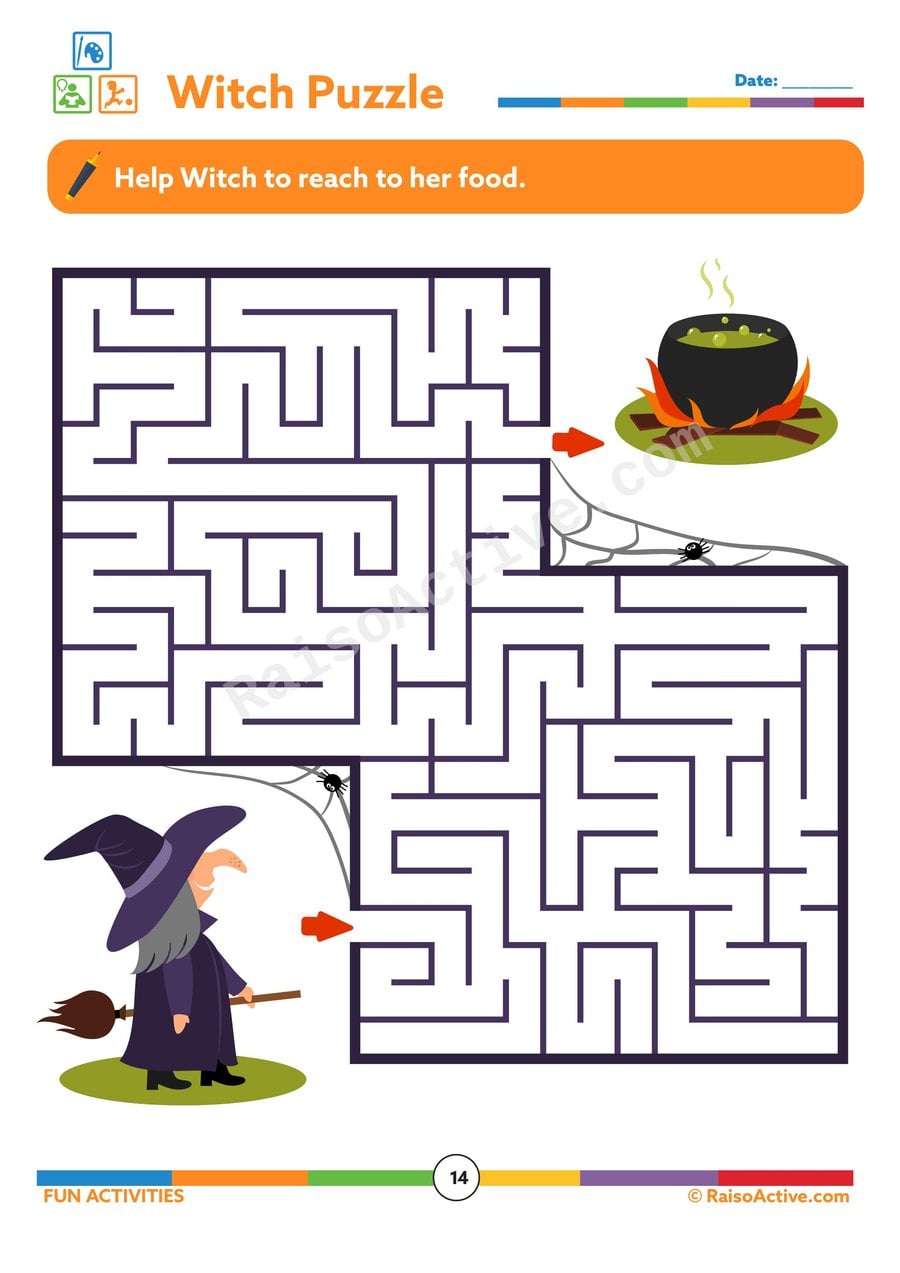
Witch's Maze: Help the Witch Find Her Food!
Ages 3-5 · Preschool–Pre-KAges 3-5 · Nursery–ReceptionAges 3-5 · Nursery–LKGAges 3-5
Guiding the witch through the maze to her food asks children to visually scan several possible paths, mentally rule out the dead ends, and commit to a single route — an early form of planning and problem-solving that lays groundwork for later logical thinking. The seasonal Halloween theme also makes this a fun, low-pressure way to build maze-solving skills without it feeling like schoolwork.
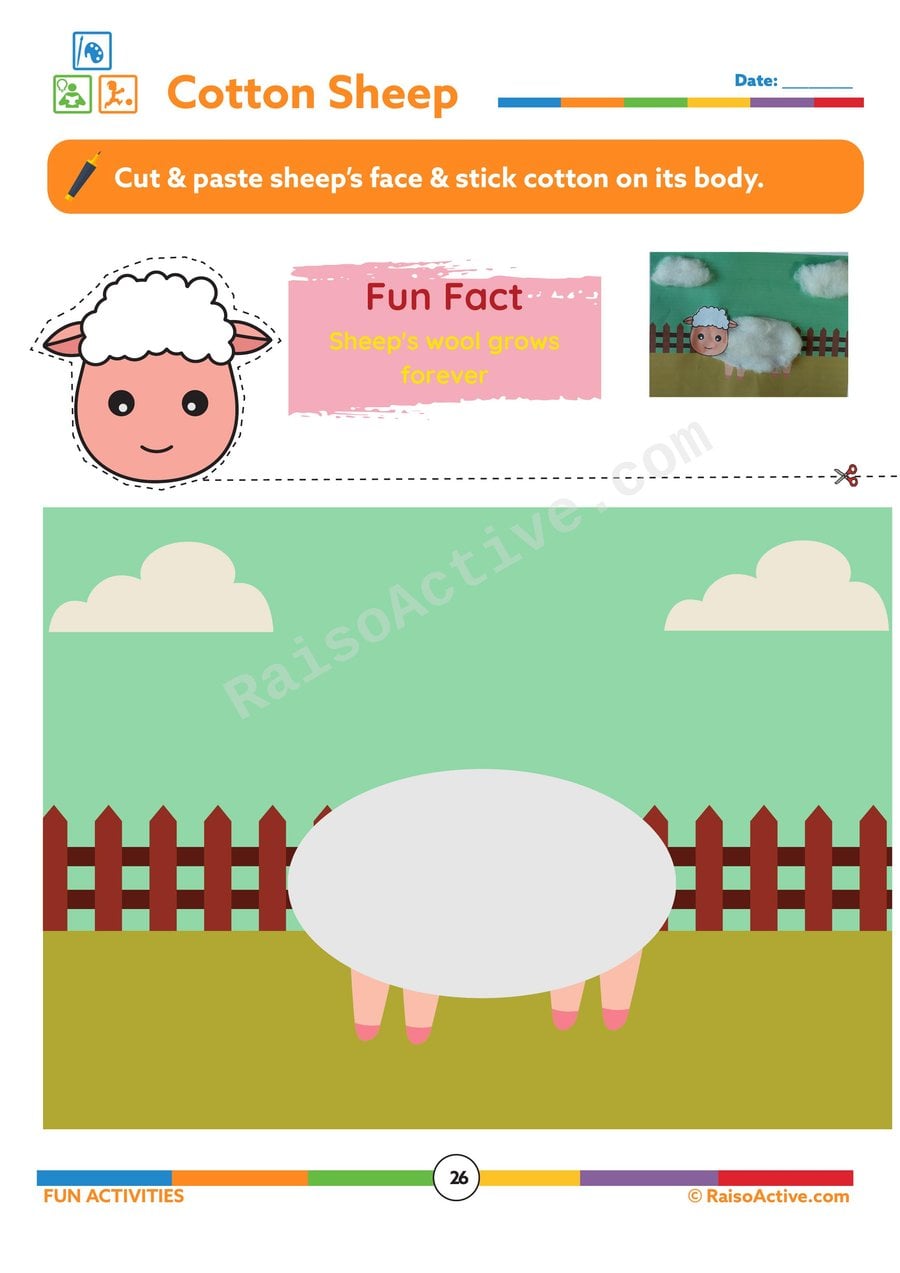
Cotton Sheep Craft Worksheet for Preschoolers
Ages 3-5 · Preschool–Pre-KAges 3-5 · Nursery–ReceptionAges 3-5 · Nursery–LKGAges 3-5
Cutting out the sheep's face and body and then pressing on individual cotton balls to build up its wool gives children a satisfying sensory contrast — the crisp, controlled cut of paper versus the soft, pinch-and-place texture of cotton — while practicing pincer grip strength needed for holding a pencil. The sheep theme also opens up simple, concrete conversation about where wool comes from.

Snow Maze Adventure: Help the Girl Reach the Igloo!
Ages 3-5 · Preschool–Pre-KAges 3-5 · Nursery–ReceptionAges 3-5 · Nursery–LKGAges 3-5
This worksheet helps young learners develop crucial pre-writing skills by guiding a pencil through a visual path. Children will practice fine motor control and hand-eye coordination as they navigate the snow maze. They'll also engage in early critical thinking, planning a route to help the girl reach the igloo.
Related worksheets
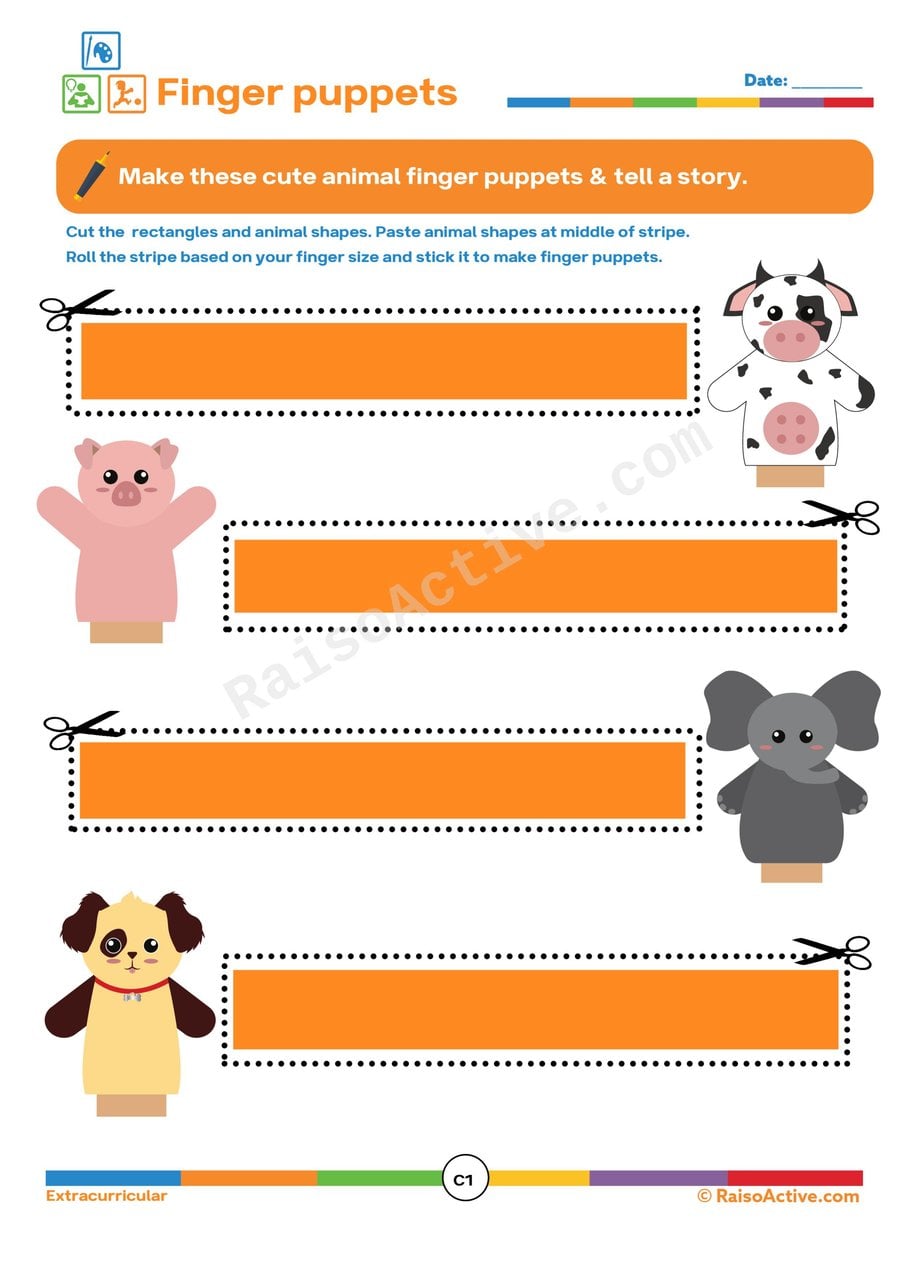
Make Finger Puppets! Fun Animal Craft Worksheet
Ages 3-5 · Preschool–Pre-KAges 3-5 · Nursery–ReceptionAges 3-5 · Nursery–LKGAges 3-5
This hands-on craft worksheet builds scissor control and fine motor precision in children ages 3-5 as they cut out animal shapes and rectangles, then roll and secure the rectangle into a puppet that fits their finger. The three-dimensional assembly step also introduces early spatial reasoning, since children must figure out how a flat shape becomes a wearable tube.

Color Santa Claus for Christmas! A Fun Coloring Worksheet
Ages 3-5 · Preschool–Pre-KAges 3-5 · Nursery–ReceptionAges 3-5 · Nursery–LKGAges 3-5
This Santa Claus coloring page lets children ages 3-5 practice crayon control and color selection on a large, familiar holiday figure, building confidence with fine motor coloring skills before moving to smaller or more detailed pictures. Choosing colors for Santa's suit, hat, and beard also opens up conversation about the holiday season and familiar seasonal symbols.

Happy Easter Coloring Card Worksheet for Preschoolers
Ages 3-5 · Preschool–Pre-KAges 3-5 · Nursery–ReceptionAges 3-5 · Nursery–LKGAges 3-5
Coloring the Easter egg and bunny images on this fold-into-a-card worksheet gives children ages 3-5 practice with controlled crayon strokes and color choice, while the act of turning their artwork into a card for someone else introduces an early sense of purpose and gift-giving. Because the finished piece becomes a keepsake rather than just a worksheet, children also build pride and motivation to complete their coloring carefully. This blends fine motor practice with a first taste of creating something meaningful for another person.
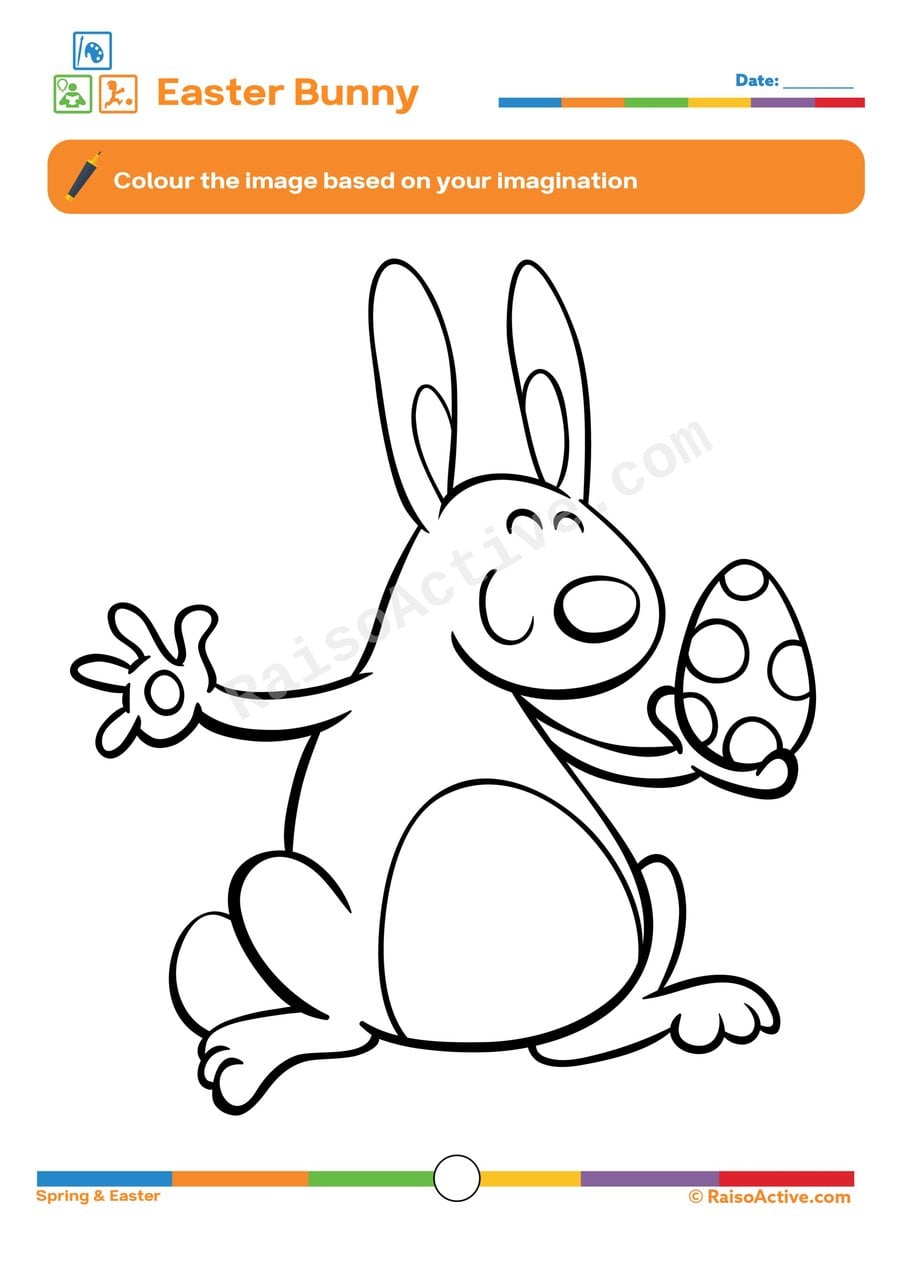
Easter Bunny Coloring Worksheet for Kids
Ages 3-5 · Preschool–Pre-KAges 3-5 · Nursery–ReceptionAges 3-5 · Nursery–LKGAges 3-5
Children ages 3-5 build fine motor control and creative expression while coloring an Easter bunny and egg using crayons or colored pencils. Open-ended coloring tasks like this one, without a strict color code, give children room to make independent choices while still practicing the pencil grip and control needed for later writing.
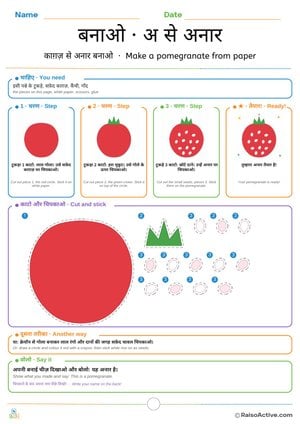
Make a Paper Pomegranate: Hindi Letter अ Craft | बनाओ · अ से अनार
Ages 3-7 · Preschool–Grade 1Ages 3-7 · Nursery–Year 2Ages 3-7 · Nursery–Class 1Ages 3-7
Children cut out the pieces, put them together following three step pictures and make a paper pomegranate. Saying the word अनार as they make it links the sound अ to something they built themselves.

Human Skeleton Cut and Join Worksheet for Preschoolers
Ages 4-6 · Pre-K–KindergartenAges 4-6 · Reception–Year 1Ages 4-6 · LKG–UKGAges 4-6
This hands-on worksheet introduces children ages 4-6 to basic human anatomy as they cut out individual bone shapes, like the skull, ribs, arms, and legs, and assemble them into a complete skeleton. Beyond scissor control, the activity requires spatial reasoning, since children must figure out where each bone belongs relative to the others to build an accurate body shape.

Spider Count Worksheet: Finger Painting Fun for Halloween!
Ages 3-5 · Preschool–Pre-KAges 3-5 · Nursery–ReceptionAges 3-5 · Nursery–LKGAges 3-5
Dabbing fingertips or Q-tips in paint to create the exact number of spiders shown on each web gives children ages 3-5 hands-on practice with one-to-one counting while also strengthening the small hand muscles needed for pencil control later on. Because each web has a target number, children must count as they paint rather than just decorating freely, which reinforces number recognition in a playful, low-pressure way. The messy, sensory nature of finger painting also supports focus and engagement at an age when seated paper-and-pencil tasks can be hard to sustain.

Trace the Numbers 1-9 Worksheet for Preschoolers
Ages 3-5 · Preschool–Pre-KAges 3-5 · Nursery–ReceptionAges 3-5 · Nursery–LKGAges 3-5
Tracing the numerals 1 through 9 gives children ages 3-5 repeated, guided practice with the specific pencil strokes each number requires, building the fine motor control and muscle memory needed for independent number writing. Because tracing follows a fixed, correct path, it also reinforces accurate numeral recognition, helping children tell visually similar digits apart.
Guides for this topic

Celebrating Diversity: How to Incorporate Cultural Awareness in Learning Activities for Young Children
Practical cultural awareness activities for young children aged 2-8. Explore Indian festivals, world cultures, food, music, and crafts to teach diversity and inclusion.
How to Teach Cutting Skills to Your Preschooler: A Complete Guide for Parents and Teachers
Help your child master scissor skills safely. Expert guide covering readiness signs, scissor types, progression steps, pre-cutting exercises, and fun practice ideas for ages 2-6.
What Supplies Do You Need for Preschool Learning at Home: The Complete Essential Guide
Discover the essential supplies for preschool learning at home — from crayons and counting blocks to sensory bins. Affordable options available in India for ages 2–6.
Reviews
Every worksheet for ages 3–5, no watermark
Members download the full library of 1,000+ worksheets and every activity pack without watermarks or daily limits. One year costs ₹999 in India or $20 elsewhere.
See membership plansOr download any worksheet free with a watermark (5 a day).