Giraffe Cut and Paste Worksheet for Preschoolers
Assembling a giraffe from separate cut-out parts and gluing them onto a background gives children practice with proportion and placement — a giraffe's long neck and small head need to be positioned correctly relative to its body — which is a slightly more advanced spatial task than assembling rounder, simpler animals. This craft at ages 3-5 builds scissor control alongside basic animal knowledge.
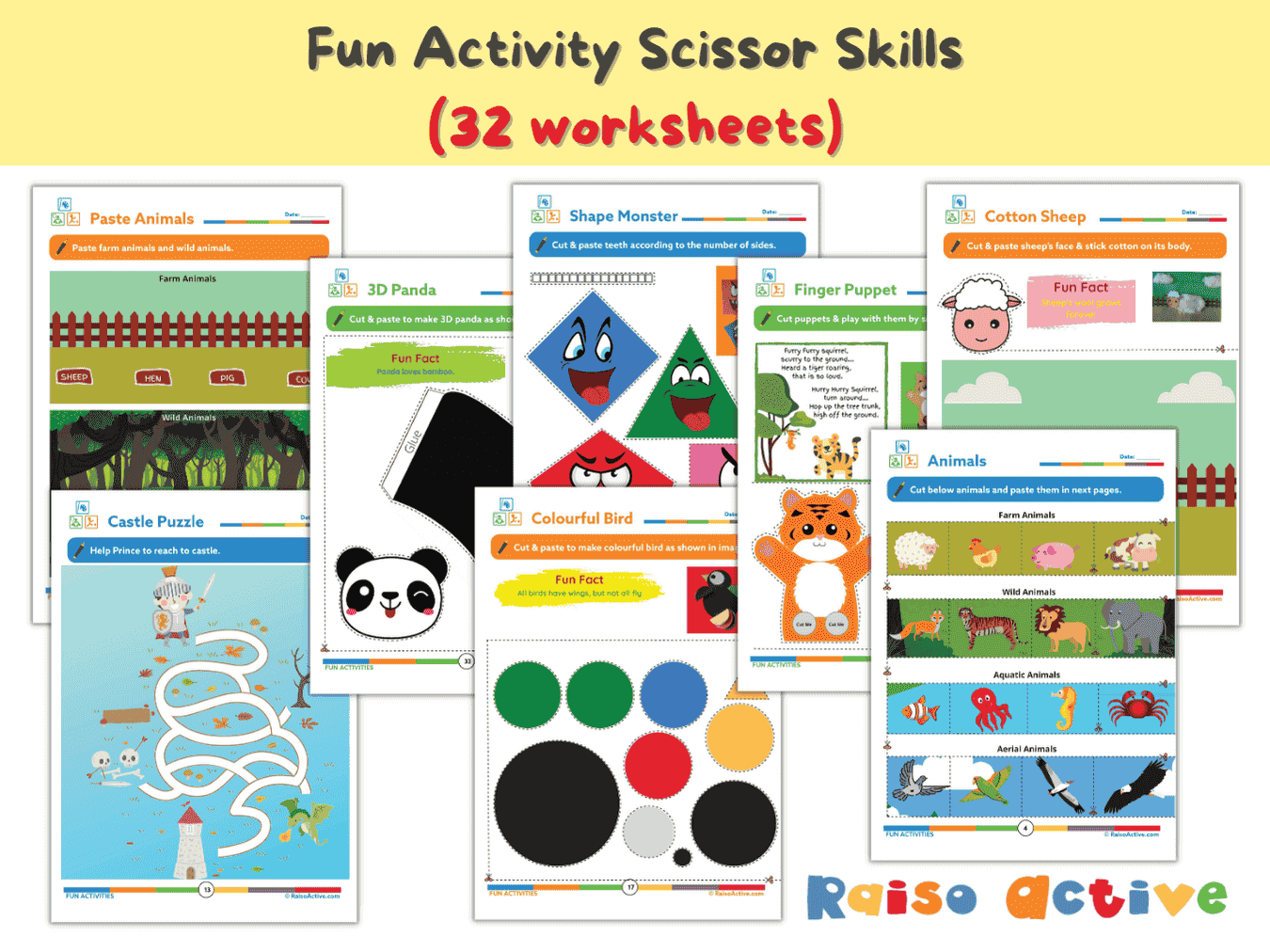
Part of the pack
Preschool Scissor Skills Activity Book: Fine Motor & Craft Fun for Ages 3-6
This is page 20 of the pack. Ages 3-6 · Preschool–KindergartenAges 3-6 · Nursery–Year 1Ages 3-6 · Nursery–UKGAges 3-6
Curriculum
- Fine Motor > Scissor Skills & Cutting
How to use this worksheet
Cut out the giraffe parts along the dotted lines, including the long neck piece. Glue the parts onto the red background provided, starting with the body and adding the neck, head, and legs in the correct positions as shown in the example. Encourage your child to check the proportions against the example picture before gluing each piece down. Let them add spots or extra details with crayons or markers once the giraffe is assembled.
Materials needed
- Scissors
- Glue
- Crayons or Markers
Extension activities
- 1Talk about why giraffes have such long necks and what they use them for.
- 2Draw a background scene of tall trees for the giraffe to reach its neck into.
- 3Make a simple giraffe mask out of paper and wear it during pretend play.
- 4Compare the giraffe's height to other animals using pictures or a size-comparison book.
- 5Read a short book about giraffes or watch a brief video about their life in the wild.

Written by
Hemsweta Jain · Teacher Cheena
MBA and Early Childhood Educator, teaching since 2014 · Founder of RaisoActive, Mumbai
Every RaisoActive worksheet is designed and checked by the founder before publishing.
Published · Last reviewed
More from Preschool Scissor Skills Activity Book: Fine Motor & Craft Fun for Ages 3-6

Shape Monster Cut & Paste Worksheet for Preschoolers
Ages 3-5 · Preschool–Pre-KAges 3-5 · Nursery–ReceptionAges 3-5 · Nursery–LKGAges 3-5
Counting the sides of each shape monster and pasting on the matching number of paper teeth turns shape recognition into a hands-on counting task, linking geometry (how many sides a triangle, square, or pentagon has) directly to number sense. This combination is exactly the kind of cross-skill practice that helps 3-5 year olds move from just naming shapes to understanding what actually defines them.

Ladybug Cut and Paste Worksheet for Preschoolers
Ages 3-5 · Preschool–Pre-KAges 3-5 · Nursery–ReceptionAges 3-5 · Nursery–LKGAges 3-5
Cutting out and assembling separate ladybug pieces into one recognizable insect builds scissor control on small, rounded shapes and reinforces the idea of constructing a whole picture from parts, similar to other animal-assembly crafts. The ladybug theme also gives a simple, concrete opening to talk about insect features like spots and wings.

3D Pig Craft: Cut and Paste Worksheet for Preschoolers
Ages 3-5 · Preschool–Pre-KAges 3-5 · Nursery–ReceptionAges 3-5 · Nursery–LKGAges 3-5
Assembling this 3D pig involves cutting, folding the main body, gluing tabs, and attaching a separate head and tail — a longer instruction sequence than most flat crafts — which builds children's ability to hold and execute several steps in order. At ages 3-5, successfully following this kind of multi-step build is an early form of the executive function skills needed for more complex tasks later in school.
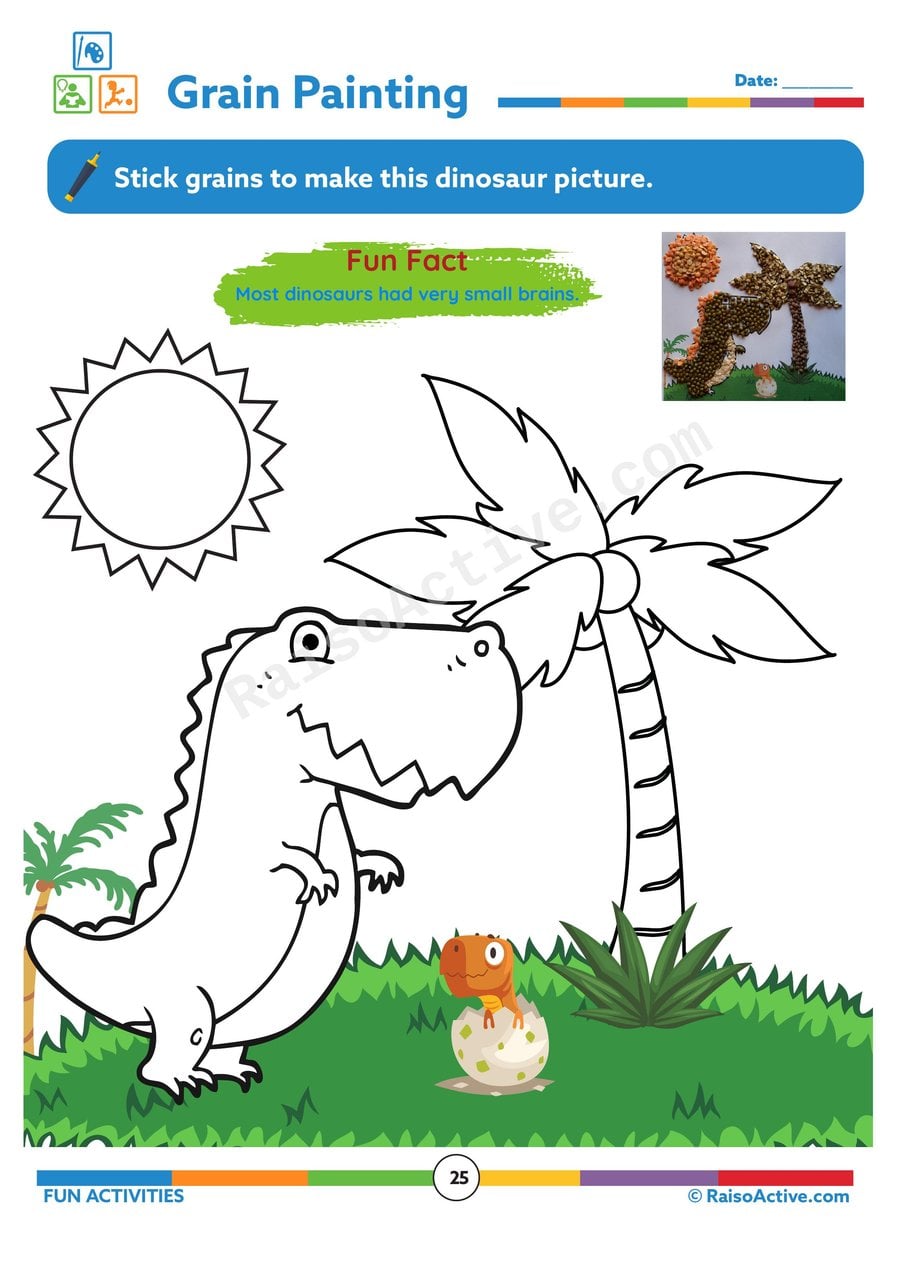
Dinosaur Grain Painting Worksheet for Kids
Ages 3-5 · Preschool–Pre-KAges 3-5 · Nursery–ReceptionAges 3-5 · Nursery–LKGAges 3-5
Sticking individual grains like rice or lentils onto a dinosaur outline is a sensory-rich fine motor task that asks for a precise pinch-and-place motion very different from painting or crayon coloring, building the same small-muscle control used later for holding scissors and a pencil. The tactile variety of different grains also gives young children valuable sensory input that supports attention and focus.

Castle Puzzle: Cut and Assemble the Castle Worksheet for Kids
Ages 3-5 · Preschool–Pre-KAges 3-5 · Nursery–ReceptionAges 3-5 · Nursery–LKGAges 3-5
Cutting a picture into puzzle pieces and reassembling them asks 3-5 year olds to hold a mental image of the whole picture while working with fragments of it — an early visual-spatial reasoning skill that supports later map-reading and geometry. The castle theme also gives a natural jumping-off point for imaginative play and vocabulary about towers, drawbridges, and moats.

Funny Clown Craft: Cut and Paste Worksheet for Kids
Ages 3-5 · Preschool–Pre-KAges 3-5 · Nursery–ReceptionAges 3-5 · Nursery–LKGAges 3-5
Curling colorful paper strips into loops and gluing the ends together builds a different kind of fine motor control than straight cutting — bending, holding, and pinching paper into a curved shape while applying glue — which strengthens hand coordination in a new way. Assembling the finished clown from these loops also reinforces color recognition and the idea of building something bigger from repeated smaller pieces.

Snail Craft: Cut, Fold, and Paste Worksheet for Preschoolers
Ages 3-5 · Preschool–Pre-KAges 3-5 · Nursery–ReceptionAges 3-5 · Nursery–LKGAges 3-5
Building this snail adds a folding step to the usual cut-and-paste routine — the orange circle must be folded before it becomes the shell — which asks 3-5 year olds to think in three dimensions and follow a short sequence of instructions rather than a single action. This kind of multi-step assembly builds the sequencing and instruction-following skills children will lean on heavily once they start following classroom directions.

Snow Maze Adventure: Help the Girl Reach the Igloo!
Ages 3-5 · Preschool–Pre-KAges 3-5 · Nursery–ReceptionAges 3-5 · Nursery–LKGAges 3-5
This worksheet helps young learners develop crucial pre-writing skills by guiding a pencil through a visual path. Children will practice fine motor control and hand-eye coordination as they navigate the snow maze. They'll also engage in early critical thinking, planning a route to help the girl reach the igloo.
Related worksheets
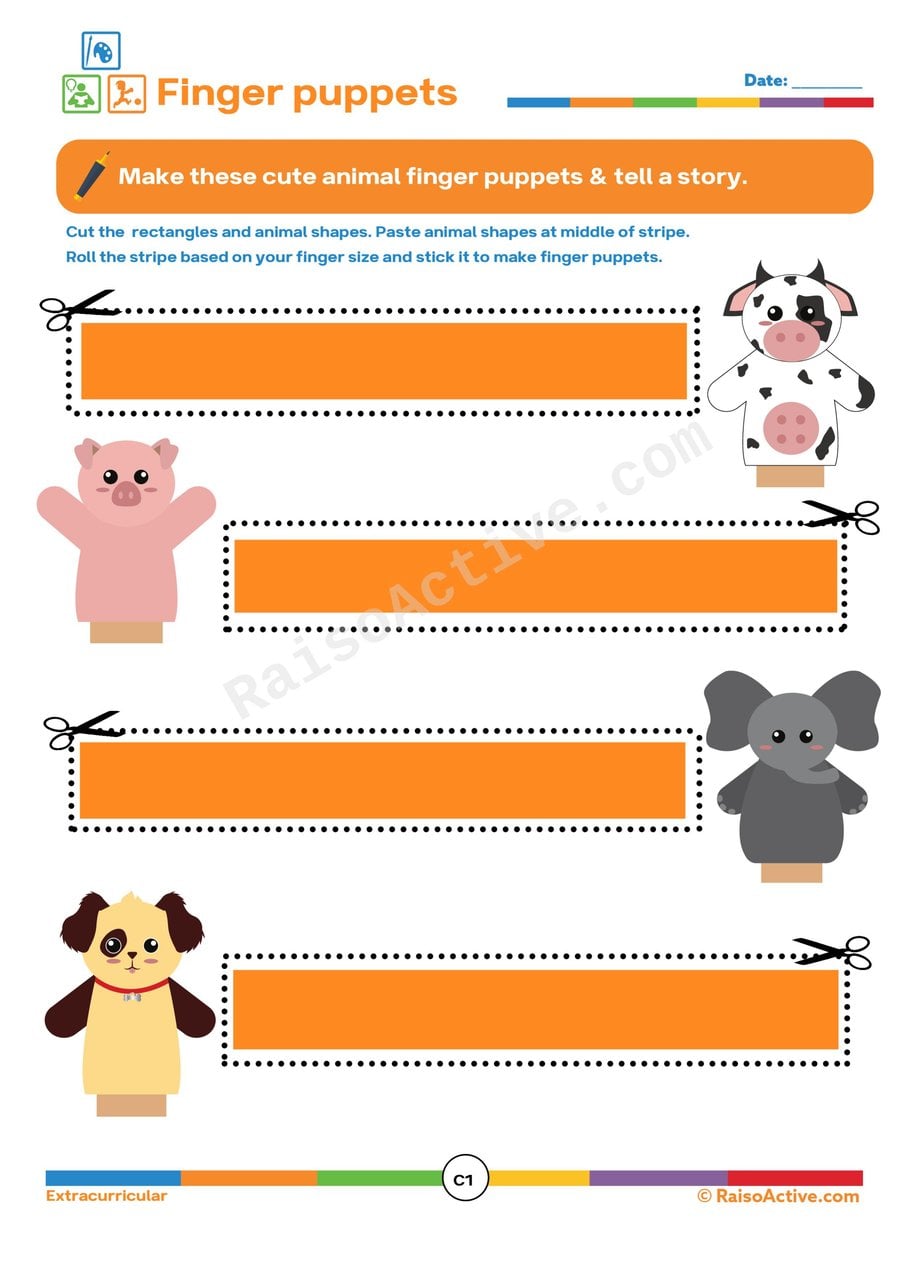
Make Finger Puppets! Fun Animal Craft Worksheet
Ages 3-5 · Preschool–Pre-KAges 3-5 · Nursery–ReceptionAges 3-5 · Nursery–LKGAges 3-5
This hands-on craft worksheet builds scissor control and fine motor precision in children ages 3-5 as they cut out animal shapes and rectangles, then roll and secure the rectangle into a puppet that fits their finger. The three-dimensional assembly step also introduces early spatial reasoning, since children must figure out how a flat shape becomes a wearable tube.
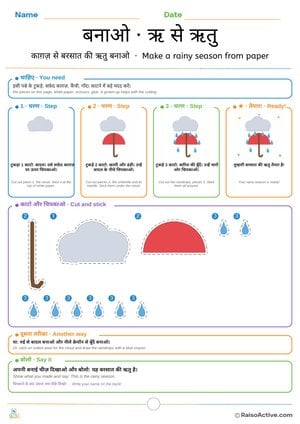
Make a Paper Rainy Season: Hindi Letter ऋ (ri) Cut and Stick Craft | बनाओ · ऋ से ऋतु
Ages 4-7 · Pre-K–Grade 1Ages 4-7 · Reception–Year 2Ages 4-7 · LKG–Class 1Ages 4-7
Children cut out the numbered pieces and stick them in order to make a rainy season scene with a cloud, umbrella and rain, then show it and say a full sentence about it. It links the letter ऋ with a real picture word, ऋतु (season), and practises scissor control and following steps.

Spring Sudoku Worksheet: Cut and Paste Puzzle for Kids
Ages 4-6 · Pre-K–KindergartenAges 4-6 · Reception–Year 1Ages 4-6 · LKG–UKGAges 4-6
Placing cut-out pictures into a sudoku-style grid so that no image repeats in any row, column, or box teaches children ages 4-6 early logical reasoning and systematic thinking, since they must check multiple directions before deciding where each piece belongs. Cutting out the small picture squares beforehand also builds scissor control and hand-eye coordination. Together, this combines a pre-math logic puzzle with fine motor practice in a single spring-themed activity.

Identify Flags: Cut and Paste Matching Worksheet for Kids
Ages 4-6 · Pre-K–KindergartenAges 4-6 · Reception–Year 1Ages 4-6 · LKG–UKGAges 4-6
Children ages 4-6 continue building flag recognition and matching skills with this worksheet, practicing the fine motor precision of cutting small flag shapes accurately before pairing them with the correct country. Repeated matching activities like this one help move flag recognition from a one-time exercise into lasting visual memory.
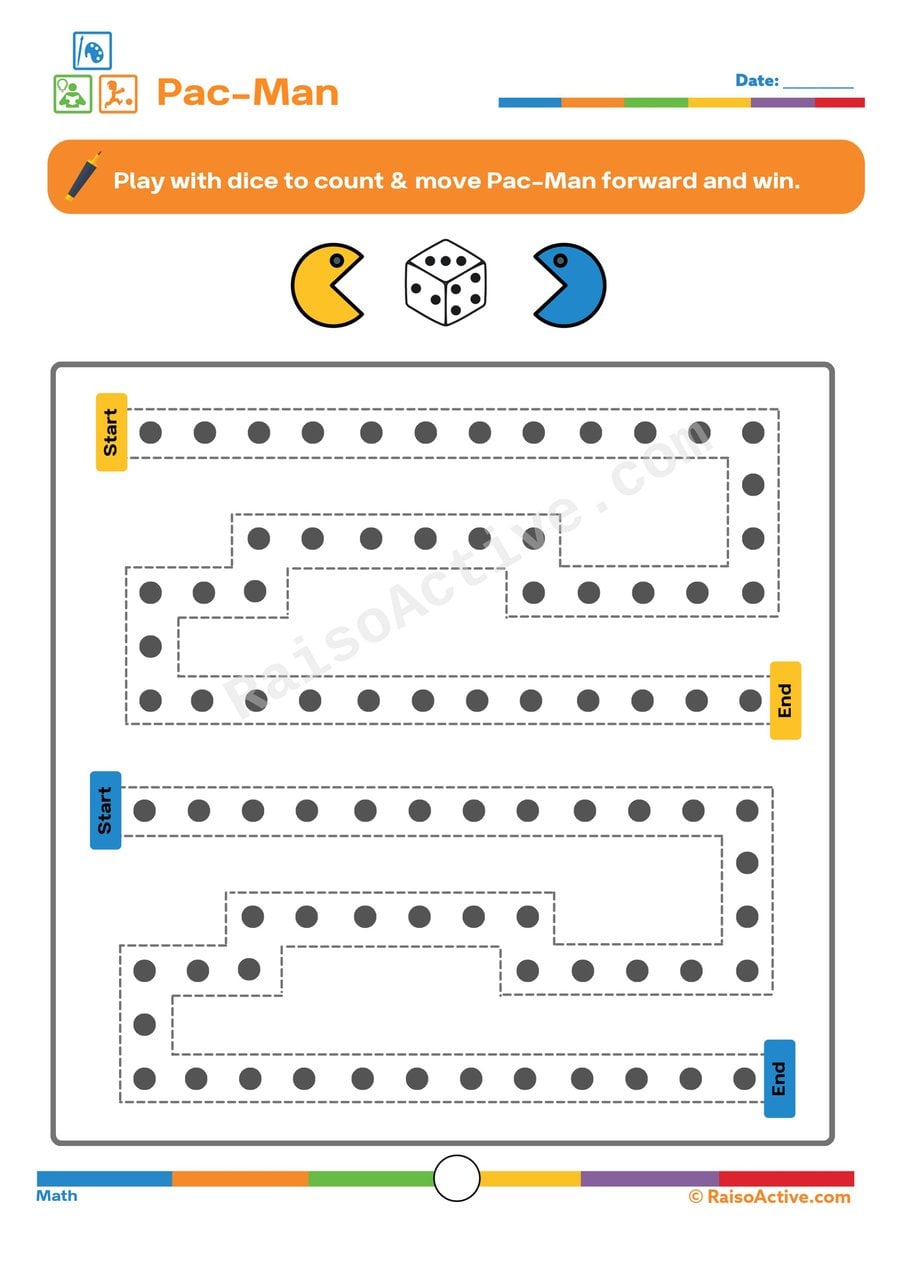
Pac-Man Maze Worksheet: Count and Move!
Ages 3-5 · Preschool–Pre-KAges 3-5 · Nursery–ReceptionAges 3-5 · Nursery–LKGAges 3-5
This dice-counting maze gives children ages 3-5 repeated practice matching a rolled number to the correct number of moves, reinforcing accurate counting under a bit of playful pressure. Tracking Pac-Man's current position after each roll also builds short-term spatial memory, since children must remember where they left off before moving again.
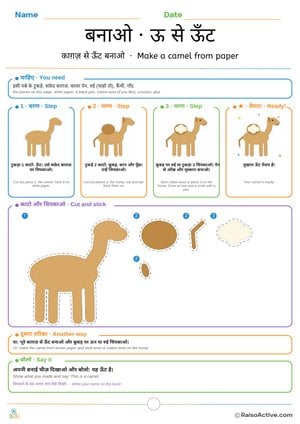
Make a Paper Camel: Hindi Letter ऊ Craft | बनाओ · ऊ से ऊँट
Ages 3-7 · Preschool–Grade 1Ages 3-7 · Nursery–Year 2Ages 3-7 · Nursery–Class 1Ages 3-7
Children cut out the pieces, put them together following three step pictures and make a paper camel. Saying the word ऊँट as they make it links the sound ऊ to something they built themselves.
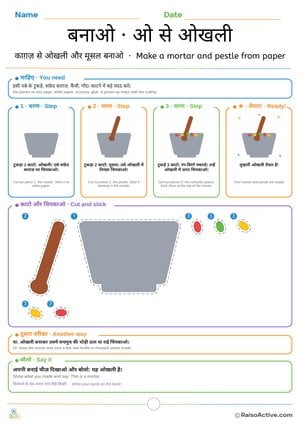
Make a Paper Mortar and Pestle: Hindi Letter ओ (o) Cut and Stick Craft | बनाओ · ओ से ओखली
Ages 4-7 · Pre-K–Grade 1Ages 4-7 · Reception–Year 2Ages 4-7 · LKG–Class 1Ages 4-7
Children cut out the numbered pieces and stick them in order to make a mortar and pestle with colourful spices, then show it and say a full sentence about it. It links the letter ओ with a real picture word, ओखली, and practises scissor control and following steps.

Identify Flags Worksheet: Cut and Paste Matching Activity
Ages 4-6 · Pre-K–KindergartenAges 4-6 · Reception–Year 1Ages 4-6 · LKG–UKGAges 4-6
This worksheet gives children ages 4-6 further practice matching country flags to their names, reinforcing visual discrimination and geography vocabulary through repetition with a new set of flags. Repeated matching practice across different worksheets helps move flag recognition from short-term recall into more durable, lasting memory.
Guides for this topic

Celebrating Diversity: How to Incorporate Cultural Awareness in Learning Activities for Young Children
Practical cultural awareness activities for young children aged 2-8. Explore Indian festivals, world cultures, food, music, and crafts to teach diversity and inclusion.
How to Teach Cutting Skills to Your Preschooler: A Complete Guide for Parents and Teachers
Help your child master scissor skills safely. Expert guide covering readiness signs, scissor types, progression steps, pre-cutting exercises, and fun practice ideas for ages 2-6.
What Supplies Do You Need for Preschool Learning at Home: The Complete Essential Guide
Discover the essential supplies for preschool learning at home — from crayons and counting blocks to sensory bins. Affordable options available in India for ages 2–6.
Reviews
Every worksheet for ages 3–5, no watermark
Members download the full library of 1,000+ worksheets and every activity pack without watermarks or daily limits. One year costs ₹999 in India or $20 elsewhere.
See membership plansOr download any worksheet free with a watermark (5 a day).