Castle Puzzle: Cut and Assemble the Castle Worksheet for Kids
Cutting a picture into puzzle pieces and reassembling them asks 3-5 year olds to hold a mental image of the whole picture while working with fragments of it — an early visual-spatial reasoning skill that supports later map-reading and geometry. The castle theme also gives a natural jumping-off point for imaginative play and vocabulary about towers, drawbridges, and moats.
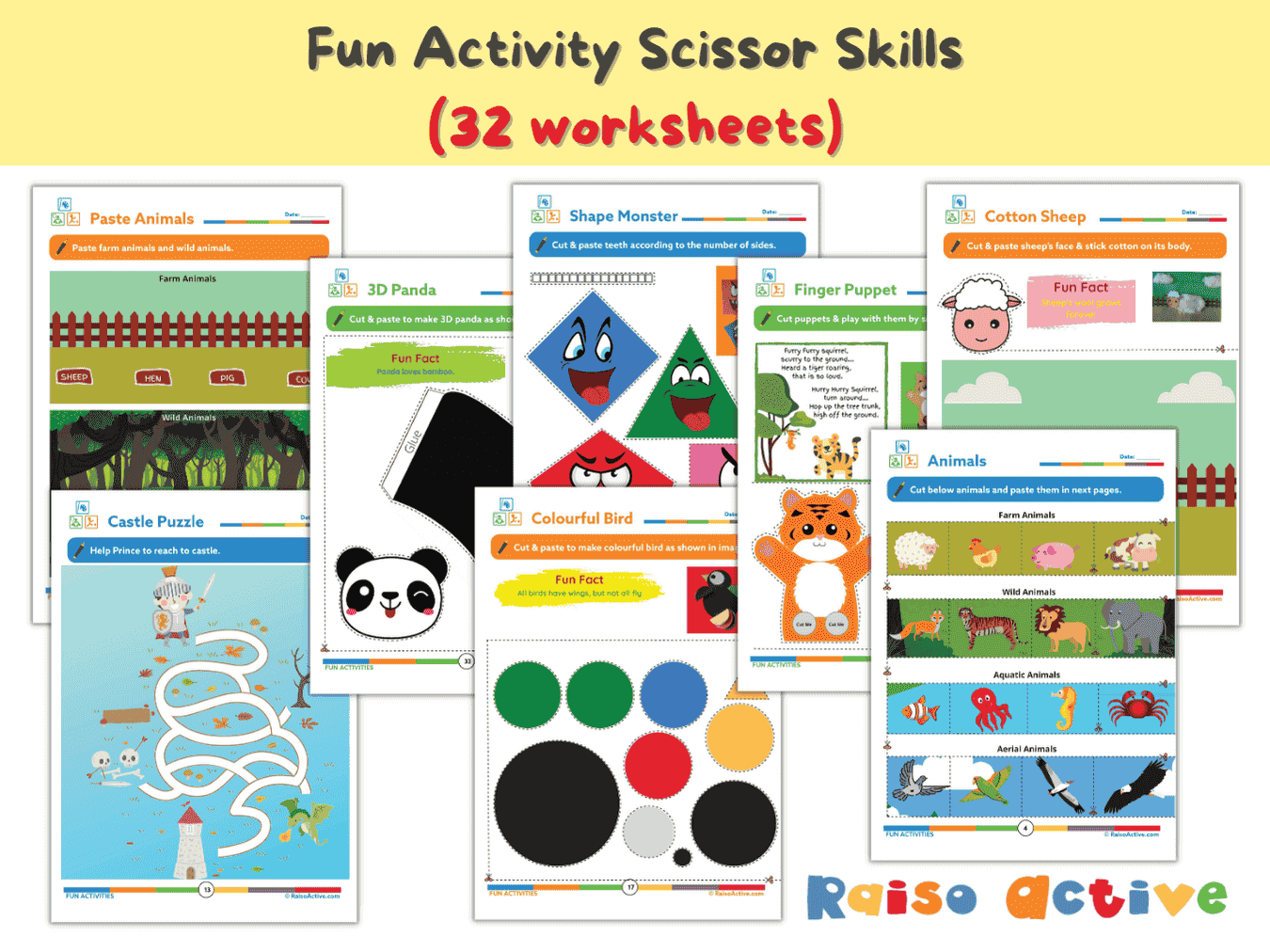
Part of the pack
Preschool Scissor Skills Activity Book: Fine Motor & Craft Fun for Ages 3-6
This is page 7 of the pack. Ages 3-6 · Preschool–KindergartenAges 3-6 · Nursery–Year 1Ages 3-6 · Nursery–UKGAges 3-6
Curriculum
- Fine Motor > Scissor Skills & Cutting
How to use this worksheet
Cut along the dotted lines to separate the picture into its puzzle pieces. Mix the pieces up on the table so your child has to actively search for the right fit rather than reassembling them in order. Have your child arrange the pieces back into the correct positions to recreate the complete castle image, referring to a picture of the finished castle if one is provided as a guide. Glue the pieces onto a blank sheet once the puzzle is solved correctly, if you'd like to keep the finished picture.
Materials needed
- Scissors
- Glue (optional)
Extension activities
- 1Talk about the different parts of a castle — towers, walls, a drawbridge — and what each one was for.
- 2Build a pretend castle out of blocks, cushions, or a cardboard box.
- 3Try mixing this puzzle with a second cut-up picture and see if your child can sort the pieces into two separate puzzles.
- 4Draw your own simple castle scene and imagine who might live there.
- 5Read a short story about a knight, princess, or dragon connected to castle life.

Written by
Hemsweta Jain · Teacher Cheena
MBA and Early Childhood Educator, teaching since 2014 · Founder of RaisoActive, Mumbai
Every RaisoActive worksheet is designed and checked by the founder before publishing.
Published · Last reviewed
Related worksheets

Halloween & Fall Fun Activity Pack Answer Key
Ages 4-8 · Pre-K–Grade 2Ages 4-8 · Reception–Year 3Ages 4-8 · LKG–Class 2Ages 4-8
Grown-ups can check every activity in the pack that has one right answer.
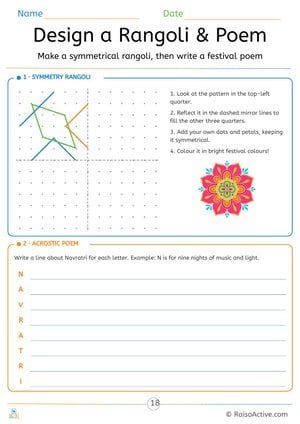
Navratri Symmetry Rangoli and Acrostic Poem
Ages 7-11 · Grade 2–Grade 3Ages 7-11 · Year 3–Year 4Ages 7-11 · Class 2–Class 3Ages 7-11
Children reflect a pattern in two mirror lines to complete a four-way symmetrical rangoli on a dot grid, add their own symmetrical details, and write an acrostic poem with one line for each letter of NAVRATRI.
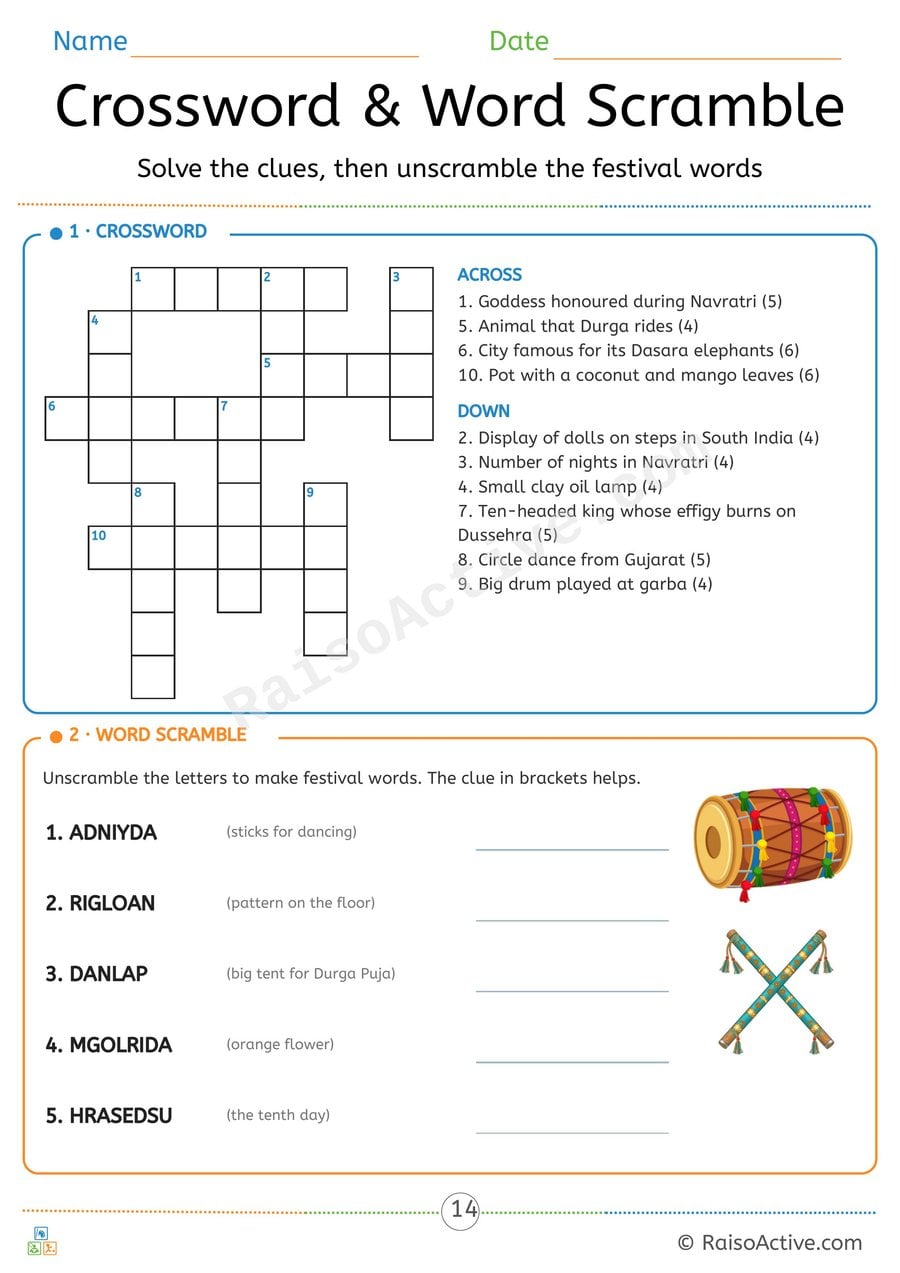
Navratri Crossword and Word Scramble
Ages 7-11 · Grade 2–Grade 3Ages 7-11 · Year 3–Year 4Ages 7-11 · Class 2–Class 3Ages 7-11
Children solve 10 crossword clues about the goddess, the lion, Mysuru, the kalash, Golu, diyas, Ravan, garba and the dhol, and unscramble five festival words with a clue for each.
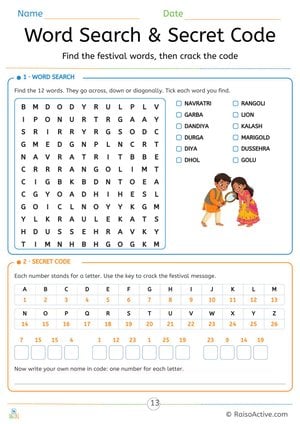
Navratri Word Search and Secret Code Puzzle
Ages 7-11 · Grade 2–Grade 3Ages 7-11 · Year 3–Year 4Ages 7-11 · Class 2–Class 3Ages 7-11
Children find 12 festival words that run across, down and diagonally, and use an A = 1 to Z = 26 key to decode a message about the festival. Then they write their own name in code.
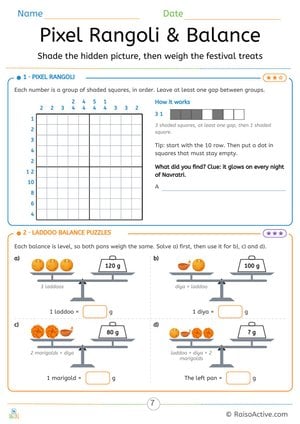
Pixel Rangoli and Laddoo Balance Puzzles for Navratri
Ages 7-11 · Grade 2–Grade 3Ages 7-11 · Year 3–Year 4Ages 7-11 · Class 2–Class 3Ages 7-11
Children use row and column clues to shade a 10 x 10 grid and reveal a hidden festival picture, then solve four balance puzzles in grams, using each answer to work out the next: a first step into algebra.
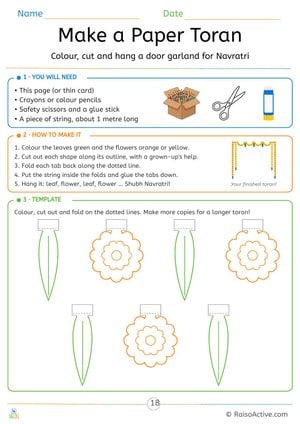
Make a Paper Toran: Navratri Craft Template
Ages 4-6 · Pre-K–KindergartenAges 4-6 · Reception–Year 1Ages 4-6 · LKG–UKGAges 4-6
Children follow step-by-step instructions to colour, cut, fold and glue a festival decoration, building scissor skills and fine motor control.

Trace the Numbers 1-9 Worksheet for Preschoolers
Ages 3-5 · Preschool–Pre-KAges 3-5 · Nursery–ReceptionAges 3-5 · Nursery–LKGAges 3-5
Tracing the numerals 1 through 9 gives children ages 3-5 repeated, guided practice with the specific pencil strokes each number requires, building the fine motor control and muscle memory needed for independent number writing. Because tracing follows a fixed, correct path, it also reinforces accurate numeral recognition, helping children tell visually similar digits apart.
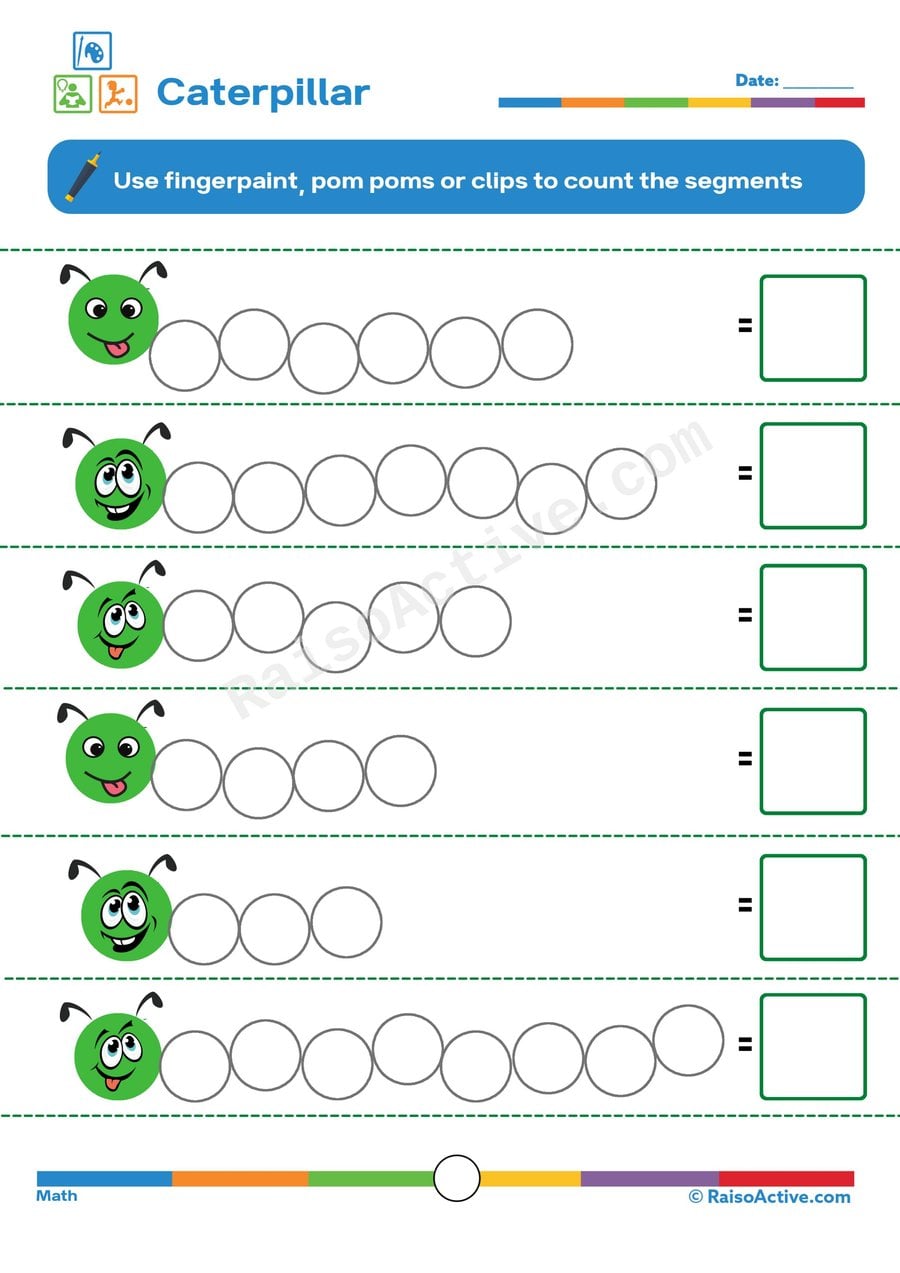
Caterpillar Counting Worksheet for Preschoolers
Ages 3-5 · Preschool–Pre-KAges 3-5 · Nursery–ReceptionAges 3-5 · Nursery–LKGAges 3-5
Counting the segments of each caterpillar teaches children ages 3-5 one-to-one correspondence — touching or marking each segment exactly once while saying a number — which is the core skill underlying accurate counting. Writing the final total in a box also connects the physical act of counting to its written numeral, reinforcing early number-writing practice.
Guides for this topic

Age-Appropriate Problem-Solving Activities: Building Critical Thinkers from the Ground Up
Discover fun, age-appropriate problem-solving activities for children ages 1-8. Build critical thinking, logic, and reasoning skills through play-based learning.

Celebrating Diversity: How to Incorporate Cultural Awareness in Learning Activities for Young Children
Practical cultural awareness activities for young children aged 2-8. Explore Indian festivals, world cultures, food, music, and crafts to teach diversity and inclusion.
How to Teach Cutting Skills to Your Preschooler: A Complete Guide for Parents and Teachers
Help your child master scissor skills safely. Expert guide covering readiness signs, scissor types, progression steps, pre-cutting exercises, and fun practice ideas for ages 2-6.
Reviews
Every worksheet for ages 3–5, no watermark
Members download the full library of 1,000+ worksheets and every activity pack without watermarks or daily limits. One year costs ₹999 in India or $20 elsewhere.
See membership plansOr download any worksheet free with a watermark (5 a day).