This or That? Cut and Paste Worksheet for Early Learners
Sorting objects into 'this' and 'that' categories helps children ages 3-5 connect an abstract grammar concept to something they can physically place and see, reinforcing the idea that these words describe relative closeness rather than a fixed rule. This early categorization practice also builds general sorting and decision-making skills that extend well beyond grammar itself.
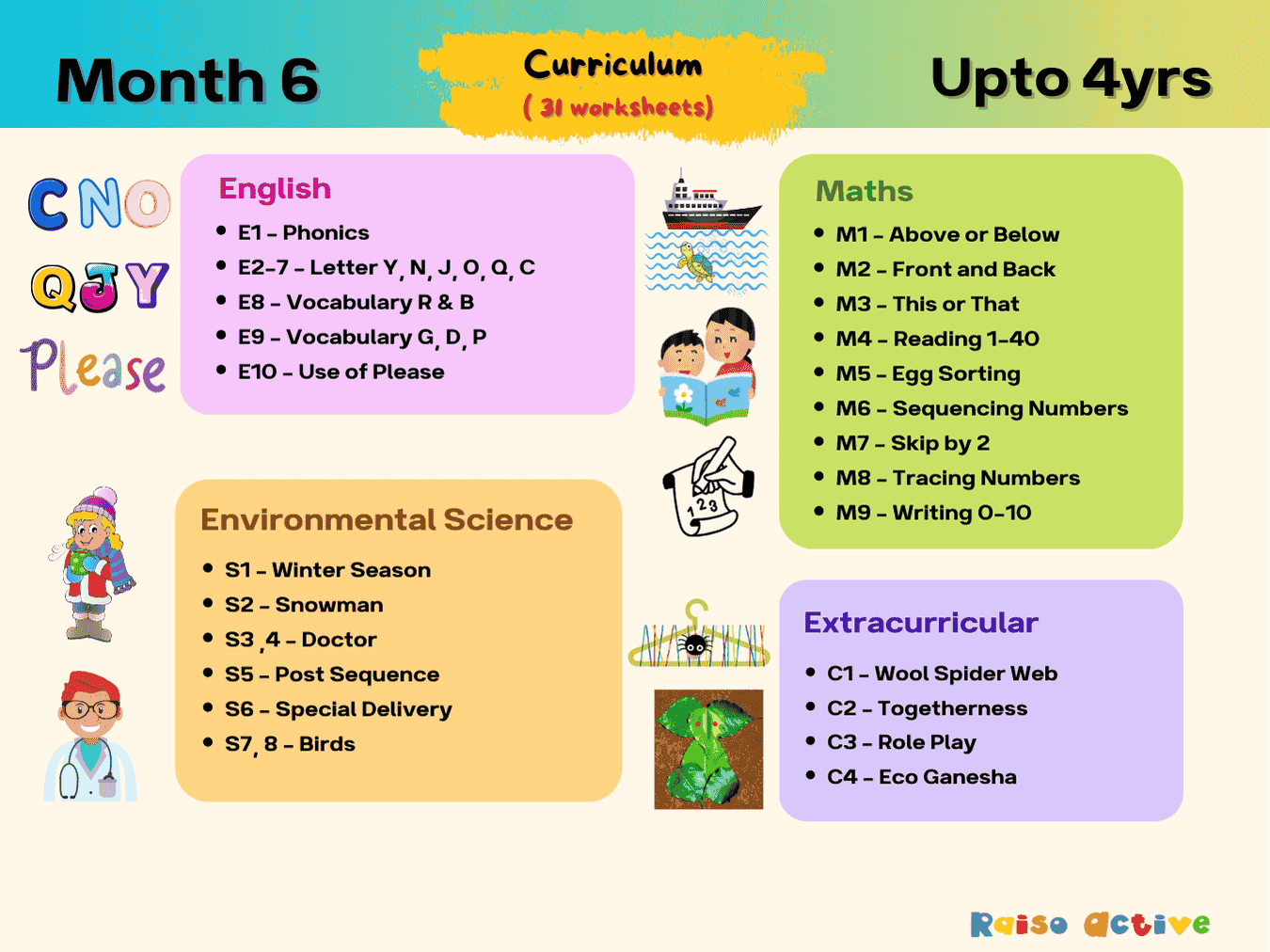
Part of the pack
Month 6: Toddler Preschool Foundational Skills | Ages Up to 4
This is page 16 of the pack. Ages 2-4 · PreschoolAges 2-4 · NurseryAges 2-4
Curriculum
- Cognitive - Attention > Sorting & Classifying
How to use this worksheet
Talk with your child about the meaning of 'this' (something close by) and 'that' (something farther away) using real objects in the room as quick examples. Have them cut out the pictures at the bottom of the page along the dotted lines. For each picture, ask your child to imagine whether that object would be near or far in a given scene, then decide which box it belongs in. Guide them to glue each picture into the correct 'this' or 'that' box, then review the finished page together, saying each object's name with its matching word.
Materials needed
- Scissors
- Glue
- Pencil
Extension activities
- 1Point to nearby and faraway objects around the house and practice describing them with 'this' and 'that.'
- 2Set up a simple sorting game using real toys placed close by versus across the room.
- 3Play a guessing game where you describe an object using only 'this' or 'that' as a clue and your child finds it.
- 4Have your child draw one object that would be a 'this' and one that would be a 'that' from their own perspective.
- 5Practice the words during daily routines, like handing over 'this' spoon versus pointing to 'that' cup on the shelf.

Written by
Hemsweta Jain · Teacher Cheena
MBA and Early Childhood Educator, teaching since 2014 · Founder of RaisoActive, Mumbai
Every RaisoActive worksheet is designed and checked by the founder before publishing.
Published · Last reviewed
More from Month 6: Toddler Preschool Foundational Skills | Ages Up to 4

Letter C Tracing and Coloring Worksheet for Preschoolers
Ages 3-5 · Preschool–Pre-KAges 3-5 · Nursery–ReceptionAges 3-5 · Nursery–LKGAges 3-5
This worksheet builds handwriting readiness by having children trace the letter C multiple times, while the coloring and picture-matching elements connect the letter's shape to its sound through familiar C words. For ages 3-5, repeating the same letter across tracing and picture activities on one page reinforces recognition from multiple angles in a single sitting.

Doctor Role Play Worksheet: Patient Emergency Form
Ages 3-5 · Preschool–Pre-KAges 3-5 · Nursery–ReceptionAges 3-5 · Nursery–LKGAges 3-5
Through pretend-play as a doctor filling out a patient form, children practice early functional writing and decision-making, selecting a 'patient,' identifying what hurts, and choosing a treatment. This kind of role play also builds empathy and emotional vocabulary around illness and care, helping ages 3-5 process what happens during real doctor visits in a low-stakes, imaginative context.

Help the Kid Reach the Doctor! A Fun Maze Worksheet
Ages 3-5 · Preschool–Pre-KAges 3-5 · Nursery–ReceptionAges 3-5 · Nursery–LKGAges 3-5
This maze worksheet builds fine motor control and pencil precision as children trace a winding path from a sick child to the doctor, while scanning for the correct route develops early planning and visual-spatial problem-solving. For ages 3-5, mazes are also a gentle way to introduce the idea that some situations, like feeling unwell, call for finding help from a trusted adult.
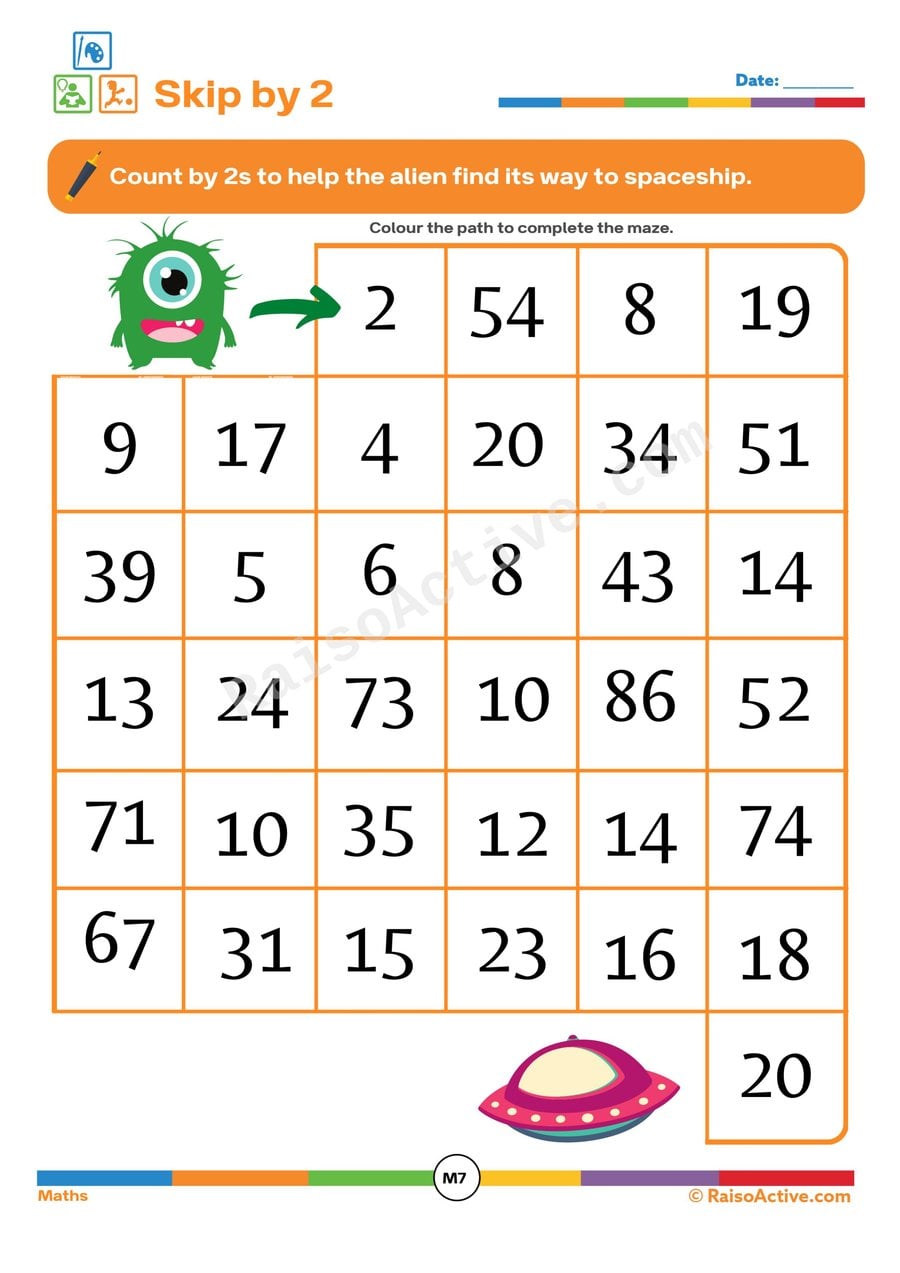
Alien Maze: Skip Counting by 2s Worksheet
Ages 3-5 · Preschool–Pre-KAges 3-5 · Nursery–ReceptionAges 3-5 · Nursery–LKGAges 3-5
This maze worksheet combines skip counting by 2s with fine motor tracing, requiring children to find and follow the correct numerical path from number 2 up through the sequence to reach the spaceship. For ages 3-5, this pairs a physical, engaging maze format with the numeracy skill of counting by 2s, which lays groundwork for later even-number recognition and faster counting strategies.
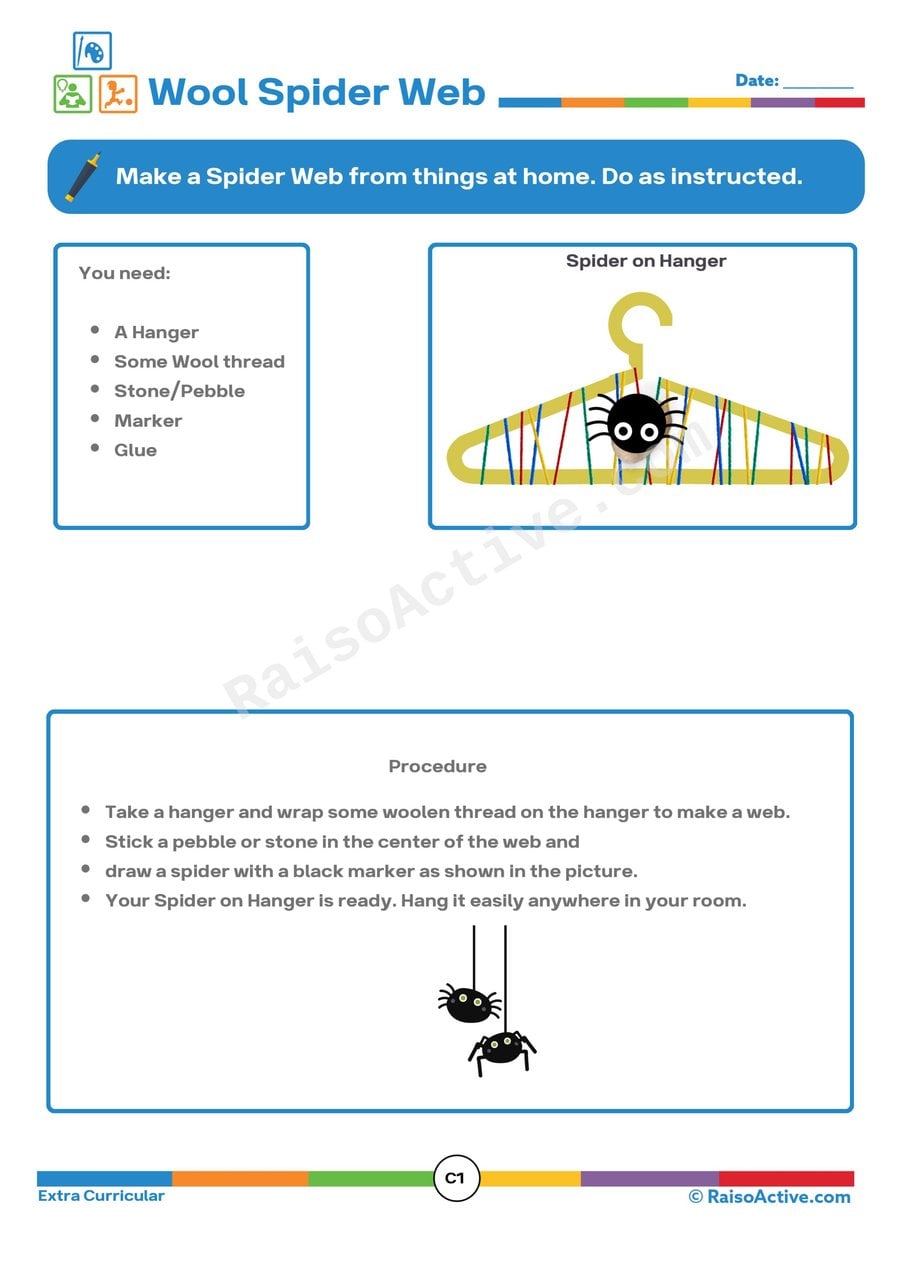
Wool Spider Web Craft: Follow the Instructions!
Ages 3-5 · Preschool–Pre-KAges 3-5 · Nursery–ReceptionAges 3-5 · Nursery–LKGAges 3-5
This step-by-step craft activity builds sequencing and instruction-following skills as children wrap wool thread around a hanger to form a web shape, while also strengthening fine motor coordination through the repetitive wrapping motion. For ages 3-5, following a multi-step process in the correct order is excellent practice for executive function skills that carry over into classroom instructions later on.
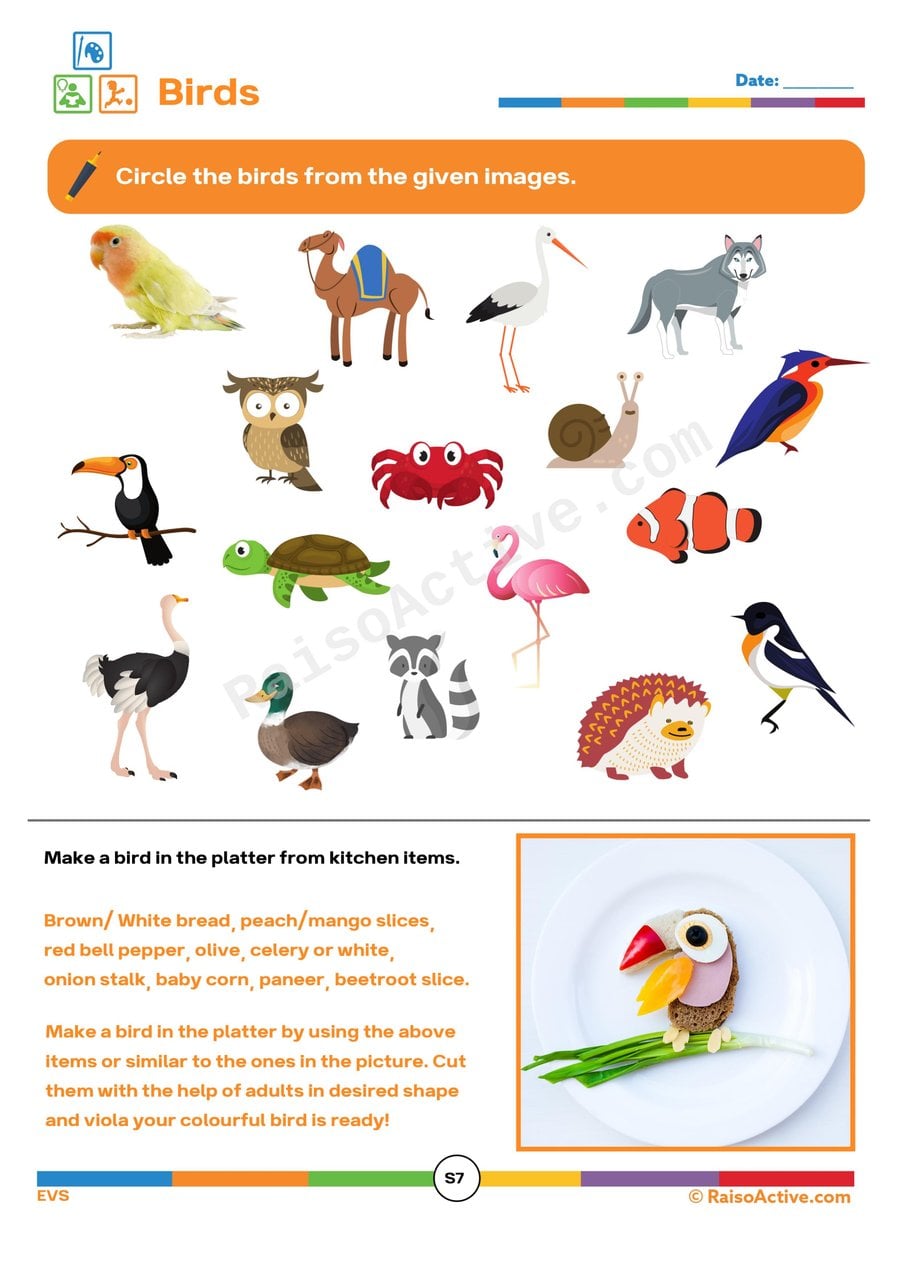
Bird Spotting Worksheet: Circle the Birds!
Ages 3-5 · Preschool–Pre-KAges 3-5 · Nursery–ReceptionAges 3-5 · Nursery–LKGAges 3-5
This worksheet builds visual discrimination and observation skills by asking children to scan a mixed picture and circle only the birds among other animals or objects, sharpening their ability to notice defining features like wings, feathers, or beaks. For ages 3-5, this kind of categorization by visual features is an early step toward broader scientific classification skills.

Match the Bird Shadows Worksheet for Preschoolers
Ages 3-5 · Preschool–Pre-KAges 3-5 · Nursery–ReceptionAges 3-5 · Nursery–LKGAges 3-5
Matching bird pictures to their correct shadows sharpens visual discrimination for children ages 3-5, requiring them to focus on outline and shape rather than color or detail, since a shadow strips away everything but silhouette. This kind of shape-matching task builds the careful observation skills that support later letter and word recognition, where subtle shape differences also matter.
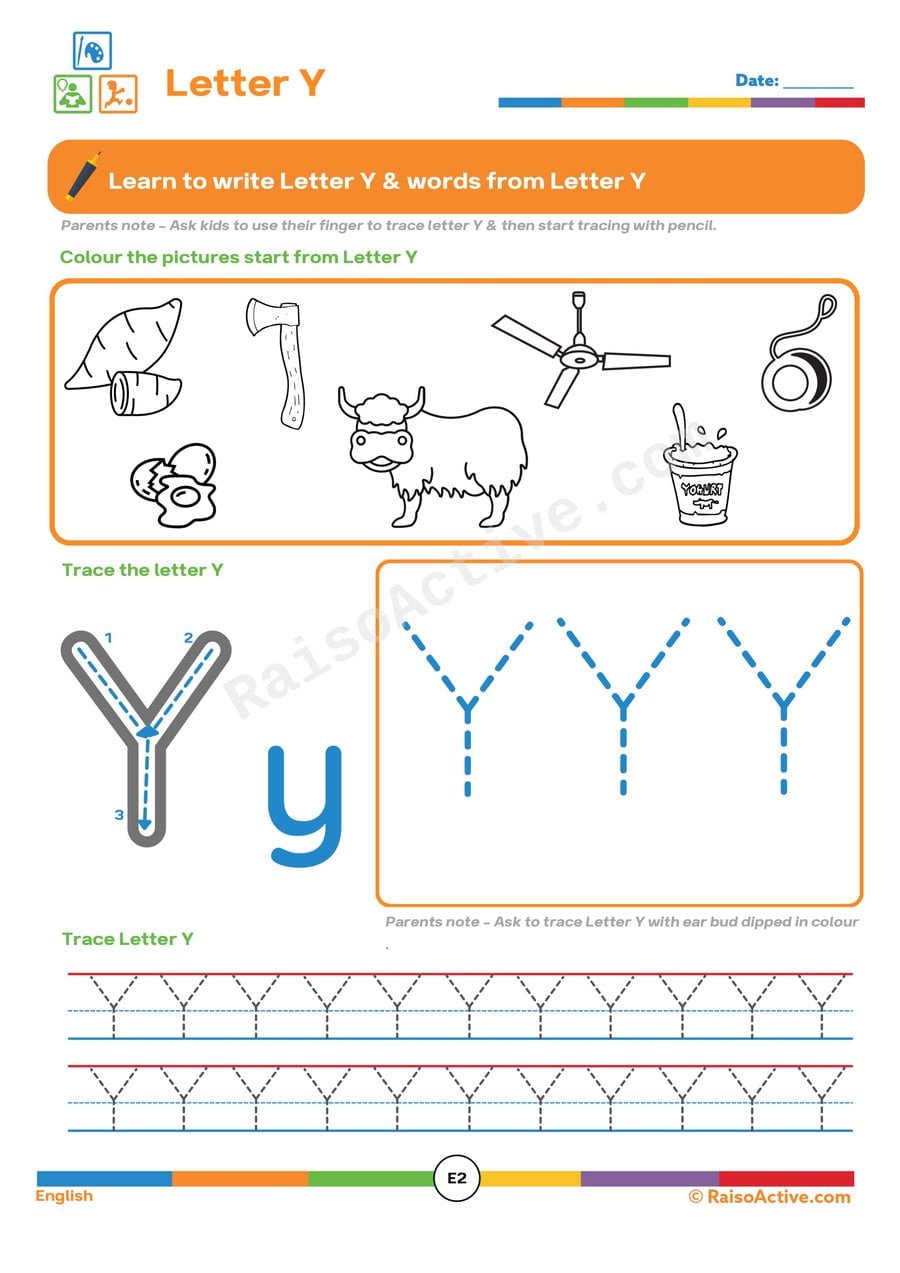
Letter Y Tracing Worksheet for Preschoolers
Ages 3-5 · Preschool–Pre-KAges 3-5 · Nursery–ReceptionAges 3-5 · Nursery–LKGAges 3-5
Tracing the uppercase and lowercase letter Y builds the fine motor control and pencil grip preschoolers need for handwriting, while linking the letter to words that start with its sound strengthens early phonemic awareness. For ages 3-5, repeated tracing also builds the visual memory needed to recognize the letter Y instantly, both in print and eventually in their own writing.
Related worksheets
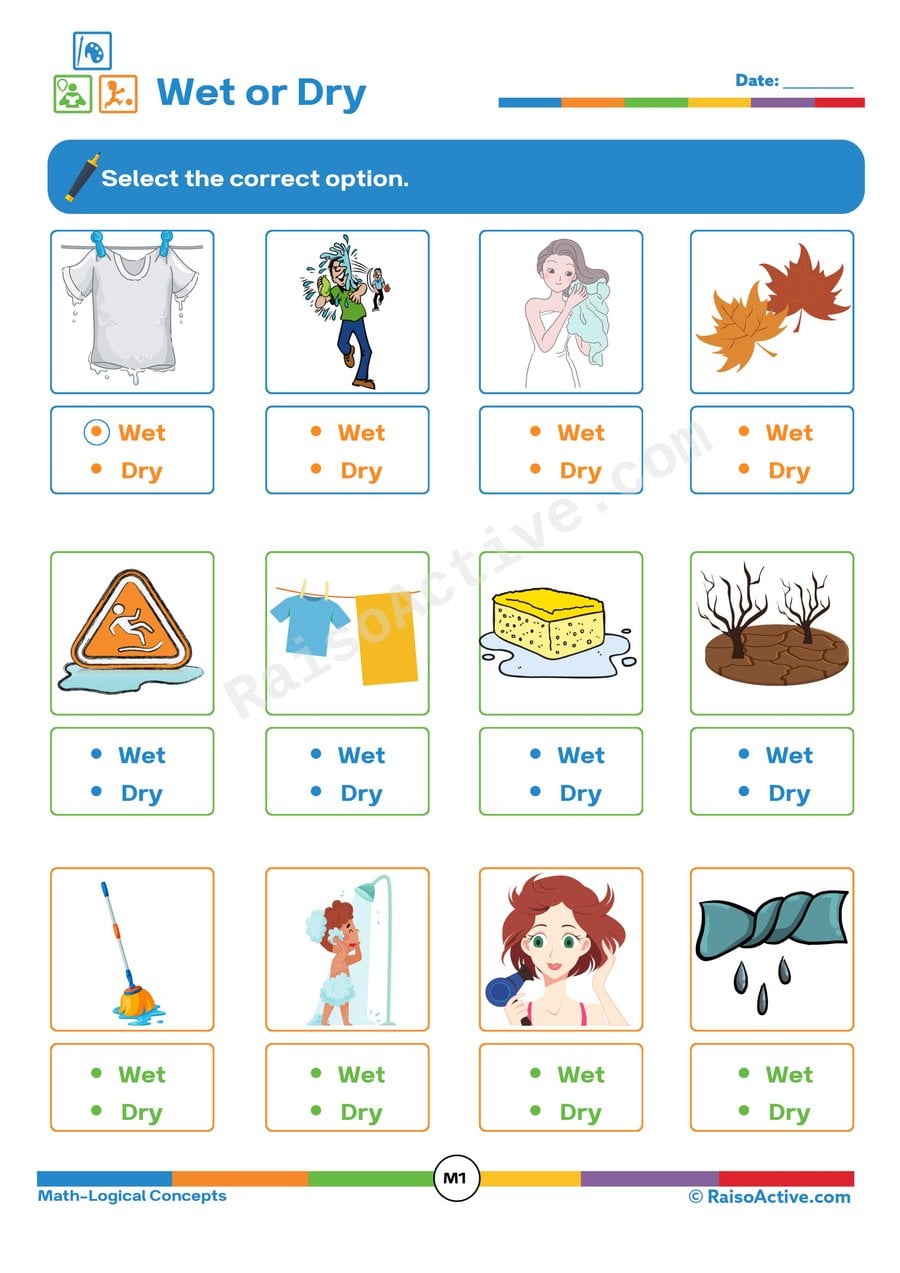
Wet or Dry Sorting Worksheet for Preschoolers
Ages 3-5 · Preschool–Pre-KAges 3-5 · Nursery–ReceptionAges 3-5 · Nursery–LKGAges 3-5
Sorting objects into 'wet' or 'dry' asks preschoolers to reach past the object's identity and notice a physical property instead — a step up from simply naming pictures. This is early scientific classification: your child has to observe a visual clue (a dripping umbrella, a puddle, a dry leaf) and reason about a quality that isn't always obvious from shape or color alone. Because some objects are genuinely tricky (a sponge can be either), the worksheet also opens the door to your child explaining their reasoning, which strengthens vocabulary around cause and state.
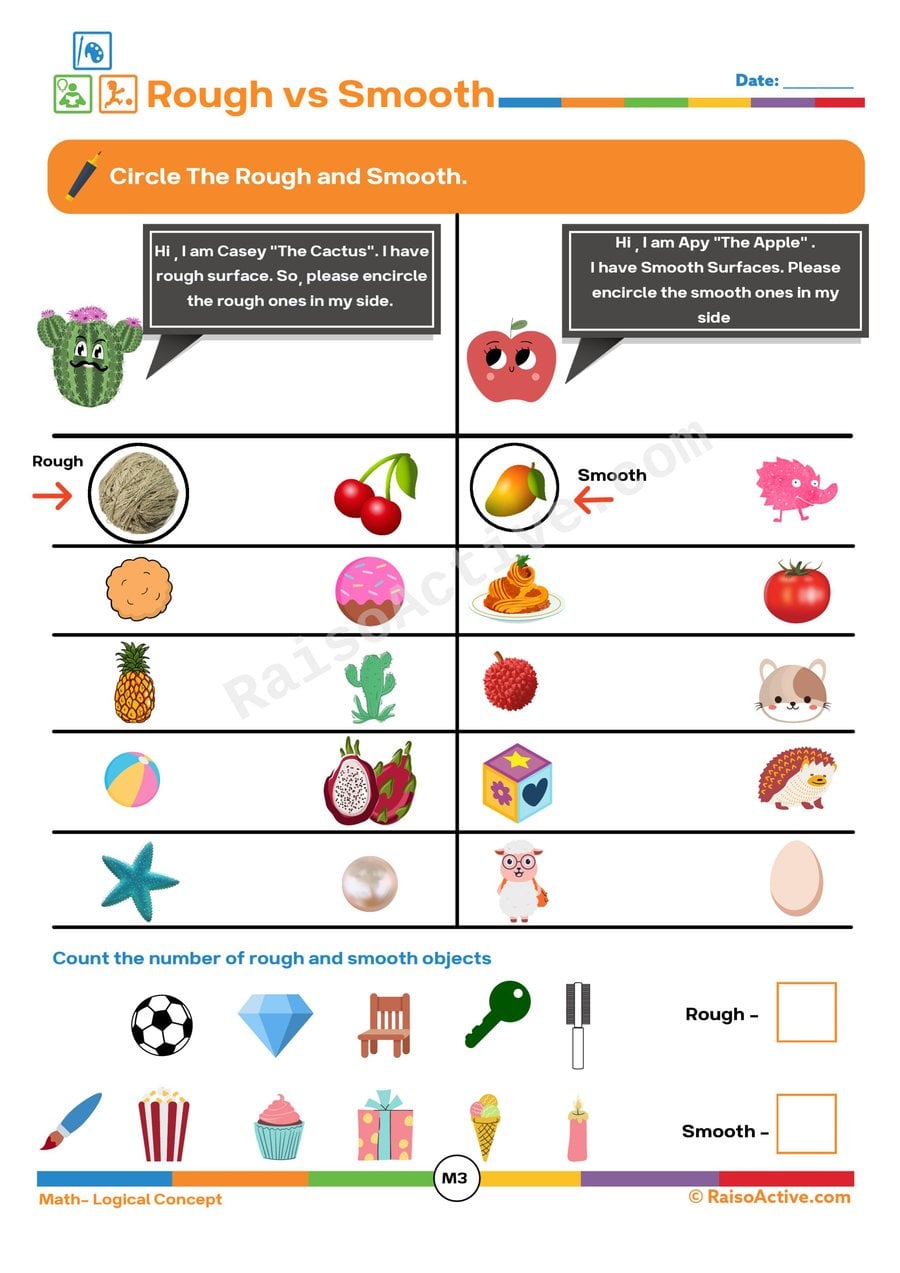
Rough vs. Smooth Worksheet: Circle and Count!
Ages 3-5 · Preschool–Pre-KAges 3-5 · Nursery–ReceptionAges 3-5 · Nursery–LKGAges 3-5
Preschoolers ages 3-5 build early scientific observation by identifying and comparing rough versus smooth textures among a set of pictured objects, engaging their sense of touch conceptually even through a visual worksheet. Counting the rough and smooth objects afterward links this sensory classification to basic number practice. Learning to sort by texture is an early step toward broader material-properties understanding in science.
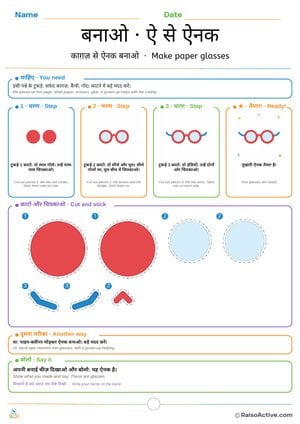
Make Paper Glasses: Hindi Letter ऐ (ai) Cut and Stick Craft | बनाओ · ऐ से ऐनक
Ages 4-7 · Pre-K–Grade 1Ages 4-7 · Reception–Year 2Ages 4-7 · LKG–Class 1Ages 4-7
Children cut out the numbered pieces and stick them in order to make a pair of glasses with two red rims, two lenses and two arms, then show it and say a full sentence about it. It links the letter ऐ with a real picture word, ऐनक, and practises scissor control and following steps.
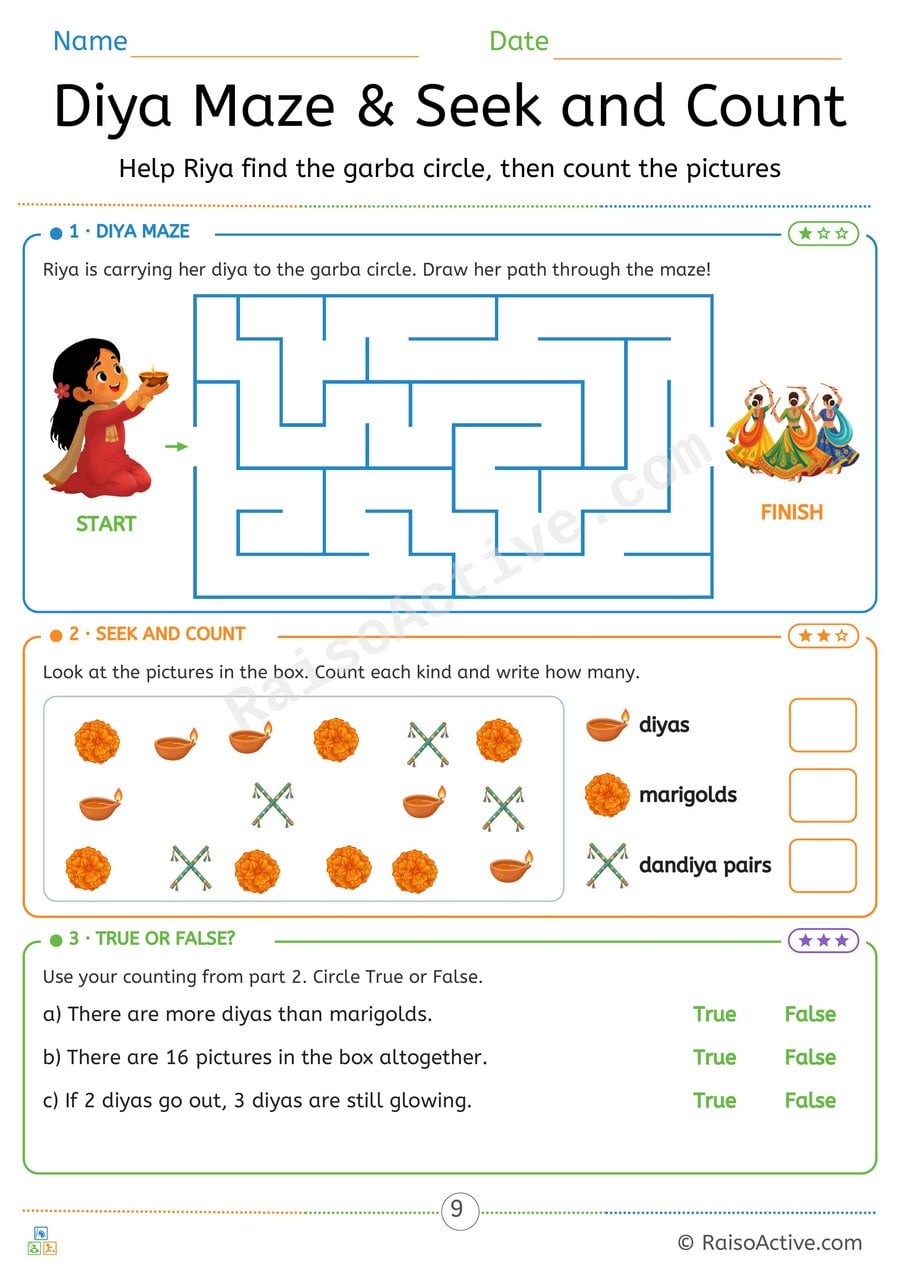
Navratri Diya Maze and Seek-and-Count Worksheet
Ages 4-6 · Pre-K–KindergartenAges 4-6 · Reception–Year 1Ages 4-6 · LKG–UKGAges 4-6
Children plan a path through a maze, count and sort mixed pictures by kind, and use their counts to decide if sentences are true or false.

Balloon Pattern Matching Worksheet for Preschoolers
Ages 3-5 · Preschool–Pre-KAges 3-5 · Nursery–ReceptionAges 3-5 · Nursery–LKGAges 3-5
Children ages 3-5 build early pattern-recognition skills on this worksheet by studying a sequence of colored balloons and finding the matching set to complete it. Recognizing and continuing a repeating sequence is a foundational pre-math skill that later supports understanding of number patterns, skip counting, and simple algebraic thinking.

Spring Sudoku Worksheet: Cut and Paste Puzzle for Kids
Ages 4-6 · Pre-K–KindergartenAges 4-6 · Reception–Year 1Ages 4-6 · LKG–UKGAges 4-6
Placing cut-out pictures into a sudoku-style grid so that no image repeats in any row, column, or box teaches children ages 4-6 early logical reasoning and systematic thinking, since they must check multiple directions before deciding where each piece belongs. Cutting out the small picture squares beforehand also builds scissor control and hand-eye coordination. Together, this combines a pre-math logic puzzle with fine motor practice in a single spring-themed activity.
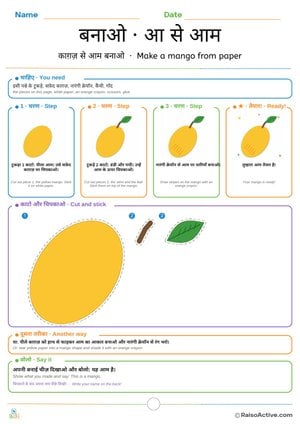
Make a Paper Mango: Hindi Letter आ Craft | बनाओ · आ से आम
Ages 3-7 · Preschool–Grade 1Ages 3-7 · Nursery–Year 2Ages 3-7 · Nursery–Class 1Ages 3-7
Children cut out the pieces, put them together following three step pictures and make a paper mango. Saying the word आम as they make it links the sound आ to something they built themselves.

Indian Cities Crossword Puzzle Worksheet for Kids
Ages 4-6 · Pre-K–KindergartenAges 4-6 · Reception–Year 1Ages 4-6 · LKG–UKGAges 4-6
This crossword challenges children ages 4-6 to identify famous Indian cities from picture clues of their landmarks and then spell out each city's name in the puzzle grid, combining observation skills with early geography knowledge. Counting the crossword boxes to match each city's letter count also reinforces attention to word length before writing.
Guides for this topic

Age-Appropriate Problem-Solving Activities: Building Critical Thinkers from the Ground Up
Discover fun, age-appropriate problem-solving activities for children ages 1-8. Build critical thinking, logic, and reasoning skills through play-based learning.
Critical Thinking Activities That Actually Work for Young Children: Building Tomorrow's Thinkers Today
Discover proven critical thinking activities for young children. Age-wise logic games, questioning techniques, and hands-on ideas to build thinking skills at home.

Preparing Your Child for a Rapidly Changing World: Essential Skills for Future Success
Discover the essential 21st century skills your child needs for future success. Practical tips on creativity, critical thinking, digital literacy & emotional intelligence for ages 1-8.
Reviews
Every worksheet for ages 3–5, no watermark
Members download the full library of 1,000+ worksheets and every activity pack without watermarks or daily limits. One year costs ₹999 in India or $20 elsewhere.
See membership plansOr download any worksheet free with a watermark (5 a day).