Help the Kid Reach the Doctor! A Fun Maze Worksheet
This maze worksheet builds fine motor control and pencil precision as children trace a winding path from a sick child to the doctor, while scanning for the correct route develops early planning and visual-spatial problem-solving. For ages 3-5, mazes are also a gentle way to introduce the idea that some situations, like feeling unwell, call for finding help from a trusted adult.
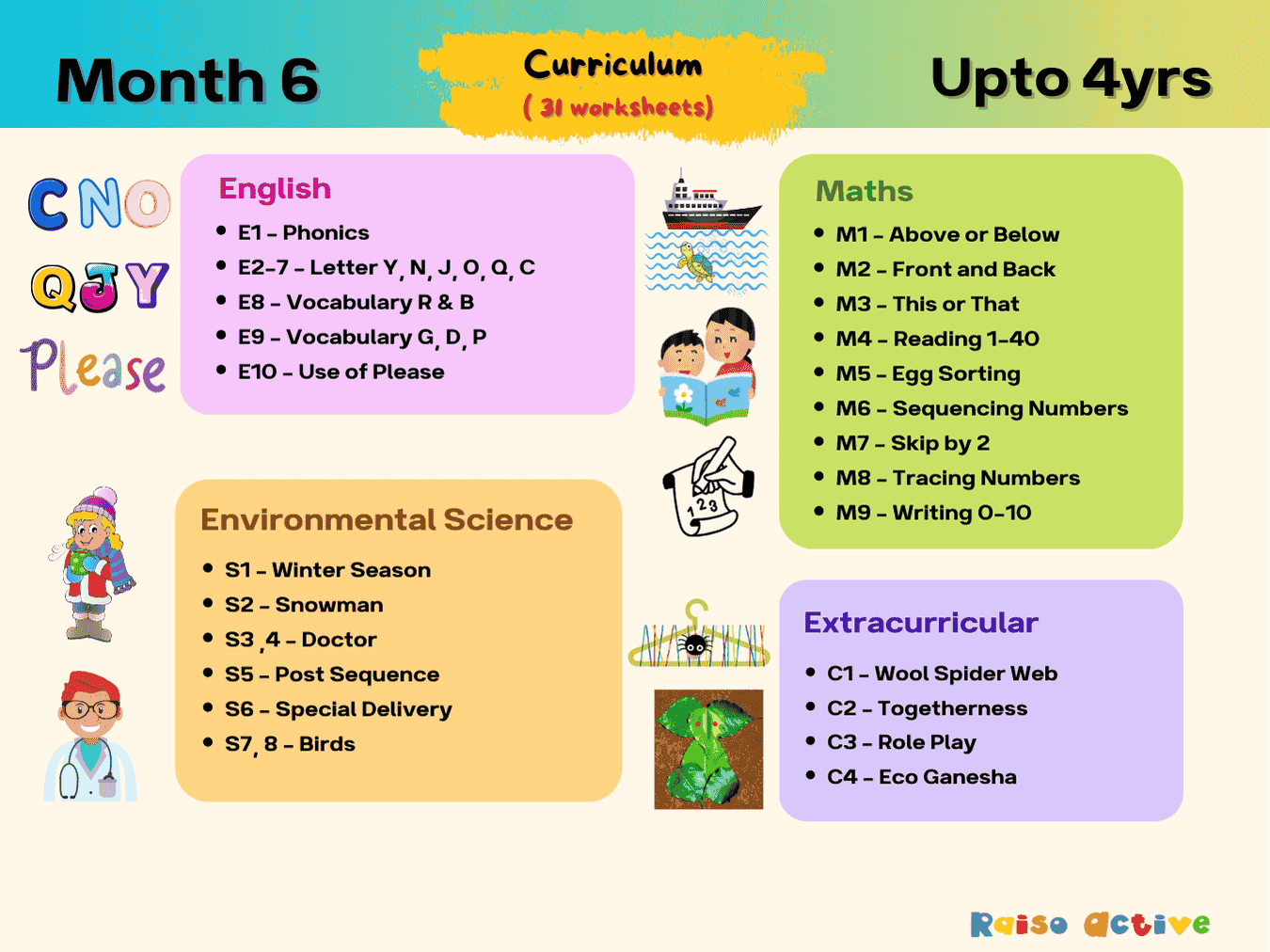
Part of the pack
Month 6: Toddler Preschool Foundational Skills | Ages Up to 4
This is page 26 of the pack. Ages 2-4 · PreschoolAges 2-4 · NurseryAges 2-4
Curriculum
- Cognitive - Problem Solving > Mazes
How to use this worksheet
Begin by showing your child the starting point, a child who isn't feeling well, and the ending point, the doctor's office, at opposite ends of the maze. Have them trace the path first with a fingertip, backing out of any dead ends until they find the route that connects the two. Once they've found a workable path by finger, hand them a pencil or crayon to trace the same route on paper, keeping the line inside the maze walls from start to finish. Afterward, ask your child to describe out loud what happened: why the child needed the doctor and what the doctor might do to help.
Materials needed
- Pencil
- Crayons
Extension activities
- 1Draw a simple maze together on blank paper and have your child add their own doctor's office at the end.
- 2Set up a pretend doctor's visit at home using stuffed animals as patients, taking turns being the doctor and the patient.
- 3Talk about a real visit to the doctor your child remembers and what tools or steps were involved.
- 4Create an obstacle course maze on the floor with pillows or tape and have your child physically walk the path to a 'doctor' station.
- 5Read a picture book about visiting the doctor and discuss why check-ups help keep us healthy.

Written by
Hemsweta Jain · Teacher Cheena
MBA and Early Childhood Educator, teaching since 2014 · Founder of RaisoActive, Mumbai
Every RaisoActive worksheet is designed and checked by the founder before publishing.
Published · Last reviewed
More from Month 6: Toddler Preschool Foundational Skills | Ages Up to 4

Above and Below the Sea Worksheet: Counting Objects
Ages 3-5 · Preschool–Pre-KAges 3-5 · Nursery–ReceptionAges 3-5 · Nursery–LKGAges 3-5
This worksheet combines counting practice with the positional concepts of 'above' and 'below,' asking children to count separate groups of objects located in different parts of an ocean scene. For ages 3-5, connecting counting to spatial position adds an extra layer of thinking beyond simple one-to-one counting, reinforcing both numeracy and early positional vocabulary.
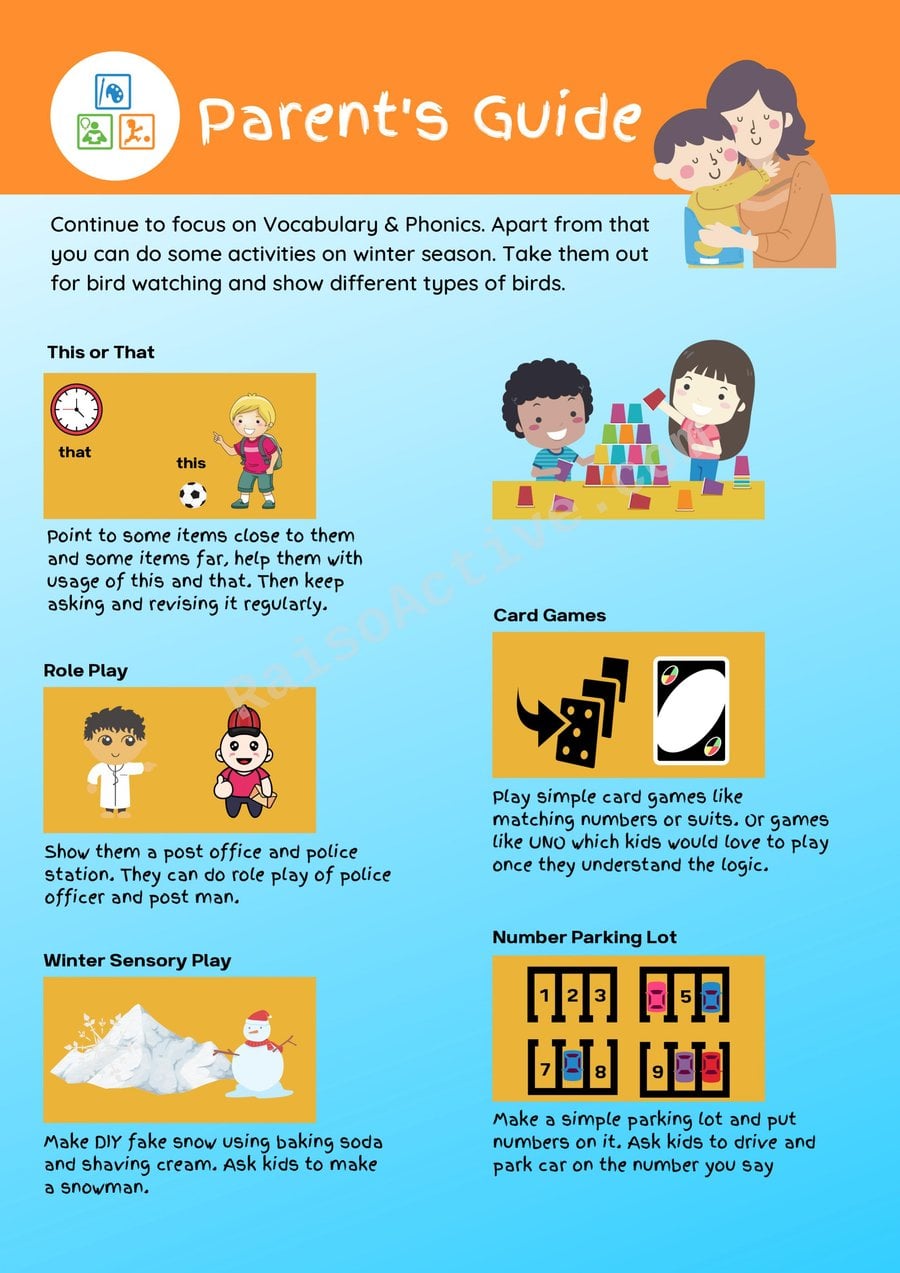
Winter Fun Activities for Kids: Parent's Guide
Ages 3-5 · Preschool–Pre-KAges 3-5 · Nursery–ReceptionAges 3-5 · Nursery–LKGAges 3-5
This parent's guide bundles several short winter-themed activities, from vocabulary games to sensory play, that build language skills, matching ability, and role-play confidence in one seasonal package. For ages 3-5, mixing modalities like talking, sorting, and hands-on sensory exploration keeps engagement high while reinforcing skills across different learning styles.

Match the Bird Shadows Worksheet for Preschoolers
Ages 3-5 · Preschool–Pre-KAges 3-5 · Nursery–ReceptionAges 3-5 · Nursery–LKGAges 3-5
Matching bird pictures to their correct shadows sharpens visual discrimination for children ages 3-5, requiring them to focus on outline and shape rather than color or detail, since a shadow strips away everything but silhouette. This kind of shape-matching task builds the careful observation skills that support later letter and word recognition, where subtle shape differences also matter.

Eco-Ganesha Craft: Make Your Own Eco-Friendly Ganesh!
Ages 3-5 · Preschool–Pre-KAges 3-5 · Nursery–ReceptionAges 3-5 · Nursery–LKGAges 3-5
Making an Eco-Ganesha from peepal leaves teaches children ages 3-5 to see natural materials as creative art supplies, building both fine motor skill through careful arrangement and early environmental awareness through using biodegradable materials instead of plastic. This hands-on craft also introduces cultural and seasonal tradition in a tactile, memorable way that connects art-making to real-world values.

Letter C Tracing and Coloring Worksheet for Preschoolers
Ages 3-5 · Preschool–Pre-KAges 3-5 · Nursery–ReceptionAges 3-5 · Nursery–LKGAges 3-5
This worksheet builds handwriting readiness by having children trace the letter C multiple times, while the coloring and picture-matching elements connect the letter's shape to its sound through familiar C words. For ages 3-5, repeating the same letter across tracing and picture activities on one page reinforces recognition from multiple angles in a single sitting.

Trace and Color the Letter Q Worksheet for Preschoolers
Ages 3-5 · Preschool–Pre-KAges 3-5 · Nursery–ReceptionAges 3-5 · Nursery–LKGAges 3-5
This worksheet builds handwriting readiness for the less common letter Q through repeated tracing, while the coloring activity reinforces vocabulary for Q words, which are often trickier for young children since Q almost always pairs with U. For ages 3-5, practicing an uncommon letter like Q broadens their full alphabet exposure beyond the more frequently seen letters.
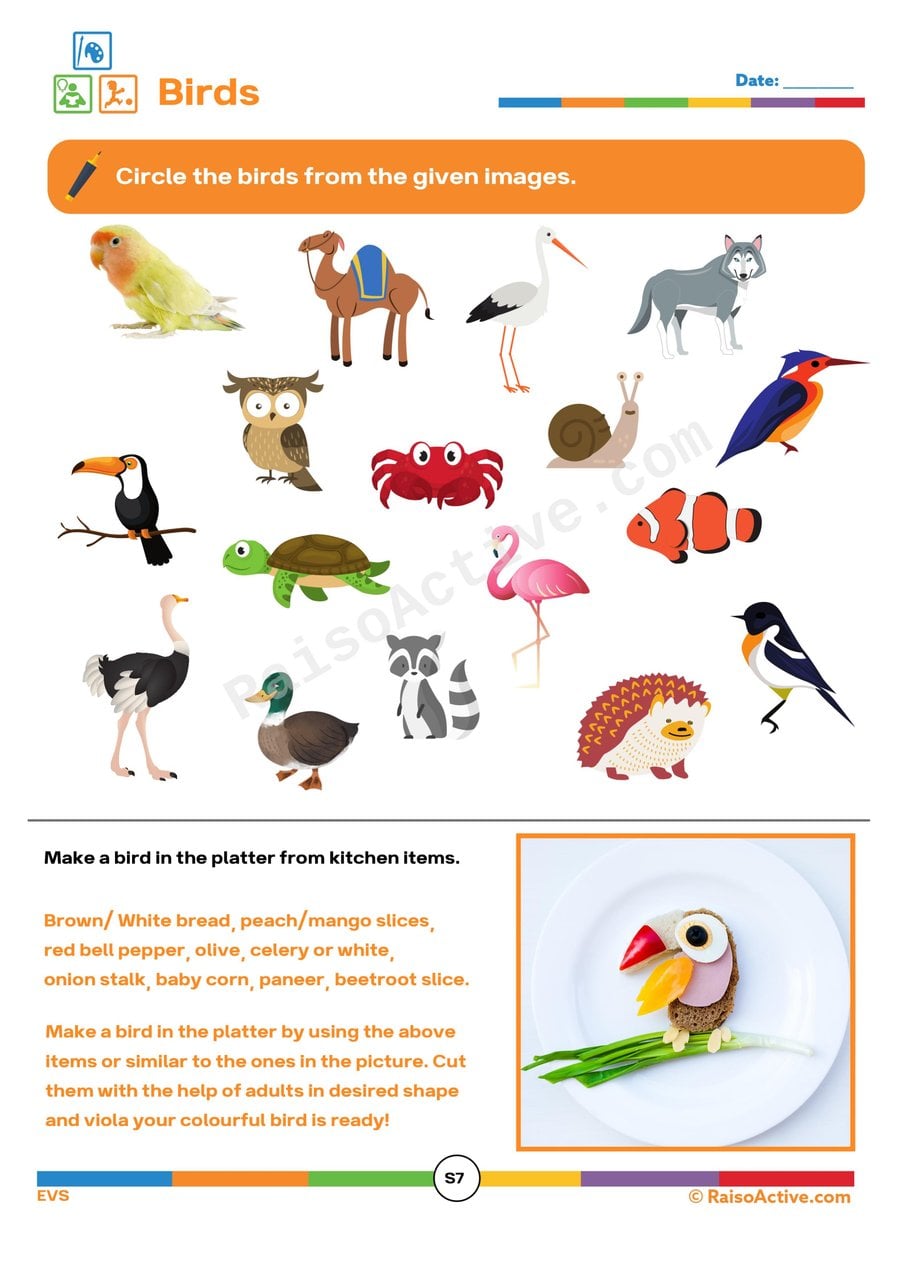
Bird Spotting Worksheet: Circle the Birds!
Ages 3-5 · Preschool–Pre-KAges 3-5 · Nursery–ReceptionAges 3-5 · Nursery–LKGAges 3-5
This worksheet builds visual discrimination and observation skills by asking children to scan a mixed picture and circle only the birds among other animals or objects, sharpening their ability to notice defining features like wings, feathers, or beaks. For ages 3-5, this kind of categorization by visual features is an early step toward broader scientific classification skills.

This or That? Cut and Paste Worksheet for Early Learners
Ages 3-5 · Preschool–Pre-KAges 3-5 · Nursery–ReceptionAges 3-5 · Nursery–LKGAges 3-5
Sorting objects into 'this' and 'that' categories helps children ages 3-5 connect an abstract grammar concept to something they can physically place and see, reinforcing the idea that these words describe relative closeness rather than a fixed rule. This early categorization practice also builds general sorting and decision-making skills that extend well beyond grammar itself.
Related worksheets
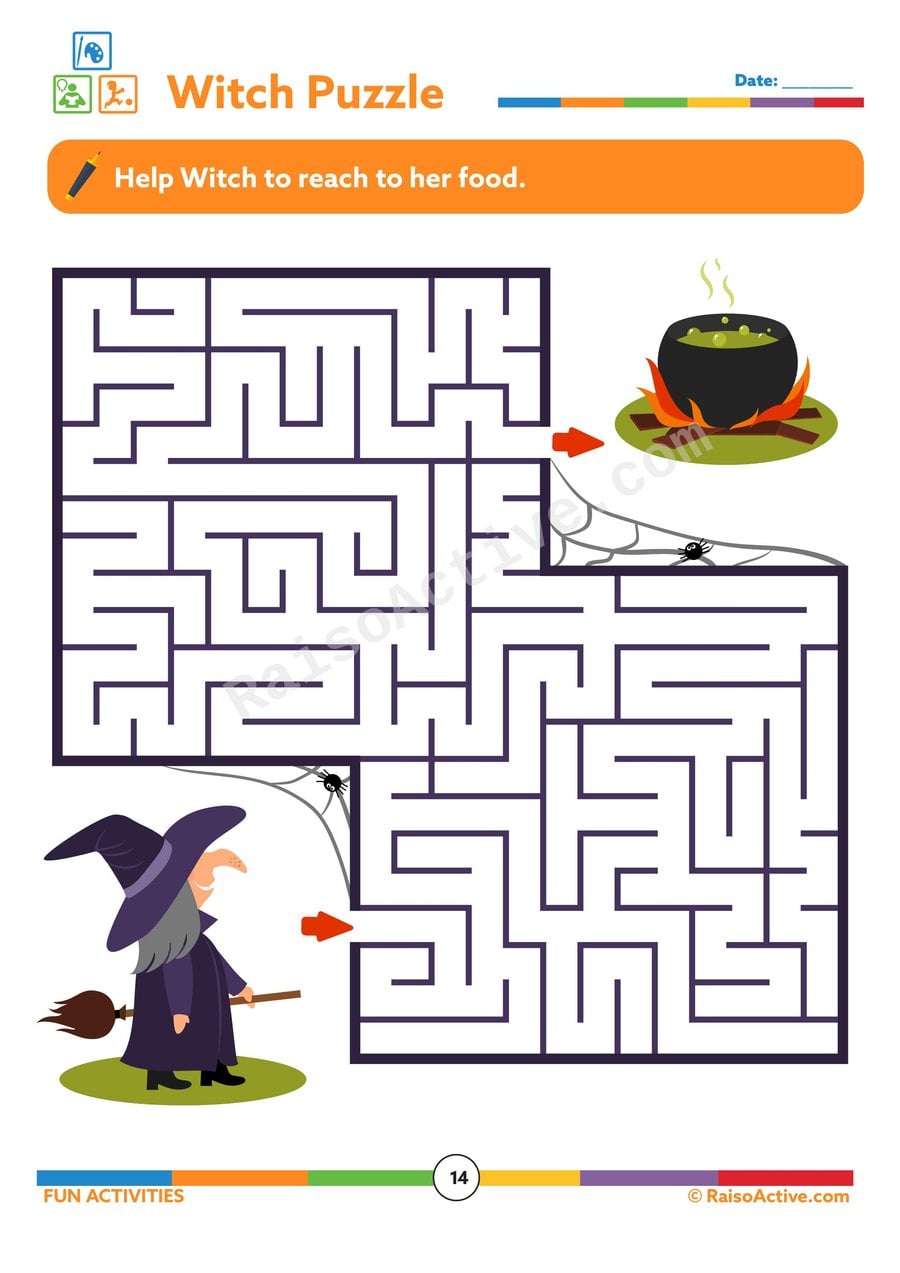
Witch's Maze: Help the Witch Find Her Food!
Ages 3-5 · Preschool–Pre-KAges 3-5 · Nursery–ReceptionAges 3-5 · Nursery–LKGAges 3-5
Guiding the witch through the maze to her food asks children to visually scan several possible paths, mentally rule out the dead ends, and commit to a single route — an early form of planning and problem-solving that lays groundwork for later logical thinking. The seasonal Halloween theme also makes this a fun, low-pressure way to build maze-solving skills without it feeling like schoolwork.

Snow Maze Adventure: Help the Girl Reach the Igloo!
Ages 3-5 · Preschool–Pre-KAges 3-5 · Nursery–ReceptionAges 3-5 · Nursery–LKGAges 3-5
This worksheet helps young learners develop crucial pre-writing skills by guiding a pencil through a visual path. Children will practice fine motor control and hand-eye coordination as they navigate the snow maze. They'll also engage in early critical thinking, planning a route to help the girl reach the igloo.
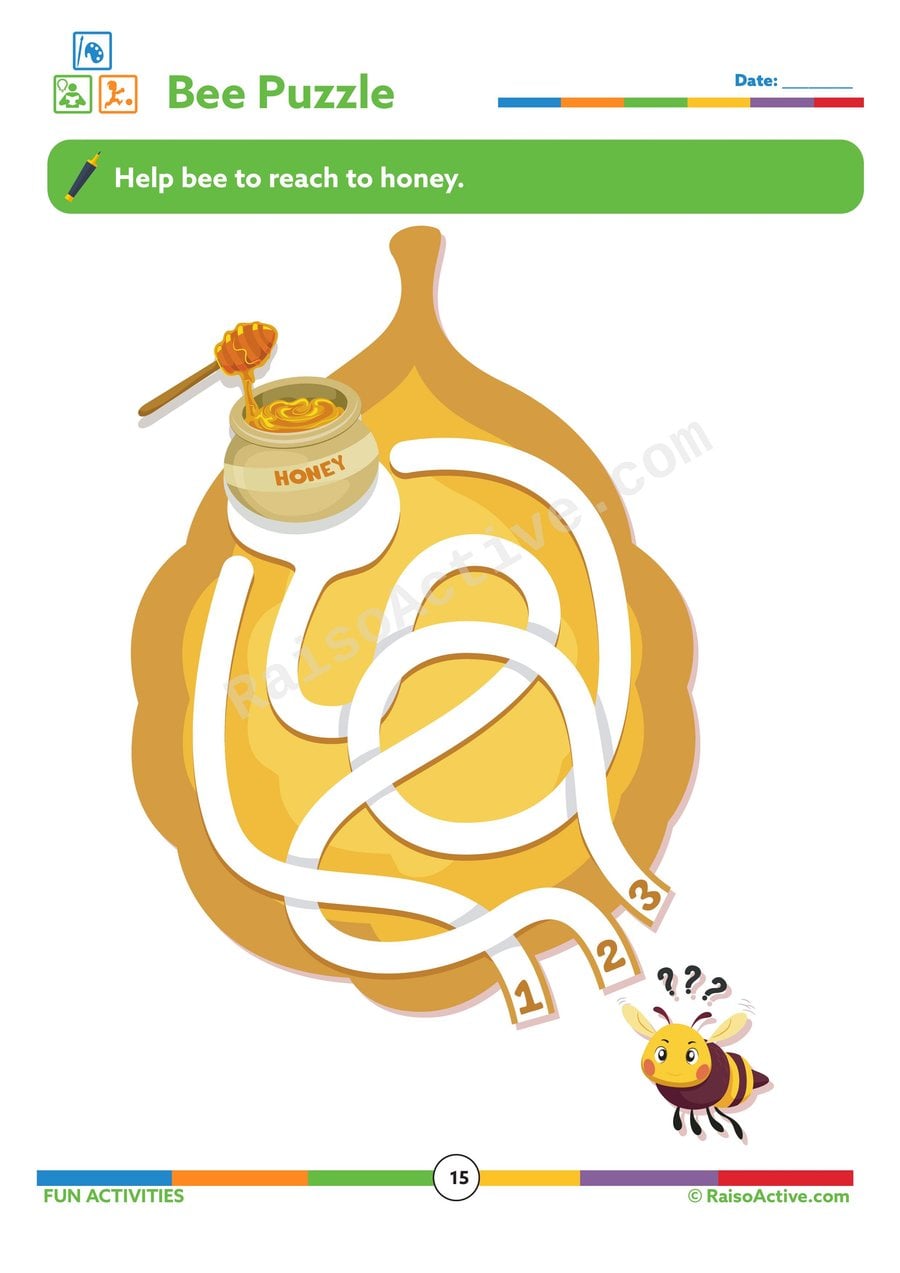
Bee Maze Worksheet: Help the Bee Find the Honey!
Ages 3-5 · Preschool–Pre-KAges 3-5 · Nursery–ReceptionAges 3-5 · Nursery–LKGAges 3-5
Guiding the bee through the maze to the honey pot builds the same visual-scanning and route-planning skills as other maze worksheets, asking children to look ahead, spot dead ends, and commit to a path rather than moving randomly. At ages 3-5, this kind of maze practice also strengthens the fine motor control needed to keep a pencil line steady over a winding path.
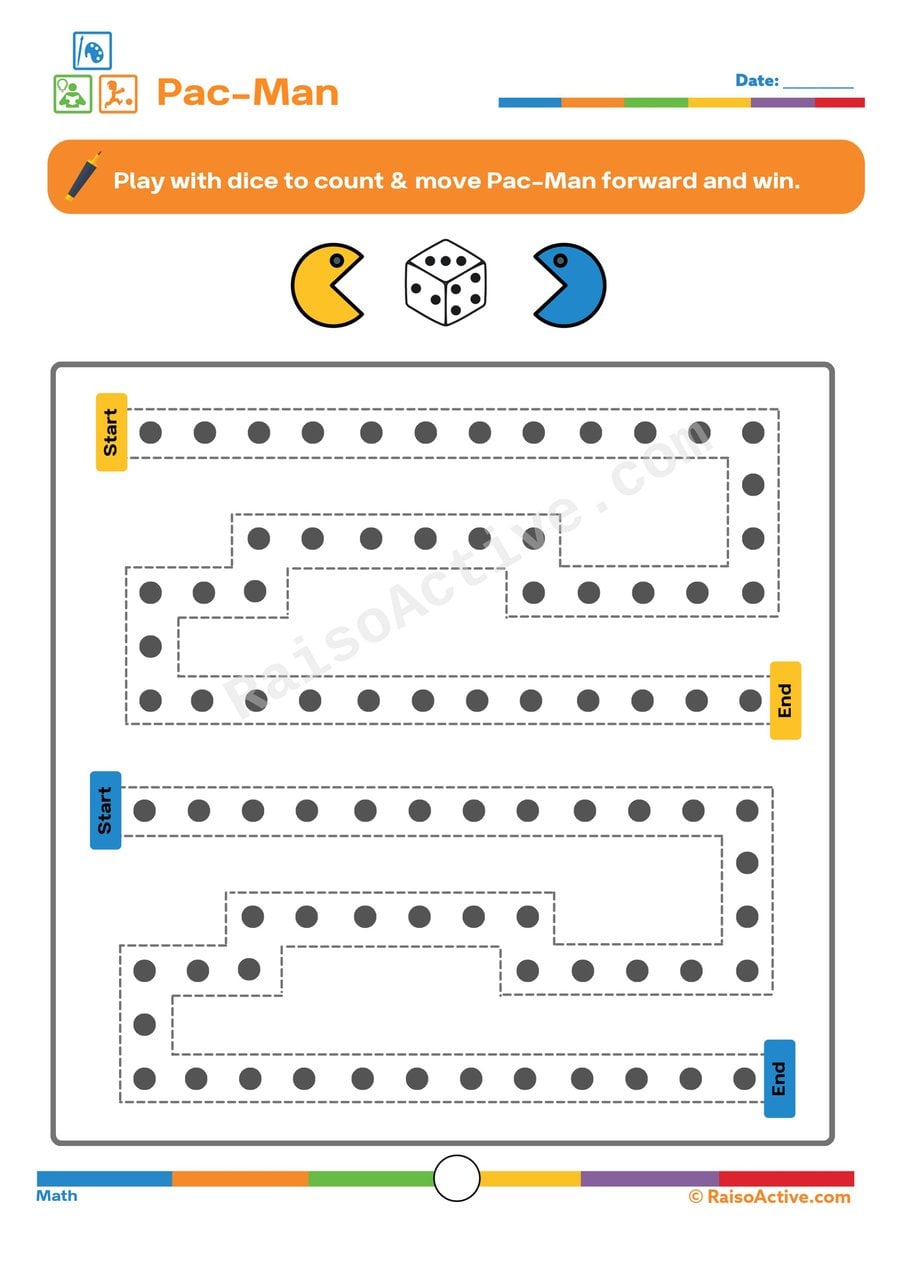
Pac-Man Maze Worksheet: Count and Move!
Ages 3-5 · Preschool–Pre-KAges 3-5 · Nursery–ReceptionAges 3-5 · Nursery–LKGAges 3-5
This dice-counting maze gives children ages 3-5 repeated practice matching a rolled number to the correct number of moves, reinforcing accurate counting under a bit of playful pressure. Tracking Pac-Man's current position after each roll also builds short-term spatial memory, since children must remember where they left off before moving again.

Help the Girl Find Her Way in the Rainy Weather Maze Worksheet
Ages 3-5 · Preschool–Pre-KAges 3-5 · Nursery–ReceptionAges 3-5 · Nursery–LKGAges 3-5
This maze worksheet builds fine motor control and visual planning in children ages 3-5 as they trace a path for a girl through a rainy-weather scene, collecting items she needs along the way. Because the maze is themed around gathering specific rain gear, it adds a light problem-solving layer on top of standard maze navigation, encouraging children to think about which path leads to the items that actually make sense for the weather.

Castle Maze Worksheet: Help the Prince Reach the Castle!
Ages 3-5 · Preschool–Pre-KAges 3-5 · Nursery–ReceptionAges 3-5 · Nursery–LKGAges 3-5
This 'Castle Maze' worksheet helps children ages 3-5 develop crucial fine motor control and hand-eye coordination as they trace a path for the Prince. Navigating the maze also builds early critical thinking and problem-solving skills, requiring them to visually scan and plan a route, which is foundational for spatial reasoning.

Spooky Fun Coloring Worksheet for Preschoolers
Ages 3-5 · Preschool–Pre-KAges 3-5 · Nursery–ReceptionAges 3-5 · Nursery–LKGAges 3-5
This Halloween-themed coloring page gives children ages 3-5 practice with crayon grip, color choice, and staying within outlines as they bring a collection of spooky objects to life. Naming each object as they color, like a ghost, a pumpkin, or a bat, also builds seasonal vocabulary tied directly to what they're seeing and creating.

Stick Man Emotions Worksheet: Happy, Sad, Angry, and Surprised!
Ages 4-6 · Pre-K–KindergartenAges 4-6 · Reception–Year 1Ages 4-6 · LKG–UKGAges 4-6
Children ages 4-6 practice reading facial expressions on this worksheet, matching stick-figure faces to their correct emotion labels by noticing details like mouth shape and eyebrow position. This strengthens emotional literacy — the ability to name and recognize feelings in others — which supports empathy and smoother social interactions as children move into more group play and classroom settings.
Guides for this topic

Age-Appropriate Problem-Solving Activities: Building Critical Thinkers from the Ground Up
Discover fun, age-appropriate problem-solving activities for children ages 1-8. Build critical thinking, logic, and reasoning skills through play-based learning.
Critical Thinking Activities That Actually Work for Young Children: Building Tomorrow's Thinkers Today
Discover proven critical thinking activities for young children. Age-wise logic games, questioning techniques, and hands-on ideas to build thinking skills at home.

Preparing Your Child for a Rapidly Changing World: Essential Skills for Future Success
Discover the essential 21st century skills your child needs for future success. Practical tips on creativity, critical thinking, digital literacy & emotional intelligence for ages 1-8.
Reviews
Every worksheet for ages 3–5, no watermark
Members download the full library of 1,000+ worksheets and every activity pack without watermarks or daily limits. One year costs ₹999 in India or $20 elsewhere.
See membership plansOr download any worksheet free with a watermark (5 a day).